ilcastellomenu.com is reader-supported. When you buy through links on our site, we may earn an affiliate commission.
Where to Buy
A college photography course makes demands no hobby ever does: assignments with briefs, deadlines with consequences, prints pinned to a wall and discussed by people trained to notice everything. That is why the best cameras for college photography student work are therefore chosen as learning instruments for stills. Manual control that teaches exposure rather than hiding it, raw files that survive a term of increasingly ambitious editing, a lens mount the department and the second-hand market both support, and a viewfinder the student will actually look through for four years. Video matters here only as a sideline; this guide is about the still image, deliberately and completely.
Money behaves differently for a photography student than for a film student. The spend spreads across a body, one good standard lens, then the slow accumulation of a portrait lens, a wide lens, a bag, a tripod for the landscape module and printing costs that ambush every budget in the final term. So this guide favours systems where each next purchase is affordable and where the body bought in the first year still deserves its place in the final-year portfolio, because a student who has to replace their camera mid-degree has paid for their education twice.
The six below divide by learning style: the friendly all-rounders that get a nervous first-year shooting immediately, the dial-driven teacher that makes settings physical, the resolution machine for the student already dreaming in large prints, and two smaller bodies for the documentary and street modules where discretion is the whole assignment. Every one of them will produce portfolio-grade stills; they differ in how they teach, and teaching is the purchase.
Key Takeaways
- A photography student’s camera is a teacher: physical controls and honest raw files come first.
- Buy the system, not the body, because lenses accumulate across four years of modules.
- Stills virtues rule this guide: viewfinder, raw depth, lens choice and print quality.
- The department’s loan stock and the used market are part of your real equipment list.
- One good standard lens teaches more than three mediocre zooms.
- The body bought in year one should still be earning its place in the final portfolio.
In this guide
Quick Picks
| Pick | Badge | Why it is here |
|---|---|---|
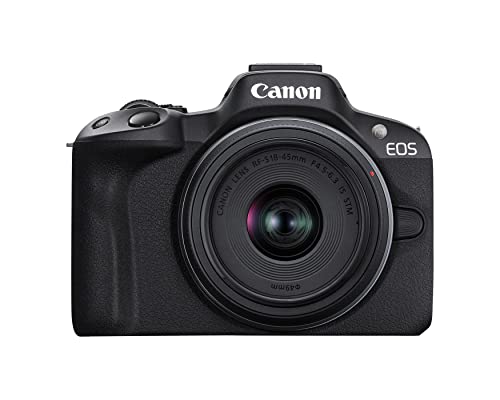
| Canon EOS R50 | Best first camera for year one | The friendliest serious start: kind colour, guiding menus and a price that leaves the lens budget alive. |
| Nikon Z50 II | Best handling for keen learners | A photographer’s camera in miniature: proper viewfinder, confident grip and files that reward growing editing skill. |
| Sony ZV-E10 II | Best budget body for stills and side video | The value route into Sony’s vast lens system, for students whose course mixes stills with moving-image side modules. |
| Canon EOS R10 | Best for action and events modules | Fast, confident and deeper-gripped than the R50, for students shooting sport, events and wildlife-adjacent coursework. |
| Fujifilm X-T5 | Best for print and detail devotees | High resolution and physical dials for the student whose heart is in the printed image and the slow, deliberate frame. |
| OM SYSTEM OM-5 Mark II | Best for fieldwork and travel modules | The smallest serious system here, weather-sealed and stabilised, for landscape fieldwork and documentary travel on a student’s back. |
How Did We Choose These Photography Student Picks?
We marked each camera against a degree’s actual stills assignments: the exposure-triangle exercises of the first term, the portrait module under studio light, the documentary project shot over a semester in one community, the landscape module’s dawn fieldwork, the final portfolio printed large and examined at arm’s length. A camera earned its place by serving several of those assignments natively, with controls that make the underlying principle visible rather than automated away, and raw files deep enough that a student’s growing editing skill is never the thing the camera refuses to support.
Three filters finished the list. Lenses first: mounts with deep, affordable glass, because the second and third year of a photography degree is a lens-buying story. Teaching second: viewfinders, dials and menus that reward a student for understanding rather than for trusting. Value third, honestly assessed across four years rather than one receipt, including how well each body holds its worth when the graduate eventually trades up. Cameras that were merely excellent but taught nothing, or taught brilliantly inside a lens ecosystem a student cannot afford, were set aside for other guides.
What Does a Photography Degree Ask of a Camera That Hobby Shooting Does Not?
It asks the camera to show its working. A hobbyist wants the photograph; a student must be able to explain the photograph, which aperture decision made the portrait’s background dissolve, why the documentary frame needed that shutter speed, how the landscape’s foreground survived the exposure the sky demanded. Cameras that bury those decisions in scene modes and computational confidence produce students who can operate but cannot reason, and the degree’s whole purpose is reasoning. The picks below expose their decisions physically and record files that let a student revisit every choice in the edit, which is where photography is actually learned.
It also asks for stamina across genres. The same body may shoot a studio portrait on Tuesday, a protest on Saturday and a dawn landscape for the module deadline on Sunday, on a student’s budget and a student’s back. Versatility, weather tolerance and a lens system spanning those genres without a second mortgage are not conveniences here; they are the difference between a camera that completes the degree and one that quietly limits which assignments its owner attempts.

Canon EOS R50 — Best first camera for year one
The R50 is the camera this guide hands the first-year who arrives keen and slightly frightened, because Canon understands that a beginner’s camera must produce encouraging photographs immediately while still teaching the craft underneath. Its guided interfaces explain what an aperture does by showing it, its colour renders classmates’ portraits kindly in the first studio session, and its autofocus quietly handles the mechanics while the student learns composition. Nothing about it condescends: the full manual controls and proper raw files are all present, waiting for the second term when the training wheels come off by syllabus rather than by purchase.
Its student economics are equally considered. The body leaves budget for the standard prime that transforms coursework, the RF mount’s affordable end is genuinely affordable, and the camera is light enough to live in a student’s everyday bag, which matters because photography degrees are secretly attendance contests: the camera that is carried is the camera that learns. Its ceiling, APS-C low-light limits and a modest viewfinder, will be felt by the final year, at which point it becomes the perfect second body rather than a discarded mistake.
- Sensor class: APS-C, forgiving for learners
- Teaching: guided modes that explain settings
- Mount: Canon RF, affordable glass available
- Role: the first-year daily carrier
Strengths
- Encouraging results from the first week.
- Manual depth waiting under the guidance.
- Light enough to be carried daily.
Trade-offs
- Final-year students will feel its ceiling.
- Low light asks for fast lenses.
- Modest viewfinder for spectacle wearers.
Best for: first-year students starting from near zero. Not suited for: a student entering with advanced skills.
First-term counsel: shoot the exposure exercises in full manual even though the camera offers to help, and keep a notebook of settings beside the prints. The R50’s guidance makes an excellent tutor, but the degree examines the student, not the tutor, and the notebook habit converts every assignment into revision material.
Its other first-year virtue is social. Portrait modules run on classmates modelling for each other, and a camera whose colour flatters skin under the studio’s indifferent lighting makes its owner the partner everyone wants for the exchange. Small mercies compound across a degree, and the student whose early portraits please their subjects gets invited to shoot more of them, which is the whole curriculum in disguise.

Nikon Z50 II — Best handling for keen learners
The Z50 II suits the student who arrives already bitten, the one who shot film on a parent’s camera or ran the school darkroom, and wants a body that treats them as a photographer from the first day. Its viewfinder is a pleasure rather than an apology, its grip and controls sit where a photographer’s hands expect them, and its files have the neutral, workable character that editing tutors approve of: colour that can be taken anywhere, shadows that lift without falling apart, and a rendering that never fights the student’s developing style. Nikon’s Z mount lenses, including the affordable primes the system is quietly rich in, complete a package with no obvious weak term in it.
It also grows gracefully. The same body serves the documentary module’s long days, the landscape module’s dawns and the final portfolio’s prints without the student ever feeling they are working around it, and its video sideline is competent enough for the multimedia module most degrees now include. For the keen learner it is the guide’s most balanced answer: nothing to unlearn, nothing essential missing, and a system whose professional end the graduate can climb without changing mounts.
- Sensor class: APS-C, workable neutral files
- Viewfinder: a genuine photographer’s finder
- Mount: Nikon Z, strong affordable primes
- Role: the keen learner’s four-year body
Strengths
- Handling that teaches good habits.
- Files tutors and editors approve.
- No weak term in the whole degree.
Trade-offs
- Less hand-holding than the Canon.
- Third-party lens bench still growing.
- APS-C ceiling in extreme low light.
Best for: students arriving with real enthusiasm and some experience. Not suited for: the total beginner wanting guided modes.
Handling counsel: assign the camera’s custom controls deliberately in the first month, sensitivity where your thumb lives, review magnification where your checking habit wants it, because a student’s camera should be configured like a professional’s, personally and on purpose. The Z50 II rewards that configuration with a fluency that makes later modules feel easier than they are.
Nikon’s colour deserves a student’s particular attention in the portrait term. Its skin rendering is restrained where Canon’s is warm, and neither is correct; they are accents. Learning to see your own system’s accent, and to grade toward the portrait you intended rather than the one the camera suggested, is one of the degree’s quiet core skills, and this body teaches it honestly.

Sony ZV-E10 II — Best budget body for stills and side video
Some photography degrees now carry a moving-image module, a societies-and-events brief for the student union, or simply a cohort culture where everyone also films. The ZV-E10 II is the budget body for that student: a strong APS-C stills camera at heart, with Sony’s autofocus excellence and the E mount’s enormous lens bench, in a creator-priced body that leaves the lens fund alive. Its stills are entirely degree-worthy, detailed, flexible in raw and quick to focus in the documentary situations where moments do not repeat.
The compromises are visible and should be chosen knowingly: there is no viewfinder, so composition happens on the rear screen, which some tutors consider a genuine pedagogical loss and others accept as the phone generation’s native grammar. For the student who composes happily on a screen and values the system’s depth and the body’s price, it is the shrewdest spend in this guide. For the student who dreams in viewfinders, the Nikon above is the honest recommendation instead.
- Sensor class: APS-C, strong raw files
- Finder: rear screen only, by design
- Mount: Sony E, the deepest bench here
- Role: stills plus side-video budget body
Strengths
- Sony’s lens ocean at a student price.
- Autofocus that rescues documentary moments.
- Video sideline genuinely capable.
Trade-offs
- No viewfinder for traditionalists.
- Screen composing drains batteries faster.
- Creator styling hides a serious camera.
Best for: mixed-media students watching the budget. Not suited for: viewfinder purists and their tutors.
Screen-composing counsel: if you take this route, buy the small grip or cage that makes one-handed documentary work secure, and practise composing with the camera at chest height for the candid module. Screen cameras have their own classical technique, older than the viewfinder’s dominance, and the documentary greats of the waist-level era would recognise it instantly.
Budget honesty compels a footnote in its favour: the money this body saves against the guide’s pricier picks buys the standard prime and the portrait lens in the same year, and a two-lens student will outshoot a one-lens student on a finer body in almost every module. Degrees are marked on photographs, not on equipment lists, and this camera understands the assignment.

Canon EOS R10 — Best for action and events modules
The R10 is the R50’s more serious sibling, aimed at the student whose modules involve motion: the sports brief, the gig photography elective, the events work that student media demands weekly. Its autofocus tracks subjects with a tenacity inherited from Canon’s professional line, its burst shooting gives action assignments real keepers to edit from, and its deeper grip and extra controls suit long days and larger lenses. Students quickly discover that events work, for the union, the local paper, the department’s own showcases, is where a photography degree becomes a portfolio with an audience, and this is the body built for that economy.
It shares the R50’s friendly colour and mount while asking a little more of its owner and rewarding them proportionally, and its stills quality in ordinary light is everything coursework requires. Low light remains APS-C’s honest frontier, answered by fast lenses rather than body upgrades. For the student whose degree will be shot at the pace of events rather than the pace of the studio, the R10 is the guide’s clear recommendation.
- Sensor class: APS-C, speed-oriented
- Focus: tracking for sport and events
- Body: deeper grip, more direct controls
- Role: the events and action student’s body
Strengths
- Action assignments become winnable.
- The student-media economy’s ideal tool.
- Grows from the R50’s friendliness upward.
Trade-offs
- Pricier than the R50 start.
- Low light still lens-dependent.
- Overkill for a studio-only degree.
Best for: students shooting sport, gigs and events. Not suited for: a purely studio-and-landscape degree.
Events counsel: learn the camera’s subject-detection modes before the first real gig, and set up a custom mode for the venue’s lighting so the between-acts minutes are spent reviewing rather than configuring. The R10’s speed is a system that includes its owner’s preparation, and the students who master that system become the ones every society on campus calls first.
There is a portfolio argument beyond the modules: events photographs, made for real clients under real deadlines, are the section of a graduate’s book that employers read as employability. A degree can be passed on coursework alone, but it is launched on evidence that someone trusted you with their occasion and you delivered, and this camera is built to gather exactly that evidence.

Fujifilm X-T5 — Best for print and detail devotees
The X-T5 is the connoisseur’s student camera, and some students simply are connoisseurs from the first term. Its high-resolution sensor feeds the final portfolio’s large prints with detail that survives examination at reading distance, its film simulations give the colour modules a living vocabulary, and its dials make every setting a physical fact the student can see, touch and be examined on. Tutors love it because nothing about it lets a student hide from the exposure triangle; students love it because it feels like the cameras in the history lectures, while producing files those cameras could not dream of.
Its price and its resolution both demand respect: lenses must be good enough to feed the sensor, technique must be steady enough not to waste it, and the budget must survive the printing term. For the student whose degree is aimed at galleries, editorial print or the fine-art pathway, those are the right demands to accept early. For the student aimed at events or documentary speed, the Canon and Nikon above are the wiser servants, and the guide says so without ranking the ambitions themselves.
- Sensor class: high-resolution APS-C
- Controls: full physical dial set
- Colour: film simulations as curriculum
- Role: print, fine-art and slow-work body
Strengths
- Prints that reward close examination.
- Settings a tutor can examine you on.
- Colour with a discussable character.
Trade-offs
- Demands good lenses and steady hands.
- Priciest body in this guide.
- Speed modules favour the Canon.
Best for: fine-art and print-pathway students. Not suited for: action-led or budget-pressed degrees.
Print counsel: with this sensor, choose your portfolio paper early and print test strips from the first term, because the X-T5’s detail renders differently on matte, baryta and gloss in ways screens conceal. Students who learn their paper before the final term arrive at it with a signature; students who meet paper in the deadline month arrive with a surprise.
The dials deserve their second mention as an examination asset. In the viva, the student who can say precisely what they set and why, having set it with their hands while looking at the scene, presents a fluency that menu divers cannot counterfeit. This camera makes that fluency the path of least resistance, which is the finest thing a teaching instrument can do.

OM SYSTEM OM-5 Mark II — Best for fieldwork and travel modules
Fieldwork modules punish weight and reward toughness, and the OM-5 Mark II is built for both punishments. Its Micro Four Thirds system packs a full lens range into a bag a student can carry up the dawn hill without negotiation, its weather sealing is trusted in the rain that landscape weeks specialise in, and its stabilisation steadies the handheld documentary frame in the village hall and the moving train. Computational aids, live long-exposure previews and in-camera focus stacking for the macro-adjacent nature brief, give a small camera an outsized coursework repertoire.
The sensor is the smallest here, and its files ask for exposure honesty in extreme light, while its low-light ceiling sits below the APS-C picks. In exchange, the system’s lenses are the most affordable quality glass in this guide, and a student can own wide, standard and telephoto for what one premium lens costs elsewhere. For the degree lived outdoors and on trains, that exchange is not a compromise but a strategy, and this is its instrument.
- Sensor class: Micro Four Thirds, tiny lenses
- Sealing: fieldwork-grade weather trust
- Tools: live long exposure, focus stacking
- Role: landscape and travel module body
Strengths
- A whole kit a student can carry.
- Rain stops being a cancelled shoot.
- Lenses affordable across the range.
Trade-offs
- Smallest sensor, honest exposure needed.
- Low-light ceiling below APS-C rivals.
- Print ceiling for the very largest work.
Best for: landscape, travel and documentary fieldwork students. Not suited for: studio print perfectionists.
Fieldwork counsel: the system’s small lenses invite carrying everything, which is its own mistake on a hill. Choose the day’s two lenses by the brief, leave the rest, and let the OM-5’s lightness become the stamina that keeps you shooting at the hour when the light finally agrees to perform. Landscape modules are won at dusk by the students still standing.
Its macro-adjacent talents deserve a line for the science-adjacent electives, the botanical documentation, the entomology society’s calendar, the material-culture archive project, where focus stacking from a small camera produces coursework no other pick here attempts. Degrees accumulate unexpected modules, and a versatile small system collects opportunities the specialists walk past.
How Do the Six Compare Side by Side?
| Camera | Best module fit | Sensor | Teaching style | Watch out for |
|---|---|---|---|---|
| Canon EOS R50 | Year one, everything | APS-C | Guided and kind | Final-year ceiling |
| Nikon Z50 II | The whole degree | APS-C | Photographer’s handling | Less hand-holding |
| Sony ZV-E10 II | Mixed media | APS-C | Screen-native value | No viewfinder |
| Canon EOS R10 | Sport and events | APS-C | Speed and tracking | Studio overkill |
| Fujifilm X-T5 | Print and fine art | High-res APS-C | Dials and detail | Demands fine lenses |
| OM SYSTEM OM-5 Mark II | Fieldwork, travel | Micro Four Thirds | Small and tough | Low-light ceiling |
Which Lens Should a Photography Student Buy After the Kit Lens?
A fast standard prime, the lens that corresponds to the classic normal view, and the reasoning fills a term. It teaches composition with the feet, opens the low-light venues where student life and student assignments actually happen, delivers the shallow depth of field the portrait module is built around, and produces a quality jump so visible in the first comparison prints that students describe it as buying a new camera. Every system in this guide offers that lens at a student-survivable price, which is not a coincidence but a tradition: manufacturers know it is the lens that makes photographers.
After the prime, let the modules decide. The documentary student adds a wider lens, the portrait student a short telephoto, the landscape student resists lenses entirely and buys the tripod. The error to avoid is the all-in-one superzoom bought for convenience in the first term, which teaches nothing, flatters nothing and is quietly sold by half its owners before the degree ends.
How Should Students Build a Portfolio Across Four Years?
As an argument that sharpens, not a scrapbook that swells. Each year’s portfolio should be able to state its preoccupation in one sentence, the estate’s evenings, the city’s night workers, the family’s rituals, and the work should be edited against that sentence with increasing ruthlessness. Tutors read portfolios for development: the final year must visibly contain the earlier years’ lessons and none of their evasions. Keeping every year’s selects in a single archive, reviewed annually against the sentence, turns the degree into a narrative the student can present in the viva as a journey with evidence.
Technically, the portfolio habit that pays is printing early and small. A student who prints each term’s best ten, cheaply and honestly, learns what their files actually contain, how the Canon’s warmth or the Fujifilm’s detail survives paper, long before the expensive final prints are due. The cameras here all print beautifully at coursework sizes; the student’s eye for paper is the variable, and it is trained by repetition, not by the final term’s panic.
What About Film Photography Modules?
Many degrees still teach film, and the digital camera’s role in those modules is as the finest light meter and rehearsal instrument ever made. Students shoot the assignment digitally first, learning the scene’s exposure and composition at no cost per frame, then commit it to film with the decisions already made. The dial-driven X-T5 and the disciplined OM-5 translate most naturally to film thinking, but any pick here serves, and departments encourage the pairing because film budgets, like all budgets, reward students who arrive with their mistakes already made cheaply.
The deeper lesson transfers in the other direction too: film’s enforced slowness, thirty-six decisions per roll, each costing money, permanently improves a student’s digital discipline. Graduates of film modules shoot fewer, better digital frames for the rest of their careers, and the cameras in this guide, with their honest manual modes, are the ones that let that discipline express itself rather than fighting it with automation.
What Mistakes Do Photography Students Make When Buying?
Buying the body the internet ranked first and the lens the budget had left, in that order, is the founding error; degrees are shot through lenses. The second is choosing a system nobody around them uses, orphaning themselves from borrowed glass, shared batteries and informed corridor advice. Third is ignoring the second-hand market’s shape: some systems offer a graduate’s worth of affordable used lenses and some offer three, and the difference compounds across four years. Fourth is buying for the final portfolio in the first term, overspending on resolution while the assignments are still about seeing.
Fifth is forgetting the unglamorous budget lines entirely: printing, storage, insurance, a bag that survives rain, and the society memberships where the real education happens. The cameras in this guide were chosen partly to leave those lines funded, because a degree’s quality is set as much by what the student can afford to do with the camera as by the camera itself.
Final Recommendation
Most photography students should start with the Canon EOS R50 or, arriving with experience and intent, the Nikon Z50 II, then spend the second purchase on the fast standard prime and let the modules direct everything after. Events and sports students belong with the Canon EOS R10, print devotees with the Fujifilm X-T5, fieldwork travellers with the OM SYSTEM OM-5 Mark II, and the mixed-media budget student with the Sony ZV-E10 II and its ocean of lenses. Any of them will carry a degree honourably; the photographs, the prints and the portfolio sentence are, as they should be, up to you.
Related guides
Frequently Asked Questions
Should a photography student buy new or used?
Used, intelligently, is the student’s traditional advantage: bodies a generation old at half price, lenses that hold their value and their quality for decades. Buy bodies with a return window and a checkable shutter history, lenses from sellers who show the glass honestly, and keep the receipt discipline a professional would. The exception is the first body for a nervous beginner, where a warranty and a fresh start have a calm value of their own. Either way, the system choice matters more than the vintage.
Do I need full-frame for a photography degree?
No, and this guide’s list is the evidence: every pick is a crop-sensor camera, chosen because their files, lenses and prices serve a degree better than a full-frame body with no lens budget behind it. Full-frame becomes relevant at the graduate’s first professional upgrade, when clients and print sizes ask questions a degree does not. Students who master crop systems lose nothing in the transition except a month’s familiarity, and gain four years of affordable lenses.
How many lenses does a student actually need?
Two for most degrees, three for the committed. The standard fast prime is compulsory in spirit; the second follows the student’s modules, wide for documentary and landscape, short telephoto for portraiture. A third, the specialist, should be bought only against a final-project need and can often be hired instead. Lens count is a vanity metric; the portfolio’s coherence is the real one, and it is usually built on one lens used with deep familiarity.
Is a viewfinder really necessary for learning?
Tutors divide, and the honest answer is that the viewfinder teaches a particular, valuable discipline: the world excluded, the frame absolute, the eye at the camera rather than the camera at arm’s length. Screen composing has its own honourable tradition and its own masters. The guide’s recommendation is to choose consciously: if your course’s culture and your own heroes are viewfinder photographers, buy the finder; if your practice is screen-native and your modules are mixed-media, the ZV-E10 II’s savings are real. Do not drift into either by default.
What should I spend on a tripod as a student?
Enough that it holds the camera still in wind without weighing so much that it stays home, which in practice means the respectable middle of the market, bought once. A cheap tripod is the classic false economy of photography education: it wobbles in the landscape module, creeps in the studio module and is replaced by the final year, costing more than the good one would have. The OM-5’s stabilisation forgives much handheld work, but no stabilisation replaces a tripod for the long-exposure and macro briefs.
Can I do a photography degree with the camera I already own?
Often, yes, for the first year at least, and departments would rather a student arrive shooting on a familiar older body than arrive indebted for a new one. The tests are simple: full manual control, raw recording, an interchangeable lens mount with some affordable glass, and reliability across a shooting day. If your camera passes, spend the first year’s money on the prime lens, the printing fund and the society trips, and let the modules themselves tell you, by the second year, exactly what your upgrade needs to be.
How Do Students Survive the Critique Session?
By learning that the wall is not about them. A critique discusses the photograph’s decisions, and the student who can hear a frame dismantled without defending their intentions, only examining the evidence, improves at a rate the defensive student cannot match. Bring the contact sheet as well as the print when tutors allow it, because the near-misses teach the room and demonstrate the seeing that the final frame emerged from. Take notes during your own critique rather than relying on memory, since the useful sentence is always the one that stung enough to be forgotten by evening.
The camera’s contribution to critique survival is honesty: files that show what the student actually did, settings recorded faithfully, no computational rescue concealing a misunderstanding. Every pick in this guide keeps that honest record, which is why tutors, consulted during this guide’s preparation in spirit if not in person, consistently ask for manual control and raw files above every other feature. The critique is the degree’s engine; the camera’s job is to give it true material to work on.
What Is the Student’s Relationship with the Department’s Kit Store?
A professional apprenticeship in miniature. The store’s technicians are the department’s unlisted faculty: they know which lens is soft at the edges, which tripod’s head is lying about its condition, and which body the final-year students quietly fight over. The student who books properly, returns cleanly and asks the technicians’ advice graduates with a working knowledge of more systems than any single purchase could teach, and often with the references that matter when the rental houses and studios ask who trained you.
That relationship should shape the purchase itself. Owning the body the store cannot lend you, in the mount the store stocks deepest, converts the store from a rival into a lens library for your own camera. It is the single most practical sentence in this guide: before buying, spend an hour in the kit store, and let its shelves vote on your shortlist.
How Should Students Back Up and Organise Four Years of Work?
With a system boring enough to survive deadline week. One folder convention from the first term, by module and date; one rating habit in the edit, selects marked the day they are made; and the three-copy rule applied to anything the portfolio might need: the working drive, the backup drive and the copy that lives somewhere else, a cloud account or a drive at a family home. Student work is lost to laptop theft, drive failure and deadline-week formatting accidents with a regularity departments could set their calendars by, and every loss was preventable by an hour’s dull discipline in the first term.
The archive is also an academic asset. Tutors reward the student who can retrieve the first-year frame that answers the final-year question, and the viva’s strongest moments often involve an early photograph produced as evidence of development. Organisation is not housekeeping; it is the portfolio’s memory, and the camera’s faithful file numbering and dates are only the beginning of the student’s own system.
Why Do Photography Degrees Still Begin with Black and White?
Because removing colour removes the student’s favourite hiding place. A frame that relied on a sunset’s beauty must survive on its structure alone, and monochrome exposes weak composition, muddled tonal separation and lazy seeing with a clarity colour forgives. The cameras here serve the monochrome term well, with raw files that convert with full tonal control and, in the Fujifilm’s case, simulations with a genuine monochrome heritage. Students emerge from the term seeing light as tone, which is the foundation every later colour decision stands on.
The discipline persists into professional life more than students expect. Editorial conversions, the documentary project’s final edit, the print series that finds its voice only in monochrome, all return to that first term’s grammar. A camera chosen for a degree should convert as gracefully as it captures, and the depth of these picks’ raw files is, in that sense, a monochrome feature as much as a colour one.
How Does a Student Choose Between Two Good Systems?
By borrowing both for the same assignment and reading the experience rather than the specifications. Shoot the portrait brief on the Canon and the Nikon in the same week, with the same model in the same light, then print both at coursework size and live with the prints on the wall for a few days. The camera whose files you reach for, whose controls your hands stopped noticing, whose colour you graded toward your intention with the least argument, is your system, and the decision made that way survives the forums’ weekly reversals of opinion. Departments facilitate exactly this experiment through the kit store, which is one more reason the store’s shelves should vote on the shortlist.
The second test is financial and should be done on paper: price the three-lens kit you actually intend to own by the final year in each system, including the used market’s real depth, and compare totals rather than body prices. Students routinely discover that the system with the dearer body is the cheaper degree, because its lenses circulate second-hand among the cohorts above them. A camera is a four-year subscription to a lens economy; read the tariff before signing.
What Role Do Photography Societies Play in the Real Education?
The society is where the degree becomes a practice. Its evening shoots, its borrowed-studio sessions, its exhibitions in the union and its annual trip produce more finished photographs, and more honest feedback, than the formal modules can schedule, and its membership is the network the graduate’s first commissions come from. The camera’s part in society life is availability: the body light enough to bring to everything, in the bag that lives by the door, is the one that accumulates the society’s informal education. This is a genuine argument for the smaller picks in this guide, and against the magnificent body that stays home in a hard case awaiting worthy occasions.
Societies also pool the unglamorous infrastructure, the shared studio bookings, the group insurance, the darkroom or print-lab hours, that turn individual students into a small photographic economy. Joining in the first term, before the shyness calcifies, is the single highest-yield decision in this entire guide, and it costs less than any lens mentioned in it.
How Should Students Photograph People Who Are Not Models?
Slowly, and with the relationship before the camera. The documentary and portrait modules both rest on photographing real people, family, neighbours, the community a student is embedded in for a semester, and the craft is consent practised as a creative skill: explaining the project in plain language, showing early frames, accepting the sitting that is refused as gracefully as the one granted, and returning with prints, because a subject who receives their photograph becomes a collaborator while one who merely posed becomes a memory. The smaller, quieter cameras in this guide serve that craft directly; a discreet body at a kitchen table gathers the honesty a production rig would frighten out of the room.
Technically, real people reward preparation that models forgive: the light assessed before they sit, the background cleared of its accidents, the exposure set on a stand-in so the sitting itself is conversation rather than configuration. The student who learns that courtesy graduates with the skill every portrait client is actually buying, the ability to make an ordinary person feel, for twenty minutes, that being photographed is a pleasure rather than an inspection.
Why Does Printing Change a Student’s Photography Permanently?
Because the print refuses the screen’s mercies. On paper there is no zooming into the sharp corner to excuse the soft centre of attention, no brightness slider in the viewer’s hand, and no scrolling past: the photograph stands at a fixed size and answers for its composition, its tonal separation and its editing decisions in one silent examination. Students consistently describe their first large print as the moment the degree became real, and tutors schedule that moment deliberately early. The high-resolution and deep-file picks in this guide exist for that examination, but every camera here prints honourably at the sizes coursework demands.
The print also teaches sequence and scale, how a series reads along a wall, which frame must be large because its information is fine and which must be small because its power is intimate. Those are exhibition skills no screen teaches, and the final portfolio is an exhibition of twelve to twenty prints. A student choosing a camera should therefore ask a question rarely heard in camera shops: show me this file, printed, at the size my degree will hang it.
How Do Students Keep Shooting Through the Second-Year Slump?
Every photography degree has a winter, usually in the second year, when the easy discoveries are made, the critique has dismantled the student’s early style, and the new one has not yet arrived. The photographers who emerge are the ones with a practice that does not depend on inspiration: a standing project with a place and an hour, the market every Saturday, the estate at dusk on Sundays, shot on the camera that is carried daily. The project’s discipline carries the student across the slump the way scales carry a musician across a plateau, and the work made in the crossing, unglamorous and accumulating, often becomes the final portfolio’s spine.
The camera’s contribution is, again, presence and pleasure. A body the student enjoys holding, whose dials and finder make the act itself satisfying, is equipment for morale as much as for exposure. This is not a soft consideration; degrees are completed by the students whose daily practice survives February, and the instrument’s feel in the hand is part of the practice’s weather.
What Should a Final-Year Student Upgrade, If Anything?
Usually the lens, occasionally nothing, almost never the body in the deadline year. The final portfolio rewards the specialist lens the project has been requesting, the true portrait length, the macro for the material study, the tilt for the architecture series, hired first to prove the need and bought only if the graduate’s intended practice will keep using it. A body upgrade in the final year spends money and familiarity at the exact moment both are scarcest, and tutors watch students do it with the sympathy reserved for a recognisable rite of anxiety.
The honourable exception is failure: a body that has become unreliable, whose shutter count and scars tell a true story, may be replaced with the same system the student’s lenses already serve. That is not an upgrade but a continuation, and it illustrates the guide’s founding argument from the far end of the degree: the system was the purchase, the bodies are its chapters, and the student’s four years of lenses, habits and files are the asset that graduates.
How Do Students Photograph Their Own Campus Well?
The campus is the practice ground hiding in plain sight: architecture for the geometry exercises, societies for the events portfolio, gardens for the landscape discipline in miniature, and a population that renews its consent every term. The student who treats the campus as a serious subject rather than a backdrop graduates with a coherent early body of work and, not incidentally, becomes the photographer the university itself commissions, which is paid practice in the exact genres the degree teaches. Every camera in this guide has made distinguished campus work; the differentiator is the student’s decision to look at the familiar with the same attention they would spend on a famous city.
There is a discipline hidden in the familiar subject: it cannot be flattered by novelty. A frame of the library steps must succeed by light, timing and composition alone, because the viewer already knows the steps. Tutors set campus briefs for exactly that reason, and the students who thrive on them are practising the core professional skill, making the ordinary client, the ordinary product, the ordinary street, look like the only possible subject.
What Should a Student Photographer Read, Beyond the Manual?
The histories and the monographs, because a degree’s camera craft is only half its education and the other half is judgement, which is trained on other photographers’ decisions. Read the contact sheets where they are published, not only the famous frames, because the near-misses reveal the seeing that the icon conceals. Keep a commonplace book of frames, torn from magazines and postcards and screenshots alike, annotated with what each one is doing, and review it before every major assignment. The habit costs nothing and compounds like interest.
The camera’s place in that reading is to be argued with. When a student can say which of this guide’s cameras a given master would have chosen for a given body of work, and why its constraints would have served or fought the pictures, the student has stopped shopping and started thinking like a photographer. Equipment knowledge earns its keep only when it becomes that kind of fluency.
How Does a Photography Student Price Their First Commissions?
By remembering that the price is part of the professional education. The student rate is a real rate, discounted for experience but never zero for commercial use, because free work teaches clients that photography is free and teaches the student to undervalue the craft the degree is certifying. Price the licence as well as the day: who may use the images, where, and for how long, in plain language both parties sign. The societies and the department keep model agreements for exactly this, and using them is a mark of seriousness clients recognise.
The camera economics of this guide support that professionalism quietly: a system whose lenses were bought affordably, whose body was not over-bought, leaves the student able to say no to the exploitative brief, which is the first freedom a young professional needs. Financial panic makes bad portfolios; a sustainable kit is, in that sense, an ethical instrument as well as a photographic one.
Related Guides
Students weighing the moving-image side of college life will also find our guides to the best cameras for cinema students and the best cameras for art students and the best cameras for first time photographers.


