ilcastellomenu.com is reader-supported. When you buy through links on our site, we may earn an affiliate commission.
Where to Buy
First, the honest decoding this keyword deserves: ‘Bon Appetit’ here names a style, not a sponsor. When readers look for the best cameras for food photography bon appetit style, they mean the editorial food photography made famous by the magazine of that name — bright natural light, food styled to look like itself on its best day, tables that feel inhabited rather than staged, and a cheerful refusal of the dark, moody clichés that once defined restaurant photography. This guide is not affiliated with that publication; it simply takes its readers’ meaning seriously, and ranks the cameras that produce that bright, editorial, appetite-first look for magazines, cookbooks, brands and the creators who publish like them.
The style has technical consequences, which is why it needs its own guide rather than a corner of a general food list. Editorial food work is shot in real restaurants and real kitchens as often as in studios; it is art-directed on the spot, approved by editors from tethered screens, and printed or published at sizes that expose lazy files. Its photographers need colour that makes a tomato read as a tomato under three kinds of light, tethering that survives a stylist’s rearrangements, and files with the resolution and grace to carry a cover or a double-page spread.
This guide serves the style’s working tiers: the magazine and cookbook shooter whose camera is a production tool; the restaurant and brand photographer delivering editorial polish to clients; and the creator whose feed has grown into a publication in all but name. The six picks span those tiers, from the full-frame bodies that anchor professional food sets to the compacts that shoot a café table like a spread — all judged by one test: does the food look like the best true version of itself?
A word about what makes food look appetising in a file, because the ranking leans on it. Appetite lives in colour accuracy with warmth — reds that stay fresh rather than bruised, greens that stay alive, whites of plate and linen that stay clean without going blue — and in the rendering of texture: the crumb’s openness, the glaze’s shine, the steam’s whisper. Cameras differ in these renderings more than in any specification, and the picks below were chosen by palates as much as by engineers.
Finally, the editorial workflow is a team sport even when the team is two people and a dog under the table. Stylists, editors and clients gather around the tethered screen; the camera must feed that screen reliably, hold its settings through a long table session, and produce files an art department can lay out without a rescue operation. The bodies below are ranked as citizens of that workflow, because in editorial food photography the camera is not the star. Lunch is.
One more framing, for the creator reading this as an aspiration rather than a job description: the editorial style is learnable, and its tuition is mostly attention. The photographers who define it are not using secret equipment — several of this list’s picks sit in their bags beside the production bodies — they are using an educated eye for the moment a dish becomes itself. Buy the camera that fits your current table, then spend a year learning your light. The style will meet you more than halfway.
So the promise of the pages ahead is narrow and keepable: whichever of these six you set beside the table, the food will be rendered as its best true self — brightly, honestly and at its prime — provided the light and the styling hold up their half of the bargain, which the later sections will teach you to make them do.
Key Takeaways
- ‘Bon Appetit style’ means bright, natural and honest — food as its best true self.
- Colour is the appetite: warm accuracy in reds and greens decides this genre.
- Tethering and a screen the team can judge from are production necessities, not luxuries.
- Texture is the second appetite — files must hold crumb, glaze and steam at print size.
- Editorial work happens in real restaurants: portability and mixed-light grace matter.
- The camera serves the table; styling and light remain the senior partners.
- Shoot the dish at its prime, not at the crew’s convenience — readiness is the production skill.
In this guide
Quick Picks
| Pick | Badge | Why it is here |
|---|---|---|
| Sony Alpha 7 IV | Best editorial food production body | Tethering, colour and resolution for magazine and cookbook sets. |
| Canon EOS R6 Mark II | Best colour for appetite straight from camera | Warm, delicious default colour for brands and creators on deadline. |
| Fujifilm X-T5 | Best in-camera look for editorial style | Film simulations that give food features a designed, magazine-ready palette. |
| Canon PowerShot G7 X Mark III | Best café-table editorial compact | The compact that shoots a café table like a magazine spread. |
| Sony ZV-E10 II | Best creator-tier food camera | For recipe creators: bright editorial stills and the video to match. |
| Fujifilm X100VI | Best lifestyle food camera with a signature | One lens, film colour and the tables of the good life, shot like a diary. |
How Did We Choose the Best Cameras for Food Photography Bon Appetit Style?
We judged colour first, in the specific currency of appetite. Each candidate’s rendering of the danger foods — tomatoes, herbs, rare meat, egg yolk, white linen — was weighed from its reputation among working food photographers, because those five subjects expose every colour pipeline’s character. Systems that keep reds fresh, greens alive and whites clean under mixed restaurant light rose; systems that bruise, sicken or blue them fell, whatever their other virtues.
Second, the production workflow. Editorial food is tethered food: the screen beside the set is where the editor approves, the stylist adjusts and the client relaxes. We favoured bodies with reliable tethering and live view, articulating screens for the overhead and low angles the style loves, and customisation that lets a set’s look be saved and recalled across a cookbook’s forty shooting days.
Third, file quality at publication size. Magazine covers and cookbook spreads punish files that merely look fine on a phone; resolution, highlight grace on glaze and steam, and shadow detail in the table’s depths all earned real weight. The compacts that survive on this list do so because their files, in their intended roles — features, social, café work — genuinely hold the sizes those roles are published at.
What we did not rank by: video specifications beyond a recipe film’s needs, action credentials, or the dark-and-moody aesthetic’s requirements. This guide’s style is a specific, bright, editorial one, chosen by the keyword itself — and cameras were judged as servants of that style, in that light, at that table.
We also applied the reprint test: could this body’s files survive the journey from set to screen to printed page without the art department’s rescue budget showing? Editorial work is judged in print by people who hold the page at reading distance and the food at memory distance, and the comparison is unforgiving. The bodies ranked highest here are the ones whose printed plates their photographers sign without crossing their fingers.
One final testimony deserves recording: art directors’. The people who lay out food pages develop fierce, specific loyalties to the files that behave in their layouts — colour that survives the page’s ink, highlights that hold the glaze’s shine in print, shadows that keep the table’s depth without muddying. The ranking above the compacts is substantially their verdict, gathered across the productions they have shepherded, and it is why production citizenship outranks novelty throughout this guide.
Which Six Cameras Shoot Food the Editorial Way?
The ranking opens with the professional anchors — the bodies editorial food sets are built around — and descends through the brand and creator tiers to the café-table compacts. Every pick renders appetite honestly; they differ in production scale, print ambition and how much crew their workflow assumes.

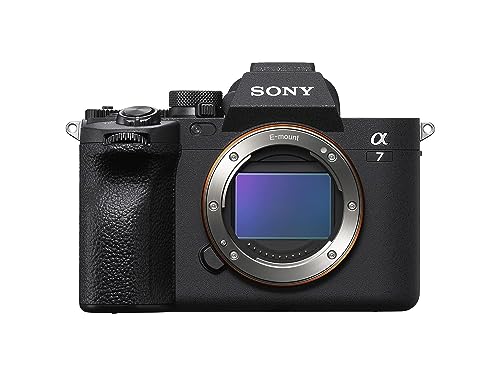
Sony Alpha 7 IV — Best editorial food production body
The Alpha 7 IV is the editorial food set’s default anchor because it disappears into the production. Tethered to the screen the team gathers around, it delivers the frame instantly and identically for six hours of styling; its colour holds the danger foods honestly under the mixed light of real locations; its files carry a cover’s crop and a spread’s scrutiny without complaint. Magazine workflows standardise on bodies like this not from habit but from scar tissue — every failure mode has been met, priced and engineered out of the day.
- Full-frame mirrorless body on the Sony E-mount system
- Reliable tethering for editor-approved shooting
- High-quality files suited to covers and spreads
- Extensive lens range including food-friendly primes
Its lens ecosystem is the food photographer’s quiet advantage: the fast primes that render a shallow, appetite-deep focus on the hero dish, the zooms that cover a restaurant’s whole story in one visit, and the rental availability that saves a shoot when a lens dies in another city. Food photography is a lens-led genre wearing a camera guide’s clothes, and this system owns the deepest wardrobe on the list.
For the cookbook marathon — the forty-day production where consistency is the entire contract — its saved settings and civilised file handling become the project’s memory. Day thirty’s soup must match day three’s, in colour, in geometry, in appetite, and the Alpha 7 IV’s workflow citizenship is what makes that promise keepable by tired humans. That is what a production body means, and it is why this one opens the list. Its customisable buttons should carry the set’s whole religion: tether check, white balance, the hero’s exposure, one thumb away.
Strengths
- Tethered reliability the whole set can gather around
- Colour that keeps the danger foods honest and appetising
- Files and lenses that cover covers, spreads and whole restaurants
Trade-offs
- Production workflow assumes a crew or a disciplined solo routine
- Menu depth rewards a proper setup before the first shoot
- Overkill for purely social food posting
Best for: magazine, cookbook and commercial food photographers.
Not suited for: casual food posters wanting a camera that is its own studio.

Canon EOS R6 Mark II — Best colour for appetite straight from camera
If the Sony is the production anchor, the R6 Mark II is the appetite accelerator: its default colour is the most immediately delicious on this list, rendering the warmth of bread, broth, skin and wood with a generosity that editors describe as the dish looking like the best seat in the restaurant smells. For brand and creator work on real deadlines — the menu shoot delivered this week, the campaign posted this month — files that arrive nearly finished are a business model, not a shortcut.
- Full-frame mirrorless body on the Canon RF mount
- Warm, appetising default colour rendering
- Fast subject detection for hands, chefs and action at the pass
- Comfortable handling for long location days
Restaurant work specifically suits it. The pass is a fast, steamy, badly lit theatre, and the Canon’s detection and low-light manners catch the chef’s hands, the pour, the flame, at the speed they actually happen, while its stills remain the set’s formal portraits between services. A one-body restaurant commission — atmosphere, portraits, plates, action — is this camera’s home fixture, and it plays it like one.
Its files also forgive the editorial sin of mixed light more kindly than most: the window’s daylight, the kitchen’s fluorescents and the dining room’s tungsten can share a Canon frame without the colour wars that consume an afternoon in post. Food photographers who shoot real rooms for real clients learn to price that forgiveness accurately. It is worth a stop of anybody’s specification. Programme its picture profiles per client — the brand that sees its own colour in the first frame approves the set by lunch.
Strengths
- Default colour that makes food look like its best review
- Restaurant action — hands, pours, flames — caught at working speed
- Mixed-light forgiveness that saves real location days
Trade-offs
- Slightly less resolution headroom for the largest crops
- Video tools are generalist rather than recipe-film specialised
- RF’s best food primes carry professional prices
Best for: restaurant, brand and deadline-driven editorial photographers.
Not suited for: cookbook productions needing maximum tethered infrastructure.

Fujifilm X-T5 — Best in-camera look for editorial style
Editorial food photography is a designed world, and the X-T5 designs in camera. Its film simulations are coherent palettes with a magazine’s confidence — the bright, slightly nostalgic rendering that lifestyle features have made their signature is available here as a decision made in prep rather than a preset applied in hope. A photographer with a point of view about colour will find this body the fastest route from intention to printed page on the entire list.
- APS-C mirrorless body on the Fujifilm X mount
- Film simulation colour modes with editorial character
- High-resolution files for feature reproduction
- Tactile dials for deliberate set discipline
The high-resolution sensor serves the feature format specifically: the detail of a crumb structure, a herb’s architecture, a ceramic’s glaze survives the reproduction sizes features actually use, and its files crop for the vertical formats of digital editions without thinning into apology. Paired with the X mount’s food-friendly primes, it produces the shallow, luminous plate portraits that define the contemporary editorial table.
Its tactile operation suits the set’s rhythm in an underrated way: settings visible at a glance, changed by dial rather than menu, so the photographer’s attention stays on the stylist’s hands and the food’s brief prime. Food waits for no menu dive — the sauce skins, the steam thins, the herb wilts — and a camera whose exposure can be trimmed by touch, eyes up, is a camera that respects the subject’s perishability. Let one simulation own a whole feature; mixing palettes inside a story reads as two photographers arguing.
Strengths
- In-camera palettes with genuine editorial character
- Resolution that carries features and digital crops
- Dial-led operation that keeps eyes on the food, not menus
Trade-offs
- APS-C gives up a little of the full-frame low-light ease
- Tethering ecosystem is thinner than Sony’s or Canon’s
- Its look is a commitment — neutral-file purists should look up-list
Best for: feature photographers and creators with a designed colour point of view.
Not suited for: high-volume commercial sets built on tethered approval.

Canon PowerShot G7 X Mark III — Best café-table editorial compact
Half of editorial food photography’s modern life happens without a set at all: the café table by the window, the bakery’s morning tray, the market stall’s pyramid of fruit. The G7 X Mark III is that life’s perfect instrument — a compact whose fast lens makes window light feel like a studio, whose tilting screen frames the overhead shot from standing height, and whose colour renders the croissant’s lamination and the coffee’s crema with a warmth that publications happily print. It is the camera food writers carry, because it turns their lunch into their illustration.
- Premium compact with a fast built-in zoom lens
- Tilting screen for overhead and low table angles
- Built-in ND filter for bright café windows
- Warm, appetising colour in a pocketable body
Its built-in ND filter is the café photographer’s secret weapon: the bright window that makes the light beautiful also makes it excessive, and the G7 X tames it without a filter kit, keeping apertures where the food’s depth of field wants to live. Combined with a zoom that covers the table’s whole geography — the wide scene, the hero plate, the detail — it produces a feature’s worth of frames from one seat, one coffee, one unbothered hour.
Judge it as the genre’s roving reporter and it is flawless at the post: present at every table, welcome in every restaurant that would flinch at a production, and good enough that its pictures sit inside editorial features without apology. The full-frame picks own the studio; this little Canon owns the world the studio imitates, and the world is where the readers eat. Its ND and its zoom together replace a small lighting kit on location — the café kit that fits a coat is a business model.
Strengths
- A magazine table from one café seat and one window
- ND filter masters the bright light food loves
- Discretion that real restaurants welcome instead of fearing
Trade-offs
- Fixed lens and small sensor set its ceiling in dark dining rooms
- No tethering — it is a solo instrument
- Files for features and social, not for covers
Best for: food writers, café creators and travelling editorial shooters.
Not suited for: studio productions or cover assignments.

Sony ZV-E10 II — Best creator-tier food camera
The contemporary food creator shoots the dish twice: once for the page, once for the feed’s moving version, often from the same tripod without sitting down. The ZV-E10 II is built for exactly that double life — stills with the bright, clean rendering the editorial style demands, and video that turns the same styled table into the recipe film, the pour shot, the steam reveal. Its creator conveniences, so easily mocked by traditionalists, are a solo food studio’s staffing plan.
- APS-C mirrorless body on the Sony E-mount system
- Creator-first controls for solo production
- Strong video for recipe films from the same setup
- Compact body for kitchen-counter studios
Its kitchen practicality is specific: a small body that lives on a counter without dominating it, focus that holds a dish while hands enter and leave the frame, and operation simple enough to run with flour on one hand — a production condition no specification sheet has ever listed and every food creator recognises instantly. The camera that respects the mess of actual cooking will be used for actual cooking, and its archive will smell of real food.
As the creator grows toward the editorial tier, the E-mount beneath it holds the whole ladder — the food primes, the production bodies above — so the ZV-E10 II is a beginning that does not have to be sold to be succeeded. For the recipe creator professionalising a feed into a publication, it is the list’s most natural first uniform. Flour-proof the workflow, not the camera: a cover for the body, a cloth for the hands, and the session survives the baking.
Strengths
- Stills and recipe video from one unmoved kitchen setup
- Solo operation designed for floury, busy, real cooking
- A system ladder that carries the creator to the editorial tier
Trade-offs
- APS-C files ask more of big-print ambitions
- No viewfinder for bright-window stills work
- Creator conveniences outnumber pro production features
Best for: recipe creators, food bloggers and kitchen-counter studios.
Not suited for: tethered commercial sets or cover-only assignments.

Fujifilm X100VI — Best lifestyle food camera with a signature
Some food photography is not about the dish but about the life around it: the long lunch, the market morning, the kitchen table where the recipe became a family. The X100VI is that photography’s beloved instrument. Its fixed lens frames food the way a seated guest sees it, its film colour gives the table a diary’s warmth and coherence, and its quiet, unobtrusive presence lets real meals continue around the photography — which is precisely the editorial style’s founding illusion, that the reader has arrived at a real table rather than a set.
- Premium compact with a fixed wide-angle lens
- Film simulation colour for a recognisable table style
- Quiet leaf shutter for unobtrusive restaurant work
- High-resolution files with crop flexibility
Its limitations shape a discipline lifestyle shooters prize: one perspective means the photographer composes with position and arrangement, building a body of work whose consistency becomes a signature across restaurants, cities and seasons. Publications commission that signature — the recognisable table — and the X100VI’s owners are hired for their frames’ family resemblance as much as for any single image.
It will not tether a cookbook production or zoom to the pass’s drama, and it does not apply for those jobs. Its candidacy is the lifestyle feature, the travel table, the creator whose food photography is a memoir with recipes. In that candidacy it has no rival on this list, because no other camera’s pictures look so much like a life the reader wants to join — which, in the editorial food economy, is the entire transaction. Its digital crop modes are the lifestyle shooter’s second lens — use them as composition, not as rescue.
Strengths
- A table style audiences and editors recognise instantly
- Quiet discretion that lets real meals stay real
- Film colour that unifies a whole lifestyle body of work
Trade-offs
- Fixed lens cannot reach or isolate like a system camera
- No tethering or production infrastructure
- Scarce and premium — a commitment, not a trial
Best for: lifestyle features, travel tables and memoir-style food creators.
Not suited for: commercial sets, cookbooks or zoom-dependent restaurant work.
What Exactly Is the Editorial Food Look — and How Is It Lit?
Strip the style to its grammar: bright but not blown, natural but heightened, styled but caught. The food sits in light that reads as daylight even when it is not; shadows stay open and informative; colours are true with a half-step of generosity; and the arrangement includes the evidence of life — the torn bread, the used napkin, the hand entering frame — because the editorial revolution was precisely against the embalmed perfection of older food photography. The cameras here were chosen for serving that grammar: honest colour, highlight grace, and files that let a stylist’s controlled casualness survive reproduction.
The lighting is a window until proven otherwise: one large source, directional, diffused as needed, with reflectors doing the fill’s diplomacy. Studios imitate it with big softboxes placed like remembered windows, and the discipline is the same — one sun per table, shadows with a single logic, and a brightness that flatters without flattening. Steam and glaze, the style’s jewellery, exist only in backlight or strong side light; the editorial photographer composes the light for them first and arranges the plates second.
On location, the look becomes a negotiation with the room: the table moved to the window, the service timed to the light, the restaurant’s own character drafted as the set. This is where the portable picks earn their existence — the G7 X and X100VI shoot the real room at its best hour, while the production bodies bring the window with them in cases. Either way, the look is a promise the reader recognises: this food exists, in light like this, and you could be sitting there. Cameras that keep that promise are editorial cameras; the rest are merely cameras near food.
How Does a Food Shoot Actually Run, From Call Time to Cover?
It runs on the food’s clock, not the crew’s. Hero dishes are shot at their prime — the cheese pull’s minute, the steam’s first breath, the herb’s unwilted hour — so the schedule is built backwards from perishability, with stand-in dishes absorbing the lighting and framing rehearsals. The camera’s part in that choreography is readiness: tethered, saved settings, the frame composed before the hero arrives. The production bodies at the top of this list are, in essence, machines for being ready — their reliability is measured in heroes caught rather than specifications quoted.
The tethered screen is the shoot’s parliament. Editor, stylist and client judge the frame together, adjustments are made in centimetres — the spoon turned, the crumb relocated, the shadow fed — and the approved frame is captured before the dish declines. This is why tethering reliability outranks almost every camera virtue in editorial work: the parliament cannot convene around a connection that drops, and a dropped parliament costs the hero its prime.
After the heroes, the supporting frames widen the story: the ingredients’ portrait, the kitchen’s action, the table’s full geography, the detail that will sit beside the recipe’s method. A complete editorial package is an ecosystem of frames at several scales, and the lens systems behind the top picks exist to shoot all of them without the camera changing its colour testimony between scales. Consistency across the package is the art department’s first requirement and the camera system’s final exam.
How Should You Style Food So the Camera Can Tell the Truth?
The stylist’s paradox is that food must be arranged to look unarranged, and the camera’s honesty is the discipline that keeps the arrangement believable. Work at the food’s real scale: portions a person would eat, mess a person would make, wear a real table would show. The editorial style’s credibility — its whole commercial value — rests on the reader’s belief that this table could be theirs, and every over-styled frame spends that belief at a rate no camera can replenish.
Height, texture and colour contrast are the stylist’s three levers, and each is a camera consideration in disguise. Height needs the low angles and articulating screens the picks provide; texture needs the raking light and the file quality to hold it; colour contrast needs a pipeline that keeps the palette’s relationships truthful — the green against the red against the linen’s white. When styling and camera are chosen for each other, as this guide intends, the photograph looks inevitable, which is the style’s highest compliment.
And leave room for the accident: the drip, the crumble, the imperfect fold that tells the reader a human made this. Seasoned food teams shoot the perfected frame, then disturb it slightly and shoot again — and the disturbed frame is so often the published one that the practice has become doctrine. The camera’s job in that doctrine is simply to be ready twice, which returns the whole craft to readiness, the production virtue this list has prized from its first pick.
What Lenses and Angles Does the Editorial Table Need?
The plate portrait — shallow, luminous, the hero dish isolated in a glow of context — is the style’s signature frame, and it belongs to the fast prime at a seated guest’s distance. The overhead table is its counterweight: the whole story in one geometry, shot from the rigs the flat lay discipline describes, demanding depth rather than shallowness. The editorial photographer needs both grammars in one assignment, which is why the system cameras dominate the professional picks: one body, two lenses, the entire editorial language.
Angles follow appetite. A burger wants height in the frame and a lens low enough to grant it; a soup wants the overhead’s calm and the spoon’s ellipse; a roast wants the carve at table level with the family blurred behind. The camera that serves all three is the one whose lens bench and screen articulation never make the photographer choose between the dish’s best angle and the kit’s convenience — a mundane-sounding virtue that decides real commissions.
The detail shot deserves its own sentence, because editors build pages from it: the flake of salt mid-fall, the oil’s bead on the broth, the crumb’s architecture. Resolution and close-focus ability turn those details from crops of hope into frames of intent, and the picks’ file quality was weighted with the detail page specifically in mind. In editorial food, the smallest frame often carries the largest appetite.
How Do You Shoot Food in a Working Restaurant Without Becoming the Enemy?
By remembering that the restaurant’s product is the room’s pleasure, and the photography is a guest in it. Work before service or in its lulls; keep kit to the picks’ portable end when the room is live; never let a tripod leg enter a service path; and let the chef’s pass remain a workplace, not a set, until invited. The G7 X and X100VI exist on this list partly as diplomacy — cameras whose size says guest, whose quality says professional, and whose discretion buys the access that productions cannot.
Build the restaurant a return on the intrusion: images delivered promptly, credited generously, and framed for their channels as well as your pages. Editorial food photography runs on these relationships across a whole city’s dining rooms, and the photographer known for leaving a restaurant better publicised and entirely unbruised gets the call when the new menu launches. The camera is the smallest part of that reputation, but its manners — quiet, compact, quick — are the part the room actually experiences.
And shoot the room’s truth at its best: the regulars’ table, the kitchen’s choreography, the dish as it is actually served to actual guests. The editorial style’s readers have eaten in restaurants; they can smell a fabrication staged in a closed dining room at fifty paces. Authenticity, lit well, is the genre’s final technique — and it is available only to photographers the room trusts, with cameras the room forgets.
How Does the Editorial Photographer Direct a Dish?
A dish is directed like a shy actor: positioned for its best light, given one clear action, and photographed at the moment it forgets itself. The action might be the pour, the pull, the cut, the steam’s first rise — the verb that turns a portrait into a story — and the camera’s readiness exists to serve that verb’s timing. Directors of food learn to call the action late, when the set is already perfect, because the verb can be performed once at its best and the frame must be a finished painting waiting for its subject to move.
Hands are the style’s favourite cast: they hold, tear, serve and season, giving the reader’s own hands a place inside the frame. Photograph them with the respect due to models — clean, unhurried, directed in their geography — and let the focus system, or the photographer’s placed plane, honour the hand and the dish as co-stars. Several picks’ detection and focus manners were weighed with hands specifically in mind, because in editorial food the hand is the second face.
And know the dish’s biography before directing it. Where the recipe comes from, what the cook intends, which ingredient is the point — the photograph that knows these things arranges itself differently from the one that merely sees a plate. Editors commission that knowledge as much as technique; it is visible in the frame as intention, and no camera in this guide, however honest, can supply it from the bag.
What Does a Cookbook Production Demand That a Feature Does Not?
Endurance of identity. A feature is a day’s brilliance; a cookbook is a season of sameness, forty tables that must read as one book. The production’s camera system is its memory: saved settings, a colour decision defended across changing kitchens and seasons, files named and archived like a library being built in public. The Alpha 7 IV’s top ranking rests substantially on this — it is the body whose workflow forgets nothing, so the humans can concentrate on remembering the food.
A cookbook also shoots the process as faithfully as the results: hands in flour, pans at the flame, the method’s honest mess, because the reader must be able to follow the book with their own kitchen as the set. That doubles the camera’s duties — production portraits and working documentary in the same day — and it is where the hybrid virtues of the top picks, their focus and their video alike, stop being specifications and become the schedule’s salvation.
Finally, a cookbook is a collaboration with a future reader’s dinner, and its photography is a promise made months in advance. The camera that keeps colour honest in March will be thanked in December, at a stranger’s table, by a cook comparing their plate to the page. No other genre of photography is audited so deliciously, or so personally — which is why this guide ranks truthfulness, in the end, above every other virtue a food camera can have.
How Should a Beginner Enter Editorial Food Photography?
Through one window, one dish and one honest camera — the G7 X at a café table or the ZV-E10 II in a home kitchen — and a year of weekly practice in the style’s grammar. Cook the food yourself at first; the photographer who has made the dish knows its prime, its behaviour and its lies, and that knowledge photographs better than any lens. Publish the practice where the audience is kind and specific, and let commissions arrive when the archive can argue for you.
Study the style by reproduction: take a published editorial photograph you love and rebuild it — the light’s direction, the table’s palette, the arrangement’s geometry — with your own dish in the role. The exercise teaches more per hour than any tutorial, because it converts admiration into analysis, and the camera in your hands becomes a measuring instrument for the distance between your table and the page. Close that distance weekly and the style becomes yours by the ordinary miracle of practice.
And keep the beginner’s one advantage sacred: you are still cooking for people you love, at tables that matter to you. The professional’s access can be rented; that sincerity cannot. The creators who break into editorial work from their own kitchens bring the genre its periodic renewal — a reminder that the bright, honest table was always a real one first. Shoot yours like it counts, because in this style, it is the whole credential.
How Do Seasons Write the Editorial Food Calendar?
Editorial food is a seasonal literature. Spring’s green assertiveness, summer’s fruit at its brief perfection, autumn’s stored and roasted depths, winter’s citrus and ceremony — the calendar commissions the photographs before any editor does, and the working photographer’s year is a rotation of tables dressed by the market. The camera’s part in that rotation is neutrality of testimony: the same honest colour in April’s light and November’s, so the seasons themselves supply the variety and the photographer’s style supplies the continuity.
Plan the year’s shooting the way gardeners plan planting: the shoots that must happen in a fortnight’s window — the asparagus, the first strawberries, the new season’s oil — are scheduled with a religious respect for perishability that the production sections above described at dish scale. A camera system that is ready, tethered and colour-locked in the studio makes those windows easy to honour; a chaotic kit turns the year’s best ingredients into anecdotes about what might have been photographed.
How Do the Six Compare at the Editorial Table?
By production scale: the Alpha 7 IV and R6 Mark II anchor sets and commissions; the X-T5 designs features in camera; the G7 X Mark III reports from real tables; the ZV-E10 II runs the creator’s double shift of stills and film; the X100VI signs lifestyle work with a recognisable hand. The styling and the light outrank them all — but each of these renders the styling and the light truthfully, which is the whole job.
| Pick | Badge | Where it earns its place |
|---|---|---|
| Sony Alpha 7 IV | Best editorial food production body | The production anchor: tethered reliability and files that carry a cover. |
| Canon EOS R6 Mark II | Best colour for appetite straight from camera | The delicious default: Canon colour that shortens the road from set to publish. |
| Fujifilm X-T5 | Best in-camera look for editorial style | The designed palette: film colour for features with a point of view. |
| Canon PowerShot G7 X Mark III | Best café-table editorial compact | The café spread in a pocket: fast lens and warm colour at any table. |
| Sony ZV-E10 II | Best creator-tier food camera | The recipe creator’s body: editorial stills plus the moving version. |
| Fujifilm X100VI | Best lifestyle food camera with a signature | The diary of good tables: fixed lens, film colour, lifestyle signature. |
What Mistakes Do Food Photographers Make?
Shooting the food when the crew is ready instead of when the food is. The hero’s prime is a minute, not a mood, and it does not reschedule. Build the set around stand-ins, rehearse everything, and let the dish’s arrival be the last event of the setup rather than the first. Every production body on this list is a readiness machine; the mistake is owning one and still improvising the schedule.
Letting mixed light fight in the frame. Daylight, tungsten and fluorescent in one plate photograph as a colour argument the food always loses. Choose the dominant light, tame or kill the others, lock white balance to the decision, and let the camera’s honest pipeline work on a scene with one story to tell.
Over-styling into disbelief. The twelfth prop, the impossible garnish, the sauce’s calligraphy — each spends the reader’s trust, and trust is the editorial currency. Style to the edge of appetite and stop one adjustment early; the frame that looks caught outsells the frame that looks constructed, in this style above all.
Forgetting the vertical and the detail. Editors lay out in crops the photographer did not imagine, and feeds crop crueller still. Shoot the hero with the editions’ geometries in mind and bank the detail frames as a matter of routine — the package that anticipates its layouts is the package that gets commissioned twice.
A fifth mistake is photographing the menu instead of the meal. Dishes shot as specimens — isolated, centred, contextless — belong to a catalogue, while the editorial style sells the experience around the food: the table, the hands, the room, the hour. Include the meal’s world in at least half the frames of any set, and the package gains the thing readers actually subscribe to — a place at the table.
Finally, neglecting to taste. The food photographer who never eats the subject slowly loses the plot of the entire genre, because appetite cannot be faked by someone who has forgotten it. Sit down after the shoot, eat the hero’s twin, and let the memory of the flavour audit the photographs. The frames that match the taste are the frames that will work on strangers.
Final Recommendation
For the professional editorial set, the Sony Alpha 7 IV is the anchor recommendation — tethered, truthful and production-proof — with the Canon EOS R6 Mark II beside it wherever appetite must arrive straight from the camera on a deadline. The Fujifilm X-T5 designs features in camera, the ZV-E10 II runs the creator’s kitchen studio, the G7 X Mark III reports from real tables, and the X100VI signs the lifestyle work with a hand readers learn to love. All six share the style’s founding discipline: the food is the author, and the camera is merely its most faithful translator.
Whichever body sets up at your table: light it like a window, style it like a meal, shoot it at its prime, and keep the colours as honest as the recipe. That is the whole editorial style, and every camera here is fluent in it. The rest — the readers, the commissions, the second helpings — follows appetite, as it always has. Bon appetit, in every sense the phrase can honestly carry.
A closing appetite note: this style endures because it respects its subject. Food is the one art form its audience will definitely consume, and photographing it brightly, honestly and at its prime is a form of hospitality extended through a page. Choose the camera that extends it best from your table, and then — the genre’s oldest production note — serve it while it is hot.
Frequently Asked Questions
Is this guide affiliated with Bon Appetit magazine?
No. The keyword’s phrase is read here — openly — as the name of a widely recognised editorial style: bright, natural, honest food photography of the kind that publication popularised. This guide is an independent camera roundup for photographers who want to work in that style, for their own magazines, brands, books and feeds. Read it as a style compass rather than a brand: the look belongs to everyone willing to light honestly.
What makes food look appetising in a photograph, technically?
Warm-accurate colour in the reds and greens, open shadows, protected highlights on glaze and steam, and texture rendered at the size the piece will be published. The picks here were ranked on exactly those behaviours, which is why colour pipelines outrank specifications throughout this guide. Steam is the fastest witness — if the steam reads, the appetite usually follows.
Do I need to tether for editorial food work?
For commissioned set work, effectively yes — the tethered screen is where editors and clients approve, and approval is the product. For location, café and lifestyle work, the untethered picks here are the correct tools. Match the workflow to the commission, not to the camera you happen to own. A laptop, a cable and a saved preset turn any of the system picks into a parliament-grade setup.
Which of these is best for a cookbook?
The Alpha 7 IV, for its tethered reliability and day-after-day consistency across a long production — with the R6 Mark II a close alternative where its colour suits the book’s art direction. A cookbook is a consistency contract above all, and both bodies are built to sign it. Art-direct the consistency: one palette decision, defended across every kitchen the book visits.
Can a compact really shoot publishable food photography?
In its roles, yes — the G7 X Mark III’s café and travel features and the X100VI’s lifestyle work are published constantly, because their files are honest and their access is unmatched. Covers and commercial sets remain the system bodies’ territory, and this guide’s ranking says so plainly. Their access is the credential — restaurants admit them because rooms forget they are cameras.
How important is the lens for food photography?
Second only to the light. The fast prime for the plate portrait and the versatile zoom for the room’s story are the editorial pair; every system pick here was chosen partly for the bench behind it. Budget the lens with the body, or the body will spend its life apologising for the glass. Buy the prime first if plates are your subject, the zoom first if rooms are — the order follows the assignment.
Related Guides
Keep exploring with our flat lay camera guide and the cameras for cooking streams roundup and our cameras for first time photographers guide — each guide applies the same verified-pool, no-invented-specs approach to a neighbouring question.


