ilcastellomenu.com is reader-supported. When you buy through links on our site, we may earn an affiliate commission.
Where to Buy
A cooking stream is two shows at once: the food, which must look so good that viewers can almost smell it, and the cook, whose face and hands carry the conversation while the food does its slow work. The best cameras for cooking streams are chosen for that double act. They must hold focus on a pair of hands moving between board and pan, render steam and sizzle without dissolving into mush, survive a kitchen’s heat and splatter with good humour, and frame the overhead shot, the genre’s signature view straight down onto the board, that turns a recipe into a story anyone can follow.
The kitchen is a hostile studio disguised as a friendly room. Light bounces off steel and tile, the hob fills the air with grease and vapour that find every lens, the cook moves constantly between fridge, board and stove, and the audience watches on phones while deciding what to cook tonight. So this guide weighs the practical virtues as heavily as the sensor: autofocus that tracks hands rather than faces alone, colour that keeps a tomato honest, mounts that hold an overhead angle safely above hot oil, and operation simple enough that a cook with floury hands can start the stream by voice or gesture.
The six picks divide the kitchen’s positions between them: the overhead anchor, the face camera, the roving detail camera for the pan’s close-up, and the small specialists that cover a second angle or a tiny kitchen. Every one was judged as part of a stream a single cook can run alone, because that is who cooking streams are made by.
Key Takeaways
- A cooking stream is two shows: the overhead food shot and the cook’s face, and both need a camera.
- Hands are the real subject, so autofocus that tracks hands and ingredients beats face-only tricks.
- Steam, splatter and heat are studio conditions here; placement and protection are camera skills.
- Colour honesty matters: the audience is deciding whether the food looks right.
- One cook runs the whole show, so voice, gesture and timer controls are production features.
- Light the board first; every camera in this guide looks better than its price under good kitchen light.
In this guide
Quick Picks
| Pick | Badge | Why it is here |
|---|---|---|
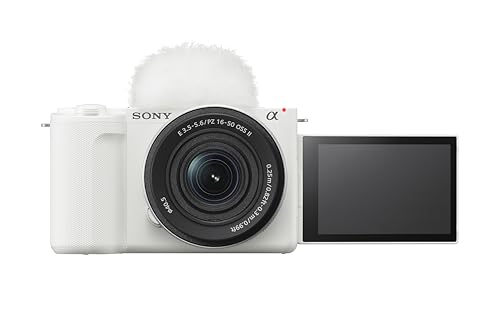
| Sony ZV-E10 II | Best overhead anchor camera | The interchangeable-lens anchor for the board shot: sharp, reliable autofocus on hands and a lens choice for every kitchen’s ceiling height. |
| DJI Osmo Pocket 3 | Best for pan close-ups and movement | The gimbal camera that follows the cook from board to hob, gliding into the pan for the sizzle shot no fixed camera can reach. |
| Canon EOS R50 | Best face camera for the cook | Kind colour and dependable eye focus for the talking camera, the frame where the audience actually lives. |
| Elgato Facecam | Best fixed desk-style camera for small kitchens | A fixed-focus, set-and-forget camera for the compact kitchen or the baking desk, sharp at working distance and utterly reliable. |
| OBSBOT Tiny 2 | Best for solo cooks who move | A tracking camera that follows the cook around a larger kitchen, reframing between fridge, board and hob without an operator. |
| Sony ZV-1F | Best simple starter for a first channel | A fixed-lens, wide-view starter camera for the new streamer: one button, a wide frame that forgives positioning, and no lens decisions. |
How Did We Choose These Cooking Stream Picks?
We judged the candidates against a real stream’s running order: the overhead mise en place shot that opens the show, the knife-work sequence where hands and blade must stay in focus at speed, the pan close-up where sauce consistency is the entire content, the face-to-camera explanation while something fries unattended behind the cook, and the plated reveal, the thumbnail moment, shot from above and from the front in quick succession. A camera earned its place by owning one of those beats and surviving the others in a working kitchen’s heat, light and mess.
The filters were a streamer’s rather than a studio’s. Solo operation first: every pick can be started, framed and trusted by one person whose other hand is holding a spatula. Kitchen survival second: positions and builds that tolerate steam and splatter, or are cheap and small enough to protect easily. Colour third, assessed on food specifically, because skin-tone expertise does not automatically transfer to the red of a chilli or the green of herbs at the wilting point. Cameras that demanded a crew, a rig or a clean studio were admired and sent to other guides.
Why Is the Overhead Shot the Whole Grammar of a Cooking Stream?
Because it is the viewer’s own view. The overhead frame looks down at the board exactly as the cook’s audience imagines their own hands doing the work, which turns watching into rehearsal: the knife grip, the dice size, the order of ingredients entering the pan are all legible at a glance, and a recipe taught from overhead needs half the words of one taught from across the room. Every successful cooking channel discovers this frame sooner or later, and the stream’s whole geography, where the main camera hangs, where the cook stands, where the light falls, reorganises itself around serving that single honest angle.
The overhead position is also the most demanding in the kitchen. The camera hangs above heat and steam, looks through rising vapour at a board lit by whatever the ceiling provides, and must hold focus on hands that move toward and away from it constantly. That is why this guide assigns the overhead role deliberately per pick rather than assuming any camera can be pointed downward, and why the sections on mounting and light carry as much weight as the cameras themselves.

Sony ZV-E10 II — Best overhead anchor camera
Mounted above the board, the ZV-E10 II does the cooking stream’s defining job with a professionalism that belies its price. Its autofocus tracks hands and ingredients with the calm the overhead shot demands, neither hunting when a hand leaves the frame nor locking onto the board’s grain when it returns, and its APS-C sensor renders the food’s detail, the crumb of a loaf, the marbling in a steak, at a level that makes viewers trust the recipe. A lens chosen for the kitchen’s actual ceiling, wider for low rooms, longer for high ones, completes a rig that can live above the board permanently.
Its creator design serves the solo cook directly: a clear tally, simple streaming output to the capture setup, and handling that a floury hand can manage between tasks. It asks for the kitchen courtesies, a mount that is genuinely secure, a lens protected from the worst of the steam, and mains power for a long stream, and in exchange it becomes the camera the whole channel is built around, the one whose footage the audience learns to trust like a friend’s kitchen.
- Sensor class: APS-C, food detail in depth
- Position: fixed overhead, lens to suit ceiling
- Focus: tracks hands calmly
- Role: the board shot, the channel’s anchor
Strengths
- The overhead frame, held beautifully.
- Autofocus a solo cook can trust.
- Lens choice for any kitchen’s height.
Trade-offs
- Mount security is the cook’s duty.
- Steam discipline still required.
- No stabilisation, irrelevant once mounted.
Best for: the main overhead camera for a serious channel. Not suited for: a handheld roaming role.
Mounting counsel: rig the overhead camera to something that cannot be knocked by a raised pan or a tall cook, and test the frame with the largest board and the tallest stack of bowls the channel uses. Overhead rigs fail by inches and by optimism, and a camera that has survived a month of services has earned its place above the food.
Its second life strengthens the case: unclipped from the rig, the same body shoots the channel’s stills, the recipe cards and the cookbook photographs, in the same colour world as the stream. Channels are built from that coherence, and a camera that supplies both halves of it pays for itself in the audience’s recognition alone.

DJI Osmo Pocket 3 — Best for pan close-ups and movement
Every cooking stream has a moment the fixed cameras cannot cover: the sauce breaking, the steak’s crust forming, the wok’s toss. The Pocket 3 is the camera that goes and looks. Its gimbal turns the cook’s walk from board to hob into a smooth tracking shot, its close focus lets the pan fill the frame with the food’s most persuasive seconds, and its size means it can be picked up with one hand while the other keeps stirring, which is the entire ergonomics of solo cooking television. Face tracking holds the cook during the explanation pieces, then the same camera tilts down into the steam for the detail.
It is a complement rather than the anchor, and the guide assigns it honestly: its fixed lens and small body are not the overhead solution, and a whole stream shot on it would feel restless. Used as the movement camera in a two-camera kitchen, it supplies the energy and the close-ups that make the difference between a demonstration and a show, and its footage quality stands beside the bigger cameras in the edit without apology.
- Form: pocket gimbal, one-handed
- Movement: board to hob in one glide
- Focus: close enough for the pan’s story
- Role: detail, movement and second angle
Strengths
- The sizzle shot, gathered live.
- One-handed while the other stirs.
- Face tracking for the talking beats.
Trade-offs
- Not the overhead anchor.
- Steam on a small lens needs wiping.
- A full stream on it feels restless.
Best for: the second camera in a two-camera kitchen. Not suited for: the only camera for a formal channel.
Steam counsel: the Pocket’s lens is small and close to the action, so build the wipe into the choreography, a clean cloth at the hob, a practised pass between beats, presented to the audience as part of the cooking rather than hidden from them. Viewers forgive a wiped lens instantly and a fogged one never, because the fogged lens looks like the food’s fault.
Its vertical framing serves the short-form life of the same recipe, the sixty-second version that recruits tomorrow’s stream audience. Cooks who shoot the stream and the short in one performance, the Pocket handling the vertical close work while the anchor holds the wide, find their channels growing in both formats from a single afternoon’s cooking.

Canon EOS R50 — Best face camera for the cook
The audience’s loyalty attaches to the cook, not the board, and the R50 is the face that loyalty deserves. Canon’s colour renders skin kindly under kitchen light’s mixture of window, ceiling and hob glow, its eye autofocus holds the cook through the explanations, tastings and asides that make up most of a stream’s minutes, and the whole camera is friendly enough to be operated between tasks without breaking the cook’s rhythm. On a small tripod at the kitchen’s conversational corner, it becomes the stream’s hearth: the frame viewers settle into while the food does its slow work elsewhere.
It doubles as the channel’s stills camera and its second overhead in a pinch, and its price lets a starting channel field the two-camera setup this guide recommends from the first month rather than the second year. Its limits are the familiar APS-C ones in dim kitchens, answered by the lighting discipline the guide preaches anyway, and by a fast prime that turns the face camera into a genuinely beautiful portrait instrument for the cookbook’s author photograph as well.
- Sensor class: APS-C, kind Canon colour
- Focus: eyes held through the chatter
- Position: the conversational corner
- Role: face camera and channel stills
Strengths
- The cook rendered like a friend.
- Eye focus that frees the talking.
- Two-camera channels from month one.
Trade-offs
- Dim kitchens want light or fast glass.
- Not the detail camera for pans.
- Kit lens is a starting point only.
Best for: the face-to-camera role in any kitchen. Not suited for: the overhead anchor in a big kitchen.
Placement counsel: put the face camera where the cook naturally pauses, the end of the counter where tasting happens, rather than where the kitchen’s geometry suggests, because the best face footage is caught at the cook’s habitual stations. A camera aimed at where the cook actually stands outperforms a theoretically perfect angle aimed at where they ought to.
Its audio path deserves a mention in a genre where the cook’s voice competes with extractors and sizzling: the R50 takes proper microphones gladly, and a small wireless lavalier on the cook’s apron transforms the stream’s intelligibility more than any camera upgrade in this guide. Buy the microphone before the second lens; the audience is listening harder than it is looking.

Elgato Facecam — Best fixed desk-style camera for small kitchens
Small kitchens and dedicated baking desks have a geometry the big rigs ignore: the camera must live within arm’s reach of the work, never be knocked into the flour, and be sharp exactly at the distance where hands and bowls actually are. The Facecam’s fixed focus is set for precisely that working distance, its picture is honest and detailed without processing flattery, and its set-and-forget nature suits a cook who wants the camera to be furniture rather than a colleague. For the stream that is mostly one workstation, sourdough at the bench, decorating at the desk, it is the quiet professional answer.
It concedes the wide kitchen and the roaming shot entirely, and its honesty about light means the bench must be lit like it matters, which it does. Within its station it is close to flawless: no focus hunting during a long knead, no settings drift between streams, no battery arithmetic. Baking channels in particular, whose work is slow, floury and close, have adopted it as their bench camera, and the guide endorses the adoption.
- Focus: fixed at working distance
- Position: bench or desk, permanent
- Picture: honest, unprocessed, detailed
- Role: the single-workstation camera
Strengths
- Never hunts, never drifts, never dies.
- Sharp exactly where the work is.
- Furniture-grade reliability.
Trade-offs
- One station is its whole world.
- Lighting must be provided honestly.
- No roaming or wide duties.
Best for: baking benches and compact one-station kitchens. Not suited for: a multi-position family kitchen show.
Bench counsel: set the Facecam’s height so the frame includes the hands’ full working arc and the bowl’s rim, then leave it for a month. Single-station channels are built on the audience’s spatial familiarity, the bench becoming a known place, and a camera that never moves is the foundation of that familiarity.
Its endurance suits the long, slow genres: the all-day sourdough stream, the wedding-cake build, the preserve-making marathon, where the camera must simply persist while the work accumulates. Marathon streams are a growing format, and their first technical requirement is a camera that treats eight hours as a normal request.

OBSBOT Tiny 2 — Best for solo cooks who move
The larger kitchen defeats fixed cameras by geography: the cook’s circuit between fridge, board, hob and oven exceeds any single frame, and the solo streamer either accepts a wide, distant shot or hires a camera operator. The Tiny 2 is the third option. Its motorised tracking follows the cook around the circuit, reframing at each station, answering to gestures when the cook’s hands are too floury or too full for controls. For the energetic, walk-and-talk cooking show, the family kitchen format, the stream built around a moving host, it supplies a directed feel no static rig can imitate.
Its sensor is a webcam-class instrument and the guide keeps it out of the beauty roles: the food’s close detail belongs to the anchor and the Pocket. As the movement camera in a bigger kitchen, though, it solves a real production problem at a fraction of a crew’s cost, and its presence lets the cook perform the kitchen rather than present from one corner of it. Channels built on personality, where the host is the format, will find it close to indispensable.
- Form: motorised tracking camera
- Control: gestures for floury hands
- Role: the moving host’s camera
- Picture: strong in lit kitchens
Strengths
- Follows the cook’s whole circuit.
- Hands-free by design and by gesture.
- A directed feel, crew-free.
Trade-offs
- Not the food’s beauty camera.
- Tracking wants a reasonably lit room.
- Premium price for a specialist.
Best for: personality-led shows in larger kitchens. Not suited for: the overhead or close-up roles.
Circuit counsel: walk the kitchen’s circuit once with the Tiny 2 watching before the first real stream, and note where its tracking hesitates, usually where the cook passes behind the island or turns fully away. Adjust the camera’s perch for those moments specifically; tracking cameras are placed by rehearsal, not by hope.
Its gesture control finds an unexpected second use in the messy middle of recipes, starting and stopping the recording between segments when a stream is being captured for editing rather than broadcast live. The cook who can direct the camera with a raised palm keeps their hands in the recipe and their attention on the food, which is the entire philosophy of solo production.

Sony ZV-1F — Best simple starter for a first channel
The first cooking channel needs encouragement more than it needs options, and the ZV-1F is encouragement in camera form. Its wide fixed lens forgives the new streamer’s positioning, keeping the cook and the counter in frame from a small tripod; its operation is a single confident button; and its picture is bright, friendly and entirely adequate for the audience a first channel actually has. There are no lenses to buy, no mounts to engineer, no settings rabbit holes to vanish into during the month when the channel’s fate is decided by whether the cook streams twice a week or gives up.
Its ceiling is real and should be planned for: the fixed lens cannot become an overhead detail camera, and low light tests it sooner than the interchangeable picks. The guide’s advice is to treat it as the channel’s first season, the camera that proves the audience exists, after which the anchor-and-face system above becomes a purchase the channel’s own revenue can argue for. Many successful cooking channels have exactly this biography, and their founders keep the little camera for the market visits and the holiday specials.
- Form: fixed-lens compact, wide view
- Operation: one-button simplicity
- Role: first-season and travel camera
- Picture: bright and friendly
Strengths
- Streams started, not contemplated.
- Wide frame forgives a small kitchen.
- No lens budget, ever.
Trade-offs
- Cannot grow into the anchor role.
- Dim kitchens test it early.
- Fixed view for close-ups.
Best for: a brand-new channel’s first season. Not suited for: an established channel’s main camera.
Starter counsel: spend the money this camera saves on the two things the audience actually notices, light over the board and a microphone on the cook. A ZV-1F under good light with clean audio outperforms, in subscriber growth, a flagship under a ceiling bulb with echoing sound, and the first season’s budget should be allocated by that truth.
Its travel life deserves the final line: the market tour, the producer visit, the holiday kitchen special are all formats a cooking channel grows into, and a camera that fits a coat pocket with its wide, forgiving frame is the one that actually gets taken. The starter camera’s second career is longer than most main cameras’.
How Do the Six Compare Side by Side?
| Camera | Best kitchen role | Movement | Signature strength | Watch out for |
|---|---|---|---|---|
| Sony ZV-E10 II | Overhead anchor | Fixed rig | Hands in focus, food in detail | Mount security |
| DJI Osmo Pocket 3 | Pan close-ups | Handheld glide | The sizzle shot | Steam on the lens |
| Canon EOS R50 | The cook’s face | Tripod corner | Kind colour, eye focus | Dim kitchens |
| Elgato Facecam | Bench and desk | Permanent | Set-and-forget sharpness | One station only |
| OBSBOT Tiny 2 | Moving host | Tracks the cook | The whole circuit covered | Beauty close-ups |
| Sony ZV-1F | First season | Pocketable | One-button confidence | Growth ceiling |
How Should a Kitchen Be Lit for Streaming?
From above the board and in front of the cook, which in most kitchens means one good light doing two jobs and a second smaller one forgiving the face. The overhead camera sees what the board’s light gives it, so a bright, soft source over the work surface, angled to keep the cook’s own shadow off the food, is the stream’s foundation purchase. The face camera wants the cook lit from the front at a gentle angle, never from behind by the window that turns every explanation into a silhouette. Kitchens with mixed bulbs should be unified to one colour family, because food colour is the channel’s credibility and mixed light makes a tomato argue with itself across the frame.
Steam and shine are lighting problems before they are camera problems. A light placed too directly above the pan turns rising steam into a white curtain; a slight angle keeps the steam visible as atmosphere without letting it white out the food. Shiny sauces and glazes want the light large and soft rather than small and hard, which is why the softbox over the board is the cooking channel’s universal furniture. Every camera in this guide looks a class better under that discipline, and none of them can substitute for it.
How Do You Mount an Overhead Camera Safely?
Like the food’s safety depends on it, because it does. The mount must be mechanical, clamped or fixed to structure, a ceiling fitting, a shelf standard, a purpose-built overhead rig, never adhesive, never suction, never a stack of optimism. The camera’s weight, its cable’s tug and the kitchen’s daily knocks all argue for a mount rated well beyond the load, installed and then tested by hanging the week’s heaviest pan from the cook’s own reach beneath it and asking whether the frame moved. Cables are routed along the mount and away from the hob’s heat, and the whole rig is inspected on the same schedule as the smoke alarm.
Framing is the mount’s second half. The overhead frame should hold the board, the cook’s hands’ full working arc and a margin for the bowl that enters from the side, and no more, because wasted frame is wasted detail on the food. Set it with the largest recipe the channel cooks, the holiday bird, the full batch of dough, because a rig framed for a Tuesday omelette will crop the Sunday roast, and re-rigging mid-season breaks the audience’s spatial familiarity with the kitchen.
What Audio Does a Cooking Stream Need?
The cook’s voice close and clear above a kitchen that is honest about its noises. A wireless lavalier on the apron is the genre’s standard because it travels the cook’s circuit and keeps the voice constant while the extractor, the sizzle and the timer all compete. The sizzle itself is content, not noise, and a second, room-side microphone or the anchor camera’s own audio, mixed low, gives the stream its appetising bed: the audience should hear the food working without ever straining for the words. Monitor the mix on headphones before the stream, during the loudest operation the recipe contains, because that is the moment the balance will fail if it is going to.
Cooking streams also live or die on the unscripted sounds being intentional: the timer’s beep acknowledged, the extractor switched off for the explanation, the tasting’s pause respected. A cook who narrates their soundscape, telling the audience what they are hearing and muting what they are not discussing, turns a noisy room into a produced programme, and the cameras here all support the microphone arrangements that make that production possible.
What Mistakes Do New Cooking Streamers Make?
Streaming the face and neglecting the food is the founding error: an hour of a cook talking beside an unseen pan is a podcast with props. The second is the unsafe or wobbling overhead rig, which the audience can sense even when it holds, and which must never merely hold. Third is mixed, dim light that makes good food look like a security recording. Fourth is audio surrendered to the extractor fan, the stream’s most common and most preventable death.
Fifth is buying the third camera before the first light. The order of purchases in this genre is settled by the audience’s senses: they taste with their eyes, under light, and listen with patience only when the voice is close. Cameras multiply angles; light and audio multiply watchability, and the streamer who funds them in that order grows a channel while the gear-first streamer grows a cupboard.
Final Recommendation
Build the kitchen in the order the audience experiences it. The serious new channel should mount the Sony ZV-E10 II overhead, put the Canon EOS R50 on the cook’s face, light the board properly and mic the apron, and it will look professional from the first month. Add the DJI Osmo Pocket 3 when the pan close-ups start being missed, give a one-bench format to the Elgato Facecam, a big moving kitchen to the OBSBOT Tiny 2, and a first season on a small budget to the Sony ZV-1F without a moment’s shame. Cook something worth watching, keep the steam off the lens and the voice close, and the cameras will do the rest.
Related guides
Frequently Asked Questions
Do I really need two cameras for a cooking stream?
For anything beyond a first season, yes, because the genre’s grammar is the cut between the food and the cook. A single camera forces a choice the audience feels as absence: either the board with a disembodied voice, or the face with the cooking happening elsewhere. The two-camera minimum in this guide, overhead anchor plus face camera, is achievable at several price levels, and the single-camera formats that succeed, the bench close-up, the moving host, succeed by embracing a different grammar entirely rather than by compromising between the two.
How do I stop steam fogging the camera?
Distance, angle and air movement, in that order. Keep the lens out of the steam’s direct column, which usually means the overhead camera offset slightly toward the cook rather than centred over the pan, angle the shot so the vapour crosses the frame instead of filling it, and give the kitchen’s air a gentle path that carries steam away from the rig. A lens cloth at the station, used openly between beats, handles the rest. Sealed, small cameras like the Pocket tolerate the environment best, but no camera enjoys living in a cloud.
What lens belongs over the board?
The one that frames the board and the hands’ working arc from your ceiling’s height with the least distortion at the edges, which in a low kitchen is a moderate wide lens and in a tall one a standard. Extreme wide lenses bend the board’s edges and shrink the food; the overhead shot’s authority comes from looking like the cook’s own view, geometrically calm. Test the framing with the biggest recipe before fixing the mount, and let the kitchen’s architecture, not a catalogue, make the choice.
Can I stream a cooking channel from a phone instead?
A phone is a legitimate first season and a permanent backup, and its overhead footage, on a proper mount, has launched real channels. Its ceilings are the familiar ones: focus behaviour on hands, audio arrangements, heat during long streams and the small indignity of the recipe’s timer and the camera being the same device. The dedicated picks remove those ceilings in the order a growing channel meets them, which is why this guide treats the phone as the draft of a setup rather than its rival.
How long should a cooking stream run?
As long as the recipe’s real time, honestly edited by the cook’s narration, because the genre’s pleasure is companionship with a process. Streams that pad to an arbitrary length lose the kitchen’s natural rhythm; streams that rush a slow braise betray the food. The cameras here were chosen partly for stamina across a long, hot service, and the cook’s own pacing, mise en place before the stream, explanations during the passive minutes, is the format’s real running-time technology.
What is the first upgrade after the basic setup?
Light, then the microphone, then the second camera, in that order, and the order is not negotiable in this guide’s experience. Light transforms the existing camera’s footage beyond recognition; the microphone transforms the audience’s patience; the second camera transforms the grammar. Streamers who upgrade cameras first own sharper footage of the same dim, echoing kitchen, and their growth curves show it. Spend where the senses are.
How Do Baking Streams Differ from Cooking Streams?
Baking is slower, closer and cleaner, and its cameras should be chosen accordingly. The work happens at one bench over hours, the detail is in textures, dough’s elasticity, icing’s line, a crumb’s structure, and the audience’s pleasure is meditative rather than energetic. The Facecam’s fixed bench framing and the anchor’s overhead both suit it better than the moving cameras, and the long durations reward the set-and-forget virtues: no focus hunting during a four-hour prove, no battery drama at the moment the loaf finally enters the oven. Baking streams also forgive, and even prefer, a quieter visual rhythm, which makes them the natural home of the fixed camera.
The genre’s one technical signature is flour, which finds lenses and sensors with a patience steam cannot match. Bench cameras should be positioned so their fronts can be wiped without moving the frame, and the cook’s habit of a cloth pass between stages becomes part of the show’s rhythm. Channels that embrace that housekeeping on camera find the audience reads it as professionalism rather than interruption.
How Should a Stream Handle Viewers Cooking Along?
Cook-along viewers change the camera’s job from demonstration to accompaniment. They need the overhead frame held longer on each stage, the ingredients shown before they are used rather than after, and the cook’s face at the decision points, the seasoning, the doneness test, where the home cook needs a companion’s judgement rather than an instructor’s diagram. The two-camera grammar serves this beautifully when the director, who is also the cook, learns to dwell: the anchor dwelling on the board during the technique, the face camera dwelling during the judgement calls.
Pacing technology helps: a visible timer in frame, chapter announcements the audience can scrub back to, and the discipline of cooking the recipe at the audience’s speed rather than the cook’s. Cameras that start and stop cleanly by voice or gesture keep the cook’s hands in the food during all of it, which is why those small features recur through this guide’s picks as production virtues rather than conveniences.
What Makes Food Look Wrong on Camera, and How Is It Fixed?
Three betrayals account for most of it. Mixed light splits the food’s colours against themselves, fixed by unifying the kitchen’s bulbs and balancing the camera once for the room. Overexposure kills the highlights where appetite lives, the glisten on a sauce, the crust’s sheen, fixed by exposing for the food’s brightest meaningful detail and letting the kitchen fall darker around it. And distance flattens everything, fixed by the close camera work the Pocket and the overhead anchor exist to provide, because food persuades at the range where texture is visible.
There is also a styling honesty the genre’s best channels practise: the food on stream is the food being eaten afterwards, plated as the family will receive it, with the camera close enough to prove it. Audiences have learned to detect the substituted hero dish, and the channels that cook truly, in real time, with the cameras in this guide, own a trust that no production value can purchase afterwards.
How Does a Cooking Channel Shoot Its Cookbook and Stills?
With the stream’s own cameras, deliberately, so the book looks like the channel the reader already trusts. The anchor body over a styled board, the face camera’s body for the author portraits and step photographs, the same colour discipline throughout: that coherence is a brand asset no separate stills shoot can buy. The practical differences are patience and light, stills can wait for the window’s best hour and be lit like portraits, and the mirrorless picks here reward that patience with files that print at cookbook sizes without complaint.
The workflow habit that matters is shooting the stills during the stream’s own cooking, the recipe already made, the kitchen already warm, the cook already in the story, rather than restaging the dish cold for a photograph. Food photographed in its real moment carries a conviction that styled replicas rarely achieve, and a channel’s archive of stream-day stills becomes, over a year, the cookbook already half-written.
Why Do Some Cooking Streams Feel Like Television and Others Like Lectures?
The difference is who the cook is talking to. The lecture addresses an audience; the television programme addresses one person, repeatedly, by implication, tasting this, watching for that, as if across a counter. The cameras support the illusion mechanically, the face camera at the cook’s conversational distance and eye level, the overhead as the shared workspace, but the performance is the cook’s: eye contact with the lens at the decision points, the aside offered to the frame like a confidence, the tasting performed for the viewer’s palate by proxy.
Channels cross from lecture to television at the moment the cook stops describing the recipe and starts sharing the cooking. The equipment threshold for that crossing is surprisingly low, any two picks from this guide under decent light, which is why this guide spends its sternest words on light, audio and mounting rather than on sensors. The show is the cook; the cameras are merely how the cook reaches the kitchen table where the viewer sits.
How Should a Cook Handle the Boring Middle of a Recipe on Stream?
Every recipe has its desert: the forty minutes of simmering, proving or roasting where nothing visibly happens and the audience’s attention must be carried by the cook rather than the food. The professional pattern is to schedule the desert, not endure it: the knife-skills segment, the pantry tour, the story of the dish, the questions harvested from the chat, all belong in the middle distance, and the face camera earns its keep precisely there while the anchor watches the pot like a patient friend. Cooks who plan the desert in the running order before the stream begins never have to fill it with panic.
There is also a technical mercy available: the desert is when the second batch, the variation, the viewer’s version gets made. A cook who starts a second, smaller version of the dish twenty minutes behind the first gives the stream a perpetual present tense, something always at the interesting stage, and the cameras divide naturally between the two timelines. Audiences describe such streams as effortless; they are, in fact, the most engineered of all.
What Does the Chat Need from the Cameras?
The chat experiences the stream as a conversation with pictures, and its needs are specific: the overhead held long enough to read a technique, the face at the moment of a decision, the close-up exactly when a texture is being judged. A cook who learns to direct by the chat’s questions, cutting to the pan when the chat asks about the sauce, holding the board when a grip is queried, turns the audience into the show’s editor and its loyalty deepens accordingly. The cameras here, switchable by a simple control the cook can reach with clean fingers or a foot pedal, make that responsiveness physical rather than aspirational.
Streamers underestimate how much of the chat’s affection is for competence witnessed closely. The tight shot of a perfect dice, the unbroken pour, the flip that lands: these are the moments clipped and shared, and they exist only if a camera was close, focused and ready at the second they happened. Directing for the clip is not vanity; it is how a cooking channel introduces itself to everyone who was not there live.
How Do Seasonal and Holiday Streams Change the Setup?
The holiday stream is longer, richer and more crowded, in the kitchen and in the chat, and it stresses every part of the setup at once: the big bird that breaks the overhead framing rehearsed on chickens, the extra hands that wander through every shot, the steam of a full range running for hours. The preparation that saves it is the same as the guide’s ordinary counsel, executed earlier: reframe the overhead for the largest dish in October rather than on the day, agree the guest hands’ choreography, and give the face camera the job of hosting while the kitchen performs around it.
Seasonal light changes the kitchen too, winter’s early darkness removing the window the summer streams relied on, which is why the lighting rig should be built as the primary source from the start rather than as the window’s understudy. Channels that make that investment find their year visually coherent, the January stream lit like the July one, and the audience’s sense of a familiar kitchen survives the seasons intact.
How Should a Streaming Cook Film a Recipe They Are Still Developing?
Developing on stream is a genre of its own, part cooking, part laboratory notebook, and the cameras serve it differently: the overhead becomes the record of record, held without cuts so the experiment can be reviewed honestly, while the face camera narrates the hypotheses and the doubts that a polished tutorial would edit out. The audience for development streams is smaller and far more loyal, because they are witnessing competence think rather than merely perform, and the technical requirement is continuity, cameras that run for the whole session without the cook tending them.
The archive matters here more than the broadcast. A development session’s footage, reviewed at the writing desk with the tasting notes, is how recipes actually get finished, and the maker who can scrub back to the exact moment the sauce split owns an advantage no notebook provides. Set the cameras for the archive first and the stream second, and both will be better than the reverse arrangement ever manages.
Why Do Cooking Streams Need a Signature Shot?
Because channels are remembered by images, and the signature shot, the overhead reveal of the finished dish, the steam parting over the pan at the same musical moment each week, the cook’s tasting face framed identically across a hundred recipes, is the image the audience carries to the next stream and describes to their friends. Building one is a camera decision before it is a creative one: which position, which lens, which light, repeated until it becomes ritual. The picks in this guide each have a signature they perform best, and the cook’s job is to choose the ritual their kitchen and camera perform most beautifully, then never to skip it.
The signature also disciplines the rest of the production. A stream that must arrive at its reveal in a presentable state organises its timings, its tidiness and its cook’s energy around that arrival, the way a restaurant service organises around the pass. Audiences feel that organisation as professionalism without ever naming it, and it is available to a one-person channel with two cameras and a decision.
How Does a Cook Stream Change When It Becomes a Business?
The cameras acquire colleagues: a schedule, a sponsor’s brief, a cookbook deadline, a second cook. The technical changes are modest and telling, a third angle for the sponsored product’s beauty pass, recordings kept rather than merely broadcast, the archive organised like the asset it has become. The setups in this guide scale into that world without replacement, which is a deliberate virtue of choosing real cameras over streaming toys: the anchor that served the first hundred subscribers serves the hundredth episode, and the channel’s visual identity never has to survive a relaunch.
The business’s first hire is rarely a camera operator; it is the producer-editor who turns the stream into the week’s clips, cards and book pages. The cameras’ part in that economy is to produce footage that an editor can use without rescue, consistent colour, clean audio, the signature shot present and correct. Professionalism, at that stage, is simply the absence of apologies in the footage, and it is achievable from the first month by any cook who builds the setup in this guide’s order.
How Should a Cook Stream with Children or Family in the Kitchen?
The family kitchen stream is a beloved format and a distinct production: the cameras must be placed where small hands cannot reach the rigs, the overhead must be beyond argument, and the show’s grammar relaxes into the household’s real choreography, a child stirring at the face camera’s side, a grandparent’s hands entering the overhead frame with the recipe’s memory in them. The friendly cameras in this guide serve it well precisely because none of them requires the kitchen to behave like a studio, and the audience’s affection for the format is an affection for that unforced reality, safely framed.
Safeguarding is the format’s quiet infrastructure: the family’s own rules about who appears, when, and in what archive the recordings live, settled before the first stream rather than improvised by its success. Channels that make those decisions early find they never have to make them in a hurry, and the children grow up in a house where the camera’s courtesies were simply part of the furniture, which is the healthiest relationship with it any young person can be given.
What Should a Streamer Do When a Recipe Fails Live?
Cook. The failed recipe, handled with honesty and humour, is the genre’s most reliable loyalty-builder, because it proves the stream is real and teaches the recovery skills no polished tutorial contains: the sauce rescued, the bake repurposed, the substitution explained with the reasoning shown. The cameras’ part is to keep witnessing without flinching, the overhead holding the evidence, the face camera carrying the cook’s candour, and the archive keeping the failure because the audience will ask for it again. Streamers who delete their failures delete their credibility’s best evidence.
There is a preparation that makes failure graceful: the mise en place that includes the rescue ingredients, the cook’s knowledge of why dishes fail rehearsed often enough to narrate under pressure, and a channel culture, built in the chat over months, that treats the mishap as the show rather than as its interruption. New streamers should know that the audience they fear losing to a failure is mostly an audience that has not yet been given the chance to stay for one.
Related Guides
Streamers filming neighbouring formats will also find our guides to the best cameras for livestream and the best cameras for flat lay and the best cameras for food photography bon appetit.


