ilcastellomenu.com is reader-supported. When you buy through links on our site, we may earn an affiliate commission.
Where to Buy
A flat lay is a world arranged on a table and photographed from directly above: the coffee beside the novel, the ingredients around the bowl, the tools fanned beside the half-made thing. It looks effortless and is anything but, because the camera’s position — perpendicular, overhead, unwavering — is the one position human arms are worst at holding. The best cameras for flat lay are therefore chosen as overhead instruments: light enough or riggable enough to live above a table, with screens, apps or tethers that let the photographer compose from beside the set instead of dangling over it.
This guide serves the flat lay’s three working tribes. There are the sellers — Etsy shops, boutiques, indie brands — whose overhead product shots are their shopfront. There are the food and lifestyle creators whose flat lays are a feed’s grammar. And there are the crafters, teachers and diarists documenting process from above, one stage per frame. Their subjects differ; their shared problems are identical: getting the camera truly overhead, keeping it there, lighting a horizontal world evenly, and composing without climbing a ladder for every adjustment.
An honest premise before the picks: in flat lay work, the rig is half the camera. A copy stand, an overhead arm, a tripod with a horizontal centre column — one of these will matter more to your results than any body choice, and this guide assumes one is in the budget. What the body contributes is everything the rig cannot: a screen or app that shows the frame from where you stand, focus you can place by touching a product’s label, colour that makes food look edible and products look true, and files consistent enough to build a recognisable shopfront or feed upon.
Light is the other half of the craft, and it is a window before it is a lamp. Flat lays were born in north-facing daylight, and the genre still belongs to big soft sources raking gently across a surface, giving texture somewhere to live. The cameras below were chosen for honest colour under that mixed, real-world light and for exposure tools that keep whites white and shadows informative — because a flat lay’s entire credibility rests on the surface looking like itself.
Finally, the genre’s secret economy: flat lays are produced in batches. A shop photographs forty products in an afternoon; a creator builds a month of posts in a Sunday. The camera for that work is a workflow — fast setup, repeatable framing, files that drop into a template — and this list ranks that workflow citizenship as highly as any optical virtue. The best flat lay camera is the one still being cheerful at item forty.
One more encouragement before the rankings, aimed at the beginner intimidated by the accounts they follow: those tables were styled by people who began exactly where you are, with a phone, a window and too many props. The cameras below shorten the road; they do not replace the walking. What they guarantee is that when your styling eye arrives — and it arrives faster than you expect — the equipment will already be good enough to honour it.
Judge the picks, finally, by the afternoon test: forty products, one window slowly moving, a shop to run meanwhile. The camera that keeps its temper, its colour and its level through that afternoon is the flat lay camera — and the six below are the ones that kept theirs in ours.
Key Takeaways
- The rig is half the camera: budget an overhead arm or copy stand alongside the body.
- Compose from beside the set — flip screens, apps and tethering beat dangling over the table.
- Focus by touch, on the label or the hero ingredient, and let depth of field do the rest.
- Window light is the genre’s native source; honest colour under mixed light is the key spec.
- Flat lays are batch work — repeatable framing and template-friendly files win the afternoon.
- The surface is the set: backgrounds, props and negative space outrank any sensor.
- Check item three against the physical product — systematic errors replicate faithfully across a batch.
In this guide
Quick Picks
| Pick | Badge | Why it is here |
|---|---|---|
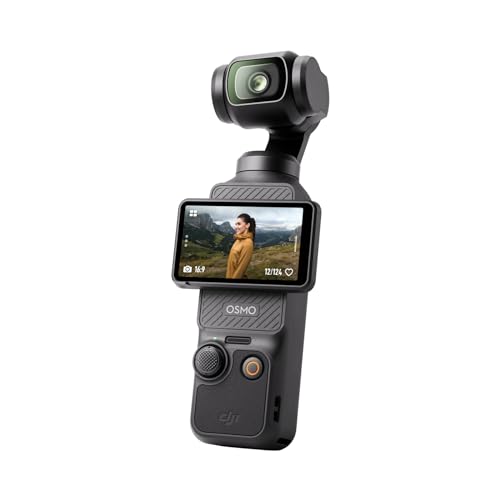
| DJI Osmo Pocket 3 | Best self-rigging flat lay camera | A gimbal camera that holds itself level overhead — the rig and the camera in one. |
| Canon PowerShot G7 X Mark III | Best compact for shop and café flat lays | A fast-lensed compact that lives on a mini tripod above any product table. |
| Sony ZV-1F | Best wide and simple flat lay for social sellers | A wide, forgiving lens that fits the whole arrangement in frame, every time. |
| Canon EOS R50 | Best mirrorless for growing flat lay studios | Touch-focus overhead control and Canon colour, inside a system that scales. |
| Sony RX100 VII | Best precision compact for detail flat lays | A zooming, sharp-eyed compact for flat lays where the details are the product. |
| Fujifilm X100VI | Best style-signature flat lay camera | Film-simulation colour and a fixed lens for flat lays with an unmistakable look. |
How Did We Choose Cameras for Flat Lay Work?
We started with the overhead problem. Each candidate was judged on how it lives above a table: its weight on an arm, whether its screen articulates to face a photographer standing beside the set, how good its phone app or tethered live view is for composing at arm’s length, and whether focus can be placed by touch exactly on the hero object. Cameras that force the photographer to hover over the set — casting shadows, breathing on the arrangement — were marked down regardless of their other gifts.
Second, colour truth for the two hardest flat lay subjects: food and products. Food must look edible rather than embalmed; products must match themselves, because a customer comparing photograph to parcel is the genre’s moment of truth. We favoured colour pipelines with reputations for honesty, and manual white balance discipline that locks a batch’s look from item one to item forty.
Third, batch citizenship. We weighted quick lens changes or — for the fixed-lens picks — the absence of any need for them, fast file handling, and the small mercies of production: saved settings, custom modes, and screens that stay legible under studio light. A flat lay session is a small factory shift, and the camera is its hardest-working machine.
What we ignored: telephoto reach, action autofocus, weather sealing and the other virtues of the outdoors. The flat lay world is a table, a window and a deadline, and this ranking spends its respect inside those borders — on overhead manners, colour truth and the stamina to style, shoot and reset forty times without a tantrum.
We also ran the shopkeeper’s test: could this camera, on its rig, photograph a delivery of new stock between customers, in the shop’s own light, and produce listings before closing? The compacts and the Pocket 3 passed with honours; the mirrorless bodies passed on quality and asked for a dedicated corner. Both answers are correct for different businesses, and the ranking keeps them side by side deliberately — a flat lay camera serves a working life, not an abstract standard.
A last criterion, small and decisive: how the camera behaves at item forty’s reshoot. Sessions end with the discovered error — the mislabelled jar, the hero facing backwards — and the camera that returns to the exact frame, settings and colour of item one without a negotiation is the one a business can build on. Repeatability under fatigue is a specification. It simply never appears on the box.
Which Six Cameras Belong Above the Table?
The list spans the workflow’s real tiers: a gimbal-headed camera that is its own overhead rig, compacts that live on arms without complaint, and mirrorless bodies for shops and studios whose flat lays anchor a brand. Most working flat lay setups pair one body with one stand and never change either for years.

DJI Osmo Pocket 3 — Best self-rigging flat lay camera
The Pocket 3 collapses the flat lay’s central problem into a device the size of a chocolate bar. Its gimbal holds the lens level and steady in positions a tripod arm would need a counterweight to reach — clamped to a shelf edge, held on a small stand, even hand-hovered for the quick social shot — while its rotating screen shows the frame to the photographer standing safely beside the set, casting no shadow and breathing on nothing. For creators whose flat lays happen on café tables, market stalls and borrowed desks, it is not a compromise camera; it is the genre’s most liberating tool.
- Pocket camera on a motorised 3-axis gimbal
- Rotating touchscreen for overhead framing
- Large-sensor image quality for its size class
- Pocketable — the flat lay kit that travels to any table
Its image quality punches out of its weight class with embarrassing ease. The sensor renders food with the saturation discipline the genre demands and products with honest edges, and its video mode turns the same overhead setup into process films — the pour, the assembly, the unboxing — without moving a single piece of kit. Shops that sell with overhead video as much as stills have adopted it as a one-device studio, and the economics of that are written all over its popularity.
The limits are a specialist’s, not a beginner’s: no lens choices, files that reward correct exposure over heroic editing, and a battery that plans the session’s length. Within a flat lay’s borders — one table, one window, one afternoon of products — those limits rarely even appear. This is the pick for the creator who wants the overhead look without the overhead infrastructure, and it earns the list’s opening slot by making the genre’s hardest position its easiest. Its gimbal also forgives the wobbliest shelf in the building — a constituency larger than any manufacturer admits.
Strengths
- Gimbal steadiness in overhead positions no arm can cheaply reach
- Composes from a rotating screen while you stand clear of the set
- Stills and process video from the same unmoved setup
Trade-offs
- Fixed lens and perspective — the table must come to it
- Files prefer correct exposure over heavy editing
- Battery life shapes long batch sessions
Best for: creators, market traders and social-first sellers working anywhere.
Not suited for: studios needing interchangeable lenses and tethered pipelines.

Canon PowerShot G7 X Mark III — Best compact for shop and café flat lays
The G7 X Mark III is the flat lay compact for people whose studio is wherever the products are. Its fast lens drinks window light that would starve lesser compacts, its tilting screen composes overhead sets from standing height, and its weight is so arm-friendly that a mini tripod and a clamp become a complete overhead studio in a tote bag. Independent shops photographing stock on the counter between customers have built entire storefronts on exactly this arrangement.
- Premium compact with a fast built-in zoom lens
- Tilting touchscreen for overhead composition
- Built-in ND filter for bright window sets
- Light enough for small arms and mini tripods
Canon colour does quiet commercial work here: skin-adjacent tones in lifestyle flat lays stay warm, food stays appetising, and product colours hold their honesty under the mixed light of real shops. The built-in ND filter — a rarity at this size — tames the bright window that is the genre’s favourite source, letting the photographer keep apertures and shutter speeds where the look wants them instead of where the sun dictates.
It is also the batch worker’s friend: quick to reset, forgiving of pace, and small enough that the styling surface can be the shop’s actual counter rather than a dedicated set. Where the mirrorless picks below serve the studio with a door that closes, the G7 X serves the business with a bell over it — and its flat lays, bright and honest and quickly made, outsell more laboured productions every day of the trading week. Its screen’s brightness under shop light is a batch feature; squinting is a workflow cost like any other.
Strengths
- Complete overhead studio in a tote bag
- Fast lens and ND master bright window light
- Canon colour keeps food and products honest and appetising
Trade-offs
- Fixed lens frames what the zoom allows, no more
- Small sensor rewards good light rather than replacing it
- Serious tethering pipelines belong to the mirrorless picks
Best for: indie shops, café creators and sellers photographing where they trade.
Not suited for: high-volume studios needing tethered, templated production.

Sony ZV-1F — Best wide and simple flat lay for social sellers
Some flat lays fail for the simplest reason: the arrangement does not fit. The ZV-1F’s wide lens is the antidote — from a modest overhead height it takes in the whole spread, the full place setting, the entire craft-in-progress, without the photographer retreating up a step ladder. For social sellers whose flat lay is one frame of a fast-moving feed, that guaranteed fit, combined with operation simple enough to run between other jobs, makes it the genre’s lowest-friction entry.
- Compact camera with a wide fixed lens
- Background-blur and product modes for quick polish
- Simple operation for fast batch sessions
- Featherweight on any overhead arm
Its product-friendly modes do quiet batch work: the subject pops, the background softens, and a seller with no training produces the polished, bright look that platforms reward. Nobody will mistake its files for a studio mirrorless production, but flat lay has always been a genre where arrangement beats apparatus — and this camera removes apparatus almost entirely, leaving the seller alone with the styling, which was the actual skill all along.
Choose it when the flat lay is a means — listings, posts, the shop’s daily visual pulse — rather than an end. It will not grow with a studio’s ambitions, and it does not pretend otherwise. But for the first year of a small brand’s life, when forty listings matter more than one masterpiece, its wide, kind, weightless practicality is very close to the perfect tool. Shoot its listings in the same mode every time; consistency forgives what simplicity cannot perfect.
Strengths
- Wide lens guarantees the whole spread fits the frame
- Product modes polish listings with zero training
- Featherweight and simple enough for true batch pace
Trade-offs
- Fixed wide perspective distorts edges of precise product work
- Files are social-grade rather than studio-grade
- No growth path — graduation means a new camera
Best for: social sellers, new shops and high-volume listing photography.
Not suited for: brands building a long-term, high-resolution visual identity.

Canon EOS R50 — Best mirrorless for growing flat lay studios
When flat lay stops being a chore and becomes a brand, the R50 is the body it grows into. Mounted overhead, its articulating screen and touch focus turn composition into a fingertip exercise — tap the hero product, check the corners, shoot — while Canon’s app and tethering options let a second pair of eyes, or the photographer’s own at the styling table, direct the frame without touching the rig. That separation of camera and composer is the professional flat lay workflow in miniature, at a beginner-honest price.
- APS-C mirrorless body on the Canon RF mount
- Fully articulating touchscreen with touch focus
- Tethering and app support for beside-the-set composition
- Guided modes that teach while the studio grows
The system around it is the investment case. Today’s kit lens covers the standard overhead distances; tomorrow’s prime sharpens the food work; the RF range beyond them can carry the studio to commercial clients without a single purchase being thrown away. Shops that began as one person and a table regularly make exactly this climb, and the R50 is engineered to be climbed from — guided modes for the first season, full manual authority for every season after.
Its colour earns the food half of the genre its keep. Flat lay food lives or dies on whether the audience’s mouth waters, and Canon’s rendering of warm tones — bread, coffee, skin, wood — is the most reliably appetising on this list. A food creator building a recognisable table will find the R50’s files need the least coaxing to look like the brand’s promise, which over a year of daily posts is a saving measured in evenings. Save the overhead setup as a custom mode — the studio’s memory should live in the camera, not in hope.
Strengths
- Professional overhead workflow — touch focus, app and tether options
- Canon colour flatters food and lifestyle subjects immediately
- A system the studio can climb for years without waste
Trade-offs
- Needs the rig and lens budget the compacts avoid
- Kit lens is the starting point of the look, not its peak
- Bigger footprint than the pocket picks for location work
Best for: growing shops, food creators and studios formalising their workflow.
Not suited for: sellers wanting a complete overhead kit in one small box.

Sony RX100 VII — Best precision compact for detail flat lays
Some flat lays are won in the details: the stitching on the wallet, the engraving on the ring, the texture of the handmade paper. The RX100 VII is the compact for those, with a zoom that reframes the overhead set without moving the rig, sharpness that survives cropping into a product’s fine print, and autofocus precise enough to place the plane exactly on the detail being sold. Jewellery, watches, tech accessories and fine craft — the detail trades — are its natural constituency.
- Premium compact with a versatile zoom lens
- High-resolution files for cropping into details
- Fast, accurate autofocus for precise placement
- Pocketable body for location and market work
Its zoom is a workflow feature disguised as a lens. From one mounted position it shoots the whole arrangement, the hero product and the macro-feeling detail, which in batch terms means one setup produces the listing’s entire gallery. Sellers feel that economy in their afternoons: fewer rig moves, fewer re-styled sets, more products finished. The camera’s pocketable size then takes the same gallery discipline to markets, workshops and suppliers’ benches without a negotiation.
The price is the honest friction — this is a premium compact, and its menus reward an owner who sets it up once, properly, rather than a borrower. But for the detail trades, where one returned item because ‘it looked different in the photo’ costs more than cameras, its precision is not indulgence. It is quality control with a shutter, and it pays for itself in the currency of customers who received exactly what the flat lay promised. Its zoom’s long end doubles as the detail camera for the whole table; one rig, two galleries.
Strengths
- Zoom reframes the whole gallery from one rig position
- Sharpness that holds when cropped into selling details
- Pocketable precision for markets and location sets
Trade-offs
- Premium price among compacts
- Menus demand a proper setup session
- Small body means small battery on long batch days
Best for: jewellery, watches, tech accessories and fine craft sellers.
Not suited for: budget-first beginners or wide-spread social sellers.

Fujifilm X100VI — Best style-signature flat lay camera
A flat lay feed lives on recognisability, and the X100VI is the camera whose pictures are recognisable before the username loads. Its film simulations are complete colour designs — the flat lay’s equivalent of a shop’s interior design — and a creator who commits to one builds a table the audience can identify from a thumbnail’s corner. For lifestyle brands, stationery, coffee culture and the whole warm-toned economy of beautiful ordinary things, that signature is a commercial asset no specification can price.
- Premium compact with a fixed wide-angle lens
- Film simulation colour modes for a designed look
- Physical dials for deliberate, repeatable settings
- High-resolution sensor with digital telecrop options
The fixed lens disciplines the genre’s composition beautifully. One perspective means the photographer’s eye, not the zoom, arranges the world: the table is styled to the frame rather than the frame hunted around the table. Seasoned flat lay stylists often prefer exactly this constraint, because it makes a feed cohere — forty posts with one geometry read as a brand; forty posts at forty focal lengths read as a camera test. The X100VI’s high resolution and crop options soften the constraint where a detail must be pulled closer.
It is a connoisseur’s tool with a connoisseur’s caveats: scarce, premium, and uninterested in tethering pipelines or batch automation. Its flat lays are made one at a time, by someone whose styling is the product. For that creator — and the economy of beautiful tables is large and growing — no other camera on this list will make their work look like theirs, which is the entire point of having a look at all. Commit to one simulation per brand and defend it for a year; signatures are built by repetition, not variety.
Strengths
- A colour signature audiences recognise instantly
- Fixed-lens discipline makes feeds cohere like brands
- High resolution forgives the occasional necessary crop
Trade-offs
- No zoom, no tether — a one-frame-at-a-time instrument
- Scarcity and premium pricing
- Overhead rigging must adapt to its fixed perspective
Best for: lifestyle brands and creators whose look is their livelihood.
Not suited for: high-volume listing factories or zoom-dependent product work.
How Do You Get a Camera Truly Overhead — and Keep It There?
Three rigs cover nearly all flat lay work. The copy stand is the studio’s furniture: a column, an arm, a camera looking down with laboratory repeatability, perfect for the seller whose table never moves. The overhead tripod arm — a tripod whose centre column swings horizontal — is the flexible middle, at home in studios and kitchens alike. And the clamp-and-shelf improvisation, home of the Pocket 3 and the compacts, turns cafés and market stalls into studios for the price of a clamp. Choose by how often the set moves; the camera choice then follows the rig’s weight limits and your composition method.
However it is held, the camera must be level and the set square to it — the genre’s geometry is unforgiving of a tilted horizon because a table has edges the eye checks unconsciously. Use the camera’s level gauge, square the surface’s edges to the frame’s, and check the corners for the tell-tale keystone of a rig slightly off perpendicular. Ninety seconds of geometry at setup saves every frame of the batch from a quiet wrongness that viewers feel without naming.
Safety is part of rigging: a camera above a set is a camera above food, products and occasionally people. Tighten everything twice, counterweight arms that ask for it, and never trust a friction joint over a bowl of soup. The compacts’ lightness is a safety feature in this genre as much as a convenience — the rig that holds a G7 X securely all afternoon may merely be negotiating with a full mirrorless setup, and negotiations above soup end badly.
How Should You Light a Horizontal World?
Flat lay light wants to be large, soft and slightly directional — a window with a sheer curtain is the archetype — raking across the surface at an angle that gives textures a shadow to live in. Dead-flat frontal light erases the very relief the genre exists to celebrate: the crumb’s edge, the weave’s grain, the glaze’s highlight. Position the set so the window is to one side, learn the hours when your room’s light is kindest, and let the camera’s exposure tools protect the whites of linen, ceramic and page from blowing into featurelessness.
Reflectors and flags are the genre’s seasoning: a white card to lift the shadow side of a hero product, a black card to deepen the edge that separates pale objects from pale surfaces. These cost nothing and differentiate professionals from beginners more reliably than any camera upgrade, because flat lay is a genre of gentle contrasts managed at centimetre scale. The cameras here all render those gentle contrasts honestly; the cards are how you create them.
Artificial light enters when the window’s hours end: one large soft source, kept low and to the side, imitating the window’s manners rather than the ceiling’s. Consistency across a batch matters more than perfection in a frame — set white balance manually, lock it, and let item forty match item one. A shop’s grid of photographs should look like one afternoon, even when it was three evenings, and that illusion is a lighting discipline before it is anything else.
How Do You Style a Flat Lay That Sells or Stops a Scroll?
Start with the hero and subtract. The product or dish occupies the frame’s visual throne; everything else is court — supporting, colour-echoing, never competing. Beginners overcrowd; professionals remove until the frame breathes, then add back exactly one storytelling prop. Negative space is not emptiness in a flat lay; it is the silence that makes the subject audible, and the wide-lensed picks like the ZV-1F exist to give that silence room.
Work in odd numbers and gentle diagonals. Threes and fives arrange more pleasingly than pairs and fours, and a composition laid along a soft diagonal — the knife’s line, the napkin’s fold, the scattered ingredient’s trail — gives the overhead eye a path to travel. The camera’s grid overlay, switched on and actually used, turns these instincts into habits within a month of batches.
Colour is the stylist’s signature and the camera’s testimony. Build a palette per brand or feed — the surface, the linen, the recurring metal or wood — and let the picks’ honest colour keep it true across seasons. Audiences follow flat lay accounts the way they follow shops whose windows they trust: for a world arranged consistently enough to step into. The styling creates that world; the camera’s job, discharged faithfully by all six picks, is to never lie about it.
What Does a Batch Flat Lay Session Actually Look Like?
It looks like a small, well-run kitchen. Products queued in shooting order, surfaces and props staged in rotation, the rig set once and the camera’s settings locked and written on a card taped to the stand. Shoot the whole queue against surface one, reset, shoot the variations. The photographer touches the camera for framing checks and focus taps; the assistant — often the same person, wearing a second hat — styles the next set while the current one exposes. Forty items is an afternoon, not a week, when the session is choreographed.
Quality control happens at item three, not item forty: zoom into the first frames, check the label’s sharpness, the white’s honesty, the surface’s colour against the physical thing. Every pick here makes that check easy on screen or app; the discipline is remembering that a systematic error — a white balance drifted, a rig settling millimetre by millimetre — replicates faithfully across a batch, and early detection is the only cheap cure.
Files leave the session pre-organised: one folder per surface or story, the selects marked in camera where the body allows, the template edit applied to a test frame before the batch begins. Flat lay businesses are won in this plumbing as surely as in styling, and the cameras that serve it best — saved settings, consistent colour, civilised file handling — are the ones this list has been quietly ranking for their citizenship all along.
How Does Flat Lay Change When It Moves — Overhead Video?
The same rig, the same light, one new dimension: time. Overhead video — the recipe’s assembly, the craft’s stages, the unboxing’s reveal — has become the flat lay’s second native format, and the setups in this guide were chosen to serve both. The Pocket 3 was practically designed for the moving version, its gimbal smoothing the small refranes of a live demonstration; the mirrorless and compact picks shoot their video from the same mounts as their stills, so a creator’s Sunday session yields a week of both formats from one styled table.
Movement in overhead video should be the subject’s, not the camera’s. Hands enter, ingredients fall, tools work — the frame stays a stage. Lock the rig, let the process perform, and resist the pans and zooms that television taught; the overhead genre’s cinema is the cinema of arrangement changing over time. Focus discipline matters doubly, because a drifting plane in video announces itself continuously, where a still forgives in silence.
Plan the two formats as one production: stills of the finished arrangement, video of its becoming, stills of the details the video passed too quickly. That triad is a complete content kit from a single setup, and it is how one table, one window and one camera from this list fill a brand’s entire visual calendar. The flat lay began as a photograph; it has become a small studio format, and the cameras that understand both halves are the ones ranked highest here.
How Do Seasonal and Story Flat Lays Keep a Feed Alive?
The working flat lay calendar runs on occasions: the harvest table, the winter shelf, the spring clean, the launch, the sale. Creators who plan their overhead year around those beats never face the blank-table panic that kills feeds, because the season itself supplies the styling brief. The camera’s part in that calendar is constancy — the same rig, the same colour discipline, the same beloved surface ageing gracefully through the stories — so that change reads as season, not as a new photographer every month.
Props are the calendar’s vocabulary, and the wise stylist collects them the way writers collect notebooks: slowly, cheaply, with an eye for the object that will work in six arrangements. A linen that survives every season, a board that has hosted a hundred products, a knife with a past — these recurring citizens of the frame become the feed’s familiar faces, and audiences greet them the way they greet a shop’s unchanged window frame beneath a changed display.
Batch the seasons as you batch the products. One long afternoon per quarter, shooting ahead through the occasion’s whole story — the teaser, the hero, the detail, the farewell — banks a season of posts against the weeks when the business is too busy to style. The cameras ranked here for batch citizenship earn that ranking in these afternoons specifically: settings saved, colour locked, rig unmoved, the future being photographed at industrial peace.
What Ethics Live in a Flat Lay?
The genre sells things, and its honesty is therefore commercial law as much as aesthetics: the product in the parcel must be the product in the picture. Colour truth, scale honesty — a hand or a familiar object to size the thing truthfully — and details shown rather than hidden are the ethics of the overhead frame. The cameras here were chosen for colour pipelines that make honesty easy; the stylist’s part is to resist the arrangement that flatters by lying, because returns and reviews eventually audit every flat lay ever posted.
Food carries its own version: the dish photographed should be the dish served, at the portion served, in the light of the room it is served in — or the photograph should be understood, and labelled by context, as art rather than menu. Audiences forgive stylisation they can see; they do not forgive discovering it at the table. The genre’s best practitioners treat that trust as their brand’s actual product, with the food merely its vehicle.
And credit the makers inside the frame. A flat lay of handmade things is a portrait of other people’s labour; naming them is not just courtesy but content, the story that separates a brand from a catalogue. The camera records the arrangement; the caption decides whether it was commerce or community. Shoot for community and the commerce follows at a better class of customer.
How Should a Beginner Build Their First Overhead Kit?
In order: the surface, the light, the rig, then the camera — because the first three decide whether any camera can succeed. Find the window and the board first, and photograph them with a phone for a month; the frustrations of that month are a precise shopping list. Most beginners discover they need height and stability before they need resolution, which is why this guide’s rig sermon precedes its rankings, and why the Pocket 3 — rig and camera in one — opens the list for the kit-less.
Buy the camera your current table deserves, not the studio you describe at parties. A café counter’s honest answer is the G7 X; a spare room’s is the R50; a market stall’s is the Pocket 3 or the ZV-1F. The staged upgrade — compact now, mirrorless when the studio exists — wastes nothing, because the compact retires into location duty rather than a drawer. Flat lay kits, like the brands they serve, should grow by addition and promotion, never by replacement and regret.
Finally, keep the first flat lay you ever post. A year later it will be the most encouraging object you own: proof, in one frame, of how far an eye can travel when it practises on a table, in window light, with a camera that stayed out of the way. Every pick here is capable of being that camera. The only unforgivable choice is the one still unmade when the light is already good.
How Do You Photograph Flat Lays Away From Your Own Table?
Location flat lay — the market stall, the supplier’s bench, the café whose table your audience dreams about — is the genre’s travelling form, and it rewards the light kits ranked here. The Pocket 3 and the compacts exist for it: a clamp, a small surface or the location’s own, window light scouted in the first minute, and a batch discipline compressed into the visit’s courtesy window. Photograph the location’s truth rather than rebuilding your studio inside it; the stall’s worn wood is a surface no money buys, and the audience can smell authenticity through a screen.
Permission and pace are the location craft. Ask, buy something, work quickly, leave the arrangement — and the relationship — better than you found them. The sellers and cafés who welcome a flat lay photographer back become a creator’s recurring sets, an asset no rig can replace. The camera’s discretion is part of the diplomacy: small bodies draw small attention, and the genre’s location masterpieces are disproportionately shot on equipment the room barely noticed.
How Do the Six Compare Above the Table?
Divide them by production style. Self-rigging and mobile: the Pocket 3. Café and counter: the G7 X Mark III. Social volume: the ZV-1F. Studio growth: the R50. Detail trades: the RX100 VII. Signature look: the X100VI. The styling matters more than the division — but the division decides how the styling gets photographed, forty items at a time or one masterpiece at a time.
| Pick | Badge | Where it earns its place |
|---|---|---|
| DJI Osmo Pocket 3 | Best self-rigging flat lay camera | The rig-in-one: gimbal steadiness overhead with no arm required for many sets. |
| Canon PowerShot G7 X Mark III | Best compact for shop and café flat lays | The café-table compact: fast lens, honest colour, arm-friendly weight. |
| Sony ZV-1F | Best wide and simple flat lay for social sellers | The wide forgiving eye: whole spreads in frame for social-first sellers. |
| Canon EOS R50 | Best mirrorless for growing flat lay studios | The growing studio’s body: touch focus, tethering path and RF lenses ahead. |
| Sony RX100 VII | Best precision compact for detail flat lays | The detail compact: zoom reach and sharpness for jewellery, tech and craft close work. |
| Fujifilm X100VI | Best style-signature flat lay camera | The signature look: film colour and fixed-lens discipline for recognisable feeds. |
What Mistakes Do Flat Lay Photographers Make?
Hovering. The photographer who holds the camera by hand above the set casts shadows, drifts off perpendicular and tires into inconsistency by item ten. Rig it — any rig, even the clamp-and-shelf — and the whole genre’s quality steps up in an afternoon. The Pocket 3 exists because this mistake is universal; the arms and stands exist because it is curable.
Overcrowding the frame. Every prop must earn its place against the hero, and most first flat lays carry three props too many. Style, photograph, then remove one thing and photograph again; the second frame is better often enough that the exercise becomes a permanent habit. Negative space is a selling tool, not a waste of table.
Letting white balance wander across a batch. Auto settings grade each item as a new world, and the shop grid ends up looking like five different shops. Lock white balance manually per lighting setup, check item three against the physical product, and the batch reads as one afternoon in one trustworthy place.
Ignoring the edges. Flat lay frames are checked by viewers at their borders — the napkin escaping, the surface ending, the stray prop’s elbow. Compose the corners as deliberately as the centre, because in this genre the corners are where professionalism is actually visible.
A fifth mistake is photographing the arrangement you wish you had sold. Flat lays built around borrowed props, aspirational surfaces and a lifestyle the products do not live in produce beautiful pictures and confused customers. Style the truth attractively — the actual product, on a surface its owner might own, in light its home might have — and the photograph becomes a promise the parcel can keep.
And photographing only the finished arrangement. The making-of frames — hands, tools, the beautiful mess at the edge of the styled order — are the content audiences increasingly trust, because they prove the table is real. Leave room in every session for one honest mess.
Final Recommendation
Start where your table is. Mobile and social creators: the DJI Osmo Pocket 3, the rig that fits in a pocket. Shops photographing where they trade: the Canon PowerShot G7 X Mark III. Volume listings: the Sony ZV-1F. A studio with ambitions: the Canon EOS R50 and one good overhead arm. Detail trades: the Sony RX100 VII. A look that must be unmistakable: the Fujifilm X100VI. Every one of them assumes the same silent partners: a rig that holds level and a window that holds its light.
Then spend your real creativity where the genre keeps it — the surface, the light and the arrangement. The camera overhead should be the least interesting part of a flat lay, and every pick here is happy to be exactly that: present, level, honest, and forgotten by the second item of forty. The table, as always, was ready before you were — go and stand beside it, camera level, and begin.
Above all, remember that the flat lay is the most democratic genre in photography: one table, one window, one honest camera. The accounts you admire are not standing on higher ladders. They are standing on the same floor, beside the same light, having removed one more prop than you did. Remove it, and shoot.
Frequently Asked Questions
Do I need a special tripod for flat lay photography?
You need an overhead solution, not necessarily a special tripod: a tripod with a horizontal centre column, a copy stand, an overhead arm, or — for the lighter picks — a clamp on a shelf. Match the rig to the camera’s weight and your set’s permanence, and prioritise a setup you can level precisely and trust above food. Level is the rig’s whole job — check the camera’s level gauge at every setup, not just the first.
Why do my flat lays look dull compared to accounts I follow?
Almost always light and styling, in that order. Their light rakes in from a big window at the side; yours may be falling flat from a ceiling. Their frames are edited by subtraction; yours may carry every prop you own. Fix the window and remove two props before you consider a new camera — then let the colour honesty of the picks here do the rest. If the dullness survives the window and the subtraction, check your white balance before your wallet.
Which of these is best for food flat lays specifically?
The R50 for creators building a food brand — Canon’s warm colour and a growing lens system — and the G7 X Mark III for cafés shooting where they serve. The Pocket 3 owns the moving version: overhead recipe video from the same table. All three understand that food must look like dinner, not evidence. For a single café table that also shoots the room, the G7 X’s zoom quietly earns its keep.
Can a phone do flat lays instead?
A phone does the genre surprisingly well in good light, and many sellers start there. These cameras take over when the phone’s limits tax the business: colour truth for products, batch consistency, low window light, detail sharpness for the detail trades. Graduate when the returns and the re-shoots start costing more than the camera would. The graduation invoice usually arrives as a returns note or a re-shoot weekend, and it is always itemised.
How do I keep products’ colours accurate in flat lays?
Lock white balance manually under your actual light, photograph a known colour — the product itself beside the screen at item three — and favour the honest colour pipelines ranked here. Accuracy is a workflow, not a setting: light, balance, check, batch, in that order, every session. A grey card photographed at each lighting change is the professional’s shortcut; item three is the amateur’s honest version.
What surface should a beginner start with?
One large, matte, neutral surface you can move to the window — a board, a cloth, a table that earns its place. Master one surface’s behaviour in your room’s light before collecting more; the great flat lay accounts are recognisable partly because their world has a floor, and the floor is always the same beloved board. Master the one surface in morning and evening light; its two moods are your first styling range.
Related Guides
Keep exploring with our food photography camera guide and the cameras for flat lay styling roundup and our cameras for first time photographers guide — each guide applies the same verified-pool, no-invented-specs approach to a neighbouring question.


