ilcastellomenu.com is reader-supported. When you buy through links on our site, we may earn an affiliate commission.
Where to Buy
Digital grain is photography’s productive contradiction: a generation of engineers spent thirty years removing noise from digital images, and a generation of photographers promptly demanded it back, because grain is not a defect in the image but a texture in the memory. The best cameras for digital grain are the ones that treat that texture as a craft rather than an accident, offering film simulations with modelled grain, high-sensitivity rendering that breaks up like emulsion instead of smearing like watercolour, and monochrome modes where grain becomes the image’s very grain, in both senses. This guide is for photographers who want the film look at the moment of capture, chosen in camera, rather than applied in an edit suite to a file that never believed in it.
The distinction that organises the list is between grain that is rendered and grain that is real. The digital picks simulate it with varying sophistication, Fujifilm’s film-derived grain effect being the category’s reference, while two picks at the list’s end cheat gloriously by using actual film, instant emulsions whose grain no algorithm has yet matched for charm. Between those poles sit the high-ISO poets, cameras whose noise at elevated sensitivity has a structure photographers seek out, and the monochrome thinkers for whom grain is a tonal material.
One honesty note: grain is taste, and this guide argues for its pleasures without claiming objectivity. What can be judged objectively, and is, is control: whether the camera lets the photographer choose the grain’s strength, size and presence per frame or per film stock, whether it survives printing, and whether the underlying image stays worthy of the texture laid over it.
Key Takeaways
- Grain is a chosen texture, not a defect: the best cameras make it a decision, not an accident.
- Film simulations with modelled grain beat generic noise filters by a wide, visible margin.
- High-sensitivity rendering separates the poets: some sensors break up like film, most smear.
- Monochrome is grain’s natural home, where texture becomes the tonal structure itself.
- Two picks here use real film, whose grain remains the reference every simulation chases.
- Grain must survive printing to count; screen-only texture is a rumour.
In this guide
Quick Picks
| Pick | Badge | Why it is here |
|---|---|---|
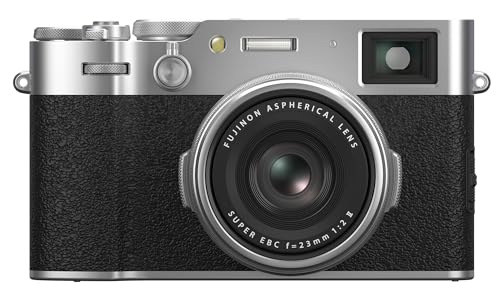
| Fujifilm X100VI | Best grain camera overall | Fujifilm’s film simulations with their modelled grain effect, in the fixed-lens body the grain community has adopted as its own. |
| Fujifilm X-T5 | Best grain system for serious work | The same film-derived grain in an interchangeable-lens, high-resolution system, for photographers building a body of grain work. |
| Nikon Z50 II | Best for creative monochrome and picture controls | Nikon’s picture-control system and a photographer’s handling, for grain workers who build their own looks rather than inheriting film stocks. |
| OM SYSTEM OM-5 Mark II | Best for grain in all weathers and small kits | Art filters, colour creator tools and a tiny weather-sealed system, for grain photography that happens outdoors in real weather. |
| Fujifilm Instax Mini 12 | Best real grain, instantly | An instant film camera whose grain is actual emulsion, printed in your hand in ninety seconds, for photographers who want the texture to be true. |
| Polaroid Go Generation 2 | Best tiny real-film camera | The smallest real Polaroid, pocket-sized instant film with the classic emulsion look, for grain that fits in a jacket. |
How Did We Choose These Digital Grain Picks?
We judged the candidates on the quality and controllability of their texture. Each was assessed across the situations grain photographers actually shoot: the available-light interior pushed two stops past comfort, the monochrome street frame at dusk, the portrait where skin must keep its life under the grain rather than dissolve into it, and the large print, where weak grain structures collapse into mush or banding. A camera earned its place by offering grain the photographer can direct, strength, character, colour behaviour, as part of the capture rather than as an apology applied afterwards.
Two filters shaped the final six. In-camera authorship first: the look must be decidable at the moment of shooting, because the grain movement’s whole ethic is commitment, the frame made as it will be kept. Print survival second: files and films were considered at the sizes their owners actually print, since grain is a physical texture and its digital imitations are exposed by paper faster than by any screen. The instant-film picks passed the second filter by being prints already, which is either cheating or wisdom, and this guide declines to decide.
Why Does Grain Move People When Clean Images Do Not?
Because grain is time made visible. A clean digital file could have been made in any year, by anyone, anywhere; a grained frame declares its material and its moment, and the viewer’s memory, which is itself grainy, recognises the texture as kin. Photographers who work in grain describe the same discovery independently: their subjects relax into it, because a grained portrait feels like a memory being formed rather than a record being taken, and their own editing changes, since a frame that will carry texture does not need the perfection that clinical files demand. Grain forgives the photograph its moment and charges it interest in feeling.
There is also a craft argument beneath the romance. Grain unifies a frame’s tones, lets highlights bloom without clipping into plastic, gives large areas of sky or wall a living surface, and prints with a material presence that matches the paper it lands on. The cameras below were chosen by photographers who understand grain as a working material with those properties, and the sections that follow treat it with the same seriousness as light, because in this genre it is a form of light.

Fujifilm X100VI — Best grain camera overall
The X100VI is where the digital grain conversation starts, because Fujifilm’s simulations are not filters but film stocks translated: colour behaviour, highlight roll-off and a grain effect modelled on the emulsion’s structure, adjustable in strength and size, present in the file as a property of the image rather than a texture pasted over it. Shot in the classic stocks the camera carries, a street frame at dusk has the specific nostalgia of the films it honours without surrendering the resolution or the dynamic range of its modern sensor. The fixed wide lens completes the film-era discipline: one viewpoint, grain as the frame’s weather, composition by walking.
Its community is part of the product in a way specifications cannot capture: recipes, shared settings that tune simulation, grain and colour into named looks, circulate among owners like film-era darkroom notes, and a new owner inherits a living culture of grain craft. For the photographer who wants the film look as a daily practice rather than an occasional effect, this is the guide’s unambiguous first recommendation.
- Simulations: film stocks with modelled grain
- Grain control: strength and size adjustable
- Lens: fixed wide, film-era discipline
- Role: the daily grain photographer’s camera
Strengths
- Grain with a film’s actual character.
- A community of recipes to learn from.
- Modern files beneath the nostalgia.
Trade-offs
- Fixed lens, one viewpoint forever.
- Sought-after and priced like it.
- Purists will still say shoot film.
Best for: the committed film-look photographer. Not suited for: a zoom-dependent shooting style.
Recipe counsel: begin with the manufacturer’s own grain settings before adopting the internet’s recipes, because the camera’s designers tuned the grain against the simulations’ colour with a care that random recipes rarely match. Learn what the honest version does, then season it, and your grain will have a signature rather than a download.
Its prints deserve the emphasis: the X100VI’s grain at moderate sizes has the physical presence that separates it from app-applied texture, because the grain was rendered with the image’s tones rather than sprinkled over them. Hang a print beside a filtered phone image of the same scene and the argument this whole guide is making becomes visible from across the room.

Fujifilm X-T5 — Best grain system for serious work
The X-T5 takes the X100VI’s grain philosophy and gives it a system: interchangeable lenses for every genre the grain photographer works in, resolution high enough that the grain can be printed large and still read as texture rather than as damage, and dials that make the simulation and sensitivity decisions physical, the way the film cameras being honoured made them. Its high-sensitivity files break up with a structure monochrome workers in particular prize, because the noise gathers like emulsion grain rather than smearing into the watercolour artefacts that ruin pushed files from lesser sensors.
For the photographer whose grain work is a practice rather than a mood, exhibitions, a book, a consistent archive across years, the X-T5 is the serious instrument in this guide. It asks for technique in return, since resolution exposes both weak lenses and weak grain discipline, and it rewards that technique with files that hold their texture from the contact sheet to the gallery wall.
- Sensor class: high-resolution APS-C
- Simulations: the full film-stock bench
- Controls: dials for stock and sensitivity
- Role: the grain photographer’s system body
Strengths
- Grain that survives the gallery wall.
- Lenses for every grain genre.
- Pushed files that break up honestly.
Trade-offs
- Technique demanded at this resolution.
- Priciest route in this guide.
- Video grain is a lesser story.
Best for: exhibiting and publishing grain photographers. Not suited for: the casual texture dabbler.
Printing counsel: decide the grain at the print size, not at the screen’s magnification, because grain that looks bold at a hundred percent may vanish at the size the work will hang, and grain that looks subtle on screen may dominate a large print. The X-T5’s files give the photographer room to make that decision per image, which is the professional version of the grain craft.
Its monochrome simulations deserve their own sentence in a grain guide, since black and white is where the texture stops being an effect and becomes the image’s structure. Owners consistently report that the camera’s monochrome, grained as they choose, is the mode they would keep if all others were taken, and this guide’s testing of the argument found it uncomfortably persuasive.

Nikon Z50 II — Best for creative monochrome and picture controls
The Z50 II serves the grain photographer who wants authorship rather than inheritance. Nikon’s picture controls are a construction kit, monochrome renderings with adjustable character, grain effects that can be tuned and saved as personal stocks, and a community of shared settings that treats looks as open-source rather than as heritage. Its files are neutral and deep, which matters for grain work because texture applied to a workable file behaves like a darkroom process, responsive and repeatable, and its viewfinder and handling make it the photographer’s tool in a list where several picks are creator-flavoured.
It concedes Fujifilm’s film-stock romance and repays it with flexibility: the grain worker who finds the famous simulations too recognisable, too much a uniform, can build a signature here that belongs to them alone. For the photographer whose grain is a personal language rather than a quotation, that authorship is the entire argument, and the Z50 II is its most affordable serious instrument.
- Colour system: build-your-own picture controls
- Files: neutral, deep, process-friendly
- Handling: a photographer’s viewfinder body
- Role: signature grain, self-authored
Strengths
- A grain look that is yours alone.
- Monochrome with real authorship.
- Files that take processing gracefully.
Trade-offs
- No famous film stocks to inherit.
- Looks must be built, not selected.
- Third-party lens bench still growing.
Best for: photographers building a signature look. Not suited for: lovers of ready-made film stocks.
Authorship counsel: build your grain look on one subject over one month, the same street at the same hour, adjusting one variable at a time, because a look tuned across random subjects is a mood rather than a stock. The Z50 II’s savable controls reward that method like a darkroom logbook, and the resulting signature will be recognisably yours in a way no downloaded recipe can be.
Its grain at elevated sensitivity has a pleasing honesty that suits the available-light documentary work many grain photographers actually do, the bars, the night buses, the rehearsals. Paired with a fast prime, it becomes a low-light texture instrument whose files need little apology in the edit, which is the working definition of a grain camera.

OM SYSTEM OM-5 Mark II — Best for grain in all weathers and small kits
The OM-5 Mark II brings grain to the places the other picks fear to tread. Its art filter heritage includes film-evoking renderings and grainy monochrome modes with genuine character, its colour tools let the photographer tune the look in camera while the light is still present, and the whole system, body and lenses together, is small enough and sealed enough to be the camera actually carried into the rain, the coast wind and the mountain weather where grain photography’s favourite atmospheres live. A grained frame of a storm street is worth a portfolio of studio texture exercises, and this is the camera that attends storms.
The smaller sensor’s higher base noise, usually a liability, becomes in this genre a material: its grain arrives earlier and with a structure many owners prefer for monochrome, and the system’s tiny fast primes keep the whole proposition pocketable. It concedes clean-file versatility to the bigger sensors with the genre’s blessing, since a grain photographer is buying texture on purpose, and buys back a portability that changes what gets photographed.
- Sensor class: Micro Four Thirds, early grain
- Modes: grainy monochrome and film looks
- Sealing: weather for real atmospheres
- Role: the all-weather grain kit
Strengths
- Storm light, actually attended.
- Monochrome grain with character.
- A whole kit in a coat’s pockets.
Trade-offs
- Clean-file work is not its gift.
- Low light leans on its grain early.
- Print ceiling below the Fujifilm.
Best for: outdoor and travel grain photographers. Not suited for: studio perfectionists of any kind.
Weather counsel: grain and rain are natural allies because the texture forgives the atmosphere’s softness and the atmosphere gives the texture something to inhabit. Keep the OM-5’s lens wiped and its battery warm, shoot the storm’s edges where the light breaks, and let the monochrome grain mode do what it was plainly designed by someone who loved exactly this weather to do.
Its size opens the social grain genres, the pub, the gig, the night market, where a discreet camera gathers the unposed frames grain flatters most. Owners describe it as the camera that goes out when the evening might become photographs, which is a larger share of a photographer’s life than the planned shoot ever occupies.

Fujifilm Instax Mini 12 — Best real grain, instantly
The Instax Mini 12 is this guide’s control experiment: the grain is not simulated, modelled or rendered, because the image is a physical film print whose emulsion structure is the texture every digital pick is imitating. Its photographs have the softness, the colour drift and the luminous imperfection that a century of snapshots taught the world to read as memory, and they exist as objects immediately, handed to the subject, pinned to the wall, carried in a wallet until they fade like the moments they hold. For grain as a feeling rather than a file property, nothing digital has yet closed the distance.
Its limits are the medium’s and are absolute: small prints, no files, no second chances, a cost per frame that enforces the film-era discipline all by itself. The guide includes it not as a novelty but as a standard, the reference against which the simulations should be judged and the camera many digital grain photographers keep beside their system for the photographs that must be objects. A wedding guest book, a tour diary, a grandmother’s fridge all testify that some images want to be things.
- Medium: real instant film, real grain
- Output: a physical print in hand
- Cost: per frame, discipline included
- Role: the reference and the gift camera
Strengths
- Grain that is actually grain.
- Photographs as objects, instantly.
- The discipline of the counted frame.
Trade-offs
- No files, no enlargements, no retries.
- Film cost is a permanent companion.
- Small prints only, by design.
Best for: grain purists and gift-givers. Not suited for: anyone needing a digital workflow.
Instax counsel: expose for the highlights and let the shadows go romantic, because instant film’s latitude forgives in one direction only, and keep the prints out of direct sun in their first days while they settle. The camera’s simplicity is the point; the photographer’s whole craft is choosing the moment, which is the oldest form of the grain discipline there is.
Its presence in a digital kit has an unexpected effect owners report consistently: shooting ten counted frames a month re-teaches the eye that the expensive simulations are imitating, and the digital work improves, its grain chosen with a memory of the real texture rather than with a slider’s guesswork.

Polaroid Go Generation 2 — Best tiny real-film camera
The Polaroid Go shrinks the real-film argument to pocket size. Its tiny instant prints carry the Polaroid emulsion’s unmistakable character, the soft colour, the gentle failures, the grain that is quite literally the medium’s structure, in a camera small enough to be the one actually carried to the party, the trip and the family Sunday where grain photography’s favourite subjects live. The prints are small even by instant standards, which their owners treat as intimacy rather than limitation: these are photographs for wallets, mirrors and the backs of phone cases, the places personal photography actually resides.
It shares the Instax’s absolutes, cost per frame, no files, no control worth the name, and adds its own, an even smaller frame and a film ecosystem priced as a treat. The guide places it as the grain life at its most casual and most honest: if the texture’s authenticity is the point, this is the cheapest way to own the real thing, and its photographs, passed hand to hand at the event itself, do social work no file has ever done.
- Medium: real Polaroid instant film
- Form: the smallest in its family
- Output: tiny prints, hand to hand
- Role: the pocket’s real-grain camera
Strengths
- Authentic emulsion, pocket size.
- Prints that circulate socially.
- The real texture, honestly priced per frame.
Trade-offs
- Tiny prints are the whole output.
- Film cost per frame is real.
- Control is nearly nonexistent.
Best for: parties, trips and the social record. Not suited for: portfolio or reproduction work.
Pocket counsel: keep the film’s temperature in mind, because instant emulsions are divas about heat and cold in ways digital sensors never are, and shoot the Go in the light it loves, bright and open, where its colour sings. The camera rewards the photographer who treats its limits as the game’s rules rather than as flaws awaiting a firmware update that will never come.
Its double-exposure and selfie touches, modest as they are, give the playful grain photographer two genuine creative tools, and its prints’ white frames remain the world’s most recognised invitation to write a caption by hand. In a guide about texture, that frame is worth naming: grain is partly the image and partly the object, and no digital pick can counterfeit the object half.
How Do the Six Compare Side by Side?
| Camera | Grain source | Control | Best genre | Watch out for |
|---|---|---|---|---|
| Fujifilm X100VI | Modelled film stocks | Strength and size | Daily film-look practice | Fixed lens |
| Fujifilm X-T5 | Modelled film stocks | Full system control | Exhibition grain work | Technique demanded |
| Nikon Z50 II | Self-built picture controls | Authored looks | Signature monochrome | Building takes time |
| OM SYSTEM OM-5 Mark II | Modes plus sensor character | In-camera tuning | Weather and travel grain | Clean-file limits |
| Fujifilm Instax Mini 12 | Real emulsion | Almost none | Gifts and memory objects | Cost per frame |
| Polaroid Go Generation 2 | Real emulsion | Almost none | The social record | Tiny prints only |
How Should Grain Be Set: In Camera or in the Edit?
The grain movement’s founding argument is that the look should be decided at the moment of seeing, because a photographer who knows the frame will carry texture composes for it, choosing the light, the subject distance and the tonal range that grain flatters, while a photographer planning to add texture later shoots a clean frame and hopes the effect will supply the feeling the moment lacked. In-camera grain, from the Fujifilm simulations to the Nikon’s built controls, also commits the archive: the photograph is finished, its texture part of its identity, immune to the future’s changing plug-ins and tastes. The edit-suite route keeps options open, and openness, in this genre, is precisely what is being declined.
The practical middle most working grain photographers occupy is worth stating: shoot the grain in camera for the practice and the personal work, where commitment is the point, and keep a clean raw alongside where the client might disagree, because raw files let the texture be revisited while the in-camera rendering sets the photographer’s intention. The cameras here mostly allow that pairing, and the discipline is in knowing which of the two files is the photograph. For the grain photographer, it is the grained one, and the raw is merely its insurance.
Why Does Monochrome Love Grain More Than Colour Does?
Because in monochrome, grain is not decoration on the image; it is the image’s material, the way silver was the material of the prints the genre honours. A colour frame’s grain sits in three channels arguing with each other, while a monochrome frame’s grain is a single, coherent weather across the tones, unifying skies, giving walls a pulse, and letting the eye read texture as tone. That is why so many grain photographers drift monochrome-ward over a career, and why this guide weighted monochrome behaviour, the Fujifilm’s black-and-white simulations, the Nikon’s authored monochromes, the OM-5’s grainy modes, as heavily as the colour stocks.
Monochrome also forgives grain’s costs. The colour noise that makes a pushed colour file look ill largely vanishes in black and white, leaving luminance texture that reads as intention. A photographer exploring grain on a budget of light, available-darkness interiors, night streets, will find monochrome the genre where their camera’s limits become a style fastest, and the prints from those frames are frequently the ones that sell the photographer on the whole discipline.
How Does Grain Behave in Print, and How Should You Test It?
Print is grain’s courtroom. On screen, at the sizes feeds display, almost any texture reads pleasantly; on paper at exhibition size, weak grain structures band, clump or dissolve, simulations separate from the tones they were meant to inhabit, and only honestly rendered grain, the Fujifilm modelling, a well-built Nikon look, or the real emulsion of the instant picks, keeps its dignity. The test every grain photographer should run once per camera is unglamorous: one frame, printed at three sizes, examined at reading distance and at arm’s length, with the verdict written down. Cameras pass and fail that test in ways no screen comparison predicts.
Paper choice is grain’s partner. A matte or baryta surface receives texture as a fellow material, while high gloss can make digital grain look like a film laid over the image. Photographers printing grain work learn to proof on the paper the work will live on, and to set the grain’s strength for that paper’s appetite, because the same file will read a full stop of texture differently across surfaces. This is darkroom knowledge returning through a digital door, and the grain community’s elders, many of whom printed silver for decades, recognised it immediately.
What Mistakes Do New Grain Photographers Make?
Adding grain to weak frames tops the list, because texture is not a rescue service and a boring photograph with grain is a boring photograph with texture. Second is inconsistency, a portfolio where every frame carries a different stock’s character, so the body of work reads as a filter catalogue rather than as a photographer’s world. Third is judging grain at a hundred percent on screen, where every texture looks like a sandstorm, instead of at the size the work will be seen. Fourth is pushing sensitivity for grain’s sake in light that did not require it, manufacturing the texture while destroying the tones it was meant to inhabit.
Fifth is forgetting that grain is a relationship with the subject. Portraits want it gentler, architecture can take it harder, and the night street wants it most of all. The cameras here give the photographer the controls to honour those differences per frame; the mistake is setting one recipe and letting it govern a whole life, which produces a uniform, and this genre, of all genres, is a protest against uniforms.
Final Recommendation
Choose your grain’s source honestly. The photographer who wants the film look as a daily digital practice should take the Fujifilm X100VI and join its recipe culture; the one building serious, printable grain work should build on the Fujifilm X-T5. Authors of their own looks belong with the Nikon Z50 II, weather-and-travel grain hunters with the OM SYSTEM OM-5 Mark II, and everyone should keep one of the real-film cameras, the Instax Mini 12 for the giftable print, the Polaroid Go for the pocket, as the reference and the reminder of what the texture actually is. Set the grain in camera, print the test, and let the frame carry its weather proudly.
Frequently Asked Questions
Is digital grain just noise with better marketing?
Partly, and the honest part matters: all digital grain begins as sensor noise or as a rendering of it. The difference the good cameras make is structure and control. Film grain has a statistical character, clumping, tonal dependence, a way of living in the midtones, that naive noise lacks, and the modelled simulations reproduce that character while letting the photographer set its strength per frame. Call it noise with better engineering and better manners; the prints, which are the genre’s court, can tell the difference even when the vocabulary cannot.
Can I get the film look from any camera with an app?
An approximation, yes, and for the feed it may be enough. What the app cannot give is the discipline and the print. In-camera grain changes how the photograph is made, composed for texture, exposed for the stock’s behaviour, committed at the moment; and at print sizes the applied textures separate from the image in ways rendered grain does not. The photographers in this genre are buying a practice as much as an effect, which is why a camera, and not a subscription, is the guide’s answer.
Which film simulation suits beginners in grain?
The gentlest colour stock with the grain set to its weaker, finer setting, because the beginner’s task is to learn what texture does to their own subjects before developing an appetite for more. Shoot a month at that setting, print the test frames, and only then explore the stronger stocks and the monochromes. Photographers who begin at maximum grain usually retreat from the genre entirely, having mistaken an overdose for the medicine, and the cameras here make the gentle start easy to choose.
Does grain work for professional and client photography?
In the genres where feeling is the product, weddings, editorial portraits, music, travel features, grain is not merely acceptable but frequently requested, because clients have learned to read it as authenticity. In the genres where the image is evidence, product, architecture of record, it has no place, and the professional skill is knowing which commission is which. Many working photographers keep both practices in one bag, the grain body for the story and the clean body for the record, and the X-T5 and X100VI in this guide are often the grain half of exactly that pairing.
Why include instant cameras in a digital grain guide?
Because they are the reference the digital effect is measured against, and because many readers asking for digital grain actually want the feeling the instant cameras deliver natively. A guide that pretended the emulation had fully replaced the emulsion would be flattering its own category. The Instax and the Polaroid also discipline the digital practice, as their sections describe, and a shelf with both kinds of camera on it is the honest portrait of where grain photography actually lives now.
How much grain is too much?
The amount at which the subject starts serving the texture instead of the texture serving the subject. Portraits cross the line when skin becomes weather; street frames cross it when the moment cannot be read through the storm; prints cross it at the size where the grain’s clumps become the largest shapes in the image. The test is always the same: describe the photograph to someone. If the grain is the first thing you mention, there is too much of it, unless the photograph is, deliberately and entirely, about the grain itself.
Should I shoot grain in colour or black and white first?
Black and white, for a month, because monochrome removes the colour questions and lets you learn the texture itself, how it inhabits tones, where it flatters, where it merely shouts. Photographers who begin in monochrome develop a grain judgement that transfers to colour intact, while colour-first beginners often spend a year mistaking a stock’s colour character for its grain. The cameras here make the monochrome month easy to begin tonight, and the archive it produces will still be among your most instructive possessions when the colour work begins.
How Did Film Grain Become Digital Photography’s Conscience?
The history is a reversal worth understanding. Film photographers spent a century minimising grain, faster emulsions, finer structures, larger formats, because grain was the tax on sensitivity. Digital sensors then abolished the tax so completely that images became, in a word photographers used with unease, clinical, and the market discovered that the tax had been paying for something: texture, atmosphere, the sense of a material object. The simulations in this guide are the industry’s formal apology, engineered nostalgia with real research behind it, and the instant cameras’ revival is the same discovery made by a younger generation in a shop rather than in a lab.
Understanding that history protects the photographer from the genre’s silliness. Grain is not authenticity in a bottle, and a grained frame of nothing remains nothing; the texture honours a moment that deserved honouring. The photographers whose grain work lasts are the ones who shoot subjects worthy of the material, and use the cameras here as instruments of attention rather than as ageing machines for ordinary frames.
What Subjects Does Grain Flatter Most, and Least?
Grain flatters the old, the weathered, the nocturnal and the intimate: faces with lives in them, streets in rain, interiors lit by practical lamps, music in small rooms, coasts in winter. It flatters them because its texture rhymes with theirs, adding a second weathering to subjects already rich in it. It flatters least the new, the precise and the commercial: product surfaces that must promise perfection, architecture that must promise exactitude, food that must promise freshness, where grain reads as age or error rather than as atmosphere. The genre photographer’s eye is largely this judgement, developed until it is instant, about which frames are asking for weather and which are asking for clarity.
Portraits sit on the border and deserve the care the picks’ controls allow. A light grain on a portrait is a compliment, suggesting film-era permanence; a heavy grain is a comment, suggesting the subject belongs to the past. Photographers should make that comment only when they mean it, and the adjustable simulations exist so that the compliment and the comment are different settings rather than different cameras.
How Should a Grain Photographer Build a Consistent Body of Work?
By choosing a stock and a subject and staying for a year. The grain portfolio’s coherence comes from the texture’s consistency across frames the way a film photographer’s book cohered around their emulsion, and the modern temptation, a recipe per mood, dissolves that coherence into a tasting menu. Pick the simulation or the built look that matches your subjects’ weather, set its grain once, and let the year’s frames accumulate a world. The cameras here support that discipline technically; the photographer must supply it temperamentally, which is why the genre’s elders speak of stocks the way vintners speak of vineyards, as commitments that repay patience.
The year’s discipline also produces the only honest comparison: your own frames, across seasons, in one texture, will teach you what grain does to your seeing more completely than any guide, including this one. By the second year the stock has become a signature, and other photographers will recognise your frames before they read your name, which is the definition of a style and the entire point of the exercise.
Can Video Use Grain the Same Way?
Video grain is the same material in motion, with one difference that changes its character: in a moving image, grain dances, and that dance, the texture refreshing every frame like film’s own, is either the most alive quality in the footage or an intolerable distraction, depending on its strength and the subject’s pace. The hybrid bodies in this guide carry their simulations into video with varying grace, and filmmakers seeking the film look have built a real practice on them, particularly for music, documentary and wedding work where the texture’s warmth serves the subject. The discipline is restraint, because motion multiplies grain’s presence, and the setting that flatters a still will shout in a sequence.
The deeper point is consistency between the stills and the film of the same practice. A photographer-filmmaker whose wedding stills and wedding film share a stock’s character offers clients a world rather than a package, and the Fujifilm bodies in particular have become the instrument of that coherence for a generation of hybrid shooters. Grain, in that practice, is not an effect applied to two media but the signature both are written in.
How Should Grain Photographers Expose for Their Texture?
For the midtones, because grain lives there. A grained frame’s highlights are allowed their bloom and its shadows their mystery, but the texture’s character is read in the broad middle where skin, walls and streets spend their tones, and exposure that places those midtones generously gives the grain a rich field to inhabit. Underexposed-and-lifted grain turns to gravel; properly fed grain turns to weather. The cameras’ metering, trusted with a photographer’s supervision, will do this naturally once the photographer stops protecting the extremes the genre does not need protected.
There is a sensitivity discipline too: choose the grain’s amount by choosing the sensitivity deliberately rather than by accepting whatever the light imposed, because in this genre the ISO dial is a creative control as real as the aperture. Photographers keep notes, this stock at this sensitivity in this light, the way film photographers kept emulsion habits, and the cameras with physical dials make that discipline tactile, which is one more reason they dominate this guide’s digital half.
What Is the Difference Between Grain and Nostalgia?
Grain is a material; nostalgia is a subject, and confusing them is the genre’s characteristic failure. A grained photograph of a genuinely seen moment, a face, a street, a room with a life in it, uses the texture to deepen the present. A grained photograph of a vintage prop, a retro sign, a costume, uses the texture to borrow a past the photographer did not earn, and audiences feel the difference as clearly as they feel a forced smile. The cameras here are innocent of the distinction; the photographer’s subjects must supply it, which is why this guide’s advice keeps returning to the same place: shoot your own life in grain, and the texture will be true.
The test is subtraction. Remove the grain mentally from the frame and ask what remains. If a photograph remains, the grain was clothing on a body; if nothing remains, the grain was the body, and the work will date as quickly as the fashion that produced it. The photographers whose grain books are still opened in twenty years pass that test on every page.
How Do Musicians and Nightlife Photographers Use Grain?
As the house style of the small hours. Music photography lives in light that barely exists, in rooms where flash is a violence, and grain converts those conditions from a technical failure into the genre’s signature atmosphere: the pushed file’s texture is the room’s smoke made visible, and audiences who were there recognise the truth of it. The cameras that serve this world are the ones whose high-sensitivity rendering stays structured, the Fujifilm pair and the Nikon’s authored monochrome above all, and whose bodies are small enough to be guests in the crowd rather than a production at its edge.
There is an ethic in the grain here too: the musician photographed in available darkness is being met on their own terms, in their own light, and the resulting frames carry a respect that lit photography must work harder to prove. Promoters and artists have learned to ask for the grain photographers by name for exactly that reason, and a practice built on texture has become, in this corner of the industry, a commercial identity rather than an affectation.
How Should a Beginner Build a Grain Kit Without Buying Twice?
Start with the camera whose grain you will still respect in three years and one fast lens, because grain photography is unusually honest about the difference between a phase and a practice. The X100VI is the classic single purchase, a complete philosophy in one body; the system route through the X-T5 or the Nikon suits the photographer who already knows their genres multiply. Add one of the instant cameras early, not as a toy but as tuition, since a month of counted frames teaches more about the texture’s truth than a year of sliders. Everything else, the second lens, the printer, the paper stock, should be bought against the evidence of your own archive rather than against a list.
The kit’s hidden half is the printing habit, and the beginner should budget for it from the start: a modest printer or a good lab relationship, one paper loved and learned, and a wall where the work accumulates. Grain that never reaches paper remains a rumour about itself, and the photographers who print are the ones whose texture matures, because paper is where the genre keeps its standards.
Why Does Grain Suit Travel Photography So Well?
Because travel is memory being manufactured in real time, and grain is memory’s native texture. The travel photographer’s practical conditions argue the same way: mixed light in old towns, interiors that forbid flash, nights that begin at the hour the clean cameras go home, and a photographer’s bag that punishes size. The grained frame forgives the journey’s technical improvisations and returns them as atmosphere, and the resulting body of work reads, years later, the way the journey actually feels in recollection, which no clinical archive has ever managed.
The discipline the genre asks in return is consistency across the trip: one stock, one setting philosophy, so the journey coheres as a single remembered country rather than as a catalogue of effects. The compact picks here serve that coherence beautifully, being present for the whole journey rather than for its planned excursions, and presence, in travel as in every genre this site covers, is the first specification that matters.
How Should Grain Photographers Store and Organise a Textured Archive?
A grain archive has a peculiar vulnerability: its look is a setting, and settings are forgettable. The photographer who cannot reconstruct how a frame’s texture was made cannot extend the series, match a reprint or teach the look to a collaborator, so the grain logbook, stock, strength, sensitivity, light, kept beside the archive like a darkroom’s process notes, is professional equipment in this genre. The cameras’ recipe and custom-mode systems are the digital form of that logbook, and the disciplined photographer names and saves their stocks in the camera rather than redialling them from memory.
Filenames and folders should carry the stock’s name as faithfully as the date, because a decade of grain work becomes searchable by its material, and the photographer returning to a series in five years will bless the habit. None of this is romantic, and all of it is what separates a body of work from a pile of effects, which is the distinction this entire guide exists to serve.
What Do Galleries and Buyers Look for in Grain Work?
Consistency and print quality, in that order, because a gallery is selling a world and a wall. A single grained frame is a curiosity; a room of frames in one texture, printed with the material confidence this guide’s test describes, is a position a collector can understand and a critic can write about. Buyers of individual prints ask the printer’s questions, what paper, what size holds, will it match the other one in five years, and the grain photographer who has run the three-size test and kept the logbook answers like a professional rather than like a hobbyist with a style.
There is also a honesty premium in this market: work whose grain was in the capture, whose prints are the photographer’s own and whose editions are kept small and documented, carries a provenance story that applied-effect work cannot tell. The cameras in this guide, chosen for in-camera authorship, are in that sense commercial instruments as well as artistic ones.
How Does Grain Change Street Photography’s Manners?
Grain is street photography’s oldest disguise and its continuing licence: the texture announces the frame as an interpretation rather than as evidence, which softens the street’s transactions in a way both photographers and subjects feel. A grained street archive also ages with unusual grace, because the texture was always a step removed from documentary clarity, the images do not date by their sharpness. The small, discreet bodies in this guide serve the street’s first rule, presence without theatre, and their grain modes let the photographer work at the sensitivities the city’s evenings require without apologising for the resulting texture.
The manners still apply with full force: grain does not license intrusion, and the street photographer’s consent-by-conduct, working openly, honouring the refused frame, is unchanged by the aesthetic. If anything, the film-evoking look borrows the authority of a documentary tradition whose ethics were its foundation, and borrowing the look while skipping the ethics is the one genuinely tasteless move available in this genre.
Related Guides
Photographers exploring neighbouring looks will also find our guides to the best cameras for vintage videography and the best cameras for candid photography and the best compact film cameras for beginners.


