ilcastellomenu.com is reader-supported. When you buy through links on our site, we may earn an affiliate commission.
Where to Buy
Yes, the keyword is spelled “motosports” — and whether you arrived here by that spelling or the more common “motorsports,” the question underneath is the same: which cameras survive, and sing, in the company of fast machines? The best cameras for motorsports work in an environment that destroys ordinary equipment assumptions — vibration that loosens mounts and blurs frames, dust and weather arriving horizontally, noise that swallows lesser microphones, and subjects moving at speeds that turn a photographer’s reflexes into the weakest component in the system.
Two kinds of camera earn their living here, and this guide covers both. The action camera rides along: on the helmet, the tank, the roll cage, the pit wall — recording the participant’s view and the machine’s behaviour from inside the experience. The trackside camera watches: mirrorless bodies behind long lenses, isolating a rider at the apex or a car at full compression. Most serious motorsport storytellers end up with one of each, and the six picks below are arranged so you can build that pairing in either order.
Judging criteria differ from gentler genres. Stabilisation must defeat engine vibration, not just hand shake. Mounts and housings matter as much as sensors. Audio — the exhaust note that is half the sport’s emotional content — separates the cameras that capture motorsport from the cameras that merely photograph it. And in the paddock’s real economy, durability and battery stamina across a long race day outrank laboratory image quality every time.
Where you stand on race day — in the saddle, behind the wheel, on the pit crew or behind the fence — changes everything. The camera that serves the participant and the camera that serves the witness are different instruments, and this guide refuses to pretend otherwise.
Key Takeaways
- Vibration is the enemy: stabilisation and rigid mounting decide usable footage.
- The participant’s camera and the spectator’s camera are different purchases.
- Sound is half of motorsport; wind and exhaust handling separate the serious tools.
- 360 cameras reframe after the fact — insurance for moments you cannot aim at.
- Battery and heat stamina across a race day outrank peak specifications.
- Tether every mount. A camera that leaves the vehicle becomes debris, not footage.
In this guide
Quick Picks: Six Cameras for the World of Fast Machines
| Pick | Badge | Why it earns its place |
|---|---|---|
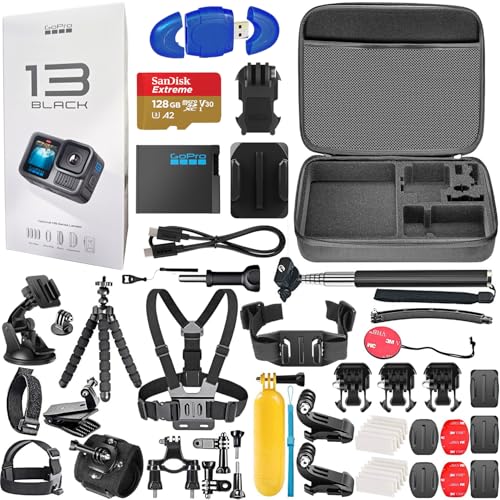
| GoPro HERO13 Black | Best All-Round Motorsport Camera | The reference action camera: stabilisation, mounts and durability the paddock trusts. |
| DJI Osmo Action 5 Pro | Best for Low Light and Long Days | A larger sensor for dawn and dusk sessions, with battery life that outlasts the schedule. |
| Insta360 X4 | Best 360 Storyteller | Records every direction at once; choose the shot — rider, road or rival — in the edit. |
| Insta360 Ace Pro 2 | Best Image-First Action Cam | Low-light clarity and colour that flatter machines and leathers alike. |
| AKASO Brave 7 LE | Best Budget Track-Day Pick | Honest action footage and a dual-screen setup at a price that forgives the learning curve. |
| GoPro HERO12 Black | Best Second-Angle Value | Last generation’s flagship behaviour for the extra mount every storyteller wants. |
How Did We Choose Cameras for Motorsport?
We weighted survival first. A motorsport camera’s working environment includes sustained vibration, heat, dust, rain and the occasional gravel shower, so housings, mount ecosystems and manufacturer reputations for durability were scored as primary features rather than fine print. Every pick here has a mature mounting ecosystem — the unglamorous infrastructure that decides whether the camera is still attached, and still recording, at the session’s end.
Stabilisation against vibration came second, and it is a stricter test than walking shake. Engine and road vibration arrives at frequencies that defeat weak electronic stabilisation and loosen lesser mounts, producing the jelly and jello artefacts that ruin on-board footage. The picks here are the ones whose stabilisation — electronic, mechanical or both — has earned the paddock’s trust at speed.
Third, the sensory record: image behaviour in the sport’s real light (dawn practice, noon glare, dusk races, floodlit nights) and audio that captures exhaust character without collapsing into wind noise. Motorsport is an audiovisual memory; a silent or wind-drowned record of a great ride is half a record, and the reviews note each camera’s sound manners plainly.
Finally, workflow across a race day: battery stamina and swap speed, heat behaviour in a sun-baked fairing, card capacity at high frame rates, and how quickly footage moves from camera to edit while the event is still news. Motorsport content ages in hours, and the camera that delays the story taxes it.
Why Does Motorsport Break Ordinary Cameras’ Assumptions?
Start with vibration, the genre’s defining violence. A camera on a motorcycle or in a stripped competition car lives inside a paint-shaker, and every component — mount, housing, sensor stabilisation, even the lens’s internal groups — is tested continuously rather than occasionally. Equipment that performs beautifully in a hiker’s hand can produce unusable footage on a fuel tank, which is why this guide treats the paddock’s accumulated wisdom about what survives as evidence equal to any specification.
Speed compounds the assault. Wind pressure at racing pace peels at mounts and microphones; a moment’s distraction in framing becomes a session’s worth of sky or tarmac; and the subject — when you are the spectator — crosses the frame faster than in any other common genre, demanding the tracking and burst disciplines our companion motion guide treats in depth. Motorsport is photography and videography played at the difficulty setting where every weakness is found in the first session.
Then there is the environment’s indifference: dust that coats a lens between corners, rain that arrives sideways, heat shimmering off asphalt into your long lens’s best efforts. The cameras recommended here accept that environment as their office. Choosing them is less about buying image quality than about buying the right to keep recording when conditions stop being reasonable.
Which Six Cameras Belong in the Paddock?
Five are action cameras spanning the reference standard, the low-light specialist, the 360 storyteller, the image-first alternative and the budget route — with the previous-generation GoPro as the second-angle value play. Riders and drivers will live in this list’s centre; spectators should read it as the on-board half of a kit whose other half is a tracking mirrorless body, covered in our general motion guide. The verdicts name each camera’s seat — helmet, tank, cage, pit wall — explicitly.

GoPro HERO13 Black — Best All-Round Motorsport Camera
The HERO13 is the paddock’s default for reasons that compound: the deepest mount ecosystem in the sport, stabilisation that has absorbed a decade of abuse-driven development, and a durability reputation that lets owners mount it where the footage is best rather than where the risk is least. On a helmet it delivers the rider’s-eye standard; on a swingarm or a roll bar it survives perspectives that would retire lesser cameras in a session.
This generation’s interchangeable lens options widen its motorsport vocabulary — wider views for cockpits, specialised glass for particular disciplines — while the core virtues remain the ones the sport actually consumes: high frame rates for slow-motion analysis of body position and machine behaviour, honest colour in mixed paddock light, and an app and accessory chain that every pit lane on earth already understands.
The working debits are the class’s usual ones: battery appetite at the highest settings, heat management in stationary sun, and audio that needs wind discipline — a deadcat, a considered placement, or an external solution for the exhaust note to arrive as music rather than weather. None of these are surprises to anyone who has run one, and the ecosystem answers each with an accessory the community has already tested.
For a first motorsport camera, it remains the purchase with the fewest unknowns: whatever discipline you enter, someone fast has already solved your mounting problem with this camera, and their solution is a search away.
Rally and off-road crews add a footnote the tarmac world underrates: serviceability in filth. Buttons that work with gloves, screens that read through dust, housings that rinse clean under a tap — the HERO’s working manners in a muddy service park are part of why it remains the default when the environment stops being a racetrack and becomes weather with vehicles in it.
- Action camera with class-leading stabilisation
- Interchangeable lens options this generation
- Deepest mount and accessory ecosystem
- High frame rates for slow-motion analysis
- Waterproof, abuse-tolerant build
Strengths
- The known quantity at every track and trail
- Stabilisation that defeats real vibration
- Mounting solutions exist for every position
Trade-offs
- Battery and heat need management at top settings
- Audio needs wind discipline
- Premium ecosystem pricing
Best for: Riders, drivers and creators wanting the reference motorsport camera.
Not suited for: Spectator telephoto work — pair it with a mirrorless body.

DJI Osmo Action 5 Pro — Best for Low Light and Long Days
Race days start before the light does, and the Action 5 Pro is built for the hours the schedule actually keeps. Its larger sensor holds dawn practice and dusk sessions together with a cleanliness the smaller-sensor action cams cannot match, and its battery stamina — the headline the paddock actually repeats — outlasts sessions that strand rivals on the charger while the action continues without them.
DJI’s stabilisation is a genuine alternative philosophy to GoPro’s, and many riders prefer its horizon behaviour through lean angles; the dual screens serve the helmet-mounted selfie check and the pit-lane interview alike. Colour science leans natural, flattering machinery and kit without the oversaturated gloss that dates footage quickly.
The ecosystem is younger than GoPro’s, which shows in fewer discipline-specific mounting recipes circulating in forums — though standard mounts make most positions achievable, and DJI’s own accessories are well judged. Audio from the built-in microphones is respectably wind-resistant, and the wireless microphone ecosystem gives commentary and paddock interviews a clean path that on-board-only setups envy.
Choose it when your motorsport happens at the day’s edges — early sessions, evening races, winter light — or when battery changes are the friction your discipline punishes most. It is the connoisseur’s alternative that has stopped needing the word alternative.
Endurance racing makes its case in a single image: the same camera, still recording, as the light fails and the headlights take over — the hour casual setups spend changing batteries in the dark. Teams that run long formats plan their media like their fuel, and a camera whose stamina simplifies that plan earns a place in the pit box that has nothing to do with fashion.
- Larger sensor for dawn and dusk clarity
- Long battery stamina per charge
- Dual touchscreens, front and rear
- Strong stabilisation with horizon control
- Wireless microphone ecosystem
Strengths
- Low-light footage that stays usable
- Fewer battery interruptions across a day
- Natural colour, excellent screens
Trade-offs
- Mounting recipe library still growing
- Ecosystem younger than GoPro’s
- Premium pricing alongside the flagship rival
Best for: Early and late sessions, endurance days, low-light disciplines.
Not suited for: Anyone wanting the largest community knowledge base.

Insta360 X4 — Best 360 Storyteller
The X4 changes the motorsport question from “where do I aim?” to “what do I choose?” Mounted on a bike, a car or a helmet, it records every direction in high-resolution 360, and the framing decisions — follow the rider, chase the road ahead, cut to the rival alongside, tilt to the crowd — all move to the edit, where they can be made with time, taste and replays. For solo creators who cannot aim a camera and ride the lap simultaneously, that deferral is not a convenience; it is the whole creative method.
The motorsport results justify the philosophy. Invisible-selfie-stick shots make a motorcycle appear filmed by a drone that does not exist; reframed exports cut between angles that would have required three cameras and two friends; and the flow-state stabilisation keeps the horizon sane through lean and acceleration. Riders reviewing technique get the all-around record — body position, head direction, the traffic behind — from a single mount.
The costs are workflow-shaped: 360 files are heavy, reframing is an editing stage other cameras skip, and the bulging lenses demand respect in the gravel trap’s neighbourhood, with lens guards a sensible default. Resolution per direction, once reframed, trails a dedicated camera’s — the eternal 360 trade, softened considerably in this generation.
For storytellers rather than analysts — creators whose motorsport is a narrative of speed, place and company — the X4 is the most expressive tool in this guide, and the one whose footage audiences most often ask about.
There is a safety-review dividend hiding in the all-around record. Riders analysing an incident or a near-miss can look where no aimed camera was pointing — behind, beside, at their own hands — and coaches have begun using that omniscience the way football uses the wide tactical camera. The X4’s motorsport value thus extends past storytelling into the unglamorous work of getting faster and staying whole.
- 360 capture in high resolution
- Reframe any angle in the edit
- Invisible selfie-stick effect for chase shots
- FlowState stabilisation
- Single mount records the whole scene
Strengths
- Never miss the moment’s direction
- Multiple finished shots from one ride
- Uniquely cinematic bike and car angles
Trade-offs
- Editing workflow is a real extra stage
- Lenses are exposed; guards advised
- Reframed detail trails dedicated cameras
Best for: Solo creators telling motorsport stories from bike or car.
Not suited for: Same-day news workflows or detail analysts.

Insta360 Ace Pro 2 — Best Image-First Action Cam
The Ace Pro 2 is the action camera for people who judge action cameras as cameras. Its low-light image — the paddock at dusk, the night stage, the floodlit kart track — carries a clarity and colour confidence that make footage look graded rather than captured, and its stills and video both benefit from processing tuned by people who clearly care about the final frame more than the spec race.
Motorsport manners match the image. Stabilisation is accomplished, the flip screen serves vlog-style paddock pieces to camera, and the body handles the standard mount world without complaint. Night and evening disciplines — rally stages, endurance racing, winter karting — are where its advantage stops being subtle and starts being the reason footage exists at all.
Against the GoPro it trades ecosystem depth for image quality; against the DJI it trades some battery stamina for low-light brilliance. Mounting recipes are fewer in the wild, battery discipline matters on long days, and creators embedded in GoPro’s accessory universe will feel the switching cost. Image-first buyers will call those the right trades, and the footage will argue their case.
It is also the connoisseur’s second camera: the one mounted for the money shot at the session’s darkest, fastest corner, while a workhorse handles the volume.
Karting deserves its sentence here, because the Ace Pro 2 has quietly become a paddock favourite in that world: brutal vibration, floodlit evenings, machines close enough to touch in the footage. A camera that keeps faces, liveries and apexes legible under kart-track lighting at kart-track violence has passed an examination most action cameras are never set.
- Large-sensor-class low-light performance
- Flip touchscreen for paddock pieces
- Strong stabilisation
- Colour and clarity that flatter machines
- Standard action mounting
Strengths
- The best evening and night footage here
- Image quality as the headline, delivered
- Creator-friendly screen and handling
Trade-offs
- Battery stamina trails the DJI
- Smaller community recipe library
- Ecosystem switching costs for GoPro owners
Best for: Night stages, dusk sessions and image-led creators.
Not suited for: All-day single-battery endurance.

AKASO Brave 7 LE — Best Budget Track-Day Pick
Track days and club racing run on budgets that tyres keep raiding, and the Brave 7 LE is the camera that respects the raid. It delivers honest action footage — stabilised, weather-sealed in its housing, with a front screen for helmet-cam framing checks — at a price that lets a newcomer put a camera on the bike this season rather than after two more seasons of saving, and lets an experienced rider risk a second angle without insuring it mentally.
The dual-screen arrangement is its thoughtful touch: framing a chin-mount or a chest-mount shot correctly is guesswork with a rear-only screen, and the Brave’s front display turns that guess into a glance. Footage quality in good light is thoroughly respectable; the sport’s midday sessions, which are most of them, flatter it.
Set expectations where the price sets them. Low light softens sooner than the premium trio’s, stabilisation is a step behind through the harshest vibration, and the app ecosystem is functional rather than beloved. None of that prevents a season of genuinely good motorsport footage — it merely marks the boundary where the flagships earn, which is what an honest budget pick is for.
As a learning camera it may be the wisest purchase in the guide: mounts, angles, audio lessons and editing habits all cost the same to learn on any camera, and the Brave lets you learn them at a tuition the tyre budget survives.
Club racers running their first onboard experiments report the same pleasant surprise: the footage’s usefulness outruns its polish. Lines through corners, braking references, the rival’s habits at the hairpin — a budget camera records all of it legibly, and the lap-time education it provides dwarfs the difference a flagship would have made to the picture. Buy the Brave to learn the craft; upgrade when the craft starts asking.
- Dual screens for framing from the front
- Weather-sealed housing included class
- Electronic stabilisation
- Very accessible price
- Solid daylight image quality
Strengths
- Motorsport footage at a forgiving price
- Front screen solves mount framing
- Riskable as a second angle
Trade-offs
- Low light and vibration ceilings arrive earlier
- App polish trails the majors
- Not the analyst’s slow-motion tool
Best for: Track-day newcomers and budget second angles.
Not suited for: Night disciplines or broadcast standards.

GoPro HERO12 Black — Best Second-Angle Value
Every experienced motorsport creator wants the same thing: one more angle. The HERO12 — the previous flagship, now priced accordingly — is how that angle gets afforded without leaving the ecosystem the main camera already speaks. Same mounts, same batteries-and-cables logic, same colour family for the edit: the second camera integrates instead of complicating, which is why so many HERO13 rigs have a 12 standing beside them on the swingarm, the bumper or the pit wall.
Its capabilities remain formidable in absolute terms: excellent stabilisation, high frame rates, the full GoPro accessory universe, and endurance features this generation was praised for. The differences from the 13 — lens options, the newest refinements — matter to the main camera’s owner; the second angle’s job description (be there, be stable, match the grade) is one the 12 fulfils completely.
Bought new at its reduced tier or used from upgraders, it is the rational way to double a motorsport setup’s storytelling power. Two angles cut together make a sequence; one angle, however good, makes a clip — and the difference between a sequence and a clip is the difference between content and evidence.
Newcomers on a strict budget should also weigh it against the Brave: the AKASO is cheaper still, but the HERO12 buys into the sport’s standard ecosystem, and ecosystems compound.
Rental and lending culture flatters it too. The HERO12 is the camera teams lend to the novice, mount on the car they care about slightly less, and keep as the paddock spare that rescues the day the main unit meets the gravel. A device trusted in those roles has passed the sport’s real reliability review, which no laboratory administers.
- Previous-generation flagship action cam
- Full GoPro mount ecosystem
- Excellent stabilisation and frame rates
- Colour matches the HERO13 for easy edits
- Strong value new or used
Strengths
- The second angle, without ecosystem friction
- Flagship behaviour at a reduced tier
- Matches the main camera’s footage
Trade-offs
- Lacks the newest lens options
- Being superseded, support horizon is shorter
- Still a premium over true budget picks
Best for: Second angles and budget-conscious GoPro loyalists.
Not suited for: Buyers wanting the newest features as their only camera.
How Do the Six Compare at Speed?
At racing pace the honest columns are survival, stabilisation and the light each camera can work in — the rest is commentary.
| Pick | Role | Standout trait | Watch out for |
|---|---|---|---|
| GoPro HERO13 Black | Main on-board | Ecosystem, stabilisation, lens options | Battery/heat at top settings |
| DJI Osmo Action 5 Pro | Main on-board | Low light plus battery stamina | Younger recipe community |
| Insta360 X4 | 360 storyteller | Every angle, reframed later | Edit stage; exposed lenses |
| Insta360 Ace Pro 2 | Image-first | Night and dusk clarity | Battery stamina |
| AKASO Brave 7 LE | Budget | Dual screens, honest price | Ceilings arrive earlier |
| GoPro HERO12 Black | Second angle | Flagship behaviour, reduced tier | Superseded generation |
Where Should You Mount a Camera on a Bike or Car?
Mount for the story, then secure for the crash. The helmet and chin positions give the rider’s true view — instruments, hands, the road’s unfolding — at the cost of the rider’s head movements becoming the camera’s; chest mounts trade a little of that immediacy for stability and a fine view of the machine’s controls. On cars, the roll cage and dash give the cockpit narrative, while suction and clamp positions on wings and bumpers deliver the heroic exterior angles that make audiences lean forward.
Every mount gets a tether, without exception. Adhesive and suction fail eventually, vibration is patient, and a detached camera at speed is a hazard to everyone behind you as well as a total loss of footage. A short safety line to a hard point converts a catastrophe into a dangling inconvenience, and scrutineers at organised events increasingly expect exactly that discipline.
Test the angle at walking pace before the session, and check the first recording before the day does. Motorsport’s cruellest footage is the beautifully stabilised hour of sky, or tank, or front tyre, discovered at home — a failure every camera in this guide will happily produce if its mount was aimed by optimism.
How Do You Capture Exhaust Sound Instead of Wind Noise?
Wind is the motorsport recordist’s weather: ever-present, speed-dependent and perfectly capable of erasing the exhaust note that constitutes half the sport’s emotional archive. The counters are placement and shielding. A camera or microphone placed in the machine’s aerodynamic shadow — behind the rider’s body, inside the cockpit’s still air, low behind a fairing — hears the engine through a fraction of the wind that a proud, exposed mount endures, and foam or fur windshields sized to the device finish what placement started.
External audio is the professional’s full answer where rules allow: a small recorder or microphone near the exhaust’s neighbourhood (not so near it distorts), synced to the camera in the edit. Several ecosystems in this guide offer wireless microphone paths that make that placement trivially easy, and the resulting soundtrack — intake, exhaust, gearbox, crowd — is the difference between footage of motorsport and footage that feels like being there.
Record a test pass and listen on headphones before the event. Audio failures are invisible in the paddock and total in the edit, and the five-minute test is the cheapest insurance in this entire article.
What Mistakes Ruin Motorsport Footage Most Often?
The untethered mount, first and always — a safety failure wearing a footage failure’s clothes. Second, the untested angle: the day’s only session recorded faithfully toward the sky. Third, the battery plan that assumed the schedule would slip in your favour; race days slip the other way, and the camera that dies during the formation lap has opinions about your planning.
Over-stabilising the life out of the footage is the subtler error. Motorsport should feel fast; a horizon locked so aggressively that lean and acceleration vanish produces video that looks like a simulator. Use the stabilisation level the discipline flatters — enough to defeat vibration, not so much that speed becomes serenity — and let the machine’s violence remain legible in the frame’s edges.
Finally, neglecting the lens. Dust, rubber and insects accumulate at racing speed, and a smeared lens softens an entire session before any setting can be blamed. The pit-lane habit — a cloth wipe at every stop, a lens guard where the discipline allows — is worth more than a resolution tier.
How Does the Spectator’s Motorsport Kit Differ From the Participant’s?
Cross the fence and the physics invert. The spectator’s problem is distance, not vibration: subjects small in the frame, crossing it at maximum speed, behind fences that autofocus loves more than motorcycles. The tools change accordingly — a tracking mirrorless body from our motion guide, a telephoto lens whose reach closes the gap the fence imposes, and a monopod to hold the combination steady through a race’s duration. The action cameras in this guide become the spectator’s second instruments: the pit-lane walkabout camera, the paddock interview recorder, the grid-walk storyteller.
Fences deserve their own technique. Shooting through chain-link is a learnable craft — lens close to the mesh, aperture wide, the fence dissolving into invisibility while the subject beyond stays sharp — and it converts the spectator’s supposed handicap into a front-row seat that telephoto owners have exploited for decades. The camera’s autofocus must be taught to ignore the mesh, which the subject-detection systems in modern bodies do with increasing grace.
The two kits meet in the edit. Participant footage supplies sensation; spectator footage supplies narrative and scale; and the creators whose motorsport channels grow fastest are usually the ones who learned to cut between the two — the corner from the rider’s chin, then from the fence, then from the pit wall’s reaction. Budget for both halves across a season or two, in whichever order your involvement dictates, and let each half teach the other its manners.
What Should a Rider or Driver Know About Rules, Safety and Other People’s Tracks?
Organised motorsport runs on scrutineering, and cameras are increasingly part of it. Many series and track-day organisers specify how cameras may be mounted — hard mounts over suction, tethers mandatory, nothing on a helmet in some rulebooks — and the time to learn your event’s rules is before you arrive with adhesive pads and optimism. A camera refused at scrutineering records nothing, and a camera that detaches on circuit endangers everyone behind it; the tether discipline this guide preaches is, at organised events, simply the regulation.
Road riding carries its own responsibilities. A camera never justifies a pace, a line or a manoeuvre; the footage’s existence has a way of reaching audiences — insurers, authorities, employers — beyond the intended one, and the mature riding community’s norm is to film as if that wider audience were guaranteed. Ride for the day, not for the clip, and let the camera be the witness rather than the director.
Respect other participants’ privacy in the paddock as you would want yours respected: garages and motorhomes are workplaces and homes in miniature, and the camera that wanders thoughtlessly there will find the community’s welcome cooling. Motorsport is a small world with a long memory, and the storyteller it trusts gets the access the merely equipped never see.
How Do You Edit a Race Day Without Losing the Week?
Motorsport footage multiplies faster than any other genre’s: multiple cameras, long sessions, high frame rates, and an audience that wants the story while the event is still warm. The professionals’ counter is ruthlessness at ingest — reviewing at speed, marking only the passages with a story in them, and letting the merely-fast footage go without a funeral. Speed is the sport’s subject, not its editing standard; a three-minute film that breathes beats an hour that merely documents.
Sync is the technical habit that pays daily. A clap, a horn, a visible event captured by every camera at the session’s start gives the edit its alignment points, and multi-angle cutting — the participant and spectator halves of this guide — becomes an afternoon’s pleasure rather than a week’s archaeology. Build the sync ritual into the day’s start like a tyre-pressure check.
Sound edits the emotion. Lay the exhaust and ambience under everything, cut pictures to the engine’s sentences, and let silence fall exactly where the story turns — the grid’s hush, the moment before the lights. The cameras in this guide supply the ingredients at every tier; the cookery, fortunately, cannot be bought, which is why prepared amateurs keep out-publishing equipped ones.
How Do Heat, Dust and Rain Rewrite a Motorsport Camera’s Job Description?
A camera baking inside a sunlit fairing or on a dashboard at a summer circuit lives at temperatures that consumer electronics politely describe as beyond specification, and the honest motorsport question is not whether a camera can record but whether it is still recording at the session’s end. The picks in this guide have earned their paddock reputations partly on thermal manners — venting, conservative high-end settings, and the simple ability to restart gracefully — and the working habit that protects any of them is shade and airflow wherever the mount allows, plus settings chosen for the session’s length rather than its first minute.
Dust wages a slower war. It coats lenses, infiltrates buttons and turns every battery change into a contamination event, which is why rally and off-road crews treat lens cloths as consumables and camera changes as a clean-hands ritual performed inside the vehicle or tent. Sealed action cameras hold an inherent advantage here — there is simply less to infiltrate — and their rinse-clean housings convert the evening’s maintenance from surgery to housekeeping.
Rain completes the examination. Waterproof ratings on the action cameras here are genuine working credentials, not marketing garnish, and the disciplines that race in weather — which is most of them, eventually — have standardised on this class of tool for a reason. The remaining rain craft is optical: droplets on the lens, managed with coatings, shields and the occasional gloved wipe at a stop, will decide whether the wet session is footage or impressionism.
What Does a Season of Motorsport Filming Actually Cost Beyond the Camera?
The honest ledger includes the mount ecosystem’s long tail: the discipline-specific mounts you will accumulate, the tethers and guards, the batteries a full day cycles through, the fast cards that high frame rates consume, and the storage that a season of multi-camera race days quietly becomes. None of these line items is large; together they routinely exceed the camera’s price within a year, and the creators who budget for them upfront — treating the camera as the licence and the accessories as the subscription — are never the ones selling a nearly-new action cam in October.
Travel and access belong in the same ledger’s other column. Motorsport filming happens at circuits, trails and events that charge entry, consume weekends and wear tyres of the road-going kind too. A camera budget that ignores the cost of reaching the action will produce beautiful equipment and very little footage; the sport rewards the creator whose spending follows the calendar — events first, angles second, upgrades last — with a body of work no single purchase can imitate.
Against those costs, set the returns honestly: the participant’s technique improves faster with footage than without it, the storyteller’s audience compounds, and the family’s archive of a racing life becomes, decades later, the most rewatched footage they own. Motorsport is not a cheap muse, but it is a generous one to those who equip for the whole season rather than the single day.
How Should a Beginner’s First Season With a Motorsport Camera Unfold?
Begin at the events you already attend, with the camera mounted conservatively and the expectations set to “learning footage.” The first season’s curriculum is unglamorous and identical for every camera in this guide: which mounts survive your machine, which angles flatter your discipline, how your audio behaves at your speeds, and how much footage your editing patience can honestly digest. A beginner who finishes the season knowing those four answers owns something worth more than an equipment upgrade — a method.
Resist the multi-camera temptation until the single camera is boring. One angle, mastered — its mount, its sound, its light — produces publishable work; three angles, improvised, produce three varieties of disappointment and an editing backlog that quietly ends channels. Add the second camera when the first one’s footage starts feeling like a sentence missing its second clause, which is exactly the moment the HERO12’s section of this guide was written for.
Let the season end with a review rather than a purchase. Watch the year’s best ten minutes, name what limited them — light, angle, sound, stamina — and let that audit write next season’s shopping list. Motorsport people understand machinery developed across seasons; cameras developed the same way, in response to evidence, become instruments instead of hobbies.
Why Do Some Riders’ Videos Feel Fast and Others Feel Like Traffic?
Speed on screen is a construction, and its materials are reference points. A camera aimed only at empty road ahead gives the eye nothing to measure velocity against; add the machine’s own parts at the frame’s edges — bars, mirrors, the rider’s hands, the front wheel’s neighbourhood — and nearby objects streaking past, and the same pace suddenly reads as fast. This is why mounting position is a storytelling decision before it is a technical one, and why the chin and chest views, rich in references, dominate the genre’s most-watched footage.
Frame rate and shutter behaviour write the second half of the illusion. Footage shot so that motion blur survives in the background — the world smearing while the subject stays legible — feels like velocity; footage frozen into crystalline stills at every frame can paradoxically feel slower, like a slideshow of a fast thing. The high-frame-rate modes in this guide give editors both dialects, and learning when each serves the story is the motorsport videographer’s core literacy.
Sound completes what the eye begins. The rising exhaust note under acceleration, the wind’s pitch climbing with speed, the gearbox’s punctuation — an audience feels pace through its ears as much as its eyes, which returns this guide to its recurring sermon: place for sound, shield from wind, and test with headphones, because a fast-looking video with a muted soul persuades nobody.
How Do Teams and Creators Use Footage to Actually Go Faster?
Beyond storytelling, the camera is the cheapest data a competitor can buy. Lines through corners, braking points, body position, throttle hand behaviour, the moment the rear stepped out and why — a single on-board session, reviewed honestly, teaches what a season of guessing cannot, and coaches at every level now build their debriefs around footage from cameras exactly like these. The mount that serves analysis differs subtly from the storytelling mount: fixed references in frame, the rider’s hands and the horizon visible, consistency of position across sessions so comparisons mean something.
Slow motion is the analyst’s microscope. Suspension behaviour over a kerb, a tyre’s deformation at full lean, a driver’s hands during a slide — events too fast for the paddock’s naked eye become legible at the high frame rates the flagship picks here provide, and setup changes stop being folklore when the evidence is replayable. This is the use case where the premium tiers most plainly earn: the analyst needs the frame rate, the stabilisation and the detail simultaneously.
Share the footage generously within the team. The mechanic who sees the vibration, the coach who sees the line, the rider who sees their own hands — each reads a different document in the same file, and the teams that circulate footage improve faster than the teams that archive it. A camera in a racing programme is a colleague; treat its testimony accordingly.
What Separates a Good Motorsport Channel From a Camera Collection?
Access and trust, accumulated slowly. The creators whose motorsport work endures are the ones the paddock knows — who ask before filming in a garage, who share footage with the teams in it, who show up in the rain at the small events as faithfully as at the glamorous ones. Their cameras are unremarkable by the standards of this guide, and their footage is ungettable by anyone merely better equipped, because the sport opens its doors to character before it opens them to hardware.
The practical translation for a buyer is bracing: spend the difference between a good camera and a great one on being there — entries, travel, seasons — until your access stops being the limitation. Then upgrade, with the evidence of a hundred sessions telling you exactly which limitation to retire. Equipment bought in that order compounds; equipment bought in the other order merely depreciates, beautifully, in a cupboard.
How Should You Store and Organise a Season of Motorsport Footage?
Race footage arrives home in a flood — multiple cameras, long cards, identical-looking files — and the creators who survive their own archives impose order at the car door, not at the desk. A naming habit as simple as event, camera and session, applied while the day is still in your ears, converts the flood into a library; a single backup made before the files travel anywhere converts luck into policy. The second copy matters more in this genre than most, because the footage is unrepeatable by definition: the race will not be run again for your convenience.
Keep the analysis footage and the story footage in separate mental accounts. The analyst’s archive values completeness and consistent mounts; the storyteller’s values the ten minutes that sing. Confusing the two produces either bloated edits or deleted evidence, and the teams that thrive keep both libraries with equal discipline and different ruthlessness.
Final Recommendation
Start with the reference: the GoPro HERO13 Black is the motorsport camera against which others are measured, with the ecosystem, stabilisation and mounting wisdom of the entire sport behind it. Choose the DJI Osmo Action 5 Pro instead if your sessions live at dawn and dusk or your days outlast batteries, and the Insta360 Ace Pro 2 if image quality in poor light is the value you will not compromise.
Storytellers working solo should seriously consider the Insta360 X4’s reframing freedom — it is a different creative method, not merely a different camera — while newcomers and second angles are served honestly by the AKASO Brave 7 LE and the GoPro HERO12 Black respectively. Pair any of them with a tracking mirrorless body for the spectator’s half of the story, and the paddock is covered from both sides of the fence.
Whatever you mount, tether it, test the angle at walking pace, and listen to a test pass on headphones. Motorsport forgives many things, but it documents carelessness at two hundred kilometres an hour — and rewards preparation with footage nothing else in your life can imitate.
Frequently Asked Questions
Is “motosports” the same as motorsports?
Yes — it is a common misspelling of motorsports, and this guide answers the intended question: cameras for motorcycle and car racing, track days and fast-machine culture generally. If you arrived via the typo, you are in the right place; the recommendations cover both the on-board and trackside halves of the sport.
Which camera is best on a motorcycle helmet?
The GoPro HERO13 Black for ecosystem and mounting maturity, with the DJI Osmo Action 5 Pro the strongest alternative for low light and battery life. Chin mounts give the most natural rider’s view; whichever you choose, add a tether and check local rules — some events and roads restrict helmet modifications.
Can a 360 camera replace a regular action camera?
For storytelling, often yes: the X4’s reframing covers angles a fixed camera would miss, from one mount. For analysis and maximum detail in one direction, a dedicated camera still wins — which is why many creators run a 360 for the narrative and a GoPro or DJI for the detail angles.
How do I stop vibration ruining my on-board footage?
Attack all three layers: a rigid, well-chosen mount (short, stiff, close to the machine’s mass), the camera’s stabilisation set appropriately for the discipline, and placement away from the worst resonant panels. Test at the session’s actual speeds — vibration that is invisible in the car park can dominate at pace, and the fix is usually moving the mount a few centimetres, not buying a new camera.
What frame rate should I use for motorsport?
Film at the highest frame rate your light and card honestly sustain when slow motion matters — body position, suspension behaviour and incidents all repay it — and at standard rates for long sessions where battery and storage are the constraints. Many creators mix: high rates for the corners that matter, standard for the volume in between.
Are helmet cameras allowed at track days and races?
It depends on the organiser, and the variation is wide enough that checking is mandatory rather than cautious. Some series ban helmet mounts outright on safety grounds, some require hard mounts and tethers for any camera anywhere on the machine, and road rules differ again by jurisdiction. The cameras in this guide all offer chest, bar and bodywork alternatives that satisfy most rulebooks — arrive with options, declare the camera at scrutineering, and never let a mount become the reason a session ends early.
How many batteries and cards does a race day really need?
Plan for the schedule you hope for, not the one printed: sessions run long, delays compress charging windows, and high frame rates eat cards at a pace that surprises every newcomer once. As a working rule, carry enough batteries to swap at every stop without thinking, cards totalling at least double your expected footage, and one spare of each beyond that — the day the main camera’s card corrupts is the day the spare stops looking like pessimism.
What is the best first mount position for a beginner?
The chest or the car’s roll cage — stable, rule-friendly in most settings, and honest about the machine’s controls and the road ahead in a single frame. Helmet views are seductive but add the rider’s head movements to the camera’s workload, and exterior hero angles demand the most mounting discipline. Master the forgiving position first; the dramatic ones will still be there when your tethers, tests and habits are ready for them.
Do I need a mirrorless camera as well?
If you spectate or tell the sport’s story from outside the machine, yes eventually: the tracking bodies and telephoto lenses in our motion guide do the isolating, panning work no action camera can. Participants can live happily inside this guide’s six; storytellers end up owning both halves.
Related Guides
From the fence rather than the fairing, our best cameras for motion covers the trackside bodies, while best cameras for movement handles detection and best action cameras widens the on-board field.


