ilcastellomenu.com is reader-supported. When you buy through links on our site, we may earn an affiliate commission.
Where to Buy
Time lapse is photography’s patience made visible: a building rising across a season, a storm assembling itself over the bay, a sunflower turning its face through a day too slow for any witness. The best cameras for shooting time lapse are not necessarily the best cameras for anything else. This discipline asks a peculiar set of questions — can the camera shoot intervals for hours or weeks without complaint, sip power or accept it from a wall, expose each frame so the sequence does not flicker like a faulty bulb, and survive being left alone with weather, dust and its own small decisions?
Two families of tool answer those questions, and this guide ranks both honestly. Dedicated action cameras have become the time-lapse workhorses of construction sites, boats and balconies: weatherproof, self-sufficient, happy to assemble the finished video in-camera while you sleep. Interchangeable-lens cameras answer with control — manual exposure discipline, real lenses, intervalometers, files with the depth to rescue a sunset — for the photographer building sequences as cinema rather than as souvenirs.
The six picks below divide that territory: three small self-sufficient witnesses, and three mirrorless bodies for the deliberate sequence-maker, including one whose interval tools and weather sealing suit the long outdoor vigil and one compact system whose lenses keep a balcony rig discreet. Each verdict weighs the unglamorous specifications this genre actually lives by: interval ranges, external power options, electronic shutter wear, and how the footage behaves when a thousand frames become thirty seconds.
Every pick is linked on Amazon in the Quick Picks table and beside its detailed review; read the flicker and power sections before your first long sequence. Time lapse forgives many things, but it does not forgive a dead battery at hour five of a six-hour sunset — that lesson is best learned from a guide rather than from a rooftop.
Key Takeaways
- The GoPro HERO13 Black is the set-and-forget champion: weatherproof, interval-savvy and ready to film a construction season from a railing.
- DJI’s Osmo Action 5 Pro brings the cleanest low-light sequences among the small cameras, for dusk and night work.
- The Canon EOS R10 serves the deliberate maker: real lenses, manual discipline and files that grade like cinema.
- OM SYSTEM’s OM-5 Mark II is the weather-sealed vigil camera, compact enough to leave on a hillside for the storm.
- The Nikon Z30 suits desk and studio sequences — plants, builds and crafts — with simple interval tools and clean video assembly.
- Flicker, power and stability decide time-lapse quality far more than resolution; plan all three before the first frame.
In this guide
Quick Picks
| Camera | Badge | Why it earns its place |
|---|---|---|
| GoPro HERO13 Black | Best set-and-forget | Weatherproof interval modes and power options for weeks of unattended work. |
| DJI Osmo Action 5 Pro | Best for dusk and night | A larger sensor keeps evening sequences clean as the light dies. |
| Canon EOS R10 | Best for deliberate sequences | Interchangeable lenses and manual control for cinema-grade lapses. |
| OM SYSTEM OM-5 Mark II | Best for outdoor vigils | Weather sealing and compact telephoto options for hillside patience. |
| Nikon Z30 | Best for desk and studio | Simple intervals and clean assembly for plants, builds and making. |
| Insta360 Ace Pro 2 | Best low-light action alternative | A large sensor and flip screen for sequences framed with care. |
How Did We Choose Cameras for Time Lapse?
We judged by the sequence, not the still. The first test was interval competence: the range of intervals offered, whether the camera assembles a watchable video in-camera or delivers frames for a photographer’s own assembly, and how honestly it handles the transitions — day to dusk above all — where automatic exposure turns a sunset into a strobe show. Cameras that let you lock, smooth or intelligently ramp exposure scored above cameras that merely counted frames.
Power and endurance formed the second test, because a time-lapse camera is a machine for being left alone. External power options, battery economy at long intervals, behaviour in heat and cold, weather sealing, and the humility of a design that can be mounted, forgotten and trusted — these decided more places than any resolution figure. A sequence that ends at frame nine hundred of a thousand is not ninety percent of a video; it is a story about a battery.
Third came the image itself: files with enough depth to grade a changing sky, electronic shutter options that spare mechanical wear across tens of thousands of frames, and lenses — fixed or interchangeable — that can hold focus and aperture discipline across a whole vigil. The genre’s masterpieces are built from boring reliability multiplied by beautiful light.
Why Do Some Time Lapses Flicker, and How Do You Prevent It?
Flicker is the genre’s original sin: the finished sequence pulses because each frame was exposed by a slightly different decision. Apertures that stop down a hair differently each time, auto exposure chasing clouds, auto white balance re-deciding the sky’s colour every minute — each small variation is invisible in a still and glaring at twenty-four frames per second. The audience reads it as cheapness without knowing its name.
The defences are a discipline rather than a feature. Lock the exposure manually wherever the light allows; where it does not — the day-to-night transition above all — use the camera’s smoothing, exposure-ramping or aperture-priority-with-limits tools and accept a compromise chosen in advance rather than chaos chosen by the camera. Fix white balance to a value. Prefer lenses and modes whose aperture does not physically re-stop between frames, or shoot near wide open where the mechanism rests. And expose for the sequence’s most important minute, not its first.
Post-production offers a last line of rescue — deflicker tools can iron a troubled sequence — but rescue is a tax on every project. The cameras ranked highest below are the ones whose interval manners make flicker a choice you must actively make, rather than a surprise the camera makes for you.
What Are the Best Cameras for Shooting Time Lapse?
Three small witnesses that can be left with the weather, and three mirrorless bodies for the photographer who intends to conduct the light personally.

GoPro HERO13 Black — Best set-and-forget
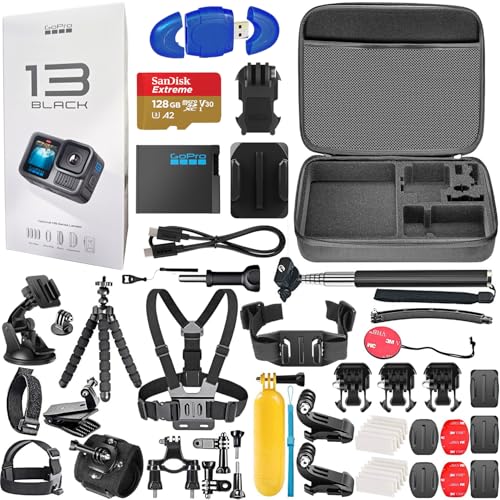
The HERO13 has become the time-lapse camera of record on more construction fences, marina rails and mountain webcams than any rival, and the reasons are logistical rather than romantic. It is waterproof without a housing, indifferent to dust, small enough to mount where a mirrorless would be a theft invitation, and its interval modes — including dedicated lapse programmes that assemble the finished video in-camera — were designed by people who understand that the operator intends to leave.
Power is its quiet masterpiece. USB powering lets a wall socket, a power bank or a site supply carry a sequence for days; battery swaps cover the remote deployments; and its behaviour across long intervals is economical in the way that only a mature platform is. The wide lens suits the genre’s classic subjects — skies, sites, tides, crowds — where the frame is a stage and time is the actor, and its stabilisation heritage means a bumped mount mid-sequence rarely becomes a ruined one.
The compromises are the fixed lens’s perspective and a small sensor’s night manners: city glare and night-sky fields will show its limits beside the DJI below. But for the defining time-lapse assignment — leave it somewhere interesting, return to a finished film of change itself — no camera in this guide has a longer or prouder service record.
- Format: waterproof action camera
- Intervals: dedicated lapse modes, in-camera assembly
- Power: USB and battery for long deployments
- Mounting: anywhere, discreetly
- Subjects: construction, weather, tides, crowds
Strengths
- The unattended sequence, perfected
- Survives the places lapses live
- Finished video without a computer
Trade-offs
- Fixed ultra-wide perspective only
- Night sky exposes the small sensor
- Manual exposure discipline is limited
A harbourmaster’s railing tells its story: one camera, one winter, every storm and regatta and cargo movement compressed into a film the town now shows its visitors. That is the HERO13’s parish — time itself, documented by a witness too tough to dismiss.
Site managers add one more virtue to its file: deniability of fuss. A camera this small and common draws no attention from passers-by, invites no tampering curiosity, and can be repositioned by any authorised hand without a photographer’s pilgrimage — logistics that decide whether a year-long sequence survives its own environment.
Best for: construction, sites, weather and unattended sequences. Not suited for: manual-exposure artistry or telephoto subjects

DJI Osmo Action 5 Pro — Best for dusk and night
Most time lapses fail at the interesting end of the day. As light dies, small sensors panic into noise, and the sunset sequence — the genre’s postcard — dissolves exactly when it should glow. The Action 5 Pro’s larger sensor was built for that hour. Its evening frames stay clean enough to assemble into sequences where the sky’s gradient survives, streetlights bloom without smearing the shadows into soup, and the blue hour lasts as long on screen as it did on the balcony.
DJI’s interval implementation respects the same ambition: straightforward lapse modes, in-camera assembly, internal storage as a safety net, and battery behaviour planned for the long evening rather than the quick clip. The front and rear screens matter more than they sound when a camera is clamped to a railing at dusk — framing and settings can be verified from the dry side of the mount, without disturbing the alignment the whole sequence depends on.
It remains an action camera in perspective: the lens is wide and fixed, manual exposure control is a subset of a mirrorless body’s, and the longest multi-week deployments will still envy the GoPro’s ecosystem of mounts and habits. For the sequences most people actually dream about — sunsets, city evenings, storms at dusk, the fairground lighting up — it is the small camera this guide would clamp to the rail.
- Format: action camera, larger sensor class
- Low light: cleanest evening sequences here
- Intervals: lapse modes with in-camera assembly
- Screens: front and rear for clamped checks
- Storage: internal memory as backup
Strengths
- The sunset sequence, kept honest
- Easy verification without disturbing the mount
- Strong battery manners for long evenings
Trade-offs
- Fixed wide lens
- Manual control below mirrorless depth
- Mount ecosystem younger than GoPro’s
A balcony above a harbour town, one October evening, produces its evidence: fishing boats lighting up, the sky grading itself through colours no filter invents, the sequence assembled before the photographer has finished dinner. Small cameras were not always capable of that paragraph; this one is.
Its night-lapse manners deserve the balcony astronomer’s attention as well. Night skies and meteor nights ask for clean high-sensitivity frames and patient intervals; within the small-camera class, this is the body whose night sequences need the least apology in the morning.
Best for: sunsets, city evenings and night transitions. Not suited for: interchangeable-lens control or narrow framing

Canon EOS R10 — Best for deliberate sequences
When a time lapse is intended as cinema — a sequence inside a film, a title background, a client’s construction story told beautifully — the small cameras’ convenience stops being the point. The R10 brings the deliberate toolkit: interchangeable RF lenses, so the sequence can be framed like a photograph rather than accepted like a webcam; full manual exposure discipline for flicker-free work; an interval timer for stills sequences with real depth to grade; and Canon colour waiting at the end of the pipeline.
Its APS-C sensor and the RF lens shelf make a rig that stays civilised: a fast prime for the night city, a telephoto for the moonrise over the ridge, a macro for the studio sequence of a watch being built. Electronic shutter options spare the mechanism across the tens of thousands of frames a serious lapse habit consumes, and the files reward the photographer who treats post-production as the genre’s darkroom — deflicker, grade, and assembly with intent.
The responsibilities are the mirrorless ones: weather is your problem to solve, power for multi-day work needs planning and accessories, and the camera will not assemble a souvenir video while you sleep. It is an instrument, not an appliance — which is precisely its recommendation to the photographer this section addresses.
- Format: APS-C mirrorless, RF mount
- Intervals: built-in timer for stills sequences
- Exposure: full manual, flicker discipline
- Lenses: primes, telephotos and macro
- Files: depth for grading and deflicker
Strengths
- Sequences framed like photographs
- Exposure control that ends flicker
- A lens for every lapse subject
Trade-offs
- Weather protection is your arrangement
- Long deployments need power planning
- Assembly happens in your software
A vineyard’s season, shot from one fence post with a prime lens — budbreak to harvest in ninety seconds — shows what deliberation buys: every frame a photograph, the whole a film. The R10 is for the maker who wants both halves of that sentence.
Students of the genre should note its teaching value. Because nothing is automatic by default, every mistake in an R10 sequence is traceable to a decision — and traceable mistakes are the curriculum from which judgement is built. The camera makes its owner better, which is the finest thing an instrument can do.
Best for: filmmakers, graded sequences and lens-led subjects. Not suited for: leave-it-for-a-month deployments without a power plan

OM SYSTEM OM-5 Mark II — Best for outdoor vigils
Some sequences require the camera to keep a vigil the photographer cannot: the storm crossing the valley, the tide’s week of arguments with the harbour wall, the alpine meadow turning. The OM-5 Mark II is built for that posting. Weather sealing that shrugs at hillside rain, a compact body and lenses that keep the whole rig discreet, and the Micro Four Thirds format’s reach — which lets a modest telephoto frame a distant ridge, a lighthouse, a nesting cliff — combine into the thinking walker’s lapse camera.
Its stabilisation, famous in handheld work, serves the vigil differently: mounted on a small tripod in gusting weather, every gram of steadiness protects the alignment a sequence lives by. Interval shooting for stills gives the deliberate maker full frames to grade, and the system’s deep bench of compact weather-sealed lenses means the vigil kit fits in a jacket’s worth of baggage rather than a vehicle.
The format’s familiar toll applies after dark, where the smaller sensor works harder than the full-frame giants this guide does not rank for lapses, and its video assembly conveniences trail the action cameras’. Neither matters on the hillside at dawn, which is where this camera earns its place — present, sealed, patient, and still recording when the light finally does its thing.
- Format: Micro Four Thirds mirrorless
- Sealing: weatherproof body and lens options
- Reach: format multiplies telephoto effect
- Intervals: stills sequences with full control
- Carry: the lightest vigil kit here
Strengths
- Posted outdoors without anxiety
- Distant subjects from a small kit
- Steadiness that protects alignment
Trade-offs
- Smaller sensor in deep darkness
- Less convenient in-camera assembly
- System shelf smaller than the giants’
A bothy window in the Highlands, three days of weather arriving in one view, is its natural posting. The photographer walks out each morning to check a camera that has kept faith with the sky — that partnership, more than any specification, is what this body sells.
Birders borrow it for a parallel patience: the nesting season compressed, the feeder’s daily parliament, the marsh at turning tide. A camera trusted by walkers with weather becomes, almost by accident, a naturalist’s diary with better handwriting.
Best for: landscapes, weather and remote vigils. Not suited for: the darkest night-sky work or appliance-style simplicity

Nikon Z30 — Best for desk and studio
Not all change happens on a skyline. The seedling on the windowsill, the model kit assembling itself across a fortnight of evenings, the cake rising, the 3D print growing layer by layer — the indoor lapse is a genre of its own, and the Z30 is its friendly specialist. Nikon’s small creator body offers straightforward interval and time-lapse movie tools, clean assembly, and a flip screen that makes framing a desk subject from the performer’s side of the table genuinely easy.
Its creator-first design suits the studio’s other inhabitants: the same body films the maker’s talking segments, streams the build live, and photographs the finished object for the thumbnail, all in Nikon’s honest colour. Continuous power over USB suits the plugged-in life of desk sequences, where the camera may sit for a month above a terrarium, and the Z mount’s compact lenses keep the rig from colonising the workspace it documents.
Weather sealing is absent and the outdoor vigil is not its parish; battery-only field deployments ask the planning this guide keeps recommending. At the desk, in the studio, above the workbench — the places where making happens — it is the most congenial witness in this list.
- Format: APS-C mirrorless, Z mount
- Intervals: simple tools, in-camera movie assembly
- Power: USB for plugged-in sequences
- Screen: flip-out for desk framing
- Role: plants, builds, crafts and studio change
Strengths
- The indoor sequence, made easy
- One body for lapse, talking and streaming
- Gentle learning curve for makers
Trade-offs
- No weather sealing for outdoor posts
- Field power needs planning
- Less manual depth than the Canon
A chilli plant on a student’s windowsill, filmed from germination to first fruit across a term, becomes the video her whole course shares. The Z30’s gift is making that sentence ordinary — a camera a maker can set, trust and forget until the change is ready to be watched.
Teachers have adopted exactly this body for the classroom’s longest experiments — the bean’s fortnight, the crystal garden, the slow chemistry of a term — because its footage assembles itself into the lesson without the teacher becoming a video editor in the holidays.
Best for: desk, studio and indoor growth sequences. Not suited for: exposed outdoor vigils or multi-week field posts

Insta360 Ace Pro 2 — Best low-light action alternative
The Ace Pro 2 arrives in this guide as the connoisseur’s small camera: a large sensor for its class, colour science with a Leica partnership in its pedigree, and a flip screen that makes it the easiest action body here to frame deliberately. For time lapse, those virtues translate into evening and indoor sequences with a polish the genre’s small cameras rarely reach — the workshop build under warm lamps, the night market assembling itself, the storm-lit street.
Its interval modes and in-camera assembly cover the appliance duties competently, while the flip screen solves the clamped camera’s oldest annoyance: composing and checking a shot mounted above or below eye level without acrobatics or guesswork. Battery and USB powering cover the standard deployments, and its low-light footage cuts against mirrorless material with unusual grace for its size.
The ecosystem is the honest gap: mounts, habits and third-party accessories trail GoPro’s decade of entrenchment, and the very longest unattended deployments remain the HERO13’s home fixture. As the small camera for sequences where light is scarce and framing matters — the thinking person’s second witness — it earns the final place on this list.
- Format: action camera, large sensor class
- Low light: polished evening and indoor frames
- Screen: flip design for awkward mounts
- Intervals: lapse modes with assembly
- Colour: refined, filmic rendering
Strengths
- Small-camera sequences with big-camera manners
- Framing from any mounting position
- Evening light handled gracefully
Trade-offs
- Accessory ecosystem still growing
- Longest deployments favour the GoPro
- Premium pricing for its class
A night market’s first hour — stalls rising, lanterns waking, the crowd condensing out of the dusk — filmed from a lamppost clamp, shows its character: a small camera behaving like a cinematographer rather than a witness. Some sequences want exactly that ambition.
Cafés and workshops filming their own transformations — the refit, the mural, the build — find its flip screen and low-light grace turn a chore of documentation into a film the business actually posts. Small cameras that flatter real interiors are rarer than their sales figures suggest.
Best for: low-light sequences and carefully framed mounts. Not suited for: the longest unattended deployments or tight budgets
How Do the Six Time-Lapse Cameras Compare Over a Long Sequence?
| Camera | Format | Lapse strength | Best use |
|---|---|---|---|
| GoPro HERO13 Black | Action camera | Endurance and weatherproofing | Sites, seasons and unattended posts |
| DJI Osmo Action 5 Pro | Action camera | Evening cleanliness | Sunsets and city dusk |
| Canon EOS R10 | APS-C mirrorless | Manual control and lenses | Cinema sequences |
| OM SYSTEM OM-5 Mark II | Micro Four Thirds | Sealing and reach | Hillside and coastal vigils |
| Nikon Z30 | APS-C mirrorless | Simplicity and USB power | Desk and studio change |
| Insta360 Ace Pro 2 | Action camera | Low light and flip screen | Framed low-light sequences |
The table divides by temperament: the witnesses you abandon to the weather, and the instruments you conduct. Most serious lapse makers eventually own one of each, because the skyline job and the sunset job are different jobs wearing one name.
How Should You Choose an Interval for a Sequence?
Work backwards from the finished film. Decide how long the sequence should play — thirty seconds is a common, satisfying length — and how much real time it must compress; the interval is simply the real duration divided by the frames you need. Clouds scudding across an afternoon forgive intervals of several seconds; a flower opening wants a frame every few minutes; a building wants a few frames a day, taken at consistent hours, across months.
Then respect the subject’s own rhythm. Too long an interval makes motion strobe and judder — crowds teleport, clouds tear — while too short an interval wastes card, power and shutter life on a film that plays like real time wearing a costume. Shoot a short test at your chosen interval and watch it before committing the vigil; five honest minutes of testing have saved more sequences than any specification in this guide.
What Mistakes Do People Make When Shooting Time Lapse?
The fatal mistake is power optimism: trusting a battery’s brochure against a cold night and a long interval, and returning to a camera that died politely at the sequence’s best hour. Second is the wandering tripod — a mount that settles, slips or gets nudged by weather and curiosity, turning a season’s patience into a seasick pan. Third is auto everything: exposure, focus and white balance re-deciding themselves a thousand times into a flickering mess.
Two quieter errors complete the set. Forgetting the foreground — a sequence needs a still anchor against which change can be measured, and pure sky is weather without a story. And neglecting the visit: long deployments deserve check-ins for condensation, card space, battery health and the spider that has adopted the lens as real estate. Patience is the genre’s virtue, but it is an attentive patience.
How Do You Shoot the Day-to-Night Transition?
The holy grail of the genre is the sequence that begins in afternoon and ends under a night sky without a visible seam, and it defeats more photographers than any other assignment here. Light does not merely dim at dusk; it changes colour, direction and contrast, across a range no single exposure can honour. The craft answer is a planned ramp: exposure changing gradually and deliberately — by the camera’s smoothing tools, by an intervalometer’s bulb ramping, or by the photographer’s own scheduled adjustments — so the film darkens the way an eye darkens, continuously and without complaint.
White balance must make the journey under orders. Left to itself, a camera will fight the sunset’s warmth into neutrality and then fight the night’s blue into a different neutrality, and the film will argue with itself. Fix a balance, or plan its slow migration, and let the sky be allowed to change colour — that change is the subject, not the error. Sensitivity, similarly, should climb in steps too small to see, at moments chosen by the plan rather than by panic.
Choose your witnesses accordingly. This is the sequence the DJI and Insta360 small cameras were built to attempt and the mirrorless bodies were built to conduct; in both cases, rehearse on an unimportant evening first. The grail is not granted to first attempts, and the photographers who hold it speak of dusk the way sailors speak of a familiar, treacherous strait.
Why Do Neutral-Density Filters Matter for Time Lapse?
A still photograph freezes its instant; a time-lapse frame should smear it slightly. When each frame carries a longer exposure — water blurring, crowds ghosting, clouds streaking — the assembled film flows like memory rather than stuttering like surveillance. Bright daylight makes such exposures impossible without help, and the neutral-density filter is that help: sunglasses for the lens, cutting light so the shutter can linger at noon.
The effect separates souvenir lapses from cinematic ones more reliably than any resolution. A harbour shot with short exposures shows boats teleporting between positions; the same harbour through a strong filter shows them gliding, the water silk, the whole scene breathing. Mirrorless bodies accept filters as a matter of course; the action cameras offer them as accessories worth every penny of their modest cost for daylight work.
Discipline accompanies the gift. Filters must be clean — a smudge repeats in every frame like a watermark of carelessness — and their strength chosen for the interval, so the exposure stays a healthy fraction of the gap between frames. Test the combination before the vigil, as always; the genre punishes assumptions at a rate of one frame per interval.
How Should You Run a Construction Sequence Over Months?
Fix everything that can be fixed. The camera’s position is surveyed, marked and defended — a mount that cannot wander, a frame documented with reference photographs so a replaced camera can be aligned to the millimetre. Frames are taken at consistent times, ideally in consistent numbers per day, so the finished film breathes evenly; power is mains or a serviced rotation, never a hope; and the memory strategy assumes theft, weather and accident as line items rather than surprises.
Data discipline is the project’s spine. Cards are collected and backed up on a schedule, the archive is organised by date from day one, and a human visits regularly — to clean the lens, check the alignment, photograph the site from the ground for context, and notice the crane that is about to enter the frame and ruin a month’s composition. The small action cameras dominate this work precisely because they tolerate this regime without ceremony.
Plan the ending at the beginning. The finished film’s length, its audience, its music and its final frame — the building complete, in the light you would choose — should be imagined before the first interval is set, because every decision about times, angles and seasons flows backward from that imagining. Construction lapses are project management wearing a lens, and they reward the organised with a kind of magic no other genre offers: a year, watched in a minute, by the people who built it.
How Do You Edit a Thousand Frames Into Thirty Seconds?
Assembly begins with curation. Remove the frames the vigil should not have taken — the knocked hour, the fogged morning, the bird’s opinion of the lens — then stabilise the sequence against the tiny shifts no mount fully prevents, deflicker what discipline could not, and grade the whole as one continuous photograph rather than a thousand separate ones. The software matters less than the order: repair, align, smooth, colour, in that sequence, with the finished film’s music already chosen so the cuts and the climax can be timed to it.
Speed is a creative decision disguised as arithmetic. The same sequence can play as a serene meditation or a frantic montage depending on how many source hours each screen second must carry, and excerpts at different speeds — the storm fast, the sunset slow — often serve a film better than one uniform rate. Export generously, archive the frames themselves rather than only the film, and keep the project file: the sequence you assemble in five years, with better tools and a better eye, may be the one the vigil was really for.
How Do You Choose a Subject Worthy of the Wait?
Change with a rhythm is the whole casting call. Tides, markets, weather fronts, gardens, building sites, ice, crowds at a station, light itself crossing a room — the great lapse subjects share a pulse the finished film can reveal. Static scenes with occasional events make poor lapses and good stills; relentless uniform motion makes noise. Walk a candidate subject in your imagination at a hundred times speed before committing a camera to it, and ask what the acceleration will disclose that the eye cannot see unaided. If the answer is a pattern, a growth, a tide in human or natural affairs — set the tripod.
Foreground is the subject’s necessary partner. A railing, a roofline, a moored boat, the corner of your own balcony: something still and characterful against which the change can perform. The masters of the genre scout like landscape photographers and schedule like astronomers, returning to one frame across seasons because a known frame, revisited, becomes a diary rather than a clip.
How Should You Plan Power for Every Kind of Sequence?
Match the supply to the vigil’s length with a margin that insults your optimism. An evening’s sunset: a full battery, tested. A night: the battery plus the power bank, cabled so a knock cannot part them. A week: mains power or a serviced battery rotation with dates in a diary. A season: mains, a weatherproof supply chain, and a plan for the outage nobody schedules. At each scale, test the entire chain — camera, cable, supply, card — for one full cycle before the real sequence, because failures in this genre prefer to introduce themselves at scale.
Cold and heat rewrite the arithmetic without asking. Batteries tire early in frost and electronics sulk in a sun-baked enclosure, so shade the rig, insulate the supply, and derate every promise the brochure makes by the weather you actually have. The photographers whose sequences survive winters are not luckier than you; they simply stopped believing brochures some winters ago.
Can You Add Movement to a Time Lapse?
The static frame is the genre’s grammar, but a slow drift — the camera panning across the harbour as the tide turns, sliding along a rail as the room’s light crosses it — adds a sentence of cinema to the paragraph. Motion lapses are made with sliders, rotating mounts or the patient electronic pans some cameras and apps provide, and they obey one law: the movement must be far slower than the change it accompanies, or the film becomes about the camera instead of the world.
Beginners should earn the static masterpiece first. A moving rig multiplies every failure in this guide — power, alignment, flicker, weather — by the number of its moving parts, and the audience cannot tell a brave failure from a lazy one. When the static sequences are boring you with their reliability, add one axis of motion and let it be boringly reliable too. The genre rewards that order of ambitions every single time.
What Does a Season of Lapses Teach a Photographer?
Attention, mostly — the kind that notices the sun’s path migrating across a room’s wall, the market’s weekly tide, the exact week the swifts return. A lapse habit reorganises how its owner sees unaccelerated life, because you begin to scout every scene for its hidden motion and every hour for its quality of change. The cameras in this guide are, in that sense, instruments of education disguised as recording devices.
It also teaches a rare humility about control. The photographer sets the frame and the terms, and then time — weather, seasons, strangers, luck — directs the film. The best sequences in any portfolio are collaborations with that direction, not victories over it, and learning to collaborate with the uncontrollable is a skill that improves every other kind of photography its owner will ever attempt.
Final Recommendation
Leave a GoPro HERO13 Black with the world’s change and it will bring you back a film; clamp a DJI Osmo Action 5 Pro or Insta360 Ace Pro 2 to the evening and the dusk will behave. Take the Canon EOS R10 when the sequence must be cinema, the OM SYSTEM OM-5 Mark II when it must weather a hillside, and the Nikon Z30 when the change is happening on your own desk. Whichever you choose, feed it power, fix its decisions, and let time do the performing.
Related guides
Frequently Asked Questions
How long can a camera shoot a time lapse?
From hours on a battery to weeks or months on external power with sensible intervals. The limits are power, card capacity and weather, in that order — which is why this guide ranks power options beside image quality.
Should I shoot stills or use a time-lapse video mode?
Video modes are instant and forgiving; stills sequences offer resolution, grading depth and rescue options at the cost of assembly work. Beginners should start with the mode; serious sequences deserve the stills.
How do I power a camera for a week-long sequence?
USB power from a wall supply or a large power bank is the common answer for the small cameras; mirrorless bodies use dummy batteries or USB power delivery where supported. Test the whole chain overnight before trusting it for a week.
What is the best interval for clouds?
A few seconds suits most skies: fast enough to keep motion silky, slow enough to compress an afternoon into a watchable minute. Storms building overhead reward the shorter end; lazy summer cumulus forgives the longer.
Can I shoot a time lapse through a window?
Yes, with the lens close to clean glass, room lights off to kill reflections, and focus locked. Many beloved city sequences were filmed exactly that way, by photographers wise enough to let the building do the tripod work.
How do I avoid condensation on an outdoor camera?
Acclimatise the camera gradually, use a small hood or shelter that still breathes, and check the lens at your visits. Sealed bodies like the OM-5 Mark II and the action cameras tolerate the vigil best.
How Do You Protect a Camera Left Outdoors for Weeks?
Shelter without sealing is the principle: a small hood or housing that sheds rain and sun while letting air move, so condensation is discouraged rather than trapped. Angle the rig so water runs away from the lens, secure every cable against the wind’s patient tugging, and consider the sun’s daily path — an enclosure that becomes an oven at noon will cook batteries and warp promises by August. The action cameras simplify all of this by being their own shelter; the mirrorless rigs repay a carpenter’s half-hour with a season of safety.
Security is the other half of protection, and discretion is its cheapest form. A small camera, mounted high or hidden in plain sight among a site’s ordinary clutter, attracts a fraction of the attention a gleaming rig invites. Note the serial numbers, insure the deployment if its value warrants it, and accept the genre’s oldest truth: anything left alone in the world is lent to the world, so lend the camera you can afford to lose while it earns the footage you cannot afford to miss.
There is a final pleasure this genre gives its practitioners that no other branch of photography can match: the reveal. You return to a camera that has been watching without you — through nights, storms and ordinary Tuesdays — and you press play on time you did not witness, compressed into a film only your patience could have authored. Every camera in this guide exists to make that moment reliable. Choose the one matched to your vigil’s length and weather, set it with care, and go away. Time will do the rest, and it has never once missed a performance.
How Do Night-Sky Trails and After-Dark Sequences Differ From Ordinary Lapses?
Night reverses the genre’s arithmetic. Intervals shrink toward the exposure itself — long frames for faint night light, brief pauses between them — and the camera’s sensitivity, thermal behaviour and battery economy under continuous work become the whole review. Gaps between frames print as breaks in celestial trails and judder in the sky’s rotation, so the discipline is continuity: exposures back to back, power that outlasts the cold’s theft, and a lens dew strategy for the hours after midnight when the optics fog with the meadow.
The rewards justify the rigour. A night sequence holds what no single photograph can — the sky’s wheel turning over a sleeping landscape, meteors signing the dark, the Milky Way rising like a tide. The larger-sensor small cameras make a beginning; the mirrorless bodies, with fast wide lenses, make a practice. Either way, the photographer sleeps in a tent beside the tripod and wakes to a film of hours they were present for only in trust — the genre’s purest form of its central bargain.
How Should Beginners Practise Without Waiting a Season?
Start with the hour-long subjects hiding in plain sight: ice melting in a glass on a sunny table, shadows crossing the kitchen floor, a candle’s biography, the street outside filling and emptying around the school run. These rehearsals teach interval choice, exposure discipline and assembly in an afternoon, at the cost of nothing but attention, and their finished films are charming enough to keep.
Graduate by duration, not by drama — an evening, then a night, then a weekend — and keep a notebook of each sequence’s settings and sins. The lapse maker who can tell you exactly why the third attempt stopped flickering owns a skill no camera in this guide can sell separately. By the time the season-long subject calls, the technique will be a reflex, and only the patience will be new.
What Should You Check at Each Visit to a Long Deployment?
Work the same short liturgy every time, in the same order, so that fatigue never edits it. Lens first — clean, dry, unvisited by insects. Alignment second, against your reference photograph, before you touch anything else. Then power, card space and the interval settings read aloud to yourself, because settings drift through knocks, updates and other people’s kindness. Review the last frames the camera took, not the first: the sequence’s present tense is where trouble announces itself, quietly, in time to be forgiven.
Leave the site as a photographer should: nothing in the frame that was not there when you arrived, the mount’s marks renewed, the notebook updated with the visit’s weather and observations. Those notes become the finished film’s captions and its maker’s education, and the habit of them separates the professionals of patience from its tourists.
So set the first sequence tonight — the view from your own window, the street’s evening tide, the moon’s slow argument with the rooftops. It will be imperfect, and it will be yours, and by morning you will understand every verdict in this guide from the inside. That understanding, more than any camera, is what the next sequence will be shot with.
How Much Should You Spend on a Time-Lapse Setup?
Less than the genre’s glamour suggests, in a stricter order than the shops prefer. The camera comes first, chosen from this list by the vigil you intend; the mount comes second, and deserves real money, because a season of frames is only as good as the alignment that never moved; power follows, sized to the longest deployment rather than the average one; and only then do filters, housings and motion toys earn their invoices. A lapse kit bought in that order succeeds at every budget, because each purchase defends the frames the previous one made possible.
Resist, above all, the deluxe body on the wobbly tripod. The audience of a finished sequence can see stability, smoothness and light; they cannot see the badge on the camera that suffered beautifully for a month. Spend where the film can see it, and let the equipment list stay as patient as the genre itself.
And when the film is assembled and the vigil is over, leave the camera’s post empty for a day before filling it again. The pause is part of the practice: a chance to watch what time showed you, to let the next subject choose itself slowly, and to remember that the genre’s real equipment was never the camera at all. It was the decision to pay attention for longer than anyone else would — the cameras above simply make that decision survivable, repeatable and, at their best, beautiful.
Choose the witness, then, the way you would choose a friend to house-sit a season of your life: for steadiness, for honesty about its limits, and for the certainty that when you return, it will have been paying attention the whole time you were gone.
Why Does This Genre Keep Growing?
Because the world keeps offering it new stages. Phones taught a generation to expect change made visible — a city’s skyline in a feed, a storm in a story, a renovation in a reel — and dedicated cameras answer with the quality, endurance and honesty that a phone left on a windowsill cannot sustain. Construction sells with it, science teaches with it, tourism advertises with it, and families quietly archive the growth of gardens and children with it. The six cameras in this guide are the current, capable instruments of that appetite, divided between the witnesses and the conductors, and united by the only specification that has ever mattered here: they stay, they watch, and they remember.
Pick the frame, set the interval, and trust the hours. Somewhere between the first frame and the last, the ordinary view from that window will become the most extraordinary footage you own — not because the camera was remarkable, but because you finally gave time a seat, a lens and a reason to perform, and the patience to stay for the whole show, from the first frame to the last light of the last evening it records for you, faithfully and without applause or complaint, in all weathers and all seasons of the turning year ahead of it.
Related Guides
Continue with our guide to photographing the night sky, our notes on long-term construction documentation, and our editing walkthrough for assembling and deflickering sequences.


