ilcastellomenu.com is reader-supported. When you buy through links on our site, we may earn an affiliate commission.
Where to Buy
Lacrosse does not wait for your camera. The best cameras for sports lacrosse are chosen under a specific tyranny: a small ball, travelling at speeds that embarrass baseball, changing hands behind backs and between sticks several times in a single possession. A face-off becomes a fast break in under two seconds; a crease shot is over before a spectator finishes inhaling. Photographing this sport is less like shooting soccer, where the play announces itself, and more like shooting a magician who performs at a sprint — the decisive moment is real, brief, and usually three passes ahead of where the crowd is looking.
Two photographic problems dominate the sideline. Tracking is the first: the camera must find a helmeted player at distance, hold focus while they dodge, collide and spin, and keep holding it when a defender crosses the frame — the classic autofocus betrayal. Burst depth is the second: the best sequence of a dodge-and-shot lasts perhaps a second and a half, and a camera whose buffer chokes after a polite volley will hand you the wind-up and the celebration with the goal itself lost in the write-speed gap. The six picks below were ranked on those two axes first, and on everything else second.
Field geometry shapes the lens conversation throughout. A lacrosse field is a soccer field’s sibling, and the parent on the far sideline is photographing across a similar gulf: reach is not a luxury, it is the price of a frame-filling player. Crop-sensor bodies earn honest places in this list by stretching affordable telephotos, while the full-frame flagships answer with tracking intelligence and low-light manners for the evening games under lights that increasingly define school and club schedules. One action camera joins them for the goal-mount and referee-adjacent angles no sideline body can occupy.
Every pick is available on Amazon, with links waiting in the Quick Picks table and beside its detailed review. Read the sections on settings and on positioning before the tournament weekend; in lacrosse, the photographer who has pre-decided their autofocus behaviour and claimed the right patch of sideline will outshoot a better camera operated on hope, every single quarter.
Key Takeaways
- Canon’s EOS R6 Mark II tracks dodging players through traffic with the calmest autofocus here.
- Sony’s Alpha 7 IV pairs deep bursts with the telephoto bench lacrosse parents actually buy from.
- Nikon’s Z50 II stretches modest telephoto budgets into frame-filling reach for youth fields.
- Canon’s EOS R10 is the lightweight sideline sprinter: fast, keen and priced for team parents.
- Fujifilm’s X-T5 resolves jersey numbers and stick detail across the field’s full width.
- GoPro’s HERO13 Black takes the crease-cam and training angles no long lens can reach.
In this guide
Quick Picks
| Camera | Badge | Why it earns its place |
|---|---|---|
| Canon EOS R6 Mark II | Best tracking brain | Subject detection that clings to players through screens, checks and crossings. |
| Sony Alpha 7 IV | Best all-round sideline body | Deep buffer, real-time tracking and a telephoto ecosystem at every price. |
| Nikon Z50 II | Best reach per dollar | Crop magnification turns sensible telephotos into far-sideline instruments. |
| Canon EOS R10 | Best lightweight option | Rapid bursts and inherited Canon tracking in a body a parent can carry all day. |
| Fujifilm X-T5 | Best for detail and prints | Resolution that keeps stick skills and expressions readable across the field. |
| GoPro HERO13 Black | Best second angle | Mounts behind the goal or on the fence for the crease view broadcasters envy. |
How Did We Choose Cameras for Lacrosse?
Autofocus behaviour under betrayal was the first filter. Lacrosse constantly interposes bodies between camera and subject — a defender stepping across, a midfielder sprinting through the frame, the referee’s untimely cameo — and a tracking system must decide, dozens of times per game, whether the interruption or the original player owns the focus. We favoured bodies with mature subject detection, configurable tracking persistence, and eye or head detection that works on helmeted athletes, because a system that re-acquires instantly after each crossing is worth more at this sport than a marginally faster burst rate.
Burst depth came next, measured in the currency of a full dodge sequence. Electronic shutters that roll and warp a swinging stick were marked down for the fastest action, while mechanical and first-curtain options that keep sticks straight earned their keep. Buffer behaviour with real cards — not laboratory media — decided several rankings: a camera that sustains its volley through a fast break and clears its buffer during the walk back to the face-off fits lacrosse’s rhythm of explosion and pause far better than a sprinter that faints after one play.
Reach economics formed the third test, because the lacrosse market is largely parents and school photographers, not agencies. We scored what a sensible telephoto costs in each system and what framing it delivers from the far sideline, which is why two crop bodies sit proudly in this list: their magnification is not a compromise at this sport, it is a subsidy. Evening performance mattered in the same breath — school lacrosse lives under lights of wildly varying generosity, and clean files at the sensitivities floodlit games demand separate the bodies that finish the fourth quarter from those that merely start it.
Weather and handling closed the judging. Spring lacrosse is played in horizontal rain that cancels nothing, and tournament days run six games long; sealing, battery stamina and a grip that survives gloves and numb fingers were scored as performance features, not comforts. A camera that quits, fogs or exhausts its owner by the semifinal has failed the assignment regardless of its sensor.
Why Is Lacrosse Harder to Photograph Than It Looks?
Deception is coached. Players are taught to hide the ball in the stick, to shoot from behind screens of their own teammates, to pass across their bodies in the instant a defender commits — which means the photographer’s subject spends the game professionally concealing the one object that explains the photograph. Shooting the ball-carrier alone yields a gallery of athletes running with apparently empty sticks. The sport’s real story lives in anticipation: the cutter arriving where the pass will be, the goalie’s first step before the shot exists, the defender’s check a half-second before contact.
Speed compounds the misdirection. The ball crosses the field faster than any player runs, so play teleports: a clear becomes an attack before a photographer at the wrong end has lowered the camera from the previous frame. Lacrosse rewards the shooter who reads formations the way midfielders do — who stands at the end the play is travelling toward, who watches the off-ball movement with one eye while the other minds the frame. Equipment cannot supply that reading. It can only refuse to waste it, which is the standard the picks above were held to: when your anticipation is right, the camera must be right with you, focused, fed and ready.
What Are the Best Cameras for Sports Lacrosse?

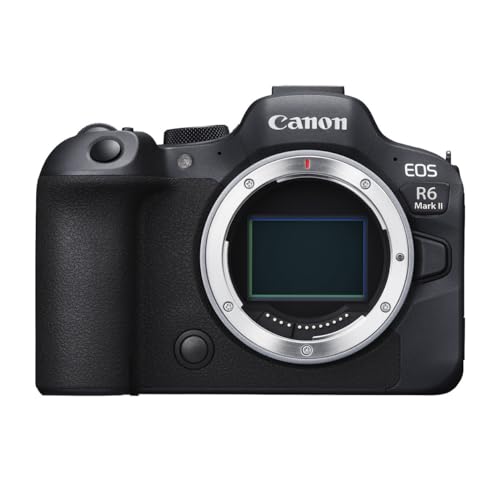
Canon EOS R6 Mark II — Best tracking brain
Canon’s subject detection has a quality lacrosse photographers describe with relief: it is stubborn about the right thing. Set it on a dodging attackman and it holds through the defender’s cross, the referee’s stroll and the goalie’s lunge, re-finding the helmet and shoulders it was assigned rather than eloping with whatever crossed the frame. Its burst rate, delivered with a mechanical shutter that keeps sticks and shafts honest, covers the full anatomy of a shot — plant, wind, release, follow — and the buffer swallows tournament-length sequences without the mid-play sulk that turns goal photographs into almost-goal photographs.
Evening games reveal the second half of its character. Under school lights that would make a wedding photographer weep, the full-frame sensor keeps colours credible and faces readable at sensitivities where crop bodies begin to smudge detail into watercolour. The ergonomics suit the long day: a grip that fills a cold hand, controls placed for gloved thumbs, and sealing that shrugs off the April sleet lacrosse schedules specialise in. Paired with Canon’s sensible telephoto zooms, it is the body a serious team photographer builds a season around.
Programme the camera before the season, not before the game. Its tracking sensitivity settings reward an afternoon of practice matches — teach it how long to wait out a crossing defender before switching, and it will apply the lesson all spring. That configurability is the difference between a camera that is smart and a camera that is smart in the way your sport needs. For the photographer whose assignment is the decisive moment, reliably, in traffic, this is the most trustworthy brain on the list.
Recruiters’ footage is a modern sideline duty worth naming: the same tracking that serves the gallery serves the highlight film a player sends to college programmes, and the Canon’s video manners — steady focus, honest colour under lights — produce clips a coach can forward without apology. A body that advances both the album and the athlete is earning its price twice.
- Class: full-frame mirrorless, tracking-first
- Sideline gift: persistent subject detection in traffic
- Burst character: fast mechanical volleys, deep buffer
- Evening manners: clean files under school lights
Strengths
- Autofocus holds players through crossings and screens
- Mechanical burst keeps sticks straight and sequences whole
- Low-light files survive fourth-quarter floodlights
Trade-offs
- Full-frame telephoto reach costs real money
- Tracking menus reward a practice session to tune
- Resolution is adequate, not lavish, for heavy crops
Best for: dedicated team photographers who live on the decisive play. Not suited for: casual parents wanting the cheapest route to far-sideline reach.

Sony Alpha 7 IV — Best all-round sideline body
If the R6 Mark II is the specialist’s brain, the Alpha 7 IV is the professional’s compromise in the honourable sense: nothing about it is second-best by much, and several things — resolution, lens choice, video — are first by acclamation. Real-time tracking follows players with the tenacity Sony’s system is known for, the buffer digests long electronic and mechanical volleys, and the extra resolution over its Canon rival buys cropping room that far-sideline photographers spend gratefully: the frame-filling shot of a midfielder at sixty metres is often a crop, not a composition, and this sensor funds it.
The lens bench is the argument that closes sales. Lacrosse’s working telephotos exist in E-mount at every altitude of budget, from the sensible zooms parents buy to the fast glass schools dream about, with a used market deep enough to outfit a whole booster club. Video deserves its sentence too: the same body that shoots the stills records highlight-reel footage with tracking that keeps a fast break centred, an increasingly common second duty for the person a programme calls “our photographer” as if it were one job.
Handling under tournament conditions holds up its end — dual card slots for the paranoid, stamina for a day of games, and custom buttons that let you park a tracking mode, a crop mode and a video mode one press apart. Choose the Sony when the assignment is plural: stills and film, this season and next, your child’s team and the school that hires you after the other parents see the gallery. It is the list’s safest pair of hands.
- Class: full-frame mirrorless, all-rounder
- Sideline gift: tracking plus cropping resolution
- Burst character: deep buffer, flexible shutter choices
- Evening manners: strong, with a vast fast-glass bench
Strengths
- Resolution funds the far-sideline crop
- Telephoto ecosystem at every budget level
- Stills and highlight video in one trusted body
Trade-offs
- Electronic burst can bend the fastest stick swings
- Menus are powerful rather than cosy
- Tracking brilliance needs a lens that can keep up
Best for: programme photographers shooting stills and film across a season. Not suited for: buyers who want the absolute calmest tracking in heavy traffic.

Nikon Z50 II — Best reach per dollar
Stand a parent at the far sideline of a youth field and ask what they need: not resolution, not dynamic range — metres. The Z50 II’s crop sensor is a metres machine, converting the affordable telephoto zoom a family can justify into the framing a full-frame owner needs expensive glass to match. Nikon’s junior body wraps that subsidy in grown-up behaviour: subject detection inherited from its professional siblings, bursts brisk enough for a fast break’s anatomy, and files that hold together under the lights of an evening school game far better than its price suggests.
Youth lacrosse specifically flatters its virtues. Fields are slightly smaller, the light at weekend tournaments is often honest daylight, and the photographer’s real constraints are budget, bag weight and the second child playing on the adjacent field in twenty minutes. The Nikon is light enough to live around a neck all day, simple enough to hand to a grandparent with one instruction — keep the green box on your grandson — and serious enough that its keeper shots survive printing for the hallway wall.
Growth, again, is the quiet design brief. The Z mount takes the system’s serious glass as a young photographer’s ambitions ripen, and the skills this body teaches — tracking discipline, burst timing, anticipation — are the sport’s permanent curriculum at any level. Buy it as the family’s lacrosse camera and it may retire as the family’s camera generally; buy it as a student’s first sports body and it will not embarrass them until long after their technique, not their sensor, becomes the limit.
- Class: APS-C mirrorless, value-first
- Sideline gift: crop reach on affordable telephotos
- Burst character: brisk volleys for youth pace
- Evening manners: honest files under school lights
Strengths
- Far-sideline framing without flagship glass prices
- Detection smarts inherited from pro bodies
- Light enough for all-day tournament duty
Trade-offs
- Buffer fills sooner than the full-frame picks
- Low-light ceiling arrives in the fourth quarter
- Smaller body, smaller grip for big hands and gloves
Best for: parents and students who need reach on a sane budget. Not suited for: professionals shooting night games for publication.

Canon EOS R10 — Best lightweight option
Tournament lacrosse is an endurance event for the person holding the camera, and the R10’s case begins with what it does not weigh. Canon’s compact mirrorless carries the family’s tracking DNA — subject detection that recognises and pursues athletes with a confidence startling at this price — inside a body a parent can shoot one-handed while the other hand holds coffee, a roster or a younger sibling’s entire afternoon. Its bursts arrive in rapid mechanical volleys that freeze a shot’s release cleanly, and its crop sensor stretches Canon’s affordable telephotos across the field exactly as the Nikon does in its own system.
Pace suits it beyond the spec sheet. The R10 wakes fast, focuses faster, and its simplified control layout means the settings a lacrosse day actually needs — tracking, burst, exposure for a bright field — live one dial away rather than three menus deep. For the team parent who is also, by acclamation, the team photographer, that absence of friction across six Saturday games is a performance feature no laboratory measures. The gallery gets shot because the camera never made shooting feel like work.
Limits declare themselves honestly at the extremes: the buffer is a sprinter’s, emptying during the longest celebrations; the sensor asks more of the light than its full-frame sibling does after dusk. But within the broad daylight-and-floodlight heartland of school and club lacrosse, the R10 delivers a startling share of the R6 Mark II’s experience at a fraction of the carry. It is the pick for photographers who know their real opponent is fatigue.
Hand it to a teenager, too. The R10 has become a quiet favourite of student yearbook staffs for exactly the virtues listed here — light, quick, forgiving — and a young photographer who learns anticipation on this body learns the sport’s permanent lessons on forgiving tuition. Programmes buying two sideline bodies for student crews could do far worse than a pair of these.
- Class: APS-C mirrorless, featherweight
- Sideline gift: Canon tracking in a compact body
- Burst character: quick mechanical volleys
- Evening manners: capable while the lights are decent
Strengths
- All-day carry without the shoulder tax
- Subject detection punches far above its price
- Controls stay simple under tournament pressure
Trade-offs
- Buffer shortens the longest sequences
- Dusk and dim halls test its sensor early
- Compact grip suits smaller hands best
Best for: team parents covering full tournament days. Not suited for: night-game specialists or heavy professional cropping.

Fujifilm X-T5 — Best for detail and prints
Some lacrosse photographs are evidence; the X-T5 makes memorabilia. Its high-resolution sensor records the sport at a granularity the other crop body here cannot approach — stick stringing readable, expressions under helmets legible, jersey numbers crisp at distances where lesser files dissolve into embroidery. For the photographer whose end product is the printed poster in a senior’s bedroom or the programme cover, that resolution is not vanity. It is the deliverable. Fujifilm’s physical dials, meanwhile, let exposure be run by touch while the eyes stay on the play, a sideline virtue that grows on you game by game.
Tracking is where expectations should be set with care. The X-T5’s subject detection is competent and improving with each firmware generation, yet it lacks the preternatural stubbornness of the Canon and Sony systems in heavy crossing traffic; its keeper rate on the wildest fast breaks will trail theirs by a margin honest reviews should state. What it returns in exchange is per-frame quality: when the play develops in the open — the dodge in space, the shot with a clean background, the celebration — its files are the ones you print large.
Programme photographers who shoot for print, for banners and for the school’s own publications will find that trade made in their favour. The body’s classic handling also slows its owner down in the good way, encouraging the composed frame over the sprayed one. Lacrosse has room for both temperaments; the X-T5 serves the deliberate one, and serves it with the finest raw material in this list under the flagship line.
- Class: APS-C mirrorless, resolution-first
- Sideline gift: fine detail across the field
- Burst character: steady volleys, quality over frenzy
- Evening manners: good files while light is fair
Strengths
- Prints and posters keep their detail at distance
- Dials run exposure without leaving the play
- Crop reach on Fujifilm’s telephoto options
Trade-offs
- Tracking in traffic trails Canon and Sony
- High resolution fills cards and buffers faster
- Fastest action prefers the tracking specialists
Best for: photographers whose lacrosse work ends up printed large. Not suited for: shooters who live exclusively on chaotic fast breaks.

GoPro HERO13 Black — Best second angle
Every other pick watches lacrosse from outside the fence of play; the HERO13 reports from inside it. Mounted behind the goal it records the crease’s private violence — the goalie’s split-second geometry, the attackman’s finishing touch — from an angle broadcasters would pay for and no telephoto can rent. Clamped to a fence it becomes the fixed wide witness for a whole half, and in a coach’s hand at training it turns dodges and shooting mechanics into slow-motion evidence a player can actually learn from. It is not competing with the sideline bodies. It is completing them.
Durability is its sideline credential. Lacrosse balls arrive at camera height with malicious energy, weather arrives horizontally, and a camera that costs a fraction of the mirrorless bodies can be risked in positions — goal frame, ground level at the crease, the wet grass of the restraining box — where a flagship would be an act of financial self-harm. Its stabilisation smooths the fence’s vibration, its wide view forgives approximate aiming, and its footage cuts into a highlight reel as the angle that makes parents gasp.
Deploy it with a plan rather than as an afterthought: fresh battery per half, lens wiped at every break, mount checked after every nearby shot, and a retrieval habit that never leaves it for the next game. Used so, the little camera supplies the ten percent of a lacrosse gallery that the other ninety cannot — the view from where the game is actually decided, at the crease, at ground level, inside the story.
- Class: action camera, mount-anywhere
- Sideline gift: crease and goal-frame perspectives
- Burst character: high-frame-rate training footage
- Evening manners: fine for its angles and distances
Strengths
- Angles no sideline body can occupy
- Tough and cheap enough to risk near the play
- Slow motion serves coaching and highlights alike
Trade-offs
- Wide fixed view cannot frame distant players
- Battery swaps punctuate long tournament days
- A supplement to a system, never the system
Best for: coaches and creators adding the inside angle. Not suited for: anyone seeking a primary sideline camera.
How Do the Six Lacrosse Cameras Compare From the Far Sideline?
| Camera | Format | Strongest suit | Watch out for |
|---|---|---|---|
| Canon EOS R6 Mark II | Full-frame | Tracking through traffic | Telephoto cost |
| Sony Alpha 7 IV | Full-frame | Bursts, crops, video | Menu depth |
| Nikon Z50 II | APS-C | Reach per dollar | Buffer depth |
| Canon EOS R10 | APS-C | All-day light carry | Dusk performance |
| Fujifilm X-T5 | APS-C | Print-grade detail | Tracking stubbornness |
| GoPro HERO13 Black | Action | Crease perspective | Distance work |
Two economies organise the table: the tracking economy, where Canon and Sony charge flagship prices for certainty in chaos, and the reach economy, where the crop bodies convert modest lenses into far-sideline framing. The Fujifilm straddles them with detail as its currency, and the GoPro declines both economies entirely in favour of position. A photographer’s honest self-assessment — chaos or distance, prints or posts, one game or six — selects among them more reliably than any ranking printed here.
What Settings Should You Lock In Before the Face-Off?
Shutter speed is lacrosse’s first commandment. Sticks swing at speeds that blur under settings soccer tolerates; start fast — fast enough to freeze a shaft mid-check — and let sensitivity climb to pay for it, because a sharp, grainy goal beats a clean, smeared one in every album ever printed. Aperture follows the lens’s character: the long zooms most sidelines carry are happiest a touch stopped down from wide open, and the depth of field that buys is insurance for tracking’s small errors at distance.
Autofocus configuration deserves the same premeditation. Choose the tracking mode, set its persistence for lacrosse’s traffic — patient through crossings, quick to release when your player genuinely leaves the play — and assign a second, smaller focus area to a custom button for the face-off and the set-piece moments when precision beats pursuit. Burst in the middle gear for general play and save the fastest for the fast break; your buffer, your cards and your evening’s editing all benefit from the discipline. Shoot raw if your workflow allows, jpeg if the gallery must post by dinner — but decide at home, because mid-game is no time to renegotiate with a menu.
Where Should a Lacrosse Photographer Stand?
Behind the end line, offset toward the corner, is the sport’s classic pulpit: play comes toward you, shots finish facing you, and faces — the currency of every gallery — present themselves instead of backs. Work the attacking third your subject is driving toward, and swap ends at the half without nostalgia. The restraining box’s edge offers the dodge at its most theatrical, while the midfield stripe serves the transition game and the long clearances. What the experienced avoid is the bench side’s congestion and the far corner where play goes to be small.
Light writes the second half of the positioning map. A low sun argues for shooting with it over your shoulder in the first quarter and accepting the backlit drama later; floodlit evenings argue for the end where the lights are kindest, which regulars at each ground learn by the second visit. Introduce yourself to officials early, learn each venue’s lines for photographers, and never let a better angle cost a player a safe sideline. The photograph is never the most important thing happening on the field, and the photographers who remember that get invited back to the good spots.
What Mistakes Do People Make Photographing Lacrosse?
Chasing the ball tops the list, and it is a beginner’s disease with a known cure. The ball moves faster than your panning ever will; photograph players — the carrier, the cutter, the goalie — and let the ball arrive in their stories. Second, shooting everything from standing height flattens the sport into a diagram; kneel, and the game gains its theatre, its sky, its stature. Third, the spray-and-pray burst: forty frames of every possession produces an editing winter and, paradoxically, fewer keepers, because anticipation atrophies when the shutter does the hoping.
Fourth, neglecting the quiet frames. The face-off’s crouch, the goalie’s instructions, the midfielder’s breath at the restraining line, the handshake’s genuine feeling — these carry a season’s memory as surely as the goals do, and they are shot at walking pace with any camera in this list. Fifth, parents in particular should hear this kindly: photographing only your own child produces a gallery with a hole shaped like a team. Shoot the assists, the defenders, the bench’s joy at somebody else’s goal. The album your player treasures at graduation will be the one where the whole season shows up.
How Should You Handle a Full Tournament Day?
Pace is a photographic skill on a six-game day. Batteries and cards rotate on a written schedule — fresh at the morning’s first face-off, swapped at midday regardless of their gauges, because a battery that dies during a final takes its last hundred frames’ certainty with it. Offload at lunch to a laptop or drive, format in the camera only after the copy verifies, and keep the day’s cards in a different pocket from tomorrow’s. The photographers who lose tournament galleries lose them to logistics, never to optics.
The body carrying the camera needs the same management. Shade between games, water before thirst, a stool if the venue allows one, and a lens cloth that lives in the same pocket every time so the hand finds it during a timeout rather than during a fast break. Review the morning’s keeper rate at midday and adjust one thing — position, shutter, tracking persistence — rather than everything. Tournament craft is the art of small corrections compounded across a long day, and it is available to every camera in this guide at no extra charge.
How Does Girls’ and Women’s Lacrosse Photograph Differently?
The women’s game is a different photographic assignment wearing a similar kit. The field markings differ, the pocket is shallower, the checks are governed differently, and the play — particularly at the draw and in the settled attack — develops with a fluidity that rewards the photographer who watches the off-ball cutters rather than the carrier. Draw specialists deserve their own paragraph in any photographer’s notebook: the self-draw, the push, the instant outlet pass form a three-frame story that the prepared shooter, positioned high on the restraining line’s side, can narrate completely while the crowd is still applauding the whistle.
Boys’ and men’s lacrosse, by contrast, concentrates its violence at the crease and its theatre in the ride and clear. The photographer’s settings barely change — speed, tracking, reach — but the anticipation map redraws itself: watch the long-stick midfielders in transition, the goalie’s outlet decisions, the attackman isolating his defender in the game’s private duels. Photographers who cover both codes across a school season learn to keep two mental shot lists, and their galleries are the richer for the bilingual fluency.
What Does a Season of Lacrosse Teach a Sports Photographer?
Anticipation graduates from a hope to a method. By mid-season the regular knows which midfielder telegraphs the dodge with a shoulder, which attackman shoots only off the left, which goalie baits the low shot — and the camera is already framed where the play will be rather than where it has been. Keeper rates climb without a single equipment change, which is the sport’s tuition and its rebuke to gear-led improvement. The second lesson is editorial: a forty-image gallery that tells the game’s story beats a four-hundred-image archive that merely proves attendance, and culling ruthlessly on the night, while the game’s narrative is still warm, is a skill this sport teaches faster than any other.
Relationships are the third curriculum. Officials who know your face grant the good positions; coaches who trust your discretion share the moments between the moments; players who forget you are there give you the unguarded frames that outlast every action shot. Lacrosse programmes are small worlds with long memories. The photographer who behaves like a guest in them — early, quiet, generous with the gallery — gets a season’s access that no credential buys outright.
How Should You Deliver Photos to a Team or School?
Speed is a feature of the deliverable, not a courtesy. A modest gallery posted the same evening — the goals, the celebrations, the portraits of effort — serves the programme’s social channels while the game is still the conversation, and it will be shared further than the perfect archive delivered next week. Shoot with that deadline in your settings: the photographers who post by dinner favour clean files straight from the camera, consistent exposure across the set, and a ruthless first cull performed at the field rather than a hopeful one performed at midnight.
Rights and courtesies deserve one plain paragraph. Agree with the school or club what may be posted, sold and printed before the season, not after a parent asks. Watermarking is a policy decision, not a default; many programme photographers trade clean images for credit and access, and the arrangement, once explicit, serves everyone. Minors’ images carry the obvious extra care — follow the school’s own media policy as your floor, and let any parent’s request about their child settle the question instantly, without argument or delay.
How Do You Photograph the Face-Off and the Draw?
Set pieces are the sport’s studio portraits, and they reward a different temperament from the run of play. The face-off specialists crouch into a stillness so complete that the camera can slow down, compose, and wait for the whistle’s explosion with focus pre-placed on the clamp rather than hunting for it. Position low and to the side the wing players will flood toward; the first three frames after the whistle — the scrape, the pop, the outlet — tell the whole story, and they are available only to the photographer who was already looking at the right square metre of turf before the referee’s hand moved.
The draw in the women’s game offers the same gift at greater height: two sticks contesting a ball tossed skyward, a frame that wants a fast shutter, a low angle against the sky and the patience to shoot the contest rather than its aftermath. Both set pieces share a moral for the whole sport — preparation is a position. The photographer who studies where lacrosse pauses will always own the moments when it restarts, and restarts, in this game, are where its photographs live.
What Separates a Highlight Reel From a Gallery?
Motion flatters speed; stills flatter truth. A reel can ride a fast break’s energy past a soft frame or a missed focus, carried by music and momentum, while a still photograph must survive being stared at — every flaw permanent, every virtue inspectable. Photographers who serve both should shoot them as separate assignments sharing a camera: the reel wants the play followed generously and the camera moving with it, the gallery wants the decisive instant isolated and the background considered. The Sony and the GoPro divide that labour naturally in this list, one anchoring the stills while the other roams for motion, and programmes that publish both formats weekly usually discover the pairing on their own by mid-season.
Editing separates them further. The reel is culled for flow, the gallery for peaks, and the same sequence can yield a mediocre still and a magnificent three seconds of film — or the reverse. Deliver both, label both, and resist the temptation to let the reel’s leftovers pose as the gallery. Audiences can tell, even when they cannot say how they can tell.
Final Recommendation
Match the body to the sideline you actually stand on. The photographer chasing decisive plays through traffic for a programme or a publication should take the R6 Mark II and tune it once, properly, in preseason. The all-round programme shooter who also films should take the Alpha 7 IV and its bottomless lens bench. Parents and students should divide honestly between the Z50 II’s reach-per-dollar and the R10’s featherweight stamina, printers and poster-makers should take the X-T5’s detail, and every one of the above should consider the HERO13 as the second angle that turns a good gallery into the one people talk about.
Then go and stand in the cold with it, because lacrosse photography is learned in quarters, not in reviews. Anticipate one play earlier each game. Kneel more. Shoot the quiet frames. By the season’s end the camera will have disappeared into the habit, and what remains — the dodge frozen at its apex, the goalie’s eyes over the stick, the whole team in the celebration’s first second — will be the reason somebody else asks you, next spring, which camera they should buy.
Related guides
Frequently Asked Questions
What lens do I need for lacrosse?
A telephoto zoom reaching the long end of the common sports ranges is the working tool; on crop bodies like the Z50 II and R10 its framing stretches further for free. Speed matters under lights, reach matters across the field, and the sensible order is: buy the reach you can afford now, shoot a season, and let your keeper rate — not a catalogue — argue for faster glass.
Is electronic shutter safe for lacrosse?
Mostly, with a caveat at the extremes. Rolling shutter can bend the fastest stick swings and warp a shaft during a hard check; mechanical or first-curtain modes keep geometry honest for the decisive frames. Many shooters use electronic for general play and switch for shots and face-offs. The picks above all offer the choice, which is precisely why they are on the list.
How do I keep focus when players cross in front?
Tune the tracking persistence before the season: the camera should wait out a brief crossing rather than eloping with the interloper. Keep the subject centred through the crossing so the system re-finds it where it expects, and favour bodies — the Canon and Sony here — whose detection re-acquires helmets and shoulders quickly. Practice games exist for calibrating exactly this behaviour.
Can I photograph lacrosse from the stands?
You can, and elevation gives a pleasing tactical view, but distance taxes everything: reach, atmosphere and the connection that faces give a gallery. If the stands are your only option, the crop bodies with their longest sensible telephoto are your friends, and the X-T5’s resolution funds the crop you will inevitably make. Sideline access, politely requested, remains the single biggest upgrade available at any price.
What should I shoot besides goals?
Face-offs, clears, ground-ball scrums, the goalie’s organising fury, defenders’ checks, bench reactions and the post-game handshake — a season’s story is mostly written between goals. Quiet frames also rescue a photographer’s day when the game itself is one-sided. Every camera here can shoot them; the discipline is remembering to look.
How do I protect gear at a rainy game?
Use the sealing the bodies offer, add a rain cover or even a humble plastic sleeve for the lens, and keep a dry cloth for the front element — rain on glass ruins more frames than rain in electronics. Dry everything at home with doors open before the bag closes. Lacrosse does not cancel for weather, and neither, with ten minutes of care, does its photography.
Can One Camera Cover Lacrosse and the Rest of a School Year?
Happily, yes — the qualities lacrosse demands are the superset most school sports ask for. Tracking that survives a fast break will manage soccer’s gentler geometry and basketball’s shorter distances; reach bought for the far sideline frames baseball’s outfield and track’s home straight; low-light manners earned under lacrosse floodlights serve the gymnasium all winter. The mirrorless picks in particular were chosen as year-round programme cameras wearing a lacrosse specialisation for this guide, and the parent who buys for spring will find autumn and winter already provided for.
The action camera’s second life is equally broad: the crease mount becomes the goal-post mount, the dugout witness, the training analyst for a half-dozen other sports. Only the photographer’s shot list truly changes with the seasons. Buy the lacrosse brief properly once, and the rest of the school calendar inherits the investment — which is how a considered purchase turns into the bargain the budget committee suspected it might be.
Why Do Action Photographs Age Differently From Portraits?
A portrait preserves how a player looked; an action frame preserves how a season felt, and feelings appreciate. The sophomore’s awkward dodge becomes, by graduation, the first chapter of a story the whole programme watched happen; the losing final’s goalkeeper, framed mid-save with the scoreboard’s cruelty behind her, becomes the image a team reunions around. Photographers serve that future whether they know it or not, which argues for shooting generously, archiving carefully and labelling honestly — dates, names, occasions — while the details are still recoverable from memory.
Print the best of them, too. A framed action photograph on a bedroom wall does cultural work no phone gallery replicates: it tells the player, daily, that effort witnessed is effort honoured. The cameras in this guide were judged, in the end, by their fitness for that wall — the dodge, the save, the celebration, caught cleanly enough to be lived with for years.
How Should a Beginner Survive Their First Game Behind the Lens?
Shrink the assignment. Pick one team to follow, one end to defend photographically, and one player type — the midfielders, say — to concentrate on, and let the rest of the game’s chaos pass unrecorded without guilt. Lacrosse overwhelms the completist; it rewards the specialist embarrassingly quickly. Shoot the first quarter in a forgiving automatic sports mode if your body offers one, review honestly at the break, and change exactly one setting for the second quarter. By the fourth, you will be shooting a recognisably better game than you shot in the first, and the lesson — iterate in small steps under live pressure — is the whole of sports photography in miniature.
Forgive the keeper rate in advance. Professional lacrosse photographers discard the overwhelming majority of their frames, and they do it with decades of anticipation in their favour; a beginner who keeps one frame in ten is performing at a level that would have delighted them in their own first season. Judge the day by its best five photographs, archive the lessons, and let the rest go. The camera in your hands, whichever of the six it is, is not the limiting factor yet — and by the time it becomes one, you will know precisely which of its limits you have earned the right to upgrade.
What Does the Off-Season Ask of a Lacrosse Photographer?
Maintenance, mostly, and it is cheaper than regret. Clean the sensor before the dust of a dozen fields prints itself across next spring’s skies, service the telephoto whose focus ring absorbed a season of sideline knocks, and archive the year’s galleries with names and dates while the roster is still in your head. Off-season is also when the honest equipment audit happens: which focal lengths earned their bag space, which settings you never touched, which position produced your best ten frames. The answers, written down, are next season’s shopping list and shot list in one document — and they routinely argue for a clinic, a clinic’s worth of practice, or a single lens, rather than the new body the winter catalogues will shortly begin insisting upon.
Print the season’s best frame large before you store the gear, as well. It is the audit’s final exhibit — proof of what the current kit, in your current hands, already achieves — and it has talked more photographers out of unnecessary upgrades, and into one more season of getting better, than any review ever written. Hang it where the bag lives. Let it set the standard the next spring has to beat.
Seasons turn quickly in school sport — a freshman class arrives, a senior class leaves, and the photographer who documented all of it becomes, almost without noticing, the programme’s memory. That is the real deliverable the six cameras in this guide are competing to serve, and it is why the unglamorous virtues ranked so highly here: the battery that finishes the final, the tracking that holds in traffic, the body light enough to still be around your neck in the sixth game of a wet Saturday. Glory frames are common. Witnesses who last the whole season are rare, and they are made of exactly those virtues.
Choose the witness you can carry all season, then go and be one: early to the field, quiet on the line, generous with the gallery, and ready — when the fast break comes at you out of a low sun — to have done everything right before the shutter ever had to.
One last practical promise belongs in this guide, because parents ask it at every fence: yes, the photographs get better faster than the player does, and no, you will not regret a single frame of the awkward seasons. Shoot them all. The camera is ready when you are, and the season, as ever, starts before you feel prepared for it.
Arrive at that first face-off an hour early, walk the lines, greet the officials, and set the camera while the field is still empty and forgiving. Everything this guide has recommended — the tracking tuned, the position claimed, the settings locked — happens in that quiet hour, and it is the cheapest performance upgrade in the whole of sports photography.
Spend it every game, without exception, and the season will repay the habit with interest by the playoffs. That, in the end, is the whole trade this sport offers its photographers: preparation now, glory frames later, and a gallery the whole programme keeps. Keep yours well, label it honestly, and pass it on when the next photographer arrives at the fence. They will thank you in the only currency that matters here: better photographs of the same beloved, impossible game.
Related Guides
Continue with our guide to cameras for youth soccer, our roundup of telephoto lenses for field sports, and our notes on sideline photography etiquette.


