ilcastellomenu.com is reader-supported. When you buy through links on our site, we may earn an affiliate commission.
Where to Buy
Searching for the best cameras for video taping sports should start with a clarification, because a sibling guide on this site covers taking sports photographs — stills, frozen moments, single frames. This article is exclusively about moving pictures: recording whole rallies, races, matches and routines as video, where the camera must follow the action continuously rather than pluck instants from it. The demands differ fundamentally. A stills camera forgives a wandering focus between frames; a video camera’s every hesitation, hunt and judder is preserved in the footage and watched by everyone, forever.
Video taping a game is an endurance discipline performed through a viewfinder. Subjects sprint, cut sideways, disappear behind other players and reappear at the far end of a pitch, while light shifts between floodlit brilliance and the gloom under a stand. The qualities that decide success are therefore sustained ones: autofocus that tracks a chosen player through traffic, zoom reach that keeps distant action large enough to analyse, frame rates that slow a swing or a stride into readable technique, and stabilisation that lets a parent or coach hold the shot through an entire half without their arms filing a formal complaint.
Who tapes sports shapes the shortlist too. Coaches need footage a team can study — wide enough to show formation, detailed enough to read footwork. Parents want one child’s highlights without a film-school apprenticeship. Recruiting families need clean, honest video that shows a prospect’s real speed. Each pick below declares which of those jobs it serves best, and the sections on positioning and settings matter as much as the bodies: at a sports ground, where you stand and how you set the camera decide more than the badge on its front.
Key Takeaways
- This guide covers video only; for frozen-action stills photography, use the separate sports photography guide instead.
- Tracking autofocus that holds one player through a crowd is the single most valuable sports video feature.
- Zoom reach decides whether far-end action is analysable footage or distant theatre.
- High frame rates turn swings, strides and dives into coachable slow-motion evidence.
- Record whole plays from a raised, centred position rather than chasing the ball in tight close-up.
- Heat, battery and card capacity across a full match matter as much as headline specifications.
In this guide
Quick Picks
| Camera | Badge | Why it earns its place |
|---|---|---|
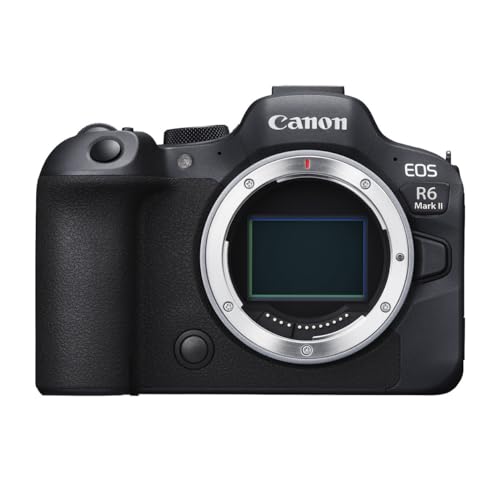
| Canon EOS R6 Mark II | Best system camera for taping field sports | Fast readout, sticky subject tracking and lens reach for pitches, courts and tracks. |
| Sony Alpha 7 IV | Best for indoor courts and evening fixtures | Low-light video strength and reliable tracking for halls, rinks and floodlit nights. |
| OM SYSTEM OM-5 Mark II | Best lightweight system for all-day tournaments | Compact Micro Four Thirds kit with long effective reach and weather sealing for long days. |
| GoPro HERO13 Black | Best mounted camera for immersive angles | Waterproof, stabilised action video from goalposts, helmets, boats and bikes. |
| DJI Osmo Action 5 Pro | Best action camera for evening and indoor sport | Better dim-light action footage and long endurance for floodlit games and halls. |
| Insta360 Ace Pro 2 | Best flip-screen action camera for technique work | Large flip screen and strong low-light video for solo training and skill breakdowns. |
How Did We Select Cameras for Recording Sport on Video?
We scored every candidate against a full match, not a highlight. Could it record continuously without thermal drama, swap batteries and cards without missing a restart, and keep its autofocus married to one runner through forty other moving bodies? Bodies that excel in thirty-second bursts but wilt across ninety minutes fell away. We also weighed the two filming styles honestly: the tripod-mounted system camera that a coach plants at halfway, and the self-contained action camera that rides a goalpost, a helmet or a boat, capturing angles no spectator position can offer.
Zoom philosophy split the field. System cameras earn reach through lenses — an investment, yet the only route to genuinely large distant subjects with tracking focus. Action cameras answer with placement: instead of zooming toward the action, they live inside it. Both approaches appear below because real sports taping uses both, often at the same match. Finally we considered the analysis workflow — slow-motion playback, easy file handling, footage that a coach can scrub on a laptop at half-time — because sports video is usually evidence first and cinema second.
What Separates Sports Video From Sports Photography?
A photographer hunts moments; a videographer keeps promises. The video camera must hold composition, focus and exposure continuously while the game flows, which means its operator thinks in plays rather than instants: anticipate where the attack builds, hold the frame wide enough to contain the developing pattern, and resist the amateur’s urge to zoom in on the ball until the context vanishes. Coaches consistently prefer footage that shows spacing and off-ball movement, so the discipline of staying wide is a technical virtue, not a lack of ambition.
Sound and continuity also belong to video alone. The whistle, the coach’s call, the crowd’s intake of breath before a penalty — these carry information and emotion that stills discard, and a camera’s microphone placement and wind handling shape their usefulness. Equally, video exposes every operational flaw across time: a two-second focus hunt inside a stills sequence is invisible, while in footage it is the moment everyone remembers. The picks below were chosen by operators who have taped entire seasons, and their recurring advice — position high, stay wide, track one subject, record everything — runs through every section that follows.

Canon EOS R6 Mark II — Best system camera for taping field sports
For the parent or coach planted at halfway with a tripod, the R6 Mark II is the most reassuring tool in this guide. Its autofocus recognises and holds athletes through the exact chaos that defeats lesser systems — a striker weaving between defenders, a winger cutting inside — while its fast sensor readout keeps pans smooth rather than skewing uprights into italics. Paired with a telephoto zoom, it keeps far-end action large enough to judge a first touch or a tackling technique, which is the entire evidentiary point of taping a match.
Canon’s colour and exposure behaviour flatter the sports context: skin stays believable under floodlights, kit colours remain separable for identifying players in analysis, and the body’s controls let an operator adjust exposure compensation quickly when play moves from sunlit grass into the stand’s shadow. High frame-rate modes slow a penalty kick or a hurdle stride into coachable detail, and the recording endurance covers a full match with the sensible battery planning this guide recommends for every system body.
The investment logic deserves honesty. The body is only the beginning; the telephoto lens that makes distant sport large is a second serious purchase, and together they exceed every action camera here many times over. What the money buys is the footage itself — the only pick in this list that can deliver a full-frame, tracked, zoomed record of a whole game from the standard spectator position. For recruiting reels and serious coaching archives, that capability is not a luxury; it is the assignment.
Operators should still learn its manners: pre-map the tracking modes before the season, practise handing focus between players, and let the camera’s subject detection work rather than fighting it with constant manual correction. Taped this way, a season’s footage becomes a genuine development record — the winger’s weaker foot improving month by month, visible in evidence no memory could hold.
- Format: full-frame mirrorless, RF mount
- Focus: athlete tracking through traffic
- Reach: via telephoto zoom lenses
- Slow motion: high frame rates for technique
- Role: tripod master camera at halfway
Strengths
- Holds one player through a crowded pitch
- Far action large enough to analyse
- Smooth pans without skewing uprights
Trade-offs
- Telephoto lens is a second investment
- Full matches need battery planning
- Overkill for casual sideline clips
A grassroots coach’s season archive illustrates its value: every match taped from the same raised position, every goal conceded reviewed on Monday. The team’s defensive shape improved measurably by spring — not because the camera coached anyone, but because arguments about positioning ended when the footage could simply be shown.
Youth coaches add a practical endorsement: this body’s footage survives the pause button. Analysis lives in frozen frames — the plant foot’s angle, the shoulder’s rotation at release — and fast-readout video freezes into evidence instead of smearing into impression. A coaching library built from such frames, printed and pinned in the changing room, turns one season’s taping into the next season’s teaching wall, which is the moment a camera purchase becomes a programme’s infrastructure.
Best for: coaches, recruiting reels and parents taping whole matches from the sideline. Not suited for: in-play mounting or underwater and contact angles

Sony Alpha 7 IV — Best for indoor courts and evening fixtures
Move sport indoors and the challenge inverts: reach matters less, darkness matters more. Basketball halls with uneven light, ice rinks glaring and dim by turns, evening fixtures under modest floodlights — the Alpha 7 IV’s full-frame sensor keeps such footage clean where smaller sensors smear it, and its autofocus tracks players through the traffic of a fast break with the same composure it shows on a stage. For families whose sporting life happens under roofs and lights, it is the safest system choice here.
Its video colour and highlight handling suit arena conditions, where a white kit under a spotlight can blow out while the bench sits in cave-darkness. The operator who exposes for the court and lets the stands fall away gets footage that looks like the game felt. Sony’s lens range includes the fast zooms indoor sport demands — glass that gathers enough light to keep shutter speeds honest, so motion stays crisp rather than streaked — and the body’s audio provision records the squeak, bounce and whistle atmosphere that makes court footage vivid.
Slow-motion modes serve the indoor technician: a free-throw routine, a gymnast’s tumble entry, a fencer’s lunge slowed until the coach can see the exact frame the balance went. Sustained recording across a tournament day asks the usual battery discipline, and the body’s menus reward a pre-season setup session saved as a custom mode, so match day begins with one dial turn rather than a settings seminar on the bench.
Choose it over the Canon when your calendar leans indoor and nocturnal; choose the Canon for sunlit pitches and maximum readout speed. Either anchors a serious taping kit. The Sony’s particular gift is refusing to make ordinary community sport — the Tuesday-night league, the school hall final — look dingy, and that refusal is why families keep its footage when other seasons’ tapes get deleted.
- Format: full-frame mirrorless
- Strength: clean video in halls and floodlight
- Focus: tracking through fast-break traffic
- Lenses: fast zooms for indoor light
- Role: indoor and evening master camera
Strengths
- Community sport looks properly lit
- Tracks players through court chaos
- Slow motion serves technique review
Trade-offs
- Fast indoor glass costs seriously
- Custom setup needed before season
- Less readout speed than the Canon
Its representative archive is a school basketball season: the same hall, the same modest lights, yet footage clear enough that a graduating senior’s recruiting reel needed no apology. Indoor sport is where most young athletes actually play, and a camera that honours those rooms honours their real careers.
Its menu customisation rewards the pre-season hour spent saving a sport configuration: one recall restores tracking, frame rate and exposure behaviour together, so the first match of the autumn is filmed correctly by a volunteer who was handed the camera at the gate. Programmes run on such delegability. The parent who configured it cannot attend every fixture, and a body that carries its setup inside itself keeps the archive unbroken.
Best for: indoor courts, rinks, halls and evening fixtures. Not suited for: helmet, goalpost or in-water mounting

OM SYSTEM OM-5 Mark II — Best lightweight system for all-day tournaments
Tournament days punish weight. A parent taping six junior matches between nine and five, moving between pitches in weather that cannot decide itself, needs a kit that stays on the tripod and on the shoulder without becoming the day’s main physical event. The OM-5 Mark II answers with the Micro Four Thirds bargain: a compact body whose lenses deliver long effective reach at half the size of full-frame equivalents, wrapped in weather sealing that treats drizzle as a non-event. The far end of a youth pitch sits comfortably inside its grasp.
That reach-per-gram is the system’s sporting superpower. A modest telephoto zoom on this body frames a goalkeeper’s distribution or a far-corner sprint at sizes that would require serious glass elsewhere, and the stabilisation steadies handheld clips from the fence when the tripod position is taken. Autofocus tracks subjects competently for school and club sport; it lacks the flagship Sonys’ clairvoyance in a twenty-player scramble, yet for the age-group games that fill most family calendars it keeps the right child sharp with reassuring consistency.
Computational helpers inherited from its maker’s lineage — including high-speed capture tricks and live composite thinking adapted from stills — matter less here than simple virtues: quick start, honest menus, files that behave in editing software, and a body that shrugs off the sideline’s knocks and splashes. Battery planning applies as with all system cameras; the small batteries at least pack light, so carrying a full day’s supply is trivial.
Recommend it to the tournament parent, the school sports department and the travelling coach who flies to fixtures. It concedes ultimate low-light polish to the full-frame pair above and outright tracking wizardry to both, yet across a wet Saturday of six matches it may produce more usable footage than either — because its operator is still fresh, still dry, and still filming at the final whistle.
- Format: Micro Four Thirds mirrorless
- Reach: long telephoto effect from small lenses
- Sealing: weather-resistant for sideline drizzle
- Stabilisation: strong for fence-line handheld clips
- Role: tournament-day workhorse
Strengths
- Far action without a heavy kit bag
- Drizzle never ends the day’s taping
- Fresh operator at the final whistle
Trade-offs
- Tracking below flagship level in scrambles
- Smaller sensor in dark halls
- Small batteries mean carrying spares
Its typical triumph is the regional schools tournament: one parent, one bag, six matches, weather alternating hourly. The footage that reached the coaches afterwards existed because the kit never became a reason to stop — the least glamorous and most decisive virtue in sports taping.
For the travelling school team it solves the weight-versus-reach equation that defeats full-frame kits in overhead lockers and on touchline shoulders. Coaches who fly to tournaments tape more matches with this system simply because it comes along, and the archive’s completeness — every game, not just the home ones — is what makes longitudinal analysis of a developing player possible at all.
Best for: tournament parents, schools and travelling coaches taping all day. Not suited for: professional night fixtures under weak lights

GoPro HERO13 Black — Best mounted camera for immersive angles
Every other pick in this guide watches sport from outside; the HERO13 Black tapes it from within. Clamped to a goalpost it records a penalty from the woodwork’s perspective, strapped to a chest it shows a point guard’s view of the lane, fixed to a rowing shell it turns a training outing into a study of synchronised strokes. Its stabilisation irons the violence out of these viewpoints, and its sealed body treats the rain, spray and mud of real sport as working conditions rather than threats.
Coaches exploit these angles analytically, not just dramatically. A helmet camera reveals what a young quarterback actually saw before the throw; a stern-mounted camera exposes the exact seat where a crew’s timing frays. Parents use it more simply: the swim meet from the block, the ski run from the child’s own height, the mountain-bike descent that explains why they came home muddy and euphoric. The wide lens forgives aim entirely, which matters when the camera must be set, started and abandoned before the start whistle.
Its limits are the system’s inverse: no real zoom, so it cannot tape a match from the stands, and its perspective distorts scale at the frame’s edges. Audio from a wind-blasted mount is atmosphere rather than commentary. Battery swaps mid-event are quick, and a sensible operator treats it as the second camera in a two-body plan — the system camera holding the master record while the GoPro gathers the angles that make a season’s review film worth watching twice.
Durability completes the case. Sports equipment gets knocked, dropped in kit bags and left in damp boots; this camera’s design assumes exactly that life. For the immersive half of sports taping — the half that shows what participation feels like — nothing else in the guide can be tied to a goalpost and forgotten, which is the highest compliment a mounted camera can earn.
- Format: waterproof action camera
- Mounts: goalposts, helmets, chest, boats, bikes
- Stabilisation: electronic smoothing for violent motion
- View: very wide, set-and-forget framing
- Role: immersive second camera
Strengths
- Angles no spectator position can offer
- Coaches read decision-making from it
- Assumes the knocks of kit-bag life
Trade-offs
- No zoom for stand-based taping
- Edge distortion on wide views
- Wind audio is atmosphere only
A youth football team’s favourite review session each season is the goalpost reel: penalties approaching at terrifying speed, a goalkeeper’s bravery rendered honestly. The players asked for the camera by name — engagement with analysis is half a coach’s battle, and this little box wins it.
Swimming families claim this camera for the gallery: sealed enough for the poolside’s humidity in its protective case, stabilised for the long lens work across the water, and quick to relocate between heats. Its footage of a first final — the dive, the turns, the wall touched ahead of expectation — becomes the clip a family keeps when the medals have migrated to a drawer.
Best for: mounted, immersive and participant-perspective sport. Not suited for: taping a whole match from the stands

DJI Osmo Action 5 Pro — Best action camera for evening and indoor sport
Action cameras traditionally surrender at dusk, which is precisely when community sport begins. The Osmo Action 5 Pro pushes the surrender later: its low-light video holds together under floodlights and in sports halls where older action cameras dissolve into noise, and its stabilisation keeps the mounted and handheld shots composed. For the five-a-side cage, the evening training session and the indoor climbing wall, it is the action pick that still delivers after the light goes.
Endurance strengthens its sporting case. Training sessions and tournament sidelines involve long waits and sudden action; a camera that idles patiently and records generously between charges fits that rhythm. Its subject tracking helps the solo athlete — the camera on a tripod at the court edge following a shooting drill — and its screens make quick framing checks possible without a phone. Mounted on a bike for a floodlit criterium or a board for an evening surf, it keeps its composure and its colour.
Against its GoPro rival the choice is situational: the HERO13 offers the broader mount ecosystem and the more familiar name, while the DJI offers the dimmer-room advantage and, for many operators, a friendlier interface. Both demand the same discipline about wind audio and the same honesty about zoom — neither tapes a match from the cheap seats. As the second camera in a system-led kit, the DJI is the one to deploy when the fixture list says 7 p.m. in February.
Treat its tracking as an assistant rather than a cameraman; fast multi-player scrambles will still defeat it, and its home is the drill, the mount and the solo session. Within those borders it is superb — the camera that finally made evening grassroots sport look like the participants remember it, rather than like a rumour in the murk.
- Format: action camera, dual screens
- Strength: steadier footage in weak light
- Endurance: long sessions between charges
- Tracking: follows solo drills from a tripod
- Role: evening mounted and training camera
Strengths
- Floodlit games stay recognisable
- Solo athletes get followed practice footage
- Patient battery for stop-start days
Trade-offs
- Scrambles defeat its tracking
- No stand-based zoom taping
- Mount ecosystem smaller than GoPro’s
A climbing gym’s youth squad reviews evening sessions taped on one of these, the camera fixed where a parent cannot stand. Route-reading and footwork errors appear plainly in its steady footage, and the squad’s coach calls it the cheapest assistant he ever hired.
Evening five-a-side leagues, played on cages under lights that flatter nobody, are its home fixture. The footage holds faces and numbers together well enough for the post-match argument about who actually scored, which in recreational sport is a genuine archival function. Its owners report it living permanently in the kit bag, charged on Sundays, a routine as settled as the boots it travels beside.
Best for: evening training, indoor action and solo practice analysis. Not suited for: whole-match taping from a distance

Insta360 Ace Pro 2 — Best flip-screen action camera for technique work
Technique work is a conversation between an athlete and a screen, and the Ace Pro 2 is built for that conversation. Its large flip screen lets a gymnast, golfer or martial artist frame a solo session alone, review the attempt immediately at readable size, and adjust the next repetition while the lesson is still in the body. That instant, legible feedback loop — not any single specification — is why it earns a place among five very different rivals.
Its low-light video, developed with serious imaging partners, keeps indoor dojos, halls and evening courts presentable, and its stabilisation smooths the handheld walkthroughs coaches film to demonstrate form. The flip screen’s size changes behaviour: athletes actually watch the playback instead of squinting and shrugging, so faults get named on the spot. Mounted conventionally it performs the action-camera duties — waterproof, knock-tolerant, wide — with the screen folded safely away.
Consider its shape in the kit bag of a skills coach: one device that tapes the drill, demonstrates the target form, and reviews both with the athlete in the same minute. Parents of technique-sport children — the divers, dancers and gymnasts whose progress lives in details — find the same loop transformative at home practice. Its battery and thermal behaviour suit session work better than whole-match marathons, so pair it with a system camera when the fixture itself must be recorded entire.
Against the DJI above, it trades a little endurance and tracking for that superior screen and review experience; against the GoPro, it trades ecosystem breadth for feedback quality. Sports taping is ultimately about improvement, and the camera that closes the feedback loop fastest has a claim on the training ground that no specification table captures.
- Format: action camera with large flip screen
- Feedback: readable instant playback for athletes
- Light: strong indoor and evening video
- Mounting: standard action mounts, screen folds away
- Role: technique and solo training specialist
Strengths
- Athletes actually review their attempts
- Frames solo sessions without help
- Indoor technique stays presentable
Trade-offs
- Session-length rather than match-length stamina
- Tracking simpler than DJI’s
- Smaller mount and accessory world
A young diver’s home practice changed the week this camera arrived: each session ended with three attempts reviewed on its big screen, one fault chosen, and the next session planned around it. Her coach, sent the clips, remarked that the camera had taught her to coach herself between their meetings.
A fencing coach’s endorsement captures its niche precisely: the big screen beside the piste, the last three touches reviewed before the next begins, the athlete adjusting in real time. Technique sports run on that immediacy, and a camera whose playback experience invites the review — rather than merely permitting it — changes how a training session breathes.
Best for: technique sports, solo training and coaching feedback loops. Not suited for: recording entire tournaments unattended
How Do the Six Sports Video Cameras Compare From the Sideline?
| Camera | Format | Sports video strength | Signature job |
|---|---|---|---|
| Canon EOS R6 Mark II | Full-frame mirrorless | Tracked, zoomed whole-match records | The season-long coaching archive |
| Sony Alpha 7 IV | Full-frame mirrorless | Dark halls and tracked indoor play | The school basketball season |
| OM SYSTEM OM-5 Mark II | Micro Four Thirds | Reach and endurance for long days | The six-match tournament |
| GoPro HERO13 Black | Action camera | Inside-the-action angles | The goalpost penalty reel |
| DJI Osmo Action 5 Pro | Action camera | Dim-light action and drills | The climbing squad sessions |
| Insta360 Ace Pro 2 | Action camera | Technique review and solo drills | The diver’s self-coaching |
The table divides along one honest line: cameras that watch sport and cameras that join it. The three system bodies record the game as evidence — tracked, zoomed, reviewable — from the positions spectators occupy. The three action bodies sacrifice that overview for proximity, riding the equipment and the athletes themselves. Serious taping programmes use one from each family: a master record for the coach’s analysis, and the immersive angles that make athletes engage with the review. Choosing only within one family leaves half the story untaped.
Consider also the archive each row builds over a season. The system bodies produce evidence — uniform, analysable, filed by fixture. The action bodies produce testimony — what participation felt like from inside. A programme’s memory needs both kinds, because athletes develop from the evidence and stay for the testimony. Budget conversations that treat the second camera as a luxury misunderstand what keeps young players inside a sport long enough to benefit from the first.
Where Should You Stand to Tape a Match?
Elevation is the sports videographer’s first gift to themselves. A position a few metres above pitch level — a balcony, a stand’s rear row, a raised bank — reveals spacing, runs and defensive shape that ground level hides behind the nearest players. Centre yourself near halfway for field sports so both ends receive equal geometry, and keep the sun behind the camera where possible, since shooting into low sun turns players into silhouettes and autofocus into guesswork. Arrive early enough to claim the position; the best seat at a grassroots ground costs nothing but punctuality.
Courts and halls reward the corner-to-corner diagonal: from a raised corner, one position covers both baskets or goals with natural depth. Whatever the venue, tape a thirty-second test before the start, review it at full size, and adjust position while adjustment is free. The operator who discovers at half-time that a pillar bisects the frame has donated a half of football to a lesson this paragraph exists to prevent.
Which Settings Keep Sports Video Sharp and Smooth?
Shutter discipline separates crisp sport from smeared sport. A shutter fast enough to freeze each frame’s motion reads as sharp, professional footage, while the cinematic blur beloved of film sets turns a sprint into a watercolour. Many tapers adopt a shutter roughly double the frame rate as a starting compromise, then quicken it for technique analysis. Lock exposure manually once play begins if the ground mixes sun and shadow, because auto exposure pumping between the two is more distracting than either extreme held steadily.
Frame rate follows purpose: standard rates for the master record that must play naturally and store sensibly, high rates reserved for the passages destined for slow-motion study — the set piece, the sprint finish, the apparatus routine. Mixed plans need mixed bodies or a decision about which job the single camera serves today. Write the plan on the tape box, metaphorically: the operator who decides settings in the car park films the match; the one who decides during it films the warm-up beautifully and the game in a panic.
How Do You Follow One Player Without Losing the Play?
Choose the tracking mode before the match and trust it through the play. Modern systems in this guide hold a selected athlete through traffic if the operator keeps them roughly centred and resists snatching at the controls; constant manual correction reads as doubt and usually breaks the lock. Pan at the speed of the game, not the speed of the ball’s last kick — smooth, anticipatory movement that arrives where play is going. Zoom with the same restraint: a steady mid-shot that keeps the player’s context teaches more than a trembling close-up of their shoulders.
When the play breaks down or the ball leaves your player’s orbit, widen rather than hunt. The wide frame re-establishes the game’s geography for the viewer and for the analysis, and it gives the tracking system a calm picture from which to reacquire. Highlight editors and coaches both bless this discipline: the footage cuts, the formations read, and the one player you were assigned remains findable in every phase instead of starring in a series of frantic, context-free fragments.
How Should Coaches Use Match Footage During the Week?
Footage earns its keep in short, specific doses. A twelve-minute review built from six clips — two of structure, two of a recurring fault, two of the behaviour the coach wants repeated — changes Saturday more than an hour of full-match rewatching that dissolves into commentary. Freeze frames sparingly and draw on them if the tools allow; athletes understand a picture of their spacing faster than a paragraph about it. Keep the tone evidentiary rather than accusatory: the camera shows what happened, and the team decides together what happens next.
Archive with the same discipline as filming. Name files by date, opponent and competition the same evening, keep one master copy untouched, and let highlights be copies rather than the only surviving version. By season’s end that archive becomes the development record, the recruiting material and — not least — the film a retiring coach watches with genuine pride. The taping habit is a programme’s memory; treat it with the respect memory deserves.
What Does a Recruiting Video Need to Show?
College and academy reviewers watch differently from fans: they want unedited passages that reveal real speed, real decision-making and real work without the ball. A recruiting reel built from honest continuous clips — full possessions, complete defensive recoveries, the athlete’s movement across several minutes — persuades where a trick-cut highlight film merely entertains. Include the scoreboard context where possible, keep the camera steady and wide enough to judge spacing, and let weaker moments exist in the long clips; reviewers trust footage that is not obviously hiding anything.
Technical quality matters as credibility. Steady, tracked, well-exposed video from the system cameras above signals a serious programme behind the athlete, while shaky phone fragments suggest the opposite before a single touch is judged. Families investing in one season of proper taping for a genuine prospect are buying legibility — the chance for the athlete’s actual ability to be seen accurately, at distance, by busy people. That is the most consequential job in this entire guide.
How Do You Tape Sport in Bad Weather and Worse Light?
Weather sealing, already present in several picks here, is only half the defence; the operator is the other half. A simple rain cover or even a well-arranged plastic sleeve protects the lens’s rear and the operator’s hands, a lens cloth lives in every pocket, and the tripod gets weighted against the gusts that turn long-zoom footage into seasickness. Batteries fade faster in cold, so spares ride in an inside pocket, warmed by the body that complains about the cold on their behalf.
Bad light asks for honesty about priorities. Open the lens, accept higher sensitivity, and protect shutter speed before prettiness — a grainy clip of a decisive stride teaches and delights more than a clean blur of one. Position for whatever light exists: under floodlights, the far side’s gloom is a fact to plan around, not a surprise to discover in the edit. The season’s most important match will, by tradition, be played in the worst conditions of the year; the prepared taper is the one whose footage survives it.
How Do You Tape Individual Athletes Inside a Team Game?
Assign the camera a contract before the whistle: today it serves the team, or today it serves one player’s development, because the two contracts produce different footage. The individual contract keeps the athlete framed through phases without the ball — recovery runs, positioning, the work reviewers actually judge — while resisting the highlight instinct that isolates touches from context. Widen a fraction beyond instinct; the frame that includes the nearest defender explains the touch, and explanation is the footage’s value.
Rotate the assignment across a season so every squad member accumulates an honest record, and file each player’s clips under their name the same evening. By spring the programme owns a development library no memory could fabricate — the shy full-back’s positioning transformed, the striker’s weaker side documented into competence. Individual taping done this way is a coaching system wearing a camera, and it begins with nothing more exotic than a decision about today’s contract.
What Should a Season Archive Contain Beyond Matches?
Training deserves the camera as much as competition, because training is where change is manufactured. One drill taped monthly from the same position becomes a time-lapse of a squad’s education, and athletes reviewing their own September beside their March need no motivational speech. Add the set-piece rehearsals, the fitness benchmarks and the new signing’s first session, and the archive holds the season’s causes as well as its effects.
Keep the human record too: the pre-match huddle from a respectful distance, the supporters in the rain, the retiring captain’s last warm-up. Programmes that tape only the play discover, years later, that they archived the results and lost the team. A small discipline — five minutes of context footage at every fixture — preserves the world the results happened in, and future players watching it understand what they have joined far faster than any speech can tell them.
How Do You Tape Night and Indoor Fixtures Without Losing the Plot?
Scout the light before the teams arrive: halls and floodlit grounds have pools of brilliance and parishes of gloom, and a camera position chosen inside the good light’s geography saves the whole evening. Set exposure for the brightest area the play will visit, because a blown-out sprint cannot be recovered while a darker passage can be lifted in the edit within reason. Then hold that exposure manually, since auto systems chasing players between light pools produce the pumping brightness that makes night footage feel seasick.
Accept the frame-rate bargain consciously. Slow-motion ambitions at night collide with physics — high rates starve each frame of light — so reserve them for the lit set piece near your position and let the far end play at standard speed. Brief the coach or the family beforehand about which passages will exist in slow motion and which will not, and the evening’s footage will be judged as a plan fulfilled rather than as a promise broken by the dark.
What Etiquette Governs Taping Other People’s Children?
Sport is communal, and the camera joins a community when it arrives. Follow the league’s and the venue’s recording rules without negotiation, keep footage of other families’ children inside the team’s agreed sharing spaces, and treat a parent’s request about their child’s image as final and unargued. Programmes that handle this well put the agreement in writing at the season’s start — who tapes, where files live, who may see them — so that goodwill never depends on memory or mood.
The same courtesy extends to the opposition and the officials: no footage gathered to embarrass, no clips circulated to mock a mistake, and a readiness to share the recording with the other coach, whose team appears in it as fully as yours. Taping cultures built on that reciprocity survive for decades; the extractive kind collapses at the first complaint. The camera’s welcome at a ground is a programme’s asset, and it is maintained exactly like the pitch — by everybody, every week.
What Mistakes Spoil Sports Video More Than Any Others?
Chasing the ball in tight close-up is the founding error: the footage becomes a queasy tour of whichever player touched it last, formations vanish, and the goal — scored while the camera admired a throw-in — exists only in memory. Its twin is taping from ground level behind the goal, where three defenders occlude everything that matters. The cures cost nothing: elevation, width, patience, and a frame that trusts the game to come to it. Operators who internalise those four words improve more in one match than an equipment upgrade delivers in a season.
The second family of errors is endurance neglect — the card that fills during extra time, the battery that dies in the final quarter, the overheating body in the summer tournament. Test recording duration at home, carry double the storage arithmetic suggests, and treat the boring logistics as part of the craft. Sport’s decisive moments cluster at the ends of games, which is exactly when unprepared equipment fails; the taper who is still rolling at the last whistle owns the footage everyone else describes from memory.
Related guides
- Best Compact Cameras for Zoom: Optical Reach Only, No Digital Illusions
- Best Cameras for Wildlife Photos: Reach, Tracking Autofocus and Hide Craft
Frequently Asked Questions
Is this the same as the sports photography guide?
No. That guide covers stills — freezing single moments with fast shutters and burst sequences. This one covers video taping: continuous recording, tracking focus across whole plays, zoom reach for analysis and high frame rates for slow-motion review. Many cameras do both, yet the technique, settings and buying priorities differ enough to deserve separate treatment.
Which camera suits a parent who films one child in team sports?
A system camera with strong tracking — the Canon or Sony here — used wide from an elevated position, keeping your child and the play around them in frame. Resist zooming tightly onto your child alone; coaches, reviewers and grandparents all prefer footage where the game’s context survives, and your child is findable in every phase.
How much zoom does taping a football match need?
Enough to make far-end players large enough to identify and analyse, which in practice means a telephoto zoom on a system body rather than any action camera. Exact numbers depend on pitch size and your position, which is why this guide recommends the elevated halfway spot first — good geometry halves the zoom any match demands.
Can an action camera record a whole match?
It can record the duration, yet from a fixed wide position the players at distance become figures rather than analysable athletes. Use action cameras for mounted and immersive angles alongside a system camera’s master record. As the only record of a match someone must study, the wide fixed view will frustrate them by the second viewing.
What frame rate is best for slow-motion analysis?
The highest rate your chosen body offers at a quality you accept, used selectively for set pieces, finishes and technique passages. Remember high rates consume light and storage, so plan them for the moments that justify slow study rather than recording entire matches that way and drowning in footage nobody can review.
How do you stop footage shaking on a tripod in wind?
Weight the tripod, lower its centre column, shield the camera with your body, and keep a hand resting on the rig during gusts. Long zooms magnify every tremor, so zoom only as far as the conditions allow. A slightly wider, steady shot beats a closer, seasick one in every review session ever held.
Why Does Taped Sport Change How Athletes Improve?
Memory is a flattering coach; footage is an honest one. Players who tape their games discover the gap between the performance they felt and the one that occurred — the run they thought was timed, the space they believed they held — and that gap, reviewed kindly, is where improvement lives. Teams with a taping habit argue less and adjust faster, because disputes about positioning end at the screen. The camera’s contribution to sport is not the archive or the highlight reel; it is the weekly, evidence-based conversation it makes possible.
That is why this guide weighted endurance, tracking and honesty over spectacle. The best sports video camera is the one still rolling, still focused and still truthful in the eighty-ninth minute, in the rain, when the decisive moment finally arrives. Choose from the six above by the sport, the venue and the job — master record or mounted witness — and then practise the unglamorous disciplines of position and patience. The game will do the rest.
One final piece of arithmetic belongs in every taper’s notebook: storage is the cheapest insurance in sport. Cards and drives cost a fraction of the travel, the entry fees and the once-only performances they hold, so buy capacity the way you buy time — generously, and before it is needed. The season’s defining play will not announce itself in advance, and the only unforgivable sentence in sports taping is the one that begins with the words: the card was full.
Years from now, the footage taped this season will be watched by people who were not at the ground: grandchildren meeting a grandparent’s stride, a retired player proving a story at a reunion, a young athlete studying the lineage of the number on her shirt. That audience is the taper’s real client, and it forgives grain, weather and modest equipment without a thought. What it cannot forgive is absence — the match nobody taped. Presence, sustained across a season, is the whole assignment.
Final Recommendation
For the master record of field sport, the EOS R6 Mark II leads; for indoor and evening fixtures, the Alpha 7 IV; for the all-day tournament, the OM-5 Mark II’s light reach. Mounted and immersive work belongs to the HERO13 Black, evening action to the Osmo Action 5 Pro, and technique feedback loops to the Ace Pro 2. A system body plus one action camera covers virtually every taping assignment a family, school or club will meet.
Whichever pairing you build, rehearse the boring parts before the season: the elevated position, the tracking mode, the battery rotation, the file-naming habit on the drive home. Sport rewards the prepared taper with the only footage that exists of the moment everyone will talk about for years — and being ready for that moment is a skill, like the athletes’, that improves with every match you record.
Finally, share the footage generously while the season is still alive: the clip sent to a grandparent tonight, the drill sequence a teammate studies this week, the archive a whole squad revisits before the final. Sports video hoarded until some perfect future edit usually reaches nobody, while footage circulated warm from the weekend does its coaching, bonding and remembering work immediately, which is, after all, the reason anyone stood in the rain to record it.
Related Guides
Round out the sporting archive with our guides to taking sports photographs with fast shutter technique , building a season video archive for a school team , filming training drills athletes can learn from.


