ilcastellomenu.com is reader-supported. When you buy through links on our site, we may earn an affiliate commission.
Where to Buy
Strip away every other genre and the problem becomes beautifully stark: the best cameras for wildlife photos are judged by what happens in the four seconds when an animal does the thing you waited three hours for. This guide is wildlife only — reach, subject-tracking autofocus, hide craft, field patience. A companion article on this site covers the harder compromise of serving wildlife and landscape from one bag; read that one if your trips split. Here, nothing splits. Every verdict below assumes the animal is the entire assignment.
That purity rearranges priorities ruthlessly. Resolution matters only as cropping insurance for subjects that will not come closer. Frame rate matters only as a way of owning the exact instant a wing unfolds or a jaw closes. Weather sealing matters because wildlife keeps its appointments in rain. And autofocus matters more than all of it combined, because a wildlife camera’s true job is not recording light — it is maintaining a relationship with a moving eye, through grass, branches, heat shimmer and panic, while its owner’s hands are cold and their heart is audible.
Fieldcraft threads through every pick, deliberately. The finest tracking body in this guide will photograph nothing from a badly placed hide, and a modest body in the hands of a photographer who reads wind, waits downwind and lets the animal close the distance will out-shoot it weekly. Cameras are ranked here by how they reward good fieldcraft and forgive its lapses — because wildlife photography is ninety percent behaviour, the animal’s and yours, and the camera is the instrument that converts behaviour into evidence.
One ethical line before the gear: every recommendation in this guide assumes distance is respected, baiting and harassment are refused, and the animal’s welfare outranks any frame. Reach exists so that respect can be photographed. Buy it for that reason and the pictures improve along with your conscience, because relaxed animals behave — and behaviour is the whole subject.
Key Takeaways
- Tracking autofocus that recognises animals is the single feature that decides wildlife keepers.
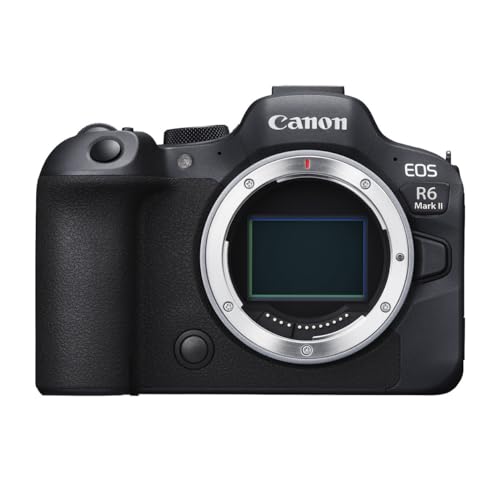
- The Canon EOS R6 Mark II pairs dawn-light calm with tracking that survives grass and branches.
- Crop-sensor reach in the Nikon Z50 II and Canon EOS R10 turns patience into proximity on a budget of size.
- The Sony Alpha 7 IV funds distant subjects with resolution you can crop hard.
- Hide placement, wind reading and waiting beat any specification — cameras merely convert craft into frames.
- Ethical distance is a photographic technique: relaxed animals give you the behaviour worth photographing.
In this guide
Quick Picks
| Camera | Badge | Why it earns its place |
|---|---|---|
| Canon EOS R6 Mark II | Best wildlife all-rounder | Animal detection and low-light nerve for the hours wildlife actually moves. |
| Sony Alpha 7 IV | Best for distant subjects | Resolution that survives heavy cropping when the animal refuses to approach. |
| Nikon Z50 II | Best reach for its size | Professional-grade subject detection in an APS-C body a walker can carry all day. |
| OM SYSTEM OM-5 Mark II | Best for walking reserves | Format reach and weather sealing for photographers who find animals on foot. |
| Fujifilm X-T5 | Best for patient subjects | High resolution for known pools, perches and habitual paths where waiting works. |
| Canon EOS R10 | Best first wildlife body | Friendly handling with genuine animal detection for a first season in the field. |
How Did We Choose Cameras for Wildlife Alone?
We began with the eye. Modern wildlife bodies earn their keep through subject detection that distinguishes an animal’s eye from the visual noise around it — a reed that looks like a neck, a branch that mimics an antler — and the six below all perform that discrimination credibly, at different prices of entry and depths of light. Detection was tested in imagination against the field’s worst cases: backlit birds, mammals half-occluded by grass, subjects crossing clutter at speed.
Reach economics came second. Wildlife glass is where money goes, so each body’s route to long effective focal lengths was audited: native telephotos, crop factors that multiply them, resolution that substitutes for them. A body whose system offers an honest path to serious reach — owned or rented — outranks a marginally better sensor trapped behind a thin lens shelf, because wildlife photographers buy systems across years, not cameras across afternoons.
Last came the dawn test, applied without mercy. Wildlife’s working hours are the day’s dimmest, so sensitivity behaviour, viewfinder clarity in gloom and controls operable by cold, gloved hands were weighted as heavily as any headline specification. A body that is brilliant at noon and bewildered at six in the morning is, for this genre, bewildered.
Why Does Wildlife Photography Punish Ordinary Cameras?
Distance is the first punishment. Wild animals maintain a flight zone calibrated by experience, and no charm offensive shortens it; the photographer must bridge the gap optically or not at all. That single fact bends the whole equipment question toward reach, cropping and steadiness, and away from the conveniences that dominate other genres. It also bends technique: the wildlife photographer composes with a fraction of the frame, expecting the crop, and judges sharpness at the eye because that is where the picture will be interrogated.
Unpredictability is the second. A landscape will hold its pose while you deliberate; a stooping falcon grants you the duration of a held breath. Wildlife cameras therefore live or die by readiness — wake speed, tracking already locked when the action starts, buffers that swallow the whole event rather than its first act. Readiness, in the bodies that follow, had to feel habitual rather than heroic.
The third punishment is the environment itself: hides that bake or freeze, marsh water, plain dust, boat vibration, vehicle windows. Wildlife bodies work where the animals are, and the animals are rarely somewhere convenient. Sealing, grip and a certain indifference to being knocked are not luxuries in this genre; they are attendance requirements.
Which Bodies Turn Waiting Into Photographs?
Six answers, from six philosophies of reach. Match them to the animals you actually chase.

Canon EOS R6 Mark II — Best wildlife all-rounder
Dawn in a marsh is a negotiation between darkness and distance, and this body negotiates both halves at once. Its animal detection recognises mammals and birds and — more importantly — persists: through grass stems crossing the frame, through a turn of the head, through the half-second when the subject passes behind a reed and lesser systems surrender and go hunting. Wildlife photographers learn to measure tracking not by its best case but by its recovery, and recovery here is swift and unpanicked.
Sensitivity behaviour completes the dawn argument. The first legal shooting light of the day is also the animals’ busiest hour, and files from this sensor at high settings keep the texture of fur and feather instead of smearing it into watercolour. A fox photographed at first light looks like a fox in first light — grain standing in for atmosphere — which is precisely the photograph the photographer rose at four to make.
Burst depth serves the genre’s decisive instants. A takeoff, a strike, a shake after a dive: these events last a second and contain one frame worth keeping, and the buffer here absorbs the whole event at a pace that lets the photographer shoot the action rather than ration it. Combined with pre-capture habits — half-pressing readiness while the animal composes itself — the body converts waiting into a loaded spring.
Handling in a hide deserves its sentence. Controls fall under gloved fingers, the electronic shutter stays silent for the close subjects that startle at a click, and stabilisation steadies a long lens braced on a beanbag through the small tremors of a held breath. None of these virtues photographs well in a brochure; all of them appear, eventually, in the keepers folder.
Its concession is cropping room. Resolution trails the Sony below, so the wildlife style it suits best closes distance by craft — better hides, better patience, longer glass — rather than by enlarging the centre of the frame afterwards. Many field photographers consider that a virtue disguised as a limit: the pictures improve when the photographer does.
- Format: full-frame mirrorless, RF mount
- Field role: dawn patrol, hides, general wildlife
- Tracking brief: animal detection that recovers through occlusion
- Light brief: high-sensitivity files that keep fur texture
- Hide brief: silent shutter for close, wary subjects
Strengths
- Tracking persistence through grass and branches
- First-light files with honest texture
- Buffers that swallow whole events
Trade-offs
- Cropping headroom trails high-resolution rivals
- Long RF glass is a serious commitment
- Pre-capture habits take a season to internalise
Its defining morning: mist on a mere, a bittern booming somewhere inside the reeds, and then — forty minutes into stillness — a marsh harrier quartering low across the water, crossing reed beds, shadow and sun. The camera holds the bird through every crossing, and the sequence contains the frame: wings set, eyes down, hunting. Photographers wait whole seasons for that frame. This body is built to be ready inside it.
Best for: committed wildlife photographers working dawn and dusk. Not suited for: extreme-distance specialists who live by the crop

Sony Alpha 7 IV — Best for distant subjects
Some subjects will never be close: the eagle on the far crag, the shorebird working the wrong side of the estuary, the mammal whose flight distance is measured in fields. For those photographs, resolution is not vanity — it is the second telephoto, the one that lives in the file. The Alpha 7 IV’s sensor carries enough detail that a subject occupying a modest centre of the frame can be enlarged into a portrait with its eye still honest, and that arithmetic rescues more distant wildlife than any other single property in this guide.
Detection keeps pace with the cropping strategy. Bird and animal eye recognition locates the small, far subject and holds it while the photographer composes around the crop they already intend, and the tracking resists the estuary’s distractions — glitter, waving cordgrass, other birds crossing. A distant-subject workflow is a chain: find, hold, expose for the highlight on the feathers, fire in considered bursts. This body forges every link.
The lens shelf underwrites the whole approach. E-mount offers long telephotos at several levels of ambition, including third-party glass that has changed the economics of reach, plus teleconverters that behave well on the brighter lenses. A photographer can therefore grow into distance gradually — lens this year, converter next — without changing bodies, which is how most real wildlife kits are actually assembled.
Costs arrive as data and discipline. Cropping workflows multiply editing decisions, high-resolution bursts fill cards at safari pace, and the body’s low-light ceiling, while respectable, asks the dawn patrol to expose carefully rather than carelessly. Distant-subject photography is a deliberate craft, and this is a deliberate photographer’s instrument — the pairing is the recommendation.
Watch it work an estuary from a fixed position: the tide pushing birds toward the hide, each species arriving at its own distance, the photographer declining the near frames and waiting for the one subject that will only ever be a crop. When the curlew finally lands at the far pool, the file holds. Distance, in this system, is a postponement rather than a refusal.
- Format: full-frame mirrorless, E mount
- Field role: estuaries, crags, flight-distance subjects
- Crop brief: resolution treated as a second telephoto
- Tracking brief: eye recognition on small, far subjects
- Lens brief: the deepest long-glass shelf here
Strengths
- Files that survive decisive cropping
- Detection that finds eyes at distance
- A growth path for reach, season by season
Trade-offs
- Card and archive discipline become mandatory
- Dawn exposures need care, not abandon
- Cropping tempts laziness about fieldcraft
That last trade-off deserves the emphasis its owner would give it: the crop is insurance, not strategy. Photographers who lean on it stop improving their hides, their patience and their knowledge of the animal — and the photographs plateau at technically adequate. Used as a rescue for the genuinely unreachable, though, this body’s resolution is the difference between a trip’s best sighting and its best photograph being the same event.
Best for: photographers whose subjects keep a serious distance. Not suited for: shooters who never want to think about editing

Nikon Z50 II — Best reach for its size
Arithmetic first: on an APS-C sensor, every telephoto frames half again as long as it would on full-frame, so a sensible, carryable zoom becomes a serious wildlife lens the moment it mounts this body. The Z50 II’s achievement is refusing to pair that arithmetic with toy-town focusing. Its subject detection descends from Nikon’s professional line — birds, mammals, the tracking persistence that sorts a heron from the reeds behind it — and the result is a small camera that behaves, at the decisive moment, like a much more expensive one.
Size is a fieldcraft feature, not a convenience. A photographer carrying this kit walks further into a reserve, stays longer at a fence line, and raises the camera faster when a sighting erupts beside the path. Hides booked by the hour favour the big rigs; wildlife encountered by the walker favours whatever is actually in the hand, already awake, already tracking. A remarkable share of good wildlife photography is opportunistic, and opportunism has a weight limit.
Burst performance supports the walker’s style. Action beside a path grants seconds, not minutes, and this body fires fast enough to own the takeoff or the pounce, with a buffer sized for the encounter’s realistic length. Files at the sensitivities a bright-to-overcast day demands are clean and detailed, and Nikon’s colour handles the green, wet palette of temperate reserves without turning it lurid.
Dusk draws its boundary. As light fails, the smaller sensor’s sensitivities climb and its files grain sooner than the full-frame leaders, and the absence of in-body stabilisation leans on the lens and the photographer’s brace. The treaty is plain: this body owns the walking day and concedes the last half-hour. Photographers whose wildlife keeps office hours will never notice the concession; crepuscular hunters should look up this list.
Its finest hour is the unplanned one: a water vole — no, a kingfisher, electric and improbable — landing on a perch beside an ordinary footpath, close enough that the crop factor turns a modest zoom into a portrait lens. The walker with this body is photographing before the hiker with the flagship has finished unzipping. In wildlife, that head start is frequently the whole story.
- Format: APS-C mirrorless, Z mount
- Field role: walking reserves, opportunistic encounters
- Reach brief: crop multiplication on carryable zooms
- Detection brief: professional habits in a small body
- Boundary: the walking day, not the last half-hour
Strengths
- Real detection behind genuinely long framing
- Light enough to be present when sightings happen
- Burst pace sized to real encounters
Trade-offs
- Dusk sensitivities grain earlier than full-frame
- Stabilisation depends on the mounted lens
- Native long-glass choice is still growing
There is also a honesty dividend in its files: what you frame is close to what you get, because the crop is optical rather than editorial. Beginners in the genre learn composition faster when the viewfinder tells the truth, and this body tells it at wildlife distance — a teaching virtue that compounds across a first season.
Best for: walkers, travellers and reserve regulars who prize reach per kilo. Not suited for: specialists who work only at last light

OM SYSTEM OM-5 Mark II — Best for walking reserves
If the Nikon above multiplies reach by one and a half, this system doubles it — and the doubling changes what a wildlife walk can be. Micro Four Thirds framing turns a compact telephoto into a lens that, on full-frame, would demand a tripod, a vehicle and a conversation with your bank. On foot, in weather, across a whole reserve, the OM-5 Mark II carries that framing in a kit that leaves room in the bag for the waterproofs the day will certainly require.
Sealing is its second field argument, and wildlife photographers should weigh it heavily. Animals do not cancel for rain; some of the finest behaviour — bathing, hunting in drizzle, the shake after a downpour — exists only in weather that sends unsealed kits home. This body and its sealed lenses treat a wet morning as a session, and the photographer who stays out while others leave inherits the reserve.
Stabilisation, long a strength of this system, steadies telephoto framing from fences, boats and beanbags, buying shutter speeds that keep sensitivities survivable in woodland shade. Computational capture adds a quiet trick for the hide: high-resolution modes for the perched and patient subject, where a bird at a known feeder can be rendered with detail the sensor’s size would not predict.
The boundaries are the format’s physics. Fast action in deep shade asks more of its tracking and its sensor than either gives gladly, and the very smallest subjects at the greatest distances exhaust its cropping room sooner than the Sony’s. Within its element — the walked reserve, the wetland boardwalk, the coastal path — those boundaries rarely appear. Outside it, they announce themselves honestly.
Its characteristic photograph is made at kilometre nine: rain just easing, a bittern’s cousin — a little egret — working a flooded ditch beside the path, photographed at a framing a full-frame walker would need a lens twice the carried size to match. Mobility found the bird; the format framed it; sealing kept everyone out in the weather that produced it. That is a complete wildlife philosophy in one ditch.
- Format: Micro Four Thirds mirrorless
- Field role: long walks, wet reserves, boardwalks
- Reach brief: doubled effective framing from small lenses
- Weather brief: sealed system that stays out
- Stability brief: strong stabilisation for braced telephoto work
Strengths
- Maximum carried reach per kilogram in this guide
- Rain becomes a session, not a cancellation
- Steady telephoto framing from improvised rests
Trade-offs
- Deep-shade action stretches sensor and tracking
- Cropping room is spent by the format early
- System loyalty is rewarded; dabbling is not
Birders who record sound or video of their subjects get an extra dividend: the small kit leaves hands, bag space and attention for a microphone and the patience to use it. Wildlife portfolios increasingly include the animal’s voice, and a system that makes room for it understands the genre’s direction.
Best for: on-foot wildlife photographers in unreliable weather. Not suited for: dusk action specialists or heavy croppers

Fujifilm X-T5 — Best for patient subjects
Not all wildlife photography is pursuit. A great share of its finest frames come from appointments: the heron that fishes the same pool at the same hour, the owl in the known tree, the deer path worn into a hillside by generations. For appointment wildlife, the X-T5’s virtues align beautifully — a high-resolution sensor that renders feather and fur texture in forensic detail, and subject detection sufficient for subjects whose movements are measured rather than explosive.
Resolution is the headline, and here it earns it honestly. At a known perch, distance is fixed and known; the photographer composes with the crop already planned, and forty megapixels make that crop generous. Plumage that lesser files render as pattern resolves here into structure — the photograph that rewards a wall and a slow look. Fujifilm’s colour, particularly its greens and earth tones, suits the woodland and wetland palettes where appointment wildlife lives.
The dial-led handling suits the hide’s tempo. Exposure decisions are made by touch, in advance, while the photographer watches the pool rather than a menu; when the heron arrives, the camera is already the photograph the photographer intended, and only the shutter remains. That pre-commitment is a discipline appointment photography teaches, and this body teaches it back.
Explosive subjects expose its limits with equal honesty. A stooping falcon or a sparrowhawk ambush asks tracking speed and low-light ease beyond its preferences, and its files at pushed sensitivities surrender the texture that is its whole argument. The verdict is therefore precise: bring it to wildlife that keeps appointments, and it will produce the most detailed frames in this guide; bring it to chaos, and the Canon above will out-work it.
Its emblematic image is a grey heron at dawn, motionless in black water, rendered so finely that the reflection and the bird compete for the viewer’s faith. No burst, no chase — a tripod, a wait, a single considered sequence. Wildlife photography contains multitudes, and the contemplative multitude belongs to this camera.
- Format: APS-C mirrorless, X mount, high resolution
- Field role: hides, known pools, perches and paths
- Detail brief: feather and fur texture at fixed distances
- Handling brief: dials pre-set while watching, not menus
- Boundary: appointments yes, ambushes no
Strengths
- The most detailed files in this guide
- Colour tuned to woodland and wetland palettes
- Handling that rewards pre-planned photography
Trade-offs
- Explosive action outruns its tracking comfort
- Pushed sensitivities spend its texture advantage
- Large files demand generous cards and storage
Garden and feeder photographers form its natural constituency too: fixed distances, habitual visitors, light that can be waited for. A season spent learning one patch with this body produces a portfolio with a coherence that roaming rarely achieves — proof that in wildlife, place is a technique.
Best for: hide photographers and patch workers with patient subjects. Not suited for: falconry-speed action or deep-dusk hunting scenes

Canon EOS R10 — Best first wildlife body
A first wildlife camera has one job above all: to keep its owner in the field long enough for fieldcraft to grow. The R10 does that job by removing friction. Its animal detection is a genuine inheritance from Canon’s professional bodies — it finds the bird, holds the eye, and lets a beginner experience, in their first month, the small miracle of a tracked subject — while its menus and guided help explain the rest of the craft in language that assumes intelligence rather than prior ownership.
Reach economics favour the beginner here in a way worth spelling out. The APS-C crop stretches affordable RF telephotos into honest wildlife framing, so a first kit can photograph a heron across a pond rather than a duck at its feet. Starting a genre with real reach matters more than any other specification, because distant, tiny subjects are how beginners conclude — wrongly — that wildlife photography is not for them.
Burst rate and buffer fit a first season’s encounters: a takeoff at the reserve, a scuffle at the feeder, the family dog standing in for a fox while technique is practised at home. Files are forgiving in the ordinary light of ordinary days, and Canon’s colour flatters the animals beginners photograph most — garden birds, park deer, zoo residents on practice days.
Ceilings appear where they should. Serious dawn work pushes its sensor, weather asks for covers and common sense, and the absence of in-body stabilisation leans on lens stabilisation and braced positions. A beginner who has outgrown those ceilings has also acquired, in the outgrowing, exactly the knowledge that makes the next purchase intelligent. That is the most a first body can possibly give.
Its typical success is modest and decisive: a teenager’s first season at a local reserve, ending with a printed kingfisher — small in the frame, honestly earned, theirs. Genres are entered through such photographs. The R10 manufactures the conditions for them at a price of entry that leaves budget for the telephoto, the hide fees and the bus fares that actually constitute a first season.
- Format: APS-C mirrorless, RF mount
- Field role: first seasons, local reserves, practice days
- Detection brief: real animal tracking, plainly explained
- Reach brief: crop plus affordable RF telephotos
- Teaching brief: ceilings that instruct as they limit
Strengths
- Beginners experience tracked wildlife in month one
- Honest reach without flagship expenditure
- Handling that teaches rather than intimidates
Trade-offs
- Dawn pushes its sensor sooner than the leaders
- No in-body stabilisation for braced long lenses
- Weather resistance is care-level, not storm-level
Clubs and families share it well for the same reasons: pass it around a hide and everyone returns with something, while its automatic intelligence quietly covers the least experienced pair of hands. A genre that wants new blood should bless cameras like this.
Best for: beginners, families and first-season field photographers. Not suited for: professionals billing dawn expeditions
How Do the Six Wildlife Cameras Compare?
| Camera | Format | Reach philosophy | Signature subject |
|---|---|---|---|
| Canon EOS R6 Mark II | Full-frame | Tracking plus dawn calm | Harriers, foxes, first light |
| Sony Alpha 7 IV | Full-frame | Crop the file hard | Estuary birds at distance |
| Nikon Z50 II | APS-C | Crop factor, pro detection | Pathside kingfishers |
| OM SYSTEM OM-5 Mark II | Micro Four Thirds | Format doubling | Wetland walks in rain |
| Fujifilm X-T5 | APS-C | Resolution at fixed distance | The heron at its pool |
| Canon EOS R10 | APS-C | Affordable RF reach | A first season’s portfolio |
Choose by the distance your subjects keep and the hours they keep it. Flight-distance subjects at noon reward resolution and crop factors; close subjects at dawn reward tracking and sensitivity; walked subjects in weather reward the small sealed system that stayed in the bag and then stayed out in the rain.
How Do You Place a Hide So Animals Choose to Appear?
Backwards, from the animal’s diary rather than your own. Water at dawn, feeding edges at dusk, habitual crossings between the two — a hide earns its hours when it is parked on a routine the animals already keep, close enough for your reach, far enough that your arrival does not rewrite the routine. Arrive before the animals’ active hour and let the place forget you; the first twenty minutes after any arrival belong to the place, not to photography, whatever moves.
Wind is the hide’s second architect. Mammals trust their noses more than their eyes, so a hide downwind of the expected approach is worth more than a metre of extra lens; birds care less about scent and more about silhouette, so the same hide wants a broken outline and a still photographer against the light. Face the hide so the morning’s light works across the subject rather than into the lens, and rehearse the arc your lens can sweep without fabric noise — hides fail by sound more often than by sight.
Leave as you came: no litter, no trampled approach path announcing itself to tomorrow’s animals, no bait, no calls played at breeding birds. The hide is a loan from the place. Photographers who honour that loan find the place keeps lending, season after season, which is the only sustainable form the genre has.
What Mistakes Do Wildlife Beginners Make With Good Cameras?
Chasing leads the list — walking at animals that then walk away faster, converting a morning into a procession of departing rumps. The cure is the genre’s oldest sentence: let the animal close the distance. Second is centre-point thinking in a detection age: beginners fight the camera’s subject recognition instead of configuring it, then blame the body for the fight. Third is burst worship — thousands of frames of an animal doing nothing, while the one behaviour that mattered happens during a card change.
Exposure neglect follows: bright water and dark birds defeat automatic metering in both directions, and beginners who never learn compensation return with silhouettes and chalk in equal measure. And beneath all of these sits the quietest mistake — visiting once. Wildlife photography is a local, repeated craft disguised as a travel genre. The photographers whose work you admire mostly photograph a few places a hundred times. Choose your patch before you upgrade your body.
How Should Tracking Be Set Up Before the Animal Arrives?
In advance, completely, while nothing is happening — because when something happens, setup time is the one currency already spent. Detection set to the expected subject class, focus area wide enough to catch an entrance, a custom button ready to override when the camera falls in love with the wrong bird: these decisions belong to the empty hour in the hide, rehearsed until the hands perform them without the eyes leaving the viewfinder.
Expose for the animal you expect, not the scene you have. A test frame of the perch, the pool edge, the gap in the reeds — checked, compensated, locked in habit — means the arriving subject is photographed at your exposure rather than the meter’s guess. Wildlife veterans speak of “shooting the stage before the actor,” and it is the single habit that most separates their first frames from beginners’ first frames: theirs are already correct.
Finally, decide the burst ethics beforehand: short, chosen sequences at behaviour, silence during stillness. Cards, batteries and the animal’s tolerance are all finite, and the photographer who fires like a naturalist — attentively, sparingly, at moments — leaves with more keepers and a place that welcomes them back.
How Do You Read an Animal Before You Photograph It?
Watch first, through binoculars or naked eyes, for longer than feels productive. Animals announce their intentions in a grammar anyone can learn: the feeding bird that pauses, head up, at lengthening intervals is preparing to leave; the mammal that keeps glancing at one gap in the reeds intends to use it; the herd whose ears rotate toward you has already made its decision and is merely scheduling it. Photographing inside that grammar means the camera rises before the behaviour, not after it — and no tracking system in this guide can substitute for the half-second that foreknowledge buys.
Feeding patterns deserve a notebook. Which pool, which hour, which tide, which wind — a local patch reveals its timetable across a dozen visits, and the photographer who records it stops gambling and starts keeping appointments. This is why the same names recur in wildlife: not better cameras, but better notebooks. The bodies above convert knowledge into frames at different rates; none of them manufactures the knowledge.
Breeding seasons rewrite the grammar with obligations. Displays are photogenic and fragile in equal measure, and the ethical photographer learns which species tolerate an audience and which abandon a nest at a silhouette. Distance doubles, hides go up earlier and further back, and some subjects are simply left alone. A portfolio with a gap where a breeding bird would be is a portfolio its owner can show anyone — including the wardens whose goodwill the whole local community of photographers depends on.
What Does a Vehicle Change, and What Does It Break?
Safari vehicles are hides with engines: animals habituated to their shape grant distances no walker will ever be given, and the beanbag replaces the tripod as the lens’s home. Cameras for vehicle work want stabilisation that forgives an idling engine’s tremor, controls reachable without leaving the window, and buffers for the moment a predator’s patience ends. Several bodies above — the Canon and Sony especially — have built their reputations in exactly that seat.
Vehicles break two things quietly. They fix the photographer’s height and angle, so a hundred portfolios from the same parks share the same eye-level grammar; and they tempt their passengers into treating proximity as a right rather than a local, revocable truce. The photographers who stand out from vehicle work are the ones who direct the driver like a hide — positioning for light and background before the sighting, not during it — and who put the camera down when an animal’s behaviour says the truce is over.
Boats add their own amendment: everything moves, always, in two directions at once. Stabilisation earns its keep, shutter speeds climb, and the wildlife — herons on banks, seals on haul-outs, birds on water — is photographed across a medium that telegraphs your approach. Approach slowly, drift the last stretch, and let the current compose. The small, sealed systems in this guide have a natural constituency afloat, where a heavy rig is ballast and a soaked flagship is a tragedy.
How Should a Wildlife Archive Be Culled Without Regret?
Slowly, and twice. The first cull, on the evening of the shoot, deletes only the indefensible: blanks, blurs, the burst’s duplicates reduced to their sharpest two. Emotion is too high and eyes too tired for finer judgement, and more good frames have died in first-night ruthlessness than in any card failure. The second cull, a week later, is where the portfolio is actually chosen — behaviour over posture, story over sharpness, the frame that explains the animal over the frame that merely displays it.
Keep the near-misses that teach. The frame a half-second before the strike, soft but prophetic, tells you what your anticipation missed; archived with its exif and your notebook entry, it is tuition. Delete the ten thousand frames that teach nothing — the animal, small, centred, doing nothing, at noon — because archives, like hides, work better uncluttered, and because storage spent on nothing is attention stolen from something.
Tag by behaviour and place, not only by species. Future you, planning a return to the patch or illustrating a story about hunting herons, will search the archive the way memory works — by what the animal was doing and where the light was. The cameras above write the technical data faithfully; the meaning is the photographer’s metadata to add, on the night, while it is still known.
Why Do the Best Wildlife Photographers Shoot the Same Patch for Years?
Because knowledge compounds where novelty cannot. The patch photographer knows which stump the kingfisher prefers after rain, which field the hares box in, where the light enters the wood in the third week of the season — a hundred small certainties that convert directly into frames a visiting photographer with a finer camera will never be offered. Wildlife photography looks like a equipment contest from outside and reveals itself, inside, as a residency.
Residency also changes the ethics from rules into relationships. The patch photographer meets the wardens, learns the breeding closures before they are posted, and becomes one of the place’s informal guardians — reporting the injured animal, the snare, the disturbance. Cameras carried for years in one place acquire a responsibility that a safari camera never meets, and the work deepens accordingly: from trophies to testimony.
None of this forbids travel; it sequences it. Learn the grammar at home, where mistakes are cheap and subjects are patient teachers, then carry that grammar to the world’s great wildlife stages, where it will be tested at higher speed and greater distance. The six bodies in this guide all support the residency model — several, the smaller systems especially, seem designed for it — because a camera you can carry to the same pool two hundred times will teach you more than a flagship you visit twice a year.
How Do You Keep Going Through the Empty Hours?
Every wildlife photographer knows the arithmetic of discouragement: mornings that produce nothing, a week of weather, a season where the flagship subject simply does not show. The photographers who last have usually made a private peace with the empty hours by redefining what they are for. An empty hide session still yields the notebook’s knowledge, the place’s sounds, the discipline of readiness — and, not rarely, the secondary subject that becomes next season’s project. Cameras with nothing to photograph can still be practised on light itself: exposures rehearsed on the empty stage, so the stage’s next performance is met by a technician already warmed up.
Community carries what solitude cannot. Local groups, reserve friendships, the shared intelligence of who has seen what and where — these are a wildlife photographer’s real infrastructure, and they reward generosity in exact proportion to what is given. Share your sightings, guard your sensitive ones, and the network will hold you through the barren months that end every lone career. The finest camera in this guide is a social instrument in the end: it gives its owner a reason to be out there, at dawn, among the people who also chose to be.
And when the animal finally comes — as, given enough mornings, it does — the empty hours reveal their function. They were the price, and the frame is the change. Photographers who understand that stop resenting the waiting and start budgeting for it like any other cost of the work: in sleep, in patience, in mornings given freely to a place that owes them nothing. The six cameras above differ in many specifications, but they share the only one that finally matters here — none of them wastes a ready photographer’s readiness when the reed gap opens and the animal steps through.
What Should You Practise in the Garden Before the Reserve?
Everything that embarrasses, at garden scale first. Tracking a dog at a run teaches the pan; a bird table teaches burst discipline and its opposite, restraint; a squirrel’s commute along a fence teaches appointment photography — the same individual, the same route, light that can be waited for. Garden wildlife is forgiving of the two errors the reserve punishes instantly: fiddling with settings while the subject watches, and discovering a full card at the decisive second. Make both errors weekly at home until they bore you, then stop making them.
Practise the silent arts too. Opening your actual bag, mounting your actual telephoto, changing a battery with gloves on, in the dark, against a kitchen timer — fieldcraft is choreography, and choreography is only ever learned by repetition somewhere warm. The photographers who look gifted in a hide are usually just rehearsed. By the time the real animal arrives, their hands have already met it a hundred times in imagination, and the camera — whichever of these six it is — has become the least interesting part of the encounter, which is exactly what both the photographer and the animal would prefer.
Related guides
- Best Digital Cameras for Wildlife Photos
- Best Canon Cameras for Wildlife: Eye-Tracking Autofocus, Reach and Dawn-Ready Bodies
- Best Canon Cameras for Engagement Photos: Eye Autofocus, Portrait Glass and Golden-Hour Skin Tones
Frequently Asked Questions
How long a lens do these bodies actually need?
Longer than feels reasonable, then a little more patience. As a working rule, frame-filling mammals and birds at respectful distances ask for the longest telephoto your system and budget honestly support — the bodies above were chosen because their mounts all offer that path.
Is full-frame automatically better for wildlife?
No. Full-frame wins at dawn and in the dark; crop formats win reach per size and per lens. The genre splits by subject distance and working hour, not by sensor prestige.
Can I photograph wildlife ethically without a hide?
Yes — distance, patience and knowledge of flight zones achieve most of it. Hides help at habitual sites, but a respectful photographer on a path, letting animals approach, disturbs less than a badly placed hide ever will.
Which pick suits garden birds and a local patch?
The Fujifilm X-T5 for patient, detailed work at known feeders, or the Canon EOS R10 as a first body learning the same patch. Fixed distances forgive everything except absence.
How many frames should a morning in a hide produce?
Fewer than instinct suggests. A few hundred considered frames, clustered at behaviour, beat several thousand of an animal merely existing — in editing time, in card discipline and in the quality of what survives.
Does silent shooting really matter?
At close quarters, yes. A mechanical click can lift a head or end a visit; electronic silence, offered across these bodies, is a fieldcraft tool — used with care around its own motion quirks on the fastest action.
Final Recommendation
Give the dawn patrol to the Canon EOS R6 Mark II if one body must do the genre’s hardest work: tracking that persists, files that hold at first light, silence when it counts. Choose the Sony Alpha 7 IV when your subjects keep their distance and cropping is the rescue, the Nikon Z50 II or OM SYSTEM OM-5 Mark II when your wildlife is found on foot, the Fujifilm X-T5 when your subjects keep appointments, and the Canon EOS R10 for a first season that needs to succeed early. Then do the thing no camera can do for you: learn one place deeply, arrive before the animals, sit downwind, and wait longer than feels reasonable. Wildlife photography is waiting, instrumented — these six are the finest instruments in this guide for converting that waiting into evidence.
Practise the conversion at home first: tracking a dog across a garden teaches the same hands as tracking a fox across a marsh, at a fraction of the consequence. Arrive in the field with the camera already a habit, and the animal — when it finally steps into the gap in the reeds — will find you ready, quiet and already in love with the place. Readiness is the whole secret, and it is learnable.
One closing thought belongs to the animals themselves, who never asked to be photographed and whose tolerance is the genre’s entire foundation. Every advance celebrated in this guide — detection that finds an eye at distance, reach that bridges a flight zone, silence that leaves a feeding bird feeding — is best understood as a way of asking less of them. The photographer who internalises that will make the pictures the rest merely chase, because wildlife grants its behaviour to those who grant it peace. Choose your camera, learn your patch, keep your distance, and let the wild things decide how close the story gets. When they decide in your favour — and patience, faithfully kept, is usually rewarded — be ready, be quiet, and be grateful. The frame is a gift before it is an achievement, and the best wildlife photographers have never confused the order.
A Final Word on Seasons and Returning
Wildlife photography’s last lesson is calendrical: the same pool in April and October holds different animals, different light and different photographs, and the camera that returns across all of it becomes a measuring instrument for a place’s life. Keep your settings honest, your notebook current and your expectations tuned to return rather than conquest. Each body recommended here will serve a decade of such returning if its owner does — and a decade of one place, faithfully witnessed, is worth more to photography than a lifetime of arrivals. Go back tomorrow. The heron has already forgotten you, which is the highest compliment the wild pays, and the pool will be exactly as patient as you have learned to be.
Before You Buy, Borrow a Morning
If any of these bodies can be rented, borrowed or handled before purchase, spend the trial at dawn in a real place rather than across a shop counter. Wildlife cameras reveal themselves in the first cold hour: whether the controls find your gloves, whether the viewfinder stays clear, whether the tracking feels like a colleague or an argument. One honest morning outweighs a month of comparison charts, and the body that disappears into that morning — leaving only you, the light and the animal — is the right one, whatever its position in any table, including the tables in this guide.
Related Guides
Compare the compromise in one kit for wildlife and landscape travel, study the waiting half in hide craft and field ethics for beginners, or plan glass purchases through choosing your first long telephoto lens.


