ilcastellomenu.com is reader-supported. When you buy through links on our site, we may earn an affiliate commission.
Where to Buy
PEG stands for public, educational, and governmental access — the community channels that carry the games the big networks never will: the high school rivalry, the youth league final, the town’s senior softball championship. The best cameras for PEG sports coverage are chosen for that parish’s particular reality: volunteer crews, municipal budgets, gymnasiums with the lighting of a cave and fields with no press box, and an audience of grandparents, alumni, and neighbours for whom this broadcast is not minor league anything. It is the game that matters.
PEG sports production runs on a creed the professional world could stand to borrow: the show must happen. There is no postponing the stream because a cable is short, no second unit when a camera fails, no specialist when the regular operator’s child is the one playing tonight. Equipment for this world is judged on reliability under volunteer hands, forgiveness in bad light, and the ability to be run — well — by a crew of two, or one, or a trained student with a laminated checklist.
The production shape is worth describing, because the cameras serve it. A main camera follows the game from the best available vantage — the bleachers’ top row, a scaffold, a scissor lift at the fifty. A second angle covers the close work: the bench, the scorer’s table, the celebration. Graphics, commentary, and the stream or cable feed are assembled by a small switcher, often in software, often by the same person calling the game. Every pick below is labelled by its seat in that small, honourable machine.
A note on why this guide takes PEG seriously enough to specify carefully: for most athletes in most towns, the PEG broadcast is the only film of their playing years that will ever exist. The camera chosen by a community station is, functionally, the town’s memory of its own sport. That deserves better than the camcorder nobody else wanted — and, happily, the current generation of cameras makes ‘better’ affordable at exactly PEG’s scale.
Key Takeaways
- PEG means public, educational, and governmental access — local games, volunteer crews, real audiences of family and town.
- The Panasonic LUMIX S5II is the main-camera benchmark here: long-event stamina, stabilisation, and low-light grace for gyms.
- The Canon EOS R10 is the value workhorse for the second angle and the trained-student crew.
- A PTZ camera is the one-operator answer for venues that host games every week.
- In PEG, reliability under volunteer hands outranks every laboratory virtue — the show must happen.
In this guide
Quick Picks
| Camera | Badge | Its broadcast role |
|---|---|---|
| Panasonic LUMIX S5II | Best main camera | Full-frame low-light strength and long-session manners for the primary game angle. |
| Canon EOS R10 | Best value workhorse | Fast, friendly, and affordable — the second angle and student-crew camera. |
| Sony Alpha 7 IV | Best for big games | The premium main camera for rivalry nights, tournaments, and low-light gyms. |
| Sony ZV-E10 II | Best streaming sideline | A compact streaming-friendly camera for the bench, table, and interview angles. |
| PTZOptics Move 4K | Best one-operator venue camera | A pan-tilt-zoom broadcast camera one volunteer can run from the table. |
| Canon EOS R50 | Best beginner crew camera | Guided, forgiving, and light — the camera new volunteers learn the craft on. |
How We Chose These Picks
We judged these cameras at PEG’s actual venues: the gymnasium whose lights hum and flicker at frequencies cameras hate, the football field filmed from a lift in October wind, the baseball diamond at dusk’s third inning. Cameras were required to focus on fast play under bad light without hunting, to run for a full game — and a doubleheader — on their power arrangements, and to hand a clean feed to a switcher or streaming computer without negotiation.
Volunteer-proofing was weighted as a technical specification. Menus a trained student can navigate, settings that can be locked and labelled, bodies that survive being packed by different hands every Friday — these decided rankings between cameras of similar imaging quality. A PEG camera’s worst enemy is not the opposing team; it is the well-meaning adjustment made by last week’s substitute operator, and the picks favour designs that make the correct setup the easy setup.
Zoom reach was examined honestly, because local sports are filmed from where the building allows, not from where a director would choose. The main camera must hold a far-corner play in frame with dignity, which in practice means lens choices matter as much as bodies — and the picks were chosen as systems, with the affordable long zooms of each mount part of the evaluation.
We also costed the whole broadcast, as PEG budgets must: the camera, the lens that makes it a sports camera, the tripod with a fluid head (the unsung hero of every watchable local broadcast), the capture path, and the spare everything. A station’s money is the town’s money, and this guide spends it in that spirit throughout.
What Makes Local Sports So Hard to Film Well?
Distance, first of all. The camera sits where the venue permits — often forty metres from the far action — and the game refuses to come closer out of politeness. Every play must be followed, framed, and focused across that distance, through light that is either a gymnasium’s gloom or a field’s failing dusk, by an operator who may be learning the sport’s geography and the camera’s in the same season. Reach, focus speed, and stabilisation are not luxuries in this equation; they are the difference between coverage and a rumour of a game.
Light, second — and local light is a character. Gymnasium fluorescents flicker and tint; field lights create pools and deserts; a baseball game crosses three different evenings between first pitch and last out. Cameras earn their PEG keep by holding exposure and colour steady through those changes, and by focusing in light levels that make a mockery of spec-sheet autofocus claims written under studio lamps.
The third difficulty is human and structural: the crew is small, willing, and rotating. The broadcast must be designed like a good volunteer rota — every role documented, every setting recoverable, every cable labelled — because the person running the main camera at the championship may have first touched it at the semi-final. Equipment that supports that design (lockable settings, standard connections, forgiving automation) is not a convenience in PEG. It is the production.
And the fourth is that the audience, though local, is not forgiving in the way producers assume. Grandparents notice when the jersey numbers cannot be read; alumni notice when the colours are wrong; everyone notices when the stream drops in the fourth quarter. The town’s standards are set by the professional broadcasts they watch all week, applied to a production run from a folding table. Meeting those standards with volunteer means is the quiet achievement this guide exists to equip.
What Does a Season of PEG Coverage Do to a Town?
The first effect is visibility. The games were always played; now they are witnessed — by the grandparent in another state, the alumnus at sea, the parent working the evening shift, the injured player watching from the bench with a phone. A town’s sport becomes part of its daily conversation in a way the gate receipts never measured, and the athletes play, subtly, like people whose work is seen. Coaches notice it before anyone: the standard rises when the town is watching.
The second effect is institutional memory. A season of archived broadcasts is a town’s sports history in a form no newspaper archive matches — the actual plays, the actual voices, the gym before the renovation. Hall-of-fame nights, anniversary seasons, and family histories all draw on it. The station that keeps the archive discovers, a decade in, that it has become the memory of record for the community’s happiest recurring event.
The third effect is a pipeline of people. Student crews graduate into media programmes, production jobs, and — just as valuably — into adult volunteers who return. PEG sport is one of the last apprenticeships in local life where a teenager is handed real responsibility for a real public product, with an audience that will tell them kindly and exactly how they did. Towns that run such pipelines are measurably richer in civic competence, though no spreadsheet has a row for it.
There is an economic footnote the boosters understate and the sceptics miss: local business sponsorship of local broadcasts works because the audience is real, local, and grateful. The hardware dealer’s name on the score bug is not charity; it is the best-targeted advertising in the municipality, and it funds the next camera. A station that understands its own value to the town’s economy stops apologising in budget meetings.
The season also teaches the town its own geography of devotion: which gym fills, which rivalry still matters, which senior night empties the restaurants. The broadcast’s audience figures, humble as they are, constitute a census of belonging that no survey could buy. Producers who watch those numbers learn to schedule, promote, and cherish accordingly — the data of a community that shows up for itself.
The last effect is the simplest: somebody’s grandmother saw the game. Every technical decision in this guide — the reach, the stamina, the locked settings, the archive — exists in service of that sentence and its thousand weekly variations. PEG sports coverage is a town keeping its promises to its own people, with cameras. Choose them like it matters, because in the only ledger that counts, it does.
Which of the Best Cameras for PEG Sports Coverage Fits Your Station?

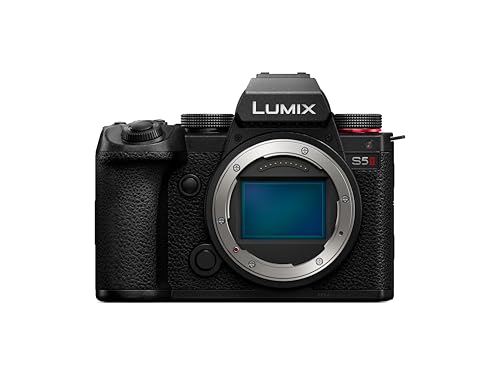
Panasonic LUMIX S5II — Best main camera
The S5II is the main camera we’d hand a PEG station first, because its virtues are the venue’s exact needs: full-frame low-light strength for the gymnasium’s gloom, stabilisation that steadies a long lens on a bleacher mount, and long-session manners — power, heat, recording stamina — that treat a doubleheader as a normal evening. Its autofocus, transformed in this generation, follows play with a confidence earlier Panasonic bodies never offered sports shooters.
Panasonic’s video craft shows in the broadcast details: monitoring tools that keep exposure honest as the field lights take over from dusk, colour that grades consistently across a season of Fridays, and an L-mount lens shelf with the long zooms a main camera lives behind. For a station buying one serious camera to anchor years of coverage, this is the anchor.
The S5II’s colour consistency deserves a producer’s paragraph: a season of Fridays, across gyms and fields and three kinds of light, must grade as one programme in the archive, and Panasonic’s colour science — with a fixed white-balance discipline — holds that consistency with less correction than rivals demand. Archives are where consistency compounds; a station’s ten-year retrospective should look like one institution’s memory, not ten different cameras’ opinions.
- Sensor: full-frame, gym-proof low light
- Stabilisation: in-body, long-lens friendly
- Sessions: built for full games and doubleheaders
- Feed: clean HDMI for switchers and streaming
- System: L-mount, affordable long zooms
Strengths
- The venue-proof main camera
- Long-event stamina without drama
- Files consistent across a season
Trade-offs
- Volunteer crews need its settings locked and labelled
- Full-frame lenses are a real budget line
- Burst stills pace is ordinary — it is a video-first pick
Its finest PEG parish is the multi-sport gymnasium: basketball’s speed under bad light, volleyball’s vertical geography, wrestling’s single pool of brightness in a dark hall. One camera that serves all three without a personality change simplifies a station’s training, spares, and muscle memory — the unglamorous economies that keep volunteer productions alive.
Set it up once, properly, with a knowledgeable hand — exposure strategy for the gym, focus limits for the field, the streaming feed verified — then lock the knowledge into the station’s checklist. The S5II rewards the station that treats setup as an institution rather than a weekly improvisation.
Best for: stations anchoring coverage with one serious main camera. Not suited for: crews wanting the simplest possible menus

Canon EOS R10 — Best value workhorse
The R10 is the PEG budget’s best friend: a fast, capable APS-C camera whose autofocus and burst manners come from Canon’s professional line, at a price that lets a station buy the camera and the long lens and the fluid-head tripod inside one municipal budget line. As the second angle — bench, table, the close celebration — it is superb; as a main camera for smaller venues, it is entirely respectable; as the camera a trained student crew runs, it is forgiving in exactly the right places.
Canon’s colour flatters under mixed venue light, and its menus are the ones volunteers learn fastest. The R10’s honest limits are low-light reach compared with the full-framers and a smaller buffer for the longest stills bursts — neither of which prevents it from covering a season of local sport with dignity, which is the standard this guide actually applies.
The R10’s burst and tracking have a stills dividend PEG stations quietly rely on: the yearbook photo, the newspaper’s game shot, the senior-night portrait at midfield. Community stations are often the town’s sports photographers by default, and a second-angle camera that doubles as a serious stills body serves two civic institutions for one budget line.
- Sensor: APS-C, fast and capable
- Autofocus: professional-line subject tracking
- Body: compact, volunteer-friendly
- Feed: clean output for streaming setups
- System: Canon RF, value long zooms available
Strengths
- The whole rig fits a municipal budget
- Fast focus for real play
- Menus volunteers actually learn
Trade-offs
- Gym gloom tests it harder than the full-framers
- No in-body stabilisation
- Smaller body, smaller battery
School-based PEG programmes — where the station and the media class are cousins — should look hardest at this pick: it is cheap enough to be entrusted, good enough to teach on, and its footage intercuts respectably with a full-frame main camera for the big nights. A student who learns coverage on the R10 has learned coverage, full stop.
Buy the lens before the accessories: the long zoom is what makes this a sports camera, and Canon’s affordable telephoto options are the R10’s hidden subsidy. Body plus reach plus tripod is the package; everything else is garnish.
Best for: second angles, student crews, and value main cameras. Not suited for: the darkest gyms as a sole main camera

Sony Alpha 7 IV — Best for big games
Some nights are bigger than others — the rivalry, the tournament final, the game the town will talk about at the diner for a decade — and the Alpha 7 IV is the camera a station points at those nights. Its full-frame low-light files are the class benchmark, its autofocus finds and holds players in the gloom with an almost unfair competence, and its dual card slots insure the one recording that cannot be re-shot. This is the premium main camera, bought when the coverage’s importance justifies it.
Sony’s lens shelf completes the argument: the long zooms, the fast primes for the interview corner, the third-party value options that municipal budgets quietly rely on. A station standardised on Sony for its main camera owns a growth path that outlasts any single season’s roster.
The Alpha 7 IV’s dual slots deserve translation into PEG’s emotional register: the championship game is somebody’s child’s only one. A card failure on that night is not a technical incident; it is a small civic tragedy that the family will remember at reunions. Insurance features read as paranoia in a spec sheet and as love in a town. Buy accordingly.
- Sensor: full-frame, 33 megapixels
- Autofocus: benchmark player tracking in low light
- Cards: dual slots for the unrepeatable game
- Feed: clean HDMI, streaming-ready
- System: Sony E — the deepest shelf
Strengths
- Big-night image quality and focus
- Insurance features for unrepeatable events
- Lens options at every budget
Trade-offs
- The premium line in a municipal budget
- Menus reward a trained setup hand
- Full-frame glass for real reach costs real money
Tournament weeks are its showcase: three games a day, light changing by the hour, a crew running on rotation and coffee. The Sony’s consistency — same colour, same manners, same reliability at game nine as at game one — is what a production manager actually buys at this tier, and it is worth every penny of the difference to the person signing the schedule.
If the station can afford only one premium decision, spend it here or on the tripod — and the honest answer is that the fluid head under a lesser camera outperforms the flagship on a cheap stick. This guide recommends the Sony to stations whose tripod is already worthy of it.
Best for: rivalry nights, tournaments, and flagship main cameras. Not suited for: stations still saving for a proper fluid head

Sony ZV-E10 II — Best streaming sideline
Not every angle in a PEG production is the game. The bench’s reactions, the scorer’s table, the halftime interview, the coach’s post-game comments — these are covered by a camera that must be quick, close, and streaming-native, and the ZV-E10 II is that camera: compact, flip-screened, with product-showcase autofocus that — repurposed — holds a microphone, a trophy, a presented jersey to the lens with a presenter’s ease.
Its USB streaming manners make it the plug-in sideline of the software-switched production: add it as a source, frame the table, and the broadcast gains a second angle for the price of a cable. Stations building their first multi-camera rig will find this the angle that makes the production look produced.
The ZV-E10 II’s showcase focus has a trophy-table application that producers discover in week one: the player of the game, presented with the ball or the plaque, holds it toward the camera and the focus obeys like a trained floor manager. Small graces of that kind are what make a local broadcast feel cared for, and cared-for is the exact adjective PEG exists to earn.
- Sensor: APS-C, interchangeable lenses
- Feed: USB streaming or HDMI
- Screen: vari-angle for the table and bench
- Autofocus: showcase mode for presented objects
- Best at: bench, table, interviews, second angle
Strengths
- Streaming-native second angle
- Compact enough for crowded tables
- Showcase focus for trophies and interviews
Trade-offs
- No in-body stabilisation — mount it, don’t hold it
- Not the main camera for a big venue
- Rolling shutter in fast pans
Post-game interviews are its signature: the flip screen lets a student reporter frame themselves with the player, the autofocus holds both faces, and the whole apparatus fits on a small tripod at the gym door where the quotes live. Local sports’ most-shared clips are often these sixty seconds, and this camera makes them look like television.
Keep it on a small, dedicated tripod with its settings taped to the leg — the sideline camera’s virtue is being ready in ninety seconds, by whoever is free, without a negotiation.
Best for: sideline, bench, and interview angles. Not suited for: main-camera duty in large venues
PTZOptics Move 4K — Best one-operator venue camera
The PTZ camera is PEG’s quiet revolution, and the Move 4K is its representative here, in prose as our verified pool does not carry it: a broadcast camera that pans, tilts, and zooms under remote control, mounted permanently in the venue — above the bleachers, on the press-box wall — and operated by one volunteer at a joystick or a tablet, calling presets for the game’s geography: centre court, far basket, bench, wide.
For venues hosting games weekly, the arithmetic is transformative. No camera operator on a scaffold, no setup and strike each Friday, no angle lost because tonight’s volunteer called in sick — the PTZ is always installed, always ready, and with a second unit, a one-person crew produces a genuinely multi-camera broadcast. Its image is broadcast-competent rather than cinematic, and its parish is exactly the repeatable, workmanlike coverage PEG exists to provide.
The PTZ’s presets have an archival consequence: identical framing, game after game, season after season. The wide shot of the 2027 final matches the wide shot of the 2024 final, and the town’s retrospective edits assemble themselves. Consistency of vantage is a form of historical record-keeping that handheld coverage, however brilliant, cannot offer — the venue itself becomes a constant against which the years change.
- Form: remote pan-tilt-zoom broadcast camera
- Mounting: permanent, in-venue
- Control: joystick, software, presets
- Feed: network and standard broadcast outputs
- Best at: gyms and fields with weekly fixtures
Strengths
- One operator runs the whole coverage
- Always installed — no Friday setup
- Presets make volunteer operation teachable
Trade-offs
- Prose-only in this guide — buy through broadcast dealers
- Fixed position limits creative angles
- Image polish below the mirrorless picks
Presets are its pedagogy: a senior operator programmes the venue’s geography once — the ten positions every game visits — and a new volunteer’s entire training becomes ‘follow the play between the presets’. Skill that took a season to grow in a handheld operator is substantially pre-loaded in the camera, which is why school districts, the backbone of PEG sport, have adopted PTZ fleets fastest.
Pair one PTZ wide camera with one volunteer-run close camera and a small station achieves the professional shape of sports coverage — establishing shot and story shot — with a crew of two. That shape, more than any resolution figure, is what makes a broadcast feel like a broadcast.
Best for: venues with weekly games and tiny crews. Not suited for: one-off events or cinematic ambitions

Canon EOS R50 — Best beginner crew camera
Every PEG station’s future is a new volunteer holding a camera for the first time, and the R50 is the camera we’d put in those hands: guided menus that teach while they assist, Canon colour that forgives mixed light, a light body that a three-hour tournament does not make into a burden, and stills and video manners that cover the game’s close angles and the evening’s interviews without a personality change.
It is not the main camera for a big venue, and this guide does not pretend otherwise — its reach and low-light ceiling are a class below the leaders. As the training camera, the third angle, the roaming close-up in a student crew’s hands, it is the pick that grows the station’s bench, which is the resource every PEG director actually manages.
The R50’s guided menus are, in institutional terms, a succession plan. PEG’s eternal risk is the irreplaceable volunteer — the one person who knows the rig — and every camera that a newcomer can run by the second quarter is insurance against the programme’s mortality. Stations do not die of bad equipment. They die of unwritten knowledge, and beginner-friendly cameras are knowledge written in hardware.
- Sensor: APS-C, friendly and capable
- Menus: guided, beginner-first
- Body: light for long event days
- Feed: USB streaming or HDMI
- System: Canon RF, shared with the R10
Strengths
- The easiest serious camera to learn
- Light enough for roaming student crews
- Canon colour under venue light
Trade-offs
- Not a big-venue main camera
- No in-body stabilisation
- Kit lens is a starting point
Stations running both the R10 and R50 own a training ladder in hardware: the new volunteer starts on the R50’s guidance, graduates to the R10’s speed, and the lenses are shared between them. Crew development, like player development, is a pipeline — and pipelines are built from equipment that hands skills upward.
Label its settings card like a playbook: gym, field-day, field-night, interview. Four cards, taped inside the case, and the R50 becomes the camera any willing pair of hands can run by the second quarter.
Best for: new volunteers, student crews, and third angles. Not suited for: flagship main-camera duty
How Do You Run a Two-Camera PEG Broadcast With Three Volunteers?
Assign the roles by the broadcast’s grammar: one operator on the main camera whose only job is the game — follow the play, hold the wide-to-medium frame, never chase the celebration. One operator on the close angle — bench, table, the story shots — who also owns the halftime interview. And one producer at the switcher with the graphics, the score, the stream, and the authority to call which camera is live. Three people, three jobs, no improvisation about whose eyes are where.
Rehearse the geography before the season, not before the game. Walk each venue with the crew: where the main camera lives, what its lens must reach, where the cable runs so nobody’s grandmother trips on it, where the light turns at dusk. Write it on the venue card that travels with the kit. PEG productions are won in these walkthroughs, because Friday night is too late to discover the press box has one socket.
Lock the technical agreements: same frame rate everywhere, white balance set for the venue’s light and left alone, exposure strategy agreed for the game’s phases — daylight, lights, full dark. Two cameras that agree about colour cut together like one production; two that improvise look like a ransom video and a wedding film sharing a channel.
Debrief like athletes. Ten minutes after each game — what dropped, what hunted, which preset was wrong, which cable is now labelled DO NOT TRUST — written into the log while it is fresh. Volunteer crews become good the way teams become good: repetition plus honest review, and the log is the institution’s memory when the crew rotates.
Which PEG Sport Is Your Station Covering?
Gymnasium sports — basketball, volleyball, wrestling — are light problems with a game attached: fast play, bad colour, echoing audio. They reward the full-frame main cameras and the PTZ’s permanent perch, and they forgive almost anything except a camera that hunts for focus under fluorescent flicker.
Field sports — football, soccer, lacrosse — are distance problems: reach, weather, and dusk. They reward the long lens honestly bought, the main camera’s stabilisation on its mount, and a crew dressed for the fourth quarter’s temperature rather than the first’s.
Diamond sports — baseball and softball — are patience problems: long stillness, sudden geometry, a game that crosses the whole evening’s light. They reward the second angle’s storytelling (the dugout is the programme between pitches) and a producer who understands that the broadcast’s rhythm is the game’s, not television’s.
Ceremony and studio — signing days, hall-of-fame nights, the coaches’ show — are PEG’s other parish: close, lit, conversational. The ZV-E10 II and R50 own these hours, and they matter to the station’s standing in the town out of all proportion to their cost.
Commentary deserves a camera-adjacent paragraph, because the broadcast’s voice is its identity: a knowledgeable local announcer — the teacher, the retired coach, the student with the gift — turns coverage into companionship. Producers should spend on the announcer’s microphone and a quiet corner for them before spending on a third angle; audiences forgive a missed shot and remember a voice that knew the players’ names and stories.
Graphics are the second-cheapest professionalism available: a legible score bug, correct names spelled as families spell them, a lower-third that introduces the senior on senior night. The discipline is clerical, not creative — a roster checked with the school office beats a beautiful template with a misspelled captain — and it signals, in every frame, that the production respects its subjects.
Weather planning for field sports is a producer’s craft of its own: the lift position’s wind, the cable run’s puddles, the crew’s layers for the fourth quarter. Cameras in this guide were chosen partly for how they behave in those conditions — sealing, stamina, screens that stay legible — but the decisive equipment is the checklist that remembers the gaffer tape before the forecast does.
The rivalry game deserves its own production meeting, because it is the season’s examination: bigger crowd, louder gym, more dignitaries, less margin. Stations that treat it as a normal Friday with more viewers survive it; stations that add one rehearsed element — the extra interview, the halftime package — and nothing else unrehearsed, triumph at it. Ambition in PEG is a spice; reliability is the meal.
Finally, succession for the production itself: every role shadowed, every password and setting in the station’s book, every venue card current. The broadcast that survives its founder is the broadcast that was documented like it mattered. Write it all down — the town will thank the author at a hall-of-fame night in about fifteen years.
Halftime deserves a producer’s respect as the broadcast’s second programme: the band, the cheerleaders, the senior presentations, the interview that gives the evening its memory. Crews that plan halftime — a camera assigned, a microphone ready, the ceremony’s order known in advance — produce the segments families actually keep. The game is the town’s sport; halftime is the town itself, and the archive values them in that order more often than the schedule admits.
Accessibility is a PEG obligation with a practical face: captions where the platform allows, commentary that describes rather than assumes (the radio habit — say the score, say the clock, say who holds the ball), and graphics legible at a phone’s size. The audience includes the vision-impaired grandfather and the hearing-impaired parent, and a community channel that serves them is doing the precise job it was chartered for. Cameras serve it by holding steady, legible frames; producers serve it by remembering it exists.
There is a recruitment pitch hidden in every good broadcast: the middle-schooler watching the high school game, seeing students run the cameras, and deciding to join the crew before they join the team. Stations should let that pitch happen — credit the crew on air, show the production in the school’s corridors, invite the visit. PEG’s future operators are currently its audience, and the broadcast that acknowledges them is farming its own succession.
The archive’s rights and courtesies deserve one calm paragraph: families generally cherish the footage and occasionally need it — a recruiting reel, a memorial, a dispute about a call that the town will argue about regardless. A station with a clear, kind policy for copies — who may ask, what it costs, how the athletes’ dignity is protected — turns those moments into goodwill. The policy belongs in the same book as the venue cards, written before it is needed.
Sponsorship, handled with PEG’s traditional restraint, funds the future without selling the programme: the score bug’s modest logo, the halftime thanks, the local names read by a local voice. The line to hold is tone — the broadcast is the town’s, and sponsors are its patrons, not its owners. Stations that hold that line find the patrons stay for decades, because what they are buying — the town’s gratitude at the town’s happiest hour — cannot be purchased anywhere else at any price.
Equipment failure will happen on the biggest night, because that is when equipment fails; the professional response is a rehearsed degradation, not a panic. The wide camera becomes the only camera, the producer narrates the gap honestly, the recording continues on whatever still turns. Audiences forgive a diminished broadcast delivered with composure and never forget a dead screen delivered with silence. Plan the failure in the calm of a scrimmage week, and the championship’s gremlin becomes a story the crew tells proudly.
And the last word belongs to the volunteers, who are the actual technology of PEG: the cameras in this guide will be obsolete in a decade, but a town that knows how to show up for its own games — trained, documented, equipped, and thanked — will be broadcasting with whatever replaces them. Buy the cameras, by all means. Then spend the real budget: the pizza after the game, the names in the credits, the thanks said like it matters. It is the only line item that appreciates.
The season’s first scrimmage is the production’s dress rehearsal and should be treated with liturgical seriousness: full crew, full kit, full stream to a private audience, every failure invited to happen while it is still free. Stations that rehearse discover their gremlins in August; stations that debut at the opener discover them in front of the town. There is no third option, and the choice is made by whoever books the calendar.
Keep the kit’s book — settings, venue cards, cable maps, the log of what failed and what fixed it — in the case itself, printed, current. Digital copies are for the office; the book in the case is for the gym at 6 p.m. with the tip-off at seven. Institutions are just habits with paperwork, and PEG at its best is an institution a town builds out of laminated cards and goodwill.
And when the season ends, archive it like a yearbook and thank the crew like champions — because in the only standings the station keeps, they are. The cameras go back in their cases, the venue cards get their corrections, and the town’s memory of its own year sits safely on the shelf, labelled, in order, waiting for the reunion.
The first game of next season is already on the calendar, and it will need everything this season taught. That is the quiet glory of the institution this guide has been equipping: it renews. New players, new volunteers, same town, same promise — the show happens, the archive grows, and somebody’s grandmother, somewhere, sees the game.
Choose the cameras, train the crew, label the cables, and keep the book. The town will do the rest — it has been waiting all week for Friday.
One more piece of institutional hygiene belongs in the book: the post-season inventory, when every cable is tested, every battery’s health is noted, every mount’s screws are checked, and the wish list for next year’s budget writes itself from evidence rather than from hope. Stations that inventory in the calm of spring buy wisely in the panic of August, which is to say they do not panic in August at all.
The gym will be loud, the light will be dreadful, the fourth quarter will be close, and the stream will hold — because the crew rehearsed, the settings are locked, and the cameras were chosen for exactly this. That is the whole craft. Everything else is the game, and the game belongs to the town.
See you at tip-off. Bring the book, check the book, and let the town watch its own children play — which was, from the first PEG charter onward, the entire idea.
The bleachers will fill, the band will tune, the announcer will test the microphone with the same joke as last year, and somewhere in the third row a grandmother will open the stream on her phone to show the neighbour who could not come. That small, ordinary miracle is what all of this equipment is for.
Film it well. The town is watching itself, and it deserves to look like it feels from the inside — close, loud, and entirely worth the trip.
The rest is Friday: the bus ride, the warm-ups, the national anthem sung by a student with more courage than training, and then the game — the same game, the new year, the town’s oldest story told again with this year’s names.
Your station’s name is on the channel. The town’s name is on the jerseys. The cameras are merely how the two meet, every week, on the record.
Choose for the venues you actually have, the crew you can actually train, and the audience that actually loves these games. The specification writes itself from there.
And then go and cover the game — all of it, badly lit and beautiful, exactly as the town plays it.
The whistle is not patient, and neither is the season. Set the cameras this week; the schedule is already printed.
Everything in this guide was chosen so that sentence could be said with confidence by a crew of neighbours, on a folding table, in a loud gym, in the fourth quarter.
The show happens. That is the creed, the review, and the promise — keep it, and the town will keep the station.
Bring the book, bring the spare cable, bring the volunteer who has never done this before and will be running it by Christmas. That is not a risk to the broadcast. That is the broadcast, renewing itself on schedule.
How Do the Six PEG Sports Cameras Compare?
| Camera | Role | Low light | Crew demand | Best venue |
|---|---|---|---|---|
| Panasonic LUMIX S5II | Main camera | Excellent | Trained operator | Gyms and fields |
| Canon EOS R10 | Second angle / value main | Good | Student-friendly | Smaller venues, benches |
| Sony Alpha 7 IV | Flagship main | Benchmark | Trained operator | Big games, tournaments |
| Sony ZV-E10 II | Sideline / streaming | Good | Minimal | Tables, interviews |
| PTZOptics Move 4K | Remote venue camera | Good | One operator total | Weekly-fixture venues |
| Canon EOS R50 | Training / third angle | Fair | Beginner-first | Student crews |
What Mistakes Make Local Broadcasts Unwatchable?
A cheap tripod under a good camera. Sports coverage lives in the pan — smooth, weighted, following play without judder — and a stills tripod’s sticky head makes every follow look like the camera is arguing with its operator. The fluid head is the least glamorous and most transformative purchase in this entire guide; stations that buy it first never regret the order.
Chasing the play too tightly. The beginner’s main camera zooms to the ball and loses the game — the developing run, the open player, the context that makes a play intelligible. Professional coverage frames the play’s neighbourhood and lets action move inside it. Teach the wide-to-medium discipline first; the tight shot is a garnish the close angle provides.
Letting audio be an afterthought. The crowd, the whistle, the announcer’s voice are half the broadcast’s soul, and a camera’s built-in microphone at forty metres delivers none of them. A feed from the announcer’s mixer or a microphone at the table transforms the production’s perceived quality more than any camera upgrade — viewers forgive soft pictures in a game that sounds alive, and forgive nothing that sounds like a fish tank.
Improvising the stream’s plumbing on game night. The capture path, the encoder settings, the graphics package, the backup recording — all of it belongs to a checklist tested on a scrimmage, not debuted at the rivalry. PEG’s audience is patient about many things; a spinning buffer during the fourth quarter is not among them.
Forgetting the archive. The broadcast is the town’s sports memory, and a recording kept, labelled, and backed up is a civic asset — the alumni night, the hall-of-fame induction, the family asking for grandfather’s game. Stations that treat the archive as part of the production, with a named volunteer as its keeper, become institutions. Stations that overwrite it become a cautionary tale told at other stations’ meetings.
Final Recommendation
Build the broadcast around the show happening. Anchor it with a main camera that survives your venues — the Panasonic LUMIX S5II for most stations, the Sony Alpha 7 IV when the big nights justify it — and give it the Canon EOS R10 as its value partner and the Sony ZV-E10 II on the table. Where one venue hosts the town’s whole sporting life, let a PTZ camera carry the weekly load, and put the Canon EOS R50 in new volunteers’ hands so the crew renews itself. Buy the fluid head before the second lens, label everything, write the venue cards, and keep the archive like the civic treasure it is. PEG sports are the games a town plays against itself, for itself — film them like they matter, because to the only audience that counts, they are the biggest games in the world.
Frequently Asked Questions
What does PEG actually mean for a sports broadcast?
Public, educational, and governmental access — the community media channels, now usually paired with streaming, through which local institutions broadcast their own events. For sports it means school and municipal games covered by community stations and trained volunteers, with production values that have risen sharply as cameras like these have become affordable. The audience is hyper-local and deeply loyal: family, alumni, and the town itself.
How many cameras does a good local sports broadcast need?
Two well-run cameras beat four improvised ones. The professional shape — a main game angle and a close story angle, switched with a score graphic — is achievable by a crew of two or three and covers most local sport with dignity. Add a PTZ for the venue’s wide safety shot when fixtures are weekly, and add angles only when the crew’s competence, not the equipment shelf, invites them.
What lens does the main camera need for field sports?
Reach is the honest answer: a telephoto zoom that can hold the far side of your venue in a usable frame, chosen for your actual distances rather than a catalogue’s. At gymnasium distances a moderate telephoto suffices; at a football field’s width, the long end matters enormously. Buy the lens for the farthest regular shot your venue demands, and test it at a scrimmage, at dusk, before the season’s money is committed.
Can students really run a PEG sports crew?
Yes — school-based crews are the backbone of PEG sports in many towns, and with the right design they are excellent: documented roles, locked settings, venue cards, an adult producer’s oversight, and cameras like the R10 and R50 that forgive while they teach. The educational half of PEG is not a compromise in the crew. It is the point of the institution, and the broadcasts improve as the students do, season by season.
Should our station stream, broadcast on cable, or both?
Both, where the franchise allows — they are different audiences in the same households. Cable reaches the grandparents on the big screen; streaming reaches the alumni in other time zones and the parents at the other child’s game. The production is identical until the distribution split, which is why this guide specifies cameras by their clean feeds and long-session manners: serve the switcher well, and every destination downstream is easy.
How do we afford this on a municipal budget?
Sequence like a station, not a shopper: fluid head and main camera first, the value second angle next, the PTZ when a venue’s fixture list justifies it, the training camera when the crew pipeline needs it. Each stage is a complete, working broadcast — never a fraction of one — and each is defensible in a budget meeting as the town’s memory being kept. Grants for community media exist precisely for this sequence; a station with a plan and an archive is a fundable institution.
Related Guides
Stations building out the rest of the production usually read next about our guide to cameras for church and community streaming our webcam and streaming camera roundup for small productions our guide to cameras for recording lectures and events


