ilcastellomenu.com is reader-supported. When you buy through links on our site, we may earn an affiliate commission.
Where to Buy
A note on the words first, because they arrive slightly bent: ‘photography moving’ is read throughout this guide in its natural sense — photographing moving subjects. Runners, riders, dogs, dancers, vehicles and children: subjects that refuse to hold still while the camera makes up its mind. The best cameras for photography moving are therefore judged on a single unforgiving axis — how reliably they turn motion into a sharp, well-timed photograph rather than into an apology.
That reliability is a chain, and it breaks at its weakest link. The autofocus must recognise the subject and stay with it; the burst must be fast enough to offer choices and deep enough not to stall at the decisive second; the viewfinder must show the action without lag or blackout confusion; and the files must survive the high sensitivities that fast shutter speeds demand. A camera brilliant at three links and weak at the fourth is, for moving subjects, a weak camera.
Six bodies below hold the whole chain together at different prices and sizes. Two full-frame flagships of the mid-range lead on focus intelligence; two APS-C bodies bring surprising speed to sane budgets; a stabilised Micro Four Thirds camera serves the travelling sports photographer; and an action camera covers the motion you photograph by being inside it.
Technique still matters — this guide’s later sections teach the panning, positioning and settings discipline that double any camera’s keeper rate. But technique has a ceiling set by the instrument, and the purpose of the shortlist is to raise that ceiling until it stops being the reason photographs fail.
One boundary for the guide: it does not cover cameras whose motion is the point — dashcams, drones in flight and their kin have their own shortlists elsewhere in this series. Here, the camera stands its ground, or swings from the hips, and the world does the moving.
Key Takeaways
- Moving-subject photography is a chain: subject-recognition focus, burst depth, lag-free viewing and clean high-sensitivity files.
- The Canon EOS R6 Mark II leads this guide — its focus tracking and low-light grace suit sport and wildlife alike.
- The Sony Alpha 7 IV matches it on recognition and adds resolution for cropping distant action.
- The Canon EOS R10 is the budget revelation: genuine tracking speed in a body priced for families.
- The OM SYSTEM OM-5 Mark II serves travelling photographers with stabilisation and reach-friendly crop.
- The GoPro HERO13 Black covers the motion you join rather than watch — mounted, worn and immersed.
- Arrive early and claim your position before you touch a setting — geography decides more action photographs than any specification in this guide.
In this guide
Quick Picks
| Camera | Badge | Why it catches motion |
|---|---|---|
| Canon EOS R6 Mark II | Best overall for moving subjects | Tracking that holds runners, riders and animals while its files stay calm at high sensitivity. |
| Sony Alpha 7 IV | Best for cropping distant action | Recognition focus plus resolution that lets a distant subject be reframed afterwards. |
| Nikon Z50 II | Best friendly tracker | Subject detection that works without a manual, in a body families can operate. |
| Canon EOS R10 | Best budget action body | Startling focus speed and burst for its class — the school-sports bargain. |
| OM SYSTEM OM-5 Mark II | Best travel action system | Stabilisation and compact telephoto reach for photographers who hike to their subjects. |
| GoPro HERO13 Black | Best for being in the motion | A wearable, mountable camera for the participant’s viewpoint rather than the spectator’s. |
How Did We Choose Cameras for Photographing Moving Subjects?
Testing chased real motion rather than laboratory charts: junior football under flat evening light, dogs crossing a field at unhelpful angles, cyclists on a descent, and a school sports day shot from the parent’s traditional distance. Keeper rate — sharp, well-timed frames as a share of honest attempts — was the score that mattered, and it separated marketing claims from machinery quickly.
Subject recognition was judged on its failure modes. Every modern system finds a face in good light; the questions are what happens when the runner turns away, when the dog is backlit, when the cyclist’s helmet confuses the eye-detect. Bodies whose tracking degraded gracefully — holding the head, then the body, rather than surrendering to the background — earned the top verdicts.
Burst behaviour was measured as a working system, not a headline number: frames per second matter less than the buffer’s depth at the moment the action peaks, and the viewfinder’s honesty while the burst runs. A camera that blinds or lags its photographer mid-sequence manufactures missed moments regardless of its paper speed.
Files at high sensitivity carried real weight, because moving-subject photography lives at the shutter speeds that force sensitivity upward. Sensors whose noise stayed fine-grained and colour-true under floodlights and dusk ranked above sensors that were cleaner at base settings and uglier where the work actually happens.
Finally, lenses were considered as part of each verdict: a tracking body behind a slow-focusing kit zoom is a promise unkept. Each system’s affordable telephoto options — the glass moving-subject photographers actually buy — were weighed alongside the bodies.
A note on what was excluded and why: dedicated sports flagships, with their stadium prices, were left off this list deliberately. The gap between their keeper rates and the best bodies below has narrowed to a margin most photographers will never photograph hard enough to find, and the money saved buys the lenses, travel and seasons in which moving-subject photographs actually accumulate.
How Does Subject-Recognition Autofocus Actually Help?
Traditional autofocus asked the photographer to keep a focus point parked on the subject — a skill, and under pressure a gamble. Recognition systems invert the labour: the camera identifies what the subject is — person, animal, vehicle, bird — finds its eye or head, and maintains focus on it as it crosses the frame, changes distance and turns. The photographer returns to composition and timing, which are the parts of moving-subject photography that cannot be automated.
The practical gains concentrate exactly where older systems failed. A runner approaching obliquely no longer outruns a single point; a dog’s eye stays found through head turns; a cyclist remains the subject rather than the hedge behind them. Keeper rates do not improve by percentages in such conditions but by multiples, which is why the bodies in this guide were ranked primarily on the intelligence and tenacity of their recognition.
Tenacity has a hierarchy worth understanding: eye first, then head, then body, then the general subject shape. Good systems step down that ladder under occlusion and climb back up when the eye reappears; poor systems fall off the ladder entirely and focus on the crowd. When you audition cameras for moving subjects, test the fall and the recovery — a subject passing behind a goalpost is a fairer examination than any chart.
What Burst Rate and Buffer Do You Actually Need?
Less than flagship marketing suggests, and more than entry bodies offer — with the subject deciding. Children’s sport and family action thrive at the moderate bursts most of this guide provides, because the decisive instants arrive a few times per minute rather than continuously. Wildlife and elite sport justify the fastest rates, where a wingbeat or a ball’s contact occupies a fraction of a second and choice among near-identical frames is the whole craft.
The buffer is the specification that bites. A fast burst that stalls after a second leaves the photographer rationing during exactly the passages — the goalmouth scramble, the finishing sprint — where rationing fails. Judge cameras by how long they sustain their rate in the file format you will actually use, and prefer a slightly slower rate that never stalls over a spectacular one with a cliff edge.
Discipline completes the system: short, intended bursts at anticipated moments rather than continuous spraying. Spraying fills buffers, flattens batteries and buries the decisive frame in nine hundred neighbours; anticipation — reading the game, the animal, the child’s habits — is the skill every camera in this guide rewards and none can replace.
Why Do Fast Shutter Speeds Rewrite the Camera Equation?
Freezing motion is bought with light. The shutter speeds that stop a sprinter’s stride or a dog’s shake demand either bright conditions, wide apertures, high sensitivities, or all three at once — and that arithmetic is why moving-subject photography judges cameras differently from landscape work. A sensor’s behaviour at elevated sensitivity, a lens’s brightness at telephoto lengths, and stabilisation that frees the slower speeds for panning all matter more than base-level purity.
Panning deserves its own sentence in this equation because it inverts it: the artistic and documentary technique of following a subject at a deliberately slow shutter speed, rendering the subject sharp against a streaked background, trades freezing for conveying speed. It asks the camera for smooth viewfinder behaviour and predictable tracking more than for raw sensitivity — and it is the technique that separates photographs of motion from photographs merely containing it.
Judge candidate cameras, then, at the settings your subjects impose: dusk football, indoor halls, woodland shade. The bodies below were chosen in exactly those conditions, and their order reflects performance where the light is leaving rather than where it flatters.
How Do You Pan Without Turning the Whole Frame to Soup?
Panning is a bodily skill before it is a camera setting. Stand with feet planted toward where the subject will finish, rotate from the hips rather than the arms, and begin tracking well before the moment you care about — the camera should already be moving at the subject’s speed when the shutter opens, and it must keep moving after it closes. Most failed pans are failed beginnings: the photographer started the swing as they pressed the button, guaranteeing a frame that lurches instead of glides.
Shutter speed is chosen by experimentation against your own steadiness: start near a sixtieth for cyclists and runners, review the yield honestly, and slow down as the follow-through improves. Expect a low keeper rate at first and do not let it argue you out of the technique — a single perfect pan, subject crisp against a river of background, is worth a card of frozen mediocrity, and the ratio improves with every outing.
The cameras here help in two specific ways: stabilisation modes that correct vertical shake while permitting horizontal travel, and viewfinders that stay live and lag-free during the swing. Set the first if your lens or body offers it, and trust the second — a lagging preview makes panning feel like steering a boat, and no technique survives that sensation for long.
Why Does Back-Button Focus Still Matter in the Recognition Era?
Recognition autofocus has not retired the photographer’s judgement; it has promoted it. Back-button focus — separating the act of focusing from the act of shooting onto two controls — lets you release focus the instant a subject stops or an obstacle intervenes, and re-engage it the moment the action resumes, without the camera hunting through a fence, a net or a foreground spectator in the meantime.
The technique pairs with recognition beautifully: the system tracks while your thumb holds, and freezes its last honest distance when you let go. Photographers of field sport through goalmouth netting, and of wildlife through reeds, consider the combination close to cheating. Every mirrorless body in this guide supports the arrangement, and an afternoon spent configuring it repays itself at the first chaotic match.
Beginners should adopt it gradually — one outing dedicated to the thumb’s new job, accepting a clumsy hour as tuition. The photographers who persist describe the same liberation the recognition systems themselves provide: attention returned to the subject, where photographs are actually decided.
How Should You Choose Between Two Tracking Systems on Paper?
Ignore the advertised frames per second first — it is the least informative number in this category — and compare three working facts instead: how long the burst sustains in the raw format you will shoot, whether the viewfinder blacks out or lags during it, and how the recognition behaves in the two seconds after a subject reappears from behind an obstacle. Those three answers, available from honest reviews and an hour’s rental, predict your keeper rate better than any headline.
Then weight the lens system for your subject’s distance. A tracking body is only as fast as the slowest focusing lens you will mount on it, and affordable telephotos differ more between systems than bodies do. Price the complete working kit — body, the telephoto you will actually buy, a spare battery, cards fast enough to honour the buffer — and compare kits, not cameras.
Finally, handle both finalists at a match if you possibly can. Tracking is a duet between the camera’s intelligence and the photographer’s hands, and some partnerships simply fit. The rental fee is the cheapest certainty in this entire guide.
Why Does the Photographer’s Position Outrank Every Specification?
Consider two photographers at the same match: one behind the goal with a mid-range body from this guide, the other at the halfway line with a flagship, shooting across the pitch’s full width. The first returns with faces, effort and the goal scored toward their end, large in the frame. The second returns with small, distant figures and immaculate technical quality. Editors choose the first photographer’s work every time, because photography is judged on what is in the frame before it is judged on how the frame was made.
Position is a compound of permission, knowledge and nerve: knowing where the action will be, being allowed to stand there, and staying when weather and doubt argue otherwise. Each is cheaper than a camera upgrade and each compounds with the others across a season. The bodies in this guide differ in how much they forgive a poor position — resolution forgives distance, tracking forgives chaos — but none of them repeal the arithmetic entirely.
So let the buying order be honest: claim your positions first, learn your subjects’ geography, and then choose the camera whose strengths cover the weaknesses your best positions cannot fix. That is the sequence professionals actually follow, whatever the advertisements suggest.
Which of the Best Cameras for Photography Moving Fits Your Subjects?

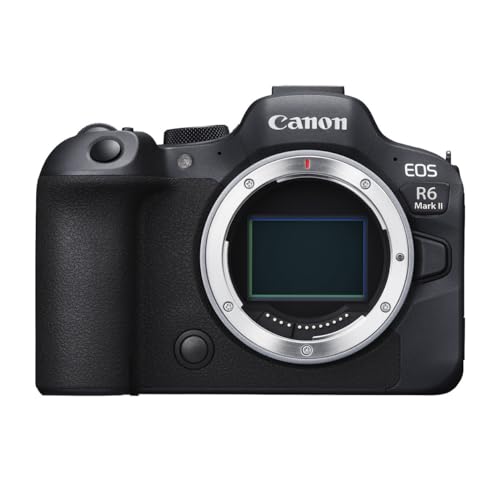
Canon EOS R6 Mark II — Best overall for moving subjects
The R6 Mark II earns the lead verdict on the quality that decides this category: trust. Its recognition autofocus finds people, animals and vehicles, holds them through turns, occlusions and dreadful light, and does so without asking the photographer to supervise it. When the subject is your child in a cup final or a kingfisher leaving a perch, that trust is the difference between watching the moment through a viewfinder and merely hoping the camera saw it too.
Its supporting systems are pitched exactly right for the job. The burst is fast and sustained enough for genuine sequences; the viewfinder stays honest while it runs; and the full-frame files remain composed at the sensitivities evening sport imposes, so the photographs survive the conditions in which moving subjects most often perform.
In-body stabilisation plays a subtler role here than in still photography: it steadies the viewfinder image at long telephoto lengths, which calms composition and helps the photographer hold the frame on a distant subject before the shutter ever fires. Small mercies at four hundred millimetres become large ones by the second half of a match.
Canon’s affordable telephoto lenses complete the working kit this body implies, focusing fast enough to honour the body’s tracking. As a complete moving-subject instrument at a price below the flagship tier, it is the guide’s clearest recommendation.
- Format: full-frame mirrorless
- Focus: deep-learning subject recognition and tracking
- Burst: fast, sustained for sequences
- Stabilisation: in-body, steadies telephoto framing
- Files: calm at high sensitivity
Strengths
- Tracking you can stop supervising
- Evening and indoor files stay usable
- A complete, affordable telephoto system
Trade-offs
- Resolution limits extreme cropping of distant action
- Flagship-tier focus at a mid-tier price still costs
- Menus reward one careful setup session
Sports parents upgrading from frustration should note the practical change: with this body, the rational technique becomes choosing your position and your moment, because the camera has absorbed the focusing anxiety that used to consume both.
Set the Canon’s tracking sensitivity by subject and then resist re-tuning it weekly; its strength is learning your sport’s rhythm over a season, and constant adjustment restarts the apprenticeship you are trying to finish.
Best for: sport, wildlife and family action at a serious level. Not suited for: photographers whose subjects hold still and whose budgets prefer resolution

Sony Alpha 7 IV — Best for cropping distant action
The Alpha 7 IV matches the Canon’s recognition intelligence — people, animals and birds identified and held with similar tenacity — and adds the asset distant-action photographers crave: resolution in reserve. Wildlife and field sport are chronically under-lensed; subjects stay further than the glass reaches. This body’s files tolerate the deep crop that reframes a too-distant subject into the photograph you stood in the rain intending.
Its autofocus configuration is the most granular here, which cuts both ways. Photographers who invest an hour in its tracking sensitivities and subject settings are rewarded with behaviour tailored eerily well to their particular subjects; photographers who will not invest the hour should leave it near its defaults, which are already excellent, and spend the hour at the match instead.
Real-time eye focus across species is the headline that survives contact with reality: birds in reeds, dogs at the gallop, athletes in clutter all stay found with a consistency that would have been professional sorcery a decade ago. The files then hold up their end, with the full-frame depth that lets a dusk exposure be lifted without disintegrating.
Choose it over the Canon when your subjects are far and your crops are deep; choose the Canon when your light is worse and your subjects closer. Between them they define the sensible summit of this category.
- Format: full-frame mirrorless, higher resolution
- Focus: real-time eye tracking across species
- Burst: capable, with deep file sizes
- Customisation: granular tracking controls
- Files: deep crop tolerance
Strengths
- Recognition plus resolution for distant subjects
- Eye focus that survives clutter and reeds
- Files forgive aggressive reframing
Trade-offs
- Deepest menus in this guide
- Burst rate modest beside sports flagships
- Large files fill cards and drives quickly
Bird photographers in particular should weigh this body’s combination carefully: recognition that finds a small eye in branches, plus files that survive the crop when the branch was further than the lens budget — that pairing is the everyday reality of the hobby, answered.
Sony shooters working distant action should shoot a size larger than the final frame in every sense — the resolution is there to be spent in the edit, and composing loosely at the capture protects fast subjects from clipped wings and tails.
Best for: wildlife and distant field sport. Not suited for: photographers wanting flagship burst speed above all

Nikon Z50 II — Best friendly tracker
The Z50 II’s achievement is making subject detection feel like a household appliance: switch it on, point it at the grandchild, the dog or the school play’s moving scenery, and the camera quietly does the recognising. Nikon aimed this body at people who want moving subjects captured without acquiring a technician’s vocabulary, and the aim is true.
Its detection covers the family canon — people, dogs, cats, birds — with a tenacity that surprises photographers arriving from older cameras, and the body’s general responsiveness keeps the experience feeling willing rather than strained. Files from its APS-C sensor stay respectable at the sensitivities gymnasium lighting imposes, which is where this camera will spend much of its working life.
The size matters for its mission. A camera carried to every match, recital and park afternoon by a parent already carrying everything else must earn its space, and the Z50 II’s compact system does. Nikon’s affordable telephoto zoom gives it genuine reach for the pitch without turning the kit into luggage.
It lacks the flagships’ depth — buffers fill sooner, tracking under true chaos is less clairvoyant — but within the family and amateur territory it serves, those limits appear rarely and forgive easily. For most households, this is the moving-subject camera that will actually be there.
- Format: APS-C mirrorless, compact
- Focus: subject detection for people and pets
- Handling: friendly menus, willing responses
- System: affordable telephoto reach
- Files: respectable in hall lighting
Strengths
- Tracking without a learning curve
- Size that survives family logistics
- Honest reach for pitches and parks
Trade-offs
- Buffer depth modest for long sequences
- No in-body stabilisation
- Low-light files trail the full-frame pair
Grandparents deserve a specific mention: this is the body to hand the family’s least technical photographer when the subject is the family’s fastest toddler, with a reasonable expectation of sharp photographs and an unreasonable amount of pride.
The Nikon’s detection is at its best when the subject is given a clean start: pre-focus near the expected distance before the action arrives, and its recognition takes over from a position of strength rather than searching the whole scene.
Best for: families and amateur sport. Not suited for: professionals needing deep buffers and flagship tracking

Canon EOS R10 — Best budget action body
The R10 is the surprise of this category: a modestly priced body whose autofocus descends directly from Canon’s professional line, recognising and tracking people and animals with an assurance that embarrasses cameras costing far more. For the parent on the touchline or the student shooting university sport, it converts the budget question from ‘how much sharpness can I afford’ to ‘how did they sell this at the price’.
Its burst, delivered through the electronic shutter, gives genuine sequence choice at the decisive moments of school and club sport, and the APS-C sensor’s crop factor quietly multiplies telephoto reach — the budget lens reaches further on this body, a kindness field sports photographers feel immediately.
The compromises are honest ones: the buffer is not bottomless, the body is not sealed like a professional’s, and high-sensitivity files ask for more care than the full-frame pair’s. Managed with short, anticipated bursts — the technique this guide preaches anyway — those limits recede, and what remains is the best moving-subject value in the guide.
Pair it with Canon’s affordable telephoto zoom and the combination covers the vast majority of amateur action with money left for the travel to reach better subjects. That is not a consolation prize; it is most photographers’ correct answer.
- Format: APS-C mirrorless, lightweight
- Focus: professional-line subject tracking
- Burst: fast via electronic shutter
- Reach: crop factor extends telephoto lenses
- Value: the category’s standout
Strengths
- Tracking intelligence far above its price
- Reach multiplication for budget telephotos
- Light enough for all-day events
Trade-offs
- Buffer fills under long sequences
- No in-body stabilisation
- Build is enthusiast-grade, not sealed professional
Students shooting for university papers and club photographers documenting local leagues will find this body’s price-to-keeper-rate ratio genuinely liberating: the budget goes on travel, entry fees and lenses, where stories actually come from.
R10 owners should treat its electronic shutter as the default for sequences and learn its buffer’s rhythm in practice sessions, so the stall — when it comes — arrives as a known quantity rather than a cup-final surprise.
Best for: budget-conscious sports and family photographers. Not suited for: professionals needing sealed bodies and endless buffers

OM SYSTEM OM-5 Mark II — Best travel action system
The OM-5 Mark II approaches moving subjects from the traveller’s direction: its Micro Four Thirds format doubles the effective reach of every lens, so the telephoto a wildlife photographer hikes with weighs half what other systems demand — and its stabilisation, among the finest anywhere, keeps those long lenses usable in woodland light without a tripod’s ceremony.
Its computational talents serve action in specific, practical ways: a capture mode that records frames from before the shutter is fully pressed rescues the moments human reflexes miss — the bird’s takeoff, the fish’s rise — which are precisely the moments wildlife photographers describe as unphotographable by reaction alone.
Focus tracking is competent rather than clairvoyant, a step behind the Canon and Sony leaders, and honest technique — position, anticipation, the panning craft — closes most of that gap in the field. In exchange, the whole system fits in a small bag, seals against the weather its subjects live in, and invites being carried up the mountain where the subjects are.
Photographers whose action happens at the end of a trail, rather than at the side of a pitch, will find this trade not merely acceptable but inspired. It is the moving-subject camera for people whose first sport is getting there.
- Format: Micro Four Thirds mirrorless
- Reach: double effective focal length
- Stabilisation: class-leading, tripod-freeing
- Speciality: pre-capture for reflex-defying moments
- Build: compact and weather-sealed
Strengths
- Reach without the weight penalty
- Pre-capture rescues unreactable moments
- Hikes to the subject happily
Trade-offs
- Tracking a step behind the leaders
- Smaller sensor trails in true darkness
- Files crop less deeply than the Sony’s
Birders on foot should test the arithmetic personally: a full day’s carrying, at half the system weight, with reach to spare, produces more sharp frames than a heavier flagship left in the car by lunchtime. Endurance is a specification too.
The OM SYSTEM’s pre-capture changes wildlife etiquette as well as technique: because the camera remembers the moment before the press, the photographer can wait for certainty instead of firing in hope, and the animal is disturbed by fewer false alarms.
Best for: travelling wildlife and outdoor sports photographers. Not suited for: indoor arena specialists needing ultimate low-light files

GoPro HERO13 Black — Best for being in the motion
Every other camera in this guide watches motion; the HERO13 joins it. Mounted to a helmet, a board, a handlebar or a chest harness, it photographs and films from inside the action, with stabilisation that renders violent movement watchable and a ruggedness that treats immersion, impact and weather as working conditions rather than accidents.
Its stills deserve more respect than action cameras usually receive: burst capture at the peak of a trick, frame grabs from high-quality video, and a wide lens that forgives aiming entirely — the participant cannot compose, so the camera composes by including everything and stabilising the result. For sports where the photographer is the subject, no mirrorless body at any price can substitute.
The honest limits are a spectator’s limits: no real telephoto, no shallow-depth portraiture, files that serve screens and moderate prints rather than exhibitions. The HERO13 does not compete with the bodies above; it covers the territory they cannot enter — underwater, airborne, attached to the moving thing itself.
Many action photographers end up owning both kinds of camera: a tracking body for the touchline and this for the participant’s view. If your motion is your own, start here; the footage and frames it returns are the ones no spectator position can buy.
- Format: rugged action camera
- Stabilisation: elite, for violent movement
- Mounting: helmets, boards, bars, chest
- Stills: bursts and video frame grabs
- Build: waterproof and impact-tolerant
Strengths
- The participant’s viewpoint, stabilised
- Goes where no system camera survives
- Zero aiming burden in the action
Trade-offs
- No telephoto or depth-of-field artistry
- Stills resolution serves screens, not walls
- Battery appetite under heavy use
Parents of young athletes discover a particular joy here: the camera rides along on the bike ride and the ski run, returning the child’s own view of the day — a category of family photograph no touchline camera, however gifted, can produce.
The GoPro’s still bursts reward being saved for the trick’s peak rather than the approach: its wide lens forgives framing, but its card and battery forgive nothing, and the participant’s discipline is the same anticipation this guide preaches to spectators.
Best for: participants, POV sport and immersive action. Not suited for: spectators needing reach and resolution
How Should You Set Up Any Camera for Moving Subjects?
Begin with the shutter: choose the speed the subject’s fastest part demands — limbs and wings move faster than bodies — and let aperture and sensitivity serve that decision rather than negotiate with it. Then set continuous autofocus with subject recognition engaged, the drive to a burst you can sustain, and the focus limiter on your lens, if fitted, to exclude distances your subject will never occupy; a lens that cannot hunt to the horizon finds the subject faster.
Position beats settings. Place yourself where the subject’s path is predictable — the bend, the goalmouth, the feeding perch — with the background as clean and distant as the venue allows, and the light, ideally, over your shoulder. Half of moving-subject mastery is standing in the right place before anything moves, and it costs nothing but arriving early.
Practise the pan on unimportant subjects until the follow-through is muscle memory: track before the moment, continue after it, exactly as a golfer follows through a swing. The photographers whose action work leaps in quality in a single season almost always credit this drill rather than any purchase — though the cameras above will happily take a share of the credit.
What Changes Between Sport, Wildlife and Children as Subjects?
Sport is choreography at speed: its patterns repeat, its venues are known, and its decisive places can be claimed in advance. The craft is positional and anticipatory, and cameras reward preparation — pre-set focus behaviours, a position rehearsed during warm-ups, bursts rationed for the passages the game’s rhythm predicts.
Wildlife adds concealment and patience to the same grammar. The subject does not know the choreography, the light is woodland or dawn, and reach is chronically insufficient — which is why this guide’s resolution and crop arguments concentrate here, and why fieldcraft, the knowledge of the animal’s habits, outranks every specification in this article combined.
Children are wildlife with better catering: unpredictable, low to the ground, fastest exactly when watched least. Get to their eye level, use the recognition modes without embarrassment, and favour the bodies whose size lets them live in the family bag. The best camera for a child’s moving years is the one present for them, and presence is a logistics problem before it is an optical one.
How Do You Review Action Photographs Without Lying to Yourself?
Judge sequences, not singles. Scroll a burst at speed and the story of your tracking becomes visible — where the focus wandered, where your pan lagged, where anticipation fired early. Single-frame review hides those patterns behind luck; sequence review exposes them as technique, which is good news, because technique can be practised and luck cannot.
Count keepers by subject and condition, and keep the tally somewhere unfashionable like a notebook. A month of honest numbers will tell you whether your failures live in focus, in shutter speed, in position or in nerve — and each of those failures has a different cure, only one of which involves buying anything. Most photographers discover their ceiling is positional, and position is free.
Finally, compare against the conditions, not against professionals with accreditation, sideline positions and lenses the size of luggage. Your frame from the public side of the fence, in the rain, with a mid-range body from this guide, is playing a different sport — and judged within it, a sharp, well-timed photograph is a genuine achievement worth printing.
What Does a Season of School Sport Teach a Photographer?
That the calendar is a technique. The first match of a season is for scouting: where the light falls at kick-off, which end the team attacks in the second half, where the fence does not interrupt the view. By the fourth match, a photographer with any camera in this guide is producing frames the first match could not — not because the camera improved, but because the photographer’s map of the event did.
Relationships compound the advantage. Coaches who know the touchline photographer allow the warm-up access where the season’s best portraits hide; parents who trust the archive share the fixture list early. None of this appears in a specification table, and all of it decides what a season’s photographs look like. The camera’s job is to be ready, reliable and unobtrusive while the human infrastructure does its work.
End the season by printing the dozen best frames for the people in them. It completes the exchange the photographs began, and it guarantees the one thing next season needs most: being welcomed back, closer to the action, by people who have seen what your camera does with trust.
How Do Weather and Darkness Change the Moving-Subject Brief?
Rain reorganises priorities brutally. Sealed bodies and lenses stop being a specification and become the permission to keep working; a plastic cover and a cloth become standard kit; and the photographs themselves gain the atmosphere that fair-weather archives lack — spray, sheen, effort written on faces. The sealed picks in this guide, led by the full-frame pair and the little OM SYSTEM, are chosen partly for the days their owners refuse to concede.
Darkness reorganises them differently. As light falls, the contest moves from tracking to sensitivity: shutter speeds can only fall so far before the subject blurs, so the sensor’s grace at high sensitivity becomes the keeper rate’s ceiling. This is the full-frame pair’s home territory and the reason evening-sport photographers gravitate to them regardless of brand loyalties formed in daylight.
Plan for both in the kit bag rather than in the moment: a cover, a cloth, a headtorch for settings, and a saved low-light preset in the camera’s custom modes. Moving subjects do not wait for menu archaeology, and the photographers who thrive in bad conditions are distinguishable mainly by having decided everything decidable in advance.
How Do the Six Moving-Subject Cameras Compare?
Read the table by your subject’s address: the touchline, the hide, the school hall or inside the action itself. Each row wins its own territory outright, which is why this category rewards honesty about where your motion actually happens.
| Camera | Motion strength | Working character | Best matched subject |
|---|---|---|---|
| Canon EOS R6 Mark II | Tracking plus low-light files | Trustworthy, responsive | Sport and evening action |
| Sony Alpha 7 IV | Recognition plus crop depth | Configurable, precise | Wildlife at distance |
| Nikon Z50 II | Friendly subject detection | Calm, compact | Family and school events |
| Canon EOS R10 | Pro-line tracking, fast burst | Light, eager | Club sport on a budget |
| OM SYSTEM OM-5 Mark II | Reach, stabilisation, pre-capture | Small, sealed, enduring | Trail wildlife |
| GoPro HERO13 Black | Immersion and stabilisation | Wearable, fearless | The participant’s own motion |
Notice the absence of a loser. Moving-subject photography has matured to the point where the correct question is not which camera can track — all six can, in their territories — but which territory is yours, and how much weight, money and complexity your route to it can carry.
One tie-breaker worth more than it sounds: choose the system whose affordable telephoto you would be happy to own for five years. Bodies will be upgraded inside that span; the lens, and the habits it teaches your hands, are the longer marriage.
What Mistakes Do Photographers Make With Moving Subjects?
The foundational mistake is focusing on the wrong verb: photographers say they need a faster camera when they need a better position. A mediocre position with a flagship produces sharp photographs of the wrong moment, taken from too far away, against a cluttered background. Walk the venue, claim the bend, the perch, the goalmouth — then let the camera’s tracking do its comparatively easy job.
Second, the spray-and-pray burst: holding the shutter down for entire passages and returning home to four thousand frames in which the decisive one hides like a needle. Anticipation is a trainable skill and this guide’s cameras reward it disproportionately, because their buffers and batteries are finite resources that belong to the moments that matter.
Third, shutter speeds chosen by habit rather than by subject. The speed that froze a jogger will not freeze a winger’s boot or a gull’s wingtip; learn each subject’s arithmetic, check the extremities of your frames at full magnification, and let the evidence — not a rule of thumb — set your defaults.
Fourth, abandoning a photograph because the light is poor, when poor light is precisely where the full-frame picks in this guide earn their price and where panning turns a liability into style. Dusk matches and woodland shade produce the most atmospheric action photographs in most portfolios; the photographers who stayed made them.
One more, and it is the cruellest: arriving with the camera set for yesterday’s subject. The body left in single-shot focus from a portrait session, the burst disabled, the card nearly full — moving subjects offer no pause in which to forgive such housekeeping. Build a pre-event ritual: format, charge, set the action preset, test on the warm-up. Professionals call it routine; amateurs who adopt it call it the season everything changed.
Fifth and finally: neglecting the warm-up. Photograph the practice drills, the pre-match knockabout, the dog’s first unimportant sprint — not for the frames, which will mostly be deleted, but for the calibration of hands, settings and expectations. The action will not announce its important moments in advance; the warm-up is where you become ready for the ones it hides.
Final Recommendation
For the broadest moving-subject brief — sport, wildlife, family action, in light from noon to floodlit dusk — the Canon EOS R6 Mark II is this guide’s recommendation, with the Sony Alpha 7 IV the equal choice when distance and cropping dominate your subjects.
Below them, the Canon EOS R10 delivers astonishing tracking value, the Nikon Z50 II makes it effortless for families, the OM SYSTEM OM-5 Mark II carries it up mountains, and the GoPro HERO13 Black abandons the touchline entirely to ride with the action. Choose by where you stand — then stand there early, and often.
And when the new camera arrives, resist christening it on the important match. Take it to the dogs, the cyclists and the gulls first; learn its buffer’s rhythm and its tracking’s habits where failure is free. The important match will come soon enough, and it deserves a photographer and a camera that have already met.
Related guides
Frequently Asked Questions
What shutter speed freezes a running person or animal?
[‘As a working start: a running adult or dog asks for roughly a thousandth of a second to freeze the body and faster for feet and paws; birds in flight and ball sports push beyond that, while a deliberate pan at a thirtieth conveys speed artistically with the subject held sharp by tracking. Treat every figure as an opening bid and verify on your own frames at full magnification — extremities tell the truth that rules of thumb round off.’]
Do I need a special lens for moving subjects?
[“You need reach and focusing speed more than exotic glass: an affordable telephoto zoom with a responsive focus motor serves most amateur action superbly on any body here. The lens’s maximum aperture decides your dusk performance, so photographers of evening sport should weigh brightness heavily; daytime and floodlit photographers can let value lead.”]
Why are my action photos sharp in the middle and soft at the peak moment?
[‘Usually the buffer, not the focus: the camera slowed or stalled as its buffer filled, and the sequence thinned exactly when the action thickened. Shorten bursts, anticipate passages rather than covering whole minutes, and choose a file format your camera sustains. The bodies in this guide were ranked partly on this unglamorous virtue.’]
Is electronic or mechanical shutter better for action?
[‘Electronic shutters deliver the fastest bursts and silent operation — valuable around wildlife and in quiet venues — but can distort very fast lateral motion. Mechanical shutters avoid that rolling effect at lower rates. Most photographers here use electronic for sequences and mechanical for single decisive frames, and the cameras make switching painless.’]
Can these cameras track a subject behind obstacles?
[“Briefly and intelligently, within limits. The leading systems here maintain their lock through a second or so of occlusion — a goalpost, a tree, another player — by predicting the subject’s path, then re-acquire the eye when it reappears. Longer occlusions defeat any camera; positioning to minimise them remains the photographer’s craft.”]
How do I photograph indoor sport with poor light?
[‘Accept the arithmetic: fast shutter, wide aperture, high sensitivity, in that order of sacrifice. The full-frame picks tolerate the resulting sensitivities most gracefully; the APS-C bodies manage respectably in decent halls. Shoot from as close as the venue allows, time bursts for the well-lit zones of the court, and let a little motion blur in extremities read as energy rather than failure.’]
What is the best way to practise action photography cheaply?
[‘Dogs in a park, cyclists on a known descent, and gulls at a harbour — free, repeatable, unforgiving subjects that teach tracking, panning and anticipation without entry fees. An hour a week on such practice improves keeper rates more than any accessory, and every camera in this guide is more than sufficient for the curriculum.’]
Should I use continuous autofocus for a subject that keeps stopping?
[‘Yes, with your thumb or the tracking settings doing the diplomacy: continuous recognition handles the stop-start rhythm of most sport and animal behaviour better than single-shot focus, which locks a distance the subject immediately abandons. For truly static intervals — a heron fishing, a goalkeeper waiting — a quick switch or a focus release gives you the still-photography precision the moment deserves.’]
What is the best camera setting for photographing my child’s sport?
[“A saved action preset you can reach in one dial turn: continuous recognition autofocus on people, a burst drive, a shutter floor near a thousandth of a second with sensitivity allowed to climb automatically, and exposure compensation where the kit colours demand it. Build it once with this guide’s setup section, test it at a training session, and match day becomes about watching your child rather than operating a camera.”]
How many frames will I shoot at a typical match?
[‘Plan for hundreds rather than dozens, and for the cull to be ruthless: a working action photographer might return with eight hundred frames and publish twelve. Cards and batteries should be sized to the eight hundred; pride should be invested only in the twelve. The cameras here all support the workflow — fast cards, honest buffers, and file sizes that archives can survive at that volume.’]
Do I need to worry about my camera’s weather sealing at outdoor events?
[‘Treat sealing as permission to finish the match, not to store the camera in a puddle: the sealed bodies here work through rain that sends spectators home, provided lenses are equally sealed and water is kept off the front element. Wipe down before opening any door or changing a lens, and let the camera dry before it goes back in the bag — the same closing-time discipline the waterproof guide preaches.’]
Related Guides
Photographers of motion usually continue, once their tracking is trusted and their positions are claimed, into the neighbouring territories of our guide to cameras for photographs of wildlife and distant subjects our guide to cameras for photos and video at sporting events our action camera guide for participants and POV filming


