ilcastellomenu.com is reader-supported. When you buy through links on our site, we may earn an affiliate commission.
Where to Buy
Action pictures are photography’s honesty test: the moment does not repeat, the subject does not cooperate, and the camera either followed the play or it did not. If you are choosing the best cameras for action pictures — school sport, wildlife, dogs at full stretch, children who have never once held still — the specification that matters is not resolution but capture: autofocus that predicts rather than reacts, burst depth that survives the decisive three seconds, and a shutter that keeps the subject’s shape honest at speed. This guide ranks on those virtues, in that order.
Understand what action actually asks. A sprinting subject crosses the focus plane faster than any human can track manually, so the camera’s subject recognition and prediction algorithms are effectively your focusing hands. The peak moment — the strike, the catch, the leap’s apex — lasts a fraction of a second inside a sequence of approach and aftermath, so burst rate and buffer decide whether you own the apex or its neighbours. And fast movement under ordinary light demands shutter speeds that push sensitivity upward, so the sensor’s high-ISO manners become an action specification too.
Your sport decides your shortlist’s shape. Field sports want reach and tracking across distance; wildlife wants the same plus silence and weather tolerance; indoor sports want high-ISO cleanliness above all; family action — the garden, the park, the beach — wants a camera simple enough to be ready before the moment starts. The six picks span those shapes deliberately, and the badges name the arena each camera owns, because the best action camera for a bird photographer is a puzzling purchase for a parent at a five-a-side.
One encouragement before the specifications swallow the subject: action photography’s keeper rate is low for everyone, professionals included, and modern cameras have raised it mostly by letting you shoot more, smarter. The camera is half the craft; the other half is anticipation — knowing the game, the animal, the child’s habits well enough to be pointed at the right place before the moment happens there. Buy the camera that makes your half easiest, then go and learn your subjects.
One more truth from the touchline: action photography is a numbers game played honestly. Professionals return from a match with hundreds of frames and a dozen keepers, and they are not embarrassed by the ratio — they engineered it. The cameras below were chosen to make your ratio respectable: tracking that keeps the burst sharp, buffers that hold for the play’s full arc, and files that survive the crop your position made necessary. Expect abundance, edit ruthlessly, and let the ratio be the sport’s nature rather than your verdict.
Key Takeaways
- Action stills are won by autofocus prediction and burst depth, not by resolution.
- Match the body to the arena: field sport, wildlife, indoor sport and family action reward different strengths.
- High shutter speeds tax light — high-ISO cleanliness is an action specification.
- Reach is a lens decision: buy the system whose telephoto path fits your budget.
- Anticipation is the photographer’s half — the camera’s job is to be ready and predictive.
In this guide
Quick Picks
| Camera | Badge | Why it earns its place |
|---|---|---|
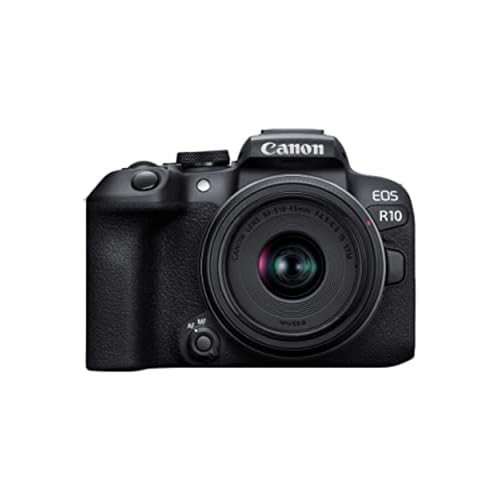
| Canon EOS R10 | Best action camera for most sports shooters | Deep-learning subject tracking, fast bursts and the RF telephoto ladder — the all-round action answer. |
| Nikon Z50 II | Best for wildlife and bird action on a budget path | Nikon’s subject detection and bird mode, in a compact body behind Z-mount’s long glass. |
| OM SYSTEM OM-5 Mark II | Best lightweight action kit for the field | Reach-doubling format, strong stabilisation and weather sealing — action that travels all day. |
| Sony RX100 VII | Best pocket camera for action at arm’s length | Real tracking autofocus and fast bursts in a jacket pocket — the action camera that is always there. |
| Fujifilm X-T5 | Best for action with a photographer’s soul | High resolution for cropping distant action, film colour, and dials — action for the deliberate shooter. |
| GoPro HERO13 Black | Best for action you are inside of | When the photographer is the athlete: mounted, wearable action stills and bursts from within the sport. |
How Did We Choose These Action Photography Picks?
We graded tracking as a behaviour, not a brochure: does the autofocus acquire a moving subject quickly, hold it through crossings and occlusions — the defender passing in front, the branch crossing the bird — and reacquire without a hunting expedition when it lets go? Systems differ enormously in this temperament, and temperament, at full sprint, is the whole product. Cameras whose tracking we would trust with a final or a fly-past earned the places.
Second, the burst economy: not just the headline rate but how long the camera sustains it, how usable the files are at the sensitivities action demands, and whether electronic shutter options stay honest — rolling shutter distorts fast subjects and panning backgrounds, so the picks’ shutter behaviour at speed was weighed as carefully as their frame rates. A camera that shoots twenty frames a second of warped geometry is manufacturing almost-keepers at industrial pace.
Third, the telephoto path: action is shot long, so each system’s realistic long-lens ladder — the affordable telephoto a beginner starts with, the serious glass they grow toward — was priced into the verdicts. A brilliant body behind an unaffordable lens wall is a recommendation to admire other people’s photographs, and this guide declines to make it.
We also weighed the human factors of a long day at speed: viewfinders that stay clear and informative at the moment of the burst, controls that fall under gloves or cold fingers, and menus that let a photographer change the one setting that matters — the focus behaviour — without missing a play. Action cameras are used at the edge of attention, and the picks here respect that edge better than their rivals did.
Which Are the Best Cameras for Action Pictures at Full Speed?
Each pick is argued in its arena: what it tracks, how it bursts, which lens it wants, and the action it should honestly leave to another row of this table.

Canon EOS R10 — Best action camera for most sports shooters
The R10 is where we send most action shooters, because its autofocus behaves like it was trained at the match: it recognises people, animals and vehicles, finds the eye or the helmet or the bird, and holds on through the crossings and occlusions that fill real sport. Paired with its fast burst shooting, that tracking converts directly into keepers — sequences where the apex frame is not merely present but sharp, which is the only definition of an action camera that matters on the touchline.
The RF telephoto ladder behind it completes the case. Canon’s affordable long zooms put genuine field-sport reach within a club photographer’s budget, the crop sensor multiplies every lens’s effective reach for free, and the serious RF telephotos wait at the top of the ladder for the shooter’s ambitions to arrive. The body’s second dial and enthusiast handling suit the manual-exposure discipline indoor and floodlit sport demands, and its size keeps a long lens balanced through a full fixture list.
Its honest limits are the APS-C ones: indoor sport at the highest sensitivities will show more noise than the full-frame bodies (none of which sit in this pool’s action class at this size), and there is no in-body stabilisation — telephoto lenses carry that duty. For the broad church of action — school and club sport, wildlife days, dogs, airshows — it is the most complete capture instrument in this guide.
Youth sport is the R10’s heartland and deserves the emphasis: a parent or club volunteer with this body and its affordable telephoto produces the season’s archive — the goals, the grimaces, the team in full flight — at a quality that embarrasses the phone line along every touchline. Clubs have standardised on exactly this class of kit for their media volunteers, because its tracking forgives the operator’s divided attention between the game and their own child in it.
Athletics meetings are the R10’s examination hall: repeated, predictable, high-speed efforts on a schedule — the perfect curriculum for its tracking and for a photographer’s anticipation alike. Clubs that lend one to their volunteer photographers find the season’s record transforms within a month, because the camera’s forgiveness lets the volunteer’s eye, not their technique, set the limit. That is the definition of the right tool for a community’s memory.
- Format: APS-C mirrorless, Canon RF mount
- Focus: subject detection for people, animals, vehicles
- Bursts: fast continuous shooting with tracking
- Reach: crop factor extends telephoto lenses
Strengths
- Tracking that survives real sport’s chaos
- Affordable RF telephoto path
- Enthusiast controls for manual exposure work
Trade-offs
- High-ISO noise above full-frame class
- No in-body stabilisation
- Buffer rewards fast cards
Best for: club and school sports, wildlife beginners and anyone whose action happens at a distance.
Not suited for: indoor low-light specialists who need full-frame cleanliness above all.

Nikon Z50 II — Best for wildlife and bird action on a budget path
Bird and wildlife photographers have adopted the Z50 II with unusual speed, and the reason is specific: its subject-detection includes the bird recognition that turns a chaotic fly-past into a tracked sequence, in a body small enough to carry all day behind a long lens. Nikon’s autofocus temperament — sticky, deliberate, reluctant to be distracted — suits wildlife’s pattern of long waits and sudden seconds, and the crop sensor stretches the Z telephotos’ reach exactly where bird photographers live.
The Z-mount long-lens story is the strategic half: Nikon’s wildlife glass, from the accessible telephoto zooms to the exotic primes, has a reputation among field photographers for optical ambition, and this body is the affordable door into that shelf. Files hold up well when cropped — and wildlife action is cropped, always — while the body’s weather resistance respects the dawn hide and the coastal wind that are the genre’s office.
Concede the standing points: no in-body stabilisation (the lens carries it), an APS-C high-ISO ceiling for the darkest woodland work, and a burst buffer that rewards disciplined sequences over spray. Wildlife photographers are disciplined by necessity — film-era habits survive in this genre — and for them the Z50 II is the most persuasive budget body Nikon has made in years.
Dawn is the Z50 II’s testimonial hour: the hide at first light, a heron patient as sculpture, then the strike — and the Nikon’s sticky tracking and quiet manners hold the sequence without flushing the marsh. Wildlife photography is mostly waiting conducted beautifully, and a camera that respects the wait — battery sip, silence, controls that work by touch in the dark — earns its place before the action even starts.
Raptor photographers give the Z50 II its most demanding testimonial: a stooping falcon is among the fastest focusing problems in nature, and a body whose bird mode holds a meaningful share of those frames, at this size and price, has changed who gets to attempt the genre. Not every frame — no body on earth offers that — but enough that the attempt is rational, which is all any photographer has ever asked of a camera.
- Format: APS-C mirrorless, Nikon Z mount
- Focus: subject detection including birds
- Build: compact with weather resistance
- Reach: crop sensor extends Z telephotos
Strengths
- Bird detection that tracks fly-pasts
- Sticky autofocus temperament for wildlife
- Door into Nikon’s long-glass shelf
Trade-offs
- No in-body stabilisation
- Buffer rewards short, timed bursts
- Dark woodland pushes its ISO ceiling
Best for: bird and wildlife photographers, walk-and-stalk shooters and long-lens beginners.
Not suited for: indoor sports shooters, or spray-and-pray burst styles.

OM SYSTEM OM-5 Mark II — Best lightweight action kit for the field
The OM-5 Mark II makes the action case on logistics: Micro Four Thirds doubles every lens’s effective reach, so a genuinely portable telephoto kit delivers field-sport and wildlife framing that would need a shoulder-breaking lens on bigger formats — and a kit you can carry for six hours catches the action a heavier kit misses by being back at the car. Its in-body stabilisation is a further field virtue, steadying long lenses in hides and on touchlines where monopods are impractical.
Its action electronics are more serious than its size suggests: fast burst options with tracking that handles the family-and-wildlife end of the action spectrum confidently, and computational modes (including high-resolution and live composite tricks) that serve the photographer’s other genres on the same trip. Weather sealing is the genuine article — this is a camera for the touchline in November and the seawatch in February, and its owners’ relationship with weather is the envy of bigger systems.
Name the ceiling plainly: the smaller sensor’s high-ISO files and ultimate tracking sophistication sit below the Canon and Nikon picks for elite indoor or professional field sport, and its burst buffer is a sprinter, not a marathoner. For the travelling, hiking, all-day action photographer — and for family sport where the kit must also be the holiday camera — its equation of reach, weight and sealing is unbeatable in this guide.
Sailing and coastal sport give the OM-5 its favourite argument: spray, wind and a deck or a pier for a studio, with a kit light enough to be carried in one hand while the other holds on. Its sealing shrugs off the environment that sends bigger systems under cover, and its reach frames the fleet without a lens that needs its own buoyancy aid. Adventure sport and action photography meet in this body more completely than in any other row here.
Junior sport in bad weather is the OM-5’s weekly parish: touchline rain, a kit that fits in a coat’s deep pockets between matches, and sealing that lets the photographer stay for the final whistle’s mud. Parents with this system report finishing seasons that drove bigger kits indoors by October. Endurance — the camera’s and therefore the photographer’s — is an action statistic, and this body leads the guide in it.
- Format: Micro Four Thirds mirrorless, sealed body
- Reach: format doubles effective focal length
- Stabilisation: strong in-body system
- Bursts: fast sequences with subject tracking
Strengths
- Longest reach per kilo of any pick
- Weather sealing for real field days
- Stabilisation steadies long lenses
Trade-offs
- High-ISO ceiling below APS-C rivals
- Tracking a step behind the leaders
- Buffer suits timed bursts
Best for: travelling wildlife and sports shooters who carry their kit all day.
Not suited for: indoor arena specialists, or professionals needing elite tracking.

Sony RX100 VII — Best pocket camera for action at arm’s length
The RX100 VII breaks the pattern of this list on purpose: it is the action camera for the action that happens near you, unannounced — the child’s first dive, the dog’s lunge, the skateboarder passing the café table. Its autofocus is inherited from Sony’s professional line, with real-time tracking and eye focus that follow a subject across the frame with a tenacity no other pocket camera attempts, and its burst shooting fires sequences fast enough to own the apex of a jump, a splash or a catch.
The lens is the second surprise: a proper zoom range covering the walk-around and short-telephoto framings most everyday action needs, in a body that rides in a jacket and is therefore present — and presence, as this guide keeps arguing, is the first action specification. Its single-frame and burst manners, its pop-up finder for bright days, and its sheer readiness make it the camera of the unplanned moment, which is most of family life’s action archive.
Its limits are its size’s: the small sensor’s low-light action work is modest, the telephoto end is for parks not stadiums, and handling a pocket camera at a winter match is a gloved photographer’s puzzle. It will not replace a system camera for the committed sports shooter. As the always-there action instrument — the one that photographs the moment the system camera was at home for — it has no rival in this guide.
School sports day is the RX100 VII’s annual triumph: no bag, no lens decision, no presence that makes children perform for the camera — just a pocket instrument that tracks a sprint and bursts its finish with professional manners. Parents consistently report it as the camera that finally photographed their children as they are at speed, rather than as they pose. Some specifications are domestic, and this one is decisive.
Street sport — the skate park passed at lunch, the five-a-side glimpsed through railings — is the RX100’s found poetry: present, unobtrusive, and fast enough to honour the moment before it dissolves. Documentary photographers of everyday athletic life have quietly made it their standard, because the best action camera for unposed life is the one nobody in the scene ever notices. Presence plus invisibility is a rare compound; this is its current form.
- Format: premium compact, one-inch type sensor
- Focus: real-time tracking and eye autofocus
- Bursts: very fast sequences for its size
- Lens: versatile zoom in a pocket body
Strengths
- Pro-grade tracking in a pocket camera
- Always present, always ready
- Fast bursts own the unplanned apex
Trade-offs
- Low-light action is modest
- Reach suits parks, not stadiums
- Small controls challenge gloved hands
Best for: parents, travellers and everyday shooters whose action happens nearby and unannounced.
Not suited for: field-sport or wildlife specialists needing real telephoto reach.

Fujifilm X-T5 — Best for action with a photographer’s soul
The X-T5 is the action pick for the photographer who refuses to specialise: its high-resolution sensor forgives distance by cropping — the action frame extracted from a wider composition is a legitimate technique when the lens cannot reach — while its subject-detection autofocus, much matured in this generation, handles the family, travel and club end of the action spectrum with growing confidence. Between the action, it remains one of the finest stills cameras in this guide, and many action photographers’ lives are mostly not action.
Its dials serve a particular action discipline: shutter speed under a dedicated dial makes the panning and freezing decisions tactile and pre-visualised, and Fujifilm’s colour gives sports and wildlife files a character editors recognise. The X-mount’s telephoto options, while not the deepest shelf here, cover club sport and garden wildlife respectably, and the body’s stabilisation steadies them well.
Be clear about its station: elite tracking — the final, the fly-past at dusk — belongs to the Canon and Nikon above, and the X-T5’s burst and buffer are a photographer’s rather than a machine-gunner’s. Buy it when action is one movement in a broader photographic life and cropping reach plus character appeal; buy the R10 when action is the whole symphony.
Cycling and running events suit the X-T5’s particular craft: the shutter dial invites the panning discipline — rider sharp, world streaked — that turns a race photograph into a sensation of speed, and its colour renders kit and countryside with a magazine’s confidence. Action photography that aspires to artistry, not just evidence, will find this body’s ceiling is set by the photographer’s eye rather than by its sensor.
Motorsport at club level suits the X-T5’s panning craft and resolution: the car sharp at a dragged shutter, the crowd and barriers streaked, and enough file to crop the frame the corner allowed into the composition the photographer intended. Action photography with an editor’s second chance built in is a legitimate school, and this is its most characterful teacher.
- Format: APS-C mirrorless, high-resolution sensor
- Focus: subject detection, matured generation
- Controls: dedicated shutter and exposure dials
- Stabilisation: in-body stabilisation fitted
Strengths
- Resolution forgives distance via cropping
- Superb all-round stills camera
- Tactile shutter control for panning craft
Trade-offs
- Tracking a tier below the leaders
- Telephoto shelf is respectable, not deepest
- Burst depth is moderate
Best for: generalist photographers whose action is family, travel and club level.
Not suited for: dedicated sports or bird specialists at the elite end.

GoPro HERO13 Black — Best for action you are inside of
One class of action picture cannot be taken from the touchline at all: the rider’s view mid-descent, the surfer inside the turn, the climber’s hands on the crux. The HERO13 is that photograph’s camera — mounted, worn, crashed and soaked as a matter of routine, firing stills and bursts with stabilisation that keeps a frame legible at the exact moment its operator is busiest surviving. Its stills are honest action stills: wide, deep-focused, and taken from positions no other pick here can occupy.
Modern action cameras’ photo modes are better than their reputation: timed bursts catch the trick’s apex without the operator pressing anything, voice and remote triggers serve the mounted situations, and the footage-adjacent stills — frame grabs from high-rate video — give the athlete a second archive from the same descent. For the participant-photographer, that combination is the entire product, and this generation’s lens mods extend it across sports with different fields of view.
Its stills will not trouble the system cameras on quality, reach or control — it is a different instrument sharing a keyword, included because for a large class of readers ‘action pictures’ means exactly its job. If your action is yours, worn rather than watched, this is not the list’s curiosity; it is your headline pick, and the system cameras are the curiosities.
Team sports from inside — the goalkeeper’s view, the rider’s descent in the pack — have become a genre of sports coverage in themselves, and the HERO13 is its standard instrument: sanctioned mounts, burst timing, and footage and stills that cut into broadcast and social edits alike. When the story is what the sport feels like rather than what it looks like, this remains the only camera in the guide that can tell it.
Winter sport’s inside story — the boarder’s own storm of snow and speed — remains the HERO13’s unchallenged parish, because no other camera here can be chest-mounted into a whiteout and return with the descent’s stills and film intact. When the action’s point of view is the story, the debate ends: this is the camera, and the others are for the people watching from the lift.
- Format: action camera, waterproof, mountable
- Stills: photo mode plus timed bursts
- Triggers: voice and remote options for mounted use
- Lenses: swappable mods for different sports
Strengths
- Photographs from inside the action
- Survives the crashes it documents
- Burst timing without free hands
Trade-offs
- Stills quality below system cameras
- Fixed wide perspective dominates
- No telephoto story at all
Best for: athletes and adventurers photographing their own sports from within.
Not suited for: touchline, wildlife or indoor sports photographers.
What Lens and Settings Do Action Pictures Actually Need?
Reach first, because action is distant: the telephoto zoom is the action lens, and the buying rule is to own the longest honest lens your budget and your arms allow — action photographers trade almost everything for focal length, because cropping is the tax on insufficient reach and it is paid in resolution on every frame. Within each system here, start with the affordable long zoom, learn its sweet spots, and let your keeper archive argue for the professional glass when the argument is undeniable.
Shutter speed is the action photographer’s exposure priority: fast enough to freeze the subject’s decisive part — which is often faster than instinct suggests, since hands, feet, balls and wingtips move far quicker than bodies — and deliberately slower when panning, where a dragged shutter and a smooth swing turn speed into visible motion. Learn your sports’ numbers by experiment: shoot the same play at a ladder of speeds and read the results large. That ladder, done once per sport, is worth a season of advice.
Autofocus configuration is the third craft: continuous tracking always, the focus area matched to the subject’s predictability — wide and trusting for chaos, smaller and directed for a known flight path — and the camera’s subject recognition set to the actual subject rather than left on a hopeful default. Spend a practice session, not a final, learning how your body behaves when the subject crosses another player or a branch; that behaviour, known in advance, is the difference between a system and a surprise.
Finally, position: the unglamorous multiplier. Backgrounds decide whether the sharp frame is a good photograph — shoot toward the clean stand, the dark hedge, the uncluttered sky — and light direction decides whether faces exist. Arrive early, claim the angle where the action comes toward you against the clean background, and let lesser photographers keep the convenient spot. Action pictures are made by cameras, but they are composed by standing in the right place before anything happens.
A monopod deserves its sentence in the lens guide: for the long-lens shooter it converts an aching, drifting frame into a steady one across a whole fixture, at a fraction of a tripod’s fuss, and it is the support action professionals actually use. Pair it with a loosened collar and a practised swing, and panning becomes a craft rather than a hope. Beginners chronically buy glass before support; the monopod is the cheapest keeper-rate improvement in this entire guide.
Video’s shadow falls across the guide’s last paragraph usefully: many action photographers now owe their clients or their channels moving frames too, and the stills picks here all film respectably — but the action camera for stills should be bought on stills virtues, because a hybrid compromise serves neither craft at the decisive second. If the moving work grows into a practice, our videographer coverage awaits; for the action photographer, let the burst and the tracking decide, and let video be the dividend rather than the design.
Ethics and etiquette close the guide, because action photographers work in other people’s moments: ask at the school gate, respect the wildlife’s distance before the lens’s temptation, and never let a burst’s hunger put a subject — child, animal, athlete — under pressure it did not consent to. The cameras here will focus on anything; the photographer’s judgment about what deserves focusing on is the craft’s conscience, and the best action archives are built by photographers whose subjects were glad they came.
Keeper management is the guide’s practical coda: action days produce thousands of frames, and the photographer who cannot find the dozen keepers by evening will eventually stop shooting the thousands. Cull in passes — the sequence glance, the sharpness pass, the ruthless final dozen — star in the field only the frames you would defend, and archive the rest unedited rather than undeleted. Your future self, searching the archive, is a client too; serve them with the same professionalism.
How Do You Shoot Your First Action Sequence and Keep the Apex?
Pre-focus the stage: choose where the action will peak — the goalmouth, the jump, the feeder, the finish line — and set your position, background and exposure for that place before the subjects arrive. Action photography is theatre photography: the play comes to the marked spot, and the prepared photographer is already exposed, already framed, already tracking as it enters. Chasing play across a field with your settings is how almost-keepers are manufactured.
Shoot the approach, the apex and the aftermath as one committed burst, starting earlier than instinct says — the frames before the peak are the insurance that the peak is inside the sequence — and keep the burst shorter than your buffer’s patience so the camera is ready for the next play. Review between plays, not during: check sharpness on the subject’s eye or number, adjust, and return to readiness. The rhythm is shoot, glance, reset — never edit, never delete, never admire during play.
Manage light like a professional when it fights you: raise sensitivity before you lower shutter speed, because a noisy sharp frame is a photograph and a clean blurred one is a rumour. Open the lens, accept the depth of field you get, and expose for the subject rather than the stadium. Every pick here was chosen partly for how gracefully its files bear that bargain; your job is to make it without flinching, in the moment, at the speed of the game.
Afterwards, edit like a coach: review the sequences at full size, mark where focus truly sat, and keep a ruthless keeper standard — the almost-sharp frame kept today teaches your eye to accept almost tomorrow. Study your failures for patterns (always late, always behind, always soft at the long end) because action failure is systematic and therefore fixable. Ten sessions of that loop will do more for your action archive than any upgrade this guide could sell you.
Learn the review discipline of the professionals: between plays, one glance at the last sequence’s sharpest frame at full magnification — no scrolling galleries, no deleting, no showing the screen to neighbours. That single glance tells you whether focus, speed and position are right while there is still time to fix all three. The match will not pause for your education, so the education must fit inside its pauses, and one honest glance per pause is enough.
Finish the session’s discipline at home the same day: download, back up, and perform the ruthless edit while the game’s memory is fresh enough to teach you what the frames mean. Action skill compounds through feedback speed — the photographer who reviews tonight shoots differently tomorrow, while the one who reviews next month merely archives. Your camera has done its half by midnight; the other half is a chair, a screen and an honest eye.
Keep a season book — one notebook or document per sport — recording the settings that worked at each ground, hide and hour: the shutter ladder’s results, the focus behaviour that held, the position that delivered. Action venues repeat across a season, and the photographer who arrives with last month’s evidence starts the day where the newcomer finishes it. That compounding local knowledge, more than any body in this guide, is what a professional’s advantage actually consists of.
What Separates the Six Action Stills Picks at Full Speed?
| Camera | Badge | Format / type | Standout trait | Watch out for |
|---|---|---|---|---|
| Canon EOS R10 | Best action camera for most sports shooters | Format: APS-C mirrorless, Canon RF mount | Tracking that survives real sport’s chaos | High-ISO noise above full-frame class |
| Nikon Z50 II | Best for wildlife and bird action on a budget path | Format: APS-C mirrorless, Nikon Z mount | Bird detection that tracks fly-pasts | No in-body stabilisation |
| OM SYSTEM OM-5 Mark II | Best lightweight action kit for the field | Format: Micro Four Thirds mirrorless, sealed body | Longest reach per kilo of any pick | High-ISO ceiling below APS-C rivals |
| Sony RX100 VII | Best pocket camera for action at arm’s length | Format: premium compact, one-inch type sensor | Pro-grade tracking in a pocket camera | Low-light action is modest |
| Fujifilm X-T5 | Best for action with a photographer’s soul | Format: APS-C mirrorless, high-resolution sensor | Resolution forgives distance via cropping | Tracking a tier below the leaders |
| GoPro HERO13 Black | Best for action you are inside of | Format: action camera, waterproof, mountable | Photographs from inside the action | Stills quality below system cameras |
The comparison that matters is tracking temperament versus everything else. Canon and Nikon sell prediction — the confidence that the subject will be sharp inside the burst — while OM SYSTEM sells reach-per-kilo and Fujifilm sells resolution and character, and the Sony compact and GoPro sell presence in places systems cannot be. Rank your own need honestly: the elite tracker is wasted on garden action, and the pocket camera is a toy at a cup final. The guide’s order is a matching exercise, not a league table.
Sensor size, again, ranks lower than the forums insist: action is shot at high shutter speeds where every format works hard, and the crop formats’ reach advantage is a genuine optical gift to the genre. Full frame’s low-light edge matters indoors — and readers whose action is indoor should weight it, looking to the fastest lenses their system offers as the compensating purchase.
What Action Photography Mistakes Fill Memory Cards With Failure?
Spraying without anticipation is the first: twenty frames of the approach, none of the apex, because the photographer reacted instead of predicting. Learn the sport’s rhythm — the wind-up before the throw, the crouch before the leap — and let knowledge start your burst. Cameras have made action easier; they have not repealed causality, and the photographer who understands the subject will beat the faster camera in a stranger’s hands every weekend of the season.
The second mistake is the shutter that is too slow for the subject’s fastest part: bodies frozen, hands and balls smeared into ghosts. It survives because the screen at the match looks fine; the file at home does not. Set speeds from the ladder test in the guide, bias faster than feels necessary, and pay the ISO price gladly — noise is recoverable in editing and in printing far more often than motion blur is forgivable.
The third is neglecting position for equipment: the expensive lens fired from behind the clutter, into the light, at the wrong end. Walk the ground first, claim the clean background and the approaching angle, and re-claim it as the light moves. Action photography’s professionals are recognisable less by their cameras than by where they are standing when nothing is happening — which is, of course, exactly where everything is about to.
A fourth mistake is the card-and-battery gamble: action days consume both at rates portrait sessions never approach, and the photographer who formats a card mid-match or watches the battery die in the final minutes has failed logistically, not photographically. Carry media and power for double the expected day, rotate on schedule rather than on warnings, and let the boring abundance be invisible — until the day it is the whole story.
Final Recommendation
Most action shooters should start with the R10 and its affordable telephoto, and learn their sport on it; bird and wildlife specialists take the Z50 II, travelling field shooters the OM-5, generalists the X-T5, and the always-near and the participant photographers the RX100 VII and HERO13 respectively. Each is the best action camera for a defined arena, and the arena — not the badge — should make the decision.
Then practise the only drill that matters: one subject, one session, the ladder of shutter speeds, the ruthless edit. Action photography rewards reps like nothing else in the craft, and every camera here is ready for more reps than your calendar is.
One closing calibration for the beginner reading with a racing heart: your first season’s keepers will be few, and they will be real. Every action photographer alive has the drawer of almosts to prove the apprenticeship is universal. The cameras here shorten it — they do not skip it — and the shortening is worth exactly what it costs: a body that predicts, a lens that reaches, and a photographer who keeps turning up. Turn up.
Let the last word be about joy, because action photography’s apprenticeship is long and its pleasures are immediate: the first frozen wingtip, the first goalmouth frame with the ball and the face and the light all present, justifies a season of almosts in a single shutter press. The cameras here exist to make that press land more often. Take one to the touchline this weekend, shoot the ladder, edit ruthlessly, and come back for the next play — that loop, repeated, is the whole sport.
If two picks still tie, decide by the lens you will buy second: action photographers live at the long end, and the system whose telephoto future excites you is the system you will feed, carry and master. Bodies are replaced; the long glass and the habits around it are the career. Choose the ladder you want to climb, step onto its first rung this weekend, and let the season begin.
Related guides
- Best Cameras for Fast Pans: 6 Picks That Keep Up When the Camera Swings
- Best Cameras for Blog Pictures: 6 Cameras That Make a Blog Look Like Itself
- Best Cameras for Beginner Sport Photographer: 6 Fast Cameras to Learn Action On
- Best Cameras for Airplane Spotting: Reach, Tracking, and Burst Picks That Hold Up at the Fence
Frequently Asked Questions
What shutter speed freezes sports action?
Faster than instinct suggests, and it varies by the subject’s fastest part: bodies freeze at moderate speeds, but hands, feet, balls, rackets and wingtips need the fast end of your camera’s range. Run the ladder test from the guide on your own sport — the same play at ascending speeds, reviewed large — and write down your numbers. Panning shots are the deliberate exception, using slower speeds and a smooth swing to blur the background instead.
Is a higher burst rate always better?
Up to the point where your buffer, your cards and your editing patience survive it. Burst depth — how long the rate sustains — matters more than the peak figure, and a disciplined three-second burst timed on anticipation beats a ten-second spray that fills the buffer before the next play. The picks here balance rate and depth honestly; your part is timing, which no specification can supply.
Can I photograph wildlife with an affordable telephoto zoom?
Yes — most wildlife photographers started exactly there, and the crop-sensor picks in this guide stretch those zooms’ reach considerably. Learn the lens’s sharpest settings, work at the distances it handles gracefully, and let fieldcraft — hides, patience, knowing the animal — close the remaining gap. Fieldcraft is free and outperforms glass for longer than beginners believe; upgrade the lens when your archive proves the lens, not your craft, is the limit.
Why are my action shots sharp on the body but soft on the face?
Because the face moves differently — heads bob, turn and dip on their own rhythm — and because autofocus may be holding the nearer, larger target. Use the eye and subject detection these cameras offer, aim the focus point at the head rather than the chest, and raise the shutter speed for the head’s own motion. It is the commonest action fault and the most fixable, once you know the head is a separate subject.
Do I need in-body stabilisation for action?
Less than for any other genre: action shutter speeds are themselves stabilisation, freezing camera movement along with the subject. Stabilisation earns its keep at the long end for framing steadiness — composing through a long lens on a windy touchline — and for the slower panning work. The OM-5’s system is a genuine field comfort; the Canon and Nikon’s lens-based approach serves action perfectly well. Do not let it lead the decision.
What is the best way to practise action photography?
Pick one repeatable subject — a dog with a ball, a local junior match, birds at a feeder — and shoot it weekly with one variable changed at a time: shutter ladder, focus area, position. Review ruthlessly and keep notes. Repetition against a known subject isolates your variables like a laboratory, and a month of it teaches more than a season of varied, unexamined shooting. The cameras here are ready when you are.
Keep the season book open beside the editing screen, and let each match add its line: the ground, the light, the speed that froze the winger, the focus area that held the pack. By the season’s turn you will own something no shop sells — a personal manual for your grounds and your game, written in evidence — and your keeper rate will have climbed in the only way it ever climbs: one understood variable at a time, on a camera you know by hand.
And always bring a trusted friend’s honest eye to the final edit when you can: action photographers fall in love with the difficulty of their frames, and a fresh viewer sees only the photograph. The frame that survives a stranger’s glance is the keeper; the one that needs its story explained is the almost, however hard it was to make.
Every single time, without any exception.
Season by season, ground by ground, that is how action photographers are made — and every one of them started with a first match and a memory card full of almosts.
How do you practise action photography before an important match or event?
Rehearse the exact skills the big day will demand, using low-stakes subjects. Dogs chasing balls at the park, cyclists on a quiet loop, or children racing scooters all provide the unpredictable acceleration and direction changes that make sport difficult, without any pressure to deliver. Work one variable at a time: spend twenty minutes only on keeping a moving subject under your chosen focus point, then another spell experimenting with panning at progressively slower shutter speeds until backgrounds streak while faces stay acceptably sharp.
Review practice frames ruthlessly on a large screen that evening. Zoom in and ask whether missed shots failed because focus landed behind the subject, the shutter was too slow for the movement, or you simply fired between peak moments. Each cause has a different remedy, and confusing them wastes money on unnecessary upgrades. Note the settings behind your best sequences, arrive early on the real day to test viewpoints during warm-ups, and pre-set exposure for the light on the field rather than the brighter stands, so the first genuine attack does not catch you adjusting dials instead of shooting.
Your own positioning deserves the same deliberate practice. Stand where backgrounds stay clean and uncluttered, watch how light falls across the playing area as clouds move, and learn to anticipate play developing rather than chasing the ball, puck or leader after it has already passed. Photographers who understand a sport’s rhythms pre-focus on the goalmouth, the bend or the finishing straight where drama concentrates, instead of spraying frames randomly around the venue. Between bursts, glance at the rear screen sparingly to confirm exposure and sharpness trends, then return your eye to the viewfinder before the next passage begins. After several such rehearsals, techniques that once demanded conscious effort, half-pressing to wake tracking, rolling your finger onto the shutter, adjusting compensation as a subject crosses from shade into sunlight, start happening automatically, freeing your attention for timing, which is ultimately what memorable action photographs are made of.
Related Guides
Keep exploring with our guide to cameras and lenses for wildlife photography and our roundup of the best action cameras for sports filming and our explainer on cameras for fast-moving family moments.


