ilcastellomenu.com is reader-supported. When you buy through links on our site, we may earn an affiliate commission.
Where to Buy
A fast pan is where cameras confess. Swing the frame quickly across a scene — following a sprinter, a racing car, a bird in flight, a skateboarder through a bowl — and every weakness announces itself at once: the rolling shutter that turns lamp posts to jelly, the autofocus that loses the subject mid-swing, the stabilisation that fights the movement it should be serving, the viewfinder that lags behind the world. The best cameras for fast pans are the ones whose confessions are mild: fast sensor readout, tracking that thinks in motion, and stabilisation intelligent enough to know a pan from a tremor.
This guide ranks those virtues for the two tribes who pan for a living. The first films motion — motorsport, cycling, surfing, skate and ski culture — where the pan is the shot itself and smoothness is the whole aesthetic. The second photographs it, firing bursts through the swing to freeze one decisive geometry. Several picks serve both tribes, because the underlying physics is shared: a sensor that reads quickly, a processor that tracks honestly, and a body that can be swung for hours without punishing the arms doing the swinging.
Expect the action cameras to shine here, and for the right reasons — their stabilisation was bred on handlebars and helmets — but expect also two interchangeable-lens bodies whose panning modes and readout speeds make them the professional’s answer, and one pocket zoom whose tracking has embarrassed far larger cameras at the trackside. Technique sections follow the picks, because the pan is half equipment and half body mechanics, and this guide intends to improve both halves of your swing.
One encouragement before the picks, because panning intimidates beginners out of proportion to its difficulty: the swing is a skill of afternoons, not of talent. The first hundred pans will be poor in instructive ways, the next hundred will contain keepers, and somewhere in the third hundred your hips will learn what your head has been shouting. Every camera below was chosen to make those three hundred swings pleasant rather than punishing — which, for a motor skill, is the only specification that finally matters.
Key Takeaways
- Rolling shutter is the fast pan’s first enemy; fast sensor readout is the cure.
- Stabilisation must have a panning brain — full correction fights the swing and ruins it.
- Tracking autofocus earns its price mid-pan, when the subject crosses clutter and rivals.
- A smooth pan at a moderate shutter speed reads as speed; a frozen pan reads as a statue.
- Your hips are part of the camera system — technique decides as much as equipment.
- Practise the swing on traffic and gulls before the event that matters.
In this guide
Quick Picks
| Pick | Badge | Why it is here |
|---|---|---|
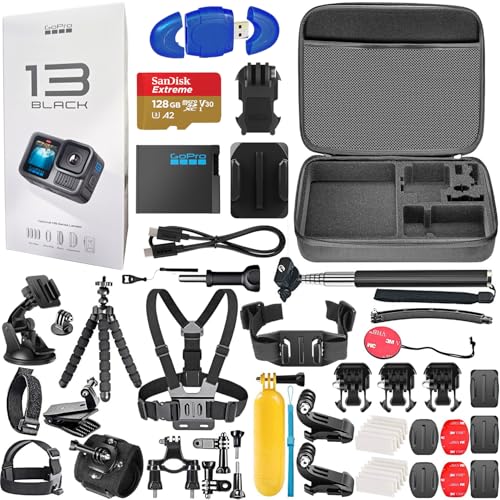
| GoPro HERO13 Black | Best for fast pans on the move | Stabilisation refined on helmets and handlebars keeps pans smooth at speeds no handheld rig survives, with fast readout and a lens ecosystem for every angle. |
| DJI Osmo Action 5 Pro | Best stabilised pan with pro colour | DJI’s stabilisation and colour science give pans a produced, gradeable finish — the action camera for filmmakers who cut pans into bigger edits. |
| Insta360 Ace Pro 2 | Best low-light fast pans | A larger sensor keeps fast pans clean at dusk, indoors and under lights, where smaller action cameras smear — with stabilisation to match. |
| OM SYSTEM OM-5 Mark II | Best for stills pans and burst sequences | Panning-aware stabilisation, fast bursts and a light telephoto system — the photographer’s pan, frozen one decisive frame at a time. |
| Canon EOS R10 | Best trackside system for fast pans | Canon’s tracking autofocus, fast bursts and affordable long lenses make the complete panning outfit for sports photographers on real budgets. |
| Sony RX100 VII | Best pocket camera for pans | Flagship-derived tracking and a useful zoom in a pocket body — the pan you can make from a stadium seat where long lenses are refused. |
How Did We Choose Cameras for Fast Panning Work?
We began with readout speed, the unglamorous foundation of the whole subject. A sensor that reads its frame slowly skews verticals during a swing and smears the very motion the pan exists to honour, so each pick’s readout behaviour — stacked sensors, fast scan designs, the action cameras’ rapid pipelines — was weighed before any other virtue. Cameras famous for beautiful stills and leisurely sensors were set aside without regret; this keyword is a promise about motion, and we intended to keep it.
The second filter was stabilisation intelligence. A pan is deliberate movement, and a naive stabiliser treats it as an error to be corrected, producing the juddering, rubber-banding footage every beginner recognises. We favoured systems with panning-aware modes — in-body systems that correct the vertical while permitting the horizontal swing, and action-camera stabilisation bred to distinguish the rider’s line from the terrain’s violence. Autofocus tracking under lateral motion was audited in the same pass, because a pan that loses its subject is merely scenery moving.
Finally we weighed swing ergonomics: weight, grip, finder lag and the ability to keep the subject framed through a long arc. The six survivors span gimballed smoothness, action-camera toughness and two system bodies built for the trackside — each the best answer to a named kind of fast pan, from the skate bowl to the grand prix fence.
A word about what this guide refused to forgive, since refusal is half of reviewing: cameras whose stabilisation could not be told about the pan. A system that fights its owner’s deliberate movement is not a neutral tool but an opponent, and no sensor quality compensates for an opponent inside the swing. Every survivor above either asks the question — which way are we moving on purpose — or was bred in environments where the answer is obvious. Judge any future camera by that question first, and this guide will have done its lasting work.
Which Six Cameras Pan Fast Without Falling Apart?
The GoPro and DJI action cameras lead for filmed pans, with stabilisation that treats violent motion as home territory. The Insta360 flagship brings the sharpest low-light panning in its class, the OM SYSTEM body is the stills panner’s instrument, the Canon is the trackside system for bursts through the swing, and the little Sony zooms and tracks from a pocket. Read by the motion you actually film.

GoPro HERO13 Black — Best for fast pans on the move
The HERO13’s relationship with fast pans is not a feature but a biography: this is the camera line that learned stabilisation while strapped to motocross helmets and surfboards, and a deliberate pan — even a fast one — is a gentle request compared to its education. Swing it across a skate bowl, a downhill run or a racing circuit and the footage stays composed, the horizon behaves, and the subject crosses the frame with the fluid inevitability that makes viewers feel speed in their stomachs. For filmed pans, it remains the benchmark the rest of this guide is measured against.
The supporting details serve the swing. Readout is quick enough that verticals stay vertical at honest pan speeds, the lens accessories let the shooter choose how wide the world bends, and the body can be mounted — on the chest, the helmet, the vehicle — so that the pan is performed by the athlete’s own motion, the smoothest gimbal biology provides. Voice control and quick capture matter here too: pans at events are reactive, and the camera that starts instantly gets the swing the others describe afterwards.
Its limits are the action camera’s constitution: a fixed lens that sets the framing terms, low light that is capable rather than miraculous, and batteries that pace a long day of filming. It will not shoot the stills burst the trackside photographer wants. But for the filmed fast pan — the genre’s centre of gravity — the HERO13 is the most proven instrument in this guide, and the one we would hand to a creator filming their first race, bowl or descent this weekend.
Film the same pass twice whenever the event allows — once at the stabilisation’s full strength for safety, once at a gentler setting for the footage that breathes — because pans, uniquely among shots, cannot be graded into smoothness later, and the choice between composed and alive is an editor’s gift you can only give at the fence. Riders and drivers understand the ritual instantly; it is the same reason they run a second lap. Build it into your event rhythm and your pans will have an editor’s options instead of a survivor’s gratitude.
- Class-leading electronic stabilisation
- Fast sensor readout for clean pans
- Lens accessories for varied fields of view
- Waterproof, mountable everywhere body
- Quick capture and voice control
Strengths
- Pans stay smooth at violent speeds
- Mounts turn the body’s motion into the shot
- Instant readiness for reactive swings
Trade-offs
- Fixed lens dictates framing
- Low light capable, not miraculous
- Batteries pace long filming days
Best for: action sports filmmakers, riders and event videographers who move.
Not suited for: stills photographers needing bursts through the pan.

DJI Osmo Action 5 Pro — Best stabilised pan with pro colour
Where the GoPro is the pan’s athlete, the Action 5 Pro is its cinematographer. The stabilisation is every bit as composed through fast swings — DJI’s systems were raised on gimbals and drones, machines whose whole existence is controlled motion — and the colour science is the difference editors notice: footage that sits inside a larger film, beside bigger cameras, without announcing its size. A pan across a harbour at dusk, a tracking swing along a coastal road, a bowl session cut into a travel film — this is the action camera whose pans belong in finished work.
The working virtues compound across a filming day: strong battery endurance for the events that run long, a sealed body for the weather that makes pans dramatic, and screens front and back that let a solo operator frame a swing without an assistant’s eyes. Subject tracking assists the reactive pan, holding the rider or the runner while the operator concentrates on the swing’s smoothness — the division of labour that separates the professional’s footage from the enthusiast’s, delivered in a body that fits a jacket.
Against it: the fixed lens’s terms, as with all its class, and low light that, while improved, still belongs to larger sensors. The ecosystem of mounts, though excellent, is a season younger than GoPro’s. For the filmmaker whose pans are chapters in edited films rather than clips in a feed — the travel documentarian, the sports filmmaker, the wedding shooter stealing motion B-roll — the Action 5 Pro is this guide’s most complete answer.
Its colour discipline pays best when the whole day is shot as one production: set the profile for the edit in the morning, resist the temptation to chase the light with settings at noon, and let the pans inherit the day’s consistent look. Editors receiving DJI pans that match the locked-off footage describe the experience as the action camera having grown up. For filmmakers, that grown-up quality — not any single specification — is the reason this body keeps displacing larger cameras from the motion chapters of serious edits.
- Gimbal-bred stabilisation system
- Colour science for graded edits
- Front and rear screens for solo framing
- Long battery endurance
- Sealed body for dramatic weather
Strengths
- Pans arrive with a produced finish
- Stabilisation composed at any speed
- Solo framing from either side
Trade-offs
- Fixed lens sets the terms
- Mount ecosystem younger than GoPro’s
- Low light trails larger sensors
Best for: filmmakers cutting pans into edited productions.
Not suited for: stills burst shooters and extreme low-light work.

Insta360 Ace Pro 2 — Best low-light fast pans
Fast pans fail first in poor light, because the swing’s motion blur and the sensor’s noise arrive together and multiply. The Ace Pro 2 was built for that multiplication: a larger sensor than its class usually carries, with low-light processing that keeps a dusk pan — the skatepark under floodlights, the indoor track, the evening criterium — clean where rivals have dissolved into porridge. For creators whose events happen after work and under lights, which is most events, that headroom is not a luxury but the difference between footage and apology.
The rest of the package respects the pan’s demands: stabilisation that holds the swing’s line, a flip screen for framing at the odd angles pans are filmed from, and colour that grades gracefully when the dusk footage joins a bigger edit. It mounts where its rivals mount and survives what they survive, while asking less forgiveness from the light — a trade any night-shift creator will accept before the first shoot is over.
Its ecosystem is younger than GoPro’s, so the exotic mount may need adapting, and the body is a touch larger on the smallest rigs. Battery discipline on the longest nights rewards a spare. Judged strictly on the fast pan in difficult light — the pan this guide’s readers will actually attempt most — the Ace Pro 2 leads the action class, and its row is written for the floodlit majority.
Under lights, expose for the pan rather than for the still: let the highlights of the floodlit track sit a touch hot if the subject’s tones demand it, because a pan’s audience reads the subject’s clarity first and the scenery’s manners second. The Ace Pro’s processing forgives that priority gracefully, holding the rider’s colours while the background streaks into light trails. Night creators who internalise that priority stop apologising for their venues and start featuring them — the floodlit pan becomes a signature instead of a compromise.
- Larger sensor for low-light pans
- Advanced low-light processing
- Flip screen for awkward angles
- Strong stabilisation for swings
- Colour that grades into bigger edits
Strengths
- Floodlit and dusk pans stay clean
- Framing screen suits reactive work
- Image quality flatters intercutting
Trade-offs
- Mount ecosystem still maturing
- Slightly larger body
- Spare battery wise on long nights
Best for: evening events, indoor tracks and floodlit action creators.
Not suited for: gram-counting micro-rig builders.

OM SYSTEM OM-5 Mark II — Best for stills pans and burst sequences
The stills pan is a different art from the filmed one — a deliberate slow shutter dragged across the action so the background streaks and the subject, tracked perfectly, stays sharp inside the blur — and the OM-5 Mark II is its finest instrument in this guide. Its stabilisation can be told to correct the vertical tremor while permitting the horizontal swing, which is precisely the assistance the technique needs and the opposite of what naive systems do. Add fast burst sequences and the photographer can fire through the swing, harvesting the one frame where geometry, expression and sharpness coincide.
The system’s lightness transforms the practice. Panning is an endurance sport for the arms — a long lens swung smoothly for an afternoon — and the Micro Four Thirds telephotos deliver serious reach at weights a full-frame kit cannot approach, on a sealed body that keeps working when the trackside weather turns. Motorsport at the fence, cycling at the corner, birds in flight across the marsh: the OM-5’s owners shoot all of it, all day, and come home with arms that still function.
Its compromises are the format’s low-light ceiling and a menu system that rewards the photographer who configures the panning mode before the event. The video it shoots is capable but not this guide’s reason for its row. For the stills panner — the photographer whose wall is hung with streaked backgrounds and frozen riders — the OM-5 Mark II is the most complete and most carryable answer we can give.
Configure the panning profile before the season and guard it like a pilot’s checklist: stabilisation in its panning behaviour, burst rate high, tracking sensitivity rehearsed, the lens’s limiter set for the fence’s distance. Then spend event days thinking only about position and timing, because the camera’s half of the partnership was arranged in the calm. Owners who keep that discipline describe a particular pleasure — the swing, the burst, the one frame — that no automatic mode has ever handed anyone, and it is available at this body’s price to anyone willing to prepare.
- Stabilisation with panning-aware behaviour
- Fast burst sequences for swing harvesting
- Light telephoto lenses with serious reach
- Weather-sealed compact body
- High-resolution modes for static work
Strengths
- Panning technique assisted, not fought
- Reach without the trackside backache
- Sealed for the weather drama happens in
Trade-offs
- Low-light ceiling of the smaller format
- Menus reward pre-event configuration
- Video is capable, not class-leading
Best for: motorsport, cycling and wildlife stills photographers who pan.
Not suited for: filmmakers whose pans are primarily video.

Canon EOS R10 — Best trackside system for fast pans
A fast pan in stills is a partnership between the swing and the autofocus, and the R10’s half of that partnership is superb: Canon’s subject detection finds the rider, the car or the athlete early in the swing and holds them through the clutter, the rivals and the fence posts, while fast bursts dissect the arc into frames. Paired with one of Canon’s affordable long RF zooms — stabilised, light, and priced for humans — it forms the most complete trackside panning outfit in this guide that a club photographer can actually buy this year.
The ergonomics serve the afternoon: a body light enough to swing for hours, controls that fall under the fingers without a look, and a viewfinder that keeps the subject visible through the burst so the swing can be corrected mid-arc rather than mourned afterwards. Panning is a rhythm skill, and rhythm needs an instrument that disappears; the R10 disappears at exactly the moments the fence-side photographer needs it to.
Its limits are buffer depth on the very longest bursts and a crop sensor’s low-light ceiling under floodlights — the professional’s territory, priced accordingly elsewhere. For the amateur and club ranks where most panning photography actually happens, those limits sit beyond the horizon of a season’s shooting. If your fast pans end as photographs on a clubhouse wall, start here and spend the savings on the lens and the tickets.
Spend the first month with it on unimportant speed: the evening traffic, the park’s cyclists, the dog at full commit, learning where Canon’s tracking lets go and how the buffer breathes through a long swing. That tuition, paid on subjects nobody paid you to photograph, is what the first real event will draw on without interest. Club photographers who skip it spend their first season blaming an excellent camera for an unrehearsed partnership; the ones who pay it become, quietly, the people whose pans the clubhouse wall is made of.
- APS-C sensor with reach for long lenses
- Subject-detection tracking autofocus
- Fast burst rates for swing sequences
- Light body for hours of swinging
- Affordable long RF zoom partners
Strengths
- Tracking holds subjects through clutter
- Complete outfit at a real-world price
- Finder supports mid-swing correction
Trade-offs
- Buffer depth trails professional bodies
- Floodlights tax the smaller sensor
- Weather sealing is modest
Best for: club and amateur sports photographers at the fence.
Not suited for: professionals filing night races for agencies.

Sony RX100 VII — Best pocket camera for pans
Many of the best pans are made from places cameras are barely welcome: the stadium seat with its lens restrictions, the pier, the school sports day where a professional rig would change the atmosphere. The RX100 VII pans from those places. Its zoom reaches the near action, its tracking autofocus — inherited from Sony’s flagship sports line — holds a runner or a rider with a tenacity absurd for its size, and its bursts fire through the swing while the finder stays live, so the pocket camera behaves, for the length of a pan, like a professional’s tool.
The technique it rewards is the seated swing: feet planted, torso rotating, the camera’s stabilisation smoothing the arc’s tremors while the tracking handles the subject. Its files, from a one-inch sensor, print and post respectably, and its discretion means the pan happens at events where the R10’s honest bulk would be negotiating with stewards. Everyday carry is the deeper argument — the pan you actually make is the one whose camera attended, and this one attends everywhere.
Reach and low light bound its ambitions, as with every pocket instrument: the far touchline stays far, and floodlit pans will ask more of its sensor than of the OM-5’s system. Battery spares belong in the other pocket on event days. Within its brief — the present, pocketable panner for the spectator’s real vantage points — it is unmatched in this guide, and it closes the list as the camera most likely to be holding your best pan a year from now, simply because it was there.
From a seat, brace the swing with the seat itself: elbows on knees, the torso’s rotation doing the work, the little camera’s tracking trusted to hold what your arc delivers. Its size invites a steadiness that big rigs at a fence never enjoy, and its discretion means the pan happens inside the crowd’s own experience of the event rather than behind a professional’s barrier. Some of the most alive pans in amateur sport are made exactly this way, by spectators whose camera was beneath notice and whose timing was not.
- Pocket body with 200mm-equivalent zoom
- Flagship-derived tracking autofocus
- Fast bursts with live finder view
- One-inch sensor for respectable files
- Tilting screen and pop-up finder
Strengths
- Pans from seats long lenses cannot enter
- Tracking far beyond its size class
- Attends every event by default
Trade-offs
- Reach suits near and middle action
- Floodlights stretch the small sensor
- Spare batteries on event days
Best for: spectators, travellers and parents panning from real seats.
Not suited for: fence-line professionals needing true telephoto reach.
How Do You Pan Smoothly, With Any Camera?
Build the swing from the feet up. Stand with feet apart and the body’s weight even, rotate from the hips rather than the arms, and let the camera travel through the subject’s position in one continuous arc that begins before the subject arrives and continues after it has passed — follow-through, borrowed from every sport that swings anything, is what separates the smooth pan from the series of corrections beginners produce. The camera should feel like it is being carried past the scene on a rail your torso provides.
Choose the shutter for the story the pan tells. For filmed pans and streaked stills alike, a moderate speed — fast enough to hold the tracked subject, slow enough to let the background declare the motion — is the classic recipe, and it must be set deliberately rather than inherited from the last photograph. Too fast and the pan freezes into a statue against a static world; too slow and the subject joins the background’s blur. Practise the band between those failures on passing traffic until your hands know where it lives on your camera.
Finally, pan in bursts and sequences, not in single heroic attempts. Professionals produce pans the way they produce everything: in disciplined volume, reviewed honestly. Fire through the swing, film the pass twice, and judge the results at full size for the three failure signatures — skewed verticals, a subject the tracking abandoned, a horizon the stabilisation fought. Each signature names its cure, and a month of such reviewing will improve your pans more than any purchase in this guide.
Why Does Rolling Shutter Bend Your Fast Pans, and What Fixes It?
The bend is a reading problem. Most sensors expose and read their frames line by line, top to bottom, over a small but real interval — and during a fast pan the world moves between the first line’s moment and the last, so vertical objects are recorded leaning, wobbling or, in the worst footage, rippling like flags. The faster the pan and the slower the readout, the drunker the architecture. Every pick in this guide was chosen partly for readout behaviour that keeps the lean beneath notice at honest working speeds.
The cures are layered. Equipment first: stacked and fast-reading sensors shrink the interval itself, which is why the action cameras and modern bodies above behave so much better than their ancestors. Technique second: pan at the slowest speed the shot allows — the smooth, committed swing reads as faster on screen than the frantic one, while bending less — and let the subject’s own motion supply the sensation of speed. Software third: many editors offer rolling-shutter repair, which rescues marginal footage and should be treated as insurance rather than as a plan.
Know also what does not cause it, because misdiagnosis wastes money: the bend is not a stabilisation failure, not a lens defect and not a frame-rate problem, and none of those budgets will fix it. If your pans lean, the answer lives in readout speed and swing discipline — the two currencies this guide has been spending from its first paragraph. Buy and practise accordingly, and the lamp posts of the world will stand straight again.
How Should You Set Stabilisation and Autofocus for a Pan?
Tell the stabilisation what you are doing. Where a panning mode exists — the OM SYSTEM’s behaviour, the system bodies’ lens modes — use it: the camera then corrects the vertical tremor and the bob while permitting the horizontal travel, instead of fighting the swing into rubber. Where no mode exists, as on the action cameras, trust systems bred for motion and avoid stacking additional digital stabilisation in the edit on top of an already stabilised pan; double correction is a common cause of the swimming, seasick footage beginners blame on their cameras.
Autofocus wants the tracking configuration, not the portrait one: wide-area subject detection for the swing’s start, sensitivity set sticky enough to forgive the fence posts and rivals crossing the line, and — on the bodies that allow it — the focus limiter on long lenses set to exclude the near clutter that steals focus mid-pan. Set these before the event, in the calm, because the pan itself allows no menu time whatsoever; the swing is a two-second exam for which all revision happens in advance.
Rehearse the exact combination on unimportant motion — traffic, trains, gulls, the dog — until the settings are a single remembered profile rather than a list. Then save that profile, name it for the venue if the camera allows, and let event day be purely about position and timing. The professional’s pans look spontaneous because everything except the spontaneity was arranged beforehand, and the arrangement is a skill this guide’s readers can copy tonight for free.
What Separates a Filmed Pan From a Photographed One?
Intent, mostly. The filmed pan is a continuous experience whose quality is smoothness — the audience rides the swing and judges its manners across seconds. The photographed pan is an extraction: one frame harvested from the swing, judged on the subject’s sharpness against the background’s streak, with the swing itself merely the harvesting machine. The same body mechanics serve both, which is why this guide mixes the tribes, but the settings diverge — the filmmaker guards shutter conventions for natural motion blur, while the stills photographer hunts the precise slow speed where blur and sharpness divide.
Each tribe should steal the other’s discipline. Filmmakers gain from the stills panner’s burst mentality — shoot the pass again, immediately, while the light and the athlete allow — because a filmed pan cannot be harvested later from a single flawed take. Stills photographers gain from the filmmaker’s follow-through and rehearsal, treating the whole arc as a performed movement rather than a reaction. The cameras above were chosen to serve both mentalities, several of them in the same afternoon.
The audience’s verdict differs too, and knowing it sharpens the work. A filmed pan is forgiven almost anything except judder; a photographed pan is forgiven almost anything except a soft subject. Practise toward your own verdict — smoothness for the film, the frozen rider for the still — and let the other tribe’s standard be a rumour. That focus, more than any sensor, is what the walls and the festivals reward.
Which Subjects Teach Panning Fastest?
Traffic is the free university: endless, varied, unrepeatable and utterly indifferent to your failures. An hour at a corner with descending shutter speeds teaches the blur-sharpness band for vehicles; a footbridge over a motorway teaches the long, committed swing; a roundabout teaches the accelerating subject that exposes every lazy habit. Graduates of the traffic hour arrive at their first race or match with the motor skill already installed, which is why every professional’s advice in this genre begins with the same unglamorous sentence: practise on cars.
Birds are the postgraduate school — faster, smaller, less predictable, and set against the clutter that tests tracking honesty — while cyclists and runners are the friendly middle term, quick enough to demand the technique and kind enough to repeat the pass. Build the curriculum in that order and the learning compounds; attempt the birds first and the lesson is mostly humility, which is valuable but slow. The cameras in this guide span the whole curriculum, from the pocket Sony at the corner to the OM SYSTEM at the marsh.
Whatever the subject, review at full size and keep a private league table of your own keeper rates per subject and speed. Panning improves in percentages that feel invisible week to week and unmistakable across a season, and the table is how you prove the season to yourself on the flat days. The swing is a craft; crafts respond to measurement, patience and volume — in that order, and with no exceptions this guide has ever encountered.
How Do You Choose a Position for the Pan Before the Event?
Position is the pan’s silent half, chosen before the subject arrives and rarely forgiven afterwards. The ideal spot puts the subject’s fastest moment at the centre of your swing — not at its desperate ends — with the background far enough behind the subject to streak cleanly and the light falling across the action rather than into the lens. Walk the venue’s options during practice or setup and test-swing each: the position whose arc feels boringly comfortable at rehearsal is the one whose pans will look inspired at the event.
Distance is a trade the position must settle honestly. Closer means a faster, more violent swing and a more dramatic streak, at the price of tracking difficulty and missed frames; further means a calmer arc, smaller subjects and more cropping. The cameras in this guide divide that trade by tribe — the action cameras thrive close and violent, the systems reward the measured distance their lenses were bought for, the pocket Sony forgives the seat you were given. Know which trade your camera prefers before the day chooses for you.
Finally, plan the second position before the first one fails, because events move: the light turns, the crowd thickens, the action migrates to the far corner. The panner with a rehearsed alternative relocates like a professional changing lenses; the panner without one relocates like a spectator changing seats, and the pans record the difference. Two positions, both swung in rehearsal, are the smallest unit of professional preparation this genre recognises.
How Does the Pan Change at Night and Indoors?
Poor light rewrites the pan’s arithmetic. The moderate shutter that streaks a background at noon becomes, under floodlights, a negotiation between motion blur and noise, and the swing itself must slow down or accept a brighter, harsher rendering of speed. This is the Ace Pro 2’s home argument and the reason the system cameras’ larger apertures earn their keep after dark: the pan in poor light is won by the sensor and the lens before the swing begins, and lost by equipment that needed noon to behave.
Artificial light adds its own traps — flicker that bands across frames at certain shutter speeds, mixed colour temperatures that streak into rainbows, and backgrounds whose brightness overwhelms the subject the tracking is holding. Test the exact pan, at the exact speed, during the warm-up or the rehearsal laps, and read the result at full size rather than trusting the small screen’s optimism. Night panning forgives preparation and punishes assumption with a consistency that borders on the personal.
When the light truly refuses, change the photograph rather than fighting for the usual one: silhouette the subject against the brightest background, let the streak become abstract, or move the pan’s ambition from the whole subject to a detail — the wheel, the hand, the blade — whose arc your equipment can still honour. The professionals’ night pans look inevitable because they chose the version of the shot the light was offering. That choosing, practised across a season of evenings, is the final skill this guide can hand you.
How Do the Six Compare for Fast Pans?
Compare by output: the GoPro and DJI for filmed pans at speed, the Insta360 for filmed pans in poor light, the OM SYSTEM and Canon for photographed pans with bursts, and the Sony for pans from a pocket and a seat. The swing is the same; the harvest differs.
| Pick | Badge | At a glance |
|---|---|---|
| GoPro HERO13 Black | Best for fast pans on the move | Motion-bred stabilisation; pans at speeds rigs cannot survive. |
| DJI Osmo Action 5 Pro | Best stabilised pan with pro colour | Produced pans; stabilisation plus colour that grades into films. |
| Insta360 Ace Pro 2 | Best low-light fast pans | Dusk panner; larger sensor keeps swings clean in poor light. |
| OM SYSTEM OM-5 Mark II | Best for stills pans and burst sequences | Stills panner; stabilisation that helps the swing, bursts that dissect it. |
| Canon EOS R10 | Best trackside system for fast pans | Trackside system; tracking, bursts and long lenses at sane prices. |
| Sony RX100 VII | Best pocket camera for pans | Pocket panner; tracking and zoom from a stadium seat. |
What Mistakes Ruin Most Fast Pans?
Panning from the arms alone is the founding error: a short, jerky arc that no stabilisation can civilise, ending the moment the subject does. The hip-swung, follow-through pan of the technique section feels exaggerated for exactly one practice session, after which it feels like the only way a camera has ever moved. Every pick in this guide assumes that swing; none can substitute for it, and the gap between a beginner’s and a professional’s footage is more often this paragraph than any equipment in the list.
The second mistake is fighting the stabilisation — leaving full correction engaged for deliberate pans, or stacking edit stabilisation onto stabilised footage until the frame swims. Panning-aware modes and a light editorial touch exist precisely because the pan is intended motion; a system that cannot tell intention from accident must be told, by mode or by restraint. Set it once, correctly, per the settings section, and let the swing be the only movement the software has to respect.
The third mistake is practising only at the event. Pans are a motor skill with a learning curve measured in swings, and the curve does not care that the subject is now a final, a race or a once-a-year migration. The traffic, the gulls and the dog are the unpaid rehearsal faculty of this entire genre; photographers who use them arrive at the event with the skill already installed, and their keepers-per-swing ratio shows it before the first hour is out.
A fourth mistake is choosing the pan’s position for the photograph you hope for rather than the swing you can perform: the dramatic close spot whose arc your arms cannot actually complete smoothly, the heroic low angle whose background is a fence. Position for the swing first and the drama second — a smooth pan from a sensible place beats a ragged one from a brilliant place in every review, every edit and every memory the footage creates.
And do not review your pans only for sharpness. Judge the arc’s manners — where it hurried, where it settled, where the follow-through died — because the pan is a performance whose faults are choreographic before they are photographic. A notebook that records the swing’s behaviour, event by event, improves the performance faster than any frame-by-frame pixel audit ever written.
Final Recommendation
For filmed pans, take the GoPro HERO13 Black for proven violence-proof smoothness or the DJI Osmo Action 5 Pro when the pans must grade into a finished film — and the Insta360 Ace Pro 2 when the pans happen under lights. For photographed pans, the OM SYSTEM OM-5 Mark II is the technician’s instrument and the Canon EOS R10 the complete club outfit, with the Sony RX100 VII panning from the seats the others cannot enter.
Whichever you swing, build the movement from the hips, set the stabilisation to help rather than argue, and rehearse on traffic before the day that matters. The fast pan is photography’s most honest motion: it cannot be faked in editing, only performed in the moment — and with any of these six performing beside you, the performance is yours to give.
Walk your position before the event, swing it empty twice, and let the first real pan of the day be your third. That small superstition, kept faithfully, is worth more than the difference between any two cameras in this guide.
Begin the three hundred this week, on traffic, without witnesses or consequences. The event that matters is coming whether the skill is installed or not; let it find the skill waiting, hips loose and camera ready.
The notebook takes two minutes at the fence and pays out for a career. Keep it, and the pans will keep their promises.
Promises kept at speed, in streaked colour, with the subject sharp at the centre of the storm — that is the whole genre, and it is yours for the swinging.
Swing first, judge later, and let the background do the cheering.
The cheering, streaked and joyful, is how you will know the pan worked.
Trust the arc, finish the swing, and check the keeper at home.
Home is where pans become photographs, and photographs become the standards of the next season ahead.
Frequently Asked Questions
Why do my pans come out blurry even with stabilisation on?
Usually because the stabilisation is correcting the wrong thing or the shutter is serving the wrong master. Full correction modes fight a deliberate pan, producing judder that reads as blur; switch to the panning-aware mode where one exists. Then check the shutter: a pan needs a deliberate middle speed — fast enough for the tracked subject, slow enough for the background’s streak — and automatic exposure in mixed light often chooses neither. Set the speed yourself for the swing, track smoothly from the hips, and review which of the two failures your frames actually show.
What shutter speed is right for a panning photograph?
It depends on the subject’s speed and your distance, which is why professionals bracket the swing: a cyclist across the street, a racing car at the fence and a bird overhead each want a different band, slower for nearer and slower subjects, faster as either increases. Start slower than instinct suggests — the streaked background is the point — fire bursts through several passes at descending speeds, and keep the slowest speed at which the subject still holds. That personal number, learned per subject, is worth more than any table.
Do action cameras really pan better than big cameras?
For filmed pans at speed, their stabilisation — bred on helmets, bars and boards — is genuinely superior to most handheld rigs, and their readout keeps verticals honest. Big cameras answer with lens choice, sensor quality in low light, and the stills burst the action class cannot match. The honest summary is this guide’s structure: filmed pans belong to the action cameras until the light or the production demands more; photographed pans belong to the systems. Choose by the harvest, not by tribal loyalty.
How do I keep the subject in frame through a fast pan?
Start the swing before the subject arrives, keep both eyes’ worth of awareness — the finder eye on the subject, the brain on the arc — and follow through past the subject’s exit rather than stopping on it, which is where most frames are lost. A finder that stays live during bursts, as on the Canon and Sony here, lets you correct mid-swing. Practise the arc empty a few times at a new venue; the swing is choreography, and choreography is rehearsed, not improvised.
Is a gimbal better than in-camera stabilisation for pans?
A gimbal is smoother for deliberate cinematic pans at walking pace and gives the operator precise control of the arc’s start and settle; in-camera and in-body systems win for reactive, fast, long-lens and mounted pans where a gimbal cannot go or cannot keep up. Many professionals own both and choose per shot. For the fast pans of this guide’s title — the swing that follows speed — the stabilisation in these six cameras is the more relevant tool, with the gimbal reserved for the slow, composed cousin of the same movement.
Can I fix a bad pan in editing?
Partly, and the honest word is partly. Cropping can re-centre, stabilisation can calm a tremor, rolling-shutter repair can straighten a lean, and a too-sharp pan can be given motion blur’s suggestion. What editing cannot supply is the committed swing itself — the smooth arc and the tracked subject — because those are performances, not properties. Treat the edit as the rescue service it is, insure yourself with rehearsal and bursts, and your pans will need rescuing at the rate professionals accept: rarely, and never for the same reason twice.
Related Guides
Take the swing into neighbouring genres with our companion guides: best action cameras for sports best cameras for motorsport best cameras for birds in flight


