ilcastellomenu.com is reader-supported. When you buy through links on our site, we may earn an affiliate commission.
Where to Buy
Every camera below is a current model in our verified pool with a proper product link, spanning Canon, Nikon, OM SYSTEM, Sony and GoPro. They were chosen for one shared talent — keeping up with moving subjects — at prices and sizes a beginner sport photographer can actually start with, from the sideline of a school pitch to the fence of a wildlife reserve.
The best cameras for a beginner sport photographer are decided by a single heartbreaking category of photograph: the almost. The winger mid-stride, a fraction soft. The dog at the exact apex of the catch, leaving the frame. The bird, theoretically present. Sports photography is a keeper-rate business, and a beginner’s camera earns its price by converting almosts into keepers — through autofocus that tracks instead of hunting, bursts that bracket the decisive moment, and a system whose telephoto lenses a beginner can afford before the season ends.
This guide is the action sibling of our general beginner camera page. That page teaches photography broadly; this one assumes your subjects move and your education is the sideline. The six picks divide by sporting life. Canon’s R10 is the beginner action camera proper — speed borrowed from professional bodies at a student’s price. The R6 Mark II is its full-frame graduation. OM SYSTEM’s OM-5 brings a time-machine feature that captures moments before you press the shutter. Nikon’s Z50 II is the keen learner’s all-rounder with real tracking. Sony’s RX100 VII hides sports speed in a pocket compact. And the GoPro films the sport from inside it, for coaching and reliving.
We will match each to its sport and its beginner, then teach the sideline curriculum the cameras enable: tracking modes, burst discipline, telephoto economics, and the positioning that matters more than any of them.
Key Takeaways
- Sports photography is a keeper-rate business: autofocus tracking and burst speed matter more than resolution or colour.
- Reach is the real budget — plan the camera and its telephoto lens as one purchase, because sport happens far away.
- Pre-capture features change beginner luck into beginner skill by recording the moment before your reflexes fire.
- Position beats equipment: the beginner at the right corner with a modest camera out-shoots the flagship at the wrong end.
- The best beginner sports camera is the one whose system you can afford to grow — sport appetites escalate predictably.
In this guide
Quick Picks
| Pick | Badge | Why it is here |
|---|---|---|
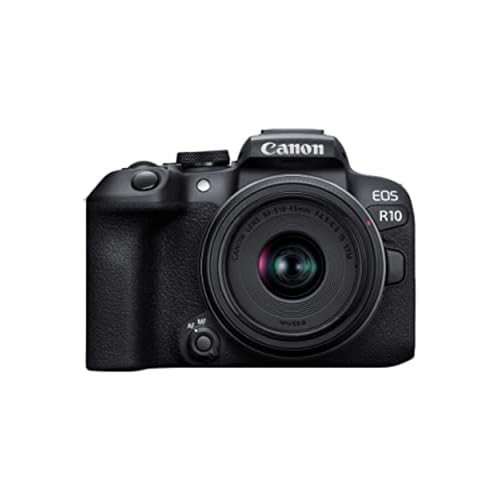
| Canon EOS R10 | Best beginner sports camera | Professional-flavoured tracking and fast bursts in a body and budget a beginner can start with today. |
| Canon EOS R6 Mark II | Best step-up for serious sport | Full-frame speed, low-light grace and tracking that follows athletes like a coach’s eye. |
| OM SYSTEM OM-5 Mark II | Best for wildlife and the unrepeatable | Pre-capture buffering records the strike, the take-off, the moment before you reacted. |
| Nikon Z50 II | Best keen-learner all-rounder | Real subject tracking and a photographer’s layout for the beginner whose sport shares life with everything else. |
| Sony RX100 VII | Best pocket sports camera | Startling burst speed and tracking in a jacket pocket — the school-sports camera nobody notices you carrying. |
| GoPro HERO13 Black | Best for filming your own sport | Mounts on helmets, bikes and boards to record the action from inside, for coaching and reliving. |
How Did We Choose These Cameras for a Beginner Sport Photographer?
We started where sport starts: the autofocus system’s ability to acquire a moving subject and stay with it through clutter — other players, fences, branches, the referee’s catastrophic timing. Modern subject-detection tracking is the single largest keeper-rate gift ever given to beginners, and we weighted it above every other specification, testing our judgement against the sports beginners actually shoot: school and club games, dogs, garden and reserve wildlife, motorsport at public distances, and the family athletics of childhood.
Second, burst behaviour as a system, not a headline: how fast the camera shoots, how long it sustains it before the buffer fills, and how quickly it recovers — because the beginner’s decisive moment usually arrives inside a sequence, and a camera that stalls at the peak of the action is a spectator with a lens. Third, the telephoto economics of each system, because sport is photographed from far away and the lens is half the purchase: we favoured systems where a beginner’s long zoom is affordable, light enough to hand-hold for a match, and good enough that the camera’s tracking is not wasted on soft glass.
Finally, the beginner’s whole life: these cameras also photograph families, holidays and everything else, and we kept honest all-rounders in the list beside the specialists — plus one camera, the GoPro, that serves the beginner who is in the sport rather than beside it.

Canon EOS R10 — Best beginner sports camera
The R10 is what happens when a professional sports lineage is priced for a beginner. Its autofocus descends from Canon’s flagship action bodies — subject detection that finds people, animals and vehicles and holds them through the chaos of a game — and its burst shooting is fast enough to give a beginner the sequence from which the decisive frame is chosen. For the parent on the school sideline, the dog photographer, the club-match beginner, this combination is the keeper-rate revolution in person: photographs that were luck on lesser cameras become routine here.
The body teaches action properly. A deep grip for long lenses and long afternoons, a joystick-era control layout your thumb learns by the third match, and Canon’s friendly menus and colour wrapped around the speed. Its crop sensor is secretly a sports feature: it multiplies every lens’s reach, so the affordable telephoto zoom that is the beginner’s second purchase frames distant action like glass costing far more — the system’s economics and the sensor’s geometry conspiring in the beginner’s favour.
The limits mark the graduation line rather than any failure. There is no in-body stabilisation, so long lenses lean on their own stabilisation and the photographer’s stance; the buffer, while generous for the class, will fill during the longest professional-length bursts; and low-light sport — floodlit winter evenings — will eventually argue for the full-frame sibling below. A beginner can shoot happily for seasons before any of those sentences applies, and when one does, the lenses and habits transfer directly up Canon’s range.
Start with the kit, add the telephoto zoom before the season’s big match, and learn the tracking modes at the dog park where the stakes are joy rather than results. That is the beginner sports education at its most efficient.
If one camera on this page deserves the unqualified headline, it is this one: the R10 is the beginner sport photographer’s default answer.
- Format: APS-C mirrorless, interchangeable lenses
- Autofocus: subject detection for people, animals, vehicles
- Bursts: fast continuous shooting with a usable buffer
- Reach: crop sensor multiplies telephoto lenses
- Growth: Canon RF system including affordable long zooms
Strengths
- Flagship-flavoured tracking at a beginner price
- Crop reach makes affordable telephotos genuinely long
- Handling that teaches action technique properly
Trade-offs
- No in-body stabilisation
- Buffer fills on the longest bursts
- Floodlit sport will eventually argue for full-frame
Best for: a beginner shooting school sport, dogs, club matches and wildlife.
Not suited for: a professional shooting long floodlit fixtures nightly.

Canon EOS R6 Mark II — Best step-up for serious sport
The R6 Mark II is the answer when a beginner discovers, mid-season, that they are not casual. Its full-frame sensor keeps shooting beautifully where the crop bodies begin to struggle — the floodlit second half, the indoor court, the dusk finish — and its autofocus is Canon’s mature best: eyes found and held through helmets, nets and weather, with a calm that lets the photographer think about composition while the machinery handles the miracle. Its bursts are deep and fast, its buffer generous, its stabilisation a partner for long lenses at slow speeds.
For the beginner sport photographer with a multi-year horizon, this is the buy-once argument in the line-up. The RF system’s professional telephotos — the glass on professional sidelines — mount directly, the body’s sealing survives the touchline in November, and the same camera photographs the family, the holiday and the portrait with the colour Canon is loved for. It is not a beginner camera that apologises; it is a professional tool whose price a committed beginner can justify as the last body they buy for years.
The honest costs are money and mass. The body costs what the R10 plus its telephoto does, and full-frame telephoto glass is priced and weighted accordingly — the sideline kit becomes a deliberate carry rather than a casual one. Beginners unsure of their commitment should start with the R10 and let a season of keeper rates make the case for this upgrade, because the R6 Mark II rewards certainty and punishes whim with depreciation.
But for the beginner who knows — the one already volunteering to photograph every match, already reading the light like weather — this is the camera that removes the equipment question from their development for half a decade.
Its stills colour closes the all-round argument: the same body that tracks a winger at dusk photographs the team’s portrait in the clubhouse with the skin tones sponsors print. Beginner sport photographers are usually a club’s entire media department, and a camera that covers the match, the portraits and the presentation evening without a personality change is worth its premium in avoided second bodies.
Buy it as a foundation: body, the longest lens you can carry all afternoon, and nothing else until the photographs ask.
- Format: full-frame mirrorless, interchangeable lenses
- Autofocus: Canon’s mature subject and eye tracking
- Low light: full-frame grace for floodlights and halls
- Stabilisation: in-body, partners long lenses
- Growth: Canon’s professional RF telephoto line
Strengths
- Keeps its keeper rate when the light dies
- Professional glass mounts directly
- One body for sport and everything else, superbly
Trade-offs
- Costs the R10 plus its lens, combined
- Full-frame telephoto kits are heavy and pricey
- Overkill for the genuinely casual beginner
Best for: a committed beginner building a multi-year sports kit.
Not suited for: a sampler unsure sport is their genre.

OM SYSTEM OM-5 Mark II — Best for wildlife and the unrepeatable
The OM-5 Mark II carries the closest thing photography has to a time machine. Its Pro Capture mode buffers frames continuously while you half-press the shutter, and saves the moments from before you fully pressed — the kingfisher’s dive, the sprinter’s break, the dog’s exact instant of catch — that human reflexes, however trained, arrive too late for. For a beginner, whose reflexes are by definition untrained, this feature converts the sport’s cruelest category, the unrepeatable instant, into the most forgiving one. It is difficult to overstate what that does for a beginner’s confidence and portfolio.
The system around it is the wildlife beginner’s friend. Micro Four Thirds lenses are small and light for their reach — a long telephoto you can hand-hold all day at a reserve, where full-frame equivalents become a tripod sentence — and the crop multiplies reach again, so distant birds fill frames on a student’s budget and a hiker’s back. Weather sealing shrugs off the conditions wildlife keeps, and the whole kit travels like the backpacking system it also is.
Battery and card rhythm on a wildlife day is its own small craft: pre-capture and bursts eat both, and the OM-5’s modest appetite is an advantage only if the spares are in the bag rather than the car. Field photographers develop the dawn ritual — charged batteries, empty cards, lens cleaned in the kitchen’s light rather than the estuary’s wind — and beginners who adopt the ritual early lose fewer mornings to logistics.
Its autofocus tracking, while capable, plays a respectful second to Canon’s and Sony’s best for chaotic team sport; its smaller sensor asks more of technique in deep darkness; and its menus reward the owner who configures at home. None of that touches its constituency: the beginner whose sport is wildlife, field sports in daylight, or any subject whose decisive moment is faster than a finger.
Pair it with the system’s compact long zoom and you own the most portable serious wildlife kit in this guide — the one that actually gets carried to the estuary at dawn, which is where its photographs come from.
Choose it if your sport has feathers, fur or a start gun. The time machine is real, and beginners deserve it most.
- Format: Micro Four Thirds, interchangeable lenses
- Signature feature: Pro Capture pre-shutter buffering
- Reach: small, light, long telephoto lenses
- Sealing: weather-sealed for field conditions
- Growth: OM SYSTEM lenses with hiker-friendly sizes
Strengths
- Captures the moment before you reacted
- Wildlife reach at carry-all-day weights
- Sealed for the weather wildlife keeps
Trade-offs
- Tracking a step behind Canon and Sony for team chaos
- Small sensor works harder in darkness
- Menus reward home configuration
Best for: a wildlife and field-sports beginner who hikes to their subjects.
Not suited for: a floodlit team-sports specialist.

Nikon Z50 II — Best keen-learner all-rounder
Not every beginner sport photographer is only a sport photographer, and the Z50 II is the pick for the one whose action shares a life with portraits, travel and everything else. Its subject-detection autofocus is genuinely modern — people, animals and birds found and followed with the calm a beginner needs on the sideline — and it lives in a body with a proper photographer’s layout: twin dials, a bright viewfinder, a grip that takes a telephoto seriously. It teaches sport as part of photography rather than as a separate gadget’s trick.
Nikon’s colour and files give the all-rounder’s other lives their due, and the Z system’s telephoto path is well lit: affordable long zooms that balance on this body, and a professional range above that the lenses grow toward. The camera’s video is strong enough for the beginner who films the match as well as photographing it — increasingly the same volunteer — and its build shrugs off the knocks of bags and touchlines.
Its viewfinder deserves a sideline-specific compliment: at outdoor fixtures in hard sun, composing through an eyepiece rather than squinting at a screen is the difference between tracking a subject and guessing at one, and beginners consistently underrate it until their first noon match in July. The Z50 II’s finder is bright, central and honest — a small feature that behaves like a large one, weekly.
Against the R10 it trades a degree of outright action specialisation for a degree of all-round polish; against the R6 Mark II it trades low-light and depth for price and portability. Those are honest trades, and the beginner who makes them knowingly gets a camera with no weak subject — the one to buy when sport is the loudest of several loves rather than the only one.
Its burst and buffer are club-level rather than professional, which matches its constituency precisely: the school match, the county show, the dog at full stretch, the holiday safari. Within those borders it will not be the reason a photograph is missed.
Choose it if your camera must be as good at the birthday as at the match — and nearly as specialised at the match as the specialists.
- Format: APS-C mirrorless, interchangeable lenses
- Autofocus: subject detection including animals and birds
- Handling: twin dials and a bright viewfinder
- Video: strong hybrid ability for filming matches
- Growth: Nikon Z system with balanced telephotos
Strengths
- Real tracking in a true all-round body
- Photographer’s layout teaches the whole craft
- Hybrid stills and video for the volunteer documenter
Trade-offs
- Burst depth is club class, not professional
- A step behind the R10 as a pure action tool
- Crop sensor ceiling in the darkest halls
Best for: a keen beginner whose sport is one of several subjects.
Not suited for: a specialist who shoots only action, all the time.

Sony RX100 VII — Best pocket sports camera
The RX100 VII is the sports camera that hides. Inside a jacket-pocket compact with a one-inch sensor sits burst shooting and subject tracking of a seriousness that embarrasses larger cameras — blackout-free bursts at speeds that turn a gymnast’s tumble or a dog’s leap into a choose-your-frame sequence, and autofocus that holds a moving subject with Sony’s characteristic tenacity. For the beginner whose sport is spectated from the stands — school events, family athletics, the airshow, the regatta — it is the camera that is allowed everywhere and noticed nowhere.
Its zoom is the spectator’s friend, running from wide establishing shots to a genuine telephoto for the far end of the pitch, and the pop-up viewfinder rescues composition in the glare of outdoor fixtures. The photographs are bright, sharp and shareable in the moment — the social currency of family sport — and the whole package asks nothing of its owner but a pocket and two spare batteries.
The pocket format sets the borders honestly. The sensor’s low-light ceiling arrives earlier than the system cameras’, so floodlit sport is its struggle; the small body and small controls are not a professional’s all-day instruments; and there is no lens to upgrade when appetite grows — the camera is the kit, complete and final. Within daylight and distance-from-the-stands, though, its keeper rate per gram carried is the best in this guide.
It is also the perfect second sports camera: the one in the pocket while the system camera works the near touchline, catching the crowd, the bench, the celebration the big lens was too long to see.
A spectator’s etiquette note that doubles as craft: from the stands, your camera is among other people’s memories, so keep it small, keep it quiet — this camera’s discreet profile is a social feature — and never let a burst’s chatter become the soundtrack of someone else’s child’s moment. The RX100 VII’s manners are part of why it belongs at school sport at all.
Choose it if your sport is watched from the crowd and your camera must be invisible until the moment it is brilliant.
- Format: pocket compact, one-inch sensor
- Bursts: very fast, blackout-free sequences
- Autofocus: tenacious subject tracking
- Lens: wide-to-telephoto zoom for the stands
- Growth: none — the camera is the complete kit
Strengths
- Professional-flavoured speed in a pocket
- Real telephoto reach for distant action
- Pop-up viewfinder for glare at outdoor fixtures
Trade-offs
- Low-light sport is beyond its comfort
- Small controls and battery for long fixtures
- No lens path when appetite grows
Best for: a spectating beginner at school and family sport.
Not suited for: a participant-photographer needing a system to grow.

GoPro HERO13 Black — Best for filming your own sport
The GoPro serves the beginner sport photographer who is in the photograph. Mounted on a helmet, a chest harness, a bike or a board, it records the action from the athlete’s own viewpoint — footage that serves two masters no sideline camera can: coaching, because a rider or skier can review their own lines and technique frame by frame; and reliving, because the first-person film of a descent or a wave is the closest thing to being there twice. Its stabilisation turns violent motion into watchable flow, and its waterproof toughness treats the sport’s weather and water as locations rather than hazards.
For coaching specifically, its virtues compound: the footage is stable enough to analyse technique rather than camera shake, the slow-motion modes dissect a movement into its coaching points, and the files land in the phone ecosystem where athletes actually review them, on the bus, that evening — not in a folder awaiting an edit that a training schedule never permits. A coaching tool that is used beats an analytical tool that is admired.
As a stills camera it is an honest opportunist: perfectly capable frames from its wide view in good light, ideal for the summit selfie and the mid-ride grin, and not the instrument for the framed action portrait — that is the other five picks’ profession. Its beginner virtues are operational: it is tiny, nearly indestructible, simple to run with gloves and voice control, and its batteries swap in seconds between runs. The footage’s slow-motion options are a coaching instrument in themselves, letting a beginner athlete study a golf swing, a stroke or a landing at the speed understanding requires.
The ecosystem of mounts is its lens system: chest for the athlete’s hands-and-terrain view, helmet for the true eye-line, pole and board mounts for the third-person magic. A beginner builds a small mount kit the way a system photographer builds a lens kit, and for the same reason — each mount is a new grammar for the same sport.
Pair it with any sideline pick here and a beginner owns the sport from both sides of the lens. Alone, it is the pick when the story is yours and the camera must survive being inside it.
Choose it if you are the athlete. The best beginner sports footage of your own performance will come from this little box, not from any camera on the fence.
- Format: action camera, ultra-wide fixed lens
- Mounts: helmet, chest, bike, board and more
- Stabilisation: advanced smoothing for violent motion
- Protection: waterproof without a housing
- Role: first-person recording for coaching and reliving
Strengths
- Records your own sport from inside it
- Slow motion turns footage into a coach
- Nearly indestructible and glove-simple
Trade-offs
- Stills are opportunistic, not crafted
- No zoom — the action must come to it
- Wide view distorts for formal portraits
Best for: a beginner athlete filming their own performance.
Not suited for: a sideline photographer of other people’s sport.
How Do the Six Sports Cameras Compare Side by Side?
| Pick | Key specification | Standout trait | Watch out for |
|---|---|---|---|
| Canon EOS R10 | APS-C system | Tracking and bursts per pound | No in-body stabilisation |
| Canon EOS R6 Mark II | Full-frame system | Low-light keeper rate | Price and telephoto weight |
| OM SYSTEM OM-5 Mark II | Micro Four Thirds system | Pre-capture time machine | Tracking second for team chaos |
| Nikon Z50 II | APS-C system | All-round polish with tracking | Club-class buffer |
| Sony RX100 VII | Pocket compact | Speed per gram | Low-light ceiling |
| GoPro HERO13 Black | Action camera | First-person coaching film | Not a sideline stills camera |
The table divides by where the photographer stands. Five picks work the sideline, the stands or the reserve fence; the GoPro works from inside the action, and the two perspectives are complements more often than rivals. Among the sideline five, the divide is specialisation against universality: the R10 and OM-5 are action instruments first, the Z50 II and RX100 VII are everyday cameras with real action talent, and the R6 Mark II is the professional who does everything at a professional’s price.
The second reading is by what runs out first. On the R10, the buffer. On the RX100 VII, the light. On the OM-5, nothing much — its constraint is your presence at the right estuary. On the Z50 II, only professional ambitions. On the R6 Mark II, the budget. A beginner should choose the constraint their sport can live with, because every camera here has one and pretending otherwise is how disappointment is purchased.
How Do You Set Up a Camera for Sport? The Beginner’s Sideline Settings
Begin with the mode the professionals actually use: shutter priority or full manual with auto ISO, because sport is a shutter-speed discipline. Set the shutter for the subject’s physics — fast for ball sports and birds, slower for the deliberate pan of a cyclist — and let the camera’s metering handle the rest while you handle position and timing. Continuous autofocus with subject detection on, burst drive at its fastest sensible setting, and the widest autofocus area the camera offers: modern tracking wants the whole frame to hunt in, and beginners who restrict it to a small point are fighting their own equipment.
Then rehearse the settings where failure is free. The dog park is the beginner sport photographer’s training ground — erratic subjects, forgiving stakes — and an hour there teaches tracking behaviour better than a manual. Learn your camera’s buffer by ear: the sound of the burst slowing is the sound of the next sequence being rationed, and pacing bursts around the action’s peaks rather than holding the button through everything is the discipline that keeps the camera ready for the decisive second.
Review at half-time, not at home: check that the shutter was fast enough for the sport’s fastest limb, that the tracking held through the clutter your venue actually has, and adjust one variable. Sport rewards the photographer who treats every fixture as two — the one shot before the adjustment and the better one after it.
Which Telephoto Lens Should a Beginner Sport Photographer Buy?
The telephoto is not an accessory in sport; it is the second half of the camera, and it should be budgeted from the first day. The beginner’s correct lens in every system here is the affordable long zoom — the one that reaches the far touchline from the near one — because reach decides whether action fills the frame or visits it. Buy the system’s own or a respected third-party version, prioritising the long end and optical stabilisation over exotic speed: daylight sport forgives a modest aperture and punishes a short lens without appeal.
Carry the lens like a player, not a tourist: a monopod for the long fixtures saves arms and sharpens keepers, and costs less than any lens upgrade. Learn the lens at its long end, where your sport lives, and accept its character there rather than zooming halfway and cropping — cropping is a tax paid in resolution on every frame, and the beginner’s frames cannot afford the rate.
When appetite grows, it grows in a known direction: faster glass for the floodlit winter, longer glass for the smaller birds. Both are named frustrations, which is this guide’s standing test for a justified purchase. Until a frustration has a name, the affordable zoom and better positioning will out-improve any upgrade — positioning being free, immediate and, as the next section argues, the real professional secret.
Why Does Position Beat Equipment in Sports Photography?
Every professional sports photograph you admire was taken from a position chosen before the event: the corner the attack builds toward, the finishing straight’s inside, the end where the light falls kindly and the background stays clean. Beginners stand where the crowd stands and photograph the backs of the action; the first professional habit is arriving early, walking the venue, and claiming the two or three positions where the sport comes to you — because with action, the photographer who waits in the right place beats the photographer who chases from the wrong one, whatever either is holding.
Background is position’s silent half. A clean background — grass, sky, an empty stand — makes modest equipment look professional, while advertising boards and parked cars make flagships look like snapshots. Moving ten metres along the fence to put the action against trees instead of the car park is the highest-value adjustment in beginner sport, and it costs nothing but the decision to look behind the subject before the subject arrives.
The cameras here reward position differently, which should shape the choice: the RX100 VII’s zoom forgives a distant stand, the OM-5’s pre-capture forgives a slow finger at the perfect spot, the R10’s tracking forgives clutter you cannot avoid. But none forgives the wrong end of the pitch. Choose your ground first, and let the camera be the second decision of the day.
How Do You Photograph Indoor and Floodlit Sport as a Beginner?
Low-light sport is where beginner kits are audited. The recipe is honesty about the triangle: the shutter must stay fast enough for the action, so the aperture opens to its widest and the ISO climbs to whatever the light demands — and modern sensors, the full-frame R6 Mark II above all, climb further than beginners fear. Grain in a sharp action photograph is character; blur in a clean one is failure. Set a minimum shutter, cap the ISO where your camera’s files still please you, and expose for the athletes rather than the arena’s darkness.
Venue craft helps more than settings: shoot toward the light’s pools rather than across them, pick the end where the floodlights favour faces, and time bursts for the moments athletes cross the bright zones. Indoor sports add white-balance treachery — mixed gymnasium light shifts colour by the metre — and the cameras’ custom white balance, set once from a grey surface at the venue, is the beginner’s unglamorous salvation.
Accept the hierarchy this creates and plan purchases by it: if your sport lives under lights, the R6 Mark II’s sensor is not a luxury but the tool, and the crop bodies are daylight instruments with evening ambitions. Beginners who know their season’s lighting buy correctly the first time, which is cheaper than discovering it in November.
How Do You Photograph Wildlife Sport — Birds, Dogs and Field Action?
Wildlife is sport with feathers and no fixture list, and its beginner curriculum is fieldcraft before photography. Learn the subject’s patterns — the dog’s retrieve line, the heron’s patience and explosion, the deer at the field’s edge at dusk — and position for the pattern, because action wildlife photography is an ambush conducted with a lens. The OM-5’s pre-capture was designed for exactly this ambush: half-press through the heron’s stillness, and the strike is saved from before your finger moved.
Dogs are the beginner’s gift subject: fast, joyful, repetitive and forgiving of proximity. Practise tracking on a retrieving dog until the modes are reflex, because the same reflexes serve every faster, rarer subject afterwards. Use the burst as the professionals do — short, timed around the action’s peak — and review for the frame where the subject’s own athleticism peaks, which is rarely the frame your finger chose.
Ethics are part of the craft and worth stating in a beginner guide: the photograph never justifies disturbing the animal, baiting the protected, or trampling the habitat that produces the subjects. The long lens is partly an ethical instrument — distance as respect — and the systems here were chosen partly because their reach lets a beginner keep that distance honestly.
How Should a Beginner Review and Improve After a Fixture?
Sport improves in the review, because the keeper rate is a measurable thing. After each outing, count honestly: how many frames, how many keepers, and — the diagnostic that matters — why the misses missed. Focus, shutter, position and timing failures each have a different cure, and a beginner who sorts their misses into those four boxes for a month will know their next lesson, their next setting and possibly their next purchase with unusual clarity.
Keep a fixture diary in the phone’s notes: venue, position, light, settings, keeper rate, one sentence of lesson. Ten fixtures of diary is a personal coaching manual no course can sell you, because it is written about your sport, your venues and your hands. The cameras assist more than beginners realise — the settings are recorded in every file, so the diary can be audited against the evidence rather than memory’s flattery.
And share the keepers where the sport’s community lives. Club photographers are famously generous with position advice and honest about frames, and a beginner whose work circulates gets the two things solitary practice cannot provide: deadlines and witnesses. Both are performance enhancers with long professional pedigrees.
How Do You Photograph Motorsports and Fast Machines as a Beginner?
Machines add one technique to the beginner’s repertoire and demand it absolutely: the pan. A racing car frozen at maximum shutter looks parked; the same car panned — camera swinging with it at a slower shutter, car sharp, background streaming — looks like speed itself. Practise the pan at public roads and junior events before the expensive ticket: feet planted, hips rotating, shutter in the deliberate middle range, bursts short and timed to the corner’s exit where the machines are slowest and closest.
Position is safety-shaped in motorsport and the rules are the venue’s, not yours: behind the barriers, at the corners marshals indicate, never on the outside of a bend’s exit. Within those borders the beginner’s edges are the same as everywhere — the slow corner over the fast straight, the clean background over the cluttered one, the morning light over the noon glare. The R10’s vehicle detection was quite literally built for this subject, and the OM-5’s pre-capture rescues the start-line instant that decides drag racing’s photographs.
Vehicle sport also teaches the review habit brutally well, because the keeper rate is printed in every file’s settings and the pan’s failures are unmistakable. A beginner who masters the pan owns a technique that transfers to cyclists, runners and birds — everything in sport that crosses a frame — which is why this section, nominally about machines, is really about the most portable skill in action photography.
How Should a Beginner Handle Team Sports Versus Individual Sports?
Team sports are chaos management: the ball is a rumour, the action is everywhere, and the beginner’s discipline is to photograph players rather than chase play — pick the protagonist your lens can serve, the striker your position faces, and let the match come to them. Anticipation replaces reaction: shoot the set piece’s geometry, the goalkeeper’s distribution, the winger’s known habits, and your keeper rate rises on knowledge no camera sells. The tracking systems here forgive a multitude of sins, but they cannot forgive photographing the wrong third of the pitch.
Individual sports — athletics, swimming, gymnastics, martial arts — are rhythm sports, and they reward the opposite discipline: learn the movement’s shape until you can fire at its peak by prediction rather than reaction. The dive’s apex, the lift’s lockout, the turn’s explosion: each sport has three instants that matter, and a fixture spent learning them is worth three spent spraying. Pre-capture and fast bursts are the beginner’s scaffolding here, to be leaned on less as prediction grows.
Both kinds punish the same sin — reviewing the screen while the next moment happens — and reward the same virtue: a position chosen for the light and the background before the whistle. The genre differences are real, but they are refinements on a single foundation, and a season split between a team and an individual sport is the fastest complete education a beginner can give themselves.
What About Photographing Your Own Children in Sport?
This is the constituency that buys more beginner sports cameras than all others combined, and it deserves its own honest section. The parent-photographer’s constraints are unique: you are also the transport, the snack service and the emotional support, and your photographic position is the parents’ line, which is rarely the professional’s corner. The cameras answer differently here — the RX100 VII’s invisibility and zoom suit the parent who must stay a parent first; the R10 suits the parent the club has quietly promoted to official photographer, a promotion that arrives by the third fixture with a real camera.
The craft advice is emotional before it is technical. Photograph the season, not just the match: the laces being tied, the team huddle’s backs, the walk off with a friend’s arm over a shoulder — the frames families frame are disproportionately the ones at the action’s edges, and a beginner who shoots only the play will own a technically fine archive that somehow misses the childhood. Shoot the play with bursts and discipline; shoot the edges with attention.
And put the camera down for some of it, deliberately and without guilt. A season photographed entirely through a viewfinder is a season watched on a screen of your own making. The best beginner sports kit includes a plan for when it stays in the bag — which, paradoxically, is what keeps the photography joyful enough to continue for the decade of fixtures ahead.
What Mistakes Do Beginner Sport Photographers Make?
Shooting sport in full automatic. The camera chooses a shutter for the light, not for the action, and delivers beautifully exposed blur. Shutter priority, a fast minimum shutter and auto ISO is the beginner’s professional baseline.
Standing where the crowd stands. The action’s backs, the cluttered background, the wrong end — position is decided before the camera is raised, and it decides more of the photograph than the body does.
Holding the burst through everything. Buffers are budgets; spend them at the action’s peaks. The beginner who fires continuously photographs the warm-up beautifully and the winner through a stalled camera.
Buying reach last. A sports body with a short lens is a promise unkept. Budget the telephoto with the camera, because your sport is happening at the far end of it from the first fixture.
Deleting the almosts in the camera. Review on a big screen at home, where focus can be judged honestly; the frame that looked soft on a two-inch display in sunlight is regularly the keeper of the season.
Chasing the action instead of awaiting it. Panic-tracking across the whole pitch produces almosts; claiming a position and letting the sport arrive produces keepers. Patience is a sports-photography setting.
Final Recommendation
For most beginner sport photographers, the Canon EOS R10 is the recommendation: tracking and bursts with professional ancestry, crop-sensor reach that flatters affordable telephotos, and a price that leaves the lens budget alive. The Canon EOS R6 Mark II is its buy-once sibling for the committed — the floodlit, full-frame version of the same promise — and the OM SYSTEM OM-5 Mark II is the wildlife beginner’s instrument, whose pre-capture feature is the closest thing in photography to a second chance.
The Nikon Z50 II serves the all-rounder whose sport shares a crowded life, the Sony RX100 VII the spectator who needs sport speed from a pocket, and the GoPro the athlete photographing from inside the action. Choose by where you stand — sideline, stands or saddle — then spend your first season on position, timing and the review habit. Sport rewards the photographer who is ready before it rewards the one who is equipped, and every camera here is chosen to make readiness possible.
Frequently Asked Questions
What shutter speed do I need for sport?
It depends on the subject’s fastest part, not the sport’s name: a runner’s body freezes at moderate speeds while their hands and the ball demand faster, and birds in flight ask for the fastest your light allows. Start fast — sport forgives grain and never forgives blur — then experiment downward for deliberate motion blur in pans once the frozen version is banked. Your camera records the settings in every file, so your own keepers will teach you your sport’s numbers within a few fixtures.
Is a crop-sensor camera good enough for sport?
It is often better than good enough: the R10, Z50 II and OM-5 turn affordable telephotos into long ones, which is sport’s central economic problem solved. Full-frame — the R6 Mark II — wins when the light fails and at the professional margin, but a beginner’s keeper rate is decided by tracking, reach and position long before sensor size enters the argument.
Do I need a monopod or tripod for sports photography?
A monopod earns its small cost at long fixtures with long lenses: it saves your arms, steadies the frame and still lets you move with the action, which a tripod resents. Many beginners shoot happily handheld with stabilised lenses for a season first. Buy the monopod when arm fatigue, not sharpness, becomes your named frustration — it usually arrives around the third full match.
Can I photograph sport with a compact camera?
Daylight sport from the stands, yes — the RX100 VII exists in this guide precisely because its bursts, tracking and zoom make it a real spectator’s sports camera. Its borders are floodlights and professional demands. For a beginner whose sport is school fixtures and family athletics in daylight, it may be not merely enough but ideal, because it will actually be carried to every fixture.
What is pre-capture, and is it cheating?
Pre-capture — OM SYSTEM’s Pro Capture — buffers frames while you half-press and saves the instants from just before the full press, rescuing moments faster than human reflexes. It is no more cheating than burst shooting is; both are the camera widening the window your judgement then selects from. The photograph is still chosen, timed by your positioning and anticipation — the feature simply refuses to let a nerve’s latency waste a photographer’s readiness.
How should a beginner position themselves at a match to get cleaner action photos without special access?
Arrive early and walk the boundary with fresh eyes before play begins, hunting less for a famous vantage point and more for a plain background. Advertising boards, parked cars, bright doorways and scattered spectators all compete with athletes, whereas a hedge, a shaded stand wall or an uncluttered stretch of fencing lets a runner or rider separate cleanly the moment they cross it. Next, study where the sport repeatedly delivers its story: a goalmouth, a bend, a hurdle, a service box or the final straight will reward patience more reliably than chasing every exchange from the halfway line. Place yourself so the action travels toward you or across your frame rather than away, keep an escape step behind you for safety, and confirm with officials or coaches where standing is welcome before the whistle. Once settled, resist relocating after every near miss; familiarity with one patch of play sharpens anticipation, teaches you the rhythm of feints and passes, and lets you pre-focus your attention where contact or celebration is about to erupt. Between bursts, lower the camera, watch with unaided eyes for a minute, and note which player keeps finding space. That reading of the game, built from a modest spot chosen well, lifts a beginner gallery far more than restless wandering along the touchline. After the final whistle, review your frames in sequence rather than hunting only for the sharpest single image, and ask where your chosen position helped or betrayed you across the whole contest. Perhaps the background stayed clean yet celebrations happened beyond your reach, or perhaps one flank produced every meaningful attack while you faced the quieter side. Write that observation down before the next fixture, choose your starting spot from evidence instead of habit, and you will find that local knowledge compounds quickly: grounds become familiar, officials recognise you as the considerate photographer who asked first, and your anticipation begins to match the tempo of the teams you follow most often. That patience also earns trust, and trusted photographers get waved toward better spots next time.
Related Guides
Keep exploring with best cameras for begining photographers and best cameras for wildlife photography and best action cameras for sports.


