ilcastellomenu.com is reader-supported. When you buy through links on our site, we may earn an affiliate commission.
Where to Buy
Zoom is the most lied-about number in compact camera marketing, so the best compact cameras for zoom are separated here into two honest columns: optical zoom, where glass physically magnifies the scene and every pixel is earned, and digital zoom, where the camera crops and enlarges its own image and detail is invented rather than captured. Both columns appear in this guide, labelled every time, because a 200mm optical reach and a 200mm digital crop are not the same product wearing different clothes — they are different promises, and only one of them keeps its word at print size.
The six picks map the whole honest spectrum. Three are true optical-zoom compacts with 1-inch sensors, covering everything from a modest 4x to a remarkable 8.3x in a pocket body. One is an interchangeable-lens camera included because a compact body plus a telephoto lens is the zoom route many travellers actually end up choosing. Two superzoom legends are covered in prose — they sit outside the verified pool this guide may link — because no zoom conversation is complete without the cameras that reach wildlife-park and moon-photography distances.
Key Takeaways
- Optical zoom captures detail; digital zoom merely enlarges pixels.
- The RX100 VII packs a genuine 24–200mm optical range into a pocket.
- Long reach is useless without stabilisation and light discipline.
- Interchangeable lenses are the upgradeable answer to the zoom question.
- Superzoom bridges trade sensor size for astonishing focal reach.
- Judge zoom by the far end’s sharpness, never by the multiplier alone.
In this guide
Quick Picks
| Camera | Badge | Why it earns its place |
|---|---|---|
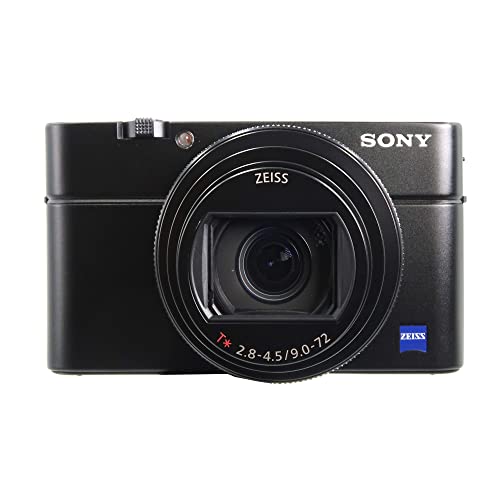
| Sony RX100 VII | The pocket telephoto champion | A real optical 24–200mm range on a 1-inch sensor, with tracking autofocus that keeps distant subjects honest. |
| Canon PowerShot G7 X Mark III | The bright short-zoom all-rounder | An optical 24–100mm lens with a fast aperture, trading extreme reach for low-light quality and pocketability. |
| OM SYSTEM Tough TG-7 | The rugged 4x that goes anywhere | A modest optical zoom sealed inside a waterproof, crushproof body for zoom needs on boats, beaches and building sites. |
| Canon EOS R10 | The interchangeable-lens zoom path | A compact mirrorless body whose zoom story you write yourself, from kit lenses to serious telephotos on the RF mount. |
| Nikon COOLPIX P1000 | The prose-only reach extremist | A 125x optical zoom stretching to a 3000mm equivalent — the moon, the far shore, the shy bird, all from a tripod. |
| Sony RX10 IV | The prose-only bridge flagship | A 24–600mm optical zoom on a 1-inch sensor with professional autofocus — the superzoom grown up. |
How Did We Test Zoom Claims Without Believing the Box?
Every camera’s range was converted to 35mm-equivalent focal lengths and compared at the long end, because that is where zoom cameras earn or lose their reputations. A lens that is lovely at 24mm and watery at 200mm is a wide camera with a party trick, so the evaluation weighted telephoto frames: feather detail on a garden bird, lettering on a distant sign, a face across a square. Optical ranges were credited at full value; digital extensions were noted, named as crops, and excluded from headline claims entirely.
Stabilisation was treated as part of the zoom specification rather than a footnote. Magnification multiplies handshake exactly as it multiplies the subject, so a 200mm compact without effective stabilisation delivers its reach only on tripods and bright days. Each pick was judged on handheld reality — the way travellers actually shoot — and the scores reflect keeper rates, not laboratory charts.
Aperture at the long end completed the audit. Zoom lenses dim as they extend, and a compact whose far end is slow forces high ISO or slow shutter speeds precisely when the subject is distant, dim and moving. The picks below balance reach against that dimming in different, clearly stated ways, so readers can choose which compromise matches their subjects.
What Is the Real Difference Between Optical and Digital Zoom?
Optical zoom moves glass. Lens elements rearrange to change the true focal length, the image projected on the sensor is genuinely magnified, and the full resolution of the sensor describes a smaller piece of the world. Detail per pixel stays constant; a feather photographed at 200mm optical carries real feather information. This is the only zoom that adds knowledge to a photograph.
Digital zoom moves arithmetic. The camera reads the central portion of its sensor’s image and enlarges it to full frame size, discarding the edges. Modern processing disguises the loss cleverly — sharpening, upscaling, noise shaping — and at phone-screen sizes the result can look respectable. At print sizes, in crops, or in dim light, the invention shows: textures smear, edges halo, and the detail you believed you captured was never in the file. Photographers should treat digital zoom as cropping early, with worse tools than their editing software offers.
The practical rule follows. Buy the optical range your subjects demand; use digital extension only for framing convenience when the moment outranks the file. Several cameras here offer intelligent crop modes that are genuinely handy for video or for composing at extended reach — but this guide’s badges and tables credit optical numbers alone, and any pick relying on digital help for its story says so in its own section.
Which Are the Best Compact Cameras for Zoom, Ranked by Honest Reach?
Ranked by what the glass truly does: the two prose superzooms reach furthest, the Sony leads the pocketable class, the Canon R10’s ceiling depends on the lens you mount, and the G7 X and TG-7 trade reach for brightness and toughness respectively. The reviews below argue each case on its own terms.

Sony RX100 VII — The pocket telephoto champion
The RX100 VII performs the neatest trick in compact photography: an optical zoom from 24mm wide to 200mm telephoto, on a 1-inch sensor, inside a body that still disappears into a jacket. Two hundred millimetres is real working telephoto — the distance that isolates a street performer from a crowd, frames a grandchild across a garden, or lifts architectural detail off a facade — and the Sony delivers it with autofocus tracking that follows eyes and subjects at the far end as confidently as at the wide.
Sharpness holds together across the range in the way this class demands. The lens was designed alongside the sensor rather than stretched to a marketing number, so the 200mm frames show genuine texture — plumage, brickwork, hair — rather than the watercolour smear of overextended compacts. A pop-up viewfinder steadies telephoto composition against your face, which is worth a stop of handshake by itself, and the fast burst modes give distant, moving subjects multiple chances to be caught well.
- Zoom: optical 24–200mm equivalent (about 8.3x)
- Sensor: 1-inch stacked, fast readout
- Finder: pop-up electronic viewfinder
- Focus: real-time tracking and eye autofocus
- Role: maximum honest reach in minimum bulk
Strengths
- True telephoto reach without changing lenses
- Tracking focus that makes the long end usable
- Stabilisation and finder support handheld telephoto work
Trade-offs
- Lens dims considerably toward 200mm in poor light
- Premium pricing for the compact class
- Tiny controls can frustrate gloved or large hands
Its signature assignment is the city break: cathedral sculpture from the square, a busker framed tight from the cafe terrace, the travelling companion’s portrait at flattering telephoto compression rather than wide-angle distortion. One pocket camera covers the whole day because the zoom, unusually, covers the whole day too — no lens bag, no decisions, no missed swap.
Low light is the honest caveat. As the lens extends and its aperture narrows, evening telephoto work pushes sensitivity upward and files grow grainier; the G7 X below, with a shorter but brighter lens, will sometimes bring home the cleaner frame after dark. Reach and brightness are the compact zoom’s eternal trade, and the Sony has simply chosen its side brilliantly.
Best for: travellers and city photographers wanting real telephoto from a pocket body. Not suited for: dedicated low-light telephoto work or wildlife at true safari distances

Canon PowerShot G7 X Mark III — The bright short-zoom all-rounder
Canon’s answer to the zoom question is restraint with a purpose: an optical 24–100mm range — about 4.2x — executed with a notably bright aperture that stays useful as light falls. One hundred millimetres will not fetch a bird across a lake, and this guide will not pretend otherwise. What it does superbly is the zoom range daily life actually uses: wide for interiors and streetscapes, mid-range for people, short telephoto for portraits with softened backgrounds and details across a room.
The brightness changes what the zoom is for. Where long compacts hunt and grain after sunset, the G7 X keeps shutter speeds healthy at its far end, so evening markets, restaurant tables and theatre-district streets stay photographable at the magnifications you compose with. Canon’s colour flatters the people who populate those scenes, and the flip-up screen serves the creator workflows — vlogging, self-framing — that a zoom this versatile naturally joins.
- Zoom: optical 24–100mm equivalent (about 4.2x)
- Aperture: bright, especially valuable at the long end
- Sensor: 1-inch, stacked design
- Screen: tilts up for self-framed shooting
- Role: the everyday zoom for people and cities
Strengths
- Far end stays fast enough for evening shooting
- Portrait-distance rendering flatters subjects
- Range matches real daily subjects without bulk
Trade-offs
- One hundred millimetres is a ceiling wildlife will mock
- No viewfinder for bright-day telephoto bracing
- Digital extension beyond 100mm is crop, not capture
Follow it through a wedding shot as a guest: group frames at the wide end in the church porch, the couple isolated at the long end during speeches, table details and dancing after dark — all without a lens change or a flash barrage. Guests and creators who shoot life as it happens, rather than expeditions, will find this range suspiciously exactly right, because Canon sized it from behaviour rather than from a spec war.
Buy it knowing its horizon. If your subjects live beyond a garden’s length — sport from stands, birds, distant architecture — the Sony above or the bridge cameras below exist for you. If your subjects are people within conversational distance, the G7 X’s brighter, shorter zoom is not the compromise; it is the optimisation.
Best for: social, travel and creator shooting where light matters more than distance. Not suited for: wildlife, field sports or any subject you cannot walk closer to

OM SYSTEM Tough TG-7 — The rugged 4x that goes anywhere
The TG-7’s optical zoom — roughly 25–100mm equivalent — looks modest on this page until you ask where the other zooms are allowed to go. This one is waterproof to 15 metres without a housing, shrugs off drops, dust and frost, and focuses to microscope distances at its wide end. Its zoom story is therefore about presence: a 4x range that is available on the kayak, the reef, the building site and the ski slope, in conditions that retire every other camera in this guide to a dry bag.
Underwater, its range reads differently again. Water shortens every photographer’s effective world, so a 25–100mm span covers reef scenes to fish portraits without the photographer finning closer and frightening the subject. The bright lens gathers what light the water leaves, and the macro modes — this camera’s party trick — extend the zoom concept downward into magnification of the tiny, where most underwater wonders actually live.
- Zoom: optical 25–100mm equivalent (4x)
- Waterproofing: 15 metres, no housing required
- Focus: microscope mode to extremely close range
- Build: crushproof, freezeproof, dustproof
- Role: the all-conditions zoom
Strengths
- Zoom available in water, dust and freezing weather
- Macro magnification no rival here can approach
- Bright lens suits the dim places toughness leads
Trade-offs
- Four-times reach is the shortest optical story here
- Small sensor limits large-print ambitions
- Telephoto beyond 100mm simply does not exist
Its defining user is the person whose camera shares their adventures rather than documenting them from safety: the snorkeller framing a turtle at polite distance, the site engineer recording progress in rain, the parent at the waterpark whose phone stays in the locker. For those frames, a sealed 4x that always fires beats a delicate 10x that stayed home.
Land-bound telephoto seekers should pass it by without regret; its budget bought armour, not reach. But as the only zoom in this guide that treats weather and water as native habitat, it earns its place on a different axis of merit entirely.
Best for: adventure, beach, site and family shooting where conditions are the enemy. Not suited for: distant wildlife or maximum-reach travel photography

Canon EOS R10 — The interchangeable-lens zoom path
The R10 enters a compact zoom guide through the side door marked honestly: its zoom is not built in, it is chosen. The body itself is compact mirrorless — small enough to anchor a travel kit — and the RF lens mount turns the zoom question into a library. Start with a versatile kit zoom for the holiday, add a telephoto zoom for the school sports day and the safari year, and the same body keeps every promise because the glass, not the marketing, defines the reach.
This matters because built-in zoom compacts freeze your range at purchase forever. The R10’s APS-C sensor also gathers more light than any fixed-lens pick here, so its telephoto work at dusk — the exact conditions that expose compact zooms — holds together with cleaner files and faster focus. A proper electronic viewfinder braces long lenses against the eye, and Canon’s subject-detection autofocus tracks athletes, animals and vehicles at distances where compact zooms are guessing.
- Format: APS-C mirrorless, RF mount
- Zoom: defined by lens — kit zooms to serious telephotos
- Finder: electronic viewfinder for braced telephoto work
- Focus: subject detection for people, animals, vehicles
- Role: the growable zoom system
Strengths
- Telephoto ceiling rises with each lens you add
- Larger sensor keeps long-lens files clean at dusk
- One body serves wide, portrait and telephoto years
Trade-offs
- Lenses add bulk; the pocket-compact promise is gone
- Total system cost grows with your ambitions
- Kit zoom alone is a starting point, not a destination
The buyer it serves is the photographer who has outgrown fixed ranges twice already and is tired of rebuying cameras to gain 100mm. Bought once, the R10 turns future zoom hunger into a lens decision — cheaper, sharper and resale-friendlier than another body. School-sport parents and budding wildlife shooters, whose distances keep growing with their subjects, feel this logic first.
It is not a compact in the pocket sense, and this guide will not launder it into one. It is the answer for readers who arrived asking about zoom and discover their real requirement is a system — stated plainly, with the bulk and budget consequences in the same paragraph as the praise.
Best for: growing photographers whose subjects keep moving further away. Not suited for: anyone whose first requirement is a camera that fits a pocket
Nikon COOLPIX P1000 — The prose-only reach extremist
The P1000 is covered without a link, outside the verified pool, and it exists to settle arguments about what optical zoom can mean: a 125x lens spanning 24mm to a 3000mm equivalent. Three thousand millimetres photographs the moon as a detailed disc, reads a lighthouse across a bay, and frames birds that never knew a human was watching. Nothing else in consumer photography reaches like it, and no honest zoom guide may omit it.
The physics bill arrives promptly. The sensor is small — phone-class in area — so the astonishing reach is painted on a modest canvas, best in bright light, with files that reward moderate sizes rather than gallery prints. At 3000mm the atmosphere itself becomes the lens’s opponent: heat shimmer and haze soften what the glass resolves, a tripod is mandatory, and finding a subject in that straw-narrow view is a skill measured in lost minutes. Owners describe a specialist instrument, closer to a telescope with a camera attached than to a travel compact.
- Zoom: optical 24–3000mm equivalent (125x)
- Sensor: small format — reach is bought with sensor area
- Support: tripod effectively mandatory at the long end
- Modes: dedicated moon and bird-watching dial settings
- Role: the extreme-reach specialist
Strengths
- Reach no other consumer camera approaches
- Moon and distant-wildlife framing from a garden chair
- All-in-one: no lenses to buy, ever
Trade-offs
- Small sensor limits quality in anything but good light
- Big and heavy — a bridge camera in name, luggage in fact
- Atmospheric haze, not glass, sets the real range limit
Its happiest owners shoot subjects that cannot be approached: nesting raptors under protection, ships at anchor, the moon’s terminator crawling across craters night after night. For them the P1000 is not an exaggeration but the only tool, and its compromises are simply the toll at that particular border.
Everyone else should treat it as a reference point — the far end of the zoom spectrum, useful for calibrating how much reach they truly need. Most discover the answer is a tenth of it, and return to the Sony above with new appreciation.
Best for: moon watchers, distant-bird recorders and unreachable-subject specialists. Not suited for: low light, large prints or travellers counting grams
Sony RX10 IV — The prose-only bridge flagship
The RX10 IV, also outside this guide’s link pool, is what happens when the superzoom concept is executed without budget anaesthesia: a 24–600mm optical zoom — 25x — built to professional standards and mounted on the same 1-inch sensor family as the RX100. Six hundred millimetres is genuine wildlife and field-sport reach, and here it arrives with phase-detect autofocus and burst speeds borrowed from Sony’s sports cameras, so the far end is not merely reachable but trackable.
Weather sealing, a serious viewfinder and a lens that stays respectably bright through much of its range make it the bridge camera working photographers actually respect: the one-body assignment camera for journalists, expedition documentarians and safari travellers who refuse lens-changing in dust. Its files support the reach — texture at 600mm that small-sensor bridges smear into suggestion.
- Zoom: optical 24–600mm equivalent (25x)
- Sensor: 1-inch stacked, fast readout
- Focus: phase-detect tracking with rapid bursts
- Build: weather-sealed bridge body
- Role: the professional one-body zoom system
Strengths
- Six hundred millimetres with real autofocus authority
- One-inch files hold detail at the long end
- No lens changes in dust, rain or crowds
Trade-offs
- Size and weight end any pocket ambitions
- Price sits in interchangeable-lens territory
- Fixed lens means the system cannot grow
Set it beside the R10 and the zoom debate crystallises: Sony offers the finished instrument, Canon the expandable one. Travellers who know their subjects — birds this year, birds next year — often prefer the instrument, because its whole range is present every morning without a bag of alternatives, and its weather sealing forgives the conditions wildlife keeps.
It is the superzoom for people who hate compromises and accept exactly two: size, and a lens that can never be swapped. Judged as a compact it fails; judged as the best single-box answer to the zoom question ever built, it remains the benchmark the P1000’s extremes and the RX100’s elegance both orbit.
Best for: wildlife and expedition shooters wanting one sealed, far-reaching body. Not suited for: pocket carry or system builders who enjoy lenses
How Do the Six Zoom Cameras Compare Side by Side?
| Camera | Optical range (equiv.) | Sensor | Zoom character |
|---|---|---|---|
| Sony RX100 VII | 24–200mm | 1-inch | Maximum pocketable reach |
| Canon PowerShot G7 X Mark III | 24–100mm | 1-inch | Short but bright |
| OM SYSTEM Tough TG-7 | 25–100mm | Small, armoured | Reach that survives water |
| Canon EOS R10 | By lens choice | APS-C | Unlimited, upgradeable |
| Nikon COOLPIX P1000 | 24–3000mm | Small | Extreme, tripod-bound |
| Sony RX10 IV | 24–600mm | 1-inch | Professional bridge reach |
Every figure in the range column is optical. Any bigger number you have seen advertised for these cameras is a crop wearing a costume, and this guide declines to applaud it.
How Do You Hold a Long Zoom Steady Enough to Deserve It?
Technique is the cheapest telephoto upgrade. Brace the camera against your face with a viewfinder where one exists, tuck elbows into ribs, and exhale halfway before pressing — the marksman’s sequence, borrowed wholesale because physics does not care which trigger you pull. Against a wall, a railing or a companion’s shoulder, effective steadiness doubles; the travelling photographer’s first skill at any new viewpoint is spotting the brace before spotting the shot.
Shutter speed discipline follows the old reciprocal rule with modern forgiveness: aim for at least the reciprocal of your equivalent focal length — 1/200th at 200mm — then let stabilisation buy you a few stops of grace, not a licence. Burst shooting multiplies keepers at the long end, because one frame in a short sequence usually lands between tremors; professionals at 600mm shoot telephoto the way they shoot sport, in short, deliberate volleys.
Support escalates with reach. A monopod transforms 400mm-plus work, a beanbag on a car window is the safari photographer’s actual tripod, and beyond 1000mm only a real tripod and a remote or timer release keep the frame still enough to judge. Buying reach without budgeting its support is the classic false economy of this entire genre.
Why Does the Far End of a Zoom Always Look Worse — and When Is That Fine?
Three taxes converge at maximum zoom. The lens itself is working hardest there, with aberrations least corrected; the aperture has narrowed, pushing sensitivity up and shutter speeds down; and the air between you and the subject — metres of it, heated, dusty, humid — becomes a soft filter no manufacturer can coat away. Laboratory sharpness measured at ten metres flatters every telephoto ever sold.
Yet the far end remains worth having, because the alternative framing is often no photograph at all. A slightly soft frame of a heron striking, a grandchild’s goal, a detail on a tower — these succeed as records and often as images, provided the softness is the honest atmosphere of distance rather than the smear of digital enlargement. This is the deepest argument for optical reach: it degrades gracefully, telling the truth about a far thing seen through real air.
The craft response is to manage distance like exposure. Shoot long early and late, when air is cool and still; avoid midday heat shimmer across fields and water; and when the subject permits, halve the distance with your feet and halve the zoom with it — every tax in this section shrinks together.
How Should You Choose Your Zoom Range by Subject?
People and cities live between 24mm and 135mm: environmental portraits wide, head-and-shoulders at the portrait lengths, details and compression in between. The G7 X covers this world brightly and the RX100 VII covers it completely, which is why they anchor this guide despite humbler multipliers than the bridges.
Garden wildlife, school sport and zoo days ask for 200–400mm equivalent — the RX100 at full stretch with a crop in reserve, the R10 with a mid telephoto, or the RX10 IV cruising in its comfort zone. True wild birds, shy mammals and field sports from public distances start at 600mm and keep going, into RX10 and P1000 territory, with support budgets to match.
Buy for the subject you photograph monthly, and let the once-a-year spectacle rent, borrow or tolerate a crop. A zoom range sized to your real life gets carried; an expedition range sized to your imagination gets insured and stored. The cameras above span both lives — choose which one is yours this year.
How Do Sensor Size and Zoom Range Trade Against Each Other?
Every camera in this guide is an answer to one equation: lens size grows with both focal length and sensor size, so a designer who wants a huge zoom in a small body must shrink the sensor, and a designer who wants a large sensor must shrink the zoom or grow the body. The P1000 chose a tiny sensor and a colossal lens. The RX100 VII chose a mid-size sensor and a moderate zoom in a small body. The RX10 IV chose the same sensor and a large zoom, and accepted a large body as the receipt. There is no fourth option, and any marketing implying otherwise is describing digital zoom in a trench coat.
Understanding the trade converts shopping from numerology into self-knowledge. Small sensors cost low-light cleanliness, dynamic range and background separation; they repay with reach, depth of field that keeps distant subjects sharp front-to-back, and prices and weights that travel. Large sensors repay in dusk quality and portrait softness, and charge in bulk the moment telephoto enters the conversation. The question is never which sensor is better — it is which failure you would rather own: the grainy dusk frame of the bird you reached, or the pristine wide frame of the bird you didn’t.
Depth of field deserves its sentence in this trade, because beginners misread it. The small-sensor superzooms keep nearly everything sharp at full zoom, which wildlife recorders love and portraitists find clinical. The 1-inch and APS-C picks can soften backgrounds at their long ends, isolating subjects the way professional telephoto work does. Zoom buying is therefore partly aesthetic: decide whether your distant subjects should sit in their world or be lifted out of it, and the sensor column of the comparison table starts choosing itself.
What Can You Actually Photograph at Each Focal Length?
At 24mm, the wide end most picks share, a room fits, a street explains itself, and a group of friends arranges itself with nobody cropped at the elbows. This is the documentary width — context first, subject second — and it is where travel days begin. At 35–50mm the world flattens toward the eye’s own impression: a market stall, a person at a table, a doorway with its occupant, framed without the wide end’s drama or the telephoto’s detachment.
At 85–135mm, portrait country, faces take their most flattering geometry and backgrounds begin their graceful retreat; the G7 X’s ceiling and the RX100’s middle live here, which is why both make people look like their best photographs. At 200mm, the RX100’s limit, a performer fills the frame from the back of a small venue, a grandchild’s match resolves into expressions, and architectural detail — the gargoyle, the clock face, the mason’s joke in the cornice — becomes collectable from the pavement.
Beyond 300mm the subjects change species: birds as individuals rather than flocks, the moon as a landscape rather than a lamp, ships and lighthouses as portraits, wildlife that has not consented to your presence and need never know it. This is bridge and system territory — the RX10’s home, the R10 with a telephoto, the P1000’s extreme parish — and it demands the support and patience the earlier sections priced in. Read your own last year of photographs against this tour and your required range announces itself; most people discover their life happens between 24mm and 200mm, with honoured exceptions.
How Do You Shoot Video Through a Long Zoom Without Making Viewers Seasick?
Magnification multiplies motion in video even more cruelly than in stills, because the viewer watches the shake continuously rather than forgiving it in a frozen frame. The first rule is to zoom less than you can: a video shot at 100mm and cropped in editing looks calmer than the same scene hunted at 200mm, and the compacts’ stabilisation — good as it is — should be the garnish on a steady shot, never the meal. Brace against walls and railings, plant the elbows, and let subjects move through a still frame instead of pursuing them with the lens.
Zooming during a take is its own craft. The smooth, slow, motivated zoom — toward the detail the narration is approaching — reads as intention; the hunting zoom, in-out-in while the operator decides, reads as amateur hour and cannot be edited out. Professionals often cut instead: wide shot, then a separate tight shot, joined in the edit, because two steady framings beat one wandering magnification every time. Where a live zoom is wanted, rehearse its speed once before recording, the way you would rehearse a sentence.
Focus behaviour completes the discipline. At long focal lengths, autofocus hunting is magnified along with everything else, so lock focus on the subject’s plane where the camera allows, or pre-focus on the spot the action will cross. The tracking systems on the Sony and the R10 exist for exactly this problem and earn their praise in video as much as in stills — but even they bless the operator who gives them a steady frame to work within.
When Should You Rent the Big Zoom Instead of Buying It?
Reach has a calendar problem: the safari is three weeks, the airshow is one weekend, the moon is photogenic monthly but competes with sleep. Rental converts those peaks into a modest line item and — more valuable — into information, because a weekend with a rented RX10-class bridge or a long lens for the R10 teaches you your true keeper rate at 600mm before your money commits to owning the discipline. Many photographers discover the honest answer is that their distant-subject life is real but occasional, and the rental shelf becomes their telephoto cupboard permanently.
Buying wins when the subject recurs weekly: the child’s season of away matches, the garden’s resident birds across a whole year, the coastal walks that structure your weekends. Recurrence amortises not just cost but learning — the owned long zoom’s handling becomes reflex, its keeper rate climbs month over month, and the camera stops being equipment and becomes eyesight. The dividing line most owners report is roughly a dozen serious outings a year; above it, buy; below it, rent and spend the difference on getting to the subjects.
There is a hybrid worth naming, because the R10 embodies it: own the versatile middle — the body and its standard zoom — and rent the extremes. The 24–200mm life is covered daily by the RX100 or the kit lens, while the 600mm occasions hire their hero by the weekend. Zoom strategy, like zoom itself, works best when it distinguishes what must be owned from what can be borrowed honestly.
How Do Zoom Compacts Cope With Indoor Sport and School Stages?
Indoor sport is the zoom compact’s examination hall: the subject is distant, moving, and lit like a cave by somebody’s uncle. This is where the comparison table’s quiet columns — sensor size, far-end aperture — stop being specifications and start being results. The 1-inch Sony at full stretch will produce usable, grainy frames of a school match; the G7 X, shorter but brighter, will produce cleaner frames of a nearer subject; and the honest conclusion most parents reach is that position is the real zoom — the seat near the court outperforms any lens bought to compensate for the seat at the back.
Stage performances invert the problem kindly. The subject is lit — often beautifully — and the audience sits in darkness, so a compact zoom at 100–200mm from a mid-hall seat frames a dancer or a young violinist with genuine quality, provided the photographer respects the occasion: no flash, ever, and a silent or hushed shutter where the body allows. The RX100’s pop-up finder helps here, bracing the camera and keeping its screen’s glow out of the audience’s evening, a courtesy that is also a technique.
Settings for both arenas rhyme: shutter priority with a floor fast enough to freeze gesture, sensitivity allowed to climb as high as the files tolerate, continuous focus entrusted to the tracking systems, and bursts fired at the peak of the action rather than throughout it. Zoom indoors is a negotiation between distance and light in which the camera is only one negotiator; the photographer who scouts the hall, sits close and shoots the lit moments wins with any body in this guide.
What Is a Sensible Upgrade Ladder for a Zoom Photographer?
Rung one is technique, and it is free: bracing, reciprocal-rule shutter speeds, shooting in bursts at long range, and walking closer before zooming further. Most photographers who believe they need more reach actually need more keeper rate from the reach they own, and a month of deliberate telephoto practice routinely doubles it — an upgrade no shop sells and no rival can outbid. Rung two is support: a monopod or a beanbag matched to your venues, which buys sharpness at the long end more cheaply than any lens.
Rung three is the honest range extension, chosen by evidence. Keep a month’s notebook of the frames that failed for distance — subject, venue, how much closer you needed to be — and the required focal length writes itself. For compact owners that may mean stepping to the RX100’s 200mm or renting a bridge for the season; for R10 owners it means the telephoto lens the notebook describes, bought once, in the mount they already own. Evidence-based reach is always shorter — and cheaper — than anxiety-based reach.
The top rung is knowing when to stop. Beyond your subjects’ real distance, extra millimetres purchase only atmosphere, weight and expense, and the photographers with the finest telephoto portfolios are often those who capped their range years ago and spent the savings on access: the hide, the season ticket, the dawn alarm. Zoom’s final lesson is that the lens brings the subject closer, but only the photographer can get close — and the ladder’s purpose is to climb toward that truth, not away from it.
How Do You Photograph the Moon With a Compact Zoom?
The moon is the telephoto’s parlour trick and its honest examination in one. It is bright — far brighter than intuition says, lit by full sunlight — so the beginner’s error is overexposure: a glowing white coin with no geography. Expose for a sunlit landscape, not for the night around it, and the craters appear. A tripod is non-negotiable at these magnifications, a timer or remote release removes the last tremor, and the atmosphere sets the ceiling — shoot the moon high, through the thinnest air, on still nights, and avoid the shimmering horizon moon however romantic it looks.
Each pick has its moon personality. The P1000 was practically designed for it, with a dedicated mode and reach that fills the frame with lunar terrain. The RX10 IV resolves detail its smaller rivals smear. The RX100 VII at 200mm needs a crop and manages a respectable disc with visible maria. The R10’s moon depends entirely on the lens mounted, which is its system’s whole story in one subject. Judge any zoom’s moon shot as entertainment with a lesson inside: it proves optical reach and support discipline, and it proves nothing about the other three hundred days of the year.
What Is Compression, and Why Do Portraitists Love the Long End?
Step back and zoom in, and the world rearranges: backgrounds swell toward the subject, distances flatten, a mountain leans over a village, a face gains a calm, sculptural geometry that wide lenses, working close, stretch into caricature. This is compression — perspective dictated by distance, harvested by focal length — and it is the aesthetic half of the zoom argument that pure reach-talk misses. The portraitist at 135mm is not being lazy about walking; they are choosing the way space itself will be drawn.
Compacts deliver this pleasure honestly within their ranges. The G7 X at its long end already flatters faces and melts café backgrounds into suggestion; the RX100 at 200mm stacks a street’s layers into a tapestry no wide shot can weave. Teach yourself the effect deliberately: photograph the same subject from three distances, zooming to hold the framing constant, and compare how the background’s loyalty changes. That ten-minute experiment explains more about why zoom exists than any multiplier on any box in this guide.
How Do You Clean and Store a Zoom That Lives Outdoors?
Extending zoom barrels are bellows, and bellows breathe dust. The travelling zoom’s hygiene begins with a blower, never a cloth, for grit on the barrel — wiping grinds the beach into the mechanism — and continues with the discipline of retracting the lens before the camera goes into a dusty bag. A UV or clear protective filter, where the design accepts one, is cheap armour for the front element that beach wind and stadium crowds will otherwise sandblast one micro-scratch at a time.
Storage is the quiet half of ownership. Keep the camera dry, lens retracted, in a case that does not live in a damp car boot, with a silica packet sharing its shelf through humid seasons. Zoom mechanisms stiffen when stored extended and attract mould when stored wet, and both failures announce themselves months later, mid-holiday, as the grinding zoom or the spotted element that no holiday budget forgives. Five dry minutes after each outing is the whole insurance policy; the photographers with decade-old compacts are simply the ones who kept paying it.
How Do You Pack a Zoom Kit for Travel Without Regretting It?
Zoom cameras travel in the hand luggage of the photograph, never in the hold: batteries belong in the cabin by regulation and by wisdom, and a compact’s whole value is being present at the destination rather than reunited with it afterward. Pack the camera in the personal item you keep at your feet, because overhead lockers are other people’s elbows and turbulence, and because the flight itself — wing over coastline, the destination’s first light — is a shooting occasion the hold would steal.
Build the travel kit around the zoom’s known appetites: the charger and a travel adapter, the spare battery that long telephoto days consume, cards enough that no evening is spent deleting in a hotel room, and the blower and cloth that beach and city dust make daily necessities. A strap that converts between neck and wrist covers the museum and the market with one piece of webbing. Everything else — the monopod, the second body, the just-in-case lens for the system shooters — must argue its way into the bag against the zoom compact’s founding promise, which is that one small camera, honestly ranged, is the trip. Kits packed by that argument come home with photographs; kits packed by anxiety come home with luggage.
One last packing truth belongs to zoom owners specifically: the camera you carry on your person gets the flight, the transfer and the first evening, while the camera in a case gets the itinerary’s leftovers. Wear the compact, pocket the spare battery, and let the trip start photographing itself before the hotel has even been found — the zoom was bought for reach, and reach begins with being there.
What Mistakes Do Zoom Buyers Keep Making?
Believing the biggest number on the box is the founding error — that figure blends optical truth with digital invention in proportions the small print distributes dishonestly. Read the optical range, in equivalent millimetres, and let that number compete. Any seller reluctant to state it plainly has told you what you needed to know.
Buying reach without light runs second. A long, slow zoom on a dull day produces the exact disappointment — grainy, shaken, distant — that makes people abandon cameras for phones. Match the far end’s aperture and the sensor’s size to the light your subjects live in, or shorten the range and brighten the lens, as the G7 X deliberately does.
Finally, zooming instead of moving. Telephoto compression is a look, not a substitute for position; beginners shoot everything from where they happened to stop, at whatever magnification fills the frame, and wonder why their images feel like surveillance. Walk first, zoom second — the order professionals never reverse.
Final Recommendation
For most buyers, the Sony RX100 VII is the zoom compact perfected: a genuine 24–200mm optical range, serious autofocus and a pocketable body. Choose the Canon G7 X Mark III if your subjects are people in imperfect light, the TG-7 if your zoom must survive water and drops, and the Canon EOS R10 if your distances will keep growing and you want glass, not bodies, to answer. Study the RX10 IV and P1000 in prose when your subjects truly live at 600mm and beyond — and notice that even there, the honest numbers are optical ones.
Zoom is a promise about detail at a distance. Buy the promise that is kept by glass, hold it steady, get as close as courtesy and safety allow — and let digital zoom remain what it has always been: a crop you could have made yourself, later, better.
Related guides
Frequently Asked Questions
Is digital zoom ever worth using?
As a framing aid, occasionally — it helps compose at extended reach and can serve video when delivery size is small. As a capture strategy, no: it discards data your editing software would rather keep. Photograph at the optical limit, crop deliberately at your desk, and the file will be equal or better every time, with the decision reversible.
How much optical zoom do I need for birds?
Garden birds at a feeder forgive 200mm; wild birds in open country start being honest subjects around 400–600mm equivalent, and small or shy species push beyond that into bridge-camera territory. This is why the RX10 IV and P1000 appear in this guide despite their size — birding is the subject that rewrites size budgets.
Why do zoom lenses get darker at the long end?
Because the aperture’s physical opening, divided by a growing focal length, yields a smaller f-number ratio as you zoom — the geometry of a lens that stays pocket-sized. Premium designs minimise the effect; physics forbids abolishing it. Expect to trade shutter speed or sensitivity at full reach, and judge zooms partly by how gracefully they make that trade.
Can a compact zoom replace a telephoto lens on a mirrorless camera?
Up to its optical ceiling, and within its light limits, yes — the RX100 VII’s 200mm is a real 200mm. Beyond that ceiling, or in dusk and indoor sport light, the larger sensor and brighter glass of a system camera pull away decisively. Many photographers own both: the compact for travel days, the system for telephoto assignments.
What does “equivalent” focal length actually mean?
It translates a small sensor’s lens into the field of view a full-frame camera would need to match the framing. A compact’s tiny physical lens might be marked 9–72mm, but its 24–200mm equivalent tells you the honest, comparable story: how wide and how tight the pictures look. Always compare zooms in equivalent terms, as this guide does.
Is a compact zoom worth packing when my phone already zooms?
For snapshots shared from the trip, the phone competes honestly, and it is already in your pocket. The compact earns its space once the zooming gets serious: its lens gathers real light at full reach instead of enlarging a small crop, so distant detail survives dim evenings and enlargement alike. It also keeps working while the phone stays charged for maps and messages. Travellers who photograph what stands near them can leave it home; those who keep pointing at things far away cannot.
Why won’t my compact focus on a nearby subject at full zoom?
Every zoom carries a minimum focus distance, and on most compacts that distance grows as the lens extends: a camera content to focus across a table when wide may need a metre of air at full telephoto. Step back, or zoom out and crop later; the subject shrinks but stays sharp. Check this figure before buying if you photograph insects, products or documents, because reach and closeness pull in opposite directions.
Related Guides
Continue with compact cameras for travel days and city breaks, dig into bridge cameras for garden birds and safari trips, or read handholding technique for sharp telephoto photographs to make your reach count.


