ilcastellomenu.com is reader-supported. When you buy through links on our site, we may earn an affiliate commission.
Where to Buy
Start with the rule nobody puts on the box: many venues will not let an interchangeable-lens camera through the door without a photo pass, and some ban “professional” cameras by definitions that change with the security guard’s mood. The best cameras small for concert photography are therefore chosen under a double constraint — small enough to be allowed in, or at least to look like a fan’s camera rather than a press rig, and capable enough to shoot a moving performer in dreadful light without a flash. This guide is about still photographs, taken from the crowd or the photo pit’s edge, in the real conditions of gigs.
A sibling guide in this series covers filming live music — video, with its own cameras and compromises. This page deliberately ignores motion: frame rates here are shutter speeds, and the questions are about freezing a guitarist mid-leap at high ISO, focusing in light that changes colour three times a chorus, and coming home with keepers from a camera that spent the night in a jacket pocket rather than a Pelican case.
Honesty about access belongs in the first paragraph of any concert guide, so here it is in the second: no camera in this list guarantees entry anywhere. Policies vary by venue, artist and night; some shows operate blanket bans that include compacts; phone-only rules exist and are enforced. What a small, unobtrusive camera does is maximise the number of rooms where a fan with a camera is simply a fan — and minimise the friction everywhere else. Buy with that realism, shoot with courtesy, and the pictures will follow.
One more framing note before the picks: this guide treats “small” as a working system, not a body dimension. A compact body behind a bulky lens is not small to a door steward, a crowd or a jacket; a slightly larger body with a pancake prime often is. Judge every recommendation below as the whole carried object — body, lens, silhouette, behaviour — because that is how rooms, neighbours and security will judge it on the night.
Key Takeaways
- Venue policy is the first specification: small and unobtrusive beats powerful and banned.
- Fast lenses and usable high ISO decide concert keepers more than resolution does.
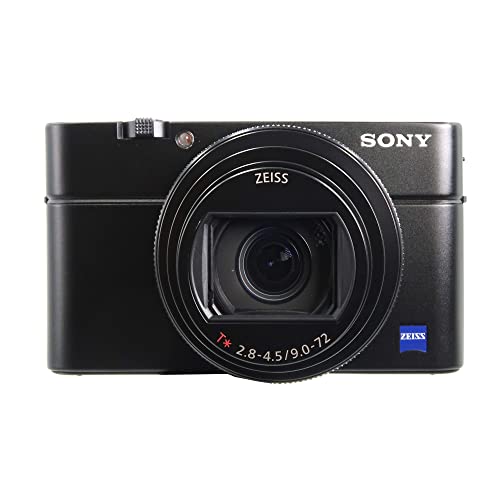
- The Sony RX100 VII pairs a real zoom with a genuinely pocketable body.
- Silent or quiet shooting keeps you welcome in acoustic and seated venues.
- Flash is effectively forbidden — every pick here earns its place without it.
- Check the specific venue and artist policy before every single show.
In this guide
Quick Picks
| Camera | Badge | Why it earns its place |
|---|---|---|
| Sony RX100 VII | Pocket zoom champion | A long zoom and fast autofocus in a body security waves through. |
| Canon PowerShot G7 X Mark III | Bright-lens compact | A fast lens for dark clubs where reach matters less than light. |
| Fujifilm X100VI | Fixed-lens cult favourite | A fast prime, filmic colour and a leaf shutter’s discretion. |
| OM SYSTEM OM-5 Mark II | Small system, big stabilisation | Compact interchangeable lenses plus stabilisation for slow-shutter artistry. |
| Sony ZV-E10 II | Fast-prime platform | A small body that becomes a low-light tool with one bright prime. |
| Nikon Z30 | Quiet compact system body | A discreet body for seated venues and small stages. |
How Did We Choose Small Cameras for the Worst Light in Photography?
Concert light is a conspiracy against cameras: dim, coloured, strobing, and falling on subjects who move like they are paid to blur. Our first test was therefore optical honesty at high sensitivity — how a camera’s files hold together when the ISO climbs into the ranges club photography lives in, and whether its lens gathers enough light to keep shutter speeds in the freezing zone. Cameras whose specifications gleamed in daylight but dissolved in a basement venue were cut without sentimentality.
Files were judged the way gig photographs are actually consumed: shared at screen size, printed occasionally at modest dimensions, and loved mostly for the moment they hold. That standard forgives grain that pixel-peeping condemns, and it should — a generation of iconic live photographs were shot on film whose grain is now sold back to digital photographers as a filter. What it does not forgive is missed focus, motion blur on a face that should be still, or colour so broken that skin becomes scenery. The picks were graded on those sins, in that order.
Autofocus came second, judged under stage conditions: a performer crossing between magenta and blackness, a drummer behind a forest of hardware, a singer whose face is lit for three seconds in ten. We favoured cameras whose face and eye detection keeps working in gloom and whose focus can be trusted at a lens’s widest aperture, because concert photographers shoot wide open as a way of life. A camera that hunts in the dark is a spectator with a battery.
Discretion completed the judging. Size and silhouette decide venue access; shutter noise decides whether a seated acoustic audience ever wants you back; screen brightness and control layout decide whether you can work without lighting up your row. Each pick was imagined in three rooms — a standing club, a seated theatre, a small festival stage — and had to be welcome, or at least forgivable, in all three.
Several capable cameras were left out for reasons worth recording. A beloved rangefinder-style body fell on price-to-welcome arithmetic: its silhouette reads as professional to door staff in a way its size never justifies. Two action cameras fell because their tiny sensors and fixed ultra-wide views serve video diaries, not still portraits of performers. A larger mirrorless favourite fell simply on the title’s terms — excellent as it is, it is not small in the way a jacket pocket or a door policy understands small.
We also refused to grade on daylight behaviour, which inverts most camera reviewing. Every pick here is at least good in daylight; concerts happen after dark, in rooms lit by people who regard photographers as an afterthought. A camera that needs the sun is a tourist. These six were chosen as night workers first, and their daylight competence is a pleasant inheritance rather than the qualification.
Why Do Small Cameras Face Rules That Big Cameras Wrote?
The venue bans that shape this guide were not written about compacts at all. They were written about professional rigs — detachable lenses read as commercial intent, and commercial photography at concerts is a licensed, negotiated thing involving artists, labels and venues. The small-camera photographer inherits those rules as weather: not personal, not always logical, and absolutely capable of ruining an evening planned around pictures.
The practical consequence is a hierarchy of welcome. A fixed-lens compact in a jacket pocket is, in most rooms, indistinguishable from a fan’s souvenir camera and is treated accordingly. A small mirrorless body with a pancake prime lives one rung up — usually fine in clubs and theatres that allow cameras at all, occasionally questioned. A small body with a long telephoto zoom announces ambition and invites the conversation nobody wants at a door. This guide’s picks are annotated with that hierarchy in mind, because the best concert photograph is always the one the photographer was present to take.
Enforcement, in practice, is human and therefore variable: the same camera waved through on Friday can be questioned on Saturday by a different steward working a different artist’s rider. Regulars treat that variability as climate rather than injustice — they carry the policy page on their phone, keep their manner pleasant at every door, and never let a refusal become the story of the night. The camera that survives concert photography longest is attached to the photographer venues are glad to see again.
Photo passes redraw the map entirely for those who can get them — local publications, venue relationships, shooting for the band — and several picks here serve pass-holders beautifully from the pit. But a guide honest about its title must optimise for the fan’s reality: general admission, house rules, and a camera that respects both while still being a serious photographic instrument when the lights go down.
There is an ethical seam here that deserves daylight rather than a footnote. A small camera’s welcome depends on its owner behaving like a fan who photographs, not a professional evading a licensing system. Shooting for your own archive and joy is the social contract that keeps doors open; turning up nightly to supply a commercial feed from the crowd breaks that contract for everyone behind you. The regulars this guide admires guard the welcome jealously, because they understand it is lent, not owned.
Which Small Cameras Survive Concert Light?
Three fixed-lens compacts that travel in pockets, and three small system bodies that trade a little door-risk for a lot of lens.

Sony RX100 VII — Pocket zoom champion
The RX100 VII is the camera concert fans measure all others against, for one structural reason: it is the only genuinely pocketable body here with a serious zoom range. From the back of a club floor, that zoom is the difference between a photograph of a performer and a photograph of a stage with a person on it. Its autofocus — Sony’s tracking lineage in miniature — locks onto a singer and holds through movement that defeats lesser compacts, and its burst capability suits the concert photographer’s core technique: shoot the leap, the strum, the hair-whip in sequences, and choose the frame where everything aligned.
Low light is handled with a photographer’s realism. The one-inch sensor is not a full-frame miracle, and this guide will not pretend otherwise; what it offers is a well-behaved high-ISO file and a lens that stays usefully bright through much of its range, which in club conditions translates to keepers at the shutter speeds faces require. Fans upgrading from phones feel the gap immediately — in focus hit-rate most of all, because concerts are where phone autofocus goes to be humbled.
Its door credentials are the best in this guide. The RX100 reads as a tourist compact because it is shaped like one, slipping into venues whose rules were written against detachable lenses without a murmur. Combined with silent shooting options for seated shows, it is the closest thing concert photography has to a universal passport — subject, always, to the specific night’s rules, which its owner should check with the same diligence as the setlist.
- Format: premium compact, one-inch sensor
- Lens: versatile zoom for floor-to-stage reach
- Autofocus: tracking that survives stage movement
- Door profile: the most welcome shape here
- Shooting style: bursts, then choose the frame
Strengths
- Reach no other pocket camera here can match
- Focus hit-rate that embarrasses phones nightly
- Welcome in rooms that ban system cameras
Trade-offs
- Small sensor asks for realistic ISO expectations
- Menus are dense for a small body
- Premium pricing for a compact silhouette
Its signature night is a sold-out club show shot from the sound desk: the headliner’s guitarist leaping off the drum riser, caught mid-air by a camera that arrived in a coat pocket and will leave in one. The fan beside its owner, filming on a phone, got a bright blur. The RX100’s owner got the poster. That gap — between attending a concert and photographing one — is exactly what this camera sells.
Battery and card discipline complete its working kit: a camera this small sips and nibbles rather than feasting, and a three-band bill outlasts a single charge told optimistically. Two spares in the other pocket, a card with room for a support act’s experiments, and the RX100 becomes an all-night instrument instead of a first-set novelty. Small cameras reward small logistics; the professionals of the pit plan them exactly this carefully.
Best for: fans who shoot from the floor and need reach without door drama. Not suited for: photographers who need full-frame high-ISO purity or interchangeable lenses

Canon PowerShot G7 X Mark III — Bright-lens compact
Where the Sony answers distance, the G7 X answers darkness. Its lens is fast for a compact — gathering the kind of light that small club stages ration — and in the rooms where concert photography is most intimate, the sweaty basement and the hundred-cap room, reach matters less than the ability to shoot a face at a shutter speed that respects it. Canon’s colour flatters skin under stage light’s cruelties, and the whole camera operates with the one-handed ease of a device designed to be used while the other hand holds a drink ticket.
The shooting experience is a fan’s rather than a technician’s, which at a gig is praise. Controls fall to hand without a menu expedition, the screen tilts for the held-high shot over a crowd, and the files reward the standard concert workflow: expose for the lit face, let the room fall to black, and let the colour of the stage do the decorating. For singer-songwriter rooms, jazz clubs and indie bills — the venues where most live music actually happens — it is a nearly perfect instrument.
Know its edges: the zoom reach is modest, so arena floors and distant festival stages will shrink performers; autofocus, while willing, is a generation behind the Sony’s tracking sorcery and asks the photographer to work with it on fast movers. Battery life across a long bill requires the usual compact discipline of a spare. None of this dimms its parish: the small, dark, close room, where its bright lens is the whole argument.
- Format: premium compact, one-inch sensor
- Lens: fast zoom, short-to-moderate reach
- Colour: Canon skin under stage light
- Handling: one-handed, crowd-friendly
- Home turf: clubs, basements, intimate bills
Strengths
- The brightest lens among the pocket picks
- Flattering colour in ugly light
- As welcome at doors as a compact can be
Trade-offs
- Reach runs out in big rooms
- Autofocus a step behind the class leader
- Spare batteries are part of the kit
Picture its happiest evening: a folk-rock band in a cellar venue, forty people, one amber work-light of a stage rig, the G7 X producing frames that look like album inner sleeves while larger cameras were never going to be allowed down the stairs. Intimacy is a photographic material, and this compact is built from it.
There is a learning dividend to a bright compact that beginners rarely anticipate: because its lens gathers so much light, its owner learns exposure in forgiving conditions and builds settings instincts that transfer to every darker, harder room later. Photographers raised on dim kit zooms often conclude they are bad at concert photography when they were only badly equipped for its light. The G7 X removes that false verdict from a first season entirely.
Best for: small-venue regulars who shoot close and value light over reach. Not suited for: arena floors, distant stages or tracking fast movers all night

Fujifilm X100VI — Fixed-lens cult favourite
The X100VI asks its owner to accept one lens, one focal length and one way of seeing — and rewards that discipline with some of the most beloved concert frames being made by fans anywhere. Its fast fixed lens drinks stage light; its larger APS-C sensor holds high-ISO files together with a composure the one-inch compacts cannot match; and its film simulations turn stage colour into something that looks intentional straight from the camera, which matters when the photographer would rather be at the next gig than in an editing suite.
Discretion is engineered into its bones. The leaf shutter is effectively silent and flash-free by temperament, the body reads as a retro enthusiast’s everyday camera rather than a press tool, and in seated venues — acoustic sets, theatre concerts, classical crossover nights — it can work an entire performance without a single neighbour noticing a frame. Photographers who value being unnoticeable, for access and for ethics alike, understand this camera instantly.
The fixed lens is both the creed and the constraint. You frame with your feet: closer seats, the aisle’s edge, the front row’s commitment. From the back of a hall, performers will be small in its frame no matter how fine the sensor, and no accessory changes that arithmetic honestly. Availability, too, is a real-world footnote — demand for this camera has famously outrun supply, so buyers may need patience or a rental-first approach. Those who get one tend to describe it less as equipment than as membership.
- Format: fixed-lens APS-C compact
- Lens: fast prime, one focal length
- Shutter: leaf — silent and discreet
- Colour: film simulations as house style
- Access profile: enthusiast camera, not press rig
Strengths
- The best low-light files among fixed-lens picks
- Silence that suits seated and acoustic rooms
- Frames with a look, straight from the camera
Trade-offs
- No zoom — your seat is your focal length
- Demand makes buying one a patience exercise
- One lens means some stages are simply too far
Its defining photograph is a jazz trio in a listening room: no amplification drama, an audience in near-silence, the X100VI working at its widest aperture without a sound while the double bass player’s hands become the picture. A bigger camera would have been louder than the music. That sentence, absurd anywhere else, is a professional credential in concert photography’s quiet rooms.
Seasoned owners develop a seating strategy around this camera that amounts to a quiet art: aisle seats near the front third, the edge of a row where a lean buys a metre, the balcony’s front rail at theatre shows. Because the lens cannot change, the ticket purchase becomes part of the photography — bought early, chosen by sightline rather than price tier. Few cameras make their owners better concertgoers; this one demonstrably does.
Best for: front-half seats, acoustic and seated venues, photographers who love one focal length. Not suited for: distant stages or anyone unwilling to zoom with their feet

OM SYSTEM OM-5 Mark II — Small system, big stabilisation
The OM-5 Mark II represents the small-system argument at its most persuasive: a compact interchangeable-lens body whose Micro Four Thirds lenses are themselves small, so the whole kit — body, a fast prime, a short telephoto — stays in fan-camera territory while offering a photographer’s full control. Its headline concert gift is stabilisation of a calibre that rewrites shutter-speed arithmetic: slower speeds stay sharp on stiller subjects, letting the photographer trade motion blur deliberately — a singer’s still face against streaking stage light — rather than suffering it accidentally.
Weather sealing earns an outdoor paragraph. Festival photography is rain photography with better music, and a sealed body with a sealed lens removes the plastic-bag improvisation that ends most fans’ festival shooting at the first shower. Combined with the system’s deep bench of compact fast primes, the OM-5 builds the most complete small concert kit in this guide for photographers whose gigs span clubs and open-air stages alike.
The system’s physics must be stated plainly: the smaller sensor gathers less light than the full-frame bodies of a press pit, and its highest ISO settings show it. The OM-5’s answer is system-wide — fast primes are small and affordable enough to actually own — plus that stabilisation, which effectively buys shutter speeds back. Door policy sits one rung above the compacts: a small body with a small prime usually passes as an enthusiast’s camera, but the interchangeable lens places it under rules some venues enforce, so check before the night.
- Format: Micro Four Thirds mirrorless
- Signature: class-leading in-body stabilisation
- Build: weather-sealed for festival duty
- Lenses: compact fast primes, genuinely portable
- Door profile: enthusiast-small, but interchangeable
Strengths
- Stabilisation that creates artistic shutter options
- A full system that still fits a small bag
- Rain need not end the evening’s photography
Trade-offs
- High-ISO ceiling below larger-sensor rivals
- Interchangeable lens invites door questions
- Fast primes are the necessary companions
Its emblematic frame is a festival dusk set: rain just passed, stage lights reflecting off wet ground, the OM-5 hand-holding a slow shutter that turns the crowd’s movement into a river around a pin-sharp performer. That photograph is not a compromise forced by a small camera; it is a picture only this kind of camera — stabilised, sealed, unobtrusive — was positioned to make.
Computational tricks add a festival bonus its rivals envy: the OM line’s hand-held high-resolution and low-light compositing modes can, on the stillest subjects — an empty stage between sets, the site at dusk, a motionless acoustic performer — assemble detail and calm noise in ways single frames cannot. They will not freeze a leap, and this guide does not ask them to; they widen the evening’s photographic menu beyond the performance itself, into the place and the atmosphere that made the night worth photographing.
Best for: festival-goers and club regulars wanting a real system at fan scale. Not suited for: the darkest rooms at the highest ISOs, or venues banning detachable lenses

Sony ZV-E10 II — Fast-prime platform
Bought with its kit zoom, this is a creator’s camera that happens to shoot stills. Bought with one fast prime — the classic concert photographer’s apprenticeship — it becomes the most capable low-light instrument in this guide that still fits a small bag. Sony’s autofocus lineage, the same tracking intelligence that leads the RX100’s entry, here drives a larger APS-C sensor behind bright interchangeable glass, and the combination produces keeper rates in club light that fixed-lens owners quietly envy.
The platform logic is the appeal for photographers who shoot more than concerts. The same body that takes a fast prime to a gig takes other lenses to portraits, street work and the video projects its design was born for; the concert kit is one lens deep rather than a whole second camera system. For the fan who is also a photographer — rather than a photographer only at gigs — that consolidation is the rational shape of a kit bag and a budget.
Door honesty, again: an interchangeable-lens body is an interchangeable-lens body, whatever its size, and venues with detachable-lens bans will treat it accordingly. Its silhouette with a small prime is discreet and often waved through where cameras are allowed at all, but this is the pick for photographers who know their local rooms’ rules — or who shoot with passes — rather than for smuggling past them. Stabilisation is also lens-dependent here, so the prime chosen should carry it or the shutter speeds must.
- Format: APS-C mirrorless, E-mount
- Concert form: body plus one fast prime
- Autofocus: Sony tracking at its best value
- Double life: creator video body on weekdays
- Door profile: small system — know your venue
Strengths
- The strongest low-light autofocus per size here
- One lens turns it into a club specialist
- A platform the rest of your photography shares
Trade-offs
- The kit zoom alone is not the concert answer
- Detachable-lens rules apply in full
- No in-body stabilisation to lean on
Its natural owner shoots the local circuit like a beat: three clubs, a residency night, bands whose members have started saving him a spot at the barrier. The ZV-E10 II with its fast prime is his press pass substitute — not because it evades rules, but because the rooms that know him allow cameras, and in those rooms nothing this small focuses this surely in light this bad.
Video-capable owners get a stowaway benefit worth one sentence of honesty in a stills guide: the same rig that shoots the set can grab a thirty-second vertical clip for the band’s socials when asked — the kind of small favour that turns a familiar fan into a welcomed collaborator, and welcomed collaborators find doors opening that hardware alone never could. The stills remain the point; the goodwill is the interest they earn.
Best for: photographer-fans with a fast prime and venues whose rules they know. Not suited for: strict no-system-camera venues or stabilisation-dependent styles

Nikon Z30 — Quiet compact system body
The Z30 closes the list as the introvert’s system camera: a small, plain-spoken body that pairs with Nikon’s compact Z primes to form a kit that looks like nothing much — which, at a seated concert, is a superpower. Its low-light manners with a fast prime are respectable, its controls stay out of the way, and its general air of being a vlogger’s little camera disarms door conversations that a more serious-looking body would start.
Seated and acoustic venues are its parish. In a theatre seat, photography is a neighbour sport: every shutter sound, screen glow and raised arm is shared with the row. The Z30’s discreet profile, tilting screen for low-held framing, and quiet operation let its owner work from the lap rather than the eyeline of the person behind. Classical, folk and spoken-word stages — rooms where a camera must behave like a guest — are where it earns this place.
Its limits mirror its temperament. The Z system’s compact prime bench, while growing, is thinner than Sony’s or Micro Four Thirds’; there is no in-body stabilisation, so technique and shutter discipline carry the load; and as a system body it inherits the interchangeable-lens rulebook at strict venues. Owners who accept those terms get a gentle, capable instrument that will also serve a hundred non-concert duties without ever looking like it escaped from a press pit.
- Format: APS-C mirrorless, Z mount
- Profile: the most discreet system body here
- Home turf: seated, acoustic and theatre rooms
- Stabilisation: none in body — technique required
- Kit shape: body plus one compact prime
Strengths
- Neighbour-friendly in seated venues
- Capable low-light work with a fast prime
- A system body that never looks like press
Trade-offs
- Compact prime selection still maturing
- No stabilisation safety net
- System-camera door rules still apply
Its representative evening is a candlelit folk performance in a converted chapel, sixty seats, no amplification worth the name. The Z30’s owner comes home with the singer’s face lit like a Dutch painting and a clear conscience about every neighbour’s evening. Concert photography’s future, in rooms like that, belongs to cameras that behave — and this one behaves beautifully.
One more quiet virtue: the Z30’s files and colour behave predictably under the mixed practical light of older venues — tungsten house lights, a stage washed in LED, the exit sign’s green opinion in every wide frame. Predictability in the edit is a gift to photographers who shoot a season’s worth of similar rooms, because a correction learned in October still works in March. Consistency across a whole local circuit’s archive is how an amateur body of work starts to look like a photographer’s.
Best for: seated, acoustic and theatre photography where discretion is the entry fee. Not suited for: loud clubs needing maximum ISO, or venues banning system cameras
How Do You Read a Venue’s Camera Policy Like a Regular?
Start with the hierarchy of sources: the event page for this specific show outranks the venue’s general policy, which outranks anything a forum remembers from last year. Artists carry their own rules on tour — a no-photography headliner can turn a camera-friendly room into a phone-only night — and promoters occasionally tighten policy for filmed or broadcast shows. The day-of check is not paranoia; it is the difference between a camera in your pocket and a camera in a cloakroom queue during the first song.
Language deserves a translator’s care. “No professional cameras” usually means detachable lenses in the venue’s mind; “no cameras” means exactly that and includes the compacts in this guide; “no flash photography” is a rule about light, not devices, and leaves stills wide open. When the wording is ambiguous and the night matters, a short message to the venue before the show — polite, specific, naming your exact camera — earns a written answer that door staff honour far more readily than an argument.
Build the fallback into the evening rather than improvising it at the door. Know where the camera goes if refused, arrive early enough for that errand not to eat the support act, and keep the phone — the universal permitted camera — charged for the frames that matter most. Regulars are not people the rules bend for; they are people who read the rules early enough to plan around them, and whose evenings therefore survive contact with enforcement.
What Settings Survive Stage Light’s Mood Swings?
Commit to the triangle’s concert order: aperture wide open and forgotten, shutter speed set for the performer’s motion, ISO as the flexible servant that balances the other two. Auto-ISO with a sensible ceiling is the working photographer’s configuration — it lets the camera surf the lighting desk’s changes between blackout and blaze while the photographer keeps both eyes on the stage. Manual devotees reach the same place by riding the ISO dial through the set; either way, exposure becomes a continuous negotiation rather than a setting chosen in the lobby.
Metering needs a leash in stage conditions. A frame that is ninety percent black will beguile most meters into overexposing the one lit face into a white mask; spot or highlight-weighted metering, or a standing exposure compensation dialled negative, keeps faces honest. Shoot a deliberate test frame during the support act, inspect the face rather than the frame, and lock your compensation philosophy before the headliner’s first chorus spends it.
Focus strategy completes the kit: continuous autofocus with face or eye detection for movers, a single well-chosen point for the drummer behind the hardware, and back-button habits for photographers whose systems reward them. Whatever the configuration, rehearse it in the dark at home until the dials are Braille. Stage light gives no second chances and no illuminated menus; the photographers whose settings survive it are the ones whose fingers learned the camera before the house lights fell.
How Do You Turn a Season of Gig Photographs Into a Body of Work?
Shoot the same rooms repeatedly and let familiarity become your unfair advantage. The regular learns where the light pools in the third song, which corner of the stage the singer favours for the ballad, how the house rig behaves when the haze machine rests. Visiting photographers with grander cameras spend each night discovering a room; the regular spends it anticipating one, and anticipation is the true shutter speed of concert photography.
Edit like a witness, not a fan club. Keep the frames that show what the night felt like — the sweat, the string change, the singer laughing mid-lyric at a forgotten line — alongside the heroic peaks. A season edited that way becomes a document of a scene: the support bands who will be headliners, the venue’s last month before the refit, the crowd ageing alongside the music. Small cameras are welcome in the rooms where scenes actually live, which is why their archives so often out-value the pit’s.
Share with the ecosystem that hosts you. Bands, venues and promoters run on photographs; the fan who sends a venue three good frames from Tuesday’s show becomes Wednesday’s welcomed regular, and occasionally the person asked to shoot officially. None of that requires a large camera. It requires presence, courtesy and files worth sending — the three currencies this entire guide has been quietly denominated in.
What Changes Between the Crowd, the Barrier and the Photo Pit?
The crowd is where this guide’s cameras live, and it rewards a specific grammar: shoot over heads in the peaks, through gaps in the verses, and accept the audience itself as part of the photograph — raised hands, silhouetted heads, the phone-glow constellation of a modern floor. Crowd frames made honestly with small cameras often carry more of the night’s truth than pit frames do, because they show the concert as it was experienced rather than as it was staged.
The barrier — the front row against the rail — is the crowd photographer’s earned promotion: sightlines clear, performers close enough for the fixed-lens picks to become portrait instruments, light at its most theatrical. Getting there is a logistics discipline of early arrival and patience rather than equipment, and holding the spot courteously through a long bill is a social one. Photographers who treat barrier neighbours well find themselves with allies; the front row protects its own.
The pit, for pass-holders, inverts everything: three songs, no flash, performers playing to your lens at arm’s length, and light that is briefly the best in the building. Small cameras work there surprisingly well — the system picks with fast primes especially — but the pit’s real curriculum is professional: shoot the assignment, move without obstructing, leave when the three songs end. Fans who graduate to the pit carrying this guide’s modest hardware routinely discover that access, not equipment, was the scarce resource all along.
How Do the Six Small Concert Cameras Compare?
| Camera | Door profile | Low-light route | Remember before buying |
|---|---|---|---|
| Sony RX100 VII | Tourist compact | Zoom plus tracking AF | Reach is its superpower |
| Canon PowerShot G7 X Mark III | Tourist compact | Fastest compact lens | Close rooms only |
| Fujifilm X100VI | Retro enthusiast | Fast prime, bigger sensor | Your seat is your zoom |
| OM SYSTEM OM-5 Mark II | Small system | Stabilisation plus primes | Sealed for festival weather |
| Sony ZV-E10 II | Small system | Fast prime plus tracking | Buy the prime, not just the body |
| Nikon Z30 | Small system | Fast prime, quiet manners | Technique replaces stabilisation |
The door-profile column is this guide’s conscience: it ranks the picks by welcome before it ranks them by capability, because an unwelcome camera photographs nothing. Read across your own circuit’s rules — the clubs you actually attend, the theatres you subscribe to — and let the strictest room you love set your ceiling.
How Do You Shoot a Concert Without Flash and Without Enemies?
Expose for the face, surrender the room. Stage lighting is designed to isolate performers from darkness; fighting it with raised shadows and heroic recovery produces grey mush, while honouring it produces drama. Meter or expose so the lit skin sits where you want it, let backgrounds fall where they fall, and shoot the moments the lighting designer hands you — the follow-spot’s arrival, the white-light chorus, the silhouette against the haze. Concert photography is partly collaboration with a lighting desk that will never know your name.
Work in bursts at the peaks. Choruses, jumps, drum fills and the last note’s held pose are when bodies align into photographs; verses are for watching, anticipating and repositioning. Experienced gig photographers shoot far fewer frames than their burst rates suggest, because they have learned the set’s rhythm by the third song. Arrive for the support act and use it as your rehearsal — its light is worse, its crowd is thinner, and your settings will be educated by the time the headliner matters.
Protect your hearing with the same seriousness as your sensor. Front-row and barrier positions sit inside the PA’s throw, and a season of unprotected gigs taxes the ears that the music — the entire reason for the photographs — arrives through. Musician-grade earplugs that lower volume without dulling it are standard kit among pit professionals; fans adopting them shoot longer careers and hear the encore properly. No photograph in this guide’s world is worth the ringing that outlasts the band.
Learn the venue’s sightlines in daylight when you can: the pillar that eats the drummer from the left floor, the balcony rail that vignettes the wide shots, the spot by the sound desk where the light and the mix are both honest. Scouting sounds excessive for a night out until the first time it converts a mediocre position into the photograph of your season. Small cameras travel light; their owners can afford to spend the saved weight on knowledge.
Be the neighbour you would want. Screen dimmed, camera lowered between songs, no reviewing marathons at head height while the band plays the quiet one. Venues remember courteous photographers — and so do the fans who become, over a season of local gigs, the informal permission structure that lets a familiar face with a small camera work unbothered. Etiquette is not decoration on this craft; it is load-bearing.
What Mistakes End Concert Nights Early?
Assuming last month’s policy survives this month’s artist is the classic own goal: rules change per tour, per promoter, sometimes per afternoon. Check the venue’s page and the event listing on the day, and have a plan — a coat check, a car, a friend with a big bag — for the camera that gets refused, so the night degrades into a phone-photo evening rather than a doorstep argument. Second is flash, in any form, including the “harmless” pop-up: it is banned nearly everywhere, ruins the stage’s light for everyone, and announces its owner as the person who did not read this paragraph.
Third is chimping through the encore — head down in menus and reviews while the night peaks. Fourth is the telephoto temptation at strict doors: swapping the discreet prime for a conspicuous zoom in the bag, on the theory that rules bend for enthusiasm. They bend, occasionally, for regulars with relationships; they snap for strangers with hardware. Build the relationships first, across a season of small-camera courtesy, and let the gear stay as modest as this guide recommends.
Fifth is standing in the photograph’s way — literally: the raised camera held high through entire songs, taxing the twenty people behind for one person’s archive. Shoot in bursts, lower the camera, watch the show with the naked eye between choruses. The crowd’s patience is a shared resource, and photographers who spend it carefully find it renewed nightly; those who spend it all in one set discover how quickly a room’s welcome can be withdrawn by acclamation.
Sixth is neglecting the morning after: cards left unbacked in a jacket, batteries uncharged for the week’s second show, a sensor’s worth of club dust carried into the next portrait session. Concert photography’s unglamorous tail — backup, charge, clean — decides whether a season’s archive survives its own enthusiasm. Treat it with the same seriousness as the encore and the archive will outlive the band’s first reunion tour.
Final Recommendation
For most fans, most nights, the Sony RX100 VII is the answer: reach, tracking and a tourist’s silhouette in one pocket. Small-room regulars who shoot close should take the Canon PowerShot G7 X Mark III’s bright lens, and photographers who sit down to listen — and can secure good seats — will find the Fujifilm X100VI the most rewarding fixed lens in the game. System shooters choose by parish: the OM SYSTEM OM-5 Mark II for festivals and stabilisation artistry, the Sony ZV-E10 II for the darkest clubs behind a fast prime, the Nikon Z30 for seated rooms where manners are the entry fee. Check the night’s policy, dim the screen, shoot the chorus — and let the music, not the door staff, be the dramatic part of the evening.
One final calibration of expectations, offered fondly: your first gig photographs will be worse than your tenth, and your tenth will embarrass you by your fiftieth — that slope is the craft working as intended. The cameras above were chosen so that nothing in the slope is the equipment’s fault: not the light, not the focus, not the door. What remains is the delicious part, learning to see a performance the way a photograph needs it seen. Buy small, shoot often, behave beautifully, and let the season teach you.
Related guides
Frequently Asked Questions
Are compact cameras actually allowed at concerts?
Often, but never assume. Many venues permit small fixed-lens cameras for personal use while banning detachable lenses; some artists impose phone-only or no-photography rules over the whole show; policies change per event. The only reliable answer lives on the specific venue and event page on the day of the show — check it, screenshot it, and plan for the answer you get rather than the one you hoped for.
Why is flash banned, and what replaces it?
Flash blinds performers, flattens the stage’s designed light, and irritates every paying neighbour — so venues prohibit it almost universally. The replacement is the trio this guide is built on: fast lenses used wide open, high ISO accepted as a texture rather than feared as a failure, and shutter speeds chosen for the moment — freezing the peaks, letting the motion blur sing where it wants to.
How high an ISO is too high for concert stills?
Higher than your taste, lower than your fear. A sharp, grainy frame of the exact moment beats a clean frame of nothing, every time, and modern editing tames luminance noise gracefully while nothing tames a missed expression. Shoot a test set at your camera’s upper ranges during the support act and learn its real ceiling in real light — it is almost certainly higher than forum wisdom claims.
Is a photo pass worth pursuing for a keen fan?
If you shoot a local circuit regularly, yes — passes convert door roulette into a working arrangement, and local blogs, venue newsletters and band pages trade them for photographs more often than fans expect. Build the portfolio with the small cameras here, shoot the rooms that welcome you, and apply with evidence. Several picks in this guide remain excellent pit cameras once the pass arrives.
Can these cameras handle festival daylight sets too?
Easily — daylight is the holiday after club light’s night shift. The compacts’ zooms serve distant festival stages within their reach, the OM-5’s sealing handles the weather that festivals specialise in, and every pick’s autofocus relaxes visibly when photons are plentiful. The settings discipline reverses: watch for harsh overhead sun and blown highlights rather than darkness, and enjoy the easiest shooting of the season.
What is the one setting to learn before a first gig?
Your camera’s fastest route to manual control of shutter speed and ISO, with aperture wide open. Concert photography’s whole technical game is that triangle played at speed, in the dark, by feel. Practise at home in lamplight on a moving subject — a pet, a partner, a ceiling fan with ambitions — until the dials are memorised. The gig itself will supply everything else worth learning.
Should I shoot RAW or JPEG at concerts?
RAW, if your editing patience allows it, because stage light’s mixed colours and violent contrast are exactly the conditions where a file’s editing latitude earns its storage. White balance in particular is a fiction at gigs — three light sources, three opinions — and RAW lets you settle the argument at home. Photographers who shoot JPEG for speed should at least choose their most forgiving picture profile and protect highlights ruthlessly, because a blown face under a follow-spot cannot be un-blown in any format.
Related Guides
Photographers who also film live music should continue to cameras for recording concerts and live sets, low-light shooters generally will use small cameras for night and street photography, and festival planners can read a pocket camera kit for a full festival weekend.


