ilcastellomenu.com is reader-supported. When you buy through links on our site, we may earn an affiliate commission.
Where to Buy
Most timelapse advice online is secretly about the night sky, and most timelapse disappointment happens in broad daylight. This guide to the best cameras for timelapse deliberately takes the other shift: the working day of the moving world. Think of a market square filling from dawn, clouds racing over a harbour at noon, a ferry queue breathing in and out, shadows swinging across a building site, a marathon river of runners, a kitchen garden’s afternoon of weather. These are daytime and everyday-motion subjects, and they ask different things of a camera than a Milky Way vigil does — above all an interval workflow you can run for hours without babysitting, exposure that survives passing clouds without pulsing, and files that hold up when a neutral-density filter stretches each frame into a silky smear of motion.
Two clarifications keep this guide honest about its borders. A companion piece on this site already covers shooting time lapse as a general craft with an emphasis on long unattended vigils, and a separate guide handles star time lapse and nature’s night work; here the territory is the sunlit, populated, moving world, where the problems are flicker from fickle daylight, batteries drained by thousands of frames before lunch, and memory cards that fill faster than beginners ever budget for. If your subject wears a watch, commutes, or casts a moving shadow, you are in the right article.
The six cameras below split into two honest families. Three compact witnesses — two action cameras and a gimbal camera — can be clamped to a railing, a backpack strap or a market stall and trusted to assemble the day’s motion while you live it. Three mirrorless bodies serve the deliberate maker who wants interchangeable lenses, real neutral-density filtration and stills sequences with the depth to grade. Amazon links for all six sit in the Quick Picks table and again alongside each full review below.
Read the flicker and interval sections before ranking the bodies in your head. In daytime timelapse the camera is rarely the weak link; the workflow is. A modest body with a locked exposure, a sensible interval and a power plan will humiliate an expensive body left on automatic everything, and this guide ranks accordingly — workflow first, wonder second.
Key Takeaways
- GoPro’s HERO13 Black remains the daylight workhorse, happiest clamped above crowds, sites and harbours for hours.
- DJI’s Osmo Pocket 3 adds a gimbal’s grace, letting a walking or panning daytime sequence stay level and smooth.
- OM SYSTEM’s OM-5 Mark II is the weatherproof stills machine for gardeners, walkers and storm-watchers.
- Canon’s EOS R50 gives beginners a proper interval timer and interchangeable lenses at a learning-friendly price.
- Insta360’s Ace Pro 2 polishes indoor and evening market sequences where light is mixed and scarce.
- Nikon’s Z30 assembles tidy in-camera movies for teachers, makers and market traders documenting a day.
In this guide
Quick Picks
| Camera | Badge | Why it earns its place |
|---|---|---|
| GoPro HERO13 Black | Best daylight workhorse | Tough, weatherproof and interval-savvy for squares, sites and shorelines. |
| DJI Osmo Pocket 3 | Best moving timelapse | A gimbal steadies walking routes and slow pans through busy places. |
| OM SYSTEM OM-5 Mark II | Best for weather watchers | Sealed, compact and patient for gardens, hillsides and approaching storms. |
| Canon EOS R50 | Best first mirrorless | A real interval timer and RF lenses for a learner’s serious sequences. |
| Insta360 Ace Pro 2 | Best for markets indoors | Large-sensor polish for halls, arcades and evening street food rows. |
| Nikon Z30 | Best for instant movies | In-camera assembly turns a school day or a build into a film by teatime. |
How Did We Judge Cameras for the Moving, Sunlit World?
Interval workflow came first, because daylight subjects run on schedules the photographer does not control. We looked for timers that are easy to set with cold or hurried fingers, intervals that span the useful range — a frame every second or two for crowds and traffic, every half-minute for shadows and tides, every few minutes for a garden’s slow theatre — and honest information about frames taken and frames remaining. A camera that hides its own progress turns a six-hour sequence into an anxiety with a lens.
Flicker resistance formed the second test, and daylight flicker is a different animal from the night kind. Passing clouds swing the light by stops in seconds; automatic exposure chases each swing, and the finished film breathes like a faulty projector. Bodies and modes that let you lock exposure, or smooth its transitions intelligently, ranked above bodies with more resolution and less discipline. Aperture behaviour mattered too: lenses that re-stop mechanically between frames can shimmer, so electronic control and wide-open working habits were credited.
Power and storage arithmetic decided the third test. A daytime sequence at short intervals eats frames the way a motorway eats miles: thousands before lunch, each one a file, each file a slice of card and battery. USB powering, graceful behaviour on a power bank, dual-purpose charging while shooting, and file sizes that do not punish ambition — these unglamorous traits separate a camera you can run all day from one you can admire all morning.
Last came filtration and mounting, the daylight maker’s real toolkit. A sequence that smears motion properly needs a neutral-density filter, so bodies that accept filters easily — natively, or through painless adapters — scored well, as did bodies small enough to clamp where the day’s story happens: a stallholder’s awning, a bicycle’s handlebar bag, a site fence, a classroom window. The best seat in daytime timelapse is rarely a tripod in a field; it is a clamp in the middle of life.
Why Does Daylight Flicker, and Why Is It Not the Camera’s Fault?
Daylight is not steady; it only feels that way to creatures who blink. A cumulus crossing the sun can cut the light on a square by two-thirds in five seconds, restore it in ten, then cut it again — and a camera on automatic exposure obeys every swing faithfully, brightening and darkening each frame like a lighthouse with a loose connection. Played at speed, the square appears to pulse, and viewers feel the pulse as amateurishness without knowing why.
The camera is innocent; the instructions were the crime. Each frame was exposed correctly for itself and wrongly for the sequence, because a timelapse is not a thousand photographs — it is one photograph with a thousand slices, and consistency across the slices outranks perfection in any single one. That is why the discipline of this genre is a liturgy of locking: exposure locked or smoothed, white balance fixed to a number, focus set once and defended, aperture chosen so the mechanism rests instead of hunting.
Where locking everything is impossible — a sequence that runs from bright noon into a shaded afternoon, say — the craft compromise is a controlled drift: aperture priority with exposure compensation held, or the smoothing and ramping tools the better bodies offer, so the light changes in a slow glide the audience reads as weather rather than as error. The reviews below note which bodies glide gracefully and which merely obey.
Post-production deflicker tools exist and are genuinely good, yet they are a tax levied on every project forever. Makers who build the discipline into the capture spend their evenings choosing music; makers who rely on rescue spend them watching progress bars. The cameras ranked highest here are those whose interval manners make the disciplined path the easy path.
What Are the Best Cameras for Timelapse in Daylight and Motion?
Three witnesses to clamp and forget, and three instruments for makers who compose their sequences like photographs.

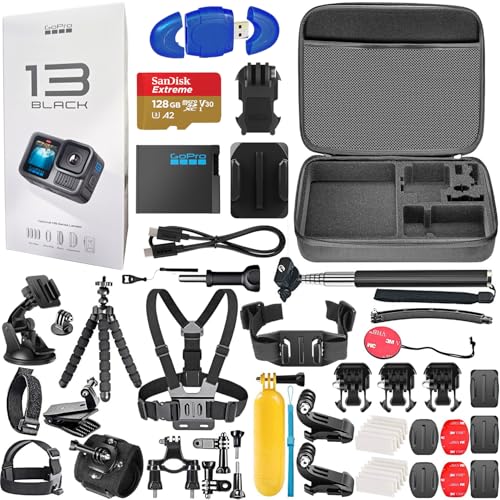
GoPro HERO13 Black — Best daylight workhorse
Above a harbour at noon, clamped to a railing it does not care about, the HERO13 is in its natural office. Waterproof without a case, unbothered by spray, dust or the seagull’s opinion, it runs its dedicated lapse modes with the calm of a platform that has documented more construction sites, regattas and festival squares than any rival alive. The wide lens suits the genre’s classic daylight geometry — a stage, a square, a shoreline — where the frame stays and the world performs.
Power manners make the long day possible. USB feeding from a bank or a wall supply carries a sequence past the battery’s horizon, and the camera’s economy at daylight intervals — a frame every few seconds across a working day — is the product of a decade of exactly this abuse. In-camera assembly hands you a watchable film at collection time, which matters commercially: a site manager or an events team can post the day’s progress before the stills-maker has finished importing.
Filtration, once the action camera’s weak subject, is now a solved accessory problem: neutral-density filters made for this body let each frame linger, so ferries glide and crowds ghost instead of teleporting. The fixed lens still dictates its perspective, and the small sensor’s files ask for kind treatment when a sequence runs into evening. For the daylight brief that opens this guide, neither toll is charged often enough to dent its title.
- Format: waterproof action camera
- Intervals: dedicated lapse modes with in-camera assembly
- Power: USB feeding for all-day sequences
- Filtration: dedicated neutral-density accessories
- Mounting: clamps, rails, fences and stall awnings
Strengths
- Survives the spray, dust and knocks of real locations
- Finished film ready the moment you collect it
- All-day running on simple USB power
Trade-offs
- One fixed wide perspective for every subject
- Evening files show the small sensor’s limits
- Manual exposure discipline is shallower than mirrorless
The events photographer’s habit explains its reign: arrive an hour early, clamp it high above the square, and let it harvest the whole festival’s breathing — crowds condensing, stalls rising, light swinging — while both hands and the main camera stay free for the moments that need a human. No other body here multiplies a single operator so completely.
Best for: festivals, sites, harbours and any square where the day itself is the show. Not suited for: telephoto subjects or fastidious manual-exposure artistry

DJI Osmo Pocket 3 — Best moving timelapse
Every other camera in this guide assumes the frame stays still. The Pocket 3 asks what happens when it should not. Its gimbal — a tiny mechanical hand that holds the lens level against the world’s wobbling — turns timelapse into a travelling shot: a market aisle walked at dawn as the stalls open, a canal path cycled slowly, a museum route, a pilgrimage street. Played back at speed, these hyperlapse journeys are the most immediately delightful films in the modern genre, and no static body here can make one at all.
The gimbal also redeems the static sequence in one specific way: panning. Programmed to sweep slowly across a harbour or a skyline while the intervals tick, it adds a sentence of cinema to the paragraph of a fixed frame, and it repeats that sweep with a machine’s patience rather than a hand’s drift. The rotating screen and pocketable size make it the camera most likely to be present when an unplanned sequence presents itself — the storm light breaking over a strange city on a work trip, harvested from a hotel window ledge.
Its sensor, large for a device of this footprint, keeps daylight files handsome and evening files respectable, and DJI’s lapse tooling is designed for people who intend to post the result the same day. The honest limits are a fixed lens, a battery that is built in rather than swapped, and a delicacy beside the GoPro’s indifference — a gimbal is a mechanism, and mechanisms prefer not to be dropped on quaysides.
Treat it as the genre’s travelling player: protected in its case, charged from the same bank as your phone, deployed whenever the story moves. The static witnesses document places; this one documents journeys, and some days the journey is the whole point.
- Format: gimbal camera, pocket-sized
- Intervals: lapse and hyperlapse modes built in
- Movement: stabilised walks and programmed pans
- Screen: rotating design for high or low framing
- Power: fast charging from ordinary USB banks
Strengths
- Walking sequences no static camera can attempt
- Slow pans executed with mechanical patience
- Small enough to be carried on pure speculation
Trade-offs
- Built-in battery ends the longest vigils early
- Gimbal mechanism dislikes drops and grit
- Fixed lens and modest filtration options
A travel writer’s dawn routine shows its value: out of the hotel before the city wakes, walking the old town’s spine while the shutters rattle up and the coffee carts roll out, the Pocket 3 drinking the whole awakening into ninety seconds of glide. That film, posted before breakfast, is the one the readers share.
Best for: journeys, routes, walks and pans through busy living places. Not suited for: multi-day unattended posts or abusive weather

OM SYSTEM OM-5 Mark II — Best for weather watchers
The gardener, the hillwalker and the storm enthusiast share a posting problem: their subjects live outdoors for weeks, in weather, far from sockets. The OM-5 Mark II is the stills camera built for that parish. Weather sealing that treats a hillside squall as a scheduling detail, a body and lens kit small enough to ride in a jacket’s worth of baggage, and interval shooting for full stills sequences — the deliberate maker’s raw material — combine into the patient witness this guide would leave above a valley while a front comes through.
Daylight suits its virtues precisely. The Micro Four Thirds format’s depth of field keeps a garden sequence — foreground seedlings, background weather — honestly sharp at modest apertures, and the system’s compact telephotos let a modest lens frame the far end of a field, a lighthouse, a nesting cliff, so the sequence’s subject can be distance itself. Stabilisation, famous for handheld work, serves the clamped vigil too, damping the micro-shudder of a small tripod in gusting wind that would otherwise print as a nervous frame line.
Its interval discipline is a photographer’s rather than an appliance’s: stills to grade, exposure locked by a hand that understands why, files with the depth to rescue the hour when the storm light went theatrical. In-camera assembly conveniences trail the action cameras’, and the smaller sensor asks for respect after dusk — but the daylight brief is this body’s home fixture, and there it is the connoisseur’s choice.
Ownership adds a quiet dividend: the same sealed kit that keeps the vigil is the kit its owner hikes with on the days between sequences, so the camera is practised, charged and familiar when the forecast promises drama. Tools that live in a cupboard miss weather; tools that live in a rucksack film it.
- Format: Micro Four Thirds mirrorless
- Intervals: stills sequences with full manual discipline
- Sealing: weatherproof body and lens pairings
- Reach: compact telephotos for distant subjects
- Files: depth for grading changing daylight
Strengths
- Posted outdoors for days without shelter anxiety
- Distant subjects framed by genuinely small glass
- Deep focus suits gardens and layered landscapes
Trade-offs
- Assembly happens in your software, not the camera
- Deep dusk is the smaller sensor’s hard border
- Battery swaps plan the longest vigils
A vineyard row through a season of afternoons — pruning, budbreak, the first green haze — filmed from one fence post by this unobtrusive kit is the sort of sequence agricultural colleges and wine merchants now commission by name. Reliability in weather, repeated weekly, is a commercial virtue disguised as a specification.
Best for: gardens, hillsides, coasts and any sequence the weather co-directs. Not suited for: makers who want a finished film without touching a computer

Canon EOS R50 — Best first mirrorless
Every serious lapse maker started somewhere forgiving, and the R50 is the current best somewhere. Canon’s entry mirrorless carries a proper built-in interval timer and a time-lapse movie mode, so a beginner can learn the genre’s two honest paths — stills sequences for grading, in-camera films for instant gratification — on one body, with interchangeable RF lenses waiting as ambition grows. That educational completeness, at this price, is the whole argument.
The learning shows in the details. Menus explain rather than intimidate; the vari-angle screen makes a classroom window or a balcony rail a workable studio; Canon’s colour renders a school play, a kitchen renovation or a market day kindly without an editing apprenticeship. The APS-C sensor’s daylight files are genuinely good — this genre’s home lighting — and the crop factor lends the kit telephoto a reach that flatters harbour and sports-day sequences shot from a respectful distance.
Discipline must be learned rather than delegated, because the body’s automatic kindnesses will flicker a sequence if you let them; but that, for a first body, is a feature wearing a warning label. The R50 teaches the locking liturgy by making its absence visible, on a body cheap enough that the lesson does not sting. Weather sealing is absent, power for multi-day vigils needs the usual planning, and the electronic shutter’s manners under artificial light ask for the usual tests.
Graduates of this body keep it. As a second, lendable, riskable camera — the one posted on the site fence while the flagship stays home — it serves for years after its owner has moved up the range, which is the surest sign a first camera was chosen well.
- Format: APS-C mirrorless, RF mount
- Intervals: built-in timer plus time-lapse movie mode
- Screen: vari-angle for awkward household posts
- Files: kind daylight colour, minimal editing needed
- Role: the learner’s complete timelapse education
Strengths
- Both timelapse paths taught on one affordable body
- Lenses bought now serve future Canon upgrades
- Friendly handling for students and families
Trade-offs
- No weather sealing for exposed outdoor posts
- Automatic modes must be outgrown for flicker-free work
- Long vigils need external power planning
The science department’s bean diary, the art room’s mural week, the family kitchen’s transformation across one long summer — the R50’s natural commissions are educational in the broadest sense, and its films get shown, which is more than most first cameras achieve.
Best for: beginners, schools and families learning the genre properly. Not suited for: exposed multi-week posts or sealed-body weather work

Insta360 Ace Pro 2 — Best for markets indoors
Move the daylight brief under a roof — a Victorian market hall, a food arcade, a station concourse at rush hour — and the light turns mixed, dim at the edges and theatrical in the middle. The Ace Pro 2’s larger sensor for its class is built for exactly that compromise. Its frames hold the warm pools of stall lighting without smearing the shadows into soup, its colour carries a polish that flatters food and faces, and its flip screen solves the overhead clamp’s eternal problem: composing a shot mounted above head height without a ladder and a prayer.
Interval modes and in-camera assembly cover the working duties with the same set-and-collect ease as the GoPro, while the low-light grace extends the useful day at both ends — the market assembling itself before dawn, the street-food row lighting up at dusk. Traders and venue managers, the people who commission these films, judge them on a phone screen at arm’s length, and this body’s footage survives that judgement with unusual elegance.
The ecosystem toll is real: mounts and third-party habits trail GoPro’s decade of entrenchment, and the longest outdoor vigils in hard weather remain the HERO13’s parish rather than this one’s. Battery and USB powering handle the standard indoor day comfortably, and the flip screen’s framing confidence means fewer sequences ruined by a badly guessed angle — a mundane virtue that working operators rank above resolution.
Choose it when the sequence lives under a roof or under evening light, when the subject is people trading, cooking and gathering, and when the film must look expensive by Friday. It is the small camera for the populated hours.
- Format: action camera, large sensor class
- Intervals: lapse modes with in-camera assembly
- Screen: flip design for overhead and low mounts
- Low light: clean frames in halls and arcades
- Colour: polished rendering of food and faces
Strengths
- Mixed indoor light handled with rare grace
- Framing verified from awkward mounting positions
- Footage flatters people, produce and premises
Trade-offs
- Accessory world still younger than GoPro’s
- Hard-weather vigils favour the tougher rival
- Manual depth below the mirrorless picks
A covered market’s Saturday, filmed from a beam above the fish stall — dawn deliveries, the nine o’clock surge, the lunchtime theatre, the long exhale — becomes the film the market now plays on its own website. That commission, repeated in arcades and food halls everywhere, is this camera’s home address.
Best for: market halls, arcades, stations and evening street scenes. Not suited for: the longest exposed-weather deployments

Nikon Z30 — Best for instant movies
Some sequences are not art projects; they are evidence with a deadline. The classroom experiment that must be a film by parents’ evening, the workshop build a client wants to see compressed, the market stall’s day condensed for a grant application — the Z30 serves that honest economy. Nikon’s small creator body offers straightforward interval tools and time-lapse movie assembly that hands over a finished film without an editing suite, a subscription or an evening at a desk.
The flip screen and creator-first layout make it the friendliest body here to post in a working room: above a terrarium in a science lab, on a shelf over a workbench, taped discreetly in a shop window watching the street’s tide. USB power suits the plugged-in life of indoor sequences that run for a term rather than an afternoon, and Nikon’s colour keeps people and produce looking like themselves, which evidence should.
Its Z-mount lenses keep the rig compact, and the same body films the teacher’s explanation, the maker’s presentation and the trader’s pitch when the sequence is done — a versatility that small organisations feel in their budgets. Weather sealing is absent and the outdoor vigil is not its calling; battery-only fieldwork asks for planning the action cameras shrug off.
Within its parish — indoors, institutional, deadline-driven — it is the most congenial witness on this page, and its films have a habit of actually being watched, which is the entire point of making them.
- Format: APS-C mirrorless, Z mount
- Intervals: simple tools, in-camera movie assembly
- Power: USB for term-long indoor posts
- Screen: flip-out for shelf and bench framing
- Role: classrooms, workshops and small organisations
Strengths
- Finished films without an editing workflow
- One body for sequences, lessons and presentations
- Gentle learning curve for non-photographers
Trade-offs
- No sealing for outdoor weather posts
- Field battery life needs a plan
- Less manual depth than the Canon learner
The chilli-growing contest between two classrooms, filmed from germination to harvest and screened at the school fair, is its emblematic commission: modest, joyful, finished on time, and argued over by eight-year-olds with the seriousness of film critics. Cameras that enable that scene deserve their ranking.
Best for: schools, makers and traders who need a watchable film today. Not suited for: weather-exposed vigils or grading-heavy cinema sequences
How Do the Six Daylight Timelapse Cameras Divide the Day?
| Camera | Format | Sequence strength | Signature subject |
|---|---|---|---|
| GoPro HERO13 Black | Action camera | Endurance and toughness | Squares, sites and shorelines |
| DJI Osmo Pocket 3 | Gimbal camera | Movement and panning | Routes, walks and journeys |
| OM SYSTEM OM-5 Mark II | Micro Four Thirds | Sealing and stills depth | Gardens and approaching weather |
| Canon EOS R50 | APS-C mirrorless | Learning with real lenses | Household and harbour projects |
| Insta360 Ace Pro 2 | Action camera | Mixed-light polish | Market halls and food rows |
| Nikon Z30 | APS-C mirrorless | Instant finished movies | Classrooms and workshops |
Two questions sort the table faster than any specification: must the frame move, and must the film be finished today? Movement points to the Pocket 3 alone; a same-day film points to the in-camera assemblers; a graded stills sequence points to the mirrorless pair; and the weather, as always in this genre, has a vote of its own that the sealed bodies win.
How Should You Choose an Interval for Crowds, Clouds and Shadows?
Start from the finished film and work backwards, because the interval is nothing but arithmetic wearing a creative hat. Decide how long the sequence should play and how much real time it must swallow; divide the second by the first at your playback rate and the interval falls out. A thirty-second film at a standard playback rate needs several hundred frames; spread across a six-hour market day, that is a frame every half-minute or so. The arithmetic is trivial — the judgement lies in matching it to the subject’s own rhythm.
Crowds and traffic want short intervals, a second or two, because human movement strobes cruelly when sampled sparsely: people teleport, buses lurch, and the film reads as surveillance rather than as life. Clouds forgive and reward the middle range, a few seconds between frames, fast enough to keep their motion silky and slow enough to compress an afternoon into a minute. Shadows are the patient end of the dial — a frame every half-minute traces the sun’s swing across a facade with stately clarity — while growing things in a garden ask for minutes, and a building site asks for a handful of frames a day at consistent hours.
Test before committing. Five minutes at your chosen interval, assembled and watched, will tell you more than any chart: too fast and the film yawns, too slow and it judders. The makers whose sequences feel inevitable simply ran that cheap rehearsal while everyone else was trusting a formula, and the habit costs nothing but the humility to preview your own patience.
What Mistakes Make a Daytime Sequence Look Cheap?
Automatic everything leads the list, for the reasons the flicker section laid out: exposure chasing clouds, white balance re-deciding the sky, focus hunting a passing gull and returning to find the frame subtly changed. Second comes the wandering mount — a clamp that settles, a mini-tripod on a vibrating surface, a railing the public leans on — because the audience reads frame movement as carelessness faster than any other flaw.
Interval vanity is the third failure: sampling far more often than the subject needs, filling cards and draining batteries to produce a film indistinguishable from real time, or sampling so sparsely that a lively square becomes a slide show of strangers. Fourth is the forgotten foreground. Pure motion with nothing still to measure it against — sky alone, water alone — gives the eye no anchor, and the sequence feels like weather footage rather than a story.
The last mistake is logistical amnesia: no note of settings, no record of where the clamp stood, no backup of the day’s frames before the card is reused. Daylight timelapse is a repeatable craft only for makers who can repeat their own setups, and the notebook is the cheapest professional tool in this entire guide.
Why Does a Neutral-Density Filter Change Everything in Bright Light?
A still photograph freezes its subject; a timelapse frame should smear it slightly. When each exposure lasts a healthy fraction of the interval — a ferry gliding, a crowd ghosting, water turning to silk — the assembled film flows the way memory flows, and the difference between a souvenir and a cinematic sequence is usually nothing more exotic than that blur. Bright daylight forbids long exposures on its own, because the light is simply too strong; the neutral-density filter is the permission slip, cutting the light so the shutter can linger at noon.
Strength is chosen against the interval, not against vanity. For a two-second interval in full sun, a strong filter brings the exposure into the half-second neighbourhood where motion smears beautifully; weaker filtration suits overcast days and longer intervals. Variable filters tempt with convenience and can misbehave at their extremes, printing a dark cross on wide frames; fixed strengths, swapped as the light changes, are the working maker’s dull and reliable answer.
Cleanliness becomes a moral quality. A fingerprint that a still photographer might never notice repeats in every frame of a sequence like a signature of carelessness, and a filter that flares against the sun writes that flare across an entire afternoon. Shade the rig where you can, clean the glass at every visit, and remember that in this genre every small flaw is multiplied by the frame count before it is forgiven.
How Do You Keep a Long Day Sequence Powered and Fed?
Budget the day in frames, then feed the budget. A six-hour sequence at two-second intervals asks for more than ten thousand frames; at thirty-second intervals it asks for a few hundred, and the power and card arithmetic differ by an order of magnitude between those two honest choices. Write the numbers down before choosing the interval, because the interval is where the budget is truly set, and a dead camera at hour five converts a day’s patience into a story about arithmetic.
USB power is the daylight maker’s emancipation. A power bank gaffer-taped to the tripod leg, a wall supply for the indoor post, a solar trickle for the garden vigil — the bodies ranked here were chosen partly for how gracefully they accept such feeding while they work. Cable discipline matters as much as capacity: a lead that can be kicked loose by a passer-by or worried free by wind will be, usually during the sequence’s best hour, so route and strain-relieve every connection as if the film depended on it, because it does.
Cards deserve the same respect as batteries. Shoot the sequence’s file size honestly, carry twice the capacity the arithmetic demands, and never format the day’s card until the film is assembled and backed up in two places. Heat is the summer tax on all of this — a black camera baking on a noon railing sips its battery faster and sulks sooner — so shade the rig where the frame allows and derate every brochure promise by the weather you actually have.
How Should You Plan a Sequence Around People and Permissions?
Daylight timelapse usually happens where people live and work, and the ethics are as practical as the optics. A camera clamped in a market, a station or a workplace is making a film of identifiable strangers; most venues treat a word with the manager as the whole permit process, and that word, asked early and cheerfully, also buys you the best mounting position and a colleague who will keep an eye on the rig. Filming a workplace’s own day for the workplace is the genre’s happiest commission — agree the frame, the hours and the deletions policy before the first interval.
Children, schools and care settings raise the bar properly: institutional permission, guardian consent where the setting requires it, and framing choices — wider, higher, more anonymous — that honour the setting’s safeguarding rules. The Z30 and R50 sections above assume that discipline, and no sequence is worth a setting’s trust.
Finally, plan the reveal. A finished film of a community’s own day is a gift with unusual social power; showing it first to the people in it, and crediting the place that hosted the camera, turns a one-off permission into a standing invitation. The genre’s professionals are booked by reputation, and reputation in public places is simply the memory of having behaved well there before.
Final Recommendation
Clamp the GoPro HERO13 Black above the day’s action and let endurance do the artistry. Take the DJI Osmo Pocket 3 when the sequence itself should travel, the OM SYSTEM OM-5 Mark II when the weather co-directs, and the Canon EOS R50 when you are learning the craft with intent to keep it. Choose the Insta360 Ace Pro 2 for the populated indoor hours and the Nikon Z30 when a finished film is owed by teatime. In every case, lock the exposure, feed the power, mind the interval — the camera is the least of it, and that is the genre’s good news.
Frequently Asked Questions
Is this guide different from a guide to shooting time lapse?
Yes, by territory. The craft of shooting time lapse in general — and the long unattended vigil in particular — has its own guide on this site, and star time lapse at night has another. This article covers the sunlit, populated, moving world: crowds, clouds, shadows, journeys and working days.
What interval should I use for a busy street?
One to two seconds suits most street life: short enough that people and vehicles glide rather than teleport, long enough to compress an hour into a watchable minute. Preview a few minutes at your setting before committing the day.
Do I need a neutral-density filter in daylight?
For the flowing, cinematic look, yes. Without one, bright light forces short exposures and the film stutters like surveillance footage. A strong fixed filter, chosen against your interval, is the working answer.
How do I stop my sequence flickering when clouds pass?
Lock the exposure or use the body’s smoothing tools, fix the white balance to a value, and set focus once. Flicker is the camera re-deciding; a sequence needs one decision, defended for its whole length.
Can a phone replace these cameras for a day sequence?
A phone can rehearse the idea charmingly, but a full day at short intervals will test its battery, storage and your need to use it as a phone. The bodies here exist to be left running while life, including yours, goes on elsewhere.
How Do You Assemble a Thousand Daylight Frames Into a Film That Breathes?
Assembly begins with deletion, and the courage to delete is a timelapse virtue. The knocked hour, the frame where a delivery van parked against your lens, the ten minutes a festival banner blocked the square — out they come, because a sequence is judged by its weakest passage and the audience’s patience is not a renewable resource. Stabilise what remains against the micro-shifts no clamp fully prevents, deflicker only what discipline could not prevent, and grade the whole as one continuous photograph rather than as a thousand separate ones arguing about the sky.
Rhythm is the editor’s real instrument. The same market day can play as a serene meditation or as a frantic montage depending on how many source hours each screen second must carry, and mixed rhythms often serve a film best — the dawn assembly unhurried, the noon surge brisk, the evening exhale slow again. Choose the music before the final cut wherever you can, because a sequence cut against its soundtrack breathes in time, and one cut in silence and scored afterwards never quite learns to dance.
Export generously and archive honestly. Keep the frames themselves, not merely the film, because the tools improve yearly and the sequence you re-assemble in five years — steadier, smoother, wiser — may be the one the vigil was truly for. Keep the settings notebook with the frames, too; future you, standing at the same railing with a newer camera, deserves to inherit the interval that worked rather than rediscover it at the cost of another day.
What Can a Season of Daytime Sequences Teach a Town About Itself?
Something quietly remarkable happens when a place watches itself at speed. The market town sees its square’s tides — which corner fills first, where the lunch crowd truly gathers, how the light crosses the war memorial in June versus October — and those revelations, delivered as ninety seconds of film, have changed real decisions: stall layouts, planting schemes, the hour a café bothers to open. A camera clamped to a railing becomes, without anyone intending it, an instrument of civic self-knowledge.
Schools feel the same effect at a smaller scale. A playground’s weather diary, a garden’s season, the tide of bicycles at the gate — children who have watched their own place accelerated argue about it with a precision no textbook purchases, because the film is evidence about their world rather than information about somebody else’s. The affordable bodies in this guide exist in this paragraph: the R50 in the classroom window and the Z30 above the terrarium are doing civic and educational work that their price tags never mention.
And the maker learns the deepest lesson last: that the ordinary day, attended to properly, is not ordinary. Set one sequence this week — the street outside your window between breakfast and lunch, the shadows crossing your own stairs — and watch what your attention was too slow to see. Every camera above exists to make that revelation repeatable, and it has never once failed to arrive for a maker who locked the exposure, fed the battery and waited.
How Do You Film a Working Day for the People Who Work It?
The most commissioned daylight sequences in the world are not artworks; they are a business watching itself work. The bakery’s dawn, the boatyard’s launch week, the farm’s harvest day, the shop’s refit — organisations ask for these films because acceleration reveals what familiarity hides: the choreography of a good team, the bottleneck nobody believed in, the sheer amount of skilled motion inside an ordinary Tuesday. Shooting one well is a distinct craft. Agree the frame with the people in it before the first interval, because a camera discovered mid-shift reads as surveillance while a camera introduced at the morning briefing reads as pride. Place it where the work’s rhythm passes, not where the boss’s office looks best, and let the interval serve the trade’s own tempo — bakers move in bursts around the ovens’ timetable, boatbuilders in long, steady reaches.
Delivery etiquette decides whether the commission repeats. Show the finished film to the team before anyone posts it, delete the frames individuals reasonably object to, and credit the workplace in the caption as carefully as you would credit a landscape’s owner. The makers who behave this way find that one working-day film becomes a standing relationship — the seasonal return, the new premises, the anniversary — because workplaces, like theatres, rebook the people who made them look like themselves at their best. The cameras ranked earlier divide this work naturally: the action bodies for the yard and the site, the Z30 for the classroom and the workshop, the Ace Pro 2 for the hall where people and produce share the frame.
What Does a Market Square Teach About Every Other Subject?
Spend one full day filming a single square — dawn deliveries, the school run, the lunch surge, the long afternoon, the evening promenade — and you have taken a masterclass that transfers to every subject in this guide. The square teaches interval judgement because its rhythms change by the hour, forcing the maker to notice that crowds, shadows and commerce each keep their own tempo inside one frame. It teaches exposure discipline because its light swings from raking gold to flat noon to theatrical dusk across a single posting. It teaches foreground, because the café table, the fountain and the war memorial are standing there offering themselves as anchors, and the maker who ignores them learns by evening why the film feels unmoored.
Above all it teaches the genre’s social craft. A square is a community with opinions about cameras; the maker who asks the café for the window seat, thanks the stallholders, and shows the evening’s first assembly to the people in it leaves with permissions no equipment buys. Return to the same square across a year — market day and quiet day, festival and flood — and the sequence becomes a portrait of a place that no single photograph could have taken. That is the deepest use of everything ranked above: not the film of a day, but the diary of a place, kept faithfully, one interval at a time.
How Should You Test a New Sequence Idea in a Single Afternoon?
Every ambitious sequence in a maker’s archive began as a cheap rehearsal, and the afternoon test is the genre’s best-value habit. Pick the smallest version of the idea — the café’s lunch hour instead of the market’s whole day, one tide instead of the season, the kitchen window’s shadow play instead of the building site — and run it end to end: set, lock, feed, collect, assemble, watch. The rehearsal’s job is to fail informatively. A wrong interval reveals itself in ninety seconds of finished film; a wandering clamp confesses in the first assembly; a battery’s optimism is exposed by hour two rather than by the real vigil’s dawn. Each failure costs an afternoon at rehearsal prices instead of a week at production prices, and the notebook entry it generates is worth more than the film.
Judge the test film with a stranger’s eyes, ideally by showing it to someone who did not watch you make it. Makers forgive their own sequences the flaws audiences never do — the pulse of a passing-cloud hour, the frame’s slow drift, the subject that turns out to be less interesting accelerated than it was in the imagination. If the rehearsal bores its first honest viewer, the subject or the interval is wrong, and discovering that before the real deployment is the entire point. The cameras ranked in this guide all make the rehearsal cheap; the discipline of actually running one is what separates the archives full of finished films from the hard drives full of magnificent first halves.
How Do Seasons Change a Favourite Location’s Sequence?
Return to one frame across a year and the timelapse becomes a diary with a single page. The harbour in January’s horizontal rain, in April’s regattas, in August’s festival crush, in October’s emptying light — each visit is a day’s work, and the year’s assembly is a portrait no single sequence could have taken, because the subject was never the harbour at all. It was time’s effect on a place the maker refused to stop attending to. Makers who adopt one such frame — the view from their own window counts, and has produced classics — find that the habit reorganises their attention permanently: every place they visit thereafter is quietly auditioned for its rhythm, its foreground, its way of changing. The cameras in this guide divide the year’s visits between them naturally, the tough little witnesses for the weather visits, the mirrorless bodies for the golden ones, and the place itself becomes the long project that outlasts any single piece of equipment. Start the diary with the next change of season; the first frame is the only one that cannot be taken later.
Related Guides
Continue with our guide to shooting time lapse sequences, our notes on star time lapse and nature photography, and our walkthrough for neutral-density filters for video.


