ilcastellomenu.com is reader-supported. When you buy through links on our site, we may earn an affiliate commission.
Where to Buy
A travel YouTube channel is filmed in the least controlled studio on earth: the world, while it is happening to you. Trains leave early, light changes by the hour, your hotel room doubles as an edit suite, and the footage has to survive a laptop upload over café Wi-Fi before the next bus. If you are choosing among the best cameras for travel youtube work — long-form episodes, Shorts cut from the same day, and the occasional piece to camera recorded on a hostel bunk — the winning camera is rarely the one with the most impressive specification sheet. It is the one that is charged, reachable and rolling in the four seconds before a moment disappears.
This guide is written for creators who publish while they move. That single fact rearranges every priority. Weight stops being a comfort issue and becomes a creative one, because the camera left in the hotel safe films nothing. Upload workflow matters as much as sensor size, because a channel that posts three days late from every location trains its audience to stop waiting. Audio matters more than resolution, because viewers forgive a soft frame long before they forgive a windy, muffled voice. And vertical video is no longer an afterthought: the same morning’s walk through a market may need to become a twelve-minute episode and a forty-second Short, ideally without shooting everything twice.
One distinction before the picks. A related guide on this site covers cameras for travel blogging and vlogging in the broad sense — mixed stills, writing trips, general-purpose travel documentation. This article is narrower and more demanding: it assumes YouTube is the destination, publishing happens on the road, and the camera is judged as a production tool for a channel, not as a holiday companion. If your trip produces videos first and everything else second, you are in the right place.
Every linked pick below was chosen from cameras we could verify properly, and each one is matched to a recognisable kind of travel creator: the one-camera minimalist, the quality-first filmmaker, the run-and-gun walker, the action specialist. Read the workflow sections as seriously as the reviews — on the road, workflow is image quality, because it decides what actually gets filmed and posted.
Key Takeaways
- The Sony ZV-E10 II is the channel-first pick: light, lens-flexible and built around how creators actually publish.
- DJI’s Osmo Pocket 3 wins whenever walking footage is the backbone of your episodes.
- Canon’s EOS R50 suits travellers who want one body for video, stills and thumbnails.
- The GoPro HERO13 Black covers the journeys no other camera should attempt.
- Upload discipline — small files, nightly backups, vertical versions planned at capture — separates channels that grow from channels that stall.
- Buy for the trip you take repeatedly, not the expedition you imagine once.
In this guide
Quick Picks
| Camera | Badge | Why it earns its place |
|---|---|---|
| Sony ZV-E10 II | Best overall for travel channels | A light mirrorless body designed around creators, with lenses for every leg of a trip. |
| DJI Osmo Pocket 3 | Best for walking footage | A gimbal and camera in one pocketable unit that makes city walks look professionally smooth. |
| Canon EOS R50 | Best all-rounder | Video, stills and thumbnails from one friendly body that new creators grow into. |
| Canon PowerShot G7 X Mark III | Best pocket compact | The camera that is simply always there, in a jacket, ready before the moment ends. |
| GoPro HERO13 Black | Best for rough journeys | Waterproof, mountable everywhere and unbothered by the travel days that break itineraries. |
| Sony ZV-1F | Best simple starter | Fixed lens, wide view and almost no decisions between you and the record button. |
How Did We Choose Cameras for a Travelling YouTube Channel?
We scored these cameras the way a working travel channel experiences them: across a whole trip, not across a desk. The first measure was carry reality. A camera and its essential kit — one or two lenses, a small microphone, spare batteries, cards — had to fit the bags travellers genuinely use, and the setup had to be sustainable on day twelve of a trip, when novelty has worn off and only habit keeps the channel fed. Cameras that demand a dedicated camera bag, a charging ritual and a daily decision about whether to bother were marked down, however beautiful their footage.
The second measure was publishing speed. How quickly can a clip move from camera to phone to upload queue? How manageable are the file sizes on a mid-range laptop in a rented room? Does the camera help or hinder the vertical versions that Shorts demand? A travel channel is a small media business operating out of a backpack, and its bottleneck is almost never resolution — it is the hour between filming and posting, repeated in every new town.
Third came resilience in the broad sense: battery life across a long day out, behaviour in heat and drizzle, autofocus that can be trusted while the operator is also navigating, buying tickets and being a tourist. Finally, we weighed growth. A channel’s second year asks more than its first month, so bodies that accept better lenses, better microphones and more deliberate technique scored above closed systems — unless the closed system was so light and fast that it changed what its owner filmed at all, which is its own kind of growth.
What Makes Travel YouTube Different From Ordinary Vlogging?
Distance changes everything. The home vlogger who dislikes a shot can reshoot it after lunch; the travel creator is leaving on the evening train. That irreversibility rewards cameras that start fast, focus reliably without supervision, and expose scenes sensibly while their owner is busy experiencing them. It also rewards redundancy habits — two cards, a nightly copy, footage checked before the location is left behind — that this guide treats as part of the camera choice, because a body with dual protection habits built into your routine is worth more than a marginally sharper sensor.
Publishing from the road imposes the second difference. Hotel and café connections vary from fibre to folklore, so the practical channel shoots with upload in mind: episodes structured so a strong segment can post even if the rest waits, Shorts exported small and early, thumbnails made from frames grabbed the same evening. Cameras whose apps move clips to a phone painlessly, and whose files behave in modest editing software, quietly outperform glamorous bodies that turn every upload into an overnight project.
There is also the matter of strangers. Travel filming happens in other people’s workplaces, homes and holy places, and the camera’s social footprint — its size, its noise, the production it implies — decides what access a creator is granted long before image quality matters. Small, calm equipment with a presenter who asks first will film kitchens, workshops and family celebrations that a conspicuous rig would be politely refused. Several picks below earn their places partly on this diplomacy: they look like travel, not like a shoot, and places open to travellers in a way they never open to productions.
The third difference is that the traveller is also the talent, the crew and the audience’s tour guide, usually while slightly lost. Equipment that reduces the operator’s jobs — stabilisation that forgives walking, screens that flip for pieces to camera, microphones that tame wind without a dead-cat the size of a pet — returns attention to the place itself, which is the entire product. Every pick below was judged against that standard: does it give the traveller back to the journey?
What Are the Best Cameras for Travel YouTube?
Six cameras, six different answers to the same problem: how to keep a channel alive while the map keeps moving.

Sony ZV-E10 II — Best overall for travel channels
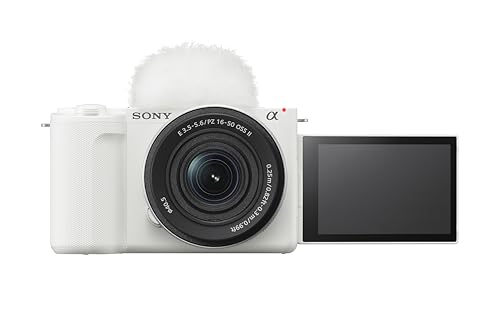
The ZV-E10 II is what happens when a manufacturer designs a mirrorless camera by watching creators instead of photographers. It is small enough to live in a daypack’s top pocket, its controls assume video is the main event, and the E-mount lens range lets a channel evolve from a single kit zoom to a small travel set — a wide lens for interiors and markets, a compact standard zoom for everything else — without changing bodies. For a travelling YouTuber, that combination of small body and open future is the sweet spot this whole category chases.
Its working virtues on the road are specific. The autofocus tracks a face while its owner walks and talks, which is the defining shot of travel YouTube, and it does so without the hunting and pulsing that make footage unusable. The flip screen supports the bunk-bed piece to camera and the overhead food shot with equal ease. Battery discipline is manageable across a long sightseeing day with one spare in a pocket, and the files edit kindly on the sort of laptop that survives being carried around the world.
Shorts deserve their own sentence, because for many travel channels they are now the discovery engine. Shooting with vertical in mind — framing wide enough to crop, or turning the camera for dedicated vertical takes — is painless here, and the quick phone transfer means a morning’s market walk can be a posted Short before dinner, while the long episode is still being assembled. Channels grow on that rhythm: the Short advertises, the episode satisfies, the subscriber stays for the next town.
The honest costs are the mirrorless costs. Lenses, even small ones, are decisions and grams; a two-lens kit is a system to manage in hostel dorms and night trains. The body asks its owner to learn real camera craft — exposure, colour, audio levels — beyond what a fixed-lens compact demands. And in truly awful weather it stays in the bag where the GoPro below goes out to play. None of that dents its position. For the creator whose channel is the trip’s purpose, this is the camera the trip should be built around.
- Format: APS-C mirrorless, E mount
- Channel role: the main camera, every day
- Carry: daypack-friendly with a compact lens
- Workflow: fast phone transfer for Shorts
- Growth: a lens collection that travels with the channel
Strengths
- Creator-first controls and dependable face tracking
- Small body, serious lens future
- Long-form and vertical from the same day’s shooting
Trade-offs
- A lens kit is still a kit to carry and guard
- Rewards learning real exposure craft
- Bad weather sends it back into the bag
Picture its typical production day in a coastal city: dawn harbour footage on the wide lens, a walking introduction through the fish market with autofocus holding the creator’s face against a moving crowd, a café review filmed from a tabletop, thumbnails shot as stills between courses, and the day’s clips on the laptop before the evening ferry. No single moment required a different camera. That unbroken competence, repeated in forty towns, is what a channel is actually made of.
It also ages well as its owner improves. The first month’s owner uses it almost as a compact; the second year’s owner is choosing lenses per story, recording cleaner audio, colouring footage deliberately. Equipment that teaches without punishing is rare in any category, and for a channel whose skills are its real asset, the teaching may be the most valuable specification of all.
Best for: creators building a serious travel channel around one mirrorless body. Not suited for: travellers who refuse to carry interchangeable lenses at all

DJI Osmo Pocket 3 — Best for walking footage
Every travel channel discovers the same truth in its first month: the walking shot is the genre’s heartbeat, and it is the hardest shot to make watchable with ordinary gear. The Pocket 3 dissolves the problem by merging camera and three-axis gimbal into something the size of a chocolate bar. Streets that would judder into nausea on a handheld body glide past here; the creator walks, talks and gestures, and the footage arrives looking like a small crew followed along. For channels built on city walks, market tours and neighbourhood explorations, this little machine is not an accessory — it is the signature look.
Its size rewrites filming etiquette as well. A mirrorless camera on a gimbal announces a production; the Pocket 3 reads to bystanders as a gadget, so markets, cafés and small museums tolerate it in a way they never tolerate a rig. It starts in moments, rides in a jacket pocket between locations, and its rotating screen flips between horizontal episodes and vertical Shorts with a physical twist that becomes second nature within a day. The creator who films where filming is delicate — family restaurants, workshops, places of worship approached respectfully from outside — will find doors open to this camera that stay closed to bigger glass.
Sound and stamina are its working compromises. Its built-in audio is serviceable in calm air and strained in a harbour wind, so serious channels pair it with a small wireless microphone, which the ecosystem supports neatly. Low light softens its small sensor’s ambition; evening footage is atmospheric rather than crisp, and night markets glow more than they resolve. Battery life suits its role — long walks, many clips — provided the nightly charge ritual is kept, as it must be for every device in a traveller’s bag.
Judge it, though, by the footage that exists because of it. The dawn walk through an old town before the crowds, the continuous take from ferry deck to fish stall, the rainy lane filmed one-handed under an umbrella — these are shots other cameras in this guide simply do not get, because their owners would not have carried them, rigged them or been allowed them. A channel is the sum of what its camera made possible, and by that arithmetic the Pocket 3 punches absurdly far above its weight.
- Format: pocket camera with built-in three-axis gimbal
- Signature: smooth walking footage anywhere
- Carry: jacket pocket, always present
- Screen: rotates between horizontal and vertical
- Audio: plan a small wireless microphone for wind
Strengths
- Walking shots that look crewed and costly
- Films politely in places rigs cannot go
- Instant start, instant vertical versions
Trade-offs
- Evening light tests its small sensor
- Wind quickly outruns the built-in microphones
- A nightly charge is non-negotiable
Its defining episode is a single unbroken morning: out of a small hotel door, down lanes still being washed, through a bread queue, across a square filling with pigeons, ending on church steps with the creator turning to camera for the introduction — one take, no crew, no second chance needed. Viewers feel present in footage like that, and presence is the currency travel channels trade in.
It also rescues the in-between content that algorithms quietly love: the walk from station to hotel that becomes a neighbourhood guide, the detour that outperforms the planned video, the Short filmed because the camera was in a pocket when a street parade rounded the corner. Spontaneity is a production value. This is the only pick in the guide that manufactures it.
Best for: walking-tour channels and creators who film discreetly in public places. Not suited for: low-light specialists or anyone wanting interchangeable lenses

Canon EOS R50 — Best all-rounder
Some travel channels are video programmes; others are closer to illustrated diaries, where a strong still photograph carries the thumbnail, the community post and the blog header, and the episode is one part of a wider record. The R50 is the pick for that second kind of creator. It is a genuine mirrorless camera with Canon’s friendly colour and approachable handling, equally at home recording a walking introduction, photographing a mountain pass for the thumbnail, or documenting the trip for the family archive that exists behind the channel’s public face.
The thumbnail point deserves emphasis, because on YouTube the photograph is half the business. A creator who shoots deliberate stills — the creator small in frame against a vast landscape, the dish that titles the episode, the expression that promises the story — gives every upload a custom, high-quality cover without screen-grab compromise. The R50’s stills quality and easy handling make that habit painless, and its video is more than strong enough to carry the episode the thumbnail advertises. Channels are won in the click before they are won in the watch.
On the road it behaves like the well-mannered generalist it is. The body is light, the kit options keep a one-lens traveller honest, autofocus is confident for pieces to camera and general scenes, and the whole system feels welcoming to a creator whose background is phones rather than photography. Battery and card routines are unremarkable in the best sense, and Canon’s menus remain the ones beginners describe as the least frightening in the industry.
Its limits are the generalist’s limits. It will not match the Pocket 3’s walking glide without help, nor the ZV-E10 II’s creator-specific tailoring, and a creator who goes all-in on cinematic video technique will eventually shop further up Canon’s range — though the RF lenses bought for the R50 travel upward with them. As the single camera for a channel that does a bit of everything, in the hands of a traveller who also simply loves the trip, it is the most balanced instrument in this guide.
- Format: APS-C mirrorless, RF mount
- Channel role: video, thumbnails and stills in one body
- Handling: beginner-welcoming menus and colour
- Carry: honest one-lens travel kit
- Future: lenses move up the Canon range later
Strengths
- Thumbnails and stills as strong as its video
- Friendly handling for phone graduates
- One body covers the whole trip’s record
Trade-offs
- Walking footage needs stabilisation help
- Less creator-tailored than the Sony above
- Serious video specialists will outgrow it eventually
Its characteristic upload is the complete trip document: an episode that opens with a still-worthy sunrise the creator also photographed properly, cuts through the day’s journey, and closes with a gallery-worthy dusk — every asset from one body in one bag. The channel feels crafted rather than captured, and subscribers who arrived for travel stay for the photography.
Creators migrating from phones report the gentlest learning curve here: the camera assists where phones assisted, then reveals manual control exactly as curiosity asks for it. On a three-month trip, that pacing matters — the camera should be a companion in learning, not homework with a shutter button.
Best for: diary-style channels mixing video, stills and thumbnails. Not suited for: walking-shot purists or dedicated low-light filmmakers

Canon PowerShot G7 X Mark III — Best pocket compact
There is a species of travel moment that exists only for about nine seconds: the street musician rounding into view, the monkey stealing a hat, the light breaking through storm cloud over a harbour. Cameras in bags miss these. The G7 X Mark III, riding in a jacket pocket with its lens ready, catches them, and that catch rate is its entire argument. It is a proper compact with a one-inch sensor and a bright zoom, built for creators — it even speaks the language of live streaming and vertical video — yet it asks for less carrying commitment than a paperback novel.
For a certain kind of channel, this is not the backup camera; it is the correct main camera. Solo travellers moving fast and light, creators filming in places where a visible camera changes the room, and anyone whose style is diary intimacy rather than cinematic sweep will find its footage entirely sufficient and its presence liberating. The flip screen handles the walking introduction, the zoom covers the detail across the square without a lens swap, and the whole performance happens without a bag ever being opened.
Its compromises are written on its small body. Battery life is a day’s filming only with discipline and a spare; audio from the built-in microphones needs help in wind, and external microphone options are limited compared with the mirrorless picks. Autofocus, while capable, asks a little more supervision in busy scenes than the newest bodies. Low light is respectable for its class rather than remarkable. None of this surprises anyone who has held it — the camera is a deliberate trade of ultimate capability for permanent presence.
That trade pays out in a specific currency: honesty. Footage from a pocket compact has a diary’s texture — close, quick, unpolished in the ways audiences read as real. Travel channels built on personality rather than production values often discover that this camera’s look is not a limitation but their brand, and that the audience’s trust rises as the apparatus disappears. The best camera for travel YouTube is sometimes the one viewers forget exists.
- Format: one-inch sensor compact, fixed zoom
- Channel role: the always-carried diary camera
- Carry: jacket pocket, no bag required
- Creator touches: flip screen, streaming-friendly features
- Audio: budget for wind protection and spares
Strengths
- Catches the nine-second moments bags miss
- A real sensor and zoom with zero kit decisions
- Diary intimacy audiences read as honesty
Trade-offs
- Battery life demands a spare and a routine
- Microphone options trail the mirrorless bodies
- Low light is adequate, never luxurious
Its emblematic clip lasts eleven seconds: a fisherman on a dawn quay mending nets, caught because the camera was in a coat while its owner bought coffee, posted later inside an episode as the quiet moment subscribers mention most. Productions plan for monuments; channels are loved for fishermen. This camera specialises in fishermen.
It is also the pick that survives itinerary chaos best. When the day collapses — missed train, changed plans, a stranger’s invitation redirecting everything — the compact simply continues, filming the day that actually happened rather than the production that was scheduled. Travel rewards that adaptability more reliably than any specification.
Best for: fast, light, diary-style solo travel channels. Not suited for: creators needing long battery days or advanced audio rigs

GoPro HERO13 Black — Best for rough journeys
Some trips are not content opportunities; they are expeditions that happen to be filmed. River crossings, surf towns, mountain weather, motorbike miles, festival mud — the HERO13 Black is the camera that treats those conditions as its natural habitat. Waterproof without a case, stabilised to a degree that makes vehicle footage genuinely watchable, and mountable to handlebars, helmets, boards and boat rails, it films the parts of a journey that define the journey, from angles no handheld camera survives.
For travel YouTube specifically, its role is the second unit that becomes the first story. The mirrorless body films the creator explaining the river; the GoPro films the river — from the raft, under the waterfall, along the trail at handlebar height. Its wide view swallows landscapes and cramped vehicle interiors alike, and its tolerance for being knocked, soaked and frozen means the creator stops protecting equipment and starts participating, which is when expedition footage turns from documentation into experience.
The ecosystem around it suits the road: small mounts multiply its angles, batteries swap in seconds, and the footage cuts into an episode as energy — the burst of motion between reflective pieces to camera. Vertical capture for Shorts is a setting, not a project. Many channels in this niche run the GoPro as their only camera and build entire followings on its immersive grammar; others pair it with a talking-head body from higher in this guide, and the pairing is close to a complete expedition studio in a small dry bag.
Its weaknesses are the familiar action-camera ones, stated plainly. The fixed wide view flattens faces at conversational distance, built-in audio is for emergencies and atmosphere rather than narration, and low light is its least favourite condition. It is a specialist being honest about its specialism. Buy it for the journeys where other cameras stay behind, and it will return footage no other pick in this guide can bring home at all.
- Format: waterproof action camera
- Channel role: expedition and second-angle unit
- Mounts: helmets, bars, boards, rails, chest
- Stabilisation: vehicle and trail footage stays watchable
- Audio: record narration on something else
Strengths
- Films the journey’s defining moments, not just its explanations
- Water, mud and knocks are working conditions
- Mounting angles no handheld body can reach
Trade-offs
- Wide view is unflattering for talking heads
- Dialogue audio belongs to another device
- Dusk and interiors are its weak hours
Its signature sequence in a travel episode is the descent: a mountain road unwinding below a handlebar mount, weather moving across the valley, the creator’s gloved hand occasionally pointing at the view — thirty seconds that make subscribers feel altitude in their stomachs. The episode’s other camera explains the mountain. This one makes the audience climb it.
Durability also changes creator behaviour in a way worth naming: owners lend it to local guides, strap it to boats they do not own, and hand it to fellow travellers for their angle on the day. The footage multiplies because the camera is not precious. In expedition storytelling, generosity with the camera is a production technique.
Best for: adventure itineraries, water, wheels and weather. Not suited for: interview-led channels or night-market filming

Sony ZV-1F — Best simple starter
Every channel in this guide’s audience began as a decision made on an ordinary day, and the ZV-1F exists for the people standing at that decision now. It removes every obstacle between a traveller and a first upload: the lens is fixed and wide, the screen flips for the piece to camera, the controls assume the operator is also the presenter, and there is nothing to buy, mount or configure before the first episode can be filmed in the next interesting street. For a beginner, that absence of friction is not a compromise — it is the feature the whole first year depends on.
The wide fixed lens deserves a defence, because beginners apologise for it unnecessarily. Travel presentation is wide by nature: the creator in the foreground, the place spread behind, both readable in one frame. This camera’s view is tuned to exactly that composition, and its forgiving depth means the market, the temple steps and the mountain backdrop all stay present while the creator talks. What it cannot do — reach across a square, compress a distant skyline — are shots the first-year channel rarely needs and the second-year channel can add a second body for.
On the road its manners are excellent. It is small enough for a day bag’s side pocket, quick enough for the unplanned detour, and simple enough that a travel companion can be handed it and return usable footage, which quietly doubles a solo creator’s angles. Battery management is a pocket spare and a nightly charge, the same ritual as the phone it replaces, and its files behave in every editor a beginner is likely to meet.
Growth is its stated limit, and it should be bought with eyes open: no lens changes, no path into advanced audio rigs, low light that asks the creator to seek the lamp-lit table rather than the dark corner. But channels are not built on the camera’s ceiling; they are built on the fifty episodes filmed before the ceiling is reached. The ZV-1F guarantees those fifty episodes happen, on real trips, starting now — and a creator with fifty episodes and an audience can choose their next camera from experience instead of from reviews.
- Format: fixed-lens creator compact
- Channel role: the first camera, uncomplicated
- Lens: wide, tuned for presenter-plus-place framing
- Carry: side pocket of any day bag
- Path: film the first fifty episodes, then reassess
Strengths
- Nothing stands between a beginner and uploading
- Wide framing flatters travel presentation
- Companions can operate it with ten seconds of instruction
Trade-offs
- No lens changes when ambitions widen
- Dark venues stretch its sensor
- Advanced audio setups outgrow it
Its typical success story is modest and total: a first trip filmed entirely on it, twelve episodes and a run of Shorts posted from trains and hostels, a channel that exists — with real subscribers asking about the next country — before its owner has spent a single hour comparing lenses. Momentum like that is the rarest asset in this entire guide, and this camera is engineered to protect it.
It also makes an honourable second life, which softens the outgrowing question: retired from main duty, it becomes the companion camera, the loaner, the one that lives in the car for the unplanned weekend. Simple cameras keep working in a creator’s life long after ambitious ones have been sold.
Best for: first-year channels and travellers who value simplicity above range. Not suited for: telephoto storytelling or advanced low-light work
How Do the Six Travel YouTube Cameras Compare?
| Camera | Format | Travel strength | Ideal channel style |
|---|---|---|---|
| Sony ZV-E10 II | APS-C mirrorless | Channel-first design | The serious growing channel |
| DJI Osmo Pocket 3 | Pocket gimbal camera | Walking footage | City walks and tours |
| Canon EOS R50 | APS-C mirrorless | Stills plus video | The illustrated diary |
| Canon PowerShot G7 X Mark III | Compact | Permanent presence | Fast solo diary travel |
| GoPro HERO13 Black | Action camera | Expedition proof | Adventure itineraries |
| Sony ZV-1F | Fixed-lens compact | Zero friction | The brand-new channel |
Read the table by asking which row describes your actual trips. The mirrorless pair serve channels that plan their filming; the pocket pair serve channels that film their living; the GoPro serves journeys that would defeat both. Many mature channels end up owning one row from each family, bought in the order their content demanded — which is the healthiest purchasing pattern this guide can recommend.
How Should You Pack a Channel Into One Bag?
With a ruthless little system. The camera rides in the day bag, never the hold luggage; batteries and cards ride on your person on travel days, because a separated bag must not be able to end the channel. One lens mounted, at most one lens spare. The microphone lives attached or does not come. A small power bank serves camera, phone and microphone alike, and every cable in the kit is the same cable wherever the manufacturers allow it. The test of the system is a platform change at a run: if you can move trains with camera ready in one hand, the kit is right.
Build the nightly ritual into the same system, because packing and publishing are one workflow on the road. Cards copy to the laptop and a pocket drive while dinner cooks; the day’s best vertical clip is chosen before sleep, while memory can still name it; batteries charge in a fixed order on the same socket strip. Travellers who keep this ritual film more, because each morning starts with empty cards, full batteries and yesterday safely stored — the unglamorous machinery underneath every apparently effortless travel channel.
How Do You Publish Consistently While Moving?
By decoupling filming from posting. Film in location batches — a place will give you an episode and several Shorts if you shoot its introduction, its details and its food in one stay — then edit and upload on the travel days, the train hours and the rain days that every itinerary contains. Keep one finished episode in reserve at all times; the reserve converts a week of bad connections from a channel crisis into an inconvenience. Upload overnight where connections allow, in the highest quality the connection tolerates, and let scheduling tools smooth the posting times across your audience’s day.
Shorts deserve their own pipeline because they forgive everything: small files, quick edits, posted from a phone in a queue. Shoot vertical deliberately at the day’s most visual moment — the market reveal, the viewpoint arrival, the dish landing — rather than cropping horizontal footage in regret. A channel that posts three Shorts and one episode per location will outgrow a channel that posts one perfect episode, because the platform rewards the rhythm and the audience bonds with the frequency. The cameras above were chosen to feed both pipelines without doubling the filming.
How Should You Handle Light That Changes Every Hour?
Travel filming is a negotiation with a sun that refuses to read the schedule. Harsh midday light flattens faces and bleaches old towns; the golden edges of the day are short and crowded with other photographers; interiors swing between window glare and lamp-lit gloom within a single room. The practical creator builds the filming day around this rather than fighting it: walking introductions and establishing shots in the kind morning, interiors and food through the hard middle hours, portraits and pieces to camera when the evening softens. Cameras with reliable automatic exposure earn unusual trust in this rhythm, because the operator is watching the place, not the histogram.
Within a scene, consistency matters more than perfection. A piece to camera begun in sun and finished in cloud will show the join no matter how the footage is graded, so pick the light you can keep: full shade is the traveller’s softbox, available in every old town on earth, and a north-facing doorway has flattered more presenters than any filter. When a cloud bank is visibly marching toward your location, film the important sentences first and the colour shots after. These are small, unglamorous judgements, but they are the difference between episodes that feel calm and episodes that flicker with the weather’s indecision.
Colour deserves the same pragmatic approach. Mixed lighting — daylight windows, warm lamps, greenish tubes in a night market — defeats automatic settings in every camera in this guide at some point. The travelling answer is not technical heroism; it is choosing one light source per shot and letting the others become background atmosphere. Stand the presenter in the window light and let the lamps glow behind, or close the curtains and own the lamplight entirely. Audiences read a decisive frame as professional long before they can name why, and decisiveness about light is available at every price in this guide.
What Mistakes Do Travel Creators Make With Cameras?
The classic error is packing for the brochure trip instead of the real one: three lenses for a backpacking route, a cinema body for a honeymoon, a gimbal that stays in the hotel because setting it up feels like work. The second error is audio neglect — travelling to the world’s most interesting places and returning with unintelligible narration because wind protection felt like an accessory rather than the product. The third is filming everything and posting nothing: hard drives full of unedited countries, a channel silent for months, momentum spent. Each mistake is a workflow failure wearing an equipment costume.
The fourth mistake is subtler: letting the channel eat the trip. A creator who experiences every place through a viewfinder returns with footage and no memories, and audiences eventually smell the absence of genuine encounter. The cameras in this guide were partly chosen to push back — quick to start, quick to pocket, content to be put away. Film the place, then be in the place. The second half is what makes the first half worth watching.
How Do You Film a Place You Will Never Visit Again?
With a shot discipline borrowed from news crews, who also work in locations they cannot revisit. On arrival, before the planned filming, capture the establishing material while the light and your own first impressions are fresh: the wide view that locates the story, the sign, the street sound, the detail that proves where you are. First impressions are a perishable asset — by day three you will walk past wonders without seeing them, because familiarity edits the eye. The camera that starts fastest earns its keep precisely here, in the first hour, when the traveller’s astonishment and the audience’s future astonishment are the same thing.
Then film the story you came for, and close every location with a deliberate leaving ritual: a piece to camera summarising what the place taught you, recorded while the lesson is still warm; a slow pan you may never use; thirty seconds of pure ambient sound with the camera pointed at nothing in particular. Editors bless this habit for years. The summary becomes the episode’s spine or its ending, the pan rescues a dozen transitions, and the ambient sound covers edits that would otherwise click and jump. None of it requires a better camera. All of it requires deciding that the location is a one-time asset and filming like it.
Finally, check the footage before the location releases you. Play the key clips on the biggest screen you carry, confirm the audio of the introduction is intelligible, and glance at the card’s contents like a pilot walking around an aircraft. Five minutes of verification at the harbour beats a lifetime of narrating around a missing shot. Travel creators learn this rule exactly once, the hard way, in a place they loved; this guide would rather you learned it here, cheaply, in advance.
What Does a Travel Channel Actually Cost to Run Per Trip?
Less than the gear lists suggest, provided the spending follows the filming rather than preceding it. The recurring costs that genuinely shape a channel are storage that never quite suffices, replacement batteries and cards consumed by heavy trips, data — local SIMs and the occasional coworking day pass bought purely for an upload — and the small repairs of travel: a cracked filter, a lost mount, a microphone wind cover now living in another country. Budgeting for these unglamorous certainties keeps a channel publishing; spending the same money on a second lens usually just makes the bag heavier.
The smarter accounting is per finished episode. A creator who films twelve episodes on a trip with a modest kit has spent little per video and owns a catalogue that earns for years. A creator who films two episodes with a flagship rig has produced the most expensive travel television on the platform. This is why this guide ranks carry and workflow above sensor heroics at every turn: the economics of travel YouTube reward finished, posted, watchable episodes, and punish everything that slows their arrival. Buy the camera that lowers your cost per episode — which is to say, the one you will actually carry, charge and use in the fortieth town as willingly as the first.
Frequently Asked Questions
Should a travel channel shoot long-form or Shorts first?
Both, from the same filming, with different jobs: Shorts discover the audience, long-form keeps it. Shoot the day’s most visual moment vertically on purpose, build the episode around the story, and let each format advertise the other.
How many batteries does a travel filming day need?
Plan on the camera’s battery plus one spare for mirrorless and compact bodies, more for action cameras working in cold or water. The real rule is ritual: everything charges every night, without exception, beside the same socket strip.
Is a phone good enough to start a travel channel?
Yes for starting, and many channels do. The picks in this guide earn their money when the phone’s fixed view, audio limits or battery conflicts with filming begin costing you footage — usually within the first serious trip.
How do you protect footage when a card or bag is lost?
Copy every night to two places that travel separately — laptop and pocket drive, or laptop and cloud where connections allow. A day’s footage should never exist in only one object after its first evening.
What microphone matters most on the road?
The one that defeats wind where you actually stand: a small wireless set with proper wind covers transforms travel narration more than any lens upgrade. Voices carry travel channels; protect them first.
Can one camera really cover a whole channel?
For most travel channels, yes — the ZV-E10 II or R50 with one versatile lens covers the overwhelming majority of episodes. Second cameras in this guide add angles and conditions, not permission to begin.
Final Recommendation
Build the channel around the camera that matches your real itinerary. The Sony ZV-E10 II is our main recommendation for creators whose trip exists to feed a growing channel: small, creator-literate and lens-flexible enough for year three. Choose the DJI Osmo Pocket 3 when walking is your grammar, the Canon EOS R50 when stills and thumbnails share the workload, the G7 X Mark III when the pocket is the whole production plan, the GoPro HERO13 Black when the journey itself is extreme, and the Sony ZV-1F when the bravest and best decision is simply to start. Then protect the channel with the unglamorous habits — nightly copies, charged batteries, one episode in reserve — because on the road, the workflow is the camera.
Whichever body you choose, spend the first week with it at home before any departure: film the street, the kitchen, a walk you know by heart. A camera learned in familiar places becomes invisible in strange ones, and the trip itself should never be the classroom where basic operation is figured out under time pressure.
One last encouragement for the creator reading this in an airport: the channels you admire were not filmed with confidence. They were filmed with whatever was charged, in weather that was not consulted, posted from connections that barely held — and they improved in public, trip by trip. Your first episode’s job is not to be excellent. Its job is to exist, so the tenth episode can be. Pick the camera that removes your favourite excuse, and go and film the departure board.
How Do You Keep Filming When the Trip Goes Wrong?
It will, and the footage of the wrongness is frequently the best material of the season. Missed connections, closed museums, weather that cancels the famous view — the channels audiences trust are the ones that film the adaptation rather than hiding the collapse. Equipment serves this honesty when it is simple enough to deploy in a bad mood: the pocket camera that comes out in the rain at the bus station, the compact that records the improvised plan in a café while the storm rearranges the itinerary. Creators who wait for conditions to match the plan return with gaps; creators who film the plan’s funeral return with stories.
Practically, protect two things on the worst days: the audio of your own explanation, recorded somewhere quiet once the dust settles, and the establishing evidence of what went wrong — the departure board, the shuttered gate, the flooded lane. With those two assets, any editor can build the episode. Without them, the day is a hole in the series that narration alone cannot fill. Every camera in this guide can capture both assets; the discipline is remembering, mid-disaster, that the disaster is also content, and that future viewers will love you for showing it plainly.
Related Guides
Creators planning their next step can compare this guide with our notes on cameras for travel blogging and general vlogging, work through packing a one-bag filming kit for long trips, or read recording clean narration in windy places.


