ilcastellomenu.com is reader-supported. When you buy through links on our site, we may earn an affiliate commission.
Where to Buy
Choosing the best cameras for video kids means answering two different questions at once, because family video runs in both directions. Half the time an adult is pointing the lens at a child — the school play, the first solo bike ride, the birthday candle negotiations. The other half, a child is holding the camera herself, filming a doll’s adventure, a dog’s opinion of the postman, or a wobbly documentary about the garden. A camera that serves only one direction fails the household, so this guide judges every pick twice: once as a parent’s recording tool, and once as a young person’s first filmmaking instrument.
Safety and survival shape the shortlist more than resolution ever could. Small hands drop things, beach bags collect sand, and juice has a magnetic relationship with electronics, so toughness, sealed bodies and simple controls outrank exotic specifications throughout these pages. Water resistance matters because childhood happens near paddling pools and rain puddles. Grip matters because a camera shaped like a bar of soap will eventually meet the pavement. Menus matter because a nine-year-old confronting nine nested settings pages will simply stop filming, and a camera nobody uses captures nothing at all, however impressive its sensor.
Budget honesty runs through the recommendations as well. Children lose interest, regain it, lend equipment to cousins and occasionally bury it in a sandcastle as part of an elaborate plot. The sensible family strategy layers the gear: one genuinely tough camera for the risky filming, one friendly compact for everyday family video, and one grown-up body for the adult who records the milestones properly. Read the sections on handing a camera over and on filming children respectfully before spending anything, because the habits around the camera protect the memories — and the child — better than any accessory.
Key Takeaways
- A sealed, shock-tolerant body should be a child’s first video camera, because drops and splashes are certainties rather than accidents.
- Parents filming children need fast starting, reliable face tracking and a screen they can monitor without crouching into every scene.
- The friendliest compact in the list doubles as training wheels for filming and as the household’s everyday video camera.
- Action cameras earn their place at pools, beaches and skate parks where ordinary bodies should never be handed to a minor.
- A parent’s own mirrorless camera records the milestones, yet it belongs in adult hands until a teenager has proven careful habits.
- Agree the household rules before the first shoot: where filming happens, who may appear, and what never gets uploaded anywhere.
In this guide
Quick Picks
| Camera | Badge | Why it earns its place |
|---|---|---|
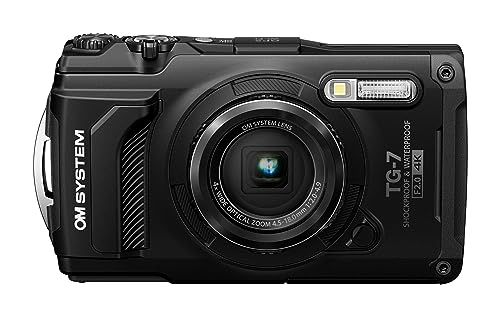
| OM SYSTEM Tough TG-7 | Best first camera a child can own | Sealed against water, dust and drops, with simple modes a child can run unaided. |
| GoPro HERO13 Black | Best for active filming and older kids | Waterproof action video with strong stabilisation for bikes, pools and skate parks. |
| Sony ZV-1F | Best friendly compact for young creators | Fixed wide lens, flip screen and simple controls for children graduating to storytelling. |
| DJI Osmo Action 5 Pro | Best low-light action pick for families | Strong stabilisation and better dim-light video for evening games and indoor sports. |
| Canon PowerShot G7 X Mark III | Best parent-filmed family compact | A zoom compact with lovely colour for adults recording children at events and holidays. |
| Canon EOS R50 | Best step-up for teenagers and parents | Interchangeable lenses and strong video autofocus for families ready to film seriously. |
How Did We Judge Cameras Meant for Children’s Video?
We started from accident reports rather than specification sheets. Ask any parent what ended a camera’s life and the answers repeat: a fall onto tiles, a dunking nobody admitted to, sand in a zoom mechanism, a battery door opened mid-chaos. So durability testing led our thinking — sealed construction, few moving external parts, lenses that do not extend into harm’s way. After survival came operability with small or inexperienced hands: can a child start recording with one obvious button, see clearly whether recording is happening, and review the result without an adult performing menu archaeology on their behalf?
Family usefulness formed the third lens. A child’s camera that cannot also film a decent family gathering wastes household money, so we favoured bodies whose video quality holds up at birthdays and school events, whose microphones capture a small voice across a room, and whose files transfer to a parent’s phone without a cable ceremony. Finally we weighed the graduation path: does this camera teach framing, steadiness and storytelling in a way that leads naturally toward the more capable bodies ranked later in this guide, rather than trapping a keen young filmmaker in a toy that stops challenging her?
Which Qualities Matter When a Child Holds the Camera?
Weight decides more shoots than image quality does. A body a child can hold at arm’s length for a full minute gets carried on the walk, taken into the den and pointed at the cat; a heavy one stays on the shelf beside the good intentions. Closely tied to weight is feedback: a clear recording light, an honest beep the parent can silence, and a rear screen big enough for a child to judge whether grandma’s head fits inside the frame. Filming is learned by reviewing, so playback that a child can operate alone accelerates the whole education.
Parents should also think about the microphone’s forgiveness. Young filmmakers narrate at whatever volume excitement dictates, stand too far from their subjects, and film beside washing machines. Cameras that keep voices intelligible without accessories save the early films from becoming silent cinema nobody planned. And consider the strap, the case and the card routine as part of the camera itself: a wrist loop worn every time, a pouch that lives by the front door, and an evening habit of copying footage to the family computer turn a fragile hobby into a durable household archive.

OM SYSTEM Tough TG-7 — Best first camera a child can own
Handing a child a camera usually ends with a parent hovering, arms half raised, narrating hazards. The Tough TG-7 removes the hovering. Its sealed body tolerates immersion, shrugs off falls onto hard ground and keeps dust and sand outside where they belong, which transforms the emotional arithmetic of ownership: the child explores, the adult relaxes, and filming actually happens at the beach, beside the pool and along muddy towpaths rather than only in carpeted safety. For a first camera that a young person genuinely possesses, that freedom is the entire point.
Video from this little body suits the family archive well. It records the garden expeditions, the rock-pool discoveries and the underwater paddling-pool footage that no other camera in this guide would be allowed to attempt. Controls stay chunky and legible, modes are labelled in plain language, and the macro abilities that made its family famous turn puddle wildlife and garden insects into documentary subjects. A child who films a beetle’s commute across a leaf is learning patience, framing and observation simultaneously, and the camera rewards her with pictures that look like a nature programme’s outtakes.
Parents filming with it gain a grab-and-go tool for the wet and chaotic end of family life: bath-time bubbles filmed from inside the splash zone, rainy-day walks where a normal camera stays bagged, snowball coverage from the target’s perspective. Its small sensor asks for decent light, so evening indoor video looks softer than the mirrorless picks below produce, yet for daytime adventures it delivers cheerful, stable-enough footage with zero anxiety attached. The household that buys one often finds the adults borrowing it for holidays more than the child does.
Its limitations deserve plain statement. Zoom range is modest, so distant stage performances defeat it; low-light video grain arrives early; and its stills-first heritage shows in video controls that are simpler than a dedicated creator camera’s. None of that matters for its role. It is the expedition camera and the ownership lesson in one object: charge it, strap it, hand it over, and let a young filmmaker learn the craft in the places where childhood actually occurs, while the expensive glass stays safely dry at home.
- Format: sealed rugged compact
- Protection: waterproof, dustproof, drop-tolerant body
- Controls: large, plainly labelled, glove-friendly
- Video role: daytime adventures and wet locations
- Grip: shaped body with secure wrist-strap habit
Strengths
- Survives the accidents childhood guarantees
- Underwater filming delights young directors
- Simple enough for unaided operation
Trade-offs
- Modest zoom for stage and sport
- Early grain when rooms grow dim
- Video controls simpler than creator models
Its finest family hour is a rock-pool documentary filmed at knee height: the young director narrating in whispers, a crab cast as the villain, the tide providing a deadline no screenwriting course could improve. The footage wobbles, the commentary contradicts itself, and the family watches it every summer anyway — proof that the best children’s camera is the one present for the story, not the one with the finest specification.
A note on growth: children film in enthusiasms that arrive like weather, and this body tolerates the fallow months without complaint — no subscription, no fragile mechanism quietly expiring in a drawer. When the enthusiasm returns, as it usually does after a cousin’s visit or a school project, the camera wakes, charges and works. Equipment that survives neglect gracefully is worth more to a family than equipment that demands a maintenance relationship nobody in the household volunteered for.
Best for: a child’s first owned camera and all wet, sandy, dropped-constantly filming. Not suited for: school concerts from the back row or candlelit evening events

GoPro HERO13 Black — Best for active filming and older kids
Some childhood filming happens at speed, and a conventional camera simply cannot attend. The HERO13 Black exists for the bicycle descent, the swimming race, the sled run and the skate park apprenticeship — mounted on a helmet, a chest strap or the handlebars, sealed against the water it will definitely meet. Its electronic stabilisation turns a bouncing viewpoint into watchable footage, which matters enormously for young filmmakers: nothing discourages a beginner like unwatchable results from an exciting day, and this camera makes excitement look smooth.
For parents, it doubles as the family adventure recorder. Clip it to a backpack on the hike, hand it to a teenager at the water park, or fix it poolside to capture a first dive from an angle no spectator can occupy. The wide field of view forgives imperfect aiming — a genuine mercy when the operator is ten — while voice control and a simple front screen help older children frame themselves for the trick tutorials and challenge videos they inevitably want to produce. Durability is a design premise here, not a hopeful claim.
Supervision should still shape its use. The camera’s toughness invites risk-taking, and households do well to agree that filming never justifies a faster descent or a higher jump; the stunt serves the story, never the reverse. Its small size also makes it the easiest camera in this guide to lose, so a bright floaty grip for water days and a named home for it indoors are worthwhile rituals. Battery swaps are quick, which suits stop-start family days better than one long internal charge.
Where it falls short is ordinary indoor life. The ultra-wide view distorts faces at close range, making birthday-table footage look like a fishbowl party, and its audio in a echoing sports hall needs the listener’s charity. Treat it as the family’s action department rather than its only camera: the department that films everything involving speed, height or water, and hands the quiet, candlelit and conversational work to the compacts and mirrorless bodies sharing this list.
- Format: waterproof action camera
- Stabilisation: electronic smoothing for motion footage
- Mounts: helmets, chest straps, handlebars, grips
- View: very wide, forgiving of rough aim
- Controls: touch screens plus voice commands
Strengths
- Films sports no ordinary camera may attend
- Smoothing rescues bouncy young footage
- Sealed body laughs at pool days
Trade-offs
- Wide view bends close-up faces
- Hall audio needs forgiving listeners
- Easy to misplace without a home routine
A typical triumph is the learn-to-ride archive: the same hill filmed across one summer, wobbles smoothing into confidence, the camera present for the afternoon it all clicks. Parents consistently report that reviewing progress footage motivates practice more than any pep talk — the child can see last month’s fear and this month’s grin in consecutive clips, and asks to go out again.
Hand it to a grandparent and watch what happens: the controls explain themselves, the results delight, and a cross-generational filming partnership begins that no one planned. Grandparents become both subjects and operators, filming the grandchild back with the same device, and the family archive gains the rare footage where the usual archivist finally appears. Small, sealed and obvious, it turns up in more of the family’s story than its specification ever promised.
Best for: sporty families, confident older children and any filming involving water or speed. Not suited for: intimate indoor conversations or a young child’s very first camera

Sony ZV-1F — Best friendly compact for young creators
When a child’s filming graduates from expeditions to storytelling — narrated room tours, toy reviews, cookery shows performed for an audience of relations — the ZV-1F is the gentle next instrument. Sony designed it for creators who want to be understood rather than to configure, so its lens is fixed and wide, its screen flips forward for self-filming, and its important controls sit under plain icons. A young presenter can see herself, check the frame includes the volcano experiment, and press one obvious button to begin.
The fixed lens quietly solves several family problems. Nothing extends to be snapped, nothing detaches to be lost, and the wide view suits the bedroom-studio scale where young creators work: desk, backdrop, performer, all inside the frame from a small tripod’s distance. Background softness at close range flatters a presenter’s setup without any understanding of aperture, and the camera’s directional microphone favours the voice in front of it over the household soundtrack behind — a mercy in homes where siblings provide unscripted commentary.
Parents filming children benefit from the other direction of its design. Eye-focused autofocus keeps a storytelling child sharp while she moves, the flip screen lets a parent monitor from beside the set, and its pocketable size means it attends the school concert and the grandparents’ visit without a camera bag ceremony. It asks for reasonable light; a dim living room will show its small-sensor limits, so the household lamp strategy from later in this guide genuinely matters for evening productions.
Regard it as the bridge between toy and tool. It will not survive a paddling-pool dunking or a drop onto concrete with the TG-7’s indifference, so the wrist strap and the case are conditions of ownership, not suggestions. In exchange it teaches real production habits — framing a presenter, checking sound, lighting a face — that transfer directly to the mirrorless cameras a keen teenager will meet later. For the child whose filming is becoming a channel-shaped ambition, it is the kindest serious start.
- Format: fixed-lens creator compact
- Lens: wide, fixed, nothing to extend or lose
- Screen: flips forward for self-filming
- Audio: directional microphone favouring the presenter
- Focus: eye tracking for moving storytellers
Strengths
- A presenter can run it entirely alone
- No lens decisions or detachable parts
- Voices stay clear over household noise
Trade-offs
- No sealing against water or drops
- Dim rooms reveal sensor limits
- Fixed framing means moving the tripod
Its signature production is the bedroom cookery show: ingredients arranged like television, a presenter explaining a sandwich as though defusing it, the flip screen catching every glance-check. Families discover that children rehearse language, sequencing and confidence while believing they are only playing at programmes — the camera quietly operates as a speech and storytelling tutor.
For the athlete in the family it also serves as the training diary’s camera: mounted at the pool’s end or the garden’s corner, reviewing the dive or the cartwheel in the minute after the attempt. Children accept correction from footage of themselves more readily than from any adult’s description, and a camera tough enough to live at the training venue makes that feedback loop a weekly habit rather than an occasional event.
Best for: young presenters, toy reviewers and families wanting one friendly everyday video camera. Not suited for: underwater adventures or butter-fingered toddlers

DJI Osmo Action 5 Pro — Best low-light action pick for families
Family action does not always happen in sunshine. The five-a-side match under floodlights, the indoor climbing wall, the winter sled run at dusk — these defeat lesser action cameras, whose footage dissolves into smeared murk. The Osmo Action 5 Pro earns its place by holding together in poorer light while keeping DJI’s stabilisation composure, so the evening game remains recognisable as your child rather than a rumour of one. It mounts anywhere its GoPro rival does and shrugs off the same weather.
Battery endurance suits tournament days, when filming opportunities arrive in bursts across hours and a parent cannot nurse a charger between matches. Front and rear screens help a young athlete frame a self-introduction or a trick breakdown, and the camera’s subject tracking gives solo practice sessions a virtual camera operator: set it at the pitch edge and it follows the drill with surprising loyalty. For teenagers documenting training progress, that combination turns a gadget into a coaching diary.
Parents should note its manners around water and mud are equally unbothered, and its smaller ecosystem of mounts is still broad enough for helmets, bikes and boats. Audio from the built-in microphones copes with wind better than many rivals, though a pitch-side gale remains a gale. The interface rewards a little setup learning; younger children will need an adult to configure it before the adventure, after which the big record button is all they must find.
Choose it over the HERO13 when the family’s filming calendar leans toward evenings, indoor halls and winter. Choose the GoPro when brand familiarity and the largest mount collection matter more. Either way, the same household rule applies: the camera records the sport, it never escalates it. A child who understands that distinction — and repeats it to friends — is ready for an action camera; one who sees it as a dare machine needs another year with the TG-7.
- Format: action camera with dual screens
- Strength: steadier footage in weak light
- Endurance: built for long tournament days
- Tracking: follows a solo practising athlete
- Mounting: helmets, bikes, boats and grips
Strengths
- Evening matches stay recognisable
- Solo training gets a virtual operator
- Long days between charges
Trade-offs
- Setup menus ask adult help first
- Smaller mount universe than its rival
- Wind still wins on exposed pitches
Coaches of junior teams have quietly adopted cameras like this for a kind reason: a shy child reviews her own footage and spots her improvement before any adult mentions it. The camera’s best family use may be that private evidence — progress a young athlete can watch alone, at her own pace, until confidence catches up with ability.
Its screens and menus were designed for gloved, wet and hurried hands, which in family terms means the birthday-party test: cake on fingers, a song starting in ten seconds, an adult filming one-handed while conducting with the other. It passes that test nightly in households across the country. Cameras are rarely reviewed under frosting conditions, yet frosting conditions are where family filming actually lives, and this little action body was clearly raised there.
Best for: evening and indoor sport, training diaries and families filming in poor light. Not suited for: a first camera for a child under eight

Canon PowerShot G7 X Mark III — Best parent-filmed family compact
Somebody in every family becomes the archivist, and the G7 X Mark III is that person’s compact. Its zoom covers the school hall honestly — wide for the whole class, long enough for one child’s solo — while its larger-than-average sensor keeps evening assemblies and candlelit birthdays looking like the warm occasions they were. Parents who film everything on a phone will notice the difference in skin tones and background separation immediately; grandparents receiving the footage will simply call it lovely.
The tilting screen supports the parent’s-eye view: held high above a crowd, angled down at a toddler’s tea party, or flipped for the family selfie-video that opens every holiday compilation. Controls are grown-up without being forbidding, so the archivist can adjust exposure when stage lighting turns a nativity play into a silhouette contest. It slips into a jacket pocket, which is why it attends the events a mirrorless kit gets left behind for — and attendance, as this guide keeps insisting, is the first virtue of family equipment.
Children may borrow it under the household’s careful-hands rules, and many teenagers find it the perfect hand-me-down when a parent upgrades: capable enough for their own filming ambitions, compact enough for school trips, and honest about its limits. Those limits are a fixed lens and no weather sealing, so beach filming happens from the dry side of the towel, and the wrist strap is non-negotiable for younger borrowers. Battery life covers an event, not a festival weekend, so a spare belongs in the pocket.
Place it in the family system as the quality everyday camera: better than a phone for the milestones, kinder than a mirrorless body for casual days, and small enough that the archivist’s role never becomes a burden. Families building the layered kit this guide recommends often start here, add the TG-7 for the children’s own adventures, and discover that combination covers ninety percent of a childhood with very little left to want.
- Format: premium zoom compact
- Sensor: larger format for warmer low-light video
- Screen: tilts for high, low and selfie angles
- Zoom: covers whole class to solo performer
- Carry: jacket-pocket size for everyday attendance
Strengths
- School-hall zoom with warm colour
- Pocketable enough to always attend
- Fine hand-me-down for careful teenagers
Trade-offs
- No sealing for beach borrowing
- One event per battery charge
- Fixed lens caps creative growth
Its emblematic footage is the harvest festival: one child, third row, delivering a line about wheat with enormous seriousness, filmed from a parent’s seat without disturbing a soul. Ten years later that clip will outrank every posed photograph in the family archive, because video keeps the voice — and voices are what families forget fastest.
A word about the hand-me-down economy: this compact’s simplicity makes it the relative everyone borrows, so buy the bright case that makes it findable in a drawer and write the family’s name inside it. Its second life, when a parent upgrades, is as the teenager’s festival and holiday camera — capable enough to respect, small enough to actually be carried through the years when a phone is the only rival it must beat for pocket space.
Best for: the family archivist filming events, holidays and everyday milestones. Not suited for: unsupervised filming by young children

Canon EOS R50 — Best step-up for teenagers and parents
Eventually a household produces either a teenager whose filming has become a genuine craft, or a parent who wants the family films to look properly cinematic. The EOS R50 serves both promotions. As Canon’s friendly mirrorless body it brings interchangeable lenses, dependable subject-tracking autofocus and video quality that flatters everything from school plays to a young filmmaker’s first scripted short. The controls teach real photography and videography habits while remaining approachable to someone arriving from a phone.
For parents filming children, its value concentrates at the big occasions: the stage production where a longer lens isolates one performer, the sports day where tracking focus follows a sprinter, the christening where quiet, beautiful footage matters more than spectacle. Paired with a modest zoom it becomes the family’s ceremony camera, produced for the days that justify effort. Its flip screen and light body also keep it usable for the vlog-style family updates that relatives abroad actually watch to the end.
For the teenage filmmaker, the R50 is a curriculum. Manual exposure, focus pulling, lens choice and audio monitoring arrive as real skills with real consequences, and the RF lens system means each addition builds a lasting kit rather than a disposable gadget pile. It demands care in return: no sealing heroics, a sensor to keep clean, and a bag that gets treated like an instrument case. Households should make the promotion explicit — this camera is earned by demonstrated habits with the cheaper bodies, and everyone films better for the ceremony of that trust.
Acknowledge the investment honestly. Body, lens and a spare battery cost more than every other pick here, and for many families the compacts above already cover childhood completely. The R50 is justified when filming has become someone’s serious pursuit — a course, a channel, a portfolio — or when a parent-archivist wants one camera for a decade of milestones. Bought for those reasons it stops being an expense and becomes the family’s documentary department, staffed by whoever loves the job.
- Format: APS-C mirrorless, RF mount
- Focus: subject tracking for stage and sport
- Screen: vari-angle for presenters and parents
- Skills: manual exposure and lens craft
- Role: the family’s ceremony and cinema camera
Strengths
- Real lenses for real occasions
- Tracking keeps performers sharp
- A decade-long kit foundation
Trade-offs
- Costs more than the rest combined thinking
- No rugged sealing for rough handling
- Demands careful habits and storage
Its representative film is a teenager’s first scripted short: cousins as cast, the garden as three locations, a story that almost works and a final shot that genuinely does. The camera’s contribution was seriousness — equipment that treated a young director’s ambition as legitimate — and families consistently underestimate how much that legitimacy fuels the work that follows.
Its ceremony role deserves one more consideration: the R50 asks its operator to slow down, and teenagers in a hurry sometimes experience that as friction. Build the ritual around it — the bag packed the night before, the lens chosen at breakfast, the spare battery in the same pocket every time — and the friction becomes the craft’s texture. Young filmmakers who learn those rituals here carry them onto every professional set they will ever join.
Best for: keen teenagers, filmmaking courses and parents who want one serious family camera. Not suited for: young children, rough locations or casual once-a-year filming
How Do the Six Family Video Options Compare Side by Side?
| Camera | Format | Family strength | Signature job |
|---|---|---|---|
| OM SYSTEM Tough TG-7 | Rugged compact | Survival plus simplicity | The rock-pool documentary |
| GoPro HERO13 Black | Action camera | Speed, water and stabilisation | The summer of learning to ride |
| Sony ZV-1F | Creator compact | Presenters and storytelling | The bedroom cookery show |
| DJI Osmo Action 5 Pro | Action camera | Dim-light action and endurance | The floodlit five-a-side match |
| Canon PowerShot G7 X Mark III | Premium compact | Events and warm family colour | The harvest festival solo |
| Canon EOS R50 | Mirrorless system | Ceremonies and serious young filmmakers | The first scripted short |
Notice how the table divides by who holds the camera and what might happen to it. The left-behind test sorts everything: equipment a child may carry alone sits in the rugged and action rows, equipment for storytelling sits with the creator compact, and equipment an adult produces for occasions occupies the final rows. Most households need two rows, not six — one for the children’s own filming and one for the adult archivist — and choosing that pair by location risk rather than by specification produces kits that survive contact with real family life.
One more sorting principle deserves a place beside the table: buy for the filming your family already does, not the filming you admire in other households. The expedition family needs the rugged rows; the performing family needs the archivist’s rows; the ambitious teenager justifies the final row only when the films arriving weekly prove it. Honest self-knowledge, applied at the point of purchase, is the cheapest accessory in this entire guide.
How Should You Hand a Camera Over to a Child Safely?
The handover is a small ceremony worth performing properly. Fit the wrist strap and practise the rule that the strap goes on before the camera leaves the case, every time, until it becomes as automatic as a seatbelt. Walk the places filming may happen — home, garden, agreed outdoor spots — and the places it may not, which include other people’s houses without asking, school without permission, and anywhere a lens would embarrass someone. Children absorb boundaries better when they arrive as the privileges of ownership rather than as a lecture attached to a gift.
Then teach the three physical habits that save cameras and footage alike: two hands whenever possible, the lens pointed at nothing while walking between shots, and the camera returned to its named place before any other activity begins. Add a charging ritual owned by the child — Sunday evening, camera on its dock, card copied with a parent — and the equipment develops the aura of a looked-after tool. Households that skip the ceremony usually re-enact it later, at higher cost, beside a cracked screen.
What Settings Keep Children’s Video Simple and Watchable?
Resist configuring a child’s camera like a cinema rig. Choose the automatic or scene mode that handles exposure, set the highest resolution the household’s storage tolerates comfortably, and enable stabilisation wherever it lives. Frame rate can stay at the standard the camera suggests; the exotic slow-motion modes are for the action picks and specific tricks, not everyday filming. The goal is a camera whose only real decision is the record button, because a young filmmaker’s attention belongs on the subject’s story, not on a settings apprenticeship nobody scheduled.
Sound deserves one deliberate check: film a ten-second test in the kitchen, the garden and the room where most filming will happen, and listen together on headphones. Children learn more from hearing their own muffled narration once than from a month of reminders to stand closer. Agree a household distance — roughly an arm’s length for interviews with toys, a few steps for people — and let playback do the teaching thereafter. Reviewing footage the same day, while the lesson is warm, builds skill faster than any tutorial.
How Do You Film Children Respectfully and Responsibly?
A camera in a child’s hands is a first lesson in consent, and families should teach it as one. The household rule is simple to state and powerful to practise: ask before filming people, stop when asked, and delete without argument when someone dislikes a clip. Applied consistently, it produces young filmmakers whom friends trust with a lens — a reputation worth more than any equipment. Parents modelling the same rule matters doubly, because children copy the archivist who films through a tantrum far more readily than the one who lowers the camera and helps.
Sharing needs its own agreement, written before the first upload anywhere. Many families keep children’s footage inside private albums shared with named relatives, treat public posting as an adult decision revisited as children grow, and revisit old clips with the child before resharing them. Faces of other people’s children deserve the same caution you would want for your own. None of this dims the fun; handled lightly, these habits become part of the filmmaker’s craft — the credits, permissions and courtesies that real productions run on, learned at the kitchen table.
Which Accessories Actually Help Young Filmmakers?
A small tripod leads the list, because steadiness is the difference between footage families rewatch and footage they endure. Choose one a child can set up alone, with legs that grip a branch or a banister for the adventurous angles young directors favour. Second comes the case that lives by the door — filming expeditions die while hunting for equipment — and third a spare memory card, because the full-card announcement always arrives at the performance’s climax. A floating grip for water cameras and a simple cleaning cloth complete a kit that costs little and rescues constantly.
Skip the seductive extras until a specific frustration names them. Lights matter when a presenter films after dark weekly; a microphone matters when narration is a channel’s whole format; extra mounts matter when a sport demands them. Buying in response to named problems keeps the hobby’s cost honest and teaches the young filmmaker the professional discipline of the kit list: every object earns its place by solving something the last production exposed. That discipline, learned at ten, is worth more than any single accessory.
How Can Parents Film Milestones Without Missing Them?
The archivist’s paradox is that filming an occasion can exile you from it, so build rituals that keep the parent present. Set the camera on a tripod at the edge of the birthday table, press record, and return to the party; the wide, imperfect footage of a parent who was actually there beats the polished record of one who watched through a screen. For performances, arrive early, choose the aisle seat that serves both watching and filming, and accept the school’s rules about recording without negotiating at the door.
Divide the labour across the family when possible — one adult films the concert while the other simply attends, swapping at the next event — and lower the camera deliberately for the moments that matter most to the child: the glance toward the audience after a solo, the finish-line search for a familiar face. Those seconds belong to the parent’s eyes, not the archive. The footage you gather under this philosophy is slightly less complete and vastly more honest, and children reviewing it years later consistently value the clips where they can hear their parent laughing just off camera.
What Filming Projects Keep Children Practising All Year?
Skill grows through projects with audiences and deadlines, so families do well to commission them like a friendly studio. A monthly one-minute documentary — the dog, the garden through seasons, a grandparent’s hobby — teaches planning and editing rhythm. Interviews with relatives, conducted with questions written in advance, preserve family history while teaching a young filmmaker to listen, frame a guest and hold a shot. Stop-motion hybrids, toy travelogues and a annual holiday film screened at a set date give the calendar a production rhythm that practice-for-its-own-sake never sustains.
Celebrate completion more than quality. A premiere ritual — the good snacks, the darkened room, applause that means it — converts effort into identity: this is a person who finishes films. Keep a simple shelf or folder where finished work lives in order, and let the child curate a showreel each birthday. Watching a year’s progress in twenty minutes teaches more about growth than any grade, and it quietly builds the portfolio that one day justifies the step-up camera this guide keeps in reserve.
How Do You Store and Share a Childhood of Footage?
Name the archive before it names itself a mess. One folder per year, occasions as subfolders with dates first, and a simple rule that the card is copied before it is ever deleted — those three habits, kept for a decade, produce the library families dream of while filming. Keep the copy on the family computer and a second on a drive or service elsewhere; the footage of a childhood is the household’s least replaceable possession, and it deserves the same redundancy as the photographs of the generation before.
Sharing is the archive’s living half. A private album for grandparents, updated monthly rather than in overwhelming annual dumps, keeps distant relatives inside the children’s growth — and gives young filmmakers a real, kind audience whose comments they read like reviews. Let the child choose one clip a month for that album and the curation itself becomes a lesson in editing: what mattered, what told the story, what the audience across the sea actually needed to see.
How Can Filming Become a Family Habit Rather Than an Event?
Lower the ceremony until filming fits inside ordinary life. A camera that lives charged by the door, a tripod that never fully packs away, and a standing invitation — anyone may film anything kind — turn production from an occasion into a household reflex. The families with the richest archives are rarely the most organised; they are the ones whose equipment was simply present, powered and permitted on the unremarkable Tuesday that later turned out to matter enormously.
Protect the habit from its two predators: perfectionism, which postpones filming until conditions improve, and review fatigue, which buries good footage under unreviewed hours. Film short, watch promptly, keep ruthlessly and delete bravely. A childhood archive should feel like a well-loved shelf, not a warehouse — and the child who grows up curating it learns, along the way, the editor’s deepest skill: knowing what the story actually needs.
What Mistakes Do Families Make Buying Cameras for Kids?
The expensive-first-camera mistake leads the list: a delicate, complicated body handed to a seven-year-old produces parental anxiety, restricted filming and eventually a drawer. The sequence in this guide exists to prevent it — toughness first, friendliness second, capability when habits are proven. Close behind comes the opposite error, the insultingly toy-like camera bought for a capable eleven-year-old, whose dreadful footage convinces her she lacks talent when she merely lacks equipment. Match the instrument to the child’s demonstrated care and ambition, not to the giver’s guess about either.
Neglecting sound and steadiness ruins more family footage than any sensor shortcoming, yet both fix cheaply: a small tripod and a habit of filming closer. Finally, beware the storage cliff — footage scattered across cards, phones and a laptop nobody backs up is an archive in name only. One folder, one naming habit and one copied backup turn a pile of clips into the family film library that everyone assumes they are building. The cameras above all record beautifully; only the household’s routines decide whether the results survive to be watched.
Frequently Asked Questions
What age suits a first video camera of their own?
Most children handle a rugged camera responsibly around five or six, when the strap habit and the ask-first rule can stick. Younger children film happily in bursts with a parent holding the camera alongside them. Judge by demonstrated care with borrowed things rather than by birthdays — a careful five-year-old outranks a dreamy nine-year-old for ownership.
Is a phone a better choice than a dedicated camera for kids?
A retired phone works as a filming device, yet it brings games, messages and the internet along, and it shatters expensively. A sealed camera does one job, survives the doing of it, and keeps filming separate from screen-time negotiations. Families who want a child filming rather than browsing usually find the dedicated body calmer for everyone.
Which camera handles a beach holiday best?
The Tough TG-7 for a child’s own filming and either action camera for rides, boats and swimming. Sand destroys extending zooms and salt water punishes unsealed bodies, so the premium compact and the mirrorless camera should film the beach from dry hands and a safe distance, then retire to the bag.
How do we keep footage safe and findable years later?
Copy cards to one named folder on the family computer the same week, back that folder up somewhere separate, and name files with the date and occasion before you forget them. Ten minutes of routine per month preserves what hours of filming created; skipping it is how families lose the exact clip everyone wants at an eighteenth birthday.
Should children post their videos publicly?
That decision belongs to parents, revisited as the child grows, and many families keep everything in private albums shared with named relatives. If a channel exists, an adult should own the account, read comments first and keep school, surnames and locations out of the content. The filming skills transfer fully; the audience can wait.
When has a child earned the step up to a mirrorless camera?
When three signs coincide: finished films rather than abandoned clips, careful habits with borrowed equipment over months, and frustration with a current camera’s named limits. The EOS R50 then arrives as a promotion with responsibilities attached — and teenagers who earned it that way tend to treat it like the instrument it is.
Why Does Filming Change How Children See Their Own Lives?
A child with a camera becomes the family’s witness, and the role quietly reorganises her attention. She notices the light in the kitchen, interviews a grandparent before the stories are lost, and learns that ordinary afternoons contain material worth keeping. Siblings queue to be interviewed; parents find themselves described back in narration of devastating accuracy. The archive that results is not really the point — the point is a young person practising observation, empathy and storytelling with a tool that fits her hands and survives her learning curve.
That is why the equipment order in this guide matters beyond money. Toughness first grants freedom, friendliness builds skill, and capability arrives exactly when ambition does. Families who follow the sequence rarely regret a purchase, because each camera was bought to answer a stage the child had actually reached. The films accumulate, the premieres become traditions, and somewhere along the way the household stops asking which camera is best and starts asking what the next production will be — the surest sign the choice was right.
And when the first finished film gets its premiere — however small the audience, however wobbly the footage — take a photograph of the screening itself, with the young director watching the watchers. That picture, years later, will explain the whole enterprise better than any camera in this guide: a child who made something, a family who stopped to honour it, and a small machine that survived long enough to be forgotten in the moment it created.
Final Recommendation
Match the purchase to the direction your household films in. For a child’s own first camera, the Tough TG-7’s sealed forgiveness stands alone. For speed and water, choose between the HERO13 Black’s ecosystem and the Osmo Action 5 Pro’s dim-light composure. For the young presenter, the ZV-1F offers the kindest serious start; for the parent-archivist, the G7 X Mark III covers a childhood of occasions from a jacket pocket. Reserve the EOS R50 for the proven filmmaker or the parent building a decade-long documentary kit.
Whichever you choose, spend the first evening on the handover ceremony, the strap habit and a ten-second sound test rather than on unboxing excitement alone. Then commission the first project — small, dated, with a premiere attached — and let the camera begin earning its place in the family’s story. Equipment bought this way rarely gathers dust, because it arrives attached to a production, a ritual and a young director who has been waiting for both.
Related Guides
Keep the young production company busy with our notes on filming a first family documentary with children , simple tripod projects for young filmmakers , building a private family video archive.


