ilcastellomenu.com is reader-supported. When you buy through links on our site, we may earn an affiliate commission.
Where to Buy
A child’s first digital camera has one job that outranks all others: survive being a child’s camera. It will be dropped on the one hard floor in the house, carried by its strap like a conker, left in the rain at a picnic and operated with jam on the controls. The best cameras for kids digital are therefore chosen the way one chooses a child’s bicycle — toughness first, fit second, and only then the features that make it fun enough to be used daily.
Two philosophies compete for the honour. Dedicated children’s cameras are armoured, simple and cheap enough to be genuinely the child’s own, with big buttons and games that some parents will love and others will switch off. Instant cameras take the other road: no screen worth mentioning, but a real photograph in the child’s hand within minutes — an object to trade, stick on a fridge and treasure with an intensity no file ever earns.
This guide ranks six options across both philosophies and is honest about the sourcing: the two instant cameras are named products from our verified pool, while the dedicated children’s digital cameras — a category of many small brands and shifting models — are described as prose-only picks by their class, features and failure modes, so families can shop the class intelligently rather than chase a badge.
Age fit is the decision beneath all the others. A four-year-old needs a camera that is basically a toy that happens to photograph; a nine-year-old photographer needs a real tool that respects their eye; and the twelve-year-old has outgrown this guide entirely and should be reading the compact reviews. Each pick here is labelled by the childhood it actually serves, because a camera bought for the wrong age is a drawer ornament by February.
Finally, a word for the photograph itself. Children’s unselfconscious pictures — the dog from dog height, the grandparents mid-laugh, the garden as a jungle — become family treasures out of all proportion to their technical quality. The camera that gets carried is the camera that makes them, which is why this guide keeps returning to a single test: will the child actually take it along?
Key Takeaways
- Toughness and simplicity outrank image quality for a first camera.
- Match the camera to the exact age: toddler armour and teen tools are different species.
- Instant cameras trade screens for real prints children treasure.
- Dedicated kids’ cameras should be cheap enough to be truly the child’s own.
- Turn off the games if you can; the photography is the game worth keeping.
- The camera that gets carried makes the memories — size and strap matter.
In this guide
Quick Picks
| Pick | Badge | Why it is here |
|---|---|---|
| Fujifilm Instax Mini 12 | Best instant camera for kids | Point, shoot and print: automatic exposure and a selfie mirror in a friendly, rounded design. |
| Polaroid Go Generation 2 | Best tiny instant camera for older kids | The smallest Polaroid: pocketable instant photography with a rechargeable battery. |
| Shockproof Kids Digital Camera (dual-lens class) | Best digital camera for young children | Armoured, big-button digital cameras with front and selfie lenses, sold by many makers. Prose-only pick. |
| Waterproof Kids Action Camera (compact class) | Best for holidays, pools and beaches | Small waterproof action-style cameras for children who swim, cycle and explore. Prose-only pick. |
| Kids Print Camera (instant-print class) | Best print camera without film costs | Digital cameras that print on inexpensive thermal paper rolls. Prose-only pick. |
| Canon PowerShot G7 X Mark III | Best step-up camera for older kids | A real compact with a fast lens for the child who has caught the photography bug seriously. |
How Did We Choose Digital Cameras for Kids?
Survivability was the first gate: drop resistance, water resistance where claimed, lens protection, and a design without delicate protrusions. We favoured cameras whose manufacturers design for the fall rather than apologise for it, and we note honestly where a pick — the instant cameras especially — is sturdier than a phone but not armoured like the dedicated children’s models.
Interface honesty came second. A child’s camera should photograph when the big button is pressed, review when the other button is pressed, and hide everything else. Menus that require reading, modes that strand a child in a setting they cannot escape, and touchscreens that respond to jam all counted against a pick, whatever its sensor promised.
Image quality was judged at the level childhood needs: bright, cheerful files that print acceptably at snapshot sizes and look joyful on a family screen. Beyond that threshold, extra megapixels in this category are marketing confetti, and several picks here trade resolution for price and toughness deliberately — a trade this guide endorses in the open.
Ownership economics closed the assessment: the whole point of a child’s own camera is that its loss is a lesson rather than a disaster, and its film or storage costs should be predictable enough for pocket-money arithmetic. The instant cameras’ running costs are stated plainly in their reviews, because a camera whose prints bankrupt the household becomes a camera rationed into uselessness.

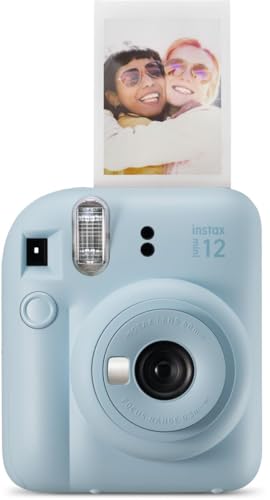
Fujifilm Instax Mini 12 — Best instant camera for kids
The Instax Mini 12 is the camera children ask for by name, and for once the wanting is justified. It exposes automatically, focuses without being asked, carries a little mirror for the selfies that are apparently a developmental stage, and delivers a real print — the size of a credit card, warm-toned and imperfect in the way that makes children queue to give them away. As a first camera it teaches the oldest lesson in photography: a photograph is a thing you can hold and hand to someone.
- Format: instant camera, credit-card prints
- Exposure: fully automatic
- Extras: selfie mirror and close-up mode
- Design: rounded, child-friendly colours
- Running cost: film packs are the budget item
Parents should budget with open eyes: the film is the camera’s true price, paid forever, pack by pack. Rationed kindly — a pack for the holiday, a pack for the birthday — it teaches children the lost art of choosing a moment, which digital’s infinity never will. The camera itself is sturdier than it looks but not armoured; it suits the child who can be trusted with a treasured object, roughly the seven-and-up temperament in most families.
Strengths
- Real prints children treasure and trade
- Automatic everything — no menus to strand them
- Teaches choosing a moment, not spraying
Trade-offs
- Film cost is the real, ongoing price
- Not drop-armoured like kids’ digital cameras
- Prints are small and softly detailed
Best for: Children seven and up who will treasure prints.
Not suited for: Toddlers and the reliably destructive.

Polaroid Go Generation 2 — Best tiny instant camera for older kids
The Polaroid Go is the instant camera shrunk to a child’s pocket, and its smallness changes its life: it goes to the park, the sleepover and the school trip in a way bulkier cameras do not. Its prints are the smallest in the instant world — tiny squares that suit the tiny albums and phone-case displays of their owners — and its rechargeable battery removes the battery-aisle tax from the running costs, leaving only the film to budget.
- Format: instant camera, miniature prints
- Battery: rechargeable over USB
- Extras: selfie mirror, self-timer
- Size: among the smallest instant cameras
- Running cost: film packs, as with all instant
It suits the older child in this guide’s range — the nine-to-twelve photographer with a social world to document — better than the young child, because its charms are social rather than armoured. Handle the film cost as with the Fujifilm: predictable packs, kindly rationed, teaching selection. For the child whose photography is really about friendship, this little camera understands the assignment completely.
Strengths
- Pocketable enough to actually travel
- Rechargeable — no battery tax
- Prints sized for kids’ albums and cases
Trade-offs
- Smallest prints of any instant here
- Film cost applies as ever
- Not a rough-handling toddler tool
Best for: Older kids documenting a social world.
Not suited for: Young children needing armour.
Shockproof Kids Digital Camera (dual-lens class) — Best digital camera for young children
This prose-only pick names the class that owns the under-eight market: brightly coloured digital cameras in silicone armour, with a big shutter button, a selfie lens beside the main one, simple games and frames, and a price low enough that the camera can be wholly the child’s. Sold under many small brands with near-identical innards, the class should be shopped by its features — armour thickness, waterproofing honesty, battery type — rather than by badge, which is why no single model is linked here.
- Class: armoured children’s digital camera
- Lenses: main plus selfie camera typical
- Storage: memory card, computer transfer
- Battery: rechargeable in better examples
- Extras: frames, filters and simple games
Judge candidates by the failure modes: a lens recessed behind the armour, a card slot that a child cannot open accidentally, buttons that work with small thumbs, and a strap that breaks away safely. Image quality across the class is cheerful rather than fine — entirely sufficient for the family screen and small prints — and the games should be switch-offable, because the camera that is also a games console will be used as one, to photography’s loss.
Strengths
- Armour designed for real childhood
- Cheap enough to be truly theirs
- Selfie lens matches how kids shoot
Trade-offs
- Quality varies across the many brands
- Games can swallow the photography
- Image quality is snapshot grade
Best for: Children from about four to eight.
Not suited for: Older kids ready for a real tool.
Waterproof Kids Action Camera (compact class) — Best for holidays, pools and beaches
For the child whose life happens outdoors and wet, this class — compact action-style cameras with waterproof housings, bike and helmet mounts, and video as a first-class citizen — is the right species. Described prose-only because models churn constantly, the class is shopped by its housing’s honesty, its mount ecosystem and its simplicity: the child should be able to start a video with one gloved or sandy press and review it on the little screen immediately.
- Class: waterproof kids’ action camera
- Housing: waterproof case in most examples
- Mounts: bike, helmet and chest options
- Video: the class’s main event
- Stills: snapshot quality, secondary
It teaches a different photography from the stills cameras here: the ride, the dive, the dog’s-eye run through the garden, edited by nobody and watched by the whole family on holiday evenings. Battery and card discipline are the parent’s quiet job; the child’s job is to come back with the footage and, ideally, the camera. Choose the housing with a wrist tether and use it — the sea accepts donations daily.
Strengths
- Waterproof adventure for active kids
- Mounts turn bikes into film sets
- Video memories families actually watch
Trade-offs
- Stills are the weak half
- Housings scratch and fog with use
- Models churn — shop features, not names
Best for: Outdoors children roughly six to eleven.
Not suited for: Quiet indoor photographers.
Kids Print Camera (instant-print class) — Best print camera without film costs
The print-camera class answers the instant cameras’ one great objection — film cost — with thermal paper: the same paper as shop receipts, bought in rolls for pennies per picture, printed in black and white from a digital camera that also saves the file. The prints are fragile, monochrome and utterly beloved, emerging with a whirr that children find as magical as any chemistry. As a prose-only class pick, it is shopped by paper availability, battery and build, not by brand.
- Class: digital camera with thermal printer
- Prints: black-and-white on paper rolls
- Storage: digital files saved to card
- Extras: drawing and colouring on prints
- Running cost: paper rolls are inexpensive
Set expectations honestly: these are not photographs for the archive but for the afternoon — stuck on notebooks, traded in playgrounds, coloured in with pens. For the child who wants to print everything, which is most children’s first instinct, the class converts a ruinous habit into a pocket-money one, and the digital file remains for the family’s real keeping.
Strengths
- Printing at pocket-money cost
- Digital file kept alongside the print
- Endless prints encourage experimenting
Trade-offs
- Thermal prints fade and are monochrome
- Print quality is receipt grade
- Paper rolls are a recurring errand
Best for: Prolific young printers aged five to ten.
Not suited for: Families wanting keepsake-quality prints.

Canon PowerShot G7 X Mark III — Best step-up camera for older kids
Every family knows the moment: the child stops spraying and starts composing, asks why the background blurred, and wants the good camera. The G7 X Mark III is this guide’s answer for that child — a genuine photographic tool with a fast lens, kind Canon colour and 4K video for the inevitable filming phase, in a body small enough for a young person’s everyday carry and robust enough for a school bag’s ordinary life, if not its worst days.
- Format: premium compact, one-inch class sensor
- Lens: fast built-in zoom
- Video: 4K with microphone input
- Colour: warm, flattering rendering
- Controls: real manual control when wanted
It is a trust purchase, priced and built as one, and it should arrive with the family’s terms attached: the strap worn, the bag used, the camera insured by the household’s arrangements rather than the child’s anxiety. For the child who has earned it, no camera in this guide respects their eye more — and the photographs from this stage of a young photographer’s life have a way of becoming the family’s favourites.
Strengths
- A real tool that respects a young eye
- Fast lens for real photographic learning
- Video for the filming phase
Trade-offs
- A trust purchase, not a toy price
- Not armoured against drops
- Too much camera for the merely curious
Best for: Serious young photographers around ten and up.
Not suited for: First cameras and rough handling.
What Age Should a Child Get a First Camera?
When they start stealing yours with intent. The toddler who presses every button needs the armoured class and adult expectations set to joy rather than results; the five-year-old who frames the dog deliberately is ready for the dual-lens kids’ cameras; the eight-year-old with a subject — birds, siblings, skateboards — is ready for instant or a print camera; and the child who critiques their own pictures has outgrown the category and should be stepped up, as this guide’s final pick argues.
Ignore the box’s age guidance, which is written by caution, and judge by the child’s two relevant traits: how they treat objects, and whether the interest is in the photograph or the gadget. The first trait chooses the armour; the second chooses whether the camera will be used in March.
Digital, Instant or Print: Which Philosophy Suits Your Child?
By temperament. The digital child shoots freely and reviews instantly, learning by volume — the right school for the experimental and the very young. The instant child shoots sparingly and treasures objects, learning by selection — the right school for the deliberate and the social. The print-camera child wants the object without the rationing, and trades permanence for abundance, which for a seven-year-old’s purposes is usually the correct exchange rate.
Families can also sequence the philosophies: armoured digital for the young years, print or instant for the middle, a real compact for the bitten. Each stage’s camera remains in the house as the younger sibling’s inheritance, which is the children’s camera market’s quiet, honourable economy.
How Much Should a Child’s Camera Cost?
Little enough that its loss teaches rather than wounds — the founding principle of the category. The dedicated kids’ classes exist precisely at that price, and the instant cameras cheat the principle honourably by moving the cost into film, where it arrives in small, budgetable packs rather than one frightening sum. The step-up compact breaks the principle deliberately, as a trust purchase for a proven interest, and should be the exception that confirms the rule.
Running costs deserve the same honesty as purchase costs: film packs, paper rolls, memory cards, batteries. A camera whose consumables surprise the household becomes a rationed camera, and a rationed camera is a drawer camera with extra steps. Choose the cost rhythm the family can sustain cheerfully.
What About Games and Filters on Kids’ Cameras?
Filters first: the colour effects and face frames on children’s cameras are harmless joy and occasionally the hook that keeps a reluctant child shooting — keep them. Games are the harder question. A camera whose games are better than its photography will be used as a console, and many parents reasonably choose models where games can be disabled or are absent. The child who falls for photography itself needs no electronic bribery; the child who has not yet fallen may be ambushed by a puzzle game instead.
The middle path is a household rule rather than a purchase decision: games on the camera belong to waiting rooms and car journeys, while outings belong to photographs. Children accept such treaties readily when the photography itself is being celebrated at home — printed, framed, shown to grandparents — which is the real retention strategy for every camera in this guide.
How Do You Keep the Photographs?
Somewhere safer than the camera. Children’s cards fill, get formatted by small fingers, and occasionally go through the wash in a pocket, so the family’s ritual should be a monthly offload to the household archive, done with the child as a celebration rather than a chore: the month’s best ten, chosen by the photographer, printed or added to the family album. That ritual teaches editing, curation and pride in one half-hour, and it is worth more than any feature in this guide.
Instant and thermal prints need their own keeping: an album, a shoebox, a bedroom string with pegs. Photographs that live where the child can revisit them become the childhood’s furniture; photographs in a drawer become archaeology. The medium matters less than the visibility.
How Do You Teach a Child to See Photographically?
By looking at their pictures with them, seriously. Ask what they were showing you; praise the decision, not the accident; and introduce one idea at a time — get closer, wait for the laugh, turn the camera sideways — across weeks rather than in a lecture. Children learn photography the way they learn language, by being answered. The camera classes here all support that conversation; the adult’s attention is the actual curriculum.
Give subjects, not rules: photograph the colour red all week, photograph everyone’s hands, photograph the garden as a jungle from ant height. A child with a mission shoots ten times the frames of a child with a camera, and the missions cost nothing but an adult’s imagination at breakfast.
Safety, Privacy and Children’s Cameras
Agree the family’s rules early and cheerfully: ask before photographing people outside the family, never photograph at school where the school forbids it, and keep children’s own images off public platforms unless the family’s policy — decided by adults, not by the camera’s convenience — says otherwise. Connected features on some children’s cameras deserve a parent’s setup session and a password the child does not carry.
None of this needs to darken the gift. Children absorb ‘we ask, we keep family pictures in the family’ as easily as they absorb road-crossing rules, and for the same reason: both are how people who love them keep the world safe to explore. The camera then remains what it should be — an instrument of delight with a few bright boundaries.
What About Handing Down a Phone or an Old Compact?
Often the wisest move in this whole guide. A retired phone in a tough case, stripped of accounts and set to camera duties, out-photographs every dedicated kids’ camera here; an old family compact teaches real photography with real controls. The cautions are practical: remove payment methods and personal data, set up the photo backup, and accept that the hand-me-down’s loss still stings more than a kids’ camera’s would.
Choose the hand-down when the child is ready for a real tool and the household has one retiring; choose the dedicated classes when armour, simplicity or print-magic is the actual need. The categories coexist because childhoods differ, and the parent reading a guide this long has already demonstrated the judgment the decision requires.
How Do You Handle the Inevitable Breakage?
As curriculum, not catastrophe — which is only possible if the purchase obeyed this guide’s cost principle. A broken kids’ camera is a lesson in care that a broken flagship cannot teach without tears, and many children’s cameras survive falls that would end a phone, which is their armour’s whole argument. Keep the packaging, note the warranty, and let the child be part of the repair-or-replace conversation at pocket-money scale.
Prevent what is preventable with the strap habit: wrist strap on before the camera leaves the hand’s vicinity, every time, until it is reflex. Most children’s camera deaths are drops in the first month, before the habit forms — a fortnight of parental nagging with an excellent return on investment.
One Last Word on Children’s Photographs
Years from now, the technical rankings in this guide will be archaeology, but the picture of the dog from dog height will be on a wall. Choose the camera your child will carry, at the price your household can smile about, in the philosophy their temperament prefers — and then do the only thing that has ever made a child’s photography flourish: look at the pictures, print the best, and ask the photographer to show you the world again tomorrow.
How Do You Choose a Camera for Twins or Siblings?
By deciding whether the camera is a shared instrument or a personal possession, because children experience those as different species of object. A shared family camera — the step-up compact, the instant on its shelf — teaches negotiation and ceremony; a personal armoured camera each teaches ownership and produces twice the archive. Where budgets allow one of each philosophy, the household gets both educations, and the fights, which are also an education, at least have a spare camera to photograph them.
Label everything: names on straps, folders per photographer in the family archive, a shelf with two hooks. Sibling camera peace is an organisational achievement before it is a financial one, and the monthly offload ritual from this guide adapts easily into a two-photographer ceremony.
What About Cameras for Children with Additional Needs?
Choose by the child’s actual interaction, not by category assumptions: large, forgiving buttons and immediate visible results serve many children beautifully, while instant print’s tangible reward — a photograph appearing in the hand — can succeed where screens do not engage. Trial matters more than research here; borrow, visit a shop, watch the child’s hands and face with each class before the purchase, and let their delight arbitrate.
Durability and simplicity, this guide’s twin virtues, matter with double force, and so does the family’s existing rhythm — the camera that joins the routines the child already loves will be used; the one that demands new routines will be admired and shelved. The right camera is the one that disappears into the child’s own way of meeting the world.
How Do You Photograph a Child’s World Alongside Them?
By shooting the same mission on your own camera and comparing honestly afterwards — the adult’s frame and the child’s frame of the same dog, the same garden, laid side by side, is the finest photography lesson ever devised and it costs one walk. Children discover, with delight, that they saw things the adult walked past; adults discover the same, with humility. The family’s archive gains a stereo record of its own life that no single photographer could have made.
Resist correcting during the walk. The mission’s debrief is the classroom; the walk itself should feel like play with a witness, and the child who feels directed produces the director’s pictures, not their own — which defeats the entire enterprise this guide exists to serve.
What Should Grandparents Buy?
The instant camera, if the grandchildren are old enough to be trusted with it, because grandparents understand the print instinctively and the film-pack economy gives them a perfect recurring gift — a pack a month is a subscription to being remembered. For younger grandchildren, the armoured digital class bought jointly with the parents’ blessing, so the household’s rules about games, screens and keeping arrive attached to the gift rather than after it.
Better still, grandparents can buy the ritual rather than the object: the album, the display string, the monthly printing of the child’s best ten. The camera market will supply the hardware from any direction; the family’s elders are uniquely placed to supply the audience every young photographer actually wants.
How Do You Handle the Camera at School and Clubs?
By learning the institution’s rules before the first morning: many schools welcome cameras on trips and forbid them in corridors, clubs vary, and the child should carry the rule as confidently as the strap. A small printed card in the camera bag — the family’s contact, the school’s permission where granted — smooths the occasional confiscation conversation, and the camera’s return is a lesson in institutions that costs nothing if prepared.
School projects are the young photographer’s first commissions and should be honoured as such: the class pet’s portrait, the trip’s record, the science experiment’s evidence. A child whose camera serves the community becomes its documentarian, which is a social promotion no games console offers.
How Long Should a Child’s Camera Last?
Until the child outgrows it, which is a developmental event rather than a mechanical one — the armoured camera retired intact to a sibling has served perfectly; the step-up compact broken in year three has also served, if the archive it built is real. Judge the purchase by photographs per pound across its life, and most of this guide’s picks acquit themselves absurdly well, because children’s cameras work in a currency of thousands of frames.
Keep the retired cameras. The toddler-armour camera on a shelf, the print camera with its last roll still inside, become family artefacts in their own right — the tools of a childhood’s seeing — and more than one family discovers, decades later, that the child photographer’s first camera is the object nobody can throw away.
What About Video-Obsessed Children?
Feed the obsession with structure rather than resistance: the action class and the print classes both shoot video, and the child who films everything is a documentary maker awaiting a brief. Give briefs — film the dog’s day, interview the grandparents, shoot the how-to video for a card trick — and the volume acquires shape. Editing, even the roughest in-camera kind, can wait for the step-up years; the young filmmaker’s curriculum is shooting with intent and watching with honesty.
Watch the films together with the same seriousness this guide prescribes for photographs. The child whose shaky garden epic receives a real review — what worked, what the sequel needs — is receiving an education in attention that generalises far beyond cameras.
How Do You Keep Photography Affordable Across Childhood?
By sequencing the classes as this guide suggests and letting each stage’s camera be inherited, resold or retired to the family shelf rather than upgraded anxiously. The expensive mistake is skipping stages under social pressure — the flagship compact for a six-year-old whose friends have one — because the cost principle is what makes the whole enterprise sustainable: a camera cheap enough to lose is a camera free enough to use.
Consumables budgeting is the other half: film packs and paper rolls as predictable pocket-money-scale lines, agreed in advance, so the camera’s appetite never ambushes the household. Families who treat the running costs as part of the gift — a year’s film with the instant camera — give twice: the tool and the freedom to use it.
What Photographs Should Families Print Every Year?
The child’s own selection of ten, printed properly and kept in the year’s album beside the family’s ten — the dual archive again, at annual scale. Add the portrait of the child with the camera, growing through the models: toddler armour, print camera, instant, the first real compact. That accidental series becomes, in time, the family’s most eloquent object: a photographer’s biography in four frames, taken by everyone except its subject.
Print the failures too, occasionally — the blurred dog, the thumb’s masterpiece — because a childhood archive edited to perfection lies about the process, and the process is where the love was.
One Last Word on Letting Them Shoot
The deepest decision in this guide is not which camera but whether the child photographs freely — unhovered, uncorrected, trusted with the family’s moments and their own. Every class ranked here exists to make that freedom safe and affordable. Grant it, keep the prints coming, and accept the jam on the controls as the signature of the real thing: a child, out in their own world, bringing it back in pictures for the people who love them.
How Do You Introduce a Camera at a Birthday or Holiday?
As the start of a ritual, not the whole gift: the camera, its first film pack or card, the album it will fill, and a mission for the day itself — photograph the party as its official documentarian — so the first frames are made in joy and company rather than alone with a manual. The child who begins as the event’s photographer acquires the identity along with the object, and identities outlast novelty by years.
Resist the upgrade ambush of the occasion: the relative offering to exchange it for a bigger model means well and misunderstands completely. The camera in the child’s hands, at the guide’s cost principle, is the correct one; the celebration should be of the photographer’s debut, not the equipment’s specifications.
What About Cameras on Holiday and Travel?
Travel is children’s photography at its best — new worlds at four feet high — and the camera choice should follow the journey’s hazards: the waterproof class for the beach holiday, the instant for the family gathering, the armoured digital for the toddler’s first trip, each with its consumables packed in the parent’s bag rather than the child’s, because lost film is a tragedy and lost cameras, at this guide’s prices, are only a lesson.
Agree the travel treaty in advance: the camera sleeps in its pouch, the strap rule doubles at cliffs and boats, and the evening choosing of the day’s best three becomes the holiday’s quiet ceremony. Families report, with suspicious consistency, that the child’s holiday album outlasts their own as the trip’s true record.
How Do You Encourage a Child Who Loses Interest?
Change the mission, not the camera. Interest rarely dies; it starves for subjects. A new brief — the pets of the street, the doors of the neighbourhood, a photo comic with toys, the season changing in one tree photographed monthly — revives more photographers than any accessory. Pair the mission with an audience: a grandparent expecting the monthly tree, a cousin trading instant prints by post, and the camera regains its purpose socially, which is how most photography actually sustains itself.
If the interest truly has ended, retire the camera to the shelf without ceremony or guilt and keep the archive honoured. Childhoods are successions of enthusiasms, and the camera that served one season completely has not failed; it has graduated, possibly to a sibling, possibly to a return at thirteen with entirely new eyes.
What Role Should Schools of Photography Play?
None that a kitchen table cannot provide, at this age. The formal lesson risks teaching the child that photography is a performance for judges; the family’s rituals — missions, debriefs, albums, audiences — teach that it is a way of paying attention, which is the transferable skill. Save the courses for the teenager whose step-up compact has made them hungry for technique; hunger is the only enrolment criterion that predicts value.
Libraries and camera clubs sometimes run children’s workshops with loaned equipment, and those earn their place socially — young photographers meeting each other — rather than technically. Community, again, is the curriculum; the camera is its excuse.
How Do You Store a Growing Child Archive?
In the family’s main archive, under the photographer’s name, with the same backup discipline as the adults’ work — because the day will come when the six-year-old’s garden jungle is the most valuable folder in the house, and that day does not send warning. Cloud or drive, one copy off the premises, the monthly ritual feeding it: the system is identical to the professional’s, scaled by love rather than by money.
Keep the physical prints in acid-indifferent boxes and albums away from damp, and scan the best instant prints while they are young, because some media fade on a decade’s schedule. The archive’s enemies are entropy and tidiness purges; defend against both with the label that works on every generation: do not throw away, photographer at work.
A Final Note on Jam on the Controls
It will happen, along with the sand, the drop and the mysterious fingerprint that appears inside every family’s favourite frame. Wipe the camera, laugh at the fingerprint, and remember what the evidence means: the camera was there, in the child’s actual life, at the picnic and the puddle and the dog’s great afternoon. A pristine children’s camera is a failed purchase wearing a disguise. The sticky, scuffed, beloved one — with its archive growing monthly — is the entire point of this guide, achieved.
How Do You Say Yes to the Camera More Often?
By removing the frictions that make parents say no: the camera charged and in its place by the door, the film or paper stocked before it runs out, the strap rule so habitual it needs no negotiation, and a household understanding that the camera going along is the default rather than the request. Children ask for what is easy to grant, and a camera system designed for yes produces photographers; one designed for special occasions produces memories of a camera.
Keep a small triumph visible — the latest print on the fridge, the album open on the shelf — because the displayed photograph is the request for the next outing, made silently, every day, by the work itself.
One More Consideration: The Parents Camera Manners
Put your own phone down for the first five minutes of the child’s mission walk. The young photographer reads the adults attention as the missions value, and a companion who is also photographing — or better, simply watching the world beside them — teaches more than any instruction in this guide. The camera you bought them is partly a device for summoning exactly that attention; honour the summons when it comes.
Afterwards, ask to be shown, and listen to the showing as you would to any artist’s talk about their work. The child who is heard about their photographs becomes a photographer who hears the world.
And Finally
Choose it tough, keep it charged, print the best, and let the small photographer lead the way out of the door — the rest of childhood photography, as every family in this guide eventually discovers, is simply keeping up.
The Family Creed, Restated
Tough enough to drop, simple enough to love, cheap enough to lose, and honoured enough to display: four tests that every camera in this guide was bought to pass, and that any camera a family is considering can be judged by in a shop, in five minutes, without a single specification being read aloud.
Pass those four and the fifth test passes itself across the coming year — the archive test, in which the family discovers, month by month and print by print, that the small person with the jam on their fingers has been keeping the truest record of them all.
Truly Finally
Now go and look at the pictures together — that, and not this sentence, is where the guide actually ends and the photography begins.
How Do the Six Kids Digital Cameras Compare?
| Pick | Badge | Standout trait | Watch out for |
|---|---|---|---|
| Fujifilm Instax Mini 12 | Best instant camera for kids | The print as a childhood object | Film budget, forever |
| Polaroid Go Generation 2 | Best tiny instant camera for older kids | Instant photography at pocket scale | Tiny prints, film budget |
| Shockproof Kids Digital Camera (dual-lens class) | Best digital camera for young children | Armour and ownership for the young | Shop the class, not the badge |
| Waterproof Kids Action Camera (compact class) | Best for holidays, pools and beaches | The holiday and adventure camera | Video first, stills second |
| Kids Print Camera (instant-print class) | Best print camera without film costs | Infinite printing, tiny cost | Prints are for the afternoon, not the archive |
| Canon PowerShot G7 X Mark III | Best step-up camera for older kids | The step-up to real photography | Trust and care required |
How Do You Set Up a Child’s First Camera Together?
Unbox it as an occasion, and set it up as a team
Charge it together, set the date, choose the photographer’s name for the file or the album, and take the ceremonial first photograph of each other. A camera that begins as a shared ritual is treated as an instrument, not a toy.
Teach the three-button rule
This one takes the picture, this one shows the pictures, this one turns it off. Everything else is exploration the child can own safely. Tape over or disable the settings that strand beginners if the model allows it.
Agree the strap habit and the family rules
Wrist strap always, ask before photographing people, family pictures stay in the family. Thirty seconds of treaty now prevents the year’s only camera arguments.
Go on a first mission together
One subject — the colour red, the dog, the garden from ant height — shot on a walk where the adult also photographs and compares results afterwards. The mission, not the manual, is the first lesson.
Print or display the first week’s best
Choose three together and put them where the household lives. A child whose work is displayed becomes a photographer; a child whose files vanish into a card becomes a former camera owner.
What Mistakes Do Parents Make Buying Kids’ Cameras?
Buying for the age on the box, not the child
A careful six-year-old is ready for instant; a whirlwind nine-year-old still needs armour. Judge the child’s object-care and interest honestly, because the camera will be living with the real child, not the packaging’s.
Paying flagship prices for a first camera
Loss and breakage are curriculum at this age, and they should be affordable curriculum. The step-up purchase belongs after the interest is proven, not as a down payment on a hoped-for hobby.
Ignoring the running costs
Film, paper and batteries decide whether the camera is used freely or rationed into a drawer. Price the year, not the box, and choose the cost rhythm the household sustains cheerfully.
Letting the games eat the camera
A console with a lens produces few photographs. Disable what can be disabled, treaty what cannot, and celebrate the pictures at home so photography wins the child’s attention on merit.
Never printing or displaying the results
Files on a card are invisible, and invisible work stops. The monthly choosing-and-displaying ritual is the difference between a camera phase and a young photographer.
Final Recommendation
For most families the choice is by age: the armoured dual-lens class for the youngest photographers, a print camera for the prolific middle years, the Fujifilm Instax Mini 12 or Polaroid Go for the child who will treasure real prints, and the Canon G7 X Mark III as the step-up when a serious young eye has clearly arrived. Outdoor lives point to the waterproof action class, which this guide happily recommends as a first camera in its own right.
Whichever you choose, keep the purchase honest, the strap habitual and the results displayed. A child’s camera succeeds when the family archive starts filling with the world at four feet high — and every pick in this guide was chosen to get a real child, jam and all, to exactly that archive.
Related guides
- Best Digital Cameras for Kids Going to Camp: Tough, Simple and Losable-Without-Tears
- Best Digital Cameras for Travelers
- Best Digital Cameras for Videogrpahy
- Best Digital Cameras for 13 Yearolds: A First Serious Camera Teenagers Will Actually Carry
- Best Digital Cameras for Classroom Use: Class Sets, Charging Systems and Hybrid Teaching
- Best Digital Cameras for Adventurers: Sealed, Tough and Ready for the Worst Day of the Trip
- Best Digital Cameras for Consumer Use: Beautiful Photographs With Zero Learning Curve
Frequently Asked Questions
What is the best first camera for a five-year-old?
An armoured kids’ digital camera from the dual-lens class: big buttons, a selfie lens, drop-proofing and a price that makes it truly theirs. Screens and simplicity matter; specifications do not, at five.
Are instant cameras good for kids?
Wonderful for the right child — roughly seven and up, careful enough for a treasured object, and delighted by real prints. Budget for film as the ongoing cost, rationed kindly, and the camera teaches choosing moments as no digital can.
Do kids’ cameras take good photos?
Good enough for the family screen, the album and small prints, which is the standard childhood actually needs. The step-up compact in this guide is the answer when a young photographer’s eye starts demanding more than the classes provide.
Should a child’s camera have games?
Filters and frames, yes — they are part of the fun. Games are a judgement call: disable them if the model allows, or treaty their use, because a camera that becomes a console stops producing photographs.
Is a hand-me-down phone better than a kids’ camera?
For an older, careful child, often yes — it out-photographs the classes and costs nothing. For young children, the dedicated cameras win on armour, simplicity and the priceless quality of being genuinely the child’s own to lose.
How do I keep my child’s photos safe?
Offload monthly with the child, into the family archive, and display the best where everyone sees them. For instant and thermal prints, an album or a bedroom display string keeps them alive; the ritual matters more than the medium.
Related Guides
Families may also like our guides on cameras for holidays and cameras for preteens. best cameras for holidays best cameras for preteens best age for kids to have cameras


