ilcastellomenu.com is reader-supported. When you buy through links on our site, we may earn an affiliate commission.
Where to Buy a Thirteen-Year-Old’s First Serious Camera
The best digital cameras for 13 yearolds are bought by adults but lived with by teenagers, and that split audience is exactly what this guide is for. A thirteen-year-old receiving a first serious camera is standing at a particular doorway: too old for a toy, too young for equipment that punishes mistakes, old enough to learn real craft and young enough that the camera will be dropped, rained on, lent to friends and carried to places no parent would send a fragile object. The six cameras below were chosen for that doorway — durable enough to survive it, capable enough to teach through it, and honest enough that the teenager holding one is learning photography rather than learning a gadget’s tricks.
Parents ask us two questions more than any others. Will it survive? And will it teach anything? The survival question is about more than drop resistance: it is about batteries that last a school trip, menus a tired adult can reset at midnight, and a price of ownership that does not make every outing feel like a risk assessment. The teaching question is subtler. A camera teaches when its automatic mode is good enough to reward a beginner immediately and its manual controls are present enough to reward curiosity later — the same body, growing at the speed of its owner.
One more framing before the picks. A first serious camera at thirteen is rarely about producing masterpieces; it is about giving a young person a way of looking that is theirs. Phones at this age are social instruments, tangled up with feeds and messages. A dedicated camera is gloriously single-purpose: it goes quiet, it asks for patience, and what it makes belongs to the maker. Several families told us the camera’s real gift was not the photographs but the afternoons — the walks taken because there was something to photograph. Buy for that, and the specifications below fall into place.
Key Takeaways
- Durability is a teaching tool: a camera that survives gets carried, and carried cameras teach.
- Automatic mode must be genuinely good — early success is what funds later curiosity.
- Parents should value resettable menus and findable controls over exotic features.
- Instant and waterproof options remove the fear that stops teenagers experimenting.
- Agree the sharing and privacy rules before the first school trip, not after.
- The best first camera is the one still in use at fifteen, not the most impressive at thirteen.
In this guide
Quick Picks
| Camera | Badge | Why it earns its place |
|---|---|---|
| Canon EOS R50 | The grow-with-them system camera | Guided menus that teach in plain language, autofocus that finds eyes, and a lens mount with years of headroom. |
| Nikon Z30 | The screen-native starter | No viewfinder to learn, a deep grip for smaller hands, and video confidence for the generation that films everything. |
| Sony ZV-1F | The pocketable confidence builder | Fixed-lens simplicity, one-button background blur, and a camera that fits the coat pocket it will actually live in. |
| OM SYSTEM Tough TG-7 | The indestructible explorer | Waterproof, shockproof and freezeproof, with a microscope mode that turns the garden into a field trip. |
| Fujifilm Instax Mini 12 | The instant joy machine | Point, shoot, print: physical photographs for bedroom walls and school lockers, with zero settings to fear. |
| Canon PowerShot G7 X Mark III | The creator’s compact | A bright lens, a tilting screen and streaming-friendly video in a body sized for a school bag’s side pocket. |
How Did We Choose Cameras for Thirteen-Year-Olds Specifically?
We started by interviewing the purchase from both ends. Teenagers, asked what stopped them using a camera, rarely mentioned image quality; they mentioned embarrassment, weight, complicated sharing and the fear of breaking something expensive in front of friends. Parents mentioned cost, durability and whether the thing would be abandoned by half-term. Every candidate was scored against both lists, and several technically superior cameras were cut because they failed the social test — a camera a thirteen-year-old is embarrassed to carry is a camera that teaches nothing.
Durability testing in this guide is honest rather than theatrical. We cannot drop-test a term’s worth of school life, but we can read construction: sealed bodies, reinforced compacts, lens barrels that retract protected, screens that fold away from harm. The Tough TG-7 exists in this list precisely because one pick should be able to survive the worst plausible week — the beach, the pool, the ski trip, the younger sibling — so that families with adventurous or accident-prone teenagers have a no-anxiety option.
The final filter was the two-year test. A camera for a thirteen-year-old should still be interesting at fifteen, when school projects, Duke-of-Edinburgh-style expeditions, first part-time creative work and genuine hobbies arrive. Fixed-lens picks here pass that test through simplicity and joy rather than growth; the two system cameras pass it through lenses and controls that unfold as skill does. What failed the test were cameras pitched exactly at thirteen — cute, limited, and designed to be outgrown by Christmas.
What Actually Makes a Camera Right for This Age?
Start with the hand. Thirteen-year-old hands are not small children’s hands, but neither are they adult hands, and grip security matters more than grip size: a camera that can be held confidently one-handed, with a strap that is actually used, survives the year. Weight matters in a different way than parents expect. The issue is rarely carrying the camera; it is the negotiation at the door — will it come on the walk at all? Every gram and every awkward bag argues no. The picks here all pass the coat-pocket or small-sling test, which is why no full-size body appears despite several being excellent cameras.
Then consider the reward loop. Adolescent learning runs on quick, visible success: a photograph that looks dramatically better than the phone’s, produced on the first afternoon, is worth a term of encouragement. That is why this guide prizes strong automatic modes, flattering colour straight from the camera, and — in the Instax’s case — a physical print in ninety seconds. Depth of field helps too: the blurred-background portrait of a friend or the family dog is the trick that makes a young photographer feel the machine’s magic, and several picks are chosen partly for how easily they deliver it.
Finally, think about failure modes, because at thirteen the failures are social. A camera that takes twenty seconds to send a photograph to a phone will lose to the phone. A camera whose battery dies at the school concert becomes a story told against it. A camera that needs a laptop, a cable and a parent’s password to share anything is a camera designing its own abandonment. Wireless transfer, USB charging and honest battery life are not conveniences at this age; they are the difference between a hobby and a drawer.
How Much Control Should a First Serious Camera Hand Over?
The healthiest answer is: control in layers, revealed at the speed of curiosity. At thirteen, the ideal camera works beautifully when its owner knows nothing — focus found automatically, exposure judged sensibly, faces recognised without being asked. The same camera should then answer questions as they arise. What made that background blur? Aperture — and here is the mode that lets you choose it. Why is the cyclist smeared? Shutter speed — and here is the dial. Cameras that hide their manual controls entirely teach a ceiling; cameras that demand them immediately teach a cliff. The six below all live on the slope between.
Parents sometimes worry that a capable camera is wasted on a beginner. The evidence of every camera club and school photography society runs the other way: young photographers grow into headroom astonishingly fast when the headroom is theirs, and the teenager who masters a real camera’s exposure triangle at fourteen carries a genuinely transferable skill — into science, into media studies, into any future workplace that values someone who can make a decent image on purpose. The camera is one of the few gifts that is simultaneously a toy, a tool and a curriculum.
There is also a confidence argument that families underestimate. A thirteen-year-old trusted with a real instrument — not the childproof version, the real one — registers the trust. Several parents in our correspondence mentioned that the camera’s seriousness was the point of the gift: a signal that the teenager’s eye, and care, were taken seriously. That is part of why this guide contains no condescending picks. Every camera here is a real camera that an adult could happily use; the teenager is simply the person it was chosen for.
Which Are the Best Digital Cameras for 13 Yearolds Right Now?
Six personalities: two interchangeable-lens systems that can grow for a decade, two compacts tuned for pockets and creators, one waterproof adventurer, and one instant camera that trades files for prints. Choose by the teenager, not by the specification sheet — the sections below try to make that choice legible.

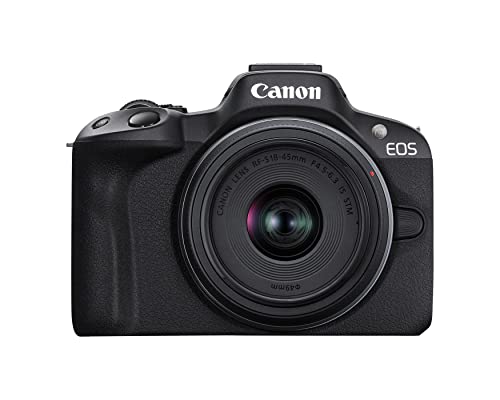
Canon EOS R50 — The grow-with-them system camera
The R50 is the pick for the teenager who has already shown the signs: phone photographs composed rather than snapped, questions about why the light looks different at dusk, a saved folder of other people’s photography. Canon built this body to be a first system camera, and its guided interface — which explains settings in plain sentences with example pictures — is effectively a patient tutor living inside the menus. A thirteen-year-old can start in full automatic, producing genuinely good photographs on day one, and peel back layers of control for years without the camera ever becoming the limit.
The autofocus earns special mention for family buyers. It finds and follows eyes — the teenager’s friends, the family dog, the younger sibling mid-sprint — with a reliability that removes the most discouraging beginner failure, the almost-in-focus photograph. Canon’s colour flatters skin, which matters more than any parent expects: teenagers photograph people, mostly each other, and files that make people look good get taken more often. The RF mount behind the body offers an affordable ladder of lenses, so the birthday two years from now can be the portrait lens rather than a replacement camera.
- Format: APS-C mirrorless, Canon RF mount
- Guidance: plain-language assisted menus and help screens
- Focus: eye detection for people and animals
- Screen: fully articulating touchscreen for group shots and video
- Role: the first system camera with a decade of headroom
Strengths
- Teaching interface that explains instead of intimidating
- Autofocus success rate that keeps early confidence high
- A lens mount the teenager will not outgrow at fifteen or eighteen
Trade-offs
- A system camera needs a bag; it will not live in a pocket
- Lens curiosity will eventually present parents with a second purchase
- Less drop-tolerant than the rugged pick below
For this age group, the R50’s quiet virtue is how it handles being shared and reset. Its menus are the easiest here for a parent to return to sanity after an experimental teenager has remapped the camera into modern art, and its automatic mode is honest enough that handing it to a grandparent at a family gathering produces good frames rather than a support call. A household camera that several generations can operate is worth more than its specification suggests.
Choose it for the teenager with visible photographic appetite and the patience for a small bag. If the honest description of your thirteen-year-old is “loses things, drops things, films things”, keep reading — the list has better answers further down.
Best for: motivated teenagers ready for a real, growing camera system. Not suited for: the accident-prone or the pocket-only carrier

Nikon Z30 — The screen-native starter
Nikon made a brave decision with the Z30: no viewfinder at all. For adult traditionalists that is a compromise; for a thirteen-year-old raised on screens it is simply how cameras have always worked. The Z30 is composed on its bright rear display exactly the way its owner already composes everything, which removes an entire layer of newness from the first week. What the teenager gets instead is a notably deep, secure grip — the feature that decides whether a camera feels safe in young hands — and a body small enough to be unremarkable in a school bag.
Video is where this Nikon quietly out-argues its price class. It was designed for creators filming themselves: the screen flips for self-framing, a tally light confirms recording, and the body is happy recording long pieces without complaint. A thirteen-year-old with a skate channel, a baking series or a bedroom music project will find the Z30 speaks their native language, while its stills — from the same APS-C sensor family as Nikon’s enthusiast bodies — are far beyond phone quality in poor light. The Z mount in front means the camera can grow: a small prime for portraits, a telephoto for the school team, all without replacing the body.
- Format: APS-C mirrorless, Nikon Z mount
- Finder: none — screen composition, phone-style
- Grip: deep and secure for its size
- Video: long-form friendly, self-framing screen
- Role: the filming teenager’s first system camera
Strengths
- Nothing about framing needs relearning from phone habits
- Grip security suits younger, smaller hands
- Video behaviour matches how this generation actually creates
Trade-offs
- Bright midday sun can fight a screen-only camera
- No in-body stabilisation; steady technique matters
- Teenagers who later crave a viewfinder will need a new body
The Z30’s particular service to families is diplomatic: it is the camera least likely to trigger the “that’s not a real camera” argument in either direction. It does not lecture the teenager with dials they did not ask for, and it does not insult the parent with toy construction. It simply meets a screen-native thirteen-year-old where they stand and offers them better light, better sound and a mount with a future — a negotiation both generations usually accept.
Buy it when the teenager’s creative life already involves filming, or when viewfinder-free simplicity is the difference between a camera carried and a camera shelved.
Best for: video-leaning teenagers and screen-native beginners. Not suited for: bright-sun traditionalists or rough-and-tumble expeditions

Sony ZV-1F — The pocketable confidence builder
The ZV-1F understands something adults forget: for a thirteen-year-old, the best camera is the one that is actually in the coat when the moment happens. This Sony is a fixed-lens compact built around a wide lens and ruthless simplicity — a prominent record button, a touchscreen that behaves like a phone’s, and a one-touch background-blur mode that delivers the portrait look teenagers want without a single lesson in aperture. It asks almost nothing and gives back photographs and clips that look deliberately made.
Its wide lens deserves explanation, because parents sometimes read “fixed wide lens” as a limitation and teenagers experience it as freedom. The view matches a phone’s main camera — the framing this generation has already internalised — so the ZV-1F’s photographs come out composed the way its owner intended from the first afternoon. The wide view also flatters group shots, room tours, skate lines and desk setups, which is to say the actual subject matter of thirteen. What it will not do is reach: the distant stage and the far touchline stay distant, and families should hear that plainly before choosing it.
- Format: fixed-lens compact, wide prime
- Controls: one-touch background blur, product showcase focus
- Audio: directional onboard microphone with windscreen
- Carry: genuinely pocketable, light enough for every day
- Role: the always-present first camera
Strengths
- Simplicity that produces good results on the first afternoon
- Pocket size means it attends days other cameras miss
- Video and vlogging behaviour is thoughtfully built in
Trade-offs
- Fixed wide lens cannot zoom toward distant subjects
- Smaller sensor than the system cameras here
- No path to other lenses; growth means a different camera later
There is a developmental argument for this Sony that goes beyond convenience. A first camera with almost no settings removes the fear of doing it wrong, and fear — of breaking, of embarrassing menus, of a parent’s disappointed face over a costly mistake — is the emotion that ends more young hobbies than boredom ever does. The ZV-1F is priced and built to be used without anxiety, lent without a speech, and carried without a plan. For the teenager whose interest is real but fragile, that freedom is the feature.
Choose it for the socially busy, filming, always-out teenager. Choose the R50 instead when the interest is clearly deepening into photography itself rather than content.
Best for: pocket-carrying creators who want results without lessons. Not suited for: distant subjects or long-term system building

OM SYSTEM Tough TG-7 — The indestructible explorer
Every family knows whether this is their pick within one sentence: the TG-7 is waterproof, shockproof, crushproof and freezeproof, and it takes genuinely good photographs while being all four. It can be dropped on the pool deck, taken snorkelling, buried accidentally in a sandcastle, frozen on a ski lift and handed to the younger cousin — and it will still be the camera that comes on the expedition next year. For the thirteen-year-old whose life is outdoors, or whose relationship with gravity is complicated, this is not the cautious choice; it is the liberating one.
What elevates the TG-7 above novelty rugged cameras is its photographic curiosity. Its microscope mode focuses astonishingly close, turning rock pools, frost, insects and rock crystals into legitimate subjects — the kind of photography that pairs with a young naturalist’s or scientist’s interests and wins school project marks. Its underwater modes handle the colour shifts of snorkelling depth honestly, and its construction means the lens never extends into harm’s way. The files will not match the big-sensor picks for portrait blur or candlelight, and this guide will not pretend otherwise; they will, however, exist — taken in places no other camera on this page would survive being taken.
- Format: rugged compact, sealed construction
- Protection: waterproof, shockproof, freezeproof, crushproof
- Close-up: microscope mode for extreme close focusing
- Modes: dedicated underwater and outdoor scene handling
- Role: the expedition and accident-proof camera
Strengths
- Survives the worst week a teenager can schedule
- Close-up mode opens science-flavoured photography
- No lens cap, case or anxiety required, ever
Trade-offs
- Small sensor limits low-light quality and background blur
- No viewfinder and modest screen by system-camera standards
- Not a growth platform; it is a destination in itself
Parents should notice what the TG-7 does to family dynamics. Every other camera in this guide comes with an invisible instruction — be careful — that teenagers hear as a leash. This one comes with permission. The photographs that result have a flavour the careful cameras rarely capture: taken from inside the pool rather than the poolside, from the middle of the mud run, from the kayak. If your thirteen-year-old’s best days are wet, high or fast, the camera that can join those days beats the camera that photographs them from a safe distance.
It is also, quietly, the best hand-me-down in the list: when the teenager graduates to a system camera at sixteen, the TG-7 becomes the family’s permanent adventure camera rather than an obsolete toy.
Best for: outdoor, aquatic and accident-prone teenagers. Not suited for: portrait-blur seekers or low-light specialists

Fujifilm Instax Mini 12 — The instant joy machine
Some thirteen-year-olds do not want a photography hobby; they want photographs — physical ones, for the locker door, the bedroom wall, the birthday card, the friend’s pencil case. The Instax Mini 12 is built entirely for that desire. It is an instant camera of exemplary simplicity: twist the lens to switch on, point, press, and a small print develops in the hand while everyone is still laughing. There are no menus, no settings worth the name, no files to manage and nothing to upload. In a guide full of technology, it is the pick that succeeds by refusing almost all of it.
Do not mistake the simplicity for a lesser gift. The Instax teaches the oldest photographic lessons in their purest form — that a photograph is a decision, that light matters, that the moment does not repeat — because every frame costs film and the results cannot be filtered into sameness. Teenagers raised on infinite free phone frames often find the constraint delicious: ten shots per pack makes each one an event, and the prints accumulate into a wall that no feed can replicate. Its automatic exposure handles the thinking, a selfie mirror and close-up mode handle the social use cases, and the whole thing runs on batteries that last long enough to be forgotten about.
- Format: instant camera, credit-card-sized prints
- Exposure: fully automatic, no settings to learn
- Features: selfie mirror and close-up mode
- Output: physical prints in about ninety seconds
- Role: the social, shareable, zero-anxiety camera
Strengths
- Instant physical prints teenagers actually display
- Impossible to misconfigure; confidence from the first frame
- No screens, accounts, uploads or privacy complications
Trade-offs
- Film is a running cost that parents should budget honestly
- Image quality is characterful, not precise
- No digital files unless prints are scanned later
The Instax also solves a problem the other picks create: the party problem. Handing a system camera to a birthday gathering is an act of faith; handing over the Instax is an act of generosity, and the prints become the party favours. Several families use it as the household’s second camera for exactly this reason — the serious camera for the photographer, the instant camera for the room. As a first camera for a socially driven thirteen-year-old whose interest is people rather than technique, it may honestly be the most-used gift on this page.
Budget note, said once and plainly: agree who buys the film before the camera is unwrapped, because the prints’ popularity guarantees the question will arrive within the week.
Best for: social teenagers who want prints, parties and zero learning curve. Not suited for: budding technicians or distant-subject photography

Canon PowerShot G7 X Mark III — The creator’s compact
The G7 X Mark III occupies the thoughtful middle of this list: a compact with a genuinely bright lens and a one-inch sensor, small enough for a jacket pocket yet serious enough that plenty of adult creators built channels on its predecessors. For the thirteen-year-old whose ambition is visible — the bedroom studio, the reviewed-everything shelf, the school media project — it offers a tilting touchscreen for self-framing, a microphone input for when the audio ambitions arrive, and stills quality that stands up on a big screen at home.
Its lens is the argument adults should weigh. A bright zoom that gathers far more light than a phone’s means the evening and indoor photographs — the birthday, the kitchen baking series, the winter afternoon — come out clean rather than smeared, and the background separation in portraits is real optics rather than software estimation. Canon’s menus and colour keep the learning curve gentle, and the camera’s streaming-friendly design means the teenager who films can broadcast or record without a capture card or a parent’s engineering degree.
- Format: premium compact, one-inch sensor class
- Lens: bright zoom for indoor and evening light
- Screen: tilts for self-framing and low angles
- Audio: microphone input for growing video ambitions
- Role: the compact for teenagers with creator ambitions
Strengths
- Low-light and portrait quality far beyond phone output
- Pocketable despite its serious sensor and lens
- Video features that grow with a young creator
Trade-offs
- Autofocus is a generation behind the system cameras here
- Fixed lens: no growth path beyond the camera itself
- Premium compact pricing buys real capability but also real loss if dropped
Consider this Canon the bridge pick: more camera than the simplicity-first Sony, less commitment than the interchangeable-lens pair, and more low-light talent than either compact rival. It suits the teenager whose interest is proven — a year of phone filming, a channel with actual uploads — but whose life still needs the camera to disappear into a pocket between uses. Parents should pair it with a wrist strap and a household rule about pockets versus bags, because its one vulnerability is the ordinary one: gravity.
If the ambition is uncertain, buy down this list; if it is unmistakable, this is the compact that will not need replacing when the channel grows up.
Best for: proven young creators who need pocketable quality. Not suited for: the drop-prone or system builders
How Do the Six Cameras for This Age Compare?
| Camera | Type | Survival odds | Grows by |
|---|---|---|---|
| Canon EOS R50 | System | Good with a bag and strap | Lenses and technique |
| Nikon Z30 | System | Good; grip helps | Lenses and filming skill |
| Sony ZV-1F | Compact | Good; lives in pockets | Confidence, then a system later |
| OM SYSTEM Tough TG-7 | Rugged compact | Exceptional by design | Adventure, not accessories |
| Fujifilm Instax Mini 12 | Instant | Good; nothing to configure | A wall of prints |
| Canon PowerShot G7 X Mark III | Premium compact | Fair; needs the strap rule | Creator skill |
Read the “grows by” column as the honest difference between the picks: some cameras grow with their owner, others are complete as they are — and completeness is not a flaw in a gift meant to be used today.
How Should Parents Set Up the Camera Before Handing It Over?
Do the boring half-hour yourself, before the wrapping paper. Charge the battery fully, fit the strap properly, format the card inside the camera, set the date, and turn on the eye-detection or face-detection autofocus the system cameras offer. Connect the camera to the family Wi-Fi and to the teenager’s phone, and transfer one test photograph together — the sharing ritual rehearsed at the kitchen table will actually happen on the school trip; unrehearsed, it will not. If the camera offers a guided or beginner mode, start there without shame; it is a starting line, not a verdict.
Agree the household rules in the same conversation, while the mood is generous. Who appears in photographs, and where may photographs of friends be posted — a question with real safeguarding weight at thirteen, best settled by the family’s own values before the camera creates the dilemma. Where does the camera sleep at night, and who charges it? What happens — calmly, without catastrophe — if it is damaged? A teenager who knows the damage protocol in advance reports accidents immediately; one who fears the reaction hides them until the warranty of honesty has expired.
Finally, resist setting homework. The fastest way to cool a thirteen-year-old’s interest is to curriculum it. Suggest, lend books, share photographers you admire, offer the family events as commissions — and then let the camera be theirs, including the right to photograph subjects you find baffling. The eye develops by following its own fascinations; parents supply the instrument, the safety net and the audience, in that order.
What Does the First Term of Shooting Usually Look Like?
Month one is volume and delight: hundreds of frames, mostly friends, pets and the walk to school, with quality varying wildly and enthusiasm carrying everything. The parent’s job is to be an audience — ask to see, print a few favourites without being asked, and let the bedroom wall start its slow transformation. Resist technical critique entirely in this month; a teenager who hears “you should have used a faster shutter” before they have heard “that one is wonderful” learns to stop showing you photographs.
Month two brings the first real question, and it is almost always one of three: why is this one blurry, why does the background not melt like the ones online, or how did that photographer make the light do that? Each question is a door, and the cameras in this guide were chosen so the door opens inside the same body — an aperture mode, a shutter mode, a close-up mode, a better lens next birthday. Answer with one idea at a time, ideally at the moment of asking, with the camera in hand. Young photographers learn techniques the way they learn songs: by needing them.
By month three the pattern of the individual photographer emerges — the one who documents everything, the one who stages portraits, the one who disappears into macro details or skate sequences. That pattern, not any specification, should drive the next purchase the family ever makes in this hobby, whether that is a lens, a tripod, a film budget or simply a bigger memory card and a frame for the best print. The first camera’s job was to reveal the photographer; by the end of the first term, it has.
How Do Privacy and Sharing Work at Thirteen?
A dedicated camera changes the sharing equation in ways parents mostly welcome. Photographs live on a card, not in a feed; nothing posts itself, nothing is geotagged by default on most of these bodies, and the teenager curates deliberately before anything travels to a phone. That pause — shoot now, choose later — is a healthier rhythm than the phone’s instant pipeline, and several parents told us it was an unplanned benefit of the gift: their teenager’s photographic life became more intentional simply because the tool slowed it down.
The family’s own rules still apply, and the camera makes two of them easier to keep. Consent first: photographing friends is normal and welcome; posting friends is a separate permission, asked each time until trust makes it routine. School rules second: many schools restrict cameras as they restrict phones, and the teenager should know the camera’s status before it travels in the bag — a confiscated camera teaches only resentment. Neither rule needs a lecture; both need one clear conversation, ideally before the first trip or party.
Storage completes the picture. Teach the offload habit early — card to computer or family cloud after big days — because a lost camera with a term’s photographs on it is a bereavement, while a lost camera with an empty card is an insurance claim. The teenager who backs up at thirteen is learning data hygiene that will serve every device they ever own; the camera is merely the most likeable teacher of it.
How Does a Camera Change a Teenager’s Relationship With Their Phone?
Parents rarely list this among their hopes for the gift, yet it surfaces in family after family: the camera gives a thirteen-year-old a creative life that does not run through a feed. Phone photography at this age is rarely about photographs; it is about presence, replies and the small economics of attention. A dedicated camera interrupts none of that — nor should it — but it adds a second, quieter channel where an image can be made slowly, kept privately, printed physically and judged by nobody’s metrics. Teenagers are quite capable of valuing both channels, and many describe the camera sessions as the relaxing ones precisely because nothing is waiting on the other side of the shutter.
There is a craft consequence too. Phone processing flatters and forgives so aggressively that it can conceal cause and effect: the teenager cannot tell what they did right. A camera’s honesty — the blur that came from a slow shutter, the blown sky that came from pointing at the sun — is feedback a young photographer can actually learn from, delivered without a grade or a comment thread. Several photography teachers told us the students who arrive with a term of camera use behind them progress measurably faster, not because their eyes are better but because their mistakes have been informative.
None of this requires a family position on phones, and this guide takes none. The camera is not a replacement or a rebuke; it is an additional instrument with a different temperament. The healthiest framing we heard from parents was also the simplest: the phone is for communicating, the camera is for looking — and a thirteen-year-old given both, with the distinction made kindly, usually ends up using each for what it does best.
What About School Trips, Holidays and the Camera Leaving the House?
The first time the camera travels without its owner-parent is a small milestone worth planning rather than fearing. Label it — a name and phone number inside the battery door or on a tag in the case solves most honest losses — and photograph the serial number into the family archive before departure. A small, unglamorous case that fits the school bag’s bottle pocket protects better than a beautiful one left at home, and a spare card in a sealed envelope has rescued more trip photography than any other ten-gram object in this guide.
Charging deserves a plan on multi-day trips. The system cameras and compacts here charge or run long enough for a weekend of sensible use, but residential trips have a way of producing one power socket per dormitory and six devices competing for it. A small multi-port charger, agreed as shared kit, prevents the camera losing that contest to phones every night. Teenagers should also learn the aeroplane and museum rules of photography — where flash is forbidden, where cameras are unwelcome entirely — because a thirteen-year-old who handles those courtesies gracefully gets welcomed back with the camera, which is the entire point.
Holidays test the sharing rules in the other direction: everyone wants the camera at the beach. Families who rotate it deliberately — the teenager owns it, others borrow it by asking — avoid the slow resentment that builds when a personal gift becomes communal property by drift. And the TG-7 earns another mention here: on the days when the itinerary is a boat, a waterfall or a waterpark, it is simply the correct camera, and owning it ends the negotiation before it starts.
How Should Families Think About Whatever Comes After This Camera?
It helps to say aloud, at the moment of purchase, that this camera is probably not the last one — and that this is success, not failure. A first camera that gets outgrown has done its job completely; the only disappointing outcome is the camera that gets abandoned. Framing it that way in advance protects the teenager from feeling they have wasted a gift when, at fifteen or sixteen, their ambitions outrun a compact, and it protects parents from over-buying now out of fear of that day. The system picks postpone the day; the fixed-lens picks make it a clean, guilt-free graduation.
When the day comes, the evidence for what to buy next will be sitting in the archive: a year or two of photographs showing which subjects recur, which limitations actually bit, and which features were never touched. That is a far better buying brief than any review — including this one. The second purchase in a young photographer’s life is usually the wisest, because it is the first one made by a photographer.
And keep the first camera in the family if you possibly can. The Instax becomes the party camera, the TG-7 the permanent adventure camera, the compact the parent’s travel camera, the system body a sibling’s inheritance. First cameras age into household institutions when they were chosen honestly for a real teenager’s life — which is, in the end, the standard this whole guide has been arguing for.
How Can a Parent Tell Whether the Interest Is Real Before Buying?
The honest signals are behavioural, not verbal — every thirteen-year-old asked directly will say yes to a camera-shaped present. Look instead at the phone’s camera roll, with permission: a teenager who already composes, returns to subjects, edits deliberately and keeps photographs rather than only sending them is showing you a photographer’s habits in embryo, and a system camera will feel like a promotion. A teenager whose camera roll is ninety per cent screenshots and memes may still love a camera — but the love will be for the object and the occasions, which argues for the joyful, simple picks rather than the growing systems.
Duration is the second signal. An interest that has survived a school term — through a club, a borrowed camera, a grandparent’s old compact, a sustained phase of phone photography — is a different risk from an interest born last week in a shop window. Neither is unworthy of the gift, but they price differently: sustained interest justifies the R50’s headroom, while a newer spark is better served by a camera whose success does not depend on the spark becoming a fire. The Instax and the Tough, in particular, are complete successes even if photography never becomes “their thing”, because prints and adventures are not consolation prizes.
The third signal is care, and it should be read generously. A teenager who is careless with belongings at thirteen is not careless by character; they are thirteen. The question is narrower: do they return borrowed things, charge what needs charging, and report breakages? If yes, the system cameras are safe in their hands. If not yet, choose the pick whose survival does not depend on those habits — and let the camera itself, being genuinely theirs, be one of the objects that teaches the habits. Several parents told us it did exactly that, which may be the most thirteen-appropriate outcome in this entire guide.
What Mistakes Do Families Keep Making With a First Camera?
Buying the camera the parent wishes they had owned. The adult’s dream body — heavy, manual, magnificent — handed to a thirteen-year-old becomes a monument rather than a tool. Buy for the teenager’s actual life: their hands, their bag, their friends, their tolerance for menus. The picks above are ordered by honesty about that life, not by adult prestige.
Under-buying the accessories and over-fearing the accidents. A strap, a second battery or film supply, a small case and a spare card cost little and prevent nearly every early disaster; meanwhile, a camera so protected that it needs permission to leave the house teaches only that photography is precious in the wrong sense. Insure it if the numbers worry you, then let it be used — a scratched camera with a full card is a success story, and a pristine camera in a drawer is the only true failure available.
Finally, comparing the teenager’s photographs to the internet’s. The feeds a thirteen-year-old scrolls are the survivorship bias of a million adults with a decade of practice. Compare this month’s photographs to last month’s instead, and the progress — steadier, braver, more deliberate — will be obvious enough to keep everyone, photographer and parents alike, patient with the learning curve.
Final Recommendation
For most thirteen-year-olds with a genuine spark, buy the Canon EOS R50: it teaches kindly, focuses forgivingly and grows for years inside a lens system the family will not regret. Choose the Nikon Z30 when filming leads, the Sony ZV-1F when pockets decide what gets carried, the OM SYSTEM Tough TG-7 when the teenager’s natural habitat is wet or airborne, the Instax Mini 12 when the joy is prints and people rather than technique, and the Canon G7 X Mark III when a young creator’s ambition has already outgrown a phone and needs low-light quality in a compact body.
Whichever box is unwrapped, remember what is actually being given. It is not a sensor or a lens mount; it is a reason to look at the world slowly, a skill that compounds quietly, and — if the families who wrote to us are any guide — a surprising number of walks together that would not otherwise have happened. The camera is the excuse. The looking is the gift.
One last encouragement for the adults reading: your own reaction to the photographs will teach more than the camera does. Ask for prints of the ones you love. Put one on the fridge without ceremony. Mention, weeks later, the picture of the dog or the harbour that you keep thinking about. A thirteen-year-old who learns that photographs can live in other people’s minds — not just on their screens — has understood the deepest thing this hobby teaches, and they learned it from the audience, not the equipment.
Frequently Asked Questions
Is thirteen too young for an interchangeable-lens camera?
Not for the teenager who has shown sustained interest — composing phone photographs deliberately, asking how effects are achieved, caring for borrowed things. The R50 and Z30 in this guide are designed to be operated fully automatically at first, so the system grows at the owner’s speed. For a casual or accident-prone thirteen-year-old, the compacts and the rugged pick are the wiser doors into the same hobby.
How much should a family expect to spend beyond the camera?
Budget for the unglamorous kit from the start: a strap and small bag, a spare card, a second battery for the system cameras, and — for the Instax — a film supply with an agreed household rule about who funds refills. None of it is extravagant, and all of it prevents the early frustrations that strand new cameras in drawers.
Will a dedicated camera just lose to the phone anyway?
For casual snapshots, the phone keeps its crown, and that is fine. The camera wins the moments this guide is about: evenings, motion, portraits with real background separation, expeditions, projects and any photograph destined for a wall. Most teenagers settle into using both within weeks — phone for the feed, camera for the photographs they intend to keep.
What if the camera gets damaged in the first year?
Decide the protocol before it happens: accidental-damage cover or a household insurance note for the system cameras, and a calm family rule that accidents reported early are forgiven early. The rugged TG-7 exists for families who would rather engineer the risk away. What matters most is that fear of the conversation never costs more than the repair would have.
Can a first camera help with schoolwork?
Genuinely, yes. Photography projects appear across art, media, geography fieldwork and science — the TG-7’s microscope mode has obvious fieldwork charm — and a teenager who can produce a deliberate, well-exposed image on demand holds a skill teachers notice. Several schools also run photography clubs where a real camera is the entry ticket; the system picks here qualify their owners immediately.
Should parents monitor what the camera photographs?
Proportionately and openly. The healthy pattern is interest rather than inspection: ask to see the work, be shown it proudly, and keep the family’s consent rules for photographing and posting other people clear and agreed. A camera, unlike a phone, holds no feed, no messages and no account — most families find it the easiest device in the house to trust, and the trust itself is part of the gift’s value.
Related Guides
Families often continue with our guide to the best digital cameras for a beginner photographer when the teenager’s interest deepens into a learning plan, compare the best digital cameras for beginning photographers for the phone-upgrade path, or browse the one-camera guide for households buying a single body for everyone when parents start borrowing the teenager’s camera more than the teenager does.


