ilcastellomenu.com is reader-supported. When you buy through links on our site, we may earn an affiliate commission.
Where to Buy
Airport security trays expose the truth about travel cameras: whatever feels heavy at dawn gets abandoned by day three. The best compact cameras for beginners for travel earn their place by surviving that tray test, then rewarding a first-time owner with photographs noticeably better than a phone without demanding a photography course first. Every recommendation below fits a jacket pocket or a small sling, charges without a tangle of proprietary bricks, and forgives the mistakes beginners make in unfamiliar light.
Travel imposes a specific beginner problem. At home, a confusing menu costs an evening; in a hill town with one sunset left, it costs the photograph. So this guide judges compacts through a traveller’s lens: how quickly the camera wakes, how honestly its automatic modes behave under strange skies, how much luggage volume the charger and spare battery consume, and whether the body shrugs off drizzle, dust and the occasional knock against a café table. Sensor bragging rights matter here only when they change what a newcomer brings home.
Two neighbouring guides deserve a mention so nobody buys the wrong tool. A sibling page covers compact cameras chosen purely for video specifications, while another handles close-up work where focusing distance rules everything. This page stays with the wandering beginner: someone walking ten kilometres daily, shooting markets, grandparents, coastlines and dinners, and wanting the camera to feel like a companion rather than homework.
Key Takeaways
- Pocketability decides whether a travel camera actually travels.
- Forgiving automatic modes matter more than manual depth for first trips.
- USB charging removes a whole category of luggage anxiety.
- A modest zoom beats exotic glass when streets are unfamiliar.
- Weather resistance buys confidence in coastal and mountain weather.
- Buy the camera your future self will carry on day nine.
In this guide
Quick Picks
| Camera | Badge | Why it earns its place |
|---|---|---|
| Canon PowerShot G7 X Mark III | The pocket all-rounder for new travellers | A bright zoom, friendly Canon colour and pocketable manners that suit city breaks and family trips equally. |
| Sony ZV-1F | The simplest starter for travel diaries | A fixed wide lens, video-diary features and controls a beginner understands within one afternoon. |
| Sony RX100 VII | The reach-in-a-pocket upgrade | A long zoom and fast autofocus inside a body barely larger than a deck of cards. |
| Fujifilm X100VI | The slow-travel storyteller | A fixed lens, film-like colour and dials that teach photography gently while wandering old towns. |
| OM SYSTEM Tough TG-7 | The worry-free adventure pocket camera | Waterproof, shock-resistant construction for beaches, boats and rainy trailheads where beginners relax. |
| DJI Osmo Pocket 3 | The moving-diary specialist | A gimbal-stabilised pocket camera that turns walking footage smooth without any technique at all. |
How Did We Choose Compacts a Beginner Will Still Carry on Day Nine?
Four travel tests shaped this list. First came the pocket test: each body had to disappear into ordinary clothing or a daypack’s smallest compartment, because a camera left in a hotel safe photographs nothing. Weight was judged with battery and card installed, the way travellers actually carry gear, not the flattering figure quoted for a bare shell.
Second, the forgiveness test. Beginners on the road shoot at noon under brutal sun, at dusk under café bulbs, and through bus windows at moving scenery. Cameras scored for how gracefully their automatic exposure, white balance and subject detection handle that chaos without intervention. A body whose auto mode needs constant correction fails a traveller even when its manual mode delights experts.
Third, the logistics test: charging from a power bank, battery endurance across a sightseeing day, card formats any laptop accepts, and wireless transfer that moves a photograph to a phone before dinner. Travel photography dies by small frictions repeated daily, so logistics received the same weight as image quality.
Finally, the honesty test about zoom. New travellers overestimate their need for reach and underestimate their need for brightness. A lens that gathers light in a dim trattoria serves more real itineraries than a telescope that only performs at noon. The picks below balance both instincts rather than surrendering to either.
Why Does a Beginner’s Travel Camera Need Different Priorities Than a Home Camera?
Home forgives experimentation because tomorrow offers another attempt. Travel rarely repeats itself: the festival ends, the ferry leaves, the grandmother returns to her village. A beginner’s travel compact must therefore privilege first-attempt success over creative depth, which reverses the advice given to hobbyists building skills in familiar surroundings.
Environment changes the calculation further. Cobblestones punish heavy kits through the feet and shoulders, altitude thins patience for menu-diving, and unfamiliar cities reward discretion — a small black camera attracts less attention than a lens that announces its price. Several picks here were chosen partly because they look unremarkable while performing remarkably.
There is also the question of who else appears in the photographs. Travelling beginners photograph companions constantly, often handing the camera to strangers for the obligatory pair portrait. A body a stranger can operate — point, half-press, smile — produces keepsakes that a technically superior but baffling camera never gets the chance to make.
What Should a First-Time Buyer Pack Around the Camera?
The supporting kit deserves one short paragraph of respect. A second battery, a card wallet, a wrist strap that actually gets worn, and a microfibre cloth in every pocket will save more photographs than any accessory lens. Beginners travelling with compacts should also enable the camera’s date and location habits early, because a thousand unsorted images from three countries become archaeology within a month of returning home.
Which Compact Cameras Should a Beginner Actually Take Travelling?
Six bodies follow, ordered by the kind of trip they serve rather than by any league table. A beach-and-boat beginner, a city-break beginner and a diary-keeping beginner need different things from the same shelf, and the badges name those jobs plainly.

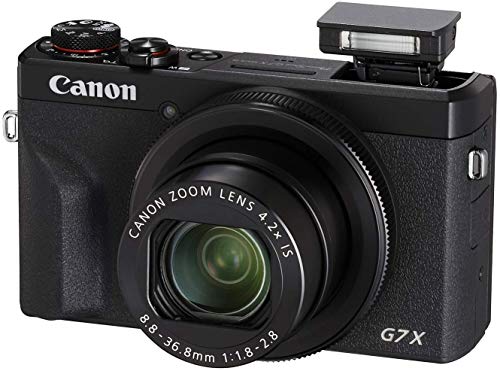
Canon PowerShot G7 X Mark III — The pocket all-rounder for new travellers
Canon’s little G7 X has become the default suggestion for travellers upgrading from a phone, and one week of carrying it explains why. The zoom covers the span a tourist actually uses — wide enough for a narrow old-town lane, long enough to isolate a church tower across a square — while the bright maximum aperture keeps dim restaurant photographs usable without flash. Canon’s colour science flatters travelling companions, which matters when half the trip’s archive is portraits of people who will judge the camera by how they look.
Handling suits novices who learn by touching. The touchscreen tilts for awkward angles above market crowds, the control ring around the lens gives one manual idea at a time instead of twelve, and the automatic mode produces honest results while its owner is still learning what exposure compensation means. Video exists competently in the background, ready for the day its owner starts filming, without bullying a stills beginner into a filmmaker’s interface.
- Format: pocket compact with a one-inch-class sensor
- Lens: bright zoom covering everyday travel framing
- Screen: tilting touchscreen for crowds and low angles
- Charging: USB top-ups from ordinary travel power banks
- Role: the default first camera for mixed itineraries
Strengths
- Colours that make companions approve their portraits
- Bright lens rescues evening meals and museums
- Controls teach one concept at a time
Trade-offs
- Autofocus lacks the pricier Sony’s tenacity
- No viewfinder for glaring midday squares
- Battery life rewards carrying a spare
Picture it across a long weekend in Lisbon: dawn miradouro light, a tram interior at noon, custard tarts under café bulbs, then a fado bar where flash would murder the mood. The Canon handles that sequence without a settings seminar, which is precisely the beginner travel brief. Its files also forgive the classic novice error of shooting everything at the zoom’s widest setting, because the sensor keeps enough detail for a sensible crop later.
Its ceiling appears when a traveller’s ambitions turn serious about wildlife or sport, where its reach and tracking run out of road. Within the enormous middle ground of city, coast and family travel, though, it is the recommendation least likely to be regretted at the airport coming home.
Best for: first-time buyers wanting one pocket camera for mixed city, coast and family trips. Not suited for: travellers chasing distant wildlife or fast stadium action

Sony ZV-1F — The simplest starter for travel diaries
Sony aimed the ZV-1F at people who narrate their trips, and its simplicity is radical: a fixed wide lens, a prominent record button, and product-showcase tricks for holding souvenirs up to the camera. Beginners who film themselves against famous backdrops get a lens wide enough to hold at arm’s length without amputating the landmark, plus face-priority exposure that keeps a traveller readable against bright skies.
Stills photographers should read the fixed lens as a philosophy rather than a flaw. One focal length removes the zoom dithering that slows beginners, frames travel scenes the way phone natives already see them, and keeps the body genuinely tiny. The photographs it makes are honest snapshots with dedicated-camera depth, especially in the evening light where phone processing starts to smear detail.
- Format: fixed-lens pocket camera, video-diary leaning
- Lens: wide single focal length for arm’s-length framing
- Focus: face and eye priority for self-filming
- Audio: directional built-in microphone capsule
- Role: the narrated travel diary starter
Strengths
- Arm’s-length framing includes person and landmark
- Almost impossible to set up wrongly
- Featherweight even beside other compacts
Trade-offs
- Fixed lens cannot reach across a viewpoint
- Stills-first travellers may outgrow it quickly
- Electronic stabilisation crops moving footage
A backpacker filming a night-market walk will appreciate how the camera thinks about faces first and scenery second, because travel diaries fail when the narrator becomes a silhouette. The defocus button, which blurs backgrounds on demand, teaches a beginner the visual grammar of subject separation without a single lesson about aperture.
Choose it when the trip’s output is a diary shared with friends and family. Choose the Canon above when still photographs lead and video follows. That single honest question — film myself, or photograph the world — separates these two pockets more cleanly than any specification sheet.
Best for: beginners whose trips become narrated video diaries and social clips. Not suited for: stills-led travellers wanting zoom reach across viewpoints

Sony RX100 VII — The reach-in-a-pocket upgrade
The RX100 VII answers the beginner who keeps saying one sentence: I wish that were closer. Its zoom reaches genuinely far — across harbours, into stadium tiers, toward the eagle on the far crag — while the body remains small enough to forget in a coat. For travellers, that combination is close to magic, because reach usually demands a bag, a strap and a decision made hours earlier.
Speed is the second gift. The autofocus locks onto eyes and holds them with a persistence that flatters beginners photographing children, street performers and wildlife-park animals. Burst shooting fast enough for a breaching whale or a flamenco spin means the novice’s timing errors get absorbed by machinery rather than punished by it.
- Format: premium pocket compact, one-inch-class sensor
- Lens: long zoom spanning wide scenes to distant detail
- Focus: tenacious eye tracking for people and animals
- Viewfinder: pop-up electronic finder for bright days
- Role: the pocket camera for faraway subjects
Strengths
- Telephoto reach no rival pocket matches
- Autofocus forgives beginner timing completely
- Pop-up viewfinder saves glaring-day shooting
Trade-offs
- Premium pricing beside simpler compacts
- Menus reward patience from new owners
- Small body means small battery reserves
On a whale-watching boat, this is the camera that comes home with the fluke photograph while phones capture spray and hope. At a hilltop monastery, it pulls the frescoed bell tower out of the haze. Beginners feel competent quickly with it, and competence is the fuel that keeps a new photographer shooting after the novelty fades.
Budget honestly, though: this is the connoisseur’s pocket, priced accordingly, and a traveller whose subjects stay within arm’s reach of a café table pays for reach they will never deploy. Buy it for distance you can already name in your itinerary.
Best for: travellers photographing wildlife parks, viewpoints, concerts and distant architecture. Not suited for: buyers whose trips stay close-range and café-based

Fujifilm X100VI — The slow-travel storyteller
Some travellers move slowly, return to the same café, and photograph a place until it reveals itself. The X100VI was designed for them: a fixed prime lens, analogue dials for shutter and aperture, a hybrid viewfinder that can show the world optically or electronically, and Fujifilm’s film simulations colouring every frame like a remembered summer.
Beginners benefit from its constraints in disguise. One focal length teaches feet-first composition faster than any tutorial, the tactile dials make exposure visible instead of abstract, and the resulting photographs carry a coherence that zoom-happy snapshots rarely achieve. A week in one city with this camera produces a story; a week zooming from doorways produces postcards.
- Format: fixed-lens premium compact, larger APS-C sensor
- Lens: classic reportage focal length, feet-first framing
- Controls: physical dials for shutter speed and aperture
- Colour: film simulations with a nostalgic palette
- Role: the slow, deliberate travel storyteller
Strengths
- Teaches composition through joyful constraint
- Low-light ability exceeds smaller-sensor rivals
- Images share a unmistakable filmic coherence
Trade-offs
- No zoom when a viewpoint demands reach
- Availability and pricing test patience
- Deliberate pace frustrates whirlwind itineraries
Its natural habitat is the long stay: a month in Kyoto, a rented cottage in the Cotswolds, a grandmother’s village documented properly at last. Beginners who suspect they will fall in love with photography itself, not merely with souvenirs, often find this camera becomes the hobby’s doorway.
Be honest about temperament before buying. Travellers who want the photograph finished and the walking resumed will chafe against its deliberateness, and should take the Canon or the little Sony instead. The X100VI rewards the dawdler and gently rebukes the rusher.
Best for: slow travellers and beginners falling for photography as a craft. Not suited for: fast itineraries needing zoom flexibility at every stop

OM SYSTEM Tough TG-7 — The worry-free adventure pocket camera
Every other camera in this guide asks to be protected from the trip. The TG-7 asks where the trip gets wet. Waterproof, shockproof, crushproof and freeze-resistant, it snorkels over reefs, survives drops onto boat decks, and shoots through mountain sleet that sends rival compacts into dry bags. For beginners whose travel means outdoors rather than old towns, that armour changes behaviour: the camera comes out precisely when conditions turn interesting.
The sensor is smaller than its companions here, and honesty requires saying the image quality ceiling sits lower in exchange for the armour. Daylight adventure photographs look vivid and shareable; dusk pushes the little sensor harder than the Canon’s. What the TG-7 returns for that concession is participation — photographs from inside the waterfall, the kayak and the blizzard, places no delicate compact dares to go.
- Format: rugged waterproof compact
- Construction: sealed against water, drops and frost
- Lens: bright zoom with a celebrated close-focus mode
- Logging: GPS and sensors record where adventures happened
- Role: the camera for wet, cold and clumsy itineraries
Strengths
- Shoots underwater without a housing
- Survives the drops beginners eventually commit
- Close-focus mode delights tidepool explorers
Trade-offs
- Smaller sensor trails rivals after sunset
- Chunky styling divides opinion at dinner
- Zoom reach stays modest for wildlife
Families hand it to children without the usual held breath, which alone earns its luggage space on beach holidays. Ski instructors, sailing crews and festival mud survivors form its other constituency: anyone whose camera history includes a repair bill.
Pair it mentally with a phone rather than against one. The phone stays safe for maps and messages while the TG-7 absorbs the environment, and the partnership covers a trip more completely than either device alone.
Best for: beach, boat, ski and family adventures where cameras get wet or dropped. Not suited for: low-light city photographers wanting maximum image quality

DJI Osmo Pocket 3 — The moving-diary specialist
The Osmo Pocket 3 looks like a lollipop and behaves like a film crew: a three-axis gimbal keeps walking footage eerily level, the rotating screen flips between filming the street and filming yourself, and the one-inch-class sensor records travel movement with a polish phones imitate through software and rarely match. Beginners who experience motion sickness watching their own phone videos feel the difference within one street.
Stills exist here, competently, but the honest framing is that this is a motion camera that occasionally photographs. Its genius for travellers is operational: power it on and the gimbal wakes ready, subject tracking follows a companion through a crowd, and the whole instrument vanishes into a pocket that would reject even the smallest conventional compact with a lens extended.
- Format: gimbal-stabilised pocket camera
- Stabilisation: mechanical three-axis, walk-proof footage
- Screen: rotating display for self-filming and street work
- Tracking: tap-to-follow subjects through crowds
- Role: the smooth-motion travel diary instrument
Strengths
- Walking footage emerges level and calm
- Starts filming faster than any rival here
- Tracking keeps travelling companions framed
Trade-offs
- Stills play second fiddle to video
- Gimbal head demands gentle packing
- Fixed framing limits photographic reach
Night markets, cycling paths, train-window journeys and old-town staircases all become watchable footage instead of nauseating evidence. Beginners who return home and actually rewatch their clips — rather than archiving them guiltily — usually own stabilisation of this quality.
Buy it as the trip’s motion specialist alongside a stills camera, or alone when video plainly leads the diary. Photographers chasing printable stills should let the compacts above carry that ambition instead.
Best for: travellers whose memories move — walks, rides, markets and narrated journeys. Not suited for: stills-first photographers wanting prints and zoom range
How Do the Six Travel Compacts Compare at a Glance?
| Camera | Carry style | Beginner gift | Watch out for |
|---|---|---|---|
| Canon PowerShot G7 X Mark III | Jacket pocket | Forgiving colour and bright zoom | Carry a spare battery |
| Sony ZV-1F | Any pocket | Diary filming without decisions | No zoom for distant subjects |
| Sony RX100 VII | Coat pocket | Reach plus eye tracking | Premium price, dense menus |
| Fujifilm X100VI | Neck strap, small sling | Craft lessons from fixed lens | Deliberate pace, no reach |
| OM SYSTEM Tough TG-7 | Swim shorts pocket | Fearless wet-weather shooting | Dusk image quality ceiling |
| DJI Osmo Pocket 3 | Trouser pocket | Gimbal-smooth walking footage | Stills are secondary |
Read the table as itineraries rather than rankings: match the row to the trip already booked, and the correct camera usually names itself.
How Should a Beginner Practise Before the Trip Begins?
A camera bought the night before departure becomes a stranger in a foreign city, so give it one ordinary week at home. Photograph breakfast, a commute, a friend’s face at dusk and a building across the street; the point is discovering where the buttons live while mistakes cost nothing. Beginners who complete that week board the plane with a tool, while those who skip it board with a puzzle.
Learn three settings only before travelling: how to brighten or darken exposure deliberately, how to force the flash off in museums, and how to review a photograph critically at full zoom. Those three skills rescue more travel photographs than the entire remainder of the manual combined, and every camera in this guide buries them at different depths — another reason the practice week matters.
Shoot the practice week at the quality settings you intend to use abroad, and practise the evening ritual too: transfer, back up to a second location, charge everything, format nothing until the copies verify. Travel photography’s tragedies are overwhelmingly administrative, and rehearsed administration is invisible until the day it saves a honeymoon.
Why Do Travel Photographs Disappoint Beginners When They Return Home?
The commonest cause is midday. Guidebook photographs are made at dawn and dusk, while tourists shoot at noon because noon is when tours run, and the resulting flat light convinces beginners their camera underperforms. Any compact in this guide looks brilliant at seven in the evening and ordinary at one in the afternoon; the honest fix is scheduling, not shopping.
The second cause is distance. Beginners photograph the whole cathedral when the photograph they wanted was the gargoyle, the doorway, the hands of the busker. Zooming with a lens — or with feet, on the fixed-lens picks — converts scenery into subjects, and subjects are what memory actually keeps.
Third comes the unedited flood. Two thousand frames hide forty wonderful ones, and the traveller who never culls concludes the trip photographed badly. Spend the train ride home deleting bravely; the album that remains will argue persuasively that the camera, and its beginner, did well.
What Mistakes Do First-Time Travel Camera Buyers Keep Making?
Buying for the fantasy itinerary tops the list: the safari zoom purchased for a city break, the underwater body bought for a museum tour. The cameras above were sorted by real trip types precisely to combat that daydream arithmetic. Write the actual itinerary down, then shop.
Underbuying batteries runs second. A compact’s quoted endurance assumes laboratory manners — few reviews, modest screen use — while travellers chimp constantly, transfer wirelessly and film clips between photographs. One spare battery, bought before departure, is the cheapest insurance in this entire guide.
Third, beginners protect the camera so thoroughly that it never leaves the hotel. A compact’s entire purpose is presence; a wrist strap, a pocket and a relaxed attitude about minor scratches serve the archive better than a padded case in a locked room. The TG-7 exists for travellers who know this fear will follow them to the beach.
Finally, many new owners shoot everything on fully automatic forever, then blame the camera for choices a single learned control would have fixed. Automatic modes in this guide are starting points with excellent judgement, not life sentences.
Final Recommendation
For most beginners travelling most itineraries, the Canon PowerShot G7 X Mark III is the safest first compact: pocketable, bright, forgiving, and honest in every light a holiday produces. Diary filmmakers should take the Sony ZV-1F or the DJI Osmo Pocket 3 depending on whether the camera must also behave like a stills camera at rest stops. Distance shooters graduate directly to the RX100 VII, slow travellers to the X100VI, and anyone whose itinerary includes water, snow or small children should let the Tough TG-7 absorb the risk.
Whichever body you choose, spend the practice week with it and carry it daily once abroad. Travel rewards the camera that is present, charged and understood — in that order — far more reliably than it rewards the camera with the longest specification sheet.
One closing thought for the hesitant: every experienced travel photographer began with a first trip shot on something imperfect, carried everywhere and learned by heart. The beginners who thrive are not the ones who bought flawlessly; they are the ones whose camera was light enough to accompany breakfast, forgiving enough to survive their learning curve, and present on the evening the light turned extraordinary over a town they will never visit again. Choose the body in this guide that matches your itinerary and your temperament, then go and let the trip teach the rest.
How Do Batteries and Charging Shape a Beginner’s Travel Day?
Travel days run longer than battery laboratories imagine. A sightseeing day might begin with a dawn viewpoint, continue through a museum where the screen stays bright for hours of review, pause for a café transfer session that drains wireless radios, and end with night-market filming after dinner. Beginners who plan power around that rhythm — spare battery in the daypack, power bank shared with the phone, everything charged during breakfast — stop thinking about batteries entirely, which is the actual goal.
USB charging quietly revolutionised compact travel. Older generations demanded a proprietary cradle per camera, one more brick in the luggage and one more thing to forget in a hotel socket. Bodies that sip from the same cable as a phone collapse that whole category of anxiety. When comparing picks, treat in-camera USB charging as a travel feature equal in weight to a brighter lens, because a charged ordinary camera outperforms a dead excellent one every single day.
Screen habits decide the rest. Reviewing every frame at full brightness on a sunlit plaza can halve an afternoon’s endurance, while a disciplined glance-and-go rhythm stretches the same battery to dinner. The pop-up viewfinder on the RX100 VII earns mention here too: composing through it on bright days saves both power and squinting, a small mercy that compounds across a fortnight.
Cold deserves a sentence of its own. Mountain mornings and winter city breaks drain cells faster than brochures admit, and the traveller’s trick is ancient: keep the spare battery in an inside pocket where body heat keeps it honest, and swap rather than mourn when the first cell fades on a summit.
What Makes a Compact Good at Photographing Travelling Companions?
Most beginner travel archives are, by volume, portraits — partners at viewpoints, parents at restaurant tables, children discovering gelato. A compact serves that archive through three quiet virtues: skin tones that flatter without a beautifying smear, autofocus that finds eyes rather than ears, and a flash gentle enough for a dinner table, or better, a lens bright enough to skip flash altogether.
Eye-detection autofocus changed the beginner’s success rate more than any sensor improvement of the last decade. Hand the camera to a stranger for the obligatory couple photograph and eye detection quietly guarantees the one thing the stranger cannot: that the faces, not the fountain behind them, carry the sharpness. Several picks here implement it so reliably that checking focus becomes a habit travellers can safely relax.
Lens brightness writes the evening chapters. Restaurants, bars, night trains and old-town lanes after dark are where travel memories concentrate, and a fast lens gathers those scenes at sensitivities where detail survives. This is the G7 X family’s home turf and the X100VI’s party trick; it is also where the rugged TG-7 concedes ground in exchange for its armour, a trade its buyers should make with open eyes.
Finally, consider the hand-over experience honestly. A camera whose controls confuse your travel partner will return from every exchange with the settings scrambled and the moment missed. Simplicity, in a shared travel camera, is not a limitation — it is the feature that populates the album with everyone, including the photographer.
How Should Beginners Divide Subjects Between City Days and Countryside Days?
City photography rewards width and speed: architecture crowds the frame, street moments vanish in seconds, and light bounces unpredictably between glass towers and shaded alleys. Compacts with quick startup and honest wide coverage — the Canon, the little Sony, the Fujifilm — feel native there, and their discretion suits places where a large camera changes how strangers behave.
Countryside reverses the priorities. Landscapes forgive slow handling but punish weak reach when a castle sits across a valley, and weather stops being a forecast and becomes a participant. The RX100 VII’s zoom and the TG-7’s sealing divide the rural brief between them: one for distance in fair weather, one for presence in foul.
Most real itineraries braid both, which is why the all-rounder pick leads this guide. Specialisation pays when a trip declares itself — a hiking traverse, a capital-city week — and generalists should resist buying a specialist for a trip they are not actually taking. The itinerary is the specification; read it before the catalogue.
One more rural truth deserves space: tripods mostly stay home. Beginners imagine dawn landscape vigils and then, sensibly, choose sleep. Compacts with good stabilisation and bright lenses hand-hold the blue hour perfectly well, and the photograph taken beats the masterpiece imagined from a warm bed in a village you will never revisit.
Why Does the Evening Transfer Ritual Decide Whether Travel Photographs Survive?
Ask professional travellers what they actually do nightly and a ritual emerges: shower, dinner, then ten minutes of copying photographs while the day is still narratable. That ritual matters because memory cards fail, cameras get left in taxis, and bags vanish from café floors — and every one of those losses is total only when the day’s work exists in exactly one place.
Wireless transfer to a phone is the beginner’s easiest second copy, with the phone’s own cloud habits providing a third by morning. Compacts differ in how gracefully they perform this trick, and travellers should test the pairing at home during the practice week rather than debugging Bluetooth permissions in a foreign hotel corridor at midnight.
The ritual carries a creative dividend too. Reviewing the day each evening teaches a beginner what worked — which light flattered, which framing failed — while the lessons can still be applied to tomorrow’s identical streets. Photographers who review only at home return with the same mistake repeated across fourteen days; the nightly reviewers visibly improve mid-trip, and their second week always outphotographs their first.
How Does a Beginner Choose Between Zoom Freedom and Fixed-Lens Simplicity?
The zoom-versus-fixed argument is really an argument about how a traveller pays attention. A zoom lens lets the photographer stand still and harvest framings — the tower, then its clock, then the pigeons on its ledge — which suits tired feet, restricted viewpoints and companions who will not wait. A fixed lens spends that same minute walking, and walking discovers angles no zoom can reach: the doorway framing, the reflection in the café window, the portrait taken from conversational distance rather than across the square.
Beginners usually thrive with zoom first. Early trips are surveys of unfamiliar places, and the zoom’s forgiveness covers the novice’s uncertainty about where the photograph hides. The travellers who later fall for photography often migrate toward fixed lenses on their second camera, having learned from thousands of zoomed frames which single focal length their eye prefers. The X100VI and ZV-1F wait patiently at that stage of the journey.
There is a luggage corollary. Zoom compacts concentrate capability in one body, while fixed-lens discipline sometimes tempts owners into carrying a second device for reach — quietly recreating the bag the compact was bought to abolish. Honest travellers audit what actually leaves the hotel each morning, and buy for that audit rather than for the shelf at home.
Neither philosophy wins universally, and this guide deliberately stocks both. What matters is matching the philosophy to the traveller’s temperament before the trip, because mid-itinerary regret is the one souvenir nobody frames.
What Should Beginners Know About Shooting Through Glass, Nets and Crowds?
Travel constantly interposes barriers: museum vitrines, zoo mesh, stadium rails, tour-bus windows and the shoulders of taller tourists. Compacts cope through proximity and angle — pressing close to glass kills reflections, shooting diagonally through mesh makes it vanish, and a tilting screen held overhead converts a crowd from obstacle into vantage point. Several picks here tilt or flip their screens for exactly that overhead manoeuvre.
Bus windows deserve their own warning. A moving coach offers scenery at speed through tinted, vibrating glass, and beginners burn batteries chasing frames that physics has already rejected. The profitable bus technique is restraint: shoot at stops, through open doors, and during the slow approaches to towns, and spend the highway hours reviewing and culling instead. The archive improves and the nausea subsides.
Zoos and aquariums reward the opposite patience. Animals ignore schedules, glass defeats flash, and the winning beginner technique is to pick one enclosure, settle in, and let the subject’s routine deliver the moment. Reach helps here — the RX100 VII again — but waiting helps more, and waiting costs nothing but the willingness to miss the next enclosure’s feeding time.
How Do You Keep a Compact Safe Without Keeping It Hidden?
Theft anxiety ruins more travel photography than theft. A compact’s defence is its ordinariness: carried on a wrist strap, slipped into an unbranded pocket, and used without ceremony, it reads to the world as a modest gadget rather than a payday. Beginners should retire the manufacturer-emblazoned neck strap that arrives in the box and replace it with something anonymous.
Hotel discipline covers the remaining risk. The room safe exists for passports and the spare camera body, cards travel separately from the camera whenever both are not in use, and the nightly backup ritual described earlier converts even a successful theft into an inconvenience rather than an amputation of the trip’s memory.
Weather is the slower thief. Salt spray corrodes, desert dust abrades, and monsoon humidity fogs. A zip bag in the daypack, a cloth used religiously after beach sessions, and silica gel in the luggage keep ordinary compacts alive for years; travellers heading somewhere genuinely hostile already know the TG-7’s name.
Insurance completes the picture for expensive picks. The RX100 VII and X100VI cost enough that a travel policy’s gadget clause, checked before departure rather than after loss, is worth its modest premium. Photograph each serial number with the phone on day one — proof of ownership that weighs nothing.
Why Will a Beginner’s Second Trip Change the Camera They Want?
First trips are reconnaissance. The beginner returns knowing which photographs they actually took — overwhelmingly people and evenings, say, or overwhelmingly landscapes and distance — and that knowledge rewrites the shopping list with evidence instead of advertising. Many travellers discover their phone handled the wide scenes happily while the compact earned its keep after dark, and their next purchase follows the darkness.
Others discover the opposite: that carrying any dedicated camera felt like a chore whose photographs never justified the pocket it occupied. That discovery is valuable too, and honest guides should honour it — the correct second-trip camera for such a traveller is a better phone and a lighter conscience. The picks in this guide serve travellers who felt the pull of the dedicated tool, not those escaping it.
Skills compound quietly between trips. The beginner who learned exposure compensation in Lisbon arrives in Hanoi fluent, and fluency unlocks the deeper picks — the Fujifilm’s dials stop being decoration and become language. Buying slightly ahead of current skill is therefore rational for the committed, provided the camera’s automatic manners remain kind while the learning catches up, as every body here manages.
How Should a Beginner Set Up the Camera on the First Morning Abroad?
Five decisions made once, over coffee, will govern the whole trip happily. Set the highest sensible image quality, because storage is cheap and regret is permanent. Turn on the grid overlay, which quietly teaches level horizons and balanced compositions without a word of instruction. Enable eye-detection autofocus if the body offers it, choose the widest sensible focusing area, and let the camera’s judgement do what it demonstrably does well.
Decide the colour personality early as well. Every pick here renders colour with a house accent — Canon’s warmth, Sony’s neutrality, Fujifilm’s filmic nostalgia — and consistency across a trip’s album matters more than the particular accent chosen. Beginners who hop between colour modes daily return with an album that looks shot by a committee; pick one rendering, live in it, and let the trip develop a visual accent of its own.
Finally, configure the boring trio: correct time zone so photographs sort properly against phone pictures, a file numbering scheme that will not collide with last year’s card, and the wireless pairing completed while hotel Wi-Fi and patience both hold. Administration done at leisure never ambushes a sunset.
What Do Beginners Gain From Shooting Fewer, Deliberate Frames?
Digital abundance tempts travellers to photograph everything and experience it later, a bargain that quietly inverts: the reviewing never quite happens, and the trip becomes a card full of evidence rather than a memory. Compacts, with their deliberate handling and honest view of a scene, nudge toward a healthier rhythm — look first, frame second, shoot third, and sometimes simply watch the parade pass unrecorded.
Deliberation also teaches faster. Twenty considered frames, reviewed nightly, reveal patterns in a beginner’s seeing that two hundred sprayed frames conceal. The travellers who improve mid-trip are almost always the ones whose cameras slowed them down slightly, which is an argument for the tactile picks in this guide that no laboratory measurement will ever capture.
None of this forbids exuberance at the genuinely unrepeatable — the breaching whale, the surprise proposal, the goal in the away end. Burst modes exist for those seconds. The discipline is about the ordinary hours, where attention, not machinery, separates the album worth printing from the archive worth deleting.
How Does Travelling With Children Rewrite the Compact Brief?
Children compress every photographic timeline. Moments arrive unannounced and expire in seconds, hands are permanently occupied, and any camera requiring two free hands and a settings review is effectively a camera left in the pushchair. One-handed operation, instant wake-up and autofocus that finds small fast faces become the entire specification, and several picks here — the Canon especially — pass that test gracefully.
Durability ascends the priority list in parallel. Cameras get knocked off café tables, grabbed with ice-cream hands and rained on during the dash back to the car. The TG-7’s armour stops being a specialism and becomes family infrastructure, while its close-focus mode turns rock pools and garden snails into expedition photography that children genuinely treasure.
There is also the handing-down effect: children old enough to hold the family compact carefully become contributors to the album, and their low, unselfconscious viewpoint often produces the trip’s most-loved frames. A beginner-friendly compact, simple enough for a careful nine-year-old, multiplies the family’s photographers at no extra cost — one more reason forgiveness outranks depth in this guide’s judging.
Why Do Printed Travel Photographs Change What a Beginner Shoots Next Time?
Something clarifying happens when travel photographs leave the screen. A print exposes soft focus, crooked horizons and noisy shadows that a phone display forgave, and it rewards the frames where the beginner slowed down — which quietly rewrites the next trip’s habits more effectively than any tutorial. Travellers who print even a dozen frames per trip begin composing for the wall rather than the feed, and their cameras’ better qualities finally get exercised.
Printing also settles buying arguments retrospectively. The extra reach, the brighter lens, the sensor that held a dusk sky together — each either justifies itself on paper or reveals itself as specification vanity. Beginners planning an upgrade should print the last trip first; the evidence on the table outranks every review, including this one.
How Can a Beginner Tell, in the Shop, Whether a Compact Fits Their Hand?
Ignore the display stand’s choreography and run three private tests. Raise the camera and find the shutter button without looking; if the grip fights you, it will fight you on a cold viewpoint too. Operate the zoom or the screen one-handed, because the other hand holds the rail ticket, the child or the coffee. Then slip the body into the pocket you actually own — not the coat you might buy — and sit down; a compact that announces itself every time you sit will spend the trip in the bag it was bought to replace.
Weight deserves honesty rather than optimism. Hold the camera at eye level for a full minute in the shop; shoulders tell the truth quickly, and a body that feels charmingly solid at minute one feels like masonry by the third museum. Every pick in this guide passed a version of that minute before it passed anything else.
What Is the Sensible Upgrade Path After a First Compact?
Resist upgrading on schedule; upgrade on evidence. When the nightly reviews keep revealing the same frustration — faces soft at dusk, subjects too distant at viewpoints, footage too shaky to rewatch — the archive has written the next purchase order. Each pick in this guide represents one of those evidence trails, so the second camera usually chooses itself from the first camera’s honest limitations.
Keep the first compact when upgrading, if the budget allows. A pocketable backup body rescues trips when the main camera fails, lends happily to partners and children, and holds its resale value patiently in a drawer. Many experienced travellers run exactly the pairing this guide implies: a storyteller’s main camera for deliberate days, and a forgiving pocket compact for everything else the journey invents.
Related guides
Frequently Asked Questions
Is a compact camera still worth buying when phones are this good?
For travellers who photograph daily, yes: a dedicated compact offers a brighter zoom lens, honest optical reach, physical controls and battery independence from the device holding the boarding passes. The gap shows most clearly at dusk, at distance and across a long day when the phone must be preserved for navigation and emergencies. There is a behavioural dividend too: raising a camera signals photography to companions, who pose, wait and participate, while a phone reads as a glance at messages. Trips remembered through deliberate photographs feel different years later, and that difference, more than any resolution figure, is what the compact’s pocket space purchases.
How much zoom does a beginner traveller genuinely need?
Enough to frame a tower across a square and a performer across a plaza — the middle range most picks here cover. Extreme reach serves wildlife and sport specifically; general tourists who buy it sacrifice brightness and pocketability they would have used hourly.
Should a beginner learn manual controls before a big trip?
Learn exposure compensation and flash control, then let the camera’s automatic judgement handle the rest while travelling. Deep manual skill grows better at home, where experiments repeat cheaply, than on a once-a-decade itinerary where every frame is unrepeatable.
What is the best way to keep travel photographs safe?
Copy each evening to a phone or laptop, keep the card unformatted until a second copy exists elsewhere, and separate the copies physically — different bags, different pockets. Loss and theft target single copies; redundancy is the entire strategy. Travellers crossing several countries should also let the phone’s cloud copy finish before border days, when connectivity and attention both become scarce.
Can one of these cameras serve a whole travelling family?
Happily, provided the hand-over test passes: any family member should manage a decent photograph within a minute of holding it. The Canon and the little Sony ZV-1F pass that test most easily, while the Fujifilm rewards the family’s designated photographer more than casual borrowers.
When does the rugged TG-7 beat the prettier compacts?
Whenever the itinerary’s best moments happen in water, weather or children’s hands. Its image ceiling sits lower at dusk, but a camera willing to enter the waterfall produces the photograph the delicate rival never attempts.
Related Guides
Keep planning with compact cameras judged purely on video specifications, explore pocket cameras for close-up and macro subjects, or read small cameras that survive low light and movie nights before the next trip takes shape.


