ilcastellomenu.com is reader-supported. When you buy through links on our site, we may earn an affiliate commission.
Where to Buy a Camera That Camp Cannot Kill
The best digital cameras for kids going to camp are judged by a standard no other guide on this site uses: what happens on day three, in the rain, at the bottom of a backpack that also contains a leaking juice box. Camp is a hostile environment staffed by hurricanes of enthusiasm. Cameras get dropped on dock boards, dunked off canoes, buried in sand, traded, sat on and left in meadow grass overnight. The right camp camera is therefore not the one with the finest sensor — it is the one still working, still charged and still in your child’s possession when the bus comes home, loaded with photographs only a kid at camp could have taken — low angles, wet lenses, impossible frogs and all, the summer preserved from the inside rather than observed from the car park.
That standard produces a particular shopping list. Toughness first: waterproof and shock-resistant designs outrank delicate ones at every price. Simplicity second: a child wrestling with menus is a child not photographing the frog, so the winners here shoot well on automatic with big, forgiving controls. Replaceability third, and parents should say this part out loud: some camp cameras should be cheap enough that loss is a shrug rather than a family summit. The six picks below span that honest range — from a genuinely armoured camera that will survive anything camp invents, through instant cameras whose prints become camp currency, to a prose-only class of ultra-cheap cameras bought precisely because they are expendable.
Buy with the camp’s own rules in hand. Some camps ban anything that connects to the internet or has a screen that plays video; some ban phones but welcome cameras; a few publish a kit list that names what is allowed. Check before you spend, and spend before the final week if you possibly can, because the difference between a camera that documents a childhood summer and a camera that rides home unused in a trunk is almost never the camera — it is the preparation wrapped around it. And buy early enough for a practice weekend at home — a camera learned at the kitchen table is a camera used at the lake, while a camera first opened on the bus is a camera that comes home with eleven photographs of the inside of a bag.
Key Takeaways
- Survival beats specification: waterproofing and drop resistance matter more at camp than megapixels ever will.
- Check the camp’s device policy first — some ban connected devices or screens while welcoming simple cameras.
- Match the camera to the child’s age and temperament: instant cameras delight younger campers; tough compacts suit older ones.
- Budget for the whole kit: case, spare batteries or film, a floating strap and a labelled memory card.
- A camera cheap enough to lose without tears is a legitimate strategy, not a parenting failure.
- Send a practice weekend, not just a camera — familiarity at home becomes photographs at camp.
In this guide
Quick Picks
| Pick | Badge | Why it earns its place |
|---|---|---|
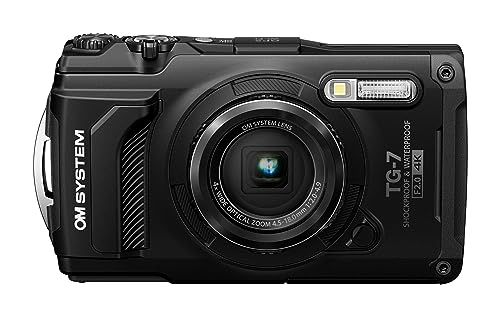
| OM SYSTEM Tough TG-7 | The camp-proof champion | Waterproof, crushproof and freezeproof, with macro modes that turn camp nature into treasure. |
| AKASO Brave 7 LE | The dunkable bargain | An action camera with a waterproof case at a price that forgives canoe incidents. |
| Fujifilm Instax Mini 12 | The friendship machine | Instant prints kids trade, pin up in bunks and mail home — camp memories in physical form. |
| Polaroid Go Generation 2 | The tiny instant | The smallest instant camera here, pocketable enough to actually be there for the moments. |
| GoPro HERO12 Black | The adventure recorder | For older campers: waterproof without a case, stabilised video of every zip-line and lake jump. |
| A Basic Waterproof Compact Bought to Be Expendable | The no-tears option | The prose-only class of ultra-cheap cameras whose entire job is to be losable. |
How Did We Choose Cameras for an Environment This Hostile?
We weighted survival above all: sealed bodies, rated water depth, drop-test figures and the absence of extending parts that snap. A lens that telescopes out of the body is a lens waiting for a dock board; the toughest designs here keep everything inside the armour. Second, we weighted power discipline. Camp charging is a contested resource — one outlet, twenty children — so cameras that sip batteries, charge from common cables or run on widely available cells earned real points, and any pick with a hungry battery is flagged for a spare.
Third, we thought about the photographs themselves. Camp memories are not landscapes; they are bunkmates, frogs, campfires, talent shows and weather. Cameras were favoured if they handle dim cabins and bright lakes without mode-wrestling, focus close enough for a beetle portrait, and produce files or prints a child can share. Finally, we applied the tears test at every price: if this exact camera vanished on day four, what would the family feel? Picks were ranked so that every budget has at least one answer where the honest feeling is “annoying” rather than “devastating.”
Which Are the Best Digital Cameras for Kids Going to Camp, From Armour to Instant?

OM SYSTEM Tough TG-7 — The camp-proof champion
The Tough TG-7 is the camera engineers built for people who work where things fall into water for a living, and camp is simply that job with smaller employees. It is waterproof well beyond canoe depth, rated to survive drops that would retire ordinary compacts, crushproof against backpack physics and freezeproof for the camps that run cold. Crucially, none of that armour costs it photographic ambition: the TG-7 carries a bright lens, a proper macro system that focuses almost to the glass — a ladybird becomes a portrait sitting — and underwater modes that correct the colours a lake tries to steal. For a nature-obsessed camper, this is not the safe choice. It is the exciting one.
Its camp manners are equally considered. The controls work with wet hands, the body has no extending lens to snap, and features like a built-in compass and temperature logging turn a walk into an expedition record. Battery life respects the charging queue, and the files — real, detailed photographs rather than toy-camera smears — reward the child who grows into photography at camp with work worth printing on return. This is the most expensive pick in the guide, and the guide’s position is simple: for the older child who will use it for years of summers, rivers and school trips, it is also the cheapest per surviving day.
- Survival: waterproof, drop-proof, crushproof and freezeproof rated
- Lens: bright, internal — nothing extends to snap off
- Close work: microscope-style macro for insects and pond life
- Power: economical battery, charges over USB
- Role: the multi-summer heirloom camp camera
Strengths
- Armour that makes camp hazards a non-event
- Macro modes turn camp nature into a photo project
- Real image quality that outlasts the camp years
Trade-offs
- Costs enough that loss would genuinely sting
- Menus are deeper than a young child needs
- Heavier than the toy-class alternatives
Parents sometimes hesitate at sending the best camera here into the roughest environment, and the hesitation inverts the logic: the TG-7 is the camera least likely to need the conversation about what happened to it. Its risk is not damage — it is the ordinary risk of any valued object being left on a bus, which a bright lanyard, a labelled case and a name written inside the battery door mitigate about as well as they can be mitigated. Buy it for the child who notices beetles. It will notice them back, in focus, at two centimetres.
Best for: older kids and nature lovers who will use one tough camera for years. Not suited for: families who need the loss of it to be a shrug

AKASO Brave 7 LE — The dunkable bargain
The Brave 7 LE understands the assignment at the opposite end of the budget: camp involves water, water involves gravity, and the camera should cost little enough that gravity is funny. As an action camera it shoots stills and video from a wide, forgiving angle that suits small hands and big moments, and with its waterproof housing fitted it can ride along on swims, kayak trips and rain marches that would sideline any ordinary compact. The wide lens is secretly a training aid — at that field of view, a child’s approximate aim still lands the subject in the frame, which is how beginners build the confidence to keep shooting.
Two screens — front and back — make it a natural for the camp selfie economy, and the controls are simple enough that a cabin-mate can be handed the camera and return a usable photograph, a social feature no specification sheet captures. Image quality in good light is cheerful and entirely adequate for the family album; in dim cabins it works harder and shows it, which the guide states plainly because children will absolutely attempt campfire photography with it. As a first real camera whose loss would be a story rather than a tragedy, the AKASO is the pick most parents in this guide’s audience will actually buy, and it earns that honestly.
- Survival: waterproof with its housing fitted
- View: very wide lens forgives beginner aim
- Screens: front and rear, for selfies and framing
- Mounts: action-camera ecosystem of straps and grips
- Role: the affordable water-going all-rounder
Strengths
- Price makes water accidents survivable financially
- Wide lens suits action, groups and small hands
- Simple enough to lend around the cabin
Trade-offs
- Needs its housing for real waterproofing — teach the ritual
- Low-light stills are its weakest work
- Battery life asks for a spare on long days
One habit makes or breaks this camera at camp: the housing must go on before the water, every time, and the seal must be checked for the sand and hair that defeat it. Practise that ritual at home until it is boring. Boring rituals are what stand between a bargain camera and a drowned one, and a child who learns to check a seal has learned the first lesson of all field photography — that preparation, not equipment, is what survives contact with the world.
Best for: budget-conscious families and water-heavy camps. Not suited for: kids who want printable-quality stills as the main event

Fujifilm Instax Mini 12 — The friendship machine
Every camp has an economy, and the Instax Mini 12 mints its currency. A photograph that exists — physically, ninety seconds after the moment, pin-up-able in a bunk and tradeable at dinner — is worth more to a nine-year-old than a thousand files on a card she cannot see until August. The Mini 12 is engineered for exactly this social magic: fully automatic exposure, a selfie mirror and close-up mode, and a friendly rounded body that younger children operate correctly within minutes. It asks nothing, connects to nothing, and is therefore welcome at camps whose device rules banish every screen in this guide.
The costs are honest ones, paid in film. Each print is a small recurring expense, and a generous parent budgets film the way they budget tuck-shop money — enough for generosity, since the prints will be given away as often as kept, which is the point. There is no digital file unless you photograph the print later, and no zoom beyond walking closer. What there is: a shoebox of camp that comes home tangible, counselors’ portraits and bunk group shots and the famous frog, all slightly soft, all priceless. Many families report the Instax prints are the only camp photographs ever actually looked at again, and that verdict is data, not sentimentality.
- Output: instant prints, developed in about ninety seconds
- Exposure: fully automatic with selfie and close-up modes
- Connectivity: none — passes strict camp device rules
- Power: widely available AA batteries
- Role: the social camera for younger campers
Strengths
- Prints become gifts, trades and bunk decoration instantly
- Zero learning curve; correct results from the first frame
- Welcome where screens and connected devices are banned
Trade-offs
- Film is a continuing cost per photograph
- No digital file and no review-and-delete mercy
- Not waterproof — rain days need a dry bag and care
Send more film than your estimate and label the camera with your child’s name in two places; Instax cameras at camp develop a herd instinct and migrate between bunks in ways their identical shells make confusing. A small album or envelope in the trunk gives the prints a home before they are traded, lost or loved to pieces — and the ones that survive to the bus ride home tend to be looked at for years, which no one has ever said about a memory card.
Best for: younger campers and camps with strict no-screen rules. Not suited for: older kids wanting digital files, video or zoom

Polaroid Go Generation 2 — The tiny instant
The Polaroid Go’s argument is a single word: pocket. It is dramatically smaller than its Instax rival — small enough for a shorts pocket, a belt pouch, the front of a daypack — and cameras that fit pockets attend moments that cameras in trunks miss entirely. Its prints are miniature Polaroids, square-format and charming, developed with the brand’s famously characterful colour. For the camper who is always mid-activity — mid-hike, mid-game, mid-laugh — the Go is the instant camera most likely to be physically present when the unrepeatable thing happens.
Smallness extracts its taxes, stated plainly. The prints are small too, delightful as keepsakes and trades but less commanding pinned over a bunk. Its film format is its own, so a camp general store is less likely to rescue a child who runs out. And while its automatic exposure handles camp’s bright days well, dim cabins challenge it as they challenge every instant camera. None of this dents the core case: between two instant cameras of similar cost, the one that gets carried wins, and the Go is engineered from its first sketch around being carried.
- Size: the smallest instant camera in this guide
- Prints: miniature square-format Polaroid film
- Exposure: automatic, with a selfie mirror
- Power: rechargeable over USB
- Role: the always-carried instant companion
Strengths
- Pocket size means it is present for real moments
- Square prints have genuine keepsake charm
- Simple operation suits a wide age range
Trade-offs
- Prints are small; less bunk-wall presence
- Film format is less widely stocked than Instax
- Rechargeable battery needs access to camp charging
Choose between the two instant picks by watching your child for a day. The organiser with a labelled place for everything will thrive with the Instax and its album. The whirlwind who lives out of pockets and momentum is a Go child. Both cameras will produce the same category of treasure; they simply fit different small humans, and fitting the human is the entire science of camp gear in one sentence.
Best for: active kids who carry light and shoot on the move. Not suited for: campers who want the biggest prints or AA-battery simplicity

GoPro HERO12 Black — The adventure recorder
For the older camper — the teen headed to adventure camp, sailing week or the mountains — the HERO12 Black is the serious instrument. It is waterproof in its bare body, no housing ritual required, stabilises video so effectively that mountain-bike and kayak footage comes home watchable, and shoots stills that satisfy as photographs rather than video souvenirs. Mounts exist for helmets, chest straps, handlebars and boat rails, which means this camera records the activity from inside it — the zip-line from the rider’s chest, the rapid from the bow — perspectives no handheld camera at camp can match.
The guide’s cautions are about fit rather than quality. This is a valuable object, and its loss would not be a shrug; it belongs with teenagers who have already demonstrated custody of their possessions across a school year. Its stills workflow is a photographer’s second language — wide lens, screen-based, better for scenes than portraits — and its battery appetite on high settings means a spare and a charging plan. Given the right teenager and the right camp, though, the footage that returns home justifies everything: some families’ most-rewatched camp artifact is four stabilised minutes of a lake jump, shot from the jumper.
- Survival: waterproof in the bare body, ruggedised design
- Video: class-leading stabilisation for action footage
- Mounts: the full action-camera ecosystem
- Stills: capable wide-angle photographs
- Role: the teen adventure camp recorder
Strengths
- No housing needed for water confidence
- Action footage quality is in another league from phones-forbidden peers
- Mounts put the camera inside the activity
Trade-offs
- Valuable enough that loss would hurt
- Wide fixed lens limits portraits and detail shots
- Hungry batteries on top settings
Agree the rules before camp: where it may be mounted, when filming cabin-mates is welcome and when it is not, and how footage gets shared afterward. Camps increasingly have their own media policies, and a teenager briefed at home navigates them gracefully instead of learning them from a confiscation. The camera is the easy part of this pick; the judgement wrapped around it is the actual gift.
Best for: responsible teens at adventure, sailing and mountain camps. Not suited for: younger children or families needing a losable price
A Basic Waterproof Compact Bought to Be Expendable — The no-tears option
This pick has no brand name, deliberately. Every season, retailers sell a class of very inexpensive waterproof compacts — simple fixed screens, modest sensors, cheerful colours, prices in the range of a family pizza night. Their image quality is the weakest in this guide and their construction varies, and yet for a specific, common situation they are the correct purchase: the first camp, the forgetful child, the family for whom any three-figure loss would sour the summer. A camera whose entire specification is “takes recognisable photographs and may be lost without a family meeting” is not a failed camera. It is insurance that also takes pictures.
Buy this class with open eyes and two rituals. Test it in a sink of water the day it arrives, because waterproof claims at this level deserve verification while returns are still possible, and return it without hesitation if the screen fogs. Then lower your expectations to the class’s honest level: bright-day group shots and dock antics will please everyone; dim interiors will not. Many children, it must be said, adore these cameras beyond their merits, because total freedom from adult anxiety about the object makes the object more fun — a lesson in photography economics worth the small price by itself.
- Nature: ultra-budget waterproof compact class, many brands
- Quality: adequate in bright light, weak in dim cabins
- First ritual: sink-test the waterproofing on day one
- Economics: priced to be lost without consequence
- Role: the first-camp, no-tears camera
Strengths
- Loss or damage carries no financial sting
- Waterproof claims suit swim-heavy camps
- Simple controls suit the youngest photographers
Trade-offs
- Image quality is the guide’s floor
- Build quality varies unit to unit
- Few features to grow into
If the expendable camera comes home — and they often do, to everyone’s surprise — it retires honourably to beach-bag and pool duty, where its survival skills remain useful for years. And if it does not come home, it took the loss that a better camera would have taken, which was the entire strategy. Either outcome is a success, and a purchase that cannot fail is a rare and underrated thing in family logistics.
Best for: first camps, forgetful kids and tight budgets. Not suited for: children serious about photography quality
How Do the Six Camp Cameras Compare Side by Side?
| Camera | Survival rating | Output | Watch out for |
|---|---|---|---|
| OM SYSTEM Tough TG-7 | Waterproof, crushproof, freezeproof | Detailed digital stills, strong macro | Price makes loss sting |
| AKASO Brave 7 LE | Waterproof in housing | Wide stills and video | Housing ritual; dim-light stills |
| Fujifilm Instax Mini 12 | Sturdy, not waterproof | Instant prints | Ongoing film cost |
| Polaroid Go Generation 2 | Sturdy, not waterproof | Miniature instant prints | Small prints; own film format |
| GoPro HERO12 Black | Waterproof bare body | Stabilised video, wide stills | Value; battery appetite |
| Expendable waterproof compact (class) | Claims vary — sink-test yours | Basic digital stills | Quality is the floor |
What Should You Check in the Camp’s Rules Before Buying Anything?
Camp device policies were written in the phone wars, and cameras are collateral. Read the actual policy, not the rumour of it. The common patterns: no internet-connected devices (which bans nothing in this guide, but check smart features); no devices with screens (which bans everything digital here and leaves the instant cameras standing); no photography in cabins or bathrooms (a conduct rule your child should hear from you first); and a valuables policy stating the camp is not responsible for losses, which is the camp telling you, in writing, to apply the tears test honestly rather than hopefully, while the purchase can still be changed. Some camps also collect devices at night or store them in the office — ask, because a camera locked away nightly changes the battery and instant-print calculations entirely.
If the policy is ambiguous, email the camp office with the exact model you are considering. Offices answer this question weekly in season and would rather approve a camera in April than confiscate it in July. Keep the reply. Children have successfully appealed confiscations with a parent’s forwarded email, and more importantly, a child who arrives knowing the rules, and knowing that home agrees with them, keeps the camera — and a kept camera is the only kind that takes camp photographs.
How Do You Prepare a Child to Actually Use the Camera at Camp?
Run a practice weekend with a mission: photograph your street as if it were camp. Bunk shot (their bedroom, messy), nature find (a beetle, a leaf, the neighbour’s cat), group portrait (the family, self-timer), water shot (the garden hose counts). Review together, charge together, pack together. In that single weekend a child learns the power button’s location by muscle, the housing ritual if there is one, and the difference between a photograph worth taking and a button pressed from boredom — a distinction that decides whether camp yields forty keepers or four hundred blurs.
Pack the support kit with the same care as the camera: a floating wrist strap for anything going near water, because sinking is the one accident no waterproof rating survives; a small dry pouch for instant cameras and film; spare batteries or film in a labelled bag; a memory card already formatted and a second one taped inside the case lid; and the child’s name and your phone number on a card photographed as the very first frame, so a found camera introduces itself. These are five-minute preparations that read, in August, like genius, and that separate the families telling camp stories over photographs from the families telling stories about a camera.
What Photographs Should You Encourage — and Which Conversations Matter More?
Start with permission to be unimpressive. Children handed a camera often imitate the photography they have seen adults perform — posed groups, famous views — and produce stiff evidence of a good time rather than the good time itself. Tell them explicitly that the camera is theirs, that blurry experiments cost nothing on the digital picks, and that the frog matters more than the sunset. That sentence, from a parent, at packing time, is worth a feature list.
Encourage the documentary instinct: the bunk before and after the tidy inspection, the lake in three weathers, portraits of counsellors with permission, the talent show, the frog. Children photograph what adults overlook, and camp albums treasure the unposed evidence — shoes in a row, a half-built dam, rain on the dining-hall windows — long after the group shots blur together. A gentle challenge list in the trunk (“find: something tiny, something enormous, the colour red five times”) gives shy photographers a mission structure that produces surprising work.
The consent conversation matters more than any setting. Teach it plainly at home: ask before photographing someone up close, never photograph in cabins where others are changing or sleeping, stop when anyone asks, and understand that camp photographs of other people’s children are for the family album, not for posting. Camps enforce versions of these rules with confiscation; a child who arrives already practising them keeps both the camera and the trust of the cabin — and learns, at exactly the right age, that photography is a social act with manners attached.
How Do Batteries, Film and Memory Survive a Whole Session?
Assume charging access is scarce, contested and located somewhere inconvenient, then be pleasantly surprised if the dining hall proves generous. Digital picks should travel with fully charged spares and every cable they need, labelled, because camp outlets grow forests of identical black cords. Instant cameras invert the problem: their consumable is film, and the correct quantity is more than feels reasonable — prints are given away, traded and occasionally ruined by small fingers on the developing surface, all of which is the joy working as intended. A child rationing film photographs timidly; a child with abundance photographs generously, and generosity is the better archive.
Memory cards deserve one rule, taught at home: never delete in the field to make space. Deleting on a small screen, in bright light, with cabin chaos around, is how the one great frame dies. Cards are cheap; send capacity instead of editing lessons. If the camera supports date folders, enable them — a counsellor helping a homesick child find Tuesday’s photographs is a small mercy that good file organisation quietly provides.
How Do You Match a Camera to a Child’s Age Without Guessing Wrong?
Watch what the child already does with fragile things. The six-year-old who returns library books pristine is a different risk from the six-year-old whose shoes are archaeological sites, and age charts matter less than that observation. For the youngest campers, the instant cameras win on a developmental point beyond toughness: the print closes the loop between pressing the button and seeing the result, teaching cause and effect in ninety seconds, while a digital file that cannot be viewed properly until August teaches nothing at all. Young children also shoot socially — the photograph as gift, trade and joke — and instant film is the only medium in this guide that is social by design.
Older children, roughly ten and up, begin to shoot intentionally: they return to the same heron, they attempt the sunset on purpose, they care that the frog is sharp. That is the moment digital quality starts paying rent, and the Tough TG-7’s macro and the AKASO’s video become creative tools rather than specifications. Teenagers add a third consideration — identity. A camera that looks like a toy will be left in the bunk by a fourteen-year-old regardless of its merits, which is part of the GoPro’s case: it reads as adventure equipment, and equipment a teenager is proud to carry is equipment that comes home with footage.
What Happens When the Camera Is Lost, Broken or Confiscated Anyway?
Plan the failure before it happens and it shrinks to its proper size. Loss first: the labelled camera with a contact card in its first frame has a genuine chance of reunion, because camp lost-property systems work when objects introduce themselves. Agree with your child in advance that a lost camera is reported to a counsellor the same day, not mourned in silence until pickup. Breakage second: for the digital picks, know before departure whether the damage would be a repair, a warranty conversation or a write-off, and let that knowledge set how much anxiety the object is allowed to generate — ideally none, because the decision was already made at purchase.
Confiscation deserves its own honesty. It usually follows a rule the child knew — photography where it was banned, a device out after lights-out — and the healthiest parental response treats it as the camp’s lesson delivered as designed, not a disaster to appeal by phone. The camera almost always returns at session’s end. Frame it that way at home and a confiscated camera becomes a story with a moral instead of a grievance with a soundtrack, which is a better souvenir than most photographs.
Why Do Camp Photographs Matter More Than Their Quality Suggests?
Because they are the child’s own evidence. Adult photographs of camp — the official gallery, the counsellor’s group shots — show a camp that was organised for children. A child’s photographs show the camp that was actually experienced: the underside of the dock, the inside of the tent during the storm, the exact expression of the friend at the exact moment of the joke no adult heard. Developmental psychologists could not design a better memory instrument if they tried, and they do not have to, because it costs less than a trunk of camp clothing. This is the deeper answer to the parent hesitating over whether a camera is a frivolous extra: the camera is the one item in the trunk that manufactures the souvenirs everything else merely enables.
It is also, not incidentally, how some photographers begin. A meaningful share of the adults who write guides like this one can name the childhood camera — battered, simple, theirs — that first made the world look back at them. Camp, with its frogs and fires and freedoms, is unusually fertile ground for that beginning. The camera you send does not need to be good enough for a gallery. It needs to be present, working and theirs, and every pick in this guide was chosen to maximise exactly those three unglamorous virtues.
How Should You Handle Homesickness, Sharing and the Photographs of Other Children?
A camera interacts with homesickness in both directions, and parents should know it. Reviewing photographs of home on a digital screen can sharpen a wobbly evening; camps that collect devices at night are partly managing this. The instant cameras dodge the issue entirely — they cannot display home at all — while producing prints of new friends that anchor a child in the present tense of camp. If your child is a first-timer with a tender streak, that is a genuine point in the instant column that no specification table will ever show you.
Sharing outward needs one firm family rule, set before departure: photographs of other children stay in the family. Not posted, not group-chatted, not printed for the fridge where visitors photograph fridges — because other parents hold the same rights over their children’s images that you hold over yours, and camps increasingly formalise this. Your own child’s camp portraits are yours to treasure and share as your family judges right. The distinction is easy to teach, travels well into the phone years ahead, and begins, conveniently, with a camera that mostly cannot share anything at all.
What Should the Camera Kit Look Like on Packing Day?
Assemble it as one pouch, packed together, photographed for your own records before the trunk closes. Camera, charged. Spare battery or film, counted. Case or housing, ritual-checked. Floating strap fitted if water is anywhere in the camp’s brochure. Name labels on camera, case and charger, because chargers are the most-migrated objects in any cabin. A small microfibre cloth, which will return having cleaned everything except the lens. And a note — from you, in the pouch, saying where the spare film lives and that the frog photographs are the ones you most want to see. Children find these notes. They photograph the frogs.
Weigh the pouch honestly against the camp’s luggage limits and your child’s carrying reality: a kit that makes the trunk a wrestling match will be quietly abandoned by a nine-year-old with a bus to catch. Everything in this guide was chosen to keep that pouch small, light and singular. If it fits in one hand and one labelled bag, it will be used. That is the whole ergonomics of camp, and it outranks every other consideration in this section and most of the ones above it.
How Do You Decide Between Instant and Digital for the Same Child?
Ask what the photographs are for. If the answer is the camp itself — the friends, the trades, the bunk wall, the letter home with a print inside — instant wins, because its photographs live at camp, in the week, among the people. If the answer is afterwards — the family album, the slideshow for grandparents, the child’s growing portfolio — digital wins, because its files wait patiently for August and print as large as nostalgia requires. Many families, given a long camp and a willing budget, send both in sequence rather than in parallel: an instant camera for the first session when everything is new and social, a digital tough camera the following summer when the child returns as a veteran with projects. Sequencing beats doubling; two cameras in one trunk divide attention, while two summers build a photographer in stages.
There is also the sibling variable, unglamorous and decisive. A camera a younger sibling will inherit argues for the TG-7’s longevity; a camera that will be outgrown and unmissed argues for the AKASO or the expendable class. Camp gear is a relay race in most families. Buy for the relay, not just the first runner, and the per-summer cost of every pick in this guide falls to something that needs no justification at all.
What Do Counsellors Wish Parents Knew About Camp Cameras?
Ask them and a pattern emerges. They wish cameras arrived labelled, because half their lost-property miracles fail on anonymity. They wish children arrived knowing how to use them, because a counsellor’s afternoon is not a tutorial slot. They wish parents understood that the camera will mostly photograph things adults find baffling — ceilings, shoes, each other mid-sentence — and that this is success, not waste. And they wish, quietly, that the expensive cameras came with the family’s calm attached, because the child who fears a parent’s reaction to a scratch photographs nothing worth scratching a camera for. Every one of those wishes is purchasable or teachable at home, cheaply, before the bus. Consider this section the camp office’s contribution to the guide, delivered early enough to act on.
How Does Weather Change Which Camera You Should Send?
Camp brochures are photographed in sunshine; camp happens in weather. A rainy session is where the guide’s hierarchy proves itself — the TG-7 and the housed AKASO keep working through the downpour that produces the week’s best stories, the GoPro treats rain as a feature, and the instant cameras retreat to porches and dining halls, still useful, briefly benched. If your child’s camp is famous for a lake, a river or a coast, weight waterproofing as the first specification and let everything else queue behind it. If the camp is a dry-land arts camp under reliable sun, the instant cameras’ social magic can safely lead the decision instead. Geography is a camera specification; read the camp’s map as carefully as its rulebook.
Cold deserves a sentence for the winter and mountain camps: batteries fade in the cold across every digital pick, and the TG-7’s freezeproof rating exists precisely because its maker tested that failure mode. Spare batteries carried warm, in an inside pocket, are the universal remedy — teach it with the housing ritual, in the same practice weekend, as part of the single skill this guide keeps returning to: preparation performed at home, where it is boring, so that camp can be spontaneous, where it counts.
How Do You Turn the Returned Photographs Into Something Kept?
The camera’s work ends at the bus; the family’s begins that evening. Back up digital files before the trunk is unpacked, because cards vanish into laundry with a reliability that defies statistics. Then print — a modest stack of real prints, chosen with the child, telling the session in their order rather than yours. Instant prints deserve the same ceremony: the album or the bedroom wall, decided together while the stories are still narrated at full volume. A camp album assembled in the first week home is revisited for years; a folder of files promised for later is, empirically, a folder.
Let the child caption. Their titles — misspelled, specific, funnier than yours — are the difference between an archive and a shoebox. And when next summer’s packing begins, take last summer’s album down first. Nothing in this guide sells a camp camera half as well as the evidence of what the last one brought home.
Should You Insure It, Register It or Photograph the Receipt?
For the TG-7 and the GoPro, a few minutes of paperwork earns its keep. Photograph the serial number and the receipt into your own phone before departure; register the product if the maker offers it; and check whether your household insurance or the card you bought it with already covers accidental damage and loss away from home — many do, quietly, and families discover it only in the counterfactual. None of this changes which camera to buy. It changes the emotional weather if the worst happens, converting a loss from an unbudgeted replacement into a claim with a reference number. Calm is a feature. Buy it where it is sold this cheaply.
For the rest of the guide, skip the paperwork with a clear conscience. The economics of insuring an expendable compact are a comedy, and the instant cameras’ value lives in their film and their prints, which no policy restores. Match the administration to the stakes, as with everything else in this guide, and spend the saved hour on the practice weekend instead — it prevents more losses than any insurer ever has.
What About the Journey Itself — Buses, Trains and the Long Drive?
The camera’s first shift is the journey, and it deserves a plan of its own. A camera packed in the checked trunk photographs nothing of the trip out; a camera in the daypack documents the window views, the service-station absurdities and the first sight of the camp gates — frames that bookend the album perfectly. Agree the obvious safety terms for travel days: the camera lives in the bag when moving through stations and car parks, because travel-day losses happen at travel speed. For instant cameras the journey is prime social territory, since a print given to a new friend met on the bus is an introduction no parent could script. Pack two frames’ worth of courage for that, and let the rest unfold.
What Mistakes Do Camp-Camera Buyers Keep Making?
- Sending a delicate camera because it takes nicer pictures. At camp, the surviving camera takes the nicer pictures. Armour first, optics second.
- Skipping the camp’s device policy. A confiscated camera takes no photographs at all; five minutes with the rulebook protects the whole purchase.
- Buying the camera the week before departure. Unfamiliar gear stays in the trunk. A practice weekend is part of the product.
- Forgetting the consumables. Dead batteries and empty film packs are the commonest camp-camera failures, ahead of all breakage.
- No name label anywhere. Identical cameras migrate between bunks; a label and a first-frame contact card bring them home.
- Sending a camera too precious to use. A child afraid of damaging the family treasure photographs nothing. Match the stakes to the child.
Final Recommendation
Buy earlier than feels necessary. Every ritual this guide recommends — the practice weekend, the sink test, the seal check, the label, the policy email — costs an evening, and all of them together cost less than the regret of a camera that failed, drowned or sat in a trunk while camp happened around it. The photographs are the point; everything before departure is just how a family makes sure of them.
For most families, the decision tree is short. Younger camper or strict camp: the Fujifilm Instax Mini 12, with film budgeted generously and a dry pouch for wet days — or the Polaroid Go if your child is a pocket-carrying whirlwind. Older child who loves the outdoors: the OM SYSTEM Tough TG-7, the one camera here that treats camp as a warm-up act. Tight budget or water-obsessed camp on a budget: the AKASO Brave 7 LE, housing ritual practised. Teenager bound for adventure: the GoPro HERO12 Black, rules agreed in advance. And for the first camp of a forgetful child, the expendable compact class exists precisely so the summer’s memories are about camp — not about a camera.
Frequently Asked Questions
What age suits which camera in this guide?
Roughly: instant cameras delight ages six to eleven; the AKASO and expendable compacts suit eight and up; the Tough TG-7 rewards ten and up; the GoPro belongs with teenagers who already guard their belongings.
Can my child take a phone instead?
Many camps ban phones outright while welcoming cameras, and even where phones are allowed, they bring messaging, games and social media that camps exist to pause. A dedicated camera is also simply tougher and more losable than the family phone.
How much film should I send with an instant camera?
More than your first estimate. Prints are traded and given away, and a shooting rate of several frames a day across a session adds up. Running out in week two is the commonest instant-camera regret.
What if the camp bans all cameras?
Then honour it — some camps run a deliberate photography-free programme and provide their own counsellor-shot galleries to families. A disposable film camera for the journey, where allowed, is the traditional compromise.
Should the camera be new, or can we send the family’s old one?
An old family compact is a legitimate contender if it passes three tests: it still holds a charge for a full day, its charger and cards are findable, and nobody at home will grieve it. Run the practice weekend on it exactly as you would a new purchase. Sentiment is the trap — a retired camera that a parent secretly treasures fails the tears test while pretending to pass it.
How do I get the photographs home safely?
Label everything, put a contact card as the first frame on digital cards, give instant prints an envelope in the trunk, and back up digital files the evening the bus returns — camp cards have a mysterious half-life in laundry baskets.
Related Guides
Camp is one chapter of a child’s photographic life. Families planning further adventures will find the best digital cameras for moving pets surprisingly relevant to photographing camp’s four-legged visitors, the best digital cameras for landscapes useful for the family trips that follow, and the best digital cameras for high quality photographs the right read when a camp hobby turns into a serious young photographer.


