ilcastellomenu.com is reader-supported. When you buy through links on our site, we may earn an affiliate commission.
Where to Buy
The ceremony ended hours ago, the formal portraits are safely on a card, and now the room changes character completely. Searching for the best cameras for wedding reception work means solving a different job from everything that happened earlier in the day. A companion guide on this site already covers the ceremony itself and the posed photographs — vows, rings, family groups in decent light. This article deliberately starts where that one stops: the doors of the reception room, the first dance under a chandelier turned down low, speeches delivered beside a flickering candle wall, and a dancefloor lit by whatever the DJ brought.
Reception light is hostile in a particular way. It is not merely dim; it is mixed, moving and dishonest. A tungsten practical glows orange in one corner while a DJ wash sweeps magenta across the ceiling and somebody’s phone flash fires white from the middle of the crowd. Skin tones have to survive all three within a single burst of frames. Meanwhile the subjects refuse to cooperate with careful technique: grandparents laugh mid-sentence, children orbit the cake table at knee height, and the best man delivers his speech half turned toward a projector screen.
Guests add a social constraint no specification sheet mentions. A reception camera works inches from people who are eating, drinking and celebrating rather than performing for a lens. Big, conspicuous rigs change the temperature of a table; quiet, compact bodies let a photographer circulate like another guest who happens to notice things. Several choices below earn their place as much for that invisibility as for their sensors.
So judge every candidate by reception rules only. How gracefully does it focus when the room drops to candlelight levels? Does its flash behaviour — or its ability to live without flash — preserve the atmosphere the couple paid a venue to create? Can it keep shooting through a five-hour party without a battery drama at the bouquet toss? The six cameras that follow each answer those questions in a different dialect.
Key Takeaways
- Low-light autofocus, not resolution, decides which reception frames survive the night.
- The Canon EOS R6 Mark II handles chaotic party light with the least supervision.
- Sony’s Alpha 7 IV rewards shooters who want dependable eye tracking through speeches.
- Smaller bodies circulate among guests without turning dinner into a photo session.
- Atmosphere is a deliverable: bounce, drag and ambient-first technique beat direct flash.
- Two cards, three batteries and a pocket plan for spares outrank any single feature.
In this guide
Quick Picks
| Camera | Badge | Why it earns its place |
|---|---|---|
| Canon EOS R6 Mark II | Best for the whole reception | Confident focusing and clean high-sensitivity files when the room goes dark and loud. |
| Sony Alpha 7 IV | Best for speeches and toasts | Eye tracking that clings to a speaker while candles and screens fight behind them. |
| Panasonic LUMIX S5II | Best hybrid for photo and film | Stills through dinner, then smooth reception video without swapping bodies. |
| Fujifilm X-T5 | Best for candid guest portraits | Classic dials and film-like colour that flatter faces under warm venue lighting. |
| Canon EOS R10 | Best lighter second body | A nimble APS-C option for the photographer who roams tables all evening. |
| DJI Osmo Pocket 3 | Best for dancefloor video | A pocket gimbal that weaves through dancers and keeps the party moving on screen. |
How Did We Choose Cameras for a Wedding Reception?
We weighted the evening backwards, starting from its hardest ten minutes. When the lights drop for the first dance, the couple is backlit, moving slowly, surrounded by phone screens, and there will never be a second take. A camera that finds an eye in that gloom and holds it through a spin earned more credit than any camera boasting about daylight sports tracking. Test logic throughout this guide follows that order: darkness first, chaos second, convenience third.
File character under mixed light came next. Reception venues blend candle warmth, LED washes and window remnants from a summer evening, sometimes inside one frame. Bodies whose colour stays calm when those sources collide — skin reading as skin rather than as traffic-light red or green — save hours in the edit and rescue frames that lesser files surrender. We also favoured sensors whose grain at high sensitivity looks like texture instead of static, because reception photographers live at settings ceremony shooters visit only by accident.
Endurance shaped the shortlist too. A reception is a marathon shot in sprints: nothing for twenty minutes, then forty frames in ninety seconds when the bouquet arcs over a screaming circle of guests. Buffer behaviour, card writing and battery honesty during those bursts matter more than headline frame rates. Finally, we asked how each body behaves socially — shutter sound at a quiet table during a father’s speech, screen brightness in a dark room, the general impression of a guest versus a production.
Why Does Reception Photography Break the Rules of the Ceremony?
Control evaporates. The ceremony photographer works a rehearsed procession in predictable light from a chosen position; the reception photographer inherits a party. The schedule slips, the cake cutting migrates to a darker corner than planned, and the venue coordinator announces the sparkler exit with ninety seconds of warning. Cameras for this half of the day are therefore chosen for forgiveness: focus systems that guess right, exposure that recovers gracefully, files that tolerate being pulled back from the edge in editing.
Movement also changes species. Ceremony motion is slow and ceremonial — a walk down an aisle at processional pace. Reception motion is erratic: a toddler sprinting between tables, a groomsman hoisting the groom, a conga line accelerating past the bar. Tracking that assumes a subject moving in a straight line gets found out here. The picks below were favoured when their autofocus treats a weaving, spinning, half-occluded dancer as a normal assignment rather than an insult.
Perhaps most importantly, the reception is where the couple’s people actually relax. The photographs families frame from this half of the day are rarely the prettiest; they are the truest — a grandmother mid-laugh, university friends reunited on the dancefloor, a father watching the speeches with his guard entirely down. A camera that can be present for those moments without announcing itself is doing the real work of wedding photography, whatever its badge says.
Which Cameras Survive the Dancefloor, the Speeches and the Dark?
Six bodies, six temperaments, one long evening. Read them in the order the night unfolds.

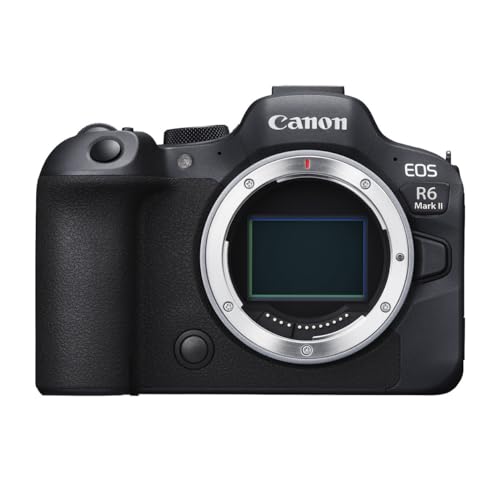
Canon EOS R6 Mark II — Best for the whole reception
Ask reception photographers what they actually fear and few mention resolution. They fear the moment the first dance begins in near darkness and the camera starts hunting — that audible, visible indecision while the couple turns through the only slow dance of the night. The R6 Mark II earns the top place here because that moment is its home ground. Its focusing stays decisive when the room drops to a few candles and a DJ uplight, latching onto a face and following it through the spin without the nervous pulsing that ruins sequences.
Its files suit the venue’s mixed palette. Warm tungsten, a magenta wash, the greenish spill from an exit sign — reception rooms layer all of it, and this body’s colour holds skin tones together through the collision better than most. High-sensitivity frames come back with grain that reads as atmosphere, so the photographer can protect the mood of a candlelit table instead of flattening it with flash or surrendering it to noise reduction later.
Through the speeches it behaves like a considerate guest. The quiet shutter options let you work close to the top table while a father finds his words, and the in-body stabilisation steadies the slow shutter speeds that ambient-first reception shooting demands. When the party accelerates — bouquet, conga line, the groom’s friends staging a lift — the burst rate and buffer absorb the chaos without the card-write pause arriving at the worst second.
- Format: full-frame mirrorless, RF mount
- Evening role: primary body from first dance to last song
- Focus brief: faces in candlelight and DJ wash
- Stabilisation: in-body, friendly to slow ambient exposures
- Party stamina: plan two batteries for a long night
Strengths
- Focus stays brave when the dancefloor lights drop
- Skin tones survive mixed venue colour
- Quiet manners around speeches and dinner tables
Trade-offs
- Full-frame lenses add weight by midnight
- Serious video of the party asks for card discipline
- It is more camera than a casual guest-photographer needs
Picture its defining sequence: the DJ kills the house lights, a single warm spot finds the couple, and two hundred phones rise around them. While phone footage blooms and hunts, this body quietly tracks the bride’s face through three turns, the groom’s spin, the dip that makes the room shout. The delivered gallery contains the whole dance, sharp at the eyes, glowing at the edges. That is the reception photograph the couple will actually frame, and it is the hardest one of the day to earn.
Later, when the party thins to the committed dancers and the light becomes pure DJ theatre, the same body keeps working without a change of plan. No lens swap panic, no settings archaeology — just a photographer free to watch the room instead of the camera. Reception mastery is mostly attention, and this body returns attention to its owner all night.
Best for: the lead photographer responsible for the entire evening. Not suited for: guests who want a camera that disappears into a clutch bag

Sony Alpha 7 IV — Best for speeches and toasts
Speeches are the reception’s quiet exam. One person stands, often badly lit, half turned toward the couple, reading from paper or a phone, while behind them a window, a projector or a wall of fairy lights offers the autofocus a dozen brighter distractions. The Alpha 7 IV passes that exam with its eye tracking: once it settles on the speaker’s eye it is remarkably reluctant to wander, even when the best man gestures across his own face or ducks to read the next line.
That stubbornness changes how freely you can compose. Instead of parking the focus point centre-frame and cropping later, you can frame the speaker against the couple’s reactions, shoot wide enough to include the top table, and trust the camera to keep the right face honest. Reaction shots — the bride dissolving at a childhood story, the groom’s father trying not to — become planned photographs rather than lucky ones, because the body handles the mechanics while you watch the room.
Its stills and video balance suits receptions where the same photographer is quietly expected to capture both. A toast filmed in clean, stable footage, then stills resumed without a body swap, is a realistic one-person workflow on this camera. The files also grade forgivingly when the venue’s LED wall has tinted everything; there is enough latitude to pull a speech back toward natural skin without the picture falling apart.
- Format: full-frame mirrorless, E mount
- Evening role: speeches, toasts and reaction coverage
- Focus brief: eye tracking that resists bright backgrounds
- Hybrid note: stills and reception video from one body
- Lens thought: a fast standard zoom covers most tables
Strengths
- Eye focus clings through gestures and glances down
- Reaction shots become plannable, not accidental
- One body covers the toast in stills and motion
Trade-offs
- Menus reward an evening of setup before the wedding
- Rolling party video needs a steady hand or support
- Crop-mode reach tricks cost resolution you may want
Its signature frame comes forty minutes into dinner: the maid of honour, lit by a candle cluster and the cold spill of a slideshow screen, lands the line the whole table has been waiting for. The camera holds her eye through her own laughter, the couple sharp in the foreground’s soft edge, the slideshow glowing behind. Three light temperatures, one honest face. Deliver that photograph and the speeches section of the gallery justifies the entire booking.
There is also a confidence dividend across a long evening. A photographer who trusts the focus can stand further back, shoot less desperately, and let moments develop instead of spraying at them. Fewer frames, better ones, and a calmer presence among the guests — at a reception, temperament is a technical specification too.
Best for: photographers who build the evening around speeches and reactions. Not suited for: shooters who never customise a camera’s menus

Panasonic LUMIX S5II — Best hybrid for photo and film
Some reception briefs arrive as a sentence nobody budgeted for: “and maybe grab some video too?” The S5II is the body that turns that sentence from a threat into a service. Its phase-detection focusing ended the old Panasonic hesitation, and its video stabilisation is steady enough to film a first dance handheld from the edge of the floor while its stills remain entirely respectable. One body, one bag, both deliverables — for the solo shooter covering a smaller wedding, that consolidation is the whole argument.
Phase focus matters most exactly where receptions are cruellest: low contrast, low light, a subject in a dark suit against a dark curtain. Where older contrast-based systems would breathe in and out searching, this one commits. During speeches it holds a face; during the dancefloor rush it follows a moving couple without the visible hunting that makes amateur footage look amateur. The couple will never know which focusing technology saved their video, which is precisely the point.
Heat and stamina deserve a mention because receptions are long and rooms full of dancers run warm. This body was designed with extended recording in mind, so the videographer half of the job is not rationing clips against an overheating warning during the party’s best hour. Stills shooters benefit from the same unflustered character: burst, pause, burst again through the bouquet toss, with the camera behaving identically in hour five as in hour one.
- Format: full-frame mirrorless, L mount
- Evening role: one-body stills plus reception film
- Focus brief: phase detection that commits in gloom
- Video note: stabilised handheld dancefloor footage
- Stamina note: built for long recording sessions
Strengths
- Genuine two-job competence without a second body
- Focus commits in the dark instead of searching
- Handheld party video looks deliberately smooth
Trade-offs
- L-mount fast glass is a considered investment
- Stills burst pace trails the fastest sports bodies
- Video-first menus take a stills shooter a week to love
Its emblematic evening runs like this: stills through dinner, a discreet switch to video as the first dance is announced, the whole dance filmed from one unobtrusive position, then stills again for the party — the couple receiving a gallery and a film that match in colour and mood because one sensor saw the entire night. Solo operators building a business on smaller weddings should read that workflow twice.
The L-mount lens shelf also quietly helps: three brands feeding one mount means a fast prime for the dark and a standard zoom for the room can be assembled from more than one catalogue. Reception kits are built over seasons, and a mount with options is a mount that forgives budgets.
Best for: solo shooters hired for photographs who also film the evening. Not suited for: pure stills specialists who never touch video

Fujifilm X-T5 — Best for candid guest portraits
Walk a reception with the X-T5 and something social happens: guests relax. The retro dials and modest profile read as a film enthusiast’s camera rather than a professional intrusion, and people who stiffen for a big rig will laugh naturally in front of this one. For the candid half of reception work — the table conversations, the grandparents watching the dancefloor, the friends reuniting after a decade — that social camouflage is worth real frames.
Fujifilm’s colour science flatters the venue’s palette instead of fighting it. Warm practicals and candlelight are where this system has always been happiest, and its film simulations give reception files a finished, gentle look straight from the camera. A second shooter delivering lightly edited galleries, or a photographer whose style leans warm and nostalgic, will find the evening’s mixed light bending toward charm rather than correction.
Handling supports the roaming style. Physical dials mean exposure compensation for a backlit toast happens by touch while your eye stays on the room. The tilting screen helps for the overhead dancefloor frame and the low shot of children circling the cake. Subject detection handles faces capably; in the very darkest corners it works a touch harder than the full-frame leaders above, which the photographer compensates for by choosing moments rather than spraying through them.
- Format: APS-C mirrorless, X mount
- Evening role: candids, table rounds, guest portraits
- Colour brief: warm simulations flatter candlelit rooms
- Handling: dials adjusted by feel mid-conversation
- Profile: reads as an enthusiast’s camera to guests
Strengths
- Guests behave naturally in front of it
- Warm venue light becomes a style, not a problem
- Dials keep eyes on people instead of menus
Trade-offs
- APS-C gathers less light than the full-frame picks
- Deepest dancefloor darkness tests its focusing
- Video plays a supporting role here, not a lead
Consider the photograph it was born for: an elderly couple at the edge of the dancefloor, holding hands under a string of warm bulbs, watching their granddaughter’s first dance. Shot on a discreet body from one table away, unposed and unhurried, it carries the whole wedding inside it. The X-T5 collects those frames because nobody in them felt collected.
As a second body in a two-camera reception kit it also makes elegant sense: the full-frame leader takes the dance and the speeches, this one drifts for texture — hands, laughter, the cake knife mid-glint — and the gallery gains the layer couples describe as “it felt like being there again.”
Best for: candid hunters and second shooters who prize guest portraits. Not suited for: being the only body at a very dark, video-heavy reception

Canon EOS R10 — Best lighter second body
By the third hour of a reception, kit weight stops being a comfort issue and becomes an accuracy issue: tired arms hold cameras less steadily, and a photographer wearing two full-frame bodies starts declining shots. The R10 answers with a simple proposition — most of Canon’s modern focusing intelligence in a body light enough to wear all night without negotiating. As a second body carrying a wide lens while the main camera wears a standard zoom, it keeps the roaming half of the evening covered.
Its autofocus inherits the subject-detection habits of Canon’s dearer bodies, finding faces and eyes in the crowd and holding them while you work a table. In decent party light — dinner, speeches with a spot, the brighter end of the dancefloor — it performs well beyond what its size suggests. Push into the darkest DJ-only passages and the smaller sensor asks for faster glass or a helping flash, which is an honest trade rather than a flaw.
For the couple’s friend who has been handed the honour of documenting the party, or the assistant covering candids while the lead works the key moments, the friendliness matters as much as the sensor. Canon’s menus explain themselves, the controls fall where a phone graduate expects, and the files — particularly skin tones under warm light — come back generous. Receptions are unforgiving places to learn a hostile camera; this is not one.
- Format: APS-C mirrorless, RF mount
- Evening role: second body with a wide or fast prime
- Weight brief: wearable from dinner to midnight
- Focus brief: Canon subject detection for faces in crowds
- Light note: pair with fast glass for the darkest hour
Strengths
- Light enough that hour five shoots like hour one
- Face detection keeps table rounds efficient
- Welcoming controls for an assistant or second shooter
Trade-offs
- Small sensor leans on fast lenses after dark
- No in-body stabilisation to rescue slow shutters
- Battery is a sprinter; carry spares in a pocket
Its natural habitat is the table round: eight guests, ninety seconds, one genuine laugh required. A light body with a wide lens moves around chairs without rearranging the dinner, catches the laugh, and is gone before the table notices it was photographed. Multiplied by twenty tables, that efficiency is the difference between a gallery that covers the room and one that covers the photographer’s friends.
There is a budget logic here too, stated qualitatively: reception kits fail at their weakest link, and a modest second body that actually attends every wedding beats an aspirational one that stays home. The R10 attends.
Best for: second shooters, assistants and leads who roam light. Not suited for: sole coverage of a candle-only venue

DJI Osmo Pocket 3 — Best for dancefloor video
Every reception reaches a point where stills stop telling the truth, because the truth is moving — a circle of friends shouting a chorus, the groom crowd-surfing two metres, grandma being twirled by a groomsman. The Pocket 3 exists for that hour. Its gimbal keeps footage level while its owner weaves between dancers, and its size means the camera joins the party instead of observing it from the perimeter where the big rigs stand.
Guests treat it as a toy, which is its superpower. Point a cinema camera at a table and people perform; raise this little wand and they wave, spin and carry on. The clips that result — a conga line filmed from inside the conga line, the first dance circled slowly at waist height — have an insider quality no perimeter camera can buy. For couples who want a highlight reel with a heartbeat, this is often the footage they rewatch most.
Expectations should stay calibrated. Its sensor is small, so the darkest club-style passages soften, and its audio wants a small wireless microphone when speeches matter. Battery life fits its role in bursts rather than continuous recording, and it will never replace the stills bodies above for the formal deliverables. Treat it as the evening’s specialist instrument — the one that goes where the energy is — and it over-delivers every time.
- Format: pocket camera on a three-axis gimbal
- Evening role: dancefloor and party highlight video
- Movement brief: level footage while weaving through dancers
- Guest brief: reads as a gadget, so people stay loose
- Audio note: add a wireless mic for vows-to-party speeches
Strengths
- Insider dancefloor footage nobody else captures
- Stabilisation forgives a moving, dancing operator
- Starts instantly when a moment erupts
Trade-offs
- Small sensor softens in the darkest passages
- Not a stills camera for the formal gallery
- Bursts suit it better than all-night recording
Watch it work the last hour: the DJ drops the song the whole room has been requesting, the floor compresses into one shouting circle, and the operator simply steps inside with the Pocket raised. The resulting thirty seconds — faces, hands, the couple at the centre being sung at — will be shared more widely than any other file from the wedding. Some deliverables are measured in prints; this one is measured in group chats.
It also rescues the walk-in and the send-off: a smooth glide through the decorated room before guests arrive, and a sparkler tunnel filmed from within the tunnel, moving backwards with the couple. Two bookend shots, thirty seconds each, and the highlight film has a beginning and an ending.
Best for: highlight reels, content creators and the party’s second shooter. Not suited for: replacing the stills kit or filming speeches unaided
How Do the Six Reception Cameras Compare?
| Camera | Format | Reception strength | Best evening job |
|---|---|---|---|
| Canon EOS R6 Mark II | Full-frame mirrorless | Dark-room focusing | Lead body, whole night |
| Sony Alpha 7 IV | Full-frame mirrorless | Eye tracking | Speeches and reactions |
| Panasonic LUMIX S5II | Full-frame mirrorless | Stills plus film | Solo hybrid coverage |
| Fujifilm X-T5 | APS-C mirrorless | Warm candid colour | Guest portraits |
| Canon EOS R10 | APS-C mirrorless | Light roaming body | Second camera, table rounds |
| DJI Osmo Pocket 3 | Pocket gimbal | Moving party video | Dancefloor highlights |
Choose by assigning jobs, not by ranking sensors. A lead body for darkness, a tracker for speeches, a roamer for tables and a wand for the dancefloor is a stronger reception kit than any single flagship — and most real weddings are covered by two of these rows working in partnership.
How Should You Light a Reception Without Killing the Mood?
Start from a vow: the room’s atmosphere is part of what the couple bought, so the camera adapts to the light before the light is ever corrected. Raise sensitivity first, open the lens second, slow the shutter third — stabilisation and a braced elbow buy surprising stillness — and let faces be lit by the candles and practicals the venue arranged. Grain in a reception file reads as evening; a blasted white flash face reads as a passport photo taken at a party.
When flash genuinely helps — a pitch-black barn, a dancefloor with no ambient at all — bounce it off ceilings and walls so the light arrives from the room’s own directions, and drag the shutter so the background keeps its colour behind the frozen subject. Practise the balance at home: the aim is a photograph where a viewer cannot tell whether flash was used, only that the moment is clear. Off-camera units placed at the room’s edges can sculpt a dancefloor beautifully, but they belong to planned setups, tested during dinner, never improvised during the first dance.
White balance deserves one deliberate decision. Auto settings chase every DJ colour change and turn skin tones into a slideshow; a fixed warm setting, or a custom reading taken during dinner, keeps faces consistent while the background performs. Consistency across three hundred frames is what makes a reception gallery feel like one evening instead of a raffle.
What Mistakes Ruin Reception Galleries?
Arriving with a ceremony mindset leads the list: standing at the perimeter with a long lens, waiting for composed moments, while the reception’s real life happens in the middle of the room at arm’s length. Second comes flash fired straight from the hot shoe at every frame, flattening faces and deleting the venue the couple paid for. Third is battery optimism — receptions always run longer than the schedule, and the bouquet toss does not wait for a charger.
Coverage mistakes hurt quietly. Photographing only the couple starves the gallery: parents, old friends and the dancefloor’s minor characters are the frames that gain value across decades. And hovering breaks trust — a photographer who never puts the camera down becomes furniture the guests perform against, while one who dances a little, talks a little and shoots in bursts gets waved over when something genuine is about to happen. The evening rewards participants.
How Do You Work a Room Full of Guests Gracefully?
Move like a guest with a purpose. Learn the room’s geography during dinner — where the couple’s parents sit, which table holds the university friends, the quiet corner where grandparents retreat — and visit each territory in turn rather than orbiting the dancefloor. Short, friendly appearances beat surveillance: arrive, chat for a sentence, shoot the laugh the sentence caused, drift on. People who have spoken to you forget the camera within minutes.
Coordinate silently with any second shooter by dividing the room rather than duplicating it, and keep gear changes invisible: batteries and cards swapped at the bar during applause, never mid-speech at the top table. At the end of the night, one small courtesy pays for itself — a quick frame of the venue team and the DJ, delivered with thanks. Rooms remember photographers, and next season’s bookings grow in rooms that remember you kindly.
How Do You Pace Yourself Across a Five-Hour Party?
Receptions punish photographers who sprint the first hour. Dinner coverage is a warm-up lap: table rounds at walking pace, detail frames of the cake and the room while they still look arranged, quiet portraits of the couple’s parents before the evening scatters them. Spend that hour learning where people sit and how the light behaves, because both facts become your map when the party accelerates. The photographer who treats dinner as reconnaissance shoots the dancefloor like an insider; the one who treats it as a break spends the party asking where everyone went.
The middle hours belong to speeches and the first dance, and they reward position over movement. Claim your angles before the announcement, not after it: a clear line to the speaker that includes the couple, a dancefloor position that keeps the DJ’s uplighting behind the subjects rather than behind you. Once those set pieces are safely delivered, the brief changes again — now the job is energy. Roam, join, anticipate choruses, and shoot the room enjoying itself with the same seriousness you gave the vows.
Build tiny rests into the work rather than collapsing at the end. Swap batteries during applause, drink water at the bar between songs, review three frames while a course is served to confirm the evening’s settings still hold. The final hour — send-off, last dance, the couple’s exit through sparklers or confetti — contains some of the most requested photographs of the whole wedding, and they are routinely fumbled by exhausted photographers with full cards. Arrive at that hour with fresh batteries, an empty card and something left in your own tank.
There is also an editing pace to protect. A reception shot carelessly produces thousands of near-identical dancefloor frames that take a week to cull; a reception shot deliberately, in chosen bursts at chosen moments, produces a gallery that edits in an evening and delivers while the couple is still reliving the day. Every camera in this guide can spray. The craft is knowing which three seconds deserved it.
Which Settings Carry the Evening From Dinner to Last Dance?
Photographers who survive receptions share a habit: they change settings by schedule, not by surprise. During dinner, moderate apertures keep whole tables acceptably sharp and sensitivities stay modest in the room’s working light. When the speeches begin, the priority flips to the speaker’s face — focus mode locked to eye tracking, a shutter speed that respects hand movement at a lectern, exposure compensation ready for the bright screen behind them. Setting the camera up for each phase during the course change before it, rather than during the applause that opens it, is the difference between a professional and a spectator with better equipment.
The first dance deserves its own preset thinking. Slow movement invites slower shutters that blur the skirt’s sweep while the couple’s faces stay still — but only if the focus holds and the stabilisation cooperates, which is precisely why the bodies above were ranked by behaviour in that exact scenario. Practise the balance at home with a turning partner or a patient friend: find the shutter speed where motion reads as romance instead of error, and write it on your hand if you must.
After the floor opens, the camera becomes a party instrument. Wider lenses, higher sensitivity, focus thrown onto whoever the light finds — the settings loosen because the pictures change purpose. Nobody frames a dancefloor frame for its corner sharpness; they frame it because the groom’s grandmother is doing the twist. Accept the grain, protect the faces, and let the room’s colour run. A reception gallery with a little honest noise and a lot of life beats a clean, empty one every time it is opened.
One discipline threads through all three phases: check the back screen less than you check the room. Chimping through a burst while the next moment assembles is how receptions escape. Trust the settings you rehearsed, glance only to confirm exposure at each phase change, and keep your attention where the photographs actually live — on the people, mid-laugh, mid-song, mid-memory.
How Should a Second Shooter Divide the Night With the Lead?
The strongest reception teams split the evening by temperament rather than by timetable. The lead owns the certainties: the couple, the speeches, the first dance, the send-off — the frames the contract names. The second owns the probabilities: grandparents’ reactions during the speeches, friends reuniting at the bar, children sliding across the dancefloor in their socks. Neither list is lesser. Couples cry over the second list as often as the first, because the lead’s frames show them their wedding while the second’s frames show them everyone they love having it.
Communication stays nearly silent. A glance across the room, a pre-agreed signal before the bouquet toss, positions swapped during applause so no guest watches a choreographed camera dance. Gear follows the same courtesy: the second carries the lighter kit — which is why bodies like the R10 and X-T5 above exist in this guide — because the roaming role covers three times the lead’s distance before midnight.
Cards and clocks get synchronised before dinner, a small ritual that saves the edit: two cameras writing in the same time zone of the evening let the gallery assemble itself in order, speeches interleaved with reactions, the dance with its watchers. It is the least glamorous sentence in this article and one of the most valuable. Reception teamwork is mostly invisible logistics performed early so that artistry can look spontaneous later.
What Should You Deliver From the Reception, and When?
Delivery shapes shooting more than most photographers admit. Couples return from honeymoon hungry for the party photographs first — not the formals, which they posed for and remember, but the reception frames they were too busy hosting to witness. A small, fast preview drawn from the evening’s highlights, sent within days, carries disproportionate emotional weight: the first dance, the father’s speech face, one glorious dancefloor frame. Every camera choice in this guide quietly serves that preview, because bodies that produce pleasing files straight away — good colour under mixed light, honest skin tones — let the photographer select and send without a week of correction.
The full gallery then rewards the coverage habits argued throughout: both families’ tables visited, the venue’s details captured before guests rearranged them, the evening told in sequence from room reveal to send-off. Resist delivering every frame. A reception gallery of four hundred chosen photographs, each earning its place, is re-opened for decades; a dump of two thousand with the blinks left in gets skimmed once. Culling is not withholding — it is the final act of authorship, and the couple hired your judgement as much as your camera.
Prints deserve a sentence, because reception favourites end up framed on parents’ walls. Files from the full-frame picks above hold together at generous sizes even from the evening’s higher sensitivities, provided focus landed — another reason this guide ranked focus nerve above resolution. A slightly grainy, perfectly focused first-dance frame prints beautifully. A clean, soft one prints as a disappointment at any size.
How Do You Handle the Sparkler Exit and Other Dark Finales?
Venues love ending receptions with theatre: sparkler tunnels, confetti cannons, a vintage car waiting under string lights. Each finale is a small technical ambush. Sparklers are fiercely bright points in a dark scene, so expose for the couple’s faces and let the sparks bloom; focus before the walk begins, on the couple at the tunnel’s entrance, and track rather than refind as they move. Confetti inverts the problem — a blizzard of distractions crossing the focus area — where a tighter focus zone and a burst timed to the first second, before the air fills, saves the frame.
Position beats equipment in every finale. Walk the route during dinner, note where the light pools and where the couple will pause — they always pause, for a kiss the crowd demands — and be standing there rather than chasing. The cameras above were partly chosen for how calmly they behave when a photographer gets exactly one pass at a moving subject in mixed darkness: no hunting, no drama, a file that survives.
Finally, protect the exit photographs like the unrepeatable assets they are. The card holding them stays on your person until it is copied twice. More wedding-day heartbreak has come from a lost final card than from any camera failure, and no body in this guide — however brilliant in the dark — can photograph a moment twice.
How Do You Photograph Dinner Without Becoming the Entertainment?
Dinner is the reception’s most socially delicate hour. Guests are seated, eating, mid-conversation, and a photographer circling with a flash can turn a warm room self-conscious in minutes. The technique that works is closer to hospitality than to hunting. Time your table rounds between courses, when plates are cleared and conversation naturally pauses; approach from the table’s open side rather than looming behind chairs; and keep each visit short enough that the table’s own rhythm never breaks for you.
Ask once, warmly, and accept the answer. Most tables, invited rather than ambushed, arrange themselves happily — leaning in, raising a glass, producing in five seconds the photograph that twenty minutes of candid hovering rarely earns. The minority who decline get a smile and an immediate retreat, and the goodwill that retreat buys follows you around the room all night. Photographers sometimes fear that posed table photographs are lesser work; families disagree. The table round is often the only frame containing an entire branch of the family, dressed up, together, in one place — a document whose value compounds every year.
Technically, dinner forgives almost everything except slowness. The room’s working light, a moderate aperture for group depth, and a body that focuses without fuss — several picks above treat this hour as a gentle stroll. Save your concentration for what dinner is really for in this guide’s argument: mapping the room, meeting the characters, and learning whose laugh the speeches will need. The photographer who dines well, socially speaking, feasts photographically after nine o’clock.
One more dinner duty belongs in every reception plan: photograph the room itself before the party rearranges it. The cake before its first cut, the table settings under the venue’s own light, the couple’s small details — a place card, a favour, a photograph of absent loved ones on a memory table. These frames take four minutes during the starter course and anchor the gallery’s sense of place. By midnight the room will look like a wonderful battlefield, and nobody will be able to prove it was ever pristine except you.
What Does the Couple Actually Remember From the Party?
Ask couples a year later and a pattern emerges: they remember feelings in the order the evening gave them — the roar after the first dance, a parent’s expression during the speeches, the absurd joy of the last song. The reception gallery succeeds when it returns those exact beats, which is why this guide keeps ranking cameras by their behaviour at beats rather than by their behaviour in laboratories. A body that was ready at the roar, calm at the speech and still awake at the last song has done the whole job, whatever else its specification sheet promises or omits.
That memory test also explains the guide’s tolerance for grain, motion and imperfect corners in party frames. Couples do not remember in pixels. They remember in people — and a frame that holds the right faces at the right second, in the room’s own golden gloom, will be loved longer than a technically immaculate photograph of a moment nobody felt. Choose the camera that protects the beats, then go and stand where the beats happen.
Frequently Asked Questions
Is flash banned at receptions, then?
Not banned — disciplined. Ambient light first, bounced and dragged flash when the room truly offers nothing, and never a direct white blast that erases the atmosphere the couple chose the venue for.
Which single camera suits a friend asked to photograph the party?
The Canon EOS R10 with a fast prime, or the Fujifilm X-T5 for someone who enjoys dials. Both forgive, both flatter warm light, and neither intimidates the guests around the table.
How many batteries does a five-hour reception consume?
Plan on two for a mirrorless lead body and treat a third as insurance carried in a pocket. Video work and cold outdoor send-offs shorten every estimate, so the spares live on your person, not in the car.
Can the Pocket 3 replace a second shooter?
It replaces a second video angle, not a second photographer. Its dancefloor and walk-through clips enrich a highlight film, while the stills gallery still needs a human working the room.
What lens covers most of a reception?
A fast standard zoom handles dinner through dancing for most shooters; a bright wide prime becomes the hero after dark. The bodies above were chosen partly because their mounts offer both without exotic hunting.
Should the reception be shot on two cards at once?
Where a body offers dual slots, mirrored writing is cheap insurance for unrepeatable moments. Where it does not, swap cards at natural breaks and keep finished cards on your person until they are backed up.
Final Recommendation
Hand the evening to the Canon EOS R6 Mark II if one camera must carry it: its nerve in darkness protects the first dance, the speeches and the last song alike. Pair the Sony Alpha 7 IV with a speeches-heavy brief, let the Panasonic LUMIX S5II serve the solo hybrid, and give the Fujifilm X-T5, Canon EOS R10 and DJI Osmo Pocket 3 the candid, roaming and dancefloor duties they were born for. Then honour the boundary this guide began with — the ceremony has its own companion article; the reception is a party, and it deserves equipment chosen for a party.
Rehearse the dark before the day. Dim your own living room, set a lamp in a corner, and practise finding a face, bouncing a flash and swapping a battery by feel. Receptions forgive many things, but they never wait — and the photographer whose hands already know the camera is the one still watching the room when the moment of the night arrives.
Keep one promise to yourself while you practise: the camera is there to serve the party, never to interrupt it. Every pick above was judged, in the end, by whether it lets a photographer disappear into the celebration and reappear only in the gallery afterwards. When the couple opens that gallery and feels the evening return — the warmth, the noise, the people they love mid-laugh — the equipment has done something no specification can measure. It has given a party back to the people who threw it, intact, glowing and theirs forever. That is the standard. Choose the body that helps you meet it, charge every battery you own, and go and photograph the night like it matters — because to two people, and everyone who loves them, it genuinely does.
Related Guides
Continue with our companion piece on cameras for the ceremony and formal wedding photographs, compare notes in low-light event photography without flash, or plan the kit with a two-body wedding day bag checklist.


