ilcastellomenu.com is reader-supported. When you buy through links on our site, we may earn an affiliate commission.
Where to Buy
Yes, the search phrase doubles itself — best cameras for wedding for wedding pics — and rather than pretend otherwise, let us take it as the most honest description of the job ever typed. A wedding is photographed for the wedding: for the couple, the families, the album, the frames on future walls. The pictures are the point, the permanent residue of a day that otherwise evaporates into anecdote, and the camera that makes them carries a responsibility no other genre loads onto a shutter. It cannot ask for a second take of the vows.
This guide covers the wedding day’s photographic heart: the ceremony itself and the formal pictures — the portraits, the family groups, the couple’s session — that surround it. That is a deliberate boundary. The reception, with its dancefloor chaos, speeches and party light, is a different photographic assignment with different tools, and it belongs to a companion guide; here, the focus stays on the hours where the pictures are most formal, most emotional and least repeatable. If your question is which camera should be trusted with a couple’s ceremony and their formal wedding pictures — as a professional choosing a system, a serious second shooter, or a skilled friend handed the honour — this is the guide written for that trust.
The demands stack up quickly. Churches and register offices are dimmer than memory admits, and many forbid flash during the ceremony itself, so the camera must see in near-darkness without making a sound about it — a shutter’s click can be an intrusion a celebrant remembers. Focus must find a face moving down an aisle toward the camera, in that dimness, first time. Skin must render kindly under mixed light. And the formal session afterwards runs against the day’s tightest clock, with forty relatives, one best man’s missing buttonhole and light that will not wait.
Bring tissues to the ceremony, incidentally. Somebody always needs one, and it is never who the couple expected.
Every linked pick below is a verifiable camera matched to a role in that assignment: the main professional body, the low-light specialist, the quiet second camera, the value route into serious wedding work. The judging standard throughout is the one couples apply, eventually, at the album: not whether the camera was impressive, but whether the moments are all there, beautiful, and true.
Key Takeaways
- Canon’s EOS R6 Mark II leads for ceremony work: silent, sensitive and sure-footed in church light.
- Sony’s Alpha 7 IV pairs formidable autofocus with the lens bench wedding professionals rent from.
- Panasonic’s LUMIX S5II is the quiet professional’s value flagship, with stabilisation for candlelit stills.
- Fujifilm’s X-T5 gives formal portraits a filmic character couples increasingly request by name.
- Two bodies are the professional minimum — one wide, one long, and a backup for the unrepeatable.
- In ceremony light, fast lenses and silent shutters matter more than any sensor headline.
In this guide
Quick Picks
| Camera | Badge | Why it earns its place |
|---|---|---|
| Canon EOS R6 Mark II | Best for ceremonies | Silent shooting, church-proof sensitivity and focus that finds the procession’s faces. |
| Sony Alpha 7 IV | Best professional all-rounder | Relentless autofocus, deep files and the deepest wedding lens ecosystem here. |
| Panasonic LUMIX S5II | Best value flagship | Full-frame quality and stabilisation that steadies candlelit formals at a kinder price. |
| Fujifilm X-T5 | Best for filmic portraits | Colour and character that give formal pictures the look couples pin to their boards. |
| Canon EOS R10 | Best second body on a budget | A light, capable partner camera for the wide angle and the candid formals. |
| Nikon Z50 II | Best for new wedding shooters | Modern focus and honest files for the photographer building a wedding portfolio. |
How Did We Choose Cameras for Ceremony and Formal Wedding Pictures?
Low light was the first examination, sat under real conditions: a stone church at midday behaves like dusk, a winter ceremony ends in genuine darkness, and flash — where it is allowed at all — is often forbidden precisely during the vows. We favoured bodies whose sensitivity stays clean at the levels ceremony work actually uses, whose autofocus keeps working when the light falls to candlepower, and whose electronic shutters allow truly silent photography. In a ceremony, silence is not a feature. It is permission to be there at all.
The second examination was focus under emotion’s choreography. The procession walks toward the camera; the couple turns, exchanges rings with trembling hands, kisses under falling petals, recesses through a crowd. Eye autofocus that acquires and holds through that movement — in dim light, through a veil, against a bright doorway — separates the professional bodies from the merely good ones, and it is weighted in these rankings accordingly. A wedding photographer gets one chance at each of those frames, and the camera either shares the responsibility or adds to it.
We also spent time on a quality no laboratory lists: how a camera feels at hour nine of a wedding day, when the photographer’s shoulders have opinions and the formal session’s last group is assembling. Weight, grip, the placement of the dials the fingers find without eyes — these decide whether the final portraits receive the same care as the first, and couples never know which cameras spared their photographer. The bodies below were handled in imagination across that whole arc, from the morning’s first frame to the couple’s session in the last light, and the ones that faded from attention fastest scored as they deserved.
Third came the formal session’s distinct physics: group pictures at speed, in whatever weather the day provides, with the photographer directing traffic while watching light. We weighed colour that flatters every skin in a line of twelve, files with the depth to rescue a white dress and a dark suit in the same frame, dual card slots for the redundancy professionals consider sacred, and ergonomics that survive a ten-hour day. Finally, ecosystem: weddings are shot on systems, and the lens bench behind each body — the fast primes and zooms this work runs on — is part of every verdict below.
Why Are Ceremonies the Hardest Light in Photography?
Because everything conspires at once. The venue’s light is low, mixed and immovable — tungsten warmth from the fittings, daylight from the windows, sometimes a videographer’s panel adding a third opinion. The subjects wear the exposure trap of the century: a white dress and a dark suit, side by side, holding hands. Movement is slow but unstoppable, flash is restricted, the photographer is confined to assigned positions, and every important action happens exactly once, in sequence, whether the camera is ready or not. No other common assignment combines all of those; fashion can reshoot, sport has brighter light, landscape has time.
The camera’s countermeasures are the ones this guide ranks. Sensitivity buys shutter speed without flash. A silent shutter buys access and goodwill. Dual slots buy insurance against the card failure that would otherwise be a life’s regret. And dynamic range — the file’s ability to hold the dress’s lace and the suit’s folds in one exposure — buys the album its dignity. Photographers new to weddings often ask which specification matters most; the ceremony’s answer is that they matter simultaneously, in the same frame, which is why professional wedding bodies are built the way they are.
There is also a human physics to respect. The couple will remember the photographer as part of the day — a calm presence or an anxious one, a ghost or an interruption. Cameras that work quietly, surely and without fuss help their owners become the first kind. That is not sentimentality; it is the mechanism by which the best ceremony pictures get taken at all, because a couple who trust their photographer give the camera their real faces.
What Are the Best Cameras for Wedding Ceremony and Formal Pictures?
Six bodies, arranged from the ceremony’s front line to the portfolio-builder’s first serious step, each with a defined job in the day’s formal hours.

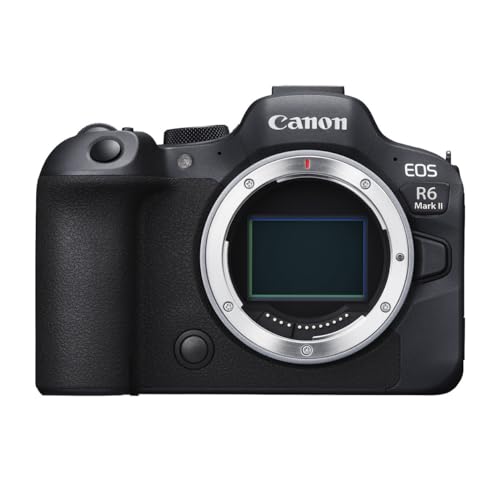
Canon EOS R6 Mark II — Best for ceremonies
The R6 Mark II has become the ceremony photographer’s reflex choice, and the reasons assemble into a single word: trustworthiness. Its autofocus finds eyes in light that makes photographers apologise, and holds them down the aisle, through the veil, into the kiss. Its sensitivity keeps files clean at the levels a candlelit church demands. Its silent electronic shutter lets the photographer work through prayers, readings and the held breath before the vows without adding a single mechanical sound to the room. Put plainly, it behaves in a ceremony the way a great guest behaves: present, capable and impossible to resent.
Canon’s colour is the second pillar, and weddings are where it earns its legend. Skin — all of it, in a formal line spanning every tone a family contains — renders with a kindness that reduces retouching to courtesy. The dress holds its lace, the suit holds its shadow, and the files arrive in the edit already resembling the album the couple imagined. For a working professional, that head start is measured in hours per wedding; for the couple, it is measured in how the pictures feel, which is to say in everything.
The formal session plays to the same strengths. Eye focus across a moving group, stabilisation that steadies the photographer’s own adrenaline, a burst that catches the confetti moment and the laugh inside it — the body keeps pace with a session run against the clock and the weather. Dual slots guard the day’s irreplaceable files, and the RF lens bench supplies the fast primes this work canonically runs on: the wide for the church’s grandeur, the portrait lengths for the formals’ compression and glow.
Its cautions are professional housekeeping rather than doubts. Resolution sits below the Sony’s and Fujifilm’s headline numbers, which matters to the album-printing perfectionist less than the internet suggests; heat management on the longest summer days asks the usual awareness; and the system’s finest glass is priced like the professional tool it is. None of it displaces the verdict. For the ceremony and the formal pictures — the unrepeatable heart of the wedding — this is the body this guide would hand to the photographer marrying its own family.
- Format: full-frame mirrorless, RF mount
- Silence: electronic shutter for the vows
- Focus: eyes found in candle-class light
- Colour: skin rendered with famous kindness
- Insurance: dual card slots for the day
Strengths
- The ceremony’s complete temperament
- Formal pictures that need little rescue
- Files a couple falls for at first viewing
Trade-offs
- Resolution below the class leaders
- Long hot days need heat awareness
- Finest RF primes are professional prices
Its defining frame is the exchange of rings in a north-light church: the couple lit by a window’s grey mercy, the congregation in shadow, the photographer’s shutter silent — and in the file, both faces, both hands, the ring mid-journey, sharp and luminous and true. That frame is the wedding, and this camera takes it as a matter of routine.
Second shooters and spouses-of-photographers report the social dividend: celebrants who have worked with this body before relax when they see it, because its silence has a reputation. Doors in this profession open on reputations — of the photographer first, and of the equipment’s manners close behind.
Best for: professional ceremony and formal wedding photography. Not suited for: buyers needing maximum resolution for huge prints

Sony Alpha 7 IV — Best professional all-rounder
The Alpha 7 IV is the system choice — the body a wedding business builds on when it wants every problem in this article answered by depth: depth of autofocus intelligence, depth of file, depth of lens bench, depth of resale and rental support in every city a destination wedding might land in. Its eye autofocus is a generation’s benchmark, acquiring the bride’s eye through the procession’s motion and the confetti’s weather alike, and its resolution gives formal pictures the cropping freedom that group photography quietly consumes — the wide group shot that also yields the couple’s portrait from its centre.
The files justify the professional’s confidence. Dynamic range that holds the dress and the suit in one honest exposure, colour that grades toward any house style a studio maintains, and low-light behaviour that keeps the winter ceremony’s last frames as clean as its first. Studios running Sony describe a particular relief in the edit: the files behave, across venues and seasons, like a known material. Weddings are chaos administered professionally; a predictable file is a form of calm.
Its ecosystem is the strategic argument. The fast primes and zooms of wedding canon exist here in multiple generations and price bands; a second body, a rental for the big weekend, a replacement sourced in a strange city on a Friday — the Sony bench answers all of it. For a photographer whose weddings are a business rather than an occasion, that infrastructure is not a bonus. It is the moat.
The working notes are the familiar ones: menus that reward a configured custom setup — every professional here runs saved ceremony and formal configurations — a shutter sound best silenced electronically in the sacred moments, and a body whose competence invites the lens spending that the ecosystem happily facilitates. Set up with intent, it disappears into the work, which is where this guide keeps insisting great wedding cameras live. As an all-round professional foundation, it has no superior in this article.
- Format: full-frame mirrorless, E mount
- Resolution: cropping freedom for formals
- Focus: benchmark eye tracking
- Ecosystem: the deepest wedding bench here
- Files: predictable across venues and seasons
Strengths
- A business can be built on it safely
- Group shots that yield portraits
- Support and rentals in every city
Trade-offs
- Menus demand a saved configuration
- Ecosystem spending is seductive
- Silence is a setting, not a default
Its signature wedding is the big one: two hundred guests, a cathedral’s gloom, a formal list of thirty combinations against a departing light — and the Sony system, two bodies deep, delivering the set complete with time for the couple’s own ten quiet minutes. Scale is a specification too, and this is the body that treats it as one.
Destination photographers add their own testimony: when a bag is delayed or a body fails in a foreign city, the Sony is the camera that can be replaced by lunchtime. In a profession where the event cannot move, replaceability is a form of reliability no laboratory measures.
Best for: professionals building a wedding business or shooting at scale. Not suited for: occasional shooters who will not configure it

Panasonic LUMIX S5II — Best value flagship
The S5II is the connoisseur’s route into full-frame wedding work: a body whose maker thought hardest about the working photographer, priced with an mercy its rivals rarely show. Its stabilisation is the headline for ceremony work — in-body steadiness that lets a photographer handhold slower shutter speeds in the church’s gloom, keeping sensitivity lower and files cleaner, while its autofocus has matured into a system a professional can sign a contract behind. For the formal session, its colour and dynamic range hold the dress-and-suit exposure with the same dignity as the bodies above.
The value argument deserves precision, because it is not that this camera is cheaper and nearly as good; it is that the money it saves buys the second body and the fast prime that professional wedding work actually requires. A photographer choosing between one flagship body alone and an S5II pair with lenses is choosing between a camera and a system, and weddings — unrepeatable, failure-intolerant — should always be shot by a system. This body makes the system affordable a season earlier in a career, which compounds across every wedding that follows.
Its video strength, famous in other contexts, serves the modern wedding’s hybrid reality: the photographer increasingly asked for a highlight film alongside the stills, or working beside a videographer whose style the stills must match. The S5II speaks that language fluently without compromising its stills craft — a genuine two-discipline body for the era of the hybrid booking.
Its considerations are ecosystem scale and ceremony manners. The L-mount bench is capable and growing but thinner at the exotic end than Sony’s or Canon’s; the body’s video-first control layout asks stills photographers a short apprenticeship; and its shutter, like all here, should be set silent for the sacred passages. None of that argues with the central proposition: this is the most professional wedding capability per unit of budget in the guide, and for the photographer building toward the top table, it may be the smartest first flagship of all.
- Format: full-frame mirrorless, L mount
- Stabilisation: handholding in church gloom
- Value: the system budget stretches further
- Hybrid: stills and highlight film in one body
- Files: dress and suit held together
Strengths
- Flagship manners, kinder arithmetic
- Steadiness that rescues dim formals
- Funds the second body sooner
Trade-offs
- Lens bench thinner at the exotic end
- Video-led layout asks an apprenticeship
- Rental support varies by city
Its representative wedding is the winter one the budget-conscious couple nearly photographed by phone: a 3 p.m. ceremony sliding into darkness, formals under the venue’s lamps, and the S5II’s stabilisation and sensitivity producing an album indistinguishable in spirit from weddings shot on twice the spend. The couple’s review mentioned the photographs’ warmth three times and the camera never — the correct distribution of credit.
Photographers building a business report a second effect: arriving with two matched bodies and calm to spare reads as established, and established is what couples are buying. Equipment that lets a young professional look like the safe choice is marketing that works every weekend.
Best for: professionals and serious entrants wanting flagship value. Not suited for: shooters needing the deepest rental networks

Fujifilm X-T5 — Best for filmic portraits
Some couples do not want their wedding to look like a photograph of a wedding; they want it to look like a film still from the story of themselves — grain, glow, colour with a point of view. The X-T5 is the instrument of that desire. Fujifilm’s film simulations give formal portraits a designed character at capture, its high-resolution crop sensor resolves the dress’s embroidery and the bouquet’s botany with an almost archival fidelity, and its traditional dials suit the deliberate, unhurried portraiture that the formal session, at its best, becomes.
The formal session is where it argues hardest. Portraits from this body carry the aesthetic that fills couples’ saved boards — a softness in the highlights, a richness in the greens of the venue’s grounds, skin that looks like skin in a remembered summer. A photographer whose brand is that look will find the X-T5 not a compromise for its sensor size but an authorial choice: the camera as a member of the creative team, with opinions the clients hired.
Ceremony work tests it more honestly. Its autofocus is capable and improving, its low-light files grain sooner than the full-frame trio’s — though many Fujifilm photographers welcome that grain as texture rather than defect — and its silence and manners in the sacred moments are fully professional. Paired with Fujifilm’s fast primes, which are among the most loved portrait lenses in any system, it covers the ceremony with character and the formals with distinction.
Its limits are the ones its owners recite without rancour: the full-frame bodies above see deeper into the dark, the ecosystem’s long fast glass is a smaller shelf, and a photographer whose style is clean, bright and classical may find its character an opinion they did not ask for. But weddings are increasingly chosen on look, and for the look an entire generation is choosing, this is the camera that speaks it natively.
- Format: APS-C mirrorless, X mount
- Resolution: archival detail for formals
- Character: film simulations with heritage
- Controls: dials for deliberate portraiture
- Lenses: beloved fast primes
Strengths
- Portraits with an authored look
- Detail that honours dress and flowers
- A brand couples can recognise and request
Trade-offs
- Deep darkness grains sooner
- Smaller shelf of long fast glass
- Character is an opinion, hired or not
Its emblematic album is the garden wedding in late light: formals shot as the sun went amber, the couple’s portraits carrying a warmth the guests felt and the camera translated, printed large for a hallway where visitors ask which film stock the photographer used. The answer — a digital camera with a century of film in its memory — is the X-T5’s whole biography in one exchange.
It also wins the photographer’s own heart, which is not a trivial wedding specification. A body its owner loves gets carried to the rehearsal, the morning preparations, the extra ten minutes of portraits nobody scheduled — and weddings are enriched by exactly those uncontracted pictures.
Best for: portrait-led, filmic wedding styles and Fujifilm devotees. Not suited for: the darkest ceremonies or classical clean styles

Canon EOS R10 — Best second body on a budget
Professional wedding photography runs on two bodies — one wearing the portrait lens, one wearing the wide — because the ceremony does not pause for lens changes and the formal session’s clock does not forgive them. The R10 is this guide’s answer for the second slot when the budget is honest: a light APS-C Canon body that shares the main camera’s colour family and lens mount, handles the wide and candid duties with genuine competence, and costs little enough that the two-body discipline becomes available a full career-stage earlier.
Its assignments are real photography, not leftovers. The wide body owns the church’s grandeur, the group’s full line, the recessional’s joyful chaos from the aisle’s end, and the candid formals — the bridesmaids’ laughter between the arranged frames, the pageboy’s solemn inspection of the rings. The R10’s autofocus, a respectful descendant of the flagship’s, handles those duties without embarrassment, and its files sit beside the main body’s in the album without a visible seam of quality that couples would ever find.
The second body is also the insurance policy, and here the R10’s price performs its kindest service. A professional whose main body fails mid-ceremony — it happens, in every career, eventually — finishes the wedding on the second camera. A second body that is genuinely capable, rather than a token, turns that day from a catastrophe story into a footnote. Buying the R10 is buying the right to stop fearing the failure every wedding photographer privately schedules.
Its limits are a second body’s acceptable ones: in the darkest church it works harder than the full-frame main, its controls are simplified for its class, and nobody should ask it to carry a flagship wedding alone in winter light. Within its assignment — partner, wide angle, candid eye, insurance — it is the most rational purchase in this entire guide, and the one whose absence is most often regretted by photographers who tried to save its price.
- Format: APS-C mirrorless, RF mount
- Role: wide body, candid body, insurance
- Colour: matches the Canon main body
- Weight: all-day second-camera lightness
- Value: two-body discipline, earlier
Strengths
- Makes the professional setup affordable
- Real assignments, honestly covered
- The failure insurance every pro needs
Trade-offs
- Darkest churches stretch it
- Simplified controls for its class
- Not a solo flagship for winter
Its finest hour is written in a photographer’s private ledger: the main body’s shutter failed during the signing of the register, and the wedding — every remaining frame, formals included — was completed on the little Canon without the couple ever learning there had been a problem. They learned years later, as an anecdote, over the anniversary prints. That is what a second body is for.
It also serves the growing photographer’s education: carrying two framings teaches the eye to think in two focal lengths at once, the foundational skill of all event photography. The R10 is a tuition payment disguised as a camera, and its graduates populate the professional ranks above it in this guide.
Best for: second-body duty beside a Canon main camera. Not suited for: solo flagship ceremony work in dark venues

Nikon Z50 II — Best for new wedding shooters
Every professional in this guide began as somebody’s brave first booking, and the Z50 II is the camera this article hands to that photographer. Nikon’s crop body brings genuinely modern autofocus — subject and eye detection that would have been flagship witchcraft a few years ago — honest, forgiving files, and handling that a newcomer can master before the wedding rather than during it. For the friend asked to photograph a small wedding, the assistant stepping up to second shooter, or the portrait photographer taking their first ceremony commission, it is the difference between hoping and working.
Its virtues map precisely onto the beginner’s dangers. Focus that helps rather than judges, because the procession will not repeat for a missed lock. Files with enough latitude to rescue the exposure the nerves mis-set. A size that does not intimidate the couple or exhaust the photographer across a long day of formals. And a price that leaves the budget for the purchase this guide keeps promoting above bodies: a fast prime lens, the single greatest quality lever available to a new wedding photographer.
Nikon’s colour and the Z bench give the growing shooter a real future: the same mount carries the full-frame bodies this photographer may graduate to, and lenses bought now travel upward. A first wedding shot on the Z50 II, with discipline and a fast prime, produces an album that wins the second wedding — which is the entire business model of a career, stated in one sentence.
Its ceilings are stated for the record: the darkest ceremonies will push its files toward grain the full-frame bodies avoid, its single-slot card arrangement lacks the professional’s sacred redundancy — mitigate it with disciplined card changes and immediate backups at every pause — and its buffer and build are a class below the flagships’. A new shooter who knows those ceilings and plans around them will outperform, on the day, an amateur with a flagship and no plan. This guide has believed that sentence in every category it has ever written; weddings are where it is truest.
- Format: APS-C mirrorless, Z mount
- Focus: modern eye detection for beginners
- Files: latitude that forgives nerves
- Path: lenses travel to full-frame later
- Priority: budget left for a fast prime
Strengths
- The first wedding, made workable
- Assistance where beginners need it
- A mount with a future in it
Trade-offs
- Single card slot needs backup discipline
- Darkest venues grain its files
- Build a class below the flagships
Its representative success is the village-hall wedding shot for love and a modest fee: forty guests, a bright registrar, a garden for the formals — and an album the couple’s families describe, accurately, as professional. The camera’s contribution was to make its owner’s care visible rather than their inexperience, which is the whole duty of equipment at the start of a career.
Mentors recommend it for a subtler reason: its limits teach. The photographer who learns light, position and anticipation because the camera cannot rescue everything becomes, within a few seasons, the photographer the flagships above were designed for. Begin here, and begin properly.
Best for: first commissions, second shooters and skilled friends. Not suited for: flagship expectations in dark cathedrals
How Do the Six Wedding Options Compare?
| Camera | Format | Wedding strength | Day role |
|---|---|---|---|
| Canon EOS R6 Mark II | Full-frame mirrorless | Ceremony trust | Main body |
| Sony Alpha 7 IV | Full-frame mirrorless | System depth | Main body at scale |
| Panasonic LUMIX S5II | Full-frame mirrorless | Value and steadiness | Main or pair body |
| Fujifilm X-T5 | APS-C mirrorless | Filmic portraits | Portrait body |
| Canon EOS R10 | APS-C mirrorless | Second-body sense | Wide and backup |
| Nikon Z50 II | APS-C mirrorless | Beginner assistance | First commissions |
Notice what no row promises: rescue from an unprepared photographer. Every body here assumes the rehearsal visit, the list, the spares and the calm — and repays them. Equipment in this genre is a multiplier, and it multiplies whatever preparation it is given, including none.
The table’s shape is a career: enter at the bottom with assistance and a fast prime, build the two-body discipline in the middle rows, and arrive at the top where the bodies differ by temperament rather than by competence. Every row has photographed weddings its couples treasure, which is the only league table this genre ultimately keeps.
How Do You Shoot a Ceremony Without Disturbing It?
By becoming part of the venue’s furniture before the first guest arrives. Walk the space at the rehearsal or the morning of: learn where the light falls at the ceremony’s hour, where the celebrant expects the photographer to stand and — more important — where they expect the photographer never to stand, and agree the moving moments in advance. Set the silent shutter, the saved ceremony configuration, the card and battery discipline, before the music starts; a photographer configuring a camera during the vows has already failed at the assignment’s first clause.
During the ceremony, economy is elegance. Move rarely, and then during music or movement that covers you. Anticipate rather than chase: the ring exchange, the first kiss, the signing, the recessional are a liturgy older than photography, and the prepared photographer is already framed for each before it begins. Shoot the couple’s faces at the moments the congregation’s attention gives you cover, and let the wide body carry the room while the long lens carries the emotion. Afterwards, be the first to congratulate and the fastest to organise the formals — the day’s goodwill is a currency, and the ceremony’s discretion is how it is earned.
How Do You Run a Formal Session That Finishes on Time?
With a list, a loud-ish friend and a respect for light as a departing guest. The list is agreed with the couple beforehand — every combination, in an order that releases people in waves: the elderly and the children first, the full group while everyone is still assembled, the couple last and alone. The friend — best man, chief bridesmaid, the venue’s coordinator — is deputised to fetch the next combination while the current one is being photographed, because a session dies in the gaps between groups, not in the exposures. Position the line where the light is kind and the background is worthy once, then bring the wedding to the camera rather than rebuilding the set for every frame.
Within that machinery, keep the humanity audible. Formals are the day’s most stage-managed hour and its most secretly emotional: fathers seeing daughters, families briefly complete in one frame for the first time in years. The photographer who directs briskly and kindly — who makes the line laugh once per group and means the compliments — gets the expressions the album will live by. The camera’s part is to be ready for those expressions without a menu in the way, which is why every body in this guide was judged partly on how completely it can be pre-configured and forgotten.
How Do You Prepare on the Morning of the Wedding?
Like a pilot, with the checklist physical and the decisions all made yesterday. Bodies charged, cleaned and configured; cards formatted in the cameras that will write them; the two bodies wearing their assigned lenses so the day’s grammar — wide and long — is established before the first frame. Scout the ceremony positions in the day’s real light if the schedule allows a morning visit, and confirm the celebrant’s rules in person with the grace of a guest: where may I stand, may I move during the hymns, is flash permitted anywhere at all. Photographers who ask these questions in the morning are trusted in the afternoon; photographers who discover the rules by breaking them are remembered differently.
The preparations also have a diplomatic layer. Meet the couple in their morning chaos as calm itself — the photographer who radiates unhurried competence lowers the room’s heart rate, and faces photographed at a lower heart rate are the ones the album keeps. Check the formal list against the day’s reality with whoever is deputised to run it, walk the portrait locations while they are empty, and note where the light will be at the session’s scheduled hour rather than where it is now. A wedding day is a river; the prepared photographer has already walked its banks.
What Happens to Wedding Pictures After the Day?
They enter the most consequential edit in photography, because the client is also the subject, the audience and the archive’s keeper for the next seventy years. The professional workflow protects that weight: cards copied twice before the photographer’s own dinner, the copies travelling separately, the originals untouched until the backups verify. Then the cull — ruthless about the duplicates and the blinks, tender about the expressions that only look imperfect to a stranger — and the edit that gives the day its consistent colour, so the church’s gloom and the garden’s gold read as one story in one album.
Camera choices echo into this room. Files with depth forgive the ceremony’s mixed light in the grade; consistent colour across two bodies halves the correction work; resolution in reserve lets the formal group yield the couple’s portrait without a reshoot that can never happen. This is why this guide judged bodies partly as file factories for a very particular factory — the one that produces, weeks after the confetti, the object a family will hand down. The wedding is a day. The pictures are the wedding’s permanent form, and every decision in this article was taken in their service.
How Should a Couple Choose a Photographer — and Does the Camera Matter?
By the album, not the bag. Couples reading this guide from the other side of the lens should know that every body in these pages can produce a beautiful wedding in prepared hands, and that the differences that will reach their walls live in the photographer’s portfolio, temperament and organisation. Ask to see a complete wedding — a full ceremony in a dim church, a full set of formals — rather than a highlights reel shot at golden hour in a garden. Ask about backups, second shooters and what happens if the photographer is ill. The answers describe the professional; the camera’s badge describes only the camera.
That said, the equipment is not irrelevant to the couple — it is the visible edge of the invisible discipline. A photographer arriving with two bodies, silent shutters and a printed list is telling you, in objects, how they will treat the day. Read the objects as a promise and the portfolio as the evidence, and choose the promise whose evidence you would hang in your hallway. It is, after all, your hallway the pictures are destined for — for the wedding, as the phrase that brought us all here insists, in the most literal sense available.
What Mistakes Do Wedding Photographers Make With Cameras?
The unforgivable one is arriving single: one body, one card, one battery, one lens, in a genre where every component has a known failure story and the event cannot be rescheduled around any of them. The second is worshipping the wrong specification — resolution bought at the price of low-light grace, in a genre photographed in churches. The third is noise: the shutter that announces every frame of the vows, the beeps, the photographer’s own restlessness, each taxing the couple’s memory of the day itself. Each mistake is a professionalism failure wearing an equipment costume, and each is cured by the discipline this guide repeats: two of everything, sensitivity over spectacle, silence as a setting and a manner.
The fourth mistake is subtler and sadder: photographing the wedding for the portfolio instead of for the couple. The formal list exists because the grandmother’s picture with the bride will outvalue, across fifty years, every creative angle in the photographer’s gallery. Cameras serve whoever the photographer decides the client is; this guide’s picks assume the couple, the families and the album — the wedding, for the wedding pics, exactly as the doubled little search phrase says.
How Do You Handle Weather During the Formal Session?
As a creative brief rather than a cancellation. Rain drives the session under the venue’s arches, into doorways and conservatories — places whose sheltered light is often kinder than the lawn’s glare ever was — and the cameras in this guide, weather-sealed in their professional classes, work through drizzle that sends guests applauding the photographer’s commitment. Umbrellas become props with a century of romantic precedent; wet stone doubles every light by reflection; the couple who embrace the weather produce the pictures their sunnier rivals secretly envy. The photographer’s preparation is logistical: towels in the bag, a lens cloth in every pocket, positions scouted in the morning’s contingency walk.
Wind and glare write the other chapters. Wind asks for faster shutter speeds, sheltered corners and a bridal party briefed to laugh rather than fight it — the windblown formal, veil alive, is a genre of its own when the photographer leans in. Harsh midday sun asks for the shade of the building’s north face and the exposure discipline this guide’s dynamic-range discussion exists to support. A formal session is a negotiation with the day as given; the camera’s job is to make sure the negotiation never fails for a technical reason, and every body above was chosen to keep that promise in weather as in churchlight.
What Should a Second Shooter Actually Do?
Cover the wedding the main photographer cannot see. While the principal camera owns the ceremony’s liturgy from its assigned position, the second owns the reactions: the father’s face at the vows, the congregation’s laughter, the detail of the rings on the cushion, the groom’s expression in the seconds before the doors open. During the formals, the second shoots the session itself — the candid architecture of the day being arranged — and the alternative angles that turn a set of portraits into a story. It is a role with its own honour, and the bodies assigned to it in this guide, the R10 and the Z50 II in their different hands, were chosen because second shooting is real photography, not an apprenticeship in fetching.
The discipline that binds the pair is invisible in the album: matched clocks so the merged files interleave truthfully, agreed colour settings, a shared shot list divided rather than duplicated, and communication quieter than the ceremony. Two photographers working as one instrument produce the coverage couples describe, later, as the photographer having been everywhere. That everywhere is the two-body system’s real product, and it begins with respecting the second chair.
Frequently Asked Questions
Is one camera enough to photograph a wedding?
For a small, informal wedding shot by a skilled friend, one capable body can serve — with spare cards, batteries and a phone as emergency backup. Professional practice is two bodies, because the event cannot be repeated and equipment can fail.
Why do wedding photographers avoid flash in ceremonies?
Many venues and celebrants forbid it during the ceremony, and even where allowed it can intrude on the occasion’s atmosphere. That is why this guide weights sensitivity and fast lenses so heavily: they are the flash-free photographer’s whole toolkit.
Which lens matters most for ceremony and formals?
A fast prime in the portrait range is the genre’s signature tool, with a wide fast lens for the room and the groups. Bodies in this guide were judged partly on the strength of exactly those lenses in their systems.
How important is a silent shutter?
Close to essential for the ceremony itself. Electronic silent shooting lets the photographer work through prayers and vows without mechanical noise, and celebrants’ goodwill — the photographer’s working access — is built on it.
Can a beginner really photograph a wedding with the Z50 II?
A prepared beginner can photograph a modest wedding well with it — preparation meaning a rehearsal visit, a shot list, backup discipline and honest communication with the couple about scope. The camera assists; the preparation decides.
What should be checked the night before?
Cards formatted in camera, batteries charged including spares, both bodies’ clocks and settings matched, the ceremony configuration saved, lenses cleaned, and the shot list printed. The wedding day should contain no first-time operations of any kind.
Final Recommendation
Choose by the role the camera must play in an unrepeatable day. For the ceremony and formal pictures at the professional standard, the Canon EOS R6 Mark II is this guide’s first hand raised: silent, sensitive, kind to skin and calm under the genre’s unique pressure. Build a business at scale on the Sony Alpha 7 IV’s depth, or reach flagship quality a season sooner with the Panasonic LUMIX S5II as a pair. Give the formals a filmic soul with the Fujifilm X-T5, complete the professional discipline with the Canon EOS R10 as the second body, and begin a career honourably on the Nikon Z50 II with a fast prime. Then honour the genre’s real commandments — two of everything, silence in the sacred moments, the couple before the portfolio — and the pictures will justify the day they record, for the wedding, exactly as promised.
A closing word to the skilled friend holding this guide with a flutter of nerves: the couple chose you because they trust your eye and your care, and both of those outrank every specification in this article. Prepare like a professional, configure the camera until it disappears, and then spend the day watching two people you love get married — through a viewfinder, yes, but with your whole attention. The pictures made that way are the ones that end up framed.
Why Does This Guide Stop at the Reception Door?
Because the evening party is a different country photographically, and honesty about scope serves readers better than a guide that wanders. The reception’s grammar — flash craft, dancefloor energy, speeches under tungsten and disco light, candids snatched in near-darkness — rewards a different balance of equipment and a different set of instincts, and it deserves its own considered treatment rather than a hurried annex here. What the ceremony and the formals demand, this guide has covered with its whole attention: silence, sensitivity, formal speed and files worthy of an heirloom. Readers shooting the full day should treat the companion reception guide as the second half of this one, and choose bodies — as every flagship above happily allows — that will serve them honourably in both.
Related Guides
Wedding photographers can continue with our companion notes on cameras and technique for wedding receptions and evening parties, read the formal group list that finishes on time, or browse fast prime lenses for low-light ceremonies.


