ilcastellomenu.com is reader-supported. When you buy through links on our site, we may earn an affiliate commission.
Where to Buy
Three neighbouring guides need separating before this one can start, because they answer different questions. One covers the upload pipeline — what happens after the video exists. Another speaks to absolute beginners choosing a first camera for a channel that does not exist yet. A third treats the channel as a studio, with sets and crews. This page is about the unglamorous middle: the best cameras to use for youtube videos when the videos are your daily work — filmed at one desk or in one room, by one person, on a weekday, with an edit measured in minutes rather than days.
Daily use reorders every priority reviewers usually celebrate. The camera that wins a Saturday shoot loses to the camera that is ready in ninety seconds on a tired Tuesday, because a channel’s real enemy is not mediocre footage; it is the skipped upload. Friction — rigging, charging, transferring, colour-matching — is taxed daily, and the picks below are ranked by how little of it they charge.
So expect practical verdicts. Two pocket cameras for creators whose room is also their set, two mirrorless bodies for channels ready to look deliberate, one webcam for the desk-bound majority, and one action camera for the creator whose ‘room’ is actually a workshop, a kitchen garden or a building site. All six assume a solo operator, a fixed base and a publishing rhythm that must survive real life.
Key Takeaways
- A channel dies of skipped uploads, not of modest resolution.
- Ready-in-ninety-seconds beats perfect-in-twenty-minutes, daily.
- Fixed rooms reward fixed setups that never get packed away.
- Files that need no colour work keep the edit in minutes.
- Audio and light outrank every camera upgrade for retention.
- Buy the camera your tired Tuesday self will actually use.
- The standing rig is a standing invitation; accept it daily and the catalogue compounds.
In this guide
Quick Picks
| Camera | Badge | Why it earns its place |
|---|---|---|
| DJI Osmo Pocket 3 | Fastest daily driver | From pocket to smooth, tracked, publishable footage faster than anything else here. |
| Sony ZV-1F | Desk-and-sofa regular | A fixed wide lens and near-zero decisions suit talking videos filmed alone, daily. |
| Canon EOS R50 | Deliberate look, gentle learning | Mirrorless depth for daily channels ready to look intentional without a film degree. |
| Logitech Brio 4K | Desk-native daily webcam | For creators whose videos are filmed at the desk, nothing is faster or more reliable. |
| GoPro HERO12 Black | Workshop and outdoors daily | Some channels’ room is a building site, a boat or a trail — this films there daily. |
| Sony ZV-E10 II | Daily channel’s graduation body | When daily videos become the job, this is the mirrorless step that pays rent. |
How Did We Choose Cameras for Daily Use Rather Than Best Days?
Every candidate was scored on a simulated bad week: filmed with daily, at the end of working days, in the room as it actually is, with edits timed. Cameras that demanded a good mood, a tidy set or a free afternoon lost to cameras that performed on a tired Tuesday — because channels are built in bad weeks, and the audience never learns which week an episode came from. They only learn whether it came at all.
File behaviour carried unusual weight. Direct-to-upload colour, sensible file sizes and painless transfer were treated as headline features, outranking resolution and dynamic range that only a colourist would notice. In a one-person workflow the editor is the camera operator is the talent; any camera taxing the editor taxes the whole company, daily, at compound interest.
Finally, permanence was priced in. Picks that live set up — mounted, charged, framed — outranked picks that live in bags, because the daily creator’s setup is a fixed asset of the room. A camera that must be assembled is a camera that will, some Tuesday, not be.
Transfer speed was timed with the same stopwatch, incidentally, because the evening upload window is a real deadline in houses where the network is shared. Cameras whose files move quickly and predictably into the editor — by card, by cable, by simply already being in the computer — protect the day’s last fragile hour, when a creator is deciding between publishing tonight and rationalising tomorrow.
Why Does the Fixed Room Beat the Better Camera?
Because the room is a system the camera joins, not a backdrop it visits. Light that lives at one marked position, a background that stays dressed, a chair at a measured distance — these unglamorous permanences do more for a daily channel’s look than two generations of sensor improvement. Creators who invest in the room’s permanence find their existing camera suddenly looks professional; creators who invest in cameras find their rooms still look like accidents.
Permanence also protects the schedule’s psychology. Sitting down in a ready room is a small, repeatable act of commitment, like a writer’s desk ritual; unpacking a kit is a negotiation the tired self often loses. Design the room so that filming is the path of least resistance, and the uploads take care of themselves with a reliability no motivation can match.
What Should a One-Person Workflow Automate First?
Everything that happens before and after the performance. Before: a setup that wakes ready — camera mounted, light at its mark, microphone in place — so the only creative act required is sitting down. After: a transfer-and-backup routine that runs the same way every evening, because the episode that lives on one card is an episode negotiating with fate.
The performance itself should stay unautomated and human; that is the product. Creators who invert the arrangement — fiddling with rigs while reading scripts off a teleprompter voice — produce efficient emptiness. Automate the furniture, never the person: the audience subscribes to the person, and tolerates the furniture only when it behaves.
Which Cameras Survive Daily YouTube Duty?
Six instruments ranked by the only daily metric that matters: how reliably an idea becomes a published video in a one-person, one-room workflow.
One more lens through which to read the six: each was asked a single interview question — what do you do on the two hundredth ordinary filming day, when nobody is excited and the topic is merely good? Their answers, in setup seconds, file manners and sheer refusal to be interesting at the wrong moment, are the reviews below.

DJI Osmo Pocket 3 — Fastest daily driver
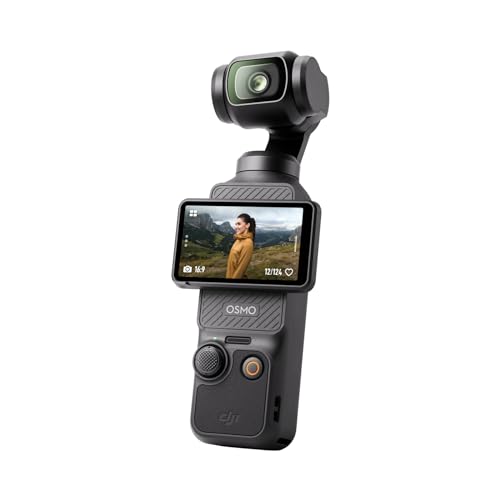
Measure a daily camera by the distance between an idea and a recording, and the Pocket 3 wins this guide before image quality is even discussed. It lives in a pocket or a desk drawer, wakes instantly, steadies itself on its gimbal, tracks your face while you move around the room’s small geography, and produces footage that looks rehearsed on days when nothing was. For the solo creator filming between other obligations, that compression of setup into seconds is not convenience — it is the difference between a channel and an intention.
The rotating screen quietly serves the two-format life modern channels lead. Widescreen for the main upload, vertical for the short that promotes it, same device, same walk around the room, no second camera and no crop destroying the framing. Creators who batch both formats in one pass describe the habit as the moment their short-form output stopped feeling like a second job.
- Format: gimbal pocket camera
- Setup time: seconds, from pocket to record
- Formats: widescreen and vertical in one pass
- Tracking: face-following for solo filming
- Role: the daily driver for moving creators
Strengths
- Ideas become recordings before they evaporate
- Motion footage looks professionally steadied
- Two formats from one filming pass
Trade-offs
- Gimbal dislikes drops, sand and crush
- Internal battery needs a charging habit
- Serious audio needs the microphone pairing
Footage character suits daily realism. Stabilised movement lets a creator film while doing — cooking, building, unboxing, walking the dog through the tutorial’s point — instead of performing stillness for a tripod. Channels built on doing age better than channels built on sitting, because the doing supplies endless episodes; this camera is the doing one’s natural instrument.
Its disciplines are physical. The gimbal wants its cover and a gentle bag, the internal battery wants a charging rhythm, and serious audio wants the wireless microphone pairing most daily creators eventually adopt. None of these asks much; all of them ask consistently, which is the daily-use bargain in miniature — small rituals, endlessly repaid.
Batch-day economics reveal its deepest value. A creator filming four short segments in an hour — the week’s shorts, two updates, one reply video — spends perhaps four minutes total on camera handling, leaving the hour for content. Across a year, that reclaimed friction is measured in dozens of extra published videos, which is the only growth metric the platform ultimately counts.
Its owners develop a telltale confidence: filming in public without ceremony. A device this small draws no attention in cafés, markets or libraries, so daily creators gather real-world texture that rig-based channels plan expeditions for. The channel starts looking like a life instead of a set, and audiences can tell the difference in one frame.
Care is a two-second liturgy — cover on, into the drawer, charger on Sundays — and owners who keep the liturgy report years of service from a mechanism sceptics called delicate. Precision treated gently outlasts ruggedness treated carelessly, in cameras as in most machinery.
Travel weeks test its daily claim differently: the channel that usually films in one room must publish from a hotel, a relative’s sofa, a train’s rhythm. A camera that fits the same pocket as at home keeps the schedule unbroken across geography, and streaks — that quiet motivational currency — survive the trip. Several creators plan holidays around nothing more demanding than this continuity.
Repairs and replacements, when life eventually insists, are painless in a way rig owners envy: the whole camera is the replaceable unit, available everywhere, with no system of lenses held hostage. Daily tools should be boring to replace; excitement in logistics is just cost wearing a costume.
Best for: solo creators who film while doing things, in one room and out of it. Not suited for: rough worksites or creators who never move on camera

Sony ZV-1F — Desk-and-sofa regular
Most YouTube videos are a person in a room talking to other people in rooms, and the ZV-1F is engineered for precisely that geometry with an almost stubborn focus. Wide fixed lens: the desk, the sofa or the kitchen counter framed from arm’s length. Eye autofocus: the talking stays sharp while the hands gesture. Product mode: the object being reviewed snaps into focus when held up, then politely returns attention to the face. Daily talking-head work is a solved problem inside this little body.
The solved-ness is the feature. A creator filming five days a week does not want creative control over white balance philosophy; they want yesterday’s frame, today’s topic and a record button. The ZV-1F’s refusal to offer endless adjustment becomes a production system: identical framing, identical colour, a channel whose episodes intercut like a television programme’s — the visual consistency audiences read as professionalism without knowing why.
- Format: fixed-lens creator compact
- Framing: wide, arm’s-length, room-inclusive
- Focus: eyes for talk, products for reviews
- Ritual: sits ready on the desk permanently
- Role: daily talking-head anchor
Strengths
- Yesterday’s frame, available every day
- Product focus flatters review formats
- Near-zero decisions protect the schedule
Trade-offs
- No reach beyond personal space
- Background separation stays gentle
- Low light still wants that one lamp
Audio and light are where its daily budget should go, because the camera itself declines further investment. A small microphone and one lamp transform its output more than any in-camera setting could, and both stay set up permanently in a fixed room, so the daily ritual shrinks to sitting down and pressing record. Channels survive on rituals that small.
Reach is the honest boundary. The fixed wide lens cannot cover a stage, a sports day or a subject across a workshop, and creators whose formats grow beyond personal space will outgrow it — gracefully, keeping it as the desk camera while a zooming body joins for excursions. As the daily anchor of a talking channel, though, its limitations are mostly a list of things its owner never films.
Consistency compounds into branding faster than beginners believe. Subscribers recognise the frame in a feed thumbnail before reading a title, because the frame never changes; the camera’s inflexibility becomes the channel’s logo. Marketing departments pay for that recognition; this little body generates it as a side effect of having no zoom to fiddle with.
Guest episodes expose a social virtue: visitors relax in front of it. A small, friendly camera reads as a conversation, not a production, so interviewees talk like people instead of witnesses. Channels built on conversations — advice, reactions, local stories — quietly standardise on unintimidating hardware for exactly this reason.
Its second career, after any upgrade, is the overhead rig: mounted above the desk filming hands, keyboards and craft work while the new main camera takes the face. Fixed wide lenses are born for that duty, so the purchase never really retires — it gets promoted sideways, permanently.
Its desk permanence creates an accidental studio discipline: because the camera never moves, creators start dressing the background it sees — a shelf curated, a plant promoted, a poster finally framed. The room improves by inches across a season, each improvement permanent, until visitors ask when the ‘studio’ was built. It was built by a fixed lens’s unblinking gaze.
Commentary channels reading audience questions live discover its framing generosity: leaning in for emphasis, sitting back for a laugh, hands everywhere — all inside the wide, forgiving frame, no focus drama, no leaving the shot. Physical expressiveness is many hosts’ entire charisma, and this camera simply refuses to punish it.
Best for: talking-head, review and commentary channels filmed in one room. Not suited for: formats built on stages, sports or distant subjects

Canon EOS R50 — Deliberate look, gentle learning
There comes a point in a channel’s daily life when the creator wants the videos to look meant — the background softening behind them, the frame composed rather than accepted — without enrolling in cinematography. The R50 is that point’s friendliest address: a mirrorless body whose guided menus coach, whose autofocus handles the face, and whose footage steps visibly beyond webcam and compact territory while asking the least new skill of any interchangeable-lens pick here.
Daily operation stays humane, which is the whole test. Mounted on a small tripod in the fixed room, powered sensibly, framed once, it becomes furniture that films: sit, glance at the flip screen, record. The ceremony that makes mirrorless cameras intimidating in reviews mostly evaporates in a permanent setup, because the rigging happens once and the filming happens daily.
- Format: APS-C mirrorless, RF mount
- Setup: permanent tripod in the filming room
- Guidance: menus that coach beginners
- Growth: one bright lens transforms evenings
- Role: the deliberate-look daily body
Strengths
- Footage steps visibly beyond compact tier
- Guided learning without a film course
- Upgrade path paced to channel income
Trade-offs
- Needs a mount and a power plan
- Less instant than the pocket picks
- Desk-call simplicity belongs to webcams
Lens choice supplies the growth path daily channels eventually want. One brighter prime transforms evening filming and background separation in a single purchase, and Canon’s ecosystem offers that step at several levels of commitment. The creator’s look can mature across a year of small upgrades instead of arriving in one frightening flagship transaction — a financing rhythm that matches how channels actually earn.
Its concessions are the standard mirrorless ones, honestly sized. It wants a real mount rather than a monitor clip, its recording days go better with a power plan, and pure desk-call simplicity belongs to the webcam below. For the creator whose channel has an audience and a schedule worth dressing properly, those are production decisions, not obstacles.
Thumbnail photography is its stealth department. The same body that films the episode shoots the thumbnail’s portrait — matching light, matching look — so a channel’s visual identity stays coherent across the two artefacts audiences actually see. Channels discover that coherence converts browsers into subscribers more reliably than any title formula.
Family duty keeps it honest and used. A camera that also photographs birthdays and holidays never becomes the resented ‘work device’ in the corner; its cost spreads across a life, and its owner handles it daily in every sense, which quietly maintains the fluency that filming days depend on.
Second-hand lenses give its growth path a student-budget wing. The RF ecosystem’s maturing used market means the bright prime, the wider view and the modest telephoto can all arrive pre-owned, tested by other creators’ channels before joining yours. Daily tools should be bought like daily tools: proven, available, unprecious.
Its menus teach a gentle professional lesson: constraints, accepted early, become speed. Creators raised on this body learn to light and arrange the room instead of menu-diving for rescue, a habit that transfers upward when a mirrorless body eventually arrives — they arrive at the bigger camera already knowing what they want from it, which is most of cinematography.
Households with two creators share it without a settings war, because there is almost nothing to customise into incompatibility. The camera’s personality is the manufacturer’s; peace treaties in shared studios are usually written by exactly such refusals to be personal.
Best for: growing daily channels wanting a deliberate look with a gentle learning curve. Not suited for: creators who film in passing moments rather than a set room

Logitech Brio 4K — Desk-native daily webcam
A large share of daily YouTube is filmed exactly where it is edited: at the desk, in the chair, facing the monitor. For that majority the Brio is not a compromise but the correct tool — a camera that lives above the screen, wakes with the computer, and feeds recording and streaming software with a sharp, steady face while the screen itself carries the content. Commentary, reaction, coding, finance, study channels: the desk is the set, and this is its native camera.
Reliability statistics nobody publishes decide its reign. It presents itself identically to every application, survives operating-system updates with its dignity intact, and asks for no batteries, no cards and no capture chain. A daily creator’s scarcest resource is the will to film after a long day; a camera that adds zero failure modes to that moment is worth more than a sharper camera that adds three.
- Format: USB webcam, monitor mount
- Life: wakes with the computer, always ready
- Software: identical face in every application
- Framing: software field-of-view choices
- Role: desk-channel default
Strengths
- Zero daily setup, zero failure modes
- Every application treats it as family
- Privacy shutter ends the watched feeling
Trade-offs
- No optical depth or lens changes
- Dim desks need a lamp’s help
- Ceiling arrives if formats leave the desk
Framing software earns its keep in small rooms. Field-of-view choices let a creator tighten from ‘person plus bookshelf’ to ‘person, mostly’ without moving furniture, and the privacy shutter answers the always-mounted camera’s modern unease with a physical click. In a room that is also a bedroom or a family space, that click is a household peace treaty.
The ceiling is the webcam ceiling and should be respected: no lens changes, no true background separation, and dim rooms need the lamp every pick in this guide keeps recommending. Desk creators who accept those terms gain the lowest-friction daily filming in this entire list — and in a daily practice, friction is the metric that decides everything else.
Live premieres and community streams run on it without a rehearsal, because a camera that behaves identically in the recording software and the streaming software removes the format-switch anxiety that keeps creators from going live. Channels grow communities in live rooms; the Brio is the quiet infrastructure of a thousand such rooms.
Its footage cuts acceptably against a mirrorless B-camera for creators who later add one — the desk angle stays the Brio’s forever, because nothing else is as ready. Permanence is an underrated form of image quality: the angle that exists beats the angle that was planned.
Employers’ stipend programmes and creator grants buy it by the pallet for a reason accountants understand: cost per published video. Measured that way — the only way a daily practice should measure — it may be the most efficient camera in this guide, full stop.
Grant programmes and community media centres stock it as the default issue camera, and their reasoning is actuarial: it survives beginners, satisfies audiences and returns from loans ready for the next borrower. Institutional affection is unglamorous and almost never wrong about tools that must work daily in strangers’ hands.
A desk Brio’s true lifespan is measured in operating systems outlived. Owners upgrade computers twice around the same camera, and the face in the grid remains the continuity their colleagues recognise across years of reorganisations. Infrastructure is anything that outlasts the plan around it.
Best for: commentary, coding, study and reaction channels filmed entirely at a desk. Not suited for: room-roaming formats or cinematic background ambitions

GoPro HERO12 Black — Workshop and outdoors daily
Daily use looks different when the channel’s subject is physical: the fishing creator films at dawn on the water, the builder narrates from a scaffold, the farmer records from a tractor cab. For those channels the ‘fixed room’ is a workplace that eats delicate equipment, and the HERO12 is the daily camera — waterproof, mountable anywhere, stabilised against engines and weather, and cheap enough in spirit that filming never waits for safe conditions.
Its daily ritual is mount, press, narrate. Voice control starts recording with hands full or gloved; the wide lens forgives approximate aiming when the real work cannot pause for framing; the files drop into the same evening edit as every other day. Creators in physical trades describe it less as a camera than as a colleague who holds the shot while they hold the tools.
- Format: waterproof action camera
- Mounting: helmets, hulls, handlebars, cabs
- Control: voice start for full or gloved hands
- View: wide environmental storytelling
- Role: daily camera for physical channels
Strengths
- Filming never waits for safe weather
- Stabilisation handles engines and trails
- Mounts turn workplaces into sets
Trade-offs
- Faces sit small in the wide frame
- Wind defeats internal microphones
- Talking pieces want a second, closer setup
Talking segments need honesty about its audio and its look. Faces sit small in that wide environmental frame, and wind defeats internal microphones outdoors, so physical creators evolve a hybrid rhythm: action and process on the GoPro, pieces to camera filmed closer, quieter, often on a phone or second body, with a microphone doing the day’s most important work. The hybrid is not a flaw in the pick; it is the genre’s grammar.
Durability converts directly into catalogue. Every rained-off day a delicate camera would have skipped becomes an episode, and physical channels are valued precisely for their unstageable reality — weather, mud, the catch, the failure. A camera that treats those as normal working conditions is not an accessory to such a channel; it is the licence to operate.
Season-long projects — a boat restoration, a house build, a garden year — rely on its set-and-forget mounts: the same corner of the workshop, the same view of the hull, day after day, building a visual diary no deliberate filming schedule would sustain. Time itself becomes the channel’s editor, and the camera’s toughness is what lets time do the job.
Its timelapses pad a catalogue gracefully: weather over the site, tides over the mooring, light over the bench. Daily creators learn to harvest these ambient episodes on thin weeks, keeping the schedule — that sacred schedule — intact without faking content. A camera that manufactures B-roll while you sleep is a staff member.
Loaning it to collaborators multiplies a small channel’s angles without anxiety. The apprentice wears it, the mate mounts it, the footage returns. Expensive bodies create permission conversations; this one creates coverage.
Its absence of ceremony reshapes what gets filmed. The dawn launch, the flood in the boatyard, the calf born at midnight — physical channels’ defining episodes all happen outside filming hours, and a camera already mounted, already charged by habit, is the difference between the episode and the story about the episode. Archives reward readiness over quality with brutal consistency.
Creators in cold climates add one folk practice worth copying: a hand-warmer taped near the battery compartment on the coldest mornings, extending the dawn session. Ingenuity flourishes around simple tools, because simple tools leave their owners energy to be ingenious with.
Best for: fishing, building, farming, riding and making channels filmed at work. Not suited for: quiet indoor talking formats as the only camera

Sony ZV-E10 II — Daily channel’s graduation body
Graduation is a real moment in a daily channel’s life: sponsors appear, the audience expects a look, and filming is no longer a hobby fitted around work but the work itself. The ZV-E10 II is the graduation body most solo creators in this guide’s world choose — creator-first controls, autofocus that can be trusted with a face through an animated explanation, and a lens mount whose options let the channel’s look be designed rather than inherited.
Daily professional use exploits its boring virtues. It runs long filming days on sensible power, feeds a capture device or records internally with equal composure, and its colour can be set to a pleasing direct-to-upload look that keeps the edit in minutes — the daily constraint survives graduation, because a professional’s calendar is fuller, not emptier. Tools that respect the calendar get renewed; divas get replaced.
- Format: APS-C mirrorless, E-mount
- Workflow: direct-to-upload colour options
- Power: long filming days, sensibly fed
- Lenses: a small studio in one mount
- Role: graduation body for full-time channels
Strengths
- Professional look without a crew
- Autofocus trusted with animated hosting
- Kit grows lens by lens, pulled by work
Trade-offs
- Full mirrorless rig to maintain
- Learning investment is real
- Superstition purchases make it a burden
The lens ecosystem turns one body into a small studio over time: a bright prime for the desk frame, a wide zoom for room tours, the kit lens retired to travel duty. Each addition is a deliberate purchase justified by episodes already published, which is how professional kits should grow — pulled by work, never pushed by launches.
Its tax is the mirrorless tax in full: a rig to maintain, settings to own, a learning investment measured in evenings. Creators should pay it when the channel’s income signs the cheque, and not before. Graduating early — buying the professional body to feel professional — is the daily creator’s most expensive superstition, and this guide declines to bless it.
Product-review channels feel its autofocus as revenue: the showcase discipline — face, product, face — executes without a missed-focus retake, and daily reviewers measure retakes in hours per month. A camera that returns hours to a solo operator is not an expense category; it is payroll.
Sponsored segments benefit from its consistency under scrutiny. Brands review footage frame by frame, and a body whose colour and framing never wander gives a small channel the production manners of a larger one. Several creators report sponsors assuming a crew that does not exist — the finest compliment solo infrastructure can earn.
Its stills side quietly professionalises thumbnails and community posts, keeping the whole channel’s imagery in one colour family. Audiences may never articulate why the channel feels established; the coherence is doing the articulating for them, daily.
Sponsors of full-time channels notice its file discipline first — same colour, same framing, deliverables that need no fixing — and renew on reliability as much as reach. Professionalism, to a brand manager, is the absence of surprises in the invoice and the footage alike; this body manufactures that absence daily.
Alumni of smaller cameras describe a specific relief on graduation day: the autofocus simply stops being a topic. Whole categories of worry retire at once, and the creator’s attention — the scarcest production resource — returns to topics, titles and the audience, where it always belonged.
Best for: full-time daily creators whose channel income justifies professional infrastructure. Not suited for: hobby schedules or anyone buying it to feel professional
How Do the Six Daily Picks Compare Across a Working Week?
| Camera | Primary job | Setup effort | Outgrows it when |
|---|---|---|---|
| DJI Osmo Pocket 3 | Filming while doing things | Seconds, from a pocket | Your work turns rough or wet |
| Sony ZV-1F | Talking videos at a desk | Sit down and record | Your formats outgrow personal space |
| Canon EOS R50 | Deliberate daily episodes | Rig once, film for years | Your filming turns spontaneous |
| Logitech Brio 4K | Desk-bound daily channels | None; it lives ready | You start filming away from the desk |
| GoPro HERO12 Black | Physical work channels | Mount it and forget it | Your format turns quiet and indoor |
| Sony ZV-E10 II | Full-time channel production | A maintained daily rig | Rarely; it grows with the channel |
The week’s pattern matters more than any single day’s winner. Most mature channels converge on a pairing — a desk or pocket camera for the daily bread, plus one body for excursions — because the pairing covers the calendar’s actual shape instead of an idealised version of it.
There is also a honesty test hidden in the setup column: every figure there was measured in a real room with the clock running, not in a studio with an assistant. Daily creators should distrust any workflow whose setup time assumes a second pair of hands, because the second pair of hands is the one thing a one-person channel definitionally does not have — and equipment honesty begins with admitting whose hands the work assumes.
How Do You Keep the Edit Under Fifteen Minutes?
Shoot the edit in advance. A fixed frame, a known structure — hook, three beats, close — and footage that arrives colour-finished means the timeline work shrinks to trimming heads and tails. Creators who ‘find the video in the edit’ are running a film studio on a daily schedule, and the schedule always wins the argument eventually, usually by cancelling the channel.
Templates are the solo creator’s staff. Intro, lower-thirds, music beds and export settings saved as presets convert fifteen decisions into zero, and zero-decision evenings are how daily channels survive February. The cameras here support the philosophy by delivering consistent files; consistency is what templates eat.
What Audio Setup Serves a One-Person Channel Best?
The microphone that is already in position when you sit down. A small boom or a wireless transmitter living on the desk removes the daily audio decision entirely, and position — close to the mouth, away from the keyboard’s percussion — matters more than the microphone’s price tier. Audiences forgive a modest camera for years; they abandon bad audio in eleven seconds, a statistic every retention graph teaches and every creator learns exactly once the hard way.
Monitor occasionally, not constantly. A weekly headphone check of one published episode catches drift — a new echo, a dying battery’s crackle — without turning filming into an engineering shift. Trust the setup, verify the setup, then go back to making the thing the setup exists for.
How Should Thumbnails and Titles Share the Camera’s Day?
Film the thumbnail during the episode’s session, not after it: same light, same clothes, thirty seconds of deliberate expressions against the room’s cleanest background. The graduation bodies here double as serious stills cameras, yet even the pocket and desk picks produce thumbnail frames adequate for the bold, simple compositions that actually get clicked. A separate thumbnail shoot is a second production day smuggled into the week; fold it into the first and the week shrinks by an hour.
Titles deserve the same pre-production honesty. A title written before filming disciplines the episode into keeping its promise, and a camera workflow built on fixed formats makes promises easy to keep — the audience learns the series’ shapes and returns for the next instalment the way readers return to a column. Consistency, once again, is the growth strategy hiding inside a logistics decision.
Keep a wall of your own best-performing thumbnails near the desk. They are your channel’s actual style guide, written by audience behaviour rather than by taste, and filming each new episode in their visual company keeps the catalogue coherent without a single meeting about branding.
What Mistakes Do Daily Creators Make With Cameras?
Buying for the channel they announce rather than the one they publish leads the list. The cinematic body purchased for a travel series that exists as a playlist title, while the actual uploads are desk commentaries filmed on a laptop camera because the big rig is ‘for the series’ — this exact tragedy plays out on thousands of channels. Equip the published channel; the announced one can equip itself when it exists.
Packing the setup away comes second. A camera that returns to a cupboard after each filming teaches its owner that filming is an event, and events get postponed. Leave the rig standing, even in a small room, even if guests find it curious: the standing rig is a standing invitation, and daily channels are built from accepted invitations.
Third is upgrading the camera to fix a content problem. A plateau in views is almost never a resolution deficiency; it is topics, titles, pacing or simply the audience’s season. New glass makes the same plateau prettier and considerably more expensive. Diagnose honestly before spending — the camera is usually the healthiest part of a struggling channel.
Frequently Asked Questions
Is a webcam really enough for a daily channel?
For desk-bound formats, yes — commentary, coding, study, finance and reaction channels run for years on the Brio tier, because the screen carries the content and the face carries the trust. Add the lamp and the microphone first; the webcam will not be the reason a desk channel stalls.
How many videos before a mirrorless body pays off?
There is no universal count, but the honest signal is income and format pressure: sponsors asking for deliverables, formats outgrowing the desk, an audience large enough that production polish is a competitive surface. Until those arrive, the pocket and desk picks return more videos per unit of friction, which is the early game’s whole scoring system.
Should daily videos be filmed in vertical or widescreen?
Film the main episode in the format the channel is built on, and treat vertical as a harvest, not a second shoot. The Pocket 3’s rotating screen makes same-pass vertical practical; for other bodies, a safely framed widescreen shot crops acceptably for shorts. Never let the tail of short-form wag the dog of the catalogue.
What is the fastest way to look more professional tomorrow?
Fix the light and the background, in that order, before touching the camera. One lamp in front of you, one tidy backdrop that stays dressed, and every pick in this guide gains a production tier overnight. Professionalism on YouTube is mostly the absence of visual accidents, and accidents live in rooms, not in sensors.
How do I film daily without burning out?
Shrink the unit. Shorter formats on weekdays, batch filming on one good day, a setup that never needs assembly, and permission for ordinary episodes between ambitious ones. The cameras here were chosen to lower the daily cost of showing up; the remaining discipline is editorial mercy toward yourself, which no equipment supplies.
When should a second camera join the setup?
When a format — not a mood — demands a second angle repeatedly: overhead hands for making channels, a wide room shot for fitness, a guest frame for interviews. Buy for the recurring shot, mount it permanently like the first, and let the pair become the room’s furniture rather than a production you assemble.
Final Recommendation
Equip the channel you actually publish. Desk-bound creators: the Logitech Brio, a lamp and a microphone, and start tomorrow. Talking formats in a room: the Sony ZV-1F’s identical daily frame. Filming while doing: the DJI Pocket 3, the fastest idea-to-upload path here. Physical work: the GoPro, because your workplace is the set. Growing toward deliberate: Canon’s R50. Full-time and earning: Sony’s ZV-E10 II, bought by income rather than by hope.
The through-line is friction, and it is worth stating as plainly as possible: the best cameras to use for youtube videos are the ones still being used in month six. Choose the pick your ordinary days can sustain, leave it set up, and let the catalogue — not the camera — become the impressive thing about your channel.
A last word about the room itself, because every creator in this guide’s world eventually learns it: the room is the channel’s true studio, landlord, and longest-serving employee. Spend one weekend making it permanently ready — light placed, background dressed, camera standing, microphone waiting — and you will have bought more production value than any single device in this list can sell you. Then film on Monday, and Tuesday, and let the ordinary days do their extraordinary compounding.
How Does a Channel’s Look Mature Without a Relaunch?
Gradually, in public, one permanence at a time: the lamp first, then the dressed background, then the second angle, then — when income insists — the graduation body inheriting a room that already knows how to film. Audiences experience this as a channel ‘getting serious’ over a season, which reads as growth rather than vanity, and growth stories retain subscribers that relaunches merely confuse.
The cameras support the gradient deliberately. A Brio desk angle survives the arrival of a mirrorless main; a ZV-1F becomes the overhead; a Pocket 3 remains the excursion instrument forever. Nothing in a well-chosen daily kit is wasted by progress, because each tool was bought for a job that continues to exist after the next job arrives. Buy jobs, not generations, and the kit compounds like the catalogue does.
What Does a Sustainable Filming Week Actually Look Like?
Two anchor episodes filmed on batch day, when energy and light are best; shorter, simpler pieces harvested across the week from the standing setup; one rest day protected like equipment. The cameras in this guide were chosen to make the harvest days nearly free — sit, record, trim, publish — because a channel’s longevity is decided by its cheapest sustainable week, not its most inspired one. Design for the cheap week and the inspired weeks become pure surplus.
Protect the batch day like a studio booking: phone away, room dressed, cards empty, the week’s topics listed before the camera wakes. Solo creators are their own crew, and crews work to call sheets. The sheet sounds corporate until the first month it doubles output; then it sounds like freedom, because it is — the freedom of finishing before dinner, with the channel fed and the evening your own.
How Should Creators Think About Their Back Catalogue?
As a library that the new camera must not orphan. A graduation body whose colour clashes violently with two hundred existing episodes creates a visible fault line in the channel’s history, so test any upgrade against your own archive: film the same corner, cut it against an old episode, and judge the seam honestly. Continuity is a form of respect for the audience’s memory, and audiences remember more than creators think.
The catalogue also argues for keeping old cameras in service. The desk angle, the overhead, the excursion body — a mature channel’s kit is its history made useful, each tool still doing the job it was bought for while newer tools take the flagship duties. Nothing about that arrangement is sentimental; it is simply what professionals mean by a working kit, assembled one honest job at a time.
How Do You Film Through the Weeks When Nothing Feels Worth Filming?
Lower the unit, not the standard. The standing setup exists precisely for these weeks: a five-minute update, a question answered, a small thing shown properly. Audiences do not require weekly brilliance; they require the relationship’s continuity, and continuity is a logistics problem disguised as a creative one. The camera that is ready, in the room that is dressed, converts a low-energy evening into a published artefact with almost no negotiation.
Keep a running list of evergreen topics on the wall beside the camera — the questions viewers always ask, the basics every newcomer needs, the stories only you can tell. Inspiration is unreliable staff; a list is infrastructure. Channels that survive their third year almost always have the list, the standing rig and a forgiving definition of a good-enough episode, working quietly together.
And notice what the slump weeks teach about equipment: nothing. No camera purchase has ever cured a content winter, because the winter is not optical. Creators who learn to publish through it, with the tools already standing in the room, come out the other side with a catalogue and a discipline that no upgrade could have given them — the two assets every successful channel is actually made of.
What Should a Creator Measure Besides Views?
Time-to-publish, first. From idea to uploaded episode, the daily workflow’s true cost — and the number every camera choice in this guide was secretly optimising. Track it for a month and the friction points announce themselves in plain figures: the transfer that eats twenty minutes, the setup that eats the will. Fix the largest figure, not the most fashionable one, and the channel’s capacity grows without a single new subscriber.
Completion honesty comes second: of the episodes started, how many were published? A workflow that abandons a third of its starts is taxing its creator at a rate no audience growth can outrun. The remedies are boring — smaller units, standing setups, templates — and they work, which is why this guide keeps recommending furniture and rituals in a camera review. The camera is where the workflow becomes visible; it is rarely where the workflow is decided.
Measure, finally, how the work feels at month six. A channel is a practice before it is a business, and practices survive on sustainable texture — the room pleasant to enter, the ritual short, the tools friendly. Choose equipment that keeps the practice kind, and the business has something alive to grow from. Choose equipment that makes every episode a small war, and even success becomes a countdown to quitting.
Related Guides
Daily creators can continue with our guide to starting a youtube channel as a beginner, compare cameras for a channel run like a studio, or read the upload and publishing workflow for solo creators for what happens after filming.


