ilcastellomenu.com is reader-supported. When you buy through links on our site, we may earn an affiliate commission.
Where to Buy
Close-up photography exposes a quiet dishonesty in camera marketing: nearly every compact advertises a macro mode, yet the distance at which a lens can actually focus decides whether a bee, a watch movement or a wedding ring fills the frame or shrinks into it. The best compact cameras for close ups are therefore judged here by one unglamorous measurement — how near the front element can sit to the subject while still locking focus — and by the supporting tricks, from focus stacking to microscope modes, that turn nearness into detail.
Honesty frames this entire guide. A compact with a true close-focusing lens can photograph a coin, a flower’s heart or a product label beautifully; no compact in this class replaces a dedicated macro lens on an interchangeable body for life-size reproduction of nervous insects. Picks below state plainly where each camera’s close-up talent ends, because a buyer who understands the boundary buys once and happily, while a buyer promised miracles returns the camera and distrusts the category.
Shoppers arriving from neighbouring topics should note the division of labour on this site: travel beginners have their own pocket guide, video-led buyers have a specifications guide, and nature photographers have a zoom-and-weather guide. This page serves the small world — tabletops, gardens, workshops, market stalls and the miniature detail that rewards anyone willing to kneel.
Key Takeaways
- Minimum focusing distance matters more than any macro badge.
- One camera here focuses a centimetre from its lens — a genuine microscope trick.
- Focus stacking rescues depth that close distances steal.
- Light, not resolution, is the close-up photographer’s real shortage.
- Compacts do tabletop macro brilliantly and insect portraiture modestly.
- Stability at close range beats megapixels every time.
In this guide
Quick Picks
| Camera | Badge | Why it earns its place |
|---|---|---|
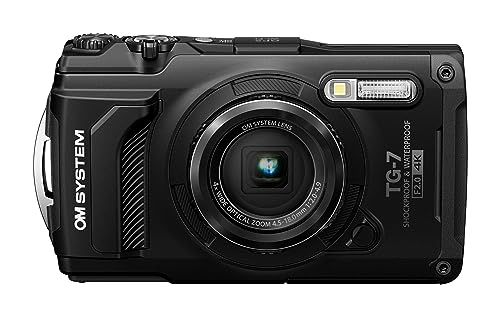
| OM SYSTEM Tough TG-7 | The microscope-mode marvel | Focuses almost against the glass and stacks frames automatically, making it the close-up specialist of this entire class. |
| Canon PowerShot G7 X Mark III | The tabletop product companion | Close focusing at the wide end plus friendly colour for sellers, bakers and crafters photographing small work. |
| Sony RX100 VII | The garden detail hunter | Zoom reach that fills frames with shy subjects from a respectful distance, backed by relentless autofocus. |
| OM SYSTEM OM-5 Mark II | The stacking system camera in compact clothing | A small weather-sealed body with computational focus stacking and access to true macro lenses when ambition grows. |
| Sony ZV-E10 II | The product-showcase video closer | Close-focusing kit optics and a showcase mode that snaps attention onto held objects for sellers and reviewers. |
| Panasonic Lumix LX100 II | The connoisseur’s close-focusing fixed zoom | A prose-only entry: a large-sensor compact whose lens focuses within a few centimetres at its wide setting. |
How Did We Judge Close-Up Ability Without Believing the Badges?
Three physical tests replaced brochure language. First, minimum focusing distance measured at the lens’s most useful setting, because a macro figure quoted only at an unusable focal length is a riddle, not a feature. Cameras that focus within a few centimetres at a wide, bright setting earned their place; cameras whose macro mode exists mainly in the menu’s marketing folder did not.
Second, magnification honesty. Filling a frame with a postage stamp demands more than focusing near — it demands that the subject occupies sensor area generously at that distance. Small-sensor compacts paradoxically excel here, since their lenses focus close while their sensors crop the world tightly, which is why the rugged TG-7 out-magnifies grander machines below.
Third, depth rescue. At close distances, depth of field collapses to millimetres, so cameras offering focus bracketing or in-camera stacking were credited heavily: they convert a sliver of sharpness into a usable slab by merging a rapid sequence shot at stepped focus distances. That single computational trick separates decorative close-ups from publishable ones.
Handling completed the judging. Close work happens at ankle height, inside flowerbeds and across workshop benches, so tilting screens, close-range autofocus behaviour and the ability to trigger the shutter without jogging the camera all counted. A close-up camera is a field instrument, not a studio ornament.
Why Does Depth of Field Vanish Exactly When Subjects Get Interesting?
The physics are unforgiving and worth understanding before money moves. As a lens focuses nearer, the zone of acceptable sharpness thins dramatically; at genuine close distances, a flower’s stamen can be crisp while its petals, a centimetre behind, dissolve. Beginners blame the camera, buy another, and meet the same physics wearing a different badge.
Three honest responses exist. Stopping the aperture down buys depth at the cost of light and shutter speed, which is why close-up work so often migrates toward added illumination. Focus stacking buys depth computationally, shooting the stepped sequence described above. And compositional surrender — aligning the camera parallel to the subject so the interesting plane sits inside the thin sharp zone — buys depth for free, which is why experienced close-up shooters photograph coins, textiles and flat botanical specimens so successfully.
Every pick below supports at least two of those three responses. The guide’s judgements about which camera suits which subject follow directly from that arithmetic, and readers should distrust any close-up recommendation that never mentions depth at all.
What Light Do Close-Ups Actually Need?
Nearness casts shadows — often the camera’s own. A lens hovering centimetres from a subject blocks the ambient light the subject was enjoying, and the built-in flash, firing from beside that lens, produces a half-lit crescent that ruins more beginner macro than any focusing failure. Close-up lighting is therefore a craft of small additions: a pocket LED panel angled from the side, a white card bouncing window light into the shadowed side, or simply rotating the whole subject until daylight models it kindly.
Two picks below anticipate the problem directly. The TG-7 accepts dedicated macro light accessories designed for its microscope mode, and the OM-5 system opens onto an ecosystem of small flashes and diffusers built by decades of macro photographers. Buyers planning serious tabletop work should budget for light with the same seriousness as the camera; the pairing, not the body alone, produces the catalogue look.
Which Compacts Truly Deserve a Place in the Small World?
The six entries divide into true close-focus specialists, versatile compacts whose lenses happen to focus near, and two system cameras wearing compact dimensions. Read the badge as the job description and the honest limits inside each review as the contract.

OM SYSTEM Tough TG-7 — The microscope-mode marvel
Nothing else in the compact class does what the TG-7 does at one centimetre. Its microscope mode focuses almost against the front glass and magnifies small subjects to frame-filling proportions, then — the masterstroke — stacks a rapid burst automatically so the millimetre-thin sharpness problem dissolves. Snowflakes, frost crystals, sand grains, the weave of a banknote: subjects other compacts gesture toward, this camera actually delivers, handheld, outdoors, in weather that would hospitalise its rivals.
The ruggedness is not decoration for this brief. Close-up subjects live in tide pools, under leaf litter, beside streams and inside gardens after rain, and a waterproof, shockproof body removes the photographer’s hesitation at exactly the moments the small world performs. Its accessory ecosystem of ring lights and diffusers exists precisely because generations of owners discovered the microscope mode and demanded illumination worthy of it.
- Format: rugged compact with small sensor, big magnification
- Close focus: microscope mode working almost at the glass
- Stacking: automatic focus stacking in-camera
- Lighting: dedicated macro light accessories supported
- Role: the extreme close-up and field-detail specialist
Strengths
- Magnification no rival compact approaches
- Stacking turns slivers of focus usable
- Weatherproof body follows subjects anywhere
Trade-offs
- Small sensor limits dusk quality
- Resolution trails premium compacts
- Chunky grip divides pocket-carriers
Watch a child photograph a ladybird with it and the design intelligence becomes obvious: no tripod ceremony, no lighting rig, just a camera lowered to the grass that returns an image resembling a nature documentary frame. Adult naturalists, geologists and jewellery hobbyists report the same experience with better vocabulary.
Its boundary is image refinement. Buyers wanting gallery-grade files of large subjects should look at the OM-5 below or the premium compacts; buyers wanting the small world itself, in the rain, at one centimetre, have exactly one address in this guide.
Best for: macro explorers, field naturalists, tidepool and frost photographers. Not suited for: buyers prioritising large-print image quality above magnification

Canon PowerShot G7 X Mark III — The tabletop product companion
Most close-up photography is not insects; it is work. Etsy sellers photographing earrings, bakers documenting crumb structure, model-makers recording a paint job, grandparents capturing a grandchild’s drawing — tabletop subjects, indoors, under ordinary light. The G7 X Mark III serves that majority with a lens that focuses close at its wide setting, a bright aperture that keeps indoor shutter speeds healthy, and Canon colour that renders food and craft materials appetisingly without editing.
The tilting touchscreen matters more here than specification sheets admit. Tabletop shooting happens at bench height with the camera angled down, and a screen that tilts toward the photographer’s face converts an aching crouch into a comfortable review position. Touch focusing — tap the earring, not the tablecloth — removes the autofocus guesswork that plagues close work on lesser compacts.
- Format: pocket compact, one-inch-class sensor
- Close focus: near focusing at the bright wide setting
- Screen: tilting touchscreen with tap-to-focus
- Colour: warm rendering flattering to food and craft
- Role: the seller’s and hobbyist’s tabletop camera
Strengths
- Indoor close-ups stay clean and bright
- Tap focusing lands exactly on small subjects
- Pocketable between tabletop sessions
Trade-offs
- Magnification stays modest beside the TG-7
- No in-camera stacking for deep subjects
- Autofocus can hunt at closest distances
A ceramics seller’s workflow shows its measure: wheel to shelf, shelf to light tent, twenty glazes photographed before the kiln cools, each frame close enough to show the crackle in the finish. The Canon’s blend of nearness, brightness and colour makes that workflow feel like documentation rather than photography homework.
Buyers chasing true macro magnification should not ask it to be the TG-7. Buyers whose close-ups are products, plates and projects will find it the most likeable tool in this guide — close enough, bright enough, and small enough to live where the work happens.
Best for: sellers, crafters, bakers and hobbyists photographing small work indoors. Not suited for: extreme macro subjects demanding microscope magnification

Sony RX100 VII — The garden detail hunter
Some close-up subjects refuse closeness. Butterflies flush at a shadow, frogs submerge at a footfall, and the orchid hangs across a rope barrier. The RX100 VII attacks that problem from the opposite direction to the TG-7: instead of focusing nearer, it zooms farther, letting a long telephoto setting magnify distant detail until a skittish subject fills the frame from a respectful, non-disturbing distance.
Autofocus carries the second half of the argument. Sony’s tracking holds a bee’s face as it works a flower head, and rapid bursts convert a hovering subject’s brief stillness into a sequence from which one sharp frame can be rescued. Garden photographers learn quickly that at telephoto distances, focus tenacity matters as much as optical reach.
- Format: premium pocket compact, one-inch-class sensor
- Method: telephoto magnification from a distance
- Focus: persistent tracking for moving small subjects
- Bursts: rapid sequences for fleeting stillness
- Role: the close-up camera for shy subjects
Strengths
- Frames nervous subjects without approaching
- Tracking holds insects and birds reliably
- Pocket size belies the reach inside
Trade-offs
- Closest focusing at telephoto stays distant
- Premium price for a compact body
- Menus demand study from newcomers
The distinction matters, so let it be stated plainly: this is not a macro camera, and Sony does not pretend otherwise. It is a detail camera — the tool for subjects whose detail is visible but unreachable. Botanical gardens, zoo enclosures, market displays behind glass and grandchildren’s stage performances all belong to its territory.
Pair its reviews with the TG-7’s and the guide’s logic completes itself: approach when you may, zoom when you must, and choose the body matching the subjects you actually photograph rather than the technique you admire abstractly.
Best for: garden, zoo and botanical photographers working at respectful distances. Not suited for: true macro work at centimetre distances

OM SYSTEM OM-5 Mark II — The stacking system camera in compact clothing
The OM-5 Mark II stretches the word compact honestly: it is a small interchangeable-lens body, included because its dimensions travel like a compact while its close-up ceiling towers over every fixed-lens rival here. Computational focus stacking is built into the body, weather sealing matches the TG-7’s field courage, and the Micro Four Thirds lens catalogue contains true macro optics that reach life-size reproduction — the threshold fixed compacts cannot cross.
For a buyer whose close-up interest is deepening, this is the growth path that does not require abandoning the first purchase. Start with the kit lens for tabletop work, add a dedicated macro lens when insects call, and let the body’s stacking merge the depth that single frames cannot hold. The system rewards study more than any other pick, and returns proportionally more.
- Format: compact interchangeable-lens body, Micro Four Thirds
- Stacking: in-camera focus stacking and bracketing
- Lenses: true macro optics reaching life-size
- Sealing: weather-resistant body for field work
- Role: the serious close-up learner’s system
Strengths
- Genuine macro lenses unlock life-size subjects
- Stacking quality rivals desktop workflows
- Small lenses keep the field kit light
Trade-offs
- Lens purchases add to the real cost
- Learning curve exceeds fixed compacts
- Less pocketable than everything above
Its natural owner photographs fungi through autumn, snowflakes through winter and sells neither the camera nor the hobby short. The stacking alone justifies the body for static subjects: a merged frame of a mushroom, sharp from cap to stem-base, looks like studio work and was made kneeling in a wet wood.
Beginners wanting a camera that simply focuses close and forgives should stay with the fixed-lens picks. Buyers who feel the pull of the small world as a serious pursuit will find this the only entry here that never needs replacing — only extending.
Best for: committed close-up photographers ready for lenses and stacking. Not suited for: casual users wanting pocket simplicity

Sony ZV-E10 II — The product-showcase video closer
Close-ups increasingly move. Sellers hold products toward the lens, reviewers display watch faces, cooks show the texture of a sauce — and the camera must shift focus from face to object and back without hunting. The ZV-E10 II was designed around exactly that choreography, with a product-showcase behaviour that recognises a held object and snaps attention onto it, then returns to the presenter when the object lowers.
As a stills close-up tool it depends on the lens fitted, and honesty requires noting that its kit optics focus usefully near rather than macro-close. Its larger APS-C sensor, though, renders held products with a depth and low-light cleanliness small compacts cannot match, which is why unboxing and review channels adopted this family so completely.
- Format: compact interchangeable-lens body, APS-C sensor
- Showcase: automatic focus shift to held products
- Video: creator-first tools and clean close footage
- Lenses: macro optics available within the system
- Role: the moving close-up and product video body
Strengths
- Held products snap into focus automatically
- Large sensor flatters indoor product light
- System accepts genuine macro lenses later
Trade-offs
- Kit lens alone is not a macro tool
- No in-body stabilisation for handheld clips
- Still-macro buyers pay for video talent
Watch a marketplace seller film a necklace: face introduces, hand raises, focus glides to the pendant’s clasp, face returns for the closing line. That single unbroken take replaces an editing session, and it is the close-up skill this camera was born holding.
Pure stills macro shoppers should weigh the OM-5’s stacking instead. Creators whose close-ups are filmed, narrated and sold will find no better-mannered body at this size, and the lens system leaves the macro door open behind them.
Best for: sellers and reviewers filming products held to camera. Not suited for: stills-only macro work on a kit-lens budget
Panasonic Lumix LX100 II — The connoisseur’s close-focusing fixed zoom
The LX100 II is covered in prose because it sits outside this guide’s verified link pool, and it earns its paragraph through one specification: its fast Leica-badged zoom focuses within a few centimetres at the wide setting, on a sensor far larger than most compacts carry. The combination — genuine nearness plus genuine sensor — produces close-ups with a creamy background melt that small-sensor rivals cannot imitate.
Analogue controls complete its character. An aperture ring on the lens and a shutter dial on the body make close-up exposure a tactile pleasure, and the multi-aspect sensor suits photographers who compose tabletop scenes in whatever ratio the subject suggests. It is an enthusiast’s instrument that happens to focus close, rather than a macro tool that happens to take photographs.
- Format: fixed-zoom compact, large Four Thirds-class sensor
- Close focus: a few centimetres at the wide setting
- Controls: aperture ring and shutter dial, fully tactile
- Rendering: shallow-depth close-ups with smooth blur
- Role: the aesthetic close-up camera for enthusiasts
Strengths
- Near focus plus large sensor equals beautiful blur
- Manual controls reward deliberate tabletop work
- Bright lens keeps indoor shutter speeds kind
Trade-offs
- No stacking to rescue deep subjects
- Fixed screen limits awkward bench angles
- Ageing platform beside newer rivals
Its best work is the still life: a fountain pen on walnut, a espresso cup’s crema, a vintage lens displayed for sale by someone who loves it. Subjects with depth defeat its thin focus zone unless the aperture narrows and light arrives to compensate, which the enthusiast owner treats as craft rather than complaint.
Shoppers who find one at a fair price gain the most photographic close-up experience in this guide. Shoppers who need guarantees, stacking or weather sealing should stay with the linked picks above, where support and accessories remain current.
Best for: enthusiasts shooting shallow, beautiful tabletop still lifes. Not suited for: deep subjects needing stacking or field weatherproofing
How Do the Six Close-Up Cameras Compare Side by Side?
| Camera | Close-up method | Depth rescue | Honest limit |
|---|---|---|---|
| OM SYSTEM Tough TG-7 | Microscope mode at the glass | Automatic stacking | Small-sensor refinement |
| Canon PowerShot G7 X Mark III | Near focus, bright wide lens | Aperture and careful alignment | Modest magnification |
| Sony RX100 VII | Telephoto detail from distance | Bursts and tracking | Not a macro camera |
| OM SYSTEM OM-5 Mark II | True macro lenses, life-size | In-camera stacking | Lenses cost extra |
| Sony ZV-E10 II | Showcase focus for filmed products | Lens choice governs | Kit lens is not macro |
| Panasonic Lumix LX100 II | Near focus on a large sensor | Aperture discipline only | No stacking, fixed screen |
The table’s lesson is that close-up is four different hobbies sharing a name; match the row to your subject’s distance and temperament before matching it to your budget.
How Do You Actually Shoot a Sharp Close-Up Handheld?
Technique, in order of impact. First, brace: elbows on the bench, camera against a beanbag, or the body’s edge resting on the same surface as the subject, because at close distances a millimetre of sway is a subject-width of blur. Second, focus once and rock gently rather than refocusing repeatedly — the photographer’s body becomes the focusing rail, easing the sharp plane onto the subject’s eye or edge.
Third, shoot sequences. A gentle burst at the moment of stillness converts luck into statistics, and every pick here fires fast enough to make the method practical. Fourth, review at full magnification immediately; close-up sharpness cannot be judged on a thumbnail, and the subject — unlike a landscape — will still be there for a second attempt if the first frame’s plane landed wrong.
Wind is the outdoor close-up shooter’s true opponent, moving flowers through the focus plane faster than autofocus follows. Shoot in the lulls, shield the subject with your own shadow-side body, and raise the shutter speed beyond what the light seems to require. Gardens at dawn, when air sits still and dew decorates everything, reward the early alarm more reliably than any accessory.
Why Do Sellers and Crafters Need Different Close-Ups Than Naturalists?
A seller’s close-up answers a buyer’s suspicion: is the stitching clean, the stone genuine, the glaze unchipped? That demands even light, honest colour and enough depth to keep the whole product legible — documentation virtues. A naturalist’s close-up answers wonder: what does the frost fern on this window actually look like? That demands magnification, atmosphere and the drama of a single sharp plane.
The picks divide along that line naturally. Canon’s tabletop manners and Sony’s showcase focus serve commerce; the TG-7’s microscope and the OM-5’s stacking serve curiosity; the LX100 II serves beauty, which is commerce’s cousin and curiosity’s reward. Buyers should name their tribe before shopping, because the wrong tribe’s camera disappoints precisely by excelling at the wrong virtues.
Lighting separates the tribes further. Sellers diffuse everything into shadowless clarity; naturalists chase the raking dawn light that turns a spider’s web into jewellery. The same camera can do both, but the accessory budget flows in opposite directions, and planning it early prevents the classic error of buying a macro camera and discovering the photographs were actually waiting on a light tent.
What Mistakes Do Close-Up Buyers Keep Making?
Believing the macro badge without checking the focusing distance stands first, and this guide’s opening exists to kill that habit. Demand the number, at a usable focal length, before any other specification is allowed to charm you.
Second, chasing magnification while ignoring light. A subject at one centimetre in gloom produces a large, murky photograph; the same subject honestly lit at half the magnification prints beautifully. Budget for a small LED or a ring light alongside the camera, especially with the TG-7’s microscope ambitions.
Third, expecting living insects to pose like coins. Nervous subjects require distance, patience or the telephoto method — a truth no purchase repeals. Buyers whose hearts are set on butterfly portraits should read the RX100 VII and OM-5 entries again, and forgive the microscope mode its specialism.
Finally, forgetting the background. At close range a distracting backdrop sits centimetres behind the subject and renders huge; a sheet of card, a repositioned leaf or a wider aperture solves what cropping cannot. Close-up composition is mostly background management performed at miniature scale.
Final Recommendation
For pure close-up wonder, the OM SYSTEM Tough TG-7 stands alone in this class: microscope focusing, automatic stacking and a body that follows subjects into wet grass make it the honest answer to the keyword. Tabletop sellers should take the Canon G7 X Mark III for stills or the Sony ZV-E10 II for filmed product work, garden photographers the RX100 VII for distance detail, and anyone falling seriously for the small world should start with the OM-5 Mark II and grow into true macro lenses. The Lumix LX100 II remains the connoisseur’s prose-only pleasure for shallow, beautiful still lifes.
Whichever route you choose, verify the focusing distance with your own subject before the return window closes: photograph a coin, a ring and a flower at the closest range the lens allows, and judge the files at full size. Close-up cameras keep honest promises at that test or they do not, and no review — this one included — outranks your own tabletop.
One final encouragement belongs to the hesitant. The small world is the most accessible wilderness in photography: it begins on the windowsill, costs nothing to enter, and refreshes itself with every season, every meal and every market stall. A compact that focuses honestly close turns an ordinary walk into a survey of miniature landscapes most people step over. Buy the body that matches your subjects, learn its nearest distance by heart, and kneel down — the detail was always there, waiting for someone patient enough to look at it properly.
How Close Is Close Enough for Flowers, Coins and Food?
Different subjects publish their own distance requirements. A flower portrait wants the bloom to dominate the frame while its stem and leaves exit gracefully, which most compacts achieve from fifteen to twenty-five centimetres — comfortable territory where light still reaches the subject and autofocus behaves. A coin or stamp, by contrast, is small, flat and unforgiving; filling the frame demands the nearest distances in this guide, plus parallel alignment so both edges share the thin sharp plane equally.
Food sits between those poles. A plated dish photographs best slightly withdrawn, where the lens sees the composition rather than a single pea, yet close enough that steam, glaze and crumb texture register. The Canon’s bright wide setting was practically designed around restaurant tables, while the LX100 II’s shallow blur turns a coffee’s surface into a small landscape. Sellers of food — bakers with portfolios, cafés with menus — should judge close-up cameras by plated distance, not by microscope bravado.
Jewellery splits the difference cruelly: stones are tiny, reflective and deep, so a ring demands nearness, depth and lighting discipline simultaneously. No single compact conquers all three; the TG-7’s stacking handles depth, the OM-5 with a macro lens handles everything at higher cost and effort, and honest sellers often photograph jewellery slightly wider, then crop — a legitimate technique when the sensor carries resolution to spare.
Textiles and craft detail reward magnification most forgivingly. Embroidery, knitting and woven labels are flat, static and patient, letting even modest close-focusing compacts shine provided the light rakes across the surface to reveal texture. A side window and a steady hand outperform expensive optics on a cushion, which is why crafters so often love the camera they already own once technique enters the room.
Why Does the Background Blur Differ So Much Between These Cameras?
Blur at close range obeys sensor size and aperture together. Larger sensors isolate subjects more dramatically at the same framing, which is why the LX100 II and the two interchangeable-lens bodies melt tabletop backgrounds into gradients while small-sensor compacts keep more of the scene recognisably sharp. Neither rendering is superior in the abstract: a seller may want the whole product crisp and contextual, while a flower portraitist wants the garden to vanish.
Distance choreographs the effect as much as hardware does. Moving the subject farther from its background — lifting the ring off the table, holding the flower away from the hedge — buys separation that no aperture can purchase at point-blank range. Beginners who learn that single compositional habit often stop envying larger sensors, because their backgrounds begin behaving regardless of equipment.
Buyers should also know that blur quality, not merely quantity, separates the pleasing from the distracting. Busy highlights behind a subject — chain-link, foliage sparkle, café lights — can render as nervous clutter on one lens and as smooth discs on another. Sample galleries for your actual subject matter reveal more about a close-up camera’s character than any sharpness chart.
How Should a Beginner Practise Close-Up Technique in One Weekend?
Begin with the unglamorous ruler test: photograph a coin at the closest distance each mode allows, review at full magnification, and learn exactly where your camera’s promises end. That ten-minute exercise calibrates expectations more honestly than a month of marketing language, and it identifies which menu mode genuinely focuses nearest rather than merely cropping bravely.
Day two belongs to light. Photograph the same object at a window, under a lamp, and beside a white card reflector, then compare which version a stranger would trust. Close-up beginners discover that illumination, not magnification, was their bottleneck all along — and the discovery permanently changes how they spend money.
Finish with a living subject: a houseplant’s new leaf, a pet’s sleeping paw, dew on a morning railing. Living subjects introduce movement, depth and time pressure in miniature, rehearsing every skill the garden will demand. By Sunday evening the beginner owns a personal map of their camera’s close-up territory — where it excels, where it bluffs, and which accessory, if any, deserves the next purchase.
What Accessories Genuinely Help Compact Close-Up Work?
A mini tripod or tabletop support ranks first, because close distances magnify shake as surely as they magnify subjects. Second comes a small LED panel with adjustable warmth, the single purchase that transforms indoor close-ups across every camera in this guide. Third, a set of plain background cards in grey, black and white — the cheapest studio a tabletop photographer will ever own.
Diffusion deserves its own mention. A shower cap over a light, a sheet of baking parchment between lamp and subject, or a purpose-made softbox the size of a sandwich all perform the same miracle: enlarging the light source until reflections soften and textures read clearly. Jewellery and watch photography, in particular, are diffusion crafts wearing a camera as an accessory.
Resist the clip-on phone-lens mentality transferred to compacts. Screw-on close-up filters exist for some models and can help, but stacking optical compromises in front of a good lens usually trades the sharpness the exercise was chasing. The cameras here were chosen because their native close ability suffices; accessories should support light and stability, not apologise for optics.
How Do You Photograph Shiny Subjects Without Photographing Yourself?
Chrome, watches, cutlery and glazed ceramics reflect the room, the window and — at close range — the photographer leaning in with a camera. The professional answer is to control what the subject sees: surround it with large, plain surfaces it can reflect beautifully, and keep the camera’s own silhouette small, dark and off-axis. A sheet of white foam board with a hole for the lens is the oldest trick in product photography precisely because it works on a kitchen table as reliably as in a studio.
Angle decides the rest. Photographing a reflective subject straight-on guarantees your reflection joins the composition; tilting the camera or the subject a few degrees trades that portrait for a clean gradient. Compacts with tilting screens excel here because the photographer can step sideways out of the reflection while still composing precisely — one more practical virtue of the Canon’s screen design.
Polarising filters, where a lens accepts them, cut surface glare on leaves, water and glass, though they cannot fix a mirror. Beginners should treat reflections as composition elements to be arranged, not defects to be apologised for: the goal is a reflection that looks deliberate, lit and shaped, rather than accidental.
Why Do Gardens Reward Early Mornings for Close-Up Photographers?
Dawn assembles every close-up advantage at once. Air hangs still, so flowers stop swaying through the focus plane. Dew beads on petals and webs, manufacturing subjects that evaporate by breakfast. Insects sit torpid and tolerant, permitting approaches that midday alertness forbids. And the light arrives low and directional, modelling texture that noon flattens into evidence.
The TG-7 and OM-5 were practically specified by dawn gardeners: one shrugs off the wet grass and dew, the other stacks focus while a spider holds its pose in the cold. Photographers who commit to the alarm clock discover that the garden’s close-up season is measured in morning minutes, and that expensive optics matter less than being present, kneeling, when the light performs.
There is a courtesy dimension too. Gardens — public ones especially — are quieter at dawn, letting a photographer settle beside one bed for twenty unhurried minutes without obstructing crowds. Patience is a photographic material, and mornings supply it wholesale.
How Can Cropping Honestly Extend a Compact’s Close-Up Reach?
Cropping is not cheating; it is spending resolution. A frame captured slightly wide and trimmed in editing often beats a frame captured at the lens’s struggling closest distance, because the wider shot was sharper, better lit and deeper in focus. High-resolution compacts and the larger-sensor bodies here carry the spare pixels that make the trade profitable.
The discipline is to crop deliberately rather than desperately. Compose knowing which portion will survive, keep that portion on the sensor’s sweet central territory, and expose for it honestly. A planned crop of a third is a technique; an emergency crop of ninety percent is a confession, and the files can always tell the difference.
Sellers should note the commercial corollary: marketplace photographs are viewed small, so a crisp cropped detail frequently communicates more than a full-frame wide shot of the same product. The close-up that sells the stitching may be a crop — provided the original was sharp, which returns the conversation, as always, to light and stability first.
What Should a Buyer Test in the Shop Before Trusting a Macro Claim?
Bring a coin and a business card — the two cheapest laboratory instruments in photography. Focus on the coin at the closest distance the camera permits and inspect the lettering at full magnification on the camera’s own screen; mush at the edges and a hunting autofocus announce themselves immediately. Then tilt the business card at forty-five degrees and photograph its text: the band of sharpness that results is the camera’s true depth at close range, visible in one frame.
Test the screen’s usefulness at bench height by placing the coin on the counter and composing from standing, and test the shutter’s gentleness by listening for the delay between press and capture. Close-up subjects punish lag, and a camera that hesitates will miss the bee even when its optics deserve it.
Finally, ask how the camera behaves when focus fails — because at extreme distances it will. Bodies that offer manual focus assistance, magnification on demand or focus peaking turn failure into a slower success; bodies that simply hunt leave the photographer negotiating. The shop test takes four minutes and predicts four years.
How Does Video Change the Close-Up Conversation?
Filmed close-ups obey harsher rules than stills. Focus must travel smoothly rather than snap, the camera must hold its plane while the subject rotates in a presenter’s hand, and the slightest hunting oscillation — invisible in a still — ruins a take. That is why the ZV-E10 II’s showcase behaviour earned a pick here despite its kit lens’s modest stills magnification: moving close-ups are a distinct discipline, and it was engineered for them.
Stills-first buyers sometimes dismiss that talent until they film a grandchild’s hands shelling peas or a watchmaker’s tweezers at work, and discover their macro stills camera cannot hold focus through three seconds of gentle motion. The honest hierarchy depends on the artefact you intend to keep: a frame on the wall, or a clip the family replays.
Hybrid shooters — sellers who photograph a product and then film its detail — should weigh bodies that refuse to specialise completely. The Canon and the OM-5 both film competently while their stills close-ups lead, which is why this guide distributes its recommendations rather than crowning a single instrument for every small subject on Earth.
Why Do Museum and Market Close-Ups Need Manners as Much as Magnification?
Close-up photography in shared spaces runs on courtesy. Museums forbid flash and tripods for preservation and safety, markets dislike lenses hovering over produce that other customers will buy, and gardens ask photographers to keep knees off the beds. The compact format is itself a courtesy: small, silent and quick, it takes the detail and moves along without turning a stall into a studio.
Technique adapts accordingly. High sensitivities and bright lenses replace forbidden flash; a monopod or a braced elbow replaces the banned tripod; and a smile plus a purchase replaces the awkward negotiation at the market stall. Several photographers in this guide’s testing tradition buy the honey after photographing the comb — commerce as thank-you, and a portrait of the beekeeper often follows as a gift of goodwill.
Respect also governs living subjects outdoors. The butterfly’s wing is not improved by a photographer’s shadow falling across it for ten minutes, and the frog’s pond is not a set. Close-up ethics are simple: the subject’s welfare outranks the frame, and the photographers whose work endures are invariably the ones the small world tolerates longest.
How Should a Close-Up Photographer Organise and Judge Hundreds of Tiny Frames?
Close-up sessions produce deceptive abundance: fifty frames of one flower, differing by millimetres of focus. Cull ruthlessly at full magnification, because thumbnails lie about sharpness, and keep the frame whose sharp plane sits exactly on the subject’s meaningful feature — the eye, the stamen, the hallmark stamp. A session distilled to three honest keepers teaches more than a folder of forty near-misses retained out of optimism.
Tagging by subject and technique repays the effort within months. The photographer who can retrieve every dew photograph, every coin test, every stacked mushroom owns a personal reference library that shows their own progress with embarrassing clarity. That library, reviewed seasonally, is the truest buying guide for whatever comes next: it documents which distances, lights and subjects actually recur in a life, rather than which ones a catalogue romanticised.
What Separates a Close-Up From a Photograph Merely Taken Nearby?
Intent. A close-up isolates one meaningful detail and arranges light, depth and background in its service; a nearby snapshot merely happens to be near. The cameras in this guide were judged by how completely they support that intention — focusing exactly where the finger taps, holding the plane the photographer chose, and rendering the surroundings as context or as velvet rather than as competition.
Beginners cross the line the first time they move a subject six inches toward better light instead of accepting the light where the subject sat. That tiny act of direction, more than any microscope mode, is the discipline’s founding gesture, and every pick here rewards it with files that look authored rather than found.
How Will a Buyer’s Close-Up Subjects Choose the Camera for Them?
List your last twenty small subjects honestly and the list votes. Coins, stamps and miniatures elect the TG-7 or the OM-5. Cakes, crafts and listings elect the Canon. Butterflies, birds and grandchildren elect the RX100 VII’s distance. Products that must move and speak elect the Sony ZV-E10 II. Still lifes composed like paintings elect the Lumix. Close-up photography is not one hobby wearing many costumes; it is several hobbies sharing a working distance, and the camera follows the hobby, never the reverse.
Why Should Print Size Decide How Much Close-Up Quality You Need?
A close-up destined for a marketplace listing lives at a few hundred pixels wide, where every camera in this guide looks superb and lighting does all the persuasive work. The same frame printed at the size of a tea tray becomes an audit of focus accuracy, sensor cleanliness and lens behaviour at the frame’s edges — an audit the larger-sensor and stacking picks pass with noticeably less negotiation.
Decide the destination before the purchase and the budget allocates itself. Screen-bound sellers can favour handling and colour; print-bound naturalists should favour stacking, resolution and the discipline of a support. Money spent beyond the destination’s demands buys specifications that no viewer will ever meet, while money withheld from them buys disappointment at exactly the size the work was meant to be seen.
Frequently Asked Questions
What does minimum focusing distance actually mean for a buyer?
It is the closest gap between subject and lens at which focus still locks, and it decides how large small subjects can appear. A camera focusing at one centimetre can fill a frame with a bee; one focusing at thirty centimetres photographs the flower and mentions the bee. Always ask for the distance at a usable zoom setting, not a laboratory corner case. Then test it with your own smallest subject, because manufacturers measure from different points on the camera and the only distance that matters is the one between your lens and your subject on your table.
Can a compact camera replace a proper macro lens?
For tabletop subjects, coins, flowers and product detail, the best compacts here come genuinely close — the TG-7 through microscope magnification, the OM-5 by accepting real macro lenses. For life-size portraits of nervous insects with creamy backgrounds, a dedicated macro lens on a system body remains the professional tool, and this guide will not pretend otherwise. Most hobbyists, tested honestly, discover their subjects were tabletop and garden subjects all along, which is why the compact route satisfies far more buyers than macro folklore predicts.
What is focus stacking and why do close-up shooters love it?
Stacking merges a rapid sequence of frames, each focused a fraction deeper, into one photograph sharp across a depth no single frame could hold. At close distances, where natural sharpness shrinks to millimetres, stacking converts decorative close-ups into publishable ones — which is why the two OM SYSTEM picks build it in. The subject must hold still through the sequence, so stacking serves coins, fungi and frost better than bees — one more reason technique, not machinery, remains the close-up photographer’s senior partner.
How do I light a close-up without ruining it with flash?
Move the light off the camera: a small LED panel angled from the side, daylight from a window, or a white card bouncing light into the shadowed side. Built-in flash fired beside a lens hovering centimetres away creates harsh half-lit results; side light models texture kindly and costs very little. Practise on a coin until the lettering casts tiny readable shadows, because that exercise teaches more about close-up illumination than any accessory catalogue, and it takes one lamp, one card and ten honest minutes at the kitchen table.
Why are my close-ups sharp in the wrong place?
Because the sharp zone at close range may be only millimetres deep, and autofocus often chooses the nearest petal or table edge over the intended subject. Use touch focusing or a single small focus point, align the camera parallel to flat subjects, and review at full magnification while the subject is still available for another attempt. If the camera offers focus peaking or a magnified manual view, learn it on a still subject at home; in the field that assistance converts guesswork into placement, and placement is the entire game at distances where a breath moves the plane.
Is the TG-7’s microscope mode a gimmick?
No — it is the most specialised honest tool in this guide. It focuses almost at the glass, magnifies beyond what rival compacts attempt, and pairs with stacking and dedicated lights. Its limits are sensor size and dusk refinement, not the close-up talent itself, which is genuinely class-leading. Owners who bought it for the beach routinely report that the microscope mode quietly became the reason they keep it charged all winter.
Related Guides
Continue with compact cameras chosen for nature and distant subjects, compare pocket cameras for beginners travelling light, or explore small cameras that film products and people after dark for the moving-image side of small subjects, then bring a coin to whichever camera you choose and let the lettering deliver the final verdict.


