ilcastellomenu.com is reader-supported. When you buy through links on our site, we may earn an affiliate commission.
Where to Buy
Street photography is a sport of seconds played in public, so the best compact digital cameras for street photography are judged here by reflexes: how fast the camera wakes, how quietly it works, how surely it focuses on a stranger mid-stride, and how completely it disappears — into a coat pocket, into a crowd’s indifference, into the photographer’s own muscle memory. A street camera is not carried to the scene; it is already there when the scene happens, which is why every specification in this guide is really a measurement of readiness.
The six picks divide by philosophy. Two are fixed-lens instruments built for the genre — one linked flagship with a hybrid viewfinder, one prose-only cult minimalist — because street photographers have always prized the discipline of a single focal length. Three are versatile compacts and small systems whose zooms, gimbals and screens suit the documentary end of the street. One is a pocket gimbal camera that treats the street as cinema. Everything linked is matched to this site’s verified pool; the Ricoh, sitting outside that pool, is covered in honest prose as the genre’s benchmark.
Key Takeaways
- Wake speed and zone focus beat megapixels on the street.
- Fixed lenses teach one distance until it becomes instinct.
- Small, plain bodies photograph strangers; big, bright ones perform for them.
- A viewfinder steadies both the frame and the photographer’s nerve.
- Street colour is a signature — choose a rendering and repeat it.
- The best street camera is the one already in your coat.
In this guide
Quick Picks
| Camera | Badge | Why it earns its place |
|---|---|---|
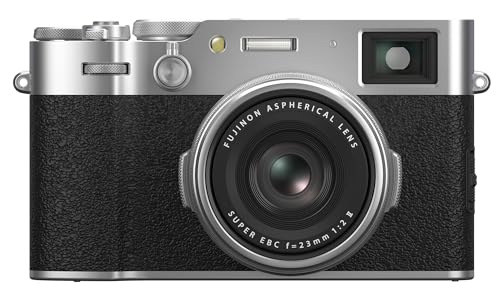
| Fujifilm X100VI | The street flagship | A fixed 35mm-equivalent lens, hybrid viewfinder and film-simulation colour in the body the genre currently revolves around. |
| Sony RX100 VII | The invisible zoom | A 24–200mm optical range and relentless tracking focus inside a shell nobody in the crowd will remember. |
| Canon PowerShot G7 X Mark III | The friendly candid compact | A bright zoom and warm colour in a camera so unthreatening that subjects keep living in front of it. |
| DJI Osmo Pocket 3 | The walking-cinema pocket gimbal | A stabilised camera on a tiny gimbal that turns a street walk into smooth, watchable documentary footage and stills. |
| Nikon Z30 | The small system for street growth | A compact mirrorless body that pairs with small primes for a discreet, upgradeable street kit. |
| Ricoh GR IIIx | The prose-only snap-focus legend | An APS-C sensor and 40mm-equivalent lens in a trouser-pocket slab, with snap focus that fires before thought. |
How Did We Judge Cameras for the Street Rather Than the Studio?
Every candidate faced a reflex audit. From pocket to exposed frame — wake, compose, focus, fire — how many tenths of a second, and how many decisions, stand between the photographer and the moment? Cameras with instant wake, pre-focus strategies and controls that fall under the fingers without a glance scored at the top, because street scenes do not repeat and rarely announce themselves. Startup lag and menu-dependent shooting were marked as what they are on the street: missed photographs with good specifications.
Presence was scored next, as a physical property. Size in the hand, noise of the shutter, brightness of screens and the general jewellery factor of the body were weighed for their effect on strangers, because a street camera’s first job is to not change the scene it came to record. Black, small and boring scored as virtues here in a way no other genre of this guide permits.
Finally came the rendering question. Street photography publishes in series — a walk, a neighbourhood, a year — so a camera’s native colour and monochrome character were judged as series material: consistent, recognisable, and strong enough to need little correction at midnight after a long walk. Cameras that demand an hour of grading per outing quietly tax the habit that makes street photographers good, which is walking again tomorrow.
Why Do Street Photographers Keep Returning to Fixed Lenses?
A fixed lens removes the zoom decision, and with it the half-second in which street moments die. More deeply, it teaches the photographer’s feet and eyes a single geometry: after a month at one focal length, you see frames before raising the camera, because the world starts arriving pre-composed at your distance. That pre-visualisation is the closest thing street photography has to a superpower, and it cannot be bought — only practised, one focal length at a time.
The classic distances each carry a temperament. Thirty-five millimetres, the X100VI’s, is the storyteller’s width: subject plus context, close enough for involvement, wide enough for the street to explain itself. Forty millimetres, the Ricoh’s, is a touch more discreet and detached, the observer’s distance. Twenty-eight, the original GR’s, is immersion — you are in the crowd’s weather, and the frames feel like it. None is correct; each is a commitment that shapes a body of work, which is why fixed-lens cameras anchor this guide and why their sections argue temperament, not just hardware.
Zoom compacts answer with a different virtue: adaptability across a whole walk, from a wide establishing street to a face across it. That is a documentary virtue, and the Sony and Canon below serve walkers who document rather than hunt. The street forgives both philosophies; it punishes only hesitation, whatever lens caused it.
Which Are the Best Compact Digital Cameras for Street Photography Today?
Six instruments, six temperaments: the flagship that defines the moment, the zoom that vanishes, the compact that charms, the gimbal that glides, the small system that grows, and the legend that fits a trouser pocket. Choose by the photographer you recognise in the mirror, not the one in the advertisement.

Fujifilm X100VI — The street flagship
The X100VI is the centre of gravity of contemporary street photography, and the reasons are tactile before they are technical. Aperture ring on the lens, shutter dial on the top plate, exposure compensation under the thumb: the camera is operated by touch, at the waist or the eye, without a screen’s confession of settings. Its hybrid viewfinder lets a street photographer compose through an optical window — the real street, unmediated, with frame lines floating in it — then check the electronic truth with a flick, a duality no rival in this guide reproduces.
The fixed 35mm-equivalent lens sets the working distance at conversational range, close enough that the photographer is a participant rather than a sniper, and the leaf shutter fires with a discretion that borders on silence — in a quiet square, it is closer to a blink than a click. Film simulations supply the series consistency street work craves, from grainy monochrome that flatters harsh noon to muted colour that suits northern light, while in-body stabilisation and a high-resolution APS-C sensor keep dusk frames — the street’s golden shift — entirely viable.
- Lens: fixed 35mm-equivalent, leaf shutter
- Finder: hybrid optical/electronic viewfinder
- Sensor: APS-C, high resolution, stabilised
- Colour: film simulations including strong monochrome
- Role: the genre’s reference instrument
Strengths
- Controls operated blind, by touch, at walking pace
- Near-silent shutter preserves the scene’s indifference
- Rendering gives a walk’s frames one recognisable voice
Trade-offs
- Fixed lens is a commitment some walkers will chafe at
- Scarcity and premium pricing test a beginner’s resolve
- Weather sealing requires the optional adapter ring and filter
Walk a market at opening with it and the method becomes obvious: zone-set the exposure, frame through the optical window, let the crowd compose itself across the lines, fire without the camera ever announcing itself. Subjects rarely notice; when they do, the object’s retro beauty disarms the conversation — people ask about the camera with curiosity rather than suspicion, a social asset no specification sheet lists.
Its honest demand is commitment. Thirty-five millimetres will feel wide to telephoto natives and close to the shy, for exactly as long as it takes to become fluent — most owners say a month of daily walking. Photographers unwilling to serve that apprenticeship should take the zoom picks below without shame; photographers who serve it rarely go back.
Best for: committed street walkers who want one distance, mastered completely. Not suited for: zoom-dependent documentary work or bargain hunters

Sony RX100 VII — The invisible zoom
The RX100 VII practices a different streetcraft: total anonymity plus total range. Its plain black body is the camera equivalent of an unmarked car, and inside it sits an optical zoom from 24mm to 200mm — the whole street, from the wide corner establishing frame to the unrepeatable face across the plaza, without a step taken or a lens changed. For documentary walkers who refuse to let a moment escape for want of focal length, nothing else this size is even a conversation.
Sony’s autofocus is the enabler. Real-time tracking holds a moving subject — the cyclist, the busker, the child escaping a parent — while the photographer composes, and fast bursts mean a stride sequence can be mined for the one frame where gesture and geometry align. The pop-up viewfinder appears for bright days and braced telephoto work, then vanishes to restore the camera’s innocent silhouette.
- Zoom: optical 24–200mm equivalent
- Sensor: 1-inch stacked, fast readout
- Focus: real-time tracking and eye detection
- Finder: pop-up electronic viewfinder
- Role: the documentary walker’s one-pocket kit
Strengths
- Every street distance available without moving or swapping
- Tracking focus rescues motion that defeats fixed lenses
- Utterly forgettable appearance in a crowd
Trade-offs
- Long-end aperture narrows quickly after dark
- Small controls and menus slow deliberate handling
- Default colour needs warming for a signature look
Its signature scene is the festival: the wide frame of the square at 24mm, the performer isolated at 150mm from the same standing spot, the crowd detail at 60mm as the light turns — one camera, one pocket, a complete documentary set. Fixed-lens purists call this indecision; its owners call it coverage, and editors tend to side with coverage.
The trade is the apprenticeship the Fujifilm imposes and the Sony waives: with every distance available, the eye learns none of them completely, and the walker’s framing can stay tourist-loose for years. Discipline must be self-imposed — pick a focal length per walk, some owners advise, and treat the zoom as an emergency service rather than a residence.
Best for: documentary street shooters who value coverage and invisibility. Not suited for: purists building one focal length into instinct

Canon PowerShot G7 X Mark III — The friendly candid compact
The G7 X Mark III’s street weapon is charm. It looks like a holiday camera — because it is one — and that harmlessness is a working tool: café terraces, family neighbourhoods and market stalls continue their lives in front of it in a way they do not in front of a serious black instrument. Canon’s warm colour flatters the people it photographs, which matters on the street more than purists admit, because the walker who shares frames back — at the stall, in the group chat — is welcomed on tomorrow’s walk too.
Its bright zoom, roughly 24–100mm equivalent, covers the candid distances: the wide street scene, the mid-range interaction, the short-telephoto portrait across a table. Brightness is its low-light argument; as evening markets light their lamps, the lens keeps shutter speeds in the safe zone longer than its longer-zoomed rivals, and the tilting screen enables the waist-level composing style — camera low, eyes up, nobody alerted — that street photographers have used since the film era to shoot unobserved.
- Zoom: optical 24–100mm equivalent, bright
- Sensor: 1-inch, stacked design
- Screen: tilts for waist-level and high-angle framing
- Colour: warm, people-first Canon rendering
- Role: the disarming social-street compact
Strengths
- Subjects relax; scenes continue; frames stay honest
- Bright lens owns the evening-market hours
- Waist-level screen work is genuinely discreet
Trade-offs
- No viewfinder for bright midday composing
- Autofocus is a step behind Sony’s tracking tenacity
- Reach ends where distant candids begin
Its natural walk is the neighbourhood round: the baker’s morning queue, dominoes in the square, teenagers inventing dances on the steps — photographed at conversational distances by a camera that reads as part of the furniture. Street photography’s ethics live comfortably here, because the photographer’s presence is neither hidden nor imposed; it is simply accepted, which is the oldest candid method there is.
Walkers whose streets are demonstrations, rush hours and fast crowds should weigh the Sony’s tracking instead. But for the human-scale street — most streets, most days — the Canon’s friendliness is not a soft feature. It is the mechanism by which its frames get made at all.
Best for: social, neighbourhood and evening street photography at close distances. Not suited for: distant candids or fast-action crowd work

DJI Osmo Pocket 3 — The walking-cinema pocket gimbal
The Pocket 3 redefines the street camera as a stabilised eye on a handle. Its three-axis gimbal irons walking motion into a glide, its 1-inch-class sensor sees well into dusk, and its rotating screen flips between horizontal documentary and vertical social framing with a twist. For the growing tribe whose street photography is substantially street film — the walk narrated, the neighbourhood documented in motion — it is not an accessory to the genre but its current purest instrument.
Stills are its second language, and this guide scores them honestly: the Pocket 3 takes perfectly serviceable photographs, wide-angled and gimbal-steady, but its compositional soul is the moving frame. What it returns for that trade is a new street grammar — the tracking shot through a market, the face-follow through a crowd, the reveal around a corner — executed by a device that draws less attention than a phone on a stick, because it is smaller than either.
- Format: gimbal-stabilised camera, pocket-sized
- Sensor: 1-inch class for low-light walks
- Screen: rotating, horizontal and vertical framing
- Tracking: subject and face tracking for walking pieces
- Role: the street documentarian’s motion camera
Strengths
- Walking footage emerges smooth without any rig
- Dusk performance suits the street’s best hours
- Smaller social footprint than a phone gimbal rig
Trade-offs
- Stills are secondary to its video purpose
- Fixed wide view excludes telephoto candids entirely
- Gimbal mechanics deserve gentler handling than a slab camera
Its emblematic user films the city as a continuous sentence: out of the station, through the arcade, across the square, the camera floating at chest height while the walk itself becomes the narrative. Street photography purists may file it under cinema, and they are right — which is why it is here, because the boundary between the two is where much of the genre’s young energy now lives.
Still photographers should treat it as a companion rather than a replacement: the walk filmed on the Pocket and photographed on any other pick in this guide is a complete modern street kit, lighter than most single film-era outfits. Judged as that companion, nothing else in the guide does its job at all.
Best for: street filmmakers and walking-documentary creators. Not suited for: stills-first photographers or telephoto work

Nikon Z30 — The small system for street growth
The Z30 is the street beginner’s system answer: a genuinely small mirrorless body that becomes a street camera by the lens you choose for it. Mount one of Nikon’s compact primes and the combination stays coat-pocket discreet, with an APS-C sensor whose low-light files and shallow depth exceed every fixed-lens pick here except the Fujifilm — at a total kit size that still passes unnoticed on a bus. The street kit, in other words, is assembled rather than bought, and the Z30 is its most affordable honest foundation.
Its screen-first design cuts both ways on the street, and the guide will not hide either edge. The flip screen enables waist-level and overhead framing in the candid tradition, and its touchscreen focus is quick for deliberate scenes. Against that, there is no viewfinder for bright-day work or eye-level discretion, and the body’s creator heritage means its stills ergonomics, while pleasant, are a half-step behind a dedicated photographer’s body. Beginners grow into these truths and route around them; the lens road underneath forgives a great deal.
- Format: APS-C mirrorless, Z mount
- Finder: none — screen and flip-screen composing
- Kit logic: pair with a compact prime for street size
- Colour: Nikon’s calm, natural rendering
- Role: the growable street foundation
Strengths
- Small primes turn it into a true pocket-system camera
- Sensor quality outruns its price class at dusk
- Lens road lets the street kit evolve for years
Trade-offs
- No viewfinder for glare or eye-level discretion
- Street readiness depends on the lens you mount
- Kit zoom form is larger than the fixed-lens picks
Its learning curve is the street apprenticeship in system form: begin with the kit zoom to discover your distance, notice that eighty percent of keepers cluster at one focal length, then buy the small prime that matches it and feel the camera shrink and sharpen at once. That self-knowledge — your distance, measured from your own frames — is worth more than any review’s recommendation, this one included.
Choose it if the street is one of several genres in your future and the budget must serve them all. Choose the Fujifilm if the street is the genre, full stop, and its fixed lens reads as a promise rather than a fence.
Best for: beginners building a discreet street kit inside a growing system. Not suited for: viewfinder-dependent shooters in bright climates
Ricoh GR IIIx — The prose-only snap-focus legend
The GR IIIx is presented without a link, outside this guide’s verified pool, and it is the camera street photographers measure discretion against. An APS-C sensor and a 40mm-equivalent lens live inside a matte slab that fits a trouser pocket and resembles nothing valuable; the camera can be palmed, raised and fired in one motion, and its Snap Focus system — the lens pre-set to a chosen distance, engaging instantly on a full press — removes autofocus from the reflex chain entirely. The result is arguably the fastest photograph in this guide: see it, press, it is taken.
Zone discipline is its curriculum. Owners learn their distances bodily — two metres is an arm and a step, five is across the pavement — set the snap distance to the scene’s geography, and shoot from the hip or the chest with the frame pre-imagined. Its high-contrast monochrome has become a recognisable dialect across street portfolios, and its positive-film colour carries daylight with a restraint that suits documentary honesty.
- Lens: fixed 40mm-equivalent
- Focus: snap focus at preset distances, plus full AF
- Sensor: APS-C in a trouser-pocket body
- Modes: celebrated high-contrast black and white
- Role: the reflex instrument of the genre
Strengths
- Fastest see-it-take-it reflex in this guide
- Large-sensor quality with zero visual presence
- Snap focus turns zone technique into muscle memory
Trade-offs
- No viewfinder; framing is screen or instinct
- Battery endurance is the genre’s shortest here
- Fixed 40mm is the only distance it will ever know
Set it against the X100VI and the genre’s two churches face each other: Fujifilm’s camera is an instrument to be seen holding, operated by dials, loved as an object; Ricoh’s is a rumour of a camera, gone before the subject’s expression changes. Both congregations produce masters. The choice is temperamental anthropology — do you photograph better as a participant with a beautiful tool, or as a ghost with a fast one?
Availability runs through the usual new and used channels on your own sourcing, and prices reflect the cult. For the walker whose whole method is invisibility at arm’s length, no premium in this guide buys a more exact fit; for everyone else, it remains the benchmark that explains what the word discreet actually means.
Best for: instinctive, close-range street purists who shoot by zone and reflex. Not suited for: viewfinder shooters, zoom users or long days on one battery
How Do the Six Street Cameras Compare Side by Side?
| Camera | Distance | Discretion method | Signature output |
|---|---|---|---|
| Fujifilm X100VI | 35mm fixed | Beauty that disarms | Film-toned series stills |
| Sony RX100 VII | 24–200mm zoom | Anonymity and distance | Complete documentary sets |
| Canon PowerShot G7 X Mark III | 24–100mm zoom | Harmless holiday looks | Warm evening candids |
| DJI Osmo Pocket 3 | Wide, gimbal | Smaller than a phone rig | Gliding street film |
| Nikon Z30 | By chosen lens | Small body, small prime | Growing system street work |
| Ricoh GR IIIx | 40mm fixed | Total invisibility | Snap-focused monochrome |
Every row is a theory of how a stranger lets you photograph them: charmed, unaware, unoffended, filmed, or never noticing at all. Pick the theory you can sustain for a year of walks.
How Do You Practise Zone Focus and Shooting From the Hip?
Zone focus is learned with the feet before the camera. Pace out your working distances in a hallway — one, two, three, five metres — and photograph a patient friend at each until your body’s estimates stop lying. Then set the camera’s manual or snap distance to the geography of your scene, choose an aperture narrow enough to hold a band of sharpness around it, and let subjects walk into the zone rather than chasing focus after them. The technique is a century old because it works at the speed streets actually happen.
Hip shooting adds the second skill: framing without the frame. Hold the camera at waist height, lens level, and learn its field of view by comparing hip frames with eye frames of the same scene until the invisible rectangle becomes predictable. Modern tilting screens offer a halfway house — waist-level viewing with actual composition — which the Canon and Nikon above both support, and which most contemporary street photographers quietly prefer to true blindness.
Practise both on unpeopled geometry first: bollards, bicycles, doorways, dogs belonging to you. The ethics and the technique both improve when the early failures are of furniture. By the time strangers enter the zone, the hands should be boring and the attention free for the only thing that matters — watching the street arrange itself.
What Are the Ethics and Courtesies of Photographing Strangers?
Laws vary by place, and every street photographer should learn their own city’s rules rather than importing another’s. But courtesy travels better than law. The working code most veterans describe is simple: photograph the public life of public places honestly, never mock, never menace, and treat a subject’s objection as information rather than insult — a lowered camera and a smile resolve nearly every encounter that a argument would immortalise.
Children, people in distress and people in private grief sit outside the genre’s charter for most practitioners, whatever the law permits. The street offers infinite willing theatre — crowds, performers, fashion, weather, joy — and a portfolio built without the contested frames loses nothing worth keeping. Photographers who share their frames, carry prints or cards, and answer questions about their camera convert suspicion into collaboration often enough that the Fujifilm’s beauty and the Canon’s harmlessness score as ethical features in this guide, not merely social ones.
Publishing deserves the same care as capture. A frame that was fair to take can be unfair to caption, crop or context-shift into mockery. The street photographer’s reputation in their own neighbourhood is a working asset built over years of walks; protect it like equipment, because unlike equipment it cannot be re-bought.
How Should You Set a Street Camera for a Whole Walk?
Decide the walk’s grammar before leaving home: one focal length or a declared pair, one rendering — a simulation, a profile, a monochrome commitment — and an exposure strategy matched to the light’s direction of travel. Aperture priority with a floor on shutter speed suits most walkers; zone and manual suit the practised; fully automatic suits nobody who intends to repeat a success on purpose. The cameras here all allow a custom mode or its equivalent; save the walk’s recipe there and the camera wakes already dressed.
Meter for the light you are walking toward. Streets alternate glare and shadow by the block, and the discipline of exposing for the sunlit side — letting shadows fall to atmosphere — gives street series their graphic spine. Highlights preserved are a scene kept; highlights blown are a white hole where the story was. Every pick here offers highlight-weighted habits or exposure compensation under a thumb; learn yours before the walk, not during it.
Finally, set the review screen to near-invisible. Chimping — inspecting every frame — breaks the walk’s rhythm and advertises the camera to the crowd. Shoot the scene, trust the recipe, review at the café. Street photography is a walking meditation with occasional evidence; the settings that protect the meditation are photographic settings too.
How Do You Choose a Neighbourhood and a Route for a Walk?
Street photography begins as geography. The productive neighbourhood is not the famous one but the legible one: a place with a daily rhythm you can learn — market mornings, school-run crossings, the café corner that fills at five — because repetition is what turns scenery into subjects. Beginners should choose ground they can reach weekly without expedition planning, since the genre’s education is cumulative and local: the tenth walk down the same street teaches more than the first walk down ten streets, because you finally see what changed, and change is the street’s content.
Route design is a quiet craft. Walk the sun’s side in the morning and the shadow’s side at noon; plan loops that pass the same corner at different hours, because a corner is a theatre with a rotating cast and lighting designer. Note where people wait — bus stops, bakery queues, hospital doors — because waiting is the street’s most photographic verb, and where people cross light: the gap between buildings, the underpass exit, the arcade’s mouth, where a subject steps from shadow into a blade of sun and the photograph makes itself for whoever was standing ready.
Readiness is the route’s final element. The cameras in this guide reward the walker who arrives configured: recipe set, distance chosen, battery unworried. Route knowledge converts that readiness into position — you are at the crossing before the crowd’s surge, at the café before the argument of gestures at the corner table — and position, veterans insist, is ninety percent of the genre, with the shutter press a formality the prepared have already earned.
What Does a Street Photographer Do When the Light Turns Bad?
Bad light is a scheduling opinion, not a fact. Overcast noon flattens the street into a softbox that flatters faces and forgives exposure — the portraitist’s weather, perfect for the G7 X’s warm colour and for working close without squinting subjects. Rain is the genre’s secret gala: umbrellas become geometry, pavements become mirrors, neon doubles itself in the wet asphalt, and the crowd thins to the committed. The cameras here are not all weather-sealed, so the rain kit is a cloth, a bag and a photographer’s indifference to personal dampness — but the frames are worth the socks.
Harsh midday sun, the light beginners curse most, is a graphic gift: hard shadows become architecture, subjects split into lit and unlit halves, and the exposure discipline of protecting highlights turns the street into a chessboard of black and white shapes. This is the Ricoh’s monochrome weather and the Fujifilm’s contrast simulations’ finest hour. The walker who learns to love noon owns four extra hours a day that fair-weather photographers spend in cafés waiting for golden permission.
Darkness changes the cast rather than ending the play. Shop windows, bus interiors, phone screens and street lamps light the evening street in pools, and the method becomes theatrical: find the lit stage, compose its frame, wait for an actor to enter it. The larger sensors of the Fujifilm and Nikon and the bright lens of the Canon earn their keep here, but the technique — pre-composed stages, patient waiting — matters more than the hardware, as it has since the genre’s film ancestors shot slower emulsions than any sensor here would tolerate.
How Do You Build a Series From a Year of Walks?
A series is what separates the street photographer from the street wanderer, and it is built by editing more than by shooting. The year’s walks produce thousands of frames; the series is the twenty that argue with each other — the same corner across seasons, the same gesture in different crowds, the neighbourhood aging in public. Choosing one rendering and one distance, as the fixed-lens picks enforce, is the series’ grammar decided in advance; the walker’s job across the year is vocabulary: frames that extend the argument rather than repeat it.
Sequence on a wall or a screen monthly, not yearly. Print the candidates small, live with them, and notice which frames keep asking questions — those are the series’ spine. The Instax habit from this site’s other guides applies here in spirit: physical prints reveal a body’s coherence in a way a scrolling folder hides, and the street series, destined usually for a zine, a wall or a small book, should be edited in the physical form it will finally take.
Know when the series is finished, which is when new walks stop changing it. A finished series is not a failure of curiosity but its proof: you have learned what that neighbourhood, at that distance, in that light, had to tell you. The next series begins with a changed variable — a new district, a new hour, night instead of day — and the same camera, because the genre’s deepest pleasure is watching one instrument keep finding new worlds inside a method that never changes.
How Should You Carry, Protect and Power a Camera in a Crowd?
Crowds are a camera’s physical environment as much as its subject. Carry close and boring: a strap worn across the body rather than around the neck, the camera resting at the hip where a hand can cover it in a crush, nothing dangling that invites a snatch or a swing into a stranger. The compact sizes in this guide are a security feature in themselves — a camera that lives inside a closed coat between scenes is a camera that finishes the year with its owner.
Power discipline is street discipline. Small cameras sip and die in proportion to their screens, so the walker’s kit holds a spare battery in the same pocket every day, swapped by touch at a café stop before it becomes an emergency during the evening’s best light. Cards follow the same logic: one large card is a single point of failure for a month of walks, so rotate two, and let the evening’s transfer ritual — files copied, card returned — be the walk’s closing ceremony rather than a monthly archaeology.
Weather and wear finish the briefing. A simple rain sleeve or even a clear bag keeps a non-sealed body working through the showers that produce the genre’s best reflections; a lens cloth lives in the pocket the camera does not, because breath-fog and drizzle find front elements at the decisive corner with uncanny timing. None of this is heroic equipment. It is the housekeeping that keeps a small camera alive through a year of crowds, which is the only credential the street ultimately respects.
How Do Markets, Parades and Rush Hours Demand Different Street Manners?
The market is the street’s studio: slow, dense, repetitive, full of permission hiding in plain sight. Work it like a regular — buy something, learn names, photograph the stalls before the people — and the camera becomes furniture within a month of Saturdays. The fixed-lens picks shine here because the distances are conversational and the light, bouncing off awnings and produce, is the soft chaos that film simulations and warm Canon colour were born to render. The market rewards the photographer who returns, and punishes the one who extracts.
The parade is the street’s theatre: fast, loud, costumed, and populated by people who dressed to be seen, which changes the ethics and the technique together. Consent is worn on the sleeve here, distances close happily, and the challenge becomes editorial — finding the quiet frame inside the spectacle, the tired dancer at the kerb, the child asleep on a shoulder above the drums. Burst modes and tracking focus, the Sony’s party tricks, earn their keep; so does the discipline of shooting the edges, where the parade’s truth queues for water and fixes its shoes.
Rush hour is the street’s river: nobody is performing, everybody is commuting, and the photography is about flow — the geometry of crossings, the choreography of platforms, faces lit by phones and departure boards. Work it from stillness: plant at the river’s bank, pre-compose, and let the current deliver subjects through your frame at the pace the zone-focus method was invented for. The Ricoh’s snap reflex and the Fujifilm’s optical window are the rush hour’s native instruments, and the walker who masters the river owns the city’s most inexhaustible subject.
What Does a Year of Carrying One Small Camera Teach That Gear Cannot?
The first lesson is photographic humility: most frames fail, the keepers are rare, and the ratio improves with mileage rather than money. A year of one camera burns this in because there is nothing to blame and nothing to upgrade — the same lens, the same rendering, the same hands — so improvement, when it comes, is unmistakably the photographer’s. That attribution is the making of artists in every genre, and street photography, with its uncontrollable subjects, teaches it faster than any other.
The second lesson is local knowledge as an aesthetic. After a year your streets are not backdrops but relationships: you know which corner floods with light at four, which café argues most gesturally, which market porter has decided you are harmless. The photographs change character accordingly — from taken to given — and viewers feel the difference without naming it. No lens renders trust; only time does, and time is the one accessory every camera in this guide was sized to let you spend, because each is small enough to be there while you spend it.
The final lesson is that the camera disappears. Somewhere in the year, the dials stop being decisions, the distance stops being a setting, and the instrument becomes what the masters always claimed it was: a way of paying attention that occasionally produces evidence. Buy any pick here, carry it for that year, and the street will have taught you the only curriculum it recognises — itself, daily, at walking pace.
How Do You Ask a Stranger for a Street Portrait?
The asked portrait is the street’s other genre, and its method is a compliment with a camera attached. Approach openly, camera visible, with the specific observation that made you stop — the coat, the hands, the light on their stall — because specificity is what separates a portrait request from a suspicious one. Offer the terms plainly: a minute of their time, the frame shown on the screen, a copy sent if they want it. Most refusals are graceful, many acceptances are delighted, and both outcomes cost the photographer nothing but the asking.
Work fast once they agree, because a stranger’s patience is a loan with a short term. Have the recipe already set — this is where the walk’s preparation pays — take three frames rather than thirty, show the best one immediately, and thank them like the collaborator they were. The Fujifilm’s beauty opens these conversations, the Canon’s harmlessness keeps them relaxed, and an Instax-style print, where a companion camera provides one, turns the encounter into the day’s best story for both parties. Street portraits gathered this way build the neighbourhood trust that candid work quietly depends on.
What Should Happen to a Street Photograph After the Walk Ends?
The walk’s second half happens at a table. Transfer the files the same day, while the route is still in your legs, and make the first selection brutally — keepers, maybes, and the honest rest — because distance is the editor’s only real tool and it evaporates by next week. Look for the frames that argue with each other, the gesture that rhymes across two corners, the stranger who appears twice in the city’s choreography. A street day rarely contains a masterpiece; it frequently contains a paragraph of a series, and only same-day editing can hear it.
Then let the maybes age. Street photography’s cruellest editing truth is that the frame you loved on the day is often the frame the year discards, while a quiet image you passed over becomes the series’ hinge. Revisit the folder monthly with the wall test — small prints, lived with, judged by whether they keep asking questions — and let time do the senior editing. The cameras here make the capture cheap; the photographer’s maturity is measured by how slowly, and how well, they decide what the capture meant.
How Do You Photograph Your Own Neighbourhood as if You Were a Stranger?
Familiarity is the street photographer’s home-field disadvantage: the eye stops reporting what it has already filed. The counterexercise is the stranger’s protocol — walk your own streets at an hour you never use, take the route a visitor would take from the station, and photograph only what you would photograph in a foreign city: the signage, the breakfast ritual, the local geometry of waiting. Photographers are reliably startled by how exotic their own postcode becomes at dawn with a camera in hand.
Constraints sharpen the trick. One focal length, one hour, one theme — doors, hands, red, reflections — imposed on streets you could navigate blindfolded, forces the seeing that routine suspended. The fixed-lens picks formalise this discipline, but any camera here can be taped into it for a morning. Repeat the exercise quarterly and the neighbourhood becomes the longest series you own: the place changing, the photographer changing, the same small camera witnessing both, which is as complete a definition of street photography as this guide can offer.
How Do You Handle a Subject Who Objects to Being Photographed?
It will happen, and how it goes becomes part of your education and your neighbourhood reputation. Stop shooting first — the camera comes down before the conversation starts — and listen to what the objection actually is, because most objections are questions in disguise: who are you, why me, where will it go. Answer all three plainly, show the frame if asked, and offer deletion without being asked twice. A deleted frame costs a photograph; an argument costs the street, and the street is worth more than any single image in it.
Most encounters end in a handshake and, surprisingly often, in a portrait — the objector, reassured, becomes a collaborator, which is why veterans treat objections as introductions that started badly. The rare genuinely hostile encounter ends with distance, calmly taken: walk away, keep the camera lowered, and let the neighbourhood watch you be the reasonable one. Photographers who handle objections gracefully find their streets opening over the years; photographers who win arguments find their streets quietly closing, one remembered confrontation at a time.
What Mistakes Do Street Photographers Keep Making?
Shooting from too far away is the eternal first error, usually dressed as respect. Telephoto street frames look like surveillance because they are — compressed, detached, taken without the photographer’s presence being risked or offered. The genre’s masters worked close, with wide lenses and visible humanity, and the fixed-lens picks in this guide exist to make closeness a habit rather than a resolution.
Collecting strangers’ backs runs second: the anonymous rear view is the easiest frame on the street and the least saying. Turn around; photograph faces, gestures, interactions — or accept the discipline of waiting until the scene’s geometry justifies the back it includes. A walk’s keepers should survive the question every editor asks: why this frame, of all the frames the street offered?
Finally, changing the recipe daily. A new simulation, a new focal length, a new neighbourhood every outing produces a portfolio of beginnings. The street rewards the monkish: same streets, same light, same distance, until repetition starts revealing what novelty never shows — the neighbourhood’s actual life, and the photographer’s actual eye.
Final Recommendation
For the dedicated street photographer, the Fujifilm X100VI is the complete instrument — tactile controls, hybrid finder, silent leaf shutter and a rendering voice — and it earns the flagship place without a close vote. The Ricoh GR IIIx, sourced on your own, remains the ghost’s alternative and the reflex benchmark. Documentary walkers should take the Sony RX100 VII’s invisible range, social walkers the Canon G7 X Mark III’s evening charm, filmmakers the DJI Osmo Pocket 3’s glide, and beginners the Nikon Z30’s growable foundation.
Then walk. The same route, at the same hour, until the street starts recognising you back — because street photography is the one genre where the camera is the smallest part of the method, and every pick above is finally just a different way of being there when it happens.
Related guides
- Best Digital Cameras for Distance Pictures: Honest Optical Reach, From Pocket Telephoto to Safari Glass
- Best Digital Cameras for Architectural Photography: Perspective Control, Dynamic Range and Honest Wides
Frequently Asked Questions
Is 35mm or a wider lens better for street photography?
Thirty-five millimetres is the classic compromise — subject and setting in balance at conversational distance — and it is the X100VI’s fixed offering for good reason. Wider lenses immerse the viewer but demand closer, braver working distances; longer lenses detach and compress. Most street portfolios in history were built between 28mm and 50mm, so choose within that band by temperament and commit.
Do I need a viewfinder for street photography?
It helps in glare and steadies fast framing, and the hybrid finder is one of the Fujifilm’s genuine luxuries. But the Ricoh’s entire legend is screen-and-instinct shooting, and tilting screens enable the discreet waist-level tradition. A finder is an advantage, not a licence; the genre was practised brilliantly before EVFs and is practised brilliantly without them today.
How do street photographers focus fast enough?
By removing focusing from the moment: zone focus at a preset distance, snap focus on the Ricoh, deep depth of field from smaller apertures, or modern subject-tracking autofocus on the Sony doing the work continuously. Each method pre-decides focus before the scene peaks. The beginner’s takeaway is that street sharpness is a strategy chosen at the café, not a reflex demanded by the instant.
Is it legal to photograph strangers in public?
In many places, photographing people in public spaces is broadly permitted, while commercial use, harassment and certain locations carry their own rules — and the law differs enough between countries and cities that you should check your own rather than trust a guide. Courtesy, as this page argues, is the more portable standard: honest intent, no menace, and grace when someone objects.
What is the best budget way into street photography from this list?
The Nikon Z30 with a small prime is the system route — affordable, discreet and upgradeable — while the Canon G7 X Mark III is the single-box route with no lens decisions at all. Both will be outgrown more slowly than their prices suggest, because street skill accumulates in the walker, and any camera carried daily for a year teaches it.
Related Guides
Continue with compact cameras chosen for their style and colour, compare the fixed-lens rivals in cameras for city walks and travel days, or read zone focus and hip-shooting technique for beginners before your next walk.


