ilcastellomenu.com is reader-supported. When you buy through links on our site, we may earn an affiliate commission.
Where to Buy a Camera for Someone Who Just Wants Lovely Photographs
The best digital cameras for consumer use share one defining trait, and it is not a specification: they produce photographs their owners are proud of without asking those owners to learn anything. This guide is written for the reader who has no intention of studying photography — no courses, no vocabulary of apertures, no weekend workshops — and who simply wants family birthdays, holidays, grandchildren, gardens and dogs to come out looking the way they felt. Every pick below was judged by that reader’s standard: press the button, get the picture, share it tonight. All six are stocked by the usual high-street and online camera retailers, and the Amazon listings are linked throughout.
That standard sounds modest and is actually ruthless. It disqualifies most enthusiast cameras immediately, however brilliant, because a camera that needs its owner to understand it is a camera that will be left in a drawer by February. What survives is a shortlist of machines that hide their intelligence politely: automatic modes that genuinely work, colour that flatters without editing, and shapes that fit the bags and pockets of ordinary life.
Key Takeaways
- This guide is for people who will never study photography — and that is fine.
- The best consumer camera is the one still being used in six months.
- Automatic modes are the product; judge cameras by them, not by manual controls.
- Instant cameras trade files for objects, and families love objects.
- Pretty colour straight from the camera beats power you will never switch on.
- Small enough to bring beats good enough to frame, every ordinary day.
In this guide
Quick Picks
| Camera | Badge | Why it earns its place |
|---|---|---|
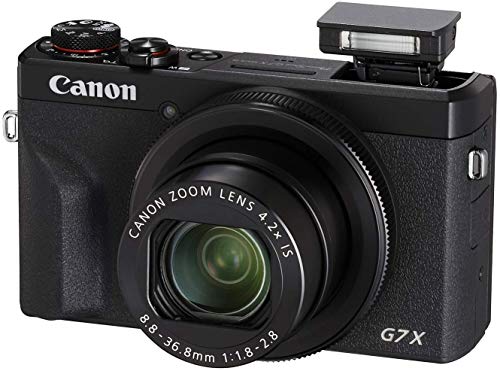
| Canon PowerShot G7 X Mark III | The family favourite | Warm, flattering photographs of people in real rooms, from a camera the size of a deck of cards. |
| Sony ZV-1F | The press-and-please compact | One wide lens, one button philosophy, and video that makes ordinary days look gently cinematic. |
| Fujifilm Instax Mini 12 | The fridge-door camera | Real prints in your hand in minutes — the photograph as a thing to give away, not a file to manage. |
| Polaroid Go Generation 2 | The pocket keepsake maker | The smallest instant camera of its kind, making tiny prints that live in wallets, cards and coat pockets. |
| Fujifilm X100VI | The beautiful object that takes beautiful objects | Film-look photographs with zero editing, from a camera people buy partly to enjoy owning. |
| Canon EOS R50 | The family camera with a future | Automatic today, expandable tomorrow — for households whose photographer might catch the bug after all. |
How Did We Choose Cameras for People Who Will Never Read a Manual?
The testing protocol inverted the usual one. Instead of exploring what each camera could do in expert hands, we restricted ourselves to what it does in careless ones: full automatic everything, camera pulled from a bag at a family lunch, photographs judged on the phone screen they would actually be shared from. Cameras whose automatic modes produced dull colour, missed focus on moving children or demanded a menu visit before the first frame were cut, whatever their reputations among enthusiasts.
The second filter was forgiveness. Ordinary life photographs happen in dreadful light — kitchens at night, restaurants, school halls — among subjects who will not pose twice. The survivors all share a talent for rescuing such scenes gracefully: skin stays skin-coloured, faces stay in focus, and the camera’s idea of a good photograph resembles the family’s idea, which is that everyone looks like themselves on a good day.
The third filter was the six-month test, applied by imagination and by the evidence of every household drawer in the world: will this camera still be coming along in June? Size, simplicity and the pleasure of the object itself decided more places on this list than image quality did, because the finest camera ever made takes no photographs from inside a cupboard.
Why Does “Good Enough Automatically” Beat “Excellent Eventually” for Most Households?
Because the photographs households actually take are unrepeatable and unrehearsed. The toddler’s first steps do not wait for a mode dial; the candle-blowing happens once, in the dark, amid noise. A camera whose excellence requires preparation is a camera optimised for photographs that were never the point. Consumer photography’s real subject is the unposed life, and its real deadline is the half-second between seeing and losing the moment.
This is also why the phone remains the honest competitor throughout this guide, and why the picks were chosen where phones genuinely falter. Phones are magnificent in daylight and increasingly clever at dusk, but they still smear the indoor birthday, flatten the candlelit face, and turn the school play into a bright rectangle of strangers. The cameras below earn their bag space exactly at those moments: real lenses gathering real light, sensors sized for rooms rather than for specifications, and — in the instant cameras’ case — an output no phone can produce at all, a physical print in a child’s hand before the party ends.
Notice what this argument does not claim. It does not claim these cameras will make you a photographer, interest you in photography, or reward study — several of them actively refuse to. It claims they will make the photographs you already take, of the people you already love, visibly better on the days that matter, while asking nothing of you but presence. For the consumer reader, that is not a compromise position. It is the entire product.
Which Are the Best Digital Cameras for Consumer Life, From Birthdays to Beach Weeks?
Two compacts for the handbag and the jacket, two instant cameras for the fridge door and the wallet, one beautiful fixed-lens machine for the aesthete who denies being one, and one system camera for the household hedging its bets. The right pick is the one whose description sounds like your actual weekends.

Canon PowerShot G7 X Mark III — The family favourite
If this guide had to leave one camera in a thousand family kitchens, it would be this Canon, because it understands the family photograph’s true brief: people, indoors, in imperfect light, wanting to look like the version of themselves they recognise fondly. Its lens is bright where it matters, gathering the light of restaurants and front rooms without flash’s flattening glare, and Canon’s colour science — the accumulated house style of decades of family cameras — renders skin warmly and kindly straight from the camera, with no editing shift required before sharing.
The size is the second half of the argument. It rides in a handbag, a coat, a father’s jacket through the school play, present for the moments that constitute family history precisely because it never required a decision to bring it. Its screen flips up for the group selfie with nobody cropped out, its video is good enough for the grandparents’ tablet, and its automatic mode is so reliable that the camera can be handed to any relative — the universal family test — and returned with good photographs on it.
- Sensor: 1-inch, with a bright lens for indoor light
- Colour: warm, people-first rendering with no editing needed
- Screen: flips up for group selfies and video diaries
- Size: handbag and jacket-pocket class
- Role: the default family camera
Strengths
- People look wonderful in ordinary rooms, automatically
- Small enough to be present for unplanned moments
- Anyone in the family can use it within a minute
Trade-offs
- Zoom reach is modest for sport and wildlife
- No viewfinder for the brightest beach days
- Enthusiasts will find its depths deliberately shallow
Hand-me-down value is where this camera quietly wins. Family cameras migrate: to the teenager for the school trip, to the grandparent whose phone confuses them, to the cousin starting a small business who needs product photographs that do not embarrass. The G7 X survives these migrations because nobody needs training to inherit it, and its photographs stay recognisably good in every pair of hands. A consumer camera’s real lifespan is measured in owners, and this one’s is long.
Buy it as the household default. The households that regret it are the ones who secretly wanted a hobby — and for them, the R50 at the end of this list is waiting.
Best for: families wanting better photographs of real life with zero learning curve. Not suited for: distant sport, wildlife or aspiring technicians

Sony ZV-1F — The press-and-please compact
Sony built the ZV-1F by subtraction, and the subtraction is the kindness. One fixed wide lens — no zoom to fumble. A screen that opens sideways for filming yourself. A button that blurs the background, another that puts a product held to the lens into instant focus for the millions now selling, reviewing or simply showing things to the camera. It is a camera designed by watching how ordinary people actually use cameras in this decade, then removing everything else.
The wide lens deserves explanation, because it looks like a limitation and behaves like a liberation. At arm’s length it frames you and your surroundings — the market stall, the kitchen project, the friends on the bench — which is the framing social life actually uses. Indoors it swallows whole rooms. And because there is nothing to zoom, there is nothing to decide: the photograph is about where you stand, which is where photography’s fun was hiding all along.
- Lens: fixed wide-angle, no zoom decisions
- Screen: side-opening for self-filming
- Buttons: one-touch background blur and product focus
- Audio: built-in directional microphone for voices
- Role: the social-life compact
Strengths
- Almost nothing to learn, adjust or get wrong
- Superb for talking-to-camera and showing objects
- Wide framing suits rooms, groups and arm’s-length video
Trade-offs
- No zoom: distant subjects stay distant
- Fixed lens will frustrate anyone who discovers framing ambitions
- Stills photographers get less than video-first users
Viewed through the consumer lens a second time, the ZV-1F is the camera of the show-and-tell economy: the home baker filming the crumb, the grandparent video-calling with a camera that flatters, the market seller whose listings suddenly look trustworthy. Its talents look narrow until you count how much of ordinary visual life is now exactly this — a person, a thing, a camera at arm’s length — at which point the narrowness reads as aim.
Buy it if your camera use is mostly you, your people and your projects at conversational distance. The family all-rounder above covers more ground; this one covers its own ground better.
Best for: social video, selling, showing and everyday arm’s-length life. Not suited for: holidays built around distant views or wildlife

Fujifilm Instax Mini 12 — The fridge-door camera
The Instax Mini 12 makes the most radical offer in consumer photography: no files at all. Press the button and a small print develops in your hand — imperfect, glowing slightly, utterly physical — and begins its real life on a fridge door, in a birthday card, pinned above a desk, carried in a wallet until its corners soften. In a decade when family photographs accumulate by the thousand in clouds nobody opens, the Instax’s scarcity is its genius: twelve frames in a pack means each one is chosen, and the choosing is the pleasure.
Operation could not be simpler, which is why it thrives in hands aged six to ninety-six. Automatic exposure judges the light; the lens twists on and into its close-up mode for the desk-distance shots parties generate; the prints are small, forgiving and instantly legible as keepsakes rather than documents. At weddings it becomes a guest-book with faces. At children’s parties it is entertainment, gift and favour in one device. Grandparents, notably, need no instruction and no app password — the technology’s entire interface is a button and a slot.
- Output: physical instant prints, developed in minutes
- Operation: fully automatic, one-button philosophy
- Close-up: twist lens setting for arm’s-length subjects
- Running cost: film packs, budgeted like party supplies
- Role: the keepsake machine
Strengths
- Photographs become objects people keep for years
- No screens, accounts, transfers or storage to manage
- Delights every age group without a word of tuition
Trade-offs
- Every frame costs film — spontaneity has a meter running
- No digital copy exists unless you scan the prints
- Quality serves memory, not enlargement or scrutiny
Think of it as an archive in the oldest sense. Ask a family where their photographs from fifteen years ago are, and watch the pause — dead phones, lapsed clouds, a hard drive in a drawer. Then look at the fridge, the shoebox, the album from the Instax era of any household that owned one: present, browsable, owned. The Mini 12 is the only pick in this guide whose output is guaranteed findable in 2040, and for family memory that guarantee outranks every specification on this page.
Buy it alongside a digital camera, not instead of one — it is the household’s memory made tangible, while the digital handles the record.
Best for: parties, grandparents, children and anyone who keeps prints. Not suited for: holidays where every scene deserves a file

Polaroid Go Generation 2 — The pocket keepsake maker
The Polaroid Go shrinks the instant idea until it fits where cameras never go: a coat pocket, a small bag, the glovebox. Its prints are miniature — roughly half the Instax’s size — and that tininess is their charm economy: a photograph small enough to live inside a phone case, a notebook’s pocket, a lunchbox as a surprise. Where the Instax builds displays, the Go distributes tokens, and the two instant philosophies are different enough that some households happily own both.
Polaroid’s film character is the other half of its identity. The colours lean dreamy and slightly unpredictable, the frames carry the famous white border that has signified “keepsake” for generations, and the whole object feels like memorabilia at the moment of creation rather than decades later. The camera itself is rechargeable rather than battery-fed, offers a selfie mirror and simple double-exposure playfulness, and asks, like its Fujifilm rival, essentially nothing of its operator.
- Output: miniature instant prints with classic borders
- Size: the smallest instant camera in its class
- Power: rechargeable battery, charged like a phone
- Character: soft, nostalgic colour by design
- Role: the pocket token-maker
Strengths
- Goes everywhere a larger instant camera stays home
- Prints are sized for wallets, cards and phone cases
- The object itself is a gift-grade piece of design
Trade-offs
- Miniature prints reward sentiment, not detail
- Film character is a taste — dreamy, not faithful
- Per-print cost is the highest of the instant pair
Socially, these little prints carry real currency. The Go’s prints are small enough to give away without ceremony, and giving photographs away — to the new friend, the kind stranger, the cousin emigrating next month — turns out to be a nearly lost pleasure that this camera restores at pocket scale. Owners describe it less as a camera than as a way of leaving rooms slightly warmer than they found them, and in a consumer guide that values outcomes over specifications, that is a legitimate and purchasable virtue.
Choose it over the Instax when portability and charm outrank print size and value; choose the Instax for children’s parties and wall-building. Both are honest; they are simply different sizes of joy.
Best for: travellers, gifters and pocket-carry romantics. Not suited for: displays, detail or anyone counting cost per frame

Fujifilm X100VI — The beautiful object that takes beautiful objects
The X100VI is the indulgence of this list, and it earns its place on consumer terms, not enthusiast ones — which surprises people. Yes, it has dials and a devoted following, but strip the mythology away and its consumer offer is simple: photographs with a finished, film-like beauty straight from the camera, with no editing, no presets to buy and no skills to acquire, from an object so handsome that owners carry it the way they wear a good watch. Its fixed lens means there is literally nothing to zoom and nothing to change; its colour profiles mean the “look” other people chase in apps is simply what its files look like.
The fixed wide lens, again, is a feature wearing a limitation’s coat. It frames life at roughly the width human social vision uses — the table, the street, the room — and it forces the only photographic technique this guide endorses for non-photographers: walk a step closer. Everything else the camera handles, including a small built-in flash for the evening party and a leaf-quiet shutter that never makes a room feel photographed at.
- Format: fixed-lens compact with a large APS-C sensor
- Colour: film-inspired profiles, finished files immediately
- Controls: tactile dials, usable without menus or study
- Flash: small built-in unit for evening gatherings
- Role: the aesthete’s one camera
Strengths
- Files look art-directed with zero effort after the fact
- Carrying it is a pleasure, so it actually gets carried
- Nothing to upgrade, extend or deliberate about
Trade-offs
- Premium price for a camera that deliberately does less
- Scarcity makes it genuinely hard to buy at times
- Fixed lens excludes zoom subjects permanently
Honesty matters here about why people buy beautiful tools at all. A camera bought partly as an object — like the good fountain pen or the mechanical watch — gets used partly because owning it is enjoyable, and usage is the only metric this guide ultimately respects. The X100VI’s owners photograph more, not because they studied, but because the camera keeps inviting itself along. If that invitation is what your household’s photography has been missing, the premium is not for specifications. It is for attendance.
Buy it if you love how it looks and how its photographs look, in that order, and let the enthusiasts argue about the rest.
Best for: design-lovers wanting gorgeous everyday photographs without a hobby. Not suited for: zoom subjects, tight budgets or the impatient buyer

Canon EOS R50 — The family camera with a future
The R50 closes the list as the hedge — the consumer camera for the household that means it when it says “no hobby, thanks,” but has noticed one member lingering over photographs a little longer than the others. Bought as an automatic camera, it behaves impeccably as one: Canon’s guided interface speaks plain language, the autofocus finds the children’s eyes without being asked, and the kit lens covers the family’s focal range from group shots to the school stage. Nothing about its day-one experience betrays the enthusiast machine sleeping inside it.
That sleeping machine is the argument. The R50 belongs to Canon’s RF system, which means the second lens — the portrait lens that transforms family photographs, the telephoto that reaches the match — exists, affordably, the day somebody wants it. Its video serves the family archive properly, its screen flips for the group selfie and the teenager’s video diary alike, and its resale and hand-me-down value inside the family stay high because the system around it is the industry’s common language.
- Format: APS-C mirrorless, interchangeable Canon RF lenses
- Guidance: plain-language assisted interface
- Focus: automatic eye detection for people and pets
- Video: strong family and social video capability
- Role: the automatic camera with an upgrade path
Strengths
- Fully automatic competence from the first evening
- A lens system waiting if anyone’s interest wakes
- Holds value and usefulness across family generations
Trade-offs
- Bigger than the compacts — a bag, not a pocket
- Its potential is wasted, harmlessly, if nobody ever wakes it
- Lens temptation is a real future budget line
Family photographers tend to emerge around this camera — and in real households that person is rarely the purchaser. It is the fourteen-year-old who borrows the camera for a school project and returns it reluctantly; the parent who starts by photographing birthdays and ends by booking a portrait session spot at golden hour. The R50 is the only pick here that can follow that person all the way — and the households that buy it are buying insurance against their own underestimation of themselves.
Buy it when the budget allows one camera to serve both the present family and the possible photographer inside it. Otherwise, the G7 X above is the purer consumer answer.
Best for: households wanting automatic ease now and options later. Not suited for: anyone certain the camera must fit a pocket
How Do the Six Consumer Cameras Compare Side by Side?
| Camera | Output | Carry | Learning required |
|---|---|---|---|
| Canon PowerShot G7 X Mark III | Digital files and video | None | |
| Sony ZV-1F | Digital files and video | None | |
| Fujifilm Instax Mini 12 | Instant prints | Bag | None |
| Polaroid Go Generation 2 | Mini instant prints | Coat pocket | None |
| Fujifilm X100VI | Digital files | Strap | None, though it rewards curiosity |
| Canon EOS R50 | Digital files and video | Bag | None today, optional forever |
The learning column is deliberately monotonous. It is the point of the guide, printed as a table so it cannot be missed: every camera here can be owned happily by someone who never learns a single photographic term.
How Do You Get Photographs Off These Cameras Without a Computer Degree?
The digital four all speak to phones wirelessly, and the routine worth building is the same for each: connect once at home, transfer the day’s favourites in the evening, and let the phone do what phones are for — sharing, backing up, sending to grandparents. Set the camera to send modest-sized copies for messaging and keep the full files on the card until a computer or a printing service wants them. The households that share camera photographs daily are never the technical ones; they are the ones who practised the transfer twice before the holiday.
Printing deserves its paragraph, because consumer photographs reach their final form on paper more often than any other kind. The high-street and online print services all accept uploads from a phone, which means the evening transfer quietly becomes the print pipeline too: the birthday photograph shared at nine can be ordered as a framed print at ten past. The instant cameras simply skip the queue — their prints are the pipeline, the product and the delivery mechanism in a single warm rectangle.
Storage, finally, in one merciful sentence per household: keep the camera’s card until the phone backup confirms, let the phone’s cloud do its automatic work, and once a year — New Year is the traditional slot — gather the year’s best into one album, digital or printed, because a decade of family life deserves better than a camera roll’s archaeology.
What Does a Year of Family Photography Actually Ask of a Camera?
Walk the calendar. January is indoors: low light, lamps, faces around tables — the bright-lensed compacts’ home ground. Spring brings the garden, the school sports day at a distance that humbles fixed lenses and rewards the R50’s kit zoom, and the first communions and confirmations where a quiet, respectful camera matters. Summer is the beach and the holiday, where the instant cameras become social equipment and where every digital pick here must survive sand-adjacent handling, bright screens and being handed to enthusiastic relatives.
Autumn is the school play and the harvest festival, the hall photographs that defeated your phone last year; winter closes with the candlelit season — carol services, Christmas morning’s dim gold light, the group photograph with the self-timer on the bookshelf. No single specification carries a camera through that year. What carries it is the combination this guide selected for: automatic competence in bad light, presence through portability, and output the family actually looks at again. Judge any camera you are considering against your own last December before you judge it against anyone’s review — December is the consumer camera’s true examination hall, and it is set by your life, not by a laboratory.
How Do These Cameras Handle the Family Holiday, Day by Day?
Day one is the journey, and it belongs to whichever camera is in the hand luggage’s top pocket rather than the packed bag — in this list, the compacts and the Go, which is why portability keeps winning arguments that image quality tries to start. The airport, the train window, the first strange street: holiday photography begins before the hotel, and the camera still in transit takes none of it. Day two is the sightseeing rhythm, wide scenes and group photographs in hard sunshine, where every pick here performs happily and where the honest advice is shade for faces at noon and the camera put away at lunch — holidays photographed continuously are holidays experienced partially, a trade the consumer reader, of all readers, should refuse.
The middle days are where the picks diverge into their personalities. The instant cameras become the holiday’s social currency, prints traded with new friends and taped into the travel journal while the digital files wait for a winter evening nobody schedules. The G7 X and ZV-1F take the evenings — the taverna light, the promenade at dusk — where phones start their smearing and the bright lenses justify every gram of their presence. The R50, if it came, takes the excursion: the boat trip, the viewpoint, the one morning its owner rises early on purpose, an event the family will discuss for years.
The last day tests the transfer habit. Photographs backed up to the phone before the journey home are photographs that survive the journey home; the card that travels in the lost bag takes its holiday with it. And the week after tests the household’s whole philosophy: the prints ordered, the Instax frames distributed, the album started while the tan is still argument-grade. A consumer camera’s holiday work is finished not at the airport but at the fridge door, and the cameras in this guide were chosen to still be working — as objects, prints and shared files — long after the suitcase is unpacked.
What About Grandparents, Children and the Relatives Who Borrow Everything?
A household camera lives a communal life, and designing for that life changes what “best” means. Consider the borrow test: the camera is lent for a school trip, a cousin’s christening, a neighbour’s house sale. Every pick here passes it in a specific way — the instant cameras because there is nothing to misconfigure, the compacts because automatic mode forgives strangers, the R50 because its guided screens explain themselves to a borrower at midnight. Cameras that fail the borrow test — customised, menu-deep, precious — become household tyrants, photographed with only by their owners and resented quietly by everyone else.
Children deserve their own paragraph, because the family camera is where most photographers in history actually began: handed the household camera at a party, trusted with twelve frames, hooked for life by one good one. The Instax is the modern form of that inheritance — cheap frames, instant reward, no screen to shatter — and households that let children shoot the parties end up with the party photographs adults never take: the dog’s-eye view, the cake before the candles, the grown-ups from below, laughing. Buy the film, accept the occasional photograph of a ceiling, and know that the ceiling frames are tuition.
Grandparents close the circle. The generation that invented the family album often finds phones slippery, small and account-obsessed, and a camera with a real button, a real print or a screen that shows one clear photograph at a time is not nostalgia — it is accessibility. The G7 X handed to a grandparent with the words “just press this” has restarted more family archives than any scanning project, because the archive’s best photographer was always the person who was actually there, at every birthday, for sixty years.
How Long Do Consumer Cameras Last, and What Kills Them?
The honest lifespan of a camera in this class is five to ten years of family service, and the causes of death are almost never electronic. They are, in order: the drop onto the kitchen tiles, the sand in the zoom, the battery left flat in a drawer for two winters, and the charger lost in a house move rendering a healthy camera an orphan. Every one of those deaths is preventable by the dull liturgy this guide keeps repeating — a case, a wrist strap actually used, batteries charged a few times a year even in quiet months, chargers labelled and kept with the camera rather than in the household’s cable archaeology.
Obsolescence, the feared killer, barely applies. A family photograph’s requirements were met by sensors years ago; the birthday of 2030 will not need more resolution than the birthday of 2025, only the same light gathered kindly. What dates a consumer camera is the household’s life changing around it — children arriving, children leaving, a business starting — which is why the picks span forms rather than specifications: the right shape for the life you are entering outlasts the right numbers for the life you are leaving. Buy the camera for the household of the next five years, and expect it to be at the christening, the graduation and the dog’s grey-muzzled portraits with nothing more than batteries and kindness spent on it.
When the Phone Is Enough — and the Honesty This Guide Owes You?
A consumer guide that never says “don’t buy” is a sales brochure, so here is the honest boundary. If your photographs are daylight, outdoors, of cooperative subjects, destined for screens and shared within the week, your phone is already the right camera and the money is better spent on the trip, the meal or the frame for the one photograph in five hundred that deserves a wall. The cameras here exist for the remainder — the dim rooms, the moving children, the prints, the decades — and the reader whose life contains little of that remainder should close this page with our blessing and a fuller wallet.
The test is your own camera roll, audited coldly. Scroll last December. Count the photographs that failed — smeared, dark, flat, distant — against the ones that sang. If the failures cluster where this guide says they cluster, one of these six machines is a genuine improvement to your family’s memory, purchasable without a hobby, a course or a single new word of vocabulary. If they do not, the phone has already won your particular war, and no honest guide should pretend otherwise. Consumer advice, like consumer photography, is at its best when it knows exactly what it is for.
How Do You Choose Between the Two Instant Cameras and the Four Digital Ones?
Start with the photograph’s destination, because the two families of cameras in this guide are really two destinations wearing similar shapes. If the photographs you love most are seen on screens — shared in family chats, posted, sent to the grandparent’s tablet — the digital four are your country, and the choice among them is about carry and light. If the photographs you love most are touched — pinned, posted in envelopes, stuck to fridges, found in coat pockets months later — the instant pair are your country, and the choice between them is about the size of the keepsake and the depth of the pocket carrying the camera.
Then notice how many households resolve the question by refusing it: one digital camera for the record and one instant camera for the relic, a pairing that costs less than a single enthusiast body and covers more of real family life. The G7 X with an Instax in the same kitchen drawer is, by this guide’s accounting, the most complete consumer photography kit on the page — the file for the archive, the print for the fridge, and no member of the household required to learn anything to operate either. Buying both is not indecision. It is the recognition that photographs have two jobs, and always have.
What Should You Do in the First Weekend With a New Family Camera?
Friday evening: charge it, set the date, and take the comparison photograph — your own front room, lamplight, the family arranged unwillingly on the sofa, once with the phone and once with the camera. Compare on the biggest screen in the house. That ninety-second ritual is the purchase justifying itself, and it should happen before the first real occasion, because a camera whose virtues are theoretical gets left behind; a camera whose virtues have been seen gets carried.
Saturday: give it away. Hand the camera to the child, the grandparent, the visiting friend, with no instructions beyond the button. A consumer camera that cannot survive its first lending is the wrong camera, and Saturday is when you can still exchange it. Sunday: print something. Order the framed print of Friday’s sofa photograph, or pin the weekend’s Instax frames to the fridge, because a camera whose output becomes an object in its first weekend has crossed the line from gadget to household institution — and household institutions, unlike gadgets, are still being used, and loved, in six months’ time.
Why Do Dogs, Gardens and Grandchildren Dominate the Consumer Camera’s Real Workload?
Because they are what love looks like on an ordinary Tuesday, and ordinary Tuesdays are the consumer camera’s beat. The dog is photographed in the garden’s last light, mid-zoomies, by an owner who wants the animal’s joy kept accurately — a task that punishes slow focus and rewards the compacts’ bright lenses and the R50’s pet-eye detection more honestly than any laboratory chart. The garden is photographed across a whole year by its gardener: the first snowdrop at ground level, where the ZV-1F’s close-focusing wide lens and the Instax’s close-up twist both serve, through to the bonfire-night wide shot where every automatic mode in this guide earns its keep against the dark.
And the grandchildren — the workload’s undisputed majority. Grandchildren are photographed by people whose entire brief is adoration at speed: no posing, no patience, no second takes, in kitchens and parks and school halls, by photographers who will never read a manual and should never need to. Every selection pressure in this guide — the automatic modes, the forgiving colour, the borrow-proof simplicity — is ultimately traceable to that workload. A camera that photographs a grandchild beautifully, in a dim front room, in the hands of someone who pressed exactly one button, is not a dumbed-down camera. It is a camera that has understood its assignment completely, and the six machines above were chosen because, in their different ways, each of them has.
How Should a Family Camera Be Packed, Carried and Handed Around on a Day Out?
The day out is the consumer camera’s natural habitat and its statistical danger zone, so the carrying system deserves the same seriousness as the purchase. The compacts ride in a padded pouch inside whatever bag the day already requires — never loose among keys and bottles — with the wrist strap looped before the camera leaves the pouch, because the classic consumer drop happens in the first three seconds of use, at the viewpoint, over the interesting drop. The instant cameras ride where they can be reached one-handed; a keepsake machine buried under the picnic is a keepsake machine that makes no keepsakes.
Handing around is a protocol, not an improvisation: strap on the borrower’s wrist before the camera changes hands, both hands during the pass, and the camera returns to the pouch rather than to pockets, car seats and café tables, those three great abattoirs of family cameras. Children get the same protocol with a smile and the Instax rather than the G7 X, which is not favouritism but fleet management. And at the day’s end the photographs move — to the phone, to the fridge, to the family chat — while the day is still the day, because the consumer camera’s whole advantage over the drawer of older cameras is that its photographs join the family’s life immediately, warm, argued over, already becoming memory.
What Is the Real Difference Between a Photograph and a Snapshot, for a Family?
Nothing technical — and the consumer reader should hear that from a camera guide at least once. A snapshot becomes “a photograph” in a family’s language when it survives: when it is printed, framed, sent, kept, found again. The cameras in this guide were not chosen to move your pictures across some quality border guarded by experts; they were chosen to raise the survival rate of the pictures you already take — more of them sharp in the dim room, more of them warm in colour, more of them existing as objects on fridges and in wallets where survival is measured in decades rather than in scroll-depth. If a camera doubles the number of your family’s photographs that are still being looked at in ten years, it has done everything the word “best” can honestly mean at this end of the market, and it has done it without asking you to learn a single thing you did not want to know.
What Mistakes Do Consumer Buyers Keep Making?
Buying the camera a reviewer loved instead of the camera their life needs. Enthusiast reviews reward control, customisation and depth; consumer happiness rewards the opposite virtues, and the mismatch fills the world’s drawers with excellent, unused cameras. If a review’s praise requires the word “workflow,” it is not reviewing for you.
Paying for zoom they will use twice. The distant-duck photograph tempts every buyer at the shelf; the ten thousand indoor family photographs that constitute the camera’s real career go unconsidered. Buy for the room you live in, not the safari you describe.
Finally, treating the instant cameras as toys and the digital ones as serious, when the family’s walls will vote the other way. The print on the fridge in five years is the photograph that mattered. Buy accordingly, in both directions, without embarrassment.
Final Recommendation
For most households, the Canon PowerShot G7 X Mark III is the consumer camera perfected: beautiful people-photographs, automatically, from a pocket. Choose the Sony ZV-1F if your life is filmed at arm’s length, the Instax Mini 12 if your family keeps prints, the Polaroid Go if those prints should travel in pockets, the X100VI if beauty of object and image is the whole desire, and the R50 if the household wants its automatic camera to keep a future open.
A closing word on gifts, since a large share of these cameras are bought by one person for another: give the camera charged, with its card fitted or its first film loaded, and with one photograph already on it — yours, of the recipient, taken badly and gladly. A consumer camera given as a working object gets used on Christmas afternoon; a consumer camera given as a project gets used in March, if March is lucky. The difference is twenty minutes of the giver’s time, and it is the highest-value twenty minutes in this entire guide.
None of them will ask you to become a photographer. That was the brief you brought to this page, and every pick here honours it: press the button, keep the day, share it tonight.
Frequently Asked Questions
Is a dedicated camera still worth it when phones are this good?
In daylight, honestly contested. Indoors, at dusk, around candlelight and moving children — the conditions of most family memory — yes, decisively: bigger lenses and sensors gather light phones must fake, and the fake shows exactly on the photographs you keep longest. The instant cameras answer the question differently again: no phone prints. If your disappointments are phone-shaped, the upgrade is real.
Which of these is best for grandparents?
The Instax Mini 12 for pure simplicity — one button, a print, no accounts — or the G7 X Mark III if they want digital photographs of the grandchildren with the same one-button philosophy. Both were effectively designed by watching what older hands and eyes need: big clarity about what to press, and forgiveness about everything else.
Do I need to buy memory cards, cases or extras?
The digital cameras need a memory card — buy a reputable one, modest in size, from the same seller as the camera — and every camera deserves a simple case against the handbag’s keys and the coat pocket’s coins. The instant cameras need film, which is their running cost. Nothing else on the accessory shelf is necessary in month one, whatever the salesperson’s choreography suggests.
Can these cameras take good photographs at a wedding, as a guest?
Yes — guest photography is their home fixture: the G7 X and X100VI in the evening light, the R50 with its kit lens from the aisle seat, the instant cameras producing the prints the couple will actually keep on their fridge. Respect the official photographer’s sightlines, never use flash during the ceremony, and your camera will be a contribution rather than an incident.
What happens to the photographs if the camera breaks or is lost?
Whatever was transferred to the phone or printed survives; whatever lived only on the card goes with the camera. This is the practical argument for the evening transfer habit and for the instant cameras’ existence. Loss is also why this guide favours cameras priced for real life over fragile flagships: a household camera should be replaceable without a family summit.
Which camera should a small business owner who “just needs decent photos” choose?
The ZV-1F if the business is shown and talked about on video, the G7 X Mark III for premises, food and people, and the R50 if products and premises both matter and the business may grow into needing lenses. All three share the disqualifying virtue for this guide’s purposes: none requires the owner to become a photographer in order to stop embarrassing the business.
If nobody in the house will learn anything, who should be in charge of the camera?
Nobody — and that is the design goal rather than a problem. The cameras in this guide need a host, not an operator: one person who keeps the battery charged, the pouch findable and the film stocked, the way one person keeps the good scissors findable. Rotate the host yearly if the role breeds resentment, and let the photographing itself belong to whoever is standing nearest the moment. Family photography worked this way for a century of film cameras with exactly one button worth the name, and the households in this guide’s audience are simply returning to an arrangement that the smartphone era interrupted — one shared camera, no expertise, and an album at the end of the year that everybody in the house can honestly claim as theirs.
Related Guides
Continue with cameras for family holidays that fit one small bag, compare instant cameras for parties and weddings, or read printing your phone and camera photographs properly when the fridge door fills up.


