ilcastellomenu.com is reader-supported. When you buy through links on our site, we may earn an affiliate commission.
Where to Buy Reach You Can Trust
The best digital cameras for distance pictures are bought on one honest currency: optical reach, measured in equivalent millimetres, delivered by glass. This guide separates that currency from its counterfeit — the digital zoom and crop modes that enlarge a picture without adding a single detail to it — and ranks six ways of photographing subjects you cannot walk toward: the bird that flushes at forty metres, the striker at the far end of the pitch, the lighthouse, the moon, the bear your guide has wisely forbidden you to approach. Four picks link to verified listings; the dedicated telephoto lenses and the extreme superzoom are covered in prose, because the bodies they serve are already here and the glass deserves its own honest discussion.
Every focal length in this guide is an optical, 35mm-equivalent figure. When a pick’s story depends on a lens you choose rather than a lens it carries, that dependence is stated in its first paragraph, not discovered in its footnotes.
Key Takeaways
- Optical reach captures distant detail; digital zoom only enlarges its absence.
- Two hundred millimetres covers gardens and school sport; wildlife starts near six hundred.
- Stabilisation and shutter discipline are worth as much as focal length.
- A system body turns reach into a lens decision you can grow into.
- Atmosphere, not glass, is the final limit on the longest shots.
- Buy reach for the subject you photograph monthly, rent it for the yearly one.
In this guide
Quick Picks
| Camera | Badge | Why it earns its place |
|---|---|---|
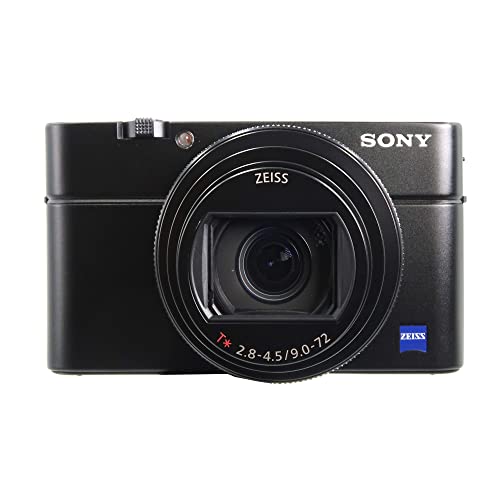
| Sony RX100 VII | The pocket telephoto | A genuine 24–200mm optical zoom on a 1-inch sensor — the most honest reach that fits a jacket. |
| Canon EOS R10 | The growable reach platform | An APS-C body whose distance story expands with every RF telephoto you mount, from kit zoom to serious glass. |
| Nikon Z50 II | The tracking telephoto starter | Subject detection for birds and athletes plus a viewfinder built for braced, long-lens discipline. |
| Panasonic LUMIX S5II | The full-frame distance canvas | A large sensor that keeps long-lens files clean at dusk, when distant wildlife is most alive. |
| A dedicated super-telephoto zoom lens | The prose-only glass that does the reaching | The 100–400mm and 150–600mm class lenses that turn the bodies above into wildlife instruments. |
| Nikon COOLPIX P1000 | The prose-only reach extremist | A 24–3000mm optical zoom for the moon and the unapproachable — astonishing, specialised, uncompromising. |
How Did We Measure Distance Claims Without Believing the Advertising?
Every candidate’s range was converted to equivalent focal lengths and judged at its far end, because distance cameras are bought for their far ends and reviewed, too often, at their comfortable middles. The test subjects were the genre’s real ones: feather detail on a garden bird at feeder distance and then at field distance, a face in the far stand of a school match, lettering on a harbour sign across the water, the moon on a still night. A camera that resolved the subject earned its millimetres; a camera that merely framed it did not.
Keeper rate was scored alongside resolution. Magnification multiplies handshake, atmospheric shimmer and autofocus error exactly as it multiplies the subject, so each pick was assessed handheld, in ordinary light, at the shutter speeds its own stabilisation could honestly sustain. Laboratory reach that requires a tripod, a hide and a windless dawn is real reach — the P1000’s section says so — but it is a different product from reach that works from a standing position at a zoo fence, and this guide refuses to average the two.
Finally, each system pick was costed as a system: body plus the lens that delivers the promised distance, because a body’s reach is a fiction until glass completes it. The prose-only lens section exists for exactly this accounting — the telephoto zoom is where distance photography’s money actually goes, and any guide that prices bodies alone is reviewing half a camera.
What Do the Millimetres Actually Buy You, Subject by Subject?
At 100mm equivalent, distance photography begins modestly: the far end of a garden, a portrait isolated from its background, the near touchline of a small pitch. At 200mm — the RX100 VII’s ceiling and the kit telephoto’s home — school sport resolves into faces and effort, zoo animals fill frames from public distances, and stage performers become portraits from the mid-hall seats. This is the range most lives actually need, and it is purchasable in a pocket.
At 400mm the subjects change character. Garden birds become individuals with feather structure; athletes at the far end of a full-size pitch become the story rather than the scenery; surfers, sailors and climbers — people defined by being where you are not — become photographable. At 600mm, wild birds in open country, shy mammals at dawn, and aircraft, ships and celestial neighbours enter the frame honestly. Beyond 1000mm the atmosphere becomes your co-author: heat shimmer and haze soften everything, and the photographs become as much about the air as about the subject.
The buying rule reads directly off that ladder. List the distant subjects of your last twelve months — actually list them, with venues — and buy for the highest rung that recurs monthly. The once-a-year safari rung can be rented, borrowed or served by the P1000’s peculiar genius; the monthly rung must be owned, carried and practised with, because distance photography is a skill of keeper rates, and keeper rates are built by repetition on the same equipment.
Which Are the Best Digital Cameras for Distance Pictures, From Pocket Reach to Full Safari?
One pocket telephoto, three system bodies at three sensor sizes and philosophies, the glass itself discussed as a pick in its own right, and one extremist that exists to show where the spectrum ends. Read in order of how you intend to carry your reach.

Sony RX100 VII — The pocket telephoto
The RX100 VII is the distance camera for people who refuse to carry a distance camera. Its optical zoom runs from 24mm to a genuine 200mm equivalent on a 1-inch sensor, inside a body that vanishes into a jacket — and 200mm, honestly delivered, covers a startling share of the distance problem: the performer from the back row, the grandchild’s match from the touchline, the heron from the towpath, the detail on the cathedral you will never be allowed to touch. Its autofocus tracking, borrowed temperament from Sony’s sports line, holds eyes and moving subjects at full stretch with a confidence no previous pocket camera attempted.
The small pop-up viewfinder matters more at 200mm than at any wider setting, because bracing the camera against the face is worth real sharpness at telephoto magnifications, and the fast burst modes let a distant, moving subject offer you ten chances instead of one. Files at full reach show genuine texture — plumage, brickwork, expressions — rather than the watercolour suggestion of lesser zooms, because the lens was designed for its sensor instead of stretched for its brochure.
- Zoom: optical 24–200mm equivalent
- Sensor: 1-inch stacked, fast readout
- Focus: real-time tracking and eye autofocus at full reach
- Finder: pop-up electronic viewfinder for braced telephoto work
- Role: maximum honest reach, minimum carried bulk
Strengths
- True telephoto that attends every day, not just expeditions
- Tracking focus makes the long end usable on moving subjects
- Sharpness at 200mm survives cropping for prints and posts
Trade-offs
- Two hundred millimetres is a ceiling true wildlife will exceed
- Lens slows at full stretch, taxing dusk and indoor reach
- Small controls challenge gloved or large hands
Frequency is what distance buyers should weigh here. The finest telephoto portfolio in most towns belongs not to the best-equipped photographer but to the most present one, and a 200mm camera that is always in the coat collects distant moments — the kingfisher on the commute bridge, the fox at the allotment fence — that a 600mm rig in a cupboard at home never meets. Reach you carry beats reach you own; the Sony is the purest expression of that arithmetic in this guide.
Buy it as your distance camera if your subjects live within two hundred honest millimetres. If they demonstrably do not, it remains the travel companion the bigger systems below will envy.
Best for: travellers, grandparents at matches, towpath and city distance work. Not suited for: serious birding or field sports from public distances

Canon EOS R10 — The growable reach platform
The R10’s distance story is written in lenses rather than in the body, and that is its strength: buy it with a modest telephoto zoom and it covers school sport and garden wildlife today; add a longer RF telephoto next year and the same body, the same hands, the same menus suddenly serve the estuary and the athletics stadium. Canon’s RF mount carries everything from affordable long zooms to professional glass, and the APS-C sensor’s crop effectively extends every lens’s reach — a telephoto on this body frames tighter than the same lens on a full-frame camera, a free magnification distance photographers quietly exploit.
The body’s own contributions are speed and recognition. Its autofocus classifies people, animals and vehicles and tracks them across the frame at the distances where focus errors are fatal, and its burst rate gives a diving bird or a striking striker a sequence to be chosen from rather than a coin-flip. The viewfinder braces long lenses properly, and the grip sustains the front-heavy balance that telephoto glass imposes — ergonomics that read as comfort and function as sharpness.
- Format: APS-C mirrorless, Canon RF mount
- Reach: defined by lens, extended by the crop sensor
- Detection: people, animals and vehicles with tracking
- Speed: rapid bursts for distant action
- Role: the platform that grows toward your subjects
Strengths
- Telephoto ceiling rises with lenses, not body replacements
- Subject detection holds focus where distance forgives nothing
- Crop sensor stretches every telephoto’s effective reach
Trade-offs
- The reach lives in lenses you must buy, carry and fund
- No in-body stabilisation; the lens does that work
- A serious telephoto kit outgrows small bags quickly
Seen from the distance angle specifically, the R10’s deepest virtue is that it lets you buy reach in instalments matched to evidence. Photograph a season with the starter telephoto; read your own files to learn whether your subjects need 300mm, 400mm or the full safari rung; then buy exactly that lens, once. Distance photography bankrupts more beginners through guessed glass than through any other error, and a platform that converts guessing into measurement is worth more than a discount on any single body.
Choose it when your distant subjects are multiplying — the children’s sports ascending levels, the bird list growing — and you want one body to preside over the whole expansion.
Best for: growing distance photographers, school sport and garden-to-estuary wildlife. Not suited for: pocket carry or anyone allergic to lens decisions

Nikon Z50 II — The tracking telephoto starter
Nikon’s Z50 II approaches distance from the tracking side: its subject-detection system recognises people, animals and — pointedly for this guide — birds, adjusting its focus behaviour to the way each actually moves. Paired with a Z-mount telephoto zoom, it becomes the most forgiving introduction to long-lens work in this list, because the beginner’s twin telephoto failures — focus on the branch instead of the bird, shutter pressed a breath after the moment — are precisely the failures its automation attacks.
The body supports the discipline physically. A proper electronic viewfinder invites the braced, elbows-tucked posture that long lenses demand; the grip fills the hand against a telephoto’s forward weight; and the controls assume an owner who will graduate to deliberate shutter and aperture choices as the subjects demand them. Nikon’s Z telephoto range, from accessible zooms to serious birding glass, gives the platform its headroom, and the APS-C crop stretches each lens’s framing the same useful way the Canon’s does.
- Format: APS-C mirrorless, Nikon Z mount
- Detection: people, animals, birds and vehicles
- Finder: electronic viewfinder for braced long-lens work
- Handling: full grip for front-heavy telephoto balance
- Role: the forgiving telephoto apprenticeship
Strengths
- Bird-aware autofocus aimed at the genre’s hardest subject
- Viewfinder discipline improves handheld keeper rates
- Platform grows from first telephoto to serious glass
Trade-offs
- Reach still depends on lenses bought separately
- Smaller buffer than dedicated sports bodies at this work
- Telephoto ambitions will outgrow the kit bag within a year
Temperament counts for a great deal: Nikon colours and Nikon ergonomics suit photographers who like their cameras calm, and calm is a genuine telephoto virtue. Birding and wildlife work are mostly waiting — in hides, at field edges, at dawn — and the camera whose handling disappears during the wait, whose battery sips rather than gulps, whose files need little persuasion in editing, serves the waiting game best. The Z50 II is the distance pick for the patient.
Buy it if your distance subjects have feathers or fixtures lists and your instinct is to build a system slowly, around one trusted body, over years.
Best for: beginning birders, wildlife walkers and patient system builders. Not suited for: buyers wanting reach from a single fixed-lens purchase

Panasonic LUMIX S5II — The full-frame distance canvas
The S5II brings the largest canvas in this guide to the distance problem: a full-frame sensor whose light gathering transforms the two telephoto situations that defeat smaller formats — dawn and dusk. Wildlife keeps those hours. A heron at first light, deer at the field’s edge in the last of the day, an owl beginning its shift: these are distance photography’s defining appointments, and they are held in light where an APS-C file is already negotiating and a compact has gone home. The Panasonic simply keeps working, its files clean at sensitivities that smaller sensors spend on noise.
Full-frame reach has an honest cost this guide will state plainly: the crop advantage disappears, so a given lens frames wider than on the bodies above, and true telephoto glass for full frame is larger and dearer. What the S5II offers instead is cropping headroom — files with resolution and cleanliness to spare, so a 400mm frame can be cropped to a 600mm composition in editing and still print — plus phase-detect autofocus that tracks subjects dependably, and in-body stabilisation that steadies every lens mounted, including the adapted and manual glass distance photographers love to experiment with.
- Format: full-frame mirrorless, L-mount
- Stabilisation: in-body, steadying all mounted lenses
- Focus: phase-detect tracking for moving subjects
- Files: clean high-sensitivity performance for dawn and dusk
- Role: the low-light distance platform
Strengths
- Keeps shooting cleanly in wildlife’s favourite light
- In-body stabilisation serves every telephoto, old or new
- Cropping headroom extends effective reach in editing
Trade-offs
- Full-frame telephoto glass is the heaviest and dearest here
- No crop-sensor free magnification for your lenses
- Body and lenses together end any light-travel ambitions
Video changes the calculation completely: the S5II is also a formidable movie camera, and distance work increasingly is video work — the behaviour sequence, the hunt, the fledge — filmed through long lenses from hides and headlands. A photographer whose distance practice includes filming will find this body serving both halves of the notebook without compromise, which none of the smaller picks quite manages. Buy it when your distant subjects keep crepuscular hours and your notebook has a video column.
It is the connoisseur’s distance platform in this guide: not the longest reach, but the richest files at the hours reach matters most.
Best for: dawn-and-dusk wildlife, filming at distance, quality-first system builders. Not suited for: weight-watchers or buyers wanting crop-extended budget glass
A Dedicated Super-Telephoto Zoom Lens — The prose-only glass that does the reaching
This pick has no link because it is not one product; it is the class of glass — the 100–400mm and 150–600mm zooms, in each mount’s own line — that converts the three system bodies above from cameras into distance instruments, and it deserves a section because it is where distance photography is actually decided. Bodies get the reviews; lenses get the photographs. A modest body behind a fine 150–600mm will out-photograph a flagship behind a kit zoom at every subject beyond a garden fence, and the second-hand market in telephoto glass is deep precisely because lenses outlive the bodies they were bought for.
Choosing within the class is a discipline of three questions. First, the far end you truly need, answered from your subject list rather than your ambitions — the step from 400mm to 600mm buys shy birds and costs weight, money and atmospheric trouble in roughly equal measure. Second, the stabilisation partnership: modern telephotos carry their own stabilisation that cooperates with the body’s, and the combination is worth real shutter speeds at dawn. Third, the carrying reality — a 150–600mm is a commitment measured in kilograms and in the bag it dictates, and the photographer who tries one for a weekend before buying makes the only fully informed purchase in this entire guide.
- Class: 100–400mm and 150–600mm telephoto zooms, per mount
- Function: converts system bodies into wildlife instruments
- Stabilisation: in-lens, cooperating with body systems
- Market: deep second-hand supply; lenses outlive bodies
- Role: where the distance budget truly belongs
Strengths
- Real optical reach at 400–600mm with tracking-grade focus speed
- Holds value and transfers between body generations
- One lens serves sport, wildlife and landscape compression alike
Trade-offs
- Weight and size redefine what a day’s kit means
- The far end magnifies atmosphere as faithfully as subjects
- Costs more than most bodies it will be mounted on
Patience, treated as a deliberate strategy, pays off. Because telephoto glass holds value and crosses body generations, the distance photographer can buy it once, used, carefully — checking for smooth zoom action, clean rear elements and honest sellers — and amortise it across a decade of bodies. No other purchase in this guide behaves so much like an heirloom and so little like electronics, and treating it that way, rather than as an accessory, is the mark of the photographer who has understood where distance pictures actually come from.
Whatever body you choose from this page, reserve the larger half of a serious distance budget for this section. The bodies are the vehicle; this is the road.
Best for: committed wildlife, sport and safari photographers on any system here. Not suited for: casual reach or anyone whose bag has a weight limit they love
Nikon COOLPIX P1000 — The prose-only reach extremist
The P1000 is included without a link, as the spectrum’s far marker: an optical zoom spanning 24mm to a 3000mm equivalent, a figure so extreme it changes the subject of photography from scenes to sightings. At full stretch it frames the moon as a landscape of craters, reads the name board of a ship hull-down on the horizon, and portraits birds that never registered a human presence. Nothing else sold to consumers reaches like it, and a distance guide that omitted it would be hiding the map’s edge.
The physics invoice is itemised and non-negotiable. The sensor is small, so the files serve screens and modest prints best, and bright light is a requirement rather than a preference. At 3000mm a tripod is not an accessory but a condition of employment, the atmosphere becomes a visible, shimmering medium that caps real resolution on all but the stillest days, and merely finding a subject in that straw-narrow field of view is a learned skill measured in patient minutes. Its owners do not describe a travel camera; they describe an instrument, nearer to a telescope that records than to a camera that zooms.
- Zoom: optical 24–3000mm equivalent
- Sensor: small format — reach bought with sensor area
- Support: tripod effectively mandatory at long settings
- Modes: dedicated moon and bird-watching settings
- Role: the extreme-reach specialist instrument
Strengths
- Reach no other consumer instrument approaches
- All-in-one: the system is complete at purchase, forever
- Moon, shipping and protected-nesting subjects become possible
Trade-offs
- Small sensor limits quality away from bright light
- Heavy, slow and wholly unsuited to candid work
- Atmospheric shimmer, not optics, sets its real-world ceiling
Democracy is the P1000’s real gift: subjects that once required a fortune in glass now sit within a single purchase’s reach, and a generation of moon diarists, ship watchers and garden-based raptor recorders has grown up on exactly that opening-up. Judged as a specialist instrument for stationary, distant, brightly lit subjects, it is not a compromise at all — it is the only tool. Judged as a camera, it is a marvellous eccentricity. Buy it knowing which of those two purchases you are making, and it will never disappoint you.
Most readers should treat it as this guide treats it: the reference point that calibrates how much reach they truly need — usually a fifth of it, served better by everything above.
Best for: moon watchers, ship spotters and recorders of the unapproachable. Not suited for: low light, movement, travel lightness or large prints
How Do the Six Distance Solutions Compare Side by Side?
| Solution | Honest reach | Sensor | Carry |
|---|---|---|---|
| Sony RX100 VII | 200mm optical | 1-inch | Jacket pocket |
| Canon EOS R10 | By lens, to 600mm+ | APS-C | Bag, grows with glass |
| Nikon Z50 II | By lens, to 600mm+ | APS-C | Bag, grows with glass |
| Panasonic LUMIX S5II | By lens, plus crop headroom | Full frame | Serious bag |
| Super-telephoto zoom lens (prose) | 400–600mm optical | Serves the body | Its own bag, eventually |
| Nikon COOLPIX P1000 (prose) | 3000mm optical | Small | Tripod’s companion |
Read reach and carry together; they are the same decision stated twice. Every millimetre beyond the garden is paid for in grams, and the table’s job is to make the exchange rate visible before money changes hands.
How Do You Hold a Long Lens Steady Enough to Deserve Its Reach?
Technique first, because it is free and because it is where most distance photographs actually die. Brace the camera to the face through the viewfinder where one exists; tuck the elbows into the ribs; support the lens from beneath with the left hand placed far forward, near the hood, where its leverage steadies the muzzle rather than wagging it. Exhale halfway and press without jabbing. Against any fixed object the landscape offers — fence post, hide shelf, car roof, a companion’s shoulder — effective steadiness doubles, and the distance photographer’s first act at any viewpoint is spotting the brace before spotting the shot.
Shutter discipline follows the reciprocal rule with modern mercy: begin at the reciprocal of the equivalent focal length — a five-hundredth at 500mm — then let stabilisation buy stops of grace, spent on lower sensitivity rather than on slower recklessness. Shoot distant action in short bursts, because one frame in five usually lands between tremors, and review at full magnification occasionally to keep yourself honest about what “sharp” currently means in your hands.
Support escalates honestly with reach. A monopod transforms a day with a 400mm; a beanbag on a hide shelf or car window is the working safari photographer’s real tripod; beyond 600mm, and always with the P1000, a proper tripod with the stabilisation set as its manual directs becomes the price of admission. Budget the support with the glass, in the same order, or the glass will spend its first season photographing its own shake.
Why Does the Air Itself Become the Enemy at Long Range?
Because at six hundred millimetres you are photographing through hundreds of metres of weather. Heat rising off tarmac, fields and water bends light continuously, and the shimmer that results cannot be stabilised, focused or processed away — it is the subject’s portrait painted on moving air. Humidity and dust tax contrast the same way, which is why distant photographs made at noon in August disappoint their owners in a manner no equipment upgrade cures.
The craft responses are scheduling and geometry. Shoot long early and late, when the air lies still and cool; shoot across water and short grass rather than across hot roads and rooftops; get height when you can, because the worst shimmer hugs the ground; and when the subject permits, halve the distance with your feet and halve the zoom with it, shrinking every atmospheric tax at once. The distance photographers with the sharpest portfolios are rarely the longest-lensed. They are the ones who learned to read air the way sailors read water, and to wait for it.
What Is Compression, and Why Do Distance Photographs Look Different Even at the Same Size?
Stand far away and zoom in, and space itself rearranges. Backgrounds swell toward the subject: the mountain leans over the village, the sunset disc grows enormous behind the lighthouse, faces acquire a calm, sculptural flatness that wide lenses, forced to work close, stretch into caricature. This is compression — perspective dictated by your distance, harvested by focal length — and it means distance photography is an aesthetic choice even when it looks like a logistical one. The telephoto does not merely fetch the far subject; it redraws the world behind it.
Each rung of this guide’s ladder draws differently. The RX100 VII at full stretch already stacks a harbour’s layers into tapestry; the system bodies behind 400mm and beyond can isolate a bird against a background melted to pure colour, the signature look of modern wildlife portfolios; the S5II’s full-frame files at long settings separate subject and world with the shallowest depth of all, which is why its dawn portraits of deer read as paintings rather than records. Choose your reach partly by this drawing style, not only by the subject’s size in frame — two cameras can fill a frame with the same heron and produce entirely different photographs, and the difference is the distance you stood at to do it.
Practise the effect deliberately before it matters: photograph the same subject from three distances, zooming to hold the framing constant, and compare how the background’s loyalty changes across the three frames. That ten-minute experiment, done once in a garden, teaches more about why telephoto lenses exist than any multiplier printed on any box in any shop.
How Do You Photograph From a Hide, a Car and a Boat Without Wasting the Position?
The hide rewards stillness of everything except the eyes. Arrive before the subjects do, settle the beanbag and the lens before the light, and let the wildlife resume its routines around a position it has forgotten; the distance photographer’s paradox is that the closest frames come to those who move least. Work the near ground while you wait — hides are sited by people who understand animal habits, and the patient photographer’s secondary subjects, the wren on the hide’s own post, the vole at its base, routinely out-photograph the headline species that never showed.
The car is the mobile hide, and in much of the world the finest one available: animals that flee a pedestrian tolerate a vehicle, and the window-mounted beanbag turns the door frame into a studio. Engine off, always — vibration is shake at six hundred millimetres — and the driver’s-side photographer should practise the undignified swivel until it is silent. Boats invert every rule: the platform moves, the subject moves, the horizon files a formal complaint. Shorter focal lengths, faster shutters and the RX100 VII’s pocketable readiness beat the big rig that spends the whale’s surfacing in a bag below deck; on water, the best distance camera is the one already in your hand when the fin breaks the surface.
What Does an Ethical Distance Photographer Owe the Subject?
Distance, kept. The telephoto’s founding bargain is that the subject’s life proceeds undisturbed — the nesting bird unflushed, the fawn unseparated from its mother’s return by a photographer’s scent at close quarters, the seal colony unpanicked into the water. Every pick in this guide serves that bargain, and the P1000’s absurd reach is, in this light, an ethical instrument as much as an optical one. The corollary duties are dull and absolute: obey site rules and seasonal closures, never bait or call a protected species for a frame, treat location data for sensitive subjects as information to guard rather than to broadcast, and let the missed photograph stay missed when the alternative is the subject’s welfare. The distance portfolio worth having is the one its subjects never paid for.
How Do You Photograph the Moon and the Night Sky’s Easier Wonders?
The moon is distance photography’s parlour examination: three hundred and eighty thousand kilometres, lit by full sunlight, and therefore chronically overexposed by beginners who meter for the night around it. Expose for a sunlit landscape and the craters appear. A tripod is non-negotiable at the focal lengths involved, a timer or remote release removes the last tremor, and the stillest, highest moon gives the cleanest file — the romantic horizon moon is mostly atmosphere, photographed beautifully and resolved poorly, a trade worth making knowingly. The P1000 was practically designed for this subject and fills its frame with lunar terrain; the system bodies behind real telephoto glass resolve the finest detail; the RX100 VII at full stretch manages a respectable disc with visible maria, especially with a careful crop.
Beyond the moon, distance glass opens the night modestly: the planets as bright discs with patience and tracking mounts beyond this guide’s scope, the International Space Station as a streak against a planned sky, conjunctions and eclipses where the telephoto’s compression stacks celestial events against landmarks. None of it requires the telescope the beginner fears; all of it requires the tripod, the warm clothing and the scheduling discipline that distance photography has been teaching in daylight all along.
How Does Field Sport Differ From Wildlife When Both Are Far Away?
They share millimetres and nothing else. Sport is predictable distance: the pitch’s geometry is fixed, the action returns to known places, and the photographer’s craft is anticipation — pre-focusing on the goalmouth, reading the game’s flow, shooting the peak of the action in bursts and accepting a ruthless cull in the evening. Light, at school and club level, is the true opponent: floodlights and sports halls tax the far end of every zoom, which is why the S5II’s clean high-sensitivity files and the APS-C pair’s faster, cheaper telephotos divide the touchline between them by budget rather than by reach.
Wildlife is negotiated distance: the subject sets the terms, the terms change with wind and season, and the craft is patience instrumented by fieldcraft — knowing where the subject will be before it knows itself. Sport forgives a loud shutter and rewards fast ones; wildlife forgives neither chatter nor impatience. The practical consequence for buyers is that the two genres weight this guide’s table differently: the sports photographer should spend on burst depth, buffer and fast glass at 400mm; the wildlife photographer on reach, stabilisation and the dawn-proof sensor. One body can serve both — the R10 and Z50 II are exactly that compromise — but the lens budget should declare its primary allegiance honestly, because the genres spend it differently.
How Do You Keep Long Glass Clean, Safe and Worth Reselling?
Telephoto lenses are the most valuable objects most photographers own and the most awkward to protect: long, front-heavy, with front elements the size of saucers exposed to everything weather and wildlife country contains. The disciplines are unglamorous. A quality clear filter guards the front element where the design accepts one — cheap insurance against the branch, the grit and the cleaning accident. The hood stays on outdoors, always: it is a bumper first and a shade second. Blowers before cloths, always, because wiping grit across a coating writes the day’s walk into the glass permanently.
Storage and transport complete the care. Long lenses travel in their padded cases, caps on both ends, stored upright in dry rooms with the silica discipline humid climates demand; a lens stored damp grows internal fungus that no resale listing forgives and no repair fully cures. Keep the purchase paperwork and the box — telephoto glass resells at fractions of its value that astonish owners of every other photographic category, and the complete, documented, clean example commands the top of its market. The distance photographer who treats glass as an heirloom finds, a decade on, that it has behaved like one: the bodies came and went, and the reach remained, paid for once.
How Should a Distance Kit Be Built Across Three Seasons of Shooting?
Season one is evidence. Buy the body and the starter telephoto — or the RX100 VII if the pocket route is yours — and photograph your actual subjects for a full season, keeping a notebook whose entries are failures: subject, venue, distance, and how much closer the frame needed to be. The notebook feels pedantic in week one and priceless in month four, because it converts the second purchase from a guess into a measurement. Most beginners discover their true ceiling is a hundred millimetres shorter than their anxiety claimed, and the saving funds the support, the hide time or the trip that improves their photographs more than the glass would have.
Season two is the measured lens: the prose-only telephoto class, bought at the focal length the notebook specified, ideally after a rental weekend confirmed the carrying reality. This is also the season of support — the monopod, the beanbag, the tripod head that does not sag — bought before the second body anyone tries to sell you, because support improves every lens you will ever own while a body improves only itself. Season three is refinement: the teleconverter for the bright days, the second body only if changing lenses in dust has genuinely cost photographs, and the first honest cull of the kit — the lens the notebook proved unnecessary, sold while its value holds, funding access: the hide membership, the boat trip, the dawn alarm’s petrol. A distance kit built this way is never the largest in the hide. It is, reliably, the most used.
Why Do Landscape Photographers Borrow Telephotos and Never Give Them Back?
Because distance compresses landscapes as beautifully as it isolates wildlife, and the discovery converts photographers permanently. The wide-angle landscape — everything sharp from foreground rock to horizon — is one dialect; the telephoto landscape is another: ridges stacked like cut paper at 300mm, a church isolated in its valley’s morning mist, the pattern of fields and hedgerows read as pure design from a high road at 200mm. Haze, the wildlife photographer’s enemy, becomes the landscape telephoto’s medium, grading each successive ridge paler until the photograph is half geography and half weather.
Every pick in this guide speaks the dialect at its own level: the RX100 VII from the viewpoint lay-by, the system bodies behind mid telephotos from the ridge path, even the S5II earning a landscape paragraph inside its wildlife brief. The buyer whose subjects are scenery rather than creatures should read the whole table again with that lens on: reach for landscapes is bought cheaper than reach for birds, because landscapes hold still, keep office hours and forgive slower glass — and a photographer who came for the wildlife often stays, to their own surprise, for the ridges.
How Do You Pack a Distance Kit for a Trip Where Weight Is Watched?
Ruthlessly, and by subject rather than by sentiment. The expedition kit begins from the trip’s certain subjects — the boat’s whales, the reserve’s raptors, the stadium’s final — and admits only the glass those subjects require, because every unneeded telephoto on a trip is weight stolen from the photographer who must carry the needed one all day. The RX100 VII is the insurance policy that makes ruthlessness possible: it rides in the pocket on the days the big kit rests, and its two hundred millimetres have rescued more travel portfolios than any second body ever packed.
Batteries and cards scale with remoteness — distance days are long, hides are far from sockets, and a telephoto day’s bursts fill cards at a pace landscape work never teaches. The support decision is the trip’s hardest call: the full tripod earns its freight on a dedicated wildlife journey and loses its argument on a mixed holiday, where the monopod and the beanbag — the latter packed empty and filled with local rice or sand — cover nine tenths of the need at a tenth of the burden. Pack the kit the subjects ordered, wear the pocket camera, and let the trip’s photographs, rather than its luggage, be what is heavy on the way home.
What Mistakes Do Distance Buyers Keep Making?
Believing the biggest number in the advertisement, which blends optical truth with digital enlargement in proportions the small print distributes dishonestly. Compare optical ranges in equivalent millimetres, and let any seller reluctant to state them plainly educate you about their product.
Buying reach without light or support: the long, slow, unsupported combination that produces the grainy, shaken, shimmering files that make beginners abandon distance photography entirely, blaming themselves for an equipment equation that never balanced. And finally, photographing everything from where they happened to stand — distance used as a substitute for position. The professionals’ order never changes: move first, brace second, zoom last.
Final Recommendation
Most distance buyers should start with the Sony RX100 VII: two hundred honest millimetres, carried daily, cover more real subjects than any other purchase on this page. Step to the Canon EOS R10 or Nikon Z50 II when your subject list outgrows the pocket — choosing Canon for its lens ladder’s breadth, Nikon for its bird-aware calm — and reserve the Panasonic S5II for the photographer whose distant world keeps dawn and dusk hours and whose notebook includes film. Spend on the prose-only telephoto glass before upgrading any body, and study the P1000 as the map’s edge: glorious, specialised, and a calibration instrument for everyone else’s needs.
One discipline binds every recommendation above, and it costs nothing: review your distance photographs at full magnification, regularly, and let the evidence grade your technique before your wallet grades your equipment. The photographer who discovers that their 400mm frames fail from shake buys a monopod; the one who discovers they fail from shimmer buys an alarm clock; the one who discovers they fail from focus error buys practice. Almost nobody’s files, examined honestly, ask first for a longer lens — and the money saved by that examination is the truest discount in distance photography.
Keep one more habit from the hide and the touchline alike: a small notebook, or its phone equivalent, logging the distance, the light and the settings of every keeper and every near-miss for a single season. Distance work improves faster under that mild scrutiny than under any purchase, because the pattern of your own failures — the hour you should have arrived, the support you should have carried, the hundred millimetres you kept not needing — becomes impossible to argue with once it is written down in your own hand, week after week.
Trust the notebook over the catalogue, the rental weekend over the review, and your own keeper rate over every promise printed on a box — including, the reader is invited to note, the promises organised so carefully in this one.
Distance photography is a negotiation among glass, light, air and patience. Buy the glass honestly, learn the air, keep the hours the subjects keep — and the far shore comes to you.
Frequently Asked Questions
How much zoom do I need for birds in my garden?
At feeder distances, 200mm — the RX100 VII’s full stretch — frames garden birds respectably, especially with a modest crop in editing. For birds that keep field distances, honesty begins around 400mm and comfort at 600mm, which is system-and-telephoto territory: an R10 or Z50 II behind the prose-only glass class, or the P1000’s extreme bargain with its stated conditions.
Is digital zoom ever acceptable for distance work?
As a viewing aid while composing, yes; as a capture strategy, no. It discards data your editing software would rather keep, and it cannot create the detail the photograph was bought for. Photograph at the optical limit, crop deliberately at your desk, and the result equals or beats the in-camera enlargement every time — with the decision still reversible.
Why do my long-range photographs look wavy on hot days?
Heat shimmer: rising warm air bending light between you and the subject, photographed faithfully by your lens. It is worst over tarmac, roofs and sun-baked fields at midday, and least at dawn, over water and across short distances. No lens or setting cures it; schedule and position are the whole remedy, which is why experienced distance photographers are such devoted early risers.
Can I use a teleconverter instead of a longer lens?
On the system bodies, a matched teleconverter multiplies a good telephoto’s reach at the cost of light — typically a stop or two of aperture — and some focus speed. On a bright, high-quality prime or pro zoom it is a legitimate, economical rung of the ladder. On a slow kit zoom it usually spends light the combination cannot afford. Try before committing, at your real subjects, in your real light.
What is the best distance setup for school and club sport?
Position first: the near touchline outperforms any lens bought to compensate for the far stand. Equipment second: an R10 or Z50 II with a mid telephoto zoom covers school and club fixtures handsomely, the RX100 VII serves the grandparent in the stand, and shutter discipline — fast speeds, bursts at the action’s peak — matters more than the final hundred millimetres.
Should I rent before buying a long lens?
Yes, and this guide insists on it for the 600mm class specifically. A weekend’s rental teaches your true keeper rate, your carrying tolerance and your subjects’ real distance more truthfully than any review — including this one. Photographers who rent first buy once; photographers who guess buy twice, and the second purchase is always the one the rental would have specified.
Is a bridge camera or a system camera the smarter first distance purchase?
It depends on whether your distance life is a destination or a direction. The fixed-lens route — the RX100 VII at the civilised end, the P1000 at the extreme — buys a finished answer: complete at purchase, nothing to add, nothing to deliberate, ideal for the photographer whose subjects are known and stable. The system route buys a direction: each season’s evidence can be answered with a lens rather than a replacement, ideal for the photographer whose subjects keep receding. Neither is the grown-up choice; they are choices for different temperaments, and the honest self-knowledge of which temperament is yours is worth more than the price difference between any two rows in this guide’s table.
Related Guides
Continue with bird photography technique for garden and field, read choosing your first telephoto lens by subject, or explore photographing the moon with consumer equipment for the longest subject of all.


