ilcastellomenu.com is reader-supported. When you buy through links on our site, we may earn an affiliate commission.
Where to Buy a Camera That Earns Its Seat on the Plane
The best digital cameras for travelers are chosen at the packing stage, not the photo shop. A travel camera competes for space with everything else a journey needs, burns through days far from convenient charging, and must handle the whole vocabulary of a trip — dawn harbours, dim museums, family tables, street markets, mountain light — without demanding a Sherpa or a second bag. The six picks below were judged by that itinerary standard: compact enough to be carried all day without resentment, frugal enough with power to survive long sightseeing days, durable enough for ordinary travel knocks, and versatile enough behind one lens that the traveller packs a camera, not a camera system.
A clarification before the picks, because this site also keeps a guide for adventurers and the two audiences overlap only partly. Adventurers photograph expeditions, where weather and impact are the story; travellers photograph journeys, where the enemies are weight, fatigue, theft-worthy conspicuousness and the simple human reluctance to carry anything at hour nine of sightseeing. This guide optimises for the journey: city breaks, rail trips, family holidays, road tours and the long backpacking arc, where the best camera is the one still on your shoulder when the light turns beautiful at the end of the day.
The one-lens philosophy runs through every verdict that follows. Interchangeable-lens picks here were chosen for the standard zooms and compact primes that cover a trip without a lens-changing ritual in a crowded square; fixed-lens picks were chosen because their single lens was designed, from the first sketch, to be the only lens a journey needs. Either way, the traveller’s question is never which lens next — it is whether the camera, as packed, will be present for the moments the trip actually offers.
Key Takeaways
- Carried weight decides everything; a camera left at the hotel has zero image quality.
- One versatile lens beats a bag of perfect lenses on almost every real itinerary.
- Battery manners and USB charging matter more on the road than at home.
- Discretion is a travel feature — small cameras photograph life without interrupting it.
- Fixed-lens travel classics trade flexibility for a kit that packs itself.
- Buy the camera for the trip you repeat yearly, not the expedition you imagine once.
In this guide
Quick Picks
| Camera | Badge | Why it earns its place |
|---|---|---|
| Fujifilm X100VI | The one-lens travel classic | A fixed prime, filmic colour and leaf-shutter discretion in a body that defines travel photography. |
| Sony RX100 VII | The pocket zoom that goes everywhere | A genuine zoom range and serious autofocus inside a jacket-pocket camera. |
| Canon PowerShot G7 X Mark III | The social traveller’s compact | Bright lens, flattering faces and easy sharing for trips documented as they happen. |
| OM SYSTEM OM-5 Mark II | The small system for long trips | Weather-sealed mirrorless with tiny lenses and stabilisation that replaces a tripod. |
| Nikon Z50 II | The keen learner’s travel body | A capable APS-C camera whose compact kit zoom covers a whole journey gracefully. |
| Canon EOS R10 | The fast, light action traveller | Quick autofocus and burst shooting for festivals, wildlife stops and family chaos. |
How Did We Choose Cameras for Travelers?
We began with the shoulder test, applied literally: what does the complete working kit weigh, and would a traveller carry it through a ten-hour sightseeing day in August without beginning to negotiate with themselves? Bodies were weighed with the lens they would actually travel with, a battery, a card and a strap, and anything whose honest kit weight started arguments was either excluded or framed in its section as a deliberate, photography-first choice rather than a casual companion.
The second filter was itinerary coverage. A travel camera meets architecture at dawn, portraits at lunch, interiors in the afternoon and streets after dark, often within one charge and certainly within one lens. We scored how each pick handles that spread without accessories: zoom range or a well-chosen fixed focal length, low-light manners for museums and restaurants, stabilisation for handheld evenings, and autofocus that copes with grandchildren, street performers and harbour birds with equal indifference.
Finally we weighed travel’s unglamorous logistics — charging from a power bank on a train, backing up to a phone in a hotel room, surviving a rain shower on the walk back, and looking unremarkable enough to carry through any neighbourhood on earth. A camera that demands a proprietary charger brick, a laptop for offload and a dry room to change lenses is a studio instrument on holiday. The six below are travellers by design or by honest adaptation, and their sections say which.
Why Does Weight Outweigh Every Other Travel Specification?
Because travel photography is an endurance event disguised as a creative one. The day’s best light frequently arrives at its end, after the museum, the climb and the long lunch, and the camera that comes home with those frames is the one its owner never considered leaving behind. Photographers call this the carried-camera paradox: within broad limits, the smaller camera’s archive outgrows the larger camera’s archive, because presence compounds. Every pick in this guide was chosen inside that paradox’s logic.
Weight also interacts with joy, which is a legitimate travel specification. A kit that aches by midday taxes the traveller’s attention, and attention is the currency photographs are bought with — the noticed doorway, the patient wait for a square to empty, the extra street taken on a hunch. The fixed-lens and compact picks protect attention by disappearing; the system picks protect it by keeping their lenses small. Judge any travel camera by imagining it at hour nine, not by admiring it at minute one in the shop.
There is one honourable exception, and it is the photography-led trip: the journey whose purpose is the portfolio, where weight is budgeted like a mountaineer’s and the itinerary bends around light. Even there, note which bodies this guide offers — the OM-5 and its tiny lenses, the APS-C pair — rather than full-frame expeditions. Travel, even serious travel, rewards the kit that leaves strength for the walking.
How Does One Lens Cover a Whole Journey Honestly?
The secret is that journeys repeat a small set of distances. Streets and architecture want width; people want a flattering step back; details and distant landmarks want reach. A standard zoom spans that triangle in one barrel, and a well-chosen fixed prime — the X100VI’s classic reportage length — covers the first two corners so gracefully that generations of travel photographers built careers inside it. What one lens surrenders is the extreme: the true telephoto compression, the cavernous ultra-wide. Most itineraries visit those extremes for minutes per trip, and renting or simply reframing with your feet answers most of those minutes.
One lens also changes behaviour in ways travellers underrate. No lens changes means no sensor dust from a windy square, no decision fatigue at every viewpoint, no bag opened on a crowded pavement advertising its contents. The camera comes out, the photograph happens, the camera goes away — a rhythm that keeps the traveller a participant in the journey rather than its equipment manager. Companions notice this difference even when photographers do not, and travelling companions’ patience is a resource every itinerary spends.
Choose the single lens by your trip’s dominant subject. People-and-streets journeys suit the fixed prime or the bright compact zoom; landscape-leaning journeys suit the wider end of a standard zoom; mixed family travel suits whatever covers grandchildren at one end and cathedrals at the other. The picks below each declare their triangle plainly, so the matching can be done from the itinerary rather than from a specification table.
Which Are the Best Digital Cameras for Travelers Right Now?
Three philosophies follow: the fixed-lens classics that pack themselves, the pocket zooms that go anywhere, and three small systems for travellers who want a lens mount without the expedition weight. Read for your itinerary — the train, the city and the family holiday crown different winners.

Fujifilm X100VI — The one-lens travel classic
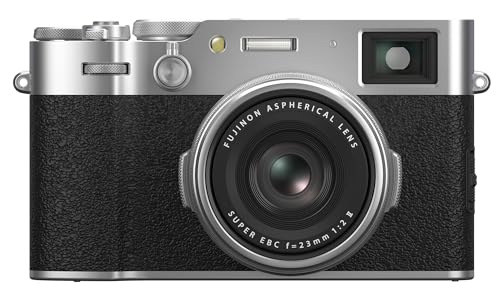
The X100VI is the camera travellers describe the way sailors describe a favourite harbour. Its fixed prime lens is the classic street-and-story focal length, its hybrid viewfinder lets you frame through glass or electronics as the light demands, and its film-inspired colour produces travel files that look finished before any editing — a genuine mercy when the evening’s desk is a café table. A leaf shutter keeps it nearly silent and syncs flash at speeds other cameras envy, and the whole instrument slips into a coat pocket or a small sling and disappears from the traveller’s worries.
Its constraints are the famous ones, and they function as a travel philosophy. No zoom means composing with your feet, which puts the photographer inside the scene rather than observing it from across the square — the X100 series’ look, imitated everywhere, comes from that enforced intimacy. No lens mount means the packing list ends at the camera itself. For city breaks, rail journeys and any trip where photography weaves through the day rather than scheduling it, the X100VI is less a compromise than a distillation.
- Format: fixed-lens APS-C compact, classic prime
- Viewfinder: hybrid optical and electronic
- Shutter: quiet leaf shutter with fast flash sync
- Colour: film simulations for finished travel files
- Role: the city and story traveller’s instrument
Strengths
- Carries like nothing, photographs like a system
- Files that need little or no editing on the road
- Discretion that keeps street scenes unposed
Trade-offs
- One focal length; distant subjects stay distant
- Demand keeps it scarce and priced accordingly
- Video is a sideline to its stills vocation
Travellers who bond with this camera tend to keep it for a decade, because it removes the two frictions that kill travel photography: the packing decision and the editing backlog. If your journeys are measured in cities, people and light rather than in wildlife reach, the X100VI is the pick the rest of this guide must argue against — and for many readers, none of them will succeed.
Best for: city travellers and street storytellers. Not suited for: zoom-dependent subjects or safari ambitions

Sony RX100 VII — The pocket zoom that goes everywhere
The RX100 VII performs a trick that still seems unfair: a zoom range spanning wide street scenes to genuine telephoto compression, autofocus descended from Sony’s flagship sports cameras, and a one-inch sensor with real low-light manners — inside a body that fits the pocket the X100VI needs a coat for. It is the travel camera for people who refuse to choose between carrying a camera and carrying nothing, because with the RX100 VII the choice disappears; it is simply always there, on the boat, at the summit café, in the theatre district at midnight.
That presence converts directly into photographs other travellers miss. The pop-up viewfinder serves bright harbours where screens wash out; the telephoto end isolates architectural details, distant wildlife and candid portraits across a square; burst shooting and eye autofocus handle grandchildren and street festivals with the same composure. Video is a strong supporting talent for the traveller who films the journey’s motion as well as its stills. No camera in this guide covers more itinerary per gram.
- Format: one-inch compact with long zoom range
- Viewfinder: pop-up electronic for bright days
- Focus: flagship-derived eye autofocus and bursts
- Carry: true jacket-pocket size and weight
- Role: the always-present travel camera
Strengths
- Zoom reach no other pocketable pick approaches
- Autofocus that handles action and candids alike
- Present on every outing because it asks nothing
Trade-offs
- Small controls reward small hands and patience
- Battery life is pocket-camera modest; carry a spare
- Menus are dense for a camera this tiny
Judge it against the trips where a system camera stayed in the hotel safe: the beach afternoon, the evening wander, the unplanned detour. The RX100 VII attends all of those, and its archive consequently looks like the whole journey rather than its scheduled highlights. For travellers whose photography is opportunistic — which is to say, most travellers — that attendance record is the strongest argument on this page.
Best for: opportunistic travellers who want reach in a pocket. Not suited for: large-handed photographers or prime-lens romantics

Canon PowerShot G7 X Mark III — The social traveller’s compact
Some journeys are documented for the people who could not come, and the G7 X Mark III is built for that social contract. Its bright zoom keeps candlelit restaurants and evening streets clean, its colours flatter faces at family tables, its screen flips for the group self-portrait and the travel vlog alike, and its sharing pipeline — phone transfer, vertical video, even live-streaming — moves the day’s photographs to their audience while the day is still happening. It is the warmest, most sociable camera in this guide.
As a stills camera it remains a serious one-inch compact: pocketable, quick, with a lens fast enough to keep indoor travel photography out of the noisy desperation that plagues phones. Travellers who split their camera’s duties between the family archive and the social feed will find no friction in either direction, and its microphone input welcomes a small external microphone when a travel video deserves better sound. It is the pick for the trip whose photographs have recipients waiting.
- Format: one-inch compact, bright zoom lens
- Screen: flips up for groups and vlogging
- Sharing: phone transfer and vertical video support
- Audio: microphone input for travel videos
- Role: the family and social travel camera
Strengths
- Bright lens keeps evenings and interiors flattering
- Sharing workflow matches how trips are actually published
- Pocketable without surrendering real controls
Trade-offs
- Autofocus trails the RX100 VII for action
- No viewfinder for the brightest days
- Battery asks for a spare on long sightseeing days
There is a traveller whose camera is judged nightly, at the hotel, by whether the day’s people look happy and well-lit in the photographs sent home. The G7 X Mark III passes that nightly review with unusual consistency. Buy it for the family holiday, the honeymoon and the friends’ reunion tour — the journeys where the audience is waiting and the light is mostly dinner.
Best for: family and social travellers. Not suited for: telephoto hunters or viewfinder traditionalists

OM SYSTEM OM-5 Mark II — The small system for long trips
When a trip is long, varied and partly photographic — the month by rail, the trek between guesthouses, the landscape tour — the OM-5 Mark II offers a system camera’s range at a traveller’s weight. Micro Four Thirds lenses are dramatically smaller than their full-frame equivalents, so a kit spanning wide streets to genuine telephoto reach can still live in a daypack’s corner, and the body’s weather sealing shrugs off the rain shower that catches every long trip eventually. In-body stabilisation strong enough to handhold evening streets retires the travel tripod for most itineraries, which alone saves more weight than the camera weighs.
Its computational talents are travel talents: live long-exposure previews for waterfalls and night harbours without arithmetic, focus stacking for the alpine flower and the market detail, and a sensor crop that stretches compact telephotos into wildlife reach on the days the journey passes a wetland or a viewpoint. Travellers whose itineraries refuse to specialise — city, coast, mountain, village in a single fortnight — are exactly its constituency, because it is the only pick here that can reconfigure itself nightly for tomorrow’s terrain.
- Format: Micro Four Thirds mirrorless, compact lenses
- Sealing: weather resistance for real itineraries
- Stabilisation: strong in-body system, tripod optional
- Tools: live long-exposure preview, focus stacking
- Role: the long and varied trip’s system
Strengths
- Complete multi-lens kits at unmatched low weight
- Sealing and stabilisation forgive travel conditions
- Computational tools serve landscapes and macro alike
Trade-offs
- Smaller sensor concedes the deepest darkness to larger rivals
- A system still asks for some lens decisions
- Video is capable rather than headline
Long trips expose cameras the way long friendships expose people, and the OM-5’s virtues — lightness, sealing, versatility, thrift with batteries — are precisely the virtues that compound over weeks. Travellers planning the big journey, the one measured in months and countries, should start their shortlist here and make the compacts argue their way past it.
Best for: long, mixed itineraries and landscape-leaning travellers. Not suited for: the deepest low-light work or one-pocket minimalists

Nikon Z50 II — The keen learner’s travel body
The Z50 II suits the traveller who is also becoming a photographer — the person whose trips are partly journeys and partly an education. Nikon’s handling is famously logical, the viewfinder and screen are bright, autofocus including subject detection is thoroughly modern, and the compact Z-mount kit zooms cover the travel triangle in barrels small enough for a sling bag. Photographs from its APS-C sensor carry real depth and evening capability beyond the compacts, while the whole kit remains honest carry-on luggage rather than a photographic expedition.
Growth is the quiet argument. A traveller who begins with the kit zoom can add Nikon’s small primes for street evenings or a compact telephoto for the trip that finally includes wildlife, and each addition stays inside the same modest weight philosophy. Video is strong enough for travel films that families actually watch, and the body’s stills-first ergonomics reward the traveller who is learning exposure deliberately, dial by dial, viewpoint by viewpoint.
- Format: APS-C mirrorless, Nikon Z mount
- Handling: logical controls and bright viewfinder
- Focus: modern subject detection for people and animals
- Kit: compact zooms that cover a journey
- Role: the learning traveller’s system
Strengths
- Image quality a clear step beyond the compacts
- Ergonomics that teach photography kindly
- Small-lens ecosystem keeps travel weight honest
Trade-offs
- No in-body stabilisation; steadiness comes from lenses
- Larger than any fixed-lens pick here
- APS-C lens range still maturing beside older mounts
There is a recognisable moment in a keen traveller’s life when the compact’s ceiling becomes visible in their own photographs — the evening scene that needed more, the portrait that wanted separation. The Z50 II is the camera bought at that moment, and its kindness is that it does not punish the learning that follows. For the trip that doubles as a photography course, it is the faculty’s recommendation.
Best for: travellers growing into serious photography. Not suited for: pocket-only minimalists or stabilisation devotees

Canon EOS R10 — The fast, light action traveller
Some itineraries move: festivals with dancers, safaris bolted onto a longer tour, sports events, wildlife parks, children in permanent motion. The R10 is the traveller’s answer to motion — a light APS-C body with autofocus and burst shooting descended from Canon’s professional sports line, small enough to remain a travel camera rather than becoming the trip’s porter. Paired with a compact RF-S zoom it covers the sightseeing day; paired with an affordable telephoto it becomes a credible wildlife instrument for the traveller whose journey includes animals.
That speed does not compromise the ordinary travel virtues. The R10 is light, its grip suits a full day’s carrying, its screen articulates for the odd vlog or group frame, and Canon’s colour keeps family photographs pleasing without editing. It is the pick for travellers whose albums are full of things happening — processions, matches, markets at full boil — and whose frustration with slower cameras is measured in moments missed rather than pixels counted.
- Format: APS-C mirrorless, Canon RF mount
- Speed: fast bursts and professional-derived autofocus
- Screen: articulating for video and groups
- Telephoto path: affordable reach for wildlife stops
- Role: the action and family-motion travel body
Strengths
- Catches movement the other picks admire from afar
- Light enough to remain a genuine travel camera
- Telephoto options open wildlife chapters cheaply in weight
Trade-offs
- Stabilisation depends on the fitted lens
- Battery life is brisk rather than generous
- Weather sealing is not its headline virtue
Family travellers in particular should weigh the R10 carefully, because children on holiday are a sport. The camera that freezes the leap into the pool, the goal in the beach match and the expression mid-laugh is the camera whose photographs get framed. If your journeys are kinetic, let speed arbitrate — the R10 was built for exactly your archive.
Best for: festivals, family action and wildlife-inclusive tours. Not suited for: slow contemplative street work alone
How Do the Six Travel Cameras Compare?
| Camera | Carry style | Lens story | Trip it suits |
|---|---|---|---|
| Fujifilm X100VI | Coat pocket or sling | Fixed classic prime | City breaks and rail journeys |
| Sony RX100 VII | Jacket pocket | Long built-in zoom | Every trip, opportunistically |
| Canon PowerShot G7 X Mark III | Bright built-in zoom | Family and social holidays | |
| OM SYSTEM OM-5 Mark II | Daypack corner | Tiny interchangeable lenses | Long mixed itineraries |
| Nikon Z50 II | Sling bag | Compact kit zooms | Learning photographer’s tours |
| Canon EOS R10 | Sling bag | Zooms plus affordable telephoto | Festivals and wildlife stops |
Experienced travellers, asked about straps, give a surprisingly uniform answer that belongs beside this table: a simple cross-body sling that keeps the camera at the hip, lens resting against the body, ready in one motion and invisible under a jacket when discretion calls. Wrist straps suit the pocket compacts in cities, while the old neck strap advertises its wearer to every crowd. Whatever you choose, rehearse the draw at home until it is silent and smooth — the camera that comes out easily gets used a hundred times a day, and the one that tangles with its bag gets left inside it, photographing nothing.
Notice, too, what the table leaves out, deliberately and after argument among ourselves: no row requires a second bag, a checked suitcase of glass or a travelling assistant. That absence is the guide’s thesis in miniature, because a travel camera’s first duty is to the journey itself, and only its second duty is to the specifications page it came from.
Read the carry column first and honestly — it predicts your archive’s size better than any sensor specification ever printed. Then read it again against your actual luggage: the hand-luggage-only city breaker, the family driver with a boot to fill, and the backpacker counting grams for a season are three different travellers wearing one name, and this table’s six answers were spread deliberately so that each of those travellers finds a row that respects the way they truly move through the world.
How Should Travelers Handle Power Far From the Hotel?
Plan power the way you plan money abroad: know the daily spend, carry a reserve, and keep a conversion route. A sightseeing day of stills costs the compacts roughly a battery, the systems less; video multiplies everything. The universal reserve is a power bank that already travels for the phone — most picks here charge or top up over USB, which turns trains, cafés and airport seats into charging stations and retires the proprietary-charger brick from the packing list entirely.
Discipline multiplies capacity more cheaply than spare batteries. Review photographs in batches rather than after every frame, dim the screen, let the camera sleep between viewpoints instead of idling in your hand, and save the chimping for the evening. Cold destinations tax batteries chemically, so spares ride in an inside pocket; hot destinations tax them through screens working against glare, which is one more argument for the viewfinders on the X100VI, the RX100 VII and the system picks.
Evenings get a ritual: charge everything that moved that day, rotate batteries so the same one is not always the reserve, and let the camera with the fullest battery be tomorrow’s camera if you carry two. Travellers lose more photographs to a flat battery at a sunset viewpoint than to any technical failure — a boring fact, and therefore a preventable one.
How Do You Keep Travel Photographs Safe Until You Get Home?
The journey’s archive is irreplaceable in a way home photographs are not, so it deserves a traveller’s paranoia in proportion. The baseline habit is nightly: the day’s card copied to a second home — a phone with storage to spare, a small drive, a cloud upload over hotel Wi-Fi — before the card returns to the camera. Two copies in two bags is the standard; two copies in the same stolen bag is a story told with gestures.
Cards themselves deserve rotation rather than faith. Carry several modest cards instead of one enormous one, swap them every day or two, and store the filled ones separately from the camera, ideally on your person during transit days. A lost camera is an insurance claim; a lost card containing the whole trip is a bereavement, and the rotation habit converts the second outcome into the first.
Finally, protect the camera’s identity as carefully as its files. Photograph its serial number, keep the receipt in cloud storage, and note the insurance position before departure. None of this is pessimism; it is the administrative shadow of optimism, performed once so the journey itself can proceed unbothered.
What Does Discretion Buy a Traveller With a Camera?
Unposed life. The large camera announces itself across a square and rearranges the scene it came to record — glances, performances, occasionally hostility — while the small camera is forgiven as a tourist’s toy and the scene continues. Street photographers have always known this; family travellers learn it at markets and festivals, where the X100VI’s quiet shutter and the compacts’ size collect the photographs that a conspicuous system would have prevented by arriving.
Discretion is also a safety property in the plainest sense. A modest camera in a plain bag attracts less arithmetic from thieves than a flagship with a white telephoto, and it can be carried through neighbourhoods where expensive-looking equipment would change the traveller’s welcome. None of the six picks here shouts its value, which is partly design and partly this guide’s selection — travel cameras should look like luggage, not like jewellery.
Practise the manners that complete the discretion: ask where asking is the custom, accept refusal gracefully, and let some scenes remain unphotographed out of respect rather than incapacity. The traveller’s archive is richer for the photographs its owner was trusted to take, and trust is earned in the moments when the camera stays down.
How Should You Pack a Camera Kit for Flights and Long Rail Days?
Cameras fly in the cabin, always — batteries are required there by regulation and bodies belong there by common sense, since hold baggage is a lottery of impacts and temperatures. The travel kit packs into the personal item or the daypack’s padded core: body with lens mounted, spare batteries in their cases, cards in a hard wallet, and a strap that doubles as the day’s carry. Checked luggage receives only the unbreakables — the tripod, the charger cables, the empty camera bag itself if it must travel flat.
Rail days reward the sling or the small shoulder bag over the backpack, because the camera must be reachable without a luggage ceremony at every stop. Keep the day’s configuration assembled — lens on, card in, battery fresh — and the bag’s other pockets dedicated to the traveller’s ordinary needs, so the camera never competes with the passport for the same dark corner. A microfibre cloth and a small blower complete the kit; anything more is a studio trying to emigrate.
At security and borders, boring is beautiful: batteries visible and compliant, the camera ready to demonstrate, receipts for expensive bodies kept with the travel documents. The six picks here pass through the world’s checkpoints without drama, which is one more travel virtue that never appears on a specification sheet and matters on every single journey.
How Do You Photograph Cities at Dawn and Dusk Without a Tripod?
The day’s two golden appointments reward the traveller whose camera stabilises well and whose technique is quiet. Brace against the architecture itself — a shoulder to a wall, elbows tucked, the camera’s strap pulled taut as a third point of contact — and let the stabilisation in the OM-5, the compacts’ lens systems and the systems’ lens-based help do the rest. Shoot in small bursts at the marginal shutter speeds; one frame in three will carry the stillness the others missed, and the traveller’s archive is built from exactly that arithmetic.
Expose for the light that matters rather than the average the meter prefers. City dawns mix bright sky with streets still in shadow, and the camera left to its averages will sacrifice one or the other; a touch of exposure compensation, judged on the screen, keeps the lit tower or the waking café at the brightness your eye remembers. The viewfinder picks — X100VI, RX100 VII and the two system bodies — earn their keep here, because judging exposure in glare through a screen is guesswork wearing a photographer’s clothes.
Finally, work the same viewpoint for ten patient minutes. Dawn and dusk light changes by the minute, crowds thin and gather, and the frame that was merely pretty becomes the frame of the trip when the café lights click on against the blue street. Travellers rush viewpoints like trains; photographers treat them like appointments. The cameras in this guide are light enough that patience costs nothing in aching shoulders, which is precisely why patience becomes possible.
How Should a Traveller Handle Museums, Interiors and Difficult Light?
Interiors punish the two things travellers lack: light and permission to use flash. The bright lenses on the G7 X Mark III and the X100VI’s fast prime exist for these rooms, gathering enough light to keep shutter speeds honest and ISO civilised, while the system picks answer with fast primes of their own when the itinerary leans cultural. Raise sensitivity before lowering shutter speed — a slightly grainy sharp photograph of the chapel ceiling beats a clean blurred one in every archive ever reviewed at home.
White balance becomes the interior photographer’s quiet craft. Candlelight, tungsten, daylight windows and museum spots mix in a single frame, and the camera’s automatic choice will flatter one source and betray another. Where a room has one dominant source, set the balance for it and let the rest fall warm or cool as atmosphere; where the mix is the subject — the market hall at dusk — embrace it as the place’s true colour rather than correcting the life out of it.
Respect the house rules as part of the technique. No-flash policies, tripod bans and photography prohibitions are the conditions of access, and the traveller who argues with them photographs nothing at all. A camera that works silently, quickly and without flash — every pick here, with the X100VI’s leaf shutter the quietest — is a diplomat’s instrument: it leaves with the picture and an invitation to return.
What Should a Traveller Photograph Beyond the Famous Views?
The landmark is the journey’s punctuation, not its prose. Between the famous views lie the photographs that will actually be looked at in twenty years: the landlady’s hands shelling peas, the train conductor’s wave, the travelling companion asleep against a window with a whole country sliding past the glass. Small, ready cameras collect these because they are present in the unposed minutes; that is the deepest reason this guide weights carry so heavily, and why the pocket picks punch so far above their sensor size in real archives.
Give each day a minor assignment to sharpen the looking. One day for doorways, one for hands at work, one for the colour blue — the constraint sounds like a game and functions like a lens, focusing attention that sightseeing otherwise diffuses. The resulting series, printed or simply sequenced, often becomes the trip’s most original artefact, outlasting the postcard frames that every visitor carried home from the same viewpoints.
Include yourself and your companions with the same seriousness. The traveller who returns with four hundred landscapes and no people has documented a place and erased a journey. Every pick here can be handed to a stranger with a two-sentence brief — the screens flip, the autofocus finds faces — and the resulting imperfect group photographs are, without exception, the frames that get framed.
How Do You Keep a Travel Camera Working Through Weather and Dust?
Ordinary travel weather is not expedition weather, but it is relentless in smaller ways: sea spray on the ferry, dust on the unpaved detour, the sudden shower between the museum and the café. The OM-5’s sealing handles these as routine; the other picks ask for the traveller’s traditional defences — a zip bag in the pocket for the downpour, the camera under the jacket for the spray, a cloth that lives in its own pouch so it never becomes sandpaper. Ten seconds of shelter beats any repair bill ever issued.
Condensation ambushes travellers moving between air-conditioned interiors and humid streets: the lens fogs from the inside of its outer element, and the cure is patience, not wiping. Give the camera minutes to equalise inside a loosely closed bag, and plan the first photographs after any temperature border accordingly. Hotels in the tropics have ended more lenses through damp storage than rivers ever have — air the kit when the sun allows, and let silica gel ride in the camera bag as a permanent citizen.
Sand deserves its recurring warning because beaches feature in so many journeys. Sand in a zoom mechanism or a dial is a grinding, permanent injury, so the beach protocol is simple: camera out for the photograph, camera away for the lounging, and never a lens change with the wind up. The compacts’ sealed barrels are the beach’s natural instruments, one more reason they anchor so many real travel archives.
How Should Travellers Choose Settings That Survive a Whole Day?
Travel days are too various for constant adjustment, so wise travellers configure a walking-around state and return to it the way a compass returns north. Aperture priority with a moderate aperture, auto sensitivity with a sensible ceiling, continuous autofocus for the system’s bodies and single-point discipline for the compacts — that combination handles nine viewpoints in ten without a menu visit, and the tenth announces itself clearly enough to deserve the attention. The X100VI’s physical dials make the state visible at a glance; the others reward a custom mode or a memorised routine.
File settings deserve the same settle-once logic. Shoot the format that matches your editing appetite honestly: the traveller who will never open a RAW converter should let these cameras’ excellent JPEG colour — Fujifilm’s simulations, Canon’s warmth, Sony’s clarity — be the finished product, while the traveller who edits nightly gains real insurance from RAW in mixed light. What does not work is shooting RAW out of guilt and editing nothing, which produces an archive of dull previews and a vague sense of failure.
Review the day’s settings failures at the hotel, briefly, the way pilots debrief. The museum frames that blurred, the harbour that overexposed — each names its own single adjustment, and tomorrow’s walking-around state absorbs it. A fortnight of that quiet iteration teaches a traveller more applied photography than a shelf of manuals, because every lesson arrives attached to a place and a picture.
How Do You Turn a Travel Archive Into Something People Actually See?
Curate on the journey’s rhythm, not at its exhausted end. Ten minutes each evening — flag the day’s keepers while faces and place names are still attached to them — converts the homecoming mountain into a molehill and produces the trip’s first shareable sequence while the trip can still enjoy it. Every pick here flags or rates in camera or hands files to a phone painlessly; use whichever route you will actually sustain, because the best workflow is the one still alive on day twelve.
Sequence tells the story that single frames cannot. Open with the departure, alternate the grand view with the small detail, let people recur like characters, and close with the homecoming light. A hundred frames edited this way will be watched for years; a thousand unedited frames will be watched once, by their owner, with declining attention. The cameras have done their work by then — the storytelling, as always, is the traveller’s remaining craft.
Print something. A single enlargement of the journey’s best frame, or a small book of its fifty, converts the archive from data into furniture — seen daily, shown naturally, safe from every platform’s oblivion. The resolution in these six cameras, compacts included, prints beautifully at the sizes homes actually use. It is the fitting last step for a guide about carrying cameras across the world: the photograph ends on a wall, not in a folder.
What Mistakes Do Travelers Keep Making With Their Cameras?
Packing for the photographer they intend to become rather than the traveller they are. The extra lenses, the tripod, the second body — each is a small mortgage on the day’s energy, and the interest is paid in photographs not taken because the kit stayed at the hotel. This guide’s one-lens discipline is the correction: pack the configuration you will carry at hour nine, and let the trip’s photographs, not the suitcase’s possibilities, define the archive.
Learning the camera in the destination. Menus first opened at a viewpoint, settings discovered at a festival — travel is the most expensive classroom in photography. Spend the unglamorous weekend at home first: the modes, the focus behaviour, the sharing pipeline, the charging ritual. Every pick here rewards a familiar owner and quietly taxes a stranger.
And photographing only the landmarks. The postcard views deserve their frames, but the archive that matters in ten years is the journey’s texture — the train window, the breakfast, the companion laughing in bad light. Small cameras carried everywhere exist precisely to collect that texture. Use them for it, and the famous views become the chapter headings of a story instead of its entire contents.
Final Recommendation
Most travellers should choose between the two pocket philosophies first: the Fujifilm X100VI for cities, stories and the discipline of one perfect lens, or the Sony RX100 VII when reach and total presence matter more. Take the Canon PowerShot G7 X Mark III for family and social journeys, the OM SYSTEM OM-5 Mark II for the long mixed itinerary, the Nikon Z50 II when the trip doubles as a photography education, and the Canon EOS R10 when the journey moves fast and includes animals. Each verdict assumes the same traveller’s truth — the camera carried is the camera that counts.
A note on renting versus owning, since travellers ask it of every guide: rent the exotic lens for the one trip that demands it, but own the camera. Ownership buys the familiarity this guide keeps prescribing — the menus known by touch, the battery ritual automatic, the quirks mapped — and familiarity is worth more frames on a journey than any specification rented cold. The six bodies here are purchases for a decade of trips, not for a single itinerary, and their prices should be judged across every journey they will attend.
Buy it a month before departure, not a week. Learn it at home, pack it as the only camera, charge it nightly, back up its cards like a pessimist and carry it like an optimist. Do that, and the best digital cameras for travelers become what they were designed to be: not luggage, not jewellery, but the journey’s memory with a lens on it.
Frequently Asked Questions
Is a dedicated travel camera still worth carrying beside a modern phone?
For travellers who return with photographs they print, share widely or simply treasure, yes — the zoom reach, the low-light manners, the viewfinder in bright harbours and the battery that is not also the map, the translator and the boarding pass. Phones remain superb for the spontaneous frame; the cameras here own the deliberate one, and journeys deserve both kinds.
Fixed lens or zoom for a once-a-year big trip?
If the trip is cities and people, the X100VI’s fixed prime will astonish you with how little it misses. If the itinerary mixes landscapes, details and distant subjects, a zoom — the RX100 VII’s in a pocket, a kit zoom on the system picks — is the safer single answer. Choose by itinerary, not by ideology.
How many batteries does a two-week trip actually need?
Two per camera, rotated nightly, plus a power bank that serves the phone as well, covers the overwhelming majority of itineraries. Add a third battery for cold destinations or video-heavy days. What matters more than the count is the ritual: nothing enters a sightseeing day uncharged, and no full card sleeps in the same bag as its only copy.
Are these cameras discreet enough for street photography abroad?
The compacts and the X100VI are street photography’s traditional instruments precisely because they look unremarkable, and the system picks stay discreet with their smaller lenses fitted. Discretion is completed by behaviour — modest dress for the camera, quick unobtrusive framing, and respect for refusal — which no specification can supply and every traveller can.
How do I keep travel companions from hating the camera?
Ration the ceremony. Photograph decisively, then put the camera away and be present for the meal, the view and the conversation — companions forgive a photographer who is quick and resent one who turns every stop into a shoot. Agree a daily rhythm if the trip is shared: the dawn viewpoint is yours, the long lunch is everyone’s. Every pick in this guide is fast enough to live inside that courtesy, and the compacts, which ask for no setup at all, are its easiest instruments. The archive of a happy trip photographs better than the archive of an endured one, because the faces in it are glad.
Which pick handles a safari added to a longer tour?
The Canon EOS R10 with an affordable telephoto is the lightest honest answer, with the OM-5 Mark II and a compact tele zoom as the weather-sealed alternative. The RX100 VII’s zoom will frame nearer animals and birds surprisingly well for a pocket camera, but dedicated reach belongs to the two system picks.
Related Guides
One closing packing thought before the guides below: weigh your camera kit once, fully assembled, and write the number inside the bag’s lid. Future trips will try to add to it — a just-in-case lens, a second body, a gadget bought at an airport — and that honest number, recorded when the kit was lean and proven, is the standard every addition must argue against. Travel kits fail by accumulation long before they fail by selection.
Travellers planning tougher journeys should read our expedition guide to cameras for adventurers in serious weather, compare cameras for starting vloggers who film their trips if the journey will be published as video, and browse the best cameras for wildlife photographs on tour when animals headline the itinerary.


