Where to buy
These are the three ultrawide monitor black friday deals we would check first. Check the latest price, availability and delivery on Amazon. Orders are placed on Amazon, and prices during Black Friday Week can change by the hour, so the figure on the live listing is the one that counts. We may earn a commission from qualifying purchases.
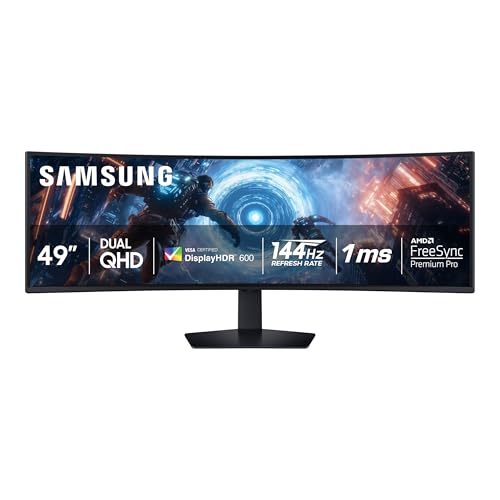
- Best Overall: SAMSUNG 49-inch Odyssey G9 (G91F) DQHD 144Hz Curved Gaming Monitor
- Best for Maximum Screen: Samsung 57″ Odyssey Neo G9 (G95NC) Dual 4K UHD 240Hz Curved Gaming Monitor
- Best OLED Ultrawide: Samsung 49″ Odyssey OLED G9 (G91SD) Dual QHD QD-OLED Curved Gaming Monitor
Disclosure: As an Amazon Associate, ilcastellomenu.com earns from qualifying purchases. Links to Amazon on this page are affiliate links; they cost you nothing extra. Listing details such as price and availability change often — during this event they can change several times a day — so check the current Amazon listing before you buy.
Ultrawide Monitor Black Friday Deals: What Is Actually Worth Buying
Amazon Black Friday Week runs from November 19 to November 30, 2026. Black Friday itself is November 27, and Cyber Monday closes the event on November 30. Ultrawide monitor black friday deals occupy one of the most rewarding corners of that sale, because ultrawides are expensive the rest of the year, model lines are refreshed often, and retailers use this window to clear the outgoing generation at prices that genuinely change what a desk setup costs. This guide covers the six ultrawide deals we would actually spend money on: three Samsung super-ultrawide flagships at 49 and 57 inches, two LG 34-inch curved work-and-play screens at honest budget prices, and one LG 34-inch OLED built for fast gaming. Between them they cover every sensible way to buy width this year, from a home office that lives in spreadsheets to a sim-racing rig that wants a windshield instead of a window.
Every price in this guide was checked against Amazon’s own catalogue data on November 20, 2026, and every price is written as a dated sighting: “seen at $649.99 on November 20, 2026” means exactly that, no more. Monitor prices move hourly during Black Friday Week. A panel can be one figure at breakfast and another by dinner, and a lightning deal can expire while it sits in your cart. Where the catalogue also returned a list price for the same monitor, we show the percentage that pair of numbers represents; where no list price came back, we print no percentage at all, because an invented discount is worse than none. Always check the live price on the listing before you buy.
One decision matters more than any single discount here, and it is the shape decision. Ultrawide is not one format but two. The 21:9 screens at 34 inches replace a dual-monitor pair for most desk work: one continuous workspace for a document beside a spreadsheet, a timeline that shows more of the edit, a game world that fills your peripheral vision without a bezel down the middle. The 32:9 screens at 49 and 57 inches go further — they are two full monitors fused into a single curved panel, aimed at traders, developers, video editors and sim racers who would otherwise run two or three displays and manage the seams. Neither shape is better in the abstract. The 34-inch class costs less, fits normal desks and asks less of your graphics card; the 49-inch class costs more, dominates a room and needs a GPU that can drive a great many pixels. The six picks below are split deliberately across both shapes so the guide reads as a decision, not a catalogue.
It also helps to know what an ultrawide discount really buys, because the headline percentage is only half the story. Panel technology is the other half. A VA curved panel at a deep discount is the value play: strong contrast, good motion for the money, and a curve that wraps the wide image around your field of view. An OLED ultrawide is the premium play: per-pixel light control, near-instant response and black levels no backlit panel can match, at a price that only makes sense when the event cuts it by a third. This guide includes both ends on purpose. If your desk time is mostly work with evening gaming, the mid-priced VA picks will satisfy you for years. If games are the point of the desk, the OLED picks are the ones that will still feel like an upgrade three Black Fridays from now.
In this guide
Quick Picks
Short on time? These are the six deals, the buyer each one suits, and the price we verified on November 20, 2026. Every price is a dated sighting — check the live price before you buy.
| Best for | Deal | Spotted price | Link |
|---|---|---|---|
| Best Overall | SAMSUNG 49-inch Odyssey G9 (G91F) DQHD 144Hz Curved Gaming Monitor | seen at $649.99 on November 20, 2026 (list $999.99) | Check on Amazon |
| Best for Maximum Screen | Samsung 57″ Odyssey Neo G9 (G95NC) Dual 4K UHD 240Hz Curved Gaming Monitor | seen at $1,349.99 on November 20, 2026 (list $2,099.99) | Check on Amazon |
| Best OLED Ultrawide | Samsung 49″ Odyssey OLED G9 (G91SD) Dual QHD QD-OLED Curved Gaming Monitor | seen at $795.99 on November 20, 2026 (list $1,299.99) | Check on Amazon |
| Best Budget for Work | LG 34WR55QK-B 34-inch UltraWide WQHD Curved Computer Monitor | seen at $259.99 on November 20, 2026 (list $399.99) | Check on Amazon |
| Best Value Gaming | LG 34G600A-B 34-inch UltraGear WQHD Curved Gaming Monitor 160Hz | seen at $279.99 on November 20, 2026 (list $399.99) | Check on Amazon |
| Best Premium 34-Inch Gaming | LG 34GX900A-B 34-Inch UltraGear WQHD OLED Curved Gaming Monitor 240Hz | seen at $689.99 on November 20, 2026 (list $999.99) | Check on Amazon |
How These Deals Were Chosen
We verified every pick in this guide the slow way: by searching Amazon’s own catalogue data for the exact brand and model, matching the returned listing title against the monitor we intended to recommend, and recording the price and list price the catalogue returned on November 20, 2026. That process sounds basic, but it eliminates the two failure modes that fill most Black Friday roundups — links that land on a different size or panel generation than the headline promises, and “deals” whose prices were copied from a roundup of a roundup until nobody knows which year they belong to. Samsung and LG both sell several near-identical ultrawides separated by a letter or two in the model code, and those letters change the panel, the refresh rate and the warranty. If a search did not return a listing we could match with confidence, the monitor did not get a link, however good it looked.
A deal then had to clear three further bars. First, the product had to be a current, genuine model from the maker’s own range — no marketplace lookalikes trading on a famous name, and no quietly discontinued panel being cleared under a Black Friday banner without that being obvious from the model year. Second, the listing had to state the facts a buyer actually decides on: size, resolution class, refresh rate, panel type where it matters, and the sync technology it supports. Every specification printed in this guide comes from the verified listing title or the maker’s published specification for that exact model; where we were not sure of a figure, we left it out rather than guess. Third, the price had to be a price worth printing. A token few dollars off a monitor that sits at that figure all year is not a deal, so we favoured the listings where the verified price sat meaningfully below the list price returned alongside it — in all six cases here, by roughly a fifth or more.
We also weighted what the discount buys in practice. A percentage off a 57-inch flagship is a large absolute saving but only sensible for the buyer who would genuinely use two monitors’ worth of width; the same percentage off a 34-inch work screen reaches far more desks. That is why this list leads with the 49-inch all-rounder rather than the biggest panel, why two of the six picks cost under three hundred dollars, and why every review below states plainly who should skip it. An ultrawide fills a desk and a budget in a way a keyboard never will, so the honest guide spends as many words on fit — desk depth, GPU headroom, the software you actually run — as on the panel itself.
The Six Deals, In Detail

1. SAMSUNG 49-inch Odyssey G9 (G91F) DQHD 144Hz Curved Gaming Monitor — Best Overall
Badge: Best Overall. This is the ultrawide most buyers should aim at: a 49-inch curved Dual QHD panel with a 144Hz refresh rate, in Samsung’s current 2025 G91F generation. The 32:9 shape gives you the working width of two 27-inch QHD monitors with no bezel in the middle and one cable instead of two, while the curve keeps the far corners at a comfortable viewing angle instead of trailing off into the distance. For mixed use — work all day, games in the evening — this balance of size, speed and price is the sweet spot of the whole category, and the event price moves it from aspiration to arithmetic.
What separates this G9 from the cheaper 34-inch picks below is not just width but continuity. A video timeline, a row of market charts, a code editor beside its preview, a racing cockpit view — all of them use the full width as one canvas rather than as two boxes with a seam. Picture-by-picture modes let the panel behave like two separate screens for two sources when you want that instead, so a work laptop and a personal PC can share the desk without a second monitor. The ergonomic stand matters more at this size than buyers expect: a 49-inch panel you cannot height-adjust to your chair becomes a neck problem by February, and this one adjusts properly.
Spec snapshot: 49-inch curved panel; Dual QHD (DQHD) resolution; 32:9 aspect ratio; 144Hz refresh rate; DisplayHDR 600; AMD FreeSync Premium Pro; ergonomic stand; 2025 model LS49FG910ENXZA — all per the verified listing.
Who it suits: Home-office workers replacing a dual-monitor pair, sim racers and flight-sim players who want wraparound immersion, and anyone whose day mixes documents, timelines and games on one desk.
Deal details: Seen at $649.99 on November 20, 2026, against a $999.99 list price returned by the same catalogue check — 35% below list on those two verified figures. That is the deepest cut we verified on a current-generation 49-inch G9, and it puts the flagship shape within reach of buyers who were budgeting for a 34-inch screen. Check the live price before you buy.
Strengths
- Two-monitor width with no centre bezel and a single cable run.
- 144Hz and FreeSync Premium Pro keep games smooth as well as work crisp.
- Current 2025 model with an ergonomic stand, not cleared old stock.
Trade-offs
- Needs real desk depth — measure before ordering, the curve is wide.
- Driving DQHD in games wants a capable graphics card.
- Too much screen for a small desk or a single-document workflow.
Verdict — Best for: dual-monitor replacers, mixed work-and-play desks and sim rigs. Not suited for: small desks, laptop-only setups with weak graphics, or buyers who only ever open one window at a time. Check on Amazon · See the Samsung Odyssey G9 G91F 49-inch listing · View full specs and the live price

2. Samsung 57″ Odyssey Neo G9 (G95NC) Dual 4K UHD 240Hz Curved Gaming Monitor — Best for Maximum Screen
Badge: Best for Maximum Screen. The 57-inch Neo G9 is the largest consumer ultrawide Samsung sells: a Dual 4K panel — two 4K screens’ worth of pixels in one 32:9 curve — lit by a Quantum Mini-LED backlight and running at 240Hz. It is, deliberately, too much monitor for most people, and exactly the right monitor for a specific few: the trader with six charts live at once, the editor whose timeline never fits, the sim racer building a cockpit. If your current setup is three monitors and a tangle of stands, this is the single-panel answer, and Black Friday is the only week its price drops into a range where the comparison with three separate screens gets interesting.
The Mini-LED backlight is the technical heart of this pick. Thousands of small dimming zones let the panel show bright highlights and deep shadow in the same frame in a way ordinary edge-lit ultrawides cannot, which is why the listing carries a DisplayHDR 1000 specification rather than the 400 or 600 figures on cheaper screens. DisplayPort 2.1 matters just as much at this pixel count: pushing Dual 4K at high refresh rates needs the bandwidth, and buyers pairing this panel with a current graphics card should use that connection first. Treat the 240Hz figure honestly — at this resolution, only the strongest GPUs in lighter games will get near it; for most owners the headroom simply means the panel will never be the bottleneck.
Spec snapshot: 57-inch 1000R curved panel; Dual 4K UHD resolution; 240Hz refresh rate; 1ms response per the listing; Quantum Mini-LED backlight; DisplayHDR 1000; DisplayPort 2.1; AMD FreeSync Premium Pro.
Who it suits: Multi-monitor power users consolidating to one panel, professional editors and traders, and high-end sim-racing builds with the GPU to feed it.
Deal details: Seen at $1,349.99 on November 20, 2026, against a $2,099.99 list price returned by the same catalogue check — 36% below list on those two verified figures. A saving of this size on the flagship is the entire argument for buying it during the event rather than at any other point in the year. Check the live price before you buy.
Strengths
- Dual 4K width replaces two or three monitors with one seamless panel.
- Quantum Mini-LED backlight delivers genuine HDR contrast.
- 240Hz and DisplayPort 2.1 leave years of GPU headroom.
Trade-offs
- The most expensive pick in this guide by a wide margin.
- Physically enormous — desk size, stand depth and lifting all need planning.
- Most graphics cards cannot drive its full resolution and refresh together.
Verdict — Best for: three-monitor consolidators and no-compromise sim and editing rigs. Not suited for: budget builds, small desks, or anyone whose GPU is more than a few years old. Check on Amazon · See the Samsung Odyssey Neo G9 57-inch listing · View full specs and the live price

3. Samsung 49″ Odyssey OLED G9 (G91SD) Dual QHD QD-OLED Curved Gaming Monitor — Best OLED Ultrawide
Badge: Best OLED Ultrawide. If the G91F at pick one is the sensible 49-inch, this is the beautiful one. The G91SD swaps the backlit panel for QD-OLED, and the difference is visible in the first dark scene of the first game you load: blacks that are truly off rather than dark grey, colours that hold their saturation at the curve’s edges, and a 0.03ms response figure that makes motion look carved rather than smeared. It keeps the same Dual QHD width and adds both G-Sync compatibility and FreeSync Premium Pro, so it plays equally well with either graphics-card camp. The listing’s three-year warranty is worth noting on an OLED, and it is printed right in the verified title.
OLED ownership asks for a few honest habits, and this guide will not pretend otherwise. Static elements left on screen for many hours a day — a fixed taskbar, a permanent HUD, the same spreadsheet grid from nine to five — are the pattern that wears an OLED unevenly over years. Gamers and mixed users who vary their content have little to worry about, and modern panels run protective routines in the background, but a buyer whose screen shows one static application all day should choose the Mini-LED or VA picks in this guide instead. For everyone else, the trade is simple: a little mindfulness in exchange for the best image any ultrawide in this list can produce, especially in a dim room in the evening, which is when most gaming actually happens.
Spec snapshot: 49-inch curved QD-OLED panel; Dual QHD resolution; 144Hz refresh rate; 0.03ms response per the listing; G-Sync Compatible; AMD FreeSync Premium Pro; ergonomic stand; 3 year warranty per the listing.
Who it suits: Gamers who play in the evening and care about image quality, media-first desks, and buyers choosing between this and a large OLED television for a gaming room.
Deal details: Seen at $795.99 on November 20, 2026, against a $1,299.99 list price returned by the same catalogue check — 39% below list on those two verified figures. OLED ultrawides rarely discount this deeply outside the event window, which is what earns a premium panel a place in a deals guide. Check the live price before you buy.
Strengths
- QD-OLED contrast and colour no backlit panel in this guide can match.
- 0.03ms-class response makes fast motion exceptionally clean.
- Three-year warranty stated in the listing, plus both sync systems supported.
Trade-offs
- Static-content all day, every day is not an OLED’s ideal life.
- Glossy screen surface reflects bright windows and lamps.
- Costs more than the backlit G9 while offering the same resolution.
Verdict — Best for: image-quality-first gamers and evening media use. Not suited for: all-day static spreadsheet or trading-grid use in a bright room. Check on Amazon · See the Samsung Odyssey OLED G9 49-inch listing · View full specs and the live price

4. LG 34WR55QK-B 34-inch UltraWide WQHD Curved Computer Monitor — Best Budget for Work
Badge: Best Budget for Work. Most ultrawide buyers do not need a gaming flagship; they need their working day to fit on one screen. This LG is built precisely for that buyer: a 34-inch curved WQHD panel at 3440 x 1440, a 100Hz refresh rate that keeps scrolling and window movement noticeably smoother than an office 60Hz screen, USB Type-C so a laptop connects and charges down one cable, and a stand that adjusts for height as well as tilt. At the verified event price it costs less than many ordinary 27-inch office monitors did a few years ago, which is why it leads the value end of this guide.
The working detail that sells this monitor is the pixel count. WQHD at 34 inches gives you roughly a third more horizontal room than a standard widescreen of the same height, at a text sharpness that stays comfortable all day — two full documents side by side, or a document with a reference browser beside it, without the tiny fonts a 4K panel can force at this size. Reader Mode and the curved shape both serve the same long-day purpose: less harsh light, less head-turning. The 100Hz figure deserves a plain explanation for non-gamers, too. It is not about games; it is about the small daily pleasure of windows that glide instead of judder, and once you have worked at 100Hz an office 60Hz screen feels broken.
Spec snapshot: 34-inch curved panel; WQHD 3440 x 1440 resolution; 100Hz refresh rate; 5ms response per the listing; HDR10; HDMI, DisplayPort and USB Type-C inputs; tilt and height adjustable stand.
Who it suits: Home-office and hybrid workers, students, writers and analysts — anyone whose screen time is documents, browsers and calls with some video and light gaming after hours.
Deal details: Seen at $259.99 on November 20, 2026, against a $399.99 list price returned by the same catalogue check — 35% below list on those two verified figures. This is the lowest verified price in the guide, and the cut is on a current model with USB-C rather than a stripped clearance panel. Check the live price before you buy.
Strengths
- Proper WQHD width for side-by-side work at an entry price.
- USB Type-C single-cable laptop connection.
- Height-adjustable stand — rare and welcome at this price.
Trade-offs
- 100Hz and 5ms are fine for casual play, not for competitive gaming.
- HDR10 at this level is a compatibility note, not a visual event.
- No built-in speakers are listed — budget for audio if you need it.
Verdict — Best for: work-first home offices and laptop docks. Not suited for: serious gamers, who should take pick five, or colour-critical professionals. Check on Amazon · See the LG 34WR55QK-B 34-inch listing · View full specs and the live price
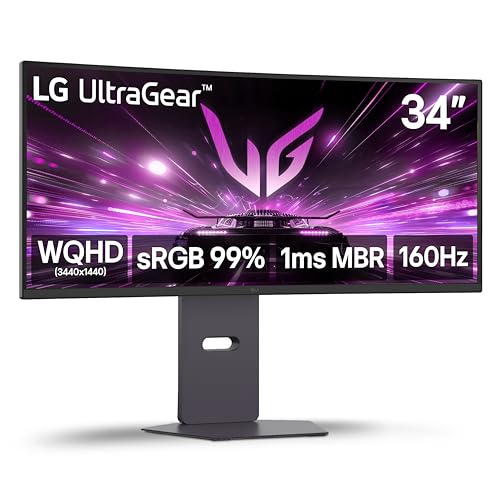
5. LG 34G600A-B 34-inch UltraGear WQHD Curved Gaming Monitor 160Hz — Best Value Gaming
Badge: Best Value Gaming. Twenty dollars more than the work-first LG above buys a very different monitor. The UltraGear 34G600A-B keeps the same 34-inch WQHD canvas but raises the refresh rate to 160Hz, adds FreeSync Premium to keep frames tear-free, includes built-in speakers and HDMI 2.1, and wraps it in a stand that swivels as well as tilts and lifts. For the buyer whose desk is a gaming desk first and a homework or home-office desk second, this is the value pick of the entire guide: genuine gaming speed at a price that undercuts many smaller, slower screens.
The honest way to read the 160Hz figure is against the games you actually play. Story games, racers and open-world titles at WQHD look superb at high refresh and ask less of a mid-range graphics card than 4K does — which is the quiet economic argument for 34-inch WQHD gaming: the monitor costs less and the GPU to feed it costs less too. FreeSync Premium’s low-framerate compensation keeps things smooth when a demanding scene drags the frame rate down, which at this resolution it sometimes will. Built-in speakers will not replace a headset or proper desk speakers, but they handle calls, videos and casual play without extra boxes on a small desk, and at this price their inclusion is a genuine bonus rather than a given.
Spec snapshot: 34-inch curved panel; WQHD 3440 x 1440 resolution; 160Hz refresh rate; AMD FreeSync Premium; HDR10; built-in speakers; HDMI 2.1 and DisplayPort; tilt, height and swivel stand — per the verified listing.
Who it suits: PC gamers on a sensible budget, console-plus-PC desks using HDMI 2.1, and students who game in the same seat they study in.
Deal details: Seen at $279.99 on November 20, 2026, against a $399.99 list price returned by the same catalogue check — 30% below list on those two verified figures. Gaming-spec ultrawides under three hundred dollars are the headline story of this year’s event, and this is the cleanest example we verified. Check the live price before you buy.
Strengths
- 160Hz and FreeSync Premium at a work-monitor price.
- HDMI 2.1 plus DisplayPort covers PC and console in one screen.
- Built-in speakers and a fully adjustable stand included.
Trade-offs
- Not an OLED or Mini-LED image — contrast is good, not spectacular.
- WQHD at 160Hz still wants a mid-range or better graphics card.
- Curved VA panels can show slight smearing in the fastest dark scenes.
Verdict — Best for: budget gaming desks and PC-plus-console setups. Not suited for: competitive esports players, who need smaller, faster screens, or OLED seekers. Check on Amazon · See the LG UltraGear 34G600A-B 34-inch listing · View full specs and the live price

6. LG 34GX900A-B 34-Inch UltraGear WQHD OLED Curved Gaming Monitor 240Hz — Best Premium 34-Inch Gaming
Badge: Best Premium 34-Inch Gaming. This is where the 34-inch class stops compromising. LG’s 34GX900A-B puts an OLED panel behind the familiar WQHD curve and runs it at 240Hz with a 0.03ms response figure, G-Sync compatibility and an HDR True Black 400 specification — the combination competitive and image-conscious gamers have been waiting for this format to reach. USB-C with 65W power delivery means it can also dock a laptop on workdays, which is more than most gaming OLEDs bother to offer. At the verified event price it undercuts the 49-inch OLED above while giving up nothing in speed and little in real-world immersion on a normal desk.
Choosing between this and the Samsung OLED at pick three is the nicest problem in this guide, so here is the honest split. The LG is faster — 240Hz against 144Hz — and its 21:9 shape suits a wider range of games and desks; some titles handle 32:9 awkwardly, cropping or stretching the image, while 21:9 support is close to universal. The Samsung is wider and more dramatic for sims and cinematic games, and its warranty is stated in the listing. Desk size decides for many buyers anyway: the 34-inch fits where the 49-inch simply cannot. Either way, OLED care habits apply — vary content, let the panel run its refresh routines, and do not leave one static image on it for a working week.
Spec snapshot: 34-inch curved OLED panel; WQHD 3440 x 1440 resolution; 240Hz refresh rate; 0.03ms response per the listing; NVIDIA G-Sync compatible; DisplayHDR True Black 400; HDMI 2.1, DisplayPort and USB Type-C with 65W power delivery.
Who it suits: Serious PC gamers who want OLED image quality and 240Hz speed in the desk-friendly 34-inch shape, and mixed users who will also dock a laptop over USB-C.
Deal details: Seen at $689.99 on November 20, 2026, against a $999.99 list price returned by the same catalogue check — 31% below list on those two verified figures. A four-figure OLED gaming ultrawide cut to this level is exactly the kind of deal this event exists for. Check the live price before you buy.
Strengths
- 240Hz OLED speed with 0.03ms-class response and G-Sync support.
- HDR True Black 400 specification for genuine OLED HDR.
- USB-C with 65W charging makes it a workable laptop dock too.
Trade-offs
- The most expensive 34-inch pick here by a large margin.
- OLED and static all-day content remain uneasy partners.
- 240Hz at WQHD needs a strong GPU to feed in demanding games.
Verdict — Best for: performance-first gamers in the 34-inch format. Not suited for: budget desks or buyers who mostly do office work — pick four does that job for far less. Check on Amazon · See the LG UltraGear 34GX900A-B OLED listing · View full specs and the live price
Deals We Left Out, and Why
A guide is defined as much by what it excludes. Our catalogue checks surfaced plenty of other ultrawide listings on November 20, 2026, and several tempting ones did not make the cut. The bundle listings — a flagship panel packaged with third-party software suites or extended-protection plans at a higher combined price — were passed over because the bundle muddies the one comparison that matters, the price of the monitor itself; buy the panel clean and add protection only if you have priced it separately. The very cheapest no-name curved screens were excluded for a different reason: at 34 inches and above, panel uniformity, stand quality and warranty support stop being details and become the product, and the savings over the LG picks above were too small to justify the gamble.
We also left out the previous-generation 49-inch models whose event prices sat within a few dollars of the current G91F at pick one. A superseded panel at a flagship price is the classic Black Friday trap in this category: the discount percentage looks dramatic because it is measured against a list price nobody has paid since the newer model launched. And several listings carried prices identical to the figures those same monitors wear outside the event. A Black Friday banner on an everyday price is marketing, not a deal, and this guide exists to tell the two apart.
Comparison Table
| Pick | Type | Key spec | Seen Nov 20, 2026 | Watch out for |
|---|---|---|---|---|
| SAMSUNG 49-inch Odyssey G9 (G91F) DQHD 144Hz Curved Gaming Monitor | 49-inch 32:9 curved gaming monitor | DQHD, 144Hz, DisplayHDR 600 | $649.99 (list $999.99) | Needs a deep desk and a strong GPU |
| Samsung 57″ Odyssey Neo G9 (G95NC) Dual 4K UHD 240Hz Curved Gaming Monitor | 57-inch 32:9 Dual 4K Mini-LED monitor | Dual 4K UHD, 240Hz, Quantum Mini-LED | $1,349.99 (list $2,099.99) | The largest, heaviest and hungriest panel here |
| Samsung 49″ Odyssey OLED G9 (G91SD) Dual QHD QD-OLED Curved Gaming Monitor | 49-inch 32:9 QD-OLED gaming monitor | QD-OLED, Dual QHD, 144Hz, 0.03ms | $795.99 (list $1,299.99) | OLED care habits apply; glossy panel in bright rooms |
| LG 34WR55QK-B 34-inch UltraWide WQHD Curved Computer Monitor | 34-inch 21:9 curved work monitor | WQHD 3440×1440, 100Hz, USB-C | $259.99 (list $399.99) | 100Hz is a work-first refresh rate |
| LG 34G600A-B 34-inch UltraGear WQHD Curved Gaming Monitor 160Hz | 34-inch 21:9 curved gaming monitor | WQHD, 160Hz, FreeSync Premium, HDMI 2.1 | $279.99 (list $399.99) | VA-class panel; check the curve suits your desk |
| LG 34GX900A-B 34-Inch UltraGear WQHD OLED Curved Gaming Monitor 240Hz | 34-inch 21:9 OLED gaming monitor | OLED, 240Hz, 0.03ms, HDR True Black 400 | $689.99 (list $999.99) | Premium price; OLED care habits apply |
How to Choose the Right Ultrawide Monitor for Your Desk
Start with the shape, not the screen size. The 21:9 format at 34 inches is the natural replacement for a single monitor or a small dual setup: it adds width without taking over the room, and almost every modern game and application handles it gracefully. The 32:9 format at 49 or 57 inches replaces two full monitors and should be bought with that job in mind — if you would not actually run two screens today, the super-ultrawide will feel like a cinema you sit too close to. Measure your desk before anything else. A 49-inch curved panel is roughly 120 centimetres wide and its stand needs depth; a 34-inch needs about 80 centimetres and behaves like a normal monitor. More ultrawides are returned for desk fit than for any picture complaint.
Match the resolution to your graphics card and your eyes. WQHD at 3440 x 1440 is the efficiency sweet spot: sharp for text, kind to mid-range GPUs, and the resolution every pick at 34 inches in this guide uses. Dual QHD doubles the horizontal pixels and with them the GPU workload — a card that cruises at WQHD will work noticeably harder. Dual 4K at 57 inches is a workstation resolution that happens to game, not the other way round. For work, also think about text size honestly: the wider formats shine because you see more at a readable size, not because everything is smaller. If you currently scale a 4K screen to 150 percent to read it, a WQHD ultrawide will feel like a relief.
Choose the panel for the room and the routine. OLED gives the best image and asks for varied content and a reasonably controlled room. Mini-LED gives the brightest, most forgiving HDR and suits bright rooms and static work. Curved VA panels give strong contrast and the best value, with viewing angles that the curve is specifically there to fix — an ultrawide this wide is a one-person screen, and the curve keeps the edges honest for the person in the chair. Glossy screens look richer in dim rooms and reflect lamps in bright ones; if your desk faces a window, weight that heavily.
Three example shopping lists. For a home office that games a little: the LG 34WR55QK-B at pick four, and spend the savings on a monitor arm and a decent chair — your back will notice those more than another 60Hz. For a gaming-first desk: the UltraGear 34G600A-B at pick five on a budget, or the OLED 34GX900A-B at pick six if the budget stretches, because at 34 inches panel quality is the upgrade you see every minute. For a no-compromise setup: the 49-inch G9 that matches your habits — G91F for mixed use, OLED G91SD for evening gaming, Neo G9 57-inch if you are genuinely retiring a three-monitor rig.
Think in workflows, not inches. Write down the three things your screen shows most — for most people some mix of documents, browser, chat, code, timelines, games — and check the shape against them. Two documents and a chat window is a 34-inch day. Six live charts, or a timeline with twenty tracks, is a 49-inch day. Buying the shape your actual Tuesday needs is the whole secret of this category, and no discount percentage should talk you out of it.
How to Check an Ultrawide Deal Is Real — and Keep It
Compare the sale price with the monitor’s own history. The most useful habit in this event is checking what a panel sold for before the banners went up. Free price-history trackers keep long Amazon records for most listings; thirty seconds there tells you whether a discount is a genuine event low or a list price nobody has paid since spring. Every pick in this guide was verified against live catalogue data on November 20, 2026 — do the same check on anything else you add to the cart.
Read the model code letter by letter. Samsung’s G91F, G91SD and G95NC and LG’s near-identical 34-inch codes describe different panels, refresh rates and warranties. Marketplace listings during big events are also prone to showing a hero image of a bigger or newer screen than the one being sold. The model code is the product: check it, then check the size and resolution in the listing title, before you pay.
Check the price at checkout, not just on the page. Prices move hourly during Black Friday Week, and the price in the cart is the price you pay. If a figure jumps between the deal page and checkout, back out and re-check the listing — either the deal ended, or a marketplace seller’s offer has replaced the one you chose. On a purchase this size, also confirm the seller and the delivery date; a great price arriving in January is a different deal from the same price arriving this week.
Plan the arrival. A 49 or 57-inch monitor arrives in a box you could shelter in. Keep the packaging until you have checked the panel for dead pixels, backlight bleed on the backlit models and uniformity on a grey screen — the checks take ten minutes with free test patterns online, and holiday return windows are longer than usual, which quietly makes this the safest week of the year to buy a screen you are ninety percent sure about. Register the warranty, note the serial number, and photograph the panel lit before the box goes to recycling.
Common Mistakes
Buying width your desk cannot hold. The single most common ultrawide regret is physical: a 49-inch panel on a 100-centimetre desk leaves nowhere for speakers, papers or elbows. Measure the desk, measure the stand depth, and leave room for the curve — the corners of a curved screen sit closer to you than the width figure suggests.
Forgetting the graphics card. A Dual QHD or Dual 4K panel fed by an ageing GPU means games running at low settings on a very expensive screen. Budget the two together: the 34-inch WQHD picks exist precisely because they let a mid-range card shine.
Chasing the biggest percentage. The deepest percentage in this guide sits on the 57-inch flagship, and the most useful deal for most readers is a 34-inch LG at a smaller percentage. Rank deals by cost per year of use on your actual desk, not by the size of the red number.
Waiting for Black Friday itself. The event runs November 19–30, and the early days carry full stock at full discount. Waiting for November 27 out of tradition mostly buys sold-out listings and marketplace markups. If the price is at its low today, today is the day.
Skipping the panel check. Ten minutes of test patterns on arrival is the difference between an easy exchange inside the holiday window and an argument in February. Every screen in this guide deserves that ten minutes.
Final Recommendation
If you buy one ultrawide this Black Friday Week, make it the Samsung Odyssey G9 G91F, seen at $649.99 on November 20, 2026: two monitors of width in one curved panel, 144Hz for the evenings, and a current-generation model at a third off its list price. Work-first buyers should save their money and take the LG 34WR55QK-B at a seen $259.99 — it is the best office upgrade in this guide per dollar spent. Gamers should choose their OLED by shape: the LG 34GX900A-B at a seen $689.99 for speed in the friendly 34-inch format, the Samsung OLED G9 at a seen $795.99 for full 49-inch immersion. And the 57-inch Neo G9 at a seen $1,349.99 remains what it was designed to be — the one-panel answer for people retiring a wall of monitors, bought at the one time of year its price argues back. Check the live price before you buy: during this event, the listing is the only price that is real.
Frequently Asked Questions
When do ultrawide monitor Black Friday deals run on Amazon in 2026?
Amazon Black Friday Week runs November 19–30, 2026, with Black Friday on November 27 and Cyber Monday on November 30. Monitor deals appear throughout the window rather than all at once, and popular panels can sell through early — the prices in this guide were verified on November 20, 2026.
Are the prices in this guide guaranteed?
No. Every price here is a dated sighting verified against Amazon catalogue data on November 20, 2026, and prices move hourly during the event. Treat a sighting as evidence of what the deal has cost, then check the live price on the listing before you buy.
Is a 34-inch or a 49-inch ultrawide better?
Neither — they do different jobs. A 34-inch 21:9 screen replaces one monitor with a wider one and suits most desks and most work. A 49-inch 32:9 screen replaces two monitors and suits multi-window work, editing timelines and sim rigs. Measure your desk and count your windows; the honest answer follows from those two facts.
Can my laptop drive an ultrawide?
For work, almost any modern laptop can drive a 34-inch WQHD screen, especially over USB-C as on the LG picks in this guide. The 49-inch Dual QHD panels are heavier work — fine for documents on most recent laptops, but gaming at full resolution needs a proper discrete graphics card. Check your laptop’s video output specification against the panel’s resolution before ordering.
Is OLED safe for a work monitor?
With varied content, yes — modern OLED panels include protective routines, and mixed work-and-play use is well within their design. The risk pattern is one static image or application grid displayed at high brightness for many hours every day over years. If that describes your job exactly, choose the Mini-LED or VA picks in this guide instead.
Should I wait for Cyber Monday instead?
Cyber Monday (November 30, 2026) usually repeats some Black Friday pricing and adds a few fresh offers, but stock is the risk: panels that sell out during Black Friday Week do not reliably come back for Monday. If a price matches the level you were waiting for now, buying now is the safer play.
Related Guides
- Gaming Monitor Black Friday Deals Gamingmonitorblackfridaydeals
- Monitor Black Friday Deals Monitorblackfridaydeals
- Curved Monitor Black Friday Deals Curvedmonitorblackfridaydeals
- Oled Monitor Black Friday Deals Oledmonitorblackfridaydeals
- Gaming Laptop Black Friday Deals 2026 Gaminglaptopblackfridaydeals2026