Where to buy
Check the latest price, availability and delivery on Amazon. Orders are placed on Amazon. We may earn a commission from qualifying purchases.
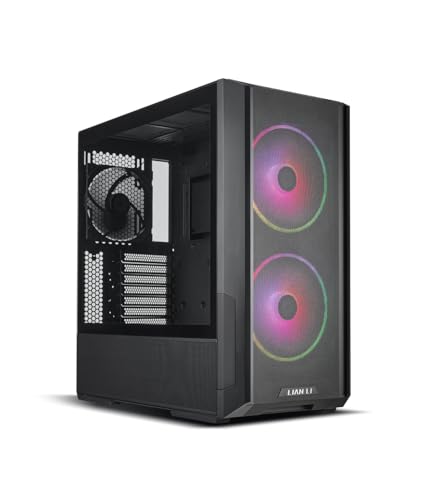
- Best stock airflow for hot GPUs: Lian Li LANCOOL 216 RGB Mid-Tower Case (Black) — Check on Amazon
- Best budget complete fan set: Montech X3 Mesh ATX Mid-Tower Case (Black) — Check on Amazon
- Best panoramic showcase: HYTE Y60 — described in full below; check current listings and availability before you buy (prose-only pick, no verified link in this guide)
- Best white showcase value: Phanteks XT Pro Ultra Mid-Tower Case (White) — Check on Amazon
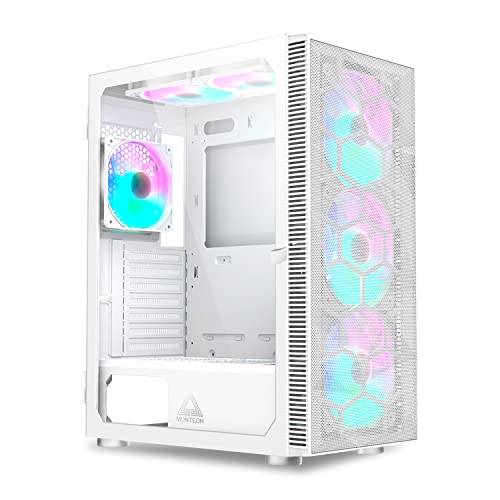
- Best white on a budget: Montech X3 Mesh ATX Mid-Tower Case (White) — Check on Amazon
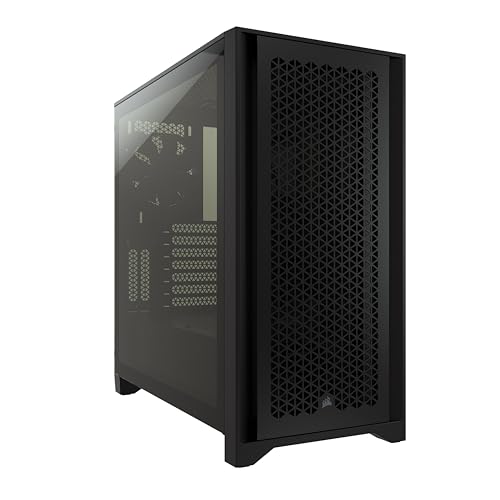
- Best all-round airflow and cabling: Corsair 4000D Airflow Tempered Glass Mid-Tower ATX Case (Black) — Check on Amazon
Read the full guide ↓
Disclosure: As an Amazon Associate, ilcastellomenu.com earns from qualifying purchases. Links to Amazon on this page are affiliate links; they cost you nothing extra. Listing details such as price and availability change often, so check the current Amazon listing before you buy.
Searching for the best pc cases for rgb means you are choosing the part of the build every other part has to live inside. This guide was assembled from verified listings and manufacturer specifications: every clearance figure, fan count and radiator claim below traces to a published spec, every linked pick carries an ASIN verified against a live listing record, and the few showcase designs included without a verified link are labelled prose-only so you know exactly what you are checking yourself. What follows is six picks that genuinely serve this search — rgb done well is a lighting design; rgb done badly is a wiring punishment — with their limitations printed in the open.
RGB done well is a lighting design; RGB done badly is a wiring punishment. The cases here were chosen for how their lighting integrates — included ARGB fans, sensible controllers and glass that shows the build — with honest notes where lighting is fixed rather than addressable. The six picks below were filtered through that lens first and general quality second, and readers comparing across budgets will find the neighbouring guides useful too: see Best Pc Cases For Rtx 3090 and Best Pc Cases Under $150 for the adjacent searches in this category.
In this guide
Quick Picks
Short on time, or comparing several options at once? Each row below names a buyer type and the case that suits it, with a link to the listing where one is verified.
| Buyer type | Pick | Why it stands out | Link |
|---|---|---|---|
| Best stock airflow for hot GPUs | Lian Li LANCOOL 216 RGB Mid-Tower Case (Black) | High-heat gaming builds that need maximum stock airflow out of the box | Check on Amazon |
| Best budget complete fan set | Montech X3 Mesh ATX Mid-Tower Case (Black) | Budget gaming builders who want a complete fan set included at the lowest tier | Check on Amazon |
| Best panoramic showcase | HYTE Y60 | Showcase builders who want the graphics card as the centrepiece | See review below |
| Best white showcase value | Phanteks XT Pro Ultra Mid-Tower Case (White) | White gaming builds that want four big fans and modern front I/O included | Check on Amazon |
| Best white on a budget | Montech X3 Mesh ATX Mid-Tower Case (White) | White budget builds that refuse to pay the usual white-case premium | Check on Amazon |
| Best all-round airflow and cabling | Corsair 4000D Airflow Tempered Glass Mid-Tower ATX Case (Black) | Builders who want proven airflow and the easiest cable routing in this price class | Check on Amazon |
How These Picks Were Chosen
Every case below is a real, verifiable product whose maker publishes the specifications that decide a build: form factor, GPU clearance, CPU cooler height, radiator support, included fans and routing design. We cross-checked those figures between manufacturer data and retailer listing records, and only products whose identity and specifications could be corroborated earned a purchase link. Products described from manufacturer positioning without a corroborated listing in our research are presented prose-only, clearly labelled, so the guide’s links never outrun its evidence.
We did not build in these cases ourselves. We read manufacturer specification pages and listing records, favoured designs whose cooling and clearance claims are physical — mesh area, fan size, millimetre clearances — over designs sold on renderings, and applied this article’s lens as the final filter: a pick that does not serve the specific search in the title did not make the six, however strong its general reputation. Check price on Amazon before you buy; this guide prints no static product prices, because case pricing moves with sales and bundles too often for a printed figure to stay honest.
The 6 Best Pc Cases for Rgb
Lian Li LANCOOL 216 RGB Mid-Tower Case (Black)
Who it suits: High-heat gaming builds that need maximum stock airflow out of the box — filed in this guide as: best stock airflow for hot gpus.
Two 160 mm front fans move more air at lower speed than the usual 120 mm trio, the mesh runs on front, top and PSU shroud sides, and the rear PCIe fan bracket can mount a fan directly behind the GPU — a cooling layout aimed squarely at hot graphics cards.
The 216 is the case in this guide that needs the least aftermarket help: the stock fan set is a complete intake-and-exhaust solution, the top takes a 360 mm radiator for AIO cooling, and 392 mm of GPU clearance plus 180.5 mm of cooler height swallow flagship cards and tall air coolers alike.
Build notes: the stock 160 mm intakes are the cooling system — resist replacing them with smaller RGB fans, a downgrade disguised as an upgrade. Use the rear PCIe bracket fan position when a flagship GPU is fitted; it exists precisely for that card’s exhaust pattern. The top 360 mm position takes an AIO without the front-radiator GPU-clearance penalty.
- Two 160 mm front fans deliver class-leading stock airflow
- 392 mm GPU and 180.5 mm cooler clearance fit flagship hardware
- Rear PCIe fan bracket targets GPU temperatures directly
Honest limitation: It is a large, airflow-first case — the open mesh that cools so well also lets more fan noise escape than a damped case would.
Choose it if its strengths match your parts list and your room. Skip it if the limitation above touches your build directly — a neighbouring pick in this guide will cover that ground.
Montech X3 Mesh ATX Mid-Tower Case (Black)
Who it suits: Budget gaming builders who want a complete fan set included at the lowest tier — filed in this guide as: best budget complete fan set.
Six pre-installed fans — three 140 mm intakes behind a full mesh front and three 120 mm exhausts — mean the X3 Mesh is the rare budget case that needs no extra fan purchase to cool a mid-range gaming build, and the hinged tempered glass door opens for cleaning without tools.
The fixed RGB lighting is simple by design: it lights, it does not sync, and that simplicity is the budget trade that keeps the fan count high. The interior is a conventional ATX layout with a PSU shroud, sized for 305 mm GPUs and 160 mm air coolers — honest mid-range hardware, honestly housed.
Build notes: the six fans arrive pre-wired to fixed lighting — connect, confirm they spin, and spend your build time on cable routing instead of controller setup. GPU length is the hard ceiling here, so measure the card before ordering; mid-range cards fit with room, flagship triple-fans generally do not. The hinged door makes the first dust clean a genuinely pleasant surprise.
- Six fans included — no extra cooling purchase needed at this tier
- Full mesh front panel keeps intake restriction low
- Hinged glass door makes dust cleaning and upgrades easy
Honest limitation: The fans are fixed-speed, fixed-lighting units on Molex-style power, so there is no PWM control or ARGB sync, and 305 mm GPU clearance excludes the longest flagship cards.
Choose it if its strengths match your parts list and your room. Skip it if the limitation above touches your build directly — a neighbouring pick in this guide will cover that ground.
HYTE Y60
Who it suits: Showcase builders who want the graphics card as the centrepiece — filed in this guide as: best panoramic showcase.
The three-piece panoramic glass corner and the included vertical GPU riser turn the graphics card into the display piece of the whole build — no other layout at this class shows hardware as dramatically.
The dual-chamber rear keeps cables out of the picture, and the cold-floor intake design feeds the vertically mounted card from below; it is a case designed around being looked at, and it knows it.
Build notes: the vertical GPU is the build — check your card’s thickness against the glass spacing, use the included riser, and let the floor intakes feed the card as designed. Cable work belongs entirely in the rear chamber; anything visible in the main chamber is a routing decision you made, not one the case forced.
- Panoramic corner glass with no pillar obstruction
- Vertical GPU riser included in the box
- Dual chamber keeps the showcase side spotless
Honest limitation: Vertical mounting puts the GPU fans close to glass in some configurations, and the showcase layout is bigger than its ATX board suggests.
Choose it if its strengths match your parts list and your room. Skip it if the limitation above touches your build directly — a neighbouring pick in this guide will cover that ground.
Prose-only pick: no verified purchase link in this guide — check current listings for this model before buying.
Phanteks XT Pro Ultra Mid-Tower Case (White)
Who it suits: White gaming builds that want four big fans and modern front I/O included — filed in this guide as: best white showcase value.
Four included 140 mm fans behind an open mesh front give the XT Pro Ultra a complete, quiet-leaning cooling setup out of the box, and the front panel carries USB-C 3.2 Gen 2 — the port budget cases keep promising and omitting.
The 450 x 230 x 500 mm frame is a full-size canvas: E-ATX boards up to 280 mm, long graphics cards and 360 mm-class radiators all fit the plan, and the white finish with tempered glass reads as a showcase rather than an office box.
Build notes: four 140 mm fans want a motherboard with enough headers or a simple hub — check before build day. The white finish and glass make cable discipline visible, so use the shroud and channels as designed rather than as decoration. Front USB-C needs the motherboard header connected to be more than a socket.
- Four 140 mm fans included — a complete cooling set
- USB-C 3.2 Gen 2 front I/O at a mid-tier price class
- White showcase finish with room for E-ATX and long GPUs
Honest limitation: Its full-size footprint is more case than a small desk needs, and white builds still demand the cleaning discipline every white case does.
Choose it if its strengths match your parts list and your room. Skip it if the limitation above touches your build directly — a neighbouring pick in this guide will cover that ground.
Montech X3 Mesh ATX Mid-Tower Case (White)
Who it suits: White budget builds that refuse to pay the usual white-case premium — filed in this guide as: best white on a budget.
It is the X3 Mesh formula — full mesh front, six included fans, hinged glass door — finished in white inside and out, which at the budget tier is genuinely rare: most makers charge extra for white or skip it entirely below the mid-range.
A white case shows dust and cable colors more honestly than a black one, and the X3’s shrouded PSU bay plus door-style glass panel make the weekly wipe-down a two-minute job. The fixed RGB fans read cleanly through the white mesh without any controller setup.
Build notes: in the white finish, plan cable colours as part of the build — black PSU cables read as design accents through the glass whether you planned them or not. The mesh front pulls dust visibly on white, and the hinged door turns the monthly wipe into a two-minute habit that keeps the finish honest.
- Full white finish at a true budget tier
- Six fans included, mesh front for real airflow
- Hinged glass door simplifies cleaning — important in a white case
Honest limitation: Same fixed-speed fan trade as the black version, and white fans and cables from other brands may not match its exact shade.
Choose it if its strengths match your parts list and your room. Skip it if the limitation above touches your build directly — a neighbouring pick in this guide will cover that ground.
Corsair 4000D Airflow Tempered Glass Mid-Tower ATX Case (Black)
Who it suits: Builders who want proven airflow and the easiest cable routing in this price class — filed in this guide as: best all-round airflow and cabling.
The perforated steel front panel feeds the two included AirGuide fans, whose anti-vortex vanes concentrate air on the GPU and CPU instead of scattering it, and the RapidRoute system routes the main cables through one channel with 25 mm of space behind the motherboard tray.
Building in the 4000D Airflow is the calm version of a first build: the tempered glass panel comes off with captive thumbscrews, the PSU shroud hides the messy half of the wiring, and there is room for a 360 mm front radiator or a long 360 mm-class graphics card without the usual knuckle work.
Build notes: the front panel pops off for filter cleaning without tools, the two stock fans are best placed as front intake and rear exhaust from the start, and the first upgrade worth making is a top exhaust fan — the case’s airflow balance improves immediately. The shroud’s removable section keeps long power supplies and their cables from fighting the drive cage.
- Perforated front panel delivers genuine intake airflow, not a sealed glass look
- RapidRoute channel and 25 mm depth make tidy cabling achievable for beginners
- Fits long GPUs and a 360 mm front radiator in a compact mid-tower footprint
Honest limitation: Only two fans are included, so a high-heat build should budget for extra exhaust fans, and there is no front USB-C on the original model.
Choose it if its strengths match your parts list and your room. Skip it if the limitation above touches your build directly — a neighbouring pick in this guide will cover that ground.
Comparison Table
| Product | Form factor | Key specifications | Link |
|---|---|---|---|
| Lian Li LANCOOL 216 RGB Mid-Tower Case (Black) | Mid-tower E-ATX/ATX | E-ATX/ATX mid-tower · all-around mesh · 2 x 160 mm ARGB + 1 x 140 mm fans · 392 mm GPU clearance · 360 mm top radiator | Check on Amazon |
| Montech X3 Mesh ATX Mid-Tower Case (Black) | Mid-tower ATX | ATX mid-tower · full mesh front · 6 fixed RGB fans included · 305 mm GPU clearance · tempered glass door panel | Check on Amazon |
| HYTE Y60 | Dual-chamber ATX | Dual-chamber ATX · three-piece panoramic glass · vertical GPU with riser included | — |
| Phanteks XT Pro Ultra Mid-Tower Case (White) | Mid-tower E-ATX/ATX | E-ATX/ATX mid-tower · mesh front · 4 x 140 mm fans included · USB-C Gen 2 front I/O · white finish | Check on Amazon |
| Montech X3 Mesh ATX Mid-Tower Case (White) | Mid-tower ATX | ATX mid-tower · full mesh front · 6 fixed RGB fans included · 305 mm GPU clearance · white finish | Check on Amazon |
| Corsair 4000D Airflow Tempered Glass Mid-Tower ATX Case (Black) | Mid-tower ATX | Mid-tower ATX · perforated steel front · 2 x 120 mm AirGuide fans · 360 mm GPU clearance · RapidRoute cable channel | Check on Amazon |
Lighting That Earns Its Wiring
Addressable RGB (ARGB) fans sync per-LED effects through the motherboard; fixed RGB fans light in preset colours with no control beyond on and off. Both have honest places — fixed lighting keeps budget builds simple, ARGB rewards the showcase — and every pick here is labelled with which kind it carries, because listings blur that line deliberately.
Glass choice shapes the result: clear tint shows lighting as designed, dark tint mutes it into ambience. Plan the fan controller and header count before the build, not during it.
That lens also explains the ordering of this guide: the first picks serve the search in the title most directly, and the later picks widen the trade-space for readers whose builds lean the other way. If your parts list is still fluid, the guides at Best Pc Cases For 3070 and Best Gaming Pc Cases Under $50 cover the neighbouring decisions in this same category.
The Build This Search Usually Means
Picture the finished build at night, lights low: the question is whether the lighting reads as one design or as six fans arguing. The picks here were ordered by how coherently their lighting integrates — synced ARGB where the budget allows, honest fixed colour where it does not — and the reviews label which is which, because that single fact decides the wiring, the software and the look.
A Note on Prices and Listings in This Category
PC cases are promotion-prone hardware: the same model moves between list and sale pricing across the year, white and black finishes are listed separately, and fan bundles change what is in the box. That is why this guide prints no product prices and sends you to the live listing for the current figure. When you check a listing, confirm the full model name and finish, confirm the included fan set matches the review, and confirm the listing is the case alone — some bundles quietly include or exclude items the headline suggests.
How to Choose Pc Cases for Rgb
- Start with clearances, not looks. List your GPU length, CPU cooler height (or radiator size), motherboard form factor and PSU length, then filter every case by those four numbers. A case that fails one figure fails the build, whatever its photographs promise.
- Count the finished fan setup. Price the case plus any fans needed to reach two or three intakes and one exhaust. Included fan sets are real money saved, and fan size matters: 140 mm and 160 mm fans move the same air more quietly than 120 mm fans working harder.
- Read the front panel honestly. Mesh and perforation cool; sealed glass and solid panels quieten and warm. Choose based on your hardware’s heat, not the render — a hot GPU behind a sealed front will be loud in a way no fan curve can fix.
- Measure the desk, then the case. Width, depth, height, and the space the side panel needs to slide or swing off. Travel and small-desk builders should work in litres: under 20 L is bag territory, 33 L is compact-desk, full mid-towers run far larger.
- Plan cables before components. Routing depth behind the tray, a shroud or chamber for the PSU area, and grommets where your board’s connectors actually sit. Good cable design is build quality you feel on day one and every upgrade after.
- Check front I/O against your motherboard. A front USB-C port needs a motherboard header to function. Confirm the case’s ports and your board’s headers match, or you are buying a decorative socket.
- Think one upgrade ahead. The next GPU will likely be longer and thicker; the next cooler may be a 360 mm AIO. Headroom in the comparison table is the cheapest future-proofing in the entire build.
- Match filtration to your room. Carpet, pets and dust make filtered intakes and easy-clean panels a thermal feature, not a luxury: a clogged, unfiltered build runs hotter every month it goes uncleaned.
Silence Is a System, Not a Panel
Owners chase silence by buying damped panels, then run aggressive fan curves that undo them. Real quiet is a chain: large fans turning slowly, curves tied to the temperatures that matter, a GPU whose cooler is not starved by the case, and a PSU whose fan rarely joins in. A mesh case with 160 mm intakes at low speed can match a damped case’s noise while running cooler, because its fans simply have less work to do — the principle behind several picks in this guide.
Set expectations by load, too. Silence at idle is easy and every pick here achieves it; silence under a full gaming load is the expensive version, bought with fan size, intake area and curve patience rather than with any single product. Judge a case’s acoustic claims by which load they describe, and set your own curves for the load you actually run.
Thermals in Practice: Reading Temperatures Like an Engineer
A case’s thermal quality shows up as a delta — the gap between component temperature and room temperature — and as noise at a given delta. When you read any case comparison, including the impressions behind this guide’s picks, compare deltas at matched fan speeds rather than absolute temperatures from different rooms and different days. The designs favoured here share the physical traits that produce good deltas honestly: open intake area measured in real perforations rather than styling slits, fans sized 140 mm or larger where the frame allows, and exhaust paths that do not ask hot air to turn corners against solid panels.
At home, your own audit takes ten minutes: run a combined CPU-and-GPU load for fifteen minutes, note both temperatures and the fan speeds that held them, then remove the front panel and repeat. A large improvement with the panel off names the bottleneck precisely — intake restriction — and tells you whether your next move is a fan, a curve adjustment or, in a sealed case, the honest admission that the case itself is the limit. The picks in this guide were chosen so that audit flatters them.
Second-Hand Wisdom: What Owners Replace First
Ask long-term owners what they changed, and a pattern emerges that spec sheets never show. First replaced: stock fans on cases that shipped too few — the purchase this guide’s complete-fan picks exist to prevent. Second: the case itself, when a GPU upgrade outgrew its clearance — the purchase this guide’s headroom figures exist to prevent. Third, almost never: a case bought with honest airflow, full clearances and a complete fan set, which quietly serves three builds while its owner upgrades everything inside it.
That pattern is the economic argument running under every section of this guide. A case is cheap per year precisely when it is not the cheapest case on the shelf: the money that buys included fans, real mesh and upgrade headroom returns itself the first time a component swap does not become a case swap. Buy the case your next build also wants, and the category’s whole replacement economy passes you by.
The Desk Test: Living Next to Your Case
Specifications end at the desk edge; ownership begins there. A case lives within arm’s reach for years, and the qualities that decide whether it is loved or tolerated are tactile: whether the power button feels deliberate, whether the front ports sit where your hand expects them, whether the side panel comes off without a screwdriver hunt, and whether the machine’s idle sound disappears under a room’s ordinary noise. None of that appears in a clearance table, and all of it appears in this guide’s reviews where the design evidence supports it.
Placement is part of the test. A mesh-top case under a shelf loses its exhaust; a tower on carpet chokes a bottom intake and feeds its filter a dust diet; a glass showcase facing a window becomes a mirror at noon. Before ordering, stand where the case will live and check its four directions — air in, air out, panel off, cables reachable — because the best case on paper is only the best case in the position it will actually occupy.
Living With the Case: Dust, Noise and the Second Build
A case reveals itself over months, not unboxings. Month one is the honeymoon: filters are clean, fans are quiet and temperatures sit at their best. The ownership habits that keep it there are small — a monthly filter rinse, a quarterly check that intake fans are unobstructed by carpet or wall placement, and a fan curve set once, properly, instead of a default that spins up at every menu screen. Cases with tool-less panels and removable filters, several of which appear in this guide, turn those habits into minutes; cases that hide filters behind screwed panels quietly discourage them, and their temperatures drift.
The second build is the real verdict. When the GPU upgrade or the platform swap arrives, a case with generous clearances, a sane routing channel and panels that still seat perfectly earns its keep a second time, while a case bought tight against one parts list gets replaced and resented. That is why this guide weights headroom and build quality alongside the headline lens of each search: the cheapest case is the one you only buy once, and the most expensive is the beautiful one your next graphics card does not fit inside.
Noise deserves its final word here, because it is the quality owners mention most a year in. Mesh cases cool with large, slow fans; damped cases silence with panels and insulation; both strategies work, and both fail when fan curves are left on aggressive defaults. Whichever pick you take from this guide, spend ten minutes in the BIOS or fan software after the build — set intake fans to a calm ramp tied to GPU temperature where your board allows it — and the case you chose for airflow or looks will also be the case you chose for quiet, without spending another unit of currency on it.
Fan Curves and the Sound of a Finished Build
Cooling is a curve, not a switch. A finished build sets its intake fans against the component that heats the case — usually the graphics card — and its exhaust against the average of CPU and GPU, so the case breathes harder exactly when the hardware does and idles near silence the rest of the time. The cases in this guide all expose standard fan headers or included controllers that make that setup possible; the ten minutes it takes are the cheapest acoustic upgrade in PC building, and they are the difference between owners who describe their case as quiet and owners who describe the same case as loud. Do the curve once, save the profile, and the case disappears from your attention — which is the highest compliment a case can earn.
Panels, Filters and the Five-Minute Month
Ownership cost in this category is measured in minutes. Door-style glass, slide-off panels and front filters that pull free without tools reduce the monthly clean to a genuinely five-minute task, and tasks that take five minutes get done. Multiply that across the years a case serves and the design details that looked minor in a spec table — a hinge here, a magnetic filter there — become the difference between a build that runs at its day-one temperatures in year three and one that has been slowly warming, unnoticed, since the first summer. When two picks in this guide look equal on cooling, choose the one whose panels and filters you will actually enjoy maintaining.
Front I/O and the Daily Touchpoints
You will touch the front panel more than any other part of the build: power every day, USB for drives and controllers, audio for headsets. Port placement at the top front edge suits floor-standing cases; front-face ports suit desk-standing ones — match the case to where it will live. A USB-C port is only real if your motherboard has the header, a combined audio jack only convenient if your headset uses one plug. These are small checks with daily consequences, and they are why this guide notes front I/O in the reviews instead of leaving it to the listing photographs.
Cable Routing as a Cooling Feature
Cables in the airflow path are not merely untidy — in compact cases they measurably obstruct intake air, and in every case they collect dust at exactly the points where air slows. A planned route behind the tray keeps the main chamber’s air path clean from front intake to rear exhaust, which is why routing depth and channels are treated as thermal specifications throughout this guide rather than cosmetic ones. When you compare the picks, weigh the routing design alongside the fan count: the two work as one system, and a build that routes well also cleans well, upgrades well and photographs well, because all four are the same discipline seen from different sides.
Power Supplies, Shrouds and the Hidden Half
The bottom chamber of a modern case does unglamorous, decisive work. A full-length shroud hides the power supply and its cable excess, lets the visible build breathe visually, and separates the PSU’s heat from the main chamber’s airflow plan. Check PSU length clearance the way you check GPU clearance — modular units with stiff cables need room to bend — and prefer cases whose shroud has a cut-out or removable section where your build needs access. The hidden half is half the build experience; the picks here were chosen with their shrouds and chambers examined, not just their glass sides.
The Upgrade Audit: Reading a Case Like a Contract
Before ordering, audit the case against your next build, not only this one. Will it take a graphics card two slots thicker and fifty millimetres longer? Will the top or front accept the 360 mm radiator your next platform may want? Are there drive mounts for the archive drive you keep promising to install? A case that answers yes three times is infrastructure; a case that answers no is a consumable, and it should be priced in your head accordingly. The comparison table in this guide exists to make that audit a five-minute job instead of a return shipment, and the five minutes are best spent before the order, while every option is still open.
Common Mistakes
- Buying by photograph and discovering GPU or cooler clearance at build time — the most common and most avoidable case mistake. The figures exist; read them first.
- Choosing a sealed glass front for a high-heat build, then blaming the GPU or cooler for temperatures the case caused.
- Counting the case price without the fans it needs, and paying more in total for a worse cooling setup than a complete case offered.
- Ignoring radiator thickness: a 360 mm radiator position that collides with the motherboard or GPU is not a 360 mm position in your build.
- Forcing a full ATX board’s cables through a case with shallow routing depth, then closing the rear panel under pressure — connectors and panels both lose that fight eventually.
- Skipping the dust filters’ cleaning schedule until temperatures have already drifted upward for months.
- Buying a small-form-factor case with an ATX power supply and a full-size motherboard on the same parts list. SFF is a system decision, not a case swap.
- Matching white components by name instead of by shade — ‘white’ from three makers is three colours in one build.
Final Recommendation
- Best stock airflow for hot GPUs: Lian Li LANCOOL 216 RGB Mid-Tower Case (Black).
- Best budget complete fan set: Montech X3 Mesh ATX Mid-Tower Case (Black).
- Best panoramic showcase: HYTE Y60.
- Best white showcase value: Phanteks XT Pro Ultra Mid-Tower Case (White).
Our top two for this search are the Lian Li LANCOOL 216 RGB Mid-Tower Case (Black) and the Montech X3 Mesh ATX Mid-Tower Case (Black): between them they cover the two shapes this search usually takes — the pick that serves the title’s lens most directly, and the pick that widens the trade-space for builds leaning the other way. Readers weighing neighbouring searches should also see Best Pc Cases For Beginners and Best Pc Cases For Cable Management. Measure your desk, list your clearances, count your fans, and check the live price before you order — in this category, that homework is the whole difference between a case that serves three builds and a case that survives one.
Reading Reviews of Cases Without Being Misled
Case reviews reward a sceptical reader. Thermal tests run in air-conditioned labs on open benches of fans; noise tests at distances your desk will not match; build impressions from hands that have assembled five hundred cases judging a product bought by hands assembling their first. Translate every review — this one included — through your own constants: your room’s temperature, your desk’s position, your experience level. The specifications are portable; the impressions are local, and the guides that tell you which is which are the ones worth keeping.
Warranty, Parts and the Long View
Cases rarely fail electronically, but their small parts decide their lifespan: a cracked foot, a lost thumbscrew, a front-panel cable worn by a hinge. Established makers sell or supply those parts for years, and their cases carry multi-year warranties on the chassis itself. When two picks in this guide otherwise tie, the one from the maker with the deeper parts shelf is the one still in service at the decade mark — a consideration worth the paragraph it gets here, because it never appears in a specification table and always appears in year six.
The Environmental Footnote Every Build Deserves
A steel-and-glass case is one of the most durable, recyclable objects in a setup, and the greenest case decision is simply to buy once: a chassis that serves three builds keeps two others out of the waste stream entirely. Prefer steel over plastic where the budget allows, keep the box until the build settles, and pass a replaced case onward — the second-hand market for good airflow cases is healthy precisely because well-bought cases outlive their first builds by years.
Second Drives, Capture Cards and the Forgotten Slots
Expansion is the quiet reason ATX endures: the capture card, the extra network adapter, the sound card, the stack of archive drives a creator accumulates. Before ordering, count your future slots and bays the way you counted clearances — expansion slots on the rear, 2.5 and 3.5 inch mounts inside, and the cable routes to reach them. The picks in this guide were checked for that expandability, and the reviews note where a compact or style-led design trades it away, so the trade is a decision rather than a discovery.
Frequently Asked Questions
How do I know if my graphics card will fit a case?
Check three published figures against your card’s spec sheet: GPU length clearance in millimetres, expansion slot thickness, and the space below the card for its fans. Length is the headline number, but thick flagship cards also need slot room and breathing space beneath them. Every pick in this guide lists its verified GPU clearance in the comparison table.
How many fans does a gaming PC case actually need?
A complete basic setup is two or three intake fans and one exhaust; more fans at lower speed beat fewer fans at full speed for both cooling and noise. Cases that include that set in the box save a second purchase, which is why included fan counts are stated for every pick here.
Is tempered glass or mesh better for a PC case?
They do different jobs: mesh belongs on intake and exhaust paths where air must pass, glass belongs on the side where you want to see the build. The strongest designs combine both — open mesh where air moves, glass where eyes do. A sealed glass front is the one arrangement to avoid for a hot build.
What is the difference between ATX, micro-ATX and Mini-ITX cases?
The form factor names the largest motherboard the case accepts. ATX mid-towers offer the most room, radiator options and board choice; micro-ATX trims size while keeping standard power supplies; Mini-ITX goes smallest, with SFX power supplies and careful clearance planning. Your motherboard decides the minimum case size, not the other way round.