Disclosure: As an Amazon Associate, ilcastellomenu.com earns from qualifying purchases. Product examples below link to Amazon, where you can check current availability and specifications; this guide itself lists no fixed prices because printer pricing and bundles change frequently.
What is a sublimation printer? It is an inkjet printer that uses special sublimation inks to print designs onto transfer paper; when that paper is pressed against a polyester fabric or a specially coated blank with a heat press, the ink turns directly from solid to gas and bonds permanently inside the material’s surface. The result is a full-colour image that cannot crack, peel or fade the way a surface print can, because the colour lives within the fibres or coating rather than on top of them. Sublimation is the technology behind custom T-shirts, mugs, photo panels and sportswear, and this explainer covers how it works, what you need, and its real limitations.
Ready to shop after learning? See Best Sublimation Printers for Beginners and Best Epson Printers for Sublimation.
The Short Answer: What Is a Sublimation Printer and How the Process Works
Dye sublimation is a three-part system — special ink, transfer paper and heat — and the printer is only one part of it. Understanding the whole chain prevents the most common beginner confusion, which is expecting the printer alone to produce a finished T-shirt.
Step one: print the design, mirrored
The printer lays sublimation ink onto coated transfer paper. The design is printed in reverse (mirrored), because it will be flipped onto the final item. At this stage the colours look dull and wrong on the paper — that is normal, because the dyes are not yet activated.
Step two: heat and pressure
The transfer is placed against the blank — a polyester shirt, a coated mug, a metal photo panel — and a heat press applies high heat (around the range sublimation requires, per your ink and blank suppliers’ instructions) and firm pressure for a set time. A household iron cannot substitute: it cannot hold even temperature and pressure across the design.
Step three: the chemistry that makes it permanent
Under heat, the solid dye converts directly to gas — sublimation — and the polyester or polymer coating opens to receive it. As everything cools, the dye returns to solid inside the material. The image is now part of the surface, with no texture you can feel and nothing to peel.
In this guide
What You Need Besides the Printer
Budgeting only for the printer is the classic sublimation mistake. The full starter kit has several components, and each one matters to the result.
Sublimation ink and paper
Standard inkjet ink will not sublimate. You need dye-sublimation ink formulated for your printer, and sublimation transfer paper that releases the dye cleanly under heat. Keep both dedicated: a printer filled with sublimation ink should stay a sublimation printer.
A heat press
Flat presses handle shirts, fabric and flat blanks; mug presses wrap cylindrical items; some crafters start with a small easy-press style tool for small designs. Even heat and pressure across the whole design is what you are buying — it is the difference between vivid transfers and patchy ones.
Suitable blanks
Sublimation only bonds to polyester and polymer-coated surfaces. For apparel that means high-polyester garments (the higher the polyester content, the more vivid and durable the result). Mugs, tumblers, keyrings and panels must be sold as sublimation blanks with the correct coating — an ordinary ceramic mug will not work, however good it looks.
Design software and a computer
Any graphics software works, from free editors to professional suites. You will mirror designs, size them to your blanks, and manage colour. Our Best Sublimation Printers for T Shirts guide discusses the design-to-shirt workflow in more depth.
Sublimation at a glance
| Question | Answer |
|---|---|
| What makes it ‘sublimation’? | Solid dye turns to gas under heat and bonds inside polyester or polymer coating |
| What can it print on? | Polyester fabrics and specially coated blanks (mugs, panels, tumblers) |
| What can it not print on? | Cotton, dark garments, uncoated surfaces; no white ink |
| Do I need a heat press? | Yes — even heat and pressure are half the process |
| Does the print fade or crack? | No — the dye lives inside the material, so it cannot crack or peel |
| Can the printer also do documents? | It should stay dedicated to sublimation ink; use another printer for documents |
Dedicated Sublimation Printers vs Converted Inkjet Printers
There are two routes into sublimation printing, and the choice affects warranty, convenience and ink handling for the life of the setup.
Dedicated sublimation printers
Purpose-built models are designed and warrantied for sublimation ink, with ink systems and colour profiles tuned for it. They cost more but remove guesswork: the manufacturer supports the exact use you bought it for, and refill ink is matched to the machine.
Converted tank printers
Many crafters fill a new refillable-tank inkjet with sublimation ink instead of the supplied ink. It works — tank printers are easy to fill with any ink — but the conversion is unsupported: warranties generally do not cover non-standard ink, and you must never have loaded regular ink first, because the lines cannot be fully purged. Convert a brand-new printer or not at all.
Why cartridge printers convert poorly
Cartridge models make conversion expensive and unreliable: cartridges must be refilled or replaced with refillable versions, chips complicate matters, and ink capacity is small. The community’s preference for tank models, visible throughout Best Sublimation Printers for Shirts, is practical, not fashion.
What Sublimation Does Brilliantly — and What It Cannot Do
Sublimation has a specific superpower and specific hard limits. Knowing both lists before spending money is the entire value of this section.
Brilliant: full-colour, photographic, permanent
Sublimation reproduces photographs and gradients beautifully, in unlimited colours at no extra cost per colour, with zero hand-feel on fabric and outstanding wash durability. All-over prints and vibrant sportswear are its home turf, which is why team kits and custom apparel businesses rely on it.
Cannot: print white or light colours on dark garments
Sublimation ink is transparent dye, not opaque pigment. There is no white ink, so designs show the fabric colour through them — print on a dark shirt and the design darkens or vanishes. Sublimation is for white and light-coloured polyester items. Dark garments need other technologies, such as the heat-transfer methods in Best Printers for Heat Transfer Paper.
Cannot: bond to cotton or uncoated surfaces
On cotton, sublimation washes out almost immediately because the dye has no polyester to bond with. Cotton-blend shirts print faded and vintage-looking in proportion to their cotton content — a flaw or a style, depending on intent. Likewise, uncoated ceramics, wood and metal simply will not take the transfer.
Common Beginner Misconceptions
Sublimation attracts confident misinformation. Clearing these four points saves real money.
'The dull print from the printer is wrong'
No — sublimation prints look muted on paper by design. The colours develop fully only under heat on the blank. Judging a transfer by the paper print is the most common beginner panic, and it is unfounded.
'Any inkjet can do sublimation with the right paper'
The ink is the technology, not the paper. Regular ink on sublimation paper produces a weak, washable surface transfer at best. Sublimation ink in the printer is non-negotiable.
'An iron works if I press hard'
Irons cannot maintain the required even temperature and pressure across a design, producing the classic patchy, half-faded transfer. A press is not an upsell; it is half the process.
'Sublimation and heat-transfer vinyl are the same'
They are different crafts. Vinyl is cut and applied as a surface layer; sublimation dyes the material itself. They suit different designs and fabrics, and many craft rooms run both alongside the machines in Best Printers for T Shirt Transfers.
Is Sublimation Right for You?
Close the explainer with the practical question. Sublimation rewards specific goals and frustrates others, and the pattern is predictable.
Say yes if…
You want full-colour custom apparel on light polyester, personalised mugs and gifts, photo panels, or a small business selling printed products. You are willing to learn pressing times and temperatures per blank, and to test on spare blanks before committing good stock.
Say no, or not yet, if…
Your designs are mostly for dark cotton shirts, you want one machine that also prints your documents (a sublimation printer should stay dedicated), or you print only occasionally — a dedicated setup that sits idle is money parked. Occasional custom items are cheaper ordered from a print service.
The sensible first setup
A dedicated entry sublimation printer or a new tank printer converted before first use, sublimation ink and paper from one matched supplier, a press sized to your main blank, and a stock of practice blanks. Buy once, in that order, and your first month will be about design rather than troubleshooting.
Sublimation in Practice: Your First Projects, In Order
Beginners succeed fastest by climbing a deliberate ladder of blanks, from forgiving to demanding. This sequence builds the pressing skill that every later project depends on, while wasting the cheapest blanks first.
Start flat and simple: fabric and flat blanks
Polyester fabric squares, tote bags and flat items like coasters teach the core variables — time, temperature, pressure and alignment — with immediate, visible feedback and cheap mistakes. Master even colour and clean edges here before anything cylindrical or expensive goes near the press.
Then mugs and tumblers
Curved blanks add wrap alignment and even-pressure challenges, and they punish uneven heat with faded bands. A dedicated mug press earns its cost quickly if drinkware is your product. Test with one sacrificial mug per new design size, and record the settings that worked — your future self is your most important customer for that notebook.
Then photo panels and gifts
Hard coated blanks — aluminium photo panels, plaques, keyrings — produce the most giftable and sellable results, and they are the least forgiving of dust, misalignment and wrong pressure. By this stage your notebook of tested settings is the difference between a hobby and a small production line.
Keep records like a professional
For every blank type, note the press settings, the paper and ink batch, and the result. Sublimation has more variables than it first appears, and the crafters who scale are simply the ones who stopped re-discovering their own settings every month.
Sublimation vs the Other Ways to Decorate a Shirt
Sublimation is one of several garment technologies, and choosing it well means knowing what the alternatives do better. This honest comparison keeps the explainer grounded.
Heat transfer vinyl (HTV)
Vinyl is cut into shapes and heat-applied as a surface layer. It works on cotton and dark garments — sublimation’s two blind spots — and gives crisp text and logos. It feels like a layer on the fabric, can crack over years, and multi-colour designs mean layering multiple cuts. Many craft rooms run vinyl and sublimation side by side for exactly these complementary strengths.
Inkjet heat-transfer paper
Transfer paper lets a normal inkjet print designs that are then heat-applied to garments, including cotton. The result is a surface film: it feels heavier than sublimation, washes less durably, and trims visibly around complex designs. It is the low-commitment way to test garment printing before investing in a dedicated technology.
Screen printing and DTG
Screen printing dominates bulk runs of identical designs — unbeatable per-shirt economics at volume, impractical for one-offs. Direct-to-garment printing handles cotton and dark shirts with full colour but at professional equipment cost. Sublimation’s niche between them — full colour, one-off friendly, polyester only — is precisely why it thrives with small sellers and gift-makers.
Troubleshooting Sublimation Results: A First Guide
Even an explainer owes its readers the common failure patterns, because sublimation’s are distinctive and each maps to a specific variable in the process. When a transfer disappoints, work this list before changing anything else.
Faded or washed-out transfers
The usual causes are insufficient heat, time or pressure — the dye did not fully gas and bond — or a blank whose polyester content or coating is lower than expected. Change one variable at a time on a test blank, increasing press time or temperature within the supplier’s guidance, and record the result. Random changes teach nothing and waste blanks.
Ghosting and blurred edges
Ghosting — a faint double image — means the transfer paper shifted during pressing or while hot. Tape transfers to blanks with heat-resistant tape, avoid sliding the press, and let items cool as directed before peeling. Sharpness problems at this stage are mechanical, not chemical, and the fix is handling, not settings.
Colours that differ from the screen
Screens emit light; prints reflect it, and sublimation adds its own colour behaviour through the press. Expect to calibrate expectations: print a colour test chart onto a spare blank, keep it as your reference, and design toward what the process produces rather than what the monitor promises. Consistent suppliers — one ink, one paper, one blank source — keep results repeatable.
Marks, lines and press shadows
Dust and fibres on the blank print as permanent specks, so lint-roll garments and wipe hard blanks before pressing. Lines that mirror the paper’s edge come from pressure transitions; protective sheets and correct padding, per your press and blank suppliers’ guidance, soften them. Cleanliness, in sublimation, is a print-quality feature.
Sublimation for Sellers: From Hobby to Small Business
Many readers meet sublimation as a craft and stay for the business. The transition has a shape, and knowing it helps hobbyists decide how far to go and sellers avoid the expensive lessons.
What sells and why sublimation suits it
Personalised products — names, photos, dates, team colours — are sublimation’s commercial sweet spot, because every item can differ at no extra setup cost. Mugs, apparel, photo gifts and event merchandise dominate small-seller catalogues precisely because the process makes one-offs as economical as batches, which no screen-printing setup can claim.
Costing honestly
Price products from the full stack: blank, ink and paper per print, press time, your time, packaging, platform fees and the inevitable misprints while learning a new blank. Beginners underprice by counting only the blank. A test-print budget belongs in the cost of every new product line — the notebook of settings described earlier is, in business terms, your production documentation.
Quality as the brand
Sublimation’s durability is its selling point, so protect it: use consistent blanks and inks, test-wash apparel samples, and photograph products in honest light. A seller whose prints survive fifty washes earns repeat custom that a cheaper, fading competitor cannot take — the technology’s permanence, marketed properly, is the business model.
Gear for This Guide
The examples below come from our verified product pool and illustrate the printer classes discussed in this guide. They are examples, not a ranked list — use the criteria in this article to judge any model, including newer revisions of these machines.
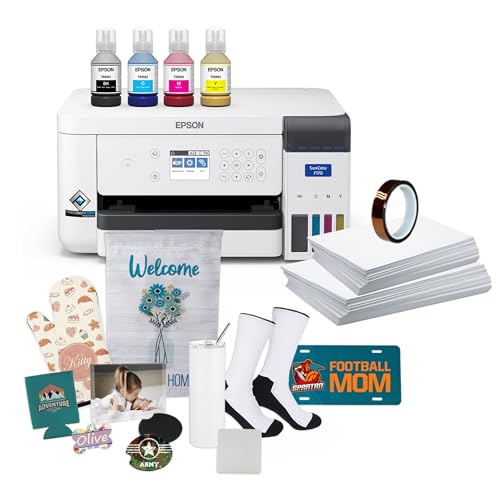
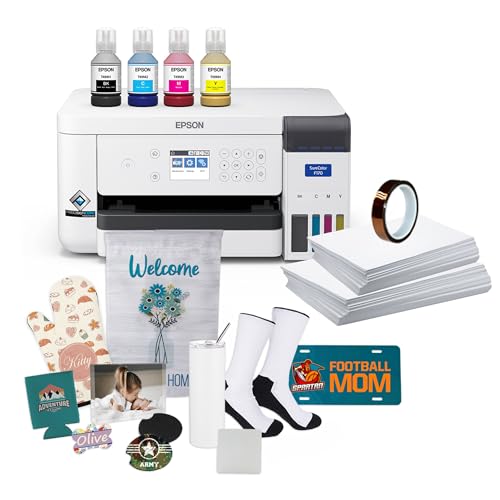
Epson SureColor F170
A representative dedicated dye-sublimation printer sold as a complete starter package with sublimation ink — the purpose-built route described above. Epson SureColor F170 — Check on Amazon
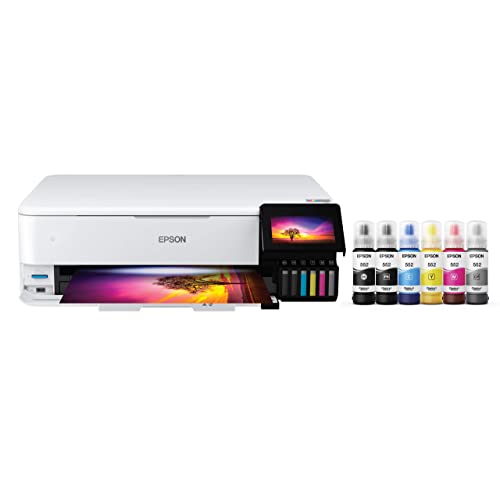
Epson EcoTank Photo ET-8550
A representative wide-format tank printer of the class crafters commonly discuss for conversion — remember conversion must happen before regular ink is ever loaded, and is unsupported by the manufacturer. Epson EcoTank Photo ET-8550 — Check on Amazon
The Chemistry, One Level Deeper: Why Polyester Works and Cotton Cannot
The short answer in the main guide — dye becomes gas, gas enters polyester, dye is trapped as it cools — rewards a closer look, because it explains every success and failure in the craft. Sublimation dyes are disperse dyes, a family developed for synthetic fibres, and their defining trait is an affinity for polyester’s molecular structure. When polyester is heated toward the temperatures a heat press delivers, its polymer chains loosen and microscopic gaps open between them. Dye arriving as a gas drifts into those gaps. As the material cools, the chains tighten and the dye molecules are locked inside the plastic itself — not sitting on the surface in a film, but dissolved within the fibre, which is why a sublimated shirt has no feel to the design, cannot crack or peel, and fades only as the garment itself fades.
Cotton fails for the mirror-image reason: its cellulose fibres offer the dye no such home. Heated dye gas may settle on cotton’s surface briefly, but there is no polymer structure to open, accept and imprison it, so the first wash carries essentially all of it away. No press setting, ink brand or prayer changes that chemistry, which is why every “sublimation on cotton” workaround is actually a different technology in disguise — a coated spray that adds a polyester-like layer, a special transfer film that bonds to the cotton, or a hybrid paper that leaves a polymer film behind. Those workarounds can be perfectly good products, but they reintroduce exactly what pure sublimation avoids: a surface layer with a feel, an edge and a lifespan. Hard blanks obey the same law — a sublimation mug is a ceramic mug wearing a polyester coating, and the dye lives in that coating. A chipped coating, an uncoated thrift-store mug, or a blank bought without its sublimation rating will each fail in their own instructive way, and the failure will look like a printer problem while being a chemistry fact.
Why the Print Looks Wrong Before You Press It: Colour in Sublimation
Every beginner has the same moment of doubt: the design prints onto the transfer paper looking dull, muted, sometimes frankly brownish, and the instinct is to fix the printer. Resist it. Sublimation ink on paper is only an intermediate state — the dyes appear at full strength only after heat converts them and they bond inside the substrate, at which point colours deepen and saturate dramatically. Judging a transfer by its paper appearance is like judging a photograph by its negative. The corollary matters just as much: because the transformation is so large, colour management in sublimation leans heavily on profiles. An ICC profile matched to your printer, ink and paper combination tells the software how to compensate for the whole system’s behaviour, and printing through the correct profile is the difference between reds that arrive as red and reds that arrive as a rumour of orange.
Build a small discipline around this. Keep one reference design — a file with skin tones, a bright red, a deep blue, grass green and a gradient — and press it onto a sacrificial blank whenever you change ink, paper or printer settings. File the pressed result with a note of the date and the change. Colour drift in sublimation is gradual and deniable until a customer’s team shirt mismatches last season’s; the reference tile turns drift into evidence. And remember the mirror rule built into the process: designs are printed reversed, because the transfer flips them as it presses, so any design containing text must be mirrored in software before printing — the one mistake every sublimation printer makes exactly once, usually on the most expensive blank of the day.
The Press Triangle: Time, Temperature and Pressure Working Together
The printer gets the attention, but the press decides the result, and its three variables trade against each other like the corners of a triangle. Temperature drives the dye’s conversion to gas and the polyester’s opening; too cool, and conversion is incomplete, giving pale, washed results, while excessive heat scorches polyester, yellows coatings and can blow colour past the design’s edges. Time — the dwell — governs how completely the gas migrates; too short starves the transfer, too long invites the dye to keep travelling, softening edges in the fault called ghosting when the paper shifts, or blowout when gas escapes sideways beyond the image. Pressure holds paper and substrate in the intimate contact the gas needs to cross the tiny gap, and uneven pressure prints its map onto the result as patches of strong and weak transfer.
Two working habits tame the triangle. The first is pre-pressing: a few seconds of heat on the bare blank or garment before the transfer goes on, which drives out moisture — the hidden fourth variable, whose steam causes blotches and faded patches — and flattens fibres and wrinkles into a receptive surface. The second is consistency of ritual: the same protective sheet above and below the work, the transfer taped with heat-resistant tape so it cannot shift at the moment of opening, the press opened smoothly rather than snapped, and the finished piece moved once, decisively, to a cooling surface. Most “mystery” sublimation faults are one corner of the triangle drifting — a press whose displayed temperature no longer matches its platen, a cushion compressing with age, a rushed dwell on a thick blank that needed longer for its core to reach temperature. When results change and settings have not, suspect the equipment’s honesty before the design’s, and verify with the reference tile from the colour section above.
A Worked Example: Your First Mug and Your First Shirt
Follow two canonical first projects and the whole system becomes tangible. The mug begins as a coated blank and a design sized to its printable area, printed mirrored onto sublimation paper and allowed to dry until the ink no longer feels tacky — handling it wet smears dye that will press exactly as smeared. The transfer wraps the mug snugly, taped tight with heat tape so no gap lets gas escape and blur an edge, and the mug goes into its press — a dedicated mug press or a suitable attachment — where heat and even pressure work around the cylinder. Out it comes, blazing hot, the paper peeled away in one motion, and the design that looked so dull on paper is suddenly glossy, saturated and part of the mug’s surface, because it is in the coating rather than on it. Set it on a heat-safe surface, resist the cold-water plunge that can shock coatings, and inspect once cool: banding points back to the printer, pale patches to pressure or moisture, blurred edges to movement or over-dwell.
The shirt repeats the lesson on a forgiving scale. Choose a white or pale, high-polyester garment; a blended shirt will accept dye only into its polyester fraction, yielding the soft, vintage fade that is a fault when unexpected and a style when chosen. Pre-press the shirt to expel moisture and flatten it, lint-roll it — a single fibre or speck under the transfer presses in as a permanent coloured dot — position the design, tape it, protect the press with a sheet above and below so stray dye cannot haunt the next project, and press with firm, even pressure. Peel, cool, and hold it beside the reference tile. Two projects, perhaps an hour, and every abstraction in this guide — the chemistry, the profiles, the triangle — has passed through your hands once, which is worth more than another hour of reading.
A Short Glossary for the Terms Sellers and Forums Use
Substrate / blank: the object receiving the design — garment, mug, panel — which must be polyester or polyester-coated for the process to work. Dwell: the time the press stays closed; one corner of the press triangle. Ghosting: a faint doubled edge caused by the transfer shifting during or just after pressing while dye is still mobile. Blowout: colour spreading beyond the design’s boundary, usually from excess heat, time or pressure letting gas escape sideways. Gassing out: dye continuing to migrate after pressing, the reason fresh prints are separated and cooled rather than stacked hot. ICC profile: the colour translation file matching a specific printer, ink and paper combination to expected results. Outgassing / moisture pop: blotchy pale patches from steam escaping a blank that was not pre-pressed. Hard blank / soft blank: the trade’s shorthand for rigid coated objects versus garments and fabrics. Full bleed: a design printed to or beyond the edges of the blank, demanding precise sizing and taping. Vintage wash: the faded result of sublimating onto a cotton-rich blend, a fault or a fashion depending on intent. Readers browsing machines with these terms in mind can compare the field in our best sublimation printers for beginners roundup.
When Sublimation Is the Wrong Tool, Stated Plainly
An explainer earns trust by marking its subject’s borders clearly, and sublimation’s borders are bright lines. Dark garments are outside them: with no white base and no opaque layer, dye cannot lighten what it lands on, so designs vanish into dark fabric; decorating dark cotton belongs to vinyl, screen printing, direct-to-garment and film-transfer methods, each with its own feel and economics. One-off personalisation of a customer’s own supplied item is usually outside them too, because you cannot verify the item’s fibre content or coating, and the process punishes guessing with a ruined garment that was not yours to ruin. Very large designs beyond your press’s platen, items that cannot tolerate press heat, and fibres such as untreated nylon or wool all sit beyond the border as well.
Inside the border, though, sublimation’s combination remains unmatched: full-colour photographic detail, zero hand-feel, wash-fastness limited only by the garment, and a workflow that scales from one personalised mug to a run of team shirts without screens, weeding or setup waste. The craft rewards specialisation — sellers who build their catalogue around light polyester and coated blanks, master their press triangle, and keep reference tiles find a process of unusual reliability. The misery stories almost always trace to border violations: the dark hoodie, the mystery-fibre blank, the uncoated bargain mug. Learn the chemistry once and the borders stop feeling like restrictions; they are simply the shape of a tool that does one transformation superbly. Those building a shirt-focused setup can see the machines sellers favour in our best sublimation printers for t-shirts guide.
Storage, Shelf Life and the Quiet Enemies of Good Transfers
Sublimation supplies age in ways that produce confusing faults, and a little stores discipline prevents most of them. Sublimation paper is a coated product whose coating does the work of holding dye at the surface until the press; stored in humidity, it absorbs moisture that later steams in the press and prints its complaint as blotches, and stored curled or under weight it feeds badly and shifts during pressing. Keep paper in its packaging, flat, in the room where you print, and let a fresh pack acclimatise before a critical run rather than bringing it straight from a cold delivery van to a warm press. Printed transfers themselves keep well for days to weeks if stored flat, dry and out of light — many sellers batch-print transfers ahead of orders — but a transfer stored in a steamy workroom or against other prints can offset or pre-release dye, so interleave and file them as you would artwork.
Ink and blanks have their own clocks. Sublimation ink in a converted printer is the system’s most perishable element: it settles, ages and punishes idle weeks by clogging, which is why converted setups demand the regular printing rhythm the main guide describes, and why a bottle’s date deserves a glance before a refill rather than after a failure. Coated blanks keep almost indefinitely in cool, dry storage, but their coatings can be scratched by careless stacking — a mug whose coating is scuffed prints the scuff faithfully — so keep blanks in their boxes until press day. None of this is elaborate; it is the ordinary respect a chemical process asks of its materials, and sellers who build the habits early discover that most of their “printer problems” were storage problems wearing a disguise.
Ventilation and workspace sense
A word on the workspace itself, because the process involves sustained heat and vaporised dye. Work with ordinary room ventilation, keep a heat-safe landing zone beside the press so hot blanks never share space with paper stock, and give the press its own clear radius — garments waiting to be pressed, transfers and finished goods all suffer from being parked on or under hot equipment. Sellers scaling up should treat the press area like a small kitchen station: heat, timing and handling disciplined by layout. It is unglamorous advice, and it is the difference between a craft corner that produces consistent work for years and one that produces a steady supply of mysteries.
Keep the reference tile habit from your very first week, even before you feel you need it. A dated tile for every ink, paper or garment change turns the whole colour question — the one beginners argue about most — into a filing system, and it will quietly save at least one order, one customer and one expensive blank in your first year of pressing.
Frequently Asked Questions
Why did my design come out faded even on a polyester shirt?
Work the triangle and the moisture before blaming the ink. The common causes, in order of frequency, are: the garment’s polyester content is lower than its label implies or it is a blend, so only part of the dye found a home; the press did not reach or hold the intended temperature across the whole design, often at the edges of an ageing platen; the dwell was too short for the garment’s thickness; moisture in the fabric turned to steam because the pre-press was skipped; or the transfer was printed with the wrong profile or on the wrong side of the paper — sublimation paper has a coated print side, and printing on the back produces exactly this pale disappointment. Change one variable at a time onto a sacrificial garment, and the cause identifies itself within two or three tests.
Can I sublimate the same blank twice to add more design?
Yes, with care, and mugs and garments both tolerate a second pressing when the first design is fully cooled and the new transfer is positioned and taped precisely. Two risks govern the attempt: reheating can shift or slightly soften the first design if the second dwell is long and hot, and any overlap region receives a double dose of heat that can scorch coatings or yellow fabric. Mask or protect finished areas where you can, keep the second press as short as the new design allows, and practise first on a spoiled blank if the piece matters. Many sellers deliberately design in stages this way — a background pressed first, names added per order — turning a limitation of one-shot printing into a personalisation workflow.
Does sublimation fade in the wash?
Properly sublimated polyester is among the most wash-fast decoration methods that exist, because the dye is inside the fibre rather than in a surface layer exposed to abrasion and detergent. Wash the garment as you would any quality polyester — cool to warm water, turned inside out out of general care — and the design should outlast the garment’s own shape and brightness. Apparent “fading” complaints usually trace back to the original press: a transfer that was under-heated or under-timed bonded only partially, leaving surface dye that the first washes remove, which is a process fault misread as a durability fault. If a design survives its first three washes unchanged, it is there for the garment’s life.
What size printer do I need for mugs and shirts?
Let the largest design you genuinely plan to sell or make decide. Standard desktop sublimation printers handle mug wraps, sleeves, and chest designs comfortably, and most beginner and small-seller work lives within those bounds. Full-front shirt designs, large tote panels and all-over work demand a wider printer and, just as importantly, a press whose platen covers the design in one pressing — stepping a small press across a large design invites pressure lines and ghosting at every overlap. Buy the pair, printer and press, as one sizing decision, and be honest about whether the large work is a real product line or an occasional experiment that a local print service could handle better while your setup stays compact.
Can I sublimation print on 100% cotton shirts?
No. The dye needs polyester to bond with; on cotton it washes out almost immediately. Use high-polyester garments, or choose a different decoration method for cotton.
Why does my design look dull on the transfer paper?
That is normal. Sublimation dyes develop their full colour only when heated onto the blank. Judge the result after pressing, not on the paper.
Do I need special ink, or just special paper?
Special ink is essential — sublimation dye ink is the technology. Sublimation paper is also needed to release the dye cleanly, but paper alone with regular ink does not work.
Can I convert a printer I already own?
Only if it has never had regular ink in it — ink lines cannot be fully purged. Conversions are also unsupported and typically void warranty coverage for ink-system issues. A new tank printer is the usual conversion candidate.
What temperature does sublimation need?
It requires sustained high heat from a press, with exact settings depending on the ink, paper and blank suppliers’ instructions. Follow the blank manufacturer’s guidance and test on a spare blank first.
Is sublimation good for a small business?
Yes — it is one of the most popular small-business print technologies because full-colour products need no per-colour setup, equipment is compact, and results are durable and retail-quality.
Can I sublimate on a black or dark-coloured shirt?
Not with visible results. Sublimation dyes are transparent and there is no white ink, so the garment colour shows through and darkens the design. Sublimation is designed for white and light-coloured polyester. Dark garments call for vinyl, transfer or other decoration methods.
How long does a sublimation print last on a shirt?
Effectively the life of the garment. Because the dye is inside the fibres rather than a layer on top, it does not crack, peel or fade under normal washing the way surface prints do. It will outlast most other decoration methods on the same shirt.
What is the difference between sublimation and a regular printer with sublimation paper?
The ink is the difference. Sublimation requires sublimation dye ink in the printer; regular ink printed on sublimation paper produces at best a weak surface transfer that washes poorly. Paper alone does not make a printer a sublimation printer.
How much does it cost to get started with sublimation?
Costs vary with the route — a dedicated printer package costs more than converting a new tank printer — and the press and blanks add to either. Budget for the whole system described in this guide rather than the printer alone, and include a stock of practice blanks; they are tuition, not waste.
Can I use a regular oven or a hand iron instead of a heat press?
For garments, an iron cannot deliver the even temperature and firm, uniform pressure the press triangle requires across a whole design, and results show it in patches; small, simple transfers sometimes survive the experiment, but it is a demonstration, not a workflow. Dedicated convection ovens with wraps are a recognised method for mugs and tumblers in some setups, where the wrap supplies the pressure and the oven the even heat — that combination respects the physics and can work well. What never works is improvising both halves at once: uneven heat plus uneven pressure guarantees that some region of every design is under-transferred, and the failures will consume more in spoiled blanks than the press would have cost in patience.
The Bottom Line
A sublimation printer is one third of a system — special dye ink, transfer paper and a heat press — that dyes designs permanently into polyester and coated blanks. It produces unbeatable full-colour apparel and gifts on light polyester, and it simply cannot do dark cotton. Buy it for what it is, and it is superb.
Related Guides
Keep exploring with these guides and roundups from the same printers collection: