Disclosure: As an Amazon Associate, ilcastellomenu.com earns from qualifying purchases. Product links on this page may earn a commission at no extra cost to you.
Asking how long do hard drives last is really asking how to plan: the honest answer is that a typical hard drive serves for several years, often outliving the computer around it, yet any individual drive can fail early, late or suddenly — which is why lifespan knowledge is for scheduling replacements and backups, never for trusting a single drive.
This explainer covers what the large-scale evidence shows, which factors genuinely shorten or extend service life, the warning signs that a specific drive is ageing, and how to turn all of it into a calm replacement plan. If your plan concludes with a purchase, Best Hard Drives for Long Term Storage is the natural next read.

Gear mentioned in this guide
The products below are examples that fit the situations described in this article. They are mentioned so you can picture the kind of hardware involved, not as a claim that one model suits every computer, console or NAS. Check the form factor, interface and capacity against your own system before you buy anything.
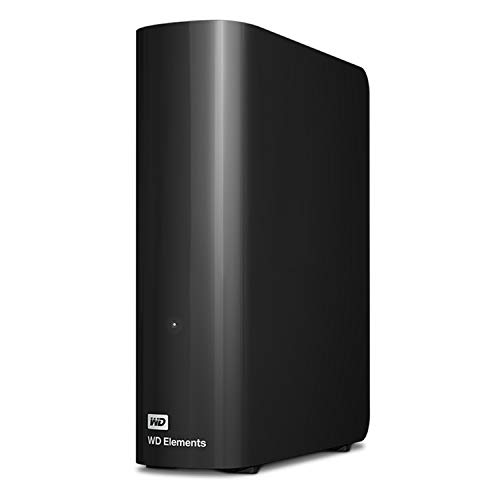
WD Elements Desktop 8TB — Western Digital 8TB Elements Desktop External Hard Drive, USB 3.0 external hard drive for plug-and-play storage – Western DigitalBWLG0080HBK-NESN, Black. Check on Amazon
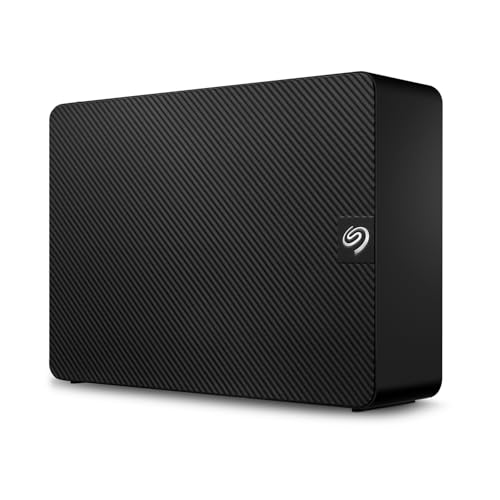
Seagate Expansion 8TB Desktop — Seagate 8TB Expansion Desktop Hard Drive | USB 3.0 (STKP8000400) | Desktop HDD for easy backup, plug-and-play, drag-and-drop, auto detects Windows & Mac. 1-Year Warranty + 1-Year Rescue. Check on Amazon

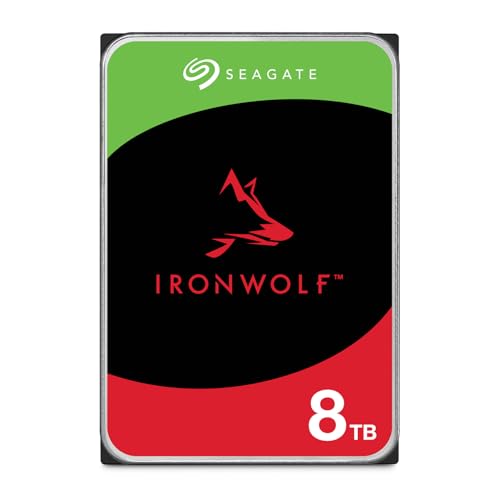
Seagate IronWolf 8TB NAS HDD — Seagate 8TB IronWolf Internal NAS Hard Drive | SATA 6 Gb/s (ST8000VNZ04) | 24/7 NAS-optimized HDD. AgileArray, All-CMR, RV sensors for multi-bay, 180TB/year. 3-Year Warranty + 3-Year Rescue. Check on Amazon
In this guide
What the evidence says about typical lifespan
Operators of huge drive fleets publish failure statistics, and a consistent picture emerges: a small share of drives fail early, often within their first months; the large middle of the population then serves reliably for years; and failure rates climb again as drives reach advanced age. This pattern — sometimes drawn as a bathtub curve — matches everyday experience. A drive that survives its youth will probably serve a long middle life, and a drive of advanced years deserves increasing suspicion regardless of how healthy it feels today.
Translating that into a household rule: treat three to five years of service as a normal expectation for a hard drive in regular use, with many drives exceeding it, especially lightly used backup and archive drives, and some falling short, especially drives that run hot and continuously. Manufacturers’ warranties and workload ratings frame their own expectations. The number that matters for your planning is not an average; it is the age and condition of the specific drives holding your only copies.
Why your mileage genuinely varies
Two identical drives can live very different lives. One spins in a cool desktop used a few hours a day; the other runs continuously in a warm NAS cupboard, starting and stopping with power cuts, beside vibrating neighbours. Heat, duty cycle, handling and luck all move the outcome, which is why fleet statistics describe populations, not promises. The sections below separate the factors you control from the luck you cannot, because the controllable ones are where planning pays.
Factors that shorten or extend service life
Heat is the most consistent environmental enemy. Drives are specified for operating temperature ranges, and living near the top of the range for years is associated with earlier failure. Airflow in desktops, NAS enclosures and external cases is therefore lifespan equipment, not a cosmetic concern. Dust-clogged vents and sealed cupboards quietly tax every drive inside them. A drive that runs noticeably hotter than identical neighbours is telling you something about its environment or itself, and either way it deserves attention.
Handling and power matter too. Drives in laptops and portables endure bumps that desktop drives never meet, and a running drive is at its most fragile. Power quality — surges, abrupt cuts, a failing power supply — stresses electronics. None of this demands anxiety; it demands the ordinary courtesies of keeping machines cool, handling portables as the precision devices they are, and letting a surge protector or small UPS stand between your storage and the weather. The health checks in How to Test the Health of a Hard Drive turn these generalities into per-drive evidence.
Warning signs that a specific drive is ageing out
Lifespan statistics cannot tell you about your drive, but your drive can tell you about itself. Growing SMART error counters — reallocated and pending sectors, uncorrectable errors — are the clearest signal. New noises are the second: clicking, grinding or changed spin-up sounds from a drive that used to be quiet. Behaviour is the third: files that open slowly, copies that stall, a system that occasionally loses sight of the drive. Any one sign can have an innocent explanation; two together are a replacement plan asking to be written.
Age itself becomes a sign in an array. NAS drives of the same age, bought together and worked identically, approach old age together, which is why staggering replacements and keeping a spare are standard practice for important arrays. When one drive of a same-age set fails, treat its siblings as seniors under observation: verify backups, watch their counters weekly for a while, and budget for their retirement rather than being surprised by a second failure during a rebuild.
Turning lifespan into a plan, not a worry
The practical system has four parts. First, backups that do not depend on any drive’s lifespan: at least two copies of anything irreplaceable, on different devices, one of them separable from the computer. Second, a monthly health glance at important drives, with results noted so trends are visible. Third, proactive replacement of drives that show growing errors, distress sounds or advanced age in critical roles — replaced on your schedule, with cloning or copying done calmly, as How to Clone a Hard Drive describes. Fourth, repurposing: a retired system drive with clean health can live a second life holding expendable copies, clearly labelled as a senior citizen.
Notice what this plan never does: it never asks you to predict a failure date, and it never trusts a drive because it has ‘always been fine’. Past reliability is weak evidence about a mechanical device’s future. The plan works precisely because it assumes failure is a matter of timing, and arranges your data so that the timing, whenever it arrives, is an inconvenience rather than a loss. That is the entire practical content of lifespan knowledge.
A lifespan audit you can do this week
This short audit converts the ideas above into an inventory and a schedule. It takes under an hour and leaves you knowing exactly which drives hold your risk.
Step 1: List every drive and its age
Use health tools to read each drive’s power-on hours and note purchase dates where you know them. Include the forgotten soldiers: the portable in the drawer, the external holding backups, the drives in the NAS. You cannot plan for drives you have not counted, and most households discover at least one drive they had forgotten was load-bearing.
Step 2: Grade each drive by role and evidence
Mark each drive with its job — system, working storage, backup, archive — and its current evidence: clean health, watch-list counters, or warning signs. A young, clean drive in a critical role is low risk. An old drive with growing errors holding your only photo copy is the audit’s headline finding, and it should be addressed before anything else on the list.
Step 3: Fix the single-copy problems first
Wherever the audit finds data existing on exactly one drive, copy it somewhere else before any other project. This step outranks replacements, because a second copy protects against every failure mode at once, including the ones no audit can foresee. Only when nothing important is single-copy does drive age become a scheduling question instead of an emergency.
Step 4: Schedule replacements by evidence and age
Put drives with growing errors on a replace-now list, and advanced-age drives in critical roles on a replace-soon list with a realistic date. Drives in expendable roles can serve until they fail. Writing dates down — even approximate ones — is what turns lifespan from a topic you read about into maintenance that actually happens.
Step 5: Set the recurring health check
Add a monthly reminder to glance at SMART verdicts and temperatures for important drives, and note the key counters. Five minutes a month is the entire ongoing cost of the system, and it is what catches the drive that starts declining between your annual good intentions.
Common mistakes to avoid
Trusting a drive because it has never given trouble
Mechanical wear is cumulative and mostly invisible until it is not. A spotless history lowers your suspicion; it does not retire it. Keep backups and health checks in place for your most reliable drive exactly as for your least, because the failure that matters is the one that happens to the drive holding the only copy.
Replacing drives purely by birthday
Age is a planning hint, not a verdict. A cool, lightly used six-year-old archive drive with clean counters may be a better citizen than a hot, hard-worked two-year-old with growing errors. Replace by evidence first and age second, and you will spend money where the risk actually lives.
Letting a NAS array age as a single unit
Same-age drives in an array approach the risky years together, and a rebuild after one failure stresses the survivors hardest exactly when they are oldest. Stagger replacements as drives age, keep a spare for critical arrays, and verify the array’s external copy before any rebuild begins.
Practical tips that make a real difference
Write the in-service date on the drive
A small label with month and year removes all guesswork from future audits. Do it for internal drives on the tray or case note if the label cannot be seen, and for portables directly on the enclosure. Your future self, mid-audit, will be grateful for the ten seconds it took.
Retire drives to lighter duties, not to the bin
A drive leaving system duty with clean health can hold a third copy, a media library that exists elsewhere, or test data. Label it clearly as a retiree so nobody later mistakes it for primary storage. Extracting safe extra service from old drives is thrifty; trusting them silently is not.
How long do hard drives last in a NAS versus a desktop versus a drawer?
Environment writes lifespan more than the calendar does. A NAS drive accumulates hours relentlessly — a continuously running drive logs in a year what a desktop drive may log in four — but it lives a controlled life: fixed mounting, steady power, managed temperatures and no travel. A desktop drive rests more but shares a case with heat-generating neighbours and the occasional knocked tower. A backup drive in a drawer accumulates almost no running hours, yet faces its own hazards: being dropped during its monthly outing, stored somewhere damp or hot, or simply forgotten until the day it is needed and its lubricant and electronics have aged unexercised on the shelf.
The drawer case deserves respect, because an untested archive is a hypothesis. Media and mechanisms age even at rest, and a drive that has sat for years should be spun up and read periodically — annually is a sane rhythm for archives — both to verify the data and to keep the device honest. Refresh important archives onto new media on a cycle of years rather than decades, and keep the register updated as copies move. Lifespan, in the end, is not a property a drive has; it is a relationship between a device, its environment and your verification habits, and two of those three factors are yours to choose.
Sudden death versus slow decline: planning for both shapes
Drives fail in two shapes, and your planning must cover each. Slow decline is the considerate shape: counters climb, sounds change, performance sags, and the health routine catches it with time to spare. Sudden death is the other shape: a drive that reported perfect health yesterday is unrecognised today, its electronics or a mechanical seizure having ended matters between one power-up and the next. No monitoring regime catches the second shape in advance, which is precisely why this guide keeps returning to copies. Monitoring converts slow declines into scheduled maintenance; backups convert sudden deaths into errands. You need both conversions, because you do not get to choose which shape your drive has selected.
Households often over-invest in one conversion and neglect the other. The diligent health-checker with no second copy is protected against the failures that warn and naked before the ones that do not. The backup enthusiast who never checks health discovers both copies ageing in step, bought the same week and worked the same hours. The audit in this guide exists to balance the pair: an inventory that grades every drive by evidence and role, fixes single-copy data first, and then schedules replacements — a small system that treats lifespan as the manageable, two-shaped problem it actually is.
When a drive outlives its job: retirement done well
Many drives end their service not by failing but by becoming too small, too slow or too old for a role that grew. Retirement done well starts with a final health read: a clean report earns the drive a second career in a lighter role, while any warning signs send it straight to secure disposal. The second career should be labelled as such, physically, so that a future tidy-up does not promote a retiree back into primary duty by mistake. Roles that suit retirees are those where the data also lives elsewhere: a third copy, a media library duplicated on the NAS, a test machine’s expendable storage.
Disposal done well protects the data’s afterlife. A retired drive held personal files for years, and a quick format does not erase them beyond common recovery tools. Use a proper overwrite or the maker’s secure-erase where the drive will leave your control, or choose physical destruction through a reputable recycler for drives that held sensitive material. Record the disposal in your register, so the inventory that this guide asked you to build stays truthful. A drive’s lifespan, properly managed, includes a deliberate ending — and the data’s safety outlives the device by exactly the care you take at that ending.
Lifespan and the data you keep for decades
Some data is asked to outlive not just a drive but several: family archives, legal records, creative catalogues. For that horizon, lifespan thinking changes scale. No single device is the archive; the archive is a practice — multiple copies, periodic verification reads, and a refresh onto new media every several years, with each refresh an opportunity to check integrity and update the register. Formats and interfaces age alongside drives, so a refresh also confirms that today’s machines can still read yesterday’s connections without a hunt for adapters.
This sounds like archivist’s work, and at household scale it is lighter than it sounds: an annual afternoon of plugging in the archive drives, letting verification run, copying anything that lives on ageing media forward, and noting it all in the register. Families who keep photographs across generations have always done the analogue version — albums recopied, negatives stored cool and dry. The digital version asks the same care on a shorter clock, because the media are more fragile and the copies are far cheaper. Lifespan, at this horizon, is not something drives have. It is something you do.
Frequently asked questions
What is the average lifespan of a hard drive?
In fleet statistics, most drives serve several years, with failures concentrated in early life and in advanced age. For household planning, expecting roughly three to five years of dependable service, hoping for more, and preparing for less is the balanced position. The average describes a population; your backups protect you from your individual drive’s opinion on statistics.
Do external drives last as long as internal ones?
The drive inside is the same technology, but the life differs: portables face drops and travel, desktop externals face heat in small enclosures, and internals face constant hours in one machine. Lifespan follows handling and environment more than the label. A carefully kept portable used for weekly backups may outlive a hard-worked internal system drive.
Does turning a drive off extend its life?
Drives wear both from running hours and from start-stop cycles, and modern drives are designed for either pattern within reason. For backup drives, being disconnected and stored is a perfectly good life and removes them from electrical and malware risk entirely. For system drives, ordinary power management is fine; do not overthink a question the engineers have already balanced.
How do I know my drive’s age and hours?
Health tools report power-on hours, power-cycle counts and often the manufacture information encoded in the serial number. Receipts and your own in-service labels fill the gaps. The audit steps above show how to gather this for every drive, including the ones in enclosures that hide data — test those in a dock or bay that passes SMART through.
Should I replace a drive that is old but reports perfect health?
In a critical role with no tolerance for downtime, proactive replacement at advanced age is defensible and common in NAS arrays. In an ordinary desktop role with good backups, a healthy old drive can serve on under monitoring. The deciding factors are the role, the quality of your copies, and how disruptive an unplanned failure would be — not the birthday alone.
Can a hard drive last ten years?
Yes, some do, particularly lightly used, cool-running drives, and archive drives that spend most time powered down can remain readable for many years. But ‘can’ is not a plan: verify stored archives periodically by reading them, refresh important archives onto new media on a schedule of years, and never let a decade-old drive be the only holder of anything.
The bottom line
Hard drives last years, not forever, and the exact number for your drive is unknowable in advance. That uncertainty is manageable: keep copies, watch health, respect heat and handling, and replace by evidence and age in critical roles. Do those things and lifespan stops being a gamble and becomes what it should be — a maintenance schedule.
What large-scale evidence adds to your kitchen-table estimate
The best lifespan evidence comes not from laboratories but from fleets: operators who run tens of thousands of drives and publish what actually failed, and when. Their findings have a consistent shape that every owner should internalise. Failure rates are not flat across a drive’s life. They run higher in the first months — the weak units, the shipping damage, the manufacturing escapes declaring themselves early — then settle into a long, low plateau where age alone predicts little, and finally climb as wear accumulates in the later years. This bathtub shape explains two pieces of folk wisdom that sound contradictory and are both true: a drive that survives its first season has earned some trust, and a drive deep into its warranty’s aftermath deserves renewed suspicion.
The fleet data carries a second lesson, about models rather than ages. Particular models, in particular years, fail at rates their siblings never approach, because a firmware flaw, a component batch or a design margin interacts with real workloads at scale. The practical translation for a household is modest but real: when you buy, a quick search of the exact model’s reputation among fleet reports and NAS communities is worth more than any brand-level loyalty, and when a model earns a bad name at scale, believe the scale. Your single drive will live its own life, but it was drawn from a population, and the population’s record is the best prior you will ever get.
The warranty is a lifespan statement, if you read it as one
Manufacturers price warranties from their own failure data, which makes the warranty term one of the most honest lifespan signals available to a buyer. A line warranted briefly is a line whose maker expects claims to grow expensive beyond that term at the population level; a line warranted generously is priced by a maker whose data permits generosity. This does not schedule your individual drive — drives fail inside warranties and outlive them by decades — but it ranks product lines by their makers’ own actuarial confidence, which is precisely the comparison a buyer needs and precisely the one marketing obscures by printing capacity in a larger font.
Use the warranty as a planning horizon rather than a promise. Inside it, a failure is an inconvenience with a remedy. Beyond it, the drive should be living in roles whose loss you have already absorbed into your backup system, and your monitoring should tighten a notch. Households that align their vigilance to the warranty calendar get the practical benefit of the fleet statistics without reading a single report: the maker’s actuaries have done the reading for them, and published the conclusion on the box.
Lifespan by environment: the same drive, four different lives
Take one model and install it in four homes. In the cool, dust-filtered, always-on NAS with clean power, it is a candidate for the long plateau — its enemies are only hours and its own surface. In the gaming desktop that sleeps nightly, its calendar life stretches while its power cycles accumulate, a different ageing written in start-stop counts. In the portable enclosure that commutes in a backpack, its life is measured in journeys survived, and a single hard knock can end a biography that hours never threatened. In the sealed media cabinet beside a hot amplifier, its life is being spent by temperature every evening regardless of workload, the quietest and most preventable of the four endings.
The point of the quartet is that ‘how long do hard drives last’ has no answer separable from ‘where, and how’. When you estimate your own drive’s remaining life, spend less time on its birthdate and more on its biography: the hours it has run, the heat it has breathed, the knocks it has taken, the company it has kept. Biography, not birthday, is what the health log records, and it is why two drives of the same age can deserve opposite decisions in the same week.
Planning replacements like a grown-up system
Mature storage systems do not replace drives when they fail; they replace them when the evidence says the failure is being scheduled, and the difference is the difference between an errand and an emergency. Build the replacement habit on three triggers, any one of which starts the process calmly. The health trigger: surface attributes moving across two consecutive checks, however small the movement. The age trigger: the drive passing its warranty horizon while holding a role that matters. The capacity trigger: the drive’s library outgrowing it, which forces a migration anyway and offers the natural moment to retire a veteran with honours rather than squeeze another year from it under rising load.
Execute the replacement as a migration, not a swap: new drive in, verified copy across, health baseline recorded, old drive labelled and held as the rollback for a settling period, then wiped and reassigned to light duty or recycled with its data erased. Keep a small reserve in the household budget for this cycle and it stops feeling like a crisis purchase; drives become what they always should have been, consumables on a schedule, like tyres — inspected regularly, replaced on evidence, and never asked to perform one journey beyond their honest condition. Our guide to hard drives for long-term storage is the natural companion when the replacement is destined for archive duty.
Lifespan questions with honest answers
My drive is nine years old and tests perfectly. Replace it or not?
Let its role decide. Holding replaceable media inside a backed-up system, it has earned its continued service, with monitoring. Holding anything irreplaceable as the only copy, its age is an argument no test result can fully answer, because tests describe today and age prices tomorrow’s risk. Migrate the irreplaceable, demote the veteran, and let it finish its career where its failure would be a story rather than a loss.
Do drives that rest in a drawer age?
Slowly, and in their own ways: lubricants settle, and very long storage is not the fountain of youth owners imagine when they shelve a ‘spare’ for a decade. A stored drive should be spun up and checked occasionally — yearly is a sane rhythm — both to exercise it and to verify that the data it holds still reads. An archive that is never tested is an archive whose condition is a rumour.
Does filling a drive shorten its life?
Fullness itself is not wear, but a nearly full drive works harder at the margins — fragmentation, housekeeping, the file system’s search for space — and leaves no room for the manoeuvres maintenance requires. The larger cost of a chronically full drive is operational rather than mechanical. Keep the headroom this site’s guides recommend and the question mostly dissolves.
Can I extend a drive’s life by using it less?
Within limits. Sparing a drive the hottest, most vibration-ridden, most continuous duties genuinely conserves it, which is why demotion to light duty is a real retirement plan. But a drive cannot be saved for later like a bottle of wine; its components age on the shelf too, and a drive preserved unused for a decade is an antique, not a reserve. Use drives in the roles they suit, monitor them, and let the backup system — not abstinence — carry the anxiety.
The lifespan of the data versus the lifespan of the drive
End with the distinction this whole subject turns on. Drives are mortal on a scale of years; data, properly kept, is not required to be. Photographs outlive the drive they were born on by migrating, copy by verified copy, across a succession of drives, each unremarkable, each replaced on schedule, none of them a single point of failure. The households whose archives reach decades are not the ones who bought immortal drives — there are none — but the ones who made peace early with drive mortality and built the migration habit while it was still cheap and calm. Ask how long a hard drive lasts, by all means, and use the answer to schedule its service. Then ask the better question — how long will my data last — and notice that its answer is not printed on any box. It is written, year by year, in your log, your copies and your calm replacements. That answer can be ‘as long as you care for it’, which is the only form of forever storage has ever honestly offered.
Reading a second-hand drive’s age like an inspector
Used drives arrive with their biographies written in their health tables, and learning to read those tables against a seller’s story is a genuine skill with money in it. The power-on hours tell you the drive’s working age; the power-cycle count tells you its rhythm — a drive with enormous hours and few cycles lived the continuous NAS life, while one with modest hours and thousands of cycles lived as a desktop’s daily companion, and each history suits a different second career. The surface attributes tell you how the years were spent: a clean table at high hours describes a drive that aged gracefully in a kind home, while reallocated sectors at low hours describe a drive that met trouble early, whatever its calendar says. Load-cycle counts expose the laptop veterans and the aggressively sleeping externals. Read together, four numbers reconstruct a life, and a life, as this article has argued throughout, predicts the remaining service far better than a manufacture date.
Price and assign accordingly. The graceful veteran with the clean table is a rational purchase for replaceable data and a poor one for irreplaceable data, at any price. The young drive with the troubled surface is a poor purchase at every price, because its biography is already writing its ending. And the drive whose seller cannot or will not show its health table should be valued as the worst drive consistent with its appearance, since that is the valuation the missing evidence has earned. Lifespan, in the second-hand market, is not a property of the drive; it is a conclusion drawn from evidence, and the evidence is free to anyone who asks before paying.
Keeping the fleet: a household lifespan policy on one page
Everything in this article condenses into a policy a household can actually keep, and it fits on an index card. Every drive gets a record: model, serial, purchase date, role, and a health baseline from its first week. Every drive gets checked on the household’s chosen rhythm, with the results logged in a line each. Every drive holding something irreplaceable is backed up by a copy that does not share its fate, and the backup is restore-tested, not merely watched. Replacements are triggered by evidence — moving health numbers, an expired warranty in an important role, a library outgrowing its home — and executed as calm migrations with the old drive held as rollback, then wiped and honestly retired. Stored drives are spun up and verified yearly. Departing drives are erased by the method their technology requires.
That card, kept, converts the question this article’s title asks from an anxiety into an administrative detail. Drives will still fail — the policy promises nothing about the drives. It promises something about you: that no failure will arrive unheralded by your own log, unprotected by your own copies, or unplanned in your own budget. In storage, that is as close to immortality as anything gets, and it is entirely achievable by ordinary households with ordinary drives, which was the point of asking how long they last in the first place.
Anniversaries worth marking: a simple calendar for drive owners
Translate the policy into dates and it becomes effortless. At purchase, record the baseline. At one month, confirm the drive survived its infancy under your real workload — the fleet data’s early-failure window makes this check the highest-value one you will ever run. At each warranty anniversary, read the health table against the log and decide, in writing, whether the drive’s role still suits its age. At the warranty’s expiry, demote or replace anything holding an important role, without drama, as a scheduled errand. And once a year, on a date you will actually keep — a new year, a tax season, the end of summer — give every drive in the house its line in the log and every stored drive its spin-up and verification. Five dates, most of them minutes long, and the lifespan question has been answered in the only tense that matters: continuously, in advance, by you.
What to tell the next owner: lifespan as a handover document
Drives change hands — inside sold computers, donated machines, the family PC passed to a student — and a drive’s lifespan knowledge should travel with it. The courteous handover includes the health report printed or saved on the day of transfer, the drive’s age and role history in plain words, and an honest statement of what the data on it has been through: erased by a full overwrite, or carrying a working system the recipient is meant to keep. This is not bureaucracy; it is the difference between the recipient inheriting a known quantity and inheriting a lottery ticket with your name remembered on it. Organisations document handovers because liability taught them to. Households should document them because kindness and self-interest agree for once: the relative who receives a drive with its biography attached will never call you, two years later, to ask whether the clicking was always there. Lifespan, in the end, is a story a drive accumulates. Hand the story over with the hardware, and both travel better.
One more lifespan deserves a sentence, because households forget it until it bills them: the lifespan of the backup itself. Backup drives age on the same curves as every other drive in this article, with the additional cruelty that their failure is usually discovered at the moment of restore — the worst moment in all of computing to meet a dead drive. The policy on the index card therefore applies to backup drives with double force: logged, checked, rotated, and replaced on evidence rather than on failure. A backup system whose oldest member is a decade old and never tested is not a system with a long memory; it is a system with a long rumour. Keep the backups as mortal, and as managed, as the drives they protect, and the whole household’s data inherits the only lifespan that was ever really on offer: not the life of any drive, but the life of a practice.
So when someone asks you, at a family table or in a shop aisle, how long hard drives last, give them the answer this article has built rather than the number they expected. Tell them the drives last years and the weak ones declare themselves early; that heat, knocks and continuous duty spend them faster than birthdays do; that the warranty on the box is the maker’s own actuarial opinion, freely offered; that health logs turn guesswork into evidence; and that none of it need frighten anyone whose copies are in order. Then tell them the part that actually sets people free: you do not need a drive that lasts forever, because you were never meant to keep your life on one drive. You need drives that last predictably, in a system that expects them to end. Build that, and the question dissolves from a worry into a schedule — which is where it belonged all along.
Keep the index card where the drives live — taped inside the NAS cupboard, pinned above the desk, saved in the system notes — and review it whenever a drive anywhere in the house so much as clears its throat. Lifespan management is not a project with an end date. It is a posture, held lightly, for as long as your household keeps its memory on spinning platters: attentive to evidence, relaxed about mortality, and always, always in possession of a second copy.
And if a drive in your care is already old, already watched, already backed up — take a moment to appreciate the arrangement for what it is. Not luck. Not the drive’s exceptional character, though it may have that too. It is the system working: the right drive, in the right role, observed on schedule, with its successor imaginable and its data immortal by copies. That is the complete answer to the title’s question, wearing its working clothes.
Begin the log today, while every drive you own can still introduce itself with a clean bill of health. The first entry is the easiest one you will ever write, and every later entry — the warnings caught, the replacements calmly made, the veterans honourably retired — will trace back to it.
That is all lifespan ever asked of an owner: a log, a rhythm, a copy, and the willingness to replace a faithful servant on evidence rather than in emergency.
Start there, and the years will take care of themselves — counted, witnessed, and backed up.
The drives will spin, the log will grow, and the household’s memory will outlast every platter it has ever rested on.
That is a legacy any drive would be proud to spin for.