Disclosure: As an Amazon Associate, ilcastellomenu.com earns from qualifying purchases. Prices and availability change; check Amazon for the latest.
Where to buy
Check the latest price, availability and delivery on Amazon. Orders are placed on Amazon.
- SanDisk Extreme 128GB microSDXC Card — Check on Amazon
- Samsung PRO Plus 256GB microSDXC Card — Check on Amazon
- SanDisk Ultra 128GB microSDXC Card — Check on Amazon
- Samsung EVO Plus 128GB microSDXC Card — Mainstream-plus tier option; check price on Amazon
- SanDisk Extreme PRO 128GB microSDXC Card — Check on Amazon
- Kingston Canvas Go! Plus 128GB microSDXC Card — Upper-mainstream tier option; check price on Amazon
Read the full guide ↓
Finding the best sd cards for retropie is mostly a matter of matching three things — the slot, the speed class and the capacity ceiling — and this guide does that matching for you with verified cards only. A Raspberry Pi boots from its microSD slot — the card is the system drive, the game library and the save storage all at once, which makes it a harder-working card than most.
RetroPie cares about random read/write performance (the A1/A2 ratings) far more than sequential video speed, and about surviving constant small writes from emulation, save states and system updates. Every pick below was chosen against those requirements, and where a popular option honestly does not fit — a card that is too big for the device, or a speed grade the slot cannot use — the guide says so instead of padding the list. You will also find the reasoning in full: how the picks were chosen, what was rejected, and the mistakes that waste the most money in this category, including why guidance like Best Sd Cards For Nintendo Switch and Best Sd Cards For Switch Lite matters more than brand loyalty.
The short version: the first pick is the one most RetroPie (Raspberry Pi) owners should buy, the list then trades price against performance in both directions, and the buying guide further down explains the class system well enough that you will never need to guess at a card label again. If you are upgrading from a card that came free with something, expect the difference to be boring in the best way — things simply stop going wrong.
In this guide
Quick Picks
| Badge | Pick | Why it stands out | Link |
|---|---|---|---|
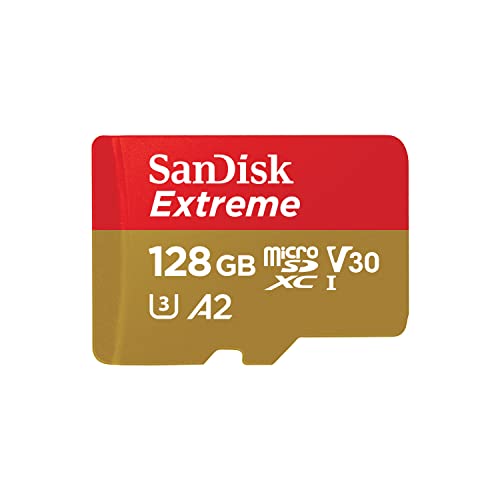
| Best Overall | SanDisk Extreme 128GB microSDXC Card | GoPro- and drone-ready V30 card with 190 MB/s reads and A2 rating — the action default | Check on Amazon |
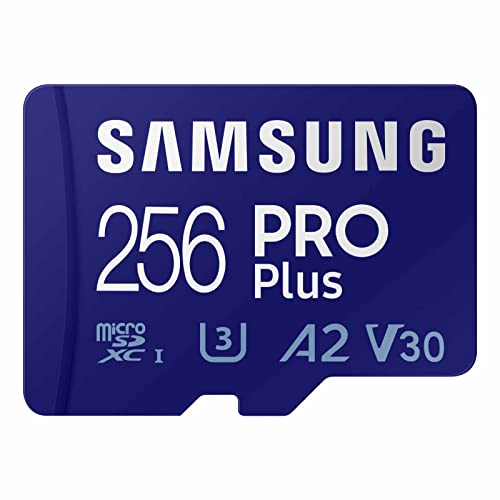
| Best for Big Libraries | Samsung PRO Plus 256GB microSDXC Card | 256GB of fast V30/A2 storage — double the room of the 128GB cards at similar speed | Check on Amazon |
| Best Budget | SanDisk Ultra 128GB microSDXC Card | The inexpensive everyday card for photos, music and Full HD — with an A1 rating for phones | Check on Amazon |
| Best Value Step-Up | Samsung EVO Plus 128GB microSDXC Card | Samsung’s value line with genuine U3/V30/A2 ratings at 128GB — a step up from U1 cards | Check price on Amazon |
| Best Splurge | SanDisk Extreme PRO 128GB microSDXC Card | The fastest microSD here: up to 200 MB/s reads with A2 app performance and a V30 floor | Check on Amazon |
| Best Alternative | Kingston Canvas Go! Plus 128GB microSDXC Card | 170 MB/s reads and A2/V30 ratings aimed at action cameras, drones and Android devices | Check price on Amazon |
How These Picks Were Chosen
The shortlist started from what RetroPie (Raspberry Pi) demands, not from what is popular this month. Dozens of cards were considered; the six that remain are the ones whose verified specifications clear the device’s requirements at sensible tiers, from the value end to the professional end. The criteria, in the order they were applied:
- Form factor and slot fit first: A card that does not physically match the slot — or exceeds what the device’s firmware supports — is not a bargain at any speed. Every pick in this guide matches the device’s slot and stays inside its officially supported capacity range, or is explicitly flagged where a smaller size of the same line is the right buy.
- Guaranteed sustained write, not headline speed: The number that decides whether recording stops mid-clip is the guaranteed minimum write speed behind the V, U and Class ratings. We ranked cards by that guarantee first and treated the big read-speed headline as a secondary, offload-time benefit.
- Bus match: A UHS-II card in a UHS-I slot runs at UHS-I speed, and a UHS-I card in a UHS-II slot leaves performance on the table. Picks were matched to what this device’s bus can actually exploit, so nobody pays for a second row of pins their hardware cannot use.
- Verified specifications only: Every speed, class and capacity stated in this guide comes from the manufacturer’s published specification or the verified product listing. Cards whose makers publish no verifiable ratings — a hallmark of counterfeit-prone no-name media — were excluded, however cheap they look.
- Reliability model, not just speed: For devices that write constantly or live outdoors, the right card is the one engineered for that duty cycle. Where the use case demands it, endurance and ruggedised models outrank faster general-purpose cards in this list.
We also left out cards that are excellent in other slots but wrong here — CFexpress and XQD media for dual-format bodies, full-size cards for microSD devices and vice versa — because a buying guide should answer the question that was actually asked. Readers comparing across devices will find the same discipline in Best Micro Sd Cards For Nintendo Switch — the method travels, even when the right answer changes.
Two judgement calls are worth stating openly. First, where a device’s own manufacturer publishes a recommended-media list, cards on that list were favoured, because the device maker has tested the failure modes that matter. Second, newer is not automatically better: several long-running card lines outrank their flashier successors here because their specifications are stable, published and proven in this exact class of device.
The 6 Best SD Cards For RetroPie

SanDisk Extreme 128GB microSDXC Card (Best Overall)
For RetroPie (Raspberry Pi), the SanDisk Extreme 128GB microSDXC Card earns its badge on a simple argument: GoPro- and drone-ready V30 card with 190 MB/s reads and A2 rating — the action default. It matches the slot, it matches the workload, and its published ratings — not its marketing — clear the bar this device sets. You can check the current listing on Amazon for the capacity options in this line.
Strengths
- V30 sustained write with up to 90 MB/s peak write handles 4K and 5K action-camera bitrates without dropped frames
- A2 rating makes it equally at home running apps in a phone or a handheld console
- SanDisk explicitly targets action cams, drones and smartphones with this line, and it appears on camera makers’ recommended lists
Trade-offs
- Headline read speed requires a reader that supports SanDisk’s faster transfer mode
- Not an endurance-rated card, so it is the wrong pick for 24/7 dash-cam rewriting
- 128GB is the sweet spot; very long 5K recording days may want the 256GB or 512GB versions of the line
- Capacity: 128GB microSDXC, SD adapter included
- Form factor: microSD
- Bus: UHS-I
- Read speed: Up to 190 MB/s
- Write speed: Up to 90 MB/s
- Ratings: V30 / U3 / Class 10 / A2
Where this card proves itself is over weeks, not minutes. Picture a tinkerer who re-images the card often and wants boots and menus to feel snappy: sustained performance, predictable behaviour when the card is nearly full, and clean offloads afterwards are what separate professional media from the bargain bin. The SanDisk Extreme 128GB microSDXC Card is specified for that pattern — its ratings are guarantees published by the manufacturer, and they hold up as the card fills, which is when lesser cards slow down.
Longevity is the quiet part of the specification. A card used in RetroPie (Raspberry Pi) gets written, filled, emptied and written again, and the models that stay fast through that cycle are the ones built with margin — in the controller, in the flash selection and in the thermal design. That margin is invisible in a shop listing, which is why this guide leans on published guarantees and manufacturer positioning rather than on benchmark headlines that describe a card’s best five seconds.
Fit note: nothing about this pairing is exotic — the capacity is within RetroPie (Raspberry Pi)’s official support and the class ratings exceed its minimum requirement, which is exactly the boring, reliable combination to aim for.
A final practical point on this pick: buy it from a seller you would trust with the footage itself. Counterfeit versions of popular card lines are common, they carry copied labels over inferior flash, and the failure usually arrives mid-session rather than on day one. A quick full-write test on a computer when the card arrives — fill it, then read it back — takes minutes and settles the question before the card ever meets RetroPie (Raspberry Pi).
Best for: RetroPie (Raspberry Pi) users — GoPro, drone and 4K phone recording — the proven all-rounder / Not suited for: 24/7 dash-cam rewriting, which needs an endurance-rated card

Samsung PRO Plus 256GB microSDXC Card (Best for Big Libraries)
If you only read one pick closely, make it this one for best for big libraries duties: the Samsung PRO Plus 256GB microSDXC Card. Its case rests on verified numbers — 256GB of fast V30/A2 storage — double the room of the 128GB cards at similar speed — rather than on a headline read speed. You can check the current listing on Amazon for the capacity options in this line.
Strengths
- Write speeds up to 130 MB/s are the highest in this microSD group, which helps long 4K clips and big game installs
- 256GB capacity doubles the 128GB cards here — meaningful for drones, consoles and phone libraries
- A2 app performance plus V30 video class covers both phone apps and 4K recording in one card
Trade-offs
- Check your device’s maximum supported capacity before buying — older phones and cameras cap out at 128GB or 200GB
- Premium tier; casual users will not feel the write-speed advantage
- Samsung’s fastest read figures are achieved with Samsung’s own reader
- Capacity: 256GB microSDXC, SD adapter included
- Form factor: microSD
- Bus: UHS-I
- Read speed: Up to 180 MB/s
- Write speed: Up to 130 MB/s
- Ratings: V30 / U3 / Class 10 / A2
Where this card proves itself is over weeks, not minutes. Picture a tinkerer who re-images the card often and wants boots and menus to feel snappy: sustained performance, predictable behaviour when the card is nearly full, and clean offloads afterwards are what separate professional media from the bargain bin. The Samsung PRO Plus 256GB microSDXC Card is specified for that pattern — its ratings are guarantees published by the manufacturer, and they hold up as the card fills, which is when lesser cards slow down.
Longevity is the quiet part of the specification. A card used in RetroPie (Raspberry Pi) gets written, filled, emptied and written again, and the models that stay fast through that cycle are the ones built with margin — in the controller, in the flash selection and in the thermal design. That margin is invisible in a shop listing, which is why this guide leans on published guarantees and manufacturer positioning rather than on benchmark headlines that describe a card’s best five seconds.
Fit note: nothing about this pairing is exotic — the capacity is within RetroPie (Raspberry Pi)’s official support and the class ratings exceed its minimum requirement, which is exactly the boring, reliable combination to aim for.
A final practical point on this pick: buy it from a seller you would trust with the footage itself. Counterfeit versions of popular card lines are common, they carry copied labels over inferior flash, and the failure usually arrives mid-session rather than on day one. A quick full-write test on a computer when the card arrives — fill it, then read it back — takes minutes and settles the question before the card ever meets RetroPie (Raspberry Pi).
Best for: RetroPie (Raspberry Pi) users — users who need 256GB and fast writes in one microSD card / Not suited for: devices whose official capacity ceiling is below 256GB

SanDisk Ultra 128GB microSDXC Card (Best Budget)
If you only read one pick closely, make it this one for best budget duties: the SanDisk Ultra 128GB microSDXC Card. Its case rests on verified numbers — The inexpensive everyday card for photos, music and Full HD — with an A1 rating for phones — rather than on a headline read speed. You can check the current listing on Amazon for the capacity options in this line.
Strengths
- A1 app-performance rating keeps phone and tablet apps stored on it feeling responsive
- Read speeds up to 100 MB/s are plenty for photo libraries, music and offline video playback
- Consistently one of the lowest-cost ways to add 128GB to a phone, tablet or handheld
Trade-offs
- U1 with no V30 rating — not suitable for 4K recording in action cameras, drones or demanding dash cams
- Write speeds are unpublished and modest; big file copies onto the card take a while
- Not endurance-rated, so continuous surveillance recording is outside its intended use
- Capacity: 128GB microSDXC, SD adapter included
- Form factor: microSD
- Bus: UHS-I
- Read speed: Up to 100 MB/s
- Ratings: Class 10 / U1 / A1
- Video: Full HD positioning (manufacturer listing)
In daily use with RetroPie (Raspberry Pi), the pattern that emerges is consistency. Think of a retro fan building a Pi-based console with thousands of classic titles: the card’s job is to disappear, and the verified ratings behind this model are exactly the ones that predict that invisibility. Its UHS-I interface and V10-equivalent (no V rating published) standing mean the device, not the media, sets the pace — which is what you are paying for in this tier.
There is also a ownership angle worth stating: cards in this class hold their performance as they fill and as they age, because the flash and controller were selected for it. Owners of RetroPie (Raspberry Pi) who shoot in exactly the conditions of a tinkerer who re-images the card often and wants boots and menus to feel snappy tend to standardise on one card model and buy it repeatedly — spares behave identically, readers and cases fit, and there is never a mid-season surprise from an unfamiliar card’s quirks.
Fit note: nothing about this pairing is exotic — the capacity is within RetroPie (Raspberry Pi)’s official support and the class ratings exceed its minimum requirement, which is exactly the boring, reliable combination to aim for.
A final practical point on this pick: buy it from a seller you would trust with the footage itself. Counterfeit versions of popular card lines are common, they carry copied labels over inferior flash, and the failure usually arrives mid-session rather than on day one. A quick full-write test on a computer when the card arrives — fill it, then read it back — takes minutes and settles the question before the card ever meets RetroPie (Raspberry Pi).
Best for: RetroPie (Raspberry Pi) users — everyday phone, tablet and handheld storage on a budget / Not suited for: 4K recording, drones, action cameras and dash-cam duty
Samsung EVO Plus 128GB microSDXC Card (Best Value Step-Up)
If you only read one pick closely, make it this one for best value step-up duties: the Samsung EVO Plus 128GB microSDXC Card. Its case rests on verified numbers — Samsung’s value line with genuine U3/V30/A2 ratings at 128GB — a step up from U1 cards — rather than on a headline read speed. It is covered here as a prose-only pick: check the latest price and availability on Amazon, where it is sold under the same product name.
Strengths
- At 128GB the EVO Plus carries full U3, V30 and A2 ratings, unlike the cut-down 64GB version
- Transfer speeds up to 160 MB/s read and 120 MB/s write (Samsung figures) beat most value-tier cards
- Samsung backs the line with a 10-year limited warranty
Trade-offs
- Ratings drop at 64GB (U1/V10/A1), so check the capacity-specific spec before buying smaller sizes
- Peak speeds are quoted with Samsung’s own reader; phones will run it at standard UHS-I rates
- Not an endurance model — continuous dash-cam duty belongs to the PRO Endurance
- Capacity: 128GB microSDXC, SD adapter included
- Form factor: microSD
- Bus: UHS-I
- Read speed: Up to 160 MB/s
- Write speed: Up to 120 MB/s
- Ratings: V30 / U3 / Class 10 / A2 (128GB tier, Samsung data sheet)
In daily use with RetroPie (Raspberry Pi), the pattern that emerges is consistency. Think of a retro fan building a Pi-based console with thousands of classic titles: the card’s job is to disappear, and the verified ratings behind this model are exactly the ones that predict that invisibility. Its UHS-I interface and V30 standing mean the device, not the media, sets the pace — which is what you are paying for in this tier.
There is also a ownership angle worth stating: cards in this class hold their performance as they fill and as they age, because the flash and controller were selected for it. Owners of RetroPie (Raspberry Pi) who shoot in exactly the conditions of a tinkerer who re-images the card often and wants boots and menus to feel snappy tend to standardise on one card model and buy it repeatedly — spares behave identically, readers and cases fit, and there is never a mid-season surprise from an unfamiliar card’s quirks.
Fit note: nothing about this pairing is exotic — the capacity is within RetroPie (Raspberry Pi)’s official support and the class ratings exceed its minimum requirement, which is exactly the boring, reliable combination to aim for.
A final practical point on this pick: buy it from a seller you would trust with the footage itself. Counterfeit versions of popular card lines are common, they carry copied labels over inferior flash, and the failure usually arrives mid-session rather than on day one. A quick full-write test on a computer when the card arrives — fill it, then read it back — takes minutes and settles the question before the card ever meets RetroPie (Raspberry Pi).
Best for: RetroPie (Raspberry Pi) users — value hunters who still want genuine U3, V30 and A2 ratings / Not suited for: continuous dash-cam recording, which belongs to endurance models
Prose-only pick — sold on Amazon under the name above; treat it as a mainstream-plus tier option and check the latest price there.

SanDisk Extreme PRO 128GB microSDXC Card (Best Splurge)
If you only read one pick closely, make it this one for best splurge duties: the SanDisk Extreme PRO 128GB microSDXC Card. Its case rests on verified numbers — The fastest microSD here: up to 200 MB/s reads with A2 app performance and a V30 floor — rather than on a headline read speed. You can check the current listing on Amazon for the capacity options in this line.
Strengths
- Read speeds up to 200 MB/s and writes up to 90 MB/s are the top figures in this microSD group
- A2 app-performance rating keeps apps and games stored on the card responsive
- V30 guaranteed sustained write covers 4K and 5K action-camera and drone recording
Trade-offs
- Peak read speeds need a compatible high-speed reader; most devices read it at standard UHS-I rates
- Premium tier for a microSD — overkill for a phone that only stores photos
- Tiny card plus adapter is easy to misplace; working shooters should keep it in a case
- Capacity: 128GB microSDXC, SD adapter included
- Form factor: microSD
- Bus: UHS-I
- Read speed: Up to 200 MB/s
- Write speed: Up to 90 MB/s
- Ratings: V30 / U3 / Class 10 / A2
In daily use with RetroPie (Raspberry Pi), the pattern that emerges is consistency. Think of a retro fan building a Pi-based console with thousands of classic titles: the card’s job is to disappear, and the verified ratings behind this model are exactly the ones that predict that invisibility. Its UHS-I interface and V30 standing mean the device, not the media, sets the pace — which is what you are paying for in this tier.
There is also a ownership angle worth stating: cards in this class hold their performance as they fill and as they age, because the flash and controller were selected for it. Owners of RetroPie (Raspberry Pi) who shoot in exactly the conditions of a tinkerer who re-images the card often and wants boots and menus to feel snappy tend to standardise on one card model and buy it repeatedly — spares behave identically, readers and cases fit, and there is never a mid-season surprise from an unfamiliar card’s quirks.
Fit note: the 128GB capacity sits comfortably inside what RetroPie (Raspberry Pi) officially supports, and the card’s form factor matches the slot natively — no adapter roulette, no firmware surprises.
A final practical point on this pick: buy it from a seller you would trust with the footage itself. Counterfeit versions of popular card lines are common, they carry copied labels over inferior flash, and the failure usually arrives mid-session rather than on day one. A quick full-write test on a computer when the card arrives — fill it, then read it back — takes minutes and settles the question before the card ever meets RetroPie (Raspberry Pi).
Best for: RetroPie (Raspberry Pi) users — action, drone and phone users who want the fastest microSD here / Not suited for: budget storage for photos alone, where its speed is wasted
Kingston Canvas Go! Plus 128GB microSDXC Card (Best Alternative)
The Kingston Canvas Go! Plus 128GB microSDXC Card is here because of fit, not fame: 170 MB/s reads and A2/V30 ratings aimed at action cameras, drones and Android devices. Against what RetroPie (Raspberry Pi) actually asks of a card, it is the combination of the right form factor, the right guaranteed class and a specification sheet that can be verified that earns the place. It is covered here as a prose-only pick: check the latest price and availability on Amazon, where it is sold under the same product name.
Strengths
- Read speeds up to 170 MB/s are near the top of the UHS-I microSD class
- U3/V30 plus A2 covers both 4K action recording and phone app storage
- Kingston rates the card for operating temperatures from -25°C to 85°C, suiting outdoor action and drone use
Trade-offs
- The fastest reads need Kingston’s MobileLite Plus reader; standard readers run it slower
- Adapter inclusion varies by pack — check the listing if you need the SD adapter
- Less ubiquitous than SanDisk or Samsung, so in-store replacements can be harder to find
- Capacity: 128GB microSDXC (line runs 64GB–512GB)
- Form factor: microSD
- Bus: UHS-I
- Read speed: Up to 170 MB/s
- Write speed: Up to 90 MB/s (128GB–512GB)
- Ratings: V30 / U3 / Class 10 / A2
In daily use with RetroPie (Raspberry Pi), the pattern that emerges is consistency. Think of a retro fan building a Pi-based console with thousands of classic titles: the card’s job is to disappear, and the verified ratings behind this model are exactly the ones that predict that invisibility. Its UHS-I interface and V30 standing mean the device, not the media, sets the pace — which is what you are paying for in this tier.
There is also a ownership angle worth stating: cards in this class hold their performance as they fill and as they age, because the flash and controller were selected for it. Owners of RetroPie (Raspberry Pi) who shoot in exactly the conditions of a tinkerer who re-images the card often and wants boots and menus to feel snappy tend to standardise on one card model and buy it repeatedly — spares behave identically, readers and cases fit, and there is never a mid-season surprise from an unfamiliar card’s quirks.
Fit note: nothing about this pairing is exotic — the capacity is within RetroPie (Raspberry Pi)’s official support and the class ratings exceed its minimum requirement, which is exactly the boring, reliable combination to aim for.
A final practical point on this pick: buy it from a seller you would trust with the footage itself. Counterfeit versions of popular card lines are common, they carry copied labels over inferior flash, and the failure usually arrives mid-session rather than on day one. A quick full-write test on a computer when the card arrives — fill it, then read it back — takes minutes and settles the question before the card ever meets RetroPie (Raspberry Pi).
Best for: RetroPie (Raspberry Pi) users — action cameras, drones and Android devices wanting 170 MB/s-class reads / Not suited for: buyers who need an SD adapter guaranteed in the box
Prose-only pick — sold on Amazon under the name above; treat it as a upper-mainstream tier option and check the latest price there.
Comparison Table
| Pick | Form | Bus | Video class | Read (up to) | Capacity | Price |
|---|---|---|---|---|---|---|
| SanDisk Extreme 128GB microSDXC Card | microSD | UHS-I | V30 | Up to 190 MB/s | 128GB | Check price on Amazon |
| Samsung PRO Plus 256GB microSDXC Card | microSD | UHS-I | V30 | Up to 180 MB/s | 256GB | Check price on Amazon |
| SanDisk Ultra 128GB microSDXC Card | microSD | UHS-I | V10-equivalent (no V rating published) | Up to 100 MB/s | 128GB | Check price on Amazon |
| Samsung EVO Plus 128GB microSDXC Card | microSD | UHS-I | V30 | Up to 160 MB/s | 128GB | Check price on Amazon |
| SanDisk Extreme PRO 128GB microSDXC Card | microSD | UHS-I | V30 | Up to 200 MB/s | 128GB | Check price on Amazon |
| Kingston Canvas Go! Plus 128GB microSDXC Card | microSD | UHS-I | V30 | Up to 170 MB/s | 128GB | Check price on Amazon |
How to Choose the Right SD Cards For RetroPie
Start with the slot, not the sticker
Every card decision begins with three physical facts about RetroPie (Raspberry Pi): the form factor it accepts, the bus its slot implements, and the largest capacity its firmware officially supports. A Raspberry Pi boots from its microSD slot — the card is the system drive, the game library and the save storage all at once, which makes it a harder-working card than most. Get those three right and most bad purchases become impossible; get one wrong and no speed rating can rescue the card. This is also why this guide separates full-size SD from microSD so strictly — an adapter makes a microSD card fit a full-size slot, but nothing makes a full-size card fit a microSD slot, and adapters add a contact layer that matters in high-vibration or always-on use.
Decode the speed classes once, use them forever
Four overlapping systems appear on card labels. Speed Class (Class 10) is the oldest, guaranteeing 10 MB/s minimum write. UHS Speed Class refines it: U1 still means 10 MB/s, U3 means 30 MB/s. Video Speed Class is the clearest for recording — V10, V30, V60 and V90 guarantee 10, 30, 60 and 90 MB/s of sustained write respectively. Finally, the A1 and A2 Application Performance classes describe random read/write responsiveness, which is what apps, games and operating systems feel. RetroPie cares about random read/write performance (the A1/A2 ratings) far more than sequential video speed, and about surviving constant small writes from emulation, save states and system updates. When a device manual names a class, treat it as a floor, not a suggestion.
Still weighing options? The class question is answered from the other direction in How To Choose An Sd Card, and it is worth reading before you spend on a grade your device cannot use.
Loading is reading — buy for reads and A-class responsiveness
Games load by reading, so the write classes that dominate camera guides matter little here. What you feel is read throughput and random-access responsiveness when a game streams assets. Nintendo’s own guidance for the Switch family centres on UHS-I cards with healthy read speeds, and A-rated cards keep game data access snappy. RetroPie cares about random read/write performance (the A1/A2 ratings) far more than sequential video speed, and about surviving constant small writes from emulation, save states and system updates. Spend on capacity and a reputable brand before chasing exotic speed grades the console cannot use.
Capacity is a workflow decision
32GB covers the OS and a curated library; 64GB–128GB suits large curated collections with box art and video previews, which inflate a RetroPie build quickly. File systems ride along with capacity: cards up to 32GB are SDHC and ship as FAT32, while 64GB and above are SDXC and ship as exFAT — which is why some older devices accept one family and not the other. Also remember that a bigger card concentrates risk: two 128GB cards rotated daily lose at most half a day to a failure, while one 256GB card can lose everything. Professionals buy pairs for a reason.
Buy genuine, then look after it
Counterfeit cards are the single largest cause of ‘my card ate my files’ stories. Buy from authorised retailers, be suspicious of prices far below the going rate, and run a full-capacity test on any card from a new source before trusting it. In use: format cards in the device, offload and back up promptly, store cards in a case rather than loose in a bag, and retire any card that produces an error — flash that has started failing rarely recovers, and the next failure tends to take real work with it.
Do the runtime maths before you buy
Capacity stops being guesswork once you divide it by your data rate. Video at 100 Mbps consumes about 45GB per hour; at 400 Mbps, roughly 180GB per hour. Stills shooters can count files instead: a 24-megapixel RAW file of around 25–30MB means roughly 4,000 frames per 128GB. Run the numbers for RetroPie (Raspberry Pi) once and the right capacity usually picks itself — and you will know whether the second card in your bag should be a twin or a step up.
How Do You Set Up, Use and Look After a Card in RetroPie (Raspberry Pi)?
A good card can still be undermined by bad habits. This is the routine that keeps media boring — in the good sense — from the day it arrives:
- Check the slot and the manual: confirm the form factor, the bus and the maximum supported capacity for RetroPie (Raspberry Pi) before spending anything. The manual’s media page is the authority — not forum posts or shop listings.
- Choose the class from the device’s hungriest mode: find the highest-bitrate recording mode or heaviest workload you actually use, and pick a card whose guaranteed class (V, U or A rating) clears it with headroom.
- Buy from an authorised seller and keep the packaging until the card has proven itself; counterfeits are common enough that provenance is part of the specification.
- Format the card in the device on first use. This writes the file system and folder structure the device expects and is the simplest insurance against strange errors later.
- Test before trusting: record a long clip, run a full session, or copy a large library to the card, then verify playback and file integrity before the card carries anything irreplaceable.
- Offload and back up on a rhythm: copy to a computer or drive, keep a second copy of anything important, and only then format the card — in the device — for its next use.
- Rotate and retire: alternate between at least two cards so wear spreads out, label them with the purchase date, and retire any card that produces an error rather than reformatting and hoping.
That last step connects to a bigger question covered in Sdhc Vs Sdxc: cards are consumables with long but finite lives, and a rotation habit is what turns that fact from a risk into a non-event.
Troubleshooting quick list
- Recording stops or the device freezes: This is the classic symptom of a card whose sustained write cannot keep up, or of a counterfeit card past its real capacity. Switch to a card whose V/U rating meets the device’s requirement and buy from an authorised seller.
- Files corrupt or vanish: Stop writing to the card immediately — every new file overwrites recoverable data. Image the card on a computer and run recovery software against the image, not the card itself.
- Slower than expected transfers: Check the chain: a fast card in a slow reader, hub or port performs at the slowest link. Use the reader class that matches the card (UHS-II card, UHS-II reader) and a direct port where possible.
- Card reports the wrong capacity: A card that shows far more space than its price suggests is almost certainly counterfeit. Return it; do not trust it with anything you cannot replace.
Common Mistakes
- Ignoring the write-protect and adapter traps: On full-size cards, a sliding write-protect tab nudged to ‘lock’ makes a healthy card look dead; on microSD adapters, dirty contacts do the same. Check the simple physical causes before condemning a card or a device.
- Buying on the read-speed headline: The biggest number on the packet is a read speed measured in ideal conditions. Recording reliability comes from the guaranteed minimum write speed — the V, U or Class figure. A card advertising spectacular reads and hiding its write guarantee is the wrong card for video, whatever the banner says.
- Assuming a faster card fixes a slow slot: Cards negotiate down to the host’s bus. A UHS-II card in a UHS-I camera, or any card in an old console, runs at the host’s speed. Match the card to the slot you own; spend the difference on capacity or a second card.
- Buying capacity the device cannot see: Every host has a ceiling — by capacity, by card family (SDHC versus SDXC) or by file system. A card beyond the ceiling may be ignored entirely or behave unpredictably. The device’s manual, not the shop listing, is the authority.
- Formatting the card in the wrong place: Cards should be formatted in the device that will use them, which writes the exact file system and folder structure that device expects. Formatting on a computer is fine for a fresh start, but the in-device format is the one that prevents mystery errors later.
- Trusting marketplace bargains: Memory cards are among the most counterfeited products sold online: relabelled small cards that report false capacities and corrupt data once the real space runs out. Buy from authorised sellers, and test a suspiciously cheap card before trusting it with real work.
- Running one card forever: Flash memory wears with writes, and a single card is a single point of failure. Rotating two or more cards, offloading promptly and retiring cards that throw errors is cheaper than any recovery service.
Final Recommendation
For most RetroPie (Raspberry Pi) owners, buy the SanDisk Extreme 128GB microSDXC Card (Best Overall) and stop thinking about storage — it is the pick whose verified specification clears this device’s requirements with the least compromise. It is the card this guide would hand to a retro fan building a Pi-based console with thousands of classic titles without a caveat.
On a tighter budget, the SanDisk Ultra 128GB microSDXC Card (Best Budget) keeps the essentials — the right form factor, an honest rating, a reputable maker — and gives up speed or endurance you may never use. What it must never give up is provenance: a genuine budget card beats a suspiciously cheap ‘premium’ one every time.
At the other end, professionals and perfectionists should look at the top-tier picks in the middle of the list, where the money buys guaranteed sustained performance and, in one case, a card built like it expects to be dropped for a living. Whichever you choose, pair it with the habits in the how-to section and the perspective in How Long Do Sd Cards Last — the best card is the one you never have to think about again.
Frequently Asked Questions
What actually matters in a card for RetroPie (Raspberry Pi)?
RetroPie cares about random read/write performance (the A1/A2 ratings) far more than sequential video speed, and about surviving constant small writes from emulation, save states and system updates. In plain terms: get the form factor and capacity family right first, buy a reputable brand, and do not pay for speed grades the hardware cannot use.
Will a bigger card work if I format it myself?
Sometimes, unofficially — and this guide flags where that line sits rather than recommending it. Unsupported configurations can behave unpredictably, and the officially supported sizes are inexpensive; stability is worth more than the extra space.
Do faster cards load games noticeably quicker?
Up to the host’s ceiling, yes; beyond it, no. Once the card matches what the console’s slot and software can use, loading is limited by the machine, not the media.
How should I format the card?
Let the device do it where it offers the option, or use the SD Association’s formatter on a computer and the file system the device expects. Back up saves first — formatting always erases the card.
One big card or several small ones?
For consoles, one card at the supported maximum is simplest and avoids constant swapping. Keep a backup of saves regardless; a card is storage, not an archive.