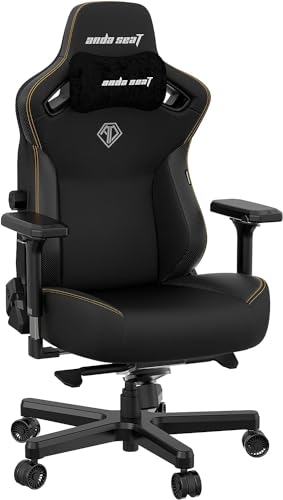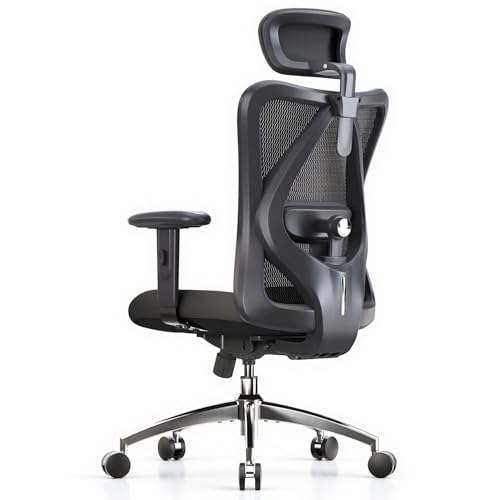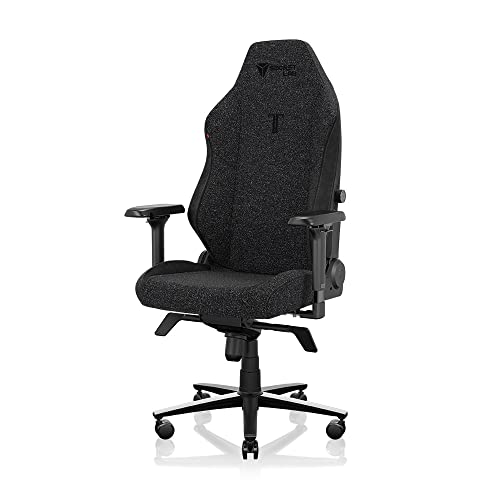
Disclosure: As an Amazon Associate, ilcastellomenu.com earns from qualifying purchases. Prices and availability change; check Amazon for the latest.
Where to buy
Shopping for the best chairs for gaming and working? Check the latest price, availability and delivery on Amazon. Orders are placed on Amazon.
- Secretlab Titan Evo (Regular, Fabric) — Check on Amazon
- SIHOO M18 Ergonomic Office Chair — Check on Amazon
- Razer Iskur V2 X — Check on Amazon
- CORSAIR TC100 RELAXED (Fabric) — Check on Amazon
- SIHOO M76A Ergonomic Office Chair — Check on Amazon
- RESPAWN 110 Ergonomic Gaming Chair (Current Version) — Check on Amazon
Read the full guide ↓
Finding the best chairs for gaming and working is really an exercise in matching a chair to a body, a room and a budget — in that order. One chair, two jobs: the workday wants upright support and a professional silhouette; the evening wants recline, head support and a seat that forgives slouching. The picks here are the chairs whose adjustment range genuinely covers both postures, ranked by how completely they do the double job.
This guide compares six options head to head: how they are built, what their published specifications actually promise, where each one compromises, and who should buy it. It finishes with a full buying guide, a practical setup walkthrough, the mistakes that waste the most money in this category, and straight answers to the questions readers ask before committing. If you are still deciding between styles, start with Best Chairs For Work And Gaming and Best Gaming Chairs For Heavy People for the neighbouring lenses readers compare most often.
One promise before the products: every number in this guide — capacities, dimensions, recline ranges, adjustment types — comes from a published specification we checked, and where a chair’s marketing runs ahead of its measurements we say so in its trade-offs. Gaming chairs are a category with a great deal of confident labelling and a smaller amount of honest sizing, and the difference between a chair you love for five years and one you tolerate for five months is almost always hiding in those measurements. Read the fit notes for your own body first; the badges and rankings will still be there when you come back to them.
In this guide
Quick Picks
| Badge | Pick | Why it stands out | Link |
|---|---|---|---|
| Best Overall for Gaming and Working | Secretlab Titan Evo (Regular, Fabric) | The fabric finish breathes noticeably better than leatherette through long sessions in warm rooms | Check on Amazon |
| Best Mesh for Gaming and Working | SIHOO M18 Ergonomic Office Chair | A proper mesh back keeps air moving across your back — the single biggest comfort upgrade in a warm room or summer session | Check on Amazon |
| Best Wide Seat for Both | Razer Iskur V2 X | The wide, gently bolstered seat gives you room to shift position — including sitting cross-legged — without fighting side wings | Check on Amazon |
| Best Relaxed Fit for Both | CORSAIR TC100 RELAXED (Fabric) | The ‘Relaxed’ fit means softer, lower bolstering — a roomier, less confining seat than aggressive racing buckets | Check on Amazon |
| Best Compact Dual-Purpose | SIHOO M76A Ergonomic Office Chair | The flip-up armrests let the chair slide fully under a desk — a real advantage in compact rooms and shared spaces | Check on Amazon |
| Best Value Dual-Purpose | RESPAWN 110 Ergonomic Gaming Chair (Current Version) | A cleaner, more ergonomic take on the 110 formula aimed at mixed gaming and work days | Check on Amazon |
How These Picks Were Chosen
We built the shortlist from manufacturer specification sheets and established retailer listings, then cross-checked every number that appears in this guide — capacities, recline ranges, seat dimensions and adjustment types — against at least one live source before it was allowed into a spec box.
Products were rejected for the reasons buyers actually return chairs: capacities quoted without a test basis, seat dimensions that contradict the marketing label, lumbar ‘support’ that is a decorative pad in the wrong place, and foams so thin that a season of daily use would pack them flat.
Readers comparing across the category will also find Best Gaming Chairs For Carpet useful background before they spend anything.
Within each lens we weighted the deciding factor first — height range for tall and short players, verified capacity for heavier players, caster behaviour for carpet, breathability for mesh — and only then compared the secondary features. That is why the same chair can lead one guide and sit fifth in another.
Where a product is included prose-only, it is because it is sold through the maker’s own channels rather than as a verified linked listing in our pool. It still had to pass the same specification checks; it simply cannot carry a purchase link here, and it is flagged wherever it appears.
Finally, we were honest about tiers. If a lens has a price line, some famous chairs simply do not live under it, and a couple of picks are labelled as stretch options that only enter the lens during promotions. A shortlist that admits that is more useful than one that quietly prints a price it cannot stand behind.
For this lens the weighting ran: upright working support and call-friendly looks first, then the gaming essentials of recline and head support. A chair that fails the workday test fails this lens no matter how well it games.
The 6 Best Chairs For Gaming And Working
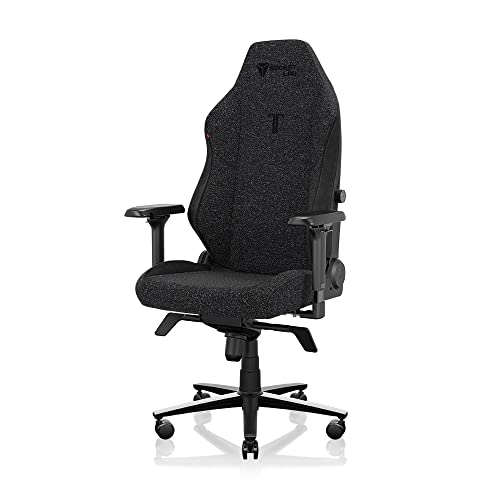
Secretlab Titan Evo (Regular, Fabric) (Best Overall for Gaming and Working)
This is the pick that answers the lens most directly. The Secretlab Titan Evo (Regular, Fabric) is a premium tier design from Secretlab: The Regular Titan Evo in its breathable fabric finish — the same ergonomic hardware as the flagship, sized for the middle of the height range.
Strengths
- The fabric finish breathes noticeably better than leatherette through long sessions in warm rooms
- Same 4-way adjustable built-in lumbar and 165° recline as the XL, in a footprint that suits average-height players
- Cold-cure foam keeps its shape and support far longer than the cut foam used in budget racing chairs
Trade-offs
- The 19.3 in seat depth is generous; shorter players may find the front edge close behind their knees
- 285 lb capacity rules it out for heavier buyers, who should look at the XL instead
- Fabric needs a touch more care than wipe-clean leatherette if you eat at your desk
Key specs
- Weight capacity: 285 lb (Regular size)
- Recommended height: 5’7″–6’2″
- Recline: 85–165° with multi-tilt lock
- Lumbar: built-in 4-way L-ADAPT, height and depth adjustable
- Armrests: 4D; magnetic memory-foam head pillow included
- Seat height: 17.7–20.5 in; seat depth 19.3 in
- Upholstery: woven fabric over cold-cure foam
Put it to work and the specification sheet translates plainly: you get built-in 4-way L-ADAPT adjustable lumbar support doing the long-session heavy lifting, an 85–165° recline range that gives you a genuine change of posture rather than a token lean, and 4D armrests so elbow support matches the way you actually play. In daily use the pattern is consistent: set it up once with care, then stop thinking about it — which is the highest compliment a chair can earn.
Day to day, what owners of chairs in this class notice is rarely the headline feature — it is the accumulation of small correctnesses. The seat stays where it was set instead of creeping down the lift. The backrest returns to the same angle every time. Its published capacity of 285 lb means the frame and base are working well inside their limits during ordinary use, which is exactly where quiet, creak-free years come from. None of that photographs well, and all of it decides whether a chair is still in your setup three winters from now or listed for sale by spring. Judge this pick on those terms and it tends to judge very well.

SIHOO M18 Ergonomic Office Chair (Best Mesh for Gaming and Working)
It earns its place on specifications, not styling. The SIHOO M18 Ergonomic Office Chair is a budget-to-mid tier design from SIHOO: The M18 is the mesh all-rounder of this list: an office-grade ergonomic chair that games perfectly well after hours.
Strengths
- A proper mesh back keeps air moving across your back — the single biggest comfort upgrade in a warm room or summer session
- The lumbar support adjusts in two directions, which is rare at this tier where fixed pads are the norm
- 330 lb capacity on a mesh chair is generous, and the W-shaped cushion spreads load well
Trade-offs
- Recline tops out around 126°, so it is a work-and-play chair, not a lie-back lounge chair
- Armrests adjust for height only — no width, depth or pivot
- The fixed seat depth will not suit every leg length; check the measurement against your current chair
Key specs
- Weight capacity: 330 lb
- Backrest: breathable mesh; seat: W-shaped sponge cushion
- Lumbar: adjustable for height and depth
- Headrest: adjustable height and angle
- Seat height: about 17.1–20.7 in
- Tilt: synchro-tilt locking at 110°, 118° and 126°
- Armrests: height adjustable
Put it to work and the specification sheet translates plainly: you get adjustable lumbar support (height and depth) doing the long-session heavy lifting, a Tilt lock at 110°, 118° and 126° range that gives you a genuine change of posture rather than a token lean, and 2D (height-adjustable) armrests so elbow support matches the way you actually play. Where it will be tested is month three of daily sessions, and its specifications are the kind that hold up under that test.
Day to day, what owners of chairs in this class notice is rarely the headline feature — it is the accumulation of small correctnesses. The seat stays where it was set instead of creeping down the lift. The backrest returns to the same angle every time. Its published capacity of 330 lb means the frame and base are working well inside their limits during ordinary use, which is exactly where quiet, creak-free years come from. None of that photographs well, and all of it decides whether a chair is still in your setup three winters from now or listed for sale by spring. Judge this pick on those terms and it tends to judge very well.

Razer Iskur V2 X (Best Wide Seat for Both)
Of everything we compared, this one balances the lens against everyday usability best. The Razer Iskur V2 X is a mid-to-premium tier design from Razer: Razer’s simplified Iskur keeps the sculpted lumbar backrest and wide seat of the flagship line, in a breathable fabric finish.
Strengths
- The wide, gently bolstered seat gives you room to shift position — including sitting cross-legged — without fighting side wings
- The built-in lumbar curve cannot slide out of place the way strap-on pillows do, so support is consistent every session
- Fabric upholstery and high-density foam keep it comfortable and cooler than leatherette rivals
Trade-offs
- The lumbar curve is fixed: if its shape does not match your back, there is no dial to change it
- 2D armrests lack the fore-aft and pivot adjustment of 4D rivals at similar money
- No included head pillow, so taller users may want to add one for reclined viewing
Key specs
- Maximum user weight: 299 lb (136 kg)
- Seat width: about 21 in at the widest point
- Recline: up to 152°
- Lumbar: built-in sculpted lumbar curve (not adjustable)
- Armrests: 2D (height and width)
- Upholstery: plush fabric over high-density foam cushions
- Recommended height: roughly up to 6’2″
Put it to work and the specification sheet translates plainly: you get built-in lumbar support curve (fixed) doing the long-session heavy lifting, a 152° recline range that gives you a genuine change of posture rather than a token lean, and 2D armrests so elbow support matches the way you actually play. For the buyer this lens describes, the shortlist really comes down to fit and this chair’s numbers make the decision straightforward.
Day to day, what owners of chairs in this class notice is rarely the headline feature — it is the accumulation of small correctnesses. The seat stays where it was set instead of creeping down the lift. The backrest returns to the same angle every time. Its published capacity of 299 lb means the frame and base are working well inside their limits during ordinary use, which is exactly where quiet, creak-free years come from. None of that photographs well, and all of it decides whether a chair is still in your setup three winters from now or listed for sale by spring. Judge this pick on those terms and it tends to judge very well.

CORSAIR TC100 RELAXED (Fabric) (Best Relaxed Fit for Both)
It is here because its published numbers suit this exact brief. The CORSAIR TC100 RELAXED (Fabric) is a mid-range tier design from Corsair: Corsair’s TC100 Relaxed trades the pinched racing-bucket feel for a wider, softer seat and a breathable fabric finish.
Strengths
- The ‘Relaxed’ fit means softer, lower bolstering — a roomier, less confining seat than aggressive racing buckets
- Fabric finish plus a deep 160° recline makes it an easy chair to live with for mixed work and play
- Corsair includes both a lumbar pillow and a memory-foam neck pillow in the box
Trade-offs
- The 264 lb capacity is the lowest of the mid-range picks here; heavier buyers should step up a class
- 2D armrests can feel a little less solid than the 4D sets on pricier chairs
- The strap-through head pillow has limited height adjustment range
Key specs
- Weight capacity: 264 lb (120 kg)
- Maximum recommended height: 6’2″
- Recline: 90–160°
- Armrests: 2D (up/down, in/out)
- Seat height: about 17.7–20.9 in (Class 4 gas lift, 100 mm range)
- Casters: 65 mm dual-wheel
- Includes: lumbar pillow and detachable memory-foam neck pillow
Put it to work and the specification sheet translates plainly: you get adjustable lumbar pillow plus detachable memory-foam neck pillow doing the long-session heavy lifting, a 90–160° recline range that gives you a genuine change of posture rather than a token lean, and 2D armrests so elbow support matches the way you actually play. It will not suit everyone in this guide — no pick will — but for its intended player it is the version of this idea done properly.
Day to day, what owners of chairs in this class notice is rarely the headline feature — it is the accumulation of small correctnesses. The seat stays where it was set instead of creeping down the lift. The backrest returns to the same angle every time. Its published capacity of 264 lb means the frame and base are working well inside their limits during ordinary use, which is exactly where quiet, creak-free years come from. None of that photographs well, and all of it decides whether a chair is still in your setup three winters from now or listed for sale by spring. Judge this pick on those terms and it tends to judge very well.

SIHOO M76A Ergonomic Office Chair (Best Compact Dual-Purpose)
This is the pick that answers the lens most directly. The SIHOO M76A Ergonomic Office Chair is a budget tier design from SIHOO: The M76A is the small-space, smaller-frame specialist: mesh, flip-up arms and a seat that drops low enough for shorter legs.
Strengths
- The flip-up armrests let the chair slide fully under a desk — a real advantage in compact rooms and shared spaces
- A genuinely lower seat-height range suits shorter players whose feet dangle in standard gaming chairs
- The 3D headrest adjusts in height and angle, so neck support can actually meet your neck
Trade-offs
- Sized for small-to-average frames; tall or broad users will find the backrest and seat snug
- Flip-up arms give no height fine-tuning for elbow support
- Recline range is modest — this is an upright, posture-first chair
Key specs
- Weight capacity: 300 lb
- Recommended height range: about 4’11″–5’9″ (150–175 cm)
- Headrest: 3D adjustable, 10 cm height travel, tilts up to 22°
- Armrests: flip up 90° for space saving
- Seat height: about 15.9–19.1 in
- Recline: 103–124°
- Backrest: high-back mesh with S-shaped curve; coat hanger on the back
Put it to work and the specification sheet translates plainly: you get adjustable lumbar support on an S-shaped backrest doing the long-session heavy lifting, a 103–124° recline range that gives you a genuine change of posture rather than a token lean, and 90° flip-up armrests so elbow support matches the way you actually play. In daily use the pattern is consistent: set it up once with care, then stop thinking about it — which is the highest compliment a chair can earn.
Day to day, what owners of chairs in this class notice is rarely the headline feature — it is the accumulation of small correctnesses. The seat stays where it was set instead of creeping down the lift. The backrest returns to the same angle every time. Its published capacity of 300 lb means the frame and base are working well inside their limits during ordinary use, which is exactly where quiet, creak-free years come from. None of that photographs well, and all of it decides whether a chair is still in your setup three winters from now or listed for sale by spring. Judge this pick on those terms and it tends to judge very well.
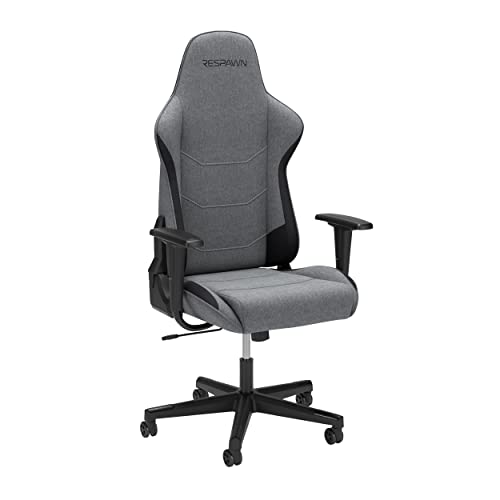
RESPAWN 110 Ergonomic Gaming Chair (Current Version) (Best Value Dual-Purpose)
It earns its place on specifications, not styling. The RESPAWN 110 Ergonomic Gaming Chair (Current Version) is a budget-to-mid tier design from RESPAWN: The current RESPAWN 110 streamlines the formula into an ergonomic desk chair for gaming, work and streaming.
Strengths
- A cleaner, more ergonomic take on the 110 formula aimed at mixed gaming and work days
- Height and tilt adjustment cover the setup basics most players actually use daily
- Works visually in a home office as well as a gaming setup
Trade-offs
- No footrest on this version — reclined nappers should pick the footrest model
- Fewer headline adjustments than premium chairs with 4D arms and built-in lumbar
- As a value model, upholstery longevity depends on keeping it out of harsh sunlight
Key specs
- Design: ergonomic high-back gaming chair
- Support: lumbar support plus headrest
- Adjustments: seat height and tilt
- Use: gaming, work and streaming
- Brand: RESPAWN gaming furniture
- Swivel base for desk use
Put it to work and the specification sheet translates plainly: you get lumbar support with ergonomic headrest doing the long-session heavy lifting, a Tilt with height adjustment range that gives you a genuine change of posture rather than a token lean, and padded armrests so elbow support matches the way you actually play. Where it will be tested is month three of daily sessions, and its specifications are the kind that hold up under that test.
Day to day, what owners of chairs in this class notice is rarely the headline feature — it is the accumulation of small correctnesses. The seat stays where it was set instead of creeping down the lift. The backrest returns to the same angle every time. Its published specification sheet means the frame and base are working well inside their limits during ordinary use, which is exactly where quiet, creak-free years come from. None of that photographs well, and all of it decides whether a chair is still in your setup three winters from now or listed for sale by spring. Judge this pick on those terms and it tends to judge very well.
Comparison Table
The table below lines the six picks up on the attributes that decide daily comfort. Capacities and ranges are the verified published figures used throughout this guide.
| Pick | Weight capacity | Upholstery | Lumbar support | Recline | Price |
|---|---|---|---|---|---|
| Secretlab Titan Evo (Regular, Fabric) | 285 lb | SoftWeave-style fabric | Built-in 4-way L-ADAPT adjustable lumbar support | 85–165° recline | Check price on Amazon |
| SIHOO M18 Ergonomic Office Chair | 330 lb | Breathable mesh back with cushioned seat | Adjustable lumbar support (height and depth) | Tilt lock at 110°, 118° and 126° | Check price on Amazon |
| Razer Iskur V2 X | 299 lb | Plush fabric | Built-in lumbar support curve (fixed) | 152° recline | Check price on Amazon |
| CORSAIR TC100 RELAXED (Fabric) | 264 lb | Breathable fabric | Adjustable lumbar pillow plus detachable memory-foam neck pillow | 90–160° recline | Check price on Amazon |
| SIHOO M76A Ergonomic Office Chair | 300 lb | Mesh back with cushioned seat | Adjustable lumbar support on an S-shaped backrest | 103–124° recline | Check price on Amazon |
| RESPAWN 110 Ergonomic Gaming Chair (Current Version) | See listing / maker specification | Upholstered racing finish | Lumbar support with ergonomic headrest | Tilt with height adjustment | Check price on Amazon |
Read the table the way a fitter would: eliminate any row whose capacity, sizing or support type fails your non-negotiables first, then compare what remains on the secondary columns. Most readers find the table reduces six candidates to two, and the detailed sections above — particularly the trade-offs, which is where chairs confess — are the right place to separate those final two.
How to Choose the Right Chair for Work and Gaming
The best chairs for gaming and working decision comes down to a handful of specifications, and they are worth understanding in plain language before any product names enter the conversation. Work through them in this order — the early ones eliminate more wrong chairs than the later ones. Serious cross-shoppers should also read Best Gaming Chairs For Under $100 Dollars alongside this section.
Weight capacity — and the margin above it
Capacity is the load a chair’s frame, lift and base are rated to carry. Treat your body weight plus what you wear and hold as the working figure, and prefer a rating with comfortable margin above it: margin is what keeps a chair creak-free in year three, not just safe on day one. If a listing hides its capacity, that silence is information.
Seat height and your lower leg
Your feet should rest flat with knees at roughly a right angle. Measure your lower leg, compare it with the chair’s minimum and maximum seat height, and remember that thick carpet and mats change the effective height slightly. Players whose feet dangle are players whose thighs take the load — and whose backs complain by evening.
Seat depth and width
Depth should support most of your thigh while leaving a small gap behind the knee. Width should let you sit centred without the bolsters pressing your legs outward. Published dimensions beat marketing labels like ‘XL’ every time; two chairs with the same label can differ by inches.
Lumbar support: built-in, pillow or fixed
Built-in adjustable systems are the gold standard because they move to your back and stay there. Pillows are flexible and replaceable but wander. Fixed sculpted curves are consistent but only fit the backs they match. None is automatically wrong — the right choice is the one that meets your lower back, at your belt line, in your chair.
Armrests and your desk
Armrests should meet your forearms with shoulders relaxed, then get out of the way when you push in to type. Height adjustment is the minimum; width, depth and pivot (the extra dimensions in 3D and 4D sets) matter most to players who switch between mouse-and-keyboard and controller postures.
Upholstery: leatherette, fabric or mesh
Leatherette wipes clean and looks sharp but warms up and ages by cracking if neglected. Fabric breathes, grips and hides wear better, but drinks spills. Mesh breathes best of all and keeps its shape, with a firmer, more technical feel. Choose for your room’s temperature and your household’s snack policy, honestly.
Recline, tilt and footrests
Recline range tells you how far the backrest goes; tilt tells you how the whole seat rocks. Deep reclines and footrests serve controller play, films and rest. Upright-focused players should value tilt tension control and a lock near working posture more than a headline recline number.
Casters, bases and your floor
Standard casters suit hard floors and low-pile carpet. Deep carpet wants larger wheels or a mat; delicate hardwood wants soft-floor casters or a mat for the opposite reason. A metal base buys long-term rigidity; a quality nylon base buys quiet and lightness.
Matching the guide to buyer types. If you play mostly upright at a desk, prioritise lumbar adjustability, seat height range and armrest height. If you split desk and controller time, add recline range and head support to the top of the list. If the chair will be shared, adjustment range beats peak comfort for any one person. And if your room runs warm, let upholstery — mesh first, fabric second — break ties between otherwise equal chairs.
What the numbers cannot tell you. Specifications describe a chair’s geometry and load figures, not its feel: foam firmness, mesh tension and the exact shape of a lumbar curve are experienced, not read. That is why this guide leans on the measurable wherever a decision can be made from measurements, and flags the genuinely subjective points — firmness preferences, bolster feel, fabric versus leatherette — as judgement calls in each pick’s trade-offs rather than dressing them up as facts. If a pick reaches your final two and a showroom or a generous returns window exists for it, use them; twenty minutes of sitting answers the questions no specification sheet can.
How Do You Set Up and Look After a Gaming Chair?
A good chair set up badly is a mediocre chair. This sequence takes most readers under an hour and pays back every session afterwards; readers going deeper will find How To Fix A Gaming Chair That Leans a useful companion.
- Unbox and inventory. Lay every part out against the parts list before you touch a bolt. Chair returns and angry evenings both start with a part that was missing from the start.
- Build the base first. Push the casters fully home into the star base — they should click or seat firmly — then drop the gas lift in, wide end down, without forcing it.
- Attach the mechanism and armrests. Bolt the tilt mechanism to the seat with the front facing the front; the diagram is not decoration. Fit armrests loosely until both sides are on, then tighten evenly.
- Join seat and backrest. Align the backrest brackets carefully and tighten in a cross pattern. A second person holding the backrest upright turns the hardest step into the easiest.
- Set seat height. Sit with feet flat. Adjust until your knees sit at roughly a right angle and your thighs feel supported without pressure behind the knee.
- Place the lumbar support. Whether built-in, pillow or cushion, its centre belongs at your belt line, filling the curve above your hips — not pushing into your mid-back.
- Set armrests and headrest. Armrests should meet your forearms with shoulders down and relaxed. The headrest or pillow should meet the back of your head or neck when you lean back, not push your head forward when upright.
- Dial in tilt and recline. Set tilt tension so you can lean back with gentle pressure, then test the recline lock at your working angle and your relaxing angle.
- Maintain monthly. Wipe or vacuum the upholstery, check bolts quarterly, and clear hair and carpet fibre from caster axles — the silent killer of smooth rolling.
Troubleshooting
- Problem: Chair squeaks when you lean → Check the mechanism and backrest bolts first; most squeaks are a quarter-turn away from silence.
- Problem: Chair sinks slowly → The gas lift is wearing out. Lifts are standardised, inexpensive and replaceable without replacing the chair.
- Problem: Lumbar pillow will not stay put → Route its straps through the backrest slots if it has them, or lower it — a pillow that slides is usually sitting too high.
- Problem: Rolling feels like hard work → Clean the caster wheels, then check the floor advice in the buying guide: deep carpet needs bigger wheels or a mat.
- Problem: One armrest wobbles → Tighten its mounting screws from underneath the seat; wobble is almost always hardware, not damage.
Once the sequence is done, give the setup a full week before changing anything beyond the obvious. Bodies adapt, foam settles and first impressions soften; the adjustments that feel strange on day one are often the ones your back requests by day seven. Keep a note of the settings that work — seat height, lumbar position, armrest height — because the day the chair is moved, cleaned or borrowed, those notes turn a half-hour of re-dialling into two minutes.
Common Mistakes
Ignoring the floor
Casters, bases and mats behave completely differently on carpet, hardwood and tile. Buy for the floor the chair will actually live on.
Chasing features over fit
A footrest, massage cushion or speaker system cannot rescue a chair whose seat depth fights your legs. Fit first, features second — every time.
Buying by the headline capacity alone
Capacity is a ceiling, not a fit. A chair rated well above your weight can still pinch at the bolsters or leave your thighs unsupported. Check seat width between bolsters and seat depth against your body, not just the big number.
Skipping the tape measure
Five minutes with a tape measure — desk height, door width, your lower-leg length — prevents the most common return in this category: a good chair in the wrong size.
Setting the chair once and never again
Your first setup is a draft. Revisit seat height, lumbar position and armrest height after a week of real sessions; small corrections compound into large comfort differences.
Judging foam in the first ten minutes
Firm foams feel harsh on a first sit and supportive in hour three; soft foams do the opposite. Judge a chair by how you feel at the end of a session, not the start.
Ownership Notes: Living With Your Choice
In the first week, resist the urge to conclude anything. Foam settles, your body adapts to a new lumbar position, and the chair’s true character emerges somewhere around the tenth long session. Keep the packaging until then if your space allows it.
Build a tiny maintenance rhythm: wipe upholstery monthly, vacuum mesh and fabric with an upholstery tool, check the base bolts and armrest screws every few months, and work a drop of care into moving parts only as the maker directs. Ten minutes a quarter is the whole programme.
If something squeaks, rocks or loosens, fix it early. Most chair problems are a bolt, a caster or a gas lift — all replaceable — and small faults ignored for a season become the wobble that ruins a chair’s reputation in your head.
Protect the floor and the chair together: a mat on hard floors saves both surfaces, the right casters on carpet save your shoulders, and keeping any chair out of punishing direct sunlight adds years to foam and upholstery alike.
Real-World Scenarios: How These Picks Behave
Picture a weekday that runs long: work until early evening, dinner, then a two-hour session with friends. The chairs that survive that day are not the ones with the longest feature lists; they are the ones whose foam still feels supportive at hour ten, whose back has not turned into a radiator, and whose armrests are still exactly where you left them in the morning.
Consider the shared-room reality most players actually live in. The chair has to roll quietly at midnight, look acceptable behind you on a work call, and survive being borrowed by a partner, a sibling or a teenager with entirely different proportions. Adjustment range is what makes that sharing work; a chair only its owner can tolerate is a chair that gets fought over or abandoned.
Think about the third month, not the first day. By then the new-chair smell is gone, the foam has settled into its long-term character, and you have learned which adjustments you actually use. Chairs chosen on verified specifications age predictably; chairs chosen on launch-week excitement are the ones listed for sale by month four.
More Scenarios: Day-to-Day Reality
There is also the tournament-weekend test: a long Saturday of ranked play, spectating friends between matches, eating at the desk, and drifting between upright focus and reclined spectating. A chair that supports both postures — and makes switching between them a one-lever job — earns its place in a way a single-posture chair cannot.
Finally, weigh the boring virtues: a base that does not creak, casters that do not shed, upholstery you can wipe after a spilled drink, and a maker who still sells parts in three years. Comfort gets a chair bought; durability is what makes it a good purchase.
A final practical note on availability: gaming chairs are seasonal products in a way their listings rarely admit. Colourways, sizes and whole models rotate through stock, and the exact listing a guide links to can pause while a maker refreshes packaging or a size run. If your chosen pick is temporarily unavailable in the size the specifications describe, the correct move is to wait or to take the next pick on this shortlist in the correct size — never to take the wrong size of the right chair, which is the most expensive bargain in this entire category.
Session Notes: Getting the Most From the Chair
Two habits multiply whatever chair you choose. First, treat position changes as part of play, not as failure: alternate between your upright working angle and a supported recline between matches, and let the chair’s tilt do the work of keeping circulation and attention alive. Second, stand on a schedule rather than on a symptom — a short walk for water every hour or so does more for your back, eyes and aim than any single feature moulded into a backrest, and it costs nothing but the decision to do it.
Finally, keep the chair’s paperwork and your setup notes together. Capacities, size codes and part numbers are exactly the things you will want in year three, when a caster, a lift or an armrest pad needs replacing, and having them turns a frustrating search into a five-minute order.
Final Recommendation
Start where the lens starts: the Secretlab Titan Evo (Regular, Fabric) (Best Overall for Gaming and Working) is the default recommendation for most readers of this guide, because it answers the brief with the fewest compromises. From there, the shortlist fans out by situation — SIHOO M18 Ergonomic Office Chair (Best Mesh for Gaming and Working) for readers whose priorities lean the other way, Razer Iskur V2 X (Best Wide Seat for Both) where its specific strength is the deciding factor, and the remaining picks each own a narrower brief honestly rather than pretending to be all things. One last cross-check before you buy: Best Gaming Chairs For Teens covers the adjacent question readers most often ask next.
Whichever you choose, buy the fit, set it up properly using the walkthrough above, and give it a fortnight of real sessions before you judge it. That combination — verified specifications, honest trade-offs and patient setup — is what turns a gaming chair from a purchase into equipment.
Prices and availability in this category move constantly, which is exactly why this guide prints none: check the live listing for the pick you choose, confirm the size and colourway are the ones the specifications describe, and let the fit notes — not a promotion countdown — make the final call.
Before you order, run this checklist.
- Your dressed weight sits comfortably inside the pick’s published capacity, with margin to spare.
- The seat height range brackets your lower-leg measurement, and the seat depth leaves a small gap behind your knees.
- The chair’s footprint and reclined depth fit your room — including the footrest, if it has one, fully extended.
- The casters suit your floor, or you have added the right mat or wheels to the same order.
- You have read the pick’s three trade-offs twice and can live with all of them.
- You know the size and colourway you are ordering are the ones the specifications in this guide describe.
Frequently Asked Questions
Will a gaming chair look unprofessional on calls?
The fabric and mesh picks here read as ordinary office chairs on camera. Avoid the loudest racing colourways and nobody on the call will know your chair reclines for play.
One chair for work and play, or two?
One good dual-purpose chair beats two mediocre ones for most rooms — it saves space and concentrates the budget where your body spends the hours.
How firm should the seat feel?
Firmer than the showroom instinct suggests. A seat that feels plush for one minute can bottom out by hour two; a supportive seat feels merely fine at first and still fine at midnight. Judge by the end of a long session.
Can a chair fix my posture or back pain?
A chair can support better posture and remove aggravations, but it cannot diagnose or treat pain. Persistent or worsening back pain deserves a professional’s assessment; use this guide to stop your furniture working against you, not as a substitute for care.
How long should a gaming chair last?
A well-built chair used daily should give several years of solid service: frames and bases usually outlast foam and upholstery, which are the honest wear items. Caring for casters, bolts and upholstery — and choosing foam quality over launch features — is what separates a two-year chair from a five-year one.
Is a gaming chair or an office chair better for gaming?
Whichever fits your body and your hours. Office chairs tend to lead on breathable backs and posture engineering; gaming chairs tend to lead on recline, head support and long-session lounging. The overlap is huge, which is why several guides here mix both without apology.