If you need to know how to fix a gaming chair that leans, start with the reassuring part: most leans are caused by loose bolts, a twisted backrest mount or a worn caster — all fixable in minutes with the Allen key that came in the box. A smaller number point to a failing gas lift or tilt mechanism. This guide works through the causes in order from most common and safest to check, with one firm safety line throughout: the gas lift is a sealed pressurised cylinder that you never open, cut or strike.
Disclosure: As an Amazon Associate, ilcastellomenu.com earns from qualifying purchases. Product links on this page may earn us a commission at no extra cost to you. Prices and availability change on Amazon, so check the product page for the current details before you buy.
First, Diagnose the Lean: Three Different Problems Wear the Same Name
Sit in the chair and identify exactly what ‘leans’ means for yours. A seat that tilts to one side points at the mechanism mounting, the lift socket or a damaged caster. A backrest that sits crooked while the seat is level points at the backrest brackets. A chair that feels level but drifts or pulls when rolling points at the casters or the floor. Each has a different fix, and ten seconds of diagnosis saves an hour of random tightening.
Also rule out the floor itself: old floorboards, thick carpet pile on one side, or a rug edge under two casters can tilt a healthy chair. Roll the chair to a different, hard, flat spot and sit again before touching a single bolt. If the lean vanishes, your chair was never broken — and a chair mat, as in the gear section, evens out borderline floors permanently.
In this guide
Cause 1: Loose or Unevenly Tightened Bolts (The Usual Suspect)
Bolts loosen in service — it is the most common cause of leans, wobbles and squeaks alike, and the reason How to Assemble a Gaming Chair insists on a re-check after the first week. Tip the chair carefully onto its side on a soft surface and inspect the four bolts holding the tilt mechanism to the seat, plus the backrest bracket bolts. Tighten any loose ones in a cross pattern, a little at a time, so the mechanism pulls down evenly rather than twisting toward the first-tightened corner.
If one bolt spins without tightening, its captive nut or thread is damaged — stop, and contact the manufacturer for the correct replacement fastener rather than forcing it or substituting a longer bolt, which can pierce the seat. While you are underneath, check the armrest brackets too; a loose armrest does not tilt the seat, but it contributes to the general feeling of a chair leaning away from you.
Cause 2: The Backrest Was Mounted Twisted
If the seat is level but you feel your shoulders sitting crooked, the backrest brackets were likely clamped unevenly — often from tightening one side fully before starting the other during assembly. Loosen all four backrest bolts until the brackets can move slightly, sit the backrest square by eye and by feel (a helper makes this much easier), then re-tighten alternating sides, a few turns each, keeping the alignment as you go.
While the bolts are loose, inspect the brackets themselves: they should be flat and mirror images. A bracket that is visibly bent — usually from a fall or from someone sitting on the chair’s back — will never hold alignment, and bending it back weakens it further. Bent brackets are a replacement-part conversation with the manufacturer, and until replaced, avoid reclining hard against that side.
Cause 3: Casters and Base Problems
A single damaged caster — a cracked wheel, a bent stem, or one clogged solid with hair and carpet fibre — drops one corner of the chair by just enough to feel like a lean. Spin each caster by hand and roll the chair in a straight line on hard floor: it should track straight. Clean clogged axles with tweezers (the same routine as How to Clean a Gaming Chair), and replace any wheel that is cracked or will not swivel; casters are universal-fit consumables and swapping one is a pull-out, push-in job.
Inspect the base itself while you are there. A hairline crack in a nylon base, usually radiating from the centre socket or a caster stem, lets one leg flex under load — a lean that gets worse when you sit and vanishes when you stand is the classic symptom. A cracked base is not repairable: stop using the chair until the base is replaced, because its failure mode is sudden.
Cause 4: Gas Lift and Mechanism Wear — With a Hard Safety Line
If the seat itself sits crooked on the column, or the chair both leans and sinks, the gas lift or the mechanism’s centre socket may be worn. Check the simple thing first: the lift must be fully seated in both the base and the mechanism. Remove the seat assembly (it lifts off the lift), reseat the lift firmly into the base, refit the seat, and sit with your full weight to bed the connections. A surprising number of ‘failing lifts’ are simply connections that were never fully seated.
If the lean persists, the lift or mechanism is at end of life. The safe path is a replacement sealed lift unit and/or mechanism from the manufacturer, fitted following their instructions or by a repair service. Never open, drill, cut, heat or hammer the gas cylinder itself — it contains gas under high pressure and can rupture violently. Do not attempt to straighten a bent piston rod. Treat the lift like a sealed battery pack: swappable as a unit, never serviceable inside. If the chair also appears in How Long do Gaming Chairs Last territory — foam gone, upholstery peeling — weigh a new chair from Best Gaming Chairs for Long Hours against the cost of parts.
Prevention: Keeping the Chair Level for Years
- Re-check all structural bolts every few months, and always after moving house or rolling the chair over a threshold strip repeatedly.
- Sit down centrally rather than dropping onto one side or perching on an armrest; asymmetric shock loads twist brackets over time.
- Keep casters clean so the chair rolls instead of dragging one corner.
- Use a chair mat on uneven or soft floors to give all five casters the same surface.
- Address a new lean early: a lean ignored becomes wear in the mechanism socket, turning a bolt problem into a parts problem.
A level chair is also a posture issue — a seat tilted even a few degrees makes your spine compensate all session, undermining everything in Gaming Chair Ergonomics Explained. Fixing a lean promptly is maintenance for your back as much as for the chair.
The Leaning Chair Diagnostic Flowchart, In Words
When the quick checks leave you unsure, work this sequence without skipping. One: chair on hard flat floor, sit — does it lean? If not, your floor was the fault; fit a mat and stop. Two: swap the chair’s position 180 degrees — does the lean follow the chair or stay with the spot? Spot means floor, chair means continue. Three: remove the seat from the lift and inspect the mechanism’s underside and the lift socket for cracks or oval wear. Four: swap two casters diagonally — if the lean changes sides or vanishes, a caster was the culprit. Five: with the backrest bolts loosened and realigned, does the lean persist in the seat itself? Only after all five should you conclude the lift or mechanism is worn.
The sequence is ordered by cost: floor, bolts, casters, alignment, parts. Each step eliminates the cheapest remaining explanation, which is how professionals avoid replacing lifts under chairs whose only crime was a loose bolt. Write down what you find at each step — if you end up talking to a manufacturer’s support team, that log is the difference between a shipped part and a script of questions.
One more diagnostic worth its minute: have a helper watch the base while you sit and shift. A leg that visibly flexes or a caster stem that bends under load announces a cracked base more clearly than any static inspection.
Leaning Forward and Backward: The Other Two Directions
This guide has concentrated on sideways leans because they are the most reported, but chairs lean in every direction. A forward lean — the seat tipping you toward the desk — usually means the tilt mechanism is mounted backwards, its front marker facing the rear, or the tilt lock is failing to hold. Check orientation first; it is a build error, not wear, and it has existed since assembly day however long it took you to name it.
A backward lean that will not come forward is typically tilt tension set far too stiff for the user’s weight, or a reclined backrest bracket bent by force. Work the tension knob through its range while seated before suspecting parts. And a chair that leans differently depending on where you sit on the seat is telling you about foam collapse on one side — a cushion at end of life, diagnosed fully in this batch’s lifespan guide.
Direction is data. Note which way your chair leans before you start, and the fix usually names itself.
Tools and Parts: What to Have Before You Start
The whole repair kit for this guide fits in a shoebox: the chair’s original Allen key (or a hex set), a cloth and a hard flat floor to test on, a phone for photographs, and — if casters are suspect — one spare caster of the correct stem size to test with. Photograph the chair’s underside before loosening anything; the photo is your reassembly map and your evidence if the conversation turns to warranty.
Resist upgrading the toolkit mid-job. A leaning chair has never needed a torque wrench, an impact driver or a pry bar, and each of those tools converts small problems into stripped threads and cracked housings with impressive efficiency. Hand tools and patience are not the slow option here; they are the only option that does not create second faults while fixing the first.
If a part does prove failed — a bracket, a base, a lift — order the exact part from the manufacturer with the chair’s model and purchase date in the first message, and photograph the failed part next to a ruler. Support teams resolve complete requests in one round; incomplete ones take three. While the part travels, the chair’s safe use depends on which part failed: bolt and caster issues can usually be nursed, cracked bases and bent brackets cannot.
Keep the replaced part until the new one proves itself. Occasionally the ‘failed’ part was innocent and the real fault surfaces later; the old part is your comparison specimen and, sometimes, your spare.
The Lean That Is Actually Your Body
One cause of perceived lean lives in the player, not the chair. A wallet in a back pocket, a habit of sitting on one folded leg, a controller cable pulling from one side, or simply a dominant-side lean developed over years can tilt your pelvis while the chair sits perfectly level — and the chair gets blamed, tightened and eventually replaced for a posture.
Test for it honestly: sit in a different, known-good chair — a dining chair on a hard floor — in your normal gaming posture, and have someone photograph you from behind. If the tilt follows you, the fix is habit and awareness, possibly a cushion to level the pelvis, and the gaming chair is owed an apology and a loosening of nothing.
This is not a rare case. Posture habits are exactly that — habitual — and they survive chair changes untouched, which is the diagnostic clue: a lean that has now existed across two chairs and three bolt-tightenings is wearing your shape, not the furniture’s. The ergonomics audit in this batch is the tool for retraining it, one conscious session at a time.
Left Lean vs Right Lean: Does Direction Matter?
Owners often ask whether the direction of lean is diagnostic. Weakly, yes. A lean toward your mouse side can reflect the asymmetric life the chair leads — most players mount, dismount and lean toward their dominant side thousands of times, and bolts on that side drift first. A lean that appeared after a specific event — a move, a dropped chair, an enthusiastic celebration — points at that event’s side and that side’s hardware.
But direction is a hint, not a verdict, and the systematic sequence in this guide outranks it. Work the sequence regardless of which way the chair tilts; let the findings, not the folklore, name the part. The one directional finding that does matter is change: a lean migrating sides after a caster swap has told you the casters were involved, which is real diagnostic gold.
Note the direction in your maintenance log anyway. Data you cannot interpret today becomes interpretable in a year, when the pattern across three entries shows the same side loosening first every time — that side’s bracket or socket is wearing, and now you know where the replacement budget belongs.
Leaning Chairs and Warranty: Making the Claim Easy
If your chair is under warranty and the lean traces to a failed part, claim like a professional. Lead with the model, purchase date and a one-paragraph description of the symptom and your diagnostics — the sequence you worked, in order, with what each step showed. Attach the underside photographs and a short video of the lean under load. Support teams triage by completeness; a complete first message often ships a part the same week.
Do not disassemble beyond the steps in this guide before claiming, and never modify a part — drilled holes and bent-back brackets convert a warranty part into a declined claim. Tightening, cleaning, reseating and caster swaps are maintenance any manufacturer expects; surgery is not.
If the chair is out of warranty, the same evidence discipline serves you in the parts market: exact model, exact part, photograph with a ruler. Manufacturers’ spare parts and reputable third-party casters and lifts are easy to buy precisely and painful to buy approximately. Precision is the whole game, in diagnosis and in ordering alike.
After the Fix: Proving It and Keeping It
A fix is not finished when the lean disappears from a single sit — it is finished when it survives a week of sessions. Mark the calendar: re-sit critically at day seven, checking the same direction, the same movements, the same floor spot. Bolts that were tightened into worn threads sometimes hold for days before drifting again, and day seven is when that story declares itself.
If the lean returns on schedule, stop re-tightening and re-diagnose with the new data: the joint is not holding, which means thread, nut or socket wear, which means a part. Persistence with a failing fastener only enlarges the damage it can do to the surrounding mount.
If the lean stays gone, log the fix and return the chair to the quarterly rhythm. Most leaning chairs, honestly, are one thorough bolt session away from years of level service — the fix rate of the boring causes is that high. The dramatic causes exist, and this guide respects them, but probability is on the side of the Allen key.
Measure the Lean: Putting a Number on Crooked
Before fixing anything, quantify what you are fixing, because ‘leans a bit’ cannot tell you afterwards whether the fix worked. A phone’s level app, laid across the seat’s front edge and then along its side, gives you two numbers: the side-to-side tilt and the front-to-back tilt, recorded unloaded and then with you seated. A lean that exists unloaded lives in the chair’s structure or its floor; a lean that appears only under load lives in flex — foam, mechanism play or a joint that opens under weight — and the two families have almost no fixes in common.
Establish the floor’s innocence with the same instrument: level readings on the bare floor where each caster stands. Floors in older rooms can be a degree out across a chair’s footprint, which the chair faithfully reproduces and the owner faithfully blames on the chair. Rotate the chair one hundred and eighty degrees on the same spot and re-measure: a lean that rotates with the chair belongs to the chair; a lean that stays with the room belongs to the room.
Write the numbers in the maintenance log with the date. They convert every later step from guesswork into comparison — after tightening, after a caster swap, next quarter — and they give a warranty claim, if it comes to that, the one thing claims run on: measurements instead of adjectives. Diagnosis in this guide is ordered cheapest-first; measurement is cheaper than all of it and makes the rest honest.
Cause 5: Asymmetric Foam Compression
The four causes in the main guide are mechanical, but a fifth cause is material: foam that has compressed unevenly. Players do not sit symmetrically — a wallet pocket’s side, a favoured lean toward the monitor, a leg habitually crossed — and over years the seat foam keeps the minutes of those meetings, compressing deeper where the load has lived. The result feels exactly like a structural lean: you sit, and the chair’s surface itself slopes toward the worn side, on a frame that measures perfectly level.
Distinguish it with the level and your hands. The unloaded seat reads level on the frame but the cushion’s surface, pressed with both palms, gives noticeably more on the worn side; sitting in the chair rotated — facing backward over the backrest is unsafe, so instead sit on the chair turned around on its spot — changes nothing, because the slope travels with the foam. A foam lean also develops gradually over months, unlike the sudden leans of bolts and casters, and the history in your log usually confirms the timeline.
The honest fixes are limited, and this guide will not pretend otherwise. A seat cushion topper redistributes the surface and buys comfort, though it raises your sitting height and changes the chair’s other relationships. Rotating your sitting habits — the wallet out of the pocket, the crossed leg alternated — slows the wear’s progression but does not reverse compression already set. When foam lean joins other end-of-life signs, it belongs in the replacement column of the lifespan ledger; foam is the one major system home repair genuinely cannot restore.
Fixing the Floor Instead: Platforms, Shims and Rug Strategy
When the diagnosis convicts the floor, the repairs move off the chair entirely. The mildest case is the rug problem: a chair straddling a rug’s edge, or sitting on pile that compresses unevenly under five casters, leans on a surface that changes every time it rolls. A chair mat large enough to hold the whole chair in every position is the complete fix — it gives all five casters one flat, consistent plane, which is why mats keep appearing in this batch as the answer to questions that sound mechanical.
Sloped or uneven hard floors answer to a platform: a sheet of sturdy plywood or a purpose-made board under the chair’s whole footprint, levelled with shims at its low corners until the level app confirms the surface, then covered by the mat. The platform must be larger than the chair’s rolling range and its edges tapered or ramped so casters climb it willingly rather than stopping at a lip. Built once, it converts a room’s worst floor into the truest surface in the house.
What not to do is shim the chair itself — a wedge under one caster, a folded card under one side of the base. A shimmed caster carries load it was not aligned for, rolls against its shim every time the chair moves, and converts a floor problem into a caster and socket problem on a schedule. Fix the plane, never the point: the chair was designed for a level world, and the platform’s job is to provide one locally, whatever the room’s boards are doing underneath.
Pedestal, Rocker and Floor Chairs: Leans Without Casters
Not every gaming chair rolls. Pedestal chairs sit on a single central column and disc base, rocker and floor chairs sit on the floor itself, and their leans have a different anatomy that this guide’s caster-based checks cannot reach. On a pedestal chair, the lean almost always lives at one of two joints: the column’s connection to the disc base, where its bolts loosen exactly as a five-star chair’s do, or the seat’s mounting plate on top of the column. The diagnostic is the same discipline — level across the seat, then isolate by holding the base still and feeling for play at each joint in turn.
Rocker chairs lean by deforming: their frames are designed to flex along a curve, and a frame that has taken a set — from storage on its side, from a heavier user’s season, from a drop — rocks along a curve that is no longer symmetric. Lay the unloaded rocker on a flat floor and sight along its rails; the twist is usually visible once you know to look for it. Minor sets can sometimes be eased back by careful, even pressure over days; a cracked rail or a torn pivot is a retirement, not a repair, because the frame is the whole structure.
Floor chairs and gaming cushions lean by foam, following the asymmetric compression cause described in this guide, with the addition of hinge wear on folding models: a backrest hinge that has developed play lets the back settle a few degrees off true, which the seated body reads as a lean. The hinge’s bolts, where they exist, are the first check; a hinge riveted rather than bolted offers no adjustment, and its play is a lifespan finding to be logged rather than a fault to be forced.
The Lean After a Move: Transport’s Signature Damage
A chair that was level in the old room and leans in the new one is telling a transport story, and it should be diagnosed as one before the general sequence begins. Moves damage chairs in characteristic places: casters take side impacts when a chair is dragged or dropped off a van’s edge, bending a stem a degree or two — invisible to the eye, decisive under load. Bases crack at the socket when a loaded, assembled chair is set down hard on one leg. Backrest brackets bend when the chair travels assembled and something heavy leans on it for six hours of motorway.
The post-move sequence therefore starts with the casters removed and rolled individually across a flat surface — a bent stem shows as a wobble in the roll — and continues with a bare-base inspection under a good light before the chair is loaded again. Chairs that travelled disassembled, per this batch’s advice, rarely present any of this; chairs that travelled assembled present it often enough that the lean-after-move deserves its own branch of the flowchart rather than a puzzled run through the general one.
For the next move, the findings write the packing list themselves: casters off and bagged, the chair disassembled to base, column and seat if it will share the van with furniture, and never, under any deadline, dragged by one armrest across a yard. Transport damage is the most preventable category in this entire guide, because it is the only one inflicted in a single afternoon by people who were in a hurry.
What a Persistent Lean Does If You Ignore It
A small lean feels tolerable, which is exactly how it does its damage: slowly, and to two victims. The first victim is the chair. A seat held a few degrees off level loads its mechanism socket asymmetrically, wearing the socket’s bore oval on the loaded side; it works one side of the tilt mechanism harder than the other; it rolls its casters unevenly, flat-spotting the tyres that carry the extra share. A bolt-looseness lean ignored for a season graduates into a mechanism-wear lean that no tightening can cure — the cheap cause, given time, manufactures the expensive one.
The second victim is the player. A spine compensating for a tilted seat does so with asymmetric muscle work, all session, every session, and it files the complaint in the currency of one-sided back and hip aches that owners reliably blame on their posture, their mattress and their age before they blame the chair. The ergonomics explainer in this batch is blunt about the principle: the body adapts to the geometry it is given, and a tilted geometry is adapted to at a price.
This is why the guide’s prevention section insists on addressing a new lean early, and why the point is worth its own emphasis here at the end: the lean you fix this week is a ten-minute bolt check, while the lean you fix next year is a mechanism, a set of casters and a back that has learned a crooked normal. Furniture faults compound like interest. Pay them when they are small.
Leaning Under Extras: Footrests, Massage Units and Added Mass
Accessorised chairs lean for reasons their plain siblings cannot: added mass, added asymmetrically. A retractable footrest parks its frame under one side of the seat’s front; a massage unit and its power bank hang off the backrest; a mounted speaker or a cup-holder bracket adds its weight to one armrest. Each is small, but a chair’s balance is a small-numbers game, and an owner who fitted extras one at a time may have built a lean so gradually that no single accessory was ever blamed.
Diagnose by subtraction. Remove or retract everything removable — footrest stowed, power bank off, pillows off — and re-measure the lean unloaded and seated. If the numbers improve, restore the extras one at a time, measuring after each, and the culprit will identify itself by the reading it changes. The fix is usually redistribution rather than removal: a power bank that can live on either side of the backrest, a bracket that can swap arms, a footrest whose parked position can be centred by adjusting its stops.
If the lean persists with the chair stripped to its frame, the extras were innocent and the standard sequence in this guide owns the problem — but run the subtraction test first anyway, because it costs ten minutes and it prevents the classic error of rebuilding a chair’s base to compensate for a battery hanging off its back.
Swap Tests: Isolating the Variable Like a Mechanic
When the standard sequence leaves two suspects standing — say, the casters or the base — stop diagnosing by inspection and start diagnosing by substitution. Swap tests borrow certainty from known-good parts. The cleanest is the caster rotation: mark the caster you suspect, move it to the opposite side of the base, and re-measure. A lean that follows the caster has confessed; a lean that stays put has acquitted the whole set and indicted whatever did not move.
The base-and-column test is the heavier version: if a second chair in the house shares the same architecture, the seat-and-mechanism assembly can be lifted onto the other chair’s lift and base, or the suspect base swapped under your seat. Ten minutes of careful swapping separates ‘the column assembly leans’ from ‘everything below it leans’ with a certainty no amount of staring provides. Handle the lift by its outer tube throughout, per the safety line, and never leave a chair half-swapped under load — the test is done seated gently, briefly, on a hard floor.
Log the swap results even when they acquit: ‘casters rotated, lean unchanged’ is a finding that next year’s diagnosis starts from, and it is exactly the kind of sentence that turns a recurring fault from a mystery into a file. Mechanics keep such notes because memory is the least reliable tool in the box; chair owners, who diagnose the same machine for a decade, have even more reason to.
Level Chair, Crooked World: When the Setup Around the Chair Is the Problem
One last possibility deserves its own branch, because it survives every chair-side fix: the chair is level, and the world it faces is not. A monitor mounted a degree off true, a desk whose top slopes a fraction, a picture or shelf on the wall behind the screen hung slightly crooked — any of these gives the seated body a false horizon, and the body, trusting its eyes, reports that it is sitting crooked. The sensation is indistinguishable from a leaning chair, which is why owners have rebuilt sound chairs while a monitor arm’s tilt adjustment held the entire fault.
Test with the level before touching the chair again: across the desktop, across the monitor’s top bezel, and along any shelf in your eyeline. Then sit in the chair facing away from the setup — toward a bare wall or a door frame you have verified — and judge your level there. A lean that exists only when facing the desk belongs to the desk’s world, and its fixes are a monitor re-levelled, a desk foot adjusted, a shelf re-hung: five-minute corrections that no amount of caster work would ever have found.
It is a fitting final cause for this guide, because it completes the diagnostic philosophy the whole sequence teaches: the chair is a suspect, never the automatic culprit, and the cheapest instrument — a level, honestly applied to everything in the system — outranks every assumption. Diagnose the system, and the fix, wherever it lives, turns out to be small.
Gear for This Guide
You do not need to buy anything to follow most of this guide, but the items below are the ones that genuinely come up again and again in this topic. Each one is a current, widely sold model rather than a placeholder pick.

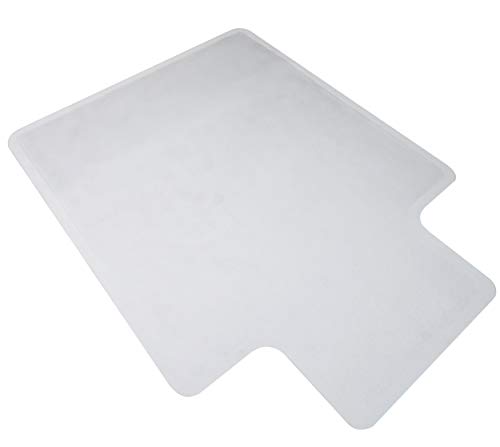
HON Desk Chair Mat for Hardwood Floor
If your ‘lean’ turned out to be an uneven floor, this HON mat gives all five casters one flat, firm surface — and it protects hardwood from the rolling wear a gaming chair causes. Check on Amazon

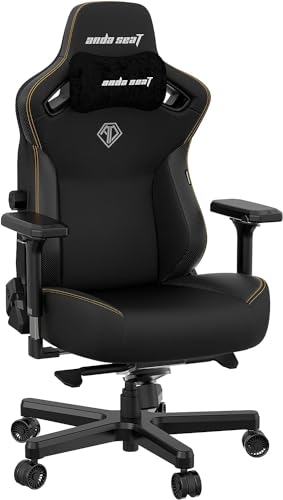
BestOffice Massage Gaming Chair with Footrest
If your diagnosis ends at a worn-out mechanism on an ageing chair, a complete replacement like this BestOffice model — with its reclining back, footrest and lumbar pillow — can cost less than a stack of individual parts. Check on Amazon
Frequently Asked Questions
Why does my gaming chair lean to one side all of a sudden?
Sudden leans usually mean a bolt has worked loose, a caster has cracked or clogged, or the lift has shifted in its socket. Work through the checks in order — bolts, casters, seating of the lift — before assuming a major failure.
Can I fix a leaning chair by adjusting the tilt tension?
No. Tilt tension controls how the chair rocks backward and forward; it cannot correct a sideways lean. A sideways lean is always a mounting, caster, base or lift issue.
Is it safe to keep using a chair that leans?
A slight lean from loose bolts is safe to use briefly while you arrange the ten-minute fix. A chair with a cracked base, bent bracket or visibly bent lift rod should not be used — those parts can fail suddenly.
My chair leans forward. Is that the same problem?
Forward lean usually means the tilt mechanism was mounted facing backwards during assembly, or the tilt lock is not engaging. Check the mechanism’s front marking against the seat front first.
When is a leaning chair not worth fixing?
When the frame or base is cracked, the mechanism socket is worn oval, or several major parts are at end of life together. At that point the repair money is better spent on a replacement that fits you properly.
My chair only leans when I recline. Is that the same problem?
It is a close relative with a different address. A lean that appears in recline usually lives in the backrest brackets or the tilt mechanism rather than in the base: check the bracket bolts first, tightened in alternation with the backrest held square, then feel for sideways play in the mechanism at full recline. The diagnostic flow in this guide still applies — you are simply starting it at the joint that the recline loads.
Should I put a shim under one caster to level the chair?
No. A shimmed caster carries load at an angle it was not designed for, fights its shim every time the chair rolls, and turns a floor problem into caster and socket wear. If the floor is the cause, level the plane instead — a mat for rug edges, or a shimmed platform under the chair’s whole footprint for sloped boards — and if the chair is the cause, fix the joint the diagnosis names.
Can a leaning chair damage the floor?
Indirectly, yes. A chair leaning on worn or damaged casters drags its loaded side rather than rolling cleanly, and dragging casters grind grit into hard floors and tear at carpet pile. The lean also concentrates the chair’s weight onto fewer casters, deepening the dents soft floors take. Fixing the lean early is floor maintenance as much as chair maintenance.
The lean came back a month after I tightened everything. What now?
A lean that returns on schedule is data: the joint is not holding, which points past the bolts themselves to what they clamp — a bracket hole worn oval, a thread partially stripped, or a mechanism socket wearing. Stop re-tightening and inspect the joint the flowchart names, comparing hole shapes and thread condition against a healthy joint on the same chair. Parts replaced at this stage solve the problem; another quarter-turn merely rebooks the appointment.
Can uneven tyre wear on the casters cause a lean?
Yes, and it is one of the quieter causes. Casters that have rolled for years on the same floor wear their tyres unevenly, especially on a chair that mostly rolls in one short path between desk and room; a wheel worn a few millimetres lower than its partners drops its corner by exactly that amount. Roll each caster across a hard floor and sight its profile against the others, and measure the lean again after rotating the set — the swap test in this guide. A worn set is replaced as a set, never singly, so all five corners start at the same height.
Is a slight lean dangerous, or just annoying?
A slight lean from a diagnosed, benign cause — loose bolts now tightened, an uneven floor now matted — is an annoyance you can schedule. A lean whose cause you have not found deserves more respect, because the undiagnosed category includes cracked bases and worn mechanism sockets, which can fail suddenly under load. The rule this guide runs on: a lean you can explain is furniture maintenance; a lean you cannot explain is a reason to keep diagnosing before the chair explains it for you.
How level is level enough for a gaming chair?
Within a degree side to side on the level app, most players feel nothing; beyond roughly two degrees, most bodies notice and begin compensating. Treat the number as a guide rather than a law — your own seated report outranks the instrument — but use the measurement to verify a fix, because a lean reduced from three degrees to one is a success you can prove, while a lean judged only by feel tends to be declared fixed at whatever point patience ran out.
The Short Version
Diagnose before you tighten: confirm it is not the floor, then check bolts in a cross pattern, backrest alignment, casters and base, and finally the seating of the gas lift. Replace — never open — a worn lift, and retire cracked bases and brackets. Most leans are a ten-minute bolt job; the rest are parts, and none of them require touching the inside of the pressurised cylinder.