Disclosure: As an Amazon Associate, ilcastellomenu.com earns from qualifying purchases. Prices and availability change; check Amazon for the latest.
Where to buy
Check the latest price, availability and delivery on Amazon. Orders are placed on Amazon. Every pick shortlisted for the best gaming desktop under 2000 is listed here first, with its badge, for convenience.
- CyberPowerPC Gamer Xtreme VR (RTX 4060 Ti 16GB) (Best Overall) — CyberPowerPC Gamer Xtreme VR (RTX 4060 Ti 16GB) · Check on Amazon
- iBUYPOWER Slate MESH (Core i7-14700F, 32GB) (Best for Multitasking) — iBUYPOWER Slate MESH (Core i7-14700F, 32GB) · Check on Amazon
- iBUYPOWER Slate MESH (RTX 5070) (Best Performance) — iBUYPOWER Slate MESH (RTX 5070) · Check on Amazon
- Skytech Azure 3 (Ryzen 7 9700X) (Best Foundation) — Skytech Azure 3 (Ryzen 7 9700X) · Check on Amazon
- Skytech Nebula (Core i5-13400F) (Best Value) — Skytech Nebula (Core i5-13400F) · Check on Amazon
- HP OMEN 45L (RTX 4070 Ti) (Best from a Major Brand) — HP OMEN 45L (RTX 4070 Ti) · Check on Amazon
Read the full guide ↓
Finding the best gaming desktop under 2000 is less about chasing the longest feature list and more about matching a balanced machine to the games, monitor and desk you actually have. At $2,000, a prebuilt gaming PC should deliver high-refresh 1440p in most games, carry 16GB of memory as a minimum and leave you an upgrade path that does not start with replacing the power supply. This is also the band where builders start charging for strong processors paired with ordinary graphics cards, which looks impressive on a listing and disappoints in games. The picks below were filtered for best gaming desktop under 2000 by graphics card first, then platform, then everything else, and the one premium-brand option is flagged clearly where its live price needs a careful check against the band.
Every desktop in this guide is a prebuilt system whose exact configuration — processor, graphics card, memory, storage and, where the listing states it, power supply — was verified before inclusion. Where a specification could not be verified, it is marked as not stated rather than guessed. Prices move constantly on machines like these, so this guide never prints a fixed price for a specific product: use the Amazon links to check the live figure, and use the tier discussion in the buying guide to judge whether that figure is fair for the parts inside.
As you read, it helps to keep the wider picture in mind: guides such as How To Cool A Gaming Pc and Best Pc For Gaming cover the neighbouring decisions, and if your search started from a related phrase such as How Much Ram Does A Gaming Pc Need or Best Prebuilt Gaming Pc Under $2000, the same shortlist logic applies — graphics card first, platform second, everything else after.
In this guide
Quick Picks
| Badge | Pick | Why it stands out | Link |
|---|---|---|---|
| Best Overall | CyberPowerPC Gamer Xtreme VR (RTX 4060 Ti 16GB) | The 16GB RTX 4060 Ti doubles rival graphics memory, on a DDR5 platform with a strong Intel processor. | Check on Amazon |
| Best for Multitasking | iBUYPOWER Slate MESH (Core i7-14700F, 32GB) | 32GB of DDR5 memory, a Core i7-14700F and peripherals in the box for heavy multitaskers. | Check on Amazon |
| Best Performance | iBUYPOWER Slate MESH (RTX 5070) | Current-generation RTX 5070 graphics with 32GB of memory for high-refresh 1440p. | Check on Amazon |
| Best Foundation | Skytech Azure 3 (Ryzen 7 9700X) | Ryzen 7 9700X with 360mm liquid cooling: a premium foundation built for a later graphics upgrade. | Check on Amazon |
| Best Value | Skytech Nebula (Core i5-13400F) | Modern Intel processor, RTX 4060 graphics and a full 1TB SSD with no obvious weak point. | Check on Amazon |
| Best from a Major Brand | HP OMEN 45L (RTX 4070 Ti) | RTX 4070 Ti performance with HP OMEN support behind it, in a full-size 45L tower. | Check on Amazon |
How These Picks Were Chosen
Selection started from a verified pool of prebuilt gaming desktops whose configurations could be confirmed from their listings: exact processor model, exact graphics card and its memory, memory capacity and generation, storage type and capacity, operating system, and power supply details where the listing states them. Any machine whose configuration could not be pinned down to that level was excluded, because a recommendation you cannot verify is just advertising with better manners.
The first filter was the graphics card, because it decides gaming performance more than any other single part. Picks span the sensible range for this keyword: efficient current-generation cards for 1080p and selective 1440p, step-up cards for confident high-refresh 1440p where the lens calls for them, and clearly labelled premium options only where they genuinely serve the buyer this keyword describes. The second filter was balance: a strong graphics card paired with a tiny SSD or a weak processor was treated as a flawed product, not a bargain.
At this level the rejected listings were the decorative ones: machines whose price clearly paid for elaborate cases and lighting while the graphics card stayed a class below what the band allows. Also rejected were configurations with 16GB of memory presented as creator-ready; the multitasking picks here carry 32GB, because gaming alongside capture, chat and editing software is exactly what this band is bought for.
The third filter was ownership. Standard parts, a stated power supply with sensible headroom, DDR5 platforms where the tier allows, and storage that does not force an immediate second purchase all counted in a machine’s favour. Finally, each surviving machine was assigned the badge it genuinely earns. Badges in this guide are conclusions, not decorations: if a machine is the value pick, its specification shows why; if it is the splurge, the guide says plainly who should not buy it.
One limit deserves stating openly. This guide recommends complete prebuilt desktops only, verified at the time of writing; configurations from these builders can change between production runs, which is why every pick block repeats the exact configuration verified for it and why the final check before ordering should always be the live listing itself. Readers comparing options from a related search such as Best Gaming Computer For 1000 will find the same standard applied there.
The 6 Best Best Gaming Desktop Under 2000
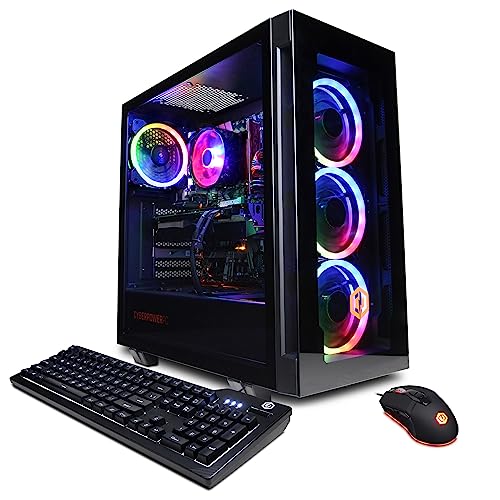
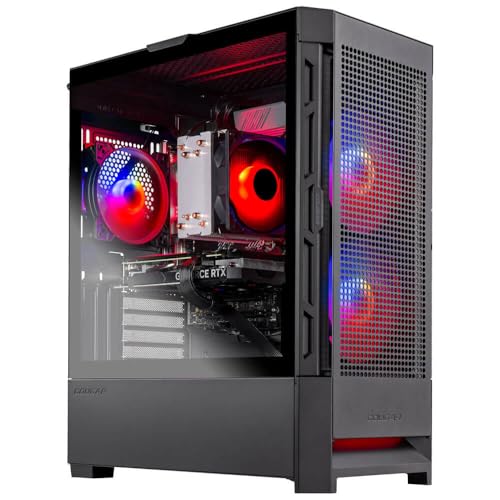
CyberPowerPC Gamer Xtreme VR (RTX 4060 Ti 16GB) (Best Overall)
The CyberPowerPC Gamer Xtreme VR (RTX 4060 Ti 16GB) earns its badge — Best Overall — for a specific kind of buyer looking for the best gaming desktop under 2000: someone who will actually use what its specification does best. At its heart are the Intel Core i7-13700F, 2.1 GHz base and the NVIDIA GeForce RTX 4060 Ti, 16GB, supported by 16GB DDR5 and 1TB NVMe SSD. That combination defines the machine honestly: it is not a spec-sheet decoration but a working balance of parts, and you can see the full verified configuration on its Amazon listing before anything else in this section asks you to care.
Strengths
- This is the 16GB version of the RTX 4060 Ti, doubling the video memory of the standard card and giving texture-heavy games and creative apps real headroom.
- The Core i7-13700F brings many-core performance that suits gaming plus streaming, editing or coursework running alongside.
- DDR5 memory puts it on the current platform, which keeps future memory and CPU upgrade conversations simpler.
Trade-offs
- In games that do not need the extra video memory, it performs close to a standard RTX 4060 Ti, so part of what you pay for is future headroom rather than today’s frames.
- 16GB of system memory is adequate rather than generous for a machine aimed at gaming plus content work.
- CyberPowerPC configurations change over time, so the exact case, board and cooler fitted can vary between production runs.
- Processor: Intel Core i7-13700F, 2.1 GHz base
- Graphics: NVIDIA GeForce RTX 4060 Ti, 16GB
- Memory: 16GB DDR5
- Storage: 1TB NVMe SSD
- Operating system: Windows 11 Home
- Also in the verified listing: Wi-Fi ready, VR-ready positioning (GXiVR8040A14)
In daily use, what owners notice most is not any single specification but the absence of friction: games install where there is room for them, updates do not require juggling storage, and the machine stays composed under load instead of announcing itself. That is the standard this pick was judged against, and it is why the badge fits the buyer described above rather than simply the longest spec sheet. In this machine’s case that judgement rests on concrete details: Wi-Fi ready, VR-ready positioning (GXiVR8040A14) as verified in the listing, an operating system of Windows 11 Home, and a configuration with no hidden substitution between the name on the box and the parts inside it. If you are cross-shopping, compare those exact items rather than headline claims, and read the neighbouring guide at Best Computer For Youtube Gaming for the closest alternative angle on the same decision.
Best for: players who want 1440p headroom and a machine that also handles streaming or creative work / Not suited for: pure 1080p players who would rather put the same money toward a faster graphics card class
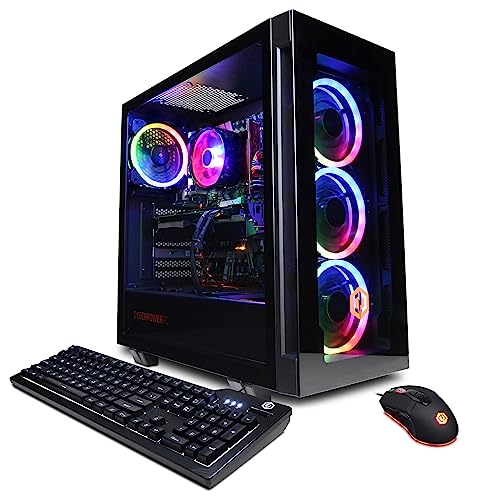
iBUYPOWER Slate MESH (Core i7-14700F, 32GB) (Best for Multitasking)
The iBUYPOWER Slate MESH (Core i7-14700F, 32GB) earns its badge — Best for Multitasking — for a specific kind of buyer looking for the best gaming desktop under 2000: someone who will actually use what its specification does best. At its heart are the Intel Core i7-14700F and the NVIDIA GeForce RTX 4060, 8GB, supported by 32GB DDR5 RGB 5200 and 1TB SSD. That combination defines the machine honestly: it is not a spec-sheet decoration but a working balance of parts, and you can see the full verified configuration on its Amazon listing before anything else in this section asks you to care.
Strengths
- 32GB of DDR5 memory is double what most picks here carry, which suits gaming alongside streaming, editing, virtual machines or heavy browser use.
- The Core i7-14700F is one of the strongest processors in this guide for mixed gaming and productivity work.
- A keyboard and mouse are included in the box, which genuinely helps a first setup get running the same day.
Trade-offs
- The RTX 4060 is the limiting part for gaming; the strong CPU and memory cannot push frame rates past what the graphics card allows.
- Buyers paying for 32GB of memory purely for gaming may not feel the benefit over 16GB in most current titles.
- RGB memory and case lighting are a matter of taste and add nothing to performance if you prefer a plain build.
- Processor: Intel Core i7-14700F
- Graphics: NVIDIA GeForce RTX 4060, 8GB
- Memory: 32GB DDR5 RGB 5200
- Storage: 1TB SSD
- Operating system: Windows 11 Home
- Also in the verified listing: Gaming keyboard and mouse included (SMI7N4601)
Longer term, think about the second year as much as the first week. This machine’s platform, power supply and storage decide whether your next upgrade is a single satisfying part swap or an expensive rebuild. Judged that way, its compromises are the honest, visible kind, stated up front in the trade-offs, rather than the kind discovered when a new game refuses to run well. In this machine’s case that judgement rests on concrete details: Gaming keyboard and mouse included (SMI7N4601) as verified in the listing, an operating system of Windows 11 Home, and a configuration with no hidden substitution between the name on the box and the parts inside it.
Best for: gamer-creators and heavy multitaskers who want memory headroom and a complete in-box setup / Not suited for: players who want every part of the budget aimed at graphics performance alone

iBUYPOWER Slate MESH (RTX 5070) (Best Performance)
The iBUYPOWER Slate MESH (RTX 5070) earns its badge — Best Performance — for a specific kind of buyer looking for the best gaming desktop under 2000: someone who will actually use what its specification does best. At its heart are the Intel Core i7-14700F and the NVIDIA GeForce RTX 5070, 12GB, supported by 32GB DDR5 RGB 5200 and 1TB NVMe SSD. That combination defines the machine honestly: it is not a spec-sheet decoration but a working balance of parts, and you can see the full verified configuration on its Amazon listing before anything else in this section asks you to care.
Strengths
- The RTX 5070 with 12GB of memory is a current-generation card aimed squarely at high-refresh 1440p gaming.
- 32GB of DDR5 memory and a Core i7-14700F mean the rest of the system never holds the graphics card back.
- Keyboard and mouse in the box make it a genuinely complete purchase for someone starting a desk from scratch.
Trade-offs
- It asks a clear price step over the RTX 4060 machines here, and its live price needs checking against any under-budget keyword.
- 1TB of storage is standard rather than roomy for a machine of this class; large libraries will want a second drive.
- The included peripherals are starter quality; keen players usually upgrade the mouse first.
- Processor: Intel Core i7-14700F
- Graphics: NVIDIA GeForce RTX 5070, 12GB
- Memory: 32GB DDR5 RGB 5200
- Storage: 1TB NVMe SSD
- Operating system: Windows 11 Home
- Also in the verified listing: Gaming keyboard and mouse included (SMI7N5701)
For the right buyer, the value of this pick is how little it asks you to think about it after setup day. It is the machine you recommend to someone who wants to play modern games properly, keep the same system through several release cycles, and only open the case when curiosity, not necessity, suggests an upgrade. In this machine’s case that judgement rests on concrete details: Gaming keyboard and mouse included (SMI7N5701) as verified in the listing, an operating system of Windows 11 Home, and a configuration with no hidden substitution between the name on the box and the parts inside it.
Best for: players stepping up to high-refresh 1440p who want a complete, current-generation system / Not suited for: 1080p players, for whom this level of graphics power is more than the monitor can show

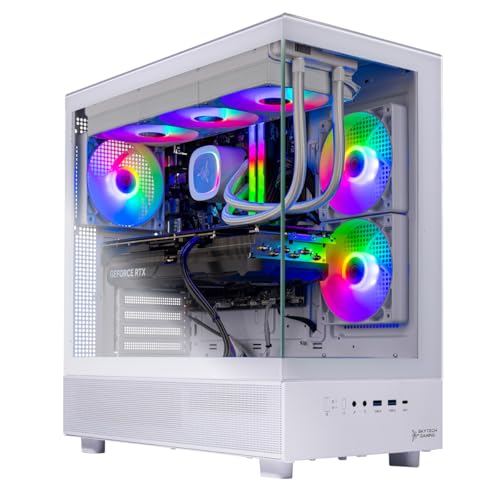
Skytech Azure 3 (Ryzen 7 9700X) (Best Foundation)
The Skytech Azure 3 (Ryzen 7 9700X) earns its badge — Best Foundation — for a specific kind of buyer looking for the best gaming desktop under 2000: someone who will actually use what its specification does best. At its heart are the AMD Ryzen 7 9700X, 3.8 GHz (up to 5.5 GHz) and the NVIDIA GeForce RTX 4060, 8GB, supported by 16GB DDR5 6000 and 1TB NVMe SSD. That combination defines the machine honestly: it is not a spec-sheet decoration but a working balance of parts, and you can see the full verified configuration on its Amazon listing before anything else in this section asks you to care.
Strengths
- The Ryzen 7 9700X is a current, fast gaming processor that will outlast several graphics card generations in this case.
- A 360mm liquid cooler is serious cooling for this class of machine, keeping noise and temperatures down under long sessions.
- Fast DDR5 6000 memory and the AM5 platform give it the strongest upgrade foundation of the RTX 4060 picks here.
Trade-offs
- The RTX 4060 holds back what the processor could deliver; this is a deliberately CPU-forward build that makes most sense if you plan a graphics upgrade later.
- 16GB of memory is fine for gaming but modest next to the rest of the specification.
- A large liquid cooler and its case need more room and a little more care in placement than a simple air-cooled tower.
- Processor: AMD Ryzen 7 9700X, 3.8 GHz (up to 5.5 GHz)
- Graphics: NVIDIA GeForce RTX 4060, 8GB
- Memory: 16GB DDR5 6000
- Storage: 1TB NVMe SSD
- Power supply: 650W Gold PSU
- Operating system: Windows 11 Home
- Also in the verified listing: 360mm ARGB liquid cooler (AIO), Wi-Fi
It is also worth saying who should walk past this one without regret: if your monitor, your games or your other work do not use what this machine is good at, a cheaper pick in this guide will serve you identically and leave money for the display, desk or library that completes the setup. Recommendations only mean something when the ‘not for you’ case is as clear as the ‘for you’ case. In this machine’s case that judgement rests on concrete details: 360mm ARGB liquid cooler (AIO), Wi-Fi as verified in the listing, an operating system of Windows 11 Home, and a configuration with no hidden substitution between the name on the box and the parts inside it. If you are cross-shopping, compare those exact items rather than headline claims, and read the neighbouring guide at How Much Ram Does A Gaming Pc Need for the closest alternative angle on the same decision.
Best for: players who want a premium foundation now and expect to upgrade the graphics card in a few years / Not suited for: buyers who want maximum frame rates today for the money and no upgrade plans
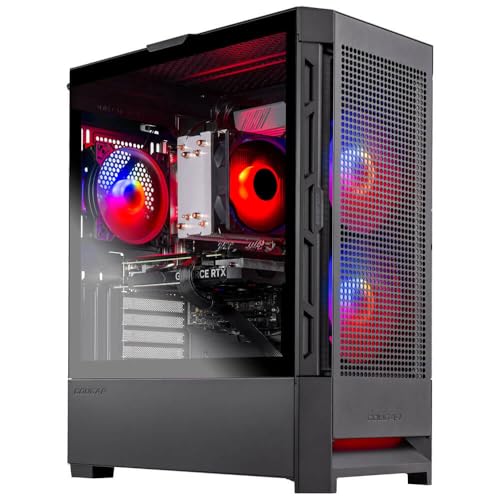
Skytech Nebula (Core i5-13400F) (Best Value)
The Skytech Nebula (Core i5-13400F) earns its badge — Best Value — for a specific kind of buyer looking for the best gaming desktop under 2000: someone who will actually use what its specification does best. At its heart are the Intel Core i5-13400F, 2.5 GHz base and the NVIDIA GeForce RTX 4060, supported by 16GB DDR4 3200 and 1TB NVMe SSD. That combination defines the machine honestly: it is not a spec-sheet decoration but a working balance of parts, and you can see the full verified configuration on its Amazon listing before anything else in this section asks you to care.
Strengths
- The Core i5-13400F is a modern, efficient processor that handles 1080p and 1440p gaming without bottlenecking the RTX 4060 in typical play.
- A 1TB NVMe SSD and 16GB of memory cover the essentials properly, with no undersized storage corner cut.
- The 600W Gold power supply and standard parts make later upgrades straightforward for a first-time owner.
Trade-offs
- The RTX 4060 has 8GB of video memory, which is fine today at 1080p and reasonable at 1440p but is the first limit you will meet in future texture-heavy games.
- The memory platform is DDR4, so a future platform upgrade means replacing board and memory together.
- The case styling and fan configuration are functional rather than premium, with less elaborate cooling than liquid-cooled systems in this class.
- Processor: Intel Core i5-13400F, 2.5 GHz base
- Graphics: NVIDIA GeForce RTX 4060
- Memory: 16GB DDR4 3200
- Storage: 1TB NVMe SSD
- Power supply: 600W Gold PSU
- Operating system: Windows 11 Home
- Also in the verified listing: 11AC Wi-Fi, black case
In daily use, what owners notice most is not any single specification but the absence of friction: games install where there is room for them, updates do not require juggling storage, and the machine stays composed under load instead of announcing itself. That is the standard this pick was judged against, and it is why the badge fits the buyer described above rather than simply the longest spec sheet. In this machine’s case that judgement rests on concrete details: 11AC Wi-Fi, black case as verified in the listing, an operating system of Windows 11 Home, and a configuration with no hidden substitution between the name on the box and the parts inside it.
Best for: most players who want a balanced, modern 1080p and 1440p machine with no obvious weak point / Not suited for: 4K gaming, or buyers who specifically want a DDR5 platform for the longest upgrade runway

HP OMEN 45L (RTX 4070 Ti) (Best from a Major Brand)
The HP OMEN 45L (RTX 4070 Ti) earns its badge — Best from a Major Brand — for a specific kind of buyer looking for the best gaming desktop under 2000: someone who will actually use what its specification does best. At its heart are the Intel Core i7-13700KF and the NVIDIA GeForce RTX 4070 Ti, supported by 16GB RAM and 1TB SSD. That combination defines the machine honestly: it is not a spec-sheet decoration but a working balance of parts, and you can see the full verified configuration on its Amazon listing before anything else in this section asks you to care.
Strengths
- The RTX 4070 Ti is a genuine high-refresh 1440p and entry 4K graphics card, a clear step above every RTX 4060-class pick in this guide.
- The Core i7-13700KF pairs strong gaming performance with plenty of cores for streaming, recording and background work at the same time.
- HP’s OMEN support network and warranty handling are easier for most buyers to deal with than smaller boutique builders.
Trade-offs
- 16GB of system memory is the minimum comfortable amount for this performance class; heavy multitaskers may want to add more later.
- The 45L is a large full-tower case that needs real desk or floor space and is not a subtle piece of furniture.
- It sits at the top of the mainstream price bands in this guide, so its live price needs checking carefully against any under-budget keyword.
- Processor: Intel Core i7-13700KF
- Graphics: NVIDIA GeForce RTX 4070 Ti
- Memory: 16GB RAM
- Storage: 1TB SSD
- Operating system: Windows 11 Home
- Also in the verified listing: OMEN 45L full-tower case (GT22-1072)
Longer term, think about the second year as much as the first week. This machine’s platform, power supply and storage decide whether your next upgrade is a single satisfying part swap or an expensive rebuild. Judged that way, its compromises are the honest, visible kind, stated up front in the trade-offs, rather than the kind discovered when a new game refuses to run well. In this machine’s case that judgement rests on concrete details: OMEN 45L full-tower case (GT22-1072) as verified in the listing, an operating system of Windows 11 Home, and a configuration with no hidden substitution between the name on the box and the parts inside it.
Best for: players who want high-refresh 1440p or light 4K gaming from a major brand with proper support / Not suited for: small desks, tight budgets, or anyone who will never use the extra graphics headroom
Comparison Table
| Pick | Processor | Graphics | Memory | Storage | Price |
|---|---|---|---|---|---|
| CyberPowerPC Gamer Xtreme VR (RTX 4060 Ti 16GB) (Best Overall) | Intel Core i7-13700F, 2.1 GHz base | NVIDIA GeForce RTX 4060 Ti, 16GB | 16GB DDR5 | 1TB NVMe SSD | Check price on Amazon |
| iBUYPOWER Slate MESH (Core i7-14700F, 32GB) (Best for Multitasking) | Intel Core i7-14700F | NVIDIA GeForce RTX 4060, 8GB | 32GB DDR5 RGB 5200 | 1TB SSD | Check price on Amazon |
| iBUYPOWER Slate MESH (RTX 5070) (Best Performance) | Intel Core i7-14700F | NVIDIA GeForce RTX 5070, 12GB | 32GB DDR5 RGB 5200 | 1TB NVMe SSD | Check price on Amazon |
| Skytech Azure 3 (Ryzen 7 9700X) (Best Foundation) | AMD Ryzen 7 9700X, 3.8 GHz (up to 5.5 GHz) | NVIDIA GeForce RTX 4060, 8GB | 16GB DDR5 6000 | 1TB NVMe SSD | Check price on Amazon |
| Skytech Nebula (Core i5-13400F) (Best Value) | Intel Core i5-13400F, 2.5 GHz base | NVIDIA GeForce RTX 4060 | 16GB DDR4 3200 | 1TB NVMe SSD | Check price on Amazon |
| HP OMEN 45L (RTX 4070 Ti) (Best from a Major Brand) | Intel Core i7-13700KF | NVIDIA GeForce RTX 4070 Ti | 16GB RAM | 1TB SSD | Check price on Amazon |
Read the table in the order the columns appear. Graphics decides your frame rates and the resolution you can honestly aim at; the processor decides how well the machine multitasks, streams and ages; memory decides how much you can run at once; storage decides how much of your library lives on the machine at one time. A row that wins every column does not exist at sensible money, which is exactly why the badges differ: each pick trades these columns in a different, deliberate order.
How to Choose the Right Gaming PC
Start with the band itself. This keyword names $2,000, and that figure should be treated as framing for the whole decision: it is the ceiling the parts list has to justify, not a promise that every machine in this guide sits under it every week. Check the live price of any pick against the band before falling in love with it, and remember that a machine slightly above the band with the right graphics card is a better buy than a machine inside the band with the wrong one.
Graphics card first. For 1080p gaming, the RTX 4060 class and its AMD equivalents are the sensible centre of the market: efficient, current and fast enough for high settings in most games. The RTX 4060 Ti in its 16GB form adds graphics memory headroom that matters in texture-heavy games and creative applications. For high-refresh 1440p, step up to the RTX 4070 Ti or RTX 5070 class. Reserve flagship cards such as the RTX 5090 for 4K high-refresh displays; on a smaller monitor their extra power is simply invisible. Always note the graphics memory figure as well as the card name, because 8GB and 16GB versions of similar cards age very differently.
Processor second. Modern six and eight-core processors from Intel and AMD both game well, and at 1440p the graphics card does most of the work anyway. Where the processor earns its keep is everything around the game: streaming and recording, voice chat, browsers, launchers, editing and coursework. Buyers who only play can choose freely across this guide; buyers who create or multitask should look at the stronger-processor picks in the shortlist above. Also weigh the platform: AMD’s AM5 and Intel’s current sockets, paired with DDR5 memory, keep a CPU upgrade possible without replacing the motherboard.
Memory and storage, honestly sized. 16GB of system memory is the working minimum for gaming in this class and is comfortable for play plus everyday applications. 32GB is the right call for streaming, editing, heavy multitasking or school and work machines that live with dozens of tabs open. For storage, treat 1TB of SSD as the sensible baseline; modern games are large, and a 500GB drive fills faster than new owners expect. Every machine should boot from an SSD — all picks here do — and adding a second drive later is the easiest upgrade any of them offers.
Power supply, cooling and case. A named, adequately rated power supply is a quality signal: the picks here that state theirs use 600W to 650W Gold-rated units, appropriate for their hardware with headroom for a future graphics card. Cooling decides noise as much as temperature; liquid cooling suits long sessions in shared rooms, while good air cooling in a mesh case is simpler and needs no maintenance beyond dust. Finally, measure your space. Full-tower cases such as the OMEN 45L need real room and ventilation; mid towers fit most desks and are the default recommendation for bedrooms and study spaces.
Match the PC to the monitor and the player. The most common overspend in gaming PCs is buying graphics power a monitor cannot display, and the most common underspend is the reverse. A 1080p player is served best by the balanced picks; a 1440p high-refresh player should start at the stronger graphics rows of the comparison table; a 4K player is the only buyer a flagship-class machine serves. Then match to the person: beginners and teenagers benefit from upgradeable standard parts and complete in-box peripherals, students from memory and quiet manners, and creators from processor cores and memory first, graphics second.
How Do You Set Up and Look After a Gaming PC?
Owning the machine well is a sequence, not an event. Work through these steps in order when the PC arrives, and revisit the maintenance steps on a simple rhythm afterwards.
- Choose the spot before you unbox. Place the tower where air can reach its intakes and exhausts freely, on a hard surface rather than carpet, with the rear panel accessible. Full towers need clearance on every side; never seal a gaming PC inside a closed cabinet.
- Connect in the right order. Attach the monitor to the graphics card’s ports, not the motherboard’s — the single most common setup mistake with a new prebuilt. Then keyboard, mouse, network cable if you can manage wired, and power last.
- First boot and updates. Let Windows finish its first setup, then run system updates, then install the latest graphics driver from the card maker’s own software. Restart when asked; a new machine needs this patience exactly once.
- Set the display properly. In display settings, confirm the resolution is native and the refresh rate is set to the monitor’s full figure. Many new owners play for weeks at a default lower refresh rate without realising.
- Install launchers and your library sensibly. Install game launchers on the SSD, decide which handful of large games earn permanent residence, and leave a healthy margin of free space so the drive stays fast and updates never fail for room.
- Clean on a rhythm. Every few months, power down, and clear dust from intake filters and fans with short bursts of compressed air while holding fan blades still. Wipe the desk area the PC draws air from; a clean room is half of PC cooling.
- Maintain the software side. Keep graphics drivers current, let the operating system update itself, and remove launchers and background tools you no longer use. Performance that slowly fades over a year is usually software clutter, not dying hardware.
- Plan the first upgrade before you need it. The natural order for most picks here is storage first, memory second, graphics card third, in each case checking the power supply headroom and physical clearance the guide’s spec boxes describe.
Quick troubleshooting.
- Problem: games run far below expected frame rates → fix: confirm the monitor cable is in the graphics card, the display refresh rate is set correctly, and the latest graphics driver is installed.
- Problem: the PC is loud under load → fix: check for dust in intakes, confirm nothing blocks the exhaust, and make sure the tower is not inside a closed cabinet trapping its own warm air.
- Problem: stutter in games while other apps are open → fix: close heavy background applications; on 16GB machines, streaming plus a browser plus a game is the classic combination that asks for the 32GB picks in this guide.
- Problem: a new game will not install → fix: check free SSD space first; large modern installs need room for the download and the unpacked game at the same time.
Common Mistakes
Buying the processor headline instead of the graphics card. Listings lead with the CPU because it sounds impressive, but frame rates follow the graphics card. Two machines at the same tier can share a processor name while their graphics cards are a full class apart, and only one of them will play the way the buyer expects. Compare graphics first, always, and treat a strong CPU paired with a weak card as a warning sign rather than a bargain.
Ignoring graphics memory. Cards with similar names exist in different memory capacities, and the smaller version ages faster in texture-heavy games. An 8GB card, a 12GB card and a 16GB card can share most of a name while behaving very differently two years from now; when you compare any listing, including the ones in this guide, find the memory figure before you find the price.
Underbuying storage to save a little money. A 500GB SSD looks harmless on a listing and becomes a weekly chore in real life, as modern games routinely occupy a large share of it. The one 500GB pick in this guide is included for its platform and flagged plainly; everywhere else, 1TB is the baseline this guide defends, and the money difference is small next to years of deleting and reinstalling.
Forgetting the monitor in the budget. A high-refresh 1440p PC connected to an old 1080p office monitor delivers a fraction of what was paid for, and a flagship PC on a basic display is the most expensive version of the same mistake. Decide the display first or at least together with the PC, and let its resolution choose the graphics card class, not the other way round.
Assuming every prebuilt is upgradeable. Some systems use proprietary boards or power supplies that make a later graphics upgrade awkward or impossible. The picks here favour standard parts and stated power supplies for exactly this reason. Before buying anything outside this guide, check that the power supply wattage is published and that the case fits standard graphics cards.
Final Recommendation
If you only read one paragraph, read this one. For most buyers searching for the best gaming desktop under 2000, the CyberPowerPC Gamer Xtreme VR (RTX 4060 Ti 16GB) (Best Overall) is the recommendation: its verified configuration — Intel Core i7-13700F, 2.1 GHz base, NVIDIA GeForce RTX 4060 Ti, 16GB, 16GB DDR5, 1TB NVMe SSD — is the balance this keyword actually calls for, with no part of the specification embarrassed by the others. The iBUYPOWER Slate MESH (Core i7-14700F, 32GB) (Best for Multitasking) is the close alternative, and the better choice for the specific buyer its badge describes.
Work through the rest of the shortlist by buyer type rather than by rank. The badges are the map: value picks protect a budget without buying regret, foundation picks protect the future, multitasking picks protect everything you run alongside the game, and the HP OMEN 45L (RTX 4070 Ti) (Best from a Major Brand) marks the top of the range for buyers whose display and workload genuinely reach it. Check the live price of your chosen pick on Amazon, confirm the configuration on the listing still matches the spec box in this guide, and buy the machine that matches your monitor and your next two years — not the machine with the loudest listing.
Frequently Asked Questions
What matters most when choosing the best gaming desktop under 2000?
The graphics card matters most, because it decides your resolution and frame rates; the processor matters next, especially if you stream, record or multitask; then memory and storage, where 16GB and 1TB are the sensible baselines in this class. Judge any machine as a balance of those four, in that order, and be suspicious of a listing that shouts about one part while staying vague about the others.
Is 16GB of memory enough for a gaming PC?
For gaming itself, yes: 16GB remains the comfortable standard, and every pick in this guide meets it. Step up to the 32GB picks if you stream, edit video, keep many applications and tabs open alongside games, or want the machine to double as a serious school or work computer. Memory is also one of the easiest later upgrades on standard-parts machines.
How much storage does a gaming PC need?
Treat 1TB of SSD storage as the baseline. Modern games are large, operating systems and launchers take their share, and a drive kept nearly full is a drive that updates badly. A 500GB machine can work for a small, rotating library — one pick here is included on that basis, flagged honestly — but most buyers should start at 1TB and add a second drive when the library outgrows it.
Should I buy a prebuilt or build my own gaming PC?
Buy a prebuilt when you value a tested system, a single warranty and playing this week; the picks in this guide use published, standard parts lists so you can compare them fairly against a self-build. Build your own when you enjoy the process and want to choose every component yourself. What you should not do is pay prebuilt money for a machine with a vague parts list: if the exact graphics card, memory and power supply are not stated, walk away.
What resolution are the PCs in this guide for?
Most picks centre on 1080p and 1440p, which is where the sensible money in gaming PCs lives: the RTX 4060 class for 1080p and selective 1440p, and the stronger card classes for confident high-refresh 1440p. Only flagship-class machines are built for 4K high-refresh gaming, and where one appears in a shortlist it is labelled as a ceiling reference for that reason. Match the card class to your monitor rather than buying the strongest card named.
How long will a PC from this guide stay relevant?
A balanced current-generation machine should play new releases well for several years, with settings gradually adjusted rather than a sudden cliff. The picks on current platforms with DDR5 memory and adequately rated power supplies have the longest runway, because their first upgrades — storage, memory, then graphics card — are simple part swaps rather than a rebuild.