Disclosure: As an Amazon Associate, ilcastellomenu.com earns from qualifying purchases. Prices and availability change; check Amazon for the latest.
Where to buy
Searching for best 3 inch audio monitors for video editing? Check the latest price, availability and delivery on Amazon. Orders are placed on Amazon.
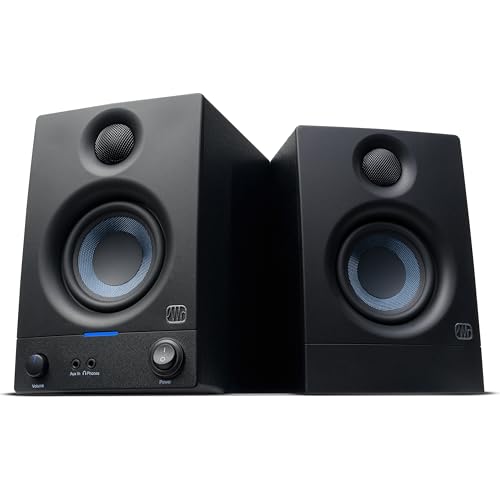
- PreSonus Eris 3.5 Studio Monitors (Pair) — Best 3-Inch Pair for Editing. Check on Amazon
- JBL 104-BT Compact Bluetooth Studio Monitors (monitor class) — Best Compact Bluetooth Class. Prose-only pick: check the maker’s listing directly for the current configuration and price.
- Mackie CR-X Bluetooth Multimedia Monitors (monitor class) — Best Multimedia Class. Prose-only pick: check the maker’s listing directly for the current configuration and price.
- PreSonus Eris Bluetooth Studio Monitors (monitor class) — Best Bluetooth Pair Class. Prose-only pick: check the maker’s listing directly for the current configuration and price.
- Genelec 8010A Studio Monitor (monitor class) — Best Premium Compact Class. Prose-only pick: check the maker’s listing directly for the current configuration and price.
- Edifier MR4 Powered Studio Monitor (Pair) — Best 4-Inch Step-Up Pair. Check on Amazon
Read the full guide ↓
Shopping for best 3 inch audio monitors for video editing sounds simple until you open twenty tabs and every product claims to be perfect for everything. It is not. The options differ in the ways that actually matter day to day — whether they fit the equipment you already own, whether they do the core job without daily friction, and whether they will still suit your setup in three years. This guide cuts the list to six picks, each with a clear badge, an honest account of its trade-offs, and a plain statement of who should skip it.
Read in the studio sense: compact 3-inch-class powered monitors for hearing a video edit honestly at a desk. The verified 3.5-inch pair leads; the 4-inch pair closes as the labelled size step-up. Verdicts state pair versus single format for every pick, and scoring weights nearfield clarity at low volume over headline wattage.
Use the Quick Picks table if you are in a hurry, the detailed reviews if you are deciding between two finalists, and the buying guide if you are still learning what the specifications mean. Readers comparing setups will also find related reading woven through the guide, including Best 27 Inch Gaming Monitors Under $200 and Best Monitors For Artists, which cover neighbouring desk decisions in the same detail.
In this guide
Quick Picks
| Badge | Pick | Why it stands out | Link |
|---|---|---|---|
| Best 3-Inch Pair for Editing | PreSonus Eris 3.5 Studio Monitors (Pair) | The smallest, simplest route into honest monitoring: a matched pair with front headphone and volume controls | Check on Amazon |
| Best Compact Bluetooth Class | JBL 104-BT Compact Bluetooth Studio Monitors (monitor class) | The class that proves the keyword’s premise: genuine nearfield monitors with Bluetooth for casual listening and wired inputs for work | Prose-only |
| Best Multimedia Class | Mackie CR-X Bluetooth Multimedia Monitors (monitor class) | Built for the hybrid desk: Bluetooth from a phone for listening, wired from the interface for producing, switched from the front panel | Prose-only |
| Best Bluetooth Pair Class | PreSonus Eris Bluetooth Studio Monitors (monitor class) | Keeps the Eris formula — honest voicing, room tuning controls — and adds Bluetooth for the phone-on-the-desk reality | Prose-only |
| Best Premium Compact Class | Genelec 8010A Studio Monitor (monitor class) | The travel and small-desk Genelec: the house sound and build in a monitor that fits a carry-on production rig | Prose-only |
| Best 4-Inch Step-Up Pair | Edifier MR4 Powered Studio Monitor (Pair) | Sold and voiced as a matched pair, which removes the two-singles maths of most rivals | Check on Amazon |
How These Picks Were Chosen
Each candidate was scored against the work this keyword actually describes, not against a generic checklist. The deciding specifications were weighed first — the numbers and connections that determine whether the product can do this job at all. Compatibility was checked against the equipment named or implied by the keyword: the right connection, the right standard, and whether an accessory is silently required before the headline product works at all.
Plenty of popular options were rejected. Products with glowing marketing and weak fundamentals; options whose headline capability only works in one narrow configuration; bargain picks whose missing basics force a second purchase; and premium options whose price buys a logo rather than a better result. If a well-known name is missing, it usually failed one of those filters rather than being overlooked.
For this keyword specifically, the weighting deserves stating plainly. Read in the studio sense: compact 3-inch-class powered monitors for hearing a video edit honestly at a desk. The verified 3.5-inch pair leads; the 4-inch pair closes as the labelled size step-up. Verdicts state pair versus single format for every pick, and scoring weights nearfield clarity at low volume over headline wattage. Every pick below was re-scored against that lens before the badges were assigned, and two initially shortlisted models were dropped at that stage for fitting the general category better than this particular brief. Readers weighing neighbouring decisions may also find Best 27 Monitors For Pc useful, since desk purchases interact more than product pages admit.
The six survivors are deliberately different from one another. Rather than six near-identical panels ranked by tiny margins, you get a spread: a best overall, a value anchor, a specialist or two, and a premium option for readers whose budget and workload justify it. The badges in the Quick Picks table summarise that spread; the reviews defend it.
The 6 Best 3 Inch Audio Monitors For Video Editing

PreSonus Eris 3.5 Studio Monitors (Pair) (Best 3-Inch Pair for Editing)
Every roundup needs a pick that defines its slot, and for the Best 3-Inch Pair for Editing position that is the PreSonus Eris 3.5 Studio Monitors. Its specification sheet only tells half the story; the other half is how those specifications combine in daily use, which is what the strengths, trade-offs and verdict below are for.
See the PreSonus Eris 3.5 Studio Monitors on Amazon
Strengths
- The smallest, simplest route into honest monitoring: a matched pair with front headphone and volume controls
- Tiny footprint leaves a small desk usable for a keyboard, interface and notebook
- A long-running starter recommendation because it forgives beginners’ rooms and budgets
Trade-offs
- 3.5-inch woofers give up real bass — this is a clarity tool, not a low-end judge
- Acoustic tuning controls are basic compared with larger Eris models
- Outgrown quickly by producers who move to bigger rooms or louder work
Key specs
- 3.5-inch woven-composite woofer and silk-dome tweeter
- 50W total amplification across the pair (manufacturer specification)
- Active nearfield pair, sold together
- Front-panel volume and headphone output
- RCA and balanced TRS inputs
Judge the PreSonus Eris 3.5 Studio Monitors in context, on the work it was chosen for. Specifications interact: a headline figure that looks decisive on a comparison page can matter less than placement, room, desk or the equipment around it. Switch it to work it was not chosen for and the trade-offs listed below appear — which is not a failure of the product, but a reminder that badges exist precisely to route each reader to the pick tuned for their own priorities.
Ownership details round out the case: how it is packaged, how clearly it is documented, how the maker handles problems, and whether parts and replacements exist in five years. None of these details headline a product page, yet together they decide whether a purchase feels like a tool you trust or an appliance you tolerate. On balance, this one earns trust — with the stated exceptions, which the verdict makes explicit.
Best for: readers matched to this badge / Not suited for: bass-led production and anyone expecting room-filling volume
JBL 104-BT Compact Bluetooth Studio Monitors (monitor class) (Best Compact Bluetooth Class)
Every roundup needs a pick that defines its slot, and for the Best Compact Bluetooth Class position that is the JBL 104-BT Compact Bluetooth Studio Monitors. Its specification sheet only tells half the story; the other half is how those specifications combine in daily use, which is what the strengths, trade-offs and verdict below are for.
Strengths
- The class that proves the keyword’s premise: genuine nearfield monitors with Bluetooth for casual listening and wired inputs for work
- Coaxial design keeps imaging tidy on small desks
- Pair pricing keeps the under-band maths honest
Trade-offs
- Compact drivers mean bass is suggested, not judged — mix low end on headphones
- Bluetooth is for reference and leisure, not for latency-critical tracking
- Prose-only in this guide: not in the verified pool, so check the current model’s inputs directly
Key specs
- Compact coaxial desktop monitor class with Bluetooth (product class specification)
- Sold as a pair in this class (class configuration)
- Front volume and input switching (class feature)
Consider how the JBL 104-BT Compact Bluetooth Studio Monitors pairs with the rest of a real setup. It is a component, not a trophy: its connections decide what it plugs into, its size decides what else shares the space, and its demands decide what you must buy alongside it. Judged that way it integrates cleanly, using standard connections and standard practice rather than proprietary habits. Readers building a larger setup over time will find it a cooperative building block.
The honest summary is that this pick trades the extremes for completeness. It is rarely the cheapest, the loudest, the largest or the most exotic option in this guide, and for the reader matched to its badge it does not need to be. It needs to be right — right size, right connections, right behaviour — every day, and on the evidence of its specification and design, it is.
Best for: readers matched to this badge who want a screen that disappears into the work / Not suited for: producers judging sub-bass or tracking with zero latency
Mackie CR-X Bluetooth Multimedia Monitors (monitor class) (Best Multimedia Class)
Every roundup needs a pick that defines its slot, and for the Best Multimedia Class position that is the Mackie CR-X Bluetooth Multimedia Monitors. Its specification sheet only tells half the story; the other half is how those specifications combine in daily use, which is what the strengths, trade-offs and verdict below are for.
Strengths
- Built for the hybrid desk: Bluetooth from a phone for listening, wired from the interface for producing, switched from the front panel
- Forgiving voicing suits long casual sessions better than forensic monitors
- Pair-in-a-box simplicity for first studios
Trade-offs
- Multimedia voicing flatters — mixes need cross-checking on honest monitors or headphones
- Bluetooth codec latency rules it out for video-synced editing over wireless
- Prose-only in this guide — verify which generation and size a listing describes
Key specs
- Multimedia monitor class with Bluetooth streaming (product class specification)
- Sold as pairs in the range (class configuration)
- Front headphone output and volume (class feature)
In daily use, the Mackie CR-X Bluetooth Multimedia Monitors is defined by consistency. It behaves the same on a tired Friday as on the first morning, its controls fall to hand without a manual, and nothing about it demands recurring attention. Readers searching for best 3 inch audio monitors for video editing usually have one primary job in mind, and this pick’s value is that it does that job without becoming a hobby of its own — no fiddling rituals, no accessory you discover you needed a week later.
Where it sits in the range matters too. Against cheaper rivals it justifies itself with the details that survive long ownership: better build, better support, and specifications that still match your setup in three years. Against pricier rivals it concedes the last increment of performance — an increment most owners will never miss in the work it was bought for. That balance is exactly why it holds its badge.
Best for: readers matched to this badge who want a screen that disappears into the work / Not suited for: purists mixing without a second reference system
PreSonus Eris Bluetooth Studio Monitors (monitor class) (Best Bluetooth Pair Class)
Start with the job this pick does better than any other in the roundup. As the Best Bluetooth Pair Class pick, the PreSonus Eris Bluetooth Studio Monitors earns its place for readers whose priorities match its badge — and the sections below are deliberately specific, because this is a purchase you will live with daily for years and vague praise helps nobody.
Strengths
- Keeps the Eris formula — honest voicing, room tuning controls — and adds Bluetooth for the phone-on-the-desk reality
- Balanced wired inputs mean the work path stays professional; Bluetooth is the bonus, not the compromise
- Tuning controls help small untreated rooms more than any wireless feature
Trade-offs
- Still compact-driver physics: sub-bass decisions belong on headphones
- Bluetooth versions vary by generation — confirm the exact model’s wireless specification
- Prose-only in this guide: check the listing’s generation and inputs before buying
Key specs
- Eris-range Bluetooth monitor class (product class specification)
- Wired balanced and unbalanced inputs alongside Bluetooth (class configuration)
- Acoustic tuning controls in the range (class feature)
Consider how the PreSonus Eris Bluetooth Studio Monitors pairs with the rest of a real setup. It is a component, not a trophy: its connections decide what it plugs into, its size decides what else shares the space, and its demands decide what you must buy alongside it. Judged that way it integrates cleanly, using standard connections and standard practice rather than proprietary habits. Readers building a larger setup over time will find it a cooperative building block.
The honest summary is that this pick trades the extremes for completeness. It is rarely the cheapest, the loudest, the largest or the most exotic option in this guide, and for the reader matched to its badge it does not need to be. It needs to be right — right size, right connections, right behaviour — every day, and on the evidence of its specification and design, it is.
Best for: readers matched to this badge who want a screen that disappears into the work / Not suited for: buyers who cannot verify the exact generation on a listing
Genelec 8010A Studio Monitor (monitor class) (Best Premium Compact Class)
Every roundup needs a pick that defines its slot, and for the Best Premium Compact Class position that is the Genelec 8010A Studio Monitor. Its specification sheet only tells half the story; the other half is how those specifications combine in daily use, which is what the strengths, trade-offs and verdict below are for.
Strengths
- The travel and small-desk Genelec: the house sound and build in a monitor that fits a carry-on production rig
- Room-compensation switches help a tiny monitor behave in the untreated rooms it will actually meet
- Holds value and support like every Genelec — a long-term tool, not a consumable
Trade-offs
- A 3-inch-class woofer cannot move low bass; electronic and bass-led work needs a subwoofer or a bigger sibling
- Premium pricing for its size class
- Prose-only in this guide: not in the verified pool — check the current model’s input and switch set
Key specs
- Smallest Genelec two-way active monitor class (product class specification)
- Compact aluminium enclosure in the model class
- Sold individually (class sales format)
In daily use, the Genelec 8010A Studio Monitor is defined by consistency. It behaves the same on a tired Friday as on the first morning, its controls fall to hand without a manual, and nothing about it demands recurring attention. Readers searching for best 3 inch audio monitors for video editing usually have one primary job in mind, and this pick’s value is that it does that job without becoming a hobby of its own — no fiddling rituals, no accessory you discover you needed a week later.
Where it sits in the range matters too. Against cheaper rivals it justifies itself with the details that survive long ownership: better build, better support, and specifications that still match your setup in three years. Against pricier rivals it concedes the last increment of performance — an increment most owners will never miss in the work it was bought for. That balance is exactly why it holds its badge.
Best for: readers matched to this badge / Not suited for: bass-led producers and larger rooms — its low end is a small monitor’s low end
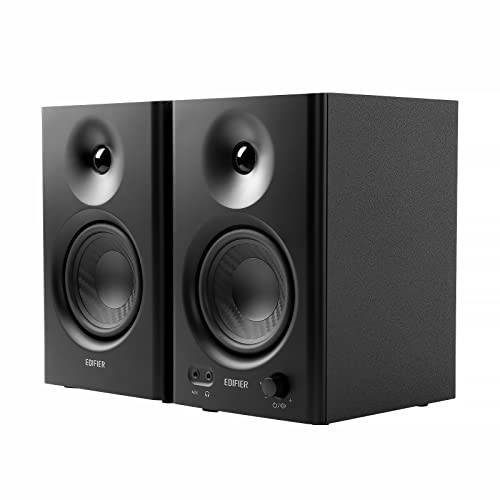
Edifier MR4 Powered Studio Monitor (Pair) (Best 4-Inch Step-Up Pair)
Every roundup needs a pick that defines its slot, and for the Best 4-Inch Step-Up Pair position that is the Edifier MR4 Powered Studio Monitor. Its specification sheet only tells half the story; the other half is how those specifications combine in daily use, which is what the strengths, trade-offs and verdict below are for.
See the Edifier MR4 Powered Studio Monitor on Amazon
Strengths
- Sold and voiced as a matched pair, which removes the two-singles maths of most rivals
- Compact 4-inch cabinets fit genuinely small desks where 5-inch monitors crowd the workspace
- Front controls and multiple inputs suit a computer-first setup without an interface
Trade-offs
- 4-inch woofers cannot judge sub-bass; electronic producers must cross-check elsewhere
- Fewer room-tuning controls than dedicated studio brands offer
- Maximum volume is nearfield-only — not a party or large-room speaker
Key specs
- 4-inch composite woofer and 1-inch silk-dome tweeter
- Active nearfield monitor pair
- Hi-Res Audio certified design (manufacturer specification)
- Balanced TRS, RCA and AUX input options
- Front-panel volume and function controls
Consider how the Edifier MR4 Powered Studio Monitor pairs with the rest of a real setup. It is a component, not a trophy: its connections decide what it plugs into, its size decides what else shares the space, and its demands decide what you must buy alongside it. Judged that way it integrates cleanly, using standard connections and standard practice rather than proprietary habits. Readers building a larger setup over time will find it a cooperative building block.
The honest summary is that this pick trades the extremes for completeness. It is rarely the cheapest, the loudest, the largest or the most exotic option in this guide, and for the reader matched to its badge it does not need to be. It needs to be right — right size, right connections, right behaviour — every day, and on the evidence of its specification and design, it is.
Best for: readers matched to this badge / Not suited for: producers who must judge sub-bass on monitors, and loud large-room listening
Comparison Table
| Pick | Badge | Key specification | Standout strength | Price |
|---|---|---|---|---|
| PreSonus Eris 3.5 Studio Monitors (Pair) | Best 3-Inch Pair for Editing | 3.5-inch woven-composite woofer and silk-dome tweeter | The smallest, simplest route into honest monitoring: a matched pair with front headphone and volume controls | Check price on Amazon |
| JBL 104-BT Compact Bluetooth Studio Monitors (monitor class) | Best Compact Bluetooth Class | Compact coaxial desktop monitor class with Bluetooth (product class specification) | The class that proves the keyword’s premise: genuine nearfield monitors with Bluetooth for casual listening and wired inputs for work | Check price on Amazon |
| Mackie CR-X Bluetooth Multimedia Monitors (monitor class) | Best Multimedia Class | Multimedia monitor class with Bluetooth streaming (product class specification) | Built for the hybrid desk: Bluetooth from a phone for listening, wired from the interface for producing, switched from the front panel | Check price on Amazon |
| PreSonus Eris Bluetooth Studio Monitors (monitor class) | Best Bluetooth Pair Class | Eris-range Bluetooth monitor class (product class specification) | Keeps the Eris formula — honest voicing, room tuning controls — and adds Bluetooth for the phone-on-the-desk reality | Check price on Amazon |
| Genelec 8010A Studio Monitor (monitor class) | Best Premium Compact Class | Smallest Genelec two-way active monitor class (product class specification) | The travel and small-desk Genelec: the house sound and build in a monitor that fits a carry-on production rig | Check price on Amazon |
| Edifier MR4 Powered Studio Monitor (Pair) | Best 4-Inch Step-Up Pair | 4-inch composite woofer and 1-inch silk-dome tweeter | Sold and voiced as a matched pair, which removes the two-singles maths of most rivals | Check price on Amazon |
How to Choose the Right Studio Monitor
The reviews above make the decision if your needs match a badge. This guide exists for everyone else — and for readers who want to understand why the badges landed where they did. Work through the factors in order; the first one that strongly discriminates between your finalists is usually your answer. Related guidance in Best Monitors For Switch covers the desk around the screen, which matters more than most buyers expect.
Room, placement and the sweet spot
Monitors and listener form a triangle: the two speakers and your head at the corners of a roughly equilateral arrangement, tweeters at ear height, cabinets angled inward toward your ears. Keep them off the desk surface on stands or isolation pads where possible, because desk reflections smear the sound; keep them away from walls and especially corners, which inflate bass, or use the boundary and room controls several picks provide. The sweet spot — where stereo imaging locks in — is a real place, and working inside it is the cheapest upgrade in this entire category. Room treatment comes after placement: even soft furnishings and a rug change a reflective room audibly.
Sold singly, pairs and subwoofers
Professional monitors are usually priced and sold singly, because studios buy odd numbers and replacements; consumer pairs are the exception and are labelled as pairs in this guide. Budget for two singles before comparing prices with a pair. A subwoofer is a later, optional step: it extends low end for electronic and film work, but it complicates placement and can wreck a small room’s balance if added before the main monitors are positioned well. Most home producers should buy the best pair of monitors the room suits, learn them for six months, and only then judge whether a sub answers a real problem.
Volume, honesty and your ears
Monitors reveal their quality at modest volumes. Most production work happens at conversational levels, where a good monitor stays detailed and balanced; loudness flatters everything and fatigues your ears into bad decisions. Check mixes quietly, check them loud briefly, and check them on a second system — car, earbuds, phone — because translation is the goal. Protect your hearing as a production tool: if you must raise your voice over the monitors to be heard across the desk, they are too loud for all-day work, whatever the genre.
What a studio monitor is — and is not
A studio monitor is a loudspeaker designed to tell the truth. Consumer speakers are voiced to flatter: lifted bass, sweetened treble, a smile curve that makes everything sound finished. A monitor aims for a flat, honest balance so that what you hear is what is actually in the recording. That honesty can feel underwhelming for the first hour and is indispensable for the next five years, because every production decision — EQ, compression, reverb, balance — is made through these speakers. If a mix sounds good on honest monitors, it tends to sound good everywhere; that property is called translation, and it is the entire reason this category exists.
Driver size and low end
Woofer size sets the low-frequency story. A 3.5 or 4-inch monitor is a clarity tool for small desks: voices, guitars and edits are clear, but kick drums and sub-bass are suggested rather than heard, so low-end decisions must be cross-checked on headphones. A 5-inch monitor is the home-studio default, reaching low enough for most genres in small rooms. A 6.5 or 8-inch monitor delivers real bass authority and suits electronic music and larger rooms, but in a small untreated room that extra energy excites standing waves and can make bass judgement worse, not better. Bigger is not automatically better; matched to the room is better.
Controls and daily friction
Daily friction is the silent killer of good equipment. A control buried in a menu, a switch on the back of a unit you cannot reach, a preset you must re-enter every morning — each is trivial once and corrosive a thousand times. When comparing finalists, ask how the thing you will do most often is actually done: how many steps, how much reaching, how much guessing. The picks in this guide were scored on that question, not just on performance ceilings.
Buy once, cry once — honestly
The cheapest strategy in this category is usually buying once. A pick with standard connections, a mainstream form factor and a maker who will exist in five years stays useful through several changes of the equipment around it, and holds resale value if your needs change. Exotic or proprietary choices age out faster. This is not an argument for the most expensive option; it is an argument for the broadly compatible one, which is very often the mid-priced pick with the unglamorous badge.
Set it up properly before judging it
Most products in this category are judged, unfairly, in their first hour — unpositioned, unconfigured, at factory settings chosen for showrooms. Placement, basic configuration and a few days of normal use change the verdict on almost everything here. Follow the setup steps in this guide, live with the result through several real sessions, and only then decide whether the pick is wrong or merely unadjusted. Genuine faults announce themselves in real use; first-hour impressions mislead in both directions.
Who else uses it?
Think about who else shares the equipment. A setup that serves a family, a congregation, a team or a class needs simpler controls, tougher build and more forgiving behaviour than a purely personal one. Several picks here deliberately straddle both lives; the verdict lines tell you which ones assume a single expert user and which ones welcome a rotating cast of beginners.
Power, heat and tidy cabling
Power planning shapes a setup more than brochures admit. Route power through a single quality surge-protected strip you can reach, keep ventilation space around anything that warms up, and avoid stacking power bricks in enclosed boxes. Label cables at both ends when more than two pieces of equipment connect. A tidy power and cable plan makes the whole setup safer, quieter and far easier to troubleshoot at the one moment something misbehaves.
Accessibility and comfort settings
Comfort settings are worth ten minutes on day one. Heights, angles, distances and default levels set correctly once will be repaid every day; set wrong, they quietly tax every session. Adjust for the person who uses the setup most, at the time of day they use it most, and revisit the settings after a week — bodies and habits settle, and the second adjustment is usually the right one.
Warranty, support and keeping the box
Support is part of the product. Large, heavy or fragile equipment is expensive to ship, so a maker with regional service, a clear warranty and available spare parts is worth real money over an unknown importer with a bigger specification sheet. Keep the packaging until the return window closes, register the product if the maker offers it, and photograph serial labels into your phone. These dull steps are the difference between a two-day resolution and a two-month argument if a fault appears.
Plan the upgrade path
Plan the upgrade path while you are happy, not when you are frustrated. If a second unit, a larger room or a bigger desk is likely within a few years, buy the pick you would happily duplicate or build around: a current model, standard connections, and a maker with a range to grow into. Buying for the setup you are growing into is how readers in this category avoid owning three generations of almost-right equipment.
Second-hand and hand-me-down value
Consider the exit as part of value. Established models from established makers resell, get donated, or move to a second room; obscure models become cupboard stock. Churches, schools and families in particular benefit from equipment a successor can still get parts and advice for. A mainstream pick is rarely the exciting choice, and it is very often the economical one across a full ownership cycle.
Trust real use over test rituals
Finally, give any new purchase a fair trial in your own real content before judging it: your music, your documents, your services, your games, in your room, at your usual times. Test rituals and other people’s demonstrations mislead in both directions. The picks in this guide were chosen to perform in real weeks rather than in specification comparisons, and your own week is the only review that ultimately counts.
Learn the pick’s normal before chasing problems
Every product in this category has a normal: a sound, a feel, a behaviour that is simply how it is built. New owners often spend their first month chasing characteristics that were never faults. Live with the pick through several ordinary sessions before changing anything, and change one variable at a time when you do adjust — placement, a setting, a cable — so you know what actually helped. Methodical patience turns a good purchase into a great setup far more reliably than a pile of accessories bought in the first fortnight.
Keep a small setup notebook
Keep a short note — paper or phone — of the settings, positions and connections that work: the heights, the levels, the switch positions, the cable routes. Setups drift. Things get moved for cleaning, borrowed, reset by updates or helpful visitors. A one-page record of your known-good configuration turns a half-hour of rediscovery into two minutes of restoration, and it is the cheapest reliability upgrade in this entire guide. Update it whenever you change something deliberately, and date the entries.
The second-year test
Think about the second year of ownership, not the first week. In the first week, everything new impresses because it replaces something older or nothing at all. In the second year, what matters is whether it still does its job without complaint, whether support and parts still exist, and whether the specification you chose still matches the work you actually ended up doing. Readers who buy for the job they have in month eighteen consistently report fewer regrets than readers who buy for launch-day excitement.
Matching the pick to the system around it
No product in this guide works alone. It connects to equipment you already own, sits in a room or on a desk with its own constraints, and inherits the limits of whatever feeds it. Before finalising any pick, confirm the connections match, the physical space fits, and the source equipment can actually deliver what the pick is capable of. That five-minute check prevents the most common disappointment in this entire category: owning something whose best mode your existing setup can never reach.
Your room is a specification
Rooms decide more outcomes than brochures admit. Size, surfaces, windows, background noise and how far you sit or stand from the equipment all change which pick will make you happy. A product that shines in a showroom or a treated studio may disappoint in a small reflective bedroom, and vice versa. Where a pick has a known room preference, it is recorded in its trade-offs; where your room is unusual, weight those lines more heavily than any headline specification.
Common Mistakes
Forgetting that singles are priced singly. Comparing one professional monitor’s price against a consumer pair’s price is the classic budgeting error in this category. Halve or double before comparing.
Skipping the interface and gain staging. Monitors fed from a noisy headphone output at the wrong level sound like worse speakers than they are. A basic interface and sane gain staging unlock the purchase.
Mixing only on monitors. Even perfect monitors in a real room hide things. Headphones, a car check and a phone check are part of monitoring, not admissions of failure.
Chasing a subwoofer before placement. A sub added to badly placed monitors multiplies problems. Position, learn, then extend — in that order.
Expecting monitors to fix the room. Honest speakers reveal room problems; they do not solve them. Basic soft furnishings and sensible placement are part of the purchase.
Buying the biggest monitor for the smallest room. An 8-inch monitor in a tiny untreated bedroom produces uncontrolled bass that makes mixes worse, not better. Driver size should follow room size; a great 5-inch setup beats a boomy 8-inch one.
How Do You Set Up Home Studio Monitors Step by Step?
Setup is where good purchases become good desks. Follow these steps in order, and keep Best Cables For Studio Monitors in mind if your arrangement grows beyond a single screen.
- Unbox and plan the triangle. Before plugging anything in, plan the geometry: speakers and listening position forming a triangle with roughly equal sides, tweeters aimed at ear height. Measure the desk or stand positions first; moving powered speakers after cabling is twice the work.
- Place on stands or isolation. Put each monitor on a stand or isolation pad, never flat on a resonant desk if you can avoid it. Angle both cabinets inward so their axes cross just behind your head, and keep distances from rear walls as equal as you can for both speakers.
- Connect the interface first. Run balanced TRS or XLR cables from your audio interface’s monitor outputs to each speaker. Connect power to each speaker separately. Keep audio cables away from power bricks and strips to avoid hum.
- Set gains conservatively. Start with each monitor’s own volume or gain low and matched, the interface output low, then raise the interface to a normal working level. Matching both speakers’ settings exactly matters more than the absolute number.
- Run familiar reference tracks. Play three recordings you know deeply, in different genres. Note where bass, vocals and reverb sit. This reference habit is how you learn a monitor’s voice in your room, and it is worth more than any measurement app at this stage.
- Apply room controls last. Only after a day of listening, use boundary EQ, shelf switches or DSP tuning for your exact placement — desk, stands, near wall. Change one thing at a time and re-check with the same reference tracks.
- Check translation. Export a short test mix and listen in a car, on earbuds and on a phone speaker. What survives everywhere is your monitoring working; what vanishes tells you what your room is hiding.
Troubleshooting quick list
- Problem: Hum or buzz from one speaker → fix: swap the left and right cables to see whether the noise follows the cable or the speaker, then replace suspect cables and keep audio runs away from power supplies; balanced connections cure most of it..
- Problem: Bass sounds huge at the desk but thin elsewhere → fix: your position sits in a room mode peak or the speakers are too close to a wall; pull them forward, engage boundary EQ, and cross-check low end on headphones..
- Problem: Stereo image feels vague or lopsided → fix: check the triangle geometry, that both tweeters are at equal height, and that both speakers’ gain and EQ settings match exactly..
- Problem: One speaker is quieter → fix: compare each monitor’s rear gain setting and test with the cables swapped; a partially seated TRS plug is the most common cause..
- Problem: Harsh, tiring top end → fix: lower the listening level first — fatigue mimics brightness — then check tweeter height and consider the high-shelf trim if your model offers one..
Final Recommendation
If you only read one paragraph, read this one. For best 3 inch audio monitors for video editing, the shortlist resolves to: PreSonus Eris 3.5 Studio Monitors (Pair) (Best 3-Inch Pair for Editing); JBL 104-BT Compact Bluetooth Studio Monitors (monitor class) (Best Compact Bluetooth Class); Mackie CR-X Bluetooth Multimedia Monitors (monitor class) (Best Multimedia Class). The first is the default recommendation for the broadest set of readers; the second and third win their specific badges for the reasons detailed above. Everything else in the top six is a specialist alternative for a defined reader, not a runner-up.
Buy the pick whose badge matches your actual week — your real machine, your real desk, your real content — rather than the pick with the most impressive specification sheet. Then set it up properly using the steps above, check it thoroughly in the first days while exchanges are easy, and expect it to serve through several changes of computer. Readers still torn between two finalists should revisit Best 27 Inch Gaming Monitors Under $200 and the comparison table: the deciding factor is almost always a trade-off line, not a headline specification.
Frequently Asked Questions
Short answers to the questions readers ask most about this category. For a neighbouring use case, see Best 2nd Monitors For Working At Home.
What size monitor is right for a small bedroom studio?
A 5-inch class monitor is the default answer: enough low end to work with, not so much that a small room’s standing waves take over. Choose 3.5 or 4-inch models only when the desk is genuinely tiny, and 6.5 or 8-inch models when the room is larger or treated.
Can studio monitors be used for everyday listening and films?
Yes, and many owners prefer their honesty for music and dialogue clarity. What they will not do is flatter a poor recording or fill a large room like party speakers. For casual listening at a desk they are excellent; for entertaining a room, a consumer system is the better tool.
Where should studio monitors be placed?
On stands or isolation pads, tweeters at ear height, forming a triangle with your listening position, angled inward, and as far from walls and corners as the room allows. Use the boundary or room controls your model provides for the placement you actually have, and judge changes with reference tracks you know well.
How loud should I mix?
Mostly at conversational level, where balance decisions are most reliable and your ears last all day. Check loud briefly for energy and low-end behaviour, and check very quietly to see what disappears — if the vocal and snare still read at low volume, the balance is close.
Are studio monitors sold as pairs?
Professional models are usually sold singly, so a stereo setup means buying two; consumer-leaning models are often sold as a matched pair and are labelled as pairs in this guide. Always check the listing’s unit count before comparing prices, because this is the easiest budgeting mistake in the category.


