As an Amazon Associate, ilcastellomenu.com may earn an affiliate commission from qualifying purchases made through links on this page, at no extra cost to you.
Buying a 5G phone in the United States is not the same as buying one anywhere else. The three big carriers build their networks differently, the same phone model can ship with different radios depending on where you buy it, and the headline speeds on the box often describe a signal you will only meet standing in a stadium parking lot. The phone in your pocket has to work on the commute, in the grocery store, in a concrete office building, and on a road trip through a rural county — not just on a speed-test screenshot.
This guide looks at the best 5G phones USA shoppers can actually buy right now, from a practical American angle: which bands each phone supports, how it behaves on Verizon, T-Mobile, and AT&T, what the battery does on a real day of mixed 5G use, and whether the camera and the software will still feel good two years from now. We judged every pick against the way Americans actually use phones — streaming on the train, navigating with maps, taking photos at a kid’s game under stadium lights, and tethering a laptop when the hotel Wi-Fi gives up.
Six phones made the list. They are not six versions of the same idea. One is the do-everything flagship for people who want the best screen and the best zoom. One is the photography-first phone that makes everyone look like they know what they are doing. One is the iPhone for people who live in Apple’s world and want their phone to last five years. One is the value flagship that gives you nearly everything for far less. And two are honest budget picks that nail the basics — strong signal, all-day battery, a decent camera — without asking you to pay for features you will never touch.
A note on how to read this guide: every phone here is a US model, sold through US channels, with a US warranty. We say so explicitly where it matters, because an imported international variant of the same phone can lack the mmWave radio or the carrier certification that makes 5G work properly on an American network. Prices change constantly and differ by carrier, storage, and trade-in, so we do not quote fixed prices — check price on Amazon for the current figure before you decide.
Quick comparison: the six picks at a glance
| Phone | Best for | 5G bands | Display | Standout strength | Watch out for |
|---|---|---|---|---|---|
| Samsung Galaxy S25 Ultra | Do-everything flagship | mmWave + sub-6, all three carriers | 6.9-inch flat Dynamic AMOLED 2X | Best zoom and S Pen versatility | Large and heavy; premium tier |
| Google Pixel 9 Pro | Photography and clean software | mmWave + sub-6, all three carriers | 6.3-inch OLED, 120Hz | Computational photography and seven years of updates | Charging speed is modest |
| Apple iPhone 16 Pro Max | Apple ecosystem longevity | mmWave + sub-6, all three carriers | 6.9-inch ProMotion OLED | Video quality and long software support | Premium tier; USB-C accessories still catching up |
| OnePlus 12 | Value flagship | Sub-6 wide; mmWave on select carrier variants | 6.82-inch LTPO AMOLED, 120Hz | Fast charging and huge battery | mmWave support varies by variant — check before buying |
| Samsung Galaxy A35 5G | Mid-range balance | Sub-6, all three carriers | 6.6-inch Super AMOLED, 120Hz | Great screen and software support for the tier | No wireless charging; no mmWave |
| Motorola Moto G Power 5G (2024) | Battery on a budget | Sub-6, all three carriers | 6.7-inch LCD, 120Hz | Two-day battery life | Camera is basic in low light |
The table above is a shortcut, not a verdict. A phone that looks weak on paper can be the right phone for a specific person, and a phone that wins the spec sheet can be the wrong phone for someone who hates big screens or lives where mmWave does not exist. Read the pick that matches your life, then check the “what to look for” section before you buy.
In this guide
What to look for in a 5G phone in the USA
mmWave versus sub-6: what the two kinds of 5G actually mean
American 5G comes in two flavors, and the difference matters more than any single spec on the box. Sub-6 5G uses lower frequencies that travel far and pass through walls reasonably well. It is the 5G you will actually use most of the time — in your house, in your car, in the office, in a small town. Its speeds are a clear step up from LTE, typically fast enough for 4K streaming, video calls, and big downloads without drama, but they are not the gigabit numbers in the ads.
mmWave is the other flavor: extremely fast over very short distances, with almost no ability to pass through walls, windows, or even heavy rain. You will find it in stadiums, airports, dense downtown blocks, and some arenas. When you are standing under a mmWave node with a clear line of sight, the speed is genuinely startling. Step twenty feet to the side, walk behind a pillar, or go indoors, and it is gone. For most Americans, mmWave is a nice bonus, not a reason to choose a phone. If you live in a dense city and spend time in venues where mmWave is deployed, it is worth having. If you live in the suburbs or a rural area, sub-6 coverage is what decides your experience, and a phone without mmWave will serve you just as well day to day.
The practical takeaway: check that any phone you buy supports the sub-6 bands your carrier uses in your area, and treat mmWave as a bonus. Every flagship on this list supports both. Some value phones support only sub-6, and that is a fair trade at their price — as long as you know it before you buy.
Carrier compatibility: Verizon, T-Mobile, and AT&T
The three carriers do not run identical networks. T-Mobile built its 5G lead on mid-band spectrum, which gives it a strong combination of speed and coverage in most cities and suburbs. Verizon leans on a mix of mid-band and mmWave, with excellent performance in dense areas. AT&T sits between them, with solid mid-band coverage that keeps improving. A phone that is certified for all three is the safest buy, especially if you might switch carriers during the phone’s life or if you buy unlocked and bring it to a carrier later.
Buying unlocked is usually the smartest move for Americans who keep phones for years. An unlocked US model works on all three carriers, avoids carrier bloatware, and keeps its resale value better. The catch is that a few carrier-specific variants add or remove a band: the OnePlus 12 is the clearest example on this list, where mmWave appears on some carrier versions and not on the unlocked one. Check the exact model number and its band list before you buy, not just the phone’s name.
Also worth checking: eSIM support. All the flagships here support eSIM, which makes switching carriers a ten-minute job instead of a trip to a store. If you travel internationally, dual eSIM lets you keep your US number active while you add a local data plan abroad — a genuinely useful feature that costs you nothing once the phone has it.
Battery life on real 5G
5G radios use more power than LTE, especially when the phone is hunting for a weak signal or switching between bands. A phone that lasts all day on Wi-Fi can struggle on a day spent mostly on 5G. The honest measure is not the milliamp-hour number but how the phone behaves on a mixed day: navigation, streaming, photos, and a few hours of 5G with the screen on. Big batteries help — the OnePlus 12 and the Moto G Power both lean on this — but efficient chips and smart radios matter just as much. A phone with a slightly smaller battery and a modern, efficient chip can outlast a phone with a bigger battery and a thirsty modem.
Cameras: megapixels are the least interesting number
Phone makers love to print big megapixel numbers on the box. What decides your photos is the sensor size, the lens quality, and the software that processes the image. A phone with a good main sensor and honest computational photography will beat a phone with a bigger megapixel count and sloppy processing in almost every real situation — the dim restaurant, the backlit porch, the kid running across a field at dusk.
Video is the quiet divider between iPhone and Android in the US market. Apple’s video stabilization, color, and slow-motion remain the reference point, and if you shoot a lot of video for family or for social media, that alone can settle the decision. The Pixel and Samsung flagships have closed much of the gap for still photos, but for video, the iPhone still leads.
Software support: how long the phone stays good
A phone is a four-to-five-year purchase for most Americans, so the update promise matters as much as the hardware. Google and Samsung now promise seven years of updates on their flagships, which means a phone bought today will still be getting security patches in the early 2030s. Apple does not publish a fixed number but has historically supported iPhones for five to six years. Motorola and the budget tier offer shorter support — typically a few years — which is fair at their price but worth knowing if you plan to keep the phone for a long time.
Long support also protects resale value. A three-year-old flagship with two years of updates left sells for meaningfully more than a three-year-old phone whose support has ended. If you trade in or sell your old phone, the update promise pays you back directly.
US warranty and where you buy
Buy the US model from a US retailer or the manufacturer’s US store, and you get a US warranty with US service options. Buy a grey-market international variant from a marketplace seller and you may get a phone that lacks mmWave, lacks a carrier certification, and has no warranty a US service center will honor. The savings are rarely worth the risk. If a deal looks too good to be true, check the exact model number against the manufacturer’s US site before you pay.
The best 5G phones USA, reviewed

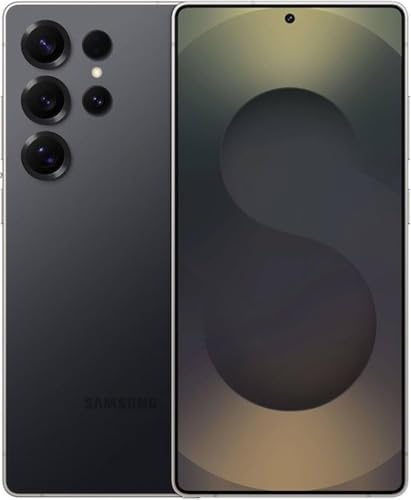
Samsung Galaxy S25 Ultra: the do-everything flagship
The Galaxy S25 Ultra is the phone for the person who wants one device to do everything and is willing to carry a big phone to get it. It is Samsung’s most complete phone: the best screen Samsung makes, the most versatile camera system on an Android phone sold in the US, the S Pen tucked into the body, and a build that feels like a precision instrument rather than a slab of glass. If you only want to buy one phone and never think about phones again for four years, this is the safest flagship bet in the American market.
The screen is the first thing you notice. A 6.9-inch flat Dynamic AMOLED 2X panel with a 120Hz adaptive refresh rate, it is bright enough to read in direct Texas sunlight and calm enough at night that it does not feel like staring into a flashlight. The flat display matters more than it sounds: after years of curved edges that caught reflections and made cases fit awkwardly, a flat screen is simply easier to live with. Text is crisp, video looks rich without oversaturating skin tones, and the anti-reflective coating genuinely cuts glare in a way you notice the first time you use the phone outdoors.
The camera system is where the Ultra earns its price. The main sensor takes excellent photos in almost any light, but the real story is the zoom: a 5x optical telephoto that stays clean at distance, backed by software that holds detail far better than a digital crop. At a kid’s soccer game, you can sit in the stands and get a frame-filling shot of your child mid-stride. At a concert, you can capture the stage instead of a blurry smear of lights. The ultrawide is good for landscapes and tight interiors, and the night mode is strong enough that a dim restaurant photo looks like the room you were actually sitting in.
On 5G, the Ultra is fully equipped for the American market: mmWave and sub-6 across all three carriers, with a modem that holds a signal well in the places where other phones start to struggle — the concrete parking garage, the far corner of a big-box store, the basement office. T-Mobile’s mid-band feels fast and consistent, Verizon’s mmWave hits its headline speeds when you are in range, and AT&T’s network is solid throughout. The phone switches between bands without the stutter that cheaper phones sometimes show, and it does not run hot during long 5G sessions.
Battery life is strong for a phone with a screen this size and a chip this powerful. On a mixed day — navigation in the morning, streaming at lunch, photos in the afternoon, an hour of video calls — it finishes the day with room to spare. Heavy users who game or shoot a lot of video will still want a top-up in the evening, but the 45W wired charging makes that a fifteen-minute affair rather than an hour-long wait. Wireless charging is here too, for the nightstand crowd.
Seven years of software updates mean this phone will still be getting security patches long after most people have moved on. That matters for a purchase at this tier: you are not just buying a phone, you are buying a phone that stays current and keeps its resale value. The titanium frame and the flat screen also make it one of the more durable flagships, though a case is still a good idea for anyone who has ever dropped a phone on concrete.
Strengths
- Best-in-class zoom camera with a true 5x optical telephoto that holds up at real distances.
- Excellent 6.9-inch flat AMOLED display with an anti-reflective coating that works outdoors.
- Full mmWave and sub-6 5G support on Verizon, T-Mobile, and AT&T, with strong signal holding.
- S Pen built in, useful for notes, signatures, and photo annotation.
- Seven years of software and security updates; titanium build.
- Strong battery life with fast 45W wired charging and wireless charging.
Trade-offs
- Large and heavy — it is a two-hand phone for most people and a tight fit in small pockets.
- Premium tier pricing; the camera and the pen are overkill if you mostly text and browse.
- Charging is fast but not the fastest in this guide.
Who it suits
The person who wants the best Android phone in the US and plans to keep it for four or five years: heavy photographers, frequent travelers, people who take notes by hand, and anyone who wants the most capable camera and screen without compromise.
For the flagship that does everything and keeps doing it for years, check price on Amazon and confirm the unlocked US model before you buy.
Note: the current listing is an Amazon Renewed unit, covered by the Renewed program guarantee, not factory-new.

Google Pixel 9 Pro: the photography-first phone with the cleanest software
The Pixel 9 Pro is the phone for people who care most about the photos they take and the software they live in. Google’s approach is different from Samsung’s: instead of throwing more lenses at the problem, Google leans on computational photography — the software that turns a good sensor into a great photo — and on a version of Android that is clean, fast, and free of duplicate apps and carrier clutter. The result is a phone that feels calm to use and takes photos that look like you knew what you were doing.
The camera is the headline, and it earns it. The main sensor captures rich, natural-looking photos in daylight, and the Pixel’s real magic shows up in the hard situations: a backlit portrait where the subject would otherwise be a silhouette, a dim restaurant where other phones turn everything orange, a moving child where other phones smear the motion. Night Sight remains the best low-light mode on any phone, and the portrait mode handles hair and glasses better than most. The 5x telephoto is genuinely useful, and the ultrawide with macro focus is a quiet delight for close-up shots of food, flowers, and small details.
The 6.3-inch OLED display is smaller than the Ultra’s, and that is a feature, not a compromise, for many buyers. It is a phone you can use one-handed without feeling like you are holding a tablet. The 120Hz refresh rate makes scrolling smooth, the brightness is strong outdoors, and the colors are accurate without looking dull. If you have small hands or you simply prefer a phone that fits in a jeans pocket, the 9 Pro’s size is the sweet spot in this guide.
On 5G, the Pixel 9 Pro supports mmWave and sub-6 across all three US carriers, and the modem is a clear improvement over older Pixels, which had a reputation for running warm and hunting for signal. In daily use it holds T-Mobile’s mid-band well, handles Verizon’s network cleanly, and stays cool during long video calls. It is not the fastest 5G phone in a speed test, but it is consistent, and consistency is what you feel day to day.
Battery life is solid rather than spectacular: a full day for most people, with a top-up needed on heavy days. The charging speed is the one place the Pixel lags the field — wired charging is slower than Samsung’s and far slower than OnePlus’s — so if you are the kind of person who plugs in for ten minutes before leaving the house, you will notice. Wireless charging is present, and the phone supports reverse wireless charging for earbuds.
Software is where the Pixel quietly wins the long game. Seven years of updates, the cleanest Android experience you can buy, and Google’s AI features arriving first — call screening that actually screens spam calls, live translation, and a voice recorder that transcribes accurately. The Tensor chip is not the fastest on a benchmark chart, but it is tuned for exactly these features, and in daily use the phone feels fast because the software is so well matched to the hardware.
Strengths
- Best computational photography in this guide — superb in low light, portraits, and backlit scenes.
- Magic Eraser and Best Take fix real photos you already took.
- Clean Android with seven years of updates and Google’s AI features first.
- Comfortable 6.3-inch size that works one-handed.
- Full mmWave and sub-6 support on all three carriers.
Trade-offs
- Charging speed is the slowest among the flagships here.
- The Tensor chip trails rivals in raw gaming performance.
- Battery life is good, not great, on heavy 5G days.
Who it suits
People who photograph their family constantly and want the photos to look great without editing, anyone who prefers clean Android without bloat, and buyers who want a phone that fits in one hand and stays updated for seven years.
If your camera roll is mostly family, food, and travel, check price on Amazon for the unlocked US model and let the photography do the talking.
Note: this pick is currently an Amazon Renewed unit, covered by the Renewed program guarantee rather than factory-new.

Apple iPhone 16 Pro Max: the long-haul iPhone for the Apple ecosystem
The iPhone 16 Pro Max is the phone for the person who lives in Apple’s world and wants a phone that will still feel fast and supported five years from now. It is the largest iPhone, with the biggest screen, the biggest battery, and the best camera system Apple makes. It is also the phone that makes the least sense if you do not already use a Mac, an iPad, or an Apple Watch — but for the millions of Americans who do, it is the obvious and correct flagship.
The 6.9-inch ProMotion display is the best screen Apple has put on a phone: bright, smooth at 120Hz, and color-accurate in a way that photographers and video editors trust. The thinner bezels make the phone feel smaller than its screen size suggests, though it is still a large phone — you will use two hands for most things, and it will announce itself in a slim pocket. The titanium frame keeps the weight reasonable for its size, and the build quality is the quiet, precise thing Apple does best.
Video is where the iPhone earns its place on this list. The 16 Pro Max shoots the best video of any phone sold in the US: stable, with natural color, excellent dynamic range, and slow-motion that stays smooth and usable. If you film your kids’ games, make videos for social media, or record anything you care about keeping, the video quality alone can settle the choice. The still camera is excellent too — a 48-megapixel main sensor, a 5x telephoto, and an ultrawide that handles macro — but it is the video that separates the iPhone from the Android flagships.
On 5G, the iPhone 16 Pro Max is fully equipped for the American market — mmWave and sub-6, all three carriers, with a modem that holds signal well and a chip that sips power. Apple’s efficiency is the story here: the A18 Pro chip and the tight integration between hardware and software mean the phone stays cool and the battery lasts. On a mixed day of 5G use, it is the longest-lasting flagship in this guide, and on a light day it can stretch into a second morning. Charging is slower than the Android flagships, but MagSafe wireless charging is convenient and the ecosystem of MagSafe accessories — wallets, car mounts, battery packs — is unmatched.
Software support is the iPhone’s quiet superpower. Apple supports iPhones for five to six years with major updates and security patches, and the resale value of a used iPhone is the highest of any phone. A three-year-old iPhone still sells for a meaningful amount, which lowers the true cost of ownership in a way the sticker price hides. Add the ecosystem — AirDrop, iMessage, FaceTime, Apple Watch pairing, AirPods switching — and the total value becomes clear for anyone already invested.
The honest downsides are familiar: the price is premium, the App Store is the only way to install apps, and the phone is large. The USB-C port, now standard, is a genuine improvement — one cable for your phone, your iPad, and your MacBook — but the accessory world is still catching up. None of that matters much if you are already an iPhone user; it matters a lot if you are thinking of switching from Android, in which case you should try one in a store first.
Strengths
- Best video quality of any phone in the US market.
- Excellent 6.9-inch ProMotion display and a strong 5x telephoto camera.
- Longest battery life among the flagships here, with an efficient chip that stays cool.
- Five to six years of software support and the best resale value of any phone.
- Full mmWave and sub-6 5G on Verizon, T-Mobile, and AT&T; eSIM only in the US.
- Deep ecosystem integration with Mac, iPad, Apple Watch, and AirPods.
Trade-offs
- Premium tier pricing; the large size is a two-hand phone.
- Charging speed lags the Android flagships.
- US models are eSIM only — no physical SIM tray.
Who it suits
Anyone already in the Apple ecosystem who wants the best iPhone camera and battery and plans to keep the phone for five years, plus people who shoot a lot of video and want the most reliable results.
If you are already all-in on Apple, check price on Amazon for the unlocked US model and enjoy the longest runway of any phone here.
Note: the listing here is an Amazon Renewed unit, pre-owned and covered by the Renewed program guarantee.

OnePlus 12: the value flagship with the fastest charging
The OnePlus 12 is the phone for the buyer who wants flagship performance without the flagship price — and who is willing to read one line of fine print about 5G bands before buying. It gives you a huge battery, the fastest charging in this guide, a beautiful big screen, and a camera system tuned with Hasselblad that takes genuinely good photos, all for noticeably less than the Samsung or Apple flagships. For a lot of Americans, that trade is the smartest one in the phone market.
The 6.82-inch LTPO AMOLED display is a highlight: bright, smooth at 120Hz, and easy to read outdoors. It is a big phone, but the curved edges and the slim profile make it feel smaller than the numbers suggest. Watching video and playing games on this screen is a pleasure, and the stereo speakers are good enough that you will not reach for earbuds just to hear dialogue clearly.
Battery life is where the OnePlus 12 pulls away from the pack. The large battery regularly delivers two days of moderate use, and when it does run low, the 100W wired charging — included in the box in the US — takes it from empty to most of a charge in about half an hour. This is the phone for the person who forgets to charge overnight and still needs a full day: plug it in while you shower and make coffee, and you are covered. Wireless charging is present too, at a respectable speed.
The camera, tuned in partnership with Hasselblad, is better than the price suggests. The main sensor takes clean, natural photos in daylight, the 3x telephoto is useful for portraits and for getting closer without moving, and the ultrawide is solid. It does not match the Galaxy S25 Ultra’s zoom or the Pixel’s low-light magic, but it is comfortably ahead of every other phone at this price, and the portrait mode produces pleasing, natural-looking results. For most people’s photos — family, travel, food, pets — it is more than enough.
Performance is flagship-grade: the top-tier chip handles games, multitasking, and heavy apps without breaking a sweat, and the phone stays cool doing it. The software is clean and fast, close to stock Android with a few genuinely useful additions, and OnePlus promises four years of major updates and five years of security patches — shorter than Samsung or Google, but honest and sufficient for most buyers.
Now the fine print, because it matters. The unlocked US OnePlus 12 supports sub-6 5G widely, but mmWave support depends on the variant: some carrier versions include it and the unlocked version does not. If you live in a dense downtown area and spend time in stadiums or airports where mmWave is deployed, check the exact model number before you buy. For most Americans, sub-6 is the 5G that matters, and the OnePlus 12’s sub-6 performance on T-Mobile and AT&T is strong. Verizon users should double-check compatibility with their plan.
Strengths
- Flagship performance and a huge battery for noticeably less than the big-brand flagships.
- Fastest charging in this guide — a quick top-up covers a full day.
- Beautiful 6.82-inch LTPO AMOLED display with 120Hz and good speakers.
- Strong Hasselblad-tuned camera with a useful 3x telephoto.
- Clean, fast software with four years of major updates promised.
Trade-offs
- mmWave support varies by variant — the unlocked US model may lack it, so check before buying.
- Camera trails the Pixel and the Galaxy Ultra in low light and long zoom.
- Smaller US support network than Samsung or Apple.
Who it suits
Value-conscious buyers who want a big screen, a two-day battery, and fast charging, and who are comfortable checking one spec line before they buy.
For the most phone per dollar in this guide, check price on Amazon and verify the exact US model and its 5G bands first.
Note: the current listing is an Amazon Renewed unit, covered by the Renewed program guarantee, not factory-new.

Samsung Galaxy A35 5G: the mid-range phone that gets the important things right
The Galaxy A35 5G is the phone for the person who wants a good Samsung phone without paying for a flagship — and it is the most balanced mid-range phone in the American market. It takes the things that matter most in daily use — a great screen, solid cameras, reliable 5G, and long software support — and delivers them at a price that leaves room in the budget for a case, a charger, and a pair of earbuds. It is not exciting. It is dependable, and dependable is underrated.
The 6.6-inch Super AMOLED display is the A35’s best argument. At this price, most phones use LCD panels or dim OLEDs; the A35’s screen is bright, colorful, and smooth at 120Hz. Watching video, scrolling through photos, and reading outside are all genuinely pleasant. The phone feels like a more expensive device every time you look at it, which is the kind of quality-of-life detail that matters when you use a phone for hours a day.
The camera system is honest and capable. The main sensor takes good photos in daylight — sharp, well-exposed, with natural colors — and the ultrawide is useful for landscapes and group shots. Low-light photos are decent rather than great; the phone will capture the moment, but it will not rescue a very dark room the way a Pixel will. For everyday photos — the kids at the park, a meal, a sunset on a road trip — it does the job well. The selfie camera is solid for video calls and social media.
On 5G, the A35 covers sub-6 bands across all three US carriers, which is the 5G that matters for most Americans. It does not support mmWave, and at this price that is a fair trade — you are giving up a feature you would rarely use in exchange for a better screen and a lower price. Signal holding is good, and the phone handles the handoff between 5G and LTE without dropping calls or stalling a stream. Battery life is strong: a full day with room to spare for most people, and two days if you are a light user. Charging is slower than the flagships, so overnight charging is the routine that fits this phone best.
The software story is the A35’s secret weapon. Samsung promises four years of major Android updates and five years of security patches on this phone, which is remarkable at this price and means a phone bought today will still be supported in 2030. The software itself is Samsung’s One UI, polished and full of useful features — secure folder, good multitasking, and a mature set of accessibility options. There is some Samsung bloat, but it is easy to ignore or disable.
What you give up is clear and honest: no wireless charging, no telephoto lens, a slower chip that will feel it in heavy games, and no mmWave. None of those are dealbreakers for the audience this phone is made for. If you mostly call, text, browse, stream, and take everyday photos, the A35 gives you everything you need and skips the things you would never notice.
Strengths
- Excellent 6.6-inch Super AMOLED display with 120Hz at a mid-range price.
- Four years of major updates and five years of security patches — rare in this tier.
- Reliable sub-6 5G on all three carriers with good signal holding.
- Strong battery life, microSD expansion, and a sturdy build with water resistance.
- Good main camera for everyday daylight photos.
Trade-offs
- No mmWave and no wireless charging.
- No telephoto lens; low-light photos are decent, not great.
- Slower charging and a chip that is not built for heavy gaming.
Who it suits
Anyone who wants a dependable Samsung phone for everyday life — parents buying a phone for a teenager, people replacing a broken flagship on a budget, and buyers who want long software support without the flagship price.
For the best balance of screen, support, and price in the mid-range, check price on Amazon and make sure you are buying the US unlocked model.
Note: this pick is currently an Amazon Renewed unit, covered by the Renewed program guarantee rather than factory-new.

Motorola Moto G Power 5G (2024): the budget phone with a two-day battery
The Moto G Power 5G (2024) is the phone for the person who wants to spend the least and worry the least. Its promise is simple and it keeps it: the battery lasts two days, the 5G works on all three carriers, the screen is big and smooth, and the phone costs a fraction of a flagship. It is the phone you buy when you would rather spend your money on anything else and still want a phone that does the job.
Battery life is the headline, and it is not a marketing claim. The large battery, the efficient chip, and the LCD display add up to a phone that regularly survives two days of normal use — calls, texts, maps, streaming, and social media — and still has charge left on the second evening. For truck drivers, delivery workers, nurses on long shifts, and anyone who cannot reliably charge during the day, that is not a luxury; it is the whole point of the phone. Fast charging is included, so a quick plug-in before you leave covers a surprising amount of ground.
The 6.7-inch LCD display runs at 120Hz, which makes scrolling feel smooth even though the panel is not OLED. Colors are decent, brightness is adequate outdoors, and the size makes it good for video and reading. It will not wow you next to a flagship AMOLED, but it is a big, usable screen, and at this price that is exactly what you need.
The camera is the honest compromise. In good daylight, the main sensor takes perfectly usable photos — clear, well-exposed, good enough for social media and family group chats. In low light, it struggles: noise creeps in, details soften, and you will get a photo rather than a good photo. There is no telephoto lens, and the ultrawide is basic. If photography is a priority, look at the A35 above. If photography is something you do occasionally and you mostly need a phone that works, the Moto G Power’s camera is fine.
On 5G, the phone supports sub-6 bands on Verizon, T-Mobile, and AT&T, and it holds a signal well for a budget phone. Motorola’s software is close to stock Android — clean, fast, and free of the duplicate apps that clutter other budget phones. The useful Moto gestures are here too: chop twice for the flashlight, twist for the camera. They are small touches, but they are the kind of thing you use every day once you learn them.
Software support is the trade you are making: Motorola promises a shorter update window than Samsung or Google, typically a couple of years of major updates and a few years of security patches. For a phone at this price, that is fair — you are buying a phone to use for two or three years, not five. The build is plastic but sturdy, the fingerprint sensor is fast, and the phone supports expandable storage, which helps if you keep a lot of music or photos on the device.
Strengths
- Two-day battery life — the best in this guide for real-world use.
- Big 6.7-inch 120Hz display at a budget price.
- Sub-6 5G on all three US carriers with solid signal holding.
- Clean, near-stock Android with useful Moto gestures.
- Fast charging included and expandable storage.
Trade-offs
- Camera is basic in low light and has no telephoto lens.
- LCD display, not OLED — good, but not flagship-grade.
- Shorter software support window than Samsung or Google.
- No wireless charging and no mmWave.
Who it suits
Budget buyers who need a phone that simply works and lasts two days — workers on long shifts, parents buying a first phone, and anyone who would rather spend the savings elsewhere.
If battery life matters more than anything else, check price on Amazon for the 2024 US model and enjoy not thinking about your charger.
Note: the listing here is an Amazon Renewed unit, pre-owned and covered by the Renewed program guarantee.
How to choose: matching a phone to your life
If you stream and game on the go
Prioritize the screen, the battery, and the chip. The Galaxy S25 Ultra and the OnePlus 12 have the biggest, brightest screens and the fastest chips, and both handle long gaming sessions without throttling. The OnePlus 12’s charging speed is a genuine advantage here: a dead battery is a fifteen-minute problem, not an evening ruined. Make sure your carrier’s mid-band 5G is strong where you play — T-Mobile’s mid-band is the safest bet in most American cities, but check your neighborhood rather than trusting a coverage map.
If you photograph your family constantly
Buy the Pixel 9 Pro or the Galaxy S25 Ultra. The Pixel wins on ease — point, shoot, and the photo looks great, including the ones you took in a dim room with a moving toddler. The Ultra wins on versatility — the zoom and the range of lenses mean you can capture anything from a wide birthday table to a single child on a distant field. Both are excellent; the choice is between the Pixel’s simplicity and the Ultra’s reach.
If you are already an iPhone user
Stay. The iPhone 16 Pro Max is the best iPhone, and the cost of switching — new cables, new apps, losing iMessage threads and shared albums — is real. The iPhone’s video quality, battery life, and resale value make it a sound purchase even at its price, and the ecosystem benefits compound over the years you keep it.
If you want the best value
The OnePlus 12 is the value pick for people who want flagship performance, and the Galaxy A35 5G is the value pick for people who want a dependable everyday phone. The difference is about what you will notice: the OnePlus gives you speed, charging, and a bigger screen; the A35 gives you a better screen than its price suggests and longer software support. Either one is a smart buy.
If money is tight
The Moto G Power 5G (2024) is the honest budget choice. Its battery is the feature that matters most, and its price leaves room for a case and a charger. Do not buy a cheaper phone from an unknown brand to save a little more — the lack of carrier certification, the missing bands, and the absent warranty will cost you more than you saved.
Buying smart: carrier deals, trade-ins, and storage
Carrier deals are real — and they have strings
American carriers offer aggressive deals: a flagship for a low monthly payment, or a free phone with a trade-in and a new line. These deals can be genuinely good value, but read the terms. Most require a trade-in of a phone in good condition, a premium unlimited plan, and bill credits spread over 24 or 36 months — which means you are committing to that carrier for two or three years. If you are happy with your carrier and you were going to stay anyway, take the deal. If you like to switch carriers, an unlocked phone bought outright is the better choice, even if the sticker price looks higher.
How much storage do you need?
For most Americans, 128GB is the minimum that still makes sense, and 256GB is the comfortable choice. Photos and video fill storage faster than anything else — a year of family photos and 4K video can eat 50GB without trying. If you shoot a lot of video, go for 256GB or 512GB. The A35 and the Moto G Power support microSD cards, which makes storage cheaper to expand; the flagships do not, so choose carefully at purchase time, because you cannot add storage later.
Unlocked versus carrier-locked
What about refurbished and previous-generation flagships?
A certified refurbished phone from the manufacturer or a reputable retailer can be excellent value: a one-year-old flagship for the price of a new mid-range phone, with a warranty. The key word is certified — a manufacturer-refurbished phone has been tested, has a new battery, and carries a real warranty. A used phone from an individual seller is a different proposition: check the battery health, verify it is not carrier-locked or reported lost, and meet in a safe place. For most buyers, a new mid-range phone is a better bet than a used flagship with an unknown history.
Frequently asked questions
Do I need mmWave 5G on my phone?
For most Americans, no. mmWave is the fastest form of 5G, but it only works over very short distances with a clear line of sight — in stadiums, airports, and dense downtown blocks. Sub-6 5G is the signal you will use every day: at home, in the car, at work, and in the suburbs. A phone with strong sub-6 support will serve you well. Buy mmWave if you live in a dense city and spend time in venues where it is deployed; otherwise, treat it as a bonus, not a requirement.
Will an unlocked phone work on Verizon, T-Mobile, and AT&T?
Yes, if it is a US unlocked model certified for all three carriers — and every phone on this list is, with the OnePlus 12’s mmWave caveat noted above. An unlocked US model lets you switch carriers by swapping a SIM or activating an eSIM, without buying a new phone. Avoid international variants: they may lack the bands or the certification your carrier needs, and they carry no US warranty.
How long will a 5G phone bought today stay useful?
A flagship bought today should serve you well for four to five years: Google and Samsung promise seven years of updates on their flagships, and Apple supports iPhones for five to six years. Mid-range phones like the Galaxy A35 get four to five years of support. The 5G networks themselves will keep improving, and a phone with broad sub-6 band support will benefit from those improvements. The battery is usually what ages first, so a phone with a large battery and efficient chip will feel good the longest.
Is 5G actually faster than LTE in everyday use?
Yes, in most places — but the difference is not always dramatic. On a good mid-band 5G connection, downloads are noticeably faster, video starts instantly, and video calls are smoother. On a weak 5G signal, the phone may actually be slower than LTE, and a good phone will fall back to LTE automatically. The biggest real-world improvement is capacity: in crowded places like stadiums and airports, 5G handles many users better than LTE did. If your LTE was already fast, 5G will feel like a refinement, not a revolution.
Should I buy a 5G phone now or wait for the next generation?
Buy now if you need a phone. The current generation — the phones on this list — is mature: the modems are efficient, the cameras are excellent, and the software support is long. Next year’s models will be a little faster and a little better, as they always are, but the improvement will be incremental, not transformative. The only reason to wait is if your current phone still works well and you enjoy having the newest thing; the only reason to buy now is that your current phone is dying, its battery is gone, or its software support has ended.
best 128gb micro sd cards for phones
best printers for android phones
The best 5G phone in the USA is not the one with the biggest numbers on the box; it is the one that fits your carrier, your hands, your photos, and your budget — and keeps fitting them for years after you buy it. Choose the pick that matches your life, check the exact US model and its bands before you pay, and you will end up with a phone you stop thinking about, which is the highest praise a phone can earn.