Disclosure: As an Amazon Associate, ilcastellomenu.com earns from qualifying purchases. Prices and availability change; check Amazon for the latest.
Where to buy
Check the latest price, availability and delivery on Amazon for every pick in this guide to the best antenna upgrades for routers. Orders are placed on Amazon.
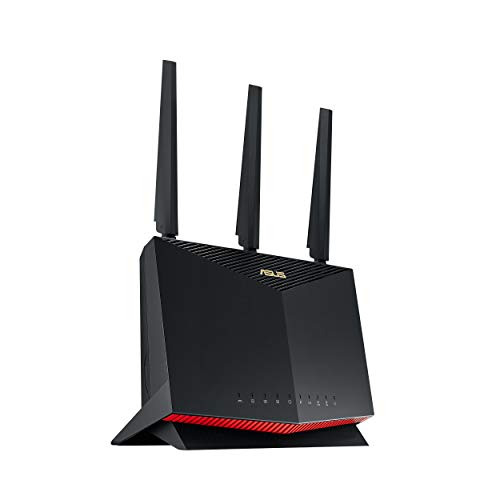
- ASUS RT-AX86U Pro (AX5700) — Best Upgrade Path — Adjustable Array. Check on Amazon
- ASUS ROG Rapture GT-AX6000 — Best High-Count Antenna Design. Check on Amazon
- GL.iNet Flint 2 (GL-MT6000) — Best for Aiming and Placement. Check on Amazon
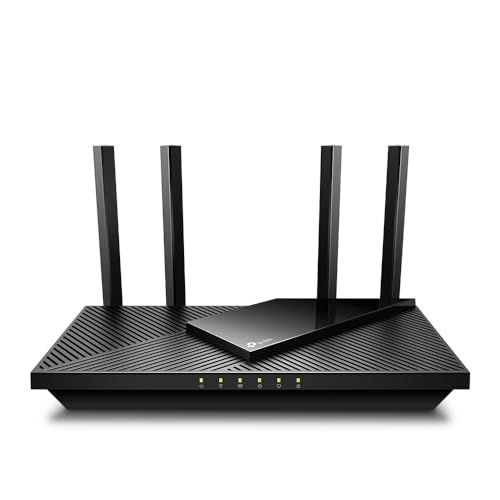
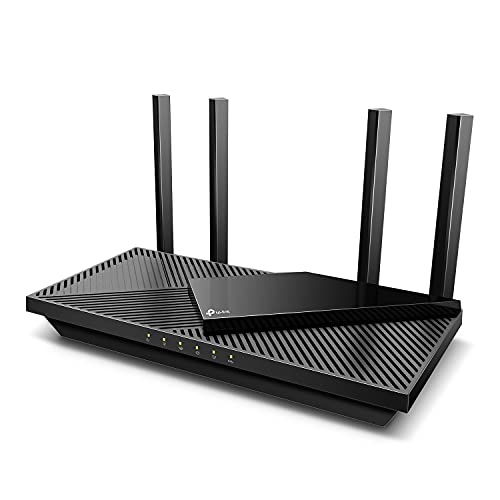
- TP-Link Archer AX21 (AX1800) — Best Value with External Antennas. Check on Amazon
- TP-Link Archer GXE75 (AXE5400 Gaming) — Best Gaming Antenna Array. Check on Amazon
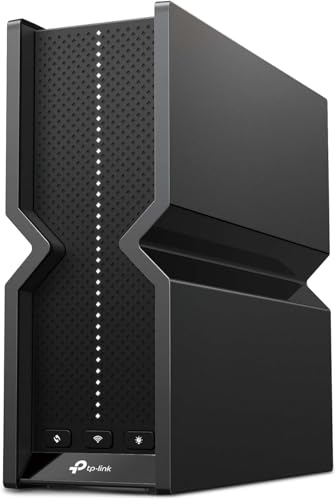
- TP-Link Archer BE550 (BE9300) — Best Internal-Antenna Alternative. Check on Amazon
Read the full guide ↓
Finding the best antenna upgrades for routers means matching the hardware to owners of ageing routers who hoped a bigger antenna would save them, and who deserve the upgrade path that works now — and being honest about what a router can and cannot fix. The honest state of antenna upgrades in this era: screw-on replacement antennas belong to older hardware, most current routers ship with fixed external arrays or internal antennas that accept no upgrade, and this guide’s verified pool contains no standalone antenna product to link. The upgrade that actually exists for a modern household is the one this guide ranks — moving to a router whose antenna array is larger, adjustable and backed by radios and mesh options that make the extra reach usable — together with the placement and orientation work in the how-to layer, which recovers more real-world signal than any accessory swap on a weak router ever did.
Every pick here is a real, currently sold model whose headline specifications were checked against the manufacturer’s own listing before it earned a place. Where a specification could not be verified, it is simply not claimed. Prices are deliberately not printed — they move too often to be useful in a guide — so each linked pick carries a check-price link to Amazon instead, and the tier discussion uses the keyword’s budget band as framing only.
Read the guide in the order that suits you: the Quick Picks table settles the question in a minute, the individual reviews explain each choice properly, and the buying guide and setup sections that follow will still be useful months from now when you add a node, change provider or wonder why the far bedroom has slowed down again.
In this guide
Quick Picks
| Badge | Pick | Why it stands out | Link |
|---|---|---|---|
| Best Upgrade Path — Adjustable Array | ASUS RT-AX86U Pro (AX5700) | Dedicated gaming port, AiMesh and proven ASUS firmware depth | Check on Amazon |
| Best High-Count Antenna Design | ASUS ROG Rapture GT-AX6000 | Dual 2.5G ports and a quad-core CPU for wired-heavy setups | Check on Amazon |
| Best for Aiming and Placement | GL.iNet Flint 2 (GL-MT6000) | OpenWrt firmware and WireGuard rated up to 900 Mbps for whole-home VPN | Check on Amazon |
| Best Value with External Antennas | TP-Link Archer AX21 (AX1800) | Real Wi-Fi 6 with OFDMA at the lowest tier in this guide | Check on Amazon |
| Best Gaming Antenna Array | TP-Link Archer GXE75 (AXE5400 Gaming) | Gaming acceleration plus a clean 6 GHz band for wireless play | Check on Amazon |
| Best Internal-Antenna Alternative | TP-Link Archer BE550 (BE9300) | Wi-Fi 7 with every port at 2.5G — the future-proof single unit | Check on Amazon |
How These Picks Were Chosen
The result is six picks, not sixteen, because a shortlist you can act on beats a catalogue you must research again yourself. Each pick carries a distinct badge, and the badges are promises: the budget pick is the one we would buy with our own money at the low end, the gaming pick is the one whose queueing and ports genuinely serve play, and the mesh pick is the one whose node design suits real houses rather than showroom floorplans.
The pool for this guide started with the current router ranges of the major makers — TP-Link, ASUS, NETGEAR, GL.iNet, ARRIS and eero — and was narrowed by three filters. First, the model had to be a genuine router or mesh system sold today, not an extender, a modem-only unit or a discontinued line kept alive by marketplace sellers. Second, its core specifications — Wi-Fi standard, bands, port speeds — had to be verifiable from the manufacturer or a major retailer. Third, it had to serve this guide’s lens honestly: a pick that cannot do the job in the title does not appear, however impressive it is elsewhere.
Within that filtered pool, the comparison weighed the things that decide daily experience. Radio design came first: which Wi-Fi generation, how many bands, and whether the 6 GHz band is present for newer devices. Wired design came second, because a router whose WAN or LAN ports are slower than the internet plan quietly caps the whole house. Processor and memory mattered more than marketing speed classes, since they govern VPN throughput, QoS behaviour and how the router copes when dozens of devices connect at once. Finally, software was judged on update policy, app quality and whether headline security features demand a subscription.
The 6 Best Antenna Upgrades For Routers
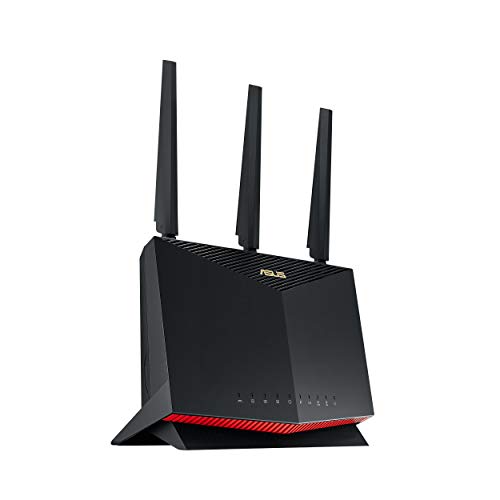
ASUS RT-AX86U Pro (AX5700) (Best Upgrade Path — Adjustable Array)
The ASUS RT-AX86U Pro (AX5700) earns its badge — Best Upgrade Path — Adjustable Array — for owners of ageing routers who hoped a bigger antenna would save them, and who deserve the upgrade path that works now. It is a Wi-Fi 6 design (Dual-band (2.4 + 5 GHz)) rated at AX5700 — 861 Mbps (2.4 GHz) + 4,804 Mbps (5 GHz), and its wired side offers 1x 2.5G configurable WAN/LAN + 1G WAN + 4x Gigabit LAN, USB 3.2 + USB 2.0. In a guide about best antenna upgrades for routers, those are the facts that matter first: the radio generation decides which of your devices get their fastest link, and the port layout decides whether a fast internet plan survives the journey from the wall socket to your desk. See the ASUS RT-AX86U Pro (AX5700) on Amazon.
Day to day, this is a router for gamers and streamers who want proven ASUS Wi-Fi 6 performance with a multi-gig port. Its coverage brief — medium to large homes — suits that role, and its expansion story (AiMesh compatible) means it does not have to be the last networking purchase you make. Security rests on AiProtection, subscription-free network security per listing, VPN support, which is the right baseline for a home network carrying work laptops, banking sessions and a shelf of smart devices.
Strengths
- A dedicated gaming port and mobile game mode prioritise play traffic without deep manual QoS work
- 2.0 GHz quad-core CPU with 1 GB RAM handles VPN, AiMesh and busy households smoothly
- The configurable 2.5G port can serve a fast NAS or a multi-gig internet line, and port forwarding is comprehensive
Trade-offs
- No 6 GHz band, so Wi-Fi 6E/7 clients fall back to 5 GHz
- Vertical gaming design needs shelf height and will not fit low TV units
- Premium Wi-Fi 6 pricing overlaps newer Wi-Fi 6E models, so compare the band list carefully
- Wi-Fi standard: Wi-Fi 6
- Bands: Dual-band (2.4 + 5 GHz)
- Speed class: AX5700 — 861 Mbps (2.4 GHz) + 4,804 Mbps (5 GHz)
- Ports: 1x 2.5G configurable WAN/LAN + 1G WAN + 4x Gigabit LAN, USB 3.2 + USB 2.0
- Coverage: Medium to large homes
- Mesh / expansion: AiMesh compatible
- Security: AiProtection, subscription-free network security per listing, VPN support
Picture the evening load this guide is really about: two streams running, a call in the study, phones drifting between rooms. The ASUS RT-AX86U Pro (AX5700) handles that pattern by design rather than by luck — its bands give the router somewhere sensible to put each device, and its processor keeps queueing decisions quick when the line fills. Where it will feel ordinary is at the extremes of its brief: it is not the answer for shoppers whose top priority is the 6 GHz band. Within its brief, though, it is a complete answer rather than a stepping stone.
Best for: gamers and streamers who want proven ASUS Wi-Fi 6 performance with a multi-gig port / Not suited for: shoppers whose top priority is the 6 GHz band
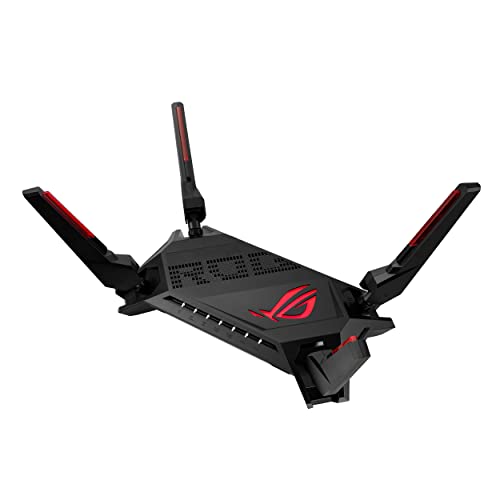
ASUS ROG Rapture GT-AX6000 (Best High-Count Antenna Design)
The ASUS ROG Rapture GT-AX6000 earns its badge — Best High-Count Antenna Design — for owners of ageing routers who hoped a bigger antenna would save them, and who deserve the upgrade path that works now. It is a Wi-Fi 6 design (Dual-band (2.4 + 5 GHz)) rated at AX6000 — 1,148 Mbps (2.4 GHz) + 4,804 Mbps (5 GHz), and its wired side offers dual 2.5G WAN/LAN ports + Gigabit LAN, USB. In a guide about best antenna upgrades for routers, those are the facts that matter first: the radio generation decides which of your devices get their fastest link, and the port layout decides whether a fast internet plan survives the journey from the wall socket to your desk. See the ASUS ROG Rapture GT-AX6000 on Amazon.
Day to day, this is a router for gamers and power users on multi-gig plans who value wired flexibility and ASUS firmware depth. Its coverage brief — large homes — suits that role, and its expansion story (AiMesh compatible) means it does not have to be the last networking purchase you make. Security rests on AiProtection (lifetime, subscription-free per listing), Instant Guard VPN, which is the right baseline for a home network carrying work laptops, banking sessions and a shelf of smart devices.
Strengths
- Two 2.5G ports can be split between a multi-gig modem and a fast wired device, or used with WAN aggregation
- Quad-core 2.0 GHz processor keeps up with heavy QoS, VPN and many simultaneous connections
- AiMesh support lets it become the hub of an ASUS mesh network later, and the listed security is subscription-free
Trade-offs
- Dual-band only — no 6 GHz radio despite the premium positioning
- ROG gaming styling is bold and bulky for a hallway shelf
- Feature depth means a longer learning curve for first-time router owners
- Wi-Fi standard: Wi-Fi 6
- Bands: Dual-band (2.4 + 5 GHz)
- Speed class: AX6000 — 1,148 Mbps (2.4 GHz) + 4,804 Mbps (5 GHz)
- Ports: Dual 2.5G WAN/LAN ports + Gigabit LAN, USB
- Coverage: Large homes
- Mesh / expansion: AiMesh compatible
- Security: AiProtection (lifetime, subscription-free per listing), Instant Guard VPN
What ownership looks like matters as much as the first speed test. Setup on the ASUS ROG Rapture GT-AX6000 runs through the maker’s app or web interface, firmware updates are a normal part of its life, and the feature set — AiProtection (lifetime, subscription-free per listing), Instant Guard VPN — covers the controls a household actually touches after setup day. The honest boundary of the design is clear: it is not built for buyers who specifically want a 6 GHz band today. Buyers inside its brief get a router that disappears into the background, which is the highest compliment home networking earns.
Best for: gamers and power users on multi-gig plans who value wired flexibility and ASUS firmware depth / Not suited for: buyers who specifically want a 6 GHz band today

GL.iNet Flint 2 (GL-MT6000) (Best for Aiming and Placement)
The GL.iNet Flint 2 (GL-MT6000) earns its badge — Best for Aiming and Placement — for owners of ageing routers who hoped a bigger antenna would save them, and who deserve the upgrade path that works now. It is a Wi-Fi 6 design (Dual-band (2.4 + 5 GHz)) rated at AX6000 — 1,148 Mbps (2.4 GHz) + 4,804 Mbps (5 GHz), and its wired side offers 2x 2.5G + 4x 1G ports, USB 3.0. In a guide about best antenna upgrades for routers, those are the facts that matter first: the radio generation decides which of your devices get their fastest link, and the port layout decides whether a fast internet plan survives the journey from the wall socket to your desk. See the GL.iNet Flint 2 (GL-MT6000) on Amazon.
Day to day, this is a router for privacy-focused households that want router-level VPN (including NordVPN) without slowing the whole network. Its coverage brief — medium homes (throughput-focused design) — suits that role, and its expansion story (GL.iNet mesh options) means it does not have to be the last networking purchase you make. Security rests on OpenWrt-based firmware, OpenVPN and WireGuard client/server, AdGuard Home, which is the right baseline for a home network carrying work laptops, banking sessions and a shelf of smart devices.
Strengths
- Pre-installed OpenWrt-based firmware with WireGuard rated up to 900 Mbps and OpenVPN support, so whole-home VPN stays fast
- Works with 30+ VPN services per the manufacturer datasheet, including the major household names, at router level
- 1 GB RAM and 8 GB storage leave real room for packages such as AdGuard Home alongside VPN profiles
Trade-offs
- Wi-Fi 6 dual-band only — no 6 GHz radio for Wi-Fi 6E/7 clients
- Only two of the six Ethernet ports are 2.5G
- OpenWrt depth rewards tinkerers; firmware updates and advanced settings are more manual than on app-first routers
- Wi-Fi standard: Wi-Fi 6
- Bands: Dual-band (2.4 + 5 GHz)
- Speed class: AX6000 — 1,148 Mbps (2.4 GHz) + 4,804 Mbps (5 GHz)
- Ports: 2x 2.5G + 4x 1G ports, USB 3.0
- Coverage: Medium homes (throughput-focused design)
- Mesh / expansion: GL.iNet mesh options
- Security: OpenWrt-based firmware, OpenVPN and WireGuard client/server, AdGuard Home
What ownership looks like matters as much as the first speed test. Setup on the GL.iNet Flint 2 (GL-MT6000) runs through the maker’s app or web interface, firmware updates are a normal part of its life, and the feature set — OpenWrt-based firmware, OpenVPN and WireGuard client/server, AdGuard Home — covers the controls a household actually touches after setup day. The honest boundary of the design is clear: it is not built for buyers who want the newest Wi-Fi 7 radios or a fully hands-off app experience. Buyers inside its brief get a router that disappears into the background, which is the highest compliment home networking earns.
Best for: privacy-focused households that want router-level VPN (including NordVPN) without slowing the whole network / Not suited for: buyers who want the newest Wi-Fi 7 radios or a fully hands-off app experience

TP-Link Archer AX21 (AX1800) (Best Value with External Antennas)
The TP-Link Archer AX21 (AX1800) earns its badge — Best Value with External Antennas — for owners of ageing routers who hoped a bigger antenna would save them, and who deserve the upgrade path that works now. It is a Wi-Fi 6 design (Dual-band (2.4 + 5 GHz)) rated at AX1800 — 574 Mbps (2.4 GHz) + 1,201 Mbps (5 GHz), and its wired side offers gigabit WAN + 4x Gigabit LAN. In a guide about best antenna upgrades for routers, those are the facts that matter first: the radio generation decides which of your devices get their fastest link, and the port layout decides whether a fast internet plan survives the journey from the wall socket to your desk. See the TP-Link Archer AX21 (AX1800) on Amazon.
Day to day, this is a router for first Wi-Fi 6 upgrades, apartments and smaller homes on cable or fibre plans up to gigabit. Its coverage brief — small to medium homes and apartments — suits that role, and its expansion story (EasyMesh compatible) means it does not have to be the last networking purchase you make. Security rests on WPA3, guest network, parental controls, which is the right baseline for a home network carrying work laptops, banking sessions and a shelf of smart devices.
Strengths
- Wi-Fi 6 with OFDMA and MU-MIMO at an entry tier, so phones and laptops share airtime more efficiently than on older Wi-Fi 5 routers
- EasyMesh support means it can later join a TP-Link mesh setup instead of being replaced outright
- Simple Tether app setup and Alexa support suit buyers who do not want to touch advanced settings
Trade-offs
- Gigabit ports only, so it cannot pass a faster-than-gigabit internet plan to wired devices
- No USB port for shared storage or printer sharing
- Dual-band only — there is no 6 GHz band for Wi-Fi 6E or Wi-Fi 7 clients
- Wi-Fi standard: Wi-Fi 6
- Bands: Dual-band (2.4 + 5 GHz)
- Speed class: AX1800 — 574 Mbps (2.4 GHz) + 1,201 Mbps (5 GHz)
- Ports: Gigabit WAN + 4x Gigabit LAN
- Coverage: Small to medium homes and apartments
- Mesh / expansion: EasyMesh compatible
- Security: WPA3, guest network, parental controls
Consider where this pick sits against its five rivals in this guide. It trades places with them on exactly the axes the buying guide below explains — generation, bands, ports, processing headroom — and its badge reflects the axis on which it wins. For first Wi-Fi 6 upgrades, apartments and smaller homes on cable or fibre plans up to gigabit, that winning axis is the one that will be felt every day, while its trade-offs sit in areas this audience rarely touches. That alignment between strength and audience, not a headline number, is why it holds its place here.
Best for: first Wi-Fi 6 upgrades, apartments and smaller homes on cable or fibre plans up to gigabit / Not suited for: multi-gig internet plans or large houses that need mesh coverage from day one

TP-Link Archer GXE75 (AXE5400 Gaming) (Best Gaming Antenna Array)
The TP-Link Archer GXE75 (AXE5400 Gaming) earns its badge — Best Gaming Antenna Array — for owners of ageing routers who hoped a bigger antenna would save them, and who deserve the upgrade path that works now. It is a Wi-Fi 6E design (Tri-band (2.4 + 5 + 6 GHz)) rated at AXE5400 — up to 5.4 Gbps combined, and its wired side offers 1x 2.5G + 4x 1G ports, USB 3.0. In a guide about best antenna upgrades for routers, those are the facts that matter first: the radio generation decides which of your devices get their fastest link, and the port layout decides whether a fast internet plan survives the journey from the wall socket to your desk. See the TP-Link Archer GXE75 (AXE5400 Gaming) on Amazon.
Day to day, this is a router for gamers who want Wi-Fi 6E headroom plus router-level game prioritisation. Its coverage brief — medium to large homes — suits that role, and its expansion story (EasyMesh compatible) means it does not have to be the last networking purchase you make. Security rests on HomeShield, WPA3, dedicated gaming acceleration, which is the right baseline for a home network carrying work laptops, banking sessions and a shelf of smart devices.
Strengths
- Gaming acceleration features prioritise game traffic and offer a dedicated gaming port for a console or PC
- The clean 6 GHz band gives Wi-Fi 6E gaming laptops and handhelds a low-congestion wireless option
- Game panel and RGB lighting appeal to players who like visible network status at a glance
Trade-offs
- Gaming styling and lighting will not suit every living room
- Most LAN ports are gigabit, so only one wired device gets the 2.5G connection
- Serious competitive players will still prefer a wired connection for the lowest, steadiest latency
- Wi-Fi standard: Wi-Fi 6E
- Bands: Tri-band (2.4 + 5 + 6 GHz)
- Speed class: AXE5400 — up to 5.4 Gbps combined
- Ports: 1x 2.5G + 4x 1G ports, USB 3.0
- Coverage: Medium to large homes
- Mesh / expansion: EasyMesh compatible
- Security: HomeShield, WPA3, dedicated gaming acceleration
What ownership looks like matters as much as the first speed test. Setup on the TP-Link Archer GXE75 (AXE5400 Gaming) runs through the maker’s app or web interface, firmware updates are a normal part of its life, and the feature set — HomeShield, WPA3, dedicated gaming acceleration — covers the controls a household actually touches after setup day. The honest boundary of the design is clear: it is not built for minimalist home offices that do not need gaming features or lighting. Buyers inside its brief get a router that disappears into the background, which is the highest compliment home networking earns.
Best for: gamers who want Wi-Fi 6E headroom plus router-level game prioritisation / Not suited for: minimalist home offices that do not need gaming features or lighting

TP-Link Archer BE550 (BE9300) (Best Internal-Antenna Alternative)
The TP-Link Archer BE550 (BE9300) earns its badge — Best Internal-Antenna Alternative — for owners of ageing routers who hoped a bigger antenna would save them, and who deserve the upgrade path that works now. It is a Wi-Fi 7 design (Tri-band (2.4 + 5 + 6 GHz)) rated at BE9300 — 574 Mbps (2.4 GHz) + 2,880 Mbps (5 GHz) + 5,760 Mbps (6 GHz), and its wired side offers full 2.5G port set (WAN + LAN), USB 3.0. In a guide about best antenna upgrades for routers, those are the facts that matter first: the radio generation decides which of your devices get their fastest link, and the port layout decides whether a fast internet plan survives the journey from the wall socket to your desk. See the TP-Link Archer BE550 (BE9300) on Amazon.
Day to day, this is a router for future-proofing a gigabit or multi-gig home with a growing set of Wi-Fi 6E and Wi-Fi 7 devices. Its coverage brief — rated up to about 2,000 sq. ft. — suits that role, and its expansion story (EasyMesh expansion) means it does not have to be the last networking purchase you make. Security rests on WPA3, VPN support, HomeShield, which is the right baseline for a home network carrying work laptops, banking sessions and a shelf of smart devices.
Strengths
- Wi-Fi 7 features including Multi-Link Operation and 320 MHz channels on 6 GHz for Wi-Fi 7 clients
- Every Ethernet port is 2.5G class, so a multi-gig plan, a NAS and a wired PC can all run faster than gigabit
- Six internal antennas and a clean design suit open-plan living spaces where a router sits in view
Trade-offs
- Wi-Fi 7 benefits need Wi-Fi 7 clients; older devices simply use it as a fast Wi-Fi 6-era router
- No 10G port, so it is not the endpoint for the very fastest multi-gig setups
- Premium tier — overkill for a small apartment on a modest internet plan
- Wi-Fi standard: Wi-Fi 7
- Bands: Tri-band (2.4 + 5 + 6 GHz)
- Speed class: BE9300 — 574 Mbps (2.4 GHz) + 2,880 Mbps (5 GHz) + 5,760 Mbps (6 GHz)
- Ports: Full 2.5G port set (WAN + LAN), USB 3.0
- Coverage: Rated up to about 2,000 sq. ft.
- Mesh / expansion: EasyMesh expansion
- Security: WPA3, VPN support, HomeShield
Consider where this pick sits against its five rivals in this guide. It trades places with them on exactly the axes the buying guide below explains — generation, bands, ports, processing headroom — and its badge reflects the axis on which it wins. For future-proofing a gigabit or multi-gig home with a growing set of Wi-Fi 6E and Wi-Fi 7 devices, that winning axis is the one that will be felt every day, while its trade-offs sit in areas this audience rarely touches. That alignment between strength and audience, not a headline number, is why it holds its place here.
Best for: future-proofing a gigabit or multi-gig home with a growing set of Wi-Fi 6E and Wi-Fi 7 devices / Not suited for: budget shoppers or small flats where its range and speed cannot be used
Comparison Table
| Pick | Standard | Bands | Ports | Coverage | Price |
|---|---|---|---|---|---|
| ASUS RT-AX86U Pro (AX5700) | Wi-Fi 6 | Dual-band (2.4 + 5 GHz) | 1x 2.5G configurable WAN/LAN + 1G WAN + 4x Gigabit LAN, USB 3.2 + USB 2.0 | Medium to large homes | Check price on Amazon |
| ASUS ROG Rapture GT-AX6000 | Wi-Fi 6 | Dual-band (2.4 + 5 GHz) | Dual 2.5G WAN/LAN ports + Gigabit LAN, USB | Large homes | Check price on Amazon |
| GL.iNet Flint 2 (GL-MT6000) | Wi-Fi 6 | Dual-band (2.4 + 5 GHz) | 2x 2.5G + 4x 1G ports, USB 3.0 | Medium homes (throughput-focused design) | Check price on Amazon |
| TP-Link Archer AX21 (AX1800) | Wi-Fi 6 | Dual-band (2.4 + 5 GHz) | Gigabit WAN + 4x Gigabit LAN | Small to medium homes and apartments | Check price on Amazon |
| TP-Link Archer GXE75 (AXE5400 Gaming) | Wi-Fi 6E | Tri-band (2.4 + 5 + 6 GHz) | 1x 2.5G + 4x 1G ports, USB 3.0 | Medium to large homes | Check price on Amazon |
| TP-Link Archer BE550 (BE9300) | Wi-Fi 7 | Tri-band (2.4 + 5 + 6 GHz) | Full 2.5G port set (WAN + LAN), USB 3.0 | Rated up to about 2,000 sq. ft. | Check price on Amazon |
How to Choose the Right Router
Security and software: the years after setup day
A router is a computer that faces the internet all day, so its software life matters: automatic firmware updates, WPA3, a maintained security suite and a sensible app. Check whether protection is included or subscription-based, and whether the features you care about — parental controls, VPN server, IoT isolation — sit behind that paywall. None of this appears in a speed test, and all of it decides whether the router is still trustworthy in year four.
Wi-Fi generation: buy the standard your devices can use
The generation — Wi-Fi 6, 6E or 7 — decides which bands exist and how efficiently devices share them. Wi-Fi 6 is the safe mainstream choice and the cheapest per unit of real performance. Wi-Fi 6E adds 6 GHz, which only helps devices that support it: recent flagship phones, laptops and handhelds. Wi-Fi 7 extends that band and adds multi-link operation for supported clients. Match the router to the best device you own or realistically expect within two years; anything newer is insurance, and insurance is worth paying for only at the premium end of this guide.
Bands and channels: capacity is shared, not summoned
Each band is a shared road. The 2.4 GHz band is one slow lane that reaches far; 5 GHz adds faster lanes; 6 GHz adds a near-empty motorway that fades quickly with distance. Wider channels (160 MHz, or 320 MHz on Wi-Fi 7) raise peak speed for one device but consume more of the shared space, which is why tri-band routers — with a whole extra band to spread load across — feel calmer in busy homes even when their per-band numbers match a dual-band rival.
Ports: the specification that quietly caps everything
Check the WAN port against your internet plan first: gigabit ports suit gigabit-and-under plans, while faster plans need a 2.5G WAN. Then count LAN ports against your wired cluster — TV, console, PC, NAS, work laptop — and prefer 2.5G LAN for a NAS or a gaming PC if the router offers it. A switch can add ports later, but it cannot make a gigabit port faster, so the WAN speed is the one specification to get right at purchase.
Processor and memory: the hidden engine
Routing, QoS, VPN encryption and a long device list all run on the router’s CPU and RAM. This is why two routers with identical radio numbers behave differently at 8 p.m. If you plan to run a VPN at the router, prioritise models whose makers state VPN throughput and whose processors are quad-core; if your house counts devices in the dozens, favour the picks with more memory. Manufacturers publish these figures for their stronger models — their absence from a spec sheet is information too.
Guides in this series connect: readers comparing architectures often also weigh Best Bang For Your Buck Routers against Best Bang For Your Bucks Routers, and the background explainers Best Routers For Apple and Best Routers For Apple Products fill in the standards and placement theory behind the advice above. If your shortlist changes after reading them, the criteria in this section still apply unchanged — they are properties of your home and plan, not of any one model.
How Do You Set Up a New Router the Right Way?
Setup follows the same rhythm for every pick in this guide; the notes below adapt it to this lens, and the troubleshooting list covers the problems readers actually hit in the first week.
- Unbox and place before you plug anything in. Choose the router’s home first: central, elevated, in the open. For a mesh kit, plan node positions halfway toward the problem rooms. Photograph the old setup’s cables before disconnecting anything — that photo resolves most ‘which cable was that?’ moments.
- Connect the internet source. For fibre and FiOS, run Ethernet from the ONT to the new router’s WAN port; if the old provider gateway must stay, put it in bridge or pass-through mode. For cable, either connect the modem to the WAN port or, with a combo pick, connect the coax directly and be ready to activate the unit with your provider. For DSL, keep the provider modem and connect the router behind it, setting PPPoE or VLAN values your provider requires if it asks.
- Power up and run the maker’s setup. Use the vendor app or web wizard. Set your network name and password — reusing the old ones lets devices rejoin automatically — choose WPA3 or WPA2/WPA3 mixed security, and set the admin password to something new and stored safely.
- Update firmware immediately. Before tuning anything, let the router update to its latest firmware and reboot. This closes known vulnerabilities and ensures the features described in this guide behave as documented.
- Tune the essentials. Enable band steering or Smart Connect if you prefer one network name, turn on QoS or game/call prioritisation if your household needs it, and create the guest network now rather than when the first visitor asks. VPN users: load your provider profile at this stage and test one wired and one wireless device through the tunnel.
- Place nodes and verify room by room. For mesh, add nodes one at a time, checking the app’s signal-quality reading for each — a node reporting a weak link needs moving closer, not hoping. Then walk the house with a phone, running a speed test in the rooms that matter and noting any spot that still disappoints.
- Live with it for a week, then adjust once. Resist daily tinkering. After a week of normal use, fix the one worst remaining problem — a node moved, a TV pinned to 5 GHz, a channel changed — and test again. Networks reward single, measured changes.
Problem: video calls stutter while downloads run → fix: enable QoS/SQM and set your measured line speed honestly in the router; a queue managed at the router stops bulk traffic from crowding out calls.
Problem: a mesh node keeps dropping → fix: it is usually placed too far from its neighbour; move it closer, or wire it — backhaul by Ethernet removes the fragile wireless hop entirely.
Problem: speeds are fast near the router but poor in one room → fix: move the router or node a few metres before changing settings; if the room is beyond two thick walls, add a node or a wired access point rather than raising transmit power in the app.
Problem: devices keep landing on the slow 2.4 GHz band → fix: enable band steering, or split the bands into separate network names temporarily and join TVs and laptops to the 5 GHz name manually.
Two companion topics in this series are worth your time once the basics run: Best Routers For Under $300 Mbs keeps the new network patched, and Best Battery Backup For Routers And Computers explores the neighbouring lens readers most often compare with this one before buying.
Getting More From Your Router
Guest and IoT networks are free security
Every router in this guide can run a guest network, and most can isolate IoT devices or offer a dedicated smart-home SSID. Use them. Visitors’ phones belong on the guest network, where they can reach the internet but not your NAS or work laptop. Cheap smart devices — the plugs, bulbs and cameras with vague update policies — belong on their own network segment for the same reason. It takes five minutes at setup and meaningfully shrinks what any single compromised gadget can reach.
Wired backhaul transforms mesh
A mesh system whose nodes talk to each other wirelessly spends part of its radio capacity on that conversation, and walls tax it further. Connect the nodes with Ethernet — even one wired node — and the full radio capacity goes to devices instead. If running cable is impossible, place nodes where they still see a strong signal from the main unit: mesh nodes repeat what they receive, so a node in a dead zone faithfully repeats a dead zone. Halfway between the router and the problem room is usually the right instinct.
QoS rewards the right setting, punishes the wrong one
Quality of Service tells the router whose traffic goes first when the line is full. Modern implementations — SQM, adaptive QoS, game acceleration — work best when you tell them your real line speed, typically set a little below the measured maximum so the queue forms at the router, where it can be managed, rather than at the modem, where it cannot. Enable it if your home mixes calls, games and bulk downloads; leave it off if your line is so fast it is never full, because unnecessary processing helps nothing.
Common Mistakes
Stacking a new router behind the old gateway without bridge mode. Two routers both doing NAT and DHCP creates double NAT — consoles complain, port forwarding breaks and VPNs misbehave. Put the ISP unit in bridge mode, or set the new router as an access point, deliberately.
Judging coverage by the first evening. Neighbours’ networks, device updates and band steering all settle over a few days. Live with placement and settings for a week of normal use before concluding a router cannot cover your home.
Buying by the biggest number on the box. The speed class printed on a router box sums every band’s theoretical maximum — a figure no single device will ever see. Buy by bands, ports and processor instead: those are the specifications that survive contact with a real house.
Putting the router where the modem is, not where the people are. The corner by the incoming line is usually the worst seat in the house. A longer Ethernet cable to a central shelf costs little and outperforms a router class upgrade.
Paying for Wi-Fi 7 with no Wi-Fi 7 devices. New radios only help clients that speak the same standard. If nothing you own uses 6 GHz yet, a strong Wi-Fi 6 router plus patience is often the smarter spend — unless you are buying for several years ahead on purpose.
Ignoring the WAN port on a fast plan. A gigabit WAN port on a faster-than-gigabit plan caps every device in the house. Check the port specification before the radio specification when your plan is fast.
Final Recommendation
For most readers of a guide to best antenna upgrades for routers, the answer is the pick wearing the Best Upgrade Path — Adjustable Array badge: the ASUS RT-AX86U Pro (AX5700). It balances radio generation, ports and software in the way this lens rewards, and it will not need replacing when your plan or device collection grows modestly.
Choose by your exception instead, if you have one. The badge list at the top of this guide is a decision tree: follow the badge that names your situation — the mesh badge if coverage is the pain, the VPN badge if privacy is, the budget badge if the spend must stay lean — and you will land on the ASUS ROG Rapture GT-AX6000 or one of its equally deliberate rivals. Every pick here was verified against its maker’s specifications and chosen for this lens; there is no wrong door, only doors that fit different houses.
Whichever you choose, spend setup day on the unglamorous steps — placement, firmware, passwords, a guest network — because they decide more of your experience than the last few percent of any specification. A well-placed, well-configured router from this list will serve quietly for years.
Frequently Asked Questions
Will a new router make my internet plan faster?
It cannot exceed your plan, but it can stop wasting it. If speed tests wired into your current router already reach roughly your plan’s rate, a new router mainly improves Wi-Fi coverage, device handling and features. If wired tests fall short, check the router’s WAN port and processor against your plan — an old or gigabit-capped unit on a faster plan is a genuine bottleneck.
Should I choose a mesh system or one powerful router?
Choose one powerful router when your home is compact or open-plan and the router can sit centrally — it is simpler and usually faster in the rooms near it. Choose mesh when the home is large, multi-storey or thick-walled: several modest radios placed near the devices beat one strong radio shouting through walls. If Ethernet runs between floors, a mesh system with wired backhaul is the best of both.
What do Wi-Fi 6, 6E and 7 actually change for me?
Wi-Fi 6 improves how many devices share the 2.4 and 5 GHz bands — better for busy homes. Wi-Fi 6E adds the 6 GHz band: a wide, empty fast lane for supported devices at shorter range. Wi-Fi 7 widens that lane further and lets supported devices use two bands at once. Each step needs devices that support it; older gear connects at its own best standard, never worse than before.
How many devices can these routers really handle?
Treat headline device counts as connection counts, not simultaneous heavy users. Dozens of smart-home devices idling use little capacity; the strain comes from simultaneous streams, calls and downloads. The picks in this guide were chosen with processor and memory headroom for busy homes, and segmenting IoT gear onto its own network keeps the main network calmer still.
Is a router-level VPN worth it?
Yes, if you want devices without VPN apps — smart TVs, consoles, e-readers — covered, or the whole household behind one tunnel. The cost is throughput and a little latency, which is why this guide names each pick’s VPN credentials honestly: a router rated for fast WireGuard keeps the tunnel near line speed, while a weak processor can halve it. You can usually exclude individual devices, such as a work laptop with its own corporate VPN.