ilcastellomenu.com is reader-supported. When you buy through links on our site, we may earn an affiliate commission.
Where to Buy
A candid photograph is a small theft of honesty: the laugh before it is arranged, the grandfather asleep in the good chair, the street musician lost in the song rather than performing it. The best cameras for candid photography are therefore not the most powerful cameras but the least noticeable ones — quiet, quick, small enough to be forgiven, and ready in the half-second before the moment notices you back. The six cameras below are all current models from our verified pool, and each earned its place by disappearing in a different way.
Think about what candid work actually punishes. It punishes noise — a shutter that announces itself changes every face in the room. It punishes delay — a camera that wakes slowly photographs the aftermath of moments. It punishes presence — a large body with a long lens turns subjects into performers and strangers into suspects. And it punishes fiddling: the candid photographer who must dive into menus has already been seen. What it rewards is the opposite set of virtues — a camera that can be set once and trusted, focused by zone or by an autofocus that simply does not miss, carried all day because it weighs nothing, and pointed from the hip or the table as naturally as a glance.
The six divide by temperament. The Fujifilm X100VI is the genre’s modern classic — leaf-quiet, film-toned, the camera subjects forget is a camera. Sony’s RX100 VII is the pocket ghost, a real zoom and serious autofocus in a body that vanishes into a jacket. Canon’s PowerShot G7 X Mark III is the friendly table camera, unthreatening at family gatherings. Fujifilm’s X-T5 is the system choice for candids at events, with lenses for every distance and colour that flatters people. Nikon’s Z30 is the unobtrusive video-leaning option for candid clips as well as stills. And the Polaroid Go Generation 2 is the disarmer — a tiny instant camera whose presence makes people laugh instead of pose, and whose prints become part of the occasion. We will match each to its hunter of moments, then cover the craft: zone focus, shooting from the hip, the ethics of the unseen photograph, and the mistakes that turn candids into ambushes.
Key Takeaways
- In candid photography the camera’s first specification is social: small, quiet and unthreatening beats powerful every time.
- Readiness is a feature — instant wake, zone focus or trustworthy autofocus decides whether the moment is caught or remembered.
- A moderate wide lens is the candid classic: close enough for intimacy, honest enough for context.
- Film-style colour and gentle rendering flatter unposed people, who never chose their light.
- The ethics are part of the craft: a candid taken kindly, and shared with consent where it matters, outlives one merely taken cleverly.
In this guide
Quick Picks
| Pick | Badge | Why it is here |
|---|---|---|
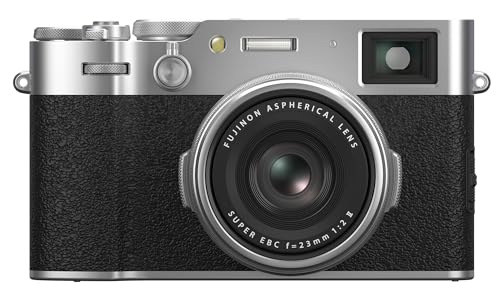
| Fujifilm X100VI | Best candid camera overall | Leaf-shutter silence, film colour and a fixed wide lens — the modern instrument of the genre. |
| Sony RX100 VII | Best pocket ghost | A real zoom and relentless autofocus in a body nobody registers as a serious camera. |
| Canon PowerShot G7 X Mark III | Best family-table camera | Friendly looks, a tilting screen for waist-level shots and Canon’s kind colour for faces. |
| Fujifilm X-T5 | Best for events and weddings | A system camera with quiet manners, great primes and colour that forgives mixed light. |
| Nikon Z30 | Best for candid video too | Compact, simple and flip-screened, for the moments that move and talk. |
| Polaroid Go Generation 2 | Best ice-breaker | A tiny instant camera that makes subjects laugh, then hands them the photograph. |
How Did We Choose These Picks?
We judged these cameras in the rooms where candids live: a family lunch that ran long, a street market at its busiest, a wedding’s edges where the real day happens, a café where nobody was performing for anyone. Each camera was marked on the only candid metrics that matter — how long before the room forgot it, how many frames were sharp without the photographer’s eye at a viewfinder, how the files treated faces lit by windows, bulbs and bad luck, and how the photographer felt carrying it for six unplanned hours.
Three filters did the sorting. Presence first: every pick can plausibly be mistaken for a hobbyist’s toy or an old film camera, which in candid work is camouflage of the highest order. Silence second: mechanical discretion — a leaf shutter, an electronic shutter that behaves, a body that does not beep its way through a ceremony. Readiness third: the cameras here wake fast, focus faster, and offer either zone-focus discipline or autofocus trustworthy enough to shoot from the hip. Everything listed is a current model from our verified pool, described in price tiers only, because this category’s numbers move too quickly for print to stay honest.
What Does Candid Photography Actually Ask of a Camera?
Less resolution and more trust. The candid frame is rarely printed large; it is cherished small, which frees you from the megapixel race entirely. What it demands instead is a chain of small reliabilities: the camera awake when the laugh comes, the focus where the face is, the exposure sane in a room lit by a window and a fridge light, and the colour kind to skin that never asked to be photographed. Break any link and the moment survives only as a story you tell about the photograph you missed.
It also asks for a lens philosophy. The classic candid focal length is a moderate wide — close enough that the photograph feels like participation rather than surveillance, wide enough to keep the room in the story. Longer lenses have their place at events, where distance is courtesy, but the candid tradition this guide honours is an insider’s tradition: the photographer belongs in the scene, camera and all, and the pictures are honest because the presence was. Choose the camera that lets you belong.

Fujifilm X100VI — Best candid camera overall
If the candid genre has a current instrument of choice, this is it, and the reasons are specific. The leaf shutter is nearly silent and sits in the lens, so the camera can shoot at a whisper in a quiet room. The fixed moderate-wide lens is the candid classic made permanent — no zoom decision, no lens decision, just distance judged by feet. The film simulations render unposed faces with a forgiveness that mixed light rarely deserves. And the whole object reads, to the room, as a charming old film camera, which is the finest camouflage a candid photographer can wear in 2026.
Its working method is the genre’s method perfected: aperture chosen for a zone of focus, the camera pre-set before the moment, frames taken from the table or the hip with the tilt screen as accomplice. The hybrid viewfinder serves the deliberate frames; the screen serves the stolen ones. Its compromises are the fixed lens — you will occasionally wish for reach at an event — and a tilting rather than flipping screen, plus demand that keeps it scarce. For street and family candids, where the photographer is a participant, it is not merely the best camera in this guide; it is the one the guide’s other cameras are measured against.
- Shutter: leaf, near-silent, syncs flash at any speed
- Lens: fixed moderate wide, the candid classic
- Colour: film simulations that flatter unposed faces
- Presence: reads as a vintage camera, disarms rooms
Strengths
- Silence and smallness that rooms forget within minutes.
- Zone-focus workflow built into its bones.
- Files that need little or no editing.
Trade-offs
- Fixed lens limits event reach.
- Tilting screen only, no full flip.
- Scarce and premium-tier.
Best for: street, travel and family candid purists. Not suited for: the long end of a wedding hall.
A habit its owners swear by: wear it on a wrist strap, never a neck strap, and keep it in hand at table level. A camera in the hand at rest is furniture; a camera raised is an event. The X100VI’s size makes the in-hand habit comfortable for hours, and the frames it gathers from that unremarkable position are the genre’s bread and butter.

Sony RX100 VII — Best pocket ghost
The RX100 VII’s candid superpower is that nobody, anywhere, takes it seriously — and inside the toy body sits the most serious small-camera autofocus Sony has made, tracking eyes and faces with a persistence that lets you shoot from the hip, from the table, from a coat draped over a chair, and still bring home sharp faces. Its zoom reaches from the room-wide view to a genuine short telephoto, which makes it the one pick here equally at home at a family lunch and across a wedding hall.
The working style differs from the Fujifilm’s: where the X100VI is zone focus and patience, the RX100 VII is trust the machine — continuous autofocus, eye priority, a burst when the laugh builds. Its pop-up viewfinder serves the bright street; its tilting screen serves the waist-level shot. Compromises are its small sensor’s low-light ceiling, a menu system of legendary depth, and battery life that asks for a spare in the other pocket. As the candid camera that is simply always there — pocket, not bag — it has no equal in this guide, and candid photography is, before anything else, a genre of being there.
- Lens: real zoom from wide to short telephoto
- Focus: eye-tracking autofocus of the first order
- Body: pocket-sized, pop-up viewfinder
- Role: the always-carried candid camera
Strengths
- Shoot from anywhere; the focus will be there.
- Zoom reach no other pocket pick here offers.
- Vanishes into a jacket until the moment comes.
Trade-offs
- Dim rooms test its smaller sensor.
- Menus reward an evening of setup, then forgetfulness.
- Carry a spare battery as a matter of routine.
Best for: the candid shooter who refuses to carry a bag. Not suited for: very dark venues as a main camera.
Set it up once — eye autofocus on, silent shooting where appropriate, your two or three settings on the memory modes — and the RX100 VII becomes the closest thing in this guide to a point-and-vanish instrument. Its owners’ archives share a quality the bigger cameras envy: they contain the moments that happened while the photographer was supposedly not photographing at all.

Canon PowerShot G7 X Mark III — Best family-table camera
The G7 X Mark III is the candid camera for the most important venue of all: your own family’s table. Its virtues there are social before they are technical — it looks like a holiday camera, it passes hand to hand without ceremony, grandparents can be photographed by it and then photograph you back with it, and Canon’s colour treats every face at the table with the same kindness. The tilting screen is the candid accomplice: flipped to waist level, the camera shoots from the hip with the frame composed rather than guessed.
Technically it is a proper enthusiast compact — a bright zoom, raw files if you want them, a larger sensor than any phone — which means the table’s window light and candlelight are handled with a grace phones still fake with processing. Its autofocus is a step behind the Sony’s relentlessness, and its low-light ceiling is a compact’s ceiling, but within the family-and-friends territory it was chosen for, those limits rarely appear. If your candid archive is mostly the people you love, in the rooms you live in, this is the warmest tool in the guide.
- Lens: bright zoom for rooms and tables
- Screen: tilts for waist-level candids
- Colour: Canon’s flattering face rendering
- Presence: the least intimidating camera here
Strengths
- Family members relax around it instantly.
- Waist-level screen makes hip shots composed, not guessed.
- Kind colour straight from the camera.
Trade-offs
- Autofocus a step behind the RX100 VII.
- Compact-sensor limits in dark venues.
- No viewfinder for bright streets.
Best for: family gatherings and the home archive. Not suited for: professional event coverage.
One tradition this camera starts in many households: it lives on the kitchen shelf, charged, where life happens, rather than in a bag in a cupboard. Candid photography is a proximity sport, and the G7 X’s shelf is its whole strategy — the camera closest to the moment wins, and this one is very easy to keep close.

Fujifilm X-T5 — Best for events and weddings
When the candid work is paid — the wedding’s unscripted hour, the conference’s real conversations, the christening where the family wants the day as it felt — the X-T5 is this guide’s system answer. It brings Fujifilm’s people-flattering colour and film looks to an interchangeable-lens body with quiet electronic-shutter manners, a deep bench of fast primes for every working distance, and resolution enough that a frame grabbed from across a room still crops into a keeper. Dressed with a small prime it stays discreet; dressed with a short telephoto it works the hall’s far end with courtesy.
The candid event workflow suits it: two bodies is the professional pattern, but one X-T5 with a wide prime for the room and a portrait prime for the distance covers most of a day, its dials letting you change exposure by touch without lowering the camera — the gesture that keeps a candid photographer’s eyes on the room rather than the menus. Its costs are a system’s costs: the lenses are the real budget, the body is more presence than the compacts, and its talents are wasted if events are not actually your work. For the photographer they are, it is the complete candid instrument here.
- Format: interchangeable-lens mirrorless, high resolution
- Colour: film simulations and kind skin rendering
- Shutters: mechanical and silent electronic options
- Lenses: fast primes for every candid distance
Strengths
- Event-grade files with candid-grade manners.
- Dials that keep your eyes on the room.
- Crops from distance still print beautifully.
Trade-offs
- The lens shelf is the true investment.
- More presence than the pocket picks.
- Over-specified for purely family work.
Best for: wedding and event candid professionals. Not suited for: the casual carrier who wants a pocket camera.
A professional habit worth borrowing even for family events: set the X-T5’s electronic shutter for the ceremony and quiet passages, its mechanical for the party, and let the camera’s silence be scheduled like everything else on the day. Subjects forgive a camera they cannot hear, and clients remember the photographer the room forgot was working.

Nikon Z30 — Best for candid video too
Moments increasingly move, and the Z30 is the pick for the candid shooter whose archive includes the toast as it was actually delivered and the toddler’s unrepeatable sentence. It is a compact mirrorless camera with a flip screen, simple manners and Nikon’s pleasing colour, designed for creators but perfectly shaped for candid work: small enough to sit on a table recording the room’s life, quick enough to grab for the still that interrupts it.
Its candid style is the set-and-bless: on a mini tripod at the gathering’s edge, or handheld with the screen flipped for the walking conversation, it records people being people with an absence of fuss that bigger rigs cannot imitate. Stills are entirely respectable, the Z-mount primes give it a growth path, and its limits — no viewfinder, a creator-first control layout — matter less in this genre than in any other in this guide series. For the family historian whose candids talk, it is the natural instrument.
- Format: compact mirrorless, video-forward
- Screen: full flip for tables and talking
- Colour: Nikon’s natural, pleasing rendering
- Role: candid clips and stills from one small body
Strengths
- The gathering can be filmed without a production.
- Simple enough to hand to a teenager to run.
- Prime lenses available when stills grow serious.
Trade-offs
- No viewfinder in any light.
- Stills ergonomics serve video first.
- Lens catalogue smaller than its rivals’.
Best for: family historians filming candid video and stills. Not suited for: the silent-stills purist.
Its party trick deserves a line: propped at the end of a long table, screen flipped so the room can see itself, the Z30 becomes part of the furniture within ten minutes — and furniture is the highest status a candid camera can achieve. The toasts it records from that post are the ones families replay for decades.

Polaroid Go Generation 2 — Best ice-breaker
The Polaroid Go is the smallest instant camera its maker has produced, and its candid method is the opposite of stealth: it is so openly, charmingly a toy that subjects disarm themselves. Point it and people grin rather than pose; press the button and the photograph develops in your hand, to be given away on the spot — a transaction that turns the candid photographer from a taker into a giver, and changes every subsequent frame in the room. Its pictures are small, soft and saturated with occasion, which is to say they are honest about being souvenirs rather than documents.
As a system it is a companion, not a replacement: the film is a running cost, the results are gloriously unpredictable, and low light defeats it quickly. But as the second camera at a wedding, a party, a street festival — the camera that breaks the ice the serious camera then walks through — it earns a place no specification can argue with. Candid photography’s eternal problem is the room’s awareness; the Go solves it by making awareness delightful.
- Format: pocket instant camera, tiny prints
- Method: charm, not stealth — subjects disarm
- Output: a photograph to give away immediately
- Role: the ice-breaker and second camera
Strengths
- Turns the photographer into a gift-giver.
- Fits a jacket pocket; weighs almost nothing.
- The prints become part of the event itself.
Trade-offs
- Film cost per frame is real.
- Image quality is souvenir-grade by design.
- Dim rooms are beyond it.
Best for: parties, weddings and festivals as the social camera. Not suited for: anyone’s only candid camera.
The seasoned move: shoot the Go early, give the prints away generously, and watch the room’s temperature toward cameras change for the rest of the day. The serious camera that follows inherits a welcome the ice-breaker bought for the price of a few frames of film — the best bargain in candid photography.
How Do the Six Compare Side by Side?
| Camera | Candid method | Silence | Carry | Watch out for |
|---|---|---|---|---|
| Fujifilm X100VI | Zone focus, participant | Leaf-shutter whisper | Jacket pocket | Fixed lens reach |
| Sony RX100 VII | Trust the autofocus | Electronic options | Any pocket | Dim-room ceiling |
| Canon PowerShot G7 X Mark III | Waist-level, family pace | Quiet compact | Coat pocket | Focus a step slower |
| Fujifilm X-T5 | Event professional | Silent electronic mode | Shoulder bag | Lens budget |
| Nikon Z30 | Table witness, video-led | Quiet | Small bag | No viewfinder |
| Polaroid Go Generation 2 | Charm offensive | Irrelevant — it is welcomed | Any pocket | Film running cost |
How Do You Shoot from the Hip Without Guessing?
Hip shooting is a calibration, not a talent. Begin with the geometry: a moderate wide lens at waist height, tilted up a fraction, covers a standing subject from about two metres with the head safely in frame — verify it once at home with a patient friend and a tape measure, and your body learns the distances the way it learned to throw a ball. Pre-focus the zone: set an aperture that gives you a forgiving depth of field, focus at the distance your subjects will occupy, and let the zone do what autofocus cannot do from a hip — be already right.
Then practise the social half, which matters more: the camera hangs or rests naturally, your eyes stay on the person you are talking to, the frame is taken inside the conversation rather than instead of it. Tilting screens — the G7 X’s, the Z30’s — convert guessing into composing for those who prefer certainty, and the RX100 VII’s autofocus converts it into trust. However you shoot, review kindly at the day’s end and delete generously; the hip shooter’s archive is built on a ruthless editor, and the keepers justify the chaff.
What Are the Ethics of the Unseen Photograph?
Candid photography’s licence is social, and it renews or expires with your conduct. The working rules most practitioners settle on are simple to state. Photograph in public and semi-public life as an observer, not a hunter; never pursue a subject who has signalled discomfort; treat children and the vulnerable with a restraint stricter than the law’s; and share with a generosity that matches the taking — the family gets the photographs, the street subject gets a card and a copy if they ask, the wedding guests get the gallery. The Polaroid Go’s give-away ritual is this ethic made into hardware.
The harder cases deserve honesty rather than rules: the unflattering frame of someone you love, the stranger’s grief at a public event, the colleague at the office party. The candid tradition’s own answer is that the camera’s honesty is a form of respect only when the photographer’s is — shoot as if the subject will see the frame, because in the age of sharing, they usually will. A candid archive built on that principle ages into a treasure; one built on ambush ages into evidence of a different kind.
How Should You Set Up a Camera for a Whole Day of Candids?
Set it once, in the morning, for the day you expect: aperture priority with a floor under the shutter speed, auto ISO with a ceiling your sensor tolerates, a single film look or colour profile for the whole day, and autofocus — or zone focus — configured and then forgotten. The candid photographer’s settings should be as unchanging as their shoes, because every mid-day menu visit is a moment spent looking at the camera instead of the room. All six picks support this discipline; the Fujifilms reward it most visibly, their dials and simulations designed for a set-and-shoot day.
Carry follows the same philosophy: one camera, one lens if it is a system, a spare battery, a card with room to be careless. The candid day is a walk, not an expedition, and the photographer dressed for an expedition photographs like a tourist in their own life. The lightest kit in this guide — the RX100 VII in a pocket, the Go in another — has produced archives that expedition rigs envy, because it was present for the whole day rather than the planned hour.
What Mistakes Turn Candids into Ambushes?
The long-lens sniper habit is the first: photographing people from a distance they would not have chosen, which reads in the frame as surveillance and in the room as unease. Come closer, join the scene, or put the camera down. Second is the machine-gun burst at a quiet moment — even a silent camera betrays itself by the photographer’s posture, and twenty frames of a laugh is a poorer catch than one frame of it. Third is the flash nobody expected, in a room whose whole mood was candlelight; every pick here can work without it, and the candid covenant assumes you will.
Fourth is photographing through other people’s occasions as if they were sets — the wedding worked so hard it stops being attended, the family lunch documented instead of eaten. The candid photographer’s discipline includes absence: whole courses, whole conversations, where the camera stays down and the person stays present. Paradoxically, those absences improve the frames that remain, because a room that trusts the photographer to stop is a room that forgets to perform when they start again.
Final Recommendation
For the candid purist — street, travel, family, the whole unposed world — the Fujifilm X100VI is the recommendation this guide was always going to make: silent, beautiful in its rendering, and built around the genre’s own method. If your life will not pause for a fixed lens, the RX100 VII’s pocket invisibility and autofocus make it the practical champion, and the G7 X Mark III is the warmest choice for the family table. Event professionals should build on the X-T5; the moving-moment historian should take the Z30; and everyone, whatever else they carry, should consider the little Polaroid Go as the second camera that changes the room. Choose by the rooms you actually haunt, and then be there, quietly, for all of them — camera set since morning, patience set for longer, and the welcome of the room treated as the treasure it is.
Frequently Asked Questions
Is candid photography legal in public places?
In most places, photographing in genuinely public spaces is broadly permitted, while publishing — especially commercially — carries additional rules about consent and context that vary by jurisdiction. Private and semi-private spaces are stricter, and children and vulnerable people deserve restraint beyond any legal minimum. This guide’s working rule — shoot as if the subject will see the frame — keeps you honourable in almost every situation; for commercial work, learn your local rules properly, and when a venue posts its own policy, the venue’s word is the one that governs your evening.
What is zone focusing and why do candid shooters love it?
It is pre-setting the focus at a chosen distance with an aperture that keeps a band of distances sharp, so the camera needs no focusing moment at all — you simply place the subject inside the zone and shoot. It is the fastest candid method ever devised, it never hunts in the dark, and the X100VI’s design is practically a monument to it. Practise it at home against a tape measure on the floor and within a week your feet will know the zone’s edges better than your eyes do.
Do I need a silent shutter?
You need silence, which is not quite the same thing. A leaf shutter, a quiet mechanical shutter used with discretion, or a well-behaved electronic shutter all serve; what matters is that the room does not register the frame being taken. Beware electronic shutters under flickering indoor light, where banding can stripe a frame — test your venue, as the event shooters do. And switch off every beep and focus chirp the camera offers before the day begins; the candid camera should be the quietest object you own.
Which lens length is best for candids at events?
Two, in the professional pattern: a moderate wide for the room and the groups, and a short telephoto prime for the far end — speeches, the dance floor’s edge, the grandparents watching. The X-T5 with that pair covers a whole wedding’s candid story; a single zoom is the honest compromise for the one-body shooter. Whichever you carry, keep the second lens in a pocket rather than a bag across the room, because the far-end moment never waits for a walk.
How do I photograph my own family without annoying them?
Be brief, be generous and be absent on schedule. Shoot in short, cheerful bursts rather than as a constant presence; share the pictures the same day, including the flattering ones of everyone else; hand the camera around, as the G7 X invites; and keep whole stretches of the day camera-free. Families forgive a photographer who behaves like a guest with a camera and resent one who behaves like a camera with a guest attached.
How Does the Candid Habit Change the Way You See?
Ask anyone who has kept it for a year: the camera trains the eye to notice the unposed world — the waiter’s laugh in the kitchen doorway, the light falling on a stranger’s hands, your own father’s expression when he thinks the conversation has moved past him. Photographers describe it as a second attention that stays switched on even when the camera is home, and many say it is the real acquisition, worth more than the archive. The six cameras here are simply the instruments that make that attention portable. Buy the one that disappears best into your life, and let the seeing accumulate; the photographs are the receipt, not the purchase.
How Do You Photograph Children Candidly — and Properly?
Children are the candid genre’s greatest subjects and its strictest responsibility. The craft part is joyful: get down to their height or below it, let the game continue, and shoot in the pauses their play creates rather than interrupting for a pose — the RX100 VII’s autofocus and the G7 X’s waist-level screen were practically designed for floor-level work. The propriety part is absolute: your own children, your family’s, with the parents’ blessing as the standing rule for anyone else’s, and a sharing discipline stricter than your own — many families keep children’s candids in the family album and off public feeds entirely, a policy this guide endorses without reservation. The camera that serves this work best is the one the children forget fastest, and a household that agrees its rules once, kindly, never has to renegotiate them frame by frame.
What About Night Candids — Markets, Fairs and City Evenings?
After dark the candid game changes its physics: light pools under lamps and stall canopies, faces cross in and out of brightness, and the cameras with the larger sensors and faster lenses — the X-T5 with a prime, the X100VI with its bright fixed lens — pull ahead of the pocket pair. Work the pools rather than the darkness: position where the light already is, let subjects enter it, and expose for the lit face, letting the night go black around it, which is both the practical method and the genre’s most beautiful look. Raise the ISO ceiling you set in the morning and accept grain as the evening’s texture; a grainy true frame beats a clean staged one in this genre every time, and the film simulations on the Fujifilm picks turn that grain into something closer to a memory’s texture.
How Should You Edit Candid Photographs — and How Much Is Too Much?
Edit for the moment’s truth, in that order. Straighten what the hip tilted, crop what the haste included, lift the shadows the room’s light starved — and stop there, because the candid frame’s authority comes from its unarranged quality, and heavy processing spends that authority on polish nobody asked for. Resist especially the beautifying tools on other people’s faces: the laugh lines are the photograph. A consistent, gentle grade across a day’s frames — one profile, one hand — gives an archive its cohesion, which is why this guide keeps recommending a single in-camera look for the whole day. The candid editor’s motto is the photographer’s too: be present, be quick, be kind, and then leave the evidence alone.
How Do You Build a Candid Archive That Ages Well?
Date everything, name the people while you still can, and print more than feels reasonable. The candid archive’s value compounds in a way few photographic genres match — the unposed frames are the ones families fight to keep — but only if the future can read it: a folder per occasion, the names in the file names or a note alongside, and a small annual print run of the year’s best for the album that outlives every drive. The Polaroid prints, ironically, often survive best of all, already physical, already labelled by the occasion itself. Photographers who keep this discipline discover, decades on, that they accidentally became their family’s historian — the most honourable title this genre confers, and one none of the six cameras can earn without an owner who files.
How Do Street and Family Candid Work Differ?
They share a camera kit and almost nothing else. Street candid is a stranger’s genre: the frame is found in public life, the photographer’s belonging is temporary and negotiated by conduct, and the work’s energy comes from juxtaposition — the city arranging its own jokes and sorrows for whoever is watching. Family candid is an insider’s archive: the photographer’s belonging is the whole point, the energy is biographical, and the audience is the future. The skills cross-pollinate — the street teaches anticipation, the family teaches patience — but the photographer who confuses their licences, shooting family with a stranger’s detachment or strangers with a family’s presumption, produces the two characteristic failures of the genre: cold home photographs and presumptuous street ones. Know which room you are in; the cameras here serve both, but they serve them one at a time.
What Role Does Patience Play — and How Do You Practise It?
The candid photographer mostly waits, and the waiting is a skill with a technique. Choose the stage before the actors: the pool of window light, the doorway everyone passes, the bench opposite the interesting wall — then settle, camera ready, and let the scene populate itself. Fishermen call it the right spot; theatre people call it blocking; candid photographers call it Tuesday. Practise it in short, deliberate sessions — one café hour, one market bench — with a frame count you are forbidden to exceed, because scarcity sharpens the waiting the way a film roll once did. Every camera in this guide supports the discipline, and the X100VI, with its fixed lens and zone focus, is practically a patience-training device: it removes every decision except the oldest one, which is when.
How Should You Carry a Candid Camera All Day?
On the body, awake, with the lens cap an endangered species. The candid day’s kit is a philosophy before it is a list: the camera worn cross-body or on a wrist strap, set since morning, a spare battery in the pocket the RX100 VII owners all describe, and nothing else that needs managing. Bags are where candid cameras go to miss things; the bag’s proper contents are the day’s non-photographic life, with the camera living outside it. Photographers who adopt the worn-camera habit report the same surprise — the day itself becomes photogenic, because the camera’s presence at every unplanned minute teaches the eye to invoice them. That, more than any specification in this guide, is what you are buying.
What About Candid Work While Travelling?
Travel sharpens every candid question. The camera that reads as a toy or a heirloom — the Go, the G7 X, the X100VI in its vintage disguise — earns welcomes that a professional body spends; the photographer who learns three phrases of the language, starting with the one that asks permission after the frame, collects portraits a sniper never will. Markets, festivals and transport are the generous venues; places of worship, mourning and work deserve the strictest restraint in this guide’s ethics, and some deserve the camera left in the bag entirely, which is also a candid skill. Travel light in the genre’s literal sense — one small camera, worn all day — and the trip’s archive will be the people rather than the monuments, which is what you will actually open in ten years.
How Do You Know When Not to Take the Photograph?
By the small silence that precedes the decision. The candid tradition is sometimes misread as a licence to take everything; its masters describe it instead as a training in refusal — the grief that is not yours to publish, the embarrassment that would outlive its moment, the child whose parents’ wishes you can guess. A useful test is the morning-after question: would showing this frame to its subject, over coffee, feel like a gift or an ambush? Shoot the gifts. The archive loses a few frames and gains the quality that makes the rest keepable, and the photographer gains the room’s lasting trust, which is the only permit that has ever really mattered in this genre. Every camera here will take the photograph you point it at; the discipline this guide keeps returning to is the pointing.
How Much Should You Spend on a Candid Camera?
Less than the genre’s romance suggests, allocated differently than a spec sheet advises. The pocket tier — the RX100 VII and G7 X heartland — buys the whole candid method for most photographers: presence, readiness, kind files. The premium tier buys the X100VI’s particular silence and identity, a purchase justified the day candid work becomes your main photographic life rather than a sideline of it. The system tier, the X-T5 and its primes, is professional money for professional rooms. And the Go costs less than the film it will eat in a season, which is the correct way to budget it. What no tier buys is the genre’s actual currency — access, patience and the room’s trust — which is why candid photography remains the most democratic of the photographic arts, and why this guide’s cheapest complete answer still produces archives that money cannot retrospectively purchase.
What Does a Year of Candid Practice Actually Produce?
Three things, in ascending order of value. A technique: distances judged without thinking, light read at a glance, the camera’s few controls operated by touch — the mechanics this guide describes, made unconscious. An archive: the year’s unposed truth, your family’s and your city’s, which appreciates in a way posed work rarely does, because every year makes its subjects younger and its rooms more lost. And a reputation, quietly, as the person whose camera is welcome — the invitation that follows, the access that compounds, the room that relaxes a half-second faster each time you enter it. Photographers who measure candid cameras by specifications miss that the third product is the one the first two are for. Buy the camera that will be welcomed, carry it until it is furniture, and let the year do the rest.
How Do You Handle the Frame That Got Away?
By honouring it briefly and returning to the room. Every candid photographer carries a private gallery of the missed — the expression that folded as the camera woke, the gesture completed a breath before the frame — and the mature ones treat the gallery as tuition rather than grief. Note what the miss teaches: the camera was in the bag, the zone was set for the wrong distance, the photographer was reviewing the previous frame instead of watching the next one. Each is a correctable habit, and correcting habits is the whole of candid progress. The cameras in this guide minimise the mechanical misses — wake time, focus hunting, shutter noise — so that the remaining ones are the human kind, which no purchase can retire. Take the lesson, lower the camera, and be present for the moment that is still happening; it is frequently the better photograph anyway.
Why Do So Many Candid Classics Come from Small Cameras?
Because the genre’s history is a history of access. The famous candid archives — the cafés of Paris, the subways, the family albums that became art — were made disproportionately with the smallest serious cameras of their eras, not because their makers could not afford larger ones but because the small camera was admitted where the large one was announced. The pattern has not changed with the technology; it has sharpened. A modern flagship announces a production, while the six cameras in this guide announce, at most, a hobby — and the unposed world, which is the genre’s entire subject, only performs its honesty for an audience it has forgotten. That is the deepest reason this list contains no flagship at all, and why its most expensive entry is the one that best impersonates a fifty-year-old film camera.
How Should a Beginner Start — This Weekend, with One Camera?
Choose the family lunch over the street festival for a first session; the licence is warmer and the lessons identical. Set the camera in the morning — one profile, zone or trusted autofocus, silent where the room is quiet — and then impose the genre’s kindest constraint: twenty frames, no more, each one earned by waiting rather than spraying. Sit in the room’s life rather than at its edge, let the camera rest in your hand at table level, and take the frames the conversation offers. At the day’s end, keep three, share all the kind ones, and write one sentence about what the misses taught. Repeat monthly and the archive, the technique and the welcome all compound — the three products this guide promised, arriving on the schedule candid photography has always kept: slowly, then all at once, in a frame you almost did not take.
A Note on Reviewing the Day’s Frames
Review late, review once, and review like an editor who loves the subjects. The candid day produces a contact sheet full of almosts; the discipline is to mark the frames that carry a true expression or a true arrangement and let the merely sharp ones go, because sharpness is the genre’s servant and not its master. Keep the outtakes of family occasions longer than instinct suggests — the blurred grandfather, mid-laugh and mid-gesture, has a way of becoming the most requested print in the house — but keep them in the archive, not the album. Then share promptly, while the day is still warm; a candid photograph delivered a month later is history, while the same frame delivered that evening is a gift, and this genre, at its best, is a gift economy with cameras in it.
What Is the Difference Between Candid and Merely Unposed?
Intention. An unposed photograph is an accident of timing; a candid is an accident the photographer arranged to be present for — the stage chosen, the light read, the camera set, the patience spent — and the distinction shows in the frames, which in true candids have the composed quality of scenes that were waited for rather than grabbed. This is why the genre rewards the set-once discipline and the chosen vantage so heavily, and why its best practitioners describe their work in the language of hospitality: they prepare a place where honesty can happen, and then they let it. The cameras in this guide are the furniture of that place — quiet, ready, forgotten — and the photograph, when it comes, is the guest arriving.
Related Guides
More people-and-places photography in our guides to the best cameras for pictures of people, the best compact digital cameras for street photography and the best cameras for beautiful photos.


