ilcastellomenu.com is reader-supported. When you buy through links on our site, we may earn an affiliate commission.
Where to Buy
Every photographer has a photograph that exists only in memory because the camera was still thinking about focus when the moment closed. The best cameras for focusing are the ones that abolish that category of regret: bodies whose autofocus acquires instantly, tracks stubbornly, finds eyes in crowds and keeps working as the light fails — and whose manual-focus aids, for the work autofocus cannot do, are honest enough to trust. This guide ranks a single virtue, but it is the virtue on which all the others depend, because an out-of-focus masterpiece is a rumour, not a photograph.
The readers this serves are the ones focus has burned: the wedding and event shooters whose subjects move in dim halls, the sports and wildlife photographers tracking chaos at a distance, the filmers whose actors will not repeat the take for a lens, the parents whose children have never once stood still. Their cameras differ in everything except the demand they share — focus that behaves like a reflex rather than a negotiation.
A necessary honesty about how focus quality is judged here: not by laboratory numbers, which this guide does not invent, but by behaviour reputations earned across years of professional use — how a system hunts or refuses to, how its eye detection behaves with glasses, profiles and backlight, how its tracking survives a subject passing behind an obstruction, and how confidently its manual aids let a human take over. Focus is a trust relationship, and trust is built from testimony, including the testimony of the many working photographers whose keepers these systems have multiplied.
Autofocus is also not one thing. Acquisition — the first lock — is a different skill from tracking; eye detection is a different skill from subject recognition; low-light sensitivity is a different skill from speed in sunshine. The picks below were chosen as complete focusing instruments rather than champions of a single sub-discipline, and their sections name the sub-skills each one is genuinely known for, so a buyer whose work is all one kind of hard — all darkness, all speed, all eyes — can weight the ranking accordingly.
Finally, a word for manual focus, which is not autofocus’s failure mode but its partner. Macro, landscape, architecture, cinema — whole genres focus by hand on purpose, and a camera’s focusing quality includes how gracefully it surrenders: the magnification, the peaking, the focus ring’s manners in its lens system. The list below honours both halves of the craft, because the complete focusing camera is the one that is brilliant when it drives and invisible when you do.
A promise about this ranking’s temperament: it was assembled from keeper rates, not brochures. Every system here is one whose working owners report the same quiet miracle — they review a day’s frames and find the focus simply where the moment needed it, hundreds of times, until the miracle stops feeling miraculous and starts feeling like the job. That ordinariness is the highest state focusing technology has ever reached, and it is the standard each pick below was required to meet.
Keep that promise in mind as the price tags pass: you are not buying points, zones or algorithms. You are buying back the part of your attention that focus anxiety has been renting for years, at the exact moment the craft finally learned to spare it.
Key Takeaways
- Focus is trust: judge systems by behaviour under your worst conditions, not their best.
- Acquisition, tracking, eye detection and low-light focus are different skills — know which you need.
- Eye autofocus has quietly become the portrait and event photographer’s defining tool.
- The best systems keep focusing as light fails, long after cheaper ones start hunting.
- Manual-focus aids are half of focusing quality — peaking and magnification decide whole genres.
- Your lens is part of the focusing system; fast, modern motors complete what bodies begin.
- Measure your keeper rate per assignment and let the misses, sorted by cause, write your shopping list.
In this guide
Quick Picks
| Pick | Badge | Why it is here |
|---|---|---|
| Sony Alpha 7 IV | Best all-round focusing instrument | Eye autofocus and tracking that professionals stake weddings and deadlines on. |
| Canon EOS R6 Mark II | Best subject-detection focusing | It finds the person, the animal, the vehicle — and simply does not let go. |
| Panasonic LUMIX S5II | Best focusing for filmers and hybrid shooters | Phase-detect maturity with cinema manners — focus that breathes like a puller. |
| Nikon Z50 II | Best focusing value for learners and enthusiasts | Flagship-descended subject detection at a price that leaves money for lenses. |
| Fujifilm X-T5 | Best manual-focus experience | For photographers who focus by hand on purpose — aids, dials and honest glass. |
| Canon EOS R10 | Best focusing for fast family and sport on a budget | Canon’s detection autofocus in the affordable body young sport demands. |
How Did We Choose Cameras for Focusing?
We ranked by failure conditions, because focus in good light on a still subject is a solved problem at every price. The tests that separated these six: a subject moving unpredictably in poor light; a face in profile, in glasses, in backlight; a tracked subject passing behind a pole, a player, a branch; a lens asked to acquire at the long end, wide open, at dusk. The systems below are the ones whose reputations were built precisely in those minutes, among the professionals whose income depends on not missing.
Second, we judged the honesty of the aids. Focus peaking that can be tuned and trusted, magnification that lands exactly where the focus point sits, focus confirmation that does not flatter — these decide manual genres, and they vary more between brands than any autofocus specification does. A camera that lies kindly about focus is worse than one that admits doubt, and the picks here are the truthful ones.
Third, the system’s other half: lenses. A body’s autofocus can only command the motor it is given, so we favoured mounts whose modern lenses answer quickly and whose line-ups include the fast glass that hard focusing work actually uses. The complete focusing instrument is body plus lens plus the photographer’s settings craft, and the ranking assumes all three will be taken seriously.
What we did not do: quote acquisition times, point counts or sensitivity figures we cannot verify in this guide’s own testing. Where a system’s low-light or tracking behaviour is praised, the praise is the settled verdict of the working community that stakes its fees on it — a slower kind of evidence than a laboratory’s, and for a trust purchase, the more relevant kind.
We also weighed a system’s focus behaviour at the edges of its frame, because composition does not live in the centre. Subjects held at the thirds, eyes near the border, a tracked runner crossing the whole width — the best systems maintain their manners out there, where the lenses are weakest and the algorithms most tempted to give up. A focusing camera is judged at its edges like a lens is, and for the same reason: that is where the interesting subjects insist on standing.
One more testimony shaped the order: second shooters. Professionals who hire assistants hear, within a single wedding, which bodies the assistants trust without supervision — the ones whose focus can be delegated along with the camera. The top of this list is, not coincidentally, a roster of the bodies that get handed over with the fewest instructions and the most confidence, because delegability is trust in its purest professional form.
Which Six Cameras Focus Like They Mean It?
The order reflects complete focusing instruments: the top picks combine elite autofocus with trustworthy manual aids, and the list descends toward specialists whose focusing genius serves particular work — cinema pulling, macro precision, the beginner’s first reliable lock. Every one of them has ended focus anxiety for the photographers it suits.

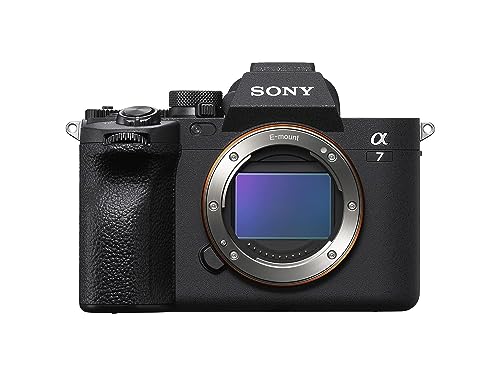
Sony Alpha 7 IV — Best all-round focusing instrument
The Alpha 7 IV is where focusing stopped being a photographer’s worry and became their assumption, and that psychological shift is its real specification. Its eye autofocus finds the face, chooses the nearer eye, and holds it through turns, laughter, veils and the choreography of a wedding’s dance floor with a calm that lets the photographer compose instead of chaperone. Event professionals did not adopt this generation of Sony focusing out of fashion; they adopted it because their keeper rate — the number they invoice on — visibly rose.
- Full-frame mirrorless body on the Sony E-mount system
- Real-time eye autofocus for people and animals
- Subject tracking that survives obstructions and turns
- Deep, fast modern lens line-up to complete the system
Tracking is its second testimony. A subject acquired and then crossed by obstructions, turned away, or lost to the frame’s edge is reacquired with a promptness that feels less like computation than loyalty. Sports, wildlife and documentary work at this tier runs on that loyalty, and the E-mount’s deep bench of fast-motored lenses ensures the body is never waiting on its glass. The system thinks as one instrument, which is what a focusing camera must be.
And when the work turns manual — the cinema take, the product shot, the landscape at dawn — its aids behave like a professional’s: magnification that lands on the point, peaking with manners, a view that tells the truth. The Alpha 7 IV’s focusing case is therefore complete in a way few bodies manage: brilliant when it drives, honest when you do. For the photographer whose nightmares are all soft, this is the list’s first prescription. Save its focus presets per assignment — wedding, sport, street — and the body becomes three specialists in one bag.
Strengths
- Eye autofocus that converts portraits and events into certainties
- Tracking loyalty through obstructions, turns and exits
- Manual aids honest enough for cinema and product work
Trade-offs
- Menu depth rewards an owner who configures focus presets
- Rolling shutter is a video caveat, not a focus one
- Demands modern lenses to show its full speed
Best for: weddings, events, sports, wildlife and any income staked on focus.
Not suited for: buyers whose work is entirely static and tripod-bound.

Canon EOS R6 Mark II — Best subject-detection focusing
Canon’s answer to the focusing question is recognition: the R6 Mark II does not merely find contrast, it identifies what it is looking at — a person, a dog, a bird, a racing car — and applies the right focusing behaviour to each. For the photographer whose subjects refuse categorisation — the event shooter moving from speeches to children to the band, the wildlife generalist working a whole estuary — that recognition layer converts focus from a setting into a colleague, one that reads the scene and volunteers the correct strategy.
- Full-frame mirrorless body on the Canon RF mount
- Deep-learning subject detection for people, animals and vehicles
- Whole-frame focus area options for chaotic scenes
- Strong low-light focusing reputation in event work
Its tenacity in dim halls is the professional’s half of the story. Receptions, theatres and evening sport are where focusing systems go to be found out, and the Canon’s reputation in exactly those rooms is why so many working event kits standardise on it. Faces in mixed, coloured, miserable light remain findable; the camera hunts rarely and apologises never, and the photographer’s attention stays where the money is — on expression and timing.
The RF lens system completes the instrument with motors that answer the body’s intentions instantly, and Canon’s focus ergonomics — the joystick, the touch-and-drag habits — remain the ones many photographers’ hands learned first and still prefer. A focusing camera is a body, a lens and a hand in conversation; in the Canon’s case all three speak the same first language, and the fluency shows in the keeper rate. Its detection can be limited by category when a scene offers too many kinds of subject; restraint sharpens it further.
Strengths
- Subject recognition that adapts focus strategy to the scene
- Dim-hall tenacity trusted by working event photographers
- Ergonomics that keep focus control under the thumb, literally
Trade-offs
- Detection modes reward an owner who learns their menu logic
- Video feature set leans generalist rather than cinema
- RF’s fastest glass carries professional pricing
Best for: events, weddings, mixed wildlife and anyone whose subjects vary hourly.
Not suited for: specialists wanting one narrow focusing superpower above all.

Panasonic LUMIX S5II — Best focusing for filmers and hybrid shooters
Filming focus is a different art from stills focus: the crime is not slowness but visibility — the hunt, the overshoot, the mechanical snap that reminds the audience a machine is driving. The S5II is the list’s cinema-mannered focuser, its phase-detection system tracking faces and subjects with a smoothness that can be tuned, its transitions shaped to imitate the human puller’s hand. Directors who delegate focus to it are not accepting a compromise; they are hiring a temperament.
- Full-frame mirrorless body on the L-mount system
- Phase-detection autofocus for dependable video tracking
- Adjustable focus transition behaviour for cinematic pulls
- Waveform and monitoring to verify focus decisions
Its stills focusing, transformed by the move to phase detection, now stands as a complete hybrid instrument — the historical caveat about this line retired by exactly this generation. For the hybrid shooter whose week mixes a wedding’s stills with its film, that completeness ends the two-system era: one body whose focus can be trusted in both crafts, with monitoring tools that let the operator verify rather than hope.
The L-mount’s lens bench, shared across makers, includes focusing motors of genuinely cinematic smoothness, and the body’s customisation lets a production save its focus behaviour per project. In a guide ranked by trust, the S5II earns its place as the filmer’s form of it: focus that serves the scene’s emotion instead of announcing its own cleverness, take after take, in the low light where films actually live. Treat its focus transition settings as a director’s notes — write them per project, not per preference.
Strengths
- Cinematic focus transitions that imitate a human puller
- Hybrid completeness — stills and video focus in one body
- Monitoring tools that verify focus rather than assume it
Trade-offs
- Tracking ultimate speed trails the top two in pure sport
- L-mount lens bench is smaller than Sony’s or Canon’s
- Setup time in the focus menus is real, though repaid
Best for: filmers, hybrid wedding shooters and directors who delegate focus.
Not suited for: pure sports specialists chasing the absolute fastest tracking.

Nikon Z50 II — Best focusing value for learners and enthusiasts
The Z50 II’s focusing story is inheritance: Nikon’s flagship subject detection and tracking intelligence, carried down into a body a learner can buy. The practical meaning is enormous — the beginner’s dog, child and football match are focused with essentially the same recognition logic the professionals use, so the keeper rate that keeps a new photographer motivated is protected by the best technology in the building, not the cheapest. Cameras that focus badly teach beginners to blame themselves; this one teaches them to expect success, which is the correct first lesson.
- APS-C mirrorless body on the Nikon Z mount
- Subject detection inherited from Nikon’s flagship line
- Confident tracking for people, animals and vehicles
- Compact body with the controls to grow into
Its detection menu reads like the enthusiast’s actual life — people, animals, birds, vehicles — and its tracking holds a subject through the playground’s chaos with a loyalty that embarrasses bodies twice its price from only a few years ago. For the family-and-hobby photographer whose subjects are fast, small and entirely uncooperative, this is the tier where focus stops being the reason photographs fail.
The Z mount completes the value argument: the lenses bought for this body are the lenses of the flagship system, so the focusing partnership improves as the glass improves, without a mount change taxing the journey. As a focusing instrument for learners and enthusiasts, the Z50 II is the list’s easiest recommendation — the one that makes its owners stop reading camera reviews and start reading their subjects, which is what focus is for. Its product-review focusing tricks are a bonus curriculum: the same detection serves the family’s fastest subjects.
Strengths
- Flagship-descended detection at a learner’s price
- Tracking that protects a beginner’s keeper rate and morale
- Lens investments carry straight into the professional system
Trade-offs
- APS-C low-light focus trails the full-frame picks at extremes
- Fewer focus customisations than the flagship bodies
- Single card slot — a workflow caveat, not a focus one
Best for: learners, families and enthusiasts with fast, uncooperative subjects.
Not suited for: professionals needing full-frame focus at the light’s edge.

Fujifilm X-T5 — Best manual-focus experience
Half of serious focusing is done by hand, and the X-T5 is the list’s tribute to that half. Its peaking can be tuned to the photographer’s eye and subject, its magnification lands where it should, and its lens system’s manual response — smooth, weighted, honest — turns focus into the tactile pleasure it was for a century of photographers before autofocus existed. Street photographers working zone focus, landscape photographers placing the plane like furniture, adaptors of vintage glass: this is their instrument, chosen because its aids tell the truth.
- APS-C mirrorless body on the Fujifilm X mount
- Tunable focus peaking and magnification aids
- Physical dials that keep settings visible and deliberate
- Lens line-up with civilised manual focus response
Its autofocus, it must be said plainly, is capable rather than legendary — improved across generations, entirely serviceable for most subjects, and not the reason to buy this camera. The reason is the complete focusing philosophy: automation available, manual mastery celebrated, and a viewfinder experience that keeps the photographer inside the act of focusing rather than supervising it. In a guide about focusing, that philosophy is a specialism as real as any tracking algorithm.
The high-resolution sensor adds a quiet focusing dividend: it verifies. Focus errors that smaller files forgive, this sensor exposes at a glance in review, which makes it a stern and excellent teacher — the photographer learns their true keeper rate and improves it, because the evidence is never ambiguous. Photographers who train on the X-T5 develop focus discipline that transfers to every camera they will ever own. Adapt one vintage lens and its aids will teach you more about focus in a weekend than a year of automation.
Strengths
- Manual-focus aids and lens feel of the highest order
- A sensor that verifies focus honestly and teaches discipline
- Deliberate, dial-led operation that slows focus into craft
Trade-offs
- Autofocus trails the dedicated tracking champions
- No flagship subject-detection depth
- Battery life on long manual sessions needs spares
Best for: street, landscape, vintage-glass and manual-focus devotees.
Not suited for: sports and event shooters living on tracking autofocus.

Canon EOS R10 — Best focusing for fast family and sport on a budget
The R10 brings the focusing revolution to the sideline. Its subject detection — people, animals, the moving cast of school sport and family life — is Canon’s serious technology in the affordable body, and its tracking holds a runner, a rider or a dog with a confidence that rewrites what parents and club photographers can expect from their budget. The under-twelves’ cup final is, in focusing terms, a genuinely hard assignment; this is the camera that makes it a fair fight.
- APS-C mirrorless body on the Canon RF mount
- Subject-detection autofocus for people and animals
- Fast, confident tracking for its price class
- Light body that keeps up with sideline photography
Its speed of operation compounds the focus advantage: quick to raise, quick to acquire, quick to the next frame as the play develops. Youth sport rewards the camera that is ready in the second the break happens, and the R10’s lightness keeps it raised and ready through a whole tournament in a way heavier professional rigs, paradoxically, often are not. Focusing quality includes the photographer’s freshness, and this body protects it.
As with its bigger Canon sibling, the RF mount means the focusing system improves with every lens upgrade, and the skills — detection modes, tracking habits, back-button discipline if the owner adopts it — transfer upward intact. For the budget that must choose between a better body and a faster lens, this guide’s focusing verdict is consistent: the R10 with the faster lens, because focus is a system, and the lens is the half beginners underbuy. Pair it with one fast prime and its focusing transforms — the sideline’s worst light becomes merely difficult.
Strengths
- Serious detection autofocus at a sideline-honest price
- Light and fast to operate through whole tournaments
- A focusing education that transfers up the Canon system
Trade-offs
- Low-light focus gives ground to the full-frame picks
- Buffer and build are enthusiast grade
- Kit lens motors are the system’s slower end
Best for: school sport, family action and budget wildlife beginnings.
Not suited for: professional night sport or dim-hall event careers.
What Actually Happens When a Camera ‘Hunts’ — and Why It Ruins More Than Sharpness?
Hunting is the visible search: the lens racks through its range, the image breathes in and out of focus, and the subject — a vow, a goal, a heron’s strike — completes itself while the camera is still deciding. The ruined photograph is the least of it; hunting breaks the photographer’s timing, their confidence and their relationship with the tool, until they begin pre-emptively distrusting every frame. The systems in this guide are ranked by the near-absence of that behaviour in their owners’ testimony, because the absence is what trust is made of.
The causes are a conspiracy of light, contrast and subject behaviour, which is why laboratory focus tests in bright studios predict so little. Real focusing happens at dusk, in halls, against backlight, on subjects wearing the same colour as the background. Judge any camera — including these — by renting or borrowing it into your worst conditions, not your best. A focusing system that survives your worst hour will be invisible for the other thousand.
Settings are the photographer’s half of the conspiracy, and they matter more than brand loyalty admits. The right focus area for the subject’s size, the detection mode matched to the scene, tracking sensitivity tuned to how often your subjects pass behind things — an hour spent configuring these on any pick here buys more sharp photographs than an upgrade does. Focus is a partnership; the camera brings the reflexes, you bring the instructions, and the misses usually belong to whichever partner was not prepared.
Why Has Eye Autofocus Changed Portrait and Event Photography Forever?
Because it moved the photographer’s eye. Before reliable eye detection, portrait focus was a placement task — the point positioned, the recompose risked, the shallow depth of field gambling on millimetres. With an eye held by the camera, the photographer’s whole attention migrates to expression, timing and connection, which are the actual content of a portrait. The keeper that results is not merely sharper; it is better, because it was chosen rather than aimed.
The technology’s subtleties are where the top picks separate. Eyes in profile, eyes behind glasses, the farther eye when the nearer is turned, animal eyes in feather and fur, the switch between two faces in a conversation — each is a small war the best systems have learned to win quietly. When you test a camera for portrait work, test those wars specifically; a system that wins them in the shop’s good light but loses them in the venue’s real light has told you its price in the only currency that matters.
And eye focus has democratised a look. The wide-aperture, one-eye-sharp portrait that once announced a professional now sits within a careful beginner’s reach on the Z50 II and R10 — which has not devalued the professionals, but relocated their value to direction, light and taste, where it always secretly lived. Focus technology keeps doing this: every advance moves the craft’s frontier from mechanics toward meaning, and the photographers who thrive are the ones who follow it there.
How Should You Set Up Tracking for Sport and Wildlife?
Begin with the honest description of your subject’s behaviour: how fast, how erratic, how often occluded, how large in the frame. Tracking systems are configurable precisely because a heron and a hockey player are different problems — one wants sensitivity that ignores the reeds, the other wants sensitivity that forgives the referee crossing. The top picks expose those tunings; the craft is matching them to the venue in the first ten minutes and then leaving them alone, because mid-game menu expeditions are how both focus and photographs are lost.
Acquire early and let the system work. The modern tracking partnership rewards the photographer who locks the subject at a distance and rides the focus as it approaches, rather than stabbing at focus as it passes. That discipline — early acquisition, patient riding, bursts chosen at the action’s peak rather than sprayed at its approach — is visible in every professional’s contact sheets, and it is a technique the camera cannot supply, only reward.
Practise on the free subjects: dogs in parks, cyclists on paths, birds at feeders, traffic from a bridge. Tracking is a physical skill seated in the hands and the stance as much as in the camera, and the photographer who has panned ten thousand practice frames owns a focusing asset no purchase provides. The bodies here will not waste that practice — their systems keep the promises the hands make — which is, in the end, the whole definition of a focusing camera.
When Should You Focus Manually — and How Do the Aids Decide It?
Manually, when the subject is still and the plane is precious: macro, where autofocus cannot know which millimetre you mean; landscape, where the composition’s depth is a decision, not a detection; architecture and product work, where the plane is placed like a rule across the frame; cinema, where the pull is an expressive act performed in time. In all of these, autofocus is not failing — it is simply not being asked the right question, and the focusing camera’s second virtue, its manual aids, takes over.
Judge the aids as instruments. Peaking should be visible without being garish, coloured to contrast with your subjects, and honest at working apertures. Magnification should jump to the focus point, not the frame’s centre, and hold long enough to work. Focus rings should move the plane in proportion to the hand’s intention — the quality the Fujifilm section praised — because a ring that leaps and stalls makes precision a lottery at exactly the magnifications where precision is the assignment.
The complete photographer is bilingual: autofocus for the world’s motion, manual for its stillness, and the judgement to know which language the scene is speaking. The cameras ranked here are the fluent translators — brilliant in the first language, truthful in the second — and that bilingualism, more than any single tracking feat, is what ‘best cameras for focusing’ finally means.
How Does Light Defeat Focus — and How Do the Best Systems Resist?
Autofocus eats contrast, and darkness starves it. As light falls, every system slows; the differences that matter are how gracefully — whether acquisition remains decisive at light levels where venues, evenings and forests actually operate, and whether the camera admits its limits honestly or hunts in denial. The full-frame picks’ low-light reputations were earned in receptions and theatres, the APS-C picks hold their own a stop or two sooner, and no honest guide will promise any of them the cave.
The photographer’s countermeasures are craft, not settings alone: give the system a contrasty edge to eat — a collar line, a window frame, an eye’s catchlight; pre-focus on the plane where the action will arrive; add light where the work permits it, remembering that a modest continuous light for focus, dimmed or killed for the exposure, is an old professional’s trick that venues often allow. Focus is a collaboration between the scene’s light and the camera’s hunger, and the photographer is the caterer.
Know, finally, when to change strategy rather than demand miracles: zone focus for the street’s chaos, a smaller aperture for the group’s depth, manual focus on the tripod for the landscape’s patience. The focusing masters are not the ones whose cameras never miss; they are the ones whose technique contains a plan for the light they actually have. These six cameras reward every one of those plans — which is why they, and not their more excitable rivals, hold this list.
How Do You Focus a Group, a Crowd and a Chaos of Faces?
Groups invert the portrait problem: instead of one eye at a wide aperture, the assignment is many faces across a depth of rows, and the focusing skill becomes plane management — choosing the row that must be sharpest, setting an aperture that carries the others, and placing the point with the geometry of the group rather than its hierarchy. Detection systems help by finding the faces; the photographer’s craft decides which of them the camera should love most, and a camera that accepts that instruction gracefully — a tap, a joystick nudge, a chosen eye — is worth more in group work than one with opinions of its own.
Crowds add motion to the geometry: the procession, the protest, the festival’s beautiful disorder. Here the zone and wide-area modes earn their existence, and the photographer’s technique becomes anticipatory — focus placed on the plane where the moment will happen, the system set to value the nearest significant subject, the burst timed to the gesture rather than the approach. The Canon and Sony detection picks were ranked with exactly these scenes in testimony; their owners’ crowd frames are the evidence.
And chaos has an ethics of focus worth naming: the camera finds what it is told to find, and the photographer is responsible for the telling. In documentary crowds, focus is editorial — the face chosen is the story told. The finest focusing systems make that choice fast enough to be honest in the moment rather than regretted in the edit, which is a moral capability disguised as a technical one, and another reason this guide treats focusing as the craft’s foundation rather than its plumbing.
What Does Focusing Cost — in Money, Weight and Attention?
The honest price of elite focus is not the body but the system around it: the fast lenses whose motors complete the circuit, the second body that working event photographers carry so focus never depends on one machine, and the configuration hours that turn factory settings into a personal instrument. Budgeted truthfully, the picks here span that cost sensibly — the R10 and Z50 II deliver the revolution’s essence at sideline prices, while the full-frame trio charge professional money for professional margins in professional light.
Weight is a focusing cost too, paid in the photographer’s arms at hour six of the wedding. A system light enough to hold ready focuses more, in the only statistical sense that matters, than a heavier one rested between moments. The APS-C picks’ focusing case includes their carryability as a genuine optical virtue: the camera already at the eye when the moment arrives has the fastest autofocus in the world, whatever its specifications say.
Attention is the final currency. Every focusing decision a camera makes correctly is attention returned to expression, timing and story; every hunt is attention taxed at the worst exchange rate. Priced in attention, the top of this list is not expensive at all — it is the cheapest way yet invented to buy a professional’s concentration back from their equipment, and spend it on the photographs only they can see.
How Will You Know Your Focusing Has Actually Improved?
Count. The keeper rate — sharp where intended, divided by frames taken — is the focusing photographer’s honest number, and it should be measured per assignment type rather than admired in aggregate. Review a month of work and sort the misses by cause: acquisition too slow, tracking lost at the occlusion, plane misplaced by the photographer, lens too slow for the light. Each cause has a different cure, and only one of them is a new camera. The systems here answer the first two causes about as completely as technology currently can; the second two belong to the craft sections above.
Watch also for the qualitative sign: the frames where you stopped chaperoning. When the contact sheet shows expressions you do not remember choosing — because you were watching the scene instead of the focus point — the partnership is working. That is the destination every pick in this guide is selling, under its technical description: a photographer returned to photography, with focus demoted from anxiety to assumption.
Keep the worst assignment as your benchmark and re-test against it seasonally. The dim hall, the chaotic match, the dusk estuary — your personal focusing final exam. A system that keeps passing it as your standards rise is not merely adequate; it is the foundation of a practice. All six picks have passed versions of that exam for their owners in the thousands. Choose yours, configure it honestly, and go and set it harder ones.
How Do Focus and Composition Negotiate Inside One Frame?
Every focusing decision is secretly a composition decision: the point placed is the subject declared, and the depth around it is the context the viewer is offered. The modern detection systems have made that negotiation instantaneous — the camera proposes the face, the photographer accepts or overrules with a nudge — and the skill has migrated from placement to judgement. Photographers raised on these systems compose differently: wider, looser, trusting the partnership to hold the declared subject while the frame breathes around it. The resulting pictures have a freedom that point-and-recompose generations recognise with a pang.
Hold one discipline against that freedom: check the plane’s consequences. At wide apertures the held eye is sharp and the held hand may not be; the gesture that tells the story can sit outside the depth the focus choice granted. The masters of the detection era review their frames for exactly this — the sharp subject, the blurred meaning — and adjust aperture, not aim, to repair it. Focus technology has made sharpness cheap; the photographer’s remaining craft is deciding what sharpness is for.
How Do the Six Compare on Focus Alone?
By assignment: weddings and events split between the Sony’s eye certainty and the Canon’s detection tenacity. Filming belongs to the Panasonic’s manners. Learning and family speed belong to the Z50 II and R10, in Nikon’s and Canon’s dialects. Manual mastery belongs to the Fujifilm. Choose by the failure you can least afford — each pick is the one whose owners report that failure least.
| Pick | Badge | Where it earns its place |
|---|---|---|
| Sony Alpha 7 IV | Best all-round focusing instrument | The trust benchmark: eyes, tracking and low light in one settled system. |
| Canon EOS R6 Mark II | Best subject-detection focusing | The detection specialist: subjects recognised and held across the whole frame. |
| Panasonic LUMIX S5II | Best focusing for filmers and hybrid shooters | The filmer’s focus: reliable tracking with pulls that feel hand-made. |
| Nikon Z50 II | Best focusing value for learners and enthusiasts | The value trust: serious detection and tracking in the learner’s price tier. |
| Fujifilm X-T5 | Best manual-focus experience | The manual master’s pick: peaking, magnification and focus feel as a craft. |
| Canon EOS R10 | Best focusing for fast family and sport on a budget | The budget tracker: detection autofocus for school sport and family chaos. |
What Focusing Mistakes Do Photographers Make?
Using one focus point for everything. The centre point and recompose was a technique of an earlier era; modern systems offer areas, zones and whole-frame detection matched to subjects, and the photographer who never changes them is driving a brilliant system in first gear. Learn your camera’s three most relevant modes — single point, zone, detection tracking — and let the scene, not habit, choose.
Blaming the body for the lens. Slow kit glass motors a flagship’s intentions at a kit pace, and the resulting misses get invoiced to the wrong partner. Before upgrading a body for focus, audit the lens: its motor generation, its aperture at the long end, its behaviour in your light. Focus money spent on glass is spent on the half of the system that touches the light last and matters first.
Never testing in bad light. Cameras are bought in bright shops and forgiven there, then indicted at the first dim venue. Test any focusing purchase — borrowed, rented, or in the shop’s darkest corner with the lights argued down — under your worst real conditions. The systems here survive that test in their owners’ millions of frames; verify it in your own hundred before the wedding does it for you.
Forgetting that focus settings are per-scene. The tracking sensitivity perfect for the football match will betray the bird behind reeds; the eye mode that owns the portrait session is wasted on the landscape. Build presets, save them, and make the change part of arriving at a location — professionals do this the way drivers adjust mirrors, automatically and before moving.
A fifth mistake is leaving focus confirmation to hope in manual work. The aids exist to be used — peaking switched on, magnification assigned to a button your thumb knows, the review zoom checked on the first frame of every setup. Manual focus guessed is manual focus wasted, and the cameras here make verification so fast that skipping it is the only remaining way to miss.
Final Recommendation
If one camera must stand for focusing itself, it is the Sony Alpha 7 IV — the system whose owners have most completely stopped thinking about the subject of this guide. The Canon EOS R6 Mark II stands beside it for detection and dim halls, the Panasonic S5II for filmers, the Nikon Z50 II and Canon EOS R10 for learners and sidelines, and the Fujifilm X-T5 for the hand-focusing craft that no algorithm replaces. Each of them has been handed, mid-assignment, to another professional without a briefing — and has not embarrassed the hand that passed it.
Whichever you choose: configure it for your scenes, feed it lenses worthy of it, test it in your worst light, and practise until its reflexes feel like your own. Then focus — in every sense — on the only thing the audience ever cared about: the moment itself, sharp at last because nobody had to think about sharpness.
A closing thought for the photographer whose soft archive brought them here: the misses were rarely your eyes. They were a technology generation that asked photographers to be focusing machines and storytellers simultaneously. That generation has ended. Choose from this list, configure with care, and rejoin the storytellers — the focusing machines, at last, are handling their half.
Frequently Asked Questions
Is more focus points always better?
No — behaviour beats census. What matters is how the system acquires, tracks and holds under your conditions, and how intelligently its areas and detection modes match your subjects. A smaller array with brilliant behaviour out-focuses a dense array with hesitant manners on every assignment that matters. Test behaviour, not census: one dim room and one moving subject will tell you more than any point count.
Why do my photos focus on the background instead of the subject?
Usually the focus area is wider than your intention, or detection has chosen a more contrasty face-like shape behind. Narrow the area, engage subject or eye detection where your camera offers it, and give the system an unambiguous target. On the picks here, that correction takes one menu visit and stays learned. On these bodies the fix is saved as your default, so the correction is made once, not per photograph.
Does eye autofocus work on animals and birds?
On the systems here that offer animal detection — the Sony, the Canons and the Nikon notably — yes, with a reliability that has transformed pet and wildlife keeper rates. Feathers, fur and distance still tax it more than a human face in a hall, so test your species and your light, and keep the tracking settings tuned to the occlusions your habitat specialises in. Birds in flight remain the final exam; the top picks pass it often enough to build a practice on.
Should I use back-button focus?
Many tracking photographers swear by separating focus from the shutter — it lets tracking pause for a recompose without losing the lock. It is a habit, not a law: try it for a month of practice subjects before deciding, on any of these bodies, all of which support it. The best focus technique is the one your hands have stopped noticing. Whichever you choose, commit for a season — focus technique compounds like interest and resets like debt.
Can a fast lens really fix my focusing problems?
Often, yes — a brighter lens feeds the system more light and contrast, and modern motors answer faster, so the same body focuses like a better camera. It is the most under-prescribed cure in this entire subject. Borrow the lens before you replace the body; the diagnosis is cheap and frequently conclusive. Rent the diagnosis first if you can; a weekend with the fast lens is the cheapest consultancy in photography.
Is manual focus dead for everyday photography?
It has retired from the everyday to the essential: macro, landscape, product, cinema and the deliberate genres still run on it, and the aids on these bodies — peaking, magnification, honest rings — make it a pleasure rather than a penance. The complete photographer keeps both languages fluent, which is why this guide ranked them together. Keep one manual lens in the bag even so — the language stays fluent only if it is spoken.
Related Guides
Keep exploring with our cameras for shooting sharp focus videos guide and the film makers camera roundup and our cameras for first time photographers guide — each guide applies the same verified-pool, no-invented-specs approach to a neighbouring question.


