ilcastellomenu.com is reader-supported. When you buy through links on our site, we may earn an affiliate commission.
Where to Buy
Converting a camera to infrared is the most committed decision in photography: a technician opens the body, removes the filter that blocks infrared light from the sensor, and replaces it with one that passes a chosen slice of the invisible spectrum. The camera that returns sees a world of white foliage, black skies and glowing skin — permanently. The best cameras for infrared conversion are therefore chosen differently from ordinary cameras, because the choice cannot be unmade.
This guide takes the service route deliberately. It is about selecting a donor body worth sending to a professional conversion workshop, choosing the filter wavelength that matches the photographs you want, and understanding what the converted camera will demand of your lenses and your editing. A companion approach — assembling your own conversion and filtration kit — is a different discipline with different equipment, and it is treated separately; here, the workshop does the surgery and you do the photography.
Why convert at all, when a cheap filter on the lens also passes infrared? Because the converted camera shoots handheld at ordinary shutter speeds, composes through a live view that shows the infrared world directly, and focuses accurately — three mercies the filter-on-lens method denies. Conversion turns infrared from a tripod ritual into a walk-around way of seeing, and that transformation is what the money buys.
The six picks below are donor bodies, judged as donors: sensor quality in the infrared, live-view clarity, lens ecosystems with known infrared behaviour, and the practical question of whether the body deserves a second life in invisible light. Some are current models bought new for conversion; others make most sense bought used, precisely because conversion voids warranties and a used body arrives pre-liberated from that anxiety.
Read the filter sections before the camera sections if you are new to this. The wavelength choice — how deep into the infrared the converted camera sees — shapes the resulting photographs more than any body on this list, and it must be made before the workshop opens your camera. Bodies can be replaced; the filter decision is the one that defines the work.
Key Takeaways
- Conversion is permanent: choose the donor body and the filter wavelength as one decision.
- A professional service conversion preserves autofocus calibration and live-view composing.
- Deeper infrared filters give white foliage and black skies; shallower ones keep some colour.
- Some lenses hotspot in infrared — the donor’s lens ecosystem matters as much as its sensor.
- Bought-used bodies make ideal donors because conversion ends warranty concerns anyway.
- Converted cameras shoot handheld at normal speeds, unlike filter-on-lens infrared.
In this guide
Quick Picks
| Pick | Badge | Why it is here |
|---|---|---|
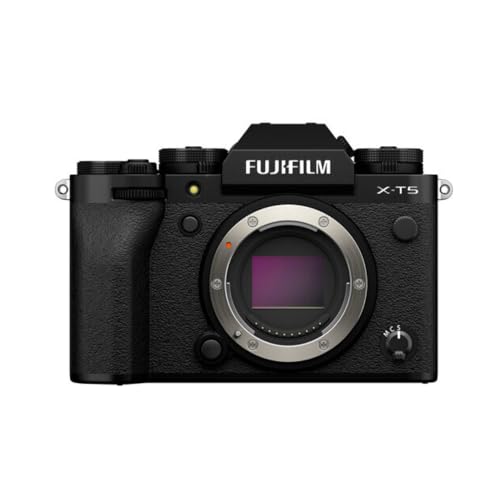
| Fujifilm X-T5 | Best camera to convert for infrared | High resolution, superb live view and a lens system with a strong infrared reputation. |
| Sony Alpha 7 IV | Best full-frame infrared conversion | Full-frame infrared sensitivity and the deepest lens catalogue for hotspot-free choice. |
| Canon EOS R50 | Best value donor for a first conversion | Affordable, light and live-view friendly — the sensible first body to send to a workshop. |
| Nikon Z50 II | Best Nikon donor for conversion | Honest sensor, clear live view and Z-mount lenses for Nikon loyalists converting a body. |
| Canon EOS R6 Mark II | Best converted camera for infrared video and events | Stabilised, fast and sensitive — a converted body that keeps up with moving subjects. |
| Nikon Z30 | Best ultra-compact infrared conversion | A tiny, screen-based body that becomes a pocketable infrared sketchbook after conversion. |
How Did We Choose Cameras for Infrared Conversion?
Sensor behaviour in infrared came first. Once the blocking filter is removed, sensors differ in how evenly they respond across the frame and how cleanly they record the deep reds and near-infrared the new filter admits. We favoured bodies with a reputation among conversion workshops for consistent results — no strange colour casts at the frame edges, no pattern noise that editing cannot forgive.
Live view quality came second, because a converted camera is composed in infrared, not in visible light. A clear, bright electronic viewfinder or screen that shows the infrared scene faithfully — white foliage glowing, skies dark — turns conversion from guesswork into photography. Every pick here composes electronically, which is precisely why mirrorless bodies dominate modern conversion work.
Lens ecosystems were judged on hotspot behaviour. Certain lenses, especially some fast primes and older zooms, produce a bright central hotspot in infrared that ruins frames. Systems with well-documented infrared-friendly lenses — and communities that have catalogued which glass behaves — scored heavily, because a converted body is only as good as the lenses that can be trusted on it.
Finally, donor economics: the ideal candidate is a body whose used price plus conversion still undercuts its photographic value in invisible light, or a current body so capable that converting it new is a deliberate, eyes-open luxury. We label each pick’s donor logic honestly rather than pretending one route suits everyone.

Fujifilm X-T5 — Best camera to convert for infrared
The X-T5 has become a favourite donor among infrared photographers, and the reasons compound. Its high-resolution sensor renders infrared detail — the luminous texture of foliage, the grain of stone — with real bite, its electronic viewfinder shows the converted scene beautifully, and Fujifilm’s lens range includes several primes and zooms documented to behave well in infrared without hotspotting. Converted, it becomes a serious invisible-light instrument rather than a novelty.
- Format: APS-C mirrorless, high resolution
- Viewfinder: bright electronic finder for IR composing
- Controls: tactile dials, customisable profiles
- Mount: Fujifilm X, IR-friendly primes documented
- Build: weather-resistant donor body
The working pleasure is the colour workflow. Fujifilm’s film simulations give converted files — especially from shallower infrared filters that retain false colour — an unusually graceful starting palette, and the body’s custom profiles let a photographer store an infrared white-balance and look as a one-dial decision. For photographers who want conversion to feel like joining a tradition of alternative seeing rather than a laboratory exercise, this is the donor that respects the romance.
Strengths
- Resolution renders IR foliage texture finely
- Lens system well documented for hotspots
- Film simulations flatter false-colour work
Trade-offs
- Converting a current body ends its warranty
- APS-C infrared depth trails full frame slightly
- Popular donor, so workshop queues can be long
Best for: Dedicated infrared photographers wanting a lifetime donor.
Not suited for: Anyone unsure infrared is more than a phase.

Sony Alpha 7 IV — Best full-frame infrared conversion
For maximum infrared authority, convert the full-frame Sony. Its sensor drinks in the near-infrared, delivering the cleanest deep-filter files here — skies that fall to true black, foliage that glows without noise — and the E-mount catalogue is so deep that a hotspot-free lens set can be assembled at almost any budget, from adapted classics to modern primes with documented infrared manners.
- Format: full-frame mirrorless, high resolution
- Live view: excellent finder and screen
- Mount: Sony E, deepest adapted-lens options
- Focus: reliable autofocus after calibration
- Video: infrared video capability for experimenters
This is the donor for the photographer converting a second body as a permanent infrared partner to a visible-light main camera. The shared lenses, batteries and menus across the pair keep the two-camera workflow frictionless, and the converted Sony’s files hold up to the large prints that infrared landscapes invite. It is the most expensive route in this guide and, for the committed, the most defensible.
Strengths
- Cleanest deep-infrared files in this guide
- Enormous hotspot-free lens choice
- Shares system with a visible-light Sony
Trade-offs
- Highest total donor investment here
- Size and weight match its authority
- Overkill for a first infrared experiment
Best for: Committed infrared landscape photographers.
Not suited for: Experimenters testing whether IR suits them.

Canon EOS R50 — Best value donor for a first conversion
The wisest first conversion is rarely the most expensive one. The R50 costs little enough — especially used — that sending it to a workshop feels like an experiment rather than a vow, yet its sensor converts cleanly, its live view composes the infrared scene clearly, and Canon’s RF-S lenses include affordable options that behave respectably in the invisible band. It is the donor that lets a photographer learn whether infrared is their language before funding fluency.
- Format: APS-C mirrorless, compact
- Live view: clear touchscreen composing
- Mount: Canon RF and RF-S lenses
- Weight: light enough for everyday carry
- Controls: guided, beginner-friendly menus
Its size becomes a creative feature after conversion. An infrared camera small enough to carry daily gets used in ordinary places — the park, the street, the garden — where infrared’s strangeness does its best work on familiar subjects. The famous landscapes will come later; the converted R50 teaches the seeing first, which is the correct order, and if the love affair fades, the financial bruise is the gentlest in this guide.
Strengths
- Gentle total cost for a first conversion
- Small enough to carry and use daily
- Clean conversion results from workshops
Trade-offs
- Smaller sensor, less IR depth than full frame
- Entry body lacks weather sealing
- Fewer IR-documented lenses than Sony or Fuji
Best for: First-time converters wanting a low-risk donor.
Not suited for: Print-focused infrared landscape specialists.

Nikon Z50 II — Best Nikon donor for conversion
Nikon photographers converting a body should start here. The Z50 II’s sensor responds evenly in infrared, its live view is bright and truthful, and the growing Z-mount range — plus decades of adaptable Nikon glass with known infrared behaviour — gives the converted body a respectable wardrobe. Nikon’s colour handling of false-colour infrared, in the shallower filter conversions, has a quiet following for its skin rendering.
- Format: APS-C mirrorless
- Live view: bright finder and tilting screen
- Mount: Nikon Z plus adaptable F-mount glass
- Handling: secure grip for walk-around IR
- Video: capable 4K for IR experiments
The donor logic mirrors the Canon’s: sensible used prices, a body modern enough to enjoy daily, and a system future if infrared becomes a specialism. Nikon shooters with an existing lens shelf should inventory it against hotspot knowledge before choosing — the adapted classics in many a Nikon kit include several lenses that infrared photographers prize, which can make this the cheapest credible conversion in the guide for the already-equipped.
Strengths
- Even infrared response, honest files
- Adapted Nikon classics include IR gems
- Comfortable walk-around handling
Trade-offs
- APS-C depth below the full-frame pick
- Z-mount IR documentation still growing
- No in-body stabilisation for slower work
Best for: Nikon-system photographers converting a first body.
Not suited for: Those wanting the deepest IR lens documentation.

Canon EOS R6 Mark II — Best converted camera for infrared video and events
Most converted cameras serve still, deliberate subjects; the R6 Mark II serves motion. Its stabilisation steadies handheld infrared video, its autofocus — recalibrated by the workshop for the infrared focus shift — tracks subjects through the invisible band, and its low-light strength suits the events and performance work where infrared’s eerie rendering of skin and fabric becomes a creative signature rather than a landscape effect.
- Format: full-frame mirrorless
- Stabilisation: strong in-body system
- Focus: workshop-calibrated AF for IR
- Video: high-quality recording in infrared
- Mount: Canon RF system lenses
Choose this donor when infrared is a professional offering — the wedding with an infrared set, the music shoot, the fashion experiment — rather than a private pursuit. Its files are clean, its handling is fast, and clients perceive the results as deliberate artistry. The investment only makes sense once the work exists to justify it, which is why it sits below the gentler donors for most readers despite its capability.
Strengths
- Infrared video with real stabilisation
- Fast handling for events and people
- Clean files at event-light levels
Trade-offs
- Serious money committed to a niche
- RF lenses need hotspot checking
- Professional justification required
Best for: Professionals offering infrared as a service.
Not suited for: Hobbyists exploring the spectrum.

Nikon Z30 — Best ultra-compact infrared conversion
The Z30 converts into something delightful: an infrared camera the size of a paperback, composed entirely on its bright screen, carried everywhere without negotiation. Its sensor converts cleanly, its video roots make it a natural infrared movie sketchbook, and its unobtrusiveness suits street infrared — a genre where the converted camera’s invisibility in use matches its invisible spectrum.
- Format: APS-C mirrorless, very compact
- Composing: bright vari-angle screen
- Mount: Nikon Z lenses
- Video: creator-focused recording tools
- Weight: among the lightest donors here
Accept its terms and it charms: no viewfinder, so bright-day composing is a screen-shading exercise; a small battery, so carry two. In exchange, the converted Z30 is the infrared camera most likely to be present for the unrepeatable frame — the fog lifting off the river at dawn, the fairground at dusk — and presence, in infrared as in visible light, is the first virtue. A sketchbook donor, proudly.
Strengths
- Pocketable converted camera for daily carry
- Screen composing suits video and street
- Gentle donor cost, especially used
Trade-offs
- No viewfinder for bright conditions
- Small battery limits long sessions
- Not a print-first infrared tool
Best for: Everyday-carry infrared sketching and street work.
Not suited for: Viewfinder traditionalists and print specialists.
What Actually Happens Inside a Conversion?
A reputable workshop opens the body, removes the hot mirror — the filter stack that normally blocks infrared and ultraviolet — and installs a replacement filter passing the band you chose. The sensor’s focus plane shifts subtly because infrared light refracts differently, so the service recalibrates autofocus for the new spectrum; this calibration, done properly, is the difference between a converted camera and a merely modified one, and it is the strongest argument for the professional route this guide recommends.
After conversion the camera is an infrared instrument full-time. Visible-light photography through it requires corrective filtration on the lens and is a compromise at best, which is why donors are usually second bodies or dedicated purchases. The workshop also cleans the sensor cavity and tests the body, and good services warranty their workmanship — ask, in writing, what is covered before the body ships.
How Do You Choose a Filter Wavelength?
In workshop language the choice is expressed in nanometres: the wavelength above which light passes. Shallower conversions, around the deep-red boundary, admit some visible red alongside infrared and produce false-colour images — blue skies swapped from red foliage, surreal but colourful. Deeper conversions pass only infrared and render the classic monochrome world of white leaves and black skies, with colour work reduced to toning.
Choose by the photographs you admire. If your saved infrared images glow with exchanged colour, choose shallow; if they are stark black-and-white dreamscapes, choose deep. The in-between options split the difference and satisfy fewer people than either pole. This decision outranks every camera choice in this guide, and the workshop will — if it is a good one — talk you through it with sample galleries before taking your money.
Full-Spectrum Conversion: The Flexible Alternative
A full-spectrum conversion removes the blocking filter and installs clear glass, letting the sensor see ultraviolet, visible and infrared alike; filters on the lens then choose the band for each outing. It is the flexible route — one body, many spectra — at the cost of carrying and changing filters, composing through filtration for some bands, and never quite matching a dedicated conversion’s convenience for a single chosen band.
Photographers who experiment broadly, including ultraviolet work, should consider it seriously; photographers who know they love one infrared look should convert dedicated and enjoy the walk-around freedom. Several donors in this guide full-spectrum beautifully, and the R50’s gentle price makes it a forgiving full-spectrum first body. Flexibility versus purity is a temperament question, and honest self-knowledge answers it better than any ranking.
Which Lenses Behave in Infrared?
The hotspot — a bright, often coloured blob at the frame’s centre, worsening at small apertures — is infrared’s lens tax, caused by internal coatings and reflections behaving differently in the invisible band. It afflicts some celebrated lenses and spares some humble ones, with no visible-light logic to predict it, which is why the converted community’s lens lists are treasure. Before converting, inventory your lenses against those lists for your chosen system.
General tendencies help at the margins: simpler optical designs and older primes often behave; complex zooms at their extremes are riskier; and shooting at moderate apertures reduces many mild hotspots to invisibility. The Sony and Fujifilm ecosystems score in this guide partly because their infrared lens knowledge is deepest — a converted body with three trusted lenses is a system, and one with none is a paperweight with potential.
How Does Infrared Focus Shift Affect Shooting?
Infrared light focuses at a slightly different plane than visible light — the reason old lenses carry a red infrared index mark. In a professionally converted mirrorless body, the workshop calibrates the autofocus for the new band and live view shows the actual infrared image, so focus is simply accurate: one of conversion’s decisive advantages over the screw-on filter method, where focus must be estimated or shifted by rule of thumb.
Lenses still vary in how consistently they hold that calibration across their range, and adapted manual lenses should be focused by the live image, never by the distance scale. Stop down modestly for critical work until a lens’s infrared manners are known from your own tests — a converted camera rewards a week of methodical lens-checking with years of confidence.
How Do You Expose and White-Balance Infrared?
The meter lies cheerfully in infrared, because the spectrum it was designed for is not the one being recorded. Shoot raw, expose by the histogram — watching the red channel, which carries most infrared information — and expect to bracket more than visible-light habits suggest. Foliage in sun records far brighter than it looks; skies far darker. A few test frames at each new location calibrate the eye faster than any rule.
White balance is infrared’s creative control. Set a custom balance from sunlit foliage or grass and the false colours organise themselves — skies toward blue after a channel swap, foliage toward white or gold. The converted Fujifilm’s stored profiles make this a dial-turn; on other bodies it is a menu visit worth ritualising at the start of every shoot, because editing cannot fully rescue a careless infrared balance.
What Subjects Reward Infrared Most?
Landscapes with living foliage are the classic: grass, leaves and conifers return infrared brilliantly, so summer countryside, gardens and parkland transform most completely. Water and sky absorb infrared and fall dark, giving coastal and lakeside scenes their dramatic black horizons. Old stone, weathered wood and ruins hold a luminous gravity that suits the spectrum’s dreamlike register.
People are the connoisseur’s subject. Skin in infrared smooths and glows, eyes darken mysteriously, and fabrics betray their dyes — black cloth is rarely black in infrared. Portraits from the converted R6 Mark II or Sony carry an otherworldly beauty that clients either adore or fear, with little middle ground, which is why the professional should show samples before booking the infrared set, not after.
How Do You Process Infrared Files?
Begin with white balance, set in the raw converter from a foliage or neutral reference, then — for false-colour work — swap the red and blue channels to restore blue skies while keeping foliage luminous. Monochrome conversions from deep filters are simpler and often stronger: the file’s drama is tonal, and gentle contrast shaping beats elaborate technique. Infrared rewards restraint in clarity and saturation, which push its delicate tonal separations into grit quickly.
Build a personal preset library slowly. Each donor and filter pairing has its own colour signature, and the presets that flatter your converted Fujifilm will insult your converted Sony. Process the first hundred frames by hand, note what the spectrum keeps asking for, and only then automate — infrared editing is a palate to develop, not a filter to download.
What Should You Ask a Conversion Service?
Ask which filters they install and whether they will show sample galleries per filter; how they recalibrate autofocus and whether live view and sensor AF agree after their work; what workmanship warranty they give; and how they handle a body that arrives with existing faults. Ask also about turnaround honestly, because popular workshops queue for weeks and a promised fortnight that becomes two months sours the whole adventure.
Ship the body as the service instructs, insured, with the battery and card removed, and keep the serial number recorded. On its return, test methodically: focus at several distances, every lens for hotspots, the frame edges for evenness. A good conversion announces itself in that first afternoon — the world through the finder, suddenly and permanently strange.
How Much Does the Conversion Route Cost in Total?
Honestly accounted: the donor body, the conversion service with your chosen filter, insured shipping both ways, and usually one or two lenses verified for infrared behaviour. The R50 and Z30 routes keep that total within experiment territory; the full-frame routes are commitments. Compare the sum against the alternative — years of tripod-bound filter photography — and conversion usually wins on cost per photograph actually taken.
Resist converting a body you cannot afford to lose to the spectrum. The healthiest infrared kit is a converted second body beside an untouched main camera, which is why this guide’s donor logic favours used bodies and gentle prices for all but the professionally committed.
Can Converted Cameras Shoot Video?
Yes, and infrared video has a hypnotic quality — foliage shimmering white, skies black at noon — that a few filmmakers cultivate deliberately. The stabilised R6 Mark II and the screen-friendly Z30 lead this guide’s picks for moving infrared. Exposure discipline matters more in video, since bracketing is impossible: learn the donor’s infrared metering personality in stills first, then trust it with motion.
Rolling shutter and heat behave as they do in visible work; nothing about the spectrum changes those physics. What changes is the audience: infrared footage reads as dream, memory or surveillance depending on context, and directors have used all three registers. It remains a spice rather than a staple for most, which is the correct proportion.
How Do You Care for a Converted Camera?
As carefully as for any body, with one addition: the replacement filter over the sensor is now a specialist component, so sensor cleaning belongs to the careful or the professional. Use a blower first, wet-clean only with confidence and the right swabs, and mention the conversion to any repairer before they open the body — a standard service can innocently reinstall visible-light filtration assumptions.
Dust shows cruelly in infrared, because the small apertures landscape work favours render every spot. Keep the body capped, change lenses sheltered, and check the sky areas of test frames monthly. The converted camera is a lifetime instrument if treated as one; workshops report donors still shooting decades after conversion.
Infrared Through the Seasons
Summer is infrared’s high season: foliage at maximum reflectivity, long bright days, cumulus skies that print black behind white trees. Spring offers fresh leaves with a particular delicacy, and the first strong infrared days feel like the world being reintroduced. Autumn surprises newcomers — coloured leaves vary wildly in infrared, some glowing, some dull, according to species rather than visible colour.
Winter is the austere season: bare branches, low sun, snow that reflects infrared almost as brightly as foliage. The resulting images are graphic and minimal, and the converted camera’s walk-around freedom matters most when the light is brief. Photographers who persist through winter own an infrared portfolio with a range the summer-only shooters never approach.
What Are the Alternatives to Converting?
The screw-on infrared filter on an unconverted camera is the honest alternative: inexpensive, reversible, and demanding — long exposures on a tripod, composing blind or by live view at crawling refresh, focus estimated. It suits the curious testing the water and the patient tripod landscaper. This guide’s companion approach covers assembling that kind of kit, and many infrared photographers began there before committing a body.
Digital simulation — processing visible images toward an infrared look — fools no one who knows the spectrum, because the tonal relationships of real infrared cannot be derived from visible information. It can be attractive in its own right, but it is a different art wearing infrared’s clothes, and photographers who crave the real seeing should budget for the real conversion.
How Do You Build an Infrared Portfolio?
Shoot the same beloved places in both spectra. A portfolio pairing visible and infrared versions of one valley, one garden, one face teaches the photographer — and shows an audience — what the spectrum actually reveals rather than merely how it decorates. Conversion’s novelty fades within a month; what remains is a second way of seeing your own world, and the portfolio should be built as that record.
Print infrared large and often. The spectrum’s tonal smoothness and luminous foliage reward scale, and a printed infrared landscape has a physical presence that screens flatten. The high-resolution donors in this guide were ranked with that destination in mind.
One Last Word on Commitment
Converting a camera is a small act of faith: that the invisible world beside this one is worth a body’s whole future. The photographers who thrive after conversion are those who shoot infrared weekly, in ordinary places, until the spectrum’s grammar becomes instinct — foliage as light, sky as depth, skin as glow. Choose the donor that you will actually carry, the filter that matches the images already in your head, and a workshop whose calibration you can trust. The strange world is waiting, permanently, on the other side of that decision.
How Do You Choose Between Conversion and a Full-Spectrum Body with Filters?
Decide by counting your spectra. The photographer who will shoot one infrared band ninety percent of the time should convert dedicated: no filters to carry, no composing compromises, autofocus calibrated to the chosen band, and a camera that wakes up already seeing in infrared. The photographer genuinely divided between two bands — or between infrared and ultraviolet — should full-spectrum convert and accept the filter discipline, because two dedicated conversions cost two bodies and the second one rarely leaves the shelf.
Temperament audits help. Filter shooting is a ritual of screwing, unscrewing and composing through darkness for some bands; dedicated conversion is a vow. Photographers who love ritual own filter kits happily for decades, while photographers who love walking and seeing find the ritual eats the seeing. This guide’s service route exists for the second temperament, and its companion DIY route for the first — neither is the senior discipline, whatever their partisans claim.
What Happens to Resale Value After Conversion?
A converted body leaves the general market and enters a smaller, keener one. To a general buyer it is worth less than the unconverted body; to an infrared photographer it is worth the body plus most of the conversion’s value, because the work is done, warranted and tested. Converted examples of respected donors — the Fujifilm and Sony in this guide especially — change hands within the community readily, often advertised with sample images proving the conversion’s quality.
The practical consequence is liberating rather than alarming: since resale is community-shaped, choose the donor the community respects and keep the conversion paperwork, the before-and-after test frames and the workshop’s documentation. A converted body with a paper trail is an instrument with provenance; one without is a mystery with a sensor. Buy used donors, convert well, document everything, and the economics behave.
How Do You Test a Converted Camera in Its First Week?
Systematically, before the first beloved subject. Day one: focus accuracy at several distances with the primary lens, checked at full magnification. Day two: every lens against a plain bright sky and a foliage wall, hunting hotspots at the apertures you actually use. Day three: frame evenness — a flat, evenly lit subject exposed carefully, examined for edge casts that betray an imperfectly seated filter. Day four: the white-balance ritual, stored and rehearsed until it is reflex.
Keep the test frames forever, labelled. They are the baseline against which every later suspicion — a new lens, a knock, a repair — is judged, and they are the evidence a workshop needs if something is genuinely wrong within its warranty. A week of tests feels like a delay; it is actually the moment the modified camera becomes your camera, with manners you know rather than manners you hope for.
Infrared Portraits: What Should You Tell the Sitter?
That the photograph will not look like them as mirrors know them — and that this is the point. Skin smooths and luminises, veins and freckles may surface or vanish unpredictably, eyes go dark and fathomless, and some fabrics betray entirely different tones than their visible colour suggests. Show samples before the sitting, especially the eye effect, because an unprepared sitter can feel ambushed by a portrait that strangers find beautiful.
Wardrobe and makeup behave strangely and should be tested: many black fabrics photograph pale, some cosmetics contain pigments that turn ghostly or sooty, and lipstick can vanish or blacken depending on its chemistry. The converted R6 Mark II’s event pace suits portrait sessions where several looks are tested quickly; the wise infrared portraitist shoots a visible-light safety set alongside, until the sitter’s trust in the spectrum is earned by results.
How Does Infrared Change Landscape Composition?
It inverts the landscape’s tonal contract. The sky, landscape photography’s usual bright crown, becomes the darkest element; foliage, usually mid-tone texture, becomes the light source. Compositions built for visible light — bright sky over dark land — collapse, and new ones emerge: black skies need graphic clouds or none, white woodland needs dark water or stone to anchor it, and reflections in still water double a world already doubled in strangeness.
Work the spectrum’s gifts deliberately. Side-light makes foliage model itself in luminous relief; backlight turns leaves translucent in a way visible light only hints at; midday — visible landscape’s dead hour — becomes infrared’s prime time, because the sun’s infrared output peaks with its height. The converted photographer keeps summer hours that would scandalise a visible-light landscaper, and the portfolio shows the advantage.
What Should You Know About Infrared and the Law of Places?
Nothing about the spectrum changes the ordinary law of photography — permissions, privacy and property rules apply identically — but infrared’s reputation occasionally precedes it. The spectrum these conversions use is near-infrared, the glow just beyond red light; it does not see through clothing or walls, whatever fiction suggests, and photographers working in public sometimes find a sentence of explanation useful when a stranger asks what the strange camera does.
Answer plainly and show the screen: a white tree disarms suspicion faster than any lecture. Converted cameras attract the curious rather than the hostile, on the whole, and many infrared photographers treat the explanation as part of the practice’s pleasure — the spectrum recruits its admirers one pavement conversation at a time.
How Do Workshops Differ, and Why Does Calibration Quality Vary?
Because conversion is surgery plus metrology, and workshops invest differently in the second half. The physical filter swap is within any careful technician’s reach; the autofocus recalibration across the focus range, the verification of live-view agreement, the frame-evenness testing and the sealing of the cavity against dust are where reputations are earned. Price differences between services usually map to that verification depth, which is why the cheapest conversion is often the most expensive one over the body’s life.
Ask candidate workshops for their test protocol in writing and read the answer’s specificity as the quality signal. A service that describes its calibration targets and its final checks has them; a service that answers with adjectives has marketing. The donor bodies in this guide deserve the first kind, and the community’s forums name names with a candour that should be consulted before any parcel is posted.
Ultraviolet and Other Spectra: A Brief Orientation
Infrared conversion sits within a family of invisible-light practices. Ultraviolet photography records the band beyond violet, revealing patterns on flowers that pollinators navigate by, and it demands its own filtration and lens care; full-spectrum bodies serve it with the right lens filters, which is one honest argument for the flexible route. Thermal imaging, often confused with infrared photography in conversation, is a different technology entirely, sensing emitted heat at wavelengths no converted stills camera approaches.
Knowing the map prevents expensive confusion when ordering a conversion: specify near-infrared, name the filter band, and confirm the workshop understands the commission as photography rather than thermography. The donors in this guide are near-infrared instruments after conversion, and everything in these pages — foliage, skies, skin — describes that band’s particular world.
How Do You Photograph Architecture in Infrared?
Stone and brick hold infrared with a gravitas that suits ruins, churches and old industrial buildings especially well. The spectrum strips the sky to black behind pale masonry, makes ivy and climbing plants erupt in white over dark walls, and gives weathered timber a silvered dignity. Compose for the tonal drama rather than the detail: strong silhouettes, the building against its black sky, vegetation treated as a second architecture growing over the first.
Watch the modern intrusions, which infrared betrays oddly — some paints and plastics render at unexpected tones, and a restored roof can photograph a different shade from the original beside it. For documentary purposes that honesty is information; for pictorial purposes it is a reason to scout the building in the spectrum before committing the session, one more entry in the converted photographer’s habit of testing before trusting.
What Community Resources Should a New Converter Join?
The converted community is unusually generous, because everyone in it once faced the same irreversible decision. Its lens databases, filter galleries and workshop reviews are the practical library this guide keeps referencing, and its critique culture — photographers posting unretouched converted frames with full technical notes — teaches faster than any manual. Join before converting, not after: the month spent reading other people’s donor decisions is the cheapest research in the entire process.
Bring your test frames when you arrive. A new converter who posts their first week’s systematic results, hotspots and all, gets better advice in a day than a season of solitary guessing provides, and repays the library with data the next beginner will use. Infrared is a small world that behaves like a village; arrive as a neighbour.
A Note on Patience After Conversion
The first month with a converted camera contains a predictable disappointment: the spectrum’s novelty stops surprising, and the photographs must stand as photographs. Sitters who last through that month discover the deeper pleasure — a second visual grammar learned to fluency, in which familiar places become permanently double, seen in two spectra at once by the mind’s eye. That double vision, not the white trees, is what the conversion actually bought.
Give the donor a full year of seasons before judging the decision, as this guide advises for the portfolio. Infrared in February and infrared in July are different arts sharing one camera, and the body you converted deserves to be met in all of them.
How Should You Insure and Document a Converted Body?
Tell the insurer what the camera now is. A converted body insured as a standard model invites a disputed claim, because its value and its repair path are both specialist; declared honestly, with the workshop invoice attached, it insures as the instrument it has become. Photograph the body, record the serial and the filter specification, and store the conversion certificate with the household documents rather than the camera bag.
The same paperwork serves the eventual sale, the workshop warranty and the repairer who may open the body years from now. Conversion creates a camera with a biography; keep its papers like one.
One More Consideration: The Second Body Rule
Restated once, because it decides more conversions than any specification: convert the body you can spare. The photographer with one camera and a curiosity should shoot filters for a season first; the photographer with two bodies and a conviction should convert the second and never look back. Every donor in this guide shines brightest under that rule.
In Short
Filter first, donor second, workshop always: hold that order and the conversion will reward you for the whole of the body long converted life ahead.
How Do the Six Conversion Donors Compare?
| Pick | Badge | Standout trait | Watch out for |
|---|---|---|---|
| Fujifilm X-T5 | Best camera to convert for infrared | Donor reputation and IR-friendly glass | Warranty ends the day it converts |
| Sony Alpha 7 IV | Best full-frame infrared conversion | Full-frame infrared cleanliness | The premium donor route |
| Canon EOS R50 | Best value donor for a first conversion | Lowest-risk route into conversion | Depth and sealing are entry-level |
| Nikon Z50 II | Best Nikon donor for conversion | Natural donor for Nikon loyalists | Lens IR knowledge still accumulating |
| Canon EOS R6 Mark II | Best converted camera for infrared video and events | Motion-capable converted body | Justified only by paid IR work |
| Nikon Z30 | Best ultra-compact infrared conversion | Infrared that fits a jacket pocket | Screen-only composing in bright sun |
How Do You Commission a Conversion, Step by Step?
Decide the filter before the body
Choose the wavelength by the photographs you want — false colour or deep monochrome — because the filter defines the work and cannot be changed without a second conversion. Sample galleries from workshops settle this better than specifications.
Choose and test the donor
Buy the body, shoot it in visible light for a week, and confirm it is healthy before conversion. A fault discovered after conversion belongs to nobody’s warranty, so the pre-conversion health check is the cheapest insurance in the whole process.
Inventory your lenses for hotspots
Check every lens you plan to use against the converted community’s lists, and mark the trusted ones. The converted body deserves to come home to lenses that will not betray it with a glowing centre.
Ship insured, with records
Photograph the body and its serial number, follow the workshop’s packing instructions, and insure the parcel both ways. Keep the conversion paperwork with the camera’s documents permanently — it is part of the body’s identity now.
Test methodically on return
Focus checks at several distances, a hotspot test per lens against plain sky or foliage, frame-edge evenness, and a custom white balance stored. One disciplined afternoon converts a modified camera into a trusted instrument.
What Mistakes Do New Infrared Photographers Make?
Converting the only camera they own
Infrared is a second language, not a replacement tongue. Convert a second or used body and keep a visible-light camera untouched, or the first family event after conversion becomes a regret.
Choosing the filter by fashion
The wavelength decides the photographs for the body’s whole converted life. Choose by the images you personally love, not by the forum’s current favourite, and ask the workshop for galleries before deciding.
Assuming every lens behaves
Hotspots ambush the unprepared on their best day’s best frame. Test lenses against plain subjects first, mark the offenders, and never take an untested lens to an unrepeatable scene.
Metering as if nothing changed
The meter was designed for visible light and guesses in infrared. Shoot raw, read the histogram’s red channel, and bracket until your eye learns the spectrum’s brightness logic.
Expecting the novelty to sustain the work
White trees amaze for a month. Photographers who last in infrared build subjects and projects — the same garden across seasons, a portrait series — that use the spectrum as a language rather than a trick.
Final Recommendation
For most photographers ready to commit, the Fujifilm X-T5 is the conversion to commission: a superb donor, a kind lens ecosystem, and files that flatter both false-colour and monochrome work. Full-frame devotees should convert the Sony Alpha 7 IV, the cautious should convert the Canon EOS R50 or Nikon Z30 and learn the spectrum gently, and Nikon loyalists have an honest home in the Z50 II.
Whichever donor you choose, choose the filter first, the workshop carefully, and the lenses by evidence. Conversion done properly turns a camera into a permanent second sight — and the photographers who take the decision seriously are rewarded with a world their neighbours walk through daily without ever seeing.
Related guides
Frequently Asked Questions
Is camera conversion permanent?
Effectively yes. A second conversion can change the installed filter, but returning a body to factory visible-light specification is rarely practical or worthwhile. Treat the decision as giving the body a new, lifelong specialism, and choose the donor accordingly.
Will conversion void my camera’s warranty?
Yes, manufacturer warranty should be assumed void once a third-party workshop opens the body, which is why used bodies make such sensible donors. Reputable conversion services warranty their own workmanship — confirm the terms in writing before shipping.
Which filter wavelength should a beginner choose?
The one matching the images you love: shallower filters for false-colour work with blue skies after a channel swap, deeper filters for stark black-and-white. Beginners who cannot decide often thrive with a mid-shallow choice that keeps some colour play while foliage still glows.
Can a converted camera focus accurately?
Yes — that is the professional service’s core value. The workshop recalibrates autofocus for infrared’s different focus plane, and live view shows the true infrared image, so converted mirrorless bodies focus as confidently as they did in visible light.
Do all lenses work for infrared?
No. Some produce a central hotspot, especially at small apertures. Community lens lists per system are reliable guides; test your own lenses against plain sky and foliage after conversion and mark which ones to trust.
Converted camera or screw-on filter — which is better?
Conversion wins on speed, composing and focus: handheld shooting in live infrared view. The filter wins on price and reversibility. This guide covers the service conversion route; the filter-and-kit route suits experimenters and is covered by our companion guide.
Related Guides
Continue into invisible-light technique with our guides on HDR work and landscape craft. best cameras for ir conversion best cameras for hdr photography best cameras for landscape and portraits


