ilcastellomenu.com is reader-supported. When you buy through links on our site, we may earn an affiliate commission.
Where to Buy
People and animals share one photographic trait: neither will pose for your settings. The best cameras for shooting people and animals are therefore the cameras that do the noticing for you — finding a grandchild’s eye through a birthday crowd, holding a spaniel’s gaze as it quarters a wet field, keeping a heron’s head honest in the half-second before it strikes. This guide covers both stills and video under one keyword because the modern truth is one body doing both, and because the skill that unites them is not resolution. It is recognition.
Subject detection has quietly become the defining technology of this category. A camera that knows the difference between a human eye, a dog’s eye and a bird in flight — and moves its focus there before your thumb finishes waking up — changes what an ordinary owner can bring home. Portraits stop being negotiations with a focus point; wildlife stops being a lottery played at a distance; the family dog’s one great leap for the ball becomes a picture instead of a story about a picture.
The six cameras below were ranked on that recognition, and on the supporting cast it needs: burst speeds that respect a gallop, buffers that survive it, lenses that reach across a field or flatter a face, and low-light manners for the indoor hours when family life actually happens. They range from full-frame flagships to a premium compact and a pocketable fixed-lens favourite — because the best camera for a person or an animal is always, in the end, the one that was there.
Amazon links for all six sit in the Quick Picks table and beside each detailed review. Read the ethics note in the mistakes section before taking any of them to wildlife: the animal’s welfare outranks every photograph, and the best of these cameras — with their reach and their silent modes — exist partly so that you never need to get too close.
Key Takeaways
- The Canon EOS R6 Mark II leads for people and animals combined: its subject detection finds human and animal eyes with equal conviction.
- Sony’s Alpha 7 IV brings the deepest lens shelf for both portrait glass and serious telephoto reach.
- The Nikon Z50 II is the value athlete — bird and animal detection in a body priced for real families.
- Fujifilm’s X100VI is the people’s camera: a fixed lens that makes candid human moments feel like film stills.
- The OM SYSTEM OM-5 Mark II is the walker’s wildlife camera, with reach multiplied by its small-format system.
- The Sony RX100 VII puts a real telephoto zoom and real tracking in a jacket pocket.
In this guide
Quick Picks
| Camera | Badge | Why it earns its place |
|---|---|---|
| Canon EOS R6 Mark II | Best for people and animals | Detection for faces and animals, colour people love, speed for both. |
| Sony Alpha 7 IV | Best system to grow | Portrait and telephoto lenses at every price, tracking you can trust. |
| Nikon Z50 II | Best value athlete | Bird, animal and people detection in an affordable, eager body. |
| Fujifilm X100VI | Best for candid people | A beloved fixed lens and film colour for everyday human moments. |
| OM SYSTEM OM-5 Mark II | Best walking wildlife kit | Compact telephoto reach and weather sealing for the trail. |
| Sony RX100 VII | Best pocket reach | A genuine zoom and flagship-bred tracking in a compact body. |
How Did We Choose Cameras for People and Animals?
Recognition came first, tested the way owners actually shoot: a child crossing a room toward the camera, a dog changing direction mid-fetch, a bird leaving a branch without a press release. We favoured systems whose detection finds the eye — human, animal or bird — and stays with it through turns, partial occlusion and the chaos of other faces nearby, because a portrait with the ear in focus is a near-miss wearing a costume.
Speed and stamina followed. Animals move in bursts and so must cameras: frame rates that freeze a gallop, buffers that do not stall during the one sequence that matters, and shutters — electronic and silent where offered — that let you work near nervous wildlife or sleeping babies without becoming part of the event. We also weighed how each body behaves at the ends of the day: high-sensitivity files for the living room at night, weather sealing for the field in the morning.
Finally, the glass and the carrying. People photography is written by portrait lenses — their rendering, their background manners — while animal photography is written by reach. We favoured mounts that supply both at prices humans pay, in sizes humans carry, because a wildlife lens left at home for its weight photographs nothing at all.
Why Does Eye Detection Change Everything for Both Subjects?
Because eyes are where viewers look, and focus is a promise about where sharpness lives. Before detection, photographing a running dog meant choosing a focus point, panning hopefully and accepting a harvest of almosts; photographing a group of grandchildren meant stopping down and praying to depth of field. Eye detection converts both into crafts: the camera performs the vigilance, the photographer returns to timing, composition and the moment’s meaning.
The technology’s subtleties separate the six here. The best systems let you nominate the subject type — people for the wedding, animals for the field, birds for the marsh — hand over left or right eye preference, and recover the subject after it passes behind a tree, a sibling or another dog. Lesser systems hunt, hesitate or fall in love with the nearest fence post. In a category defined by unrepeatable seconds, those hesitations are the whole review.
There is a creative dividend as well. When focus stops consuming your attention, you begin to see expression, gesture and the spaces between subjects — the actual content of people and animal photography. The cameras below are ranked, in part, by how much of your mind they hand back to you.
What Are the Best Cameras for Shooting People and Animals?
Two full-frame all-rounders, a keen APS-C athlete, a fixed-lens romantic, a trail-ready system and a pocket zoom — six answers to one problem: subjects with their own agendas.

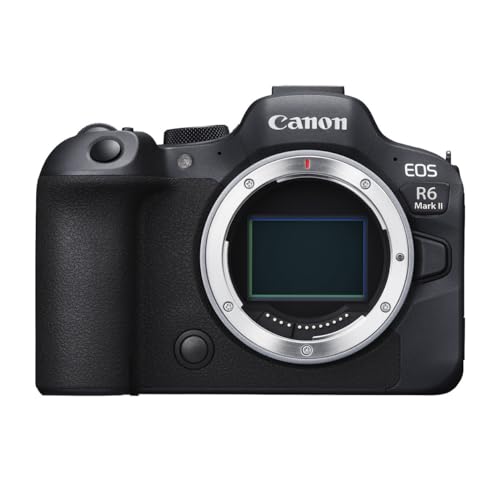
Canon EOS R6 Mark II — Best for people and animals
Ask this camera to follow a toddler at a birthday party and then, an hour later, the family dog demolishing a field, and it treats both assignments as the same job done well. Canon’s detection distinguishes people, animals and vehicles with a confidence that borders on collegial: nominate the subject, and focus goes to the eye and behaves as if it understands the stakes. In a category built on near-misses, that understanding is the product.
The portraits it makes explain Canon’s following. Skin tones arrive warm and separated, the colour of a face in mixed party light stays human, and Dual Pixel focus transitions — for the video of the same moments — glide rather than jump. Its burst speed and buffer suit the dog’s leap and the bird’s departure alike, and in-body stabilisation steadies the long lens at dusk when the animals are most themselves and the light is least cooperative.
Its honest limits are a flagship’s usual ones: the investment is real, the longest RF telephotos are serious purchases, and rolling shutter asks for a steady hand in the fastest electronic pans. Against that stands a simple claim: for the combined brief of this keyword — people and animals, stills and video, home and field — no body here covers more of the map with fewer apologies.
- Format: full-frame mirrorless, RF mount
- Detection: people, animals and more, eye-priority
- Colour: class-leading skin rendering
- Speed: fast bursts with a working buffer
- Stabilisation: in-body for long lenses
Strengths
- Detection that treats pets as first-class subjects
- Faces rendered the way families hope
- One body for the party and the field
Trade-offs
- Flagship investment, lenses included
- Long RF glass is a serious shelf
- Electronic shutter needs pan discipline
A christening that ends in the garden, with the baby passed between generations while the dog performs for scraps, is its home fixture: forty keepers, every eye honest, the video of the toast unshaken. Cameras are remembered by the days they save, and this one saves the days that cannot be restaged.
Grandparents deserve a specific mention in its ledger. The detection’s confidence means a non-technical owner can be handed this body at a family gathering and return keepers — the camera carries the expertise, the human carries the love, and the division of labour is exactly right.
Best for: families, pet owners and all-round shooters. Not suited for: buyers wanting the smallest or cheapest route

Sony Alpha 7 IV — Best system to grow
The Alpha 7 IV’s argument for this keyword is breadth with proof. Its real-time eye autofocus — for people and for animals, with birds served by the same tracking intelligence — has been validated on more weddings, shelters, sidelines and safaris than any system here can claim, and the E-mount behind it holds portrait primes and telephoto zooms at every rung of the price ladder, from the keen amateur’s first fast lens to the professional’s white telephoto.
That ladder matters because people-and-animals photography is really two hobbies sharing a body. The portrait hobby wants rendering and background manners; the animal hobby wants reach and speed; the A7 IV lets an owner climb either ladder, or both in alternation, without changing systems. Its files grade gracefully, its low-light work suits the indoor family hours, and its hybrid video keeps the school play and the puppy’s first snow in the same archive.
The caveats are known quantities: menus that reward an evening of configuration, thermal care on the longest video records, and a size that grows with the telephoto ambitions it encourages. For the shooter who suspects this hobby will deepen — and it usually does, somewhere between the first sharp dog portrait and the first dawn at the marsh — this is the system that will not need replacing when it does.
- Format: full-frame mirrorless, E-mount
- Detection: people and animal eye autofocus
- Lenses: deepest portrait and telephoto catalogue
- Files: grading depth for portraits
- Hybrid: video for family events
Strengths
- A lens answer for every ambition
- Tracking proven in professional hands
- Grows from family camera to field system
Trade-offs
- Menu depth before it feels personal
- Telephoto dreams get heavy and costly
- Long video records need thermal respect
An animal shelter’s adoption portraits show its social value plainly: a volunteer with this system produces the bright-eyed, honest portraits that get dogs rehomed, week after week, in a kennel’s dreadful light. Equipment that serves that outcome has passed a test no laboratory offers.
Second-hand depth strengthens its case over time. Because the system is vast, yesterday’s professional lenses circulate at family prices, letting a patient buyer assemble a portrait and wildlife shelf that would be unaffordable new — an ecosystem dividend no specification sheet advertises.
Best for: growing enthusiasts, portraitists and wildlife aspirants. Not suited for: minimalists who want one lens and no decisions

Nikon Z50 II — Best value athlete
Nikon aimed this body at the exact centre of this keyword and priced it like it wants families to succeed. The Z50 II carries subject detection for people, animals and birds — the full trio, not a trimmed menu — in an APS-C body whose crop factor quietly multiplies telephoto reach, so the lens that frames the dog across the garden reaches the heron across the pond with the same glass. For wildlife-curious households, that arithmetic is the difference between a hobby and a screensaver.
Its manners suit the sideline and the school hall equally: eager bursts for the goal and the gallop, a bright, clear viewfinder, controls that a teenager can master in a weekend, and Nikon’s colour, which treats faces with a straightforward honesty many families prefer to more theatrical renderings. Video for the family archive is built in rather than bolted on, and the Z mount’s growing shelf of compact lenses keeps the kit bag light enough to actually travel.
The APS-C ceiling is the honest toll: the darkest halls will ask more of it than of the full-frame pair above, and the professional telephoto shelf, while real, is not Sony’s. Neither matters to the household that wants sharp eyes on its people and its animals this year, at a price that leaves room for the lens that makes the difference.
- Format: APS-C mirrorless, Z mount
- Detection: people, animal and bird modes
- Reach: crop multiplies telephoto value
- Speed: eager bursts for sport and pets
- Handling: friendly for younger photographers
Strengths
- The full detection trio at a family price
- Telephoto reach on a budget
- Light kit, high keeper rate
Trade-offs
- APS-C limits in the darkest venues
- Lens shelf still maturing
- No in-body stabilisation
A Saturday of junior football followed by an afternoon at the nature reserve is its design brief made visible: same body, same battery, sharp eyes at both ends of the day. Few cameras at any price narrate a family’s weekend that completely.
School photographers should note its manners with consent and chaos alike: quick enough for the assembly’s award moment, discreet enough for the classroom visit, and priced so that a department can own two — the spare body being the oldest professional trick in the book.
Best for: families, sidelines and budding wildlife shooters. Not suited for: professionals needing full-frame low-light depth

Fujifilm X100VI — Best for candid people
Some cameras are invited into moments; others are tolerated. The X100VI is invited. Its fixed lens sits at the classic documentary distance — close enough for intimacy, wide enough for context — and its leaf-quiet, unobtrusive presence lets family life continue around it unperformed. The portraits it makes are not posed; they are witnessed, rendered in Fujifilm’s film simulations with a colour memory that makes an ordinary Tuesday look like a still from the family’s own movie.
In-body stabilisation and a fast lens keep it working in the evening rooms where people are most themselves, the hybrid viewfinder serves photographers who think in frames, and its people detection, while less heralded than the flagships’, keeps faces honest as they turn and laugh. It is also, not trivially, the camera in this guide most likely to be carried daily — and daily carriage is the highest photographic specification there is.
Its limits are a manifesto rather than a flaw: the lens does not zoom, so animals at any distance are beyond its ministry, and its video is a supporting act. Buy it for the humans — the grandparents, the newborn, the street’s passing theatre — and accept that the dog at the far end of the field belongs to another pick’s parish.
- Format: APS-C compact, fixed lens
- Look: film simulations with beloved colour
- Presence: discreet, leaf-quiet, invited everywhere
- Stabilisation: in-body for evening rooms
- Carry: the daily-carry champion here
Strengths
- Candid people photography of rare charm
- Colour that makes memories look remembered
- Carried daily, therefore present for life
Trade-offs
- Fixed lens — no wildlife reach at all
- Video is a supporting feature
- Demand often outruns supply
A grandparent with this camera produces the family archive everyone else wishes they had: unposed, warm, continuous across years. The lesson generalises — for people, presence beats versatility, and no camera here is more present.
Its built-in flash, unfashionable and wonderful, fills a face at a dinner table without a modifier in sight — the snapshot’s oldest trick, kept alive in a serious camera. Families run on such moments, and this body refuses to be too proud for them.
Best for: candid people, family documentary and street life. Not suited for: animals at distance or zoom-dependent shooting

OM SYSTEM OM-5 Mark II — Best walking wildlife kit
Wildlife photography’s dirtiest secret is that the best lens is the one your shoulders agreed to carry up the hill. The OM-5 Mark II builds its whole case on that truth: a weather-sealed, genuinely compact body whose Micro Four Thirds format doubles the effective reach of every telephoto, so a walker’s modest zoom frames birds and deer like a much larger system’s pride. Add subject detection for birds and animals, and the trail camera becomes a wildlife camera in the honest sense.
Its stabilisation is the walker’s other ally, keeping handheld telephoto work steady at the slow shutter speeds dawn and woodland impose, while computational aids — the system’s celebrated specialities — serve the patient macro and landscape hours between animal encounters. Sealed against weather and sized for a jacket-side sling, it is built for the way wildlife is actually found: on foot, in drizzle, over distance.
The format’s trade is light: the smaller sensor asks more in the darkest conditions than full frame, and portrait rendering, while lovely with the system’s fast primes, will not match the flagship background melt. For the walker, the hiker and the travelling naturalist, those are tolls gladly paid at the summit — where this camera is, and the heavier systems are still in the car park of good intentions.
- Format: Micro Four Thirds mirrorless
- Reach: format doubles telephoto effect
- Sealing: weatherproof for trail work
- Stabilisation: excellent for handheld reach
- Detection: birds and animals included
Strengths
- Wildlife reach you will actually carry
- Weather sealing for real conditions
- Steady long-lens work without a tripod
Trade-offs
- Smaller sensor in deep darkness
- Portrait depth less dramatic than full frame
- Smaller system shelf than the giants
A coastal path at dawn — seals on the rocks, a kestrel working the cliff edge, rain threatening from the west — is its acceptance test, and it passes by being present, dry and ready while grander kits negotiate with the weather from indoors.
Naturalists who record sound as well as sight pair it with a small recorder and return with a species diary in two media. The camera’s discretion — small, quiet, weatherproof — suits the hide and the hedgerow, where being unnoticed is the whole methodology.
Best for: walkers, travellers and trail wildlife. Not suited for: studio portraitists or the darkest indoor work

Sony RX100 VII — Best pocket reach
The RX100 VII is the answer to a specific, common tragedy: the animal appeared, the moment lasted four seconds, and the real camera was at home. This compact carries a genuine telephoto zoom and autofocus descended from Sony’s flagships — eye detection for people and animals included — in a body that rides in the same pocket as your keys. The deer at the field’s edge, the grandchild’s goal, the heron behind the house: all suddenly photographable, because the camera was there.
Its burst speed is a pocket camera’s party trick with professional consequences, firing sequences fast enough to choose the exact stride of a running dog, and its video serves the family archive with the same tracking intelligence. For travellers, it is the whole people-and-animals brief in a hundred grams of seriousness: portraits at the wide end, reach at the long end, and no bag to check, carry or regret.
Physics sends its invoice in low light, where the small sensor works visibly harder than the big bodies, and in handling — small cameras ask small compromises of big hands, and battery life is measured in outings, not days. As the always camera, the second camera, the camera of the unplanned moment, it has no rival in this guide.
- Format: premium compact, zoom lens
- Detection: people and animal eye autofocus
- Speed: very fast bursts for its size
- Reach: real telephoto from a pocket
- Video: tracking for family filming
Strengths
- Present for the moments that matter
- Flagship-bred focus in miniature
- Portraits and reach in one pocket
Trade-offs
- Small sensor in low light
- Battery life by the outing
- Compact handling for large hands
A dog walk that becomes, without warning, a kingfisher sighting is its whole biography. The owners of larger systems tell that story wistfully; the RX100 owner shows you the photograph.
Airports and admissions queues reveal its other gift: it is the camera that is never the reason you were stopped, searched or told to check a bag. In a life of family travel, that invisibility is a feature with a measurable value in photographs actually taken.
Best for: travel, dog walks and always-carry shooting. Not suited for: dedicated low-light or professional wildlife work
How Do the Six People-and-Animal Cameras Compare?
| Camera | Format | Detection strength | Best use |
|---|---|---|---|
| Canon EOS R6 Mark II | Full frame | People and animals, eye-priority | All-round family and field |
| Sony Alpha 7 IV | Full frame | People and animal eye tracking | Growing portrait/wildlife system |
| Nikon Z50 II | APS-C | People, animal and bird modes | Family value and sidelines |
| Fujifilm X100VI | APS-C compact | People-first, candid focus | Everyday human moments |
| OM SYSTEM OM-5 Mark II | Micro Four Thirds | Bird and animal detection | Walking wildlife |
| Sony RX100 VII | Compact | People and animal eye focus | Pocket reach, always carried |
Read the table as a map of where you stand: across the room from a grandchild, or across a marsh from a heron. Both distances are honourable; they simply belong to different cameras, and the honest buyer names their distance first.
How Should You Photograph Animals Respectfully?
The welfare rule outranks the portfolio: if the animal changes its behaviour because of you, you are too close, too loud or too long. Use the reach these cameras provide, let the animal approach your patience rather than the reverse, and never trade a nest, a den or a resting place for a frame. Baiting, chasing and flushing for flight shots are the category’s sins, and no photograph in this guide’s world is worth any of them.
Pets deserve a gentler version of the same respect. Work in their favourite light and places, keep sessions shorter than their enthusiasm, reward rather than direct, and let the camera’s silent modes spare them the shutter’s commentary. The portraits that result — relaxed, themselves, unbribed by stress — are recognisably better, because animals, like people, photograph best when they have forgotten the camera’s agenda.
What Mistakes Do People Make When Shooting People and Animals?
The classic error is focussing on the nose — the nearest point — and delivering portraits whose eyes, the actual subject, drift soft. Detection exists to end that error; switching it off out of habit is the second mistake. Third comes the distant-wildlife crop: photographing a bird at the frame’s centre from too far away and enlarging the evidence into mush, instead of using reach, patience or a better position.
Two human errors complete the list. Shooting people only at eye level from standing height, which flattens children and grandparents into passport photographs; and forgetting that animals have schedules — dawn, dusk, feeding, rest — that no camera setting can overrule. Get low for people, get patient for animals, and let detection do the vigilance it was bought for.
How Do You Make People Portraits That Feel Like Them?
Technique serves recognition. Place your subject where the light is soft and directional — a window’s edge, open shade, the last hour’s low sun — then position yourself at their eye level or a breath above, and talk. The portrait happens in the conversation; the camera merely overhears it. Detection frees you to maintain that conversation without glancing at focus points, which is why the bodies above change portraiture from a procedure into a visit.
Backgrounds are the second author of every portrait. A step closer, a longer lens, a wider aperture, a plainer wall — each decision removes the room’s noise from around a face. But keep a whisper of context: the workshop behind the maker, the garden behind the gardener. Pure blur flatters everyone into anonymity; a hint of place makes the portrait belong to a life.
Finally, shoot through the moment, not at it. The expression after the laugh, the glance after the toast, the tired smile after the game — these live a half-second beyond the obvious frame, and burst modes exist to harvest them. Review kindly, keep generously, and print the best: a framed portrait on a wall does more for a family’s memory than a thousand files in a folder.
How Should You Photograph Children Without Making It a Chore?
Enter their world at their height and on their schedule. A camera at a child’s eye level sees the dignity adults miss; a session that follows the game rather than interrupting it harvests expressions no posing can manufacture. Keep bursts short and frequent rather than one long siege, let the detection carry the focus while you carry the fun, and stop while everyone is still enjoying it — the last frame’s mood is the one the child remembers next time.
Light and safety simplify the rest. Bright rooms and gardens forgive everything; flash, if used at all, should bounce and soften rather than announce itself. And because children cannot consent the way adults do, photograph for the family’s future rather than the feed’s present — the archive’s value compounds in private long after any post is forgotten.
The gear lesson hides inside the play: the best children’s camera is the one already in the room when the tower falls or the first steps happen. That argues for the compacts’ presence and the mirrorless bodies’ readiness in equal measure — charged, carded, and kept where life occurs rather than where equipment is stored.
How Do You Photograph Dogs and Cats in Motion?
Give the camera a fighting chance with geometry. A dog running toward you compresses the focus problem into its hardest form, so begin with quartering angles — the dog crossing your view at a diagonal — where tracking can breathe, and graduate to the head-on charge as the keeper rate climbs. Shutter speed is the honest currency: fast enough to freeze the stride’s intention, with panning for the shots where motion itself is the subject.
Handlers make photographers. A second human throwing, calling and rewarding turns chaos into repeatable passes, and repetition is how the one great frame is manufactured from twenty good attempts. Work in the animal’s favourite place at its favourite hour, keep the session inside its enthusiasm, and let the burst mode spend frames freely — the sequence with the ears, the eyes and the joy all aligned exists, but only inside a generous burst.
Cats rewrite the rules indoors. Their motion is ambush-shaped: long stillness, sudden physics. Pre-focus on the toy’s likely stage, shoot the stillness with the same respect as the pounce, and use the silent shutter so the performance is for the cat, not for the camera. The portraits that result — a hunter mid-calculation — are worth every patient minute.
How Do You Begin Photographing Birds and Wildlife?
Start where the animals already trust the routine: garden feeders, park ponds, the harbour wall. Position, patience and a chair teach more than any telephoto; learn one species’ habits — when it feeds, where it lands, how it announces departure — and your keeper rate will embarrass photographers with longer lenses and shorter attention. Detection for birds, now present in half this guide’s list, rewards that patience by holding the eye through the branch-work and the pre-flight shuffle.
Light decides the venue’s hours. Dawn and the last evening hour give you the animals’ activity and the photographer’s colour in the same bargain; midday gives you empty branches and harsh apologies. Dress for waiting rather than walking, bring more battery than optimism, and measure success by what you learned about the animal — the photographs compound quietly behind that education.
Fieldcraft closes the loop with ethics. Move slowly, let the animal close the distance, leave no trace of food or disturbance, and abandon any shot whose price is the subject’s stress. The community of wildlife photographers judges its members on exactly this, and the animals, in their way, do too.
How Do You Film People and Animals on Video?
The same recognition that saves stills transforms family video. Eye-tracking autofocus lets a parent film the school play from the back row without a focus puller’s anxiety, and lets a trainer record a dog’s agility run knowing the eyes will be where the story is. The craft shifts to steadiness and sound: support the camera as if the audience will watch on a television — they will — and put a microphone closer to the voices than the camera’s position allows by default.
Animals on video ask for patience with a longer fuse. Set the frame on the stage of the expected action — the door the dog erupts from, the feeder the birds argue over — and let behaviour enter it, rather than chasing behaviour around the garden with a zoom. The resulting footage has the calm of observation, and observation, in animal filming, is indistinguishable from respect.
Hybrid bodies earn their premium here: the same afternoon yields the framed portrait for the wall and the clip the family group chat will replay for a year. Buy the archive, not the specification — in twenty years nobody will ask which sensor filmed the first steps, only whether somebody did.
How Should You Choose Between a Portrait Lens and a Telephoto?
Count your subjects’ distances for a month and the answer buys itself. If your frames live across rooms and gardens, the portrait prime is the transformation: faces gain separation, evenings gain light, and the camera you own suddenly looks like the camera you wanted. If your frames live across fields, ponds and pitches, reach is the transformation, and the telephoto — even a modest one, multiplied by an APS-C or Micro Four Thirds body — will produce more keepers than any other purchase.
The two-lens destination is where most people-and-animals photographers settle, in whichever order their lives dictate. Buy them one at a time, used where the market allows, and let each earn its place in the bag across a season before the next arrives. A bag built from evidence fits its owner; a bag built from a catalogue fits a shop window.
How Do You Photograph a Whole Group Without Losing Anyone?
Groups fail at the edges: the face half-hidden, the eye mid-blink, the grandparent in shadow at the end of the line. Arrange people in a shallow arc rather than a firing squad, stagger heights with steps and chairs, and put the light’s kindness where the oldest and youngest faces are — they forgive the least. Focus on a face a third of the way into the group’s depth, stop down enough to hold the arc, and take the burst across a count of three; the keeper is the frame where every blink has finished and every smile has not yet.
Animals in groups multiply the arithmetic honestly. Two dogs and a family is a portrait session with weather; accept the charming frame over the perfect one, use the fastest burst the light allows, and let detection nominate the animal while you watch the humans. The photograph a family prints is rarely the most orderly one — it is the one where everyone, furred and otherwise, looks like themselves on a good day.
What Settings Should You Save for People and for Animals?
Modern bodies offer custom modes; use them as two different cameras sharing a shell. Save a people mode — eye detection for humans, a gentle burst, aperture habits that flatter — and an animal mode beside it: animal or bird detection, the fastest drive, shutter floors that respect a gallop. The switch between a grandchild and a greyhound then takes a dial’s click rather than a menu’s expedition, and the moment, which never waits, is met by a camera already dressed for it.
Review the saved settings each season like a kit check. Firmware updates deepen detection, new lenses change the balances, and your own subjects age, quicken and multiply. The photographers whose archives stay sharp across years are not the ones with the finest equipment; they are the ones whose preparation quietly kept pace with their lives.
Final Recommendation
For the combined brief in one body, take the Canon EOS R6 Mark II and never apologise for a photograph again. Grow into the Sony Alpha 7 IV if the hobby’s two ladders — portraits and reach — both call. Give the Nikon Z50 II to the family that wants the whole detection trio at an honest price, the Fujifilm X100VI to the candid chronicler of people, the OM SYSTEM OM-5 Mark II to the walker, and the Sony RX100 VII to anyone whose best moments keep happening when the big camera is at home.
Frequently Asked Questions
Do I need animal eye detection for pet portraits?
For a sleeping cat, no; for a dog in motion, it transforms the keeper rate. Pets move like water, and detection built for animals holds the eye through turns and approaches that defeat ordinary focus areas.
Which is better for portraits, full frame or APS-C?
Full frame offers shallower depth and easier low-light work, but APS-C with a fast prime makes beautiful portraits and multiplies wildlife reach. Choose by your other subject: the animals often cast the deciding vote.
Can one camera really do both people and wildlife?
Yes — the detection trio and a two-lens plan (a portrait prime, a telephoto zoom) cover both worlds credibly in the R6 Mark II, A7 IV and Z50 II above. Specialists beat generalists only at the extremes.
How do I photograph a black dog or cat?
Expose for the animal, not the room: add exposure compensation, find light that models the face, and focus on the eye, where the catchlight will prove the exposure right. Dark coats punish auto exposure and reward attention.
Is electronic silent shutter safe around animals?
It is the kindest tool near nervous wildlife and sleeping babies, with one caution: very fast movement can distort under electronic readout. Use it for stillness and gentle motion; switch to mechanical for the gallop.
What lens should I buy first for this kind of shooting?
A fast prime near portrait length transforms people pictures immediately; a mid telephoto zoom transforms animal pictures. Buy for the subject you photograph weekly, not the one you photograph yearly.
Should I ask permission before photographing strangers at an event?
At a public fair or dog show, candid frames of the crowd are usually accepted, but a posed portrait deserves a quick word first: introduce yourself, say where the picture will appear, and accept a refusal gracefully. Children call for the higher standard: ask a parent or organiser, and delete on request. Private venues can set their own rules, so check with the host on arrival. A short, friendly ask costs seconds, often earns a more relaxed expression, and keeps trust intact for the next event.
How Do You Build an Archive Your Family Will Thank You For?
Photographs of people and animals appreciate like nothing else you own, provided they can be found. Cull kindly but cull — a folder of forty near-identical frames hides the one that matters — then name by date, place and subject in words a grandchild could search. Back the archive up in two places, print the year’s best into a book or a box, and let the printed copies begin their slower, surer journey through the family’s hands.
Include the animals with full honours. The dog’s whole life, the cat’s reign over three houses, the pony’s decade — these archives become family scripture faster than anyone expects, and the camera choices in this guide were made with that gravity in mind. Detection, reach and readiness are technical phrases; what they purchase is the evidence of who was here, and how loved they were, in the years when it mattered most.
What About Horses, Farm Animals and the Zoo?
Larger animals change the safety arithmetic before they change the settings. Horses reward a photographer’s calm and punish sudden gestures near their blind spots; work with the handler, announce your movements, and let the telephoto earn its keep from outside the kicking geography. Farm animals, curious and unbothered, often approach the patient photographer themselves — sit down, become furniture, and let the investigation come to you.
Zoos and wildlife centres are the beginner’s honest training ground: habituated animals, predictable light, fences that modern lenses and careful angles can dissolve. Shoot through glass at an angle with the lens close to it, watch backgrounds as fiercely as subjects, and practise the detection modes until they are reflexes. The skills transfer entire to the wild, where the same animals will grant you a tenth of the time and none of the second chances.
How Do You Photograph People and Animals Together?
The bond is the subject; frame for the relationship, not the inventory. A hand on a head, a child reading to a dog, a rider’s boot beside a stirrup — these details carry more truth than any full-length arrangement of both parties looking at the camera. Let detection hold whichever eye the moment belongs to, shoot the interaction as it unfolds rather than directing it into stiffness, and accept the frame where the connection is visible over the frame where everyone is technically present.
Light both parties as one subject. The classic failure is a bright human beside a dog rendered as a silhouette with teeth; position the pair where the light is shared — open shade is the great diplomat — and expose for the darker of the two faces. The resulting photograph will look effortless, which in this genre is the highest available praise.
In the end, every camera in this guide is a wager on attention: that the faces and the animals in your life deserve to be seen sharply, kindly and often. Detection will keep improving, lenses will keep multiplying, but the wager’s terms never change — be there, be ready, be gentle, and press the shutter as if the moment mattered, because to somebody in the frame’s future, it will matter enormously.
How Should Beginners Practise This Kind of Photography?
Practise on the willing and the predictable. A patient dog, a cooperative grandparent, the pigeons of a familiar square — these are the training ground where detection modes, burst discipline and exposure instincts become reflexes without an audience of stakes. Set one skill per outing: today only eyes, tomorrow only panning, next week only getting low. Small, named exercises compound faster than heroic expeditions, and the archive will show the compound interest within a season.
Review with a ruthless kindness. For every outing, choose the single best frame and write down, in a notebook or a caption, what the camera did and what you did to earn it. The habit separates photographers who improve from photographers who merely accumulate, and it costs nothing but honesty — the same honesty this guide has tried to apply to every verdict above.
Carry the camera on the ordinary days most of all. Birthdays and safaris announce themselves; the archive’s treasures are disproportionately Tuesdays — the dog asleep in a sunbeam, a grandfather shelling peas, a child explaining something enormous to a cat. The six bodies above divide, in the end, into the ones you will carry on Tuesdays and the ones you will not, and every reader honest about their Tuesdays already knows which group their next camera must join.
How Do Weather and Seasons Change the Assignment?
Winter flatters people and tests equipment: breath fogs viewfinders, batteries tire early, and the low sun gilds faces at hours a family can actually gather. Keep batteries warm in a pocket, let the camera acclimatise before wiping a misted lens, and trust the weather-sealed picks when the dog’s walk becomes a sleet negotiation. Summer reverses the bargain — long evenings of golden activity, harsh middays to avoid, and animals sensibly asleep through the photographable heat, which is the season’s way of teaching dawn starts.
Rain, handled respectfully, is a gift rather than a cancellation. Wet coats shine, streets mirror faces, animals shake themselves into the year’s best burst sequence, and the crowds vanish from the beauty spots. The sealed bodies and the pocket compact divide this weather between them; the photographer’s task is merely to dress as if they meant it, and to dry everything patiently afterwards.
Choose, then, by the life you actually lead: the subjects within your ordinary reach, the light of your ordinary rooms, the distances of your ordinary walks. A camera matched to an ordinary life produces an extraordinary archive almost by accident, because it was present for the accumulation of days that a life is made of — and presence, as every pick in this guide demonstrates in its own way, is the one specification no firmware update can add later.
What Should You Do With the Photographs Afterwards?
Share them with the people in them, promptly and in a form they can keep. The portrait texted the same evening, the dog photograph sent to the breeder or the rescue, the bird picture shared with the local group that taught you the marsh — these circulations are not vanity; they are how a private archive becomes a community’s memory, and how the photographer gets invited to the next christening, the next litter, the next dawn count. Print the handful that matter most, because walls and albums outlast platforms, and because a child who grows up seeing themselves photographed with love learns something about their own worth that no caption can teach.
And keep shooting the same subjects across the years without embarrassment at the repetition. The same dog on the same beach, the same grandfather at the same table, the same heron haunting the same bend of the river — repetition is how an archive becomes a portrait of a life rather than a pile of occasions. The cameras above will age, be replaced, be forgotten; the series they started, faithfully continued, will not.
That is the final measure to carry into the shop or the checkout: not which camera wins a comparison, but which one will be in your hand, charged and trusted, on the unremarkable afternoon when the light, the child and the dog briefly agree to be unforgettable at the same time. Moments like that are not rare; they are merely brief, and brief is a problem these six cameras were each, in their own way, built to solve — by noticing the eye before you have finished raising the camera, and by holding it, kindly and precisely, until the shutter has done its small, permanent work. Choose the one whose way of noticing matches your subjects, and then go and be noticed back — by the grandchild, the dog and the heron alike, in the ordinary light of an ordinary, irreplaceable day that will not come again.
Related Guides
Continue with our guide to portrait lenses for family photography, our field notes on beginner bird photography, and our gentle manual for photographing pets at home.


