ilcastellomenu.com is reader-supported. When you buy through links on our site, we may earn an affiliate commission.
Where to Buy
Anyone comparing the best cctv cameras for night vision has usually had the same disappointing evening: something moved outside, the recording exists, and the footage shows a pale ghost drifting through fog. Darkness is where security cameras stop being gadgets and start being witnesses, and a camera that cannot describe what happened at 2 a.m. is mostly a daytime ornament. This guide therefore judges every pick by one question first: what can it actually show you after the sun goes down?
Night performance splits into two honest families. Infrared cameras light the scene with invisible IR LEDs and record in black and white, which sounds old-fashioned until you see how clean and far that monochrome picture can reach. Colour night vision cameras sip whatever ambient light exists, sometimes adding a small visible spotlight, and return colour that helps identify a jacket, a car or a delivery van. Neither family wins everywhere, and much of this guide is about matching the family to the yard, the driveway or the hallway in front of you.
A candour note on scope. The six picks below are consumer cameras with links where a verified listing exists, plus one specialist category deliberately left without a link because long-range infrared hardware belongs in a different conversation with an installer. If your property is a warehouse perimeter or a farm track measured in hundreds of metres, read the specialist pick carefully and treat the consumer five as what they are: excellent for homes, small shops and yards, not substitutes for commercial surveillance design.
Key Takeaways
- Infrared gives reach and clean monochrome; colour night vision gives identification detail.
- Published night ranges assume open space, so walls and hedges shorten them.
- A small spotlight transforms colour footage but announces the camera’s presence.
- Placement height and angle matter as much as the sensor inside the housing.
- Outdoor darkness work needs weather sealing and power you can forget about.
- Buy for the darkest corner of your property, not the best-lit one.
In this guide
Quick Picks
| Camera | Badge | Why it earns its place |
|---|---|---|
| Wyze Cam v4 | Colour night vision value pick | Its colour night mode and built-in spotlight make faces and clothing readable in ordinary yards. |
| Blink Outdoor 4 | The infrared battery sentinel | Infrared night recording plus long battery life suits fences and gates far from a socket. |
| REOLINK Argus PT Ultra | The panning driveway watcher | It turns to follow movement across wide driveways and can work in infrared or lit colour modes. |
| eufy 4K Indoor Camera E30 | The indoor night detail pick | Sharp indoor recording and infrared darkness viewing suit halls, garages and nursery doors. |
| TP-Link Tapo C210 | The budget pan-and-tilt room guard | It sweeps a whole room in infrared at night for the cost of a family takeaway evening. |
| Dedicated long-range infrared bullet camera (specialist category) | Prose-only: the perimeter specialist | For fields and long drives, installer-grade infrared reach beats any consumer camera here. |
How Did We Judge Cameras Meant to Work in the Dark?
Testing a night camera on a lit porch proves nothing, so the judging here started from the scenes that actually generate anxiety: a side gate in full shadow, a driveway lit only by a distant street lamp, a hallway after the last light goes off, and a garden where a fox, a cat and a person all trigger the same motion alert. A pick had to describe those scenes usefully, distinguishing a human visitor from weather and wildlife often enough that its owner keeps the alerts switched on.
Infrared claims were read sceptically. Makers quote ideal distances measured in open air, while real properties interrupt infrared with walls, parked cars, fences and rain, all of which bounce IR light back at the lens and fog the picture. Picks earned their places by having sensible IR arrangements for their size, honest supporting features such as spotlights or panning, and app controls that let an owner tame exposure rather than accepting a blown-out white face at close range.
Power and storage were judged as night features too, because darkness is when owners least want to climb a ladder or discover a subscription gap. Battery models needed endurance measured in months rather than weeks, wired models needed to keep recording through the night without fuss, and every pick needed a workable way to keep last night’s footage retrievable this morning, whether on a card, a hub or a cloud plan the buyer chooses knowingly.
Infrared or Colour: Which Night Picture Serves You Better?
Infrared is the older, steadier technology, and its virtues are easy to underestimate from a showroom screen. Because the camera supplies its own invisible light, the picture does not depend on street lamps or moonlight, and monochrome footage often looks startlingly crisp at distances where colour modes dissolve into noise. Courtrooms and insurers rarely ask what colour a intruder’s coat was before they ask whether a person was present at all, and infrared answers that first question with confidence.
Colour night vision earns its following in identification. A red van, a blue jacket, a pale dog: colour turns a presence into a description a neighbour or a police officer can act on. The trade is dependence on some light, either ambient glow the sensor can amplify or a spotlight the camera switches on when motion appears. That spotlight is a double-edged feature, deterring some visitors precisely because it announces that filming has begun, while alerting others to the camera’s exact position.
The mature answer is usually a household mixture. Infrared suits the far, dark edges of a property where presence matters most, while colour with a modest spotlight suits the door, the drive and the garage approach where identification matters most. Several picks below can work in either mode depending on settings, and owners who experiment during the first week, rather than accepting factory defaults, consistently end up with footage they describe as dramatically better than the first night’s attempt.
Why Do Night Recordings So Often Look Washed Out?
The classic failure is a face rendered as a bright white mask, and its cause is geometry rather than a faulty camera. Infrared light falls off quickly with distance, so a person standing close to the lens reflects far more IR than the fence behind them, and the camera exposes for the average, bleaching the nearest subject. Angling the camera so visitors approach across the frame instead of walking straight at it spreads that reflection and restores features more effectively than any settings menu.
Nearby surfaces sabotage night pictures in a second way. A white wall, a pale soffit or a glossy car bonnet beside the camera bounces infrared straight back into the lens, veiling the whole scene in haze. Moving the camera even a short distance off that surface, or tilting it a few degrees away, often transforms the image overnight. Owners frequently blame the sensor for what a bracket reposition would have cured, which is why the installation advice later in this guide deserves reading before the returns window is considered.
Spiders deserve their own sentence in any honest night-vision guide. Webs built across a lens glow brilliantly in infrared and summon a procession of false alerts starring the spider itself, enormous and out of focus. A soft brush on a pole, used monthly, is the entire remedy, and properties near hedgerows need it more often. No camera in this guide, at any price, has yet evolved a defence against an determined arachnid with architectural ambitions.
Which Are the Best CCTV Cameras for Night Vision in Real Homes?
Five linked cameras and one prose-only specialist follow, ordered by the job each does after dark rather than by any league table of daylight specifications.

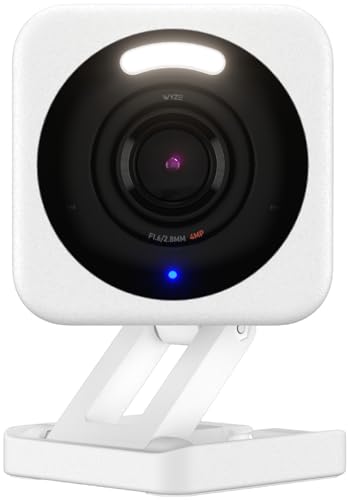
Wyze Cam v4 — Colour night vision value pick
Most home night footage fails not in darkness but in semi-darkness, the gloom of a porch or a side return where a little light exists and a careless camera wastes it. The Wyze Cam v4 was built for exactly that gloom. Its colour night vision holds clothing colours and skin tones together in light levels where infrared-only rivals have already surrendered to grey, and when the scene falls fully dark its small spotlight steps in to keep the colour picture honest.
That spotlight changes the camera’s social contract in a useful way. A visitor approaching a door at night meets a pool of light and the knowledge that they are visible in colour, which deters the casual opportunist more effectively than a silent infrared stare. Owners who dislike the announcement can lean on the ambient colour mode alone in lit streets, reserving the light for unlit gardens, and the app makes that choice a setting rather than a rewiring job.
- Night mode: colour night vision with a built-in spotlight
- Form: compact wired camera for porches and eaves
- Storage: local card recording alongside optional cloud plans
- Weather role: sheltered outdoor mounting under cover
- Role: the doorstep and yard camera for identification
Strengths
- Colour detail that names jackets and vehicles
- Spotlight doubles as a polite deterrent
- Local recording keeps footage without a plan
Trade-offs
- Wired power limits adventurous mounting spots
- Spotlight reveals the camera’s position
- Deep unlit fields exceed its sensible range
Consider how this camera handles the ordinary Tuesday rather than the dramatic burglary. Parcels arrive after dark in winter, teenagers come home late, a neighbour’s cat patrols the bins, and the v4 renders all of it in colour clear enough to settle family arguments about what actually happened. That daily usefulness, rather than any emergency fantasy, is what justifies a camera’s place on the wall, and it is where this pick quietly excels.
Its limits are the limits of its class. It is a wired camera, so every mounting decision begins with where power can reach, and its night talent is tuned for domestic distances, the length of a drive or a garden rather than a paddock. Within those honest boundaries it delivers the most identification per unit of money in this guide, which is why it leads the list for the majority of houses.
Best for: doorsteps, drives and gardens where naming what you see matters more than seeing furthest. Not suited for: remote gates with no power, or owners who want the camera to stay invisible

Blink Outdoor 4 — The infrared battery sentinel
Some of the most important viewpoints on a property are the worst places to run a cable: the bottom of the garden, the side gate, the fence line behind the shed. The Blink Outdoor 4 exists for those viewpoints. It runs on batteries for a very long stretch, watches through the night in infrared, and asks almost nothing of its owner between installations. Where the Wyze pick identifies, this one simply endures.
Its infrared picture is unapologetically monochrome, and for a fence line that is the right bargain. What a gate camera must answer at 3 a.m. is whether a person is climbing, whether the gate was left open, whether the shape in the corner is a fox or something taller. Black-and-white infrared answers those questions crisply, without a spotlight announcing the camera to exactly the person it is watching, and the battery format means the answer can come from a tree, a post or a wall with no electrician involved.
- Night mode: infrared recording in black and white
- Power: long-life batteries, no cable required
- Form: compact weather-resistant outdoor body
- System: works with a sync module and app alerts
- Role: the far-corner sentinel for gates and fences
Strengths
- Mounts anywhere a ladder can reach
- Infrared watches without visible light
- Battery intervals measured in seasons
Trade-offs
- No colour evidence after dark
- Full feature set leans on a subscription
- Live viewing drains batteries faster
Think of this camera as a tripwire with a memory. Owners who check its footage weekly, rather than streaming it idly, get the longest battery life and the calmest alert feed, because the camera’s whole design rewards event-based watching. A gate that opens twice a night produces two clips and a clear conscience; a busy street-facing mount produces a drained battery and notification fatigue, which is a placement error rather than a product flaw.
Households often pair it with a colour camera at the door, and that pairing is this guide in miniature: infrared patience at the perimeter, colour identification at the threshold. Bought with that division of labour in mind, the Outdoor 4 stops looking like the monochrome compromise and starts looking like the specialist it is, doing the quiet job the colourful cameras cannot reach.
Best for: gates, fences, sheds and rentals where wiring is impossible or forbidden. Not suited for: owners who need colour identification at the far end of the garden

REOLINK Argus PT Ultra — The panning driveway watcher
A fixed camera watches a rectangle; a wide driveway is not a rectangle. The Argus PT Ultra answers with movement of its own, panning and tilting to follow a person or vehicle across a broad frontage, so the night recording shows a journey rather than a single frame’s glimpse. For houses with sweeping drives, corner plots or yards that wrap around the building, that tracking changes night footage from suggestive to genuinely useful.
Its night work runs in two registers. Infrared keeps the watch discreet and monochrome, while its spotlights can flood a scene with light for colour recording when motion is detected, a combination that suits driveways where a lit response is welcome rather than covert. Battery power with the option of a solar panel keeps the whole arrangement free of cable runs, which matters on the detached garages and outbuildings this camera so often ends up guarding.
- Night modes: infrared monochrome or spotlight colour
- Movement: pan and tilt tracking across wide areas
- Power: rechargeable battery, solar panel compatible
- Form: weather-resistant outdoor body on a single mount
- Role: one camera covering a drive a fixed lens cannot
Strengths
- Follows movement instead of losing it at frame edge
- Two night modes for covert or deterrent watching
- Cable-free power suits outbuildings
Trade-offs
- Moving parts dislike careless mounting
- Tracking can chase pets across the lawn
- Bigger presence than a discreet bullet camera
The ownership skill with a panning camera is restraint in its patrol settings. Owners who define a sensible home position and a modest sweep get a watchman; owners who let it wander the full panorama get a tourist. Set the home view on the approach that matters, let tracking handle excursions, and review the first week’s night clips to confirm the camera returns to guard duty rather than admiring the hedge where a cat crossed on Monday.
Resolution and clarity after dark are strong enough that the tracking has something worth delivering: number plates at driveway distances are a hopeful target rather than a fantasy, depending on angle and speed, and faces at the gate are recorded rather than implied. It is the most ambitious camera in this guide, and on the right property ambition is exactly what one mount must supply.
Best for: wide drives, corner plots and outbuildings needing one watchful mount. Not suited for: tiny porches where a fixed camera already sees everything
eufy 4K Indoor Camera E30 — The indoor night detail pick
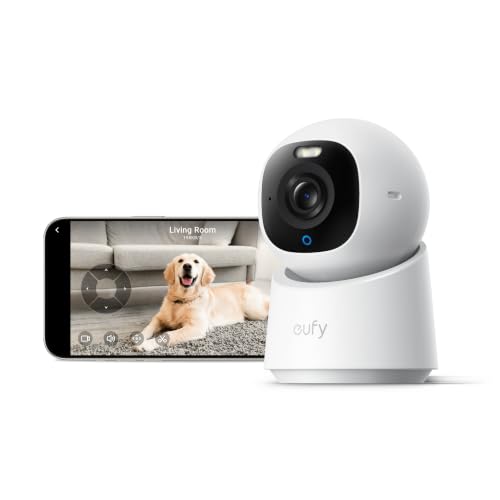
Darkness indoors is a different problem from darkness in a garden. Distances shrink, walls multiply, and the question changes from whether something moved to who it was and what they touched. The eufy E30 leans into that problem with sharp indoor recording and an infrared night mode that keeps hallways, garages and landings legible after lights-out, so a 3 a.m. alert shows a recognisable person crossing a recognisable room rather than a rumour in the dark.
Families use it for reassurance as much as for evidence. A parent can check whether a toddler has escaped a cot, a carer can confirm an elderly relative is moving safely, and a homeowner can verify that the noise downstairs was the cat staging its nightly coup. Because the camera lives indoors, its night picture benefits from walls that bounce infrared gently around a room, filling shadows that would swallow an outdoor scene whole.
- Night mode: infrared viewing for unlit rooms
- Form: indoor camera with pan coverage of a room
- Storage: local options alongside app-based viewing
- Detail role: faces and hands readable at room distances
- Role: hallways, garages, nurseries and rental checks
Strengths
- Room-scale night detail is genuinely identifying
- Pan coverage replaces several fixed indoor views
- Useful for care checks as well as security
Trade-offs
- Indoor body has no business on an outside wall
- Sharp files fill storage sooner than soft ones
- Guests may dislike a watchful hallway eye
Placement indoors rewards discretion. A camera aimed from a high corner across a room’s natural path records arrivals without staring at the sofa where people live their evenings, and that balance between vigilance and hospitality decides whether an indoor camera survives its first month. Owners who announce the camera to household and guests, and aim it at doors rather than at life, report the fewest unplugging incidents and the calmest domestic politics.
Garages deserve a special mention for this pick, because the garage is where valuable things sleep in the dark: bicycles, tools, a car, the freezer full of Christmas. An indoor-grade camera under a garage roof, safe from weather, watching the side door in infrared, closes a gap that outdoor cameras peering through windows never quite cover, and the E30’s detail makes the resulting footage worth keeping.
Best for: hallways, garages and care-check duties where indoor night detail matters. Not suited for: exposed outdoor mounting or long outdoor ranges

TP-Link Tapo C210 — The budget pan-and-tilt room guard
Not every room justifies a premium camera, and not every budget camera deserves the night shift. The Tapo C210 earns its place by doing the essential night job, infrared watching with pan and tilt, at a level of spending that lets a household guard several rooms instead of agonising over one. A hallway, a home office and a spare room can each hold a quiet infrared eye for less drama than a single flagship purchase elsewhere.
Its night picture is monochrome and honest about it. The infrared emitters carry across a typical room, the motorised head sweeps corners a fixed lens would abandon, and motion alerts arrive with clips clear enough to distinguish a sleepwalking child from a curtain troubling the radiator’s warm air. For renters especially, a camera that sits on a shelf, plugs into a socket and leaves with them in a box has a practical charm no specification sheet captures.
- Night mode: infrared with a sweeping pan-and-tilt head
- Form: shelf-friendly indoor camera, renter approved
- Storage: memory card recording inside the camera
- Alerts: motion notifications with app playback
- Role: several rooms guarded without flagship spending
Strengths
- Whole-room night coverage from one shelf
- Card storage avoids a monthly commitment
- Cheap enough to deploy in pairs or trios
Trade-offs
- Indoor design excludes porches and eaves
- Monochrome only after dark, no colour mode
- Motors are audible in a silent bedroom
Studios and small shops form its second constituency. A café owner locking up at dusk wants to know the till area and the stockroom door stayed quiet, and two of these cameras answer that question nightly without a monitored contract. The footage will not win cinematography prizes, yet it timestamps movement, shows a face at counter distance in infrared, and costs so little that the business case survives even a sceptical accountant’s eyebrow.
Expectations should stay calibrated to the brief. This is a room guard, not a perimeter system, and its infrared reach belongs indoors where walls return the light helpfully. Ask it to watch a shop floor, a nursery corridor or a rental’s entrance hall and it performs with an diligence that embarrasses pricier rivals; ask it to police a car park and the disappointment belongs to the question, not the camera.
Best for: renters, small shops and multi-room indoor guarding on a budget. Not suited for: outdoor mounting, colour evidence or silent nursery duty
Dedicated long-range infrared bullet camera (specialist category) — Prose-only: the perimeter specialist
This pick carries no link, deliberately. Long-range infrared is a specialist category sold through security installers under shifting model names, and pretending a consumer listing belongs beside the five cameras above would mislead exactly the readers with the most at stake. If your night problem is a farm track, a building site, a marina pontoon or a warehouse yard, the correct purchase is a dedicated bullet camera with a serious infrared array, a varifocal lens and a housing built for years of weather.
What separates that hardware from everything else in this guide is throw. Consumer infrared fades across a garden; a long-range array is designed to carry usable monochrome detail across distances where a person is otherwise a rumour, and its narrower field of view concentrates both pixels and infrared where the risk actually travels: along the track, through the gate line, down the side of the building. Paired with a recorder rather than an app, it also keeps footage on your premises under your control.
- Night mode: high-output infrared array, monochrome
- Form: installer bullet housing, varifocal aiming
- Recording: typically paired with a dedicated recorder
- Availability: sold via installers, hence no link here
- Role: farms, sites, yards and long private drives
Strengths
- Infrared reach no consumer camera approaches
- Narrow, aimed coverage of genuine risk lines
- Footage stays on a recorder you own
Trade-offs
- Installation is a project, not an unboxing
- No friendly app-first experience by default
- Oversized and overspent for ordinary houses
The buying route matters as much as the hardware. A reputable installer surveys the sightlines at dusk, because infrared behaviour cannot be judged from a noon site visit, positions cameras so their arrays do not blast nearby walls, and leaves you with a maintenance rhythm for lenses and webs. That survey is the product as much as the camera is, and it is why this category resists the add-to-basket treatment the other five picks handle gracefully.
Most readers should finish this pick with relief rather than desire. If a consumer camera above covers your darkest corner, the specialist route is money and complexity you are free to skip. Keep its existence in mind for the day a property outgrows doorstep distances, and let that day, not a salesperson’s enthusiasm, make the decision.
Best for: long drives, yards, farms and sites where risk travels at distance. Not suited for: ordinary homes, renters or anyone wanting an app and a shelf
How Do the Six Night-Vision Picks Compare After Dark?
| Camera | Night picture | Power and mounting | Watch it struggle when |
|---|---|---|---|
| Wyze Cam v4 | Colour, with spotlight help | Wired, sheltered outdoor spots | The scene is a field, not a yard |
| Blink Outdoor 4 | Infrared monochrome | Battery, anywhere mountable | You need colour identification |
| REOLINK Argus PT Ultra | Infrared or lit colour, tracking | Battery or solar, single mount | The plot is small and simple |
| eufy 4K Indoor Camera E30 | Infrared, high indoor detail | Mains, indoor rooms and garages | Rain reaches its housing |
| TP-Link Tapo C210 | Infrared, panning indoors | Mains, shelf or wall indoors | The job moves outdoors |
| Long-range IR bullet (prose-only) | Infrared at serious distance | Installed, recorder-based | The property is an ordinary house |
Notice how the table divides by geography before technology: doorstep, perimeter, driveway, room, many rooms, and the far country beyond the garden. Choose your geography first and the technology argument mostly settles itself.
Where Should You Mount a Camera for the Best Night Picture?
Height is a compromise between reach and recognition. Mount too low and a visitor’s cap brim shadows the face while a determined hand can reach the camera itself; mount too high and every recording becomes a study of scalps and shoulders. The productive band for most homes sits above head height but below the eaves’ drama, angled down gently so faces lift toward the lens as people approach a door or a gate.
Approach lines matter more than viewpoints. A camera watching a path from the side records a walking figure in profile for several steps, gathering build, clothing and gait, while a camera staring down the path records a shrinking or growing silhouette. Where a property allows only one mount, choose the position that sees visitors crossing the frame, and let the second camera on your future list take the head-on view if it still seems necessary after a month of real footage.
Keep infrared obstructions out of the first stretch in front of the lens. Hanging baskets, signs, the corner of a gutter and the camera’s own sun shield can all bounce IR back and haze the picture, and each is invisible as a problem in daylight setup. The professional habit is a night walk: after installation, stand in the dark with the live view open, walk the approach routes yourself, and adjust while the evidence is on the screen rather than after an incident files its own report.
How Do You Stop False Night Alerts from Training You to Ignore Real Ones?
Alert fatigue is the silent killer of home surveillance. A camera that cries wolf forty times a night teaches its owner to swipe notifications away unread, and the one genuine alert drowns in the habit. The cure begins with sensitivity: lower it until ordinary nights produce a handful of events, accepting that a cat at the far fence may go unrecorded in exchange for a human at the door never being missed in a crowd of moths.
Detection zones earn their keep after dark. Exclude the road, the neighbour’s path and the tree whose branches perform in every breeze, and draw the active area over the ground a person must actually cross to reach your door, car or gate. Infrared footage of an empty zone is boring in the best possible way, and a month of boring footage is what a working security camera is supposed to produce.
Schedules finish the discipline. A camera guarding a shop needs different alerting at trading hours than at midnight, and a home camera can stay silent about the family’s own evening movements while watching like a hawk after everyone is in bed. Owners who review their alert settings seasonally, as light and routines shift, keep faith with their systems; owners who set and forget tend to own expensive ornaments by the second winter.
What Power and Storage Decisions Matter Most Overnight?
Night is when cameras work hardest and owners supervise least, so endurance decisions outrank daytime conveniences. Battery models should be mounted where a twice-yearly swap is a pleasure rather than a roofing expedition, and their owners should treat the low-battery warning as a calendar event, not a surprise. Wired models trade that chore for an installation hour, then vanish from conscious thought, which is why doors and drives so often end up wired even in battery-friendly households.
Storage decides whether last night survives until morning. Local cards and hubs keep footage in the house and free of subscriptions, at the price of sharing the property’s risks if a thief takes the camera or the recorder. Cloud plans move the evidence off-site instantly, at the price of an ongoing fee and dependence on the home connection staying alive. Neither answer is morally superior; the honest question is which failure you would rather explain to yourself after an incident.
Connectivity deserves a dusk audit of its own. A camera at the garden’s end may hold a cheerful signal at noon and drop it nightly when neighbours’ networks wake up and the air thickens with traffic. Test the live view and an alert from the furthest mount on several evenings before trusting it, and consider that a camera which cannot send its evidence is merely a diary nobody reads.
What Mistakes Ruin Night Footage Again and Again?
Pointing a camera through glass is the evergreen error. Window glass reflects infrared back into the room, so the night picture becomes a glowing portrait of the camera’s own lights while the garden beyond stays black. Any camera expected to work after dark must live on the same side of the glass as the scene it guards, or have its infrared disabled and rely on outdoor lighting, a compromise that should be chosen knowingly rather than discovered during a break-in review.
Judging a camera by its first night is the second error. Factory defaults favour impressive-looking brightness over truthful exposure, and most owners need a week of small adjustments, angle, sensitivity, spotlight behaviour, before a camera shows its real character. The picks above all reward that week; the returns counter is full of cameras condemned on night one by owners who never gave night seven a chance to testify.
Finally, households forget the human perimeter. A camera covering the back door while the side gate stands unwatched and unlit is a story told halfway, and intruders, like water, prefer the unwatched route. Walk the property at night as a stranger would, note where you would cross unseen, and let that walk, not a product page, assign each camera its post.
How Do Rain, Fog and Frost Change the Night Picture?
Weather is infrared’s honest examiner. Rain between the lens and the subject catches the IR light and returns it as bright streaks and soft halos, so a downpour can halve the useful reach of a camera that performed beautifully on a clear evening. Owners in wet climates should read every distance claim as a fair-weather promise and value mounting shelter, under eaves or a small hood, far more than showroom sharpness, because a dry lens in the rain outperforms a brilliant wet one every single night.
Fog behaves like a wall that walks. It reflects infrared so efficiently that a foggy garden can appear as a glowing white void with the fence entirely missing, and no consumer setting fully cures physics. What helps is expectation management: on fog nights the camera’s job narrows to the near field, the door and the steps, and a household that understands that division stops blaming the equipment and starts valuing the clear nights’ archive it already holds.
Frost attacks from inside the routine rather than the picture. Batteries sag in the cold, delivering their shortest service exactly during the longest nights, and condensation can mist a lens at dawn after a freezing night. Battery picks in this guide were chosen partly for their tolerance of that seasonal squeeze, yet even they reward an owner who swaps or charges cells in autumn, before the cold files its first complaint, and who wipes a misted lens at breakfast instead of discovering a week of fogged footage in January.
Should Outdoor Lighting and Cameras Be Planned Together?
A security light and a camera are either partners or saboteurs, and the difference is decided by whoever holds the drill. A lamp aimed across a camera’s view gives colour night modes the illumination they crave and can turn an infrared scene into an identifiable one, provided the light does not shine into the lens itself. The same lamp mounted beside the camera and pointing the same way often produces a bright foreground and a black beyond, because the camera exposes for the lit wall and abandons the unlit garden.
The cooperative arrangement places light on the subject’s ground, not the camera’s. A lamp over a door, a low light along a path, a lit porch behind which the camera sits in relative shade: these give faces illumination without glare and let both infrared and colour cameras work with the scene instead of against it. Motion-triggered lighting adds the social signal that someone has been noticed, which pairs naturally with a spotlight camera’s deterrent effect when the two are not duplicating each other on the same wall.
Solar garden lights deserve a sceptical footnote. Their gentle glow flatters colour night vision near paths and steps, and several owners in effect gain a softly lit stage for their doorstep camera from lights bought for gardening reasons. But their output fades through the night and dies entirely after dull winter days, so a security plan that depends on them is a plan with a curfew. Treat them as seasoning for a camera’s night work, never as the meal.
How Can You Verify a Night Alert Before Acting on It?
The minutes after a 2 a.m. alert are when a camera system proves its design. A useful alert carries a clip long enough to judge, a thumbnail clear enough to classify, and a path to the live view that opens before the visitor has finished whatever they came to do. Owners should rehearse that path on a quiet evening, phone in hand, because fumbling through an unfamiliar app in the dark converts good footage into a story about what the camera saw and the household missed.
Verification is also a household protocol, not just a technical act. Decide in advance who checks alerts, what a verified stranger at the gate actually triggers, a call to a neighbour, a lights-on response, a call to the police, and what a fox at the bins triggers, which is nothing at all. Cameras record; households respond, and the households that respond well are the ones that wrote the script before adrenaline offered to improvise it for them.
Keep a simple log for the first month. Note each night alert, its cause and whether the footage answered the question it raised, and patterns will surface that no review can predict for your particular walls, trees and neighbours. A camera that logs nine foxes and one clear visitor is working; a camera that logs forty mysteries needs its zones, angle or sensitivity revisited, and the log is what tells you which of those three levers to pull first.
What Does a Sensible Upgrade Path Look Like After the First Camera?
Almost nobody’s final system resembles their first purchase, and planning for that evolution saves the money that impulse systems waste. The healthy pattern starts with the threshold camera, the door or drive view that answers the household’s commonest question, then adds coverage only where the first month’s footage reveals genuine blindness: the side path nobody had considered, the garage door that sits just outside the frame, the gate whose comings and goings turned out to matter.
Staying inside one ecosystem pays quiet dividends during that growth. Shared apps, shared storage logic and shared alert habits mean the second and third cameras feel like reinforcements rather than new gadgets demanding fresh tuition. The picks in this guide cluster deliberately into compatible households for that reason, and owners who resist mixing five brands for five viewpoints keep a calmer phone and a more searchable archive when an incident sends them scrolling through a particular Tuesday.
Resist upgrading for resolution alone. Night footage improves fastest through placement, lighting and a second viewpoint, in that order, and slowest through a sharper sensor staring from the same compromised bracket. The owner who moves a camera two metres and adds a lamp learns more in one evening than the owner who replaces a working camera with its successor, and the archive shows the difference in faces recognised rather than in pixels counted.
Finally, retire gracefully. A camera outgrown at the front door often remains perfect for the shed, the workshop or a relative’s porch, and a household that cascades its cameras keeps coverage growing without the budget resetting to zero each time. Night security is a system that matures with a property, and the picks above were chosen to remain useful somewhere in that system even after their first post is promoted to a newer arrival.
How Should Landlords, Hosts and Neighbours Factor into Night Filming?
A camera’s night view rarely stops at the owner’s fence, and infrared’s reach makes the overshoot longer after dark than most people expect when they aim a camera at noon. Point the lens at your own gate, path and door, tilt it down so the frame ends at your boundary where the layout allows, and use privacy masking where the app offers it to black out a neighbour’s window or garden. These are not merely courtesies; in many places they are the difference between a lawful home system and a complaint with paperwork attached.
Renters face the mirror image of the same question. A landlord’s permission governs anything screwed into a wall, which is why the shelf-sitting and battery picks in this guide earn their keep in rented homes: they watch the hallway or the gate without leaving a single fixing behind. Hosts running short-stay rentals should go further and keep cameras strictly outside the rented interior, disclosed plainly in the listing, because a guest who discovers an undeclared indoor camera will not care how good its infrared picture is.
Conversation remains the cheapest privacy technology ever shipped. Telling the neighbours on both sides that a camera watches your drive, and showing them the view if they ask, converts potential suspicion into an informal alliance, and more than one household has found a neighbour requesting the footage after their own parcel vanished. Night cameras guard communities as readily as they guard houses when their owners aim them with restraint and talk about them without embarrassment.
When Is One Bright Spotlight Better Than a Row of Infrared Cameras?
Occasionally the honest answer to a night problem is not another camera at all. A single well-placed light over a yard can lift every existing camera’s picture, discourage the casual intruder before any recording begins, and make a household’s own midnight trips to the bins safer and pleasanter. Owners who add light first sometimes discover their current cameras were adequate all along, starved of photons rather than of talent, and the money saved funds the second viewpoint that actually expands coverage.
The reverse also holds. Where light is unwelcome, a bedroom window facing the yard, a neighbour sensitive to glare, wildlife a household would rather not disturb, infrared’s invisibility becomes the polite technology, watching without changing the night it watches. Choosing between light and infrared is therefore partly a social decision disguised as a technical one, and the properties that get it right are the ones where somebody walked the boundary at midnight and thought about everyone the darkness belongs to.
Frequently Asked Questions
Does infrared footage hold up as evidence?
For establishing presence, timing and movement, yes, and monochrome infrared is routinely used by insurers and police for exactly that. Identification is stronger when a colour camera covers the door or the drive where faces pass closest, which is why this guide pairs infrared perimeter picks with colour threshold picks rather than declaring one technology the winner.
Will a spotlight camera disturb neighbours?
It can if it fires across a fence at bedroom windows all night, so aim spotlights within your own boundaries, use motion triggering rather than constant light, and talk to the neighbours the camera overlooks. Most disputes trace back to one badly aimed mount, and a five-minute adjustment with a cooperative neighbour prevents a year of frost.
How far can these cameras really see at night?
Treat published distances as open-field ceilings, then discount for walls, hedges, rain and the angle of approach. In ordinary gardens the linked picks cover doors, drives and fence lines usefully; beyond garden scale, the prose-only specialist category exists precisely because consumer infrared gives up gracefully rather than suddenly.
Do I need a subscription for night recording?
Not for the local-storage picks here, which record to cards or home hubs without a monthly fee, though some advanced alert features in several ecosystems sit behind plans. Decide before buying which features you expect nightly, then check whether those specific features are the free ones, because the brochure’s headline and the free tier are rarely the same list.
Can one camera cover a whole property after dark?
Almost never honestly. A panning model like the Argus PT Ultra stretches one mount across a wide drive, but corners, gates and doors each hide from any single viewpoint, and darkness deepens every blind spot. Two modest cameras at the right posts outperform one expensive camera at the wrong one on nearly every real property.
Does a camera need different settings in summer and winter?
Usually, yes, in small ways. Long summer evenings delay the switch into night mode and bring more insect traffic across the lens, while winter’s early darkness, low sun angles at dusk and battery-sapping cold all argue for a seasonal review of sensitivity, spotlight timing and charge levels. Ten minutes of adjustment at each season’s turn keeps the system matched to the nights it is actually guarding.
What should I check on the first night after installing?
Walk every approach yourself after dark and watch the recordings, not the live view alone. Check faces for white-out at close range, look for walls or baskets fogging the infrared, confirm alerts arrive promptly, and verify the footage is actually stored where you think it is. That single evening of choreography prevents most disappointments attributed to night cameras.
Final Recommendation
Start at the threshold. Most homes should put colour identification where people arrive, which makes the Wyze Cam v4 the default first purchase, then add infrared patience at the perimeter with the Blink Outdoor 4 where cables cannot go. Wide drives graduate to the tracking Argus PT Ultra, while the eufy E30 and Tapo C210 divide indoor duty between detail and thrift. The prose-only long-range specialist waits, unbought and unbothered, for properties whose darkness is measured in fields rather than flowerbeds.
Whichever combination you choose, budget an evening for the night walk and a week for the tuning. Night vision is a collaboration between a camera and a property, and the owners who treat installation as the beginning rather than the end of the purchase are the ones whose 2 a.m. footage, when it finally matters, shows a story instead of a ghost.
One last encouragement for the hesitant: perfection is not available at any rung of this ladder, and waiting for it leaves the property unwatched in the meantime. A modest camera installed this weekend, aimed with care and tuned across its first week, guards more real nights than a flawless system purchased next year. Darkness arrives on schedule every evening; let your first camera be there to meet it, learn from what it shows you, and grow the system the way this guide’s upgrade path describes, one honest viewpoint at a time.
Related Guides
Round out the system with outdoor camera placement mistakes to avoid, compare battery and wired security cameras for renters, or plan the network side with wifi channels for wireless surveillance cameras.


