Where to buy
Check the latest price, availability and delivery on Amazon. Orders are placed on Amazon. We may earn a commission from qualifying purchases.
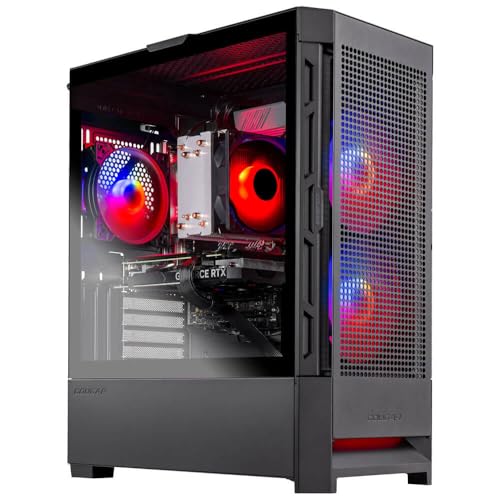
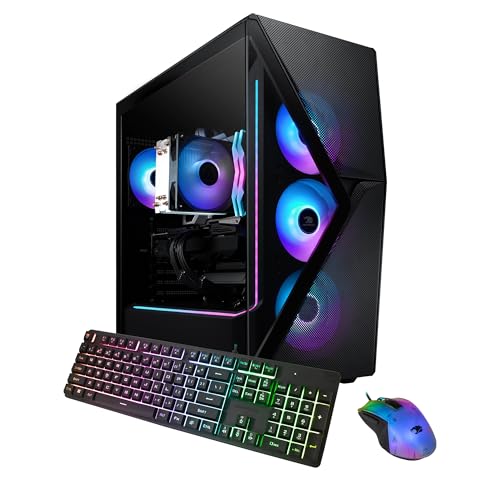
- Best memory-rich multitasker: iBUYPOWER Slate MESH Gaming PC (Core i7-14700F / RTX 4060, 32GB) — Check on Amazon
- Skytech Azure 3 Gaming PC (Ryzen 7 9700X / RTX 4060) — Check on Amazon
- CyberPowerPC Gamer Xtreme (Ryzen 9 9900X / RTX 5070) — Check on Amazon
- Skytech Nebula Gaming PC (Core i5-13400F / RTX 4060) — Check on Amazon
- Skytech Archangel Gaming PC (Ryzen 7 5700 / RX 9060 XT 8GB) — Check on Amazon
- Dell Alienware Aurora gaming desktops (family) — prose-only pick: Alienware’s Aurora line is the design statement of the category — distinctive, service-backed, and to be bought by specification, not silhouette
Read the full guide ↓
Disclosure: As an Amazon Associate, ilcastellomenu.com earns from qualifying purchases. Links to Amazon on this page are affiliate links; they cost you nothing extra. Listing details such as price and availability change often, so check the current Amazon listing before you buy.
Searching for the best computers for gamers means you are really asking which specification deserves your trust, because gaming PCs are the most specification-dense purchase in consumer technology and the easiest to buy badly with confidence. This guide answers with six machines and classes chosen for one lens above all: gamers as people with setups, communities and ambitions — machines chosen as the center of a gaming life, not an appliance. Every pick below was selected from a verified listing record or — where no single product could be verified to that standard — is labeled prose-only and described at family or class level, so that nothing in this guide asks you to trust a number nobody checked.
Gamers are not a workload; they are a culture with hardware habits. The gaming computer sits at the center of a setup that accretes — the better monitor, the mechanical keyboard, the headset that finally fits, the second drive, the capture gear — and it is judged, over years, by how gracefully it absorbs that accretion. The picks below were chosen as centers: machines with the ports, the power headroom, the memory and the platform life to grow a setup around, from the value machines that start the story to the hybrids that power its streaming chapter.
That is why this guide’s gamer picks forgive a specification choice the benchmark crowd mocks: the memory-rich, processor-heavy machine at a mid graphics tier. A setup’s center is upgraded in pieces, and the graphics card is the easiest piece to change — a foundation with cores and memory to spare is a center that survives its own success. Read the reviews with your setup’s future in mind: the peripherals you will add, the stream you might start, the monitor you are saving for. The best computer for a gamer is the one still at the center after all of that arrives.
Two habits will serve you through every section that follows. First, compare specification tables, not family names: the model code is the product, and this guide prints the codes it verified. Second, let your monitor set your ambition — readers cross-shopping the wider category will find the same ladder in Best Computer For Gaming and Best Computer For Gamers, and it is the same ladder here: buy the rung your display can show, with a foundation that outlives the graphics card.
In this guide
Quick Picks
Short on time, or comparing several options at once? Each row below names a buyer type and the machine that suits it, with a link to the listing where one is verified.
| Buyer type | Pick | Why it stands out | Link |
|---|---|---|---|
| Best memory-rich multitasker | iBUYPOWER Slate MESH Gaming PC (Core i7-14700F / RTX 4060, 32GB) | The RTX 4060 class with a twenty-core i7 and 32GB of RGB DDR5 — for the desktop that never runs just one thing | Check on Amazon |
| Best processor headroom | Skytech Azure 3 Gaming PC (Ryzen 7 9700X / RTX 4060) | A flagship-class Ryzen 7 9700X on the modern AM5/DDR5 platform — the CPU will outlive the graphics card and welcome its replacement | Check on Amazon |
| Best creator-gamer hybrid | CyberPowerPC Gamer Xtreme (Ryzen 9 9900X / RTX 5070) | A twelve-core Ryzen 9 and an RTX 5070 with 32GB of memory — built for the desk where gaming shares hours with rendering and editing | Check on Amazon |
| Best Intel value pick | Skytech Nebula Gaming PC (Core i5-13400F / RTX 4060) | A ten-core 13th-generation Core i5 under the same RTX 4060, for buyers who split time between games and everyday work | Check on Amazon |
| Best AMD-graphics alternative | Skytech Archangel Gaming PC (Ryzen 7 5700 / RX 9060 XT 8GB) | The Radeon route: a current RX 9060 XT with an eight-core Ryzen 7 and 32GB of memory in Skytech’s white Archangel case | Check on Amazon |
| Best design-led alternative | Dell Alienware Aurora gaming desktops (family) | Alienware’s Aurora line is the design statement of the category — distinctive, service-backed, and to be bought by specification, not silhouette | Prose-only — see review |
How These Picks Were Chosen
The filter for this guide was the lens itself — gamers as people with setups, communities and ambitions — machines chosen as the center of a gaming life, not an appliance — applied after a harder filter that every pick had to pass first: verifiability. A product earns a link in this guide only when its Amazon listing record could be corroborated with its exact model code and headline specifications during research. Products and families that could not be verified to that standard were not quietly dropped; where they genuinely belong in the conversation, they appear as prose-only entries, described at family or class level with no invented specifications, and flagged in the article’s source notes.
We did not use these machines ourselves. We read Amazon listing records and corroborating retailer and manufacturer specification data, cross-checked the numbers that decide ownership — processor, graphics card and its memory, system memory, storage, and power supply wattage where the listing states it — and favored specifications that are balanced over specifications that are spectacular in one line and trimmed in three others. Where a listing did not state a power supply wattage, this guide says so in the review rather than guessing, because a guessed PSU is exactly the kind of number a future upgrade gets planned around.
Prebuilt gaming PCs also carry a category warning that shaped the selection: configurations drift. System integrators refresh model years, swap graphics card brands within the same GPU specification — several listings here say ‘brand may vary’ in their own text — and retire SKUs without ceremony. Every review below therefore names the exact model code verified, and the standing advice of this guide is to confirm the live listing’s specification table matches it before ordering. The machine you want is a specification, not a name, and the two minutes spent confirming it are the cheapest insurance in the category. Readers comparing across budgets should also see Best Desktop For Gaming for the neighboring rung of the same ladder.
The 6 Best Computers for Gamers
iBUYPOWER Slate MESH Gaming PC (Core i7-14700F / RTX 4060, 32GB)
Who it suits: Multitaskers and aspiring streamers whose bottleneck is everything around the game: capture software, chat, browsers, and a second screen of tools.
This Slate MESH variant asks a fair question: what if your limit is not the graphics card? It pairs the RTX 4060 8GB with a twenty-core Core i7-14700F and 32GB of DDR5 5200 RGB memory — a processor-and-memory specification two classes above the graphics card. For a certain real buyer that is exactly right: the streamer running capture and chat, the player whose second monitor carries a wiki, a call and a recording, the household machine that edits video on weekends. In the game itself it performs at RTX 4060 level; around the game, it never breathes hard.
Storage is a 1TB NVMe SSD, a gamer keyboard and mouse are in the box, and Windows 11 Home is installed. The honest framing matters, though: a buyer whose only job is gaming gets more frames per purchase from a balanced machine, because an RTX 4060 cannot spend an i7’s spare cores. The counter-argument is time — graphics cards are the easiest part in a PC to upgrade, and this foundation would welcome a stronger one later, subject to checking the power supply, whose wattage the verified listing record did not state. Buy it as a foundation with a good card, not as a graphics flagship, and it is honestly specified for its job.
Where this pick meets this guide’s angle — gamers as people with setups, communities and ambitions — machines chosen as the center of a gaming life, not an appliance — is in the details a headline hides, and those details are why it holds its place against newer-looking rivals.
- 32GB of DDR5 and a 20-core i7 make it the strongest multitasking base at its graphics tier
- RTX 4060 still delivers the full high-refresh 1080p experience today
- A later GPU upgrade turns the foundation into a step-up machine in one step
Honest limitation: Gaming performance is capped by the RTX 4060’s 8GB — the processor headroom does not add frames in GPU-limited games.
Choose it if your desktop runs a crowd of apps around every game, or you plan a GPU upgrade onto a strong base later. Skip it if every purchase dollar must become frames today — a balanced RTX 4060 machine with a cheaper processor does that.
Skytech Azure 3 Gaming PC (Ryzen 7 9700X / RTX 4060)
Who it suits: Buyers playing the long game: esports players chasing very high frame rates at 1080p today, and anyone who wants the processor to survive one or two GPU upgrades.
The Azure 3 inverts the usual prebuilt balance on purpose. Instead of the strongest graphics card the budget allows, it pairs an RTX 4060 8GB with a Ryzen 7 9700X — a much newer, faster eight-core processor on AMD’s AM5 platform with 16GB of DDR5 6000 memory. In esports titles and simulation games, where the processor feeds hundreds of frames to the graphics card, that strength is visible immediately. In GPU-heavy story games at high settings, the RTX 4060 is the ceiling, exactly as it is in the Nebula machines — the difference is what happens in two or three years, when this processor is still ready for a far stronger card.
Cooling and presentation match the positioning: a 360mm ARGB liquid cooler handles the processor, the white Azure case has a tempered glass side, and the power supply is a 650W Gold unit. That wattage suits the current card and a step or two beyond it, though a future flagship GPU upgrade should budget for a power supply conversation at the same time. Wi-Fi and Windows 11 Home are included, assembly is in the USA, and the warranty is one year on parts and labor with lifetime technical support. Read this machine as a platform purchase: the strongest foundation in this guide’s midfield, wearing a midrange graphics card it will eventually outgrow.
Through the lens of gamers as people with setups, communities and ambitions — machines chosen as the center of a gaming life, not an appliance, this is the configuration whose compromises all fall on the side of the owner rather than the seller.
- Ryzen 7 9700X is the strongest gaming processor among the mid-priced picks here
- AM5 platform with DDR5 6000 memory has the longest upgrade runway in its class
- 360mm liquid cooling and a 650W Gold supply support the long-term plan
Honest limitation: On day one, GPU-heavy games run at RTX 4060 speed — you are paying now for processor headroom you will fully use later.
Choose it if you play CPU-heavy esports or simulation titles, or you deliberately buy the platform first and the big GPU second. Skip it if you want the maximum frame rates in demanding story games today — the RTX 5070 picks convert more of the budget into immediate graphics power.
CyberPowerPC Gamer Xtreme (Ryzen 9 9900X / RTX 5070)
Who it suits: Players who also produce: streamers, video editors and 3D hobbyists who want one machine that is serious at both jobs.
Most gaming PCs in this guide are balanced for games alone; this Gamer Xtreme is balanced for a working desk. The Ryzen 9 9900X is a twelve-core AM5 processor, the memory is 32GB of DDR5 — double most picks here — and the graphics card is a GeForce RTX 5070 12GB. In games, the RTX 5070 is the step that makes high-refresh 1440p the native territory and 4K with upscaling a reasonable conversation. Outside games, the core count and memory are what shorten renders, exports and compile times, and they are the reason this configuration exists alongside cheaper machines with the same graphics card.
Storage is a 1TB PCIe 4.0 SSD, which is the one line a creator should read twice: a working game library plus project files will fill a terabyte faster than either habit alone, and a second SSD belongs in the first-year budget. Wi-Fi is ready and Windows 11 Home is installed. The verified listing record did not state a power supply wattage for this SKU, so confirm it on the live listing if a future graphics upgrade is part of your plan. As a whole, this is the guide’s clearest hybrid: no part of the specification apologizes to either half of its owner’s day.
For this search — gamers as people with setups, communities and ambitions — machines chosen as the center of a gaming life, not an appliance — that specification reads as a deliberate answer rather than an accident of pricing.
- Ryzen 9 9900X plus 32GB DDR5 is genuine creator hardware, not a gaming-only balance
- RTX 5070 12GB moves the native territory to high-refresh 1440p
- AM5/DDR5 platform keeps processor and memory upgrades open for years
Honest limitation: 1TB of storage is tight for a games-plus-projects workload, and the PSU wattage was not in the verified listing record.
Choose it if your PC earns its keep in editing, streaming or 3D work as well as in games, and you want one balanced machine for both. Skip it if you only game — the same graphics card with a cheaper processor beside it spends the difference better.
Skytech Nebula Gaming PC (Core i5-13400F / RTX 4060)
Who it suits: Players who also run a busy desktop — browser, chat, coursework or office apps alongside the game — and want more processor cores in reserve.
This Nebula keeps the RTX 4060 8GB graphics card and swaps the foundation to Intel: a Core i5-13400F with ten cores, supported by 16GB of DDR4 3200 memory and a 1TB NVMe SSD. In purely GPU-limited games the two Nebula variants in this guide sit close together, because the graphics card is shared; where the Intel chip earns its place is everywhere around the game — streaming software, voice chat, a dozen browser tabs, file work — where its extra cores keep the whole desktop feeling unhurried while a match loads.
The case is the black Nebula edition with a mesh front and four RGB fans moving air through it, Wi-Fi is the 802.11AC standard, and the power supply is a 600W Gold unit — slightly smaller than its AMD sibling’s, still sensibly sized for this graphics card class and a modest upgrade beyond it. Windows 11 Home is preinstalled and Skytech assembles the machine in the USA with a one-year parts and labor warranty and lifetime technical support, which matters more than most spec lines when it is your first gaming PC and something small goes wrong at month three.
Judged through this article’s lens (gamers as people with setups, communities and ambitions — machines chosen as the center of a gaming life, not an appliance), the machine’s balance is the point: nothing here is specified to impress a stranger, and everything is specified to serve the owner.
- Ten-core Core i5-13400F is the stronger multitasking processor in this price class
- Same RTX 4060 8GB graphics card as the value leaders, with DLSS support
- Mesh-front case with four RGB fans prioritizes airflow over a sealed glass front
Honest limitation: DDR4 memory on an LGA1700 board is the value configuration of that platform; the DDR5 versions of this processor’s platform age better.
Choose it if you want Intel’s core count for a mixed gaming-and-everything desktop at a value price. Skip it if you are choosing a five-year upgrade platform first and a graphics card second — look at the DDR5 picks in this guide.
Skytech Archangel Gaming PC (Ryzen 7 5700 / RX 9060 XT 8GB)
Who it suits: Buyers who want the AMD graphics alternative — for a FreeSync display, for Radeon’s feature set, or simply for the value shape of this configuration.
Not every gaming PC in this guide wears a GeForce card, and this Archangel is the Radeon exhibit: an AMD Radeon RX 9060 XT 8GB graphics card, driven by an eight-core Ryzen 7 5700, with 32GB of DDR4 3200 memory — double the system memory of most value machines — and a 1TB NVMe SSD. The configuration’s logic is throughput around the card: plenty of cores and memory for the streaming, recording and multitasking that surround modern play, with the current-generation Radeon handling 1080p at high refresh and 1440p with sensible settings. The listing notes the graphics card brand may vary, as integrator listings do.
The white Archangel case, ARGB fans, 650W Gold power supply and built-in Wi-Fi complete a specification with no obvious corner cut except its platform: AM4 and DDR4 are the mature foundation here, chosen to put the budget into the graphics card and memory instead. That trade is defensible precisely because the parts it buys are the ones games feel. Windows 11 Home is installed, assembly is in the USA, and the warranty follows Skytech’s one-year parts and labor pattern with lifetime technical support. If your monitor is a FreeSync display and your budget is a value one, this is the configuration in the guide drawn for you.
Where this pick meets this guide’s angle — gamers as people with setups, communities and ambitions — machines chosen as the center of a gaming life, not an appliance — is in the details a headline hides, and those details are why it holds its place against newer-looking rivals.
- Current-generation Radeon RX 9060 XT is the genuine AMD alternative in this guide
- 32GB of system memory and eight processor cores serve streamers and multitaskers
- 650W Gold supply and 1TB SSD keep the supporting specification honest
Honest limitation: The AM4/DDR4 foundation is end-of-road, and the card’s 8GB of memory sets the same high-resolution texture ceiling as its GeForce rivals.
Choose it if you run a FreeSync display or prefer the Radeon ecosystem and want memory-rich value. Skip it if you need NVIDIA-specific features — the GeForce picks in this guide are your route.
Dell Alienware Aurora gaming desktops (family)
Who it suits: Buyers who want the Alienware design and Dell’s support, and who will check the configuration table with the same care as any other pick.
Alienware’s Aurora desktops are the longest-running design-led line in gaming PCs: a distinctive rounded chassis, a mature configuration software suite, and Dell’s service operation behind them. The line refreshes with each hardware generation and spans a wide performance range under one silhouette, which is precisely why this guide describes it at family level. No single current Aurora configuration’s Amazon listing record was verified to the standard the linked picks in this guide meet, so Aurora appears here as what it honestly is — a major alternative to research, not a verified recommendation.
Two family-level cautions are fair and well documented in owner communities. First, design-led cases deserve an airflow question: read the specific generation’s cooling design rather than assuming the newest silhouette breathes like a mesh-front tower. Second, check upgrade provisions on the exact model — proprietary elements have varied by generation, and a buyer planning a mid-life graphics upgrade should confirm the path exists. Verify the configuration’s full table, compare it line by line with the linked picks, and let the specification — not the silhouette — make the decision.
Through the lens of gamers as people with setups, communities and ambitions — machines chosen as the center of a gaming life, not an appliance, this is the configuration whose compromises all fall on the side of the owner rather than the seller.
- The category’s most distinctive design, backed by Dell’s service network
- Mature configuration and lighting software ecosystem
- A wide configuration range under one well-known line
Honest limitation: Prose-only here: no single configuration verified to the linking standard; cooling and upgrade provisions vary by generation and must be checked per model.
Choose it if the design and Dell support genuinely matter to you and the exact configuration’s table survives comparison. Skip it if upgrade freedom is your first priority — the standard-parts integrator picks state their provisions more plainly.
Prose-only pick — no verified listing link for this family or class; see the review and the source notes for how to verify a specific unit or configuration before buying.
Comparison Table
| Product | Platform | Key specifications | Link |
|---|---|---|---|
| iBUYPOWER Slate MESH Gaming PC (Core i7-14700F / RTX 4060, 32GB) | DDR5 (LGA1700) | Core i7-14700F · RTX 4060 8GB · 32GB DDR5 RGB 5200 · 1TB NVMe SSD · Windows 11 Home · PSU: check live listing | Check on Amazon |
| Skytech Azure 3 Gaming PC (Ryzen 7 9700X / RTX 4060) | DDR5 (AM5) | Ryzen 7 9700X · RTX 4060 8GB · 16GB DDR5 6000 · 1TB NVMe SSD · 650W Gold · 360mm AIO · Windows 11 Home | Check on Amazon |
| CyberPowerPC Gamer Xtreme (Ryzen 9 9900X / RTX 5070) | DDR5 (AM5) | Ryzen 9 9900X · RTX 5070 12GB · 32GB DDR5 · 1TB PCIe 4.0 SSD · Windows 11 Home · PSU: check live listing | Check on Amazon |
| Skytech Nebula Gaming PC (Core i5-13400F / RTX 4060) | DDR4 (LGA1700) | Core i5-13400F · RTX 4060 8GB · 16GB DDR4 3200 · 1TB NVMe SSD · 600W Gold · Windows 11 Home | Check on Amazon |
| Skytech Archangel Gaming PC (Ryzen 7 5700 / RX 9060 XT 8GB) | DDR4 (AM4) | Ryzen 7 5700 · RX 9060 XT 8GB · 32GB DDR4 3200 · 1TB NVMe SSD · 650W Gold · Windows 11 Home | Check on Amazon |
| Dell Alienware Aurora gaming desktops (family) | Alienware Aurora family | Family line — specifications vary by exact configuration and generation; verify the individual SKU | Prose-only |
Read the table the way this guide wrote it: across, for balance, not down, for a winner. A row whose lines agree with each other — graphics class, processor, memory, storage, power — is a machine that will feel coherent for years. Readers whose shortlist spans categories can cross-check the same machines’ roles in Best Desktop Computers For Gaming.
The Center of the Setup
A setup grows by accretion and every addition makes a demand the original purchase either anticipated or did not. The high-refresh monitor demands graphics class. The streaming ambition demands cores and memory. The peripheral collection demands ports and desk power. The growing library demands storage slots. A computer bought as a center — platform current, power supply generous, memory at the comfort line, case with room — absorbs each demand as an errand. A computer bought as an appliance meets each demand as a crisis, and the crises compound until replacement feels like relief.
There is a social layer too, and it is not trivial: gamers play in communities that share clips, builds and troubleshooting, and a machine from a maker with a real owner community and real support inherits that community’s knowledge. The integrator picks here carry that advantage in their ecosystems; the flagship carries a brand’s. Choose the center whose community you would actually ask for help at midnight — because at some point, every gamer does — and the setup will grow around it for years.
Cooling, Noise and the Third Hour
Every gaming PC is fast for ten minutes. The specification that decides the third hour is thermal: how much air the case moves, where the processor’s heat goes, and whether the graphics card is breathing fresh intake or its own exhaust. Mesh-front cases with multiple fans are the value tier’s correct answer, and the flagship OMEN 45L’s separate radiator chamber is the expensive tier’s. When you compare two similar specifications, choose the one whose cooling story you can describe in a sentence — if you cannot describe it, the case is a photograph, not a design.
Noise is cooling’s shadow. A machine that holds its temperatures with large, slow fans is quieter than one screaming with small ones, and on a desk in a shared room that difference is a daily quality-of-life specification. Liquid cooling helps the processor specifically; it does nothing for a graphics card starved by a sealed front panel. Read the case before the lighting: intake, exhaust, radiator placement, in that order.
Networking: The Invisible Frame Rate
A gaming PC’s network is part of its performance, and the hierarchy is boring and absolute: a wired Ethernet cable to the router beats everything; a modern Wi-Fi connection in the same room is a good second; Wi-Fi through two walls to a distant router is where mysterious lag lives. Every pick in this guide includes Wi-Fi, which is the right default, but the player with a competitive streak and a router within cable reach should run the cable and never think about it again.
Where Wi-Fi must carry the load, placement beats specifications: line of sight where possible, the router elevated, and the PC’s antennas actually attached and upright — a detail so small it is embarrassing how many ‘network problems’ it solves. Judge a listing’s networking line for presence, not poetry, and spend the saved attention on the graphics card.
Matching the PC to the Monitor You Own
The most common imbalance in PC gaming is not inside the case — it is between the case and the screen. A machine’s honest territory is set by resolution: 4060-class cards own high-refresh 1080p and visit 1440p; the 16GB 4060 Ti and 5070 class own 1440p; the flagship tier owns 4K. Buying one class up from your monitor buys nothing you can see today — but it is a defensible purchase if a monitor upgrade is genuinely scheduled, because the PC will be waiting when the screen arrives.
Refresh rate is the second half of the match. High-refresh displays are where modern gaming PCs feel modern: the same frame rate that looks ordinary at 60Hz feels fluid at 144Hz with variable refresh smoothing the gaps. If your budget forces a choice between a stronger PC on an old 60Hz screen and a balanced PC with a high-refresh monitor, the second desk will feel faster every single day.
Power, Heat and the Room Itself
A gaming PC converts electricity into heat with near-perfect efficiency, and the room notices. Value machines sip; flagship configurations can warm a small room like a space heater on a long session. That is not an argument against power — it is an argument for placing the tower where air can move: off carpet, out of enclosed cabinets, with its exhaust pointed at open room rather than a wall six inches away. Half the ‘my PC got slower and louder’ stories are furniture stories.
The electrical side deserves the same plainness. Plug the tower into a surge protector worth the name, keep the power supply’s intake unblocked, and if your home’s wiring is old, learn which circuit the gaming desk shares before adding a second machine or a big display. None of this is in the specification table, and all of it is in the ownership experience.
How to Choose
The checklist below distills the whole guide. Work it in order — the early items eliminate most listings, and the later ones separate the survivors.
- Treat 16GB of memory as the floor and 32GB as the comfort line. Modern games plus a browser, chat and capture software live close to 16GB; 32GB removes memory from the list of things you think about and is the single cheapest longevity upgrade in any specification. Check whether a machine’s memory is one stick or two — dual-channel pairs perform better and leave the upgrade path clearer.
- Size storage for the library you actually keep. A 1TB NVMe SSD is the sensible default; 500GB fills within a few large modern titles and becomes a chore of uninstall decisions. Prefer PCIe Gen4 drives where offered, keep a second M.2 slot in mind for the inevitable expansion, and remember that storage is the easiest upgrade in any standard-parts tower.
- Read the power supply line like a contract. A named wattage with an 80 Plus Gold rating — 600W to 650W in the value and mid tiers — signals a machine built with upgrade headroom. Where a listing does not state the PSU, check the live specification table before you plan a future graphics card around it. The PSU is invisible in every screenshot and decisive in every upgrade.
- Decide your platform horizon: DDR4 value or DDR5 runway. DDR4 machines (AM4, LGA1700-DDR4) are cheaper because their platforms are complete; DDR5 machines (AM5, LGA1700-DDR5) cost a little more and keep processor and memory standards current for years. Neither answer is wrong — buying DDR4 knowingly for value is a plan; buying it accidentally while expecting a long upgrade path is a mistake.
- Interrogate cooling and case airflow, not lighting. Mesh fronts, multiple intake and exhaust fans, and — at the top end — liquid cooling with a sensibly placed radiator are what sustain performance in hour three of a session. Tempered glass shows the machine off; airflow keeps it fast. Read how air enters and leaves the case you are buying.
- Count the ports your desk actually uses. Enough USB ports for headset, controller, wheel or flight stick, plus the display outputs your monitor needs, plus Ethernet if your router is within cable reach — wired networking still beats Wi-Fi for latency-sensitive play. Wi-Fi built in is the right default for everyone else.
- Value the warranty and the standard-parts question. One year of parts and labor with real technical support is the integrator norm; big brands add service networks. Just as important: standard cases, boards and power supplies make year-three upgrades ordinary jobs. Ask both questions before the machine is on your desk, not after.
- Budget the whole setup, not just the tower. A gaming PC’s experience is capped by its monitor: a 1440p-capable machine on an old 1080p 60Hz display shows a fraction of what you bought. Keyboard, mouse, headset and the display belong in the same budget conversation as the PC itself — the setup articles in this category exist because that arithmetic is where satisfaction is decided.
- Check the exact SKU, every time. Prebuilt families reuse names across years and configurations. The model code and the listing’s specification table — processor, graphics card and its memory, system memory, storage — are the product. Two machines with the same family name can be a generation apart; buy the table, not the name.
Common Mistakes
- Choosing a sealed glass-front case for a high-power build and then wondering why hour three is louder and slower than hour one. Airflow is a performance specification.
- Assuming the power supply will support a future flagship GPU. Check the wattage and rating now — or accept that the GPU upgrade includes a PSU upgrade.
- Filling a 500GB drive and living in uninstall menus. Storage is cheap and easy to add, but only if you planned the slot and the afternoon for it.
- Paying for 64GB of memory or a many-core processor for a games-only desk while the graphics card sits a class lower. Balance beats bragging in every benchmark that matters.
- Skipping the warranty and support question on a first PC. The integrator’s support line is a feature you will value precisely once — the week something small goes wrong.
- Believing a VR-ready or 4K-ready badge without asking which headset, which resolution and which settings. Badges compress; specifications do not.
- Buying a compact or proprietary case as an upgrade foundation. Small and design-led machines are best bought complete, at the specification you actually want.
- Letting the RGB decide. Lighting is the last line of a specification, not the first — every pick in this guide earns its place with the lights imaginable off.
Final Recommendation
- Best memory-rich multitasker: iBUYPOWER Slate MESH Gaming PC (Core i7-14700F / RTX 4060, 32GB).
- Best processor headroom: Skytech Azure 3 Gaming PC (Ryzen 7 9700X / RTX 4060).
- Best creator-gamer hybrid: CyberPowerPC Gamer Xtreme (Ryzen 9 9900X / RTX 5070).
- Best Intel value pick: Skytech Nebula Gaming PC (Core i5-13400F / RTX 4060).
- Best AMD-graphics alternative: Skytech Archangel Gaming PC (Ryzen 7 5700 / RX 9060 XT 8GB).
- Best design-led alternative: Dell Alienware Aurora gaming desktops (family).
Our top two for this search are the iBUYPOWER Slate MESH Gaming PC (Core i7-14700F / RTX 4060, 32GB), for the buyer this article was written for, and the Skytech Azure 3 Gaming PC (Ryzen 7 9700X / RTX 4060), for the household whose priorities run the other way. Between them they cover the two shapes this search usually takes: the specification that maximizes the lens this guide applied — gamers as people with setups, communities and ambitions — machines chosen as the center of a gaming life, not an appliance — and the specification that maximizes all-round balance. Readers weighing a neighboring question should also see Best Desktops For Gaming and Best Pc Specs For Gaming, which apply the same verification standard to their own lenses.
Frequently Asked Questions
How future-proof should a gamer’s computer be?
Future-proof the foundation, not the graphics card. A current platform (DDR5), 32GB of memory, a power supply with published headroom and a standard-parts case will absorb years of additions; the graphics card is designed to be the replaceable part and should be bought for today’s monitor. Buyers who invert that — flagship card, weak foundation — own a machine that is spectacular briefly and stranded early. The picks in this guide are weighted foundation-first for exactly that reason.
What does VR-ready actually mean in a listing?
It means the configuration clears the headset makers’ minimum specifications — a useful floor, not a promise about any specific headset or game. The graphics card class is the main variable: 4060 Ti 16GB and above give VR comfortable headroom, while entry cards run mainstream headsets at moderated settings. Your headset model, its refresh rate and the games you choose decide the real requirement, so read VR claims as ‘eligible to start’, then check your headset’s recommended specification.
Should I worry about which brand of graphics card is inside a prebuilt?
Less than folklore suggests. Integrators often note that the card brand may vary, because they fit equivalent cards from several board partners to the same specification — same GPU, same memory, different cooler shroud. What matters is the GPU model and its memory capacity, which the listing fixes. Cooling quality varies slightly between designs, but within one GPU class the performance difference is small compared with the difference between classes.
How much memory does a gaming PC actually need?
Sixteen gigabytes is the working floor for modern gaming: the game, Windows, a browser and chat together live close to that line. Thirty-two gigabytes is the comfort specification this guide recommends for a machine meant to last, because it removes memory pressure from streaming, recording and big open-world titles at once. Beyond that, games alone stop benefiting — 64GB is creator territory, valuable for rendering and heavy multitasking rather than for frame rates.
Is it better to buy a prebuilt PC or build my own?
Building your own gives full part choice and sometimes a lower total for the same specification; a prebuilt gives a single warranty, support, and a machine that works the day it arrives, with Windows installed. The honest decider is your appetite for the two bad afternoons: the build afternoon and the troubleshooting afternoon. Buyers who enjoy them should build; buyers who want to play games should let an integrator have those afternoons — the price difference at the value end is often smaller than folklore says.