Disclosure: As an Amazon Associate, ilcastellomenu.com earns from qualifying purchases. Prices and availability change; check Amazon for the latest.
Where to buy
Check the latest price, availability and delivery for the best dell keyboards for gaming on Amazon. Orders are placed on Amazon.
- Alienware AW510K Low Profile RGB Mechanical Keyboard (Best Overall Dell) — prose-only recommendation, widely available from major retailers
- Alienware AW410K RGB Mechanical Gaming Keyboard (Best for Typing and Gaming) — prose-only recommendation, widely available from major retailers
- Alienware AW310K Mechanical Gaming Keyboard (Best Entry Dell) — prose-only recommendation, widely available from major retailers
- Alienware AW768 Pro Gaming Keyboard (Best Used-Market Flagship) — prose-only recommendation, widely available from major retailers
- Alienware AW568 Advanced Gaming Keyboard (Best Budget Used Dell) — prose-only recommendation, widely available from major retailers
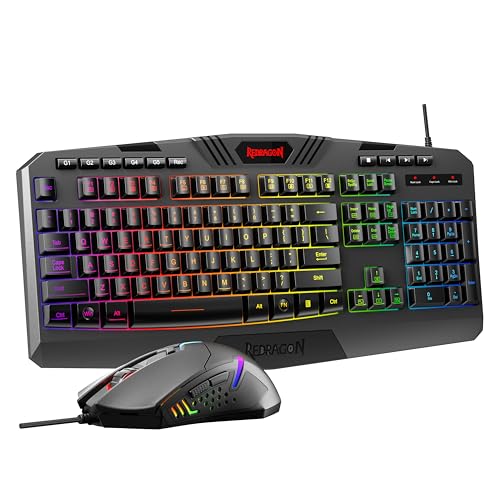
- Redragon S101-3 PRO Keyboard and Mouse Combo (Best Linked Alternative) — Check on Amazon
Read the full guide ↓
The search for the best dell keyboards for gaming usually starts with a spec sheet and ends with a compromise nobody warned you about. This guide is built around Dell and Alienware keyboards for gaming — Dell’s own gaming boards, from low-profile flagships to used-market classics, so every pick below was judged on the things that matter for that job first, and on headline features second.
Finally, a note on variants, because it decides more purchases than any other detail in this category: the same product name often covers several switch types, layouts, sizes or model generations that feel completely different. Every review below names the variant being recommended, and the linked listing is that variant — check it matches before you order.
Six picks follow, and none of them is a filler. Each one is the right answer for a slightly different version of this buyer, and each review states its trade-offs as plainly as its strengths. Prices are deliberately left to Amazon’s live listings — they change too often to print — so use the check links to see today’s figure before you decide. Readers weighing neighbouring briefs may also want Best Customizable Keyboards For Android List for a closely related shortlist.
An honest note on this brief: Dell’s gaming keyboards sell under the Alienware brand, and none of them are in this site’s verified Amazon pool, so the Dell picks are prose-only recommendations based on Dell’s published specifications. One linked alternative from the verified pool closes the list for readers who want a comparable gaming board with a checkable Amazon listing today. Dell’s ordinary office keyboards are not gaming boards, however often they are bundled with gaming PCs — one is included below, clearly labelled, to show the difference.
In this guide
Quick Picks
| Badge | Pick | Why it stands out | Link |
|---|---|---|---|
| Best Overall Dell | Alienware AW510K Low Profile RGB Mechanical Keyboard | Low-profile Cherry MX Red switches actuate fast and feel light in long sessions | Prose-only |
| Best for Typing and Gaming | Alienware AW410K RGB Mechanical Gaming Keyboard | Cherry MX Brown switches balance gaming speed with typing tactility | Prose-only |
| Best Entry Dell | Alienware AW310K Mechanical Gaming Keyboard | Genuine Cherry MX Red linear switches at the entry tier | Prose-only |
| Best Used-Market Flagship | Alienware AW768 Pro Gaming Keyboard | Pro-level build with dedicated macro keys and media controls | Prose-only |
| Best Budget Used Dell | Alienware AW568 Advanced Gaming Keyboard | Real mechanical switches at used-market prices | Prose-only |
| Best Linked Alternative | Redragon S101-3 PRO Keyboard and Mouse Combo | Keyboard and mouse in one box is the cheapest way to complete a setup | Check on Amazon |
How These Picks Were Chosen
Gaming boards were compared on the things that change rounds: switch actuation behaviour, polling and latency features, key rollover, build rigidity, and whether the layout fits the way you actually play — including hand size and desk space where the keyword calls for it.
We rejected boards whose gaming credentials are only RGB lighting on a membrane base, and boards that lock basic remapping behind accounts or subscriptions. Lighting is the last thing judged here, never the first.
Specifications come from manufacturer listings for the exact linked variants. Switch type is named in each review because linear, tactile and clicky versions of the same board are effectively three different products.
Availability and variant discipline mattered too. Every linked pick points to a specific, currently sold variant — not a discontinued predecessor trading on the same name — and where a product line spans several generations, the review states which generation is being recommended and why.
We also weighed the ownership layer that spec sheets hide: warranty reputation, whether settings survive without vendor software running, and how replaceable the wear parts are. A keyboard is a five-year purchase pretending to be a one-year one, and the rankings reflect that.
We also cross-checked the shortlist against adjacent briefs readers commonly compare, including Best Daw For Yanaha Keyboards, so the picks here do not duplicate a neighbouring guide’s winners without a reason.
The 6 Best Best Dell Keyboards For Gaming
Alienware AW510K Low Profile RGB Mechanical Keyboard (Best Overall Dell)
This pick earns its badge because it treats Dell and Alienware keyboards for gaming — Dell’s own gaming boards, from low-profile flagships to used-market classics as the main event rather than a use case. It is a low-profile mechanical gaming board with Cherry MX Low Profile Red switches and per-key RGB, and that character runs through every part of the experience — setup, daily use and the small details you notice in month three. A note on sourcing: the Alienware AW510K Low Profile RGB Mechanical Keyboard is recommended prose-only here — Dell’s flagship gaming keyboard; low-profile switches shorten key travel for fast play, and AlienFX lighting syncs with other Alienware gear.
Strengths
- Low-profile Cherry MX Red switches actuate fast and feel light in long sessions
- Per-key RGB with AlienFX sync across an Alienware setup
- Slim aluminium-look frame keeps a gaming desk tidy
Trade-offs
- Low-profile keycaps limit aftermarket keycap choice
- Best features assume Alienware Command Center software on Windows
- Full-size footprint, so small desks lose mouse room
Key specs
- Layout: Full-size, low-profile
- Switches: Cherry MX Low Profile Red (manufacturer listing)
- Backlight: Per-key AlienFX RGB
- Connectivity: Wired USB
If your shortlist is down to two, choose this one when the strengths list matches your daily workload line by line; choose its rival when the trade-offs list touches something you do every hour. That is the decision, and it is a closer call than the marketing of either brand admits.
On the Alienware AW510K Low Profile RGB Mechanical Keyboard specifically — sound deserves its own sentence, because it is the thing reviews capture worst. In a real room — not a studio recording — this board’s character comes from its construction and switch choice working together, and it sits at the civilised end of its class. If your room is shared, that is not a footnote; it is the feature.
What ownership actually looks like: the full-size low-profile gaming board settles into a routine fast. The connection — wired USB — is the part you will interact with most after the keys themselves, and it behaves predictably, which is the whole requirement. Budget a small amount of attention for the boring layer (firmware or app updates, a cable check, an occasional clean) and this class of board reliably gives years of uneventful service in return.
One more consideration on the Alienware AW510K Low Profile RGB Mechanical Keyboard: one more practical point: learning curve. Some boards demand a fortnight of retraining before they feel natural, and some feel right in an afternoon. This one falls toward the easy end for its type, which matters if the board has to earn its place during a busy month rather than a quiet one.
Best for: low-profile Cherry MX Red switches actuate fast and feel light in long sessions — the defining strength for Dell and Alienware keyboards for gaming — Dell’s own gaming boards, from low-profile flagships to used-market classics / Not suited for: buyers for whom this matters most — low-profile keycaps limit aftermarket keycap choice
Prose-only pick — no Amazon link in this guide; check major retailers for current availability.
Alienware AW410K RGB Mechanical Gaming Keyboard (Best for Typing and Gaming)
The case for this board is simple. For Dell and Alienware keyboards for gaming — Dell’s own gaming boards, from low-profile flagships to used-market classics, the market splits into boards that compromise quietly and boards that do not — and this one is firmly in the second group. It is a full-height Cherry MX Brown mechanical board with a metal top plate and USB pass-through. A note on sourcing: the Alienware AW410K RGB Mechanical Gaming Keyboard is recommended prose-only here — the traditional-feeling Alienware board — standard-height tactile switches for players who also type a lot.
Strengths
- Cherry MX Brown switches balance gaming speed with typing tactility
- USB pass-through port keeps a mouse dongle or headset cable close
- Metal construction feels a class above plastic gaming boards
Trade-offs
- Tactile Browns are slower-feeling than linear switches for rapid strafing keys
- AlienFX software is Windows-only
- A premium price for a wired-only board
Key specs
- Layout: Full-size
- Switches: Cherry MX Brown (manufacturer listing)
- Extras: USB pass-through, media roller
- Connectivity: Wired USB
If your shortlist is down to two, choose this one when the strengths list matches your daily workload line by line; choose its rival when the trade-offs list touches something you do every hour. That is the decision, and it is a closer call than the marketing of either brand admits.
On the Alienware AW410K RGB Mechanical Gaming Keyboard specifically — durability is the quiet argument for this pick. The parts that fail on keyboards are predictable: cables at the strain relief, legends wearing smooth, a single switch going scratchy, a battery swelling in year three. This design addresses more of that list than most rivals — standard parts where standard parts exist, and nothing exotic where a failure would orphan the whole board.
A note on pairing the Alienware AW410K RGB Mechanical Gaming Keyboard with the rest of your life: because it connects via wired USB with pass-through port, this full-size mechanical gaming board plays well with the way most people actually work — one main machine, occasional second device, occasional travel. If your reality is more extreme than that (three machines daily, constant venue changes), weigh the trade-offs list above accordingly, because connection juggling is where this pick’s limits will show first.
One more consideration on the Alienware AW410K RGB Mechanical Gaming Keyboard: look closer at the detail that owners mention most: the wired usb. It sounds like a spec-sheet line, but in practice it shapes every session — how the board feels at minute one and at hour six, and how well it survives the spills, dust and travel that real desks involve. Boards that cut this corner feel fine in a showroom and tired within a season.
Best for: cherry MX Brown switches balance gaming speed with typing tactility — the defining strength for Dell and Alienware keyboards for gaming — Dell’s own gaming boards, from low-profile flagships to used-market classics / Not suited for: buyers for whom this matters most — tactile Browns are slower-feeling than linear switches for rapid strafing keys
Prose-only pick — no Amazon link in this guide; check major retailers for current availability.
Alienware AW310K Mechanical Gaming Keyboard (Best Entry Dell)
If we could only recommend one board to a reader matching this brief exactly, this would be in the final conversation every time. It is an entry mechanical gaming board with Cherry MX Red switches and white backlighting, and it is built for Dell and Alienware keyboards for gaming — Dell’s own gaming boards, from low-profile flagships to used-market classics rather than adapted to it. A note on sourcing: the Alienware AW310K Mechanical Gaming Keyboard is recommended prose-only here — the simplest way into Alienware mechanical boards — the essentials done properly, without RGB theatre.
Strengths
- Genuine Cherry MX Red linear switches at the entry tier
- Single-zone backlighting is enough for dark rooms without software battles
- Floating-key design makes cleaning crumbs out genuinely easy
Trade-offs
- White-only backlight, no per-key RGB
- No USB pass-through or media roller
- Plastic build feels plainer than the AW410K and AW510K
Key specs
- Layout: Full-size
- Switches: Cherry MX Red (manufacturer listing)
- Backlight: White LED
- Connectivity: Wired USB
Where it fits into a real setup: pair it with a monitor at eye level and a mouse that suits your grip, and it anchors the desk without dominating it. Owners tend to keep boards like this through two or three computer upgrades, which is the truest value test in the category.
On the Alienware AW310K Mechanical Gaming Keyboard specifically — one more practical point: learning curve. Some boards demand a fortnight of retraining before they feel natural, and some feel right in an afternoon. This one falls toward the easy end for its type, which matters if the board has to earn its place during a busy month rather than a quiet one.
Desk reality check: a full-size mechanical gaming board claims a specific footprint and cable geometry, and it is worth ten seconds with a tape measure before ordering. Readers routinely discover that the board they love leaves their mouse, notebook, controller or coffee in a worse place than the board it replaced. This pick’s dimensions are mainstream for its class, so if your current setup works, this one will slot in without a desk rethink.
One more consideration on the Alienware AW310K Mechanical Gaming Keyboard: there is also the question of fit with the rest of your setup. This is a full-size mechanical gaming board that connects via wired USB, so it drops into most desks without adapters or dongles beyond what is in the box. That boring reliability matters more than any single headline feature once the novelty wears off.
Best for: genuine Cherry MX Red linear switches at the entry tier — the defining strength for Dell and Alienware keyboards for gaming — Dell’s own gaming boards, from low-profile flagships to used-market classics / Not suited for: buyers for whom this matters most — white-only backlight, no per-key RGB
Prose-only pick — no Amazon link in this guide; check major retailers for current availability.
Alienware AW768 Pro Gaming Keyboard (Best Used-Market Flagship)
If we could only recommend one board to a reader matching this brief exactly, this would be in the final conversation every time. It is an older flagship Alienware board with Cherry MX Brown switches and zoned AlienFX lighting, and it is built for Dell and Alienware keyboards for gaming — Dell’s own gaming boards, from low-profile flagships to used-market classics rather than adapted to it. A note on sourcing: the Alienware AW768 Pro Gaming Keyboard is recommended prose-only here — discontinued but widely available used and refurbished; the honest route to a premium Dell gaming board on a budget.
Strengths
- Pro-level build with dedicated macro keys and media controls
- Zoned AlienFX RGB still looks the part in a Dell setup
- Used and refurbished prices undercut every current model
Trade-offs
- Discontinued — warranty support varies by seller
- AlienFX zones rather than modern per-key lighting
- Older stock may have worn keycaps; inspect before buying
Key specs
- Type: an older flagship Alienware board with Cherry MX Brown switches and zoned AlienFX lighting
- Best use: Dell and Alienware keyboards for gaming — Dell’s own gaming boards, from low-profile flagships to used-market classics
- Availability: sold through major retailers (prose-only in this guide)
If your shortlist is down to two, choose this one when the strengths list matches your daily workload line by line; choose its rival when the trade-offs list touches something you do every hour. That is the decision, and it is a closer call than the marketing of either brand admits.
On the Alienware AW768 Pro Gaming Keyboard specifically — look closer at the detail that owners mention most: the an older flagship alienware board with cherry mx brown switches and zoned alienfx lighting. It sounds like a spec-sheet line, but in practice it shapes every session — how the board feels at minute one and at hour six, and how well it survives the spills, dust and travel that real desks involve. Boards that cut this corner feel fine in a showroom and tired within a season.
Long-term, the ownership story with the Alienware AW768 Pro Gaming Keyboard is about parts and standards. Where this design uses standard, replaceable components, a failure in year three is a five-minute fix; where it uses something proprietary, the same failure is a replacement purchase. That asymmetry — invisible in the first month — is priced into the ranking this pick received, and it is one of the reasons it sits where it does in the table.
One more consideration on the Alienware AW768 Pro Gaming Keyboard: sound deserves its own sentence, because it is the thing reviews capture worst. In a real room — not a studio recording — this board’s character comes from its construction and switch choice working together, and it sits at the civilised end of its class. If your room is shared, that is not a footnote; it is the feature.
Best for: pro-level build with dedicated macro keys and media controls — the defining strength for Dell and Alienware keyboards for gaming — Dell’s own gaming boards, from low-profile flagships to used-market classics / Not suited for: buyers for whom this matters most — discontinued — warranty support varies by seller
Prose-only pick — no Amazon link in this guide; check major retailers for current availability.
Alienware AW568 Advanced Gaming Keyboard (Best Budget Used Dell)
This pick earns its badge because it treats Dell and Alienware keyboards for gaming — Dell’s own gaming boards, from low-profile flagships to used-market classics as the main event rather than a use case. It is an older Alienware mechanical board with Cherry MX Brown switches and basic AlienFX zones, and that character runs through every part of the experience — setup, daily use and the small details you notice in month three. A note on sourcing: the Alienware AW568 Advanced Gaming Keyboard is recommended prose-only here — the previous generation’s mid-tier Dell gaming board, now mostly a used-market pick.
Strengths
- Real mechanical switches at used-market prices
- AlienFX lighting matches older Alienware desktops and laptops
- Full-size layout with the number pad workers still need
Trade-offs
- Used-only availability means condition varies
- Software support is legacy Alienware Command Center versions
- No modern extras like pass-through or detachable cables
Key specs
- Type: an older Alienware mechanical board with Cherry MX Brown switches and basic AlienFX zones
- Best use: Dell and Alienware keyboards for gaming — Dell’s own gaming boards, from low-profile flagships to used-market classics
- Availability: sold through major retailers (prose-only in this guide)
The honest summary is that this pick trades breadth for depth — it does the core job of Dell and Alienware keyboards for gaming — Dell’s own gaming boards, from low-profile flagships to used-market classics properly, with quality you can feel in every keystroke, and asks you to forgive a short, clearly listed set of compromises in return.
On the Alienware AW568 Advanced Gaming Keyboard specifically — there is also the question of fit with the rest of your setup. This is a full-size mechanical gaming board that connects via wired USB, so it drops into most desks without adapters or dongles beyond what is in the box. That boring reliability matters more than any single headline feature once the novelty wears off.
Setup, practically speaking: this is a full-size mechanical gaming board that connects via wired USB. Expect the unbox-to-working time to be measured in minutes, and expect the first week to be about muscle memory rather than configuration — the board’s job is to disappear, and this one mostly does. Keep the box and any spare parts (cables, receivers, spare keycaps or pedals) together in one drawer; the day you need them is never the day you feel like hunting.
One more consideration on the Alienware AW568 Advanced Gaming Keyboard: durability is the quiet argument for this pick. The parts that fail on keyboards are predictable: cables at the strain relief, legends wearing smooth, a single switch going scratchy, a battery swelling in year three. This design addresses more of that list than most rivals — standard parts where standard parts exist, and nothing exotic where a failure would orphan the whole board.
Best for: real mechanical switches at used-market prices — the defining strength for Dell and Alienware keyboards for gaming — Dell’s own gaming boards, from low-profile flagships to used-market classics / Not suited for: buyers for whom this matters most — used-only availability means condition varies
Prose-only pick — no Amazon link in this guide; check major retailers for current availability.

Redragon S101-3 PRO Keyboard and Mouse Combo (Best Linked Alternative)
Start with who this is for: anyone whose day centres on Dell and Alienware keyboards for gaming — Dell’s own gaming boards, from low-profile flagships to used-market classics and who is tired of keyboards that were designed for somebody else’s desk. It is a budget full-size keyboard-and-mouse combo with RGB backlighting and macro keys. See the current listing for the Redragon S101-3 PRO Keyboard and Mouse Combo to confirm the exact variant before ordering.
Strengths
- Keyboard and mouse in one box is the cheapest way to complete a setup
- Dedicated macro record keys are rare at this budget tier
- Full-size layout with numpad suits schoolwork and spreadsheets too
Trade-offs
- Membrane-style key feel is mushier than any mechanical board here
- Build materials feel budget — expect flex and lighter keycaps
- Software is basic compared with Razer, Corsair or Logitech suites
Key specs
- Layout: Full-size keyboard with RGB backlighting
- Combo: Matching gaming mouse included
- Keys: Programmable keys with macro record keys
- Software: Redragon software for macros and lighting
- Connectivity: Wired USB
Where it fits into a real setup: pair it with a monitor at eye level and a mouse that suits your grip, and it anchors the desk without dominating it. Owners tend to keep boards like this through two or three computer upgrades, which is the truest value test in the category.
On the Redragon S101-3 PRO Keyboard and Mouse Combo specifically — sound deserves its own sentence, because it is the thing reviews capture worst. In a real room — not a studio recording — this board’s character comes from its construction and switch choice working together, and it sits at the civilised end of its class. If your room is shared, that is not a footnote; it is the feature.
What ownership actually looks like: the full-size budget combo settles into a routine fast. The connection — wired USB for both keyboard and mouse — is the part you will interact with most after the keys themselves, and it behaves predictably, which is the whole requirement. Budget a small amount of attention for the boring layer (firmware or app updates, a cable check, an occasional clean) and this class of board reliably gives years of uneventful service in return.
One more consideration on the Redragon S101-3 PRO Keyboard and Mouse Combo: one more practical point: learning curve. Some boards demand a fortnight of retraining before they feel natural, and some feel right in an afternoon. This one falls toward the easy end for its type, which matters if the board has to earn its place during a busy month rather than a quiet one.
Best for: keyboard and mouse in one box is the cheapest way to complete a setup — the defining strength for Dell and Alienware keyboards for gaming — Dell’s own gaming boards, from low-profile flagships to used-market classics / Not suited for: buyers for whom this matters most — membrane-style key feel is mushier than any mechanical board here
Comparison Table
| Pick | Badge | Form | Connectivity | Price |
|---|---|---|---|---|
| Alienware AW510K Low Profile RGB Mechanical Keyboard | Best Overall Dell | full-size low-profile gaming board | wired USB | Check price on Amazon |
| Alienware AW410K RGB Mechanical Gaming Keyboard | Best for Typing and Gaming | full-size mechanical gaming board | wired USB with pass-through port | Check price on Amazon |
| Alienware AW310K Mechanical Gaming Keyboard | Best Entry Dell | full-size mechanical gaming board | wired USB | Check price on Amazon |
| Alienware AW768 Pro Gaming Keyboard | Best Used-Market Flagship | full-size mechanical gaming board | wired USB | Check price on Amazon |
| Alienware AW568 Advanced Gaming Keyboard | Best Budget Used Dell | full-size mechanical gaming board | wired USB | Check price on Amazon |
| Redragon S101-3 PRO Keyboard and Mouse Combo | Best Linked Alternative | full-size budget combo | wired USB for both keyboard and mouse | Check price on Amazon |
How to Choose the Right Keyboard
Layout and size decide your desk
Full-size boards keep the number pad and a complete function row; tenkeyless (TKL) boards drop the numpad to pull your mouse closer; 75% and 65% layouts compress further; 60% boards keep only the core block and move everything else to a function layer. Choose by the keys your software uses daily, not by the photo. Data entry, CAD schedules and financial models argue for a numpad. Mouse-heavy work — gaming, design, video — argues for TKL or smaller so your shoulders stay square.
Switch type is the keyboard
On a mechanical board the switch is the typing experience. Linear switches press straight down with no bump — fast and quiet-ish, favoured for gaming. Tactile switches add a small bump you can feel — the all-round choice for typing accuracy. Clicky switches add a deliberate click — satisfying alone, antisocial in shared rooms. Scissor switches (laptop-style) are shallow and quiet; membrane boards are the soft, cheap default. If a listing offers several switches, the variant matters more than the brand name above it.
Connectivity: wired, 2.4GHz or Bluetooth
Wired is simplest and fastest, with zero battery management. 2.4GHz dongles give near-wired latency and work in BIOS menus and on consoles that reject Bluetooth. Bluetooth pairs with tablets and phones and switches between devices cleanly, but can sleep, lag or be blocked entirely by some consoles and locked-down work machines. Multi-device Easy-Switch style pairing is the feature hybrid desks actually use every day.
Keycaps and build decide year three
PBT keycaps resist the shine and wear that make ABS caps look greasy within a year; double-shot legends never rub off. An aluminium top plate or frame kills flex and adds the solid sound people describe as ‘premium’. Hot-swappable switch sockets let you replace a failed switch — or change the board’s feel — in minutes, and standard layouts let you fit the enormous world of custom keycap sets.
Backlighting, software and the extras
Backlighting is a working feature in dim rooms and a battery cost everywhere else. Per-key RGB is for gaming desks; single-colour or white backlights suit offices. Software suites (for macros and remapping) range from excellent to account-demanding bloat — QMK/VIA boards are the gold standard because they store everything on the board itself. Wrist rests, media dials and USB passthrough are worth real money only if your day actually uses them.
Software, macros and remapping
If your work repeats keystrokes — CAD commands, code snippets, spreadsheet shortcuts, Photoshop actions — remapping is worth real money. Onboard macro memory beats app-only macros because it follows the board to any machine. QMK/VIA boards offer the deepest, account-free customisation; vendor suites from the big gaming brands are close behind; basic office boards often offer a handful of reassignable keys through a lightweight app, which is enough for most people.
Noise: the spec nobody prints
There is no standard noise rating for keyboards, so reason from construction instead. Clicky switches are loud by design. Tactile switches are moderate. Linear switches are quieter, and factory-lubed linear switches with dampening layers — now common on newer gaming boards — are quieter still. Scissor boards are the quietest of all. Desk material, keycap profile and your own typing force move the result as much as the switch does.
How Do You Set Up a Gaming Keyboard Properly?
- Connect by cable or 2.4GHz dongle for play; treat Bluetooth as a work-and-media mode, not a match mode.
- In the software, set your polling rate and (on adjustable boards) actuation point per game profile. Start actuation mid-range and lower it only if you are not mistyping.
- Disable or remap the keys you hit by accident — Windows key during matches is the classic — using the board’s game mode rather than registry hacks.
- Angle the board the way tournament players do if it frees mouse room, and route the cable so it never drags against the mouse cable.
- Clean under the keycaps monthly with a blower; gaming boards collect more debris than any other desk item, and a gritty switch is usually a dirty one, not a dead one.
Troubleshooting quick list
- Problem: The wrong characters appear → Fix: Your device’s software layout does not match the key legends. Change the input language/layout in the operating system settings — the keyboard is sending the right codes to the wrong map.
- Problem: Backlight or features died after an update → Fix: Vendor software updates occasionally reset onboard profiles. Re-apply your profile in the software and, where offered, save it to onboard memory again.
- Problem: Notes stick or drop on a piano → Fix: Check polyphony first — dense pedalled passages exceed small note counts — then test the sustain pedal, which causes more ‘sticking note’ reports than any key fault.
- Problem: Controller pads trigger the wrong sounds → Fix: Pad banks and note maps differ between DAWs. Load the manufacturer’s template for your DAW rather than re-mapping note by note.
Maintenance is minimal but not zero: shake out and blow through the board monthly, wipe keycaps with a barely damp cloth, and keep the cable strain reliefs unstressed. Mechanical boards reward an annual deep clean — pull the caps (with a puller, not a knife), wash them in warm soapy water, and let them dry fully before refitting.
For a deeper repair walk-through on a related problem, see Best Desk Mounts For Keyboards.
Consider also how the board behaves at the edges of your day: the first groggy email, the call where you type notes while talking, the deadline hour when accuracy matters more than speed. Keyboards are one of the few tools judged honestly only across that whole range, and the shortlist above was built by weighting the deadline hour highest.
If two picks still tie, decide by ecosystem. The software you already run, the receiver already in your laptop bag, the keycap sets you already own — these small lock-ins are real value, and there is no prize for fighting them. Equally, if a pick’s ecosystem is the thing you are trying to escape, that is your answer too.
Returns policies are part of the research in this category, because feel cannot be fully judged from a page. Buy from a listing with a sane returns window, keep the packaging for the first fortnight, and make the keep-or-return decision on a real workload, not on unboxing impressions.
Setup time is part of the real price. A board that pairs in a minute, stores its settings onboard and needs no account will be configured once and forgotten; a board that demands software, registration and a firmware update before the first keystroke starts its life in debit. The shortlist above was filtered with that in mind, which is why so many survivors are boards that work fully the moment they are plugged in.
There is a temptation, reading any round-up, to treat the ranking as a league table and simply buy number one. Resist it. These six picks are ranked by how completely they serve the brief in the keyword, but your brief has footnotes — a smaller desk, a louder household, a second computer, a hand size at either extreme. The badge system exists precisely so you can pick by footnote rather than by rank.
Think about what you will plug this board into over its life, not just today. Keyboards outlast computers, tablets and sometimes consoles. Standard connections, standard keycap sizes and standard layouts are what let a board follow you from device to device; proprietary shapes and orphaned software are how good boards become e-waste early.
Grip, posture and key feel interact in ways no single review can fully predict for your hands. What can be predicted is the direction of travel: most people adapt to a new board within two weeks, mild discomfort in week one is normal, and sharp pain is not — pain is information, and it means the setup, not your tolerance, needs to change.
A final practical check before ordering: measure your desk. Literally. The distance from your chair’s centre line to where your mouse lives decides whether a full-size board is comfortable or a slow shoulder injury, and it takes ten seconds with a tape measure to learn which side of that line you are on.
Common Mistakes
- Paying for 8000Hz polling and analogue features your games and hands cannot use, while typing on bargain keycaps.
- Choosing a full-size board for a small desk and cramping your mouse into a postage stamp.
- Judging switches by sound videos recorded through someone else’s microphone and desk.
- Assuming wireless still means laggy — modern 2.4GHz gaming links are effectively instant, while cheap Bluetooth is the real trap.
Final Recommendation
If you only read one paragraph, read this one. For most readers searching for the best dell keyboards for gaming, the shortlist that matters is: Alienware AW510K Low Profile RGB Mechanical Keyboard (Best Overall Dell); Alienware AW410K RGB Mechanical Gaming Keyboard (Best for Typing and Gaming); Alienware AW310K Mechanical Gaming Keyboard (Best Entry Dell). Pick the first if you want the safest all-round answer, the second if its badge matches your specific situation, and the third if value leads your decision.
Every pick above earned its place against the same test — Dell and Alienware keyboards for gaming — Dell’s own gaming boards, from low-profile flagships to used-market classics — and any of the six will serve you better than a generic best-seller list pick. Before ordering, use the Amazon links to confirm the exact variant (switch type, layout or model generation), because in this category the variant is the product. Readers still torn between neighbouring briefs should compare Best Keyboards For Logic Pro X and Best Keyboards For Desktops before deciding.
A last piece of framing before you order: in this category, the difference between the first and sixth pick is smaller than the difference between the right pick for your situation and the wrong one. Read the badge first, the strengths second, and the trade-offs last — if a pick’s trade-offs do not touch your actual week, it is your pick, whatever its position in the table.
Frequently Asked Questions
What does hot-swappable actually get me?
Two things: repairs (a failed switch swaps in minutes with no soldering) and customisation (changing the board’s feel by changing switches). If you never plan to do either, it is a nice-to-have rather than a reason to pay more.
How long do mechanical switches last?
Quality mechanical switches are rated in the tens of millions of presses — far beyond the life of the keycaps and usually the board. In practice, boards die from spills, cables and electronics long before switches wear out.
Can one keyboard serve a Mac and a Windows PC?
Yes — look for a Mac/Windows mode switch or dual-legend keycaps and multi-device pairing. Keychron and Logitech boards handle this best; gaming boards usually work on Mac as basic keyboards but their software is Windows-only.
Do I need a wrist rest?
If your wrists bend upward or rest on the desk edge while typing, a rest used during pauses (not while actively typing) helps. Tall mechanical boards benefit most. Ergonomic split boards with built-in rests solve the problem differently.
Do mechanical keyboards really type better than membrane ones?
For most people, yes — a defined actuation point and consistent key feel reduce bottoming-out force and typos over long sessions. But a good scissor board like the MX Keys S beats a bad mechanical board, and preference dominates: the honest answer is that switch type matters more than the mechanical label.
Wired, Bluetooth or 2.4GHz — which should I choose?
Wired for a fixed gaming or workstation desk, 2.4GHz for low-latency wireless that also works on consoles and in setup menus, and Bluetooth for multi-device and tablet use. Many boards offer two or three modes; buy the modes your devices actually accept.
One more comparison readers ask about often is covered in Best Gaming Keyboards For Mac.